World
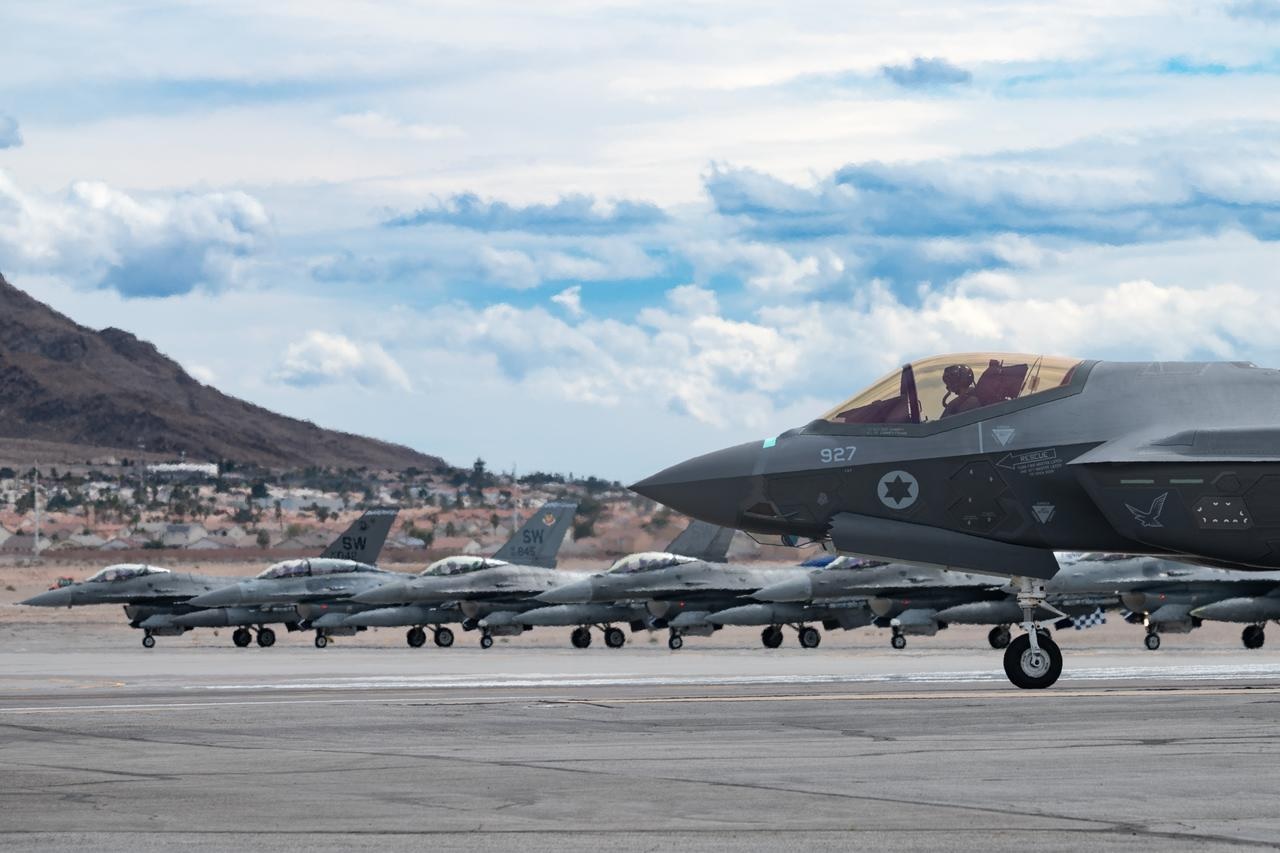
JERUSALEM, — May 3, 2026 : Israel has formally approved the acquisition of two additional squadrons of advanced combat aircraft, authorizing the purchase of new F-35I Adir stealth fighters and F-15IA aircraft as part of a long-term military modernization program. The decision was cleared by the Ministerial Committee on Procurement, enabling the Defense Ministry to move forward with negotiations for a fourth squadron of F-35I aircraft from Lockheed Martin and a second squadron of F-15IA jets from Boeing. Strategic Framework and Budget Allocation The procurement represents the first operational phase of a broader 350 billion shekel ($119 billion) defense buildup program approved by Prime Minister Benjamin Netanyahu and Defense Minister Israel Katz. The multi-year plan is structured to strengthen Israel’s long-term military readiness and preserve its qualitative air superiority in the Middle East over the next decade. Under the approved package, Israel will acquire: 25 additional F-35I stealth fighter jets 25 F-15IA advanced fighter aircraft Full operational integration into Israeli Air Force command, control, and networking systems Long-term sustainment support, including spare parts, maintenance frameworks, and regional logistics infrastructure The procurement will be financed through United States security assistance funds, continuing the established defense cooperation mechanism between Washington and Jerusalem. Expansion of Israeli Air Force Capabilities The acquisitions will significantly expand the operational strength of the Israeli Air Force over the coming decade. Israel currently operates 48 F-35I aircraft out of an initial order of 50, primarily based at Nevatim Airbase. A third squadron of 25 F-35I jets was approved in 2023, with deliveries expected to begin in 2028. The addition of the newly approved fourth squadron will bring the total planned fleet to 100 F-35I aircraft. For the F-15IA platform, Israel signed a contract with Boeing in 2024 for an initial 25 aircraft, with deliveries projected to begin in 2031. The approval of a second squadron will double the total number of F-15IA jets to 50. The dual-platform structure is designed to combine the operational characteristics of both aircraft types. The F-35I provides low observable capabilities, advanced sensor fusion, and network-centric warfare integration, while the F-15IA offers extended range and heavy payload capacity for long-range strike missions. Operational Context and Policy Direction Defense officials indicated that the procurement timeline and structure were influenced by recent regional security developments, including operational assessments from the conflict with Iran referred to by the Israel Defense Forces as Operation Roaring Lion. Defense Minister Israel Katz stated that future requirements will include expanded technological capabilities, particularly in autonomous aviation systems and space-based defense integration. He emphasized the need for continuous force development to ensure operational flexibility across multiple theaters. Defense Ministry Director General Amir Baram said the procurement balances immediate operational requirements with long-term planning. He also highlighted the role of U.S.-Israel defense coordination, noting that recent combat experience reinforced the importance of bilateral strategic cooperation. Procurement Process and Implementation Following the committee’s authorization, the Defense Ministry’s procurement delegation in the United States has been directed to finalize contractual agreements with U.S. government and defense counterparts. This includes completing administrative procedures, funding allocations, and delivery frameworks. While detailed delivery schedules for the newly approved squadrons have not been publicly disclosed, officials confirmed that the broader military buildup program is structured over an approximately ten-year timeline. The F-35I “Adir” is a customized configuration of the F-35 platform adapted for Israeli operational requirements, while the F-15IA is based on the latest F-15EX design with modifications tailored for long-range and high-payload missions. The approval aligns with Israel’s ongoing modernization of its air combat capabilities and reflects continued reliance on U.S. defense partnerships for advanced military technology procurement.
Read More → Posted on 2026-05-03 10:27:21
World
BERLIN, — May 3, 2026 : The German government has approved the key parameters for its 2027 federal budget, outlining a substantial increase in defense and infrastructure-related expenditure alongside a broader restructuring of fiscal policy. The draft marks a continuation of Germany’s multi-year strategy to expand military capabilities and modernize critical national infrastructure. Budget Overview and Fiscal Structure The 2027 draft budget sets total federal expenditure at €543.3 billion, with planned new borrowing of €196.5 billion. This borrowing figure includes financing through the core budget, as well as allocations drawn from special defense and infrastructure funds. The financial framework builds on reforms to Germany’s constitutional debt brake mechanism approved in 2025. Under these changes, defense spending above a defined baseline is exempt from borrowing limits, enabling the federal government to mobilize additional funding. The reforms also established a €500 billion special fund dedicated to infrastructure development and climate neutrality projects, targeting sectors such as transport networks, digital systems, and hospital modernization. Defense Spending Breakdown Defense-related expenditure forms a central component of the 2027 budget. The core defense budget is set at €105.8 billion, an increase from €82.7 billion in 2026, reflecting a higher baseline allocation for military operations, personnel, and procurement. In addition to the core budget, €27.5 billion will be mobilized through a special defense fund made possible by the revised fiscal rules. A further €11 billion has been allocated for direct defense and budgetary assistance to Ukraine. Indirect defense spending, amounting to €58.2 billion, has been earmarked for logistics and infrastructure modernization. This includes upgrades to ports, airfields, highways, and bridges to support both civilian and military mobility requirements. When combined, core defense spending, special fund allocations, and Ukraine assistance total €144.9 billion in 2027. Including indirect defense-related infrastructure investment, overall defense and defense-related expenditure is projected to exceed €200 billion. Medium-Term Spending Projections Government planning indicates that defense expenditure will continue to increase annually beyond 2027. With the ability to mobilize up to €500 billion in loans for defense and infrastructure, projections suggest that total defense-related spending could reach between €300 billion and €350 billion per year within the next three to five years. As a share of economic output, defense spending is expected to reach 3.1 percent of gross domestic product in 2027, with projections rising further to approximately 3.7 percent by 2030. Infrastructure and Dual-Use Investment A significant portion of the budget focuses on dual-use infrastructure designed to serve both civilian and defense purposes. Investments under this category include transport corridors, logistics hubs, and critical connectivity systems. These upgrades are intended to improve national resilience, facilitate the movement of goods and military equipment, and strengthen Germany’s role within European logistical networks. The broader infrastructure fund also supports digitalisation initiatives and healthcare system modernization, particularly hospital upgrades, as part of long-term structural investment planning. Policy Context and Financing Approach The expanded fiscal scope reflects a shift in Germany’s budgetary priorities following the easing of traditional borrowing constraints. The revised debt brake framework allows for increased public spending in sectors identified as strategic, particularly defense and infrastructure. The financing strategy combines conventional borrowing with targeted special funds, enabling the government to pursue large-scale investments while maintaining a structured fiscal plan. Next Steps in the Budget Process The approved parameters serve as the foundation for the full draft budget, which will be finalized and submitted for parliamentary review. The Bundestag is expected to debate and refine the proposal in the coming months before final adoption. The 2027 budget forms part of Germany’s broader multi-year fiscal planning, aimed at addressing evolving security requirements while maintaining long-term investment in infrastructure and public systems.
Read More → Posted on 2026-05-03 10:41:40
World
STOCKHOLM — May 3, 2026 : Sweden has formally entered the military space domain following the successful deployment of its first operational reconnaissance and surveillance satellite, a development that establishes an independent national capability for space-based intelligence gathering and threat monitoring. The satellite was launched at 09:00 Swedish time from Vandenberg Space Force Base aboard a Falcon 9 rocket operated by SpaceX. It was manufactured by Planet Labs under a commercial-military partnership and is designed to operate in Low Earth Orbit, delivering high-resolution optical imagery for defence applications. Launch and System Characteristics The newly deployed satellite represents Sweden’s first fully operational military reconnaissance platform. Operating in Low Earth Orbit, it provides high-resolution imaging capabilities intended for real-time monitoring and intelligence collection. The system is part of a broader procurement framework managed by Swedish Defence Materiel Administration, which includes both satellite acquisition and access to data services. The satellite complements additional capabilities being developed through agreements with ICEYE, which will supply synthetic aperture radar (SAR) data. Together, these systems are expected to provide Sweden with a combination of optical and radar-based observation, enabling all-weather, day-and-night surveillance coverage. Strategic Role and NATO Integration The deployment is intended to strengthen Sweden’s situational awareness, particularly in monitoring long-range threats and regions that have historically been difficult to observe, including the Arctic. The capability also contributes to collective defence under NATO by enhancing shared intelligence and operational awareness. Anders Sundeman, head of space for the Swedish Armed Forces, attended the launch and emphasized the operational significance of the system. He stated that the satellite enables improved monitoring of areas previously inaccessible and provides a clearer operational picture. He added that the capability supports both national defence requirements and NATO’s broader intelligence framework by contributing to long-range threat detection and analysis. Accelerated Programme Timeline The satellite forms part of Sweden’s long-term military space programme, which aims to deploy approximately ten satellites in the coming years. Initial launches under this programme are taking place in 2026, four years ahead of the original 2030 target set by defence planners. Officials attribute the accelerated timeline to coordinated efforts between the Swedish Defence Materiel Administration and the Swedish Defence Research Agency, the latter providing technical research and development support. The programme builds on earlier efforts, including the 2024 launch of Sweden’s first military communications satellite, which served as a precursor and test platform for subsequent operational systems. Institutional Framework and Space Operations To manage its expanding space assets, the Swedish Air Force has initiated the establishment of a dedicated Space Operations Center. This facility will oversee satellite command and control, as well as generate an integrated space situational picture to support military planning and operations. According to defence officials, the center will play a central role in assessing threats originating from space-based surveillance and reconnaissance activities, while ensuring coordinated responses through improved awareness of the space environment. International Cooperation and Future Development During his visit to the United States, Sundeman is scheduled to hold discussions with key American military space entities, including the United States Space Force and the United States Space Command. These engagements are expected to focus on strengthening interoperability and coordination in allied space operations. The Swedish programme also includes long-term plans for domestic launch capability. Under a separate agreement involving SSC Space and FMV, orbital launch operations from Esrange Space Center are expected to become operational by 2028. The Swedish government has allocated approximately SEK 1.3 billion (around USD 142 million) to support the development of these space-based defence capabilities. The programme is managed within the Swedish Air Force’s Space Division, which is responsible for coordinating military space activities, including satellite operations and space domain awareness. Operational Impact With the satellite now in orbit, Sweden has established an independent capability to monitor areas of strategic interest and support both national and alliance-level defence operations. The system is expected to enhance intelligence gathering, improve response times to emerging threats, and contribute to a broader understanding of activities in contested and remote regions. The deployment marks the first operational step in Sweden’s expanded military space initiative, with additional satellites planned to further strengthen its reconnaissance and surveillance network in the coming years.
Read More → Posted on 2026-05-03 15:03:49
World
BRUSSELS — May 3, 2026 : The Belgian Air Force has conducted a series of trials integrating precision-guided 70 mm rockets onto its F-16 Fighting Falcon fleet, as part of a broader effort to develop a cost-effective response to the growing threat posed by unmanned aerial systems (UAS). The tests, carried out in cooperation with multiple defense components and industry partners, focus on evaluating the operational viability of laser-guided rockets against medium-sized drones. Test Campaign and Operational Setup On April 30, the Belgian Ministry of Defence released cockpit and infrared targeting footage from the trials conducted at the Lombardsijde firing range, located along the southern North Sea coast in northwestern Belgium. The test program was executed jointly with the Belgian Land Component, the Navy, and Thales Belgium, which produces the FZ275 rocket system. The footage shows F-16 aircraft engaging aerial drone targets using 70 mm FZ275 laser-guided rockets. For safety and evaluation purposes, the rockets deployed during these tests were fitted with inert warheads, meaning they contained no explosive payload. Infrared targeting imagery confirmed successful engagements against designated drone targets. The aircraft were equipped with LAU-131A/A seven-shot rocket pods mounted on the port wing. Video sequences indicate that rockets were loaded into different tubes across multiple sorties, suggesting a structured and repeated testing campaign rather than a single demonstration event. Weapon System and Technical Characteristics The FZ275 is a semi-active laser-guided version of the standard 70 mm rocket originally developed by Forges de Zeebrugge, now part of Thales Group. The system is designed to convert conventional unguided rocket systems into precision-guided munitions. Key specifications include a length of approximately 1.8 meters, a total weight of 12.7 kilograms, and compatibility with a 4.1-kilogram warhead configuration. The rocket has an operational range between 1.5 and 7 kilometers and achieves a circular error probable of less than one meter at 6 kilometers. Earlier integration testing was reported on March 11, 2026, by Belgium’s Directorate General of Material Resources (DGMR). Ground and flight checks were conducted at Kleine Brogel Air Base, where an F-16AM was configured with six LAU-131A/A rocket pods mounted on triple ejector racks, enabling a maximum loadout of 42 rockets per aircraft. In parallel with the domestic FZ275 system, the Belgian Air Force is also evaluating the AGR-20F FALCO rocket developed by BAE Systems for the same counter-UAS mission profile. Strategic Context and Fleet Modernization The counter-drone rocket integration effort coincides with Belgium’s broader transition from legacy fourth-generation aircraft to fifth-generation platforms. The Belgian Air Force currently operates between 43 and 44 F-16AM/BM Fighting Falcon aircraft. At the same time, Belgium is inducting the F-35A Lightning II into service. Of the 34 aircraft initially ordered, 11 have been delivered, with eight currently stationed at Luke Air Force Base for pilot training. The Ministry of Defence has also outlined plans to procure an additional 11 F-35A aircraft to complete fleet modernization objectives. Cost Considerations and Air Defense Adaptation The adoption of laser-guided rockets for counter-UAS operations reflects a broader shift toward addressing cost asymmetry in modern air defense. Conventional air-to-air missiles used by fighter aircraft can exceed $1 million per unit, while many one-way attack drones are estimated to cost between $5,000 and $50,000. By contrast, systems such as the FZ275 offer a lower-cost interception method, allowing more sustainable engagement of high-volume drone threats. Thales Belgium has also been involved in international supply efforts, including agreements to support rocket production for Ukrainian forces. European defense firms are simultaneously exploring alternative approaches. One such concept is Airbus’ “Bird of Prey” interceptor drone, designed to deploy low-cost air-to-air munitions aligned with the economic scale of the target threat. Operational Lessons from the Ukraine War The emphasis on affordable counter-drone solutions is informed by operational data from the ongoing Russia-Ukraine war. Both sides have employed a wide range of cost-effective technologies to counter aerial threats. In February 2026, footage confirmed that Ukrainian F-16 aircraft successfully intercepted Shahed/Geran-type long-range drones using APKWS II laser-guided rockets. French-supplied Dassault Mirage 2000 jets have also been used for drone and cruise missile interception. At the same time, Ukrainian forces have demonstrated the reverse dynamic by using low-cost First-Person View (FPV) drones to target high-value assets. On March 20, 2026, an FPV drone was documented striking a Kamov Ka-52 Alligator helicopter in flight. Additional strikes in late April reportedly destroyed a Mil Mi-17 and a Mil Mi-28 Havoc at a base in Voronezh, approximately 150 kilometers from the frontline. Other countermeasures include airborne interception platforms such as the P1-Sun interceptor drone mounted on Antonov An-28 aircraft for nighttime operations, and smaller systems like the Sting interceptor drone capable of targeting advanced drone variants, including those equipped with air-to-air missiles. Program Outlook The Belgian trials represent an ongoing effort to integrate precision-guided rocket systems into existing fighter platforms for counter-UAS missions. The program combines domestic industrial capability with operational lessons drawn from contemporary conflicts. The Belgian Ministry of Defence has indicated that the tests are part of a joint-service initiative involving air, land, and naval components, with continued evaluation of multiple rocket systems to determine the most effective and sustainable solution for future deployment.
Read More → Posted on 2026-05-03 15:18:07
Space & Technology
MOSCOW, — May 3, 2026 : The Russian government has formally advanced an experimental gene therapy program aimed at slowing cellular aging, positioning it as part of a broader state-backed effort to address long-term demographic and health challenges. The initiative, authorized under the direction of Vladimir Putin, is being described by officials as a pioneering attempt to intervene directly in the biological mechanisms of aging. Program Framework and Policy Direction The anti-aging research is being conducted within the framework of the “New Technologies for Health Preservation National Project,” a large-scale government program launched in 2025. With a total budget exceeding 2 trillion rubles (approximately $26.4 billion), the initiative encompasses multiple areas of advanced medical research, including gene therapy, regenerative medicine, and neurotechnology. Russian authorities have linked the program to national demographic concerns, including declining population trends and relatively low life expectancy among men, which currently stands at around 67 years. Officials have framed longevity research as a strategic priority intended to improve long-term public health outcomes. Deputy Prime Minister Tatyana Golikova stated that production of the proposed anti-aging therapy could begin between 2028 and 2030, reflecting an accelerated development timeline compared to typical biomedical innovation cycles. Scientific Basis and Research Approach The experimental therapy is being developed by the Russian Institute of Aging Biology and Medicine, with oversight from the Ministry of Science and Higher Education. According to Deputy Minister Denis Sekirinsky, the treatment focuses on the RAGE receptor (Receptor for Advanced Glycation Endproducts), a biological pathway associated with cellular aging and inflammation. Sekirinsky explained that activation of the RAGE receptor contributes to cellular senescence and age-related physiological decline. The proposed gene therapy aims to block this receptor, with the objective of slowing or modifying the aging process at a cellular level. The approach differs from conventional treatments by targeting underlying biological mechanisms rather than managing individual age-related diseases. The project is currently in early-stage development, with laboratory experiments and animal testing underway. No detailed information has been released regarding the timeline for human clinical trials or regulatory evaluation. Institutional Support and Related Technologies The initiative has received backing from key scientific institutions, including the Kurchatov Institute, led by Mikhail Kovalchuk. In addition to gene therapy, the broader national program includes research into three-dimensional bioprinting for artificial organs and neurotechnologies aimed at reducing cognitive decline. Officials have presented these efforts as part of a coordinated strategy to expand domestic capabilities in biotechnology and reduce reliance on foreign medical technologies. Scientific and Logistical Challenges Despite strong political support and significant funding commitments, the project has generated skepticism within segments of the scientific and medical community. Independent researchers have highlighted that gene therapy development typically requires extended timelines, often spanning decades, due to the need for rigorous safety and efficacy testing. Concerns have also been raised regarding research infrastructure and global scientific integration. Some experts note that Russia currently has limited representation in leading peer-reviewed biomedical journals in the field of advanced anti-aging research, which could affect the pace of innovation and international collaboration. Resource allocation remains another point of discussion. Specialists indicate that large-scale gene therapy development requires advanced laboratory systems, specialized manufacturing capabilities, and consistent access to high-end biotechnological equipment—factors that may be influenced by external supply constraints. Domestic Healthcare Context Within Russia, some healthcare professionals have questioned the prioritization of experimental longevity treatments amid broader systemic pressures on the medical sector. Reports from domestic sources suggest that parts of the healthcare system continue to face operational strain, prompting debate over the allocation of public funding toward long-term research initiatives versus immediate healthcare needs. Demographic Context and Strategic Objectives The government’s focus on anti-aging research aligns with ongoing demographic challenges, including population decline and aging demographics. Officials have indicated that extending healthy lifespan could play a role in stabilizing workforce participation and reducing long-term healthcare burdens. Public statements from Vladimir Putin have also referenced the potential for significantly extending human lifespan, though such projections remain theoretical within current scientific understanding. Current Status At present, the anti-aging therapy remains in the experimental phase, with no approved treatments or confirmed timelines for clinical application. While international research has explored the RAGE receptor in relation to inflammation and age-related diseases, no gene therapy specifically targeting this pathway for anti-aging purposes has been approved globally. Russian officials continue to present the initiative as a long-term investment in biomedical innovation, though its scientific feasibility, implementation timeline, and broader healthcare impact remain subjects of ongoing evaluation.
Read More → Posted on 2026-05-03 15:35:23
World
WASHINGTON, D.C., — May 3, 2026 : The U.S. Navy has awarded a $325.9 million multi-vendor contract for the procurement of up to 474 composite rigid-hull inflatable boats (RHIBs), with a total potential value of $650.1 million over a ten-year period if all options are exercised. The award, issued on April 30, 2026, was formally announced by the U.S. Department of Defense the following day. The contract is managed by the Naval Sea Systems Command (NAVSEA) and structured as an indefinite-delivery/indefinite-quantity (IDIQ) agreement. This framework allows the Navy to issue orders incrementally based on operational demand, budget allocations, and evolving mission requirements. Contract Scope and Procurement Details The procurement was conducted through the Procurement Integrated Enterprise Environment, attracting a total of 15 competitive offers. Eight U.S.-based shipbuilders were selected under the multiple-award structure, each receiving a minimum contract guarantee of $1,000 to formally activate participation. At the time of award, the Navy obligated $8,000 from fiscal year 2024 “Other Procurement (Navy)” funds. The remaining contract value will be distributed through future delivery orders tied to specific acquisition needs. Initial production deliveries are expected to begin by July 2026. The selected contractors and their respective locations include: ASIS Boats USA LLC (Ocean Craft Marine), Annapolis, Maryland Brig USA LLC (Fluid Marine Response), Franklinton, North Carolina Ghostworks Marine Inc., Holland, Michigan Ribcraft USA LLC, Marblehead, Massachusetts St. Johns Ship Building Inc., Palatka, Florida Structural Composites Inc., Melbourne, Florida United States Marine Inc., Gulfport, Mississippi The Whiskey Project Group USA LLC, Edenton, North Carolina Work under the contract will be carried out at each company’s primary facilities, supporting a geographically distributed industrial base across multiple U.S. states. Vessel Design and Technical Characteristics The contract covers RHIB platforms in 7-meter, 9-meter, and 11-meter variants. These vessels feature a composite rigid hull paired with inflatable tubes, combining structural strength, buoyancy, and shock absorption. The hull design incorporates a deep-V configuration, enabling improved hydrodynamic efficiency, high-speed stability, and maneuverability in rough sea conditions. Composite materials reduce overall weight while increasing durability and lowering long-term maintenance requirements. RHIBs under this program are designed to exceed speeds of 40 knots, depending on configuration and payload. They can be powered by high-output outboard or inboard propulsion systems and support modular mission packages, including navigation radar systems, encrypted communications equipment, weapon mounts, and mission-specific integrations. The inflatable collar enhances survivability during close-quarters operations by providing additional flotation and impact protection, particularly during boarding procedures or alongside larger vessels. Operational Roles and Mission Applications These vessels are intended for use by Navy expeditionary units, coastal riverine forces, and special warfare teams. Their shallow draft enables access to confined waterways, river systems, and complex coastal terrain where larger naval platforms cannot operate effectively. Primary mission roles include: Visit, board, search, and seizure (VBSS) operations Troop insertion and extraction Maritime interdiction missions Search and rescue (SAR) operations Harbor and critical infrastructure protection The RHIBs are also deployable from larger naval vessels, supporting rapid launch and recovery operations in dynamic maritime environments. Strategic Context and Deployment Focus The acquisition aligns with the Navy’s broader transition toward distributed maritime operations. This operational concept emphasizes the deployment of smaller, agile, and networked platforms to enhance flexibility, survivability, and targeting complexity for adversaries. The expanded RHIB fleet is expected to play a key role in contested littoral zones, particularly in regions such as the Indo-Pacific. These environments require persistent presence, rapid response capabilities, and operational effectiveness in congested maritime spaces. Additionally, the contract includes provisions for Foreign Military Sales (FMS), allowing allied and partner nations to procure similar platforms, thereby enhancing interoperability and regional maritime security cooperation. Industrial and Long-Term Procurement Impact By distributing production across eight manufacturers, the Navy aims to sustain and strengthen the domestic defense industrial base while ensuring consistent output capacity over the contract’s duration. The IDIQ structure provides flexibility to scale procurement based on mission demand without committing full funding upfront. This investment reflects a continued emphasis on high-mobility, modular maritime capabilities designed to support a wide range of operations in both conventional and hybrid threat environments.
Read More → Posted on 2026-05-03 15:50:34
World
CANBERRA, Australia — May 3, 2026 : Australia’s debate over how to manage a projected defence capability gap before the arrival of nuclear-powered submarines under the AUKUS partnership has intensified, after Shadow Defence Minister James Paterson proposed examining the acquisition of U.S.-built B-21 Raider stealth bombers as an interim solution. Speaking at the National Press Club of Australia on April 28, Paterson clarified that the proposal is not formal Coalition policy but said it reflects broader concern about Australia’s strategic readiness in the late 2020s and early 2030s. He argued that the government should assess whether the Royal Australian Air Force is positioned to operate such aircraft or consider alternative long-range strike options. Capability Gap and Strategic Concerns Australia is preparing to receive Virginia-class submarines as part of AUKUS, but delivery timelines have raised concerns about a temporary shortfall in deterrence capability. Defence analysts and policymakers have repeatedly pointed to this transition period as a potential vulnerability. Paterson said the government is best placed to determine whether the B-21 is suitable but stressed the importance of ensuring that Australia does not enter what he described as a period of elevated strategic risk without credible long-range strike capability. He added that if the B-21 is not viable, comparable systems should be actively evaluated. Australia has not operated a dedicated bomber aircraft since retiring the General Dynamics F-111C fleet in 2010. A 2023 Defence Strategic Review advised against pursuing the B-21, citing cost considerations and broader strategic priorities, though discussion of the platform has continued among U.S. and Australian policy communities. B-21 Raider Program and Capabilities The B-21 Raider is being developed by Northrop Grumman for the United States Air Force as a next-generation stealth bomber designed to operate in highly contested environments. The aircraft is described as a sixth-generation platform capable of penetrating advanced anti-access and area-denial (A2/AD) defence systems. It is designed to deliver both conventional and nuclear payloads over long distances with reduced reliance on aerial refuelling. Its open-systems architecture allows for ongoing upgrades to address evolving threats. The United States plans to acquire approximately 100 aircraft to replace ageing B-2 Spirit and B-1 Lancer fleets. Unit costs are estimated at around $700 million to $1 billion depending on configuration and production scale. The B-21 conducted its first flight in November 2023 at Palmdale, California, and multiple aircraft are now undergoing testing at Edwards Air Force Base. A second test aircraft flew in September 2025, and the program has entered low-rate initial production. U.S. officials have indicated that testing performance is exceeding expectations, with initial operational capability targeted for 2027 at Ellsworth Air Force Base. AUKUS, Supply Chains, and Defence Spending Paterson reiterated support for the AUKUS submarine program, describing it as central to Australia’s long-term maritime security despite implementation challenges, particularly within U.S. shipbuilding capacity. He rejected alternative submarine pathways and framed Australia’s primary security concern as economic coercion rather than territorial invasion. He pointed to vulnerabilities in global maritime trade routes, including the Strait of Hormuz and the Strait of Malacca, as examples of how disruptions could affect Australia’s economy and security. The Opposition has renewed calls to increase defence spending to at least 3 percent of gross domestic product (GDP). Paterson argued that without higher funding levels, delivering AUKUS capabilities could require reductions in other areas of the defence force. He cited warnings from Angus Houston that insufficient funding could strain existing military services. Alliance Considerations in the Indo-Pacific Paterson also emphasized the continued importance of the United States as Australia’s principal strategic partner in maintaining stability across the Indo-Pacific. He said that no alternative coalition could match the role played by the U.S. in supporting Australia’s core national interests. While acknowledging debate around U.S. domestic politics, including policies associated with Donald Trump, Paterson stated that reliance on the U.S. alliance remains essential to Australia’s defence posture. Policy Context and Expert Input Paterson noted that the B-21 has been discussed by analysts including Peter Jennings, Marcus Hellyer and Michael Shoebridge in a 2024 paper for the Institute of Public Affairs. He described the aircraft as a maturing system with a smaller crew requirement than submarines, significant payload capacity, and extended operational range. His remarks formed part of a broader response to the government’s 2026 National Defence Strategy and Integrated Investment Program. While reaffirming his support for AUKUS, Paterson called for contingency planning and a reassessment of investment levels to address near-term capability risks. The proposal adds to an ongoing policy discussion over how Australia should balance long-term submarine acquisition with immediate deterrence requirements during a period of evolving regional security dynamics.
Read More → Posted on 2026-05-03 16:02:31
World
AHMEDABAD, INDIA — May 3, 2026 : Ahmedabad-based space technology startup SatLeo Labs is developing a 15-satellite thermal observation constellation designed to detect missile launches in near real time using infrared sensing. The system, planned for deployment in Low Earth Orbit (LEO), is aimed at strengthening India’s indigenous early warning and space-based surveillance capabilities. Founded in 2023 by Shravan Bhati, Ranendu Ghosh, and Urmil Bakhai, the company is working at the intersection of commercial space infrastructure and defense-focused intelligence systems. The initiative is supported by Indian Space Research Organisation and IN-SPACe, and has secured between $2.2 million and $3.3 million in seed and pre-seed funding to accelerate hardware development, payload validation, and launch readiness. Thermal Sensing Architecture for Missile Detection The SatLeo constellation is engineered to identify high-temperature events such as missile launch plumes exceeding 1,000 degrees Celsius at ignition. These extreme heat signatures create strong radiative contrast against surrounding terrain, enabling rapid detection. Each satellite is equipped with a multi-sensor payload combining Medium-Wave Infrared (MWIR) and Long-Wave Infrared (LWIR) sensors, along with a visible-band imaging system. This dual-band thermal configuration enables continuous monitoring under both day and night conditions while improving detection reliability through multi-source data correlation. The system is designed to deliver near real-time geolocation of launch events across its coverage area. Its sensors are capable of detecting temperature variations with an accuracy of approximately one degree Kelvin and generating high-resolution thermal imagery at around 5-metre spatial resolution. Expanded Strategic Intelligence Capabilities Beyond missile detection, the constellation is structured to support broader military intelligence functions. The thermal payload can monitor nuclear reactor heat output, allowing analysts to assess operational activity and status remotely without direct access. In battlefield environments, the system can classify and track ground combat vehicles by analyzing distinct thermal signatures associated with engines, materials, and operational states. This capability remains effective under camouflage and in low-visibility or nighttime conditions, supported by existing thermal signature datasets. Space Edge Computing and AI Integration To reduce latency typically associated with satellite data transmission, SatLeo Labs is integrating space-based edge computing into its microsatellites. Onboard processing systems use artificial intelligence (AI) and machine learning algorithms to analyze brightness temperature data directly in orbit. Instead of transmitting large volumes of raw imagery to ground stations, the satellites filter and process thermal data, apply pattern recognition models, and transmit only actionable intelligence outputs. This architecture is designed to enable faster response times and more efficient bandwidth usage. Development Status and Deployment Plan The company is currently in the engineering and payload validation phase and has developed its proprietary TAPAS-1 thermal imaging payload. The satellites and sensor systems are being built entirely in India using a modular design and open architecture approach, allowing for scalability and future upgrades. SatLeo Labs plans to launch its first microsatellites by the end of 2026, with the full 15-satellite constellation expected to provide persistent and continuous global thermal monitoring. The deployment is intended to utilize launch services from Indian Space Research Organisation. According to CEO Shravan Bhati, recent global conflicts have underscored the operational importance of space-based infrared sensing for early missile detection, reinforcing the relevance of such systems in modern defense infrastructure. Dual-Use Civil and Environmental Applications In addition to defense applications, the thermal observation network is designed to support civilian and environmental use cases. These include urban heat island monitoring, climate research, renewable energy optimization, agricultural analysis, and drought forecasting. The system can also provide early warning for natural hazards such as forest fires and volcanic activity by detecting abnormal thermal patterns over time. Its ability to perform temporal analysis supports anomaly detection across both natural and man-made environments. Positioning in India’s Commercial Space Sector The SatLeo Labs project represents a commercial effort within India to develop specialized Earth observation capabilities focused on the thermal infrared spectrum. By combining indigenous satellite manufacturing, AI-driven analytics, and scalable system design, the company aims to deliver persistent monitoring solutions for both strategic and civilian requirements. The constellation is structured to enable continuous coverage and data-driven analysis, contributing to India’s evolving ecosystem of private space technology providers aligned with national space and defense objectives.
Read More → Posted on 2026-05-03 16:25:21
Space & Technology
BENGALURU — May 3, 2026 : Bengaluru-based space technology startup GalaxEye has successfully launched “Mission Drishti,” the world’s first OptoSAR Earth observation satellite, marking a significant development in India’s private space sector. The satellite was deployed into low Earth orbit aboard a SpaceX Falcon 9 rocket from Vandenberg Space Force Base at 12:30 PM IST on May 3, 2026. The 190-kilogram spacecraft is the largest Earth observation satellite developed by an Indian private company to date. The mission represents the outcome of approximately five years of research and development led by the startup, which was founded in 2021 by alumni of the Indian Institute of Technology Madras. Mission Overview and Technical Configuration Mission Drishti operates in a sun-synchronous low Earth orbit at an altitude of approximately 500 ± 10 kilometres. The satellite offers a global revisit capability of about four days for the same location and delivers spatial resolution ranging from 1.2 to 3.6 metres, with an average fused resolution of approximately 1.8 metres. The platform integrates a multispectral imager (MSI) and an X-band synthetic aperture radar (SAR) sensor within a single payload architecture. The MSI operates across seven spectral bands—coastal blue, blue, green, red, red edge, near-infrared, and panchromatic—and provides a native ground sample distance of 3.6 metres at nadir with a swath width of 10 kilometres. The SAR system operates in X-band with VV polarisation and supports both stripmap and spotlight imaging modes. It achieves up to 0.9-metre resolution in spotlight mode with a swath width of 30 kilometres. The combined OptoSAR data product enables simultaneous acquisition of optical and radar datasets in a single orbital pass. OptoSAR Technology and Data Fusion OptoSAR represents a hybrid imaging approach combining optical sensing and radar-based observation within a unified system. Traditional Earth observation architectures rely on separate satellites for optical and SAR imaging, leading to temporal gaps and data misalignment when capturing the same location. Optical systems provide high-resolution, color-rich imagery but are limited by cloud cover, smoke, and lighting conditions. In contrast, SAR systems operate using radio waves and can capture data through clouds, precipitation, and darkness, though the resulting imagery is less intuitive for visual interpretation. Mission Drishti uses a proprietary “SyncFused OptoSAR” payload that captures both datasets simultaneously and aligns them at the source. This reduces latency and eliminates inconsistencies associated with multi-satellite data fusion. The resulting datasets provide combined visual clarity and structural information, increasing analytical reliability. In-Orbit Processing and Data Delivery The satellite incorporates onboard artificial intelligence capabilities powered by Nvidia’s Jetson Orin computing platform. This enables edge processing of imagery directly in orbit, reducing the need to transmit large volumes of raw data to ground stations. By processing selected data segments in space, Mission Drishti can deliver analysis-ready outputs with reduced turnaround time. According to the company, the fused dataset provides approximately three times more usable information compared to single-sensor satellites. Applications Across Sectors Mission Drishti is designed as a dual-use platform supporting both commercial and strategic applications. The satellite enables persistent, all-weather, day-and-night observation capabilities, supporting sectors that require consistent and reliable geospatial data. In defence and border monitoring, the system provides continuous surveillance independent of weather or time-of-day constraints. For disaster management, it enables near real-time assessment during events such as floods, cyclones, and landslides, where optical systems alone are often limited. Additional applications include agriculture monitoring for crop health assessment, aquaculture management, mining operations, urban infrastructure planning, and environmental monitoring. The system’s ability to generate consistent datasets improves decision-making across these sectors. Institutional Support and Industry Collaboration The launch received acknowledgment from Indian government leadership. Prime Minister Narendra Modi stated that the mission reflects innovation and technological progress among India’s youth. External Affairs Minister S. Jaishankar also noted that the development strengthens India’s position in the global space technology domain. For commercial operations, GalaxEye has partnered with NewSpace India Limited, the commercial arm of the Indian Space Research Organisation. The company has also established distribution partnerships across more than 20 countries and reported interest from clients in the Middle East, the United States, and Europe. Company Background and Leadership GalaxEye was founded by Suyash Singh (Chief Executive Officer and co-founder) and Denil Chawda (Chief Technology Officer and co-founder). Both founders are alumni of IIT Madras. The company has focused on developing integrated Earth observation systems using proprietary sensor fusion technology since its inception in 2021. Following the successful launch, the company has initiated an early adopters programme to provide initial access to Mission Drishti datasets for selected users in priority sectors. Constellation Roadmap and Future Plans Mission Drishti is the first satellite in a planned constellation. GalaxEye intends to deploy between eight and 12 OptoSAR satellites by 2029–2030. The expansion is aimed at increasing revisit frequency, improving coverage, and enhancing data resolution. Future satellites in the constellation are expected to incorporate incremental technological improvements, including higher imaging resolution and expanded onboard processing capabilities. The company’s long-term objective is to establish a scalable, all-weather geospatial intelligence infrastructure capable of serving both domestic and international markets, while reducing dependence on multiple satellite systems for comprehensive Earth observation.
Read More → Posted on 2026-05-03 16:57:02
World
BUENOS AIRES, — May 3, 2026 : The Argentine Air Force has initiated a formal procurement process for up to two Boeing KC-135R Stratotanker aircraft, aiming to expand operational capability alongside its newly acquired F-16AM/BM Fighting Falcon fleet. The acquisition is designed to address aerial refueling compatibility, extend combat range, and restore elements of long-range transport capacity. Procurement Framework and Transfer Mechanism Brigadier General Gustavo Javier Valverde confirmed that a Letter of Request (LOR) has been submitted for the aircraft through the United States under the Foreign Military Sales framework. The process is being executed via a “Ramp-to-Ramp” transfer arrangement with the United States Air Force. Under this mechanism, the aircraft will be transferred directly from active U.S. Air Force service rather than through conventional surplus or refurbishment channels. As a result, the KC-135R units are expected to be delivered in operational condition, capable of immediate deployment upon arrival. Final approval and delivery timelines remain contingent on aircraft availability and completion of technical and logistical evaluations. The procurement announcement was made in early May 2026 during official events marking the anniversary of the Argentine Air Force’s baptism of fire. Integration with F-16 Fleet and Refueling Requirements The tanker acquisition is directly linked to Argentina’s ongoing induction of 24 F-16AM/BM aircraft sourced from Denmark. The first six jets were delivered in December 2025, with ferry operations supported by U.S. KC-135 aircraft. Deliveries are scheduled to continue through 2027. The F-16 platform relies on a rigid flying boom refueling system, which differs from the probe-and-drogue method currently used by Argentina’s KC-130H Hercules fleet. This incompatibility prevents existing tankers from supporting the new fighters in flight. The KC-135R, equipped with a boom refueling system standard across U.S. and NATO air forces, enables fuel transfer at altitude and operational speeds aligned with modern fighter aircraft. This capability is essential to overcoming the F-16’s range limitations when operating solely on internal fuel, particularly across Argentina’s extensive territory. Operational planning highlights the need for extended reach across long north–south distances, including the Patagonian region, Antarctic approaches, and airspace surrounding the Falkland Islands (Islas Malvinas). With aerial refueling support, the F-16 fleet can transition from a primarily localized interceptor role to a platform capable of sustained operations over broader areas. Strategic Airlift and Logistics Role In addition to its primary refueling mission, the KC-135R offers secondary utility as a strategic transport aircraft. The platform includes a cargo deck capable of carrying up to 37,000 kilograms of freight or a mixed configuration of cargo and personnel. This capability addresses a long-standing gap in Argentina’s airlift structure following the retirement of its Boeing 707 fleet approximately two decades ago. Current transport operations rely on a limited number of aircraft, including a Boeing 737 and multiple C-130 Hercules units, which are heavily tasked. The addition of KC-135R aircraft would reintroduce long-range, heavy-payload transport capacity, improving logistical flexibility for both military operations and support missions. Broader Modernisation and Support Infrastructure The tanker acquisition forms part of a wider restructuring effort within the Argentine Air Force. The F-16 procurement program—often referred to as the Peace Condor initiative—includes infrastructure upgrades, training programs, and logistics planning to support the transition to a modern fighter fleet. Air bases such as the VI Air Brigade in Tandil are undergoing upgrades to accommodate the new aircraft and associated systems. In parallel, Argentina is pursuing additional support platforms, including Embraer ERJ-140 aircraft, to strengthen internal transport and personnel movement capabilities. The integration of KC-135R tankers is also expected to improve interoperability with allied forces, particularly those operating U.S.-standard refueling systems. Operational Significance The introduction of aerial refueling capability compatible with the F-16 is considered a requirement for achieving full operational effectiveness of the new fleet. It enables extended mission endurance, reduces dependence on forward basing, and allows rapid redeployment of aircraft across the national territory. The timeline for KC-135R delivery will depend on U.S. Air Force fleet availability and the outcome of ongoing technical assessments. Once operational, the aircraft will support both combat aviation and strategic logistics roles within Argentina’s defense framework.
Read More → Posted on 2026-05-03 17:15:20
World
REDSTONE ARSENAL, Ala., — May 3, 2026 : The United States Army has issued a formal solicitation for a precision closed-circuit wind tunnel to support its primary measurement standards laboratory, as part of efforts to enhance calibration accuracy across its testing infrastructure. The solicitation was released on May 1, 2026, by the Army Contracting Command at Redstone Arsenal. The procurement is being conducted on behalf of the U.S. Army Test, Measurement and Diagnostic Equipment Activity, which oversees calibration and measurement standards for Army systems. Vendors have been given until May 18, 2026, to submit proposals. The acquisition was formally authorized through a memorandum dated March 31, 2026, signed by contracting officer Portia R. Sampson. Laboratory Role and Installation Site The wind tunnel will be installed at the Army Primary Standards Laboratory (APSL), located in Building 5435 on Fowler Road within Redstone Arsenal. The APSL functions as the Army’s central facility for maintaining primary physical standards used to calibrate measurement instruments deployed across operational and testing environments. Personnel at the facility are responsible for ensuring that calibration benchmarks for devices such as pressure sensors, velocity gauges, and diagnostic equipment remain accurate. Any deviation at this level could propagate through multiple layers of testing systems, affecting reliability across Army programs. Integration with Laser-Based Measurement Systems The new wind tunnel will be designed to integrate with a Laser Doppler Velocimetry (LDV) system, a method used to measure airflow velocity by analyzing laser light scattered from microscopic particles suspended in moving air. This technique enables highly precise velocity measurements, particularly at low-speed ranges. By pairing the wind tunnel with LDV capabilities, USATA aims to extend its measurable velocity range downward while simultaneously reducing uncertainty in laboratory measurements. The system will use Bis(2-ethylhexyl) sebacate as the seeding material required for LDV operation. Closed-Circuit Design and Airflow Stability The Army has specified a closed-circuit configuration for the wind tunnel. This design allows air and seed particles to be continuously recirculated, maintaining a consistent concentration of particles within the airflow. In contrast, an open-circuit system would expel these particles after a single pass, reducing measurement stability. To support particle injection, the system must include a 3/8-inch Swagelok bulkhead fitting positioned upstream of the test and transitional sections. This ensures controlled introduction of the seeding substance into the airflow. Performance Specifications The requested wind tunnel must operate across a broad range of airspeeds for a compact laboratory system. The maximum airspeed requirement is approximately 50 meters per second (about 9,900 feet per minute), while the minimum speed must reach as low as 0.15 meters per second (around 30 feet per minute). To achieve stable low-speed airflow, the design incorporates specialized nozzle restriction plates. These plates are mounted into 6.85-millimeter-thick grooves that extend along roughly 75 percent of the test section length. A critical performance requirement is turbulence intensity, which must remain below 1 percent throughout the entire operational range. Maintaining low turbulence is essential for ensuring predictable airflow conditions and minimizing noise interference in precision measurements. Test Section Configuration and Optical Requirements The wind tunnel’s test section measures 101.6 by 101.6 millimeters, forming a compact square cross-section. Despite its size, the section must support high instrumentation flexibility and optical precision. Sidewalls must be constructed from optical-quality glass to allow distortion-free transmission of laser beams used in LDV measurements. The system will operate with an argon-ion continuous-wave laser, delivering up to 500 milliwatts of output at a wavelength of 532 nanometers. The test section must also include at least two sealable ports designed to accommodate standard calibration instruments, including Pitot-static tubes and hotwire anemometers. These ports must accept devices ranging from 4.3 millimeters to 15.9 millimeters in diameter. Port placement is precisely defined: one port must be centered 49.5 millimeters from the inlet, while the second must be positioned with a 37.5-millimeter offset. Control Systems and Security Requirements Airflow within the tunnel will be generated using a centrifugal fan connected to a motor through a variable-frequency drive (VFD). The fan assembly must be mechanically isolated from the tunnel structure to minimize vibration, which could otherwise affect measurement accuracy. The control system must support both manual operation and computer-based control. The Army has specified that all computer-to-VFD communication must be wired, explicitly prohibiting wireless technologies such as Bluetooth and Wi-Fi due to security requirements. Additionally, the system must be fully programmable using LabVIEW, ensuring compatibility with existing tools used by USATA personnel. Validation and Compliance Requirements To reduce the risk of post-delivery issues, the Army has placed responsibility for performance validation on prospective vendors. Bidders must demonstrate, through quantitative methods such as computational fluid dynamics (CFD) simulations, that their designs meet all specified velocity and turbulence criteria before acceptance. The procurement falls under NAICS code 541715 and PSC code 6636. Delivery is required at the U.S. Army TMDE Activity, Attention: Michael Tyler, Building 5435, Redstone Arsenal, Alabama 35898. Broader Context Redstone Arsenal serves as a key hub for Army missile, aviation, and weapons development programs. The precision calibration capabilities maintained at USATA support a wide range of defense activities by ensuring that measurement systems used in testing and operations produce accurate and consistent data. The acquisition of the new wind tunnel is part of ongoing efforts to maintain and enhance the Army’s measurement standards infrastructure, supporting both current and future testing requirements.
Read More → Posted on 2026-05-03 17:28:35
World
KYIV, Ukraine — May 3, 2026 : Ukrainian forces carried out a coordinated overnight strike on Russian naval and energy assets at the Baltic Sea port of Primorsk in Leningrad Oblast, targeting a Karakurt-class missile ship along with additional vessels and critical oil-handling infrastructure. Ukrainian President Volodymyr Zelensky confirmed the operation after receiving a situational report from Major General Yevhen Khmara, head of the Special Operations Center “A” within the Security Service of Ukraine (SBU). Operation Overview and Targets According to Ukrainian officials, the strike involved multiple components of the country’s defense and security structure, including the SBU, Unmanned Systems Forces, Special Operations Forces (SOF), Defence Intelligence (GUR), and the State Border Guard Service. The coordinated attack focused on both maritime and energy infrastructure targets within the port. Ukrainian operational reports identified the following assets as struck: A Project 22800 Karakurt-class small missile ship A patrol boat An oil tanker associated with Russia’s shadow oil fleet In addition to these vessels, significant damage was reported at the oil-loading infrastructure of the port, which plays a central role in Russian crude exports via the Baltic Sea. Primorsk is Russia’s largest oil export terminal in the Baltic region and is operated through facilities linked to Transneft. The port has a handling capacity exceeding one million barrels per day. Satellite-based monitoring supported Ukrainian claims of damage. The NASA Fire Information for Resource Management System (FIRMS) recorded active fire signatures at the port following the strike, while pre-strike imagery from SkySat dated May 2, 2026, provided baseline visual data for the post-strike assessment. Russian Response and Damage Assessment Leningrad region governor Alexander Drozdenko stated that more than 60 drones were intercepted overnight. He confirmed that a fire at the port had been extinguished and reported no oil spill or casualties. The full extent of the damage to the targeted Karakurt-class vessel remains under evaluation. Ukrainian officials described the strike as part of broader efforts to reduce Russia’s operational military capabilities and disrupt energy export logistics. Karakurt-Class Missile Ship Capabilities The Project 22800 Karakurt-class ships are designed as compact but heavily armed missile platforms for the Russian Navy, primarily serving as cruise missile carriers. Key technical specifications include: Missile Systems: Eight-cell vertical launcher capable of deploying Kalibr cruise missiles and Oniks supersonic anti-ship missiles Artillery: One 76.2 mm AK-176MA automatic gun, two AK-630M 30 mm close-in weapon systems, and two 12.7 mm Kord machine guns Air Defense: Integration of the Pantsir-ME naval air defense system on later vessels, with compatibility for the Tor-M2KM module Dimensions: Approximately 800 tons displacement, 60 meters length, 9 meters beam, and 4 meters draft Performance: Maximum speed of 30 knots, operational range of 2,500 nautical miles, and endurance of up to 15 days Previous Incidents Involving the Class The strike at Primorsk follows earlier Ukrainian operations targeting vessels of the same class. In November 2023, the Askold, a Karakurt-class ship under construction at the Zaliv shipyard in Kerch, sustained critical damage in a strike involving Storm Shadow/SCALP cruise missiles. On May 19, 2024, the Tsiklon was destroyed in Sevastopol using ATACMS ballistic missiles. Following that incident, the Russian Navy withdrew remaining Karakurt-class ships from the Black Sea. The vessels Amur and Tucha were relocated to the Caspian Sea, with Amur later redeployed to the Baltic Sea in October 2025 via the Volga–Don Canal. Fleet Status and Strategic Context As of February 2026, Russia’s Project 22800 program includes plans for a total of 16 Karakurt-class ships. Of these, six are currently in service, six are in advanced stages of completion or transfer, and two remain under construction. The Primorsk strike forms part of Ukraine’s ongoing campaign targeting Russian naval assets and oil export infrastructure beyond the Black Sea region, extending operational reach into the Baltic theater. Ukrainian officials stated that such operations are intended to limit Russia’s military and logistical capabilities. Independent satellite data and fire detection systems continue to be used to verify strike outcomes and infrastructure impact.
Read More → Posted on 2026-05-03 17:37:49
World
McLEAN, Va., — May 4, 2026 : Booz Allen Hamilton has been awarded an Other Transaction Authority (OTA) agreement by the U.S. Space Force through its Space Systems Command to develop a prototype for the Space-Based Interceptor (SBI) program. The effort supports the broader “Golden Dome for America” initiative, a space-based missile defense architecture designed to counter evolving global threats to the U.S. homeland. Contract Structure and Program Scope The agreement was issued under the OTA framework, a contracting mechanism that allows the Department of Defense to bypass traditional procurement processes in order to accelerate the development and delivery of advanced capabilities. This approach enables collaboration with both established defense contractors and newer entrants while maintaining flexibility and speed in acquisition. The Space-Based Interceptor program focuses on building a proliferated constellation of interceptors in Low Earth Orbit (LEO). These systems are intended to detect, track, and neutralize a range of missile threats, including ballistic, hypersonic, and cruise missiles. The interceptors are being designed to operate across multiple engagement phases—boost, midcourse, and glide—enhancing response time and coverage compared to existing ground- and sea-based systems. The program originates from policy direction outlined in Executive Order 14186, issued on January 27, 2025, which identified advanced missile threats as a major national security concern and called for expanded space-based defense capabilities. Technology Integration and Development Approach Booz Allen Hamilton is tasked with engineering a prototype that integrates advanced software, artificial intelligence, and command-and-control capabilities. The development of space-based interceptors requires rapid data processing, persistent situational awareness, and automated decision-making systems to respond effectively to high-speed and maneuverable threats. Angela Wallace, executive vice president at Booz Allen Hamilton, stated that the company has invested over the past decade in space-based missile defense technologies and is positioned to deliver capabilities aligned with the Golden Dome mission. She noted the company’s ongoing partnership with the U.S. government in advancing homeland defense systems. Katie Carr, an engineering director within the company’s national security division, highlighted the role of software and AI in shaping the prototype. She emphasized that combining command-and-control experience with advanced digital solutions allows for a performance-focused approach to the SBI mission. Booz Allen Hamilton has more than 60 years of experience supporting defense, intelligence, and civil space programs and is a major provider of artificial intelligence solutions to the U.S. federal government. Broader Industry Participation The contract awarded to Booz Allen Hamilton is part of a wider competitive effort led by the Space Systems Command to develop the Golden Dome architecture. Between late 2025 and early 2026, a total of 20 OTA agreements were issued to 12 companies, with a combined potential value of up to $3.2 billion. Participating organizations include Anduril Industries, General Dynamics, GITAI USA, Lockheed Martin, Northrop Grumman, Quindar, Raytheon, Sci-Tec, SpaceX, True Anomaly, and Turion Space. The OTA model is being used to maintain competition and accelerate innovation across both traditional defense primes and emerging aerospace firms. Timeline and Funding The U.S. Space Force aims to demonstrate an initial operational capability for the Space-Based Interceptor system integrated into the Golden Dome architecture by 2028. The program is managed within Space Systems Command, with its program office located at Redstone Arsenal in Huntsville, Alabama. According to defense planning documents, the Fiscal Year 2027 budget request includes approximately $17.5 billion for the Golden Dome initiative. Of this, $14.2 billion is allocated for research and development, with a significant portion directed toward the proliferated layer of space-based interceptors. Strategic Context and Challenges The Golden Dome initiative reflects a broader effort by the U.S. government to modernize missile defense systems through a layered architecture that incorporates space-based assets. The system is intended to improve detection, tracking, and interception capabilities against increasingly advanced missile technologies. Michael Guetlein, who has been designated to oversee the Golden Dome effort, has noted in congressional discussions that intercepting missiles during their boost phase remains a complex and resource-intensive challenge. Despite these technical hurdles, defense officials have indicated that the program is progressing under an accelerated timeline to address emerging threats. Bryon McClain, the space combat power program executive officer, has previously stated that rapid acquisition strategies are necessary to keep pace with the speed and sophistication of adversary missile systems.
Read More → Posted on 2026-05-04 13:44:19
World
TEL AVIV — May 4, 2026 : Israel has advanced a major phase of its long-term airpower modernization program, as the Israeli Ministry of Defense (MoD) confirmed the successful maiden flight of its first Boeing KC-46 Pegasus tanker in the United States. The aircraft, designated “Gideon” by the Israeli Air Force, is expected to be delivered within approximately one month. The announcement comes alongside government approval for additional fighter squadrons, including the F-35I Adir and F-15IA aircraft. KC-46 “Gideon” Completes First Flight The newly built KC-46 tanker completed its maiden flight in the United States as part of pre-delivery testing. During these trials, the aircraft conducted “buddy refueling” operations with a U.S. Air Force tanker, demonstrating aerial refueling capability prior to handover. The KC-46 “Gideon” is the first of six aircraft procured by Israel. It will replace the aging fleet of six Boeing 707 Re’em aircraft, which have remained in operational service for approximately six decades. The replacement is structured as a one-for-one transition to maintain existing long-range strike and support capacity. According to the MoD, the tanker will be equipped with Israeli-developed defense systems and mission-specific modifications. These adjustments are intended to align the aircraft with the operational requirements of the IAF, including extended range capabilities and sustained air superiority across multiple operational theaters. Procurement Background and Timeline The KC-46 acquisition originates from a U.S.-approved Foreign Military Sale (FMS) framework authorized in 2020, allowing Israel to purchase up to eight aircraft at an estimated value of $2.4 billion. The Israeli government formally approved the procurement in 2021. In 2022, Boeing received a contract valued at approximately $930 million for the first four KC-46 aircraft, with deliveries scheduled by 2026. In 2025, Israel exercised options to acquire two additional tankers, bringing the confirmed fleet size to six. It remains unconfirmed whether Israel will expand the order beyond this number. The tanker acquisition forms a central component of the Israeli Air Force’s modernization program, particularly for long-range operational planning. Approval of New Fighter Squadrons One day prior to the KC-46 announcement, the Ministerial Committee on Procurement approved the acquisition of two additional fighter squadrons. These include a fourth squadron of F-35I aircraft and a second squadron of F-15IA aircraft. The agreements, valued at tens of billions of New Israeli Shekels, include full integration into the Israeli Air Force, along with sustainment packages, spare parts, and logistical support. The MoD confirmed that this step represents the initial phase of a broader decade-long force development plan under the “Shield of Israel” (Magen Israel) program, backed by a dedicated budget of approximately 350 billion NIS. MoD Director General Amir Baram stated that the combined use of F-35I and F-15IA platforms is designed to enhance operational flexibility. The F-35I’s low-observable capabilities enable detection and mapping of air defense systems, while the F-15IA provides high payload capacity for strike missions. This operational concept reflects requirements identified during recent military operations, including Operation Roaring Lion. Expansion of the F-15IA Fleet Israel’s approval advances the procurement of an additional 25 F-15IA aircraft, bringing the planned fleet total to 50. The program traces back to 2020, when Israel first expressed interest in the F-15EX platform. In 2023, Israel submitted a formal Letter of Request for 25 aircraft. The United States approved a Foreign Military Sale in 2024 for up to 50 F-15IA aircraft, along with 25 Mid-Life Update (MLU) kits for the existing F-15I Ra’am fleet. A contract valued at $8.5 billion was signed in December 2025 for the initial 25 aircraft, with deliveries scheduled between 2031 and 2035. The newly approved squadron enables Israel to proceed with acquiring the remaining 25 aircraft under the existing framework. The status of the MLU kits remains unconfirmed, as they were not included in the December agreement. Growth of the F-35I “Adir” Program Israel’s approval of a fourth F-35 squadron will expand its fleet toward a total of 100 aircraft. Israel originally became the first foreign operator to sign an agreement for the F-35 program in 2010, initially procuring 50 aircraft that currently serve in two squadrons at Nevatim Air Base. In 2023, Israel approved the acquisition of a third squadron consisting of 25 aircraft, valued at approximately $3 billion. Deliveries for this batch are expected to begin between 2027 and 2028. Because the original FMS framework capped procurement at 75 aircraft, the fourth squadron will require a new approval process through the United States. Israel remains the only operator authorized to significantly modify the F-35 platform. The F-35I variant incorporates indigenous systems and an enhanced electronic warfare suite tailored to national operational requirements, though U.S. restrictions reportedly limit certain aspects of these modifications. Long-Term Force Development Framework The tanker acquisition and fighter squadron approvals form part of a broader strategic modernization initiative within the Israel Defense Forces. The “Shield of Israel” program outlines a decade-long effort to strengthen airpower capabilities, supported by a multi-year budget framework approved at the national level. Following committee approval, the Ministry of Defense will proceed with finalizing agreements through the U.S. Foreign Military Sales process. The acquisitions are intended to ensure sustained operational readiness, extended strike capability, and integration of advanced systems across the Israeli Air Force fleet. No additional technical details beyond those disclosed in official statements were released.
Read More → Posted on 2026-05-04 13:53:40
World
TAMPA, Fla., — May 4, 2026 : The U.S. Central Command (CENTCOM) has initiated support for “Project Freedom,” a U.S.-directed operation aimed at restoring safe commercial navigation through the Strait of Hormuz, a critical global trade corridor. The mission, ordered by the U.S. President, is focused on assisting merchant vessels transiting the strait, which carries approximately one-quarter of the world’s seaborne oil trade along with significant volumes of fuel and fertilizer shipments. The operation comes amid ongoing disruptions linked to regional tensions and restrictions imposed by Iranian forces following military developments in late February. CENTCOM confirmed that U.S. military support for Project Freedom includes guided-missile destroyers, more than 100 land- and sea-based aircraft, multi-domain unmanned systems, and approximately 15,000 service members. However, officials did not disclose specific deployment configurations or timelines. “Our support for this defensive mission is essential to regional security and the global economy as we also maintain the naval blockade,” said Brad Cooper, commander of CENTCOM. The initiative follows the U.S. naval blockade of Iranian ports initiated on April 13, aimed at restricting Iranian oil revenues. Since then, compounded disruptions — including Iranian interception of vessels and demands for transit tolls — have left dozens of neutral commercial ships stranded, along with thousands of international seafarers. The situation has contributed to rising global energy and agricultural commodity prices. Under Project Freedom, U.S. forces are providing guidance to commercial vessels on safe maritime routes, particularly to avoid areas suspected of being mined. U.S. Navy assets are expected to operate near commercial shipping lanes to deter potential threats, though not all vessels will receive direct escorts. Separately, the U.S. Department of State announced the “Maritime Freedom Construct,” developed in coordination with the Department of War, to enhance international cooperation. The initiative is designed to improve intelligence sharing, support real-time maritime domain awareness, coordinate diplomatic responses, and assist in enforcing economic measures tied to stabilizing the strait. In parallel developments, according to Axios, the United States has authorized strikes against any naval units or missile positions of the Islamic Revolutionary Guard Corps (IRGC) deemed an immediate threat to vessels in transit. Analysts note this directive could increase the risk of escalation, particularly if Iranian forces respond to U.S. enforcement actions tied to the blockade. CENTCOM stated that no further operational details are being released at this stage.
Read More → Posted on 2026-05-04 14:01:19
World
TEHRAN / WASHINGTON / DUBAI — May 4, 2026 : Conflicting accounts emerged on Monday after Iranian state-affiliated media reported that missiles struck a United States naval vessel near the port of Jask, while U.S. officials denied that any such attack occurred. Iran’s Fars News Agency stated that two missiles hit a U.S. Navy ship operating near the southern Iranian coastline after it allegedly ignored navigation warnings issued by Iranian forces. According to the report, the vessel was sailing close to the entrance of the Strait of Hormuz and was forced to halt its movement and turn back. Iranian sources described the ship as a frigate or destroyer and claimed it had violated maritime safety protocols. In parallel statements, Iranian naval authorities said they blocked U.S. destroyers from entering the strait, issuing what officials described as a “swift and firm” warning. Ali Abdollahi, a senior military commander, said Iran maintains full control over the security of the waterway and warned that foreign military vessels attempting transit without coordination could face direct action. Some Iranian reports also indicated that cruise missiles, rockets, and drones were deployed as part of the warning measures, while a senior official later characterized the action as a warning shot. No independent confirmation of damage to any vessel was provided. The United States military rejected the claims. In a statement, United States Central Command (CENTCOM) said no U.S. Navy ships had been struck and that operations in the region continue without incident. U.S. officials further stated that naval forces remain active in ensuring maritime security and denied that any American vessels were prevented from entering the strait. According to U.S. officials, two guided-missile destroyers entered the Gulf region and two U.S.-flagged commercial vessels successfully transited the Strait of Hormuz on the first day of a new operation, known as Project Freedom. The initiative, announced by Donald Trump, aims to escort commercial shipping through the Gulf after vessels remained stranded for over two months amid ongoing tensions involving Iran and Israel. CENTCOM Commander Brad Cooper said the operation includes approximately 15,000 personnel, more than 100 aircraft, and multiple warships, along with unmanned systems supporting maritime security. The developments come amid heightened tensions in the Strait of Hormuz, a key global energy transit route responsible for roughly 20% of seaborne oil and liquefied natural gas shipments. Following the reports, Brent crude prices rose by more than 5.5%, approaching $115 per barrel as markets reacted to potential risks to shipping in the region. No independent verification of Iran’s claims has been reported, and both sides have maintained their respective positions regarding the incident.
Read More → Posted on 2026-05-04 14:08:46
World
PROVO, Utah — May 4, 2026 : Hypercraft USA has formally unveiled the Razorback, a software-defined autonomous unmanned ground vehicle (UGV) designed for operations in high-risk and infrastructure-limited environments. The platform combines autonomous mobility, modular software architecture, and onboard power generation to support a range of military and tactical missions. Platform Architecture and Software Design A central feature of the Razorback is its Modular Open System Architecture (MOSA), built on a central-zonal computing framework. This approach separates hardware from software, enabling updates and capability changes without requiring physical modifications to the vehicle. According to the company, the open-architecture stack supports over-the-air updates and rapid mission reconfiguration. The system is designed to operate in environments where Global Navigation Satellite System (GNSS) signals may be unavailable, while also supporting complex distributed energy operations such as microgrid management. The onboard computing system supports high-performance edge processing and artificial intelligence integration, allowing the platform’s autonomous capabilities to evolve over time as new software is deployed. Mobility, Powertrain, and Performance The Razorback is powered by a diesel hybrid-electric drivetrain that includes a 50 kW range extender and delivers up to 95 kW peak output. The propulsion system is paired with a 300-horsepower, four-motor torque-vectoring drive configuration. The vehicle has a payload capacity of 2,400 pounds, a maximum range of approximately 280 miles, and a top speed of up to 60 miles per hour. Its 148-inch chassis is equipped with 37-inch tires, four-wheel hydraulic steering, and neutral steer capability for maneuverability in constrained or uneven terrain. The system incorporates redundancy across key propulsion components, allowing continued operation even if multiple motors, the range extender, or onboard energy storage systems are damaged. Tactical Microgrid Capability In addition to mobility and transport functions, the Razorback is designed to operate as a mobile tactical microgrid. The platform can export up to 38 kW of power, enabling it to support a variety of systems in forward operating environments. The company stated that interconnected Razorback units can form localized microgrids, reducing reliance on conventional fuel-based generator convoys. These distributed energy networks are intended to provide stable power in high-attrition scenarios. Exportable power can be used for directed energy systems, electronic warfare (EW) equipment, unmanned aerial system (UAS) charging stations, intelligence, surveillance, and reconnaissance (ISR) nodes, and forward command posts. Operational Roles and Mission Applications The autonomous design of the Razorback allows it to perform multiple mission roles without onboard personnel. These include: Contested logistics: Transporting supplies, ammunition, and equipment to forward positions while reducing risk to human operators. Casualty evacuation: Carrying injured personnel while simultaneously powering onboard medical equipment through its energy export system. Counter-UAS operations: Supporting sensors and interceptors for defense against small drone threats, including Group 1 and Group 2 systems. Communications and electronic warfare relay: Acting as a mobile node to maintain command and control (C2) links in obstructed terrain or to deploy EW capabilities. Company Background and Deployment Outlook Hypercraft, headquartered in Provo, Utah, focuses on advanced propulsion systems and software-defined vehicle platforms. The company is backed by Stalwart Ventures. The Razorback is intended to support logistics, reconnaissance, payload transport, and integration of modular sensor and unmanned systems. It is also positioned for roles in electronic warfare, counter-drone operations, and autonomous battlefield support. No information was provided regarding production timelines, pricing, or confirmed military procurement contracts at the time of the announcement.
Read More → Posted on 2026-05-04 14:20:01
India
NEW DELHI — May 4, 2026: India has issued a Notice to Airmen (NOTAM) along with corresponding maritime advisories for a series of missile tests scheduled across multiple dates in May, identifying a large restricted zone stretching over the Bay of Bengal and into the Indian Ocean. According to the notification, testing activities are planned for May 6, May 8, and May 9, 2026, with operational windows between 6:00 p.m. and 9:00 p.m. Indian Standard Time (IST). An additional time-specific notice highlights testing on May 6 and May 9 between 6:30 p.m. and 9:00 p.m. IST. These alerts have been issued to ensure civilian air traffic and maritime routes avoid the designated hazard zone during the specified periods. The NOTAM defines a triangular or wedge-shaped restricted area extending approximately 3,560 kilometers from India’s eastern coastline. The corridor originates near the Odisha coast and projects southeastward across the Bay of Bengal, running parallel to the Andaman and Nicobar Islands before continuing into international waters of the Indian Ocean, including regions east of Sri Lanka. Visual representations of the notification, widely circulated on platforms such as X, label the central trajectory as “RANGE–3,560 KMS” and clearly outline the restricted airspace. Such NOTAMs are standard procedure ahead of missile trials, providing advance warning to aviation and shipping operators. The size and extent of the notified zone are consistent with previous long-range ballistic missile tests conducted from the Integrated Test Range (ITR) at Dr. APJ Abdul Kalam Island off the Odisha coast, or from naval platforms operating in nearby waters. While no official confirmation has been issued regarding the specific missile system tied to the 3,560-km NOTAM, the declared range aligns most closely with several existing and emerging platforms in India’s strategic arsenal. It comfortably falls within the operational envelope of the K-4 submarine-launched ballistic missile (SLBM), which is estimated to have a strike range of around 3,500 kilometers and has recently undergone user validation trials from India’s nuclear-powered ballistic missile submarine (SSBN) fleet. Speculation has also emerged around whether the test could involve an advanced configuration of Agni-V, potentially an upgraded Mk-2 variant, or a reduced-range validation of Multiple Independently Targetable Reentry Vehicle (MIRV) or hypersonic glide vehicle (HGV) technologies. However, no official evidence currently confirms such a designation. Reports surrounding DRDO’s Project Dhvani, believed to be a hypersonic glide vehicle concept potentially launched via an Agni-series booster, have fueled additional discussion. Nevertheless, Dhvani remains largely developmental and unverified in open official sources. Based on the published range profile, analysts currently assess that a K-4 SLBM validation or an experimental Agni-V derivative remains more plausible than a full-scale operational hypersonic deployment. Defense analysts note that such exercises are conducted to validate system performance, assess tracking and telemetry networks, and maintain strategic operational readiness. These trials also support the continued maturation of India’s sea-based nuclear deterrent and reinforce the broader framework of its nuclear triad. Authorities have advised all civilian aircraft and maritime operators to avoid the specified corridor during the designated testing windows. As of now, no further details regarding the launch platform or missile configuration have been released by the Ministry of Defence or the Defence Research and Development Organisation (DRDO).
Read More → Posted on 2026-05-04 14:51:08
World
ARLINGTON, Va., — May 4, 2026 : AeroVironment, Inc. announced it has been awarded a prototype agreement by the United States Army to develop, test, and deliver the Switchblade 400 loitering munition under the service’s Low-Altitude Stalking and Strike Ordnance (LASSO) program. The initiative is aimed at equipping Infantry Brigade Combat Teams (IBCTs) with organic, man-portable precision strike capabilities suited for modern contested environments. The agreement formally positions the newly introduced Switchblade 400 within the Army’s emerging next-generation loitering munition architecture. According to company officials, the award includes responsibilities spanning development, testing, delivery, and future scalability, aligning with broader Army modernization efforts. Trace Stevenson, President of Autonomous Systems at AeroVironment, stated that the award reflects the Army’s confidence both in the Switchblade 400 platform and the company’s ability to deliver systems at operational scale. He noted that participation in the LASSO program establishes AeroVironment as a long-term partner supporting lifecycle phases from development through fielding and ongoing capability upgrades. Bridging Capability Gaps in Loitering Munitions The Switchblade 400 was unveiled in October 2025 as a medium-range loitering munition designed to bridge the operational gap between the lightweight Switchblade 300 and the larger Switchblade 600. AeroVironment describes the system as a “Lightweight Tank Destroyer,” combining anti-armor lethality with portability suitable for dismounted soldiers. The system weighs approximately 39 pounds as a complete All-Up Round (AUR), with the munition itself weighing 27 pounds. It is capable of operating at ranges up to 65 kilometers (40 miles) and can loiter for approximately 35 minutes. The platform cruises at speeds near 70 mph and can execute a terminal sprint of up to 90 mph. Deployment is enabled through a rocket-assisted take-off (RATO) from a common launch tube, allowing a single operator to prepare and launch the system in under five minutes. This configuration supports a decentralized “sensor-to-shooter” model, enabling ground forces to independently detect, identify, and engage armored targets without reliance on external air or artillery support. Autonomous Operations in Contested Environments A defining feature of the Switchblade 400 is its integration within AV_Halo, AeroVironment’s modular command-and-control ecosystem. The system incorporates hybrid Aided Target Recognition (ATR) and edge computing technologies, enabling autonomous detection, classification, and tracking of targets using electro-optical and infrared (EO/IR) sensors. These capabilities are designed to maintain effectiveness in environments where GPS signals and communications are degraded or denied due to electronic warfare. By reducing reliance on continuous operator input during terminal engagement phases, the system enhances survivability and operational flexibility. The platform is built using a Modular Open Systems Approach (MOSA), allowing integration with tactical networks such as ATAK and Nett Warrior. This architecture enables future upgrades to sensors, payloads, and communication systems without requiring full system redesign, supporting long-term adaptability. Brian Young, Senior Vice President of Loitering Munitions at AeroVironment, stated that the system reflects ongoing feedback from operational users and is designed to reduce operational burden while enhancing performance in real-world conditions. Program Structure and Procurement Outlook The LASSO prototype agreement is structured under an Other Transaction Authority (OTA), providing a flexible framework for rapid development and testing. The U.S. Army is reportedly seeking approximately $110 million in procurement funding for the LASSO program in its fiscal year 2027 budget. This development track operates alongside existing production programs. In February 2026, AeroVironment received a $186 million delivery order for Switchblade 600 Block 2 and Switchblade 300 Block 20 systems, including variants equipped with explosively formed penetrator (EFP) payloads. That order was issued under a five-year, $990 million Indefinite Delivery, Indefinite Quantity (IDIQ) contract awarded in August 2024 for Lethal Unmanned Systems. The Switchblade 400 program is separate from these production efforts but complements the Army’s broader investment in loitering munitions as part of its tactical modernization strategy. Expanding Operational Role of the Switchblade Family AeroVironment executives attributed continued Army investment to the operational track record of the Switchblade family, which has been deployed extensively in multiple theaters, including Ukraine. Data and feedback from these deployments have informed iterative improvements across the product line. Jimmy Jenkins, Executive Vice President of Precision Strike and Defense Systems at AeroVironment, stated that the Army’s continued procurement reflects a sustained operational demand for precision, speed, and adaptability at the tactical level. The Switchblade 400, alongside earlier and next-generation variants, is intended to provide dismounted forces with immediate precision strike capability against armored threats. Its integration into the LASSO program underscores the Army’s emphasis on decentralizing firepower and reducing reliance on higher-echelon support systems in contested operational environments.
Read More → Posted on 2026-05-04 15:07:49
India
NEW DELHI — May 4, 2026 : India’s Defence Research and Development Organisation (DRDO), in collaboration with Astra Microwave Products Limited, is developing a next-generation Long Range Multi-Function Radar (LRMFR) for the Indian Navy’s upcoming Project-18 (P-18) Next-Generation Destroyers. The radar, featuring a 6-metre antenna array, represents one of the largest naval Active Electronically Scanned Array (AESA) systems currently under development. System Design and Technical Specifications The LRMFR is an S-band AESA radar designed for long-range surveillance, tracking, and fire control roles. Each radar face incorporates an Active Antenna Array Unit (AAAU) with a diameter of 6 metres, providing an effective aperture of approximately 36 square metres. The system integrates around 2,400 gallium nitride (GaN)-based transmit/receive modules (TRMs) per array face. The larger antenna aperture allows for higher transmit power and improved sensitivity, enabling detection of a broad spectrum of threats including fighter aircraft, helicopters, unmanned aerial vehicles, cruise missiles, and anti-ship ballistic missiles. Detection ranges are expected to exceed 400 kilometres, with some assessments indicating capabilities beyond 500 kilometres. The radar is configured with four fixed AESA panels mounted on the ship’s superstructure, ensuring full 360-degree coverage. In addition to volume search, the system supports precision tracking, missile guidance, and ballistic missile defence (BMD) roles. It is also designed to provide electronic warfare support and target illumination for surface-to-air missile systems. Comparative Scale with Global Naval Radars The 6-metre LRMFR array exceeds the size of comparable systems deployed by major naval powers. The U.S. Navy’s AN/SPY-6(V)1 radar, developed by Raytheon for the Arleigh Burke-class Flight III destroyers, features array faces measuring approximately 4.27 metres in diameter. Each array uses 37 Radar Modular Assemblies, operates in the S-band, and offers detection ranges exceeding 300 nautical miles, with the ability to track over 600 targets simultaneously. U.S. Navy assessments have indicated that integrating radar arrays approaching 6 metres would require a larger hull than the current Arleigh Burke design. Similarly, China’s Type 346B “Dragon Eye” radar, deployed on Type 055 destroyers of the People’s Liberation Army Navy, incorporates four AESA panels that are larger than the earlier Type 346A but remain smaller than the 6-metre configuration of the Indian LRMFR. The Type 346B is estimated to provide a 60 percent increase in detection range over its predecessor. Integration with Project-18 Destroyers The LRMFR is a central component of the Project-18 (P-18) program, which aims to develop a new class of stealth guided-missile destroyers with a displacement of approximately 11,000 to 13,000 tonnes. These vessels are intended to replace the aging Rajput-class destroyers and will be larger than the existing 7,400-tonne Visakhapatnam-class (Project 15B) ships. The size and power requirements of the 6-metre radar indicate that the P-18 destroyers will incorporate enhanced power generation and internal volume to support high-energy sensor systems. The ships are expected to feature integrated full electric propulsion, advanced electronic warfare suites, and a high degree of stealth design. The radar will serve as the primary sensor for fleet air defence, enabling long-range detection and engagement of aerial and missile threats. It is also designed to replace the Israeli-origin MF-STAR radars currently deployed on Kolkata-class and Visakhapatnam-class destroyers. Weapon Systems and Combat Integration Project-18 destroyers are expected to be equipped with 120 to 144 vertical launch system (VLS) cells. These will support a mix of indigenous and advanced missile systems, including BrahMos cruise missiles, extended-range BrahMos variants, the BrahMos-2 hypersonic missile under development, as well as VL-SRSAM and MR-SAM air defence systems. The LRMFR’s multi-function capability allows it to perform simultaneous search, track, and fire control operations, ensuring seamless integration with these weapon systems. Its open architecture design supports future upgrades and aligns with India’s objective of increasing indigenous defence content. Development and Testing Roadmap The LRMFR has been designed by DRDO, with manufacturing led by Astra Microwave Products Limited. The system is scheduled for integration and testing aboard INS Anvesh, the Indian Navy’s technology demonstration vessel. Development of the radar forms part of a broader effort involving collaboration with domestic industry partners, including Bharat Electronics Limited, to establish a fully indigenous radar ecosystem for naval platforms. Strategic Context The Project-18 program represents the next phase in the Indian Navy’s surface fleet modernization, complementing other initiatives such as next-generation frigates and corvettes. With its larger aperture and enhanced performance characteristics, the LRMFR is expected to improve detection capability, tracking precision, and operational effectiveness in complex maritime environments. The program is projected to play a significant role in strengthening India’s blue-water naval capabilities in the Indian Ocean Region through the 2030s and beyond.
Read More → Posted on 2026-05-04 15:31:16
World
KYIV / YEREVAN, — May 3, 2026 : Volodymyr Zelensky and Petteri Orpo held bilateral discussions in Yerevan, Armenia, resulting in Finland pledging an additional $300 million in military assistance to Ukraine. The meeting, confirmed through official video releases on Ukrainian government channels, reflects continued expansion of Nordic support for Kyiv amid the ongoing war. Aid Package Focused on Air Defense Capabilities According to Ukrainian officials, the newly announced funding will be directed toward strengthening critical elements of Ukraine’s defense infrastructure, with a primary emphasis on air defense systems. The allocation aligns with Ukraine’s ongoing requirement to counter aerial threats, including missile and drone attacks. The focus on air defense also reflects broader regional cooperation trends among Nordic countries. Previous initiatives have included the deployment of the NASAMS (National Advanced Surface-to-Air Missile System), developed by Kongsberg Gruppen, which was formally integrated into Ukraine’s defense framework following documentation by the Verkhovna Rada in May 2023. While specific procurement details under the new $300 million package have not been publicly disclosed, Ukrainian authorities indicated that funding will support systems designed to improve interception capabilities against a range of airborne threats. Proposed “Drone Deal” to Expand Defense Collaboration During the meeting, President Zelensky introduced a proposal for a bilateral agreement referred to as the “Drone Deal.” The initiative is designed to deepen cooperation between Ukraine and Finland in the development, testing, and production of unmanned aerial and ground systems. Ukrainian officials stated that Kyiv is prepared to share operational battlefield experience related to drone deployment, including tactical usage and system optimization under combat conditions. This exchange is intended to support technological advancement in partner countries while strengthening Ukraine’s defense industrial collaboration with allied nations. The proposed framework represents a shift from traditional military aid toward joint development and co-production models, particularly in areas where Ukraine has gained extensive real-world operational experience since the escalation of the conflict. Unreported Deployment of Sisu GTP Armored Vehicles Parallel to the diplomatic engagement, Finnish-made Sisu GTP 4×4 armored vehicles have recently entered service with Ukraine’s Special Operations Forces. The vehicles are manufactured by Sisu Auto and are classified as mine-resistant ambush-protected (MRAP) infantry mobility platforms. The Sisu GTP platform features a modular chassis designed for adaptability across multiple mission roles and is optimized for high-mobility operations in challenging terrain. Built on a chassis derived from the Mercedes-Benz Unimog platform, the vehicle is engineered to withstand high-risk combat environments, including mine and improvised explosive device (IED) threats. The presence of these vehicles in Ukraine has drawn attention from defense analysts, as Finland had not previously announced their transfer in official military aid packages. Observers suggest that the vehicles may have been supplied indirectly through third-party channels rather than through direct bilateral delivery. Sweden Identified as Possible Transfer Channel One potential intermediary identified by analysts is Sweden, which maintains a joint procurement framework with Finland for ground mobility systems. Sweden has recently placed an order for more than 300 Sisu GTP vehicles to equip its own armed forces, raising the possibility that some units may have been redirected or transferred onward to Ukraine. Such indirect supply arrangements have been observed in previous defense transfers, particularly when donor countries seek to manage operational security or political sensitivities surrounding military aid disclosures. Expanding Scope of Finland’s Military Support The newly announced $300 million package adds to Finland’s ongoing military assistance to Ukraine, which has included multiple aid tranches addressing a range of operational requirements. The latest commitment further underscores Helsinki’s continued role in supporting Ukraine’s defense capabilities. In addition to financial aid and equipment transfers, the proposed Drone Deal indicates a growing emphasis on collaborative defense innovation. Ukrainian officials view such partnerships as critical to sustaining long-term military readiness and strengthening allied defense industries. No additional technical specifications or delivery timelines related to the latest aid package have been released at this stage.
Read More → Posted on 2026-05-04 15:49:39
India
New Delhi / Prayagraj, — May 4, 2026 : Private strategic systems manufacturer IG Defence presented a comprehensive portfolio of indigenous strike and autonomous platforms at the North Tech Symposium 2026, underscoring the expanding role of India’s private sector in advanced military technology development. The symposium, being held from May 4 to 6 in Prayagraj, is jointly organised by the Indian Army Northern Command, Indian Army Central Command, and the Society of Indian Defence Manufacturers under the theme “Raksha Triveni Sangam – Where Technology, Industry & Soldiering Converge.” The event was inaugurated by Rajnath Singh and has brought together more than 284 companies and over 1,500 delegates from industry, startups, academia, and the armed forces. Flagship Strike and Missile Platforms At the center of IG Defence’s showcase were its flagship systems: the KAL long-range strike drone and the JWALA missile system, both developed to meet evolving battlefield requirements shaped by recent global conflicts and the increasing use of loitering munitions and precision-strike technologies. KAL is designed as a long-range, one-way attack drone capable of deep-penetration missions. It offers an operational strike range of up to 1,000 kilometres and an endurance window of three to six hours. The system integrates GNSS-aided navigation, autonomous waypoint flight, and optical targeting, enabling precision engagement of high-value targets in contested environments with electronic resilience. Complementing this capability is JWALA, a short-range missile system configured for both surface-to-air and surface-to-surface roles. The system incorporates inertial navigation with terminal precision guidance and features a modular launch architecture, allowing flexible deployment across varied and challenging terrains. Its design supports rapid-response engagement scenarios requiring accuracy and mobility. Broader Autonomous and Multi-Domain Systems In addition to KAL and JWALA, IG Defence presented a wider ecosystem of platforms addressing multiple operational domains, including strike, surveillance, logistics, and counter-drone warfare. Among these systems is the FPV STRIKER, a low-cost tactical precision strike platform that has seen deployment during Operation Sindoor. The company also showcased the GAJA Logistics Drone, a heavy-lift unmanned aerial system capable of carrying payloads between 100 and 200 kilograms, designed to support troop sustainment in remote and high-altitude areas. Ground-based capabilities were represented by the UGV NANDI, an unmanned ground vehicle developed for automated logistics and forward reconnaissance missions. For aerial surveillance, IG Defence introduced the SKYHAWK VTOL platform, built for long-endurance intelligence, surveillance, and reconnaissance (ISR) operations. The ASTRA Swarm System, another key component of the portfolio, enables coordinated multi-drone autonomous operations, reflecting the growing emphasis on swarm intelligence in modern warfare. Counter-Drone Capabilities Addressing the increasing threat posed by hostile unmanned aerial systems, IG Defence also unveiled its counter-UAS solutions. These systems combine electronic warfare tools, radio-frequency detection mechanisms, and kinetic countermeasures to detect, track, and neutralize drone threats across operational environments. Strategic Context and Industry Role The systems showcased align with India’s broader push toward self-reliance in defence manufacturing and the development of scalable, electronically resilient warfare capabilities. The symposium itself serves as a platform linking operational military requirements with private-sector innovation, reflecting a shift from import substitution toward indigenous design and development. Bodhisattwa Sanghapriya, Founder and CEO of IG Defence, stated that the company’s focus is on building systems aligned with current operational realities while ensuring long-term adaptability and sustainability within the domestic ecosystem. Major General R.C. Padhi (Retd.), Senior Vice President for Research and Development at IG Defence, highlighted the importance of interoperability, noting that modern conflict scenarios increasingly require integrated systems combining strike capabilities, surveillance, swarm coordination, and counter-drone measures. Expanding Defence Ecosystem IG Defence’s participation at the symposium reflects its broader expansion into high-demand defence segments, including unmanned systems, rapid-response strike platforms, and counter-UAS technologies. The company’s integrated approach aims to deliver complementary systems that enhance operational effectiveness across multiple domains. The North Tech Symposium 2026 is expected to continue serving as a key platform for engagement between defence stakeholders, highlighting the growing contribution of private industry in strengthening India’s defence preparedness and advancing next-generation military capabilities.
Read More → Posted on 2026-05-04 16:00:33
World
HAWTHORNE, California — May 6, 2026 : ThinKom Solutions, Inc., a California-based manufacturer of phased-array satellite communication systems, has been selected as the overall winner of the U.S. Space Force Space Systems Command (SSC) “Fight Tonight” competition for its newly developed Containerized Digital Array, a rapidly deployable and transportable satellite ground station designed for secure communications in contested operational environments. The award marks a significant step toward integrating the company’s mobile ground segment technology into broader U.S. Space Force and Department of the Air Force operational programs. The selection was made under the Tactical Funding Increase (TACFI) initiative, a transition pathway intended to accelerate the movement of operational technologies from development into fielded military capability. The “Fight Tonight” competition, now in its fourth consecutive year, supports military and civilian technologies that address operational vulnerabilities and improve the resilience of U.S. Space Force missions. This year’s program was conducted jointly by Space Systems Command, the acquisition arm of the U.S. Space Force, and SpaceWERX, the service’s innovation organization focused on accelerating advanced technology adoption. ThinKom’s Containerized Digital Array was selected for its approach to replacing traditional dish-based Ground Entry Points (GEPs), which are increasingly viewed as vulnerable due to their fixed locations, large signatures, and exposure in contested environments. The new system instead uses a compact, covert, and decentralized architecture intended to improve survivability and operational flexibility for mission-critical satellite communications. The system is built around ThinKom’s patented VICTS (Variable Inclination Continuous Transverse Stub) technology combined with the company’s digital beamforming architecture. Rather than relying on exposed parabolic antennas, the Containerized Digital Array integrates concealed phased-array antenna modules within a ruggedized standard shipping container. The modular containerized configuration enables transportation through established commercial and military logistics networks while minimizing deployment preparation requirements in forward operating environments. According to the company, the shipping container structure also allows rapid relocation and setup while reducing visual detectability compared to conventional satellite ground terminals. The system is designed with low visual, thermal, and wind signatures to improve survivability in operational theaters where ground infrastructure may be targeted. Internally, the containerized system features a customizable mission-oriented layout capable of supporting communications servers, networking hardware, power management systems, and other mission-specific equipment. Additional options include enhanced physical security systems and environmental control configurations tailored for deployment in harsh operational conditions. Operationally, the Containerized Digital Array uses a software-defined architecture capable of scalable and adaptable network integration. The system supports simultaneous multi-beam, multi-orbit, multi-band, and multi-network operations across Low Earth Orbit (LEO), Medium Earth Orbit (MEO), Geosynchronous Equatorial Orbit (GEO), and Highly Elliptical Orbit (HEO) satellite constellations. ThinKom stated that the platform is intended to support the development of a “proliferated ground segment,” a concept emphasizing distributed and resilient communications infrastructure rather than dependence on a limited number of centralized ground stations. The newly selected platform is part of ThinKom’s broader family of modular ground station systems designed for both defense and commercial applications. The systems can operate across S- through E-band frequencies and are available in both fixed and mobile configurations depending on mission requirements. The company said the Containerized Digital Array is currently available in C-band, Ku-band, K-band, Ka-band, and Q-band variants, including both commercial and military frequency configurations. Additional capability expansion programs are underway for L/S-band, X-band, EO Ka-band, and V-band operations. ThinKom’s systems are designed to meet customer-specific Size, Weight, and Power (SWaP) requirements as well as network and performance specifications for a range of communications missions. Headquartered in Hawthorne, California, ThinKom Solutions develops satellite communication antennas and phased-array systems for commercial aviation, government, and defense sectors. The company’s VICTS technology combines characteristics of mechanically steered antennas and electronically scanned arrays to provide low-profile and high-performance satellite connectivity in mobile environments. ThinKom has previously participated in SpaceWERX-supported development programs related to transportable ground stations and advanced satellite communications infrastructure. The latest SSC “Fight Tonight” selection provides the company with a potential pathway for expanded operational deployment within future U.S. military space communications architectures.
Read More → Posted on 2026-05-06 13:48:36
World
WASHINGTON, — May 6, 2026 : Defense technology company Anduril Industries has announced that it is leading an industry consortium selected to support the United States Space Force Space-Based Interceptor (SBI) program, a major element of the Department of War’s broader “Golden Dome for America” missile defense initiative. The effort is intended to develop and demonstrate an orbital missile defense architecture capable of countering increasingly advanced ballistic, hypersonic, and cruise missile threats facing the United States homeland. The SBI program is focused on establishing a proliferated constellation of interceptors in low Earth orbit designed to engage threats during boost-phase, midcourse, and glide-phase flight. The initiative is intended to address operational challenges posed by next-generation missile systems developed by near-peer adversaries, including highly maneuverable delivery vehicles and hypersonic weapons that significantly reduce available reaction time for existing homeland defense systems. According to Anduril, the program aims to provide earlier detection, persistent tracking, and rapid engagement capabilities against missile threats before they can approach U.S. territory. The broader Golden Dome architecture is targeting an initial operational capability demonstration around 2028. Anduril stated that it is integrating its proprietary software-defined defense architecture with technologies and platforms from five partner organizations spanning the commercial space sector and government research institutions. The company emphasized that affordability, rapid manufacturing scalability, and accelerated deployment timelines are central requirements of the SBI effort. The consortium includes Impulse Space, which will provide highly maneuverable spacecraft systems intended to support rapid-response orbital operations. Eric Romo, President and Chief Operating Officer of Impulse Space, stated that the program requires advanced spacecraft solutions capable of executing technically demanding missions under accelerated timelines. Inversion Space is contributing operational deployment systems designed for large-scale implementation and rapid fielding. Co-Founder and CEO Justin Fiaschetti said the company’s focus is on developing systems optimized for speed, scalability, and operational deployment in support of next-generation defense missions. Satellite infrastructure support for the program will be provided by K2 Space. The company is supplying high-power satellite platforms intended to support the interceptor architecture’s operational requirements. K2 Space Co-Founder and CEO Karan Kunjur stated that the company’s satellites are designed to deliver significantly increased onboard power and payload capability for national security missions. Sandia National Laboratories is contributing weapons research expertise and advanced payload development capabilities to the consortium. Scott McEntire, Senior Manager for Hypersonics at Sandia National Laboratories, said the laboratory is applying decades of experience in advanced weapons development to support the creation of new defense systems for the program. Manufacturing scale and industrial infrastructure support will be provided by Voyager Technologies through its Voyager American Defense Complex. Matt Magaña, President of Space, Defense and National Security at Voyager Technologies, stated that space-based interceptors are intended to counter threats that allow little or no warning time, requiring persistent readiness and large-scale industrial production capabilities. Anduril noted that effective layered missile defense depends on close integration between interceptor hardware, onboard sensing systems, and command-and-control software capable of processing targeting data and coordinating engagements in real time. The company stated that development work under the SBI program is already underway, with the consortium working to deliver operationally relevant interceptor systems on timelines aligned with the evolving global missile threat environment. The company also confirmed that it is one of 12 firms awarded agreements under the SBI effort. The program forms part of a larger package of approximately 20 Other Transaction Authority (OTA) agreements with a combined potential value of up to $3.2 billion. Separately, Booz Allen Hamilton has also been awarded an OTA agreement by the U.S. Space Force through Space Systems Command to develop a prototype under the Space-Based Interceptor program. The award indicates that the Space Force is pursuing a multi-contractor development approach for the SBI initiative, with multiple industry teams working on different interceptor technologies, software architectures, mission systems, and operational concepts simultaneously. Under this framework, Anduril’s consortium represents one of several industry-led teams contributing to the broader Golden Dome missile defense architecture. The use of multiple OTA agreements allows the Space Force to accelerate technology development, evaluate competing solutions, reduce program risk, and expand participation across the U.S. defense and commercial space industrial base before future operational selections are made. The Space-Based Interceptor initiative represents a significant expansion of U.S. efforts to establish an integrated homeland missile defense architecture in space, combining commercial space industry capabilities with military and national laboratory expertise to accelerate deployment of orbital defense systems.
Read More → Posted on 2026-05-06 14:04:57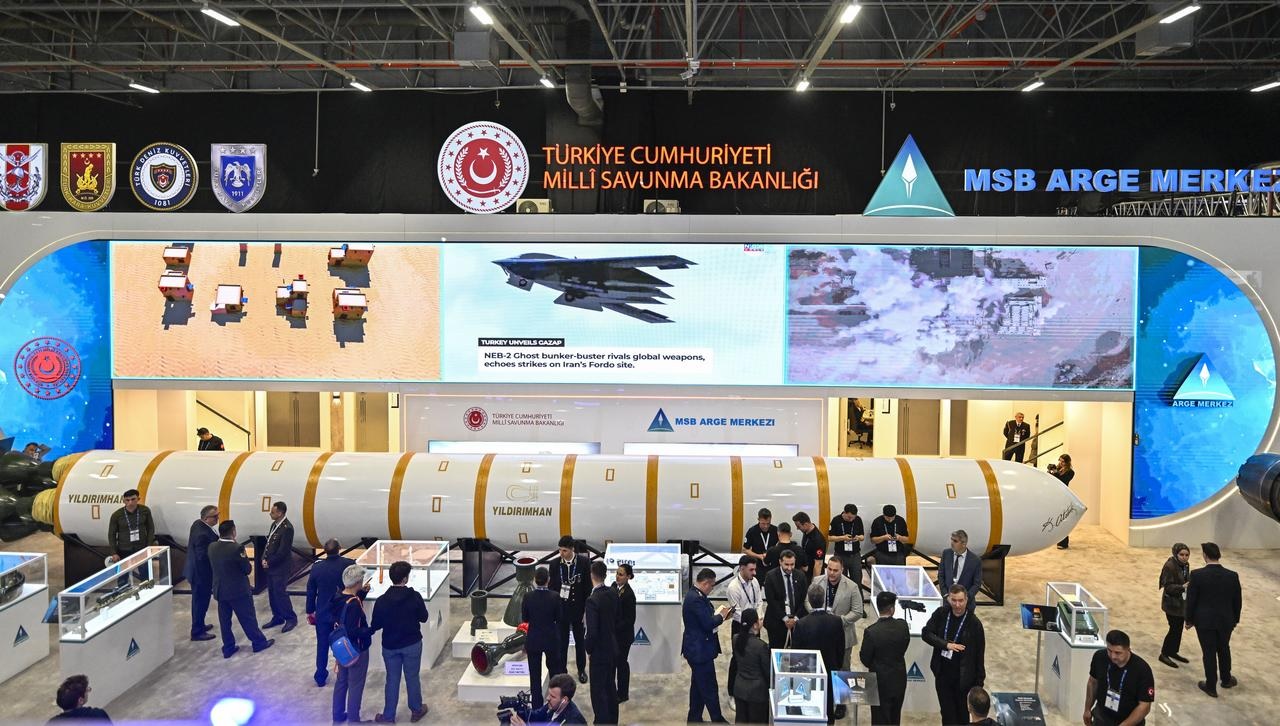
World
ISTANBUL, Turkey — May 6, 2026 : Turkey has publicly unveiled its first intercontinental ballistic missile (ICBM), named Yıldırımhan, during the SAHA 2026 International Defense, Aerospace and Space Industry Fair in Istanbul. Developed by the Research and Development Center of the Turkish Ministry of National Defense (MoND), the missile was displayed publicly for the first time on May 5. Turkish officials stated that the system has a range of approximately 6,000 kilometers and can reach speeds up to Mach 25. According to specifications presented at the exhibition, the Yıldırımhan uses liquid propulsion technology based on nitrogen tetroxide fuel and is powered by four liquid-fueled rocket engines. The missile is designed to carry a payload of approximately 3,000 kilograms. The Yıldırımhan is Turkey’s longest-range ballistic missile developed to date and its first publicly disclosed liquid-fueled ballistic missile capable of hypersonic-speed flight. Technical Error in Turkey’s Yıldırımhan Missile Display The official technical specification board released for Turkey’s Yıldırımhan missile contains a major propulsion terminology error by listing “Liquid Nitrogen Tetroxide (N₂O₄)” as the missile’s fuel type, when in reality nitrogen tetroxide is not a fuel but a powerful oxidizer used in liquid rocket propulsion systems. In established missile engineering, N₂O₄ must be paired with a separate fuel such as UDMH, hydrazine, or similar hypergolic propellants to generate thrust. By presenting N₂O₄ alone as fuel, the display demonstrates either poor technical translation, oversimplified public relations language, or a misunderstanding of basic rocket chemistry, raising questions about the accuracy of the publicly disclosed specifications. The likely intended meaning is that Yıldırımhan uses a storable liquid propellant combination based on nitrogen tetroxide as the oxidizer Program Development and Testing The Yıldırımhan program is the latest stage in Turkey’s domestic ballistic missile development effort, following earlier systems including the Yıldırım, Bora, and Tayfun missiles. Turkish defense officials stated that the project progressed through design, propulsion integration, structural assembly, guidance system development, and ground-based validation phases before its public unveiling. The missile is currently in the prototype and evaluation stage. Turkish authorities confirmed that subsystem and component-level testing has been conducted, though details regarding full-range flight trials and re-entry testing have not yet been released publicly. Officials indicated that additional flight-testing and operational validation phases are expected before the system could enter operational service. Technical Specifications According to Turkish defense officials, the Yıldırımhan features: Range: 6,000 kilometers Peak speed: Mach 25 Cruise speed: Mach 9 Propulsion: Four liquid-fuel rocket engines Fuel: Nitrogen tetroxide Payload capacity: Approximately 3,000 kilograms Based on its stated range, the missile would be capable of reaching targets across large parts of Europe, the Middle East, Asia, and Africa from Turkish territory. Turkish Government Statements Speaking at SAHA 2026, Turkish Defense Minister Yaşar Güler addressed recent Israeli statements suggesting Turkey could emerge as a future regional threat following tensions involving Iran. “We will use it in the best possible way to deter any enemy,” Güler stated during the exhibition. He described the missile as part of Turkey’s broader effort to strengthen strategic deterrence and expand its domestic defense industry. U.S., NATO and International Reaction The unveiling of the Yıldırımhan has drawn international attention, particularly within NATO and among regional security observers. As a NATO member, Turkey’s development of an indigenous ICBM is expected to be closely monitored by the United States in the context of alliance coordination, missile proliferation concerns, and regional security dynamics. Turkey and the United States continue to maintain defense-industrial cooperation in several sectors. During SAHA 2026, Turkish Aerospace Industries (TAI) also reaffirmed cooperation agreements with GE Aerospace related to propulsion and aerospace systems. Defense analysts stated that Turkey’s entry into the group of countries developing intercontinental-range ballistic missile systems could influence future regional missile competition and strategic deterrence policies. The Yıldırımhan remains under continued development following its public debut, with further testing and evaluation phases expected in the coming years.
Read More → Posted on 2026-05-06 14:29:58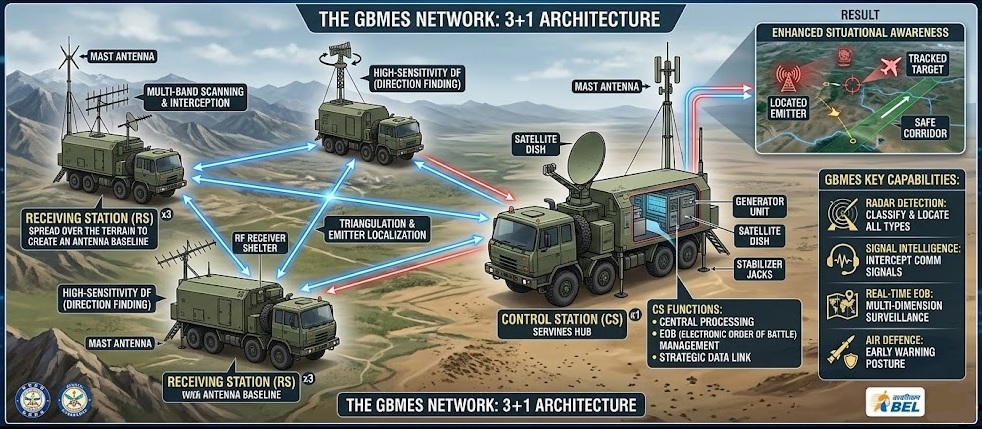
India
BENGALURU — May 6, 2026 : On May 5, 2026 Bharat Electronics Limited (BEL) has signed a ₹1,251 crore contract, excluding taxes, with the Ministry of Defence for the supply of Ground Based Mobile Electronic Intelligence Systems (GBMES) to the Indian Army. The programme is intended to strengthen the Army’s electronic warfare and battlefield surveillance capabilities while expanding India’s indigenous defence manufacturing base. The GBMES is a fully indigenous electronic intelligence platform designed and developed by the Defence Electronics Research Laboratory (DLRL), a specialised laboratory under the Defence Research and Development Organisation (DRDO). BEL will serve as the primary manufacturing and system integration agency for the project. Indigenous Electronic Warfare Platform The Ground Based Mobile ELINT System is a vehicle-mounted electronic intelligence platform developed for deployment in operational and forward battlefield environments. The system architecture consists of multiple receiving stations and a central control station mounted on high-mobility vehicles, enabling rapid deployment and relocation across varied terrain. The configuration includes Receiving Stations (RxS-1 and RxS-2), a Receiving Station with Communication Support Base (RxS-CSB), and a Control Station (CS), all linked through secure communication networks. The system is designed to operate in a distributed manner, allowing multiple mobile nodes to work together during intelligence-gathering operations. According to available technical details, the GBMES is capable of detection, monitoring, location fixing and complete analysis of radio frequency signals across a frequency range of 70 MHz to 40 GHz. The platform uses indigenously developed antenna systems, direction-finding equipment and advanced receiver technologies. Passive Electronic Intelligence Operations Electronic Intelligence (ELINT) involves gathering intelligence through the interception and analysis of electromagnetic emissions generated by military systems such as radars, communication equipment and air defence networks. Unlike conventional radar systems that emit radio waves and expose their own location, the GBMES functions as a passive surveillance system. The platform does not transmit signals of its own, allowing it to operate covertly while continuously monitoring the electromagnetic spectrum. The system uses highly sensitive antennas, advanced digital receivers and signal processing units to detect hostile electromagnetic emissions in real time. Once a signal is intercepted, the system analyses multiple parameters including operating frequency, pulse width, pulse repetition interval, modulation patterns and waveform characteristics. This analysis allows operators to identify the type of hostile equipment generating the signal, including surveillance radars, fire-control radars, surface-to-air missile guidance systems, artillery tracking radars and battlefield communication nodes. Detection and Geolocation Capabilities One of the key operational features of the GBMES is its ability to accurately locate hostile emitters. The system uses multiple receiving stations operating together in a networked configuration to determine the geographical coordinates of enemy radar and communication systems. The platform uses triangulation and phase-difference measurement techniques to establish precise emitter locations. This capability allows military formations to map hostile radar sites, command centres and communication infrastructure without alerting the adversary. In addition to radar intelligence gathering, the GBMES can intercept voice and data communication signals for further classification and operational analysis. The collected information contributes to the development of a comprehensive electronic intelligence picture of the battlefield environment. Technical Specifications Technical information associated with the system indicates that the GBMES is fully automated and software-intensive, while also retaining manual override capability when required during operations. The system is capable of intercepting radar emitters across the 70 MHz to 40 GHz spectrum and can simultaneously monitor at least 200 emitters during operational deployment. The platform is designed to support continuous monitoring, signal analysis and electronic threat identification under battlefield conditions. Its mobile configuration enables rapid deployment to operational sectors, including remote border regions and high-threat environments. The ability to reposition quickly also improves survivability against enemy artillery and counter-electronic warfare measures. Operational Role in Wartime The GBMES is expected to play an important role in modern battlefield operations where control of the electromagnetic spectrum is increasingly critical. The system can support the creation of an Electronic Order of Battle (EOB), which involves mapping enemy radar systems, air defence assets, artillery radars and communication networks before and during combat operations. By passively identifying hostile electronic assets, the Indian Army can improve situational awareness without exposing its own position. The intelligence generated by the system can support suppression of enemy air defence operations by identifying hostile radar locations and missile guidance systems. The information can also assist the Indian Air Force and other formations in planning safer operational routes for aircraft, helicopters and unmanned aerial systems operating near contested airspace. The platform additionally supports electronic warfare operations by enabling selective jamming of hostile radar and communication frequencies. Once enemy systems are identified and classified, electronic warfare units can deploy targeted countermeasures to disrupt adversary surveillance, targeting and command networks. Strategic and Industrial Significance The ₹1,251 crore contract further strengthens BEL’s defence production pipeline and supports the government’s broader objective of increasing indigenous defence manufacturing capabilities. The programme reduces dependence on foreign original equipment manufacturers by retaining system design, production and integration capabilities within India. The development and deployment of the GBMES also contributes to long-term strategic autonomy in advanced electronic warfare technologies. The induction of the Ground Based Mobile ELINT Systems is expected to enhance the Indian Army’s electronic surveillance, electromagnetic spectrum monitoring and battlefield intelligence capabilities as part of ongoing force modernisation efforts across multiple operational theatres.
Read More → Posted on 2026-05-06 14:50:49
World
WASHINGTON — May 6, 2026 : The United States and Iran are nearing completion of a one-page memorandum of understanding (MoU) intended to formally halt ongoing hostilities and establish a framework for broader nuclear and security negotiations, according to multiple reports citing officials familiar with the discussions. The proposed memorandum, structured around a 14-point framework, is currently under review by Iranian authorities, with Tehran expected to provide an official response to the latest U.S. draft within the next 48 hours. The document is being negotiated through a combination of direct contacts and mediation channels involving regional and international intermediaries. Officials involved in the talks described the draft as the closest Washington and Tehran have come to a diplomatic breakthrough since the recent conflict began. While no final agreement has yet been reached, both sides are reportedly attempting to secure an interim arrangement capable of immediately reducing military tensions while allowing additional time for negotiations on a broader long-term accord. The proposed memorandum is designed as a temporary political understanding rather than a legally binding treaty. If approved, it would formally declare an end to active military operations between the two sides and trigger a 30-day negotiation process aimed at drafting a comprehensive follow-on agreement covering nuclear restrictions, sanctions relief, regional security issues, and maritime access. Under the current draft, Iran would agree to suspend uranium enrichment activities for a period of 12 years as part of the proposed nuclear framework. Tehran would also halt operational activity at underground nuclear facilities and permit expanded inspections and monitoring by United Nations nuclear inspectors to verify compliance with the agreement. In exchange, the United States would begin a phased rollback of economic sanctions imposed on Iran and authorize the release of billions of dollars in frozen Iranian assets currently held abroad. The sanctions relief mechanism is expected to be implemented gradually and linked to verification measures carried out by international inspectors. The memorandum also includes provisions related to maritime security and commercial shipping in the Persian Gulf region. Both countries would remove existing restrictions affecting passage through the Strait of Hormuz, one of the world’s most strategically important energy transit corridors. The waterway handles a substantial share of global oil and liquefied natural gas shipments, making uninterrupted navigation a major concern for international markets and regional governments. According to sources familiar with the discussions, recent diplomatic progress has already affected military positioning in the region. The United States has reportedly reduced certain naval escort activities linked to commercial shipping operations, while Iran is expected to ease recent limitations imposed on maritime traffic near the strait if the memorandum is finalized. The negotiations are reportedly being led on the U.S. side by envoys including Steve Witkoff and Jared Kushner, working alongside diplomatic intermediaries engaged with Iranian officials. Discussions have focused on developing a narrowly scoped interim document capable of rapid implementation while postponing more technically detailed issues to subsequent negotiations. Officials familiar with the talks stated that the one-page memorandum intentionally avoids extensive legal language or detailed implementation schedules. Instead, it is designed to create a short-term de-escalation mechanism that can stabilize the situation and provide political space for broader diplomacy. The proposed 30-day negotiation period following the signing of the memorandum would involve discussions on the sequencing of sanctions removal, nuclear restrictions, verification procedures, and regional security arrangements. Diplomatic sources indicated that future negotiations could take place in neutral or internationally mediated locations, including Geneva or Islamabad. The White House has not formally confirmed the final contents of the draft agreement but has acknowledged that discussions with Iran have made significant progress in recent days. Iranian officials have also confirmed that the proposal remains under active evaluation within Tehran. Despite the diplomatic momentum, U.S. officials have stated that the interim memorandum would not prevent Washington from restoring sanctions pressure or resuming military measures if the follow-on negotiations fail to produce a broader agreement within the designated timeframe. The coming 48-hour period is now viewed by diplomats and regional observers as a critical stage in determining whether the proposed framework can move from preliminary negotiations toward formal implementation.
Read More → Posted on 2026-05-06 15:21:37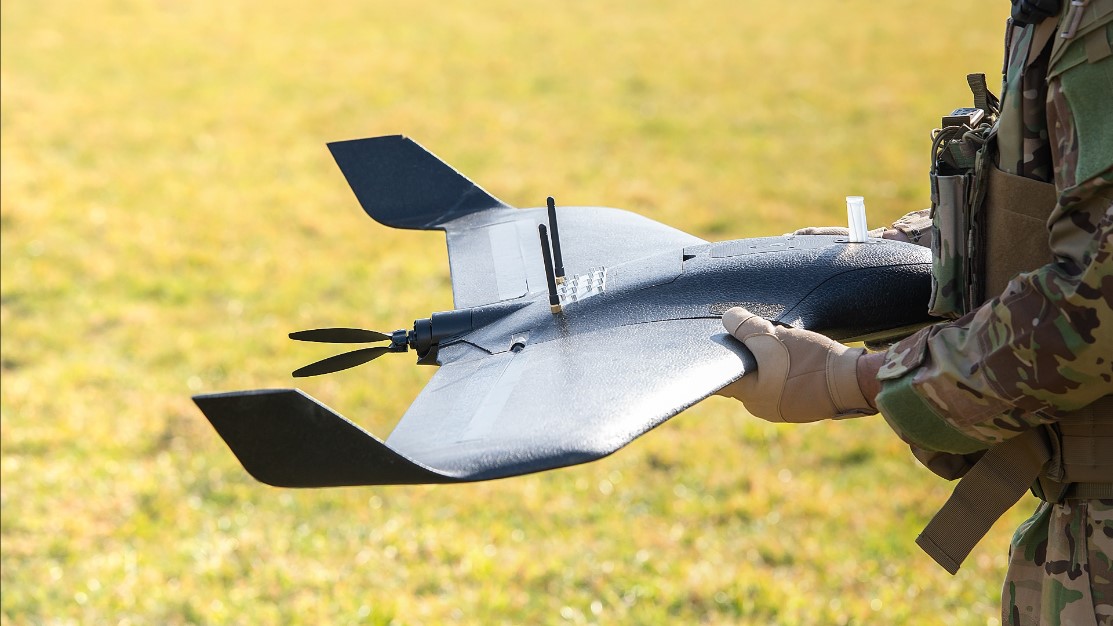
World
ALLEN, Texas — May 6, 2026 : EagleNXT has secured a new contract to supply three eBee VISION unmanned aircraft system (UAS) kits to the U.S. Army’s 7th Army Training Command (7ATC), further expanding the Army’s growing use of the company’s fixed-wing intelligence, surveillance, and reconnaissance (ISR) platform across Europe and the United States. The company announced on May 5 that the latest procurement increases total U.S. Army adoption of the eBee VISION platform to 34 systems distributed across six Army organizations. The systems are currently being fielded within forward-deployed formations in Europe as well as major combat training centers in the continental United States, reflecting increasing operational demand for lightweight ISR platforms capable of functioning in contested electronic warfare environments. The acquisition was facilitated by Dronivo, a German unmanned systems integrator specializing in defense and government programs. Dronivo provided regional acquisition support and will also oversee system integration and operator training for U.S. personnel operating the platforms in Europe. The arrangement is intended to streamline fielding and sustainment support for Army units participating in multinational exercises across the European theater. Systems to Support NATO-Focused Combat Training in Germany The three newly acquired systems will support operations at the Joint Multinational Readiness Center in Hohenfels, Germany, one of the U.S. Army’s primary combat training facilities in Europe. The center hosts rotational exercises involving U.S. and allied NATO forces and plays a central role in NATO’s eastern flank readiness posture. Army training requirements for ISR and counter-drone operations have evolved considerably following battlefield observations from the conflict in Ukraine, where persistent aerial surveillance has fundamentally changed battlefield movement, concealment, communication, and force protection practices. Under the new procurement, the 7th Army Training Command will employ the eBee VISION systems within opposing force (OPFOR) formations to replicate the continuous aerial observation capabilities expected from a near-peer adversary. The objective is to expose rotational units to sustained surveillance pressure during training operations, forcing adjustments in tactics, techniques, and operational procedures before deployment into real-world operational environments. The systems are also expected to support the development and validation of counter-unmanned aircraft system (C-UAS) procedures. By integrating realistic ISR threats into training rotations, Army units can refine camouflage, electromagnetic discipline, mobility, and anti-drone defense measures under simulated combat conditions. Fixed-Wing ISR Platform Designed for Contested Environments The eBee VISION was developed with operational input from special operations forces and is designed as a lightweight fixed-wing reconnaissance platform optimized for endurance and mobility. Unlike multirotor drones that prioritize hovering capability and vertical takeoff, the eBee VISION uses a fixed-wing configuration that provides substantially greater flight endurance, altitude efficiency, and operational range. The system is hand-launched and can be deployed by a single operator in under three minutes. It weighs approximately 4.1 pounds (1.85 kilograms) and features a 46.4-inch (118-centimeter) wingspan, allowing the complete system to be transported in a backpack configuration by dismounted personnel. For ISR operations, the platform carries a real-time high-definition imaging payload equipped with 32x optical zoom capability and optional thermal imaging systems for day and night reconnaissance missions. The aircraft can remain airborne for up to 90 minutes and supports beyond-visual-line-of-sight (BVLOS) operations with a wireless operating range of approximately 12 miles, or 20 kilometers. A key operational characteristic of the platform is its ability to function in GNSS-denied environments. The eBee VISION is capable of maintaining navigation and target tracking despite active GPS jamming or spoofing, a capability increasingly viewed as essential for modern ISR operations in electronically contested battlefields. The system also incorporates AES-256 encrypted communications to secure real-time data transmission during surveillance missions. NDAA-Compliant and Blue UAS Approved The eBee VISION platform is compliant with National Defense Authorization Act (NDAA) procurement requirements and has received approval under the Department of Defense’s Blue UAS cleared list. The Blue UAS framework identifies drone systems approved for procurement and operation by U.S. military and government organizations after cybersecurity and supply chain review processes. The platform’s compliance status has become increasingly significant as the Department of Defense moves to reduce reliance on foreign-manufactured unmanned systems for military and government operations. Army Procurement Expanding Across Multiple Training Commands The latest order represents the fourth consecutive multi-unit procurement of the eBee VISION platform by the U.S. Army. Recent Army acquisitions include 15 systems for a U.S. Army unit stationed in Europe, nine systems for the National Training Center at Fort Irwin, California, two systems previously allocated earlier this year to the Joint Multinational Readiness Center, and the latest three-unit order for the 7th Army Training Command. The units supplied to the National Training Center are among the first eBee VISION systems produced at EagleNXT’s newly established manufacturing facility in Allen, Texas. EagleNXT, formerly operating as AgEagle Aerial Systems, recently rebranded to reflect its broader strategic focus on defense, security, and government markets. The company continues to expand its portfolio of drone, sensor, and software solutions aimed at military and public sector customers. Company Highlights Growing Operational Demand Commenting on the contract, Bill Irby said the latest procurement reflects increasing demand for compact ISR systems capable of supporting operationally realistic military training environments. “We are proud to support the U.S. Army in Europe with advanced, mission-ready ISR technology,” Irby stated. “The eBee VISION’s portability, unique fixed-wing performance envelope, and secure real-time video capabilities make it an ideal tool for dynamic training environments.” The cumulative procurement pattern indicates that the platform has advanced beyond initial evaluation stages and is steadily establishing a defined operational role within the Army’s training and reconnaissance architecture. While the overall number of systems remains limited compared to larger Army aviation programs, the distribution of 34 systems across multiple commands in Europe and the United States suggests sustained institutional adoption driven by operational requirements rather than isolated procurement activity. Deliveries of the newly ordered systems are scheduled to begin in May 2026.
Read More → Posted on 2026-05-06 15:31:42
World
WASHINGTON — May 6, 2026 : The United States has approved a potential $373.6 million Foreign Military Sale (FMS) to Ukraine for Joint Direct Attack Munition–Extended Range (JDAM-ER) guidance kits and associated support equipment, according to a notification issued by the U.S. State Department and the Defense Security Cooperation Agency (DSCA). The proposed sale includes a total of 1,532 Boeing-produced JDAM guidance kits intended to expand Ukraine’s long-range precision strike capabilities as the country continues military operations against Russian forces. The transaction represents a significant shift from earlier U.S. military assistance arrangements. Unlike previous transfers of JDAM systems provided through American aid packages, the latest procurement is being financed directly by the Ukrainian government under the Foreign Military Sales framework. The arrangement aligns with the Trump administration’s policy approach toward military support for Ukraine, under which Kyiv purchases weapons directly while the United States facilitates supply and approval procedures. Package Composition According to the DSCA notification submitted to Congress on May 5, the package consists of two JDAM kit variants designed for different bomb classes. Ukraine requested: 1,200 KMU-572 JDAM tail kits for 500-pound bombs 332 KMU-556 JDAM tail kits for 2,000-pound bombs The sale also includes a broad support package covering FMU-139 fuze systems, spare and repair parts, software support, consumables, technical documentation, transportation services, maintenance assistance, and engineering and logistical support. The principal contractor for the transaction is Boeing. Under U.S. arms export procedures, Congress has a 30-day review period before the transaction can move toward final contracting and implementation. JDAM-ER System Capabilities JDAM systems are precision-guidance kits designed to convert conventional unguided bombs into GPS-guided munitions capable of striking targets with high accuracy in all weather conditions. The kit replaces the standard tail section of a conventional bomb with a new guidance assembly equipped with aerodynamic control surfaces, an onboard computer, and a GPS-aided inertial navigation system. The system enables aircraft to engage targets accurately without requiring continuous visual targeting conditions. The Extended Range configuration included in the Ukrainian purchase adds deployable wing kits that significantly increase operational range after release. When launched from altitude, JDAM-ER-equipped bombs can glide distances of up to approximately 45 miles (72 kilometers), allowing aircraft to conduct standoff strikes while remaining farther from hostile air defense systems. The guidance kits are compatible with standard Mk 80-series bombs ranging from 500 to 2,000 pounds. Previous Ukrainian Use Ukraine first received JDAM systems from the United States in December 2022 as part of a $1.85 billion U.S. military assistance package funded through Presidential Drawdown Authority mechanisms. Those earlier systems were transferred without direct cost to Kyiv as part of broader American military aid efforts. Beginning in spring 2023, the Ukrainian Air Force integrated JDAM-ER munitions onto Soviet-designed aircraft platforms, including MiG-29 and Su-27 fighter jets. Ukrainian forces subsequently employed the weapons in combat operations against rear-area military infrastructure, ammunition depots, and logistical positions. The standoff capability provided by JDAM-ER systems enabled Ukrainian aircraft to release munitions from greater distances while attempting to remain outside heavily defended airspace. Military analysts have noted that the weapon’s ability to operate during day or night and in adverse weather conditions provides operational flexibility compared with traditional unguided bombs. Shift Toward Direct Procurement The newly approved sale highlights an evolving structure in U.S.-Ukraine defense cooperation. While earlier JDAM transfers were funded directly by the U.S. government, the latest transaction is structured as a direct commercial-style procurement through the Foreign Military Sales program. Under this framework, the purchasing government finances the acquisition while the U.S. government manages approval procedures and coordination with defense contractors. The Trump administration has increasingly emphasized this model for future military transfers to Ukraine, favoring direct purchases over large federally subsidized assistance packages. In its official statement, the U.S. State Department said the proposed sale would “improve Ukraine’s capability to meet current and future threats” and support regional security objectives. The department also stated that the transaction “will not alter the basic military balance in the region.” Officials further noted that the sale would not negatively affect U.S. defense readiness or existing military inventories. If Congress does not block the transaction during the review period, negotiations and implementation activities involving Ukraine, the U.S. government, and Boeing are expected to proceed in the coming weeks.
Read More → Posted on 2026-05-06 15:40:01
World
ISTANBUL — May 6, 2026 : Turkish defense manufacturer Roketsan officially unveiled its new NEŞTER air-launched kinetic precision munition during SAHA Expo 2026, introducing a lightweight strike system designed for operations in dense urban environments and counterterrorism missions where minimizing collateral damage is a critical operational requirement. The system was presented on May 5 during the international defense, aerospace and space industry exhibition taking place in Istanbul from May 5 to 9, 2026. NEŞTER, which translates to “Scalpel” in Turkish, has been developed to engage high-value targets without relying on conventional explosive warheads, instead using kinetic energy and mechanical fragmentation effects to neutralize personnel and soft targets with limited impact on surrounding infrastructure. According to Roketsan, the munition was designed specifically for operational scenarios involving populated areas, narrow urban streets, building entrances, convoy interdiction routes and confined terrain where conventional blast-fragmentation munitions may generate excessive secondary damage. The system is intended to provide NATO-aligned and allied operators with a proportional strike capability suitable for modern drone warfare and precision engagement missions. Kinetic Warhead and Blade Deployment Mechanism Unlike conventional guided munitions that rely on explosive detonation, NEŞTER employs a kinetic-impact mechanism combined with deployable metallic blades. The munition is fitted with a highly sensitive proximity sensor positioned in the nose section. Milliseconds before impact, the sensor activates six pop-out blades that extend outward from the body of the projectile. The destructive effect is generated through the munition’s speed, mass and mechanical cutting force rather than explosive overpressure. Roketsan states that the design enables the weapon to physically fragment and disable targets through direct kinetic interaction, significantly reducing blast effects and uncontrolled fragmentation beyond the immediate impact area. The system is derived from Roketsan’s existing MAM-L lightweight smart munition family, which has been widely integrated across Turkish unmanned aerial vehicle platforms and light attack aircraft. While standard MAM-L variants are available with armor-piercing, thermobaric and high-explosive fragmentation warheads, NEŞTER replaces the explosive payload with a dedicated kinetic warhead incorporating the blade deployment mechanism. Technical Specifications NEŞTER retains the same external dimensions and structural profile as the standard MAM-L munition, allowing compatibility with existing launch systems and integration infrastructure already used by operators of Turkish air-launched precision weapons. The munition measures 0.95 meters in length, has a diameter of 150 millimeters and weighs 23 kilograms. Guidance is provided through an inertial navigation system (INS) combined with a semi-active laser (SAL) seeker. The laser guidance architecture allows targets to be designated by the launch platform itself, another aircraft, a UAV or a ground-based laser designator. According to Roketsan technical data, NEŞTER has an operational range of 15 kilometers when launched under a flight profile of 20,000 feet altitude and 100 knots airspeed. The munition is intended for deployment from unmanned aerial vehicles (UAVs) and light attack aircraft operating in tactical strike roles. The weapon is designed to engage personnel, exposed combatants, soft vehicles, lightly protected targets and unarmored platforms located in confined or civilian-sensitive environments. The combination of INS-supported navigation and terminal laser guidance allows the munition to maintain controlled flight toward the designated target area before executing precision terminal engagement. UAV Compatibility and Operational Integration Because NEŞTER maintains the same form factor as the MAM-L family, it can be integrated onto existing Turkish UAV platforms without structural modification. The munition is compatible with combat drones already in service within Türkiye’s unmanned systems ecosystem, including the Bayraktar TB2, TAI ANKA and Bayraktar AKINCI. The lightweight configuration enables tactical UAVs and light aircraft to carry multiple units during a single sortie while maintaining endurance and payload flexibility. Roketsan indicated that the shared MAM-L technical foundation simplifies logistics, integration procedures, maintenance requirements and operator training for armed forces already employing Turkish precision-guided munitions. Operational scenarios identified for NEŞTER include counterterrorism missions, border security operations, special operations support, convoy interdiction, urban warfare environments and precision engagements near civilian infrastructure. The munition is intended for situations where military planners require the ability to strike individual targets while minimizing blast propagation and secondary fragmentation effects. Comparison With the AGM-114R9X Hellfire Conceptually, NEŞTER shares similarities with the U.S. AGM-114R9X Hellfire missile variant, a specialized kinetic weapon developed for precision strikes against high-value targets with reduced collateral damage. Like the AGM-114R9X, the Turkish system uses deployable blades rather than a conventional explosive warhead to generate terminal effects. However, NEŞTER occupies a lighter and more compact class of air-launched munition. While the AGM-114R9X is approximately 1.62 meters long and weighs between 44.5 and 48.5 kilograms, NEŞTER measures 0.95 meters and weighs 23 kilograms. The reduced size and weight allow carriage by smaller UAVs and light attack aircraft, increasing deployment flexibility and sortie payload capacity. The system also differs in market positioning. The AGM-114R9X remains a highly restricted U.S. capability with limited export accessibility, while NEŞTER expands Roketsan’s export-oriented precision weapons portfolio. The munition is positioned as an accessible low-collateral strike option for allied and partner nations seeking precision engagement capabilities optimized for unmanned warfare operations. Additional Systems Introduced at SAHA Expo 2026 NEŞTER was unveiled alongside several additional Roketsan systems introduced during SAHA Expo 2026. These included the CİRİT Anti-İHA variant designed for counter-UAV operations, the CİDA long-range anti-tank missile and a new mini cruise missile platform. The broader product presentation reflects ongoing industry emphasis on scalable precision-guided weapons, compact air-launched systems and controlled-effect munitions tailored for increasingly complex operational environments involving drones, urban combat zones and proportional strike requirements. With the introduction of NEŞTER, Roketsan expands Türkiye’s portfolio of combat-oriented air-launched precision munitions while addressing growing international demand for weapons capable of conducting accurate strikes in densely populated and infrastructure-sensitive environments.
Read More → Posted on 2026-05-06 15:49:43
World
ISTANBUL, Turkey — May 6, 2026 : Turkish state-owned defence manufacturer Makine ve Kimya Endüstrisi A.Ş. (MKE) has introduced three new modular components for its Tolga short-range air defence system during SAHA Expo 2026 in Istanbul, expanding the system’s layered counter-air capabilities against drones, loitering munitions, helicopters, and other low-altitude threats. The newly presented systems include a portable acoustic detection sensor, a 20-kilowatt directed-energy laser weapon system, and the Enfal-17 short-range missile equipped with a four-tube launcher. The additions are intended to integrate into the existing Tolga architecture, which already combines radar, electronic warfare systems, electro-optical tracking sensors, and gun-based hard-kill effectors ranging from 12.7 mm to 35 mm calibres. According to MKE, the expanded Tolga network is designed to provide a multi-layered defence structure capable of countering mini and micro unmanned aerial vehicles, tactical drones, smart munitions, cruise missiles, and helicopters through the coordinated use of soft-kill and hard-kill systems. Acoustic Detection System Introduced for Passive Threat Tracking Among the newly displayed systems was a lightweight tripod-mounted acoustic detection sensor intended for passive identification and tracking of aerial threats. The sensor is equipped with two visible acoustic receivers and uses digital signal processors with digitally filtered data processing to detect and classify airborne targets. MKE stated that the sensor can detect aerial vehicles at distances ranging from 100 metres to 1,500 metres, depending on the target’s size and acoustic signature. Once a target is identified, the system transmits detection information, target classification data, and its precise GPS location to the command post through radio-frequency communication links. The sensor has an operational mass of 2.7 kilograms excluding the tripod and is designed for sustained forward deployment. Its battery system supports continuous operation for between 10 and 12 days without replacement or recharge. The passive acoustic system is intended to supplement Tolga’s radar and electro-optical tracking network, particularly against low-signature aerial threats operating at low altitude or in electronically contested environments. 20 kW Laser Weapon Adds Directed-Energy Capability MKE also unveiled a new Laser Weapon System designed for use against aerial, land, and naval targets. The directed-energy weapon generates a combined output of 20 kilowatts through four separate 5 kW fibre laser modules integrated into a single turreted platform. The system provides different operational effects depending on target range and energy concentration. According to specifications released by MKE, the laser can temporarily dazzle enemy optical systems at distances between 4,500 and 2,500 metres, causing short-term blackout effects. At ranges between 2,500 and 1,500 metres, the laser is capable of permanently blinding optical sensors and rendering enemy effectors inoperable. Within engagement distances of 1,500 to 1,000 metres, the system can physically destroy incoming threats by maintaining continuous laser illumination for several seconds to transfer sufficient thermal energy onto the target. To maintain accurate tracking against moving targets, the turret uses linear motors designed to provide the angular speed, acceleration, and precision required for sustained target illumination. The mount offers continuous 360-degree rotation with elevation movement from -30 degrees to +90 degrees. The laser weapon system measures 1,550 mm in width, 2,250 mm in length, and 1,850 mm in height. MKE did not disclose the total system weight or power-pack specifications, though repeated firing cycles are expected to depend heavily on the supporting energy supply unit integrated with the platform. The introduction of the laser weapon adds a directed-energy hard-kill layer to the Tolga system, complementing existing kinetic interceptors and electronic warfare systems. Enfal-17 Missile Designed for Drone and Helicopter Intercepts The third major addition to the Tolga network is the Enfal-17 missile system, developed by MKE as a low-cost interceptor for aerial threats including Shahed-type loitering munitions, stand-off weapons, and attack helicopters. Named after the 17th verse of the Quran’s Al-Anfal Surah, the Enfal-17 is a 70 mm calibre missile measuring 1.85 metres in length. The missile uses an electro-optical seeker for terminal guidance and carries a fragmentation warhead equipped with a proximity fuse. MKE has not released details regarding the warhead’s lethal radius. According to company specifications, the missile can engage targets at altitudes reaching up to 30,000 feet. MKE described the Enfal-17 as a cost-effective interceptor estimated to be approximately eight times less expensive than comparable systems in its class. At SAHA Expo 2026, the missile launcher was displayed mounted on a commercial Ford Ranger Wildtrak pickup platform, indicating a relatively lightweight turret and launcher assembly suitable for mobile deployment. The launcher uses a four-tube configuration and, similar to the laser system, provides continuous 360-degree rotation with elevation movement between -30 and +90 degrees. Tolga Air Defence Architecture Continues Expansion The Tolga short-range air defence system was originally developed as a layered counter-drone and low-altitude defence platform integrating radar, electronic warfare, and gun systems. Previous configurations relied heavily on 12.7 mm airburst ammunition alongside electronic jamming systems. MKE stated that Tolga has previously demonstrated a 100 percent success rate during live-fire drone interception trials involving both soft-kill jamming and hard-kill gun engagements. The system integrates the GÖKBÖRÜ active electronically scanned array radar for detection and tracking at ranges of approximately 10 kilometres. Additional electro-optical and infrared sensors provide target identification and precision tracking functions, while the command-and-control unit fuses information from all connected sensors to prioritise threats and assign the appropriate response method. Tolga is available in both fixed-site and vehicle-mounted mobile configurations. Export Interest and International Cooperation During SAHA Expo 2026, MKE presented more than 50 new defence products across multiple categories. The company also signed a memorandum of understanding with Hungary-based HT Division for the integration of Tolga systems onto unmanned ground vehicles. The Tolga system has already attracted export interest. MKE confirmed that Egypt signed a contract valued at approximately $130 million for the system, while Qatar has also received the first export delivery. The integration of the new acoustic sensor, directed-energy laser system, and Enfal-17 missile expands the Tolga architecture into a broader layered air defence solution capable of engaging low-signature drones and aerial threats through passive detection, electronic warfare, kinetic interceptors, and directed-energy engagements within a single integrated network.
Read More → Posted on 2026-05-06 16:03:22
World
ISTANBUL, Türkiye — May 6, 2026 : Turkish unmanned systems manufacturer Baykar publicly unveiled three new loitering munition platforms during SAHA Expo 2026, expanding its portfolio of autonomous strike systems designed for operations in contested electronic warfare environments. The newly introduced systems — the Kemankeş 2 (K2) kamikaze UAV, the Mızrak intelligent loitering munition, and the Sivrisinek loitering munition — were displayed for the first time during the defence, aerospace and space exhibition held from May 5 to 9 at the Istanbul Expo Center. All three platforms are equipped with autonomous navigation systems, artificial intelligence-based target recognition algorithms, and integrated mission planning software. Baykar stated that the systems use AI-powered visual positioning capabilities that allow them to navigate, locate and engage targets independently of Global Navigation Satellite Systems (GNSS), enabling operations in environments where satellite navigation and communications may be degraded or denied. Kemankeş 2 (K2) Kamikaze UAV The Kemankeş 2, or K2, was exhibited in full scale in the outdoor display area and represents the largest of the three newly introduced systems. The platform is designed for long-range strike missions, swarm operations and extended endurance missions while carrying a comparatively heavy payload. The K2 features a 10-metre wingspan and a fuselage length of 5.1 metres. The airframe uses a canard aerodynamic configuration with winglets fitted with rudders at the main wing tips. Instead of a conventional rear vertical stabiliser, the design incorporates a short vertical aerodynamic surface mounted beneath the central fuselage. Propulsion is provided by a rear-mounted 100-horsepower internal combustion engine driving a three-blade pusher propeller. According to Baykar, the K2 has a cruise speed of 70 knots and a maximum speed of 110 knots. The system is capable of remaining airborne for more than 13 hours and has an operational range exceeding 2,000 kilometres. Operational altitude is listed at 8,000 feet, while the service ceiling reaches 10,000 feet. The K2 has a maximum payload capacity of up to 200 kilograms and carries two Azak E5 munitions jointly developed by Baykar and Turkish defence manufacturer MKE. For communications, the platform supports line-of-sight connectivity exceeding 100 kilometres. Baykar stated that the system can also be fitted with beyond-line-of-sight communication capability for extended missions, alongside the company’s standard datalink architecture used on its larger unmanned combat aerial vehicle platforms. The K2 supports fully automated take-off and has been designed to operate in coordinated swarm formations during dense electronic warfare conditions. Mızrak Intelligent Loitering Munition The Mızrak, translated as “Spear,” is positioned as a medium-tier intelligent loitering munition intended for deep strike operations and armed reconnaissance missions. Its airframe consists of a cylindrical fuselage measuring 3.6 metres in length, combined with a 4.0-metre wingspan main wing fitted with winglets. The design also includes canard wings and a vertical rudder assembly. The platform is powered by an internal combustion engine coupled to a two-blade propeller. Baykar lists the cruise speed at 80 knots and maximum speed at 100 knots. Operational altitude is 4,000 feet, while the service ceiling reaches 10,000 feet. The Mızrak can remain airborne for more than seven hours and has an operational range exceeding 1,000 kilometres. The system offers multiple launch options. It can operate conventionally using a forward tricycle landing gear for runway take-off and landing, or alternatively employ a rocket-assisted take-off (RATO) booster for ramp launches from unprepared terrain. The platform has a maximum take-off weight of 200 kilograms and can carry a payload of up to 40 kilograms. Baykar introduced two payload configurations for the system. The heavy-strike configuration allocates the full payload capacity to twin warheads, while the precision-strike configuration combines a 20-kilogram warhead with a radio-frequency seeker designed for terminal attack guidance. A gimballed electro-optic and infrared sensor suite is mounted near the forward landing gear section to support reconnaissance and targeting functions. The Mızrak is typically configured with line-of-sight communications but can also integrate beyond-line-of-sight systems and Baykar’s datalink network architecture for extended operations. Sivrisinek Loitering Munition The Sivrisinek, meaning “Mosquito,” was presented as a lower-cost loitering munition prioritising affordability, rapid deployment and swarm integration capability. The system uses a cylindrical fuselage measuring 3.8 metres in length. Its 3.2-metre wingspan wing assembly is attached using cable ties, a design approach also applied to the tailplane and rudder structures in order to reduce manufacturing and maintenance costs. Unlike the K2 and Mızrak, the Sivrisinek is catapult-launched, removing dependence on runways or prepared launch areas. The platform is powered by an internal combustion engine driving a two-blade propeller and is available in two configurations designated UM and UMX. The Sivrisinek UM has a maximum take-off weight of 76 kilograms, endurance exceeding nine hours and an operational range of approximately 1,000 kilometres. The Sivrisinek UMX incorporates an AI-assisted electro-optic camera system, increasing maximum take-off weight to 78 kilograms. Baykar stated that the added aerodynamic drag reduces endurance to more than eight hours and operational range to approximately 900 kilometres. Both variants operate at an altitude of 4,000 feet with a service ceiling of 10,000 feet. Each carries a dedicated 20-kilogram warhead payload. Integrated Networked Operations Baykar stated that the K2, Mızrak and Sivrisinek were developed as interoperable systems capable of functioning within a coordinated multi-layer strike network. According to the company, pre-exhibition flight demonstrations verified autonomous swarm operations involving the K2 and Sivrisinek operating alongside existing Baykar unmanned combat aerial vehicles, including the Bayraktar TB2, Bayraktar TB3 and Bayraktar Akıncı. Baykar said the systems utilise optical guidance and local network communications to exchange target information and coordinate synchronized attacks while maintaining operational capability in electronically contested environments where external communication and navigation signals are disrupted. The company described the three platforms as forming a layered operational structure combining heavy, medium and lightweight loitering munitions for deep-strike missions, armed surveillance operations and swarm attacks.
Read More → Posted on 2026-05-06 16:24:22
World
DUBAI, United Arab Emirates — May 6, 2026 : The United Arab Emirates has reportedly deployed China’s Guangjian-21A truck-mounted laser counter-drone system at Dubai International Airport as part of expanded security measures aimed at protecting critical infrastructure from potential unmanned aerial threats linked to rising regional tensions. The reported deployment places one of China’s newest directed-energy air defence systems at one of the Middle East’s busiest aviation hubs. The Guangjian-21A, also known as the Light Arrow-21A, was publicly unveiled by Chinese state media in March 2026 as part of the Guangjian family of integrated low-altitude counter-unmanned aerial systems designed to defeat small and low-flying drones that frequently evade conventional radar coverage. The deployment comes amid continued concern across the Gulf region regarding drone and missile threats associated with Iran and Iranian-aligned groups. Recent regional developments have included reported drone activity near Dubai as well as attacks targeting economic and infrastructure facilities linked to broader regional instability. Guangjian Series Designed for Low-Altitude Drone Threats The Guangjian series was developed to address the growing use of small unmanned aerial vehicles in modern conflicts. Chinese technical disclosures describe the architecture as an integrated counter-drone network combining hard-kill laser systems and soft-kill electronic warfare platforms. The Guangjian-21A is a highly mobile truck-mounted laser weapon system designed for kinetic hard-kill engagements against low-altitude drones. The platform generates concentrated high-density laser beams capable of heating and structurally weakening drone airframes or disabling propulsion systems, onboard electronics and flight-control circuits within seconds. Chinese sources state that the system can engage targets over several kilometres and is specifically optimized against small drones operating at low altitude and low speed. The system incorporates rapid detect-lock-engage functions intended to shorten engagement timelines against fast-emerging aerial threats. A key operational feature of the Guangjian-21A is its “shoot-on-the-move” capability. The system can reportedly maintain firing operations while maneuvering, allowing the platform to reduce exposure time and reposition during defensive operations around sensitive infrastructure zones. The Guangjian-21A is supported by phased-array radar systems and infrared detection sensors capable of identifying and tracking targets in low-altitude blind spots generally ranging between 50 and 80 meters above ground level, where traditional radar systems often experience reduced effectiveness. Guangjian-11E Provides Soft-Kill Electronic Warfare Capability Alongside the Guangjian-21A, China also introduced the Guangjian-11E, or Light Arrow-11E, as part of the same counter-drone architecture. Unlike the laser-based hard-kill role of the 21A, the Guangjian-11E functions as a containerized soft-kill electronic warfare platform designed for stationary or semi-stationary deployment. The system combines pulsed laser effects, electronic interference and decoy techniques to disrupt drone operations without physically destroying the target. Chinese technical descriptions indicate that the Guangjian-11E can blind electro-optical payloads, interfere with onboard sensors and sever communication and data transmission links between drones and their operators. Both Guangjian systems are designed to operate as an integrated network through wired and wireless data-sharing links, enabling real-time target coordination across distributed air defence positions. UAE Expands Layered Air Defence Around Critical Infrastructure The reported deployment at Dubai International Airport forms part of broader UAE efforts to strengthen layered air defence coverage around strategic infrastructure, including airports, logistics facilities, energy sites and military installations. Directed-energy systems such as the Guangjian-21A provide a comparatively low-cost-per-engagement option against drone swarms and loitering munitions when compared with traditional missile interceptors. Their ability to sustain repeated engagements without expending conventional munitions has increased global interest in laser-based counter-drone systems. The UAE has steadily expanded its air defence capabilities over recent years through acquisitions of missile defence systems, electronic warfare platforms and counter-unmanned aerial technologies from multiple international suppliers. China and the UAE maintain growing defence cooperation ties, including previous transfers of Chinese-origin air defence systems such as the FK-2000 short-range air defence platform. China’s Expanding Defence Role in the Gulf The reported presence of the Guangjian-21A in Dubai also highlights China’s expanding role as a supplier of advanced defence technologies to Gulf states. Beijing has increased military and defence cooperation across the Middle East through exports of drones, surveillance systems, air defence equipment and electronic warfare technologies. Chinese defence manufacturers have increasingly promoted directed-energy systems as cost-effective solutions for countering low-cost drone threats. At the same time, China continues to maintain strategic and economic relations with Iran. Western intelligence agencies and international monitoring organizations have repeatedly reported that Chinese entities supplied Iran with dual-use technologies and industrial components supporting Tehran’s domestic drone and missile production sectors. These reportedly include microelectronics, navigation modules, engines, carbon fiber materials and other components later identified in Iranian-made unmanned aerial vehicles recovered in conflict zones across the Middle East and Eastern Europe. Recent US intelligence reporting has also alleged that Chinese-linked entities prepared shipments of military-related equipment and air defence components to Iran, including technologies capable of supporting indigenous weapons production. Dual-Track Regional Strategy The simultaneous expansion of Chinese defence exports to Gulf states while Chinese-origin technologies continue to appear in Iranian drone supply chains reflects a broader dual-track regional strategy pursued by Beijing. By supplying advanced counter-drone systems to countries facing Iranian aerial threats while maintaining commercial and industrial links that support Iran’s domestic military production ecosystem, China has positioned itself as a significant security actor on multiple sides of the Gulf security environment. Chinese sources previously stated that Guangjian systems had been deployed domestically during major security operations in Beijing to provide low-altitude aerial protection during national events and high-profile public gatherings. No official statements confirming the reported deployment at Dubai International Airport have been issued by the governments of the United Arab Emirates, China or Iran.
Read More → Posted on 2026-05-06 17:04:49
World
WARSAW, Poland — May 6, 2026 : Ukrainian defense companies unveiled two new interceptor unmanned aerial vehicle (UAV) systems, the Bumblebee and Vertex, during the Defence24 Days exhibition in Poland, as part of ongoing efforts to expand low-cost counter-drone and short-range air defense capabilities. The systems were presented by UMO, the official Polish representative of Ukrainian defense manufacturer Ukrspetssystems. According to the companies involved, both interceptor drones are intended to supplement existing layered air defense networks by addressing operational gaps in conventional systems, particularly against loitering munitions and one-way attack drones. The two platforms were designed for different operational roles, with the Bumblebee intended for deeper operational-strategic interception missions and the Vertex developed as a more economical solution for localized air defense. Bumblebee Developed for Operational-Strategic Interceptions The Bumblebee interceptor is the larger and more capable of the two systems presented at the exhibition. The autonomous UAV was designed to engage aerial threats at operational-strategic depth and forms part of a broader integrated air defense architecture. According to the developers, the interceptor can reach speeds of up to 350 km/h, operate at altitudes of up to 4 kilometers, and engage targets at ranges of up to 30 kilometers. The UAV has a flight endurance of approximately 14 minutes and carries a 1.2-kilogram warhead. The system uses a vertical launch configuration, allowing deployment from compact operational positions without the need for a runway or launcher rail. Integrated Detection and Engagement Process Developers outlined a multi-stage interception sequence used by the Bumblebee system during combat operations. The engagement process begins with the detection of an aerial threat through external systems, including radar stations, acoustic sensors, or ground-based situational awareness networks. Once a target is identified, the incoming object is classified according to its azimuth, altitude, and speed. After target verification, authorization for interception is issued by the responsible unit commander. The launch crew then prepares and vertically launches the UAV toward the designated intercept area. During the terminal engagement phase, the operator uses onboard optical systems to visually acquire the target at distances of up to 700 meters. The operator can continue making manual flight corrections until the interceptor impacts the target and detonates. According to the developers, the Bumblebee was specifically designed to strengthen air defense coverage in areas where traditional systems may be limited by operational reach, deployment flexibility, or interception costs. Vertex Introduced as Economical Local Defense Interceptor Alongside the Bumblebee, UMO also presented the Vertex interceptor, a smaller and lower-cost UAV developed for localized air defense missions and shorter-range engagements. The Vertex carries a 500-gram warhead and has an operational range of approximately 7 to 10 kilometers. The drone can remain airborne for up to 15 minutes. The developers did not disclose the system’s maximum speed or operating altitude during the exhibition. The platform was presented as a cost-effective interceptor intended for defending smaller operational areas and critical positions against low-cost aerial threats. Carbon-Reinforced Airframe Design A key engineering feature highlighted during the presentation was the Vertex airframe structure. The drone is manufactured using carbon filament reinforced with fine carbon fibers, a construction method intended to improve structural rigidity while reducing aerodynamic deformation during flight. According to the developers, the material configuration enhances flight stability and maintains airframe integrity during high-speed maneuvering and interception operations. The lightweight reinforced structure is also intended to improve the UAV’s operational efficiency while maintaining low production costs. Part of Broader Ukrainian Counter-Drone Development Effort The presentation of the Bumblebee and Vertex systems at Defence24 Days reflects Ukraine’s continued focus on expanding domestically produced kinetic interceptor drones designed to supplement conventional air defense systems. Both UAVs form part of a broader effort to develop affordable interception platforms capable of countering large numbers of loitering munitions and one-way attack drones, which increasingly challenge traditional missile-based air defense systems due to cost and saturation concerns. The exhibition in Poland also highlighted ongoing Ukrainian efforts to cooperate with NATO and European defense partners in the field of counter-drone technologies and air defense modernization. Confirmed Specifications Presented at Defence24 Days Feature Bumblebee Vertex Operational Role Operational-strategic depth interceptor Economical localized defense Maximum Speed Up to 350 km/h Not specified Operational Range Up to 30 km 7–10 km Maximum Altitude Up to 4 km Not specified Flight Duration 14 minutes Up to 15 minutes Warhead Payload 1.2 kg 500 g Target Detection Range Up to 700 meters Not specified Launch Method Vertical launch Not specified Airframe Material Not specified Carbon filament reinforced with fine carbon fibers
Read More → Posted on 2026-05-06 17:20:54
World
PYONGYANG / SEOUL — May 6, 2026 : North Korea has formally amended its constitution to eliminate all references to reunification with South Korea and, for the first time, explicitly define the territorial boundaries of the Democratic People’s Republic of Korea (DPRK), according to constitutional excerpts reviewed by South Korean officials and international analysts. The revisions, adopted during the March 2026 session of the Supreme People’s Assembly, codify leader Kim Jong Un’s policy shift toward treating the two Koreas as separate and opposing states rather than partners for eventual reunification. The revised constitution, now consisting of 168 articles, was presented and discussed during a briefing by South Korea’s Unification Ministry on May 6. Officials stated that the amendments collectively establish a formal legal framework for what Pyongyang has increasingly described as a “two states” doctrine. The constitutional overhaul reflects a broader policy change first outlined by Kim Jong Un in January 2024, when he declared that relations between North and South Korea should no longer be based on the concept of a shared nation pursuing reunification. Instead, Pyongyang moved toward officially defining South Korea as a separate and hostile state within its governing framework. Analysts said the removal of reunification language serves multiple political and strategic purposes for North Korea, including reinforcing the regime’s national security posture, strengthening internal ideological control, and legally institutionalizing a long-term adversarial relationship with Seoul. By abandoning decades of official reunification rhetoric, the revised constitution formally redefines inter-Korean relations as relations between two distinct sovereign states rather than two parts of a divided nation. Territorial Borders Formally Defined Under the newly revised Article 2, North Korea explicitly outlines the territorial scope of the DPRK. The article states that the country’s territory includes the land “bordering the People’s Republic of China and the Russian Federation to the north and the Republic of Korea to the south,” along with its territorial waters and airspace. The clause additionally states that North Korea “absolutely does not allow any infringement on its territory,” reinforcing the state’s position on sovereignty and territorial defense. Analysts noted, however, that the constitution does not specify exact maritime boundaries with South Korea and makes no direct reference to the disputed Northern Limit Line (NLL) in the Yellow Sea. The omission is viewed as a deliberate decision to preserve military and diplomatic flexibility regarding contested maritime zones between the two Koreas. The amendment marks the first time North Korea’s constitution has included a direct territorial definition identifying South Korea as a separate neighboring state to the south. Reunification References Removed The constitutional revisions also remove all language related to inter-Korean reunification from both the preamble and the main body of the document. The previous version of Article 9 had stated that the DPRK would “strive to reunify the country on the principles of independence, peaceful unification, and great national unity.” That article has now been revised, and all references to “peaceful reunification,” “great national unity,” “reunification of the fatherland,” and the term “northern half” have been deleted. References describing the reunification achievements and policies of founding leader Kim Il Sung and former leader Kim Jong Il were also removed from the constitutional text. In addition, the preamble no longer includes the phrase “Kim Il-sung–Kim Jong-il Constitution,” reflecting a broader restructuring of ideological language within the document. The revised constitution instead places greater emphasis on the “people-first principle,” a governing concept closely associated with the leadership approach of Kim Jong Un. Expanded State Authority and Nuclear Command The amendments further formalize changes to North Korea’s state structure and military command system. Under the revised constitutional framework, the Chairman of the State Affairs Commission — a position currently held by Kim Jong Un — is officially designated as the head of state, consolidating authority above the Supreme People’s Assembly within the state hierarchy. New provisions also explicitly grant the Chairman command authority over North Korea’s nuclear forces. The constitutional text formally identifies the DPRK as a “responsible nuclear weapons state” and states that the country will maintain nuclear capabilities for purposes described as national survival and deterrence. The inclusion of direct nuclear command authority in the constitution represents one of the most significant institutional changes contained in the amendments. Policy Shift Formalized in Constitutional Law The constitutional overhaul implements policy changes first publicly proposed by Kim Jong Un in January 2024, when he called for revising the constitution to define South Korea as a separate and hostile state rather than a counterpart for national reunification. That policy direction marked a major departure from decades of official North Korean rhetoric emphasizing ethnic unity and eventual reunification of the Korean Peninsula. South Korean officials and regional analysts said the constitutional changes formally institutionalize that shift at the highest legal level of the North Korean state. The Unification Ministry in Seoul stated that the revised text establishes a clear legal basis for Pyongyang’s evolving approach toward inter-Korean relations, while maintaining strategic ambiguity on unresolved military and territorial disputes. North Korean state media has not released the full amended constitution publicly, and no official statement has been issued by Pyongyang detailing the complete scope or implementation timeline of the revisions beyond confirmation that they were adopted during the March Supreme People’s Assembly session.
Read More → Posted on 2026-05-06 17:41:12
World
WASHINGTON — May 6, 2026 : The U.S. Air Force has formally approved the T-7A Red Hawk advanced trainer aircraft for low-rate initial production following a Milestone C decision issued on April 23, marking a major transition of the program from development into operational manufacturing. The approval includes a $219 million contract awarded to Boeing Defense, Space & Security for the first 14 production aircraft, along with associated spare parts, support equipment, maintenance systems, and training infrastructure under the T-7 Advanced Pilot Training Program. The decision follows more than a year of coordinated management efforts conducted through what Air Force officials described as an “active management” strategy involving the Department of the Air Force, Air Education and Training Command (AETC), the Air Force Life Cycle Management Center, Boeing, and Swedish aerospace manufacturer Saab AB, which produces the aircraft’s aft fuselage sections. Transition From Development to Production Air Force officials said the production approval represents a major acquisition milestone for the service’s future pilot training architecture and reflects progress made in resolving technical and developmental issues that affected the program in earlier phases. “Reaching Milestone C is a testament to the dedicated government and industry teams who have worked diligently to overcome complex technical hurdles,” said William Bailey, performing the duties of the Assistant Secretary of the Air Force for Acquisition, Technology, and Logistics. “The T-7A is a pivotal program for the future of our combat air forces, and entering production brings us one step closer to putting this essential capability into the hands of our instructor pilots and students,” Bailey added. The Air Force stated that the “active management” approach was specifically designed to accelerate capability delivery while controlling programmatic, technical, and operational risks. Officials said the strategy aligns with broader Department of the Air Force acquisition transformation directives intended to improve efficiency and oversight across major defense programs. Digital Design and Aircraft Capabilities Developed jointly by Boeing and Saab, the T-7A Red Hawk is the first Air Force aircraft designed and built using fully digital engineering and model-based development methods. According to the Air Force, the digital design process is intended to streamline aircraft development, production, sustainment, upgrades, and lifecycle management while reducing long-term maintenance complexity and manufacturing inefficiencies. The T-7A is being introduced to replace the aging Northrop T-38 Talon fleet, which has served as the Air Force’s advanced jet trainer for more than 60 years. The aircraft is designed to prepare student pilots for transition into fourth-, fifth-, and future sixth-generation combat aircraft and bombers, including the Lockheed Martin F-35 Lightning II, Lockheed Martin F-22 Raptor, and Northrop Grumman B-21 Raider. Air Force officials said the aircraft incorporates embedded training systems, advanced digital avionics architecture, and fly-by-wire flight controls intended to create a more realistic operational training environment compared with legacy trainer platforms. Developmental Challenges and Testing Progress The program reached the production approval stage after overcoming several technical and schedule-related challenges during the Engineering and Manufacturing Development (EMD) phase. Earlier delays were linked to supply chain disruptions, software integration refinements, flight testing adjustments, and issues involving the aircraft’s Martin-Baker ejection seat system. One of the key milestones was achieved in April 2025 when a high-speed ejection seat test successfully completed remaining safety certification requirements. The successful trial cleared a major obstacle in the aircraft’s path toward production authorization. Boeing has already delivered five Engineering and Manufacturing Development test aircraft that supported the Milestone C production review process. The first non-test operational T-7A aircraft arrived at Joint Base San Antonio-Randolph in December 2025 to support instructor familiarization, maintenance preparation, and early operational integration activities. Phased Low-Rate Production Strategy Air Force officials emphasized that the Milestone C decision does not authorize unrestricted full-rate production. Instead, the service has adopted a phased low-rate initial production strategy intended to reduce concurrency risks between testing and manufacturing activities. Under the framework, the T-7A Program Office will seek separate approval for each of the first three low-rate initial production lots. Officials said this approach will allow the Air Force to incorporate structural, technical, and operational data collected during continuing developmental and operational testing before committing to larger procurement quantities. “Receiving Milestone C approval is monumental,” said Rodney Stevens, program executive officer for Training and director of the Air Force Life Cycle Management Center’s Training Directorate. “It signifies our confidence in the aircraft’s design and our readiness to begin producing this capability at rate with Air Education and Training Command,” Stevens said. Fleet Integration and Operational Plans The broader T-7A program of record currently calls for the procurement of 351 aircraft and 46 ground-based simulators over the next decade. The integrated training systems will eventually be distributed across five Air Education and Training Command installations, including Joint Base San Antonio-Randolph, Columbus Air Force Base, Laughlin Air Force Base, Vance Air Force Base, and Sheppard Air Force Base. Production is expected to gradually expand over the coming years, with Air Force planning targets aiming for output levels of approximately 60 aircraft annually by 2030. “Our mission is to train the next generation of combat aviators, and the T-7A Red Hawk is the tool we need to do it,” said Matthew Leard, director of Plans, Programs, Requirements, and International Affairs at Air Education and Training Command. “Replacing our 60-plus-year-old T-38s is a top priority. The T-7A’s advanced systems will give our students a far more realistic training environment, ensuring they are prepared for the cockpits of the future,” Leard added. Path Toward Initial Operational Capability As the aircraft formally enters production, the T-7A program office will continue work on remaining Engineering and Manufacturing Development activities while simultaneously preparing instructor pilots, maintainers, and operational support personnel for wider fleet introduction. The Air Force continues to target Initial Operational Capability (IOC) for the T-7A Red Hawk program by 2027, when the aircraft is expected to formally begin operational service within the Air Force’s advanced pilot training pipeline.
Read More → Posted on 2026-05-06 17:44:40
World
ABU DHABI / DUBAI — May 6, 2026 : Conflicting accounts have emerged regarding the recent attack on oil infrastructure in the United Arab Emirates, after UAE media reports alleged that Saudi Arabia was responsible for the strike aimed at disrupting regional oil exports, while Iranian military officials formally denied carrying out any attacks on UAE territory. The competing narratives follow a drone strike earlier this week that targeted facilities at the Fujairah Oil Industry Zone, a strategic export hub on the UAE’s eastern coast. The incident triggered fires at oil storage infrastructure, prompted emergency security measures, and intensified concerns over the stability of energy flows through the Gulf region. The Fujairah port is one of the UAE’s most important energy facilities because it allows crude oil exports to bypass the Strait of Hormuz through the Abu Dhabi Crude Oil Pipeline, also known as the Habshan–Fujairah pipeline. The corridor has become increasingly important amid ongoing regional maritime tensions and disruptions affecting shipping routes in the Gulf. According to reports circulating in UAE media, Saudi Arabia allegedly carried out the strike in an effort to disrupt oil exports from Fujairah rather than Iran being responsible, as initially suggested during the immediate aftermath of the incident. The reports marked a significant shift from earlier public assumptions surrounding responsibility for the attack. UAE authorities previously stated that air defence systems intercepted multiple missiles and drones during the incident on May 4. Emergency response teams and civil defence units were deployed to contain fires at the oil storage facilities and secure the surrounding industrial zone. Three Indian nationals were reported injured during the attack and were transported to local hospitals for treatment. No fatalities were officially reported. Iranian officials rejected accusations of involvement and stated that Tehran had not conducted any military operation against the United Arab Emirates in recent days. In an official statement, Iran’s Khatam al-Anbiya Central Command, which oversees coordination between branches of the Iranian armed forces, said that no Iranian missile or drone strikes had targeted UAE territory. Iranian state broadcasters, citing senior military officials, also stated that there had been no pre-planned programme to attack oil infrastructure in Fujairah. An unnamed Iranian military official quoted by state media attributed the incident to what was described as “US military adventurism” in the Strait of Hormuz. The official accused American forces of attempting to establish what Iran considers illegal transit passages for vessels operating in restricted waterways and said Washington should be held accountable for the resulting regional instability. Iranian statements did not provide evidence supporting those claims. Saudi authorities have not issued any public confirmation or denial regarding the UAE media reports attributing responsibility to Riyadh. The UAE government has also not released an updated formal statement revising its earlier attribution of the incident to Iran. The attack has added further strain to an already fragile regional environment shaped by maritime confrontations, ceasefire negotiations, and disputes over oil production policy. The incident occurred during a four-week-old ceasefire period linked to broader regional tensions involving Iran, the United States, Gulf states, and armed groups operating across the Red Sea and Gulf maritime corridors. Naval standoffs between US and Iranian forces in the Strait of Hormuz have continued in recent weeks, while Houthi forces have repeatedly threatened shipping routes connected to Saudi oil exports through the Red Sea and the Bab el-Mandeb Strait. The Fujairah strike was also the second reported attack affecting the port area in recent months. A previous incident on March 14 disrupted oil-loading operations at the facility and raised concerns over the vulnerability of Gulf export infrastructure. The latest developments have also emerged amid growing differences between the UAE and Saudi Arabia over energy policy and regional strategy. On April 28, the UAE announced its withdrawal from the Organization of the Petroleum Exporting Countries (OPEC), highlighting disagreements over production quotas and responses to the ongoing confrontation involving Iran. Regional analysts have noted that Saudi Arabia has experienced comparatively fewer direct attacks on its own oil infrastructure during the current period of instability, while simultaneously supporting Pakistani-led mediation initiatives aimed at reducing tensions between regional actors. Global energy markets reacted sharply following the Fujairah incident and uncertainty surrounding responsibility for the strike. Brent crude prices rose by 5.8 percent, increasing by $6.27 to settle at $114.44 per barrel. US West Texas Intermediate crude gained 4.4 percent, climbing by $4.48. The Fujairah export terminal handles approximately 1.7 million barrels of oil per day, making any disruption to operations significant for global supply chains and shipping markets. Authorities in the UAE continue to monitor regional airspace and maintain active defence measures around strategic infrastructure as investigations and diplomatic responses continue.
Read More → Posted on 2026-05-06 17:52:38
World
TEHRAN — May 6, 2026 : Iran’s military leadership has formally denied allegations that it launched missile and drone attacks against the United Arab Emirates (UAE), while simultaneously warning that any military action conducted from Emirati territory against Iran would prompt a direct response. The statements were issued by the Khatam al-Anbiya Central Headquarters, the joint command responsible for coordinating operations across Iran’s armed forces. Iranian officials released three separate statements addressing recent security incidents involving the UAE and the broader regional military situation in the Persian Gulf. In its first statement, the Iranian military rejected reports issued by the UAE Ministry of Defense claiming that Emirati air defense systems had intercepted multiple Iranian ballistic missiles, cruise missiles, and drones over the past several days. “We have not carried out any missile or drone operations against the UAE. We deny the UAE Ministry of Defense report,” the statement said. Iranian officials further stated that if the Islamic Republic had conducted such operations, the action would have been officially acknowledged through formal military channels. The statement described the UAE’s accusations as “categorically denied” and “completely unfounded.” The denial follows Emirati reports that air defense units intercepted several aerial threats allegedly launched from Iranian territory. UAE authorities also stated that a drone strike on May 4 targeted an energy facility in the Fujairah Oil Industry Zone, causing a fire and minor injuries to three Indian nationals. Emirati officials attributed the incident to Iranian-linked activity, although no independent verification has been publicly released. Iranian officials maintained that there was no pre-planned operation targeting UAE oil infrastructure. Tehran also attributed recent instability in the Strait of Hormuz to ongoing U.S. military operations and increased foreign naval deployments in the region. In a second statement, the Khatam al-Anbiya command criticized the UAE’s strategic cooperation with the United States and Israel. The statement claimed that the UAE had “become one of the main American and Zionist bases” in the region and described the country as “a nest for Americans and Zionists,” referencing the presence of U.S. and Israeli military personnel and infrastructure. Iranian military officials urged Emirati authorities to reconsider the hosting of foreign military assets, arguing that external military involvement has contributed to escalating tensions across the Gulf region. The third statement issued by the command focused on potential future military scenarios. While reiterating that Iran was not involved in the recent attacks reported by the UAE, the statement warned that Tehran would respond if Emirati territory were used for operations against Iranian territory or strategic assets. “If any action is taken from the soil of the UAE against Iran’s islands, ports, or coasts, we will give a crushing and regretful response,” the statement said. Iran’s military leadership did not provide additional operational details regarding how such a response would be carried out, but emphasized that any hostile action originating from neighboring states would be treated as a direct security threat. The statements come amid continuing regional tensions involving Iran, the United States, and Israel following the escalation of hostilities that began in late February 2026. The security situation in the Persian Gulf and the Strait of Hormuz has remained unstable in recent months, with disruptions to maritime traffic, expanded naval deployments, and repeated accusations between regional actors. Iranian officials have repeatedly argued that the expanding U.S. and Israeli military presence in Gulf states has increased the risk of confrontation and contributed to instability in regional shipping lanes. Tehran has also accused Western governments of using allegations against Iran to justify a larger military footprint near Iranian waters. Several countries have condemned the reported attacks on UAE territory and called for restraint from all parties. Diplomatic efforts involving regional governments and international mediators continue as attempts are made to prevent further escalation and secure broader de-escalation arrangements in the Gulf. Iranian state media reported that the three statements from the Khatam al-Anbiya headquarters were issued simultaneously. No additional information regarding the timing, operational background, or delivery mechanisms related to the alleged attacks has been publicly released by Iranian authorities.
Read More → Posted on 2026-05-06 17:58:45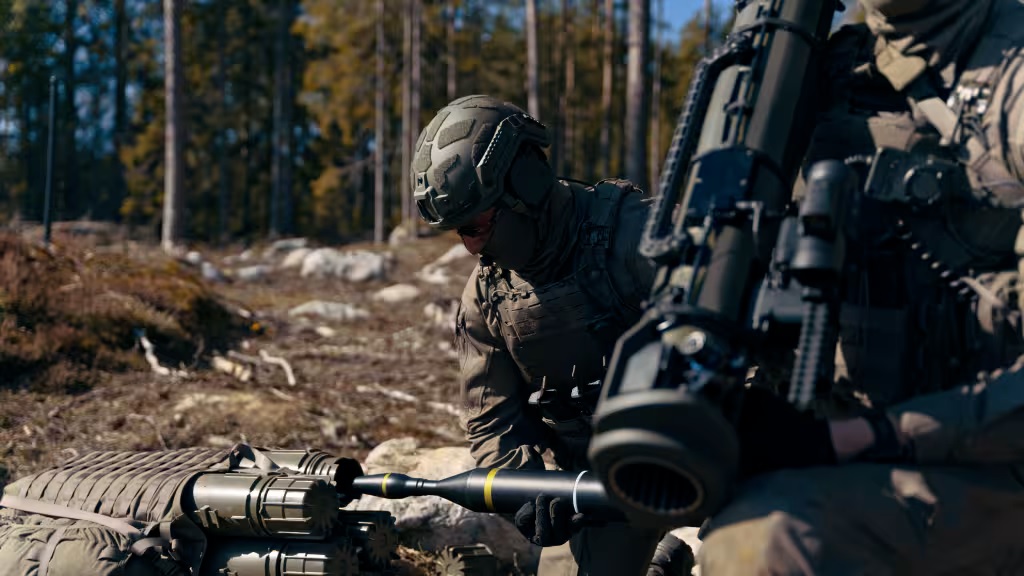
World
KARLSKOGA, Sweden — May 7, 2026 : Swedish defence manufacturer Saab has officially unveiled its new HEAT 758 anti-tank munition for the Carl-Gustaf M4 during a live-fire demonstration at the Bofors Test Center in Karlskoga, Sweden. The launch event brought together approximately 150 military officials, defence representatives, and international customers from 25 countries, including officers from the Ukrainian military. Saab used the demonstration to present the operational capabilities of the new 84 mm round against modern armoured threats protected by Explosive Reactive Armour (ERA). The HEAT 758, or High Explosive Anti-Tank 758, has been developed as the successor to the combat-proven HEAT 751 round and is intended to provide infantry forces with increased anti-armour capability while maintaining compatibility with the Carl-Gustaf M4 launcher. Saab confirmed that production of the munition is already underway following a finalized supply contract with an undisclosed customer. Designed to Counter Modern Reactive Armour According to Saab, the HEAT 758 was developed in response to the increasing use of ERA systems on modern main battle tanks and armoured vehicles. ERA consists of externally mounted explosive blocks designed to detonate when struck by anti-tank munitions, disrupting the shaped-charge penetration jet and reducing the effectiveness of conventional warheads. To address this challenge, Saab equipped the HEAT 758 with an advanced tandem warhead configuration capable of defeating heavily protected armour systems. The company stated that the new round can penetrate up to 700 millimetres of Rolled Homogeneous Armour (RHA) equivalent behind ERA protection, representing an increase of approximately 200 millimetres compared to the earlier HEAT 751 munition. The round has an effective engagement range of up to 600 metres and uses rocket-assisted propulsion to increase the distance between the operator and the target during engagements. Saab also reduced the overall weight of the munition to approximately 3.7 kilograms in order to lessen the load carried by infantry personnel while increasing lethality and operational flexibility. Michael Höglund, Head of Saab’s Ground Combat business unit, stated that the munition was designed specifically to respond to evolving battlefield conditions. “This round is our response to developments on the battlefield where reactive explosive armour has become a major problem for regular munitions trying to defeat armoured vehicles,” Höglund said during the demonstration. Non-Initiating Precursor Technology A key feature of the HEAT 758 is Saab’s newly developed Non-Initiating Precursor (NIP) technology, which was designed to improve effectiveness against multiple generations of reactive armour systems. Traditional tandem warheads generally function by detonating the ERA layer with a precursor charge before the main shaped charge penetrates the base armour. Saab stated that this process can generate debris and ballistic residue that may interfere with penetration performance. The HEAT 758 instead employs a precursor element designed to physically pierce the ERA block without triggering its explosive reaction. According to Saab, this creates a clean channel through the reactive armour, allowing the primary shaped charge to strike the vehicle’s underlying armour structure with maximum penetration efficiency. The company stated that the system was developed using artificial intelligence and machine learning technologies. Saab engineers reportedly conducted more than 50,000 computer simulations to refine the tandem warhead design and optimise penetration performance against modern armour systems. Saab added that the HEAT 758 is effective against several generations of ERA protection, including Kontakt-1, Kontakt-5, and Relikt systems. The company stated that the munition eliminates the need for operators to identify the specific ERA configuration mounted on a target vehicle before engagement. Integration With Firebolt Digital System The HEAT 758 is fully integrated with Saab’s proprietary Firebolt digital communication architecture, which is being introduced across the Carl-Gustaf ammunition family. The Firebolt system enables bidirectional communication between the munition, the launcher, and the Fire Control Device 558 (FCD 558). Once loaded into the launcher, the HEAT 758 automatically transmits ammunition-specific information, including charge characteristics and propellant temperature, to the fire-control system. The FCD 558 then combines this data with external environmental factors such as target range, ambient air temperature, and atmospheric pressure to generate an automatic firing solution. According to Saab, the automated ballistic process reduces the need for manual calculations by the operator, lowers cognitive workload during combat operations, and improves first-round hit probability during engagements. “HEAT 758 is an example of how Saab continues to generate ever more capable products while decreasing the armoured vehicle threat to the operator,” Höglund added. Expanding the Carl-Gustaf Ammunition Family Saab stated that the HEAT 758 is the second munition in the Carl-Gustaf ammunition family to be designed specifically for the Firebolt programmable system from the outset. The company noted that the broader Carl-Gustaf ammunition portfolio is gradually transitioning toward full Firebolt compatibility. The Carl-Gustaf remains one of the most widely used man-portable recoilless rifle systems in service globally and is currently operated by armed forces in more than 40 countries. With the introduction of the HEAT 758, Saab aims to provide infantry units with enhanced capability against heavily protected armoured vehicles while improving operational effectiveness, engagement accuracy, and survivability on modern battlefields.
Read More → Posted on 2026-05-07 13:42:28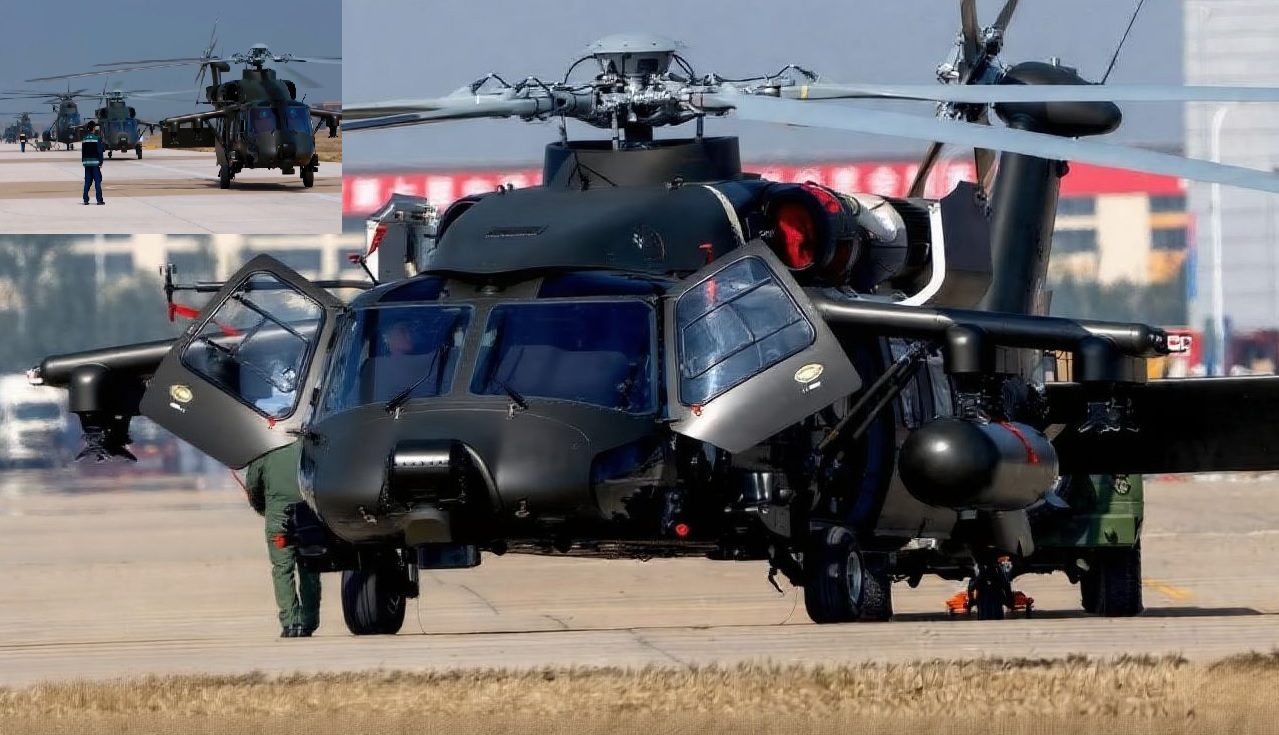
World
BEIJING — May 7, 2026 : The Chinese People’s Liberation Army (PLA) Ground Force has formally integrated the Z-20T assault helicopter into its operational air-ground coordination training cycle, reflecting an ongoing expansion of the PLA’s heliborne assault and rapid-response capabilities. Recent imagery and military reports confirmed the deployment of the Z-20T alongside Z-10 attack helicopters during large-scale exercises conducted in early April 2026 by a brigade under the Northern Theater Command. The drills focused on rapid deployment procedures, low-altitude penetration flights, and fast-roping insertion techniques designed to support high-tempo air assault operations. The integration marks a significant step in the operational development of the Z-20T, which combines medium-lift transport functions with integrated fire support capabilities in a single platform. The helicopter was developed as an armed variant of the Z-20 utility helicopter, which entered PLA service in 2019, and represents the PLA’s first heavyweight combat helicopter type capable of simultaneously conducting troop transport and offensive strike missions. Combined Airlift and Fire Support Capability The Z-20T first appeared publicly during a military parade in Beijing on September 3, 2025. Unlike dedicated attack helicopters designed exclusively for strike operations, the aircraft was developed to provide a multi-role capability that integrates tactical airlift functions with direct fire support. The helicopter is equipped with detachable external stores support system (ESSS) stub wings fitted with multiple hardpoints capable of carrying rocket launchers, anti-tank guided missiles, and other air-to-ground munitions, including the AKD-10 missile. The platform also incorporates an electro-optical and infrared targeting turret beneath the nose to support reconnaissance and precision targeting operations. Defensive systems integrated into the aircraft include missile approach warning sensors, radar warning receivers, and a directional infrared countermeasures (DIRCM) suite intended to improve survivability during low-altitude combat operations. According to Zhu Minfeng, deputy chief designer at the China Helicopter Research and Development Institute, the Z-20T is intended to complement existing attack helicopter assets rather than replace them. “If the mission solely involves attack tasks, the Z-10 attack helicopter is the optimal choice,” Zhu stated. “If there is a need to conduct airlift operations and troop transport in addition to attack tasks, the Z-20T, which combines transport capacity with air-to-ground capabilities, can be employed.” Zhu further described the platform as achieving “multi-functionality with one aircraft,” allowing it to transport troops while independently conducting fire strikes without relying entirely on escort aircraft for protection. Operational Characteristics and Payload The Z-20T retains the transport capabilities of the baseline Z-20 platform while integrating additional combat systems. The aircraft can reportedly carry approximately 12 to 15 troops internally, transport up to 1,500 kilograms of internal cargo, or carry approximately 4,000 kilograms externally as sling-loaded cargo. Although the aircraft is less heavily armored than dedicated attack helicopters such as the AH-64 Apache or the Mi-28, the Z-20T offers greater flexibility for combined transport and strike operations. Its role has been compared to the U.S. MH-60L Direct Action Penetrator configuration, though the Chinese platform retains full troop transport capability while armed. The aircraft is powered by two WZ-10 turboshaft engines rated at approximately 1,600 kilowatts each and incorporates fly-by-wire flight controls together with a five-bladed main rotor system. The propulsion system is designed to improve high-altitude performance and enable operations at elevations reaching approximately 6,000 meters. Current estimates indicate that roughly 40 Z-20T helicopters are presently in service with PLA Ground Force Aviation units. April 2026 Air-Ground Coordination Exercises The April training cycle rehearsed a complete air assault sequence involving force generation, embarkation, tactical insertion, maneuver operations, and coordinated close air support under compressed operational timelines. PLA aviation units practiced low-altitude penetration profiles designed to exploit terrain masking in order to reduce radar exposure and shorten adversary reaction times. These tactics were combined with the aircraft’s onboard electronic warfare and defensive systems to improve survivability during contested operations. The exercises also highlighted coordinated operations between the Z-20T and the Z-10 attack helicopter. In the paired configuration used during the drills, the Z-10 served as a dedicated armed escort platform responsible for suppressing hostile ground positions and providing close air support to infantry after insertion. Simultaneously, the Z-20T conducted troop transport missions while retaining the ability to carry out localized fire support tasks independently. Military analysts view this operational pairing as part of the PLA’s broader effort to improve rapid deployment and air-mobile assault capabilities for short-notice contingency operations. Strategic and Regional Implications The growing emphasis on low-altitude rapid insertion operations follows increased global attention on helicopter-based special operations and air assault missions. Chinese military commentary has referenced the importance of rapid-response helicopter operations following the January 3, 2026 U.S. helicopter mission in Venezuela that resulted in the extraction of President Nicolás Maduro. The PLA’s continued development of heliborne assault doctrine is also closely linked to evolving operational requirements across multiple regional theaters. These include the South China Sea, where the PLA Navy is expanding deployments of Type 075 amphibious assault ships and helicopter carriers; the Korean Peninsula, where China maintains defense treaty obligations involving North Korea; and the Taiwan Strait, which remains a central focus of regional military planning and security competition. The operational integration of the Z-20T indicates that the PLA is increasingly preparing airborne and heliborne units for missions involving rapid reinforcement, seizure of key terrain, and expeditionary support operations under contested conditions. Future PLA Rotary-Wing Development The PLA’s rotary-wing modernization program is expected to continue with the future introduction of the Z-21 heavyweight attack helicopter. First observed in prototype form in March 2024, the Z-21 is projected to enter service near the end of the decade. The aircraft is expected to feature heavier armor protection and a greater weapons payload capacity than the current Z-10 fleet, though it will not possess the troop transport capabilities of the Z-20T. With the Z-20T now entering routine operational training, the PLA Ground Force appears to be transitioning toward a more integrated helicopter assault doctrine that combines transport, fire support, and rapid maneuver functions within coordinated aviation formations.
Read More → Posted on 2026-05-07 13:58:13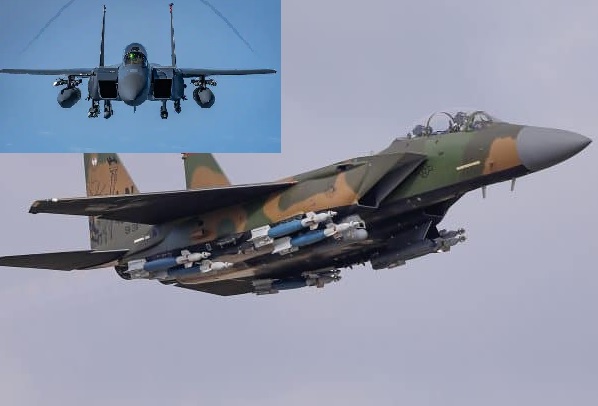
World
RAF LAKENHEATH, United Kingdom — May 7, 2026 : A specially painted F-15E Strike Eagle assigned to the 48th Fighter Wing conducted a heavy-load training sortie from RAF Lakenheath on May 7, carrying eight inert GBU-12 Paveway II guided bombs as part of commemorative activities marking the 40th anniversary of Operation El Dorado Canyon. The aircraft, serial number 91-0311, recently received a heritage camouflage scheme replicating the Cold War-era paint used by F-111F Aardvarks that operated from RAF Lakenheath during the 1986 U.S. strike mission against Libya. The sortie combined aerial refueling, low-level penetration flying, and inert weapons release training, closely simulating a long-range strike profile. Heavy-Load Strike Training Mission Operating under the callsign EAGLE 31, the F-15E departed RAF Lakenheath shortly after 08:30 local time alongside wingman EAGLE 32. Shortly after takeoff, the formation linked up with a KC-135 Stratotanker for aerial refueling before continuing toward designated low-flying areas in North Wales. The aircraft then conducted low-level navigation through the Welsh valleys to simulate terrain-following ingress operations commonly associated with strike missions in contested environments. Following the low-altitude segment, the formation proceeded to the Holbeach Air Weapons Range on the coast north of RAF Lakenheath. At the range, EAGLE 31 released its full payload of eight inert GBU-12 Paveway II bombs, completing the weapons employment phase of the mission before returning to base. Images captured during the sortie showed the aircraft carrying all eight bombs on fuselage stations and conformal fuel tank hardpoints while leaving the wing pylons completely unoccupied. This configuration preserves the option to carry additional external fuel tanks or air-to-air weapons on the wings during operational deployments. Heritage Paint Scheme Honors 1986 Libya Strike The commemorative F-15E officially debuted its heritage livery on April 28, 2026. Airmen from the 48th Equipment Maintenance Squadron spent 22 days sanding, masking, priming, painting, and applying stencils to recreate the Southeast Asia-style camouflage scheme worn by F-111F aircraft during the Cold War period. The camouflage consists of tan and two shades of green and was specifically designed to honor Operation El Dorado Canyon, conducted on April 14–15, 1986. During the operation, twenty-four F-111F Aardvarks from the 48th Tactical Fighter Wing launched from RAF Lakenheath to conduct long-range strikes against Libyan targets in response to the bombing of a Berlin nightclub linked to Libyan-sponsored terrorism. The operation required a 6,400-mile round trip lasting approximately 13 hours and involved multiple aerial refueling operations. At the time, it was considered the longest fighter combat mission ever flown. Tribute to “Karma 52” The heritage markings specifically commemorate “Karma 52,” the only F-111 lost during Operation El Dorado Canyon. The aircraft was shot down over the Mediterranean Sea during the mission, resulting in the deaths of pilot Captain Fernando L. Ribas-Dominicci and Weapon Systems Officer Captain Paul F. Lorence. To honor the crew, the F-15E’s nose section features a red “Karma 52” inscription alongside the silhouette of an F-111 aircraft. The tail markings include the 494th Fighter Squadron panther emblem and the 48th Fighter Wing’s Statue of Liberty insignia, along with dedicated 40th anniversary markings. The commemorative aircraft remains an operational F-15E assigned to the 48th Fighter Wing and continues to participate in regular training and operational activities while carrying the heritage design. GBU-12 Paveway II and Strike Eagle Payload Configuration The sortie also highlighted the F-15E Strike Eagle’s ability to carry large air-to-ground payloads while maintaining operational flexibility. The GBU-12 Paveway II is a laser-guided precision munition built around the 500-pound Mk 82 general-purpose bomb body. The weapon uses a nose-mounted laser seeker and deployable tail guidance fins to steer toward laser-designated targets. The bomb’s guidance system utilizes what is commonly referred to as “bang-bang” guidance. Instead of making gradual adjustments, the control surfaces move to maximum deflection whenever course corrections are required and then reverse direction as the weapon compensates back toward the target path. This creates a sinusoidal flight pattern while simplifying the guidance system’s mechanical design and reducing manufacturing costs for the single-use munition. The mission additionally demonstrated the operational importance of the F-15E’s conformal fuel tanks, also known as FAST Packs — Fuel and Sensor, Tactical packs. Mounted along both sides of the fuselage near the engine intakes, the tanks provide additional fuel capacity and extra hardpoints for weapons carriage without occupying wing stations. Although conformal fuel tanks were originally developed for the F-15C air superiority fighter, they were generally unpopular among F-15C crews because they cannot be jettisoned in flight and permanently affect maneuverability. For the F-15E Strike Eagle, however, the tanks became a central feature of the aircraft’s long-range strike mission and heavy payload capability. Fleet Modernization and Future Strike Role The commemorative training sortie took place amid broader modernization efforts within the U.S. Air Force fighter fleet. In April 2026, the Air Force announced plans to increase procurement of Boeing F-15EX Eagle II aircraft from 129 to 267 units, significantly expanding the future fleet size. While early F-15EX acquisition plans primarily focused on homeland defense roles within the Air National Guard, the larger procurement objective indicates the aircraft will eventually replace aging F-15E Strike Eagles in frontline strike missions. Initial F-15EX planning did not heavily emphasize the use of conformal fuel tanks, but the transition from the F-15E fleet suggests that long-range strike configurations and heavy air-to-ground payload operations will remain central to the platform’s future role. The May 7 sortie at RAF Lakenheath demonstrated that the operational concepts associated with the Strike Eagle — including extended-range strike profiles, aerial refueling integration, and high-capacity precision weapons carriage — continue to remain relevant as the U.S. Air Force prepares for the next phase of tactical fighter modernization.
Read More → Posted on 2026-05-07 14:09:23
World
WASHINGTON — May 7, 2026 : The United States has temporarily paused “Project Freedom,” a military operation aimed at escorting commercial shipping through the Strait of Hormuz, after Saudi Arabia suspended American access to its airspace and key military facilities needed to support the mission, according to multiple U.S. and regional officials. The decision came days after U.S. President Donald Trump publicly announced the initiative on social media on Sunday, a move that reportedly surprised several Gulf allies and triggered immediate diplomatic concerns across the region. Project Freedom was designed to ensure the safe transit of commercial vessels through the Strait of Hormuz amid ongoing tensions between Washington and Tehran and concerns over disruptions to maritime traffic in one of the world’s most strategically important energy corridors. According to officials familiar with the matter, Saudi Arabia informed Washington that it would not permit the U.S. military to launch aircraft from Prince Sultan Airbase, located southeast of Riyadh, nor allow American military flights through Saudi airspace for operations directly linked to the mission. The base currently hosts U.S. fighter aircraft, refueling tankers, and air defense systems that form part of Washington’s regional military posture. U.S. officials said a subsequent phone conversation between President Trump and Saudi Crown Prince Mohammed bin Salman failed to resolve disagreements over military access and operational coordination tied to the initiative. Kuwait also reportedly declined to provide access to its air bases and airspace for the operation, further complicating logistical planning for the U.S. military. Diplomatic sources indicated that several Gulf states had not been fully consulted before the public announcement of the operation and were concerned about the possibility of further escalation in the region. While a White House official stated that regional allies had been notified in advance, officials acknowledged that the absence of formal authorization for basing rights, overflight access, and operational support from Gulf host nations significantly limited the military’s ability to sustain the mission as originally planned. Prior to the suspension, the U.S. military had begun positioning additional naval assets in the Gulf in preparation for expanded escort operations through the strait. U.S. Central Command confirmed that on the first day of the mission, which began on or around May 4, two U.S.-flagged commercial vessels transited the Strait of Hormuz accompanied by two U.S. Navy guided-missile destroyers. The Pentagon had described the operation as defensive in nature and focused on protecting commercial shipping from potential interference during passage through the waterway. Earlier this week, U.S. Defense Secretary Pete Hegseth outlined the planned scale of Project Freedom, describing it as a broad maritime protection effort involving guided-missile destroyers and more than 100 land- and sea-based military assets. The operation was expected to include fighter aircraft, surveillance drones, helicopters, and airborne refueling support intended to provide continuous monitoring and air cover across the maritime corridor. However, the execution of that operational framework depended heavily on access to Gulf airspace and regional military installations, particularly in Saudi Arabia and Kuwait. In a statement posted to Truth Social on Tuesday, President Trump confirmed that Project Freedom would be “paused for a short period of time” while diplomatic efforts continue to determine whether a broader agreement between the United States and Iran can be finalized. The administration is currently engaged in discussions aimed at reducing tensions following the fragile ceasefire reached between Washington and Tehran on April 8. Regional governments have expressed concern that a large-scale U.S. military escort operation in the Strait of Hormuz could increase the risk of wider confrontation and expose Gulf states to retaliatory attacks or economic disruption. A Saudi source familiar with the discussions said Riyadh remains supportive of ongoing diplomatic initiatives, including mediation efforts led by Pakistan aimed at facilitating a long-term understanding between the United States and Iran. According to officials familiar with the negotiations, the White House is also drafting a memorandum of understanding intended to formalize a framework for maritime security, de-escalation, and the continued flow of commercial shipping through the Strait of Hormuz without relying on unilateral military escort operations. The Strait of Hormuz remains one of the world’s most critical maritime chokepoints, handling a significant share of global oil and liquefied natural gas exports. The U.S. military continues to maintain naval and air assets across the Gulf region while monitoring developments related to maritime security and ongoing diplomatic negotiations.
Read More → Posted on 2026-05-07 14:15:13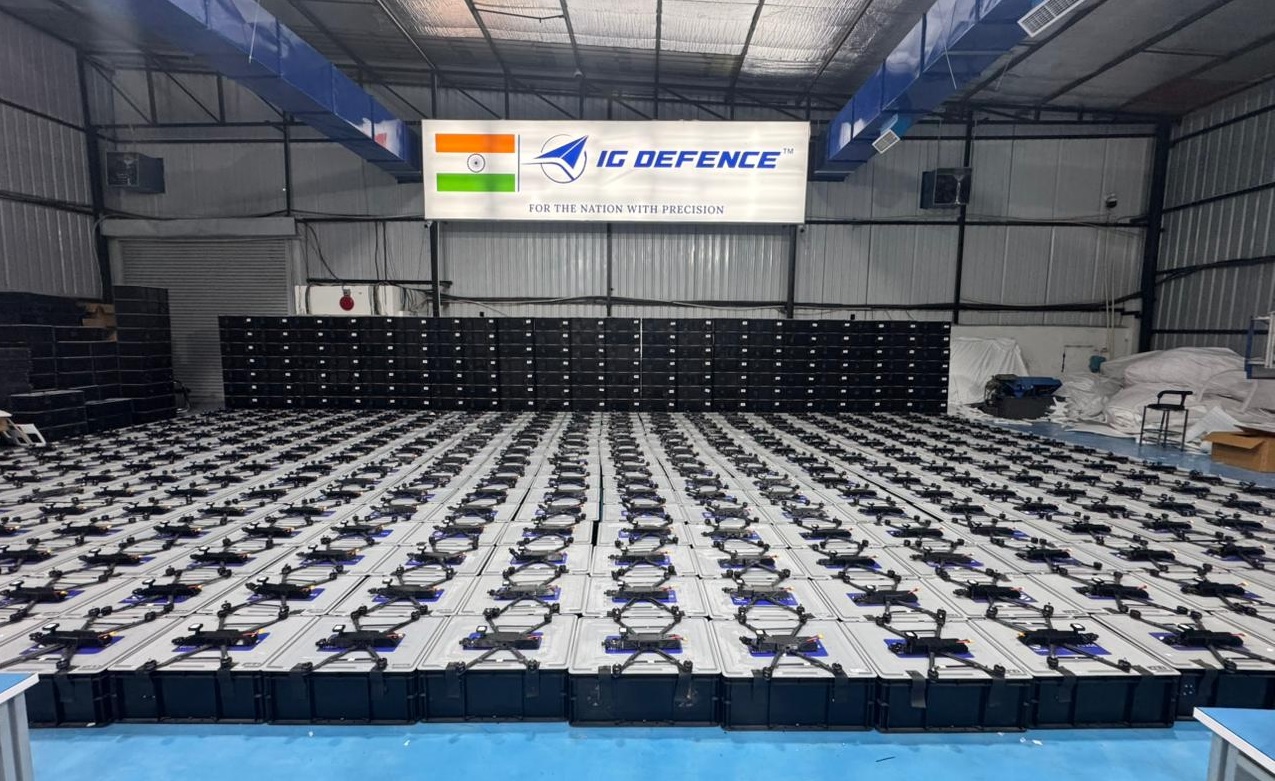
India
NEW DELHI — May 7, 2026 : India’s transition toward large-scale unmanned warfare capabilities is accelerating as indigenous defence technology company IG Defence increases production of First-Person View (FPV) kamikaze drones to 200 units per day, amid growing military emphasis on volume-led combat preparedness and rapid deployment capabilities. The expansion reflects a broader shift within the Indian armed forces toward high-volume unmanned systems designed for precision strike, surveillance, and tactical battlefield operations across sensitive theatres including the Line of Actual Control (LAC) and the Line of Control (LoC). Military Leadership Highlights Need for Large-Scale Drone Capacity Senior military leadership has repeatedly underscored the importance of industrial-scale drone manufacturing in future warfare scenarios. Former Chief of Army Staff General Manoj Mukund Naravane recently stated that India must develop the capability to manufacture as many as 40,000 drones per month during future contingencies. He noted that modern conflicts increasingly depend on industrial adaptability and rapid production scalability rather than solely on conventional platforms. Army Chief General Upendra Dwivedi has similarly outlined operational requirements for unmanned systems, stating that each Army corps may require between 8,000 and 10,000 UAVs, including FPV drones, to maintain tactical dominance in contested airspace and support frontline operations. The Indian Army has subsequently accelerated efforts to integrate indigenous FPV and loitering munition platforms into operational formations, while also restructuring units to incorporate dedicated unmanned aerial vehicle (UAV) capabilities. Operation Sindoor Accelerated Indigenous Drone Deployment IG Defence’s manufacturing expansion follows the operational deployment of its FPV kamikaze drones during Operation Sindoor in May 2025. The operation was launched following the Pahalgam terror attack and involved the use of multiple indigenous systems for surveillance, reconnaissance, mapping, and precision strike missions. FPV kamikaze drones supplied by IG Defence were deployed alongside other domestically developed platforms during the operation. Following Operation Sindoor, the Government of India acknowledged the company’s contribution through an official Press Information Bureau (PIB) release recognising the operational role played by indigenous drone systems. Over the past financial year, IG Defence has supplied thousands of FPV kamikaze drones to the Indian Army as part of the military’s expanding unmanned warfare inventory. IG FPV Striker Designed for Precision Strike Operations The company’s primary platform, the IG FPV Striker, is an indigenous loitering munition designed for precision engagement missions in contested environments. The system combines real-time targeting capability, high manoeuvrability, rapid-response deployment, and cost-efficient strike functionality. FPV kamikaze drones are increasingly being viewed as critical battlefield tools in asymmetric and dynamic combat environments where low-cost precision systems can provide tactical advantages. Modern FPV drones are capable of high-speed manoeuvres and can reportedly reach speeds of up to 180 kilometres per hour. The systems are also being integrated with modular warhead configurations and emerging AI-enabled swarm capabilities intended to support coordinated multi-target operations. Military planners increasingly regard FPV strike systems as cost-effective alternatives for tactical missions against fortified positions, logistical infrastructure, and moving battlefield targets. Production Expansion Linked to UP Defence Corridor To support long-term production requirements, IG Defence has expanded its industrial infrastructure through a memorandum of understanding signed with the Government of Uttar Pradesh. The agreement covers the establishment of an advanced drone manufacturing and research and development facility within the Uttar Pradesh Defence Corridor. The facility is intended to support mass production of FPV striker drones and related unmanned systems. The company stated that scaling domestic manufacturing capacity remains essential to meeting the Indian armed forces’ future operational requirements. Warfare Transitioning Toward Systems-Driven Operations Maj. Gen. R.C. Padhi (Retd.), Senior Vice President at IG Defence, said modern warfare is rapidly shifting from traditional platform-centric models toward systems-driven and volume-led operations. “The character of warfare is changing faster than ever before. We are witnessing a transition from platform-centric warfare to systems-driven, volume-led engagements. FPV Kamikaze Drones enable tactical dominance at a fraction of traditional costs, and their large-scale deployment will be central to future combat readiness,” he said. He added that indigenous production capability and rapid scalability are becoming increasingly important components of national security preparedness. Indigenous Drone Ecosystem Expanding Under Atmanirbhar Bharat Alongside FPV strike systems, IG Defence is also developing counter-UAS platforms, intelligence, surveillance and reconnaissance (ISR) systems, logistics drone swarms, and combat training solutions aligned with the armed forces’ growing unmanned operational requirements. The broader expansion of domestic drone production aligns with the Government of India’s Atmanirbhar Bharat initiative, which aims to reduce dependence on foreign defence imports while strengthening indigenous defence manufacturing capabilities. Increased participation from private industry, defence start-ups, and MSMEs has contributed to the rapid growth of India’s unmanned systems sector, particularly following operational lessons drawn from Operation Sindoor and recent international conflicts where loitering munitions and drone swarms have played a significant tactical role. As global militaries continue adapting to drone-centric operational models, India’s emphasis on scalable indigenous production reflects an evolving defence doctrine in which the ability to rapidly manufacture and deploy large numbers of unmanned systems is becoming a core operational requirement.
Read More → Posted on 2026-05-07 14:23:55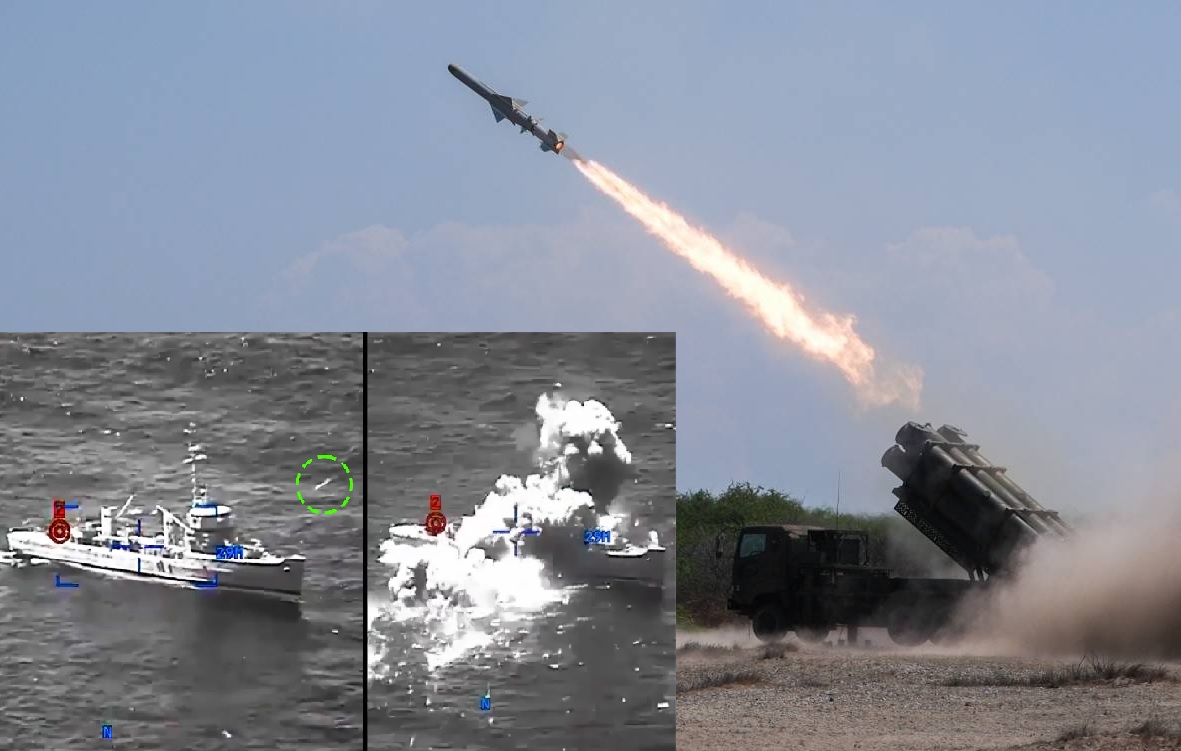
World
PAOAY, Philippines — May 7, 2026 : Japanese Ground Self-Defense Force (JGSDF) personnel fired two Type 88 surface-to-ship missiles during a multinational maritime strike exercise under Exercise Balikatan 2026, sinking a decommissioned Philippine Navy vessel in the South China Sea, referred to by the Philippines as the West Philippine Sea. The live-fire event took place on May 6 from the sand dunes at Culili Point near Laoag City in Ilocos Norte province in northwestern Luzon. The missiles were launched from a single JGSDF 6×6 coastal defense launcher vehicle and struck the target vessel positioned approximately 75 kilometers offshore. Military officials confirmed the target was hit around six minutes after launch and subsequently sank. The target vessel was the former BRP Quezon (PS-70), an Auk-class minesweeper originally built for the United States Navy during World War II. The vessel was transferred to the Philippine Navy in 1967 and later served as a patrol corvette for more than five decades before being decommissioned in 2021. The maritime strike formed one of the capstone activities of Exercise Balikatan 2026, which ran from April 20 to May 8. The exercise involved approximately 17,000 military personnel from seven participating nations: the Philippines, the United States, Japan, Australia, Canada, France, and New Zealand. The 2026 edition marked the first active participation of Japanese combat troops in Balikatan and the first deployment of Japanese combat forces onto Philippine territory since the end of World War II. Japanese participation in the exercise was enabled through the Japan-Philippines Reciprocal Access Agreement (RAA), ratified on September 11, 2025. Japan deployed approximately 1,400 troops across the broader exercise, while 70 JGSDF personnel were directly involved in the missile firing operation at Culili Point. Before the Japanese missile launch, a United States Army High Mobility Artillery Rocket System (HIMARS) launcher fired a Guided Multiple Launch Rocket System (GMLRS) munition at the ex-BRP Quezon. Additional simulated engagements were also conducted using a Philippine Navy C-Star anti-ship missile system and a United States Marine Corps Navy/Marine Expeditionary Ship Interdiction System (NMESIS). The NMESIS platform, deployed by the Hawaii-based 3rd Marine Littoral Regiment, was present in the Philippines for the first time during the exercise. The system consists of an unmanned Joint Light Tactical Vehicle (JLTV) carrying two Kongsberg Naval Strike Missiles. Although it did not fire live ordnance during the event, the system participated in the broader maritime strike scenario. Exercise planners integrated the maritime strike into a wider operational framework focused on coastal defense, interoperability, and maritime denial operations in the Luzon Strait. Two days before the missile firing, American, Canadian, and Philippine forces conducted a separate counter-landing live-fire exercise designed to repel a simulated amphibious assault. Additional activities during Balikatan included maritime key terrain seizure drills on remote islands in the Luzon Strait. Systems such as HIMARS and NMESIS were transported into forward operating areas using landing craft and C-130J Hercules aircraft to rehearse rapid deployment and area denial operations across strategic maritime chokepoints. Defense analysts consider the Luzon Strait a critical corridor linking the South China Sea to the Pacific Ocean. The exercise scenario emphasized maintaining operational control of the strait and improving allied coordination across the First Island Chain. The JGSDF employed the Mitsubishi Heavy Industries-built Type 88 anti-ship missile system during the exercise. The system, which has remained in Japanese service for more than 35 years, uses a six-tube launcher mounted on a 6×6 chassis. The missile measures 5.08 meters in length, carries a 225-kilogram high-explosive warhead, travels at high subsonic speed, and has an operational range of approximately 180 kilometers. Japan is currently transitioning from the Type 88 system to the newer Type 12 surface-to-ship missile, which features extended range and updated targeting and guidance systems. The Balikatan firing represented the first operational live use of the Type 88 missile system by Japan outside its national territory and the first JGSDF missile launch conducted from Philippine soil. Philippine Defense Secretary Gilberto Teodoro Jr. and Japanese Defense Minister Shinjiro Koizumi attended the live-fire event at Culili Point. Following the exercise, Teodoro stated that the activity demonstrated future interoperability potential between Philippine and Japanese forces. He said the exercise involved extensive coordination in planning, force organization, and resource management before the final missile engagement phase. One day before the maritime strike, Teodoro and Koizumi met in Manila and signed a joint statement aimed at expanding bilateral defense equipment and technology cooperation. The agreement followed Tokyo’s revisions to its Three Principles on the Transfer of Defense Equipment and Technology, which eased restrictions on defense exports and overseas military cooperation. The Philippines is currently evaluating additional Japanese defense equipment acquisitions, including second-hand TC-90 light aircraft and Abukuma-class destroyers. Manila has already received five TC-90 aircraft from Japan for maritime patrol missions. Philippine officials, however, indicated that the Type 88 missile system is not being considered for procurement. The Armed Forces of the Philippines currently relies on the Indian-manufactured BrahMos cruise missile system for its coastal defense and anti-ship missile requirements. Military officials from participating nations described the Balikatan 2026 maritime strike activities as part of continuing efforts to improve interoperability, joint operational planning, and maritime defense coordination among allied and partner forces operating in the Indo-Pacific region.
Read More → Posted on 2026-05-07 14:32:04
World
ISTANBUL — May 7, 2026 : Turkish defence manufacturer MKE has publicly unveiled the prototype of its new Attila 155/52 mm truck-mounted howitzer during SAHA Expo 2026, presenting a highly mobile artillery platform designed to support rapid indirect fire operations and modern “shoot-and-scoot” battlefield tactics. The Attila was displayed in the outdoor exhibition area alongside MKE’s Gürhan 155/52 mm tracked self-propelled howitzer. Company officials stated that the prototype was completed only five days before the opening of the exhibition, highlighting the accelerated pace of development behind the project. Development Approach and Chassis Integration To shorten development timelines and reduce engineering risks, MKE integrated the proven barrel and recoil system of the T-155 Panter towed howitzer onto a 6×6 T815 tactical truck chassis supplied by Czech manufacturer Tatra Defence Vehicles. The Tatra chassis was selected primarily for its mobility characteristics and cost efficiency. The platform uses a central backbone tube combined with independent swing half-axles, providing high off-road mobility and vibration dampening performance comparable to vehicles equipped with fully independent suspension systems while maintaining lower production and maintenance costs. The Attila measures 11,500 mm in length, 3,000 mm in width and 3,800 mm in height. In combat configuration, the vehicle has a total weight of 29 tonnes. Powered by its 6×6 drivetrain, the system can achieve a maximum road speed of 85 km/h and has an operational range of up to 850 km, enabling it to accompany mechanized formations during long-distance operations. Main Armament and Loading System The artillery system is equipped with a NATO-standard 155 mm 52-caliber gun and incorporates a custom-developed semi-automatic loading mechanism intended to reduce crew workload while maintaining sustained fire capability. The system is operated by a four-person crew. During loading operations, two loaders manually place the projectile and modular charge onto dedicated loading trays. Projectiles are positioned on the right-side tray while charges are placed on the left-side tray. Once positioned, the automated mechanism transfers the ammunition and charges to the breech before ramming them into the chamber. According to MKE, the arrangement enables the Attila to sustain a firing rate of between four and six rounds per minute. Ammunition Storage and Platform Deployment To maximize onboard ammunition capacity, the Attila uses a honeycomb-style storage configuration. A magazine located on the right side of the vehicle behind the engine compartment carries 36 projectiles, while a matching compartment on the left side stores 36 full modular charges. The system incorporates hydraulically operated deployment mechanisms to speed up firing preparation procedures. A two-step access platform lowers within three seconds, allowing the crew to reach the ammunition magazines. At the rear of the vehicle, another platform deploys in approximately three seconds to provide access to the loading system. Two stabilizing spades are simultaneously lowered to anchor the vehicle during firing operations. Fire Control and Targeting Systems The fire control architecture is housed in two compartments positioned behind the charge magazine on the left side of the vehicle. The fire control system computer allows the gunner to enter targeting coordinates and firing data. The system is linked to an onboard radar designed to measure muzzle velocity and provide ballistic corrections for improved firing accuracy. The howitzer has an elevation range from -3 degrees to +65 degrees and an azimuth traverse of ±17 degrees from the vehicle’s centerline. Additional control systems are installed in a compartment on the right side of the chassis, where operators use a touch-screen interface to manage the deployment and retraction of platforms and stabilizing equipment. According to MKE, the computerized deployment system continuously monitors operational sequences through integrated sensors. If an anomaly or incorrect sequence is detected, the system automatically blocks further movement. The howitzer can also be operated entirely in manual mode if required, placing responsibility for deployment verification on the crew. Although the current prototype is not yet connected to a wider battlefield networking architecture, MKE stated that full networking capability is planned for future production-standard configurations. Rapid Deployment Capability The Attila has been specifically developed for rapid “shoot-and-scoot” artillery operations intended to reduce vulnerability to counter-battery radar systems and drone surveillance. According to company data, the system can become ready to fire within 60 seconds after stopping at a firing position. After completing a fire mission, the howitzer can retract its stabilizing equipment and leave the position within 45 seconds. Prototype Configuration and Future Testing The current prototype is fitted with an unarmored driver cabin. However, MKE indicated that armored cabin options could be incorporated into future production models depending on operational requirements and customer preferences. Some reported specifications list ammunition capacity at 38 rounds, though the displayed prototype configuration carries 36 projectiles and 36 modular charges. The Attila forms part of Turkey’s broader effort to expand indigenous artillery and mobile fire support capabilities. The program complements other MKE artillery projects, including the Gürhan tracked self-propelled howitzer, the 105 mm Uran vehicle-mounted howitzer and the T-155 TTA wheeled integration project, which mounts the Panter artillery system on an 8×8 chassis. Following the conclusion of SAHA Expo 2026, the Attila prototype is scheduled to undergo its first live-fire trials as part of the next stage of testing and evaluation for potential future service with the Turkish Land Forces.
Read More → Posted on 2026-05-07 14:47:42
Science
GENEVA — May 7, 2026 : International health authorities are investigating a cluster of hantavirus infections identified among passengers and crew aboard the Dutch-flagged expedition cruise vessel MV Hondius, after seven individuals developed severe respiratory illness during a voyage spanning South America, Antarctica, and the South Atlantic. According to information released by the World Health Organization (WHO), the vessel departed Ushuaia, Argentina, on 1 April 2026 and later transited through Antarctica, South Georgia, and several remote islands while en route to the Canary Islands. The ship is currently anchored off the coast of Cape Verde as investigations and medical response operations continue. Among the 147 passengers and crew members on board, seven people became ill between 6 and 28 April 2026. Of those affected, three individuals have died, one remains in critical condition, and three others are experiencing mild symptoms. Several patients have been medically evacuated for treatment at shore-based facilities. Health officials said the illnesses initially presented with fever and gastrointestinal symptoms before progressing rapidly in severe cases to pneumonia, acute respiratory distress syndrome (ARDS), shock, and respiratory failure. Laboratory testing has confirmed hantavirus infection in two patients, while five additional cases remain classified as suspected infections pending further diagnostic analysis. The WHO stated that it is working in coordination with health authorities from the countries involved, as well as with the ship’s operator, Oceanwide Expeditions, to provide medical guidance, epidemiological support, and information to passengers and crew. Based on currently available evidence and the known transmission characteristics of hantaviruses, the organization has assessed the overall risk to the global population as low. WHO officials said the assessment could be revised as additional laboratory findings, contact tracing data, and environmental investigations become available. Public health teams are continuing to monitor the situation closely while implementing infection prevention measures aboard the vessel. Investigators are examining several possible sources of exposure, including contact with rodents or contaminated environments during shore excursions in regions where hantaviruses are known to circulate naturally. Authorities are also reviewing passenger movement patterns, onboard interactions, and environmental conditions during the voyage. Hantaviruses belong to the family Hantaviridae and are primarily carried by rodents, which act as natural reservoir hosts without typically showing signs of illness. Human infection most commonly occurs through inhalation of aerosolized viral particles from rodent urine, droppings, or saliva. Transmission may also occur through rodent bites, scratches, or contact with contaminated surfaces followed by touching the eyes, nose, or mouth. The virus identified in the current cluster is reported to be the Andes virus, a hantavirus strain endemic to parts of South America. The Andes virus is the only hantavirus species for which limited person-to-person transmission has been documented. Health authorities noted, however, that such transmission is considered rare and generally requires prolonged close contact with an infected individual. Medical experts classify hantavirus disease into two primary clinical syndromes. Old World hantaviruses, found mainly in Europe and Asia, are associated with hemorrhagic fever with renal syndrome (HFRS), which primarily affects the kidneys and can involve internal bleeding complications. New World hantaviruses, found in the Americas, are linked to hantavirus pulmonary syndrome (HPS), also referred to as hantavirus cardiopulmonary syndrome (HCPS), a severe respiratory illness characterized by rapid pulmonary deterioration. Symptoms of hantavirus infection typically develop between one and eight weeks after exposure. Early manifestations often resemble influenza-like illness and include fever, fatigue, headaches, dizziness, chills, and muscle aches, particularly affecting the thighs, hips, and back. Gastrointestinal symptoms such as nausea, vomiting, diarrhea, and abdominal pain are also commonly reported. In cases progressing to HPS, patients may develop coughing and severe shortness of breath within four to ten days after the onset of initial symptoms. Fluid accumulation in the lungs can rapidly lead to respiratory failure, low blood pressure, cardiovascular collapse, and shock. WHO data indicate that the fatality rate for HPS outbreaks has reached up to 40 percent in some documented cases. There is currently no specific antiviral treatment or licensed vaccine for hantavirus infection. Clinical management primarily depends on early recognition of symptoms and intensive supportive care, including oxygen therapy, mechanical ventilation, hemodynamic monitoring, and fluid management in critical care settings. Public health authorities emphasized that most hantavirus infections worldwide are linked to environmental exposure rather than sustained human-to-human transmission. Preventive measures focus largely on reducing contact with rodents and safely handling potentially contaminated areas. Recommended precautions include sealing buildings to prevent rodent entry, storing food in rodent-proof containers, and avoiding dry sweeping or vacuuming of rodent droppings, which can aerosolize infectious particles. Health agencies advise using wet-cleaning methods with disinfectants or bleach solutions while wearing gloves and protective masks when cleaning areas suspected of rodent contamination. The name “hantavirus” originates from the Hantan River, where the virus first gained international attention during the Korean War between 1951 and 1953. More than 3,000 United Nations troops developed hemorrhagic fever during that period. In 1978, scientists isolated the Hantaan virus from the striped field mouse (Apodemus agrarius) near the Hantan River, establishing the rodent link associated with hantavirus disease. A separate milestone in hantavirus research occurred in 1993 during an outbreak in the Four Corners region of the southwestern United States, where an unexplained respiratory illness led researchers to identify hantavirus pulmonary syndrome caused by the Sin Nombre virus carried by deer mice. WHO stated that contact tracing and onboard infection control measures remain active aboard the MV Hondius while investigations continue into the origin and transmission pathway of the current cluster. Health authorities are expected to release further updates as laboratory sequencing and epidemiological analysis progress.
Read More → Posted on 2026-05-07 15:28:01
World
WASHINGTON — May 7, 2026 : The United States has formally presented Iran with a new nuclear framework that would establish the basis for a broader diplomatic agreement covering Tehran’s nuclear activities, sanctions relief, and maritime security in the Strait of Hormuz, according to details reported by The Wall Street Journal and officials familiar with the negotiations. If Iran accepts the framework, both sides would enter a 30-day period of formal technical negotiations aimed at finalizing a comprehensive agreement. The proposal forms part of a one-page memorandum of understanding intended to halt current hostilities and define the parameters for future U.S.-Iran engagement. The framework was delivered to Iranian officials through intermediaries during ongoing diplomatic contacts involving regional mediators, including previous discussions held in Pakistan. Core U.S. Nuclear Demands At the center of the proposal is a requirement that Iran formally attest that it does not seek to develop or acquire nuclear weapons. U.S. officials have consistently maintained that any future agreement must contain enforceable and verifiable measures preventing Iran from obtaining a nuclear weapons capability. The framework outlines several key conditions related to Iran’s nuclear infrastructure and enrichment activities. Among the most significant provisions is a 20-year moratorium on uranium enrichment. The demand represents a revision of earlier U.S. positions that reportedly sought a permanent prohibition on enrichment activities inside Iran. The proposal also requires Iran to transfer all existing enriched uranium stockpiles out of the country. The removal of enriched material has remained a central U.S. objective throughout negotiations, aimed at limiting Iran’s ability to produce weapons-grade uranium. In addition, the framework calls for the dismantlement of Iran’s major nuclear facilities at Fordow, Natanz, and Isfahan. Fordow is an underground enrichment facility built deep inside a mountain and has long been viewed by Western governments as one of Iran’s most protected nuclear sites. Natanz serves as Iran’s primary uranium enrichment complex, while Isfahan contains uranium conversion facilities and centrifuge-related infrastructure connected to the broader nuclear program. The proposal further imposes a complete ban on underground nuclear work, reflecting longstanding U.S. concerns regarding hardened and concealed enrichment facilities. Inspection and Verification Measures To verify compliance, the framework includes provisions for on-demand inspections by the International Atomic Energy Agency (IAEA). Under the proposed terms, international inspectors would be granted rapid access to facilities and activities covered under the agreement. The framework also includes predefined penalties for violations, obstruction of inspections, or non-compliance with agreed nuclear restrictions. U.S. officials have emphasized that verification mechanisms remain essential to any future agreement with Tehran. Earlier diplomatic exchanges reportedly showed that Iranian negotiators had proposed a significantly shorter enrichment suspension lasting only several years, along with a monitored down-blending process for uranium stockpiles. The current U.S. framework, however, maintains the requirement for a two-decade halt and physical transfer of enriched materials. Strait of Hormuz and Maritime Provisions Beyond the nuclear provisions, the proposal addresses maritime security and commercial navigation through the Strait of Hormuz, one of the world’s most strategically important energy transit routes. Under the framework, Iran would gradually reopen and normalize transit through the strait in coordination with phased U.S. easing of restrictions associated with its naval blockade on Iranian ports. The memorandum specifies that both sides would lift restrictions affecting transit through the Strait of Hormuz within 30 days of signing any preliminary agreement. The reopening process would occur in stages tied to implementation benchmarks under the agreement. Sanctions Relief Linked to Compliance The United States has proposed a performance-based sanctions relief mechanism rather than immediate economic concessions. Under the framework, sanctions relief would not be granted upfront. Instead, the easing of financial and trade restrictions would occur gradually and only after verified Iranian compliance with nuclear and maritime obligations. The approach reflects the Trump administration’s position that economic incentives must remain directly connected to measurable implementation steps. Economic Impact of Current Restrictions The maritime and economic components of the negotiations come amid significant pressure on Iran’s trade and energy sectors. According to maritime and economic assessments referenced during the talks, more than 90 percent of Iran’s approximately $109.7 billion annual trade depends on southern maritime shipping routes. Current restrictions are affecting roughly 1.5 million barrels per day in oil exports while also disrupting petrochemical shipments from key Iranian ports. Economic analysts estimate that the continuation of the blockade could result in approximately $13 billion in monthly economic losses for Iran. The restrictions have also contributed to rising inflationary pressures and concerns that storage limitations could eventually force production shutdowns at some oil facilities if exports remain constrained. Ongoing Diplomatic Contacts The latest framework follows months of indirect and direct exchanges between Washington and Tehran involving multiple regional intermediaries. Diplomatic efforts intensified following earlier discussions facilitated through Pakistan and other regional actors seeking to reduce tensions and establish conditions for renewed nuclear negotiations. Iran has previously described some U.S. demands as excessive or unreasonable, particularly those related to long-term enrichment restrictions and the future dismantlement of nuclear infrastructure. Iranian officials are currently reviewing the latest proposal, and no formal public response to the detailed terms has yet been issued by Tehran. U.S. officials have described the framework as an attempt to establish a structured pathway for negotiations while simultaneously addressing concerns related to nuclear oversight, sanctions enforcement, maritime access, and regional stability. If Tehran accepts the initial framework, negotiators from both sides are expected to begin a 30-day phase of intensive technical discussions covering implementation timelines, verification procedures, dismantlement processes, sanctions sequencing, and maritime coordination measures linked to the reopening of the Strait of Hormuz.
Read More → Posted on 2026-05-07 15:37:45
World
KYIV, Ukraine — May 7, 2026 : Ukrainian defence technology company Celebra Tech has integrated its “Tryzub” laser complex into a mobile counter-drone platform designed to counter a wide range of aerial threats, including FPV attack drones, reconnaissance unmanned aerial vehicles (UAVs), and larger long-range strike drones. The system is currently undergoing final testing, according to information provided by the company to the Ukrainian defence outlet Militarnyi. The development represents the latest stage in the evolution of the Tryzub programme, also referred to as “Trident,” which has progressed from an experimental concept into an approved combat prototype intended to strengthen Ukraine’s expanding counter-drone defence network. Engagement Capabilities and Operational Range According to technical specifications released by Celebra Tech, the Tryzub laser system has an effective engagement range of approximately 800 to 900 metres against small and fast-moving FPV drones commonly used in frontline attack operations. The company stated that the system is capable of engaging reconnaissance UAVs at distances of up to 1,500 metres. In addition, developers reported that the laser complex is now practically capable of engaging larger aerial targets, including Shahed-type long-range strike drones, at distances of up to 5 kilometres. If operational testing confirms the stated capability, the system could provide Ukrainian forces with an additional method of countering long-range one-way attack drones that have been widely used against military positions, energy infrastructure, and industrial facilities. Radar Integration and Fire-Control Improvements During the development process, Celebra Tech introduced several upgrades intended to improve reaction time, targeting precision, and operational effectiveness. One of the most significant additions is the integration of external radar data into the system’s fire-control architecture. Early-generation laser air-defence systems typically relied primarily on optical sensors for target detection and tracking, limiting engagement windows and reducing effectiveness against rapidly approaching aerial threats. By integrating radar data directly into the Tryzub’s targeting system, the platform can receive advance warning and trajectory information before a target becomes visible through optical systems. According to the company, this allows the laser to orient toward incoming threats earlier, calculate flight paths more accurately, and reduce engagement delays during high-tempo attack scenarios. The system also incorporates AI-assisted terminal guidance, automatic target acquisition, and automated target tracking functions. Celebra Tech stated that the automated tracking capability is intended to reduce operator workload during sustained drone attacks. Tracking small and highly manoeuvrable FPV drones manually through optical sights can become increasingly difficult during prolonged operations, particularly under combat stress and operator fatigue. Automation allows personnel to focus on threat prioritisation and overall system management rather than continuous manual tracking. Mobile Platform and Survivability The Tryzub laser complex is mounted on a trailer-based mobile platform designed for rapid redeployment between operational sectors. Mobility has become an important requirement for air-defence systems operating in Ukraine, where fixed radar installations and static missile launch positions remain vulnerable to reconnaissance and retaliatory strikes. The trailer-mounted configuration allows the system to be repositioned quickly to protect military positions, critical infrastructure, and newly threatened areas. According to the company, the platform can deploy, engage targets, and relocate rapidly after operations, reducing the likelihood of detection and counter-fire. Potential Role in Infrastructure Protection Beyond conventional military deployment, Celebra Tech stated that the Tryzub system could potentially be integrated into private air-defence networks intended to protect industrial facilities, energy infrastructure, and strategically important enterprises. The concept of supplementary private-sector air defence has gained increased attention in Ukraine as large-scale drone attacks continue to place pressure on state-operated air-defence resources. The company noted that, if the system can be produced and maintained at an economically sustainable cost, it could provide a distributed layer of active protection against routine low-cost drone attacks targeting infrastructure facilities. Celebra Tech also stated that the high-power laser system may have future applications in mine-clearance and demining operations. Development History and Public Demonstration The existence of the Tryzub laser programme was first publicly disclosed in December 2024 by Vadym Sukharevsky, the first commander of Ukraine’s Unmanned Systems Forces. The first public demonstration of the system took place in April 2025. During the demonstration, the laser complex successfully engaged a ground target and used the laser to disable the optical camera of a fibre-optic-guided FPV drone. Since that demonstration, engineers have continued refining the system’s guidance, targeting, and tracking functions ahead of potential operational deployment. Celebra Tech stated that additional improvements remain underway and that a more detailed public presentation of the Tryzub platform is expected in the near future. Broader Directed-Energy Development The Tryzub programme forms part of Ukraine’s broader effort to expand domestically developed directed-energy and counter-drone technologies as the country seeks sustainable and lower-cost methods of defending against large-scale unmanned aerial attacks. The continued development of mobile laser-based air-defence systems reflects Ukraine’s increasing focus on layered counter-UAV capabilities designed to complement traditional missile and gun-based air-defence networks.
Read More → Posted on 2026-05-07 15:47:18
World
DUBAI — May 7, 2026 : Satellite imagery has detected a substantial oil spill spreading across waters near Iran’s Kharg Island in the northern Persian Gulf, raising concerns around one of the region’s most important crude oil export hubs. Synthetic aperture radar (SAR) imagery identified a broad surface slick originating from waters surrounding Kharg Island, which handles approximately 90 percent of Iran’s crude oil exports. At the time of detection, multiple oil tankers, including very large crude carriers (VLCCs), were simultaneously loading at the terminal. Copernicus Sentinel-2 imagery collected on May 6 showed at least three large crude carriers positioned at the facility during active loading operations. Maritime tracking data also indicated sustained tanker activity around the island. The source of the spill has not been determined. Analysts have not established whether the discharge originated from a tanker, a loading operation, subsea pipeline infrastructure, offshore facilities, or the terminal itself. Iranian authorities and the National Iranian Oil Company have not issued an official statement regarding the incident, and no estimate has been released concerning the volume of oil discharged. Kharg Island is located about 25 kilometres off Iran’s southern coast and serves as the country’s primary oil export terminal. The island includes offshore loading berths capable of handling supertankers, onshore storage facilities, and pipeline connections to mainland oil fields, including Gachsaran and Aghajari. Export operations are mainly conducted through the eastern “T-Jetty” and the western “Sea Island” loading terminal. The facility also contains extensive crude storage infrastructure connected through subsea and mainland pipelines. The spill was identified using synthetic aperture radar technology, which detects changes in sea surface roughness caused by hydrocarbon films. Oil on the water surface suppresses small waves, creating darker signatures in radar imagery compared to surrounding waters. The technology allows monitoring during low-visibility conditions and at night. Environmental specialists note that the Persian Gulf’s shallow and semi-enclosed geography can slow natural dispersion of oil spills. The Gulf has limited water exchange through the Strait of Hormuz, which can increase the persistence of surface contamination. Regional weather conditions, including northwesterly Shamal winds, may also affect the movement of the slick and complicate recovery operations by creating water-in-oil emulsions. No information has been released regarding containment measures, environmental monitoring, or operational changes at the terminal following the detection. The incident follows earlier reports of oil releases observed near other Iranian islands, including Qeshm and Lavan, during March and April 2026. Those incidents were linked to reported strikes on oil infrastructure. The current spill near Kharg Island has not been attributed to any specific event. Investigations into the source, extent, and movement of the spill are ongoing.
Read More → Posted on 2026-05-07 15:56:04
World
ISTANBUL — May 7, 2026 : Turkiye and Spain have begun preliminary government-to-government discussions regarding the potential sale of the KAAN fifth-generation stealth fighter aircraft, Turkish Aerospace Industries (TUSAŞ) CEO Mehmet Demiroğlu confirmed during the SAHA 2026 International Defense and Aerospace Exhibition in Istanbul. Demiroğlu stated that the discussions were initiated after the Spanish Air and Space Force requested information regarding a “top-tier fifth-generation fighter” as Madrid evaluates long-term options to modernise its combat aviation fleet. The negotiations remain at an early stage, and neither government has announced a formal procurement decision. Spain Seeking Interim Stealth Fighter Capability Spain’s interest in the KAAN programme comes amid growing concerns over delays to the Future Combat Air System (FCAS), the multinational sixth-generation fighter programme jointly developed by Spain, France, and Germany. The FCAS platform is not expected to become operational until the 2040s, creating a capability gap for the Spanish Air and Space Force over the next decade. To maintain operational readiness during this transition period, Spain has extended the service life of its EF-18M Hornet fighter fleet into the late 2030s while simultaneously reinforcing its Eurofighter Typhoon inventory through additional acquisitions and upgrade programmes. Madrid has also moved away from the possibility of acquiring the U.S.-built F-35 Lightning II. Spanish defence planning has reportedly prioritised platforms that provide greater operational autonomy, particularly in areas related to software access, system integration, and domestic weapons compatibility. Restrictions associated with technology transfer and independent integration of national systems into the F-35 platform have been viewed as a limiting factor in Spain’s long-term procurement considerations. Within this context, the KAAN is being evaluated as a potential interim fifth-generation combat aircraft capable of bridging the gap until FCAS enters operational service. Technology Transfer and Industrial Participation Industry sources familiar with the discussions indicated that technology transfer and industrial cooperation form a central component of the preliminary negotiations between Ankara and Madrid. Spain is reportedly seeking a framework that would allow domestic defence companies to integrate indigenous mission systems, electronic warfare equipment, sensors, communications architecture, and national munitions into the aircraft while retaining long-term control over upgrades and operational modifications. The structure of the ongoing talks reflects Spain’s broader defence procurement strategy, which increasingly emphasises industrial participation and sovereign control over critical military technologies. Hurjet Agreement Strengthens Bilateral Aerospace Cooperation The current discussions build upon an expanding aerospace and defence relationship between Turkiye and Spain established through the Hurjet advanced trainer programme. In late 2025, Spain finalised a €2.6 billion agreement with TUSAŞ for the procurement of 30 Hurjet advanced jet trainers and light combat aircraft under its integrated advanced pilot training system programme. Deliveries are scheduled to begin in 2028. The Hurjet package includes ground-based simulation systems, logistics infrastructure, maintenance support, and long-term sustainment arrangements. The agreement also incorporates industrial cooperation involving Airbus España and Spanish defence companies. Defence analysts view the Hurjet programme as an important precedent for the KAAN discussions, particularly in areas involving industrial participation, subsystem integration, maintenance cooperation, and long-term support structures. Strategic Significance of a Potential KAAN Export If the negotiations ultimately result in a formal agreement, the KAAN would become the first Turkish-developed fifth-generation fighter aircraft exported to a NATO and European Union member state. Such a development would represent a major milestone for Turkiye’s domestic aerospace industry and would significantly expand the international profile of the country’s indigenous combat aviation sector. The KAAN programme has already secured its first major export customer. In July 2025, Indonesia signed a contract for 48 KAAN fighter aircraft, with deliveries planned over a ten-year period. The agreement also included provisions for industrial cooperation and local participation. KAAN Programme and Aircraft Capabilities The KAAN fighter is being developed under Turkiye’s National Combat Aircraft programme as a long-term replacement for the Turkish Air Force’s F-16 fleet beginning in the 2030s. The twin-engine stealth fighter completed its maiden flight on February 21, 2024, marking a major milestone in Turkiye’s indigenous fighter development efforts. The aircraft is designed with low-observability features, internal weapons bays, advanced sensor fusion architecture, and high maneuverability characteristics intended for both air superiority and multirole combat operations. Current KAAN prototypes are powered by General Electric F110 engines, while Turkiye continues parallel development efforts aimed at integrating an indigenous engine into future production variants. The aircraft is also equipped with advanced avionics systems, including the domestically developed MURAD active electronically scanned array (AESA) radar and integrated mission systems intended to support network-centric warfare operations. SAHA 2026 Procurement Milestone During the SAHA 2026 exhibition, Turkiye’s Defence Industries Secretariat signed the official domestic procurement contract for the KAAN programme, marking another administrative and production milestone as the aircraft progresses through flight testing, systems integration, and future serial production planning. Neither Turkiye nor Spain has disclosed details regarding the number of aircraft potentially under discussion, projected delivery timelines, financial terms, or specific industrial participation requirements. Formal technical and political consultations between Ankara and Madrid are expected to continue as the KAAN programme advances through its ongoing development and testing phases.
Read More → Posted on 2026-05-07 16:12:59
World
BEIJING — May 7, 2026 : Chinese authorities have sentenced former defense ministers Wei Fenghe and Li Shangfu to death with a two-year reprieve after both were convicted on corruption-related charges, according to rulings announced by Chinese state media on Wednesday. The judgments, published by Xinhua News Agency, represent the most severe punishment imposed on senior military officials during President Xi Jinping’s ongoing anti-corruption campaign inside the People’s Liberation Army (PLA). The military court found Wei guilty of accepting bribes and abusing his authority in military personnel promotions. Li was convicted of accepting and offering bribes, as well as facilitating appointments and promotions for specific individuals within the military structure. Both men were stripped of political rights for life and had all personal property confiscated. Under Chinese law, a death sentence with a two-year reprieve is typically reduced to life imprisonment if the convicted individual does not commit additional crimes during the suspension period. Chinese authorities stated that, following commutation, both Wei and Li will serve life sentences without the possibility of parole, sentence reduction, or further commutation. Senior PLA Figures Brought Down Wei Fenghe served as China’s defense minister from 2018 to 2023 and previously held senior leadership roles within the PLA Rocket Force, the branch responsible for China’s nuclear missile and strategic deterrence capabilities. Li Shangfu succeeded Wei as defense minister in 2023 but remained in office for less than eight months before disappearing from public view amid corruption investigations. He later became the shortest-serving defense minister in the history of the People’s Republic of China. Both former officials had also served as members of China’s powerful Central Military Commission (CMC), the top military command body chaired by Xi Jinping. In 2024, the Communist Party of China expelled both men for what authorities described as “serious violations of discipline,” the standard phrase used in major corruption investigations involving senior officials. Expansion of the Military Purge The sentencing comes as China continues a broad anti-corruption campaign across the PLA that began intensifying in 2023 following major scandals within the PLA Rocket Force. The Rocket Force was the first branch to face extensive restructuring after investigations uncovered corruption linked to procurement, promotions, and operational management. The campaign later expanded to the Central Military Commission, senior procurement departments, and top military leadership. Analysts have described the current purge as the largest crackdown inside the Chinese military since the era of Mao Zedong. According to reports cited by Bloomberg and international defense researchers, nearly a fifth of the PLA’s generals have been removed, investigated, or disappeared from public view since the campaign accelerated under Xi Jinping’s third term. Of the 79 generals personally promoted by Xi, at least 14 have reportedly come under investigation or been removed from active leadership positions. Research published by the Center for Strategic and International Studies indicated that the purge has affected a substantial portion of the PLA’s senior command structure, creating significant vacancies across several branches of the military. Corruption Networks Inside the PLA Investigations conducted during the anti-corruption campaign exposed widespread corruption throughout multiple levels of the PLA. Reports indicated that cadets seeking admission to leading military academies allegedly paid bribes of up to $16,000 to secure passing examination scores or entry approvals. Officers were also accused of paying senior commanders and generals to obtain promotions and preferred assignments. According to reports, some officers later recovered those costs through kickbacks connected to procurement contracts and internal military projects. Authorities also uncovered corruption involving equipment procurement, weapons acquisition programs, and armaments production systems. Separate reports citing U.S. intelligence assessments alleged that corruption within the Rocket Force contributed to operational failures, including defective missile silo construction and maintenance irregularities affecting parts of China’s strategic missile infrastructure. Impact on China’s Military Leadership The removal of Wei Fenghe and Li Shangfu has added to a period of major instability within China’s senior military leadership. The anti-corruption campaign has resulted in rapid turnover across several PLA branches, including the Rocket Force and senior command structures linked to procurement and strategic operations. Defense analysts say the campaign reflects Beijing’s efforts to strengthen internal discipline, reinforce political loyalty to the Communist Party, and tighten centralized control over the military during an ongoing modernization program. At the same time, analysts note that the removal of experienced commanders and senior officials could create operational and institutional challenges as the PLA continues efforts to modernize its forces and expand military capabilities. Following Li Shangfu’s removal, Dong Jun was appointed as China’s defense minister. The sentencing of Wei Fenghe and Li Shangfu is expected to remain a significant development in China’s wider military restructuring efforts as investigations continue across senior PLA ranks and defense procurement systems.
Read More → Posted on 2026-05-07 16:33:03
World
ISTANBUL — May 7, 2026 : Turkish defence company Pasifik Teknoloji has signed a framework export contract for the supply of 101,035 unmanned systems to an officially undisclosed country, according to a company announcement released on May 5. While the Turkish firm did not identify the customer, defence industry sources familiar with the agreement confirmed that the buyer is Pakistan. The deal is among the largest publicly disclosed drone export agreements concluded by a Turkish defence manufacturer and marks Pasifik Teknoloji’s first announced defence export contract. The procurement package is centred on a large-scale order for 100,000 MERKUT FPV kamikaze drones and also includes 10 ALPIN unmanned helicopters, 25 DUMRUL mini unmanned helicopters developed by Titra Technology, 500 DELİ tactical kamikaze drones, and 500 KORGAN autonomous ground support and surveillance units. Pasifik Teknoloji did not disclose the financial value of the agreement or provide a delivery schedule. In its regulatory filing, the company described the customer only as a “friendly and allied” country. Pakistani authorities have not officially commented on the reported acquisition. Pakistan Expands Unmanned Warfare Inventory Defence sources stated that the procurement forms part of Pakistan’s broader effort to expand and replenish its unmanned warfare inventory following losses sustained during Operation Sindoor in May 2025. During the operation, Pakistan deployed large numbers of Turkish-origin attack drones against Indian targets. Indian air defence systems reportedly intercepted and destroyed all incoming drones before they could inflict damage on operational positions, according to Indian military reporting, satellite imagery assessments released after the conflict, and findings verified by multiple independent sources. The latest acquisition reflects Pakistan’s continued emphasis on loitering munitions, FPV strike drones, and autonomous battlefield systems intended for future high-intensity operations. The agreement also highlights the expanding defence relationship between Turkey and Pakistan, particularly in the unmanned systems sector. The two countries have previously cooperated on drone programmes and defence-industrial initiatives, while discussions regarding local assembly and production facilities inside Pakistan have continued in recent years. MERKUT FPV Drone Forms Bulk of the Package The MERKUT FPV kamikaze drone represents the largest component of the agreement by volume, accounting for 100,000 units under the framework contract. Designed for short-range strike operations and attrition-based drone warfare, the MERKUT system reportedly offers a flight endurance of 20 to 30 minutes and an operational communication range of up to 8 kilometres. The drone is equipped with thermal imaging systems for day and night operations under varying weather conditions. It also incorporates a high-security fuse mechanism and an automated proximity detonation feature, allowing the warhead to detonate without requiring direct operator input at impact. According to released specifications, the detonation distance can be adjusted between approximately 20 centimetres and 5 metres depending on operational requirements. The warhead uses guided fragmentation munitions containing roughly 950 impact elements intended to increase effectiveness against personnel and lightly protected targets. The size of the order suggests a focus on large-scale deployment of low-cost FPV drones designed to saturate enemy air defences and maintain sustained battlefield pressure during prolonged operations. Pasifik Teknoloji has positioned the MERKUT platform within the volume-production segment of the global drone market, targeting cost-effective attrition warfare capability. ALPIN Platform Adds Heavy-Lift VTOL Capability The package also includes 10 ALPIN unmanned helicopters, a heavy-lift vertical take-off and landing (VTOL) platform capable of fully automatic mission execution. The ALPIN system can carry payloads of up to 200 kilograms, including fuel, and reportedly offers endurance exceeding nine hours with a control radius of approximately 200 kilometres. Equipped with thermal and night-vision cameras, the platform is designed to support logistics resupply, casualty evacuation, surveillance, intelligence collection, and weapons transport missions without requiring prepared runways or conventional aviation infrastructure. The helicopter is intended to provide operational flexibility in remote and contested operational environments. DUMRUL Mini Helicopter Supports Tactical Missions The framework agreement further includes 25 DUMRUL mini armed unmanned helicopters developed by Titra Technology. The electrically powered platform is designed with a low acoustic signature and supports reconnaissance, surveillance, and short-range precision strike missions. The DUMRUL system has a payload capacity of up to 8 kilograms, a flight endurance of approximately 120 minutes, and an operational ceiling of 4,000 metres. According to technical specifications, the platform operates within a control radius of around 20 kilometres and can be equipped with 60mm and 81mm mortar rounds as well as laser-guided mini-munitions. The system is intended for tactical battlefield operations requiring low visibility and precision engagement capability. DELİ and KORGAN Systems Expand Multi-Domain Operations In addition to the helicopter and FPV drone systems, the contract includes 500 DELİ tactical kamikaze drones and 500 KORGAN autonomous ground support and surveillance units. The DELİ platform is a fixed-wing loitering munition intended for tactical strike operations and is designed to complement the larger FPV drone fleet with additional precision attack capability. The KORGAN autonomous ground units form the terrestrial component of the package and are intended to reduce personnel exposure in forward operational areas while supporting reconnaissance, surveillance, and autonomous ground operations. The inclusion of both aerial and ground unmanned systems indicates a broader focus on integrated multi-domain unmanned warfare operations combining strike, reconnaissance, logistics, and autonomous support capabilities within a unified operational framework. Framework Structure Allows Future Expansion Pasifik Teknoloji stated that the agreement has been structured as a framework contract, allowing phased deliveries and the possibility of future expansion orders. No production or delivery timeline has been released publicly. Neither the company nor Pakistani officials have disclosed whether the systems will be delivered directly from Turkey or assembled locally under future industrial cooperation arrangements. Turkey and Pakistan have steadily expanded defence cooperation across the naval, aerospace, and unmanned systems sectors over the past decade. Pakistan’s recent procurement activity indicates continued investment in autonomous warfare capabilities and low-cost precision strike systems as part of broader military modernisation efforts.
Read More → Posted on 2026-05-07 16:43:23
World
EDWARDS AIR FORCE BASE, California — May 7, 2026 : Northrop Grumman has officially commenced flight testing of the XRQ-73 SHEPARD hybrid-electric uncrewed aircraft at Edwards Air Force Base, marking a significant milestone in the Defense Advanced Research Projects Agency’s (DARPA) Series Hybrid Electric Propulsion AiRcraft Demonstration (SHEPARD) programme. The programme is being conducted in collaboration with the Air Force Research Laboratory (AFRL) and is intended to evaluate hybrid-electric propulsion technologies integrated with autonomous mission systems for future lightweight military aircraft. First Flight and Flight Test Campaign According to Northrop Grumman, the first flight of the XRQ-73 took place in April 2026. The aircraft is currently undergoing a broader flight test campaign at Edwards Air Force Base to assess propulsion performance, aircraft handling, efficiency, and autonomous operational capabilities. Recent flights were remotely piloted by Dr. Mike McLean, a test pilot from Scaled Composites, the Northrop Grumman subsidiary responsible for aircraft prototyping, construction, and research flight testing. The XRQ-73 was designed and developed primarily by Northrop Grumman and Scaled Composites under DARPA’s X-Prime rapid prototyping framework, which focuses on reducing integration risks and accelerating development of mission-specific aircraft concepts through iterative demonstrations. Aircraft Design and Configuration The XRQ-73 is classified as a Group 3 Uncrewed Aircraft System (UAS) and features a tailless flying-wing design intended to support efficient aerodynamic performance and reduced detectability. The aircraft weighs approximately 1,250 pounds (567–570 kilograms) and is designed to operate at altitudes up to approximately 18,000 feet (5,500 meters). Reported performance figures indicate operational speeds ranging from roughly 111 mph to 285 mph (180 km/h to 460 km/h), or up to approximately 250 knots depending on mission profile and flight configuration. Initial test aircraft have also been observed with wingtip vertical surfaces integrated into the flying-wing configuration during early-stage flight evaluations. Hybrid-Electric Propulsion Architecture The defining feature of the XRQ-73 is its series hybrid-electric propulsion system, which differs significantly from conventional aircraft propulsion arrangements. Rather than mechanically driving the propulsion system directly, the aircraft uses a small internal combustion gas turbine engine solely as an onboard electrical generator. The turbine burns liquid hydrocarbon fuels such as gasoline or diesel to produce electricity, which charges onboard battery systems. Electric motors powered by those batteries then drive the aircraft’s ducted fan propulsors. This architecture is intended to combine the endurance and energy density advantages of liquid fuels with the operational benefits of electric propulsion technologies. Operational Advantages Northrop Grumman and DARPA have identified several operational advantages associated with the XRQ-73’s propulsion system. One of the primary benefits is reduced acoustic signature. Because the aircraft’s propulsion fans are powered by electric motors rather than directly by a combustion engine, the system operates significantly more quietly than traditional propulsion arrangements. This lower acoustic profile could improve survivability and reduce detectability during Intelligence, Surveillance, and Reconnaissance (ISR) missions. The propulsion architecture is also designed to improve fuel efficiency and reduce emissions. Since the gas turbine functions exclusively as a generator, it can operate continuously at an optimized low RPM rather than repeatedly changing power settings to generate thrust. This allows more efficient fuel consumption and more stable power generation. Another major advantage is extended operational endurance. Fully battery-powered aircraft are typically constrained by limited energy storage capacity and short endurance. The XRQ-73 addresses this limitation through its onboard turbine-powered generation system, which acts as a range extender while preserving many of the advantages associated with electric propulsion. SHEPARD Programme Background The SHEPARD programme builds upon earlier hybrid-electric aviation research efforts conducted by DARPA, AFRL, and the Intelligence Advanced Research Projects Activity (IARPA). The XRQ-73 is a direct successor to the earlier XRQ-72 Great Horned Owl (GHO) experimental aircraft programme. Technologies initially developed under the GHO effort have been scaled and integrated into the larger XRQ-73 platform with an operationally representative fuel fraction and mission system architecture. DARPA’s X-Prime framework, under which SHEPARD is being executed, is specifically intended to accelerate development of advanced aerospace concepts through rapid prototyping and early flight validation. Industry Partners and Development Team Although Northrop Grumman Aeronautics Systems serves as the programme’s prime contractor, the XRQ-73 development effort involves multiple specialized industry partners. Scaled Composites is responsible for aircraft prototyping, construction, and flight test support. Additional participating companies include: Cornerstone Research Group Brayton Energy PC Krause and Associates EaglePicher Technologies These firms contribute technologies and subsystems related to energy storage, propulsion integration, thermal management, and aircraft systems engineering. Strategic and Operational Significance The primary objective of the current flight test campaign is to demonstrate the military utility of hybrid-electric propulsion systems for autonomous aircraft operations. According to Northrop Grumman, the XRQ-73 programme is intended to expand the operational possibilities of future uncrewed air systems by combining low-signature electric propulsion with the range and endurance advantages of liquid-fuel-powered energy generation. The company stated that technologies evaluated through the SHEPARD programme could support entirely new mission profiles and improve operational flexibility for future U.S. Department of Defense autonomous aviation programmes. The flight test campaign also contributes to Northrop Grumman’s broader autonomous aviation portfolio. The company reports accumulating more than 500,000 autonomous flight test hours over seven decades of unmanned and autonomous aerospace development programmes. Data gathered during ongoing testing at Edwards Air Force Base is expected to inform future hybrid-electric aircraft designs and the continued evolution of lightweight autonomous military aviation systems.
Read More → Posted on 2026-05-07 16:52:58
Secrets/Mystery
WASHINGTON — May 8, 2026: The Department of War (DOW) on Friday announced the first public release of declassified government records related to Unidentified Anomalous Phenomena (UAP) under a new interagency transparency initiative known as the Presidential Unsealing and Reporting System for UAP Encounters (PURSUE). The release follows a directive issued by President Donald J. Trump ordering federal agencies to identify, review, and declassify records connected to UAP incidents, unidentified flying objects, alleged extraterrestrial-related information, and related government investigations. Officials described the initiative as the first centralized U.S. government effort to publicly consolidate and release historical and contemporary UAP materials from across multiple agencies. The newly launched portal, WAR.GOV/UFO, will serve as the central repository for released records and future updates. The Department of War stated that additional files will continue to be published on a rolling basis every few weeks as security reviews and declassification procedures are completed. Initial Release Includes Videos, Photos and Intelligence Records According to the Department of War, the initial tranche — designated “Release 01” and cleared on May 8, 2026 — contains 161 declassified files, while accompanying departmental summaries referenced 162 unresolved case records included in the broader release package. The files include videos, photographs, sensor data, operational reports, intelligence memorandums, transcripts, cables, and original source documents collected across several decades by various U.S. government agencies. Among the released materials are FBI records associated with case file 65_HS1-834228961_62-HQ-83894, historical UAP sighting reports spanning nearly 80 years, and declassified State Department communications. The archive also includes NASA mission transcripts and imagery linked to the Apollo 12 and Apollo 17 lunar missions. Officials familiar with the release stated that some of the records contain imagery and sensor observations involving airborne or transmedium objects that investigators were unable to conclusively identify at the time. Several accompanying assessments reportedly note that no consensus was reached regarding the nature of certain anomalies, while preliminary evaluations in some cases suggested the possible presence of physical objects rather than equipment malfunctions or natural atmospheric phenomena. The Department of War emphasized that all files underwent security review procedures before publication in order to protect classified intelligence sources, collection methods, and operational capabilities. However, officials noted that many of the released records have not yet undergone complete analytical review concerning anomaly resolution. PURSUE Program Coordinates Multiple Federal Agencies The PURSUE initiative is being conducted through coordination between the White House, the Office of the Director of National Intelligence (ODNI), the Department of Energy (DOE), the Department of War’s All-domain Anomaly Resolution Office (AARO), the National Aeronautics and Space Administration (NASA), the Federal Bureau of Investigation (FBI), and other U.S. intelligence agencies. The Department of War stated that the PURSUE program is primarily focused on unresolved historical records, while AARO will continue issuing separate reports on resolved UAP investigations as required under existing federal statutes. Officials also confirmed that the review process involves tens of millions of records across government agencies, including large quantities of archival paper documents that require digitization and classification review before release. Administration Officials Describe Release as Transparency Effort Secretary of War Pete Hegseth said the release reflects the administration’s effort to expand public access to government-held UAP information. “The Department of War is in lockstep with President Trump to bring unprecedented transparency regarding our government’s understanding of Unidentified Anomalous Phenomena,” Hegseth said. “These files, hidden behind classifications, have long fueled justified speculation, and it is time the American people see them for themselves.” Director of National Intelligence Tulsi Gabbard stated that the Intelligence Community is coordinating closely with the Department of War to support the continuing declassification effort. “The American people have long sought transparency about the government’s knowledge of unidentified anomalous phenomena,” Gabbard said. “Today’s release is the first in what will be an ongoing joint declassification and release effort.” FBI Director Kash Patel said the bureau would continue supporting the initiative as additional files are prepared for publication. “The FBI remains committed to supporting this rolling declassification effort with the same rigor and integrity we bring to every national security matter,” Patel stated. NASA Administrator Jared Isaacman said NASA would continue contributing scientific analysis and technical review to the broader effort. “At NASA, our job is to bring the brightest minds and most advanced scientific instruments to bear, follow the data, and share what we learn,” Isaacman said. Congressional Pressure and Earlier Disclosures The release comes amid growing congressional and public pressure for broader transparency regarding UAP investigations and historical government records. On March 31, 2026, the House Committee on Oversight and Government Reform formally requested that Secretary Hegseth provide more than 40 UAP-related video files, citing concerns related to military airspace security, aviation safety incidents, and whistleblower allegations concerning undisclosed government holdings. Friday’s disclosure also expands on an earlier release conducted on April 29, 2026, when the White House Office of Science and Technology Policy published a smaller collection of UAP-related records dating back to 2012. Those materials included Navy F/A-18 Super Hornet sensor footage, internal memorandums, and references to crash retrieval-related procedures. Additional Releases Planned The Department of War stated that WAR.GOV/UFO will remain the permanent centralized portal for future disclosures. According to officials, the platform categorizes records by submitting agency, incident date, and geographic location in order to support public review and independent research. The department added that members of the public, academic institutions, and private-sector analysts are encouraged to examine the released materials and form independent conclusions regarding unresolved cases contained within the archive. Additional tranches of declassified UAP records are expected to be released on a continuing basis as interagency reviews and security assessments are completed.
Read More → Posted on 2026-05-08 14:08:30
Secrets/Mystery
The Department of War, in coordination with the White House, ODNI, DOE, AARO, NASA, FBI, and other agencies under the Presidential Unsealing and Reporting System for UAP Encounters (PURSUE), released the first batch of declassified files today on the dedicated site WAR.GOV/UFO. This initial tranche, labeled Release 01 and cleared on May 8, 2026, contains 161–162 files. These consist primarily of PDF documents, along with photos, infrared imagery, videos, transcripts, and eyewitness reports. The materials span historical records (dating back to the late 1940s) and more recent incidents (up to 2025). All files are explicitly designated as unresolved UAP cases, meaning the government has not reached a definitive determination on their nature due to insufficient data in many instances. The Department of War has stated that it welcomes private-sector review and will continue separate reporting on resolved cases as required by statute. Composition of the Released Files The bulk of the release consists of sections and serials from a single FBI case file: 65_HS1-834228961_62-HQ-83894. These documents cover investigative records of UFO and “flying disc” sightings from approximately June 1947 to July 1968. They include eyewitness testimonies, public reports, photographic evidence (such as from Oak Ridge, TN), media clippings, and technical notes. Some pages in this file appear to have fewer redactions or newly declassified sections compared to earlier public versions available in the FBI Vault. Additional materials include: NASA Apollo mission records: Transcripts from Apollo 17 (1972) in which crew members described observing “jagged, angular fragments” or unknown phenomena from the spacecraft. One archival photograph from Apollo 17 shows three light points or dots in a triangular formation above the lunar surface. An accompanying Pentagon caption notes there is “no consensus about the nature of the anomaly,” though a preliminary analysis suggests it could be a physical object. Similar imagery and transcripts from Apollo 12 are also referenced in media coverage. Recent military and law-enforcement sightings: An FBI interview summary with a drone pilot (September 2023) describing a “linear object” with a bright light (visible bands within the light) that appeared in the sky, remained visible for 5–10 seconds, and then vanished. Infrared still images (black-hot mode) captured from a helicopter over the western United States in September and December 2025 showing unidentified objects. A composite image based on multiple eyewitness reports (September 2023) depicting an apparent ellipsoid, bronze-metallic object (estimated 130–195 feet in length) that materialized from a bright light and disappeared instantaneously. Other items such as older State Department cables, additional historical sighting reports (spanning roughly 80 years), and assorted photos/sketches of unexplained aerial or transmedium objects. No videos from the 46 previously referenced congressional UAP videos are included in this batch, according to early reporting. Key Findings (or Lack Thereof) No files in Release 01 provide evidence of extraterrestrial life, recovered alien technology, crashed spacecraft, or non-human intelligence. The materials do not contain any government conclusions confirming UAP as anything other than unexplained phenomena. The official position, repeated across the site and agency statements, is that these are unresolved cases. Many lack sufficient data for identification. Where preliminary notes exist (such as on the Apollo 17 image), they stop short of definitive classification and note the absence of consensus. This aligns with prior AARO assessments (e.g., the 2024 report), which found no evidence of alien technology or extraterrestrial origins in reviewed UAP cases while acknowledging that some incidents remain unexplained due to limited sensor data or other factors. Context and Limitations The release is the first in a rolling series, with additional tranches expected every few weeks as more records are reviewed and declassified. Tens of millions of records across agencies (many originally on paper) are being examined. Because the files were posted only hours ago, comprehensive independent scientific or technical analysis is not yet available. UFO research communities (e.g., on Reddit) and media outlets have begun reviewing the documents, with early reactions describing the contents as “more of the same” — intriguing but ambiguous historical and recent reports without smoking-gun revelations. The Department of War and supporting agencies emphasize that the public and private sector can now examine the raw data directly and form their own conclusions. For historical context, additional resolved or previously released UAP materials remain available at AARO.mil. In summary, today’s release advances government transparency on UAP by making previously classified or restricted records publicly accessible in one location. It does not resolve the underlying questions about the phenomena but provides the raw materials for further study. Future releases under PURSUE will determine whether additional clarity emerges on specific cases. The full set of 161+ files can be accessed directly at WAR.GOV/UFO.
Read More → Posted on 2026-05-08 14:26:32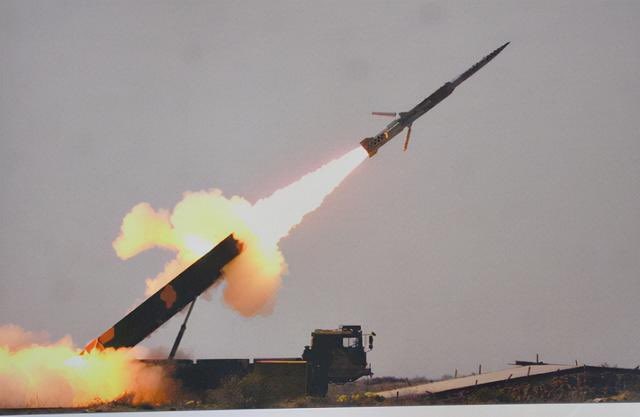
World
ISLAMABAD — May 8, 2026 : Pakistan has officially unveiled the Fatah-3 supersonic cruise missile, introducing a new high-speed precision-strike system into the country’s expanding conventional missile arsenal and significantly extending the capabilities of the Fatah missile family. The missile was publicly displayed on May 7 under the Pakistan Army Rocket Force Command during a presentation of newly developed indigenous defence systems. The unveiling marks Pakistan’s formal entry into the supersonic cruise missile category with a domestically fielded system designed for both land-attack and anti-ship operations. Defence analysts have identified the Fatah-3 as a localized derivative of China’s HD-1 supersonic cruise missile developed by Guangdong Hongda, although Pakistani military authorities have not officially confirmed the design origin. The displayed system featured a road-mobile twin-canister transporter-erector-launcher (TEL), a configuration intended to enhance operational mobility and survivability through rapid deployment and repositioning. Missile Specifications and Strike Role According to technical assessments based on the publicly displayed system, the Fatah-3 is capable of reaching speeds between Mach 3 and Mach 4 and has an estimated operational range of approximately 290 to 450 kilometres. The missile reportedly carries a warhead weighing between 240 and 400 kilograms. The system is designed to perform precision land-attack missions as well as anti-ship strike operations. Analysts state that the missile incorporates terrain-following and sea-skimming flight profiles intended to reduce radar visibility and shorten defensive reaction times during terminal engagement. The missile is believed to use a ramjet propulsion system supported by a solid rocket booster for initial acceleration after launch. Guidance reportedly combines satellite navigation with terminal seeker systems to improve targeting accuracy during the final phase of flight. The twin-canister TEL configuration enables the missile system to conduct rapid launch-and-relocation operations, improving survivability against counterbattery fire and pre-emptive strikes during high-intensity conventional engagements. Expansion of the Fatah Missile Family The Fatah-3 represents a major expansion of Pakistan’s Fatah missile programme, which previously focused on guided rocket artillery and subsonic cruise missile systems. Earlier systems in the family included the Fatah-I guided rocket system with a reported range of approximately 140 kilometres and the Fatah-II with an estimated range between 290 and 400 kilometres. Pakistan had also earlier introduced the Fatah-IV, a subsonic land-attack cruise missile reportedly capable of striking targets at ranges of around 750 kilometres. With the introduction of the Fatah-3, Pakistan has now expanded the series into the supersonic cruise missile category, adding a high-speed precision-strike capability intended for operations against both fixed land targets and moving maritime targets. Comparison With India’s BrahMos Missile Regional defence analysts widely regard the Fatah-3 as Pakistan’s direct conventional response to India’s BrahMos supersonic cruise missile programme. While both systems operate in the supersonic strike category, the Fatah-3 is assessed to be significantly lighter than many BrahMos variants. Current estimates place the Fatah-3 launch weight between approximately 1.2 and 1.5 tonnes, compared to more than 2.5 tonnes for several BrahMos configurations. Analysts note that the reduced launch weight may simplify transportation and deployment requirements while allowing greater launcher mobility. However, propulsion architecture and terminal flight performance remain key factors in overall missile survivability and operational effectiveness. Propulsion and Terminal Flight Characteristics Technical assessments indicate that the Fatah-3 employs a solid-fuel ramjet propulsion system, whereas the BrahMos uses a liquid-fuel ramjet configuration. Defence technology specialists note that many solid-fuel ramjet-based supersonic cruise missiles face operational limitations related not to peak velocity, but to terminal energy management during the final engagement phase. According to aerospace analysts, restricted throttling authority, grain regression dynamics and limited combustion modulation can reduce sustained specific excess power during high-G terminal manoeuvres. During engagements against manoeuvring naval targets, these limitations may affect post-turn energy retention and overall endgame agility. Analysts state that such constraints can result in a comparatively smaller no-escape envelope and may make interception easier under certain layered air-defence conditions despite the missile’s high speed. In contrast, liquid-fuel ramjet systems such as the BrahMos maintain greater throttle responsiveness and sustained dynamic pressure throughout terminal flight. This enables improved energy recovery during sea-skimming manoeuvres, sharper evasive flight profiles and stronger manoeuvre authority under aggressive lateral loading conditions. Defence specialists note that missile survivability depends not only on raw velocity, but also on terminal manoeuvrability, seeker stabilization and sustained energy management during the final attack phase. Chinese HD-1 Connection and System Development The Chinese HD-1 missile family, which analysts believe formed the baseline for the Fatah-3, was originally developed as a multi-role high-speed strike system capable of conducting both anti-ship and land-attack missions. The adoption of a solid-fuel propulsion architecture is assessed to simplify storage, transportation and launch preparation compared with older liquid-fuel missile systems. Analysts state that such systems generally require less complex handling procedures and support faster launch readiness during operational deployment. Pakistan military officials described the Fatah-3 programme as part of broader efforts aimed at strengthening indigenous defence production and improving self-reliance in precision-strike technologies. The missile was unveiled alongside several other newly developed systems, including a long-range rocket-dispensed mine system. Some defence reports have also indicated the possibility of future air-launched and sea-launched variants of the Fatah-3, although no official confirmation or timeline has been released. Regional Security Context The public unveiling took place near the first anniversary of last year’s four-day conflict between India and Pakistan, a confrontation that intensified regional focus on stand-off precision strike systems, survivable launch platforms and integrated air-defence penetration capabilities. Pakistan has not released detailed official operational data or complete technical specifications for the Fatah-3 beyond the public presentation. Most currently available information is based on visual analysis of the displayed missile system, comparative studies with the Chinese HD-1 design and independent technical assessments by defence analysts. The introduction of the Fatah-3 adds a new supersonic precision-strike capability to Pakistan’s conventional missile inventory and reflects the continuing expansion of long-range strike systems across South Asia. Additional details regarding operational integration, deployment status and future variants are expected in the coming months.
Read More → Posted on 2026-05-08 14:41:30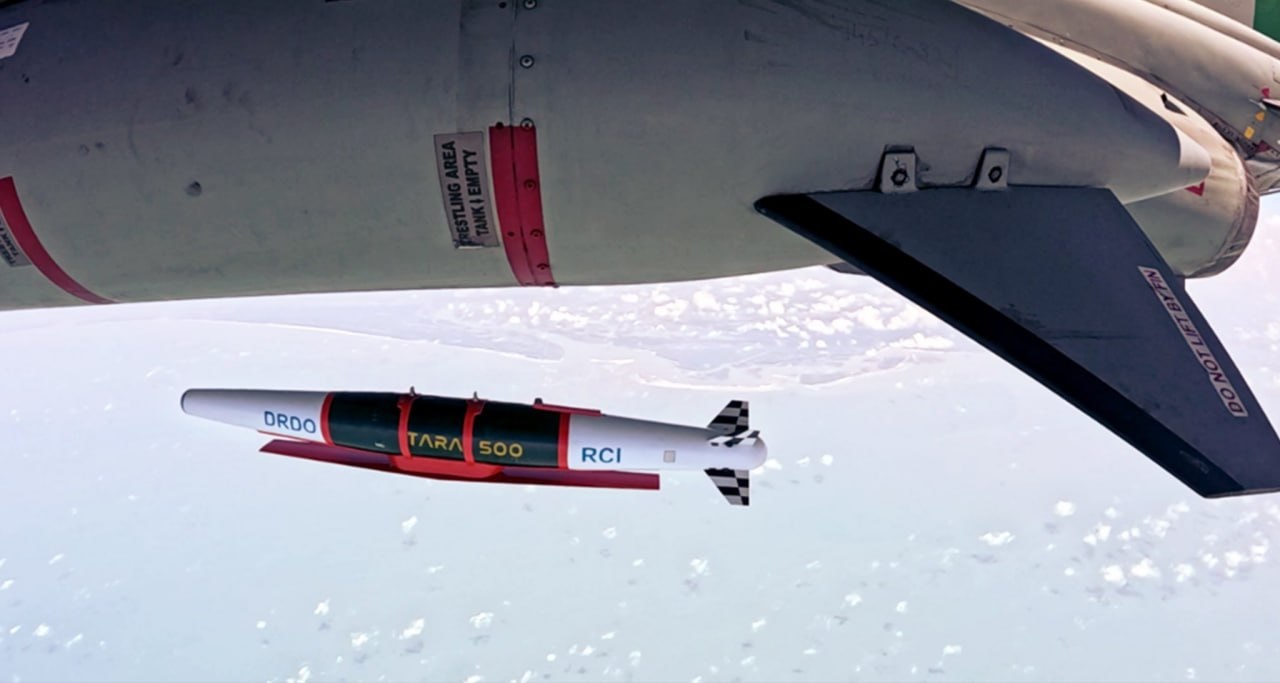
World
NEW DELHI — May 8, 2026 : The Defence Research and Development Organisation (DRDO) and the Indian Air Force (IAF) have successfully conducted the maiden flight-trial of the indigenous Tactical Advanced Range Augmentation (TARA) glide weapon system, marking a major milestone in India’s efforts to expand its domestically developed precision-strike capabilities. The trial was carried out on May 7, 2026, off the coast of Odisha in the Bay of Bengal. During the test, the TARA long-range glide weapon was released from a Su-30 MKI fighter aircraft, validating the system’s range-extension, navigation, and precision-guidance capabilities under operational conditions. TARA is India’s first indigenous glide weapon system and has been developed as a modular range-extension kit designed to convert conventional unguided bombs into precision-guided stand-off weapons. The programme is intended to significantly enhance the effectiveness of existing aerial munitions while reducing dependence on imported glide bomb systems. The weapon system has been designed and developed by DRDO’s Research Centre Imarat (RCI), Hyderabad, in collaboration with other DRDO laboratories and domestic defence industry partners. Development-cum-Production Partners (DcPP) and Indian manufacturers associated with the programme have already initiated production activities for the system. Indigenous Precision-Strike Capability TARA is regarded as the indigenous equivalent of the Israeli SPICE ER series and is designed to provide the Indian Air Force with a low-cost precision-strike capability using existing conventional bomb inventories. The modular kit can be integrated with 250 kg, 450 kg, and 500 kg general-purpose or high-speed low-drag bombs, resulting in multiple variants designated as TARA-250, TARA-450, and TARA-500. Once released from an aircraft at altitude, the weapon uses aerodynamic lift and advanced navigation systems to travel extended distances toward its designated target. The stand-off capability enables combat aircraft to strike ground-based targets while remaining outside the effective range of hostile radar-guided air defence systems. Officials stated that the system is intended to improve the lethality, flexibility, and survivability of IAF strike operations by transforming existing “dumb” bombs into precision-guided munitions without requiring entirely new weapon inventories. Guidance and Navigation Systems The TARA weapon system incorporates a fibre-optic gyro-based inertial navigation system (INS) combined with multi-GNSS satellite guidance for mid-course navigation and trajectory correction. For terminal engagement, the weapon can be equipped with multiple seeker options, including electro-optical, imaging infrared, and semi-active laser (SAL) seekers, depending on operational requirements and target profiles. According to defence officials, the semi-active laser seeker variant is capable of achieving a Circular Error Probable (CEP) of less than three metres during the terminal phase of engagement. The electro-optical and imaging infrared seekers are also designed to maintain target acquisition and engagement capability in contested environments where satellite navigation signals may be jammed, spoofed, or disrupted. The guidance architecture allows the system to conduct precision attacks against fixed and semi-mobile ground targets while maintaining operational effectiveness in electronically contested battlespaces. Platform Integration and Operational Role The maiden trial involved the release of the glide weapon from a Su-30 MKI fighter aircraft. However, the TARA system has been designed for integration across multiple Indian Air Force combat platforms. In addition to the Su-30 MKI, the weapon is planned for deployment on Jaguar strike aircraft, Mirage 2000 fighter jets, and the indigenous Light Combat Aircraft (LCA) Tejas. Officials stated that the modular design allows the system to be adapted across different aircraft types and bomb classes, providing the Indian Air Force with a flexible stand-off strike capability using existing operational infrastructure. The successful trial demonstrated the weapon’s ability to extend strike range while improving accuracy and mission survivability for frontline combat aircraft. Production and Indigenous Development The TARA programme forms part of India’s broader efforts to strengthen indigenous defence manufacturing and reduce reliance on imported precision-guided weapon systems. DRDO officials stated that the programme was executed with extensive participation from domestic industry partners, including Development-cum-Production Partners responsible for manufacturing and supply-chain support. Production-related activities for the system have already commenced, indicating progress toward future operational induction into the Indian Air Force inventory. The programme also reflects ongoing efforts to expand India’s indigenous portfolio of precision-guided munitions, glide bombs, and stand-off strike systems developed under the country’s defence self-reliance initiatives. Official Statements Defence Minister Rajnath Singh congratulated the DRDO, the Indian Air Force, Development-cum-Production Partners, and industry teams associated with the programme following the successful maiden trial. He described the achievement as an important step in advancing India’s indigenous defence manufacturing ecosystem and enhancing domestic aerospace and precision-strike capabilities. Dr. Samir V. Kamat, Secretary of the Department of Defence Research and Development and Chairman of DRDO, also congratulated the scientific teams, military personnel, and industry partners involved in the successful development and testing of the TARA system. Further Development Additional developmental trials, platform integration activities, and operational evaluation exercises are expected in the coming months as the TARA glide weapon system progresses toward operational induction with the Indian Air Force. The successful maiden flight-trial marks a significant development in India’s ongoing efforts to expand indigenous stand-off precision-strike capabilities using domestically developed technologies and existing conventional aerial munitions.
Read More → Posted on 2026-05-08 14:48:10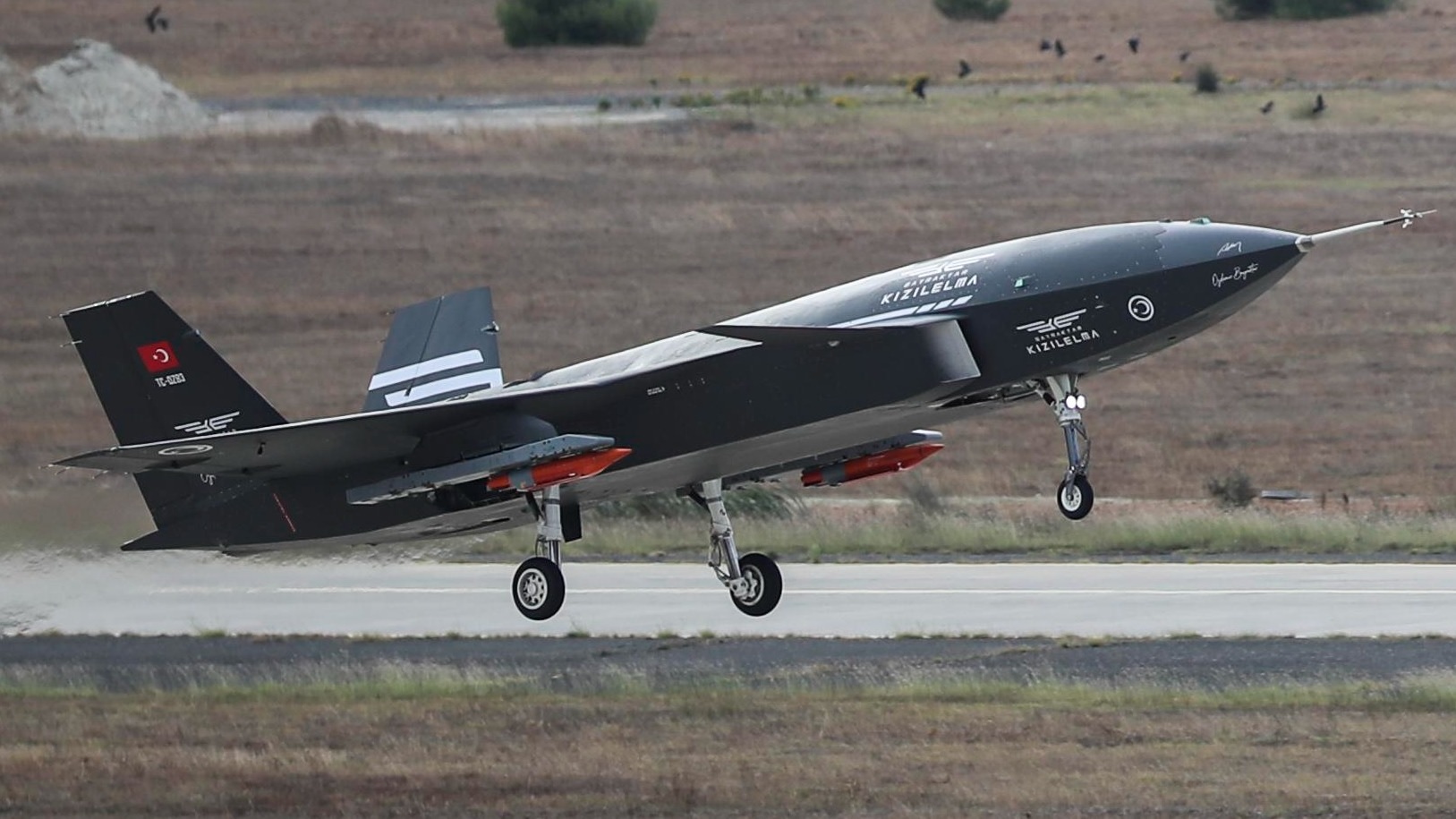
World
ISTANBUL — May 8, 2026 : Indonesia has officially become the first international customer for Türkiye’s Bayraktar Kızilelma unmanned combat aerial vehicle (UCAV), following the signing of a major framework agreement between Turkish defence company Baykar and Indonesia’s PT Republik Aero Dirgantara during the SAHA 2026 International Defence, Aerospace and Space Industry Fair in Istanbul. The agreement, signed on May 6, covers the procurement of an initial batch of 12 Bayraktar Kızilelma aircraft, equivalent to one operational squadron, with deliveries scheduled to begin in 2028. The contract also includes options for four additional squadrons, potentially increasing Indonesia’s total acquisition to 60 aircraft. Baykar Chief Executive Officer Haluk Bayraktar confirmed that Indonesia is the first export customer for the Kızilelma platform since the aircraft completed its maiden flight on December 14, 2022. The deal represents a significant expansion of defence-industrial cooperation between Ankara and Jakarta, particularly in unmanned systems, aerospace manufacturing, missile technology, and advanced defence electronics. Comprehensive Industrial Cooperation Package The agreement extends beyond aircraft procurement and establishes a broad industrial cooperation framework inside Indonesia. Under the arrangement, PT Republik Aero Dirgantara — a subsidiary of Indonesian defence and aerospace company Republikorp — will support local integration, sustainment, and future production activities related to the Kızilelma programme. The framework includes technology transfer, local production capability, maintenance, repair and overhaul (MRO) infrastructure, technical certification activities, workforce training programmes, and the establishment of integration centres for the aircraft inside Indonesia. The project further expands an existing defence partnership between Baykar and Republikorp that was formalized in February 2025 for the local production of Bayraktar TB3 and Bayraktar Akıncı unmanned aerial vehicles. Indonesian facilities are expected to support assembly operations, mission systems integration, sustainment activities, and long-term operational support for Turkish-origin unmanned combat platforms. Part of Broader Türkiye–Indonesia Defence Expansion Indonesia’s acquisition of the Kızilelma forms part of a wider defence modernization programme involving multiple Turkish defence companies. In July 2025, Indonesia finalized an estimated $10 billion agreement with Turkish Aerospace Industries (TUSAŞ) for the procurement of 48 Kaan fifth-generation fighter aircraft. Initial deliveries of the Kaan fighters are expected in the early 2030s. PT Republik Aero Dirgantara has also been designated to support future Kaan maintenance infrastructure, simulator systems, and associated support facilities inside Indonesia. At the same time, Republikorp-linked entities expanded cooperation with Turkish missile manufacturer Roketsan through a separate joint venture signed in June 2025. That agreement focuses on the gradual local production of Atmaca anti-ship missiles, the Çakır compact cruise missile, and the Hisar and Sungur air defence systems. During the SAHA 2026 exhibition, Turkish defence electronics company Aselsan additionally signed contracts related to unmanned naval vehicle payloads, mission systems, and military communication equipment for the Indonesian Armed Forces. Kızilelma Programme Background The Bayraktar Kızilelma originated from Baykar’s MIUS (Muharip İnsansız Uçak Sistemi) programme, which was launched in 2013 as part of Türkiye’s effort to develop an indigenous jet-powered unmanned combat aircraft. Baykar publicly disclosed the programme in July 2021. Development expenditures for the aircraft are estimated at approximately $1 billion. The first prototype was assembled in March 2022 and completed its maiden flight on December 14, 2022. Since then, the programme has progressed through a series of flight-test campaigns focused on autonomous flight control, high-speed handling, weapons integration, and manned-unmanned operational concepts. Aircraft Design and Technical Specifications The Bayraktar Kızilelma is designed as a low-observable unmanned fighter platform capable of conducting strike, interdiction, suppression of enemy air defences (SEAD), reconnaissance, and air-to-air combat missions. The aircraft features a blended stealth-oriented fuselage, canard-delta aerodynamic configuration, side-mounted engine intakes, and twin outward-canted vertical stabilizers designed to reduce frontal radar signature while maintaining maneuverability at high angles of attack. The platform measures 14.5 metres in length, has a wingspan of 10 metres, and stands 3.5 metres high. The aircraft has a maximum takeoff weight of 8,500 kilograms and supports an internal payload capacity of 1,500 kilograms. To preserve low observability during combat operations, the Kızilelma incorporates internal weapons bays. Additional payload configurations are supported through six external wing hardpoints and two internal weapon stations. The aircraft is equipped with an Active Electronically Scanned Array (AESA) radar, electro-optical targeting systems, and infrared search and track (IRST) sensors to support target acquisition, tracking, and situational awareness. Autonomous and Manned-Unmanned Teaming Capabilities The Kızilelma has been designed around artificial intelligence-supported operational concepts, including “loyal wingman” missions and manned-unmanned teaming operations alongside piloted combat aircraft. The aircraft supports autonomous takeoff, landing, taxiing, navigation, and coordinated mission execution through integrated onboard control systems. Communication architecture includes both line-of-sight and beyond-line-of-sight connectivity for networked operations. Baykar has stated that the platform is intended to support beyond-visual-range combat capability and future distributed autonomous air combat operations. Performance specifications released by the company indicate a cruise speed of approximately Mach 0.6 and a maximum speed approaching Mach 0.9. The aircraft has a combat radius of approximately 930 kilometres, or 500 nautical miles, an operational altitude of 25,000 feet, and a service ceiling reaching 45,000 feet. Endurance is reported to exceed three hours depending on mission configuration. Prototype Development and Flight Testing The Kızilelma flight test campaign has focused on validating autonomous control systems, aerodynamic performance, and coordinated operations with crewed combat aircraft. In April 2023, the aircraft conducted a formation flight with a Turkish Air Force F-16 during the Teknofest aerospace event, demonstrating manned-unmanned coordination capability. By June 2023, the aircraft had reached an altitude of 9.5 kilometres during its twelfth flight test. The third prototype, designated TC-ÖZB3 (PT3), completed its maiden flight on September 25, 2024. The prototype introduced revised avionics architecture, aerodynamic refinements, structural modifications, and an afterburning engine configuration assessed to be based on the AI-322F turbofan series. The afterburning configuration enables transonic flight performance and improved maneuver capability during high-stress flight operations. In December 2025, two Kızilelma aircraft successfully completed an autonomous close-formation flight simultaneously, marking the first documented fighter-class UCAV formation flight conducted without onboard pilots. Strategic Implications for Indonesia Indonesia’s acquisition provides the country with early access to a new class of autonomous combat aircraft while the platform continues progressing through operational integration and low-rate production phases. The procurement is expected to support Indonesia’s long-range deterrence capability, autonomous warfare development, and future manned-unmanned combat operations in the Indo-Pacific region. The broader framework agreement also includes future autonomous systems research, local aerospace workforce development, technical certification programmes, and integrated support infrastructure tied to Kızilelma operations inside Indonesia. Further details regarding aircraft variants, production timelines, operational integration, and localized manufacturing activities are expected to be released in the coming months.
Read More → Posted on 2026-05-08 15:22:46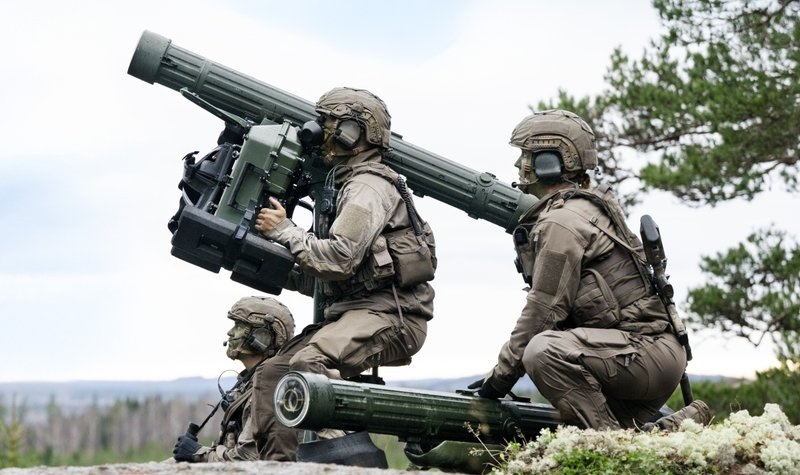
World
KARLSKOGA, Sweden — May 8, 2026 : Swedish defence company Saab has officially unveiled the Bolide 2 missile, a next-generation interceptor developed for the RBS 70 short-range air defence (SHORAD) system. The new missile introduces a larger warhead, enhanced terminal flight performance, expanded sensor coverage, and a modular architecture designed to simplify future upgrades and adaptation to evolving aerial threats. The Bolide 2 will become the standard missile for the modern RBS 70 NG air defence system, with initial customer deliveries scheduled to begin in 2027. Saab stated that the missile has been developed to improve operational effectiveness against a wide range of airborne threats, including aircraft, helicopters, cruise missiles, and unmanned aerial systems. Larger Warhead and Redesigned Internal Structure A central element of the Bolide 2 programme was increasing lethality without increasing the overall size or weight of the missile. Saab engineers redesigned several internal components and introduced lighter structural materials to accommodate a larger explosive payload while maintaining the missile’s existing dimensions. According to Saab, the Bolide 2 carries 50 percent more explosive material than the original Bolide missile and generates 40 percent more fragmentation. Because the fragmentation pattern is dispersed over the same area as the earlier missile, the density of fragments within the blast zone is significantly higher, improving the probability of destroying or disabling airborne targets. To offset the increased explosive content, Saab replaced the traditional steel outer casing with an aluminum shell. The company also replaced the original copper shaped-charge liner with an aluminum cone. Saab representatives stated that the aluminum cone reduces over-penetration while increasing pressure and spalling effects inside the target after detonation. Guidance and Flight Performance Improvements The Bolide 2 retains the unjammable laser beam-riding guidance method that has characterized the RBS 70 missile family for decades. Saab stated that the guidance system continues to provide strong resistance against electronic warfare and jamming attempts while maintaining accurate target tracking. The missile also introduces an inertial navigation unit intended to improve maneuverability and engagement capability at higher altitudes. According to Saab, the additional navigation capability enhances flight stability and targeting performance against fast-moving and maneuvering threats. Further improvements were made to the missile’s proximity fuse system. Saab increased the number of laser-based proximity sensors positioned around the missile’s nose section, creating a wider detection area intended to improve detonation reliability against agile targets and small drones. Designed for Emerging Air Threats Saab stated that the Bolide 2 programme was developed in response to the increasing complexity of modern air threats, particularly the rapid growth in the use of small unmanned aerial systems on the battlefield. Mats-Olof Rydberg, Saab’s head of Ground-Based Air Defence, noted that while the earlier Bolide missile was already capable of engaging commercial drones, the Bolide 2 improves that capability significantly and allows such targets to be intercepted more effectively. Despite the internal redesigns and expanded warhead, the missile maintains the same operational engagement envelope as the earlier Bolide variant. Saab confirmed that the Bolide 2 retains an effective intercept range of up to 9 kilometers and altitude coverage of approximately 5,000 meters. Modular Design and Backward Compatibility The Bolide 2 was developed over a period of approximately four and a half years. Saab stated that modularity was incorporated into the missile’s architecture to simplify future upgrades and allow adaptation to emerging operational requirements without extensive redesign work. Stefan Öberg, head of Saab’s Missile Systems business unit, said the missile was designed to provide operators with greater flexibility across different deployment configurations. “With Bolide 2 we are ready to provide our customers with an even more capable missile, ready to be adapted for any new threats in the sky,” Öberg said. “RBS 70 users can benefit from improvements including a more powerful warhead, whether they are operating in the man-portable role or, as is increasingly common, from a vehicle firing unit,” he added. Saab confirmed that maintaining backward compatibility with existing launch systems was a key requirement during development. As a result, the Bolide 2 can be fired from both the latest RBS 70 NG launchers and earlier generations of the RBS 70 platform already in operational service. Testing and Operational Role The company stated that the missile has successfully completed a series of live test firings during the development phase. Saab did not disclose the exact number of trials conducted but confirmed that testing validated the missile’s new warhead configuration, guidance performance, and engagement capability. The RBS 70 family has remained in operational service since the late 1970s and is currently used by more than 20 countries. The system supports both man-portable and vehicle-mounted configurations and is designed for day-and-night, all-weather operations when paired with compatible sighting systems. The latest RBS 70 NG variant incorporates upgraded thermal imaging systems, improved target tracking, and enhanced command-and-control integration. With the introduction of the Bolide 2 missile, Saab is further expanding the operational capability of the RBS 70 family while preserving compatibility with existing launcher infrastructure and operator inventories.
Read More → Posted on 2026-05-08 15:31:30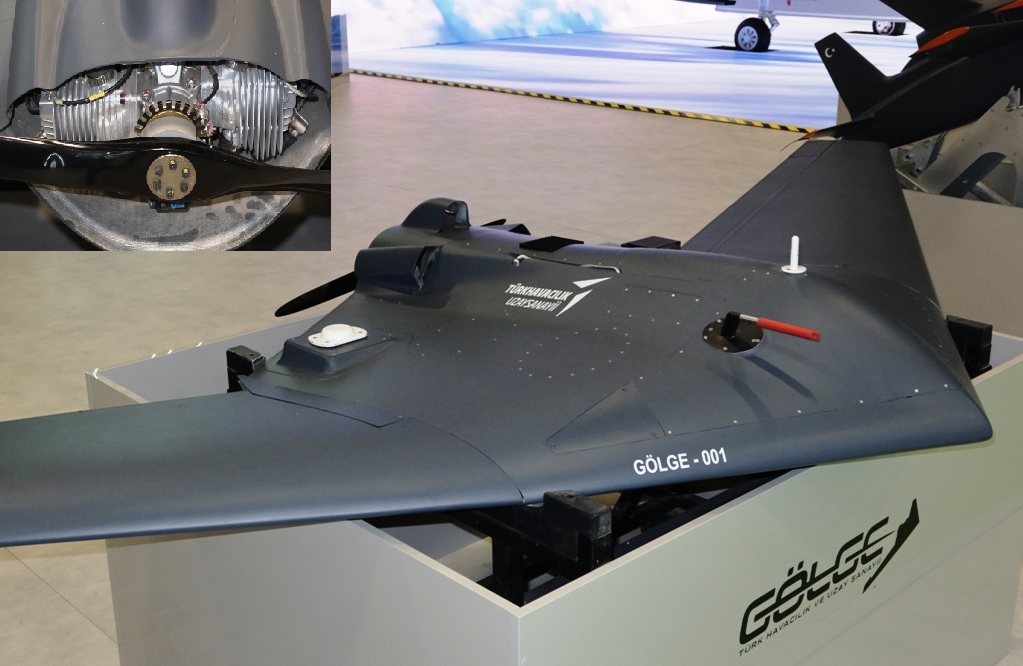
World
ISTANBUL — May 8, 2026 : Turkish Aerospace Industries (TAI) presented its Anka-III unmanned combat aerial vehicle (UCAV) alongside the newly introduced Gölge unmanned aerial system during SAHA Expo 2026 in Istanbul, offering a detailed look at two closely connected unmanned platforms developed under the company’s expanding aerospace programme. The exhibition marked the first major public presentation of the Gölge platform, which originated as an intermediate-scale technology demonstrator created to support the development of the larger Anka-III UCAV. Displayed side by side, the two aircraft showed a strong visual resemblance through their flying-wing layouts and stealth-oriented aerodynamic shaping, despite major differences in size, propulsion, and operational role. Anka-III Development Programme Advances Toward Production The Anka-III is a jet-powered stealth UCAV currently progressing through production development. TAI confirmed during the exhibition that the first production aircraft is scheduled for delivery in 2028. Designed as a heavy-class unmanned combat platform, the Anka-III has a maximum take-off mass of 6,500 kilograms and can carry payloads weighing up to 1,200 kilograms. The aircraft measures 7.9 metres in length and has a wingspan of 12.5 metres. According to specifications released by TAI, the aircraft is capable of flying at speeds up to Mach 0.7, operating at altitudes reaching 40,000 feet, and remaining airborne for up to 10 hours. At the exhibition, TAI also highlighted the aircraft’s modular payload capability through the display of a full-scale Anka-III model carrying two externally mounted “Süper Şimşek” strike UAVs beneath its wings. The configuration demonstrated the company’s focus on multi-platform unmanned operations and expandable strike mission capability. Gölge Developed from Anka-III Technology Demonstrator TAI stated that the Gölge programme originated from a smaller technology demonstrator used during the Anka-III development process. The platform was initially developed to validate flight control systems, aerodynamic behaviour, and autonomous operational functions intended for the larger UCAV. Following successful testing and validation activities, engineers adapted the demonstrator into a separate operational platform under the name Gölge. Although the two aircraft maintain similar design characteristics, TAI estimates commonality between the airframes at approximately 30 percent. The Gölge is considerably smaller, featuring a five-metre wingspan delta-wing configuration and a maximum take-off mass of approximately 100 kilograms. Propulsion and Flight Characteristics Unlike the jet-powered Anka-III, the Gölge uses a 14-horsepower two-cylinder engine driving a two-blade pusher propeller. The propulsion system is supported by three air intakes, including two positioned laterally on the fuselage and a third mounted on the upper section of the airframe to provide engine cooling. The aircraft is launched using a catapult-assisted take-off system and recovered using a parachute landing mechanism. TAI stated that the Gölge can reach speeds of approximately 165 kilometres per hour, equivalent to around 90 knots. The aircraft has an operational ceiling of 12,000 feet, a reported operational range of 1,300 kilometres, and an endurance of up to 10 hours. Stealth Design Limited by Propeller Configuration While the Gölge incorporates stealth-oriented shaping similar to the Anka-III, company representatives indicated that the aircraft does not achieve the same radar-discretion characteristics as the larger UCAV. The exposed pusher propeller creates what engineers describe as a micro-Doppler radar effect, reducing the effectiveness of the low-observable airframe design. Due to these limitations, TAI is expected to use conventional construction materials for the Gölge rather than the more advanced radar-absorbent materials associated with the Anka-III programme. Avionics and Payload Configuration The Gölge incorporates several integrated avionics and communication systems distributed across the airframe. A standard GNSS antenna is installed on the right wing, while the left wing houses a Controlled Reception Pattern Antenna (CRPA) designed to improve resistance against jamming and spoofing threats. An RF antenna positioned on the forward upper fuselage supports the aircraft’s onboard data link system, enabling line-of-sight communication with ground control stations at distances of up to 100 kilometres. The aircraft’s primary payload consists of electro-optical and infrared imaging systems mounted beneath the fuselage. To protect the sensor package during parachute recovery operations, the payload retracts fully into the airframe prior to landing. The Gölge has a payload capacity of 15 kilograms and is expected to support intelligence, surveillance, and reconnaissance missions. Production Readiness and Domestic Interest Industry sources present at SAHA Expo stated that TAI has completed industry testing activities for the Gölge and is prepared to begin serial production of the platform. The company has reportedly received interest from three undisclosed domestic users within Türkiye, although no procurement contracts, pricing information, or delivery schedules were announced during the exhibition. The side-by-side presentation of the Anka-III and Gölge reflected TAI’s broader development strategy of using lower-cost demonstrator platforms to reduce risk and accelerate validation processes for larger unmanned combat aircraft programmes. TAI did not release additional details regarding export opportunities or future production quantities for either platform during SAHA Expo 2026.
Read More → Posted on 2026-05-08 15:47:50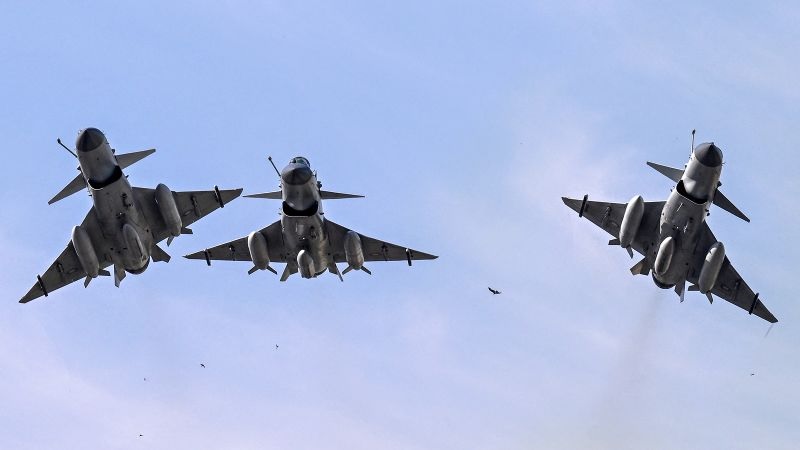
World
BEIJING — May 8, 2026 : China has officially confirmed for the first time that Chinese technical personnel were deployed to support the Pakistan Air Force (PAF) during the four-day military conflict between Pakistan and India in May 2025, publicly acknowledging direct operational assistance provided during the clashes. The confirmation was made through interviews aired by China’s state broadcaster CCTV featuring engineers from the Chengdu Aircraft Design and Research Institute, a division of the state-owned Aviation Industry Corporation of China (AVIC), which develops the J-10 fighter aircraft series. The broadcast marks the first official Chinese acknowledgment that Chinese personnel were physically present in Pakistan during active combat operations involving India. Chinese Engineers Confirm Deployment to Pakistan During the televised interview, AVIC engineer Zhang Heng stated that he was deployed to a Pakistani operational support base during the conflict to assist with technical maintenance and combat support for Pakistan’s fleet of Chinese-built J-10CE fighter aircraft. Zhang described the operational environment at the base, saying Chinese personnel regularly heard fighter jets taking off alongside air-raid sirens while conducting maintenance and support activities. He said the working conditions were physically demanding, with temperatures at the base approaching 50 degrees Celsius during daytime operations. According to Zhang, the Chinese team remained focused on ensuring that the aircraft and associated systems operated at their “full combat potential” throughout the conflict. He added that the deployment reflected the close working relationship developed between Chinese technical teams and Pakistan Air Force personnel through continuous cooperation and operational coordination. Another engineer from the same institute, Xu Da, also confirmed his involvement in the deployment. Xu compared the J-10CE fighter aircraft to a “child” that the engineering team had developed and eventually transferred to the user after years of work and testing. Speaking about the aircraft’s reported combat performance, Xu stated that the engineering team was not surprised by the outcome, saying the aircraft had simply been waiting for the opportunity to demonstrate its operational capabilities under combat conditions. J-10CE Fighter and PL-15 Missile System The J-10CE is the export version of China’s J-10C 4.5-generation multirole fighter aircraft. The platform is equipped with an active electronically scanned array (AESA) radar and is compatible with advanced Chinese air-to-air weapons, including the PL-15 series beyond-visual-range air-to-air missile. Pakistan remains the only confirmed foreign operator of the J-10CE fighter. In 2020, Islamabad ordered 36 J-10CE aircraft along with approximately 250 PL-15 missiles as part of efforts to strengthen its air combat capabilities following India’s acquisition of French-built Rafale fighter jets. The Pakistan Air Force also operates the JF-17 Thunder, a fighter aircraft jointly developed by China and Pakistan that serves as one of the PAF’s primary combat platforms. According to data published by the Stockholm International Peace Research Institute (SIPRI), China accounted for nearly 80 percent of Pakistan’s total arms imports between 2021 and 2025, highlighting the depth of defence cooperation between the two countries. Aerial Engagements During the 2025 Conflict The May 2025 conflict marked the first reported combat deployment of the J-10CE platform. During the aerial clashes over the disputed Kashmir region, Pakistani officials claimed that J-10CE fighters armed with PL-15E missiles successfully struck an Indian Air Force Rafale fighter after firing multiple beyond-visual-range missiles during the engagement. Pakistani and Chinese sources initially stated that at least one Rafale fighter had been shot down during the engagement, which would have represented both the first reported combat loss of a Rafale aircraft and the first known combat success for the J-10CE. However, subsequent Indian reports and independent defence assessments disputed parts of those claims. According to Indian accounts and independent analysts, the Rafale aircraft identified in Pakistani claims was able to return safely and land despite sustaining damage during the engagement. Indian forces later recovered several unexploded PL-15E missiles on the ground, including one missile reportedly found largely intact near Hoshiarpur in the Indian state of Punjab. Independent defence experts reviewing India’s documentation verified the recovery of unexploded missile components and also confirmed that at least one damaged Rafale aircraft landed safely after the engagement. Analysts noted that several recovered missiles failed to detonate after launch, with reports suggesting that the Rafale’s electronic warfare and countermeasure systems may have disrupted or jammed aspects of the missiles’ guidance and engagement process during the encounter. Strategic and Defence Implications Defence analysts have described the recovery of relatively intact PL-15E missile components as a significant intelligence opportunity for India because it potentially allows detailed examination of Chinese missile technology, including propulsion systems, radar seekers, guidance electronics, and internal architecture. Chinese defence officials have largely avoided directly addressing reports regarding technical failures involving the recovered missiles. Public comments from Chinese officials have instead emphasized the missile system’s operational capabilities and export presence while calling for regional stability and restraint. The CCTV interviews with Chinese engineers are viewed as an important public acknowledgment of the extent of China’s operational and technical support relationship with Pakistan during the conflict. The statements also underline the growing strategic defence partnership between Beijing and Islamabad, which has expanded over the past decade through joint aircraft development programmes, weapons transfers, training cooperation, and logistical support arrangements. The J-10CE has attracted increased international attention following the 2025 conflict due to its reported operational use and the broader implications for Chinese military aviation exports in international defence markets. AVIC and Chinese authorities have not released additional operational details regarding the deployment of Chinese technical personnel or the specific combat activities carried out during the conflict beyond the statements aired by CCTV.
Read More → Posted on 2026-05-08 15:59:34
World
PLYMOUTH, United Kingdom — May 8, 2026 : German defence technology company Helsing has successfully conducted the first maritime launch of its HX-2 AI-enabled strike drone during a trial off the coast of Plymouth, expanding the system’s operational deployment capabilities into naval and littoral environments. The demonstration involved the launch of the HX-2 loitering munition from a fast insertion craft operating in coastal waters near Plymouth. According to the company, the trial validated the drone’s ability to be deployed from small maritime platforms without requiring dedicated naval launch infrastructure. The test represents the first known maritime launch of the HX-2 and builds on previous land-based operational trials conducted with armed forces in several European countries. Maritime Deployment Capability Helsing stated that the Plymouth trial was intended to evaluate the HX-2’s performance in littoral conditions and demonstrate compatibility with ship-based deployment concepts. The maritime launch capability allows the HX-2 to be integrated with small naval craft and coastal units, providing beyond-line-of-sight strike capability without requiring large launch platforms. Further technical details regarding the trial profile or operational outcomes were not disclosed. HX-2 Specifications and Design The HX-2, also referred to as the “Karma” intelligent loitering munition, is an electrically propelled unmanned strike system developed for mass production and swarm operations. The drone features an X-wing configuration with four wings and four electric motors equipped with pulling propellers. Helsing classifies the platform as a weight class 1 mini-unmanned aerial system (UAS). Key specifications include: Weight: 12 kilograms Range: up to 100 kilometres Maximum speed: 220 km/h Strike speed: up to 250 km/h Payload capacity: up to 4.5 kilograms The system supports multiple payload options, including armour-penetrating shaped charges, anti-tank warheads, anti-structure munitions, and general-purpose explosive payloads. AI Navigation and Electronic Warfare Resistance A central feature of the HX-2 is its software-defined architecture and onboard artificial intelligence system designed for operations in GPS-denied and electronic warfare-contested environments. According to Helsing, the drone uses onboard machine vision, stored terrain mapping data, and visual landmark recognition for autonomous navigation when satellite signals are unavailable or jammed. As the drone approaches its operational area, onboard image-recognition algorithms identify and track designated targets. The HX-2 is designed to continue operating without a continuous data link during parts of the mission. Despite its autonomous capabilities, Helsing stated that the system operates under a strict human-in-the-loop or human-on-the-loop doctrine, requiring a human operator to authorize final strike decisions. Integration With Altra Platform The HX-2 is integrated into Helsing’s Altra reconnaissance-strike software platform, which links drones, reconnaissance assets, artillery systems, and command networks. The platform enables a single operator to coordinate multiple HX-2 drones in networked swarm operations involving intelligence, surveillance and reconnaissance (ISR) assets and battlefield management systems. According to Helsing, the system is designed to engage targets including artillery systems, armoured vehicles, and command posts at beyond-line-of-sight ranges. Production and Operational Background The HX-2 has been designed as a software-defined weapon system capable of receiving over-the-air software updates to adapt to evolving battlefield conditions and electronic warfare threats. Helsing said the drone is designed for high-volume production using modular manufacturing methods and extensive use of 3D printing. The company has established distributed production facilities known as “Resilience Factories” across Europe, including a UK facility in Plymouth. The HX-2 was unveiled in December 2024 and has since been ordered in significant quantities, including deliveries to Ukraine. Helsing stated that operational experience from earlier deployments of its HF-1 loitering munition contributed to the development of the HX-2’s current AI-enabled architecture. The company stated that work is continuing to expand the HX-2’s operational integration across multiple military domains, including naval and littoral forces.
Read More → Posted on 2026-05-08 16:06:22
India
NEW DELHI, — May 8, 2026 : India has officially begun receiving the seventh and eighth battalions of the Russian-made S-400 Triumf long-range air defence system, marking another major step in the Indian Air Force’s (IAF) ongoing expansion of its strategic air defence network. The deliveries commenced on May 7, according to Indian defence officials, coinciding with the one-year anniversary of the May 2025 India-Pakistan conflict known as Operation Sindoor. The brief but intense confrontation was notable for becoming the first high-intensity combat deployment of the S-400 system outside Russian territory. Deputy Chief of Air Staff Air Marshal Awadhesh Kumar Bharti confirmed that the systems had already been dispatched from Russia and are expected to arrive in India within a month. “We should be having [it] with us within a month,” Bharti stated, adding that the final two battalions under the original contract are scheduled for delivery before the end of 2026. Original Contract and Delivery Delays India signed the original $5.43 billion contract with Russia in October 2018 for the procurement of ten S-400 battalions. The deliveries were initially expected to be completed by 2025, but the programme faced repeated delays due to complications arising from the Russia-Ukraine war. The disruptions affected production schedules, logistics, transportation routes, and financial arrangements linked to Russian defence exports. In response to the delays, Indian Defence Minister Rajnath Singh and Russian Defence Minister Andrey Belousov held dedicated discussions in June 2025 aimed at accelerating the remaining deliveries. The arrival of the seventh and eighth battalions now places the programme back on an accelerated delivery timeline. Combat Experience During Operation Sindoor The May 2025 conflict with Pakistan significantly increased the strategic importance of the S-400 within Indian military planning. During the conflict, the system was used in a high-intensity operational environment for the first time outside Russia. Indian military and civilian leadership publicly praised the system’s performance during the hostilities. Air Marshal Bharti recently stated that Indian forces destroyed 13 Pakistani aircraft and struck 11 Pakistani airfields during the conflict. At the same time, Pakistan claimed its air force had downed several Indian combat aircraft, including four Rafale fighters. The claims from both sides remain independently unverified. The operational outcomes of the conflict strengthened India’s emphasis on long-range ground-based air defence systems. Defence analysts note that the S-400 provides extensive engagement ranges, multi-target interception capability, and broad-area surveillance through integrated radar systems. The platform is also regarded as more cost-effective over time compared to maintaining continuous fighter patrols for defensive coverage. Deployment Along Pakistan and China Frontiers The Indian Air Force plans to deploy the seventh and eighth S-400 battalions near the border with Pakistan. Once operational, the western sector will host six S-400 battalions in total. The remaining two battalions from the original order are expected to be positioned near the border with China, increasing the number of units deployed in the northern and eastern sectors to four. The deployments reflect India’s broader effort to strengthen layered air defence coverage across both major strategic fronts simultaneously. Approval for Additional Ten Battalions India is also preparing for a major expansion of its S-400 inventory beyond the original order. In March 2026, the Defence Acquisition Council approved the procurement of an additional ten S-400 battalions as part of a wider ₹2.38 lakh crore defence modernization package. The approval will increase the Indian Air Force’s planned S-400 inventory to a total of 20 battalions. The expanded network is expected to provide additional layers of air defence coverage deeper inside Indian territory beyond frontline operational zones. Indian defence officials are also studying the possibility of acquiring a navalized version of the S-400 system for future destroyer classes currently under development for the Indian Navy. Integration With Wider Russian Aerospace Systems The S-400 expansion is progressing alongside several other major Russian-linked air combat modernization programmes being pursued by India. The Indian Defence Ministry has approved procurement of the R-37M long-range air-to-air missile for the Su-30MKI fighter fleet. The missile is capable of speeds approaching Mach 6 and can reportedly engage aerial targets at ranges of up to 400 kilometres. Simultaneously, negotiations are at an advanced stage for a large-scale Russian-backed modernization programme for India’s Su-30MKI fleet. The proposed upgrades are expected to include improvements to radar systems, avionics, electronic warfare capabilities, and weapons integration. Speculation has also intensified regarding a potential Indian acquisition of the Russian Su-57 fifth-generation stealth fighter. In January 2026, the Indian Defence Ministry confirmed that technical discussions regarding the aircraft had reached an advanced stage. Subsequent statements from Russian officials indicating that new export agreements for the Su-57 had been finalized further increased speculation that India could become one of the aircraft’s future operators. Toward an Integrated Air Defence Architecture Military analysts assess that the various programmes are designed to operate as part of an integrated aerial warfare and air defence network centered largely on Russian-origin systems. The combination of upgraded Su-30MKI fighters, R-37M long-range missiles, potential Su-57 stealth aircraft, and an expanded S-400 missile shield is expected to significantly strengthen India’s long-range aerial surveillance, interception, and layered air defence capabilities. Indian defence planners view the expanding network as a central component of long-term efforts to enhance protection of Indian airspace while improving operational readiness across both western and northern theatres.
Read More → Posted on 2026-05-08 17:16:23
World
WASHINGTON, — May 8, 2026 : Saudi Arabia and Kuwait have lifted restrictions on U.S. military use of their bases and airspace, according to a report by The Wall Street Journal. The decision removes a key obstacle and clears the way for the possible restart of the U.S. naval operation known as “Project Freedom” as early as this week. Pentagon officials have stated that operations under Project Freedom could resume as early as this week. The Trump administration is now considering restarting the naval mission to guide commercial ships through the Strait of Hormuz. Access for U.S. basing and overflight operations in Saudi Arabia was restored following a second phone call between President Donald Trump and Saudi Crown Prince Mohammed bin Salman. Project Freedom is a U.S.-led mission to escort and guide merchant vessels through the Strait of Hormuz amid disruptions to commercial shipping in the region. The operation was launched earlier in May 2026 and involved U.S. Navy guided-missile destroyers, aircraft, and multi-domain unmanned platforms. It was paused after only a short period when Saudi Arabia and Kuwait imposed restrictions on the use of their bases and airspace. The Strait of Hormuz is a critical chokepoint for global energy supplies. The mission relies heavily on regional basing and overflight permissions to provide air and naval support for commercial shipping. The restrictions had been put in place shortly after the initial launch of the operation. Their removal follows high-level discussions between the United States and the Gulf states. No official confirmation of the exact restart date or operational details has been released by the Pentagon or the White House at this time. Further information on the scope and timeline of any resumed operations is expected in the coming days.
Read More → Posted on 2026-05-08 17:23:16
World
SAN FERNANDO, Spain — May 8, 2026 : Spanish naval shipbuilder Navantia has laid the keel for the seventh Avante 2200-class corvette being built for the Royal Saudi Naval Forces (RSNF), marking another milestone in the ongoing ALSARAWAT naval programme between Spain and Saudi Arabia. The vessel, identified as Construction No. 576, will enter service as HMS Neom. The keel-laying ceremony took place at Navantia’s shipyard in San Fernando, located in the Bay of Cádiz, and was conducted as a working event attended by representatives from Navantia’s programme teams and RSNF personnel. The Saudi delegation was led by Commodore Fareed M. Alharbi, accompanied by members of the Project Control Office team. Senior representatives from Navantia also attended the event, including Alberto Cervantes, Director of the Corvette and Maritime Action Vessels Business Unit. During the ceremony, the first structural block of HMS Neom was placed on the slipway, formally initiating assembly of the ship. The vessel now joins HMS Al-Madinah, the first ship in the current three-vessel batch, as both ships move toward launch preparations scheduled for the coming months. The corvette forms part of the second series of three Avante 2200-class vessels ordered by the Saudi Arabian Ministry of Defense under a contract signed in December 2024. The agreement follows the successful completion and delivery of the first batch of five Avante 2200 corvettes, which were handed over to the RSNF between 2022 and 2024. The Avante 2200 is a multi-mission corvette designed for a broad range of naval and maritime security operations. Its mission profile includes exclusive economic zone patrols, maritime traffic surveillance and control, search and rescue operations, protection of strategic assets, intelligence gathering, and support for anti-surface warfare, anti-submarine warfare, anti-air warfare, and electronic warfare missions. The vessels have an overall length of approximately 104 metres, a beam of around 14 metres, and a draught of about 4.3 metres. Full-load displacement ranges between 2,200 and 2,470 tonnes depending on configuration. Each ship is capable of accommodating up to 111 personnel. Powered by four diesel engines in a combined diesel and diesel (CODAD) configuration, the corvettes are capable of achieving maximum speeds of between 25 and 27 knots. Operational range is estimated at approximately 4,500 to 5,000 nautical miles. The combat systems fitted aboard the class include a 76mm main naval gun, an eight-cell vertical launch system for surface-to-air missiles, torpedoes, and smaller calibre weapon stations. The ships are also equipped with a stern flight deck and enclosed hangar capable of supporting operations involving a 10-ton class helicopter. Under the terms of the current programme, Navantia will complete and deliver the first vessel of the second batch directly from Spain. The second and third ships, including HMS Neom, will undergo final completion work in Saudi Arabia. This includes installation, integration, and testing of combat systems through the SAMINavantia joint venture, continuing the industrial cooperation model established during the previous contract. The programme also includes a broader support and training package covering integrated logistic support, operational assistance, and crew training. Navantia will additionally support an operational evaluation phase conducted by the Spanish Navy at Rota Naval Base, where support services for the ships will be provided. As part of the Industrial Participation Agreement linked to the programme, Navantia is also responsible for training approximately 100 Saudi engineers in naval engineering and shipbuilding disciplines. According to Navantia, the construction of the three corvettes is expected to generate approximately four million hours of industrial activity in the Bay of Cádiz region. The programme is projected to sustain up to 2,000 jobs, including direct, indirect, and induced employment throughout the duration of the contract. The keel-laying of HMS Neom marks continued progress in the second batch of Avante 2200 corvettes and further expands long-term defence industrial cooperation between Spain and Saudi Arabia in the naval sector.
Read More → Posted on 2026-05-08 17:30:10
World
MOSCOW — May 8, 2026 : Russia has doubled production of combat aircraft since the start of the war in Ukraine, according to Rostec Chief Executive Sergei Chemezov, who presented the claim during a formal meeting with Russian President Vladimir Putin. The statement, published through the Kremlin’s official channels, forms part of Moscow’s broader effort to demonstrate that Russia’s military-industrial sector has adapted to wartime conditions despite extensive Western sanctions imposed since 2022. Russian officials have repeatedly argued that defence production has expanded significantly and that the country’s aerospace industry is successfully replacing combat losses while sustaining ongoing operations. Independent production figures and battlefield loss assessments from 2025, however, indicate that Russia’s aircraft manufacturing sector continues to face significant constraints, with confirmed deliveries falling short of official procurement goals and attrition rates exceeding replacement output. Combat Aircraft Deliveries Fell Short of Official Targets According to an analysis published by the Ukrainian defence outlet Militarnyi, Russia delivered at least 30 new tactical combat aircraft to the Russian Aerospace Forces during 2025. The majority of those aircraft consisted of upgraded variants of existing Soviet-era platforms rather than large-scale deliveries of next-generation systems. The confirmed deliveries included approximately 14 to 15 Su-34M frontline bombers, 12 Su-35S multirole fighters delivered across six separate batches, two Su-30SM2 multirole aircraft, and roughly two Su-57 fifth-generation fighters. The Su-34M remained the largest single category of deliveries during the year. The aircraft currently serves as Russia’s primary frontline strike bomber and has been widely employed in glide-bomb operations during the war in Ukraine. The Su-35S continued to support air-superiority and escort missions in contested airspace. Militarnyi noted that the operational status and readiness level of the reported Su-57 deliveries remain unclear. Independent assessments cited by NV indicated that Russia’s procurement targets for 2025 aimed for production of as many as 57 combat aircraft across the Su-34, Su-35, Su-30 and Su-57 programmes. Based on the verified delivery figures, actual output reached roughly half of the planned target. Wartime Attrition Continued to Exceed Production While Russia continued delivering new aircraft throughout 2025, combat and operational losses remained substantially higher than replacement rates. According to assessments referenced by NV, the Russian Aerospace Forces lost 65 aircraft during the year in the war against Ukraine. The losses included aircraft destroyed in aerial operations as well as assets damaged or destroyed during Ukrainian strikes on Russian airbases. Throughout 2025, Ukrainian long-range attacks targeted multiple forward operating airfields, including facilities where Russian aircraft were parked in exposed positions. Among the aircraft reportedly struck were MiG-29 fighters and Il-38N maritime patrol aircraft. When measured against the approximately 30 newly delivered aircraft, the reported losses resulted in a net reduction of around 35 tactical aircraft during the year. The figures indicate that current production capacity remains insufficient to fully replace wartime attrition. Su-57 Programme Continues to Face Delays Russia has continued to present the Su-57 fifth-generation fighter programme as a central element of its long-term military modernisation strategy. However, production levels remain limited. Only about two Su-57 aircraft were reportedly delivered during 2025. Although Russia’s United Aircraft Corporation later announced the transfer of another modernised batch of Su-57 fighters in February 2026, the company did not disclose the number of aircraft involved. Open-source intelligence estimates currently place the total operational Su-57 fleet at around 30 aircraft. Analysts continue to identify development and production difficulties within the programme, particularly involving the Izdeliye 177 next-generation engine. The engine only entered flight-testing stages in late 2025 after repeated delays, slowing broader plans for full-rate production of the fighter. Sanctions Continue to Affect Aerospace Manufacturing Western sanctions targeting Russia’s aerospace and defence industries have remained in place since 2022, focusing on restrictions involving precision manufacturing equipment, avionics, semiconductors, specialised alloys, and electronic components required for advanced aircraft production. Russia has attempted to mitigate those restrictions through domestic component substitution programmes, parallel import networks, and the reallocation of industrial resources toward defence manufacturing. Despite those measures, analysts assess that supply chain disruptions and reduced access to advanced tooling and electronics continue to affect production efficiency and limit expansion capacity. The wider pressures affecting Russia’s aviation sector were also reflected in Chemezov’s remarks regarding civilian aerospace production. During the same meeting with Putin, the Rostec chief stated that serial production of the domestically developed MS-21 passenger aircraft is now expected to begin in 2027, highlighting continued delays within Russia’s civil aviation industry alongside ongoing military production demands. Although Russian officials maintain that aircraft production has significantly increased since the beginning of the war, independently verified delivery data and wartime loss figures indicate that current output levels have not yet reached a point where they can fully offset ongoing combat attrition within the Russian Aerospace Forces.
Read More → Posted on 2026-05-08 17:37:35
India
CHANDIPUR, Balasore, Odisha — May 8, 2026 : India has successfully conducted the test-firing of an advanced variant of the nuclear-capable Agni-5 Intercontinental Ballistic Missile (ICBM), unofficially referred to by defence analysts as the Agni-5 Mk2, from the Integrated Test Range (ITR) at Chandipur off the coast of Odisha. The launch was carried out under the joint supervision of the Defence Research and Development Organisation (DRDO) and the Strategic Forces Command (SFC). The test marked another major development in India’s long-range strategic missile programme and its ongoing efforts to modernise nuclear deterrence capabilities. Advanced Variant and HGV Payload According to officials and analysts monitoring the programme, the advanced Agni-5 variant tested during the launch incorporated a Hypersonic Glide Vehicle (HGV) payload along with technologies associated with Multiple Independently Targetable Re-entry Vehicles (MIRVs). The launch involved a nuclear-capable intercontinental-range ballistic missile from a defence facility located off the Odisha coast. The system tested is understood to include upgraded post-boost vehicle functions, maneuvering capability and advanced guidance systems intended to improve survivability and penetration capability against ballistic missile defence networks. Hypersonic Glide Vehicles are designed to travel at extremely high speeds while retaining the ability to maneuver unpredictably within the atmosphere after separation from the ballistic missile booster. Such systems reduce interception probability by avoiding predictable ballistic flight paths. Agni-5 Missile Specifications The Agni-5 is a road-mobile, canisterised, three-stage solid-fuelled ballistic missile and remains one of the longest-range systems in India’s strategic arsenal. The missile has an operational range exceeding 5,000 kilometres, allowing it to reach targets across nearly the entire Asian continent and parts of Europe. The platform is designed for rapid deployment and long-term storage within sealed launch canisters, improving operational readiness and mobility. The missile also incorporates high-precision navigation systems and a maneuverable re-entry vehicle architecture intended to enhance targeting accuracy and survivability during terminal flight. MIRV Capability and Mission Divyastra The advanced variant tested during the launch further develops India’s MIRV capability first publicly demonstrated during the “Mission Divyastra” flight test conducted in March 2024. MIRV technology allows a single ballistic missile to carry multiple nuclear warheads capable of independently targeting separate locations. The warheads can be released at varying speeds, trajectories and directions during the post-boost phase of flight. Defence analysts note that MIRV-equipped missiles significantly complicate interception efforts by ballistic missile defence systems, as they can deploy multiple warheads, decoys or penetration aids simultaneously. Subsequent tests conducted after Mission Divyastra, including user trials overseen by the Strategic Forces Command, reportedly focused on validating payload deployment sequences, guidance corrections, post-boost maneuvering and operational reliability under varying flight conditions. Unusual Plume Geometry Observed During Launch Observers monitoring the launch reported unusual plume geometry and distinct atmospheric signatures during the missile’s ascent phase. Video footage of the test showed an expanding illuminated exhaust cloud accompanied by a distorted corkscrew-shaped pattern and possible staging or divert signatures at high altitude. Analysts reviewing the visuals stated that the observed plume behaviour differed from the cleaner ascent arcs commonly associated with conventional ballistic missile trajectories. The visual profile instead suggested a complex high-altitude event involving maneuvering activity, stage separation operations or post-boost vehicle adjustments during flight. According to analysts studying the imagery, the atmospheric interaction resembled patterns typically observed during interceptor tests, ballistic missile defence trials, quasi-ballistic flight profiles or upper-stage events interacting with upper atmospheric winds during twilight conditions. The observed flight characteristics have led some defence specialists to assess that the launch may have included validation of advanced maneuvering systems or hypersonic glide vehicle deployment behaviour during the missile’s midcourse phase. Strategic Significance The successful deployment and continued testing of MIRV-related technologies places India among a limited group of countries possessing such capabilities, including the United States, Russia, China, France and the United Kingdom. Strategic analysts state that MIRV-equipped systems strengthen nuclear deterrence by enabling a single missile platform to engage multiple targets while increasing survivability against layered missile defence systems. The Agni-5 programme remains a key component of India’s long-range strategic deterrence posture and reflects the country’s broader investment in advanced missile systems, hypersonic technologies and strategic delivery platforms. International Monitoring and Response International organisations monitoring global strategic weapons developments closely tracked the latest launch. The Federation of American Scientists (FAS), which has followed India’s missile programme for several years, stated that India developed MIRV capability significantly faster than previously anticipated. The organisation has previously noted that the growing proliferation of MIRV technology reflects a wider trend toward the modernisation and diversification of strategic nuclear arsenals worldwide. Awaiting Official Confirmation No official details were immediately released regarding the exact payload configuration, glide vehicle specifications, flight altitude, impact coordinates or the complete mission objectives associated with the launch. Government authorities and the DRDO are expected to issue a formal statement following the completion of telemetry analysis and post-flight evaluation procedures. The latest test comes amid continued expansion of India’s strategic missile infrastructure and ongoing efforts to enhance operational deterrence capabilities across land-based long-range missile systems.
Read More → Posted on 2026-05-08 17:44:56
World
DUBAI — May 8, 2026 : Iran’s Islamic Revolutionary Guard Corps (IRGC) Navy has issued a radio advisory instructing commercial vessels operating in the Strait of Hormuz to remain at least 10 miles away from United States warships, amid continued military tensions and disruptions to maritime traffic in the region. The advisory was broadcast over VHF Channel 16, the international emergency radio frequency used for maritime communications. According to an audio recording shared with CNN, a voice identified as part of the IRGC Navy warned vessels to keep their distance from US naval ships “for your safety,” adding that Iranian forces could use “missiles and drones” against American warships during potential operations. The warning followed overnight skirmishes and heightened naval activity in the Strait of Hormuz, one of the world’s most strategically important shipping routes for global energy supplies. Maritime industry sources cited by CNN stated that Iranian forces also contacted commercial ships operating in the northern section of the waterway and instructed them to move southward toward Dubai. The vessels reportedly complied with the instructions. Sources further reported hearing intense gunfire in parts of the strait during the same period. The IRGC advisory forms part of broader Iranian maritime measures introduced during the ongoing confrontation surrounding the US-led “Project Freedom” operation. The operation, launched by the United States to escort and guide commercial shipping through the Strait of Hormuz, has involved increased US naval deployments and convoy protection efforts. US officials have stated that several merchant vessels have successfully completed transit operations under naval support. Iranian authorities, however, have disputed some US claims regarding safe passage operations and have continued enforcement activities in the area. The IRGC has previously issued directives regarding designated shipping corridors and warned that vessels deviating from assigned routes could be considered security threats. Iranian forces have also seized commercial ships in certain instances during the current standoff. The United Kingdom Maritime Trade Operations (UKMTO) centre has stated that commercial traffic through the Strait of Hormuz remains “significantly reduced” due to the security situation. In recent advisories, the organisation warned that navigation through the waterway carries a “high risk based upon recent attacks on ships in the area” and confirmed several security-related incidents over the past 48 hours. The latest developments come after the United States implemented a naval blockade on April 13 targeting commercial shipping linked to Iranian ports. Following the start of the blockade, US Central Command reported intercepting dozens of vessels suspected of violating restrictions. Iran responded by increasing IRGC naval patrols, deploying drones, and conducting seizures of cargo vessels transiting the strait. Marine traffic monitoring data indicates that a growing number of commercial ships are currently loitering on both sides of the Strait of Hormuz rather than attempting transit, reflecting continued uncertainty among shipping operators and insurers over the security environment. US Central Command has maintained that American naval forces are operating to ensure freedom of navigation and protect commercial shipping, while responding to threats in self-defence. Iranian state-affiliated media outlets have reported missile and drone operations targeting US forces, although US officials have denied reports that American warships sustained damage during recent encounters. No new operational changes to commercial transit procedures or US naval deployments in the region have been officially announced by either Washington or Tehran. International maritime authorities and naval forces continue to monitor the situation closely as tensions persist in the Strait of Hormuz.
Read More → Posted on 2026-05-08 18:09:55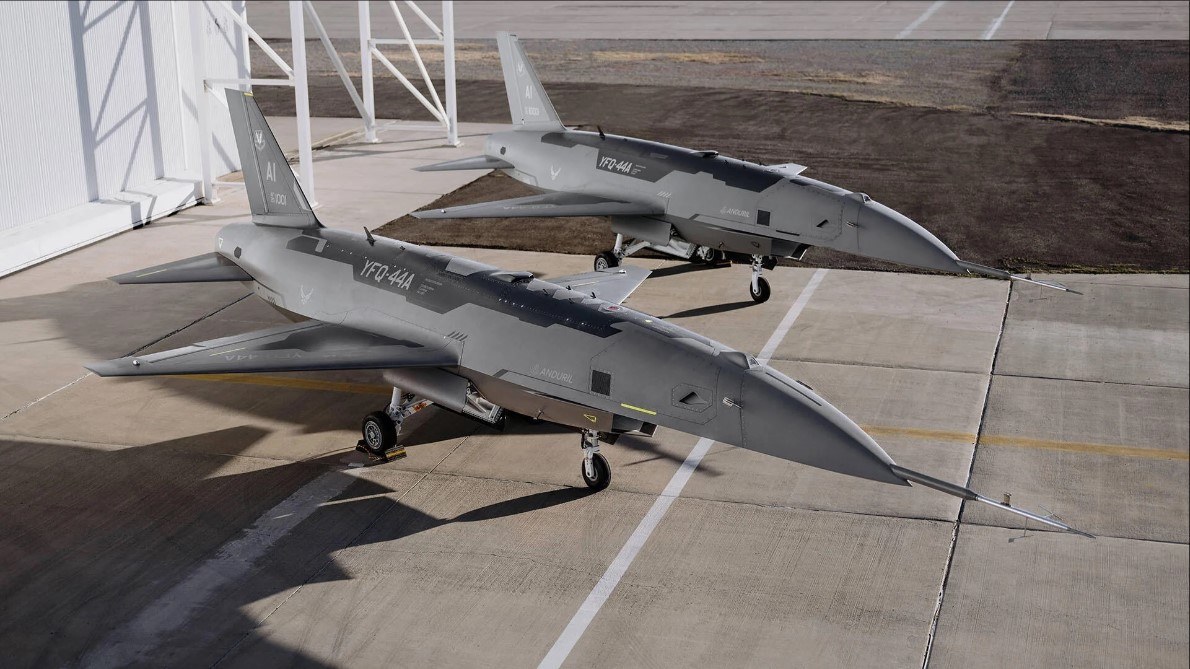
World
WASHINGTON — May 9, 2026 : The U.S. Air Force is moving forward with plans to procure more than 150 Collaborative Combat Aircraft (CCA) before fiscal year 2031, marking a major shift from experimental autonomous aviation programs toward operational deployment alongside crewed fighter aircraft. The procurement objective was outlined during congressional budget testimony delivered on April 29, 2026, as the Department of the Air Force presented its fiscal year 2027 budget request. Air Force leadership identified the CCA program and the future Boeing F-47 as the service’s two primary modernization priorities. The Department of the Air Force requested a record $338.8 billion budget for fiscal year 2027. Within the proposal, funding for the CCA program would increase from $891 million enacted in fiscal year 2026 to $1.431 billion in fiscal year 2027. The request includes approximately $996.5 million in procurement funding for Increment 1 production aircraft and an additional $150 million in advance procurement funding for fiscal year 2028. Pentagon budget documents indicate the total CCA-related request reaches roughly $2.37 billion when procurement, research, development, testing, and evaluation funding are combined. Officials stated that the planned “150-plus” aircraft inventory will include low-rate production platforms, operational experimentation fleets, training aircraft, and initial operational squadrons under the Future Years Defense Program through 2031. Autonomous Aircraft to Support Crewed Fighters The Air Force plans to integrate CCAs with frontline fighter aircraft including the Lockheed Martin F-35 Lightning II, Lockheed Martin F-22 Raptor, Boeing F-15EX Eagle II, and the future F-47. Rather than replacing crewed fighters, the autonomous aircraft are intended to function as missile carriers, intelligence, surveillance and reconnaissance platforms, electronic warfare systems, passive targeting nodes, and decoys. The Air Force stated that the concept is designed to provide additional combat capacity without requiring proportional increases in pilot numbers or sustainment costs. The initiative also reflects growing Pentagon concerns regarding pilot shortages, industrial production rates, missile expenditure, and maintaining tactical aircraft inventories during a prolonged conflict against peer adversaries such as China. Unlike the Northrop Grumman B-21 Raider, which remains in low-rate production, and the F-47, which is still in engineering and manufacturing development, CCA prototypes are already undergoing flight testing and operational experimentation. Increment 1 Aircraft Under Development Two aircraft have been selected for Increment 1 of the program: the General Atomics YFQ-42A Dark Merlin developed by General Atomics Aeronautical Systems and the Anduril YFQ-44A Fury produced by Anduril Industries. The YFQ-42A Dark Merlin evolved from the XQ-67A Off-Board Sensing Station program and uses a modular “common chassis” design intended to simplify production and mission adaptation. The aircraft emphasizes endurance, persistence, and low-observable performance through a long fuselage, dorsal intake configuration, and internal payload bay. The platform is optimized for ISR, electronic warfare, passive targeting, and stand-off missile support missions. Air Force and industry officials estimate the aircraft’s combat radius exceeds 1,300 kilometers during subsonic operations. The aircraft supports internal carriage of AIM-120 AMRAAM missiles and sensor payloads. Developmental testing is currently underway in California, while operational experimentation activities continue at Nellis Air Force Base. The YFQ-44A Fury originated from Blue Force Technologies before the company was acquired by Anduril Industries. The aircraft is powered by a Williams FJ44-4M turbofan engine producing approximately 17.8 kilonewtons of thrust and is designed for tactical responsiveness and close integration with crewed fighters. Reported performance figures include speeds approaching Mach 0.95, sustained maneuvering at 4.5 g, peak maneuvering up to 9 g, and operational altitudes reaching 15,200 meters. Unlike the Dark Merlin, the Fury carries weapons on external hardpoints. Flight testing with inert AIM-120 Captive Air Training Missiles has already begun as the platform progresses toward escort, interception, and electronic warfare support missions. Anduril confirmed that production activities for the aircraft have started at the company’s Arsenal-1 manufacturing facility. Operational Testing at Nellis Air Force Base Operational experimentation is being conducted through the Experimental Operations Unit (EOU) at Nellis Air Force Base under Air Combat Command. Activated in June 2025, the EOU serves as both a testing organization and doctrinal development center for autonomous aviation. Current activities include evaluating distributed targeting, sensor fusion, communications resilience, pilot workload management, and human-machine teaming procedures in electronically contested environments. Lt. Col. Matthew Jensen, commander of the EOU, stated that operational personnel rather than engineers are directly flying and evaluating the aircraft during experimentation activities. The Air Force is also studying how many autonomous aircraft a single pilot can supervise effectively and determining acceptable levels of autonomous authority during communications disruptions or electronic warfare conditions. To support future deployment of advanced aircraft at Nellis Air Force Base, the Air Force requested approximately $730 million in fiscal year 2027 military construction funding for new hangars and support infrastructure associated with the F-47 program, which is expected to conduct its first flight in 2028. International Participation Expands The CCA initiative is also expanding through international cooperation. On April 23, 2026, the U.S. Department of the Air Force and the Netherlands Ministry of Defence formalized an agreement integrating the Netherlands into Increment 1 experimentation activities. Under the agreement, the Netherlands will finance two prototype aircraft assigned to the EOU while Dutch personnel participate directly in operational testing, autonomy development, and command-and-control experimentation alongside U.S. forces. The aircraft will remain U.S.-owned assets. The partnership supports interoperability with the Netherlands’ F-35A fleet and reflects broader NATO interest in autonomous force multiplication concepts for smaller fighter fleets. Air Force leadership stated that affordability, industrial scalability, modular systems, supply chain resilience, and open architecture development remain the principal challenges to fielding hundreds of survivable autonomous combat aircraft over the coming decade.
Read More → Posted on 2026-05-09 14:20:21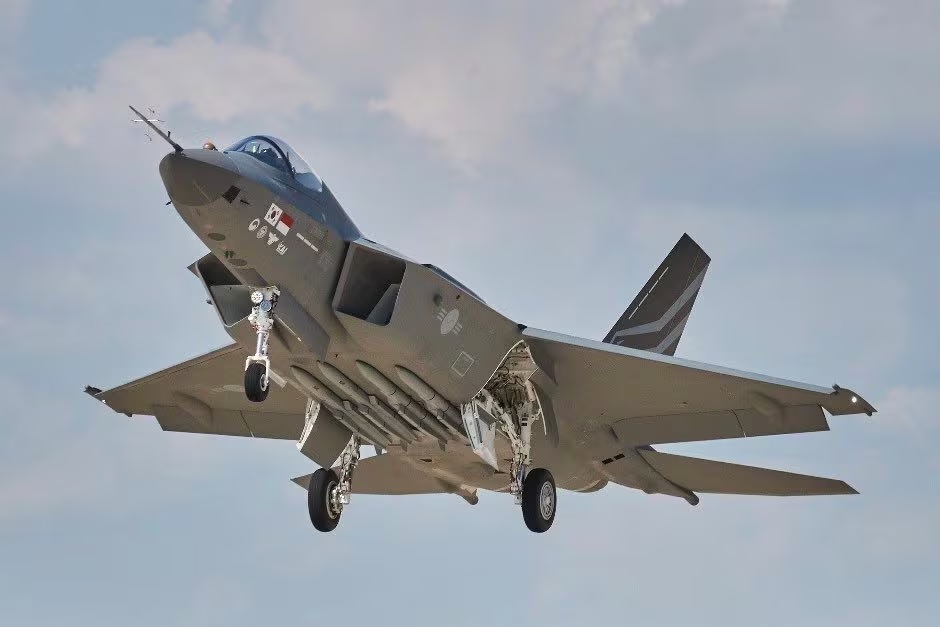
World
SEOUL — May 9, 2026 : South Korea’s indigenous KF-21 Boramae fighter jet has received final combat suitability approval from the Ministry of National Defense, completing the development phase of the Block-I air-to-air variant and clearing the aircraft for operational deployment with the Republic of Korea Air Force (ROKAF). The Defense Acquisition Program Administration (DAPA) announced on May 7, 2026, that the fighter successfully met all required operational capability standards following a multi-year testing and verification campaign. The approval formally concludes the KF-21 Block-I system development program, which began in December 2015. The first serial production aircraft, manufactured by Korea Aerospace Industries, rolled off the assembly line in March 2026 and is scheduled for delivery to the ROKAF in September 2026. Extended Flight Testing Completed DAPA stated that the final approval followed an extended operational evaluation process conducted after the aircraft received provisional combat suitability certification in May 2023. Between May 2021 and February 2026, six KF-21 prototypes completed more than 1,600 accident-free test flights covering approximately 13,000 flight test conditions. The evaluation campaign verified the aircraft’s flight stability, structural integrity, durability, mission systems, and operational reliability under combat-related conditions. The testing program also included aerial refueling trials, weapons release evaluations, flight performance analysis, and system integration verification across the aircraft’s operational envelope. Flight testing concluded on January 13, 2026, approximately two months ahead of the original schedule. The first production aircraft later completed its maiden flight on April 15, 2026, in Sacheon. Technical Configuration and Combat Systems The KF-21 Boramae was developed as a 4.5-generation multirole fighter intended to replace South Korea’s aging F-4 Phantom II and F-5 Tiger II fleets. The aircraft incorporates semi-stealth design features, including a reduced frontal radar cross-section and semi-recessed weapon integration for selected air-to-air munitions. The Block-I configuration is optimized primarily for air superiority and air-to-air combat missions. The aircraft is powered by two General Electric F414-GE-400K turbofan engines and can achieve a maximum speed of Mach 1.81, or approximately 2,200 kilometers per hour. The fighter is equipped with the domestically developed APY-016K Active Electronically Scanned Array (AESA) radar produced by Hanwha Systems. The radar system enables simultaneous detection and tracking of multiple aerial targets during combat operations. The KF-21 Block-I includes 10 external hardpoints and can carry a maximum weapons payload of approximately 7,700 kilograms. The aircraft has been integrated with MBDA Meteor beyond-visual-range missiles and IRIS-T short-range air-to-air missiles. Phased Deployment Plan South Korea is fielding the KF-21 through a phased capability expansion program designed to accelerate operational deployment while additional mission systems continue development. Under the current production schedule, South Korea plans to deliver 40 Block-I aircraft to the ROKAF between 2026 and 2028. Development of the Block-II variant is continuing in parallel. The upgraded configuration is intended to expand the aircraft’s air-to-ground and maritime strike capabilities through additional weapons integration and mission system enhancements. DAPA plans to acquire an additional 80 Block-II aircraft between 2029 and 2032, bringing the planned KF-21 fleet to 120 aircraft by 2032. Strategic and Industrial Significance DAPA officials described the approval as a major milestone for South Korea’s domestic aerospace and defense industry. Noh Ji-man, head of DAPA’s Korean Fighter Program Group, stated that the certification demonstrates South Korea has secured independent fighter jet development capabilities through cooperation between the military, government agencies, and domestic industry partners. The KF-21 program represents South Korea’s largest indigenous aerospace development effort to date, combining a domestically designed airframe with locally developed avionics, radar systems, and integrated weapons systems to meet ROKAF operational requirements. System development for the KF-21 program is scheduled to formally conclude in June 2026, with operational integration into frontline air force units expected to continue following the first deliveries later this year.
Read More → Posted on 2026-05-09 14:29:25
World
WARSAW — May 9, 2026 : Poland has officially signed a €43.7 billion low-interest defence loan agreement with the European Union under the bloc’s Security Action for Europe (SAFE) programme, securing the largest allocation awarded to any participating member state. The agreement was signed on Friday during a ceremony attended by Deputy Prime Minister and Defence Minister Władysław Kosiniak-Kamysz, Finance Minister Andrzej Domański, representatives of state development bank BGK, European Commission officials including Commissioners Piotr Serafin and Andrius Kubilius, and Prime Minister Donald Tusk. Poland became the first of 19 participating European Union member states to finalize funding under the SAFE programme, while Lithuania is expected to be the next country to complete the process. SAFE Programme and Funding Structure The SAFE programme is a €150 billion European Union defence financing initiative established to strengthen military readiness and accelerate defence procurement across Europe following security concerns linked to Russia’s ongoing war against Ukraine. The mechanism places strong emphasis on European defence manufacturing, requiring at least 65 percent of funded procurement to be sourced domestically or from European partner countries. Under the agreement, Poland will receive an initial advance payment of approximately €6.5 billion, representing 15 percent of the total allocation, with the first transfer expected as early as May. The financing is structured as a 45-year low-interest loan backed by the European Union’s credit rating, while the remaining funds will be distributed in twice-yearly tranches through 2030. Officials stated that nearly 89 percent of the financing will support Poland’s domestic defence industry and military modernization programmes over the next four years. Political Dispute Over Financing Mechanism The finalization of the agreement followed internal political disputes regarding the structure of the financing arrangement. President Karol Nawrocki vetoed legislation connected to the SAFE mechanism, arguing that the European Union could potentially suspend financing under the 45-year arrangement for political reasons. He also raised concerns that European procurement quotas could limit Poland’s defence purchasing flexibility and affect existing defence cooperation with suppliers from the United States and South Korea. To proceed with the agreement, Prime Minister Donald Tusk’s government approved a resolution authorizing state development bank BGK to secure the SAFE financing and transfer the funds through the Armed Forces Support Fund, a domestic mechanism established in 2022 to finance military procurement. Government officials stated that the revised arrangement would allow most major weapons programmes to continue according to schedule, although some projects originally included in the investment proposal may lose funding. Approximately 7 billion zlotys previously planned for the border guard and police will not be released under the new structure. Defence Priorities and Procurement Plans SAFE financing is expected to support several of Poland’s key defence priorities, including the East Shield border fortification programme along the borders with Russia and Belarus. The project combines physical defensive barriers with electronic warfare systems, drone detection technology, surveillance infrastructure and anti-drone capabilities. Additional funding will be directed toward air defence systems, artillery, armored vehicles and large-scale ammunition production. Polish officials expect approximately 40 arms procurement contracts financed through SAFE funding to be finalized by the end of May. Domestic Defence Industry Beneficiaries A major share of the allocation is expected to strengthen Poland’s domestic defence industry, with the state-owned Polish Armaments Group projected to be the largest overall beneficiary through its subsidiaries. Among the companies expected to receive SAFE-backed contracts is MESKO, which manufactures ammunition and missile systems including the Piorun air-defence system. Fabryka Broni Łucznik is also expected to benefit through contracts linked to the production of Grot rifles, Beryl rifles and VIS 100 pistols. Additional expected beneficiaries include Huta Stalowa Wola, producer of the Krab howitzer, Rak mortar and Borsuk infantry fighting vehicle, and Wojskowe Zakłady Elektroniczne, which develops radar, electronic warfare and air-defence components. Other companies expected to receive SAFE-supported orders include WZL No. 1, which services military aircraft and helicopters, Zakłady Mechaniczne Tarnów, producer of machine guns, sniper rifles, grenade launchers and anti-aircraft systems, ammunition manufacturer Dezamet, and CENZIN, which specializes in arms trade, equipment supplies and modernization services. The SAFE programme also supports Poland’s broader military modernization strategy, including plans to allocate 4.8 percent of GDP to defence spending in 2026.
Read More → Posted on 2026-05-09 14:42:43
World
LONDON — May 9, 2026 : A leaked classified document prepared by Russia’s Main Intelligence Directorate (GRU) has revealed a proposal to supply Iran with thousands of advanced fiber-optic guided drones, long-range satellite-guided unmanned systems, and specialized operator training intended to strengthen Tehran’s military capabilities in the Persian Gulf. The confidential 10-page document, obtained by The Economist and reported on May 7-8, outlines plans for the transfer of 5,000 short-range fiber-optic First-Person-View (FPV) drones similar to systems Russian forces have extensively deployed during operations in Ukraine. The proposal also includes an unspecified number of longer-range drones equipped with satellite guidance technology, with reports indicating the possible integration of Starlink-like communication terminals. Fiber-Optic Drones Designed to Bypass Electronic Warfare According to the leaked files, the short-range drones would rely on fiber-optic cables rather than conventional radio-frequency communications. As the drones operate, they spool out a physical cable that maintains a direct connection between the operator and the aircraft, allowing continuous transmission of control signals and live video feeds. Because the systems do not depend on radio frequencies, they are resistant to traditional electronic warfare measures such as signal jamming and interference. Military analysts note that this technology has become increasingly important in Ukraine, where both Russian and Ukrainian forces have heavily relied on electronic warfare systems to disrupt conventional drones. Russian forces have used similar models, including the “Prince Vandal of Novgorod” (KVN) fiber-optic drone, in contested operational environments. Reports indicate such systems can conduct precision strikes at distances ranging from 15 to 30 kilometers while maintaining stable communications in heavily jammed areas. Long-Range Systems and Satellite Guidance In addition to the fiber-optic FPV drones, the proposal includes longer-range unmanned systems equipped with satellite-based navigation and communication systems. The document does not specify the exact number or models involved, though references in the files suggest the possible use of Starlink-like satellite communication terminals to maintain connectivity during operations. The leaked material reportedly contains six diagrams and a regional map showing Iranian coastal areas and islands in the Persian Gulf, including locations near the Strait of Hormuz and Kharg Island. Training Program for Iranian Operators The GRU proposal also details a structured training and recruitment program intended to prepare Iranian personnel to operate both the short-range and long-range drone systems. One recruitment option outlined in the document involves selecting candidates from among the estimated 10,000 Iranian students currently studying at Russian universities. Additional recruits would reportedly be drawn from other vetted communities considered politically reliable. According to the proposal, all candidates would undergo background investigations and loyalty screening before receiving specialized instruction on drone operations, targeting procedures, and system maintenance. The recruitment strategy aligns with recent reports that Russian universities and affiliated institutions have offered financial incentives, academic leave, and career opportunities to students participating in drone warfare programs or assisting in the production of attack munitions linked to the war in Ukraine. Focus on Potential Persian Gulf Operations The leaked assessment frames the proposed drone transfers as part of efforts to help Iran counter potential United States military operations in the Persian Gulf. The document specifically references scenarios involving attempts to reopen the Strait of Hormuz or conduct amphibious operations targeting strategic assets such as Kharg Island. According to the GRU assessment, slow-moving amphibious landing ships could be vulnerable to coordinated drone attacks launched from concealed coastal positions located between 15 and 30 kilometers from their targets. The Strait of Hormuz, which measures roughly 30 kilometers wide at several points, falls within the operational range described for the proposed fiber-optic drone systems. Military analysts say the introduction of large numbers of fiber-optic drones into the Gulf region could force naval planners to reassess existing escort and defensive strategies. Standard electronic warfare systems used by naval vessels are primarily designed to disrupt radio-controlled threats and may have limited effectiveness against drones operating through physical fiber-optic links. Expanding Russia-Iran Military Cooperation The leaked GRU document represents one of the clearest reported examples of expanding military cooperation between Moscow and Tehran involving advanced drone warfare technology. Iran has previously supplied Russia with Shahed-series drones that have been used extensively during operations in Ukraine. In return, Russia has increased military and technical cooperation with Iran across several defense sectors. The proposal was reportedly prepared for presentation to Iranian officials as part of broader discussions aimed at strengthening bilateral defense ties. It remains unclear whether Iran formally accepted the proposal or whether any drone transfers, operator training, or deployments have already taken place.
Read More → Posted on 2026-05-09 14:49:54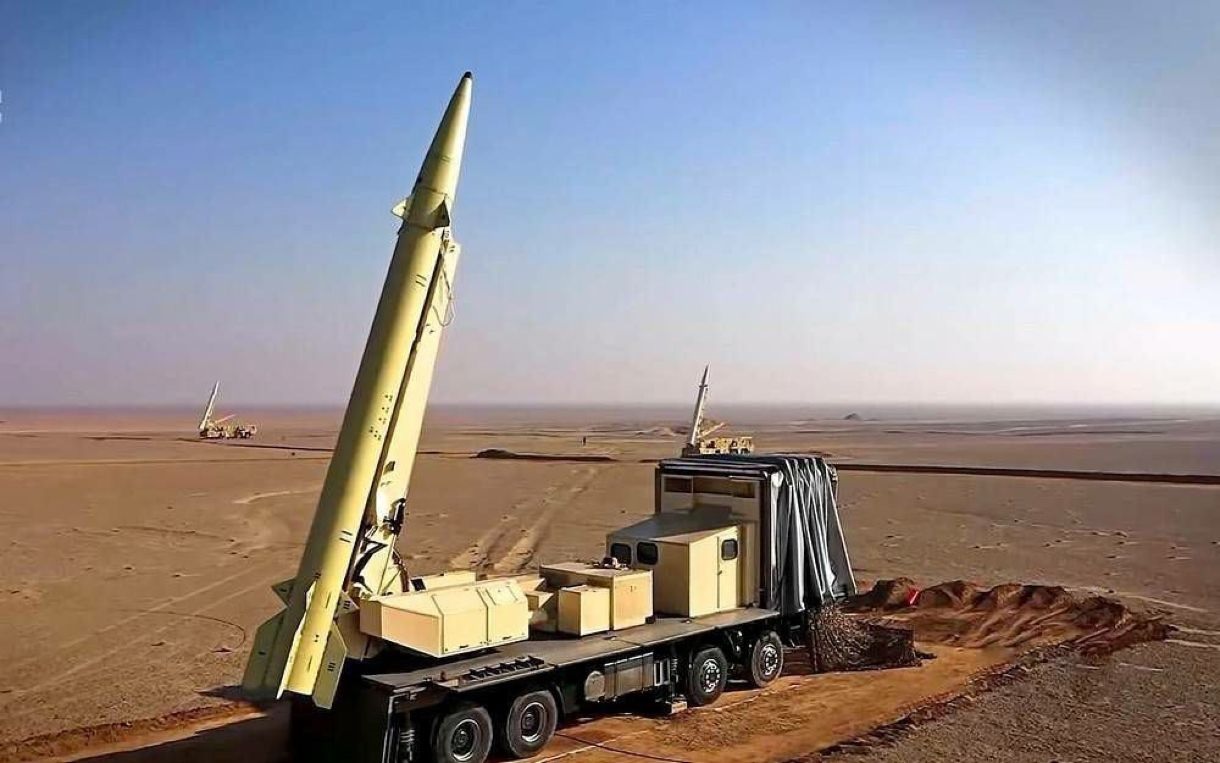
World
WASHINGTON, — May 9, 2026 : Newly analyzed commercial satellite imagery from ports in southern Russia and northern Iran indicates that large shipments of components intended for ballistic missile production have recently been transferred from Russia to Iran through the Caspian Sea corridor, according to defense assessments and maritime activity analysis. The shipments are believed to support ongoing efforts by Iran to replenish and expand its ballistic missile inventory following recent regional conflicts and extensive missile operations conducted by the Islamic Revolutionary Guard Corps Aerospace Force (IRGC Aerospace Force). Maritime Transfers Through Northern Iranian Ports According to the assessments, cargo vessels departed from Russian ports, including Astrakhan, before docking at northern Iranian ports such as Bandar-e Anzali. The Caspian Sea route has increasingly become a central logistics corridor for military-related transfers between Moscow and Tehran. Recent satellite imagery has shown increased cargo handling activity and vessel movement at both Russian and Iranian port facilities. Analysts assessing the shipping patterns believe the transferred materials include components linked to missile propulsion systems, guidance equipment, and structural assemblies required for ballistic missile production. Iran Increasing Reliance on Foreign-Manufactured Components The Iranian Ministry of Defense and Armed Forces Logistics (MODAFL) has gradually begun replacing domestically produced ballistic missile components with parts manufactured in Russia and China. Components that Iranian defense companies can no longer produce efficiently or in sufficient quantities are now increasingly being sourced externally. Defense analysts say the shift reflects continuing strain on Iran’s domestic military production sector following years of sanctions, procurement restrictions, and the operational demands created by recent missile campaigns. The imported components are believed to be intended primarily for the IRGC Aerospace Force, which has accelerated efforts to restore missile stockpiles after launching large numbers of missiles during regional escalations, including the June 2025 “12-Day War” and other operations targeting Israel and regional sites. Expansion of Military Cooperation The missile component transfers are part of broader military-technical cooperation between Iran, Russia, and China under Tehran’s expanding “Look East” strategy, which has increased Iran’s dependence on Russian and Chinese military support and technology. According to defense assessments, Russia has also provided Iran with high-resolution satellite imagery from its orbital assets. Iranian military planners have reportedly used the imagery to monitor military facilities and improve targeting data across the Middle East. China has expanded its cooperation with Iran through the integration of Iranian military systems into the BeiDou Navigation Satellite System, reducing Iran’s reliance on Western GPS infrastructure. Chinese assistance has additionally included radar systems, surveillance equipment, and materials associated with solid-propellant missile production. Ongoing Missile Replenishment Efforts Officials and analysts monitoring the transfers say the continued supply of foreign-produced components has enabled Iran to accelerate the restoration of portions of its ballistic missile inventory while continuing modernization efforts within the IRGC Aerospace Force. The MODAFL continues to oversee the integration of imported missile-related components into Iran’s broader ballistic missile program as international scrutiny over military procurement and arms-control enforcement in the region remains ongoing.
Read More → Posted on 2026-05-09 15:01:31
World
BENGALURU, India — May 9, 2026 : Bengaluru-based autonomous logistics startup Airbound has unveiled a new ultra-lightweight autonomous VTOL (vertical take-off and landing) drone designed to reduce delivery costs and improve last-mile logistics operations across healthcare and commercial sectors. The aircraft, known as the TRT drone, combines vertical take-off capability with fixed-wing forward flight. The drone launches vertically like a helicopter and transitions mid-air into airplane-style cruise flight, eliminating the need for runways or launchpads. Airbound said the platform has been developed for zero-infrastructure delivery operations. The TRT drone uses a blended-wing-body tailsitter design and is manufactured primarily from carbon fibre composites and structural foams. According to the company, the proprietary structure is six times lighter and 2.2 times stiffer than conventional drone frames. The drone’s core skeletal frame weighs approximately 350 grams, while the aircraft’s total all-up weight is 2.5 kilograms. The drone can carry payloads of nearly 1 kilogram and travel up to 40 kilometres on a single charge. It operates at a cruise speed of around 60 kilometres per hour and features a 1.4-metre wingspan. Airbound said the aircraft achieves a lift-to-drag ratio of 12 and operates at approximately 60 decibels, allowing quieter operations compared to traditional multi-rotor drones. The drone can fly at altitudes of up to 400 feet in compliance with aviation regulations. The company stated that the aerodynamic blended-wing-body configuration provides nearly four times the efficiency of standard quadcopter drones. The aircraft operates autonomously using onboard sensors and navigation systems capable of adapting to wind and weather conditions. Its nose cone incorporates Kevlar material to ensure GPS and radio signals remain unobstructed during flight operations. Founded by Naman Pushp, Airbound focuses on developing autonomous delivery aircraft engineered and manufactured in India. The startup said its approach prioritises weight reduction, material efficiency, and aerodynamic performance to lower logistics costs. The company estimates the drone’s energy consumption cost at around 10 paise per kilometre and is targeting delivery costs below ₹5 per shipment. Airbound is currently conducting a medical logistics pilot programme with Narayana Health in Bengaluru. Since January 2026, the company has completed more than 700 flights with a zero-failure record as part of the partnership. Under the programme, the drones transport diagnostic samples and medical supplies between Narayana Health’s Chandapura Clinic and a central laboratory in Electronic City. Each flight carries up to 40 diagnostic samples along a 4-kilometre aerial route. The drone network currently supports up to 20 flights daily, compared with three or four daily transfers previously conducted through road-based courier services. Following the pilot operations, Airbound plans to establish a permanent aerial logistics corridor for Narayana Health and expand similar medical drone delivery infrastructure to additional cities, including Kolkata. To support expansion plans, Airbound recently secured $8.65 million in seed funding led by Lachy Groom of Physical Intelligence. The funding round also included participation from Humba Ventures and Lightspeed Venture Partners, along with senior executives from Tesla, SpaceX, and Anduril. The latest investment brings the company’s total funding to $10.4 million. Airbound said the capital will be used to scale manufacturing capacity, expand its workforce, and support broader deployment of autonomous delivery operations across India.
Read More → Posted on 2026-05-09 15:13:56
India
BENGALURU, INDIA — May 9, 2026 : Bengaluru-based defence technology startup Zulu Defence Systems has unveiled a new multi-barrel launcher designed for the rapid deployment of loitering munitions, expanding the company’s tactical unmanned systems portfolio for modern battlefield operations. The launcher is intended to support simultaneous or sequential launches of multiple loitering munitions, enabling coordinated swarm operations and multi-target engagement. The system is designed to provide armed forces with rapid-response strike capability while reducing the need for heavy deployment infrastructure. Founded in October 2023 by Rajagopal Sethauram and Chief Executive Officer Nagendran Kandasamy, Zulu Defence Systems develops tactical air defence drone systems and weaponised unmanned aerial vehicles for intelligence, surveillance, reconnaissance (ISR) and precision strike missions. The company’s flagship platform, the HOVERBEE, is a palm-launched vertical take-off and landing (VTOL) micro drone that can be configured either for ISR operations or as a loitering munition. In its strike configuration, the platform replaces its surveillance payload with a 400-gram explosive warhead. The drone is designed with a low acoustic signature and supports rapid field deployment without requiring dedicated launch infrastructure. The newly introduced multi-barrel launcher is designed to integrate with the company’s existing loitering munition platforms, including HOVERBEE and the DRAP loitering munition system. DRAP is a larger VTOL platform equipped with edge computer vision capabilities and can carry warheads weighing up to 1.5 kilograms with multiple fuse configurations for varying mission requirements. Zulu Defence Systems also manufactures the Volume 35 weaponised unmanned aerial system, which is capable of deploying six 81-millimetre mortar shells while maintaining operational performance at higher altitudes and in varying weather conditions. According to the company, the launcher operates in conjunction with its Advanced Air Defence Aerial Systems (AADAS), an artificial intelligence-driven software architecture that integrates ISR and precision strike data into a unified operational framework. The platform supports swarm-capable missions through autonomous flight functions, real-time collaboration, and data integration between multiple airborne assets. The company has recently expanded production capacity at its Bengaluru manufacturing facility as it transitions several unmanned systems from prototype development to mass production. Zulu Defence stated that its tactical drone platforms have undergone field evaluations with units of the Indian Army and the Indian Navy’s Marine Commando Force (MARCOS), where the systems reportedly demonstrated favourable operational performance and were recommended for service acceptance. To support manufacturing expansion and continued hardware development, Zulu Defence has raised approximately $987,000 through two seed funding rounds, with participation from investment firms including Finvolve. In addition to domestic deployments, the company has also initiated exports of its tactical defence systems to select markets in Europe and the Middle East.
Read More → Posted on 2026-05-09 15:46:16
World
ANKARA — May 9, 2026 : Turkey is advancing its “Blue Homeland” (Mavi Vatan) doctrine to expand maritime influence across a strategic corridor stretching from the Aegean Sea to the Horn of Africa and the Red Sea, combining naval deployments, defence partnerships and energy exploration initiatives to strengthen its position in surrounding waters. The doctrine, first developed in 2006 by Turkish naval officers including Rear Admiral Cem Gürdeniz and Admiral Cihat Yaycı, defines Turkey’s claimed territorial waters, continental shelf and exclusive economic zone (EEZ) across the Black Sea, Aegean Sea and Eastern Mediterranean. Turkish officials estimate the doctrine covers nearly 462,000 square kilometres of maritime territory. Turkey does not recognise some provisions of the United Nations Convention on the Law of the Sea (UNCLOS) that grant full EEZ rights to islands. Ankara instead argues that maritime boundaries should be based primarily on continental shelf principles linked to mainland coastlines, a position that has led to disputes with Greece and Cyprus in the Eastern Mediterranean. Naval Expansion and Military Exercises The Blue Homeland doctrine has become a central component of Turkey’s defence and foreign policy strategy since gaining greater political prominence after 2016. Ankara conducts annual “Mavi Vatan” naval exercises to demonstrate operational capabilities across multiple maritime regions. The latest exercise, “Mavi Vatan 2026,” was held from April 3 to April 9 across the Black Sea, Aegean Sea and Eastern Mediterranean. The drills involved approximately 15,000 military personnel, 120 naval vessels and 50 aircraft. Turkish forces carried out simultaneous naval and air operations, including live-fire exercises, unmanned aerial vehicle missions and unmanned surface vehicle operations designed to test command-and-control coordination across different theatres. Expansion Toward the Red Sea and Horn of Africa Turkey has also expanded its strategic reach beyond the Mediterranean into the Red Sea, Gulf of Aden and Horn of Africa. In January 2026, the Turkish Parliament approved a one-year extension of naval deployments in the Gulf of Aden, Arabian Sea and Somali territorial waters, effective from February 10. The mandate grants President Recep Tayyip Erdogan authority to determine the scale, timing and location of naval operations without requiring additional parliamentary approval. Ankara maintains a military training base and military academy in Somalia and has strengthened defence and maritime cooperation agreements with Mogadishu. Turkish authorities have also announced plans to begin offshore oil and natural gas exploration off Somalia’s coast in 2026 following ongoing seismic surveys. Turkey’s regional security network additionally includes military cooperation agreements with Libya and a forward-operating military base in Qatar. Ankara also remains engaged in reconstruction and stabilisation efforts in Syria while closely monitoring developments in Yemen. Eastern Mediterranean Energy Competition A major component of the Blue Homeland strategy involves securing access to offshore energy resources in the Eastern Mediterranean. Turkey signed a maritime boundary memorandum of understanding with Libya’s former Government of National Accord in 2019, extending Turkey’s claimed EEZ into areas overlapping with Greek and Cypriot claims. The agreement intensified maritime disputes in the region and increased tensions surrounding offshore energy exploration activities. Turkish officials argue that control over maritime transit routes and access to natural gas reserves are critical for national energy security and economic development, particularly as Turkey remains heavily dependent on imported energy supplies. Regional Response and Strategic Impact Turkey’s maritime strategy has drawn criticism from Greece, Cyprus, the European Union and several NATO members, which argue that Ankara’s claims challenge established maritime boundaries and violate international law. Greece and Cyprus maintain that islands are entitled to full maritime zones under UNCLOS and reject Turkey’s interpretation of continental shelf boundaries. Israel has also raised concerns regarding overlapping interests in Eastern Mediterranean gas fields and infrastructure projects, including the EastMed pipeline initiative involving Israel, Greece, Cyprus and Egypt. In response to Turkey’s expanding maritime posture, Greece, Cyprus, Israel and Egypt have increased cooperation in energy exploration and regional defence coordination. The growing competition has contributed to repeated diplomatic disputes and naval stand-offs during Turkish seismic surveys and military exercises in contested waters. Analysts say the tensions have also complicated regional energy export projects and created additional pressure within NATO due to disputes between alliance members Greece and Turkey. Turkey continues to integrate the Blue Homeland doctrine into long-term defence planning and foreign policy through naval deployments, bilateral agreements and energy exploration initiatives aimed at strengthening its influence across critical maritime routes linking the Black Sea, Eastern Mediterranean and Red Sea regions.
Read More → Posted on 2026-05-09 16:06:04
World
PYONGYANG — May 9, 2026 : North Korea has initiated large-scale production of its new Juche-107 155mm self-propelled howitzer, according to footage released by state media following a visit by leader Kim Jong Un to a major munitions production facility. During the inspection, Kim Jong Un and senior military officials reviewed active assembly lines producing the artillery system, which North Korean authorities said will be deployed to three battalions assigned to long-range artillery units positioned along the southern border by the end of 2026. State media reported that the Juche-107 is capable of striking targets at ranges exceeding 60 kilometers. Transition to 155mm Standard The Juche-107 was first unveiled in 2018, although the design has undergone several modifications before entering broader production. The system represents a significant modernization effort for the Korean People’s Army (KPA), which has historically relied on Soviet-standard 152mm artillery systems and domestically developed 170mm long-range guns. The adoption of the NATO-standard 155mm caliber reflects a transition similar to that undertaken by the Chinese People’s Liberation Army. Defense analysts say the shift offers several operational and logistical advantages, including interoperability with Chinese artillery systems, improved export potential and the ability to utilize captured South Korean and U.S. artillery ammunition during wartime conditions. North Korean media also reported that Kim reviewed testing data related to terrain mobility, underwater crossing capability and firing trials involving upgraded shells. Officials highlighted the system’s automatic firing functions and battlefield information-processing capabilities during the inspection. Impact of Ammunition Exports to Russia The transition toward the Juche-107 is occurring alongside North Korea’s continued military exports to Russia for operations in Ukraine. Pyongyang, which maintains one of the world’s largest peacetime artillery forces, has become a major supplier of artillery ammunition to Russian forces. Recent intelligence assessments indicate that North Korea has transferred approximately 33,000 containers of military cargo to Russia, including more than 15 million 152mm artillery shells. Analysts believe the large-scale export of older ammunition stockpiles has accelerated the KPA’s transition toward the new 155mm artillery system. Despite this modernization effort, military analysts expect older 152mm artillery systems to remain in service for decades due to the scale of North Korea’s existing artillery inventory. The KPA is therefore expected to continue operating three primary heavy artillery calibers simultaneously — 152mm, 155mm and 170mm. Continued Role of 170mm Artillery North Korea’s 170mm artillery systems, particularly the M1989 Koksan self-propelled gun, continue to attract international attention following reports of their deployment in the Ukrainian theater. In June 2025, Lieutenant General Kyrylo Budanov stated that the systems had demonstrated effective battlefield performance, citing their long-range firing capability and accuracy. Ukrainian intelligence estimated that Russia had received approximately 120 units, enough to equip around four artillery regiments. It remains unclear whether the systems in Ukraine are being operated solely by Russian personnel, by deployed KPA units, or through a joint operational structure involving both forces. Defense analysts have suggested that a combined operational arrangement is the most likely scenario. Future Modernization Plans Analysts expect North Korea to continue modernizing the Juche-107 through incremental upgrades while potentially developing a next-generation 170mm artillery platform in parallel. Attention has also focused on the possibility of foreign technology transfers linked to Pyongyang’s expanding defense cooperation with China and Russia. Defense observers note that China’s SH16 is regarded as one of the most advanced automated artillery systems currently in service, while Russia’s 2S35 Koalitsiya-SV has emerged as a highly advanced artillery program since entering limited service in 2023. Analysts believe technologies associated with these systems could influence future variants of the Juche-107 as North Korea continues efforts to modernize its artillery forces while maintaining its large legacy inventory.
Read More → Posted on 2026-05-09 16:13:09
World
HUALIEN, TAIWAN — May 9, 2026 : The Chiashan Air Force Base tunnel complex in eastern Taiwan remains one of the Republic of China Air Force (ROCAF)’s most heavily fortified military installations, designed to preserve air combat and command capabilities during potential missile and air attacks from China. Located in Hualien County within Taiwan’s Central Mountain Range, the facility is carved deep inside a granite mountain and forms a major part of Taiwan’s hardened underground defense infrastructure. The complex was developed under “Project Jian’an III”, also known as the Jian’an No. 3 Project or “Optimal Mountain,” a military engineering initiative launched to strengthen the survivability of Taiwan’s air force assets. Construction of the underground base officially began in 1984 after Taiwanese engineers studied advanced tunneling methods in Europe in 1981. The excavation project required approximately eight years to complete and entered service around 1992–1993. Total construction costs were estimated at roughly $1 billion, equivalent to more than 27 billion New Taiwan Dollars at the time. Engineers used the New Austrian Tunnelling Method to excavate the mountain structure. The underground facility consists of separate northern and southern tunnel systems. Each network contains five horizontal and five vertical tunnels arranged in a crisscross configuration across multiple underground levels. Internal taxiway tunnels were built high enough to accommodate fighter aircraft movement and maintenance operations, with some sections reaching the height of approximately three stories. The Chiashan complex can shelter, arm, refuel, and repair more than 200 fighter aircraft, including Taiwan’s upgraded F-16V Viper fleet. The underground infrastructure also contains command-and-control centers, underground fuel stations, medical facilities, power generation systems, ammunition storage areas, and stockpiles of food, fuel, and water intended to support military operations for several months during wartime conditions. Ten reinforced steel blast doors protect the entrances and exits of the tunnel system. These doors were engineered to withstand nearby explosions and are connected to multiple surface runways through long taxiway tunnels, allowing aircraft to move rapidly from underground shelters to launch positions while reducing exposure to enemy surveillance and precision strikes. Part of the installation also supports civilian aviation operations through Hualien Airport. Taiwan designed the granite mountain structure to resist conventional air and missile attacks. Military assessments indicate that destroying the underground complex itself with conventional weapons would be extremely difficult because of the depth and natural protection provided by the mountain. Publicly available defense analyses suggest that specialized earth-penetrating nuclear weapons would likely be required to completely destroy the underground bunker system. However, recent military assessments have increasingly focused on the vulnerability of the base’s exposed runway infrastructure. Analysts have noted that the People’s Liberation Army (PLA) may attempt to disable the facility through a “runway trap” strategy rather than directly penetrating the mountain complex. Under this approach, Chinese forces could use large numbers of conventional ballistic missiles, including DF-11 and DF-15 systems, alongside long-range rocket artillery such as the PCH-191 multiple rocket launcher, to repeatedly crater runways and taxiways outside the bunker entrances. Such strikes could temporarily prevent aircraft from taking off even if the underground shelters remain intact, effectively trapping fighter aircraft inside the mountain facility until repairs are completed. Chinese military discussions have also referenced the potential use of high-yield conventional munitions, including fuel-air explosive warheads carried by heavy Dongfeng missile systems, to generate intense blast and heat effects near tunnel entrances in an effort to disrupt operations and damage external infrastructure. Despite these vulnerabilities, the Chiashan Air Force Base remains a central component of Taiwan’s defense planning and force protection strategy. The facility supports Taiwan’s broader military objective of maintaining survivable air combat capabilities and preserving the ability to conduct counter-attack operations during a large-scale regional conflict.
Read More → Posted on 2026-05-09 16:27:58
India
HYDERABAD, — May 9, 2026 : The Defence Research and Development Laboratory (DRDL) in Hyderabad has successfully completed the second long-duration ground test of its Actively Cooled Full Scale Scramjet Combustor, marking a significant step in India’s ongoing hypersonic missile development programme. The test was conducted on May 9 at DRDL’s Scramjet Connect Pipe Test (SCPT) Facility, where the combustor operated continuously for more than 1,200 seconds. The test represents the longest duration achieved by India in a full-scale scramjet combustor ground trial. DRDL, a laboratory under the Defence Research and Development Organisation, designed and developed both the combustor and the SCPT facility with support from domestic industry partners. The SCPT facility was developed to simulate the high-temperature and high-speed operating conditions required for hypersonic air-breathing propulsion systems. The latest trial follows an earlier full-scale test conducted on January 9, 2026, during which the combustor sustained operation for 12 minutes at the same facility. Before the full-scale programme, DRDL had also completed a successful ground test of an actively cooled subscale scramjet combustor for more than 1,000 seconds in April 2025. Scramjet engines are designed for sustained hypersonic flight at speeds above Mach 5. Unlike conventional rocket systems, scramjets use atmospheric oxygen for combustion and therefore do not require onboard oxidisers. The technology depends on maintaining stable supersonic combustion under extreme aerodynamic and thermal conditions. At speeds approaching Mach 7, the external surface temperature of hypersonic vehicles can exceed 1,000 degrees Celsius because of atmospheric friction. To manage these temperatures, DRDL has incorporated an active cooling mechanism in which the missile fuel absorbs heat from the combustor walls before entering the combustion chamber. According to officials associated with the programme, the repeated long-duration tests at the SCPT facility validated both the combustor design and the associated thermal management systems required for sustained hypersonic operation. A scramjet-powered cruise missile operating at Mach 6 to Mach 7 can travel at speeds of around 7,400 kilometres per hour. Sustained engine operation for approximately 20 minutes significantly increases the potential powered flight range of such systems when combined with an initial booster stage. Unlike ballistic missiles that follow predictable high-altitude trajectories, hypersonic cruise missiles powered by scramjet engines remain within the atmosphere throughout flight. Their ability to maneuver at high speeds and lower altitudes makes interception by existing radar and air defence systems more difficult. The successful test advances India’s Hypersonic Missile Programme by demonstrating the maturity of the full-scale actively cooled combustor configuration. DRDL is continuing work on related technologies, including high-temperature materials, flame stabilisation systems and integration of the combustor into complete propulsion systems for future hypersonic platforms. With the latest long-duration validation, India joins a limited group of countries that have demonstrated sustained hypersonic scramjet propulsion capabilities for potential operational applications.
Read More → Posted on 2026-05-09 17:04:48
World
MOORESTOWN, N.J., — May 9, 2026 : The U.S. Missile Defense Agency (MDA) has awarded Lockheed Martin a $407.16 million contract modification to continue engineering, integration, development, and certification work for the Aegis Guam System, a major component of the U.S. military’s expanding missile defense network in the Indo-Pacific region. The modification, awarded on May 7 on a sole-source basis, increases the cumulative value of the underlying Aegis Ballistic Missile Defense (BMD) Weapon Systems contract from approximately $1.528 billion to more than $1.935 billion. The work is scheduled to continue through December 2029. According to the Department of War, the contract is structured as a hybrid cost-plus-fixed-fee and cost-plus-incentive-fee arrangement, a format commonly used for complex defense development programs involving evolving technical requirements. The structure allows the government and contractor to share development risks while providing financial incentives tied to schedule and performance targets. Initial Funding and Contract Structure At the time of the award, the government obligated $78.7 million in immediate funding under the modification. The obligated amount includes $76.16 million in fiscal year 2026 research, development, test, and evaluation (RDT&E) funds and $2.6 million in fiscal year 2026 procurement funds. Remaining funding is expected to be distributed incrementally over the duration of the program. The contract modification, identified as P00151 under contract HQ0851-21-C-0002, will support ongoing software integration, systems engineering, testing, and certification activities required for the Guam missile defense architecture. Lockheed Martin will perform the majority of the work at its Moorestown, New Jersey, facility, while additional integration and testing operations will take place in Guam. The Missile Defense Agency office in Dahlgren, Virginia, is serving as the contracting authority managing the effort. Integrated Missile Defense Architecture The Aegis Guam System is part of the military’s broader Enhanced Integrated Air and Missile Defense (EIAMD) initiative designed to establish a persistent, layered, and 360-degree defense capability for Guam. The program adapts the Aegis combat system architecture, widely used aboard U.S. Navy destroyers and cruisers, into a fixed land-based configuration tailored specifically for Guam’s operational environment. Rather than functioning as a standalone interceptor platform, the system is being developed as a distributed battle-management architecture linking Navy, Army, and joint-service sensors and weapons into a unified network. The Guam defense system is expected to integrate with the U.S. Army’s Integrated Battle Command System (IBCS), enabling coordinated engagements using multiple interceptor systems, including Standard Missile-3 (SM-3), Standard Missile-6 (SM-6), Terminal High Altitude Area Defense (THAAD), and Patriot Advanced Capability-3 (PAC-3). For detection and tracking, the system will utilize the TPY-6 radar, a ground-based variant of Lockheed Martin’s AN/SPY-7(V)1 solid-state radar technology designed to track ballistic, cruise, and advanced maneuvering missile threats. Strategic Importance of Guam Guam remains one of the most strategically important U.S. military locations in the Indo-Pacific region. The island hosts Andersen Air Force Base and Naval Base Guam, both of which support logistics, command-and-control operations, and force projection activities across the Pacific theater. The territory lies within range of ballistic, cruise, and hypersonic missile systems operated by China and North Korea, increasing the urgency of establishing a permanent and integrated missile defense network for the island. Defense planners view the Aegis combat system as a proven operational foundation because of its long record of intercepting short-, medium-, and intermediate-range ballistic missile threats. The ongoing work under the latest contract modification will focus on adapting those capabilities to Guam’s fixed-site defense requirements and validating system performance against regional threat scenarios. Long-Term Development Effort Lockheed Martin continues to serve as the Combat System Engineering Agent for Aegis programs, supporting software development, testing, certification, integration, and sustainment activities across the missile defense enterprise. The broader Guam Defense System is intended to provide continuous protection for critical military infrastructure on the island, including airfields, naval facilities, logistics hubs, and command-and-control assets as the United States expands its regional defense posture in the Indo-Pacific.
Read More → Posted on 2026-05-09 17:29:53
World
BERLIN — May 9, 2026 : Russian Ambassador to Germany Sergey Nechaev has stated that Moscow has no intention of attacking NATO or any member state of the alliance, while warning that any attack on Russia by NATO would trigger a serious response. In remarks published on May 8, Nechaev dismissed claims that Russia is preparing for war with NATO, calling such speculation unfounded. “No one is planning to attack NATO,” Nechaev said, adding that suggestions Russia intends to go to war with NATO countries are “nonsense.” At the same time, the Russian ambassador warned that if NATO were to attack Russia, “it will be serious,” reflecting Moscow’s continued opposition to NATO’s military posture in Europe. Criticism of European Military Preparations Nechaev criticised what he described as the growing militarisation of Europe and the lack of political dialogue between Russia and European countries. He pointed to discussions in German political and defence circles that reference the possibility of a future conflict with Russia around 2029–2030. According to the ambassador, such reports are creating concern in Russia and are negatively affecting relations between Moscow and Berlin. He said the developments do not support efforts toward a peaceful settlement of the conflict in Ukraine. German defence planning has increasingly focused on long-term military preparedness. General Carsten Breuer, Chief of Defence of the Bundeswehr, has previously stated that Germany must be prepared for a potential Russian threat by 2029. Germany has also been developing a national wartime preparedness strategy known as “OPLAN DEU,” aimed at strengthening readiness in the event of a major NATO-related conflict. Concerns Over Weapons Deliveries to Ukraine The ambassador also criticised continued Western military assistance to Ukraine, describing ongoing weapons deliveries as part of a broader process of militarisation across Europe. Nechaev’s remarks come amid continuing diplomatic tensions between Russia and Germany over Berlin’s support for Kyiv. In April 2026, Germany’s Foreign Ministry summoned the Russian ambassador following statements and actions from Russian officials that German authorities viewed as threats directed at targets on German territory. The diplomatic dispute followed reports linked to Russia’s publication of information concerning European companies involved in the production of military drones and equipment supplied to Ukraine. Statements Circulated in Russian Media Russian state media and social media platforms widely circulated Nechaev’s latest comments. Some reports were accompanied by archival footage showing Russian naval exercises and military drills involving Russia and China. Nechaev has served as Russia’s ambassador to Germany since 2018. His latest statements reflect Moscow’s broader diplomatic position regarding NATO expansion, European defence policies, and Western military support for Ukraine.
Read More → Posted on 2026-05-09 17:39:54
World
BRUSSELS — May 9, 2026 : Belgium has established a phased schedule to transfer its entire fleet of 53 F-16 fighter jets to Ukraine by the end of 2029, according to information confirmed by the office of Belgian Defense Minister Theo Francken. The transfer plan is directly tied to the gradual introduction of new Lockheed Martin F-35A Lightning II fighters into Belgian Air Force service. Under the current roadmap, Belgium plans to deliver seven F-16s in 2026, five aircraft in 2027, 14 in 2028, and the remaining 27 aircraft in 2029. Four of the aircraft scheduled for the first transfer phase have already been withdrawn from operational use and will instead be used as training platforms for Ukrainian maintenance personnel and technicians. Belgian defense officials stated that the timeline could still be adjusted depending on the operational requirements of the Belgian Air Force and Belgium’s commitments within NATO. Although Belgium previously committed to supplying F-16s under multinational agreements signed in 2024, no operational aircraft have yet been transferred to Ukraine. Belgium continues to participate in the international F-16 training program for Ukrainian personnel. In March 2024, the Belgian Air Force deployed two F-16BM two-seat trainer aircraft to Denmark to support pilot instruction efforts. Belgian instructors are also currently training Ukrainian pilots at the Fetești Air Base training center in Romania. F-35 Deliveries Driving Transfer Schedule The pace of the F-16 handover remains dependent on the delivery of Belgium’s replacement F-35 fighters. Belgium signed a contract in 2018 for 34 F-35A aircraft, with original deliveries expected to begin in 2023. However, the Belgian Air Force only received its first four aircraft in October 2025. The jets are currently based at Florennes Air Base. In February 2026, Belgium confirmed plans to expand the procurement by ordering an additional 11 F-35A aircraft, increasing the planned fleet to 45 fighters. The additional acquisition, valued at approximately €1.67 billion, includes a requirement for final assembly and testing to take place at the Italian FACO facility in Cameri. Defense analysts have noted that production rates at the Cameri facility are slower than those of U.S.-based assembly lines, which could further affect the operational transition schedule and delay the retirement of Belgium’s remaining F-16 fleet. U.S.-Supported Maintenance Framework To support the long-term operation of the aircraft transferred to Ukraine, the United States Department of Defense awarded a $235.4 million maintenance contract in January 2026 to Belgian aerospace company Sabena Aerospace Engineering. The agreement covers medium-level and depot-level maintenance, engine servicing, logistics management, and material support for Ukrainian-operated F-16s through January 2029. Maintenance work will be conducted at the company’s facility in Woluwe-Saint-Lambert. Continued Modernization of the F-16 Fleet Despite the planned retirement of the aircraft, Belgium continues testing new capabilities on its F-16 fleet. The Belgian Air Force has recently evaluated the integration of 70mm FZ275 Laser Guided Rockets developed by Forges de Zeebrugge and Thales on F-16AM fighters. The trials focused on improving counter-unmanned aerial systems capabilities by allowing aircraft to engage smaller drones with lower-cost precision-guided rockets instead of using more expensive missiles such as the AIM-120 AMRAAM. Belgium first received General Dynamics F-16 Fighting Falcon aircraft in 1979 as part of a joint NATO procurement program, with official service entry beginning in 1980. The country acquired approximately 160 aircraft in multiple variants, many of which were assembled domestically by the Belgian aerospace company SABCA. During the 1990s, the fleet underwent extensive Mid-Life Update modernization programs that upgraded avionics, radar systems, and weapons integration, extending the operational lifespan of the aircraft for more than four decades.
Read More → Posted on 2026-05-09 17:47:03
World
WASHINGTON — May 9, 2026 : The United States Central Command (CENTCOM) has released operational footage showing U.S. Navy aircraft disabling two Iranian-flagged oil tankers in the Gulf of Oman during ongoing enforcement of the U.S. naval blockade on Iranian ports. According to CENTCOM, the latest operation took place on May 8, when the tankers M/T Sea Star III and M/T Sevda attempted to transit toward Iranian ports through the Strait of Hormuz region. U.S. officials stated that both vessels failed to comply with repeated warnings issued by American forces enforcing blockade measures. CENTCOM said U.S. Navy F/A-18 Super Hornets launched from the aircraft carrier USS George H.W. Bush carried out precision strikes targeting the smokestacks of both tankers, disabling the vessels before they could continue their transit. Officials confirmed that both ships were unladen at the time of the operation. Earlier Interdiction of M/T Hasna The latest strikes followed a similar enforcement action conducted earlier in the week. On May 6, U.S. forces disabled the Iranian-flagged tanker M/T Hasna in the Gulf of Oman after the vessel reportedly ignored repeated warnings while attempting to sail toward an Iranian port. According to CENTCOM, an F/A-18 Super Hornet launched from the USS Abraham Lincoln fired several 20mm cannon rounds at the tanker’s rudder, disabling its steering system and stopping the vessel from continuing its transit. U.S. officials stated that M/T Hasna was also unladen. CENTCOM confirmed that all three vessels — Hasna, Sea Star III, and Sevda — are no longer transiting toward Iran. Ongoing U.S. Naval Blockade The operations form part of the broader U.S. naval blockade launched on April 13, 2026, targeting vessels entering or departing Iranian ports and coastal areas. According to U.S. military officials, the operation currently involves more than 15,000 personnel, approximately 20 warships, and around 200 aircraft operating across the region. CENTCOM stated that more than 70 tankers carrying over 166 million barrels of Iranian oil have been prevented from movement since the blockade began. U.S. officials estimate the affected shipments have a combined value exceeding $13 billion. Adm. Brad Cooper, commander of U.S. Central Command, said U.S. forces remain committed to full enforcement of the blockade and praised the precision and operational execution of the naval aviators involved in the missions. Regional Maritime Tensions The latest incidents come amid continuing tensions surrounding maritime security in the Strait of Hormuz and the Gulf of Oman. U.S. officials have described the blockade as part of broader efforts to restrict maritime traffic linked to Iranian ports following months of attacks on commercial shipping in the region. According to U.S. authorities, Iranian forces previously used explosive drone boats, ballistic missiles, and sea mines in attacks targeting international commercial vessels operating near the Strait of Hormuz. Among the incidents cited by U.S. officials were a projectile strike on the oil tanker Skylight, which reportedly killed two Indian crew members and injured three others, and a drone boat attack on the MKD VYOM that caused a major engine room fire resulting in one fatality. U.S. officials also referenced the sinking of a tugboat sent to assist the damaged vessel Safeen Prestige, leaving several crew members missing. CENTCOM stated that the latest interdictions are part of continued enforcement measures aimed at preventing Iranian-linked maritime traffic from reaching Iranian ports during the blockade period.
Read More → Posted on 2026-05-09 17:50:35
World
WASHINGTON — May 10, 2026 : The Defense Advanced Research Projects Agency (DARPA) is advancing plans for autonomous drone warfare networks through a new industry request focused on large-scale unmanned aircraft constellations and robotic containerized support systems designed for distributed military operations. Through Request for Information (RFI) DARPA-SN-26-33, issued by the agency’s Tactical Technology Office, DARPA is seeking technical concepts for fully autonomous Group 1-3 unmanned aerial vehicle (UAV) systems and self-contained deployable drone hubs capable of operating with limited human involvement in contested environments. The RFI was first published on SAM.gov on April 14, 2026, with updated notices issued as recently as May 8. Industry responses are required by May 15, 2026, at 4:00 p.m. Eastern Time. Autonomous Drone Constellations The effort centers on autonomous drone constellations consisting of up to 500 aircraft operating as coordinated networks capable of conducting reconnaissance, targeting, communications relay, electronic warfare, and strike missions. DARPA stated that the systems must achieve Autonomy Level 4, where human operators are responsible primarily for mission definition while the drones independently manage launch, navigation, mission execution, formation control, collision avoidance, recovery, recharge or refuel cycles, and relaunch operations without continuous operator oversight. According to the agency, current commercial Group 1-3 drone platforms remain limited by endurance, payload capacity, onboard power generation, and dependence on significant human infrastructure for deployment and recovery operations. Under the RFI, DARPA is requesting systems capable of autonomous mission replanning, dynamic task allocation, formation reshaping, path optimization, edge-based computing, and collaborative multi-agent operations. The drones must also function in GPS-denied and contested electromagnetic environments using resilient navigation systems, spectrum-agile data links, low-probability-of-intercept communications, and onboard decision-making software designed to maintain operations during degraded connectivity. The agency additionally requested engineering data related to size, weight, power, and cost (SWaP-C) metrics, including launch and recovery rates, recharge or refuel timelines, payload power generation, fuel handling requirements, and multi-day endurance capabilities. Containerized Robotic Support Systems A second component of the DARPA initiative focuses on robotic container systems designed to serve as autonomous drone operating hubs. The containers are intended to manage aircraft storage, internal logistics, payload integration, pre-flight and post-flight diagnostics, launch and recovery operations, mission-data uploads, and recharge or refuel activities without large ground support crews. DARPA specified that the systems should remain compatible with existing military transport infrastructure, including Conex containers, 463L pallets, Tricon modules, and ISU containers. The agency also stated that non-standard concepts, including compact box-based or suitcase-style systems compatible with military transport networks, would be considered. Each deployable node is expected to incorporate onboard energy storage, environmental control systems, secure communications architecture, robotic handling systems, health monitoring capabilities, and fuel or battery management infrastructure. Distributed Warfare Applications The proposed architecture aligns with broader U.S. military concepts focused on distributed and survivable operations, including Joint All-Domain Command and Control (JADC2), Expeditionary Advanced Base Operations (EABO), distributed maritime operations, Mosaic Warfare, and attritable autonomous systems. DARPA envisions the containerized hubs functioning as dispersed unmanned aviation detachments capable of generating persistent sortie rates from austere or contested locations without dependence on fixed air bases. The concept is viewed as particularly applicable to Indo-Pacific operational environments, where anti-access and area-denial threats pose increasing risks to large centralized military installations. Program Planning and Industry Input DARPA stated that the RFI is intended for market research and future program planning purposes and does not constitute a formal solicitation for procurement. Industry respondents are required to submit technical information using DARPA-specified templates limited to five pages per category. The agency indicated that U.S.-manufactured and assembled platforms are preferred. DARPA has not assigned an official program name to the effort at this stage. Responses submitted under the RFI will remain with the agency and proprietary information must be clearly identified by participants.
Read More → Posted on 2026-05-10 14:07:17
World
SEOUL, South Korea — May 10, 2026 : North Korea has amended its constitution and nuclear policy framework to require an automatic and immediate nuclear strike if the country’s leadership or nuclear command system is incapacitated by a hostile attack, according to information disclosed by South Korea’s National Intelligence Service (NIS). The revisions were adopted during the first session of the 15th Supreme People’s Assembly held in Pyongyang in March 2026, following growing security concerns inside the North Korean leadership after recent developments in the Middle East. Under the revised Article 3 of North Korea’s nuclear policy law, a nuclear strike must be launched automatically if the state’s command-and-control structure over nuclear forces is placed in danger by hostile military action. The amendment establishes a formal legal mechanism requiring retaliation even if direct leadership orders cannot be issued. The updated provisions reaffirm that nuclear command authority remains under North Korean leader Kim Jong-un, who serves as president of the State Affairs Commission. The constitution also allows command authority to be transferred to the National Nuclear Forces Command Organization in emergency situations. Constitutional Changes After Iran Strikes The constitutional revisions came shortly after the February 28, 2026, U.S.-Israeli military operation known as “Operation Epic Fury,” which targeted Tehran and resulted in the deaths of Iran’s Supreme Leader Ali Khamenei and several senior Iranian officials. Following the operation, North Korea’s foreign ministry condemned the strikes as an unlawful act of aggression and a violation of national sovereignty. South Korean intelligence officials and regional analysts said the incident increased concerns in Pyongyang over the possibility of a similar leadership-targeting operation against North Korea. Professor Andrei Lankov of Kookmin University in Seoul stated that North Korea viewed the Iran operation as a major security warning. According to Lankov, the speed and precision of the strikes reinforced concerns within the North Korean leadership regarding modern surveillance and precision-strike capabilities. Expansion of Nuclear Response Doctrine The revised constitutional language builds upon North Korea’s September 2022 nuclear forces law, which had already outlined conditions for nuclear weapons use, including retaliation during wartime or against attempts to remove the country’s leadership. The March 2026 amendments elevate those provisions into constitutional doctrine and formally establish what analysts describe as an automatic retaliatory mechanism, ensuring a nuclear response if the country’s leadership structure is disrupted. South Korean officials said the revisions are part of North Korea’s broader strategy to reinforce its position that its nuclear weapons status is permanent and irreversible. Border and Military Policy Changes In addition to the nuclear doctrine revisions, North Korea approved several other constitutional and military policy changes during the March assembly session. All references to “peaceful reunification” and “national unity” with South Korea were removed from the constitution, reflecting a policy shift that now formally treats South Korea as a separate and hostile state. The revised constitution also formally defines North Korea’s territorial borders, effectively recognizing the inter-Korean ceasefire line as a de facto border. North Korean state media additionally announced the deployment of a new 155-millimeter self-propelled gun-howitzer to frontline artillery units stationed near the border. The artillery system reportedly has an operational range exceeding 37 miles, placing central Seoul and large parts of Gyeonggi province within direct striking distance. Defense and Nuclear Policy During the March 2026 Supreme People’s Assembly session, North Korean leadership approved increased defense spending and additional resources for nuclear-related military programs. North Korea continues to state that its nuclear arsenal is intended for deterrence and defensive purposes against external threats. While the constitutional amendments do not significantly expand the categories under which nuclear weapons may be used, they formally codify an automatic retaliatory launch procedure in the event the country’s nuclear command structure is threatened or disabled.
Read More → Posted on 2026-05-10 14:13:38
World
BERLIN — May 10, 2026 : Germany is renewing efforts to acquire American-made Tomahawk cruise missiles and Typhon ground launch systems following the Pentagon’s decision to cancel plans for the deployment of a US long-range missile battalion to German territory. The move reflects growing concern within Berlin over NATO’s long-range conventional strike capabilities in Europe after recent changes in the United States military posture under the current administration. Germany Seeks Long-Range Strike Capability The German government formally submitted a request to Washington in July 2025 for the purchase of the Typhon Mid-Range Capability system and up to approximately 400 Tomahawk Block Vb cruise missiles. The proposed deal is estimated to exceed €1 billion for the missiles, in addition to around €220 million for launcher systems and associated equipment. The request has remained under review for nearly ten months, with the United States yet to provide an official response. German Defense Minister Boris Pistorius is planning a visit to Washington to advance negotiations on the procurement effort. The trip, however, depends on securing a meeting with US Defense Secretary Pete Hegseth amid growing diplomatic tensions between Washington and Berlin. Relations between US President Donald Trump and German Chancellor Friedrich Merz have reportedly deteriorated following Merz’s criticism of recent US military operations in Iran. Diplomatic sources indicate Berlin may be prepared to provide additional financial commitments in an effort to accelerate approval of the deal. Pentagon Cancels Planned Missile Deployment Germany’s renewed procurement push follows the Pentagon’s recent decision to abandon plans for the deployment of a US Army Multi-Domain Task Force battalion to Germany beginning in fiscal year 2026. The battalion was expected to operate Typhon launch systems capable of firing Tomahawk land-attack cruise missiles and SM-6 multi-role missiles. The deployment had originally been approved under former President Joe Biden as part of NATO’s broader deterrence strategy against Russia. The planned stationing of the systems was intended to serve as a temporary bridging measure until European-developed long-range strike capabilities become operational. The Pentagon has also ordered the withdrawal of approximately 5,000 US troops from Germany over the next six to twelve months as part of a broader restructuring of American military deployments in Europe. German officials have warned that the cancellation of the deployment removes an important deep-precision strike component from NATO’s regional deterrence posture. Typhon System and Missile Capabilities The Typhon system, developed by Lockheed Martin for the US Army, is a mobile ground-launched missile platform using a modified Mk 41 Vertical Launch System mounted on trailer-based launchers. The system is capable of firing Tomahawk cruise missiles with ranges estimated between 2,000 and 2,500 kilometers, as well as SM-6 missiles with ranges of approximately 500 kilometers. German defense officials view the system as an interim solution to address gaps in the Bundeswehr’s long-range strike capabilities while European programs continue development. The original US deployment announcement was made during the 2024 NATO summit in Washington and was presented as a response to Russia’s missile deployments in the Kaliningrad exclave, which placed several European capitals within range of Russian systems. Supply Constraints and European Alternatives Even if diplomatic negotiations succeed, Germany’s procurement effort faces potential delays due to limited US missile inventories and production constraints. During the recent four-week conflict involving Iran, the United States military reportedly expended approximately 850 Tomahawk missiles, increasing pressure on existing stockpiles. Earlier this year, the Pentagon signed a seven-year production agreement with Raytheon to expand Tomahawk manufacturing capacity. Despite those efforts, allied nations including Japan and the Netherlands are already experiencing delays in receiving previously ordered missiles. European governments are also pursuing indigenous long-range strike capabilities, although no currently available European system matches the range of the Tomahawk missile. Existing European air-launched systems, including the Scalp/Storm Shadow and Taurus missiles, have operational ranges of approximately 300 to 500 kilometers, significantly below the Tomahawk’s range capability. Germany is simultaneously supporting the European Long-Range Strike Approach (ELSA), a multinational initiative aimed at developing new deep-precision strike systems for Europe. However, current projections indicate those systems are unlikely to become operational before 2030. The Financial Times first reported on Germany’s renewed procurement effort on May 10, 2026, citing sources familiar with Berlin’s defense planning discussions.
Read More → Posted on 2026-05-10 14:40:47
World
LONDON — May 10, 2026 : The United Kingdom has redeployed the Royal Navy Type 45 air-defence destroyer HMS Dragon from the Eastern Mediterranean to the Middle East as part of preparations for a potential multinational mission to secure commercial shipping routes through the Strait of Hormuz following the recent ceasefire in the Gulf conflict. The UK Ministry of Defence (MoD) confirmed that the deployment is intended to pre-position the vessel in anticipation of a future coalition-led maritime security operation once regional conditions permit. British officials stated that the mission would focus on restoring freedom of navigation and protecting merchant shipping transiting one of the world’s most strategically important waterways. A Ministry of Defence spokesperson said the redeployment forms part of “prudent planning” to ensure the United Kingdom is prepared to contribute immediately to a multinational coalition expected to be jointly led by the United Kingdom and France. Defence officials added that the move reflects broader efforts to convert ongoing diplomatic coordination into operational military readiness. Coalition Planning Intensifies After Gulf Ceasefire The deployment follows the ceasefire between Iran and a US-led coalition after months of regional conflict that began in late February 2026. During the hostilities, the Strait of Hormuz was effectively closed due to Iranian targeting of vessels, persistent missile and drone threats, and concerns surrounding the possible deployment of naval mines. The disruption severely affected global maritime trade. The Strait of Hormuz, through which nearly 20 percent of global oil shipments normally pass, experienced a near-total halt in major commercial traffic during the conflict. Around 1,500 vessels and more than 22,500 mariners were reportedly impacted by the blockade and resulting security risks. International discussions regarding a future maritime protection mission have been underway for several weeks. More than 40 countries — with some reports placing participation at 51 states — have contributed to the development of a defensive multinational framework intended to secure shipping lanes, reassure commercial operators, and support mine-clearance activities once a sustainable peace arrangement is established. The United Kingdom hosted a high-level planning meeting at its Permanent Joint Headquarters (PJHQ) in mid-April to coordinate military preparations. This was followed by a two-day multinational conference in London on 22 April involving military planners from over 30 nations. Earlier diplomatic coordination also included a summit in Paris chaired by UK Prime Minister Keir Starmer and French President Emmanuel Macron. The meeting brought together approximately 50 non-belligerent states to discuss the operational and political framework for a future maritime security effort. Officials involved in the planning process stated that the coalition framework includes the establishment of integrated command-and-control systems, shared intelligence and surveillance pictures, and a common strategic understanding among participating nations. HMS Dragon to Provide Air-Defence Protection HMS Dragon is one of the Royal Navy’s front-line air-defence destroyers and is equipped with the Sea Viper missile system, designed to track and intercept multiple aerial threats simultaneously. The destroyer’s primary role in the prospective mission would be to deter and defend against missile and drone attacks targeting commercial tankers and coalition vessels operating in and around the Strait of Hormuz. The vessel has been operating in the Eastern Mediterranean since late March 2026 after being deployed alongside Wildcat helicopters equipped for counter-drone operations. The deployment followed an Iranian-made drone strike targeting RAF Akrotiri in Cyprus during the regional conflict. While stationed in the Mediterranean, the ship conducted extensive weapons-system testing and operational readiness exercises to maintain full combat capability before its redeployment toward the Gulf region. UK Expands Mine-Countermeasure Preparations British defence officials acknowledged that escort warships alone will not be sufficient to fully secure maritime traffic through the Strait of Hormuz, particularly due to the continued risk posed by naval mines. To address these threats, the United Kingdom has also prepared the auxiliary vessel RFA Lyme Bay in Gibraltar for mine-countermeasure operations. The vessel has been configured to operate as a support platform for mine-hunting missions and carries uncrewed underwater vehicles and autonomous systems capable of detecting and neutralizing underwater explosives without exposing manned crews to direct danger. The preparation work involving RFA Lyme Bay was first announced in late March as part of broader contingency planning linked to Gulf maritime security operations. France Maintains Regional Naval Presence France has also maintained a significant naval presence in the Eastern Mediterranean since the beginning of the conflict and has started repositioning naval assets toward the Middle East in coordination with British efforts. Among the assets supporting the broader initiative is the French carrier strike group led by the nuclear-powered aircraft carrier Charles de Gaulle, which has been operating in the wider regional area. Officials stated that the final decision regarding the launch of the multinational maritime security mission has not yet been made. The operation will proceed only if regional conditions stabilize further and participating governments determine that the ceasefire and ongoing peace negotiations provide a sustainable basis for reopening the Strait of Hormuz to regular commercial traffic.
Read More → Posted on 2026-05-10 14:49:45
World
FALLS CHURCH, Va. — May 10, 2026 : Northrop Grumman has announced that the B-21 Raider program successfully completed a planned 180-day U.S. Air Force developmental flight testing cycle in only 73 days, significantly accelerating the evaluation timeline for the next-generation stealth bomber. According to the company, the compressed schedule enabled the program to complete nearly half of the originally planned missions for the testing phase while supporting approximately $11.8 billion in contract value. The achievement represents a notable development for a major military aviation program, where flight testing and technical validation processes often extend over long periods due to system complexity and operational requirements. Integrated Test Operations at Edwards Air Force Base The flight testing campaign is being conducted at Edwards Air Force Base by the B-21 Raider Combined Test Force (CTF), an integrated organization composed of personnel from Northrop Grumman and the U.S. Air Force’s 412th Test Wing. The Combined Test Force structure was established to streamline developmental testing by integrating contractor and government teams into a unified operational framework. The approach reduces duplication of effort, accelerates mission analysis, and improves the speed of engineering assessments and flight data evaluation. Northrop Grumman stated that multiple B-21 aircraft are currently participating in the active flight testing campaign. Most sorties conducted during the program have reportedly achieved “code one” status, meaning the aircraft returned from flight operations without maintenance issues and remained immediately available for follow-on missions. Program officials also stated that ground testing has consistently met or exceeded predictions generated through digital modeling and simulation across several demanding operational conditions. Aerial Refueling Tests Expand Operational Validation The accelerated testing milestone follows another major evaluation event confirmed by the Department of the Air Force on April 14, 2026, when the B-21 Raider successfully completed in-flight aerial refueling operations with a Boeing KC-135 Stratotanker. The refueling tests were also conducted at Edwards Air Force Base and formed part of the aircraft’s ongoing operational certification process. Test pilots reported stable handling characteristics and high levels of aircraft control during the refueling procedures, factors expected to reduce pilot workload and simplify operational training requirements. The B-21 incorporates advanced fuel-efficient engines integrated into its stealth airframe design. According to program officials, the propulsion system reduces baseline fuel consumption compared with legacy bomber aircraft, lowering overall dependence on tanker logistics during long-range missions. Gen. S.L. Davis, commander of Air Force Global Strike Command, stated that the successful aerial refueling tests validated the bomber’s intended endurance and global strike capability. The capability enables the aircraft to conduct intercontinental operations, remain on station for extended periods, and return to base without intermediate landings. Digital Engineering and Production Expansion The Department of the Air Force awarded Northrop Grumman the B-21 engineering and manufacturing development contract in October 2015. Since then, the company has invested more than $5 billion into digital engineering systems and manufacturing infrastructure intended to accelerate production and support future fleet expansion. Northrop Grumman stated that the adoption of digital engineering tools has reduced software certification timelines by approximately 50 percent. The company added that the digital manufacturing environment is also supporting faster integration of upgrades and production adjustments as the program expands. Earlier in 2026, the Department of the Air Force and Northrop Grumman finalized an agreement utilizing $4.5 billion in funding to increase annual B-21 production capacity by 25 percent. The program is managed by the Department of the Air Force Rapid Capabilities Office and currently supports more than 8,000 Air Force and company personnel. More than 400 suppliers across 40 U.S. states are involved in the industrial supply chain supporting the bomber program. Major industrial partners include Pratt & Whitney, Collins Aerospace, BAE Systems, Spirit AeroSystems, GKN Aerospace, and Janicki Industries. Sixth-Generation Bomber Capabilities The B-21 Raider is designed as the world’s first sixth-generation aircraft to enter flight testing and is intended to serve as the future backbone of the U.S. Air Force bomber fleet. The aircraft is engineered to penetrate heavily defended airspace while carrying both conventional and nuclear payloads. In addition to long-range strike missions, the bomber is designed to support intelligence, surveillance, reconnaissance (ISR), electronic attack, and communications operations. The platform incorporates advanced low-observable technologies intended to improve survivability against modern air defense systems while reducing maintenance demands compared with earlier stealth aircraft. Built with an open systems architecture, the B-21 is designed for rapid modernization, allowing future integration of new weapons, mission systems, software updates, and operational technologies as mission requirements evolve. The platform is also being developed to support both manned and unmanned operational configurations. Future Deployment Plans The U.S. Air Force plans to acquire a minimum of 100 B-21 Raider aircraft. The average procurement unit cost is estimated at approximately $692 million in 2022 dollars, including aircraft production, support equipment, training, and engineering costs. The first operational B-21 aircraft are scheduled to arrive at Ellsworth Air Force Base in 2027. Additional primary operating bases selected for the fleet include Whiteman Air Force Base and Dyess Air Force Base. Tinker Air Force Base will function as the central hub for depot-level sustainment and long-term maintenance operations. The B-21 Raider is named in honor of the Doolittle Raiders, the U.S. Army Air Forces personnel who conducted the April 1942 air raid against Japan during the Second World War. Once operational, the aircraft is expected to operate alongside modernized B-52 Stratofortress bombers as a central component of the future U.S. strategic bomber force.
Read More → Posted on 2026-05-10 15:24:43
Space & Technology
WUHAN, China — May 10, 2026 : CAS Cold Atom Technology, a Wuhan-based quantum hardware developer affiliated with the Chinese Academy of Sciences, has unveiled the Hanyuan-2, a 200-qubit neutral-atom quantum computer designed around a new dual-core architecture intended to improve scalability, computational efficiency, and operational stability in quantum systems. The Hanyuan-2, announced on May 8, 2026, is described by the company as the world’s first dual-core neutral-atom quantum computer. The platform marks a transition from traditional single-array quantum processor designs toward a modular multi-core structure, reflecting an approach similar to the evolution from single-core to multi-core processors in classical computing. Dual-Core Quantum Architecture The Hanyuan-2 integrates two separate 100-qubit neutral-atom arrays within a single machine. One processing core is formed using 100 atoms of the Rubidium-85 isotope, while the second core uses 100 atoms of Rubidium-87. According to the developer, the two arrays can operate independently or collaboratively depending on computational requirements. In parallel computing mode, both cores execute separate computational tasks simultaneously, allowing workloads to be divided to improve overall processing efficiency. In another operational mode, one core performs primary calculations while the second core handles auxiliary functions such as real-time error correction and syndrome extraction. Researchers stated that the dual-core configuration is intended to reduce interference between neighbouring qubits and address technical limitations associated with scaling large single-array quantum systems. Neutral-Atom Technology and System Design Unlike superconducting quantum computers that require large dilution refrigeration systems operating near absolute zero temperatures, the Hanyuan-2 relies on uncharged neutral atoms manipulated through precision laser systems. The platform uses laser arrays to cool, trap, and control individual atoms functioning as qubits. Because the system does not depend on large cryogenic refrigeration infrastructure, the computer is housed in a compact cabinet-style integrated design that can operate in conventional indoor laboratory and data-centre environments. CAS Cold Atom Technology stated that the machine requires only a small laser cooling system and consumes less than 7 kilowatts of power, a level comparable to standard IT server equipment. Tang Biao, general manager of CAS Cold Atom Technology, said the Hanyuan-2 was designed as an integrated platform with simplified operational requirements while maintaining advanced quantum processing capabilities. Performance Improvements Over Hanyuan-1 The Hanyuan-2 follows the earlier Hanyuan-1 neutral-atom quantum computer, a 100-qubit platform that entered commercial use in late 2025. According to performance figures released by the company, the second-generation system introduces significant technical improvements over its predecessor. Atomic manipulation accuracy increased from 90 percent in the Hanyuan-1 to 99 percent in the Hanyuan-2. The stable survival time of atoms, referring to the duration qubits can maintain quantum states before decoherence occurs, has also been extended from approximately 20 seconds to more than 100 seconds. The company further stated that the complete development chain for the system, including chip manufacturing, packaging, laser modulation, and phase-noise control technologies, was developed domestically. Commercial Development and Industry Context CAS Cold Atom Technology stated that the Hanyuan-1 platform secured orders exceeding 40 million yuan, including purchases by a subsidiary of China Mobile and an export delivery to Pakistan. The Hanyuan-2 is positioned for potential applications in materials science research, optimisation problems, and industrial computational tasks. The company stated that the adoption of a modular dual-core structure represents a broader effort within the quantum computing industry to improve system scalability and reduce operational instability caused by quantum noise. The announcement of the Hanyuan-2 was reported by Chinese state-affiliated media outlets, including Science and Technology Daily and Global Times. CAS Cold Atom Technology has not yet released independent peer-reviewed verification data for the system’s reported performance metrics.
Read More → Posted on 2026-05-10 15:35:56
World
MOSCOW, — May 10, 2026 : Russian President Vladimir Putin stated that Russia immediately agreed to a U.S.-brokered ceasefire and large-scale prisoner exchange tied to Victory Day commemorations, while accusing Ukraine of refusing to move forward with an earlier Russian exchange proposal. Speaking after the May 9 Victory Day military parade in Moscow, Putin said Russia had sent a formal proposal to the Ukrainian side on May 5 that included a list of 500 captured Ukrainian servicemen currently held in Russia. According to Putin, Ukrainian officials initially responded by saying they needed additional time to review the list and suggested a smaller exchange involving around 200 prisoners instead of all 500. Putin stated that communication later stalled and that Ukraine ultimately informed Russia it was “not ready” for the exchange. He claimed Kyiv “does not want to” proceed with the proposal. Russian officials also stated that Moscow has not yet received a finalized response from Ukraine regarding the earlier exchange initiative. The remarks came after U.S. President Donald Trump announced on May 8 that Russia and Ukraine had agreed to a three-day ceasefire running from May 9 through May 11. The temporary suspension of hostilities was arranged to coincide with Russia’s Victory Day commemorations and to support a planned 1,000-for-1,000 prisoner exchange between the two countries. Putin described Trump’s proposal for an additional ceasefire period and prisoner swap as “justified” and said the initiative was based on humanitarian considerations and respect for the shared historical victory over Nazism during World War II. Kremlin foreign affairs adviser Yuri Ushakov confirmed that Russia accepted the U.S.-mediated initiative and linked it directly to the Victory Day observances. Russia had already announced a unilateral ceasefire for May 8 and May 9 before the U.S.-brokered arrangement expanded the truce period to three days. Russian officials stated that Moscow viewed the broader agreement as acceptable and consistent with the humanitarian objectives connected to the commemorations. Ukrainian officials rejected Putin’s claims that Kyiv was unwilling to conduct a prisoner exchange. A source within the office of Ukrainian President Volodymyr Zelenskyy said the Russian president’s statements “do not correspond to reality” and emphasized that preparations for the exchange are continuing through U.S.-mediated contacts. According to the Ukrainian side, the implementation of the ceasefire and prisoner exchange depends heavily on the United States acting as a guarantor of the agreement. Ukrainian officials stated that discussions regarding the operational and logistical arrangements for the transfer remain active. Zelenskyy confirmed Ukraine’s participation in the planned 1,000-for-1,000 exchange and supported the temporary ceasefire despite the timing coinciding with Russia’s Victory Day celebrations. He stated that “Red Square is less important to us than the lives of Ukrainian prisoners who can be returned home” and confirmed that Ukrainian authorities had been instructed to establish the required “silence regime” during the three-day truce period. The ceasefire officially entered into effect on May 9 alongside Russia’s annual Victory Day events in Moscow. Both Russia and Ukraine have publicly confirmed support for the broader U.S.-brokered framework involving the temporary halt in hostilities and the large-scale prisoner exchange, although Russian officials maintain that they are still awaiting a finalized Ukrainian proposal connected to the earlier May 5 exchange offer. No additional details regarding the exact timing or implementation schedule of the prisoner exchange had been released by either side as of May 10.
Read More → Posted on 2026-05-10 15:45:10
World
TALLINN, Estonia — May 10, 2026 : Ukraine has proposed dispatching military and technical air defense specialists to the Baltic states to support regional airspace security following a series of drone incidents near NATO borders, according to Estonian officials and regional media reports. The initiative comes after multiple suspected Ukrainian long-range drones, reportedly disrupted by Russian electronic warfare systems during strikes on Russian targets, entered or approached the airspace of Estonia, Latvia, and Lithuania in recent weeks. Ukrainian Foreign Minister Andrii Sybiha said Kyiv is prepared to send expert teams to help strengthen regional air defense coordination and improve airspace security measures. Ukrainian authorities have already contacted the Estonian Embassy regarding potential cooperation. Estonia Requests Clarification on Ukrainian Proposal Estonian Defense Minister Hanno Pevkur confirmed that Tallinn had received the proposal but stated that further clarification is required before discussions can move forward. Pevkur said Estonian authorities want additional details regarding the exact responsibilities and operational role of the Ukrainian specialists. He stressed that the most effective immediate solution would be improved control over Ukrainian drone operations to prevent accidental incursions into neighboring countries’ airspace. “The easiest way for the Ukrainians to keep their drones away from our territory is to exercise more effective control over their activities,” Pevkur stated. He added that Ukraine could introduce measures such as revised drone flight paths and automatic “kill switch” systems capable of remotely destroying drones if they deviate from planned routes. Drone Incidents Raise Regional Security Concerns The proposal follows several drone-related incidents recorded across the Baltic region and Finland since March 2026. The issue gained renewed attention on May 7 after two suspected Ukrainian drones entered Latvian airspace from Russian territory and crashed near Rēzekne, approximately 25 miles from the Russian border. The incident damaged four empty oil storage tanks at a fuel facility. No casualties were reported. According to regional officials, many of the drones involved in the incidents were likely affected by Russian electronic warfare and GPS spoofing systems during Ukrainian long-range strikes against Russian military and energy infrastructure. Ukraine has intensified attacks on Russian oil export and logistics facilities near the Baltic Sea, including infrastructure around the ports of Ust-Luga and Primorsk. Concerns Over Russian Electronic Warfare Estonian Foreign Minister Margus Tsahkna warned that Russia could potentially exploit drone navigation disruptions to redirect Ukrainian drones toward NATO territory, creating security risks and possible civilian damage. Tsahkna stated that while Russia generally avoids direct military escalation near NATO borders, the possibility of manipulated drone trajectories remains a serious concern for regional governments. Following the incidents, Ukrainian Foreign Minister Sybiha stated that Kyiv is working to reduce the likelihood of future airspace violations and expressed readiness to cooperate closely with Baltic partners on regional air defense coordination. Baltic States Seek Stronger NATO Air Defenses The repeated drone incursions have prompted renewed calls from the Baltic states for expanded NATO and European Union air defense support, particularly against low-flying unmanned aerial vehicles. Baltic officials have requested improved radar coverage, additional ground-based air defense systems, enhanced drone interception capabilities, and broader multi-layered counter-UAV networks across the region. Latvian Defense Minister Andris Sprūds noted that detailed drone flight path information remains highly sensitive operational data controlled by Ukraine. Meanwhile, Estonian security analyst Rainer Saks said Baltic governments should adopt a more proactive regional approach toward counter-drone defense coordination rather than waiting for additional proposals from Kyiv. Expanding Estonia–Ukraine Defense Cooperation The discussions take place amid broader defense cooperation between Estonia and Ukraine. In April 2026, Estonia signed a Letter of Intent with Ukraine on defense industry collaboration focused on drone production, interceptor technologies, and electronic warfare systems. Estonia has allocated approximately €110.7 million in military assistance to Ukraine for 2026, with a significant portion directed toward drone and counter-drone programs. No formal agreement or deployment timeline for Ukrainian specialists has been announced. Estonian authorities stated that consultations with Latvia and Lithuania will continue as the proposal is reviewed.
Read More → Posted on 2026-05-10 15:56:12
World
NIZHNY TAGIL, RUSSIA — May 10,2026 : Uralvagonzavod, part of the Rostec state corporation, has delivered a new batch of T-90M “Proryv,” T-80BVM, and T-72B3M main battle tanks to the Russian Armed Forces. The transfer was announced on May 9, 2026, ahead of Russia’s Victory Day commemorations. The company stated that all vehicles completed factory testing and were formally accepted by military representatives before being transferred to operational units. The exact number of tanks delivered was not disclosed. Modernized Tank Fleet The delivered vehicles represent upgraded versions of Soviet-era armored platforms currently used by Russian ground forces. All three tank models are equipped with 125 mm smoothbore guns, though they differ in armor configuration, engines, electronics, and battlefield support systems. Russian defense industry officials stated that the latest production batch incorporates modifications based on operational experience from the ongoing conflict in Ukraine. The upgrades are focused primarily on improving survivability against drones, loitering munitions, anti-tank guided missiles, and artillery threats. T-90M “Proryv” The T-90M is regarded in Russia as the most advanced operational tank within the T-72/T-90 family. The vehicle features a redesigned welded turret, Relikt explosive reactive armor, and upgraded fire-control systems including the Kalina and Sosna-U targeting complexes. The tank is also equipped with a remotely operated combat module carrying a 12.7 mm machine gun, allowing the commander to engage targets without leaving the protected interior of the vehicle. Russian sources describe the T-90M as the most modern and expensive serially produced tank currently fielded by the Russian military. T-80BVM and T-72B3M Upgrades The T-80BVM modernization retains the platform’s gas turbine engine, which is designed to provide high mobility and operational reliability in cold-weather environments. The newest variants include updated Relikt armor arrangements and additional protection systems. The T-72B3M remains one of the primary tanks used by Russian armored units. The upgraded version includes a more powerful V-92S2F engine, enhanced thermal imaging systems for the gunner, and improved fire-control equipment intended to increase battlefield effectiveness. Industry reports indicate that Uralvagonzavod and associated facilities continue to modernize older T-72 and T-80 hulls while simultaneously manufacturing newly built T-90M tanks. Additional Protective Systems A major feature of the latest delivery is the installation of factory-produced additional protective structures designed to counter drone attacks. These include anti-drone screens, commonly referred to as slat armor or “cope cages,” which are mounted above the turret and intended to disrupt the shaped charges carried by FPV drones and loitering munitions before impact with thinner upper armor sections. The tanks are also reported to include localized electronic warfare systems, including the Volnorez suite, designed to jam radio frequencies used by unmanned aerial vehicles. Additional explosive reactive armor coverage has reportedly been added to side skirts, turret sections, and rear areas of the vehicles to improve protection against anti-tank weapons. Production and Battlefield Context Russian defense industry officials stated that the latest modifications were introduced after receiving feedback from frontline crews operating in Ukraine. Rostec has emphasized that new production vehicles are being adapted to current battlefield conditions with increased attention to 360-degree protection and survivability. Uralvagonzavod continues to serve as Russia’s primary manufacturer of main battle tanks under the state defense order. Reports from Russian industry sources indicate that the company has expanded production capacity and moved toward a continuous manufacturing cycle to meet increased procurement requirements. Despite the upgrades, all three tank models have sustained documented losses during the Russian-Ukrainian conflict. The first confirmed destruction of a T-90M was reported in 2022, and Ukrainian forces later captured intact examples of the tank during operations in the Kharkiv region. Military analysts and Ukrainian officials have stated that while the new anti-drone protection measures may reduce vulnerability to light UAV attacks, the vehicles remain exposed to heavy anti-tank guided missiles, artillery strikes, and advanced battlefield drones. The latest delivery reflects Russia’s continued focus on replacing combat losses through modernization of existing armored platforms rather than large-scale deployment of next-generation systems such as the T-14 Armata.
Read More → Posted on 2026-05-10 16:12:20
World
BAGHDAD — May 10, 2026 : Satellite imagery and investigative reports have revealed the existence of a covert Israeli military facility established in Iraq’s western desert during the opening phase of Operation Roaring Lion, the joint U.S.-Israeli air campaign against Iran launched on 28 February 2026. The facility was located approximately 180 kilometres west of Najaf and south of Baghdad, in a remote desert region near the Najaf–Anbar borderlands. Open-source intelligence analysts later geolocated the site to a dry lakebed area in the Himyar Valley region. Construction and Layout of the Site Satellite imagery from late February 2026 showed the rapid construction of an improvised 1.5-kilometre airstrip built inside a wadi to reduce aerial visibility. The site also included dugouts believed to have been used for troop concentrations and defensive positions. Additional imagery captured in early March revealed tents, helicopters and military vehicles stationed at the facility, indicating that the base had become operational shortly before the start of the air campaign against Iran. Analysts said the sparsely populated terrain of western Iraq provided suitable conditions for a temporary forward operating site with limited civilian activity and minimal observation. By mid-March, however, heavy rainfall and flooding reportedly rendered the airstrip unusable. Operational Role During the Iran Campaign According to sources familiar with the matter and reporting by The Wall Street Journal, the installation served as both a logistics hub and a combat search-and-rescue facility for the Israeli Air Force. The base reportedly housed Israeli special forces and SAR teams tasked with recovering aircrews in the event Israeli aircraft were shot down during operations over Iranian territory. Sources said the facility had been established with the awareness of the United States, although without the approval of the Iraqi government. Following the reported downing of a U.S. Air Force F-15 near Isfahan during the conflict, Israeli personnel at the site reportedly offered assistance for recovery operations. American forces ultimately carried out the rescue independently. No Israeli aircraft were confirmed lost during the campaign, and the Israeli search-and-rescue teams stationed at the base were not required to conduct recovery missions. Discovery by Iraqi Authorities The covert installation reportedly remained undetected until early March 2026, when a local shepherd informed Iraqi authorities about unusual military activity and helicopter flights in the area. In response, Iraqi forces dispatched a patrol using HMMWV vehicles to investigate the location. During the approach, the patrol reportedly came under an airstrike intended to prevent exposure of the facility. One Iraqi soldier was killed and two others were wounded in the strike. Iraq subsequently deployed two units from its Counter Terrorism Service (CTS) to the area, where personnel reportedly recovered evidence indicating the presence of foreign military operations. Lieutenant General Qais Al-Muhammadawi, deputy commander of Iraq’s Joint Operations Command, stated that the operation appeared to involve ground forces supported by air assets and exceeded the operational capabilities of Iraqi units stationed in the region. He described the presence of the force as a “reckless operation” conducted without coordination or sovereign approval from Baghdad. Political and Diplomatic Fallout The incident triggered political tensions inside Iraq, with the Iraqi parliament summoning the defence and interior ministers to explain the breach of Iraqi territory and airspace. Initially, Iraqi authorities attributed the strike on their patrol unit to the United States and later filed a complaint with the United Nations regarding foreign military activity inside Iraq. U.S. officials reportedly denied involvement in the specific incident. Tensions escalated further in late March 2026 after a U.S. Air Force A-10 Thunderbolt II conducted a strike on Iraq’s Al-Habbaniyah military base in Anbar province. The strike reportedly hit a military healthcare clinic and an engineering unit, killing seven Iraqi soldiers and injuring 13 others. Iraq’s Ministry of Defence condemned the incident and summoned the U.S. chargé d’affaires, while several Iraqi political factions renewed demands for the withdrawal of foreign forces from the country. Subsequent Iraqi intelligence assessments reportedly concluded that the “unidentified force” initially believed to be American was in fact an Israeli detachment operating covertly inside Iraqi territory. The Israel Defense Forces has not publicly commented on the reports or the alleged operation in western Iraq.
Read More → Posted on 2026-05-10 16:28:39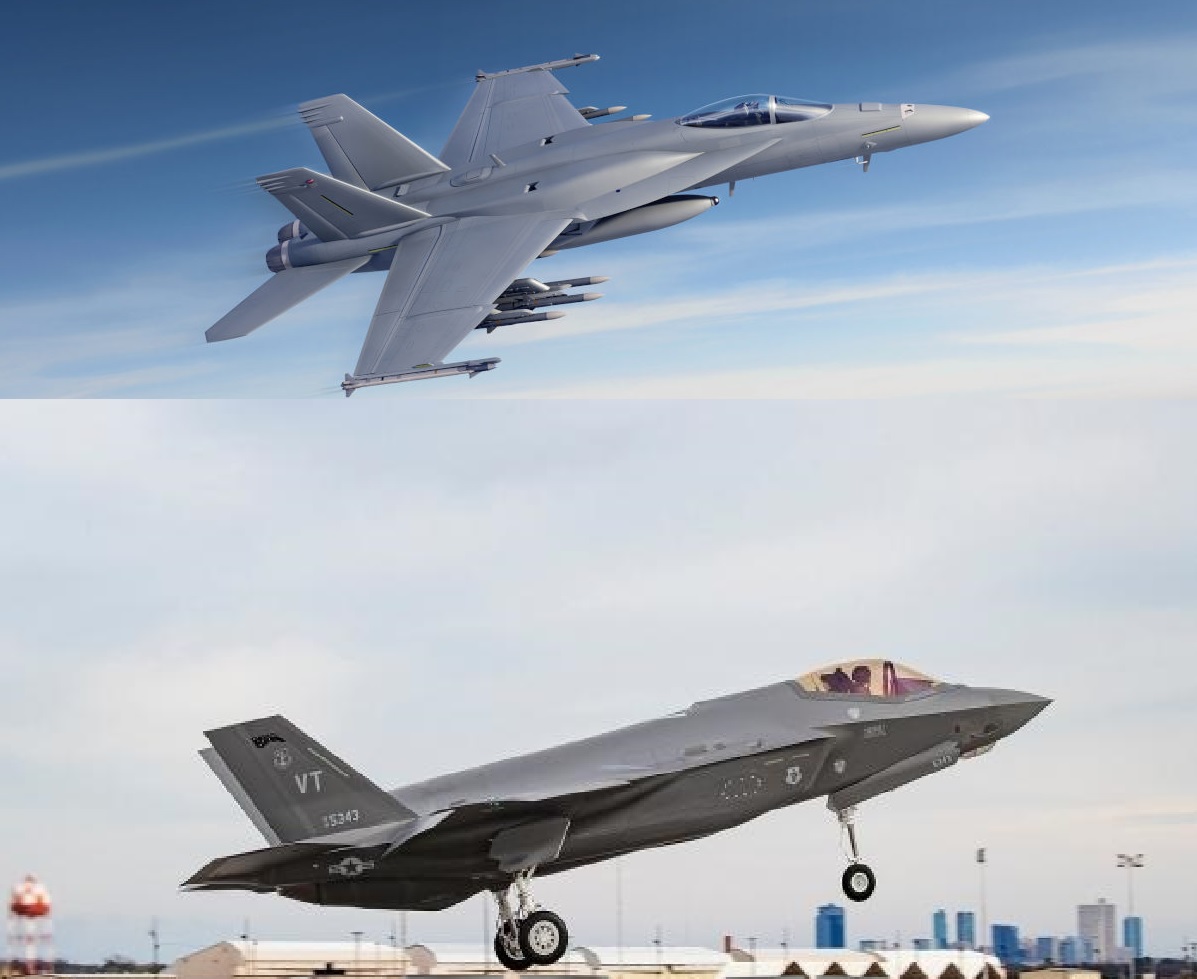
World
WASHINGTON — May 11, 2026 : The U.S. Marine Corps has formally established 2030 as the deadline for retiring its remaining McDonnell Douglas F/A-18 Hornet fleet, completing a long-term transition toward the F-35 Lightning II as the service’s primary tactical aviation platform. The transition, outlined in the Marine Aviation Plan 2026 and reinforced through a May 2026 Marine Administrative Message (MARADMIN 207/26), represents a major restructuring of Marine Corps aviation operations, personnel management, and expeditionary combat doctrine. The modernization effort is intended to align Marine aviation with fifth-generation warfare requirements, including stealth operations, sensor fusion, networked targeting, and dispersed basing in contested environments. F/A-18 Maintenance Roles to Be Eliminated As part of the transition, the Marine Corps will phase out maintenance occupations directly tied to the F/A-18 Hornet community. The affected specialties include fixed-wing aircraft mechanics, power plant technicians, airframe mechanics, electrical systems technicians, communications and radar systems specialists, and aviation safety equipment personnel assigned to Hornet squadrons. Under the administrative guidance, Marines serving in these occupational fields will be provided three primary options: Retraining into F-35 maintenance and sustainment roles Transfer into other military occupational specialties Separation from service at the completion of existing enlistment contracts The message also states that promotion and retention opportunities within the F/A-18 maintenance community will end as Hornet units are progressively deactivated. Marines not approved for retraining or lateral transfers will be reassigned according to broader Marine Corps manpower requirements. Phased Withdrawal Schedule The retirement of remaining Hornet operations will occur in phases across three major Marine aviation installations: Marine Corps Air Station Beaufort, South Carolina — by August 1, 2028 Marine Corps Air Station Miramar, California — by August 1, 2029 Naval Air Station Joint Reserve Base Fort Worth, Texas — by August 1, 2030 The Marine Corps currently operates approximately 125 F/A-18 aircraft across two active squadrons and one reserve squadron. The aircraft entered Marine Corps service in 1983 and has served in strike, interdiction, escort, and close-air-support missions for more than four decades. Expansion of the F-35 Fleet According to the Marine Aviation Plan 2026, the service plans to field approximately 420 F-35 aircraft, including 280 F-35B Short Takeoff and Vertical Landing (STOVL) variants and 140 carrier-capable F-35C variants. By the end of 2026, the Marine Corps expects to have received 205 F-35Bs and 56 F-35Cs supporting operational squadrons, fleet replacement squadrons, and test units. Squadron aircraft inventories are also planned to increase from 10 to 12 primary aircraft authorized by fiscal year 2035. The F-35B variant is powered by the Pratt & Whitney F135 engine generating approximately 43,000 pounds of thrust. The aircraft incorporates a shaft-driven lift fan system enabling short takeoffs and vertical landings from expeditionary airstrips and amphibious assault ships while retaining supersonic flight capability. The F-35C variant is optimized for carrier operations and includes larger wings, reinforced landing gear, and increased fuel capacity to support catapult launches and arrested recoveries aboard Navy aircraft carriers. Advanced Sensors and Networked Warfare Capabilities Both F-35 variants incorporate low-observable stealth technology and internal weapon bays capable of carrying AIM-120 Advanced Medium Range Air-to-Air Missiles and Joint Direct Attack Munition precision-guided bombs while preserving reduced radar visibility. The aircraft integrates the AN/APG-81 Active Electronically Scanned Array radar, Electro-Optical Targeting System, and Distributed Aperture System to provide enhanced situational awareness and targeting capability. Using Multifunction Advanced Data Link and Link 16 connectivity, the F-35 can transmit targeting and sensor information in near real time to naval vessels, artillery units, airborne warning aircraft, and other joint-force assets. Marine Corps planners view the aircraft not only as a strike platform but also as an airborne sensor and command node within a wider multi-domain combat network. Support for Expeditionary Operations Marine aviation officials stated that the transition directly supports Expeditionary Advanced Base Operations and Distributed Aviation Operations concepts, which emphasize dispersed deployments across temporary forward bases, austere airstrips, island chains, and amphibious platforms in contested maritime regions. The operational concepts are particularly focused on the Indo-Pacific theater, where U.S. forces are preparing for environments dominated by advanced anti-access and area-denial networks, long-range missile systems, integrated air defenses, and electronic warfare capabilities. The F-35’s reduced radar signature, sensor fusion systems, and networking capabilities are intended to complicate enemy targeting cycles while supporting distributed Marine units operating inside contested areas. Sustainment and Readiness Challenges While the consolidation of tactical aviation around a single aircraft family is expected to simplify logistics, training, software integration, and interoperability, defense officials continue to monitor sustainment challenges associated with the F-35 program. Pentagon assessments have repeatedly identified concerns involving maintenance complexity, spare-parts availability, and operational readiness rates across the F-35 fleet. Unlike previous Marine aviation structures that distributed operational roles across aircraft such as the Harrier and Hornet, the new force structure places greater operational reliance on a single platform family. The retirement of the F/A-18 Hornet and expansion of the F-35 fleet reflects a broader U.S. military modernization strategy centered on fifth-generation aircraft, integrated sensor-sharing, and multi-domain operations against technologically advanced adversaries.
Read More → Posted on 2026-05-11 13:51:11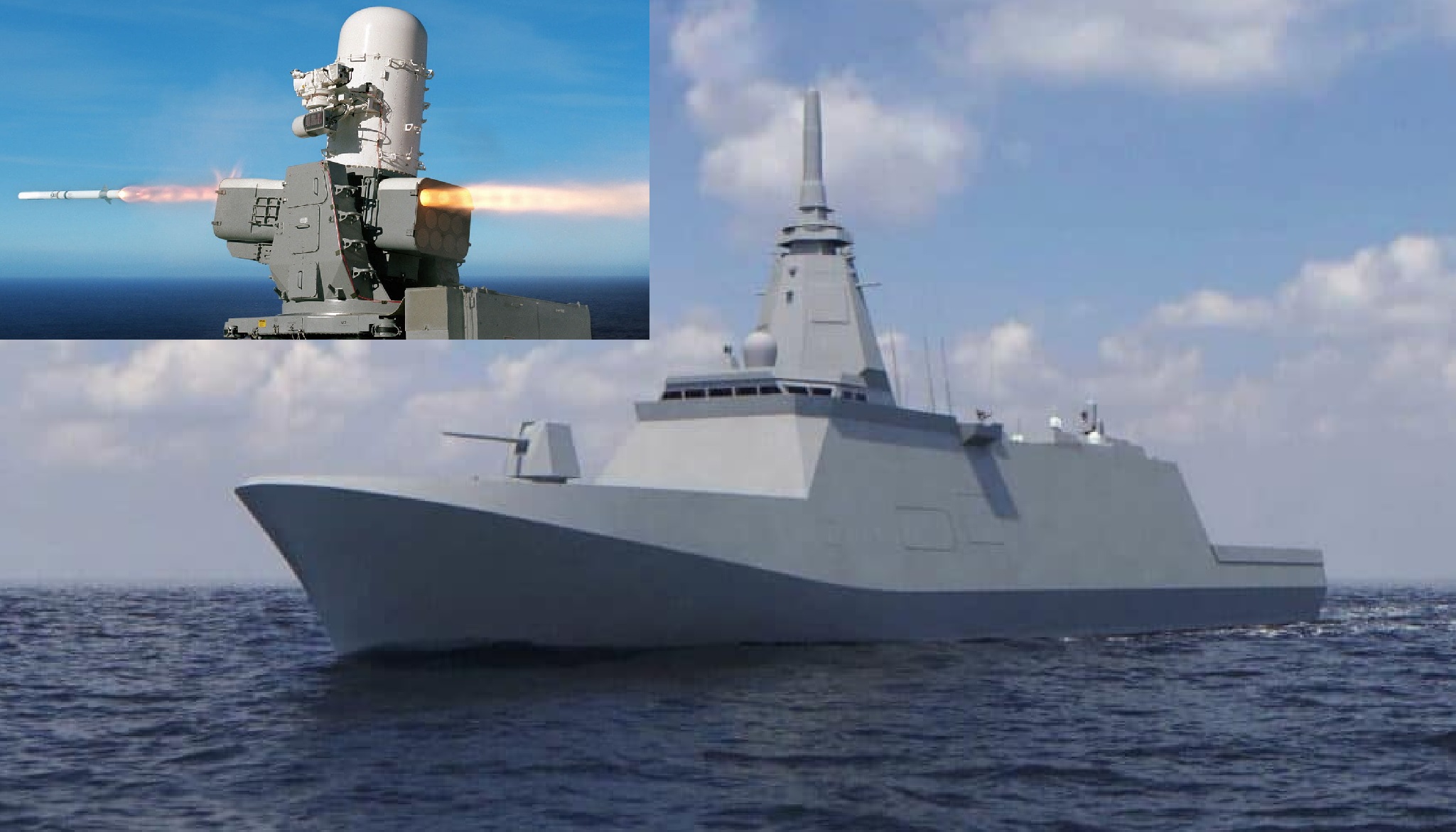
World
LOUISVILLE, Kentucky — May 11, 2026 : RTX announced that its Raytheon business has been awarded a contract by Mitsubishi Heavy Industries to supply SeaRAM ship self-defense systems for the Royal Australian Navy’s future upgraded Mogami-class frigates under Australia’s SEA 3000 General Purpose Frigate program. The SEA 3000 program is a major naval modernization initiative aimed at replacing Australia’s retiring Anzac-class frigates with 11 upgraded Mogami-class warships designed for multi-role maritime operations. The new vessels are intended to strengthen the Royal Australian Navy’s capabilities in undersea warfare, local air defense, and regional maritime security operations. Under the agreement, Raytheon will deliver SeaRAM launchers, Blast Test Vehicles, and technical support services for the first three frigates currently under construction by Mitsubishi Heavy Industries in Nagasaki, Japan. The systems will support installation, integration, and testing activities during the ships’ construction phase. The first three vessels will be built in Japan, while additional ships planned under the program are expected to be constructed at the Henderson Defence Precinct in Western Australia as part of Australia’s long-term naval expansion strategy. SeaRAM Capability and System Integration The SeaRAM system is designed to provide autonomous terminal defense against a wide range of airborne threats, including anti-ship cruise missiles, helicopters, and unmanned aerial vehicles. The system combines the sensor suite of the Phalanx Close-In Weapon System Block 1B — including search-and-track radar and electro-optical sensors — with an 11-cell launcher equipped with RIM-116 Rolling Airframe Missiles. Unlike traditional gun-based close-in weapon systems, SeaRAM extends a ship’s defensive reach beyond short-range ballistic interception distances while maintaining the same shipboard footprint and power requirements as the Phalanx platform. The RIM-116 Rolling Airframe Missile is a fire-and-forget interceptor that uses passive radio-frequency and infrared guidance to engage incoming threats at ranges of approximately nine kilometers. Barbara Borgonovi, president of Naval Power at Raytheon, stated that the system would provide the Royal Australian Navy with an additional layer of terminal air and missile defense capability for its future surface combatants. Australia Joins Global SeaRAM Operators The acquisition marks Australia’s first procurement of the SeaRAM system, officially adding the country to the global community of Rolling Airframe Missile operators. RTX stated that the contract reflects continuing international demand for layered naval air and missile defense architectures amid expanding regional security requirements. The upgraded Mogami-class frigates are being introduced as Tier 2 surface combatants within Australia’s broader maritime modernization plan. The vessels are designed with lower crew requirements than the Anzac-class frigates while maintaining advanced operational capabilities and interoperability with allied naval forces. Production and Delivery Timeline Manufacturing and related contract work will be carried out at Raytheon’s facility in Louisville, Kentucky. Deliveries of the SeaRAM systems are scheduled to begin in late 2028. According to the current SEA 3000 production schedule, the first upgraded Mogami-class frigate is expected to be delivered to the Royal Australian Navy by the end of 2029.
Read More → Posted on 2026-05-11 14:04:02
World
SEOUL — May 11, 2026 : South Korea’s Presidential Office on Monday condemned the attack on the cargo vessel HMM Namu in the Strait of Hormuz after a joint government investigation concluded that the ship was struck by two drones while anchored near the United Arab Emirates. Officials stated that Seoul is preparing a coordinated and “firm response” following the completion of forensic analysis conducted in Dubai. National Security Adviser Wi Sung-lac said attacks on civilian commercial shipping are “intolerable” and cannot be justified under international law. The Presidential Office emphasized that the vessel had not violated any maritime regulations at the time of the incident. Investigation Confirms Dual Drone Strike According to the findings released by South Korean authorities, the HMM Namu, a Panama-flagged general cargo vessel operated by HMM Co. Ltd., was anchored near Umm Al Quwain in the United Arab Emirates on May 4 when two aerial objects struck the vessel’s lower port stern approximately one minute apart. The joint investigative team concluded that the ship had been hit by two Iranian drones based on forensic analysis, debris patterns, and damage assessment conducted after the vessel was towed to Dubai for inspection. Officials stated that the first impact caused an explosion and ignited a fire inside the engine room. A second strike followed shortly afterward, spreading flames across the rear section of the vessel and causing additional structural damage. Investigators confirmed that the attack created a breach measuring approximately 5 meters wide and up to 7 meters deep in the lower port stern. Authorities noted that the extent of the damage was not immediately visible because the impact area was located below the vessel’s rear port section. Crew Rescued, Vessel Towed to Dubai All 24 crew members aboard the HMM Namu, including six South Koreans, were rescued without injury. The fire was later extinguished, though the vessel was disabled and required tugboat assistance for extraction from the area. The ship was transported to Drydocks World in Dubai, where it arrived around May 8 for repairs and a full forensic inspection. The investigative team included inspectors from the Korea Maritime Safety Tribunal under the Ministry of Oceans and Fisheries and forensic specialists from the National Fire Agency. Officials examined CCTV footage, interviewed the captain and crew members, and collected debris from the impact site. Authorities ruled out internal mechanical failure and sea mines as possible causes of the explosion. “The damage was not immediately known because the strike occurred in the lower port stern,” Wi Sung-lac said during a media briefing. “However, forensic evidence collected in Dubai clarified the nature of the assault.” Diplomatic Protest Lodged With Iran Following the release of the investigation results, South Korea’s Foreign Ministry summoned the Iranian ambassador in Seoul on May 10 to formally protest the incident. The Presidential Office stated that attacks against civilian commercial vessels operating in compliance with international regulations cannot be tolerated and that Seoul would continue coordinating with international partners on maritime security measures. In response, the Iranian embassy in South Korea stated that it currently had no official position on the matter and would provide updates if information becomes available. Tehran has previously denied involvement in the incident. South Korean authorities said additional forensic analysis of debris and damage patterns will continue as investigators work to determine the exact origin and technical characteristics of the drones involved in the strike. Rising Tensions in the Strait of Hormuz The attack occurred amid heightened tensions and maritime disruptions in the Strait of Hormuz, where regional shipping traffic has faced increasing security risks over the past two months. Donald Trump stated after initial reports of the incident that Iran was responsible for the strike and urged South Korea to join a U.S.-led coalition aimed at securing commercial shipping routes in the region. At the same time, commanders of the Islamic Revolutionary Guard Corps (IRGC) have warned that interference with Iranian shipping operations would result in retaliatory action against U.S. military assets and vessels considered hostile. The United Kingdom has also announced the deployment of the destroyer HMS Dragon to the Middle East as part of a French-led maritime security mission focused on protecting commercial shipping. Additional Maritime Incidents Reported The strike on the HMM Namu followed several recent maritime security incidents in the region. On Sunday, another cargo vessel arriving from Abu Dhabi was reportedly attacked by a drone near Qatar’s territorial waters. Separately, authorities in the United Arab Emirates announced that two Iranian drones had been intercepted. Despite the tensions, some maritime transit operations have continued. A Qatari liquefied natural gas tanker was recently permitted by Tehran to transit regional waters toward Pakistan, marking the first such passage since the escalation of the current crisis in late February. South Korean officials stated that the government will continue prioritizing the safety of its citizens, the protection of commercial shipping, and the security of international maritime trade routes while further assessments of the HMM Namu continue in Dubai.
Read More → Posted on 2026-05-11 14:19:07
India
HYDERABAD, — May 11, 2026 : The Indian Army has inducted two indigenous combat systems — the UAV-Launched Precision Guided Munition (ULPGM) and the AGNIKAA VTOL-1 First-Person View (FPV) Kamikaze Drone — under the Emergency Procurement (EP-6) framework following a series of operational validation trials conducted in challenging combat conditions. The formal handover ceremony took place in Hyderabad in the presence of officials from the Army’s Western Command. Prior to induction, both systems completed high-altitude testing, electronic warfare (EW) evaluations, and precision-guided munition firing trials to confirm operational readiness for deployment in difficult terrains and contested environments. Both platforms were designed, developed, and manufactured in India, supporting the Army’s ongoing effort to expand indigenous precision-strike and loitering munition capabilities for frontline operations. ULPGM Loitering Munition The ULPGM, co-developed by the Defence Research and Development Organisation (DRDO) and Adani Defence & Aerospace, is classified as India’s first indigenous loitering munition in its category. The system is integrated with retractable UAV launch platforms, providing greater operational flexibility during missions in contested areas. The launch UAV has an operational range of up to 20 kilometres, while the precision-guided munition itself is capable of engaging targets at a direct strike range of 2.5 kilometres. The system is equipped with an Imaging Infrared (IIR) seeker that enables engagement of both stationary and moving targets during day and night operations. The munition carries a two-kilogram warhead intended for use against soft and hard targets and is reported to achieve an accuracy of one metre Circular Error Probable (CEP). The ULPGM also incorporates anti-jamming and anti-spoofing capabilities to maintain operational reliability in GPS-denied and communication-jammed environments. AGNIKAA VTOL-1 FPV Kamikaze Drone The second inducted system, the AGNIKAA VTOL-1, has been designated as India’s first FPV kamikaze drone in its class. Built with a vertical take-off and landing (VTOL) configuration, the platform is designed for rapid deployment during urban warfare operations, confined-space engagements, and open battlefield missions. The drone has an operational range of up to five kilometres, a flight endurance of 30 minutes, and a maximum speed of 60 kilometres per hour. Its payload is designed with a lethality radius of five metres against personnel and soft-skinned vehicles. To improve operational safety and mission reliability, the AGNIKAA VTOL-1 is equipped with a three-layered trigger mechanism and a four-layer trigger safety system. Similar to the ULPGM, the drone is designed to remain operational in GPS-denied settings and complex electronic warfare environments. Indigenous Capability Expansion The induction of both systems under the EP-6 emergency procurement route reflects the Indian Army’s increasing focus on rapidly deployable indigenous unmanned combat systems for precision-strike operations. The platforms are expected to strengthen operational capabilities in high-risk sectors while supporting wider integration of domestically developed defence technologies into frontline formations.
Read More → Posted on 2026-05-11 14:29:06
World
WASHINGTON — May 11, 2026 : President Donald Trump has formally rejected Iran’s response to the latest United States proposal aimed at ending the ongoing conflict, after Tehran delivered a detailed multipage counterproposal through Pakistani mediators following nearly 10 days of diplomatic exchanges. Speaking in a telephone interview with Axios, Trump criticized Tehran’s communication and expressed distrust toward the Iranian leadership. “I don't like their letter. It is inappropriate. I don't like their response,” Trump said, adding that Iran “has been deceiving many countries for 47 years.” Trump later repeated his criticism publicly on Truth Social, describing Iran’s response as “TOTALLY UNACCEPTABLE!” and accusing Tehran of failing to engage seriously with the proposed framework. Iran’s Counterproposal According to regional and diplomatic reports, Iran’s response was delivered on May 10 through Pakistani mediators and addressed several key disputes, including the Iranian nuclear program, maritime security in the Persian Gulf, and the reopening of the Strait of Hormuz. Tehran reportedly proposed an immediate cessation of fighting across all fronts, including Lebanon, alongside a gradual reopening of the Strait of Hormuz in exchange for the United States lifting its naval blockade on Iranian ports and commercial shipping. Iran’s proposal places nuclear-related discussions into a separate negotiation process to be conducted over the next 30 days. Iranian officials reportedly indicated willingness to temporarily suspend uranium enrichment activities, though for a significantly shorter period than the 20-year moratorium sought by Washington. Tehran also rejected any requirement to dismantle its nuclear infrastructure. On the issue of Iran’s highly enriched uranium stockpile, the proposal reportedly suggests that part of the material would be diluted while the remainder would be transferred to a third country under guarantees ensuring its return if negotiations collapse or if the United States withdraws from a future agreement. Iran’s Foreign Ministry spokesperson Esmaeil Baghaei stated that Tehran’s response prioritizes ending the war and restoring maritime security in the Persian Gulf and Strait of Hormuz. The proposal also calls for the removal of U.S. sanctions, the release of frozen Iranian financial assets, and an end to what Iran describes as illegal U.S. actions against commercial shipping. Iranian officials characterized their position as based on “legitimate rights” rather than concessions. Details of the U.S. Proposal The latest U.S. proposal reportedly consisted of a one-page memorandum of understanding intended to establish an initial ceasefire framework. The proposal sought to reopen the Strait of Hormuz and launch a 30-day negotiation period focused on nuclear restrictions, sanctions relief, maritime security arrangements, and broader regional stability issues. While the United States prioritized rapid agreement on nuclear limitations and maritime access, Iran’s response placed greater emphasis on the immediate cessation of hostilities and the removal of economic and naval pressure measures before entering detailed nuclear negotiations. Diplomatic sources familiar with the talks said major disagreements remain over the sequencing of concessions, the duration of enrichment restrictions, and future control of nuclear material. Trump Reaffirms U.S. Position Amid the stalled negotiations, Trump confirmed that he held discussions with Israeli Prime Minister Benjamin Netanyahu on Sunday. Trump described the exchange as “a very pleasant call” and reiterated that relations between the United States and Israel remain close during the ongoing regional crisis. At the same time, Trump emphasized that the negotiations would remain under direct U.S. control. “The negotiations with Iran are my business, not anyone else’s,” Trump stated, signaling that his administration intends to independently manage the diplomatic process despite ongoing consultations with allies. Administration officials indicated that the United States will continue applying economic and diplomatic pressure on Iran while negotiations remain unresolved. Regional Tensions Continue As of May 11, no immediate resumption of full-scale hostilities has been announced, though the fragile ceasefire remains under pressure amid continued Iranian shipping restrictions in the Strait of Hormuz and the sustained U.S. naval presence in the region. Global energy markets continue to monitor developments closely due to the strategic importance of the waterway for international oil shipments. Officials involved in the mediation process said further diplomatic exchanges remain possible through Pakistani intermediaries, although significant differences continue to separate both sides on the scope and timing of potential concessions. The developments come ahead of Trump’s scheduled three-day state visit to China beginning May 13 at the invitation of Chinese President Xi Jinping. Discussions during the visit are expected to include trade relations, artificial intelligence, Taiwan, regional security issues, and China’s economic relationship with Iran, including Beijing’s continued purchases of Iranian oil and exports of dual-use goods that Washington believes could support Iran’s strategic capabilities.
Read More → Posted on 2026-05-11 14:36:04
World
WASHINGTON — May 11, 2026 : The United States Navy is experiencing continued delays in the construction of its next-generation Gerald R. Ford-class aircraft carriers as supply chain disruptions, labor shortages, and shipyard capacity limitations increasingly affect the country’s naval modernization efforts. According to the U.S. Navy’s Fiscal Year 2027 shipbuilding budget documents, the fourth Ford-class aircraft carrier, USS Doris Miller (CVN-81), has been delayed by at least two years and is now scheduled for delivery in February 2034 instead of the previously projected February 2032 timeline. The revised schedule extends the ship’s overall construction period to approximately 15 years. The carrier is being constructed by Huntington Ingalls Industries at the Newport News Shipbuilding yard in Virginia. The Navy stated that the delay resulted from “shipbuilder construction footprint constraints limiting their ability to build CVN-81 ship modules.” Construction Delays Expand Across the Ford-Class Program Shipyard officials said the delays affecting USS Doris Miller are directly linked to ongoing construction setbacks involving USS Enterprise (CVN-80), which is being built simultaneously at the same facility. Todd Corillo, spokesperson for Newport News Shipbuilding, stated that the CVN-81 schedule had been affected by “the cascading impact of CVN-80 delays on shipyard footprint capacity.” He explained that the delayed arrival of large sequence-critical equipment disrupted early structural assembly operations in the dry dock and reduced available construction space for subsequent vessels. Although the delayed materials have since arrived, the accumulated disruptions continue to affect the overall construction timeline. The keel-laying ceremony for USS Doris Miller is expected later in 2026. The second carrier in the class, USS John F. Kennedy (CVN-79), has also experienced major delays. Construction on the vessel began in 2011, but the ship is now scheduled for delivery in March 2027, extending its total construction timeline to 16 years. The carrier is currently estimated to cost approximately $12.9 billion. Officials previously attributed delays affecting CVN-79 to the late delivery of large critical equipment required during the initial phases of structural construction. USS Doris Miller is estimated to cost approximately $14 billion. Shipbuilding Industry Faces Structural Crisis The delays affecting the Ford-class program reflect broader structural problems within the American shipbuilding industry. Shipyards across the United States continue to face severe shortages of skilled labor as experienced workers retire and recruitment efforts struggle to attract younger personnel. Industry officials cite the demanding nature of shipyard work, declining interest in industrial trades, and competition from the technology sector as key factors behind the workforce shortage. Supply chain vulnerabilities have also become increasingly significant. Following decades of post-Cold War consolidation, many specialized components used in aircraft carriers and submarines are now produced by a limited number of suppliers. Delays at a single manufacturing facility can halt progress across an entire shipbuilding program. In addition, much of the infrastructure used by public and private shipyards was built decades ago and is not optimized for the size and complexity of modern naval platforms such as Ford-class carriers and Columbia-class ballistic missile submarines. Defense analysts have also identified frequent Pentagon design changes during active construction phases as a major contributor to rising costs and schedule overruns. Mid-construction modifications often require engineers to redesign completed sections of ships already under assembly. USS Gerald R. Ford Program Continues to Face Operational Challenges The U.S. Navy originally intended later Ford-class carriers to avoid the technical and operational problems encountered during construction of the lead ship, USS Gerald R. Ford (CVN-78). The carrier entered service in June 2017 after years of delays and a total program cost exceeding $17.5 billion, making it the most expensive warship ever built. However, the vessel did not begin its first operational deployment until October 2022 due to unresolved issues involving electromagnetic aircraft launch systems, weapons elevators, radar systems, and other key technologies. Several of the ship’s original systems required redesigns before being integrated into later carriers in the class. Operational problems have continued in recent years. During the carrier’s 2025 deployment, the ship reportedly experienced repeated failures involving its onboard waste management system. Maintenance crews responded to sewage-related incidents on a near-daily basis, while many onboard toilets became temporarily unusable during portions of the deployment. Strategic Concerns Grow Amid Expanding Chinese Naval Production The delays affecting the Ford-class program are occurring as global naval competition intensifies, particularly in the Indo-Pacific region. Concerns regarding U.S. fleet modernization have increased following China commissioning its first supercarrier, the Fujian, in November 2025. The carrier is equipped to operate advanced aircraft including J-15B fighters, J-15D electronic attack aircraft, and J-35 fifth-generation fighters. Naval analysts state that Chinese shipyards are continuing large-scale production of both nuclear-powered and conventionally powered aircraft carriers while the United States faces ongoing industrial bottlenecks affecting its own fleet expansion plans. Reports have also indicated that the U.S. Navy may increasingly rely on foreign industrial partnerships to help address future shipbuilding requirements and maintain long-term fleet readiness objectives.
Read More → Posted on 2026-05-11 14:47:39
World
HAVANA / WASHINGTON — May 11, 2026 : The United States has significantly increased reconnaissance operations near Cuba since early February, conducting at least 25 known surveillance missions along the island’s coastline as Washington simultaneously expands economic sanctions and sharpens political rhetoric toward Havana. According to publicly available aviation tracking data, including information reviewed from ADS-B Exchange and CNN, U.S. Navy and U.S. Air Force aircraft have carried out repeated intelligence-gathering flights near Cuba’s northern and eastern regions, particularly around Havana and Santiago de Cuba. Several aircraft were tracked operating within approximately 64 kilometers (40 miles) of the Cuban coastline. The surveillance operations involved multiple specialized intelligence platforms, including the P-8A Poseidon maritime patrol aircraft, RC-135V Rivet Joint electronic intelligence aircraft, and MQ-4C Triton high-altitude reconnaissance drones. Defense analysts say the missions were likely intended to monitor Cuban military movements, radar activity, communications systems, and coastal defense infrastructure. Increase in Surveillance Activity Public flight tracking records indicate that portions of several missions were conducted with limited transponder visibility, suggesting some aircraft operated under restricted tracking conditions during sensitive phases of the flights. On March 12, a P-8A Poseidon and an MQ-4C Triton briefly activated their transponders near Cuba before disappearing again from public tracking systems, drawing attention from aviation observers monitoring the region. Analysts noted that the aircraft’s takeoff points and full operational routes remained largely concealed. Additional operations continued through April and May. On April 30, an E-2D Advanced Hawkeye airborne early warning and control aircraft carried out an extended mission near Cuban airspace. Defense observers believe the aircraft may have been coordinating regional air operations or conducting long-range radar surveillance of Cuban air defense systems. One day later, on May 1, three U.S. Navy F-5 aggressor aircraft operating from Naval Air Station Key West conducted maneuvers near the island during combat simulation and training activities. Naval Air Station Key West routinely hosts aggressor squadrons that simulate adversary aircraft during military exercises, though analysts noted that the broader increase in intelligence flights marks a significant shift in operational tempo compared to previous years. Economic Pressure Campaign The rise in military surveillance activity has coincided with an expanded U.S. economic pressure campaign targeting Cuba. Earlier this year, President Donald Trump introduced additional sanctions against Cuban state-linked sectors, including energy, defense, and mining industries, while also implementing measures widely described as an oil blockade designed to restrict foreign fuel deliveries to the island. The restrictions, combined with secondary sanctions and tariff pressure, have reportedly disrupted long-standing fuel supply routes from Venezuela and Mexico. Cuban fuel imports have declined sharply in recent months, contributing to widespread electricity blackouts, fuel shortages, and operational disruptions affecting transportation and public services across the country. U.S. officials have defended the measures as necessary responses to national security concerns and regional stability issues. Escalation in Political Rhetoric The increased reconnaissance activity has also occurred alongside a noticeable escalation in political rhetoric from Washington. During remarks delivered at a private gathering at the Forum Club of Palm Beach, President Trump stated that the United States would shift greater strategic focus toward Cuba following ongoing U.S. operations involving Iran. Trump described Cuba as a “bankrupt country” and a “failed experiment where people live very poorly.” He also referenced the possibility of deploying the Nimitz-class aircraft carrier USS Abraham Lincoln to waters near Cuba. According to Trump, he instructed military officials to study options for positioning the carrier close to the island’s coastline as part of what he described as a potential “new dawn for Cuba.” Trump additionally referred to Cuba as “the next target after Iran,” comments that drew significant attention among regional observers and defense analysts. Regional and Strategic Implications Defense analysts note that the current pattern of intensified reconnaissance flights resembles intelligence-gathering activity observed prior to earlier U.S. operations involving Venezuela and Iran. The geographic proximity of major American military facilities in Florida, particularly Naval Air Station Key West, allows U.S. forces to maintain frequent aerial surveillance coverage of Cuba and surrounding maritime areas. Analysts say the sustained monitoring operations provide the Pentagon with near real-time awareness of Cuban military infrastructure, radar systems, and coastal activity as diplomatic and economic tensions continue to increase. Cuban officials have rejected U.S. allegations that Havana poses a threat to American national security. The Cuban government has stated that it remains open to negotiations while warning that any military action against the island would face prolonged resistance and guerrilla-style warfare. Although U.S. military exercises in the Caribbean remain routine, defense observers say the scale, frequency, and timing of the recent reconnaissance operations represent one of the most sustained periods of U.S. aerial surveillance activity near Cuba in recent years.
Read More → Posted on 2026-05-11 15:27:59
World
GIBRALTAR, — May 11, 2026 : A United States Navy Ohio-class ballistic missile submarine arrived at the naval base in Gibraltar on Sunday evening amid heightened military readiness and ongoing diplomatic tensions surrounding the Middle East. The vessel, identified in local reports as the USS Alaska (SSBN-732), entered the Bay of Gibraltar under extensive security arrangements. Naval units from the Royal Navy’s Gibraltar Squadron, the Gibraltar Defence Police, and Royal Marines escorted the submarine through the Strait of Gibraltar before it docked at the South Mole with support from two tugboats. Local authorities established a 200-meter maritime exclusion zone around the berth, while additional ground security measures were implemented across Gibraltar ahead of the submarine’s arrival. Reports also indicated that Royal Marines were deployed to secure the docking area prior to the vessel entering port. The U.S. Department of Defense and the UK Ministry of Defence have not issued official statements regarding the purpose or duration of the deployment. However, the timing of the visit has drawn international attention as tensions between the United States and Iran continue to increase following disagreements over a proposed Middle East ceasefire framework. Military analysts note that operational ballistic missile submarines rarely make public port visits due to their strategic role and stealth-based operations. Public appearances of such vessels are generally viewed as demonstrations of military readiness, deterrence capability, and alliance coordination during periods of geopolitical uncertainty. Strategic Nuclear Deterrence Platform The Ohio-class fleet forms the sea-based component of the United States’ nuclear triad and represents one of the most survivable elements of the country’s strategic deterrence force. Designed for extended patrol operations, the submarines are capable of remaining submerged for several months while conducting global strategic missions. Ohio-class submarines measure approximately 171 meters in length and displace nearly 18,750 tonnes when submerged, making them the largest submarines ever constructed for the U.S. Navy. The vessels are powered by a single S8G pressurized-water nuclear reactor driving steam turbines, enabling submerged speeds exceeding 20 knots. In their ballistic missile submarine configuration, the vessels carry up to 20 Trident II D5 submarine-launched ballistic missiles in compliance with New START treaty limitations. The missiles possess operational ranges exceeding 12,000 kilometers and are capable of carrying multiple independently targetable reentry vehicles (MIRVs). For tactical and defensive operations, the submarines are equipped with four 533-millimeter bow-mounted torpedo tubes armed with Mk 48 Advanced Capability heavyweight torpedoes. Each submarine operates with a crew of approximately 155 personnel under the U.S. Navy’s dual-crew “Blue” and “Gold” rotation system, allowing continuous deployment cycles and patrols typically lasting between 70 and 90 days. Gibraltar’s Strategic Importance Gibraltar remains one of the world’s most strategically significant maritime chokepoints, connecting the Atlantic Ocean to the Mediterranean Sea. The British Overseas Territory regularly supports NATO and U.S. Sixth Fleet operations due to its geographic position and naval infrastructure. Public visits by operational U.S. ballistic missile submarines to Gibraltar are considered relatively uncommon. The latest arrival marks one of the few publicly observed Ohio-class SSBN port calls to the territory in recent decades, highlighting the continued strategic importance of the region amid ongoing international security concerns.
Read More → Posted on 2026-05-11 15:42:39
World
YAGUR, Israel — May 11, 2026 : The U.S. Army has awarded Israeli defense technology company Smart Shooter a follow-on contract worth approximately $10.7 million for additional SMASH 2000LE fire control systems, with deliveries scheduled for the third quarter of 2026. The procurement was issued through PAE Defensive Fires and will be executed by Atlantic Diving Supply, Inc. (ADS Inc.). The agreement also includes extended support coverage for the supplied systems. Accelerated Multi-Branch Procurement The latest award is part of a wider rapid-acquisition effort by the U.S. Department of Defense to field counter-small unmanned aerial system (C-sUAS) technologies across multiple military branches using existing contracting mechanisms rather than long-term acquisition programs. The procurement sequence began in May 2025 with a $13.4 million U.S. Army contract for SMASH systems. In July 2025, additional contracts were issued for the U.S. Marine Corps. In March 2026, the Joint Interagency Task Force 401 (JIATF-401) awarded a separate $2.4 million contract to support U.S. Air Force requirements. The continuing procurements indicate a broader Pentagon effort to standardize a common kinetic counter-drone capability for Army, Marine Corps, and Air Force personnel operating in forward environments. SMASH 2000LE / 3000SA System Configuration Marketed in the United States as the SMASH 2000LE and internationally as the SMASH 3000SA, the system is a lightweight rifle-mounted fire control unit weighing approximately 740 grams (1.63 lbs). It attaches directly to a standard rifle’s Picatinny rail, allowing infantry personnel to retain existing service weapons while integrating advanced targeting functions. The system combines computer vision, artificial intelligence, target tracking algorithms, and a dual-core ballistic processing computer. Operators can detect, track, and engage both stationary and fast-moving targets, including small unmanned aerial systems. A synchronized “lock-and-release” firing mechanism temporarily prevents the weapon from discharging until the onboard computer determines a high probability of a successful hit. The calculation is based on target speed, distance, movement, and environmental conditions. The enhanced SMASH 3000SA configuration also introduces expanded network connectivity. The system can integrate with external battlefield sensors, Command, Control, Communications, Computers, and Intelligence (C4I) infrastructure, the Joint Fire Network (JFN), and broader battle management systems. Response to Emerging Drone Threats The increasing adoption of SMASH systems reflects changing battlefield requirements observed in recent conflicts, particularly the war in Ukraine, where low-cost commercial and first-person-view (FPV) drones have been widely used against armored vehicles and infantry units. Traditional air defense systems relying on radar-guided missiles and dedicated gun platforms have faced operational and cost challenges when responding to large numbers of inexpensive aerial threats. The SMASH platform is intended to provide a lower-cost distributed kinetic defense capability by enabling individual soldiers to engage drones using standard small-arms ammunition. The system allows counter-drone engagement capability to be deployed at squad and platoon level rather than relying exclusively on centralized air defense assets. Company Statement and Operational Deployment Smart Shooter Chief Executive Officer Michal Mor stated that the latest contract reflects increasing operational demand for rapidly deployable counter-drone technologies at the tactical level. “As drone threats evolve in scale, accessibility, and complexity, armed forces increasingly require proven, field-ready systems that can be rapidly deployed and effectively operated at the tactical edge,” Mor said. She added that the company remains focused on supporting U.S. military requirements with systems designed to improve precision, survivability, and mission effectiveness. According to the company, the SMASH family of fire control systems is currently deployed by military and security forces in the United States, Israel, the United Kingdom, Germany, India, and multiple NATO member states. The Australian Defence Force has also initiated technical evaluations of the platform as part of ongoing counter-UAS capability assessments.
Read More → Posted on 2026-05-11 15:54:28
India
BENGALURU, — May 11, 2026 : The Aeronautical Development Agency (ADA) has selected L&T Technology Services (LTTS) as the single vendor for the design and development of the Mission Data Preparation Software (MDPS) Phase-1 for the Light Combat Aircraft (LCA) Mk-2 and its future variants. The development marks an important step in the advancement of the LCA Mk-2 program, as ADA continues work on the aircraft’s avionics, mission planning systems, and operational integration ahead of prototype flight testing. Mission Data Preparation Software The Mission Data Preparation Software (MDPS) is a ground-based system used to configure mission-specific operational data before a fighter aircraft undertakes a mission. The software enables mission planners and operational units to prepare and upload critical combat information directly into the aircraft’s mission computers and avionics systems. The MDPS supports several key operational functions, including route and waypoint planning, navigation database integration, target designation, weapon loadout configuration, and threat analysis. The system also allows operators to map hostile radar coverage, surface-to-air missile locations, and electronic warfare threats to optimize mission planning and survivability. In addition, the software pre-configures electronic warfare parameters, radar operational modes, sensor settings, and precision-guided weapon data before transfer into the aircraft through secure interfaces or data cartridges. Post-flight retrieval and analysis capabilities are also included to assist with maintenance evaluation and mission performance assessment. Phase-1 of the project focuses on the core architecture and initial software implementation required for the LCA Mk-2’s advanced avionics framework and mission computer environment. LCA Mk-2 Program The LCA Mk-2, also known as the Tejas Mk-2 or Medium Weight Fighter (MWF), is an advanced 4.5-generation multirole combat aircraft being developed by ADA under the Defence Research and Development Organisation (DRDO) for the Indian Air Force. The aircraft has been designed as a larger and more capable successor to the Tejas Mk-1A and is intended to replace aging platforms such as the Mirage 2000, Jaguar, and MiG-29 fleets in Indian Air Force service. The platform is powered by the General Electric F414-INS6 engine and features a maximum take-off weight of approximately 17.5 tonnes. Compared to earlier Tejas variants, the aircraft incorporates an enlarged airframe, close-coupled canards for improved maneuverability, and expanded payload capability through 11 weapon stations. The LCA Mk-2 will also integrate the indigenous Uttam Mk2 Active Electronically Scanned Array (AESA) radar, an advanced Infrared Search and Track (IRST) system, and an electronic warfare suite known as ‘Swayam Raksha Kavach.’ The suite includes radar warning receivers, self-protection jammers, and missile approach warning systems designed to improve survivability in contested operational environments. The aircraft’s avionics architecture further incorporates sensor fusion, network-centric warfare compatibility, and upgraded mission computer systems intended to support future indigenous weapons and sensors. Development Timeline The ₹10,000 crore LCA Mk-2 development program, approved by the Cabinet Committee on Security in 2022, is currently progressing through prototype manufacturing and systems integration stages. Hindustan Aeronautics Limited (HAL) is accelerating assembly activities for the prototypes and has reportedly issued strict delivery schedules to private-sector suppliers for precision-machined structural and avionics components required for the aircraft. The first prototype is currently undergoing structural integrity assessments, avionics integration checks, flight control validation, and ground testing procedures ahead of its maiden flight. According to recent confirmations from DRDO officials, the first flight of the LCA Mk-2 is expected between June and July 2026. Following initial testing and certification activities, four prototypes are planned to be completed by 2027. Final Operational Clearance (FOC) and serial production are currently targeted for the 2028–2029 timeframe. Strategic Significance The selection of LTTS for the Mission Data Preparation Software program reflects ADA’s increasing use of domestic private-sector capabilities for critical aerospace software and mission systems development. The LCA Mk-2 program aims to achieve an indigenization level of nearly 80 percent through the integration of locally developed avionics, mission systems, sensors, and electronic warfare technologies. The MDPS project is expected to support secure and indigenous mission planning capabilities for the Indian Air Force while strengthening India’s long-term self-reliance in advanced combat aviation and network-centric warfare technologies.
Read More → Posted on 2026-05-11 16:02:56
World
KYIV — May 11, 2026 : Ukraine and Germany have officially launched a joint program for the development and production of advanced unmanned aerial systems, including deep-strike drones capable of reaching targets at distances of up to 1,500 kilometers. The initiative was announced by German Defence Minister Boris Pistorius during a visit to Kyiv on May 11, reflecting a major expansion in defense-industrial cooperation between the two countries. German and Ukrainian defense companies are already cooperating on several joint ventures focused on the production of unmanned systems across multiple operational ranges. The program includes tactical drones designed for reconnaissance and combat missions at distances below 100 kilometers, alongside long-range strike platforms intended for strategic operations deep behind enemy lines. According to Pistorius, the development and large-scale deployment of deep-strike drones is considered critical for strengthening Ukraine’s ability to deter continued Russian attacks on military and civilian infrastructure. He stated that long-range unmanned systems can also play an important role in suppressing and neutralizing enemy air defense networks during military operations. The cooperation marks a broader shift in Germany’s support strategy toward long-term industrial partnerships and co-production with Ukraine’s defense sector rather than relying solely on direct equipment transfers. German industrial engineering and Ukrainian battlefield experience are expected to form the basis of the joint manufacturing effort. Integration with Ukraine’s Defense Technology Sector During the visit, Pistorius and Ukrainian Deputy Prime Minister and Minister of Digital Transformation Mykhailo Fedorov signed a letter of intent establishing the “Brave Germany” initiative. The program is connected to Ukraine’s Brave1 defense innovation platform, which supports military technology developers and enables rapid testing of new systems under real combat conditions. Through the partnership, Germany plans to increase cooperation with Ukrainian defense technology companies and innovative startups while providing additional support for the accelerated deployment of battlefield-tested systems. German officials are also studying Ukraine’s combat management infrastructure, including the DELTA battlefield network, to assess operational lessons learned during the war. Germany additionally designated Ukraine as a strategic defense partner, further expanding bilateral cooperation in military technology, production, and defense innovation. Expansion of Unmanned Ground Systems The aerial drone initiative is being developed alongside the expansion of unmanned ground vehicle operations in Ukraine. German defense technology company ARX Robotics announced a major increase in deliveries of its GEREON robotic systems after securing contracts for several hundred additional units. The GEREON platforms are currently used for frontline logistics, casualty evacuation, resupply operations, and missions in high-risk combat areas. To support the growing fleet, ARX Robotics is establishing local maintenance and technology infrastructure inside Ukraine to provide continuous technical support and faster adaptation of systems based on battlefield feedback. Ukraine is simultaneously pursuing broader expansion of unmanned ground operations, with plans to procure up to 25,000 unmanned ground vehicles by mid-2026 as part of efforts to transition frontline logistics toward unmanned systems. Long-Term German Financial Commitments The expanding defense partnership is supported by substantial long-term funding commitments from Berlin. Germany’s approved targets for the 2027 draft federal budget include €11.6 billion allocated for support to Ukraine. The funding package forms part of wider medium-term commitments that provide approximately €8.5 billion annually between 2028 and 2030. German defense spending is expected to rise to €144.9 billion in 2027, representing approximately 3.1% of the country’s GDP. The sustained funding is intended to support continued military assistance, joint industrial programs, defense manufacturing projects, and long-term technological cooperation between Germany and Ukraine. Pistorius’ visit to Kyiv was not publicly announced in advance due to security considerations.
Read More → Posted on 2026-05-11 16:40:17
India
NEW DELHI/SINGAPORE — May 11, 2026 : India has refused to accept a liquefied natural gas (LNG) cargo from Russia’s U.S.-sanctioned Portovaya LNG facility, leaving the 138,200-cubic-metre tanker Kunpeng stranded near Singaporean waters without a confirmed discharge destination, according to a Reuters report published on May 11. The vessel had loaded LNG at Russia’s Portovaya plant on the Baltic Sea and was initially scheduled to deliver the cargo to the Dahej LNG import terminal in Gujarat, operated by Petronet LNG Ltd. However, the tanker later withdrew its broadcast destination, with shipping data indicating the cargo had been rejected before arrival. Indian officials communicated the refusal during Russian Deputy Energy Minister Pavel Sorokin’s visit to New Delhi on April 30. Sorokin held discussions with India’s Minister of Petroleum and Natural Gas, Hardeep Singh Puri, as both sides reviewed ongoing energy cooperation and Russian supply proposals. According to sources familiar with the matter, the cargo was identified as originating from the sanctioned Portovaya LNG plant despite documentation indicating non-Russian origin. The United States imposed sanctions on Portovaya LNG and Russia’s Arctic LNG 2 project in January as part of broader measures targeting Moscow’s energy export revenues following the war in Ukraine. The Portovaya LNG facility, operated by Gazprom, has an annual production capacity of 1.5 million tonnes and began operations in September 2022. Since the sanctions were introduced, exports from the facility have declined significantly, with only limited shipments reported to destinations including Kaliningrad and China. India continues to remain one of the largest buyers of Russian seaborne crude oil under existing arrangements and temporary U.S. sanction waivers. However, LNG shipments present greater compliance challenges than crude oil cargoes. While crude shipments can be obscured through ship-to-ship transfers and blended cargoes, LNG trade depends on specialized cryogenic carriers, fixed receiving terminals, and closely monitored infrastructure that allows easier tracking of cargo origin. The rejection marks a shift from earlier discussions held in March between Sorokin and Puri, when both sides explored the possibility of resuming direct LNG supplies from Russia, including cargoes from the Arctic LNG 2 project. Reports at the time suggested a broader energy agreement could be finalized pending Indian approval. The development comes as global gas markets remain under pressure due to tighter supplies and continuing disruptions to Middle Eastern shipping routes, including the Strait of Hormuz. Despite growing supply concerns, Indian authorities opted against accepting cargo linked to sanctioned Russian facilities. India remains open to importing authorized Russian gas volumes, but most unsanctioned Russian LNG production is already tied to long-term contracts with existing buyers, limiting availability for new spot sales. With the Kunpeng cargo rejected, Russia faces increasing difficulty redirecting sanctioned LNG exports, leaving China among the few remaining markets willing to receive such shipments. Ship-tracking data from LSEG and analytics firms including Kpler confirmed the tanker’s movements and the origin of the cargo. As of May 11, no alternative buyer or revised destination for the shipment had been announced.
Read More → Posted on 2026-05-11 16:48:45
World
BEIRUT / JERUSALEM — May 11, 2026 : Hezbollah has released combat footage showing FPV (First-Person View) attack drones striking Israeli Iron Dome launchers at the Jal al-Alam military site near the Lebanon–Israel border, in what analysts describe as a significant example of the growing use of low-cost tactical drones against advanced air defense systems. The strikes were carried out on May 7 and May 8 against forward-deployed Iron Dome batteries positioned in northern Israel. Footage published by Hezbollah shows maintenance personnel attempting to flee moments before impact as the drones approached the launchers with minimal warning. Analysts reviewing the video stated that the drones appeared to evade detection until less than five seconds before striking the site. According to defense analysts, the drones were likely equipped with PG-7VL or PG-7AT high-explosive anti-tank (HEAT) warheads designed to penetrate armored and fortified targets. Some assessments also indicated that fibre-optic guidance systems may have been used to reduce vulnerability to Israeli electronic warfare and signal-jamming measures. The Israeli Defense Forces confirmed that an Iron Dome battery had been hit and launched an investigation into the incident. No casualties were visible in the footage released by Hezbollah. The targeted systems had been deployed near the border to intercept rockets, mortars, drones, and other short-range threats originating from southern Lebanon. Increasing Use of FPV Drone Warfare Military analysts stated that the attack reflects Hezbollah’s increasing reliance on FPV drones during the current conflict. The tactics observed in the footage closely resemble operational methods widely used in the Russian-Ukrainian war, particularly the use of manually guided drones against armored vehicles, radar systems, and fixed military infrastructure. Recent data from the Alma Research and Education Center indicated that unmanned aerial vehicles now account for approximately 24 percent of Hezbollah’s attacks. The group has employed multiple drone platforms during the conflict, including the Ababil T, Sayyad 107, and Shahed 101 systems. The Iron Dome system was originally optimized to intercept short-range rockets, artillery projectiles, and low-altitude aerial threats. However, the operational burden on Israel’s air defense network increased significantly after Hezbollah launched ballistic missiles into Israeli territory for the first time in combat during March 2026. Israel traditionally relies on higher-tier systems such as David’s Sling and the Arrow missile defense systems to counter ballistic missile threats. Hezbollah’s introduction of ballistic missile attacks has required simultaneous deployment of all major layers of Israel’s air defense architecture. Pressure on Israeli Air Defense Infrastructure The latest incident follows earlier attacks carried out by Hezbollah against Israeli air defense assets during 2024. At that time, the group reportedly used non-line-of-sight anti-tank guided missiles to target radar installations and launcher components associated with Iron Dome batteries. Sustained military operations against threats from Gaza and southern Lebanon throughout 2024 reportedly contributed to shortages of Iron Dome interceptors and replacement components. In response, the Israeli Ministry of Defense finalized plans in November 2025 to expand serial production of Iron Dome systems and interceptors. The expansion program is supported by an $8.7 billion military aid package provided by the United States, with more than $5 billion allocated specifically for air defense systems and related infrastructure. Wider Regional Escalation The current escalation along the Lebanon–Israel border began on March 1, 2026, one day after coordinated U.S. and Israeli strikes against Iranian targets on February 28. Since then, hostilities between Hezbollah and Israeli forces have intensified significantly across southern Lebanon and northern Israel. Hezbollah has conducted ambush operations against Israeli ground forces in southern Lebanon, reportedly damaging or destroying several Merkava main battle tanks and other armored assets. At the same time, Israeli airstrikes and artillery operations south of the Litani River have caused extensive destruction across multiple Lebanese population centers. Lebanese Prime Minister Nawaf Salam recently stated that Israeli forces currently control 68 villages in southern Lebanon. He said Lebanon had been “dragged into the confrontation” and reiterated that most of the Lebanese public favors a diplomatic resolution to the conflict. Military observers noted that the increasing use of inexpensive FPV drones against high-value air defense systems continues to alter battlefield dynamics, particularly in conflicts involving prolonged attrition and large-scale use of precision-guided tactical systems.
Read More → Posted on 2026-05-11 17:01:36
India
BENGALURU — May 11, 2026 : Tonbo Imaging has introduced the AVG50, a high-altitude autonomous surveillance system designed for persistent long-range monitoring in rugged and elevated operational environments. Developed as part of the company’s Avenger series of electro-optical and infrared payloads, the system is intended to support military and homeland security requirements involving continuous border and remote-area surveillance. The AVG50 integrates high-definition thermal imaging, daylight optics, and Short-Wave Infrared (SWIR) sensors within a multi-sensor payload architecture. The system is supported by artificial intelligence-enabled processing for automated target recognition and continuous video target tracking. According to the company, the surveillance device provides a functional detection and identification range exceeding 40 kilometers. Unlike conventional pan-tilt surveillance structures, the AVG50 utilizes an aerodynamic external profile combined with a multi-axis inertial stabilization system optimized for high-altitude conditions. The design is intended to reduce the effects of wind resistance, turbulence, and mechanical vibration while maintaining stable long-range imagery and target tracking performance. The electro-optical and infrared sensor suite enables the system to detect and monitor targets that are difficult to identify through conventional radar systems, including platforms employing radar-stealth characteristics. The integration of thermal, daylight, and SWIR imaging allows the device to maintain operational effectiveness during day and night operations and under challenging weather conditions. The AVG50 is engineered for unattended deployment in isolated and hard-to-access locations. It is powered by an integrated fuel-cell energy system capable of supporting months of continuous operation without frequent maintenance or battery replacement. The system also incorporates secure long-range communications modules for transmitting real-time imagery, surveillance data, and tracking information to remote command centers. The surveillance platform forms part of Tonbo Imaging’s broader portfolio of electro-optical systems developed for reconnaissance, surveillance, and target acquisition across land, naval, and aerial domains. Related systems within the Avenger family, including the Avenger-S50, are four-axis stabilized payloads deployed on aerial platforms such as drones, combat helicopters, maritime patrol aircraft, aerostats, and ground-based surveillance systems. These payloads typically integrate cooled HD MWIR thermal imagers, low-light CMOS HD color cameras, SWIR sensors, laser range finders, infrared illuminators, and laser pointers. Internationally, the AVG50 enters a market segment currently occupied by a limited number of defense manufacturers specializing in ultra-long-range electro-optical surveillance systems. Comparable systems include the SPEED-ER platform developed by Controp Precision Technologies in Israel, as well as long-range surveillance systems produced by Elbit Systems, Teledyne FLIR, and Safran Electronics & Defense. These platforms similarly combine thermal, SWIR, and daylight imaging technologies for long-range border monitoring and target acquisition applications. Tonbo Imaging stated that the AVG50 is intended to support persistent surveillance operations in contested, mountainous, and remote environments where long-endurance autonomous monitoring is required. The company did not release details regarding deployment status, operational users, platform integration, or procurement contracts associated with the system.
Read More → Posted on 2026-05-11 17:16:09
World
TEHRAN — May 11, 2026 : Iran has deployed additional Ghadir-class midget submarines in the Strait of Hormuz as maritime tensions with the United States continue in the strategically important waterway, according to an announcement made on May 10, 2026, by Iranian Navy Commander Shahram Irani. The deployment was confirmed during a naval exercise conducted in memory of personnel lost aboard the Iranian frigate IRIS Dena, which was sunk on March 4, 2026, in the Indian Ocean off the coast of Sri Lanka. Iranian officials stated that the vessel was struck by two Mark-48 torpedoes launched by the U.S. Navy submarine USS Charlotte, resulting in the deaths of 104 crew members. During the memorial exercise, several Ghadir-class submarines surfaced in formation in the Strait of Hormuz before submerging and returning to patrol operations. Iranian naval command internally refers to the submarine force as the “dolphins of the Persian Gulf.” Strategic Operations in the Strait of Hormuz The deployment highlights Iran’s continued focus on asymmetric maritime warfare and sea-denial operations in the confined waters of the Persian Gulf and Strait of Hormuz. The Strait of Hormuz remains one of the world’s most important maritime chokepoints, with navigable shipping lanes narrowing to less than four kilometers in each direction in some sectors. Average water depths in operational areas range between 30 and 60 meters, conditions that favor the use of smaller coastal submarines over larger conventional attack submarines. Iranian naval planners have designed the Ghadir-class specifically for operations in shallow-water environments where high salinity, suspended sediment, rapid thermal-layer changes, tidal shifts, and complex seabed terrain reduce the effectiveness of sonar detection systems. Military analysts have frequently compared the operational role of midget submarines in littoral waters to previous regional naval incidents, including the 2010 sinking of the South Korean corvette Cheonan, which demonstrated the effectiveness of small submarines in congested maritime environments. Ghadir-Class Fleet and Capabilities The Ghadir-class submarine entered operational service in 2007 and represents the largest segment of Iran’s submarine inventory. Current estimates place the fleet between 14 and 20 operational vessels, although some U.S. assessments indicate Iran may have lost approximately 11 midget submarines during military operations earlier in 2026. Built by Iran’s Marine Industries Organization, the diesel-electric submarines measure 29 meters in length with a beam of 2.75 meters. Each vessel displaces approximately 117 tons surfaced and 125 tons submerged and operates with a crew of seven personnel. The submarines are primarily assigned to Iran’s Southern Fleet operating from naval facilities around Bandar Abbas. Iranian sources indicate that older vessels, including Ghadir 942, remain in service following modernization and overhaul programs alongside newer boats such as Ghadir 955. Despite their compact size, the submarines carry significant weapon systems. Each vessel is equipped with two 533 mm torpedo tubes capable of launching Valfajr heavyweight torpedoes and Hoot supercavitating torpedoes. The class is also integrated with the Jask-2 submarine-launched cruise missile system, which is launched from a torpedo casing before surfacing and igniting its flight engine. The missile is reported to have a strike range of approximately 35 kilometers. Shallow-Water Ambush Tactics Unlike conventional blue-water submarines designed for extended patrols, the Ghadir-class is optimized for short-duration ambush operations and rapid deployment missions in coastal waters. Iranian naval officials state that the submarines can transition from port to combat-ready operational status within approximately 30 seconds. One of the class’s defining operational methods is the “bottom rest” tactic, in which submarines shut down propulsion systems entirely and settle on the seabed for extended periods. By remaining stationary in areas with dense commercial shipping traffic and high underwater acoustic clutter, the submarines reduce both acoustic and magnetic signatures, making detection by conventional anti-submarine warfare systems more difficult. Rear Admiral Shahram Irani stated that the submarines remain deployed and on alert in the Strait of Hormuz based on operational requirements, threat assessments, and mission readiness conditions. The deployment further strengthens Iran’s sea-denial capability in one of the world’s most strategically significant maritime corridors.
Read More → Posted on 2026-05-11 17:25:27
World
TALLINN, Estonia — May 11, 2026 : Estonia has signed a follow-on agreement for the procurement of three additional K239 Chunmoo Multiple Launch Rocket Systems (MLRS) from South Korean defense manufacturer Hanwha Aerospace, further strengthening the country’s long-range precision strike capabilities and expanding defense-industrial cooperation between Tallinn and Seoul. The government-to-government agreement was finalized on May 11, 2026, between the Estonian Centre for Defence Investments (ECDI) and the Korea Trade-Investment Promotion Agency (KOTRA). The latest acquisition comes five months after Estonia signed its initial €290 million contract with Hanwha Aerospace in December 2025 for six Chunmoo launchers, associated munitions, and operational support packages. With the new order, the Estonian Defence Forces will field a total of nine K239 Chunmoo systems. Deliveries of the first launchers under the original agreement are expected to begin during the second half of 2027. Layered Long-Range Strike Capability The procurement package includes three categories of guided munitions designed to provide Estonia with layered long-range strike capability across different operational ranges. The CGR-080 guided rockets, fired from the 239 mm launcher pods, provide precision strike capability at distances of up to 80 kilometers. Estonia is also acquiring CTM-MR medium-range precision missiles and CTM-290 tactical ballistic missiles capable of engaging targets at ranges of up to 290 kilometers. The K239 Chunmoo system is designed to deliver rapid precision fire while maintaining high battlefield mobility. Mounted on an 8×8 high-mobility truck chassis, the launcher is capable of rapid deployment and relocation after firing to reduce vulnerability to counter-battery attacks. The launcher platform features a dual-pod configuration, allowing operators to carry mixed munition loads depending on mission requirements. In its standard rocket configuration, a single launcher can fire up to 12 precision-guided rockets within one minute. Expanding Estonia–South Korea Defense Cooperation The latest agreement further expands Estonia’s defense partnership with South Korea, which began with Tallinn’s procurement of K9 Thunder 155 mm self-propelled howitzers in 2018. In addition to launcher and missile procurement, cooperation between Estonia and Hanwha Aerospace includes planned industrial investments in Estonia’s defense sector. The partnership covers maintenance infrastructure, ammunition production, and local industrial integration intended to support long-term sustainment capabilities. Estonian Minister of Defence Hanno Pevkur stated that the additional launchers represent a significant enhancement of Estonia’s military capability and reflect increasingly active cooperation with South Korean defense partners. “The contract for three additional Chunmoo systems represents a significant capability development and reflects our increasingly active and effective cooperation with our South Korean partners,” Pevkur said. He added that artillery rocket systems remain an important component of Estonia’s ongoing military modernization efforts. Jae-il Son, President and CEO of Hanwha Aerospace, said the follow-on order would further strengthen Estonia’s defense capabilities and defense-industrial ecosystem while supporting the company’s broader expansion across the Baltic and Nordic regions. Growing European Interest in South Korean Defense Systems The rapid follow-on purchase reflects increasing European demand for South Korean defense systems, particularly among NATO member states seeking to modernize long-range artillery and precision strike capabilities. Estonia joins Poland and Norway as NATO countries that have selected the Chunmoo system as part of broader artillery modernization programs. The Chunmoo systems are expected to complement Estonia’s existing M142 HIMARS launchers and strengthen NATO’s long-range strike capability along the alliance’s eastern flank.
Read More → Posted on 2026-05-11 17:27:07
World
WASHINGTON — May 12, 2026 : Pakistan has formally denied allegations that it allowed Iranian military aircraft to use its airbases during the recent U.S.-Iran conflict, after U.S. officials cited in a report by CBS News claimed Tehran relocated aircraft to Pakistan and Afghanistan to protect them from potential American airstrikes. The allegations emerged amid Pakistan’s role as a diplomatic intermediary between Washington and Tehran during stalled negotiations linked to the conflict and Iran’s nuclear program. Alleged Aircraft Relocations According to U.S. officials speaking anonymously to CBS News, Iran transferred multiple aircraft to Pakistan Air Force Base Nur Khan near Rawalpindi in the days following the ceasefire announced by President Donald Trump in early April. Among the aircraft reportedly relocated was an Iranian Air Force RC-130 reconnaissance aircraft, identified in some reports as the RC-130 “Saba” intelligence-surveillance platform derived from the Lockheed C-130 Hercules transport aircraft. U.S. officials said the aircraft movements appeared intended to shield Iranian aviation and military assets from possible U.S. strikes as tensions continued following the outbreak of hostilities. The report further stated that Iran also moved civilian aircraft into Afghanistan after Iranian airspace restrictions were imposed during the conflict. An Afghan civil aviation official told CBS News that an aircraft belonging to Mahan Air landed in Kabul shortly before hostilities escalated and remained there after Iranian airspace was closed. According to the official, the aircraft was later relocated to Herat Airport near the Iranian border after Pakistani airstrikes targeted areas near Kabul in March during tensions linked to alleged Taliban safe havens for Tehrik-e-Taliban Pakistan militants. U.S. officials stated it remained unclear whether any Iranian military aircraft were also transferred into Afghanistan. Pakistan Denies Military Cooperation Claims Pakistan strongly rejected the allegations, describing the report as inaccurate and misleading. A senior Pakistani official told CBS News that Nur Khan Air Base is located in the center of the Islamabad-Rawalpindi metropolitan area, making it impossible to conceal a large number of aircraft from public observation. On May 12, Pakistan’s Ministry of Foreign Affairs issued an official statement acknowledging that Iranian and American aircraft had arrived in the country during the ceasefire period but said the flights were connected solely to diplomatic activities associated with the Islamabad Talks. The ministry stated that the aircraft were used to transport diplomatic personnel, security teams, and administrative staff involved in mediation efforts between Washington and Tehran. It added that some aircraft and support personnel remained temporarily in Pakistan in anticipation of further negotiations. Islamabad rejected claims that the aircraft were part of a military preservation arrangement, stating that the Iranian planes “arrived during the ceasefire period” and had “no linkage whatsoever to any military contingency.” Pakistani authorities also emphasized that all logistical support was conducted transparently and communicated to relevant parties. Afghanistan Rejects Reports Authorities in Afghanistan also denied the allegations. Taliban spokesman Zabihullah Mujahid told CBS News that reports of Iranian aircraft being sheltered inside Afghanistan were false, stating that Iran “doesn’t need to do that.” Despite the denial, Afghan aviation officials confirmed that at least one Iranian civilian aircraft remained in the country during the closure of Iranian airspace. Diplomatic and Regional Implications The allegations have generated scrutiny in Washington over Pakistan’s position as a mediator in the conflict. Pakistan has attempted to maintain relations with both the United States and Iran while facilitating indirect discussions focused on ceasefire arrangements, regional security issues, and Iran’s nuclear program. U.S. Senator Lindsey Graham has called for a reassessment of Pakistan’s diplomatic role if the intelligence claims are confirmed. The ceasefire announced in early April remains in effect but continues to face pressure from ongoing regional tensions, including reported clashes near the Strait of Hormuz and allegations of recent Iranian drone activity targeting the United Arab Emirates. China has publicly supported Pakistan’s mediation efforts, reflecting Beijing’s close strategic ties with both Islamabad and Tehran. Data from the Stockholm International Peace Research Institute shows China supplied roughly 80 percent of Pakistan’s major arms imports between 2020 and 2024. No independent public evidence confirming the alleged aircraft transfers has been released by U.S., Iranian, Pakistani, or Afghan authorities. The claims remain based primarily on statements from anonymous U.S. officials and subsequent official responses issued by the governments involved.
Read More → Posted on 2026-05-12 13:16:41
World
WASHINGTON — May 12, 2026 : A CNN investigation published on May 12, 2026, citing Spanish investigative documents and intelligence sources, has raised the possibility that a NATO member state may have been involved in the sinking of the Russian cargo vessel Ursa Major in the Mediterranean Sea in December 2024. The vessel was reportedly transporting sensitive nuclear reactor components potentially intended for North Korea. The Ursa Major, a heavy-lift cargo ship operated by Oboronlogistika, a company linked to the Russian Defense Ministry and under Western sanctions, departed from the Baltic ports of Ust-Luga and St. Petersburg in early December 2024. Official shipping records listed Vladivostok as the vessel’s destination, but Spanish investigators later concluded that the ship may have been secretly rerouted to the North Korean port of Rason. According to testimony provided by the ship’s captain, Igor Anisimov, the cargo included components for two nuclear reactors similar to those used aboard submarines, specifically housings associated with VM-4SG pressurized water reactors. Spanish investigators also identified 129 empty shipping containers and two large Liebherr deck cranes aboard the vessel, which analysts believe were intended to support unloading operations at ports lacking advanced cargo infrastructure. Satellite imagery reviewed during the investigation reportedly showed two large undeclared containers positioned on the stern of the vessel that were not included in the official cargo manifest. Spanish officials also questioned why the cargo was being transported by sea when rail transport across Russia to the Far East remained available. Incident in the Mediterranean On December 23, 2024, while operating approximately 60 miles southeast of Cartagena, Spain, in international waters between Spain and Algeria, the Ursa Major reported multiple explosions near its engine room on the starboard side. The vessel transmitted a distress call at 11:53 a.m. UTC and rapidly began taking on water. Spanish maritime rescue services evacuated 14 crew members from the vessel, while two engineers were reported missing and later presumed dead. Salvage vessel Salvamar Draco and other Spanish rescue assets participated in the operation, with a Spanish military vessel arriving in the area shortly afterward. Spanish investigators later documented a 50-by-50-centimeter breach in the hull with metal plating bent inward and fragments of shrapnel scattered across the deck. According to sources familiar with the investigation cited by CNN, the damage pattern was consistent with an external explosive impact rather than an internal mechanical failure. Possible Use of Supercavitating Torpedo Investigators reportedly considered the possibility that the vessel had been struck by a supercavitating torpedo, potentially of the Barracuda class. These high-speed torpedoes use gas bubble technology to reduce underwater drag and enable extremely rapid underwater movement. According to the investigation, only a limited number of countries — including the United States, several NATO member states, Russia, China, and Iran — are known to possess such weapons systems. At the time of the incident, the Ursa Major was reportedly being escorted by Russian military vessels, including the Ivan Gren and the Aleksandr Otrakovsky. Following the rescue operation, the Ivan Gren ordered nearby civilian vessels to remain clear of the area and requested custody of the rescued Russian crew members. Hours later, the Ivan Gren fired red flares over the area. Shortly afterward, four additional underwater explosions were recorded by the Spanish National Seismic Network, which confirmed seismic activity matching the time and location of the incident. By 11:10 p.m. local time, the Ursa Major had sunk to the seabed at a depth of approximately 2,500 meters. Russian and Western Activity After the Sinking Oboronlogistika later described the incident as a “targeted terrorist attack,” stating that the vessel experienced three explosions before sinking. The Russian Foreign Ministry confirmed the loss of the ship but released limited additional information. Approximately one week after the sinking, the Russian research vessel Yantar arrived at the wreck site and remained in the area for five days. Western intelligence agencies have previously identified the Yantar as a vessel associated with underwater surveillance and espionage operations. During the Yantar’s presence near the wreck, four additional underwater explosions were reportedly detected. Analysts cited by CNN suggested that Russian personnel may have been attempting either to recover or destroy sensitive cargo remaining on the seabed. The investigation also stated that United States Air Force WC-135R “Constant Phoenix” aircraft conducted at least two overflights of the wreck site during the following year. The WC-135R platform is specifically designed to collect atmospheric samples and detect radioactive particles associated with nuclear activity. Official Responses The Spanish government publicly addressed the incident in February 2025 after pressure from opposition lawmakers, confirming the captain’s testimony regarding the reactor-related cargo while stating that authorities could not confirm whether nuclear fuel was aboard the vessel. Spanish officials also stated that recovery of the ship’s voyage data recorder from the wreck site remains technically difficult because of the depth of approximately 2,500 meters and the operational risks involved. No confirmed radioactive contamination has been reported in the area. The Pentagon, along with the British and Russian defense ministries, has declined to comment publicly on allegations regarding possible NATO involvement in the sinking. No country has formally claimed responsibility for the incident, and the wreck of the Ursa Major remains on the Mediterranean seabed in international waters.
Read More → Posted on 2026-05-12 13:27:16
India
VADODARA, Gujarat — May 12, 2026 : Tata Advanced Systems Limited (TASL) has officially rolled out the first Airbus C295 military transport aircraft assembled at its Final Assembly Line (FAL) facility in Vadodara, Gujarat, marking a significant milestone in India’s domestic aerospace manufacturing sector. The rollout represents the first time a private Indian company has established and operationalised a complete military aircraft final assembly line in the country. The aircraft has been assembled under the ₹21,935 crore contract signed in September 2021 between the Indian Ministry of Defence and Airbus Defence and Space for the acquisition of 56 C295 transport aircraft for the Indian Air Force (IAF). Under the programme structure, the first 16 aircraft are being delivered in fly-away condition from Airbus’s production facility in Seville, Spain. The remaining 40 aircraft are designated for manufacturing and assembly in India at the Vadodara facility. With the rollout of this aircraft, TASL has completed the first military aircraft assembled entirely by an Indian private-sector enterprise. Production Programme and Assembly Operations The Vadodara Final Assembly Line, inaugurated in October 2024, integrates detail-part manufacturing, sub-assembly production, major component assembly, tooling, jigs, testing systems and complete aircraft final assembly operations within a single industrial complex. TASL is responsible for structural assembly, aircraft integration, installation and testing of engines and avionics, rainwater testing, flight testing, and long-term maintenance and fleet support activities, including future upgrades and modifications. According to programme data, more than 85 percent of the structural and assembly work for the locally manufactured aircraft is being carried out within India. Over 13,000 detailed parts used in a single aircraft are being manufactured domestically across production facilities located in Vadodara, Hyderabad, Nagpur and Bengaluru. Hyderabad also serves as the location for the Main Component Assembly operations under the programme. A total of 37 Indian suppliers from both private and public sector industries contributed components for the first locally assembled aircraft. In addition, 21 special manufacturing and aerospace certification processes have been qualified under the programme. Production at the Vadodara facility is expected to continue in phases, with all 40 India-manufactured aircraft scheduled for delivery to the Indian Air Force by August 2031. The first locally assembled aircraft was rolled out ahead of the original programme schedule. Development of Domestic Aerospace Supply Chain The C295 programme is being positioned as a major step in the expansion of India’s domestic aerospace and defence manufacturing ecosystem through localisation and industrial supply-chain integration. The programme has established a distributed production network involving multiple Indian manufacturing hubs and supplier firms engaged in precision aerospace fabrication, structural assembly, systems integration and component production. According to industry projections associated with the programme, the manufacturing ecosystem is expected to generate more than 600 direct highly skilled jobs, over 3,000 indirect jobs and an additional 3,000 medium-skill employment opportunities across the Indian aerospace and defence sectors. India currently represents the largest global customer for the Airbus C295 platform with a total order of 56 aircraft. Aircraft Specifications and Indian Air Force Role The Airbus C295 is a twin-engine tactical military transport aircraft designed for medium-lift logistical and operational missions. The aircraft is being inducted primarily to replace the Indian Air Force’s ageing fleet of Avro HS-748 transport aircraft, which have remained operational for more than six decades. The aircraft has a payload capacity ranging from 5 to 10 tonnes and can transport up to 71 troops or 50 paratroopers. It is equipped with a rear ramp door designed for rapid troop deployment, cargo loading and airdrop operations. The C295 is also designed with short take-off and landing (STOL) capability, enabling operations from semi-prepared, high-altitude and austere airstrips. Aircraft produced under the Indian programme are additionally being fitted with an indigenous Electronic Warfare Suite developed by Indian defence public sector undertakings. No official delivery date for the first India-assembled aircraft to the Indian Air Force has been publicly announced. However, production at the Vadodara facility is expected to gradually expand over the coming years to meet the contractual delivery timeline ending in 2031.
Read More → Posted on 2026-05-12 14:03:51
World
KYIV — May 12, 2026 : Ukraine is facing a critical shortage of PAC-3 interceptor missiles used by its Patriot air defense systems, as ongoing conflict in the Middle East continues to place heavy pressure on U.S. weapons stockpiles and global missile production capacity. According to reports citing U.S. officials, Ukraine now possesses only a limited number of PAC-3 interceptors, which have been distributed selectively across the country to protect priority military and civilian infrastructure. Deliveries of additional missiles have reportedly slowed significantly in recent months due to increased American operational requirements linked to military activity involving Iran and the broader Middle East region. The PAC-3 Missile Segment Enhancement (MSE) interceptor is regarded as one of the most advanced air defense missiles currently in service and is primarily used to destroy ballistic missiles and other high-speed aerial threats. Ukraine operates several Patriot systems supplied by the United States, Germany, and other allied countries during the conflict with Russia. PURL Deliveries Under Pressure Most Patriot interceptors delivered to Ukraine have been supplied through the Prioritized Ukraine Requirements List (PURL) mechanism, a NATO-coordinated procurement initiative that enables allied governments to finance and transfer U.S.-manufactured weapons and ammunition for the Ukrainian military. However, continued U.S. military operations in the Middle East have significantly reduced available American inventories of precision-guided munitions, including Patriot interceptors. The increased demand has affected the Pentagon’s ability to maintain regular deliveries to Ukraine while simultaneously supporting other operational commitments. Reports indicate that the slowdown is not linked to a formal suspension of military aid to Kyiv. U.S. officials stated that equipment already pledged to Ukraine has not been redirected elsewhere, but limited production capacity and depleted inventories have delayed new shipments. European Allies Reluctant to Transfer Stocks Earlier in 2026, the U.S. administration requested several European countries to transfer portions of their domestic PAC-3 missile reserves to Ukraine in order to address the growing shortage. Multiple governments reportedly declined the request, arguing that reducing their own missile inventories could weaken national and regional air defense readiness. The issue has also generated friction between Washington and some European allies over management of the PURL program. Concerns increased after reports emerged that the Pentagon informed Congress of plans to allocate approximately $750 million in PURL funds toward replenishing U.S. domestic stockpiles following previous transfers to Ukraine. While American officials maintain that such measures are legally permitted and necessary to sustain long-term support operations, several European governments have reportedly become more cautious about committing additional financial resources to the initiative. Ukraine Acknowledges Supply Delays Ukrainian officials have publicly confirmed disruptions affecting Patriot missile deliveries. Pavlo Palisa, deputy head of Ukraine’s presidential office, stated that certain shipments under the PURL mechanism had experienced delays because of the Middle East conflict. At the same time, Ukrainian officials said partner nations continue to assure Kyiv that the delays are temporary and that support for Ukraine’s air defense requirements remains ongoing. Ukraine has repeatedly appealed for additional Patriot interceptors ahead of expected periods of intensified Russian missile and drone attacks. Ukrainian officials, including Defense Minister Mykhailo Fedorov, have urged allied governments to review existing stockpiles and provide both PAC-2 and PAC-3 missiles to strengthen reserve inventories. Production Capacity Remains Limited Global production of PAC-3 MSE interceptors remains constrained despite efforts to expand manufacturing capacity. Lockheed Martin produced approximately 620 PAC-3 missiles in 2025, with gradual production increases planned over the coming years. The missiles are currently required by the United States, Ukraine, and multiple Patriot-operating allied nations, creating sustained competition for available inventory. Ukraine has received more than 600 PAC-3 interceptors since the start of the conflict, but continued Russian ballistic missile strikes have resulted in high consumption rates. Reports earlier in 2026 indicated that some Patriot launchers temporarily remained inactive during attacks because of limited interceptor availability. Each PAC-3 interceptor is estimated to cost approximately $4 million, making rapid replenishment both financially and industrially challenging. Alternative Missile Supply Efforts In response to the shortage, Ukraine and its partners are pursuing alternative interceptor supply arrangements. Defense manufacturer RTX recently signed an agreement to supply PAC-2 GEM-T missiles for Ukraine’s Patriot systems. The PAC-2 GEM-T interceptor uses upgraded radar guidance and is capable of engaging multiple types of aerial threats alongside PAC-3 missiles. Part of the production process for these interceptors will reportedly take place at a newly established manufacturing facility in Germany, a move intended to reduce supply bottlenecks and improve long-term European production capacity. Neither the Ukrainian government nor the U.S. Department of Defense has publicly disclosed the exact number of PAC-3 missiles remaining in Ukrainian service or provided a timeline for the restoration of full-scale deliveries.
Read More → Posted on 2026-05-12 14:16:11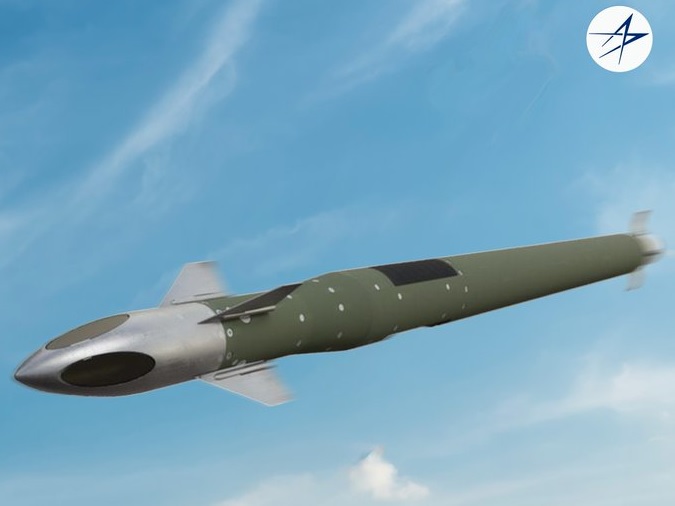
World
WHITE SANDS MISSILE RANGE, New Mexico — May 12, 2026 : Lockheed Martin has successfully completed the Seeker Characterization Flight Test (SCFT) of its QuadStar missile under the U.S. Army’s Next-Generation Short-Range Interceptor (NGSRI) program, a key milestone in the effort to replace the legacy FIM-92 Stinger air defense missile system. The flight test was conducted at White Sands Missile Range and focused on validating the missile seeker’s ability to capture imagery, process signals onboard, and maintain target tracking throughout flight. According to the company, the QuadStar interceptor successfully demonstrated seeker performance at ranges exceeding the capabilities of the current Stinger system. During the test, the missile was launched from a Command Launch Assembly (CLA) and flown along a tactical flight trajectory. The evaluation also confirmed CLA performance, critical system functionality, seeker integration, and interceptor guidance performance. The QuadStar missile is being developed as a next-generation short-range air defense interceptor for both man-portable and vehicle-mounted operations. The system is compatible with existing Stinger launcher architecture, including the CLA, allowing integration into current air defense frameworks with minimal changes. The interceptor design is based on Lockheed Martin’s Miniature Hit-to-Kill technology heritage and incorporates a low-drag, highly maneuverable airframe. The missile uses a tapered 70-millimeter rocket motor section integrated with an advanced imaging infrared seeker designed to engage unmanned aerial vehicles, rotary-wing aircraft, and fixed-wing threats. According to program details, the QuadStar interceptor demonstrated an intercept range more than double that of the legacy Stinger system in tested scenarios. The missile also offers higher speed, shorter time of flight, and improved lethality compared with the Stinger’s approximately 3-kilogram high-explosive fragmentation warhead. The Command Launch Assembly includes several new features, including an integrated Identification Friend or Foe antenna built directly into the launcher housing, removing the need for external antenna components. The launcher also incorporates advanced optics and AI-assisted fire-control software intended to improve target acquisition and reduce operator workload by eliminating manual lead and superelevation calculations. Unlike the Stinger system, the QuadStar missile does not require a Battery Cooling Unit. The seeker system uses AI-driven signal processing and a modern open-systems architecture intended to support affordability, modular upgrades, and rapid software updates. The missile is also designed for integration into Maneuver Short-Range Air Defense platforms used by the U.S. Army. The SCFT was completed approximately three months after the QuadStar program’s first flight test in January 2026, also conducted at White Sands Missile Range. Development of the interceptor has progressed from contract award in 2023 to the current milestone in roughly three years. The NGSRI program remains a competitive U.S. Army effort involving both Lockheed Martin and RTX Corporation, formerly Raytheon, to develop a replacement for the Stinger missile system as part of future short-range air defense modernization plans. Randy Crites, vice president of Lockheed Martin Advanced Programs, stated that the successful test demonstrated continued progress toward delivering a next-generation interceptor capable of supporting U.S. and allied forces. Chris Murphy, business development lead for Lockheed Martin NGSRI, said the completion of seeker characterization in under six months reflected the development speed and manufacturing focus of the program. The U.S. Army plans to conduct operational demonstrations involving both competitors during fiscal year 2026, while a production decision for the NGSRI program is expected in fiscal year 2027. No additional timeline for future QuadStar flight tests has been released.
Read More → Posted on 2026-05-12 14:28:10
World
EVENDALE, Ohio — May 12, 2026 : GE Aerospace announced on May 11, 2026, that it has successfully completed the Assembly Readiness Review (ARR) for its XA102 adaptive cycle engine, marking a major milestone in the development of next-generation propulsion systems for the United States Air Force. The review confirms that the XA102 program has reached the required level of design maturity and production readiness to advance into hardware assembly, procurement, and physical prototyping under the U.S. Air Force’s Next Generation Adaptive Propulsion (NGAP) program. The Assembly Readiness Review is a formal engineering and manufacturing evaluation conducted before the start of physical engine assembly. The process verifies that all required production systems, tooling, manufacturing plans, measurement systems, supplier networks, and workforce preparation are fully established and capable of supporting hardware fabrication and testing activities. Completion of the ARR also confirms that GE Aerospace has validated the XA102’s engineering architecture and reduced major structural and manufacturing risks before entering the demonstrator phase. With the review complete, the company will proceed toward assembly and testing of a full-scale XA102 demonstrator engine later in 2026. Adaptive Cycle Engine Design The XA102 is a three-stream adaptive cycle engine designed to provide improved fuel efficiency, greater operational range, higher thrust output, and enhanced thermal management compared with conventional fighter aircraft engines. Unlike traditional turbofan engines that operate with a fixed bypass ratio, the XA102 can dynamically adjust airflow during flight through a variable third-stream architecture. During subsonic cruise operations, airflow is directed into a third bypass stream to improve fuel efficiency and extend aircraft range. During high-performance combat operations, airflow can be redirected into the core and fan streams to maximize thrust generation. The engine is estimated to operate in the 35,000 to 40,000-pound thrust class and is expected to provide approximately 20 percent greater thrust compared with current-generation fighter engines. Adaptive cycle technology developed through the program is also expected to deliver roughly 25 percent lower specific fuel consumption and more than 30 percent greater operational range compared with existing fighter propulsion systems such as the Pratt & Whitney F135 engine. Thermal Management and Advanced Materials A key feature of the XA102 design is its increased thermal management capability. Modern combat aircraft generate substantial heat from advanced radar systems, electronic warfare equipment, sensors, avionics, and future directed-energy systems. The XA102’s third airflow stream functions as an additional heat sink, allowing the engine to manage significantly larger thermal loads than current fighter engines. To withstand the extreme operating temperatures associated with advanced adaptive cycle propulsion, the engine incorporates Ceramic Matrix Composite (CMC) materials in critical turbine components. These lightweight materials are designed to tolerate higher temperatures while reducing overall engine weight and improving thermodynamic efficiency. Digital-First Development Approach The XA102 is the first engine in GE Aerospace’s history to be fully developed using Model-Based Systems Engineering (MBSE), a digital engineering methodology that replaces traditional two-dimensional engineering drawings with integrated three-dimensional digital models. These digital models contain detailed geometric data, tolerances, assembly instructions, and manufacturing information directly linked to computer-aided production systems. According to GE Aerospace, the ARR confirmed the successful completion of all model-based engine demonstrations associated with the first phase of the development program. The company stated that the digital-first approach is intended to reduce manufacturing errors, accelerate development timelines, and improve coordination across the supply chain. NGAP and NGAD Program Context The XA102 is being developed under the U.S. Air Force’s Next Generation Adaptive Propulsion program, which supports propulsion development for the planned Next Generation Air Dominance (NGAD) fighter and other future combat aircraft. The engine builds upon technologies originally developed under the earlier Adaptive Engine Transition Program through GE Aerospace’s XA100 demonstrator engine. GE Aerospace is currently competing against Pratt & Whitney, which is developing the competing XA103 adaptive cycle engine for the NGAP program. The ARR follows the successful completion of the XA102 Detailed Design Review in February 2025. No official timeline for full-scale flight demonstration testing has been publicly released. Dr. Steve “Doogie” Russell, Vice President and General Manager of Edison Works at GE Aerospace, stated that completion of the ARR demonstrates both the maturity of the XA102 engine design and the effectiveness of the company’s digital-first development strategy for next-generation military propulsion systems.
Read More → Posted on 2026-05-12 14:39:12
World
BUCHAREST — May 12, 2026 : Rheinmetall will present a wide range of military systems and industrial capabilities at the Black Sea Defense & Aerospace (BSDA) 2026 exhibition in Bucharest from May 13 to 15, as the company expands its role in NATO and European defense modernization programs. The biennial exhibition, held at the ROMAERO complex near Băneasa International Airport, will feature Rheinmetall products from its Vehicle Systems, Weapons and Ammunition, Electronic Solutions, and Naval Systems divisions under the theme “Freedom needs Enablers.” Lynx KF41 and Romanian Production Plans A major focus of Rheinmetall’s presentation will be the Lynx KF41 infantry fighting vehicle (IFV), equipped with the Lance turret, a 30 mm MK30-2/ABM automatic cannon, and the Main Sensor Slaved Armament (MSSA) weapon station. The platform has gained significant importance in Romania following the Romanian Ministry of National Defence’s selection of the Lynx KF41 in late April 2026 for a €3.4 billion procurement program intended to replace the country’s aging MLI-84 fleet. Under the agreement, Rheinmetall plans to manufacture 232 of the 298 planned vehicles locally at its Mediaș facility after acquiring a majority stake in Romanian defense manufacturer Automecanica Mediaș. The program includes local industrial participation, technology transfer, and integration of Romanian supply chains into the production process. Air Defense and Logistics Systems Rheinmetall will also showcase elements of its ground-based air defense portfolio, including the Oerlikon Skynex system equipped with the 35 mm Oerlikon Revolver Gun Mk3 using programmable Ahead airburst ammunition. The modular system is designed to counter drones, cruise missiles, rockets, and mortar threats at ranges of up to four kilometers. Rheinmetall stated that the system can be mounted on multiple tactical truck platforms and configured according to operational requirements. In the logistics segment, the company will display the HX 3 heavy military truck from its HX vehicle family. The platform is designed for high off-road mobility and supports modular payload configurations along with optional cabin protection levels for tactical and logistical missions. Soldier Modernization and Digital Integration In the field of soldier modernization, Rheinmetall is presenting the latest version of its Gladius 2.0 soldier system. The system integrates individual soldiers into digitally networked battlefield structures through the TacNet tactical management system. Rheinmetall stated that the platform uses artificial intelligence-assisted data processing to improve situational awareness, optimize sensor-to-shooter connectivity, and reduce cognitive workload while maintaining NATO interoperability standards. Expansion of Ammunition Production Ahead of BSDA 2026, Rheinmetall also highlighted ongoing investments aimed at expanding global ammunition production capacity amid increased demand from NATO member states and continued supply commitments to Ukraine. The company plans to increase annual production of 155 mm artillery ammunition to 1.1 million rounds by 2027 and 1.5 million rounds annually by 2030. Production capacity for 120 mm tank ammunition is expected to stabilize at 240,000 cartridges annually from 2027 onward, while medium-caliber ammunition output is projected to increase to 3.4 million cartridges by 2027 and 4 million by 2030. Rheinmetall said the expansion forms part of a broader strategy to establish a sovereign global munitions network capable of supporting long-term defense requirements and ensuring supply resilience during operational contingencies. Naval Systems and Black Sea Presence The exhibition will additionally highlight Rheinmetall’s growing naval sector activities following its March 2026 acquisition of Naval Vessels Lürssen (NVL). The company’s Naval Systems division now includes four specialized shipyards in northern Germany: Blohm+Voss and Norderwerft in Hamburg, Peene-Werft in Wolgast, and Neue Jadewerft in Wilhelmshaven. The division manages naval shipbuilding, coast guard vessels, life-cycle support operations, and the development of autonomous maritime systems for NATO and international customers. Rheinmetall also maintains engineering and operational activities in Egypt, Croatia, Brunei, Singapore, and Varna in Bulgaria, strengthening the company’s regional presence in Black Sea maritime modernization programs.
Read More → Posted on 2026-05-12 14:50:49
World
WASHINGTON — May 12, 2026 : The U.S. Navy has formally transitioned the Boeing Orca Extra Large Unmanned Underwater Vehicle (XLUUV) program from experimental development into planned fleet acquisition under its May 2026 shipbuilding plan, marking a major step in the Navy’s effort to integrate autonomous undersea systems into regular fleet operations. The updated shipbuilding plan includes procurement funding for two Orca XLUUVs in fiscal year 2027 and outlines a total acquisition target of 16 vehicles through fiscal year 2031 under the Future Years Defense Program (FYDP). The Navy has allocated $135.8 million for the initial FY2027 procurement and approximately $1.13 billion across the FYDP for the overall program. The Orca acquisition effort is being advanced alongside procurement plans for 47 Medium Unmanned Surface Vessels (MUSVs), reflecting the Navy’s broader strategy of distributed autonomous warfare. The concept is designed to extend operational reach in contested maritime regions, reduce exposure for crewed platforms, and improve survivability against peer naval threats, particularly in the Western Pacific. Cost Structure and Acquisition Strategy The May 2026 shipbuilding plan highlights the growing role of autonomous systems within the Navy’s future force structure. While the FYDP allocates $62.9 billion for 10 Virginia-class nuclear-powered attack submarines, the XLUUV program funds 16 autonomous vehicles for approximately $1.13 billion. Navy planning documents indicate that Virginia-class submarines will continue performing missions requiring crew judgment, nuclear endurance, high-speed maneuvering, and kinetic strike capabilities. In contrast, autonomous underwater systems such as the Orca are intended for persistent surveillance, seabed mapping, deception operations, mine warfare, and high-risk missions where the loss of an unmanned vehicle is operationally preferable to risking a crewed submarine. The acquisition model also reflects a change in Navy procurement practices. Under the revised approach, the Navy can separate the autonomous vehicle hulls and propulsion systems from military-unique payloads and classified mission equipment. This allows commercial suppliers to provide hulls and energy systems, while classified investment remains focused on autonomy software, underwater communications, targeting networks, and payload integration. Orca XLUUV Design and Technical Specifications The Orca XLUUV is a large pier-launched autonomous underwater platform rather than a submarine-launched vehicle. When combined with its modular payload section, the system measures approximately 85 feet (26 meters) in length. Boeing describes the base platform as a 51-foot autonomous underwater vehicle powered by a hybrid propulsion system combining advanced batteries with marine diesel generators. The vehicle has an operational range of up to 6,500 nautical miles, or approximately 12,000 kilometers, allowing long-duration deployments without direct support. A key feature of the Orca design is its 34-foot modular payload bay. The section includes integrated structural mounts, electrical power systems, and data interfaces that support rapid mission reconfiguration. The payload compartment is rated to carry up to 8 tons of dry payload weight. Because GPS signals are unavailable underwater and acoustic communications can expose a platform’s position, the Orca relies on a Kalman-filtered inertial navigation system supported by Doppler velocity logs and depth sensors. The navigation architecture is designed to support extended autonomous operations while maintaining low detectability. Mission Roles and Payload Capability The Navy has not publicly confirmed integration of fixed torpedo tubes, vertical launch systems, or onboard anti-ship missiles for the Orca platform. Instead, the vehicle’s operational role is based on interchangeable payloads and mission-specific systems. The clearest publicly identified mission for the Orca is covert naval mine deployment. In 2022, the Navy confirmed that the vehicle was designed for autonomous mine-laying operations. The program is closely associated with the Navy’s Hammerhead seabed anti-submarine warfare concept, which uses encapsulated torpedoes similar in principle to the Cold War-era CAPTOR mine system. Recent contract modifications indicate that additional Hammerhead systems are being pursued for operational fleet requirements by FY2027. The Orca’s payload capacity allows the Navy to deploy mines without committing a Virginia-class submarine, surface combatant, or crewed aircraft into heavily defended maritime zones. Beyond mine warfare, the Orca can carry deployable sonar arrays, seabed sensors, electronic warfare payloads, communications relay systems, decoys, and smaller unmanned underwater vehicles for inspection and mapping operations. The platform may also support underwater surveillance and situational awareness missions for carrier strike groups and submarine forces operating in contested regions. International Autonomous Undersea Programs The Navy’s transition of the Orca into fleet acquisition aligns with broader international investment in autonomous undersea warfare systems. In September 2025, Australia signed a five-year A$1.7 billion agreement with Anduril Industries Australia for the Ghost Shark XLUUV program. The platform is intended for intelligence, surveillance, reconnaissance, and strike operations. In December 2025, the Royal Navy accepted delivery of the XV Excalibur under Project Cetus. The 12-meter, 19-ton experimental vehicle recently participated in Exercise Talisman Sabre, where it demonstrated long-range remote operation capabilities and tested a quantum optical atomic clock navigation system for GPS-independent navigation. Meanwhile, China continues expanding its own autonomous underwater vehicle programs. Testimony presented in March 2026 to the U.S.-China Economic and Security Review Commission stated that Beijing is investing heavily in large unmanned underwater systems for denial operations in the South China Sea and around Taiwan. Chinese systems reportedly include XXLUUV platforms measuring up to 40 meters in length with estimated operational ranges of approximately 18,500 kilometers. Other publicly identified systems include the AJX-002 autonomous underwater vehicle and the smaller HSU-001 surveillance platform. Operational Constraints and Future Outlook Despite the transition into fleet acquisition, several operational challenges remain before large autonomous underwater systems are fully integrated into combat operations. Uncrewed underwater vehicles operating for extended periods must manage mechanical failures autonomously, navigate congested seabeds without escalation risks, maintain communications discipline, and execute payload delivery under rules of engagement that commanders can legally and operationally defend. The FY2027 procurement is therefore viewed as a measured step intended to establish production capacity and transition the Orca program beyond prototype development while operational procedures, reliability standards, and command frameworks continue to mature within the fleet.
Read More → Posted on 2026-05-12 15:10:47
World
WASHINGTON — May 12, 2026 : The United States Department of the Navy has officially confirmed that its future Trump-class battleships will utilize nuclear propulsion systems, according to the Navy’s newly released annual 30-year shipbuilding plan. The decision formally redesignates the project as a new class of nuclear-powered guided-missile battleships under the hull classification BBGN. The development, first reported by USNI News and further detailed by The War Zone, represents the first official confirmation that the Trump-class vessels will incorporate nuclear reactors as part of the administration’s broader “Golden Fleet” naval expansion initiative announced in late 2025. Procurement Timeline and Fleet Expansion Under the current procurement schedule, the lead vessel of the class, USS Defiant (BBG-1), is expected to be ordered during fiscal year 2028, with commissioning projected for 2036. The Navy plans to acquire a total of 15 Trump-class battleships between fiscal years 2028 and 2055. Current construction planning anticipates the production of approximately one vessel every two years, although procurement pauses are expected during fiscal years 2030 and 2031. Naval officials have stated that the Trump-class will serve as a core component of the Navy’s long-term fleet expansion strategy and will operate alongside aircraft carrier strike groups rather than replace existing destroyers. Cost and Industrial Requirements The Trump-class program is projected to become the most expensive surface combatant effort in U.S. naval history. Preliminary estimates place the cost of each vessel at approximately $17 billion due to the integration of nuclear propulsion systems, hypersonic missile launch capability, electromagnetic weapons, and advanced directed-energy combat systems. By comparison, construction costs for Gerald R. Ford-class aircraft carrier vessels generally range between $13 billion and $15 billion per ship. The project is also expected to place considerable strain on the United States naval industrial base. Currently, Newport News Shipbuilding remains the only U.S. shipyard capable of constructing nuclear-powered surface warships. The shipyard is already heavily committed to the construction of Ford-class aircraft carriers as well as Columbia-class submarine and Virginia-class submarine programs, raising concerns regarding production capacity for the future 35,000-ton battleships. Design and Technical Specifications According to specifications included in the shipbuilding plan, the Trump-class battleships will displace approximately 35,000 tons, making them nearly three times larger than modern Arleigh Burke-class destroyer Flight III destroyers. The ships are expected to measure between 256 and 268 meters in length, or approximately 840 to 880 feet, while maintaining speeds exceeding 30 knots to enable operations alongside carrier strike groups. The class will also include expanded aviation facilities capable of supporting aircraft such as the Bell Boeing V-22 Osprey and future vertical lift helicopter platforms. Weapons and Combat Systems The Trump-class battleships are designed primarily as long-range strike platforms equipped for conventional, nuclear, and hypersonic warfare missions. The ships’ primary strike capability will center on a 128-cell universal vertical-launch system capable of deploying conventional cruise missiles, nuclear-capable weapons, and hypersonic missile systems. Planned armaments include the Conventional Prompt Strike (CPS) hypersonic missile system and the Surface-Launched Cruise Missile-Nuclear (SLCM-N). Secondary weapons systems are expected to include a 32-megajoule electromagnetic railgun, two 127-millimeter naval artillery mounts, and advanced directed-energy combat lasers designed to intercept drones, cruise missiles, and aerial threats. Naval command officials have stated that the BBGN class will function not only as a strike platform but also as a decentralized command center capable of autonomous deployment during open-ocean operations. Advanced communications and electronic warfare systems are expected to support distributed naval warfare operations across large maritime regions. Nuclear Propulsion Decision The Navy’s decision to adopt nuclear propulsion was driven primarily by the significant electrical demands generated by the ship’s onboard combat systems. Officials concluded that conventional propulsion systems would not provide sufficient sustained electrical output for electromagnetic railguns, high-powered combat lasers, and advanced electronic warfare suites. The use of nuclear reactors is also expected to support continuous operation of directed-energy defenses, allowing the fleet to reduce reliance on expensive interceptor missiles during large-scale drone or cruise missile attacks. The final approval for nuclear propulsion followed leadership changes within the Department of the Navy, including the departure of former Navy Secretary John Fallon, who had previously described the nuclear option as unlikely because of cost and industrial limitations. Despite earlier internal concerns regarding technical complexity and long-term expense, the administration directed the Navy to pursue maximum technological capability for the Trump-class program as part of broader fleet modernization efforts.
Read More → Posted on 2026-05-12 15:22:38 GA-ASI and US Air Force Successfully Test MQ-9A Reaper with APKWS Rockets for Counter-Drone Missions
World
NEVADA — May 12, 2026 : General Atomics Aeronautical Systems, Inc. (GA-ASI) and the United States Air Force have successfully completed a series of flight tests integrating the AGR-20 Advanced Precision Kill Weapon System II (APKWS II) onto the MQ-9A Reaper remotely piloted aircraft during trials conducted at the Nevada Test and Training Range (NTTR). The tests demonstrated the MQ-9A’s ability to engage both aerial and ground targets using laser-guided 70 mm rockets launched from a specialized LAU-131 A/A rocket pod. According to GA-ASI, multiple firing profiles and engagement scenarios were conducted during the evaluation, with all launches performed successfully by MQ-9A crews. Released imagery from the trials showed the aircraft equipped with inert AGR-20 APKWS rockets mounted inside the extended seven-shot launcher pod. The integration effort is part of an expanding U.S. military focus on developing lower-cost and persistent airborne solutions for Counter-Unmanned Aircraft Systems (C-UAS) missions, particularly against one-way attack drones and Group 3 unmanned aerial systems increasingly encountered in operational theaters across the Middle East and Red Sea region. GA-ASI stated that the project moved rapidly from initial planning to live flight testing in response to urgent operational adaptation requirements identified by U.S. Central Command. “We recognize the value that a system like APKWS brings to the MQ-9 aircraft as a tool to counter one-way attack drones,” said David R. Alexander, president of GA-ASI. “APKWS can increase the number of weapons the MQ-9A is able to carry, while also enabling the aircraft to employ lower-cost precision-guided weapons.” MQ-9A Reaper Expands Counter-Drone Role The MQ-9A Reaper is primarily used for intelligence, surveillance, reconnaissance, and strike operations. The aircraft features six external hardpoints and a payload capacity of approximately 3,850 pounds. When equipped with LAU-131 A/A launcher pods carrying seven APKWS rockets each, the aircraft could potentially carry up to 42 guided rockets, significantly increasing available ammunition capacity for sustained drone defense missions. The aircraft’s long endurance remains one of its primary operational advantages. The MQ-9A can remain airborne for more than 27 hours without aerial refueling, operate at altitudes up to 50,000 feet, and reach speeds of approximately 240 knots true airspeed. By comparison, manned fighter aircraft commonly assigned to counter-drone combat air patrols — including the F-16 Fighting Falcon, F-15E Strike Eagle, and A-10C Thunderbolt II — require significantly higher operating costs and more extensive aerial refueling support to maintain prolonged patrol operations. Operating costs for the MQ-9A are estimated between $3,000 and $4,000 per flight hour, compared with approximately $20,000 to $30,000 per hour for fighter aircraft. The use of the MQ-9A in the C-UAS role is intended to reduce operational costs while freeing crewed fighter platforms for higher-priority missions in contested airspace environments. A recognized limitation of the MQ-9A remains its lower cruise speed of roughly 200 knots, which reduces response time against distant or fast-moving aerial threats compared with supersonic fighters. However, its endurance and larger available ammunition capacity are considered advantageous for defending against drone swarm attacks and prolonged saturation strike operations. APKWS II Provides Lower-Cost Precision Capability The APKWS II system, produced by BAE Systems, converts standard Hydra 70 unguided rockets into precision-guided munitions through the insertion of a laser guidance section between the Mk66 Mod 4 rocket motor and the rocket’s 10-pound high-explosive warhead. The guidance section contains four foldable wings equipped with Distributed Aperture Semi-Active Laser Seeker optics, allowing the rocket to track moving or stationary laser-designated targets without requiring major modifications to the original rocket body, launcher, or aircraft fire-control system. The APKWS guidance kit is estimated to cost approximately $15,000, with the complete rocket significantly less expensive than conventional air-to-air missiles such as the AIM-120 AMRAAM and AIM-9X Sidewinder, which cost hundreds of thousands to more than one million dollars per round. The integration is intended to address the growing “cost-per-kill” imbalance faced by modern militaries using expensive interceptor missiles against low-cost drones. The larger magazine capacity provided by APKWS-equipped launcher pods is also viewed as critical for countering swarm attacks and multi-directional drone assaults increasingly observed in recent conflicts. The recent MQ-9A tests follow earlier demonstrations conducted by GA-ASI in 2025 using the MQ-1C Gray Eagle STOL variant, which also successfully employed APKWS rockets against aerial drone targets during C-UAS flight trials.
Read More → Posted on 2026-05-12 15:49:31
World
DAYTON, Ohio — May 12, 2026 : The United States Air Force has formally transitioned its experimental Rapid Dragon palletized munitions initiative into an official Program of Record (PoR) under the new designation “Dragon Cart,” marking a significant step toward operational deployment of cargo aircraft-based long-range strike capabilities. The transition was announced by the Air Force Life Cycle Management Center (AFLCMC) on April 30, 2026, following the formal transfer of program oversight from the Air Force Research Laboratory (AFRL) to the AFLCMC Combat Readiness Directorate on April 1. Program of Record status secures future congressional funding and establishes Dragon Cart as an officially fielded Air Force capability. Dragon Cart is scheduled to enter operational service in 2027 through the Middle Tier Acquisition (MTA) Rapid Fielding pathway. The system allows cargo aircraft, including the Lockheed C-130J Super Hercules and Boeing C-17 Globemaster III, to deploy palletized standoff missiles using standard airdrop equipment and a government-owned Battle Management System. Under the concept, missile launch modules are loaded onto pallets inside cargo aircraft and released through the rear cargo ramp during flight. Once deployed, the munitions separate from the pallet system and initiate powered flight toward designated targets. The approach enables conventional mobility aircraft to operate as long-range strike platforms without permanent structural modification. JiaJia Lee, Dragon Cart program manager, stated that the capability provides “operational ambiguity, adversary deterrence and additional command options to maximize operational effects.” Lee added that the system gives the Air Force the ability “to transform mobility aircraft into powerful strike platforms,” expanding the operational utility of the airlift fleet. The Dragon Cart designation originates from the ancient Chinese Ji Long Che, a historical military catapult system capable of launching multiple projectiles simultaneously over extended distances. Family of Affordable Mass Munitions Selected for Dragon Cart To support large-scale deployment at lower cost, the Air Force has selected the Family of Affordable Mass Munitions (FAMM), developed under the Extended Range Attack Munition (ERAM) initiative, as the primary payload family for Dragon Cart operations. The program has since evolved into the FAMM-Beyond Adversary Reach (FAMM-BAR) framework. On April 20, 2026, the AFLCMC issued a Request for Information (RFI) seeking industry proposals for a common air-to-surface missile capable of both palletized launch from cargo aircraft and conventional lugged carriage on fighters and bombers. According to the requirement, the Air Force is seeking a munition optimized for engaging slow-moving maritime targets with a minimum range of 1,000 nautical miles and mid-course navigation capability. The service is also targeting production capacity between 1,000 and 2,000 missiles annually over a five-year period for U.S. and allied military customers. Multiple Defense Firms Developing Compatible Weapons Several defense companies are currently developing weapons intended for integration with the Dragon Cart framework. Zone 5 Technologies is advancing the AGM-188A Rusty Dagger, a low-cost cruise missile initially developed under the ERAM initiative for potential Ukrainian requirements. The missile recently completed live-warhead testing, while Team Eglin Test Enterprise finalized F-16 integration and release trials in March 2026. Leidos received the AGM-190A designation for its Black Arrow small cruise missile in February 2026. Previous testing from a C-130 platform demonstrated a standoff range exceeding 400 nautical miles. CoAspire is developing the Rapidly Adaptable Affordable Cruise Missile (RAACM) and its extended-range RAACM-ER variant. The company unveiled the extended-range model during the Sea-Air-Space 2026 conference in April. The missile features an additively manufactured fuselage intended for rapid forward production and can be launched from aircraft, submarines, and surface vessels. Lockheed Martin continues development of its Common Multi-Mission Truck (CMMT) architecture, including the unpowered CMMT-D glide vehicle and the powered CMMT-X variant. Digital Engineering Accelerates Development A major component of Dragon Cart’s rapid transition into a Program of Record has been the Air Force’s use of Model-Based Systems Engineering (MBSE) combined with direct government ownership of engineering data and digital architecture. Kent Mueller, Dragon Cart systems engineering program manager, stated that maintaining control over the engineering framework allows rapid payload integration and modification without lengthy procurement delays. According to Mueller, if a payload requires a different launch configuration, engineers can digitally model the design, conduct load-path analysis, and transfer updated specifications directly to production vendors. The Air Force has described Dragon Cart as a “born digital” acquisition program that combines existing technologies within a government-controlled engineering structure to accelerate fielding and future upgrades. Program Builds on Years of Operational Testing Dragon Cart’s operational development follows multiple successful flight demonstrations conducted since 2021. In August 2021, the AFRL carried out representative palletized missile drops from a C-17A and EC-130SJ over White Sands Missile Range. In December 2021, an MC-130J Commando II deployed a four-cell Rapid Dragon pallet system over Eglin Air Force Base. A major milestone was achieved in November 2022 when an MC-130J assigned to the 352nd Special Operations Wing successfully launched a live AGM-158B JASSM-ER over the Norwegian Sea, demonstrating the operational viability of palletized long-range cruise missile deployment. Prototype contracts linked to the Dragon Cart expansion effort are expected to be awarded in late May 2026 as the Air Force moves toward operational deployment and expanded missile procurement.
Read More → Posted on 2026-05-12 15:56:04
World
WASHINGTON — May 12, 2026 : The U.S. Justice Department has intensified its investigation into former CIA Director John Brennan over his role in the drafting of the January 2017 Intelligence Community Assessment (ICA) that concluded Russia interfered in the 2016 U.S. presidential election in an effort to support Donald Trump. As part of the expanding inquiry, the FBI has begun questioning current and former CIA officials involved in preparing the assessment. According to reports, agents from the FBI’s Miami field office recently conducted interviews at CIA headquarters in McLean, Virginia, with approximately a dozen intelligence officers contacted so far. Additional interviews are expected in the coming weeks. Federal investigators are examining whether Brennan made false statements during congressional testimony in May 2023 concerning the inclusion of the “Steele dossier” in the intelligence assessment. The dossier, compiled by former British intelligence officer Christopher Steele and funded by political opponents of Trump, contained unverified allegations regarding Trump’s alleged ties to Russia. The investigation stems from a criminal referral submitted in October 2025 by the Republican-led House Judiciary Committee, chaired by Representative Jim Jordan. The committee alleged that Brennan falsely testified that the CIA did not rely on the Steele dossier in producing the ICA and that the agency had opposed its inclusion in the report. According to the committee’s interpretation of declassified intelligence records, Brennan allegedly overruled objections from senior CIA analysts who argued that the dossier failed to meet established intelligence tradecraft standards. Investigators are examining claims that Brennan ultimately approved attaching a summary of the dossier to the assessment as a classified annex despite those objections. Brennan has consistently denied that the dossier served as a foundational source for the assessment’s core conclusions. He and former intelligence officials have maintained that the CIA opposed including the dossier in the main body of the report because its sourcing could not be verified. Brennan has stated that the classified annex was included as part of a compromise requested by the FBI. The Justice Department has reportedly moved beyond voluntary interviews and has begun issuing formal grand jury subpoenas to cooperating witnesses. Earlier subpoenas were also issued to Brennan, former FBI counterintelligence official Peter Strzok, and former FBI attorney Lisa Page. The probe is currently being overseen by the U.S. Attorney’s Office for the Southern District of Florida and is being managed through the Miami office. Recent personnel changes in the investigation reportedly included the appointment of conservative attorney Joe DiGenova following the removal of a career prosecutor previously handling the case. The 2017 ICA was jointly produced by the CIA, FBI, and National Security Agency (NSA) under the Office of the Director of National Intelligence. The assessment concluded that the Russian government directed a coordinated influence campaign aimed at undermining public confidence in the U.S. democratic process and showed a preference for Trump during the 2016 election. The investigation has expanded under the Trump administration, which has repeatedly criticized the intelligence community’s conclusions regarding Russian election interference. Trump has frequently described the original Trump-Russia investigations as politically motivated. Critics of the current Justice Department inquiry argue that the administration is using prosecutorial authority to revisit previously examined matters and target political opponents. They note that while earlier reviews identified significant flaws in aspects of the FBI’s investigative process, multiple official inquiries upheld the core conclusions of the 2017 intelligence assessment. Among those reviews were investigations conducted by former Special Counsel Robert Mueller, Special Counsel John Durham, and the bipartisan Senate Select Committee on Intelligence. The Senate committee concluded in its multi-year review that the 2017 assessment was a professionally produced and unbiased intelligence product and affirmed that Russia interfered in the 2016 election. No criminal charges have been filed against Brennan, and the FBI and Justice Department have not publicly commented on the ongoing investigation.
Read More → Posted on 2026-05-12 16:03:49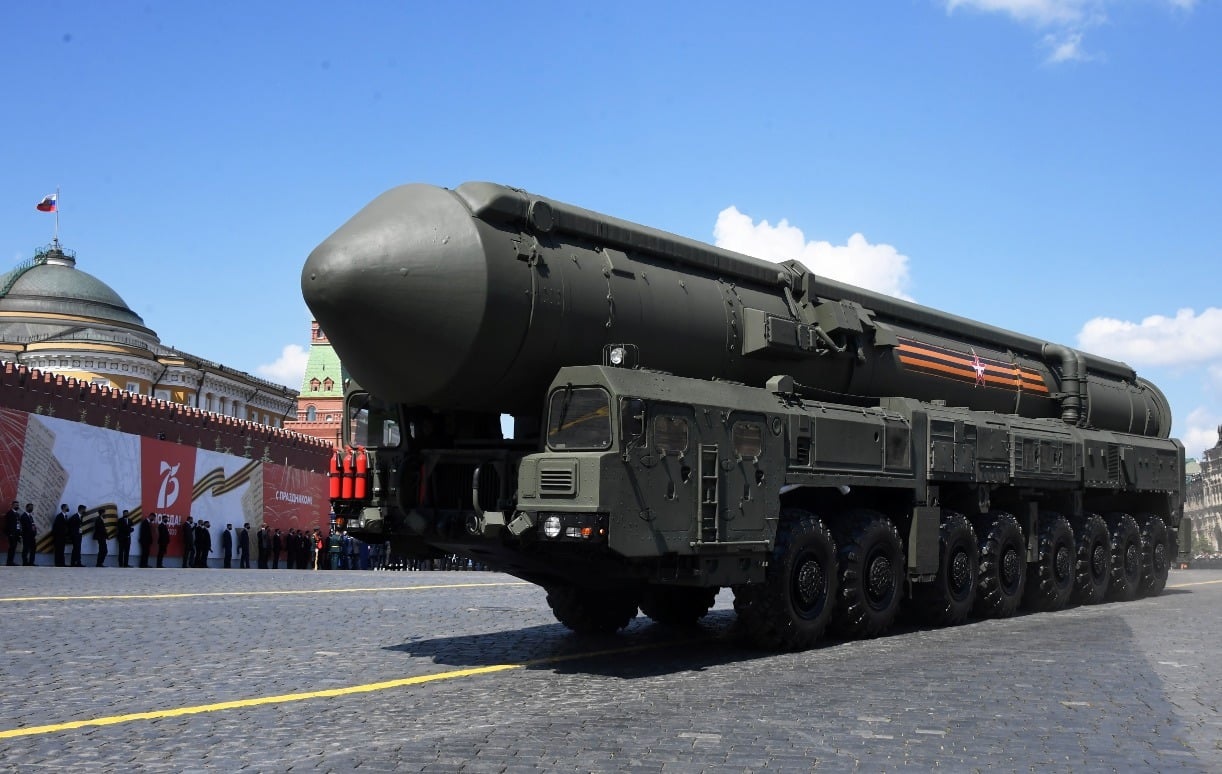
World
MOSCOW — May 12, 2026 : Russian President Vladimir Putin announced on May 12 that Russia had successfully conducted a test launch of the RS-28 Sarmat intercontinental ballistic missile (ICBM), confirming that the first regiment equipped with the system will officially enter combat duty by the end of 2026 as part of a broader modernization of the country’s strategic nuclear forces. The launch was conducted from the Plesetsk Cosmodrome, with Strategic Missile Forces Commander Sergei Karakayev reporting that the missile completed all assigned objectives during the test. Russian authorities stated that the first Sarmat regiment will be deployed with the Uzhur missile division in Krasnoyarsk Krai. During a televised briefing with senior military officials, Putin described the Sarmat as the most powerful missile system currently in existence and said it is intended to replace the Soviet-era R-36M2 Voyevoda, known in NATO terminology as the “Satan” missile system. According to Russian officials, the liquid-fueled, silo-based ICBM is capable of carrying multiple independently targetable reentry vehicles (MIRVs) as well as hypersonic glide vehicles. Putin stated that the missile can travel along both traditional ballistic and suborbital trajectories, with an operational range exceeding 35,000 kilometers when using a suborbital flight path. Russian leadership further claimed that the total yield of the warheads carried by the Sarmat is more than four times greater than that of the most powerful comparable Western systems currently in service. Officials stated that the missile surpasses its predecessor in flight range, throw-weight capacity, launch readiness, and onboard countermeasure systems designed to penetrate existing and future anti-missile defense networks. Putin linked the development of the Sarmat and other advanced strategic systems to the United States’ withdrawal from the Anti-Ballistic Missile (ABM) Treaty in 2002, stating that the move forced Russia to accelerate the development of new deterrence capabilities. He added that Russia’s strategic missile and nuclear modernization programs are advancing across multiple sectors and asserted that no Western equivalents currently exist for several of Russia’s newest systems. Alongside the Sarmat update, Russian officials also provided status reports on other strategic weapons programs currently under development or operational deployment. The Oreshnik intermediate-range ballistic missile system has officially entered active combat duty, according to the Kremlin. Russian authorities stated that the hypersonic-capable missile system can be equipped with nuclear warheads and is intended to strengthen regional deterrence capabilities. Officials also confirmed that testing work is nearing completion for two experimental systems powered by compact nuclear propulsion units. These include the Poseidon autonomous underwater vehicle and the Burevestnik global-range cruise missile, both of which are designed for extended-range strategic operations. In addition, Russia announced that modernization work continues on the Kh-47M2 Kinzhal air-launched hypersonic missile system. The missile, which entered service in 2017 and has been used in ongoing military operations, is reportedly undergoing accuracy improvements for missions involving conventional, non-nuclear warheads. The scheduled deployment of the Sarmat missile regiment in 2026, combined with the operational status of the Oreshnik and Kinzhal systems and the continued development of Poseidon and Burevestnik, reflects Russia’s ongoing transition toward a new generation of strategic deterrence platforms.
Read More → Posted on 2026-05-12 16:46:01
World
BYDGOSZCZ, Poland — May 12, 2026 : Poland’s state-owned defense conglomerate Polska Grupa Zbrojeniowa (PGZ) has signed agreements with American defense companies General Dynamics Ordnance and Tactical Systems and Paramount Enterprises International Inc. to establish domestic assembly and future production capabilities for Hydra 70mm rockets in Poland. The agreements were signed through PGZ subsidiary Nitro-Chem S.A. and are aimed at creating a production and logistics hub for the Hydra 70 rocket system at the company’s facility in Bydgoszcz. The project forms part of Poland’s broader strategy to expand domestic ammunition manufacturing capacity and strengthen supply chain resilience for future military operations. Under the first phase of the initiative, Hydra 70 rockets will be assembled in Poland using components supplied directly by General Dynamics. Later phases are expected to transition toward full domestic manufacturing, with Polish suppliers and additional PGZ subsidiaries gradually integrated into the production chain. The Polish Ministry of National Defense is expected to become the primary customer for the rockets, although PGZ officials have indicated that future exports to allied countries are also being considered. Linked to Apache Helicopter Acquisition The program is closely connected to Poland’s acquisition of 96 Boeing AH-64E Apache Guardian attack helicopters from the United States under a multi-billion-dollar Foreign Military Sales agreement finalized with Washington. The Hydra 70 is a standard air-to-ground munition used by the Apache platform, and local production is intended to ensure a secure and sustainable ammunition supply for the future fleet. Poland has accelerated military modernization programs following Russia’s 2022 invasion of Ukraine, with particular emphasis on expanding domestic production of ammunition and precision-guided weapons. Multi-Role Operational Use PGZ President Adam Leszkiewicz stated that the Hydra 70 rockets are expected to support multiple operational roles across the Polish Armed Forces. According to Leszkiewicz, the rockets will arm Poland’s future Apache helicopter fleet while the guided APKWS variant will also serve as a cost-effective counter-drone interceptor for the SAN air defense system. He additionally noted that Ukrainian aircraft are currently employing Hydra rockets against Russian attack drones and suggested that Poland’s Air Force may consider adopting similar operational concepts in the future as a lower-cost alternative to more expensive missile systems. The combination of helicopter armament, air defense integration, and potential aviation applications is expected to create significant long-term production demand for the system. Hydra 70 and APKWS Capabilities The Hydra 70 is a 2.75-inch (70mm) fin-stabilized unguided rocket family powered by the Mk 66 solid-propellant rocket motor. In its standard configuration, the rocket is designed for use against soft targets and lightly armored vehicles from helicopters and fixed-wing aircraft. The rocket’s operational flexibility is expanded through the Advanced Precision Kill Weapon System (APKWS), developed by BAE Systems. The APKWS adds a laser-guidance section between the rocket motor and warhead, converting the standard unguided rocket into a precision-guided munition capable of engaging point targets, including unmanned aerial vehicles. The guidance kit uses Distributed Aperture Semi-Active Laser Seeker technology integrated into deployable control canards, allowing the rocket to strike targets with improved accuracy while remaining significantly less expensive than dedicated anti-air or anti-armor missiles. Expanding Domestic Defense Production Poland currently allocates approximately 4.3 percent of its GDP to defense spending, making it one of NATO’s highest military spenders relative to economic output. The government has increasingly prioritized local ammunition and weapons production after observing the high ammunition consumption rates seen during the war in Ukraine. The Hydra 70 production initiative is expected to support Poland’s long-term objective of reducing dependence on foreign wartime supply chains while strengthening the country’s domestic defense-industrial base for sustained high-intensity military operations.
Read More → Posted on 2026-05-12 16:53:17
World
WASHINGTON — May 12, 2026 : The United States Navy is set to begin development of a new Long Range Anti-Submarine Warfare Weapon (LRAW) under its Fiscal Year 2027 Research, Development, Test and Evaluation (RDT&E) budget, according to newly released budget documentation. The program is intended to expand the Navy’s long-range anti-submarine warfare capability and eventually replace or supplement existing vertically launched anti-submarine weapons currently in service. The LRAW program has been approved as a new-start initiative for FY2027 and will receive an initial allocation of $11.423 million. The funding will support preliminary design activities, engineering work, production of test articles, and modifications to existing Vertical Launch Anti-Submarine (VLA) rounds for testing and evaluation. Navy Seeks Greater Anti-Submarine Engagement Range The U.S. Navy currently relies on the RUM-139C Vertical Launch Anti-Submarine Rocket (VL-ASROC) as its primary ship-launched long-range anti-submarine warfare weapon. The system uses a rocket booster and guidance package to deliver a lightweight torpedo, including the Mk-46 or Mk-54, to a designated drop location before the torpedo enters the water by parachute and autonomously searches for enemy submarines. According to the FY2027 budget justification documents, the Navy identified insufficient operational range in current VLA systems as a major capability gap. Publicly available data places the RUM-139C’s maximum operational range at approximately 10 to 12 nautical miles, or roughly 19 to 22 kilometers. The Navy assessed that evolving undersea threats now require surface combatants to engage hostile submarines from significantly greater stand-off distances. Modern adversary submarines are increasingly equipped with advanced sensors and long-range heavyweight torpedoes, allowing them to threaten surface ships from beyond the effective engagement range of existing anti-submarine rockets. The Navy also noted that the active inventory of RUM-139 missiles is declining. Budget documents stated that limited maintenance funding has reduced the number of missiles being sustained in operational service, increasing the requirement for a modern replacement capable of future mass production. LRAW Expected to Build on Existing VL-ASROC Concept Although the final configuration of the weapon remains under development, defense analysts expect LRAW to retain a similar operational concept to the current VL-ASROC system. The new weapon is anticipated to use rocket-assisted delivery to transport an acoustic-homing lightweight torpedo, likely the Mk-54, to substantially greater distances before deployment into the water. The Navy has not yet disclosed details regarding the weapon’s propulsion system, target range objectives, guidance architecture, or planned operational timeline. However, the program is expected to significantly increase the anti-submarine reach of future U.S. surface combatants operating in contested maritime regions. Program Signals Deeper AUKUS Integration One of the most notable elements of the LRAW program is its apparent integration with the AUKUS trilateral security partnership involving the United States, United Kingdom, and Australia. The FY2027 development schedule for LRAW includes a reference to an “AUKUS RWG/TLR” review, likely referring to an AUKUS Requirements Working Group or Top Level Requirements review process. The inclusion suggests the weapon is being designed from the outset to meet interoperability requirements across all three allied navies. LRAW is expected to fall under AUKUS Pillar 2, which focuses on joint development and integration of advanced military technologies. Undersea warfare capabilities remain one of the primary focus areas within the Pillar 2 framework. MK-41 Compatibility Could Enable Allied Fleet Integration Compatibility with the MK-41 Vertical Launching System is expected to play a central role in the program’s multinational integration potential. The U.S. Navy and Royal Australian Navy already operate the MK-41 system extensively across multiple surface combatants, while the British Royal Navy plans to deploy strike-length MK-41 launch cells aboard its future Type 26 and Type 31 frigates. The United Kingdom has previously issued requests for information regarding long-range anti-submarine warfare weapons for future MK-41-equipped surface vessels. If LRAW maintains compatibility with the same launch architecture used by current VL-ASROC systems, integration across allied fleets could be achieved with relatively limited structural modifications. The Navy has not released additional technical information regarding the weapon at this early stage of development. However, the program represents a broader effort to restore and expand long-range organic anti-submarine warfare capability for U.S. and allied naval forces amid increasing undersea competition in strategically important maritime regions.
Read More → Posted on 2026-05-12 16:59:06
World
RESTON, Virginia — May 13, 2026 : Leidos has been awarded a $2.7 billion contract by the United States Army to transition key hypersonic weapons programmes from the prototyping stage into full-scale production, marking a significant step in the expansion of U.S. long-range strike capabilities. The contract consolidates the Thermal Protection Shield (TPS) and Common Hypersonic Glide Body (CHGB) programmes into a unified production framework intended to accelerate manufacturing timelines and improve coordination between suppliers supporting both the U.S. Army and the U.S. Navy. The CHGB serves as the maneuverable payload section of the hypersonic missile system and carries the warhead, navigation, and guidance components. It is the core element of the Army’s Long-Range Hypersonic Weapon system, known as “Dark Eagle,” as well as the Navy’s Conventional Prompt Strike programme. The TPS programme focuses on developing protective technologies designed to shield the glide body from the extreme heat and aerodynamic pressure generated during hypersonic flight. According to Leidos, integrating the two programmes under a single production structure is intended to support ongoing Army acquisition reform initiatives by reducing duplication across suppliers, simplifying logistics, and improving manufacturing efficiency. The company stated that the consolidation is expected to shorten production timelines while ensuring a stable supply of critical components for operational deployment requirements. Hypersonic weapons are capable of travelling at speeds greater than Mach 5 while maintaining maneuverability during flight, making them more difficult to track and intercept using conventional missile defence systems. The move into sustained production reflects continued Pentagon efforts to field operational hypersonic strike systems amid growing competition in advanced missile technologies. Leidos said it will apply its experience in guidance systems, sensor technologies, and precision munitions integration during the production phase. Through its subsidiary Dynetics, the company has served as the prime contractor for the CHGB programme since 2019 and for the TPS programme since 2021. In March 2026, the Army and Navy conducted joint testing of the hypersonic missile system associated with the programme, as both services continue efforts to accelerate deployment schedules for long-range hypersonic capabilities. “This contract is a major step forward in delivering hypersonic capabilities to the warfighter at speed,” said Cindy Gruensfelder, president of Leidos Defense. “Our team is committed to supporting the Army and Navy in producing this critical operational capability.” The agreement also supports the company’s NorthStar 2030 corporate strategy, which focuses on advanced military technologies, precision-strike systems, and integrated air and missile defence capabilities. Headquartered in Reston, Virginia, Leidos employs approximately 50,000 personnel worldwide and reported annual revenues of approximately $17.2 billion for the fiscal year ending January 2, 2026. The company stated that the programme is intended to support current and future operational requirements for both the U.S. Army and the U.S. Navy through expanded large-scale hypersonic weapons manufacturing.
Read More → Posted on 2026-05-13 13:51:48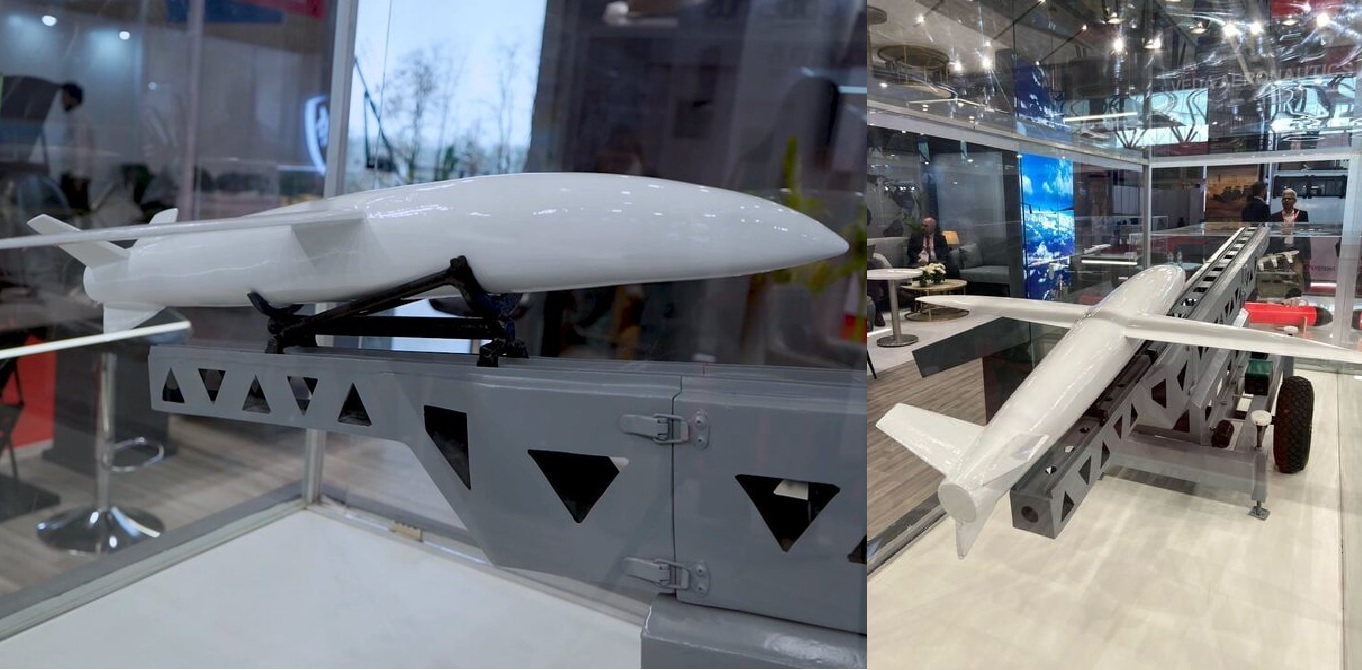
World
NEW DELHI, — May 13, 2026 : Indian defence start-up Veda Aeronautics has commenced delivery of the first batch of S-UMS Sureshastra Mk1 jet-powered swarm drones to the Indian Air Force under a ₹300 crore ($35.1 million) contract signed in August 2023 for the supply of 200 units. The deliveries, which began in April 2026, mark the start of operational induction of the indigenous loitering munition system developed under the IAF’s Mehar Baba Swarm Drone programme. The contract is currently the largest order awarded by the Indian military to a private-sector company for loitering munitions. Indigenous Jet-Powered Strike System The S-UMS (Smart Unmanned Munitions System) Sureshastra Mk1 is a jet-powered, fixed-wing kamikaze drone designed for long-range precision strike missions against high-value targets. The platform measures approximately 3.5 metres in length, features a 3-metre wingspan, and weighs around 90 kilograms in its fully loaded configuration. The drone is equipped with a 30 to 40-kilogram high-explosive warhead and operates at cruising speeds between 350 and 400 km/h. Designed with a low-observable V-tail configuration to reduce radar visibility, the system is launched using a rail or catapult-based platform. According to programme details, the Sureshastra Mk1 has an operational strike range exceeding 500 kilometres and is intended to engage targets such as enemy airfields, parked combat aircraft, radar installations, and command-and-control centres with precision. Swarm Intelligence and Multi-Role Capability A key feature of the Sureshastra Mk1 is its autonomous swarm warfare capability. The platform enables more than 20 drones to coordinate simultaneously during operations, exchange targeting data in real time, and execute synchronized attacks designed to saturate and overwhelm hostile air defence systems. The drone is also equipped with navigation systems capable of operating in GPS-denied environments, allowing continued mission execution under electronic warfare conditions. In addition to its primary strike role, the modular platform can be configured for Intelligence, Surveillance and Reconnaissance (ISR) missions, electronic warfare operations, and decoy missions intended to expose or distract enemy air defence assets. Development Under Mehar Baba Programme Development of the Sureshastra Mk1 originated from the Indian Air Force’s Mehar Baba Swarm Drone contest launched in 2018 to encourage indigenous development of advanced unmanned combat systems. Veda Aeronautics developed the platform in collaboration with the IAF and conducted extensive user trials in the Thar Desert prior to the contract award in 2023. The trials evaluated the drone’s swarm coordination, strike capability, and operational performance in desert conditions. The Indian Air Force has maintained strict operational security surrounding the programme. No official photographs or video footage of the weapon system or its user trials have been publicly released. Future Variants in Development Veda Aeronautics is currently expanding the Sureshastra programme for additional branches of the Indian Armed Forces. The company is developing a canister-launched variant for the Indian Army intended for integration with BMP-II infantry fighting vehicles. The company is also working on ship-launched variants for the Indian Navy as well as advanced air-dropped canisterised swarm systems for the Indian Air Force. The air-launched variant is being conceptualized for deployment from heavy transport aircraft such as the Boeing C-17 Globemaster III under the IAF’s Air Dropped Canisterised Swarm programme. According to development plans, the airborne deployment concept could potentially extend the system’s operational strike range to nearly 1,000 kilometres.
Read More → Posted on 2026-05-13 13:59:46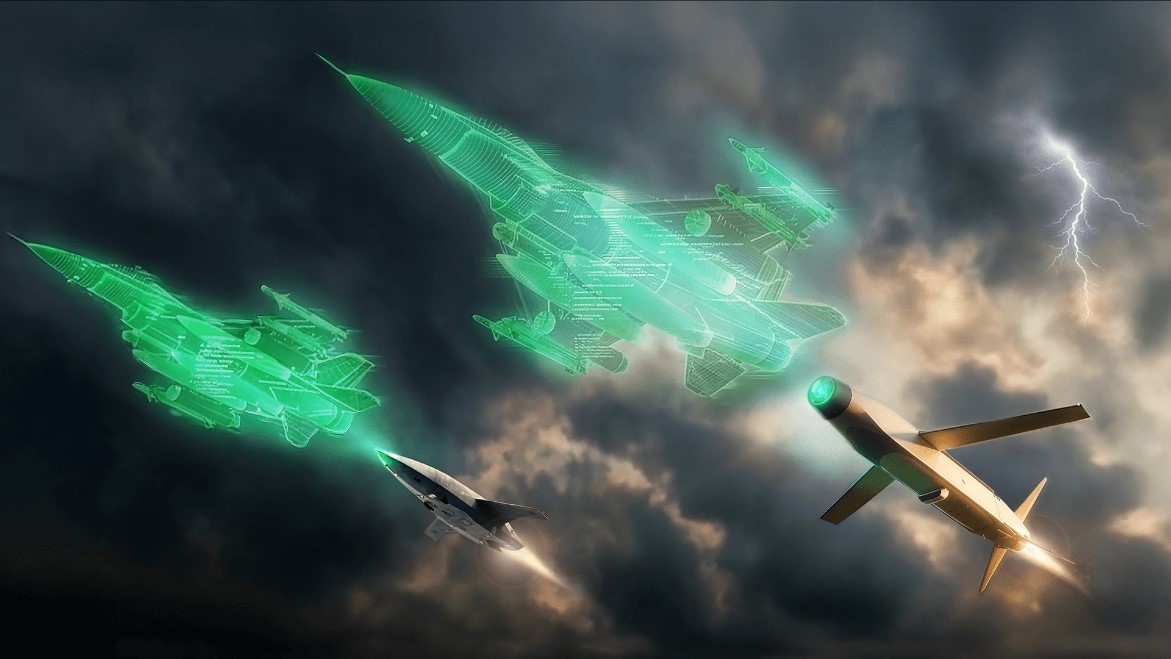
World
HELSINKI — May 13, 2026 : Rafael Advanced Defense Systems has unveiled STORM SHIELD, a miniature electronic warfare (EW) self-protection and deception system specifically developed for unmanned aerial platforms, during the AOC Europe 2026 Electronic Warfare conference in Helsinki, Finland. The system was introduced as part of Rafael’s broader electronic warfare portfolio showcased at the conference, which is being held from May 19–21 under the theme “Re-Arming Europe for Electromagnetic Spectrum Superiority.” STORM SHIELD is designed to address the growing operational vulnerability faced by unmanned aerial vehicles (UAVs) operating in increasingly contested electromagnetic environments. Designed for Contested Airspace Operations According to Rafael, modern integrated air defense systems and radar-guided threats have significantly increased the risks faced by UAVs operating without onboard electronic protection systems. The absence of compact, combat-proven active EW systems suitable for unmanned platforms has limited the operational reach and survivability of drones in high-threat environments. As military forces increasingly shift reconnaissance, strike, and support missions toward unmanned systems, the requirement for lightweight defensive technologies compatible with UAV size, weight, power, and cost constraints has become more urgent. Rafael stated that STORM SHIELD was specifically engineered to provide active self-protection and deception capabilities for UAVs operating in suppressed or degraded operational theaters. Autonomous Electronic Warfare Capability STORM SHIELD is a lightweight active electronic warfare suite capable of autonomously detecting, analyzing, and countering a wide range of radar-guided anti-aircraft threats. Once activated, the system continuously monitors the surrounding electromagnetic spectrum and automatically generates and transmits counter-signals without requiring operator intervention. The system provides full 360-degree spatial coverage, allowing protection regardless of the host platform’s orientation, altitude, or maneuver profile during flight operations. Rafael stated that the system also supports broad frequency coverage to address multiple threat categories simultaneously while maintaining continuous electromagnetic environment monitoring. Additional capabilities include advanced direction-finding functions and Digital Radio Frequency Memory (DRFM)-based deception techniques intended to disrupt or mislead hostile radar systems. AESA-Based Architecture and Miniaturized EW Technology At the hardware level, STORM SHIELD is built around an Active Electronically Scanned Array (AESA) transmitter architecture using solid-state receiver/transmitter modules. The system integrates advanced DRFM-based signal generation and electronic deception technologies derived from Rafael’s existing electronic warfare portfolio. According to the company, the technologies incorporated into STORM SHIELD have already been validated in operational service across multiple air and naval EW systems. Rafael stated that the miniaturized architecture was specifically adapted to meet the physical and power limitations associated with unmanned aerial platforms. The company noted that technologies from systems such as the SEWS-DV naval electronic warfare suite, the SKY SHIELD escort jamming pod, the LITE SHIELD self-protection jammer, and other airborne EW systems informed the development of STORM SHIELD. Modular Integration and Upgradeability Rafael stated that STORM SHIELD was designed with a fully modular architecture to simplify integration across a broad range of unmanned aerial platforms using standardized components. The system is fully programmable, allowing operators to install mission-specific software configurations before deployment based on operational requirements and anticipated threat environments. The company added that the EW suite was developed for long-term adaptability, maintainability, and future upgrades as UAV operational requirements continue to evolve. Rafael emphasized that STORM SHIELD is not being presented as a developmental concept, but rather as an operationally validated capability derived from electronic warfare technologies already fielded across its existing defense systems portfolio. Based in Israel, Rafael Advanced Defense Systems develops and manufactures advanced defense technologies across air, land, sea, space, and cyber domains, including missile defense systems, precision-guided munitions, electronic warfare systems, and integrated battlefield technologies.
Read More → Posted on 2026-05-13 14:07:31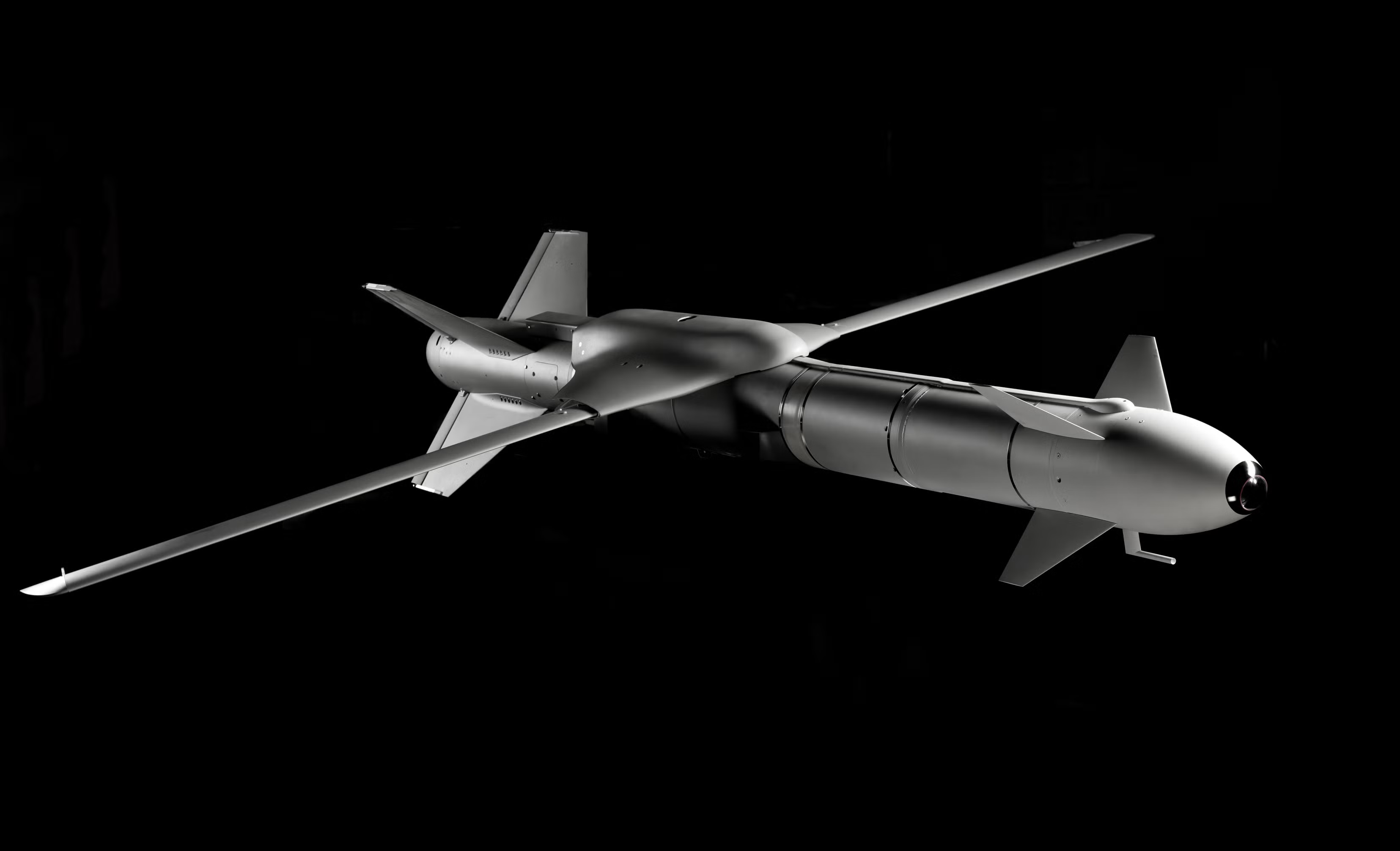
World
ISTANBUL, TÜRKIYE — May 13, 2026 : EDGE Group and Baykar have signed two strategic agreements at the SAHA 2026 International Defence, Aerospace and Space Industry Exhibition aimed at strengthening cooperation in unmanned combat aerial systems, precision-guided weapons integration, and international defence marketing initiatives. The agreements, announced during the SAHA 2026 exhibition held at the Istanbul Expo Center from May 4 to 8, focus on integrating EDGE’s AL TARIQ family of precision-guided munitions onto Baykar’s Bayraktar AKINCI unmanned combat aerial vehicle (UCAV), while also establishing a joint commercial framework allowing both companies to market products from each other’s defence portfolios. AL TARIQ Integration on Bayraktar AKINCI The primary agreement formalises the integration of EDGE’s AL TARIQ precision-guided munition family onto the Bayraktar AKINCI platform. The contract was signed by Hamad Al Marar, Managing Director and Chief Executive Officer of EDGE Group, and Haluk Bayraktar, Chief Executive Officer of Baykar. Under the agreement, Baykar will provide technical support, system integration, and demonstration services required to certify the compatibility of the AL TARIQ weapon system with the AKINCI UCAV platform. The companies stated that the integration is intended to expand operational flexibility and improve scalable precision-strike capabilities for AKINCI operators across a range of mission environments. The AL TARIQ family consists of modular precision-guided kits designed for Mk 81, Mk 82, and Mk 83 general-purpose aerial bombs. The system is designed for all-weather, day-and-night precision strike operations and offers stand-off engagement capability exceeding 120 kilometres in its long-range configuration equipped with wing kits. According to the companies, the munition family supports launch operations from altitudes up to 40,000 feet at speeds approaching Mach 0.9. Guidance options include GNSS-aided inertial navigation systems, with optional semi-active laser and imaging infrared seekers. The system is also designed to support automatic target recognition, moving target engagement, and strike accuracy of less than two metres circular error probable in certain configurations. The AKINCI platform is a high-altitude, long-endurance multirole unmanned combat aerial vehicle equipped with twin turboprop engines. The aircraft has a maximum take-off weight of 6,000 kilograms, payload capacity of 1,500 kilograms, operational range of approximately 6,000 kilometres, and endurance exceeding 24 hours. Joint Commercial and Cross-Selling Framework A second agreement signed during the exhibition establishes a formal framework for joint commercial cooperation and international marketing activities between the two defence companies. The agreement was signed by Yousef Al Blooshi and Murat Kilinc. The arrangement authorises both companies to include products from each other’s portfolios in future export campaigns and customer proposals. Officials stated that the framework is intended to create broader cross-selling opportunities across their wider defence product ranges while strengthening market access in international defence sectors. The companies said the partnership reflects increasing global demand for integrated defence solutions combining unmanned aerial platforms with advanced precision-guided weapon systems. Executive Statements Hamad Al Marar stated that the partnership reflects a broader transition within the defence industry toward integrated end-to-end operational systems. “The defence industry is moving towards integrated, end-to-end solutions, and this partnership with Baykar is a direct reflection of that,” Al Marar said. He added that combining EDGE’s smart weapon systems with the AKINCI UCAV platform would provide international operators with improved precision, scalability, and operational flexibility across complex mission environments. Haluk Bayraktar stated that Baykar’s ongoing integration of multiple munition types onto the AKINCI platform is intended to provide operators with a broader range of operational capabilities. “With this strategic collaboration, we are enhancing the capabilities of our platforms while further strengthening our global partnerships and leading position in the defence industry,” Bayraktar said. Expanding Strategic Defence Cooperation The agreements represent the latest phase in a broader strategic partnership between the UAE and Turkish defence industries focused on expanding precision-strike capabilities for unmanned aerial systems. The cooperation builds upon a previous agreement involving the integration of EDGE’s DESERT STING 16 guided-glide munition onto the Bayraktar TB2 platform. Baykar remains one of the world’s leading UAV exporters, with the company previously reporting export agreements with nearly 40 countries and export volumes exceeding $2.2 billion in recent years. EDGE Group continues to expand the UAE’s sovereign defence manufacturing sector through investments in autonomous systems, artificial intelligence, advanced smart weapons, and integrated defence technologies for international markets.
Read More → Posted on 2026-05-13 14:18:14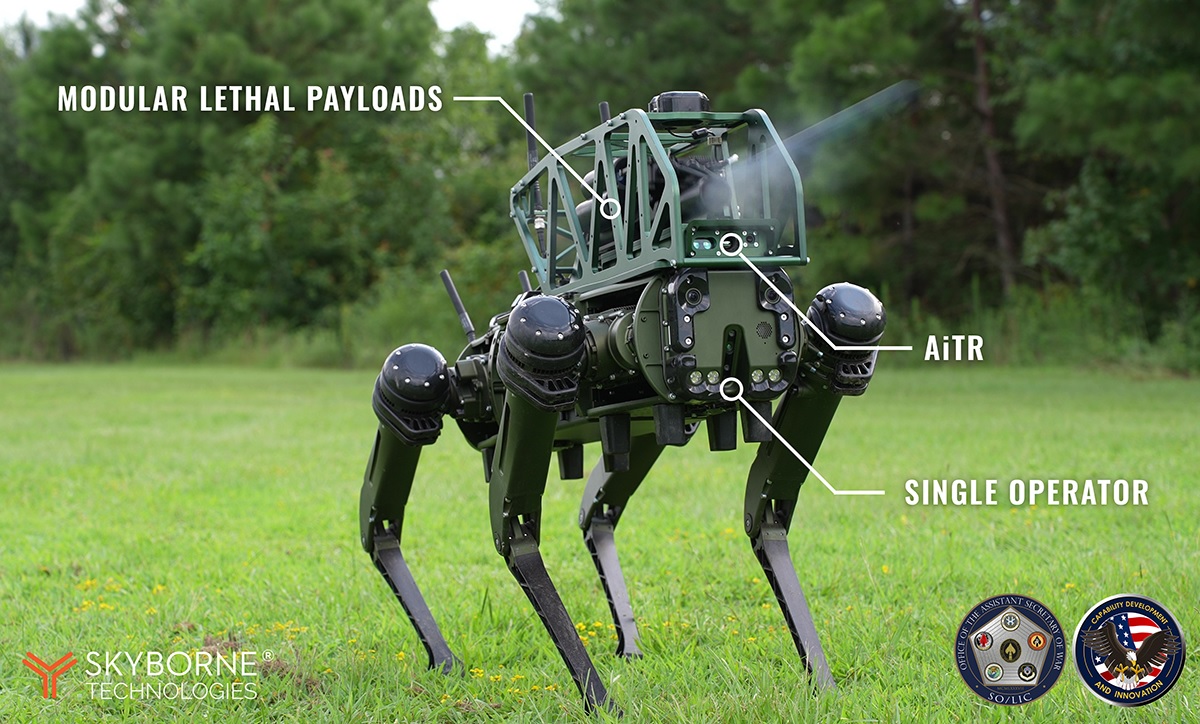
World
TAMPA, Florida — May 13, 2026 : Skyborne Technologies has received a U.S. Department of War Limited Safety Release for its Controller Operated Direct Action Quadruped (CODiAQ) armed unmanned ground system, clearing the platform to proceed into Operational Test and Evaluation (OT&E) and combat assessments with units from United States Special Operations Command (USSOCOM) and a partnered foreign ally. The milestone follows independent government testing conducted by the U.S. Army Test and Evaluation Center (ATEC) at Aberdeen Proving Ground. The evaluation confirmed that the armed robotic system met Department of War safety requirements for tactical operator handling and live weapon employment. The CODiAQ platform is based on the Ghost Robotics Vision 60 quadruped system, a four-legged unmanned ground vehicle designed for operations in terrain where wheeled and tracked systems face mobility limitations. The robot is intended for use in urban combat zones, subterranean environments, rubble-filled areas, and confined interior spaces frequently encountered during special operations missions. Modular Armed Configuration Skyborne Technologies has integrated modular weapon payloads into the CODiAQ platform, including the HAVOC 40mm grenade launcher and the CHAOS 12-gauge shotgun system. The modular design allows operators to rapidly change payloads depending on mission requirements. According to the company, the fully loaded system weighs approximately 66 kilograms with the HAVOC payload installed. The platform can be assembled within 10 minutes, while weapon swaps and reload procedures can be completed in approximately 90 seconds. The system provides an operational endurance of two hours and 15 minutes and is controlled by a single operator using a UXV Technologies SRoC Ground Control Station connected through a Silvus StreamCaster 4200 data link. The platform also incorporates onboard electro-optical and infrared sensors for targeting and navigation support. Safety Validation and AI-Assisted Targeting The armed variants utilize Skyborne’s proprietary EXITUS AI targeting software, which provides AI Target Recognition and Tracking (AiTR) capabilities to support rapid target identification and engagement assistance. Company officials stated that the system operates under a human-in-the-loop architecture, requiring direct operator authorization before weapon employment. The ATEC validation specifically assessed the fire control and safety mechanisms to ensure the robotic platform does not create unacceptable risk to nearby personnel during operations and testing. The CODiAQ platform is also equipped with a structural roll cage for rollover protection and meets IP67 and MIL-STD-810H environmental testing standards. The system is NDAA compliant and fully compatible with the Android Team Awareness Kit (ATAK) battlefield networking system. Contract Structure and Delivery Timeline The Limited Safety Release was granted under a $6.5 million firm-fixed-price research, development, test, and evaluation contract funded and managed by the Office of the Assistant Secretary of Defense for Special Operations and Low-Intensity Conflict. Under the agreement, Skyborne Technologies will deliver 14 CODiAQ systems and 28 modular weapon payloads. The contract also includes a 24-month sustainment package covering maintenance, hardware support, operator training, and maintainer instruction for both U.S. and allied personnel. Delivery will take place as a complete fielding package rather than through staggered shipments, allowing equipment, sustainment, and training to be integrated into a single operational handoff later in 2026. Michael J. Trexler, the Government Program Manager overseeing the effort, confirmed that live-fire operator training is scheduled for October 2026. “We are working closely with Skyborne to deliver CODiAQs and new equipment live fire training to our Tactical Operators in October 2026,” Trexler stated. “CODiAQ represents a deliberate and important step in armed robotic ground systems. This milestone allows the Department of War to rapidly assess operational utility with rigorous emphasis on system safety, operator control, and risk management during OT&E and combat evaluations.” Operational Role and Manufacturing The evaluation program will involve multiple Tactical Units of Action within USSOCOM alongside at least one allied foreign partner. The platform is intended for high-risk missions where robotic systems can reduce direct exposure of human operators during close-quarters combat and direct-action operations. Skyborne Technologies stated that the CODiAQ systems procured under the contract are manufactured in the United States, aligning with current Department of War priorities focused on domestic production, secure supply chains, and long-term sustainment resilience. The company is scheduled to publicly display the CODiAQ system during SOF Week 2026 in Tampa, Florida, from May 19 to 21 at the Australia Pavilion, Booth 721. Quadruped robotic systems have increasingly attracted military interest over the past decade, with platforms such as the Vision 60 undergoing various defense evaluations. However, the CODiAQ program’s progression into a formal safety-certified operational testing phase with USSOCOM represents one of the more advanced publicly disclosed procurement and evaluation efforts involving armed quadruped robotic systems.
Read More → Posted on 2026-05-13 14:30:03
World
JERUSALEM — May 13, 2026 : Israel and the United Arab Emirates reportedly expanded covert security and military coordination during the recent conflict with Iran, including intelligence sharing, missile defence cooperation, and joint operational planning, according to reports published on May 13, 2026. A report by The Wall Street Journal, citing Arab officials and sources familiar with the matter, stated that David Barnea conducted at least two undisclosed visits to United Arab Emirates during March and April 2026. The visits reportedly focused on coordinating wartime operations linked to the conflict, referred to in some Israeli reports as Operation Roaring Lion. The discussions reportedly involved intelligence coordination, missile defence integration, and planning for responses to Iranian military activity during the conflict. The cooperation represented one of the most extensive operational partnerships between Israel and the UAE since the signing of the Abraham Accords. Reported Covert Strikes on Iranian Targets During the conflict, the UAE reportedly carried out covert military strikes against Iranian infrastructure. One of the reported operations targeted an oil refinery on Lavan Island in early April 2026. The refinery is considered a major Iranian energy facility and processes approximately 200,000 barrels of condensate per day. Reports stated that Emirati Mirage 2000-9 fighter jets conducted the strike, causing extensive fires and significant operational damage at the site. The facility was reportedly forced to suspend much of its production capacity for several months following the attack. The UAE Ministry of Foreign Affairs did not directly comment on the reported operation. However, officials referenced previous statements emphasizing the country’s right to defend its security interests against hostile actions. According to regional reports, the strikes were conducted in response to repeated Iranian missile and drone attacks targeting Emirati civilian infrastructure and energy facilities during the conflict. Missile Defence Cooperation Following the reported strike on Lavan Island, Iran reportedly launched approximately 2,800 missiles and drones toward Emirati infrastructure and military targets. The escalation led to direct military coordination between Israel and the UAE in air and missile defence operations. U.S. Ambassador to Israel Mike Huckabee stated that Israel deployed an Iron Dome air defence battery along with Israeli military personnel to the UAE during the conflict. The system was reportedly used to intercept incoming Iranian missiles and drones targeting Emirati territory. The deployment marked the first reported operational use of the Israeli Iron Dome system and Israeli combat-support personnel on foreign soil. Israeli defence assistance to the UAE also reportedly included the Iron Beam laser-based defence system and the Spectro drone detection and surveillance platform. Real-time intelligence sharing between Israeli and Emirati officials regarding Iranian missile launch preparations and drone operations was also reportedly conducted throughout the conflict. Intelligence and Security Coordination Israeli media reports further stated that David Zini also traveled to the UAE during the war to coordinate intelligence and internal security matters with Emirati counterparts. The reported visits by Barnea and Zini highlighted the growing intelligence relationship between Israel and the UAE as both countries increased security coordination regarding Iran and regional military threats. Neither Israel nor the UAE has officially confirmed the reported visits by Israeli intelligence officials or the UAE’s alleged involvement in strikes against Iranian targets. However, the reports indicate a significant expansion in operational defence cooperation between the two countries during the conflict.
Read More → Posted on 2026-05-13 14:41:50
World
TAIPEI — May 13, 2026 : U.S. defense technology company Shield AI and Taiwan-based unmanned systems manufacturer Thunder Tiger Corporation have signed a memorandum of understanding to integrate AI-enabled autonomy software into Taiwan’s unmanned maritime platforms, beginning with the SeaShark family of unmanned surface vessels (USVs). The agreement was announced in Taipei on May 13, 2026, and marks a new step in Taiwan’s effort to expand autonomous maritime defense capabilities using domestically produced unmanned systems combined with U.S.-developed artificial intelligence software. The first phase of the partnership will integrate Shield AI’s Hivemind autonomy software into a Thunder Tiger USV, with a live AI-piloted maritime demonstration planned for later this summer. The initiative is intended to transition Taiwan’s maritime defense architecture from remotely operated drones toward coordinated autonomous systems capable of functioning in contested environments where communications and GPS signals may be degraded or disrupted. The companies stated that the partnership is designed to support distributed maritime operations, coastal defense missions, and scalable unmanned warfare concepts in the Taiwan Strait. Hivemind Autonomy Integration At the center of the agreement is Shield AI’s Hivemind Enterprise software platform, a modular autonomy system designed to operate unmanned platforms with reduced reliance on continuous human control. The platform includes capabilities such as mapping, sensing, state estimation, object tracking, task planning, motion planning, behavior planning, and multi-agent coordination. Traditional unmanned maritime vessels typically rely on stable communications links and direct operator control, making them vulnerable to jamming, cyberattacks, signal disruption, and battlefield saturation. By integrating an autonomous AI layer, the vessels are intended to continue navigation, adapt routes, avoid obstacles, maintain formation, and coordinate with other systems even in communications-denied or GPS-disrupted environments. Shield AI stated that human operators would remain responsible for mission oversight and lethal decision-making authority. The company’s Commander software will connect Hivemind-enabled systems with command-and-control networks and mission-planning workflows to maintain operational supervision during deployments. SeaShark USV Family The first integration effort will focus on Thunder Tiger’s SeaShark family of unmanned surface vessels, particularly the SeaShark 800 platform. The vessel is approximately 8 meters long, features an aluminum hull with stealth coating, and is capable of reaching speeds of up to 50 knots. Images released alongside the announcement showed a SeaShark 800 equipped with a launcher-type module mounted on the vessel. Neither company disclosed the exact launcher model, payload configuration, or intended weapon system. However, the configuration highlighted the modular nature of the SeaShark platform family, which is designed to support multiple mission profiles including reconnaissance, strike operations, electronic warfare, decoy missions, coastal defense, and explosive delivery roles. Previous reports have indicated that the SeaShark 800 may be capable of carrying payloads of up to 1,200 kilograms and operating at ranges approaching 500 kilometers. Other variants within the SeaShark family have reportedly supported reconnaissance and attack payloads ranging between 300 and 600 kilograms depending on mission configuration. Phased Testing and Multi-Agent Operations According to the companies, the integration program will follow a phased development structure that includes simulation-based testing, hardware-in-the-loop integration, and live maritime trials in waters surrounding Taiwan. Shield AI executives stated that the broader operational objective is to move beyond isolated drone operations toward coordinated “multi-agent teaming,” where multiple autonomous platforms can operate together in contested operational environments. While the initial focus remains on maritime systems, the companies indicated that future development could extend toward mixed autonomous fleets combining unmanned surface vessels and unmanned aerial systems. Industrial and Strategic Significance Thunder Tiger Corporation manufactures unmanned aerial, surface, and underwater systems for defense, industrial inspection, disaster response, and security applications. Several of the company’s aerial platforms have received Blue UAS approval from the U.S. Department of Defense, meeting cybersecurity and supply chain standards required for military procurement programs. Company officials described the agreement as part of Taiwan’s broader effort to strengthen local autonomous defense manufacturing and reduce dependence on externally operated systems. Thunder Tiger General Manager Gene Su stated that integrating Hivemind autonomy would provide the company’s platforms with autonomous decision-making capabilities required for increasingly complex operational missions. Shield AI co-founder Brandon Tseng said the partnership aligns with efforts to provide Taiwan’s Ministry of National Defense with asymmetric defense technologies intended to support distributed maritime operations and deterrence capabilities. The agreement also expands Shield AI’s regional presence in Taiwan following the company’s February 2026 contract with Taiwan’s National Chung-Shan Institute of Science and Technology to accelerate development and deployment of AI-enabled unmanned systems using the Hivemind autonomy platform.
Read More → Posted on 2026-05-13 15:21:42
World
WASHINGTON — May 13, 2026 : The Congressional Budget Office (CBO) has estimated that the proposed Golden Dome for America missile defense system could cost approximately $1.2 trillion to develop, deploy and operate over the next two decades, according to a 12-page report released on May 12, 2026. The assessment provides one of the most detailed public cost projections so far for the planned multi-layered national missile defense architecture intended to defend the United States against ballistic missiles, hypersonic weapons, cruise missiles and other advanced aerial threats. Acquisition Costs Could Exceed $1 Trillion According to the CBO, acquisition costs alone for the programme would surpass $1 trillion. The estimate includes interceptor systems, a space-based missile warning and tracking network, research and development activities, system integration, operational infrastructure and long-term performance upgrades. The report identified the proposed space-based interceptor layer as the largest and most expensive component of the entire architecture. The orbital defense network, consisting of approximately 7,800 satellites, is projected to account for nearly 70 percent of acquisition costs and roughly 60 percent of the programme’s total projected cost over 20 years. The Congressional Budget Office stated that deploying enough orbiting interceptors to counter approximately ten incoming ballistic missiles could alone require an estimated $720 billion in funding. Major Gap Between Pentagon and CBO Estimates The CBO projection is significantly higher than earlier estimates provided by the Trump administration and Pentagon officials. President Donald Trump previously stated that the Golden Dome programme would cost approximately $175 billion, while Space Force Gen. Mike Guetlein, director of the Office of Golden Dome for America, estimated in March 2026 that the system would require around $185 billion through 2035 to achieve its planned “objective architecture.” According to the CBO, the large difference between the estimates likely reflects major differences in the scale, structure and timeframe of the system being evaluated. The report stated that the Pentagon’s proposed architecture may be substantially more limited than the broader multi-layered defense network modeled by the Congressional Budget Office under the framework established by the programme’s executive order. The agency also noted that the Department of Defense could be expecting “significant funding from other accounts” to support portions of the programme, adding that both explanations may contribute to the discrepancy. Funding Requests and FY2027 Defense Budget Initial funding for the Golden Dome initiative was approved after Republicans in Congress allocated approximately $24.4 billion through the One Big Beautiful Bill Act signed into law by President Donald Trump on July 4, 2025. The Pentagon is currently seeking an additional $17 billion for the programme through reconciliation measures. Defense officials also stated that approximately $750 billion from the administration’s proposed $1.5 trillion fiscal year 2027 defense budget request is intended for missile defense systems, drones, artificial intelligence programmes and expansion of the U.S. defense industrial base. The administration has described Golden Dome as part of a broader layered homeland defense strategy designed to strengthen national protection against evolving missile threats. Budget documents stated that the programme would rely on “innovative program management and acquisition approaches to prudently employ taxpayer dollars.” Programme Origins and Strategic Objectives The Golden Dome programme originated from a January 27, 2025 executive order titled “The Iron Dome for America,” which was later renamed Golden Dome for America. The initiative calls for the development of a layered missile defense architecture capable of detecting, tracking and intercepting ballistic missiles, hypersonic glide vehicles, cruise missiles and other airborne threats targeting the United States. The Congressional Budget Office said its projections were based on a notional architecture consistent with the capabilities outlined in the executive order. However, the report noted that the Department of Defense has not yet publicly released detailed plans for the final objective architecture, making precise long-term cost estimates difficult. CBO Warns of Operational and Strategic Limitations Despite describing the proposed network as substantially more capable than existing U.S. missile defenses, the CBO cautioned that the system would not provide complete protection against large-scale nuclear attacks launched by major powers such as Russia or China. According to the report, the Golden Dome architecture “would be far more capable than defenses” currently available to the United States, but it “would not be an impenetrable shield or be able to fully counter a large attack” conducted by a peer nuclear adversary. The agency also warned that deployment of the missile defense network could influence adversary behavior. The report stated that while the system could deter or defeat smaller missile raids during regional conflicts, it could also encourage rival powers to increase the scale of future attacks in an effort to overwhelm the defense architecture. Defense officials nevertheless continue to support the programme, arguing that the system represents a major expansion of U.S. homeland missile defense capabilities and a long-term investment in layered national security infrastructure.
Read More → Posted on 2026-05-13 15:24:08
World
SALEM, New Hampshire — May 13, 2026 : Klein Marine Systems has unveiled the MANTIS UUV, a new side scan sonar system specifically developed for autonomous underwater vehicle (UUV) platforms, as defense, commercial, and scientific operators continue expanding the use of autonomous maritime systems for long-duration underwater missions. The newly introduced system is designed to provide consistent, high-resolution sonar imagery across varying survey ranges and operational speeds while reducing payload demands on compact autonomous platforms. The announcement comes amid growing demand for underwater systems capable of operating with reduced crew requirements and increased onboard processing capability. SmartArray Technology and Compact Integration At the center of the MANTIS UUV is Klein’s proprietary SmartArray Technology, which integrates critical sonar electronics directly into the transducer array rather than separating them into dedicated payload compartments. The approach differs from conventional sonar architectures commonly used on underwater survey systems. According to the company, this configuration reduces the overall system footprint while lowering size, weight, and power (SWaP) requirements — a key consideration for UUV manufacturers and operators working with limited payload capacity. The design also preserves internal vehicle space for additional sensors, batteries, or mission-specific equipment while simplifying installation and integration planning. Ted Curley, Executive Vice President and General Manager of Klein Marine Systems, stated that the system was developed to combine advanced imaging performance with onboard processing and practical integration for future autonomous underwater operations. Sonar Performance and Technical Specifications The MANTIS UUV employs multi-channel side scan sonar technology and is engineered to maintain operational effectiveness at vehicle speeds between 6 and 8 knots across all survey ranges. Klein stated that the motion-tolerant design helps mitigate image degradation caused by underwater vehicle movement and dynamic operating conditions. The baseline sonar configuration operates at 600 kHz, while additional 720 kHz and 850 kHz frequency options are available to support different mission profiles and imaging requirements. The system provides swath coverage of up to 150 meters per side, enabling a total coverage width of 300 meters during survey operations. Resolution specifications include 1.0 cm across-track resolution and 10 cm along-track resolution at ranges up to 50 meters. Advanced signal processing capabilities integrated into the system include: Dynamic focusing Multiple-look processing Adaptive beamforming These processing techniques are intended to improve image consistency, target identification, and sonar clarity during autonomous underwater operations. Real-Time Data Processing and Ethernet-Based Architecture The MANTIS UUV incorporates onboard real-time data processing capabilities, allowing sonar information to be analyzed during active missions rather than relying entirely on post-mission review. Klein stated that this capability supports autonomous decision-making workflows and provides a foundation for machine learning and AI-assisted underwater analysis applications. The system uses an Ethernet-centric architecture for control and data interfaces, which the company says reduces integration complexity for modern autonomous underwater platforms. The sonar is also fully compatible with the company’s SonarPro NXT software platform, enabling mission playback, detailed data review, and post-survey analysis. Operational Applications Klein Marine Systems identified several operational roles for the MANTIS UUV across defense, commercial, and scientific sectors. These include: Route survey operations for mine countermeasures (MCM) Search and recovery (SAR) missions Hydrographic and geophysical surveys Offshore infrastructure inspection Environmental habitat mapping and seafloor monitoring The company stated that the system is intended for missions requiring both high-speed survey capability and high-resolution underwater imaging performance. Expanding Autonomous Underwater Systems Market The MANTIS UUV enters a growing market for autonomous underwater technologies as naval forces, offshore operators, and research organizations increasingly invest in autonomous maritime systems for persistent underwater operations. Based in Salem, New Hampshire, Klein Marine Systems supplies sonar systems to military, commercial, and scientific users in more than 80 countries. The company’s product portfolio supports applications ranging from naval mine countermeasures and subsea infrastructure inspection to hydrographic surveying and seafloor mapping.
Read More → Posted on 2026-05-13 15:35:01
World
WASHINGTON — May 13, 2026 : Classified U.S. intelligence assessments indicate that Iran has retained approximately 70 percent of its operational missile arsenal despite extensive U.S.-led strikes launched on February 28, 2026, according to information cited by The New York Times on May 13. The assessments state that Iran has restored operational access to 30 of 33 missile facilities located along the Strait of Hormuz, representing roughly 91 percent of the network. Intelligence findings also indicate that nearly 90 percent of Iran’s underground missile storage facilities and launch pads are again operational following the conflict. The data suggests that U.S. planners significantly overestimated the level of damage inflicted on Iranian missile infrastructure during the campaign and underestimated Tehran’s ability to rapidly restore military facilities and underground launch systems. Underground Missile Network Remained Operational The destruction of Iran’s missile infrastructure had been one of the primary objectives of U.S. military operations during the conflict. Alongside strikes targeting senior political leadership and critical civilian infrastructure, U.S. forces sought to disable Iran’s ballistic and cruise missile capabilities, which Tehran relies upon as its principal strategic deterrent against the United States and allied regional powers. According to intelligence assessments, the survival of much of Iran’s missile capability was linked to the resilience of its extensive underground military infrastructure. Over the past four decades, Iran expanded and modernized its missile program with significant North Korean technical assistance. Intelligence officials assessed that this cooperation extended beyond missile production to the construction of fortified underground tunnel complexes and multi-level missile bases. Many of these facilities are reportedly connected through underground rail systems located hundreds of meters below ground, enabling Iranian forces to redeploy launchers and missile stockpiles while remaining protected from sustained aerial bombardment. U.S. assessments reportedly concluded that facilities constructed using North Korean tunneling and concealment methods proved particularly difficult to destroy. Only three of the 33 missile facilities along the Strait of Hormuz remain fully inaccessible, according to the intelligence findings. Missile Defense Systems Faced Growing Pressure The continued functionality of Iran’s underground launch network placed increasing pressure on U.S. and allied missile defense systems throughout the conflict. A late-March report by Israeli newspaper Haaretz stated that approximately 8 out of 10 Iranian missiles launched toward Israeli targets were successfully penetrating regional air defense systems as interceptor inventories declined and radar infrastructure sustained damage. Footage recorded from forward operating positions during the conflict also showed repeated interception failures involving Patriot missile defense systems. Defense analysts subsequently assessed that destroying Iranian missiles before launch remained the most effective method for limiting strike operations. Iran’s missile arsenal was estimated before the war at between 2,500 and more than 3,000 ballistic missiles, making it one of the largest missile inventories in the Middle East. During the conflict, Iranian forces also employed hypersonic glide vehicles in strikes against high-value targets in Israel. Iranian Air Force F-4 fighter aircraft were additionally observed operating from the underground Oghab 44, also known as Eagle 44, airbase during the conflict. U.S. Precision Munitions and Interceptor Stocks Declined While much of Iran’s missile infrastructure remained operational, U.S. inventories of advanced precision-guided weapons and missile interceptors experienced substantial depletion during the campaign. An April assessment published by the Center for Strategic and International Studies stated that sustained combat operations had significantly reduced stockpiles of Precision Strike Missiles (PrSM), Patriot interceptors, THAAD interceptors, SM-3 and SM-6 missiles, and Tomahawk cruise missiles. The report noted that stocks of the Precision Strike Missile — extensively used against Iranian missile facilities — were close to exhaustion by mid-April. The U.S. Air Force’s inventory of GBU-57 bunker-penetrating bombs was also assessed as nearly depleted. The munition, designed specifically to strike deeply fortified underground facilities, had already been used against Iranian targets in June 2025 before the current conflict began. Each GBU-57 is estimated to cost more than $370 million and was never produced in large quantities. Strategic Concerns Following the Conflict Defense analysts and officials have expressed concern regarding the long-term strategic implications of the conflict, particularly the disparity between the depletion of U.S. precision munitions and the continued operational capability of Iran’s missile infrastructure. Analysts noted that Iran’s missile arsenal was primarily developed to deter the United States, Israel, Turkey, and the United Arab Emirates, while the United States must maintain sufficient stockpiles to address potential future contingencies involving China, Russia, and North Korea. The conflict concluded in early April 2026 following a Pakistan-brokered ceasefire agreement.
Read More → Posted on 2026-05-13 15:44:45
World
WASHINGTON — May 13, 2026 : The United States has imposed sanctions on three Chinese commercial satellite companies accused of providing Iran with satellite imagery and geospatial intelligence used to monitor and target U.S. and allied military positions during Operation Epic Fury, according to an announcement by the U.S. Department of State on May 8, 2026. The sanctions were announced days before U.S. President Donald Trump is scheduled to travel to Beijing for a summit with Chinese President Xi Jinping. The upcoming discussions are expected to focus on trade relations, regional security issues, and the aftermath of the recent Middle East conflict. The sanctioned entities are The Earth Eye, also known as TEE or Beijing Mumei Starry Sky Technology Co. Ltd.; Meentropy Technology (Hangzhou) Co. Ltd., operating as MizarVision; and Chang Guang Satellite Technology Co. Ltd. (CGST). U.S. officials stated that the companies supplied imagery and geospatial intelligence that enabled Iranian military forces to identify and monitor American facilities during Operation Epic Fury. According to the State Department, the sanctions are part of a broader package targeting 11 entities and three individuals based in Iran, China, Belarus, and the United Arab Emirates for supporting Iranian ballistic missile, unmanned aerial vehicle, and military procurement networks. U.S. Secretary of State Marco Rubio stated that the provision of satellite imagery to Iran endangered American and partner personnel in the Middle East and that the United States would continue to hold third-country entities accountable for supporting Iranian military operations. U.S. officials outlined separate roles for each sanctioned company in the intelligence support network. The Earth Eye, a Beijing-based satellite ground station operator, allegedly provided satellite imagery directly to Tehran during the conflict. Intelligence reports also indicated that the company previously built and launched a satellite acquired by Iran’s Islamic Revolutionary Guard Corps (IRGC), which was later used to monitor U.S. military sites. MizarVision, identified as a Chinese geospatial intelligence company, was accused of publishing open-source satellite imagery detailing U.S. troop activity and military deployments during Operation Epic Fury. Chang Guang Satellite Technology, one of China’s major commercial satellite operators based in Changchun, Jilin Province, allegedly collected operational imagery of U.S. and allied military facilities in response to Iranian requests. The State Department stated that the imagery provided by the companies supported Iranian military strike planning during the conflict. Operation Epic Fury, launched by the United States on February 28, 2026, targeted Iranian missile forces, missile production infrastructure, naval assets, and other military facilities. Chang Guang Satellite Technology had previously been sanctioned by the United States in December 2023 under Executive Order 14024. U.S. authorities had earlier accused the company of supplying satellite imagery to Yemen’s Iran-backed Houthi movement for operations targeting U.S. military assets. The sanctions introduce an additional point of tension ahead of the planned summit between Washington and Beijing. U.S. officials have recently called on China to use its economic and diplomatic influence to encourage Tehran to maintain the ceasefire established after the conclusion of Operation Epic Fury. In response, the Chinese Ministry of Foreign Affairs and the Chinese Embassy in Washington criticized the sanctions, stating that China opposes unilateral sanctions lacking a basis in international law. Chinese officials maintained that Beijing strictly regulates exports of dual-use technologies and applies a cautious policy regarding arms-related exports. Despite the dispute, Chinese officials indicated that Beijing remains prepared to continue engagement with the United States during the upcoming presidential summit and to pursue cooperation while managing bilateral differences through dialogue.
Read More → Posted on 2026-05-13 15:52:55
World
FORT CARSON, Colo. — May 13, 2026 : The U.S. Army has completed operational evaluations of the CX2 Wraith autonomous electronic warfare drone during Exercise Ivy Mass at Fort Carson, Colorado, testing the platform’s ability to detect and identify hostile electronic emitters in contested electromagnetic environments. The evaluation was conducted in May 2026 by Apache Company’s Electronic Warfare Platoon, 4-10 Cavalry, 3rd Armored Brigade Combat Team, 4th Infantry Division, in support of the division’s Next Generation Command and Control (NGC2) modernization initiative. The program is intended to improve battlefield sensor integration and operational data-sharing capabilities ahead of larger Army Project Convergence exercises. Autonomous Missions Conducted by Army Personnel During the two-week exercise, the 4-10 Cavalry Electronic Warfare Platoon executed nearly a dozen planned autonomous missions using the Wraith platform. Army personnel conducted the sorties independently without contractor assistance, successfully delivering radio frequency threat geolocation and target confirmation data to ground commanders. The exercise provided electronic warfare soldiers operational experience with a system designed to address a key capability gap within brigade-level formations: the ability to autonomously detect, classify, and visually confirm hostile electronic emitters in GPS-denied environments. According to Army evaluation data, the Wraith supported battlefield operations by locating enemy electronic activity and enabling commanders to identify and fix opposing force positions while maintaining freedom of maneuver for adjacent units. Wraith Combines RF Detection and EO/IR Target Confirmation The CX2 Wraith is a quadrotor unmanned aerial vehicle designed for autonomous airborne electronic warfare missions. The platform folds to compact transport dimensions of approximately 15 by 48.5 by 20 inches and weighs about 32 pounds, allowing rapid deployment and transport by tactical units. The system has an operational endurance of roughly 45 minutes. The drone integrates radio frequency sensors with electro-optical and infrared gimballed optics into a single airborne package. This sensor fusion architecture enables the aircraft to perform multiple functions during one autonomous sortie. The system first detects an electronic emitter through its radio frequency signature, then characterizes the signal type before optically confirming the target using its EO/IR payload. Army evaluators tested the drone against simulated battlefield emitters, including radar systems, jammers, communications arrays, and drone control links operating in dense electromagnetic conditions. By combining RF detection, signal classification, and optical confirmation into a single autonomous platform, the Wraith consolidates functions that traditionally require multiple intelligence, surveillance, reconnaissance, and ground-based electronic warfare assets operating together. Designed for GPS-Denied Operations A primary focus of the evaluation was the Wraith’s ability to operate in electronically contested environments where GPS signals are degraded, spoofed, or jammed. The platform uses CX2’s proprietary Pathfinder navigation software together with hardened Global Navigation Satellite System protections and layered non-GPS navigation architecture. Instead of relying primarily on satellite navigation links, the system uses onboard processing and autonomous navigation protocols to maintain operational capability under electronic attack conditions. This capability is considered increasingly important for modern battlefield operations, where adversary electronic warfare systems are expected to target GPS-dependent platforms and communications networks. The Wraith also incorporates resilient communications architecture intended to continue transmitting operational data in degraded electromagnetic environments. Onboard Processing Supports Threat Classification During Exercise Ivy Mass, the Wraith’s onboard processing engine matched detected emissions against known electronic signature databases to classify threats in real time. According to the evaluation, the platform successfully differentiated between multiple signal types in crowded electromagnetic conditions where numerous emitters were active simultaneously. The resulting intelligence data was transmitted directly to ground commanders to support targeting and battlefield maneuver decisions. The Army stated that the platform enabled rapid geolocation and confirmation of enemy electronic positions across the exercise area without requiring external specialist support. Part of Broader Army Electronic Warfare Modernization Exercise Ivy Mass served as the 4th Infantry Division’s culminating training event integrating air, ground, and sustainment operations through the Army’s Next Generation Command and Control framework. The evaluation forms part of broader Army efforts to restore and modernize electronic warfare capabilities at brigade level and below following lessons identified in recent conflicts, particularly the growing importance of electromagnetic spectrum operations in high-intensity warfare. Military planners have increasingly emphasized the need for autonomous systems capable of identifying hostile radars, jammers, and communications systems before friendly forces are detected, especially in environments where traditional GPS-based navigation and communications cannot be relied upon. CX2, based in El Segundo, launched the Wraith platform in December 2025. The company develops artificial intelligence-enabled hardware and software systems focused on electromagnetic warfare operations and contested-environment sensing technologies for military applications.
Read More → Posted on 2026-05-13 16:02:54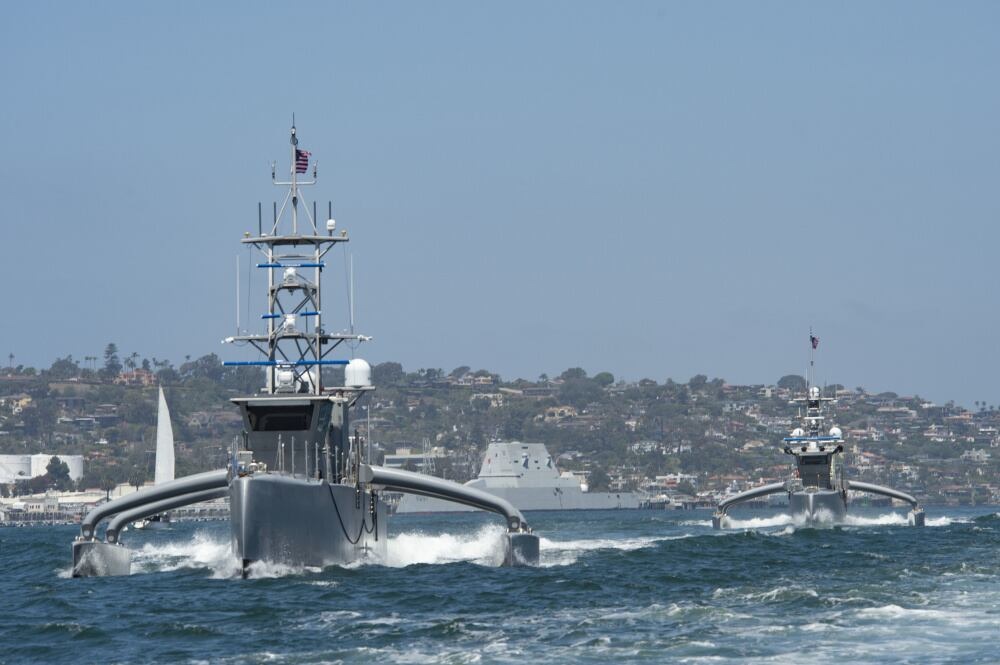
World
WASHINGTON — May 13, 2026 : The U.S. Navy is accelerating procurement of its Medium Unmanned Surface Vessel (MUSV) program under a long-term strategy aimed at expanding distributed naval operations and strengthening force presence in the Indo-Pacific region amid growing maritime competition with China. According to the Navy’s May 2026 Shipbuilding Plan, the service has allocated $171 million in Fiscal Year 2027 for the procurement of three MUSVs, while planning a broader acquisition effort valued at $3.11 billion through FY31. The procurement program will add 47 new unmanned surface vessels during the Future Years Defense Program period following FY26. The latest shipbuilding plan formally places the MUSV alongside traditional battle force and auxiliary ships for the first time, reflecting the Navy’s assessment that the platform has progressed beyond the experimental phase and is now suitable for operational fleet integration. Procurement Timeline and Fleet Expansion The Navy’s acquisition schedule outlines a rapid increase in procurement over the next several fiscal years. Current planning includes: FY26: 36 MUSVs funded through the One Big Beautiful Bill Act FY27: 3 vessels FY28: 10 vessels FY29: 10 vessels FY30: 12 vessels FY31: 12 vessels Under the projected inventory plan, the Navy expects the MUSV fleet to expand from 39 vessels in FY27 to 49 in FY28, 59 in FY29, 71 in FY30, 83 in FY31, and 95 vessels by FY32 before stabilizing at an estimated long-term operational inventory of approximately 72 vessels following initial retirement cycles. Unlike traditional warship procurement, the MUSV program is funded through the “Other Procurement, Navy” account rather than standard shipbuilding accounts. The budget structure reflects an acquisition strategy focused on rapid procurement, shorter upgrade cycles, iterative development, and faster integration of emerging technologies. Modular Payload Architecture The MUSV is being developed around a modular and containerized payload system intended to support multiple mission profiles without requiring permanent ship redesigns. Planned mission packages include: Anti-Submarine Warfare (ASW) sensors and effectors Anti-Surface Warfare (ASuW) systems Missile strike modules C4I command-and-control systems Electronic warfare payloads Communications relay systems Distributed sensing and surveillance packages The Navy intends for the same payload containers to be compatible across several vessel classes, including frigates, Littoral Combat Ships (LCS), and MUSVs. Standardized interfaces for power, cooling, and data integration are intended to allow naval commanders to rapidly configure force packages based on operational requirements. Officials say the concept will enable a single frigate or Littoral Combat Ship to control multiple unmanned vessels equipped with different mission modules during forward deployments. Operational Role in Distributed Maritime Operations The MUSV program forms part of the Navy’s broader Distributed Maritime Operations doctrine, which emphasizes dispersing combat capability across a larger number of platforms rather than concentrating capabilities on a limited number of crewed warships. Under this concept, MUSVs can operate ahead of carrier strike groups or expeditionary strike groups as: Radar pickets Acoustic surveillance nodes Electronic emitters Decoys Communications relays Armed extensions of crewed surface combatants In contested environments, the vessels are expected to support reconnaissance and sensing missions without immediately exposing destroyers, amphibious assault ships, or other high-value crewed platforms to risk. Navy planners also view the MUSV as a method of increasing operational pressure on adversaries by forcing them to identify, track, and potentially engage a larger number of distributed autonomous platforms across wide maritime areas. Origins of the MUSV Program The Navy’s unmanned surface vessel development effort is based on several years of operational testing and prototype development. The earliest operational prototypes were the Sea Hunter and Seahawk autonomous vessels originally developed through DARPA’s Anti-Submarine Warfare Continuous Trail Unmanned Vessel (ACTUV) program in partnership with the Office of Naval Research. Built by Leidos, the vessels measure approximately 41 meters in length and displace around 142 metric tons at full load. Both are based in San Diego and have participated in exercises including Integrated Battle Problem 23.1, Integrated Battle Problem 23.2, and RIMPAC 2022, where they operated as distributed maritime sensing platforms in support of anti-submarine warfare and maritime domain awareness missions. A separate acquisition effort began in July 2020 when Naval Sea Systems Command awarded L3Harris Technologies a contract valued at approximately $35 million for a new MUSV prototype. Contract options could raise the total value to more than $281 million for up to eight additional vessels. The prototype design used a commercially derived 195-foot hull developed by Gibbs & Cox and Incat Crowther, constructed by Swiftships, and integrated with L3Harris’ ASView autonomous navigation system. Program requirements focused on endurance, modularity, self-deployment capability, autonomous navigation, and open-architecture mission integration. Acquisition Strategy and Industrial Base Expansion The Navy is pursuing the MUSV through an acquisition strategy using Other Transaction Authority (OTA) agreements and a marketplace-based procurement model for the MUSV Family of Systems program. The approach is intended to accelerate prototyping and operational testing while allowing participation from smaller shipbuilders and non-traditional defense contractors alongside established naval industry firms. According to Navy planning documents, the service intends to evaluate commercially mature technologies capable of operational testing by September 2026, with potential production deliveries beginning in FY27. The MUSV expansion is also linked to the Navy’s broader Golden Fleet Initiative and its long-term 30-year shipbuilding strategy focused on increasing fleet size, expanding operational flexibility, and strengthening the U.S. maritime industrial base. The Department of the Navy’s FY27 budget request includes approximately $65.8 billion allocated for shipbuilding and related maritime programs.
Read More → Posted on 2026-05-13 16:46:14
Space & Technology
MOUNT PLEASANT, Wisconsin — May 13, 2026 : Foxconn has confirmed that several of its North American manufacturing facilities were targeted in a cyberattack following claims by the Nitrogen ransomware group that it breached the company’s network and exfiltrated more than 8 terabytes of data. The company acknowledged the incident in a statement issued on May 12, 2026, saying its cybersecurity team immediately activated internal response procedures to contain the breach and maintain manufacturing operations. “The cybersecurity team immediately activated the response mechanism and implemented multiple operational measures to ensure the continuity of production and delivery. The affected factories are currently resuming normal production,” a Foxconn spokesperson stated. U.S. Facilities Impacted The cyberattack primarily affected Foxconn facilities in the United States, including the company’s manufacturing complex in Mount Pleasant, Wisconsin, and another operational site in Houston, Texas. The disruption reportedly began in early May and caused temporary outages across internal IT and network systems. Employees at the Wisconsin facility reported Wi-Fi disruptions and interruptions to internal digital systems, forcing some staff to temporarily shift to manual paper-based processes. Some workers were also reportedly sent home during parts of the outage while systems were being restored. Foxconn stated that despite the IT disruptions, production operations were not permanently halted. The company said affected factories are gradually returning to normal operational status, although it has not provided a timeline for full restoration of internal networks. Nitrogen Claims Theft of 11 Million Files The Nitrogen ransomware group claimed responsibility for the breach on May 11 after listing Foxconn on its dark web leak site. The group alleged it had stolen approximately 11 million files totaling more than 8TB of data from Foxconn’s network infrastructure. According to the ransomware group, the stolen data includes confidential instructions, technical hardware drawings, internal project documentation, circuit board layouts, integrated circuit documentation, temperature sensor records, and financial files associated with the Houston facility. Nitrogen also claimed the compromised files contained information connected to projects involving major technology companies including Apple, Intel, Google, Dell, Nvidia, and AMD. Foxconn has not confirmed the authenticity or scope of the alleged stolen data and has not stated whether customer information was compromised. Analysts Review Leaked Samples Cybersecurity analysts reviewing sample files released by Nitrogen reported that some leaked documents appeared to include network topology maps linked to Google and Intel projects. Security researchers noted that such infrastructure maps could potentially expose operational architecture details that may be useful in identifying vulnerabilities within data center environments. However, analysts examining the leaked material also stated that no critical Apple consumer product schematics or sensitive quality-control documentation appeared in the initial sample release. Researchers noted that Foxconn’s Mount Pleasant facility primarily manufactures televisions and data servers rather than Apple consumer devices. Nitrogen Ransomware Group Nitrogen emerged in 2023 as a ransomware-as-a-service (RaaS) operation using a double-extortion strategy in which attackers both encrypt corporate systems and threaten to publicly release stolen data. Cybersecurity researchers monitoring the group recently identified a programming flaw affecting Nitrogen malware used against VMware ESXi environments. According to security analysts, the flaw can corrupt public encryption keys during the attack process, potentially making encrypted files unrecoverable even if victims obtain the group’s decryptor tool after paying a ransom. Security firms have warned organizations that ransom payments may not successfully restore encrypted data in incidents involving the flawed malware variant. Ongoing Response Foxconn, one of the world’s largest electronics contract manufacturers, operates more than 230 factories across 24 countries, including facilities in Wisconsin, Ohio, Texas, Virginia, Indiana, and multiple locations in Mexico. The company has not disclosed whether it has received a ransom demand or whether negotiations with the attackers are taking place. Foxconn stated that its current priority remains securing affected infrastructure, restoring full network stability, and ensuring continuity of production across its North American operations.
Read More → Posted on 2026-05-13 16:54:37
World
BRUSSELS — May 13, 2026 : NATO Secretary-General Mark Rutte has proposed that alliance members allocate 0.25% of their Gross Domestic Product (GDP) annually toward military assistance for Ukraine, a move that would significantly expand long-term support for Kyiv and raise total allied security assistance to an estimated $143 billion per year if adopted across the alliance. The proposal was presented during a recent closed-door meeting of NATO ambassadors and is intended to establish a predictable and structured funding mechanism for Ukraine’s future defense requirements. NATO officials said the target would apply proportionally across member states according to the size of their economies. The initiative follows recent requests from Ukrainian defense officials, who estimated the country’s defense requirements for the coming year at approximately $120 billion and asked international partners to help cover the shortfall. NATO’s previous baseline commitment for Ukraine was approximately €40 billion, or around $43 billion, annually. At present, annual military assistance from NATO allies is estimated at roughly $47–48 billion through existing bilateral aid packages and NATO-coordinated mechanisms, including the Prioritised Ukraine Requirements List (PURL). Adoption of the proposed 0.25% benchmark would therefore represent a substantial increase in long-term allied support. Opposition From Major NATO Members The proposal has already faced resistance from several major NATO members, including France and the United Kingdom. Officials from both countries have reportedly expressed concerns regarding the rigid nature of a fixed GDP-based contribution system and its potential impact on national defense budgets and fiscal planning. Some allies argue that mandatory percentage targets do not adequately account for differences in domestic economic conditions, existing bilateral security arrangements, or non-military support already being provided to Ukraine. Concerns have also been raised about institutionalizing long-term financial obligations at a time of broader economic pressures across Europe. Burden-Sharing Disputes Inside the Alliance The debate has also highlighted continuing disagreements within NATO regarding burden-sharing and the distribution of military assistance responsibilities. Several Nordic and Baltic member states have argued that countries located closer to NATO’s eastern flank are carrying a disproportionately large share of support for Ukraine. Governments in the region have increasingly pushed for larger Western European economies to adopt more formalized contribution commitments. Countries such as Estonia and Latvia have already exceeded the proposed 0.25% threshold through bilateral military aid and have publicly supported the establishment of alliance-wide proportional funding commitments. Upcoming NATO Discussions in Sweden The proposal is expected to become a central topic during the upcoming NATO foreign ministers’ meeting scheduled for May 21–22 in Helsingborg. The gathering will be the first NATO ministerial meeting hosted by Sweden since joining the alliance in 2024. Alliance members are expected to discuss the proposed financial targets, broader questions surrounding long-term military assistance for Ukraine, and ongoing disagreements over burden-sharing ahead of the NATO summit scheduled for July 2026 in Ankara. NATO continues coordinating security assistance to Ukraine through frameworks including the Comprehensive Assistance Package and the Ukraine Defence Contact Group. Alliance members previously exceeded earlier funding baselines by providing more than €50 billion in security assistance during 2024, followed by additional military aid commitments in 2025 and 2026.
Read More → Posted on 2026-05-13 16:59:33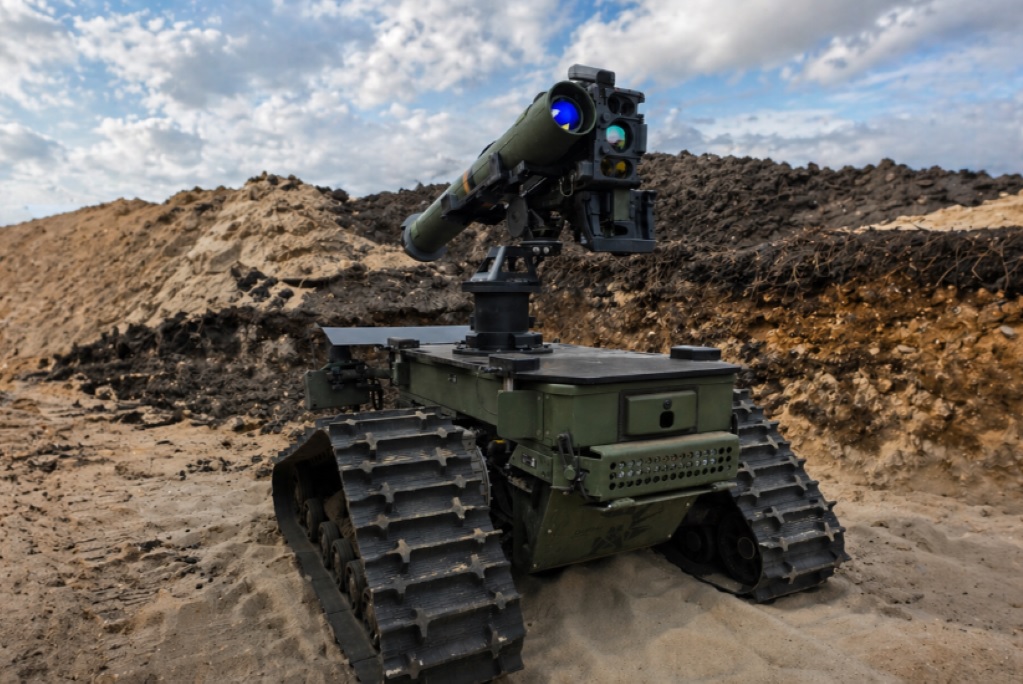
World
ÜBERLINGEN, Germany — May 14, 2026 : Diehl Defence, in cooperation with RAFAEL Advanced Defense Systems and EuroSpike GmbH, has successfully completed a series of live-firing trials involving the SPIKE LR guided missile launched from the Ziesel unmanned ground vehicle (UGV), marking the first successful integration of a modern guided missile system on the Ziesel platform. The trials were conducted over a five-day period and involved the successful launch of 17 SPIKE LR guided missiles. According to the participating companies, the primary objective of the testing campaign was to evaluate the structural load-bearing capability and operational resilience of the Ziesel platform under repeated live-fire conditions. During the tests, the UGV reportedly maintained stable operational performance and successfully withstood the stresses generated during missile launches. The milestone was achieved only three months after Diehl Defence first presented the Ziesel UGV equipped with a SPIKE launcher configuration during the Enforce Tac 2025 exhibition in Nürnberg. Platform Configuration and Technical Characteristics The Ziesel UGV used during the trials was an upgraded configuration featuring revised hardware and software improvements compared to earlier variants. The vehicle is based on the tracked platform developed by Mattro and measures approximately 1.6 metres in length and 1.3 metres in width. It has an empty weight of 380 kilograms and can carry payloads exceeding 500 kilograms. The platform is powered by exchangeable 11 kWh lithium-ion battery packs and can reach speeds of up to 20 kilometres per hour. Its fully electric propulsion system significantly reduces acoustic and thermal signatures, lowering detectability during battlefield operations. According to Diehl Defence, the compact tracked design and high manoeuvrability enable the Ziesel to accompany infantry formations through dense wooded terrain and difficult operating environments without restricting troop movement. Prior to its current role as an armed effector carrier, the Ziesel platform had already undergone operational testing in logistical support and casualty evacuation (CASEVAC) configurations. Autonomous Capability and Sensor Integration The UGV is integrated with Diehl Defence’s PLATON autonomy kit, which provides autonomous navigation and follow-me functionality. The system enables operation without dependence on highly detectable active sensors such as LiDAR or GPS, reducing vulnerability to electronic warfare interference, jamming, and battlefield detection. The autonomy package also allows the vehicle to navigate obstacles independently while maintaining low observability during operations. SPIKE LR Missile System The SPIKE LR guided missile integrated on the Ziesel platform is designed primarily for anti-armour operations and has an operational range of up to 5.5 kilometres. The missile employs fifth-generation dual-mode seeker technology that combines an uncooled infrared imaging sensor with a high-resolution daylight camera. Connected through a fibre-optic data link, the system supports both fire-and-forget and fire-observe-update engagement modes. The missile also incorporates all-weather-capable optronic targeting systems and a tandem high-explosive anti-tank warhead intended to maximise penetration capability against protected targets while maintaining high engagement precision. Growing Interest in Armed UGV Systems EuroSpike GmbH, the European joint venture responsible for the SPIKE missile programme, includes Diehl Defence, Rheinmetall Electronics, and RAFAEL Advanced Defense Systems as partner companies. The companies stated that unmanned ground-based systems are receiving increasing military attention due to growing demand for versatile payload platforms capable of extending stand-off distances and reducing direct exposure of soldiers in hazardous combat environments. According to Diehl Defence, the Ziesel UGV is currently undergoing evaluation by several armed forces, including those of Germany and Ukraine. Future Development Plans Following completion of the firing campaign, the participating companies announced plans to continue development of the integration concept and advance toward additional testing milestones. A formal demonstration involving military representatives from multiple armed forces is also scheduled to showcase the operational capabilities and technical potential of the Diehl Defence Ziesel UGV integrated with the SPIKE LR missile system.
Read More → Posted on 2026-05-14 13:33:45
World
LONDON — May 14, 2026 : The United Kingdom has signed a contract worth nearly £1 billion (approximately $1.35 billion) for the procurement of 72 RCH 155 wheeled self-propelled howitzers for the British Army, the Ministry of Defence announced on May 13, 2026. The acquisition is intended to restore Britain’s close support artillery capability following the transfer of AS90 artillery systems to Ukraine, while also supporting domestic defence manufacturing and sustaining more than 500 jobs across the country. The contract was awarded by the Organisation for Joint Armament Cooperation (OCCAR) on behalf of the British Army to ARTEC GmbH, a joint venture between KNDS and German defence manufacturer Rheinmetall. Deliveries are scheduled to begin in 2028, with the Ministry of Defence aiming to achieve a minimum deployable operational capability before the end of the decade. Replacement for AS90 Fleet The procurement replaces the British Army’s AS90 self-propelled howitzers, which served as the Army’s primary close support artillery system for more than 30 years before being donated to Ukraine in 2023. The transfer created a temporary capability gap within the Army’s artillery force structure, with the UK currently operating 14 Swedish-designed Archer artillery systems as an interim solution. Lieutenant General Simon Hamilton, Deputy Chief of the General Staff, said the UK had accepted operational risk in order to support Kyiv during the early stages of the war. “Britain answered the call for aid by providing artillery systems to Ukraine at the outbreak of the war. We knew the risk — the gap in our warfighting capability — that this would present,” Hamilton stated. “The success of bringing the RCH 155 onto contract to develop our 155mm Close Support Artillery requirement, in collaboration with Germany, marks the first significant milestone in replenishing this capability.” Mobility and Automated Firepower The RCH 155 represents a significant shift from the tracked AS90 platform, integrating the Artillery Gun Module (AGM) onto the Boxer 8x8 wheeled chassis. The configuration provides improved operational mobility, with the vehicle capable of reaching road speeds of up to 100 kilometres per hour and travelling approximately 700 kilometres without refuelling. The system was designed with lessons drawn from the war in Ukraine, where static artillery positions have become increasingly vulnerable to counter-battery radars, drones and precision-guided munitions. The RCH 155 is able to fire and rapidly reposition within seconds, reducing exposure to enemy fire. Unlike conventional self-propelled howitzers requiring crews of four or five personnel, the RCH 155 can be operated by two soldiers from a protected crew compartment using an automated control interface. The turret can engage targets in any direction without repositioning the vehicle. The howitzer is capable of firing up to eight rounds per minute and can strike targets at distances of up to 70 kilometres when using extended-range guided ammunition. Standard unguided 155 mm artillery rounds generally achieve ranges between 30 and 40 kilometres. The platform is also compatible with NATO-standard precision-guided projectiles. The Boxer-based system has a combat weight of under 39 tonnes and shares logistical commonality with other Boxer armoured vehicles already in British Army service. The vehicle is also designed for high tactical mobility, including the ability to cross trenches up to two metres wide and climb vertical obstacles measuring 0.8 metres. UK Industrial Production and Job Support Domestic industrial participation formed a central requirement of the programme. Rheinmetall will manufacture the weapon systems, including the barrel, breech, recoil system and trunnions, at its large-calibre production facility in Telford. The site will use British steel supplied by Sheffield Forgemasters, which received more than £420 million in UK government investment last year. Meanwhile, KNDS UK will manufacture Boxer drive modules at its facility in Stockport, supporting domestic armoured steel fabrication and vehicle production capabilities. The programme is expected to support approximately 100 jobs in Telford, 100 jobs in Stockport, and an estimated 300 additional positions across the wider UK defence supply chain. The contract builds upon a £52 million Early Capability Demonstrator agreement signed in December 2025 and a £53 million long-lead item contract awarded earlier in 2026 to prepare industrial production capacity ahead of the full procurement decision. UK-Germany Defence Cooperation The programme also fulfills key commitments under the UK-Germany Trinity House Agreement, a bilateral defence cooperation pact signed in October 2024 aimed at strengthening interoperability between British and German armed forces within NATO. UK Defence Secretary John Healey said the procurement would support both military readiness and the British defence industry. “This major investment is defence delivering for the battlefield and for Britain’s economy,” Healey stated. “By securing next-generation artillery with Germany, not only are we rearming to strengthen NATO against growing Russian aggression but also creating highly skilled jobs here in Britain.” German Defence Minister Boris Pistorius said the programme would improve operational integration between NATO allies while modernising artillery capabilities. “The RCH 155 will significantly enhance the artillery’s firepower, safety and flexibility,” Pistorius said. “Together with the United Kingdom, we are demonstrating that we take interoperability within NATO seriously and are putting it into practice.”
Read More → Posted on 2026-05-14 13:42:36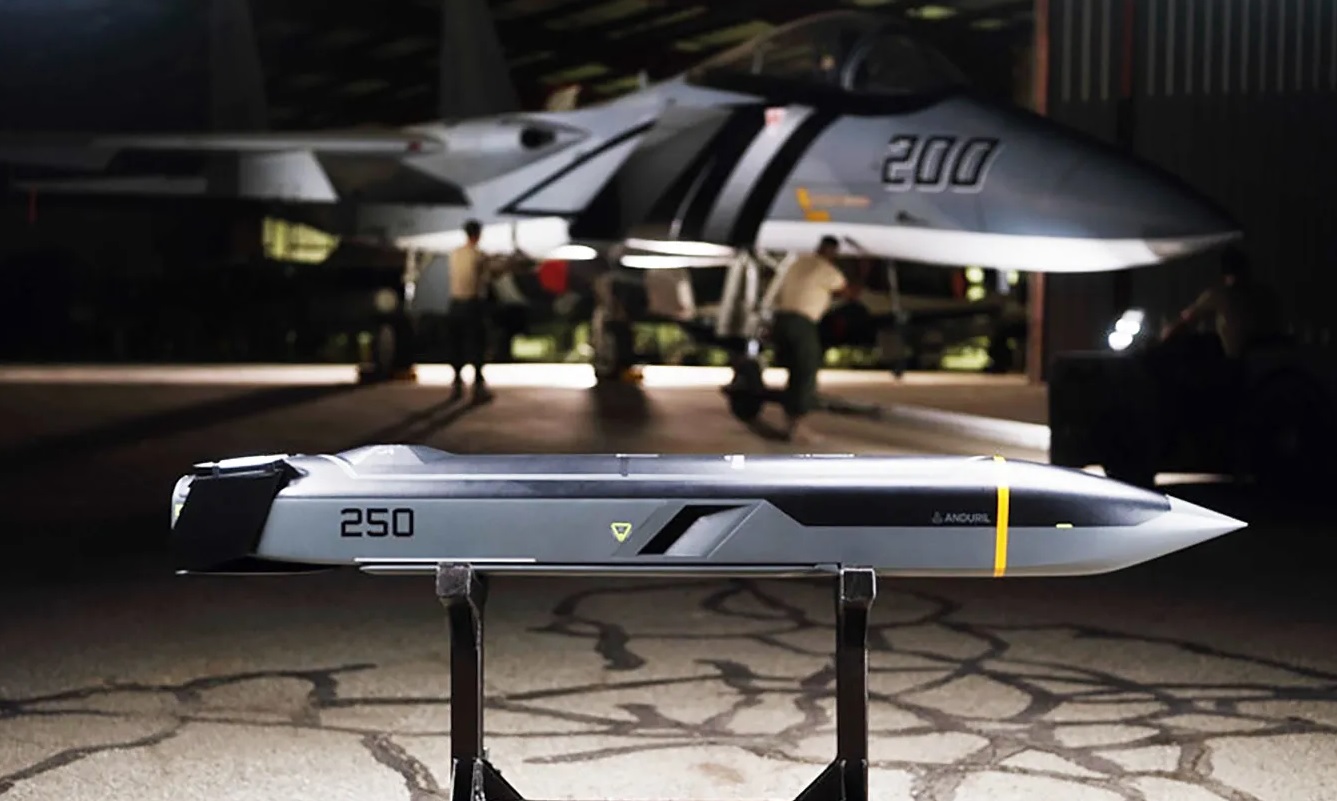
World
WASHINGTON — May 14, 2026 : Anduril Industries and the United States Department of War have signed a framework agreement to scale production of the Barracuda-500M (SLB-500M) surface-launched cruise missile system for the U.S. Army under the broader Ground-Launched Low-Cost Containerized Munition programme. The agreement, announced on May 13, 2026, was concluded with the Office of the Undersecretary of War for Research and Engineering (OSW(R&E)) and provides for the production and delivery of at least 3,000 Barracuda-500M systems over a three-year period to the Army’s Program Acquisition Executive FIRES (PAE FIRES). The contract establishes annual production targets of no fewer than 1,000 complete missile systems, with first deliveries scheduled for the first half of 2027. As part of the programme, Anduril will also provide associated containerised launch systems, beginning with an initial delivery of more than 60 launchers in 2027. The company stated that production quantities could increase further depending on future Department of War requirements. Long-Range Precision Strike System The Barracuda-500M is a subsonic, turbojet-powered stand-off strike missile designed for operations against both land and maritime targets. The weapon carries a 100-pound high-explosive payload and has a range exceeding 500 nautical miles (approximately 575 miles). According to technical specifications released by the company, the missile is capable of performing 5G+ evasive manoeuvres to reduce interception risk and can remain airborne in a loitering configuration for up to 120 minutes before target engagement. The system is also designed with a modular architecture that allows integration of different onboard sensors and mission packages. The missile can integrate with Anduril’s Lattice for Mission Autonomy software, enabling autonomous and collaborative operations between multiple systems in contested operational environments. The open-system architecture also allows operators to use existing military fire-control systems to select targets and initiate launches without requiring dedicated infrastructure. Containerised Launch Architecture The surface-launched variant is housed inside a standard 20-foot ISO shipping container, with each launcher capable of carrying up to 16 complete missile systems. The launch units are designed as self-contained systems requiring no additional fixed infrastructure, allowing rapid deployment in dispersed or austere operational environments. The company also stated that the missile can be deployed independently of the containerised launcher configuration to support different operational requirements and mission profiles. High-Volume Manufacturing Model Anduril stated that the Barracuda family was engineered from the outset for scalable, high-volume production. Approximately 70 percent of the missile’s components are commercially available commodity parts, while the remaining systems are sourced through open-architecture supply arrangements involving multiple vendors to reduce supply-chain risks. According to the company, assembly of a single missile requires approximately 30 hours and can be completed using ten common hand tools, an approach intended to simplify production expansion during sustained procurement periods. To support immediate manufacturing requirements, Anduril invested more than $40 million into a dedicated 115,000-square-foot production facility in Southern California, where production of Barracuda variants is already underway. Future full-rate production of the Barracuda-500M and related systems is expected to transition to Arsenal-1, Anduril’s planned 5-million-square-foot manufacturing facility near Columbus, Ohio. The nearly $1 billion facility is designed to support flexible large-scale weapons manufacturing with production lines capable of shifting rapidly between systems based on operational demand. Expansion of Rocket Motor Production The company has also expanded its domestic solid rocket motor manufacturing capacity to support Barracuda booster production. Anduril invested $75 million in private funding alongside $58 million in Defense Production Act Title III funding to expand a rocket motor production facility in Mississippi. Following the expansion, the company stated it has become the third U.S. supplier of solid rocket motors, strengthening domestic supply capacity for precision-guided weapon programmes. Anduril expects overall production capacity for the Barracuda-500 family to reach the high single-digit thousands of systems annually by the end of the current year as the programme advances toward full-rate production.
Read More → Posted on 2026-05-14 13:48:35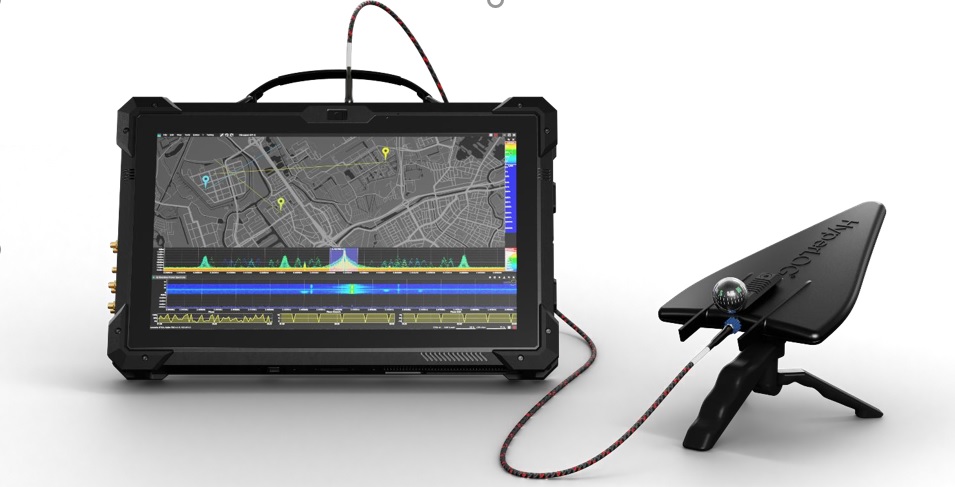
World
HELSINKI — May 14, 2026 : German electronic warfare technology company Aaronia AG will publicly unveil its new AARTOS DF2 direction-finding system during the AOC Europe 2026 electronic warfare symposium in Helsinki from May 19 to 21. The company will participate as a Gold Sponsor at Booth 4F21, where it plans to showcase its latest counter-unmanned aerial systems (C-UAS), spectrum monitoring, and electromagnetic situational awareness technologies. Organized by the Association of Old Crows, AOC Europe is one of the leading electronic warfare conferences in Europe, bringing together military officials, government agencies, defense industry companies, and academic specialists. The 2026 event is being held under the theme “Re-Arming Europe for Electromagnetic Spectrum Superiority,” reflecting the growing European focus on electronic warfare and counter-drone capabilities following the widespread battlefield use of Shahed-series drones and FPV attack drones in Ukraine. SPECTRAN V6 Mobile to Serve as Core Demonstration Platform Aaronia’s exhibition will center around the SPECTRAN V6 Mobile portable real-time spectrum analyzer, which serves as the hardware foundation for the company’s AARTOS drone detection and electronic warfare systems. The portable analyzer covers a frequency range from 9 kilohertz to 140 gigahertz, providing a 490 megahertz real-time bandwidth and a 3 terahertz-per-second sweep speed. These specifications are designed to allow operators to detect short-duration or transient radio-frequency emissions, including drone control links, radar activity, and jamming signals that may be missed by conventional spectrum analyzers. The system operates on Windows 11 and is powered by an AMD Ryzen 7 Core 8845HS processor with an AMD Radeon 780M GPU. The platform includes 64 gigabytes of DDR5 RAM and an integrated 2-terabyte M.2 NVMe storage drive, with additional expansion available through extra M.2 slots. Connectivity features include USB Power Delivery ports, HDMI output, dual 2.5-gigabit Ethernet interfaces, and an SD card reader, all protected by weather-resistant covers intended for field operations. The unit also incorporates a 15-inch display with 1,500 nits brightness for outdoor visibility and a hot-swappable battery system capable of delivering up to 4.5 hours of continuous runtime. The standard package includes the OmniLOG 30800 omnidirectional broadband antenna, designed for isotropic measurements between 300 megahertz and 8 gigahertz without requiring manual antenna alignment. RTSA-Suite PRO Enables Multi-Sensor Networking The SPECTRAN V6 platform is operated through Aaronia’s RTSA-Suite PRO software, which supports networking multiple spectrum analyzers into distributed sensor architectures. According to the company, the software provides automatic pulse classification, real-time demodulation and decoding, 3D map visualization, RF propagation analysis, and Smart Buffering for extended full I/Q recording. The software can also integrate terrain data and building models to improve signal visualization and geolocation performance. Aaronia stated that networking multiple SPECTRAN V6 systems allows coverage areas and detection sensitivity to scale according to the number of deployed sensors rather than being limited to a single platform. AARTOS DF2 Expands Direction-Finding Capabilities The newly introduced AARTOS DF2 forms part of the wider AARTOS DDS product family, which ranges from the X2 to X9 variants and supports integrated drone detection, RF classification, tracking, and geolocation. The AARTOS direction-finding lineup also includes the DF4 and DF9 systems, ranging from handheld operator units to networked multi-sensor configurations intended for large-area monitoring and electronic surveillance missions. The systems utilize Aaronia’s latest IsoLOG DF antenna series, supporting real-time angle-of-arrival direction finding up to 18 gigahertz, while a future extension to 40 gigahertz is currently under development. For higher-frequency applications, the company’s PowerLOG horn antenna series extends monitoring capability up to 70 gigahertz, supporting the detection of advanced radar and communications systems operating in millimeter-wave frequency bands. Integrated RF Detection and Optical Verification For lower-frequency signal localization, the AARTOS systems combine Power of Arrival (POA) and Time Difference of Arrival (TDOA) algorithms. According to Aaronia, this enables automatic three-dimensional triangulation of transmitters, real-time flight-path recording, and simultaneous localization of multiple emitters, including GPS position and altitude data. The systems also integrate camera platforms capable of automatically tracking detected aerial objects and providing optical verification of drones and payloads. Aaronia stated that the integrated RF detection, geolocation, and optical verification architecture is intended to support military and security operators operating in complex electromagnetic environments where drone control links, radar emissions, and electronic attack signals must be identified and localized in real time. The company added that the systems are designed for both mobile and stationary deployments, supporting operational requirements for counter-UAS, electronic warfare, and electromagnetic spectrum monitoring missions.
Read More → Posted on 2026-05-14 13:55:41
World
KYIV — May 14, 2026 : Ukraine has introduced a new package of sanctions aimed at companies supporting the supply chains of Russia’s missile manufacturing sector, focusing on firms that provide equipment, raw materials, electronics, and technical services used in the production of advanced missile systems, including the Iskander ballistic missile and S-400 air defence system. The measures were enacted through decrees signed by Ukrainian President Volodymyr Zelensky following decisions by Ukraine’s National Security and Defence Council. According to Presidential Commissioner for Sanctions Policy Vladyslav Vlasiuk, the sanctions are intended to disrupt the operational networks that sustain Russian missile production rather than targeting the primary manufacturers alone, many of which are already under extensive international restrictions. Vlasiuk stated that the sanctions package focuses on companies whose products and services are essential for the final assembly and continued production of Russian missile systems. He added that Ukraine plans to share the collected information with international partners in an effort to coordinate additional restrictive measures. The sanctions primarily target suppliers connected to three major Russian defence facilities: the JSC Moscow Machine-Building Plant Avangard, which manufactures missiles for the S-300 and S-400 air defence systems; the Federal State Enterprise Perm Powder Plant, responsible for producing gunpowder and solid rocket fuel; and the JSC Votkinsk Machine-Building Plant, the manufacturer of Iskander short-range ballistic missiles. Among the entities sanctioned is Unitest-Rentgen LLC, which supplied inspection and quality-control equipment used in missile component production at the Avangard plant. Ukrainian authorities also stated that the company previously cooperated with the Moscow Institute of Thermal Technology, the developer of Russia’s Topol-M, Yars, and Bulava strategic missile systems. Ukraine also imposed restrictions on A2 Group LLC, identified as a supplier of raw materials used in the production of gunpowder and rocket fuel for the Perm Powder Plant. Officials said these materials are critical for ammunition manufacturing and missile propulsion systems. Additional sanctions were introduced against RT-Komplektatsiya, a subsidiary of the sanctioned Russian state defence corporation Rostec, and Spetstekhnologiya. Ukrainian authorities accused both firms of assisting the Russian defence-industrial sector in circumventing existing international sanctions through the import of restricted electronics and specialised industrial equipment. The sanctions package also includes Inforion, an information technology company accused of developing secure data management and software systems for Russian law enforcement and state security agencies. Ukrainian officials said the latest measures reflect a broader strategy aimed at weakening Russia’s domestic defence manufacturing capability by targeting secondary suppliers and logistical support networks that enable missile production to continue despite existing international sanctions.
Read More → Posted on 2026-05-14 14:06:33
India
NEW DELHI — May 14, 2026 : The Indian Air Force (IAF) has finalised the Request for Proposal (RFP) for the acquisition of 114 Multi-Role Fighter Aircraft (MRFA), marking a significant milestone in India’s largest ongoing fighter aircraft procurement programme. The development comes ahead of Prime Minister Narendra Modi’s scheduled visit to France later in June 2026 and indicates growing alignment toward the selection of the Rafale fighter aircraft manufactured by Dassault Aviation. According to defence officials, the structure of the RFP and earlier decisions taken by the Defence Acquisition Council (DAC) suggest that the programme is now moving beyond a conventional multi-vendor competition and evolving into a strategic government-to-government framework centred on the Rafale platform, which is already operational with the IAF. Procurement Structure Under the procurement plan, the 114 aircraft will be acquired through a two-part structure designed to address immediate operational requirements while expanding India’s domestic aerospace manufacturing sector. The RFP provides for 22 aircraft to be delivered in fly-away condition directly from France, including trainer variants. The remaining 92 aircraft will be manufactured in India through a technology transfer arrangement under the “Make in India” initiative. Defence officials stated that the inclusion of 22 ready-built aircraft reflects the IAF’s assessment of current operational requirements and consideration of global production and supply-chain constraints at Dassault Aviation’s Mérignac production facility. Local Manufacturing and Technology Transfer A central component of the programme is the phased localisation of manufacturing activities within India. The RFP reportedly mandates a 50 to 60 percent localisation target for the India-built aircraft. To meet these requirements, Dassault Aviation is expected to significantly expand its industrial ecosystem in India through partnerships with Indian private-sector firms and Micro, Small and Medium Enterprises (MSMEs). The programme is expected to include local assembly infrastructure, component manufacturing, supply-chain integration, and transfer of advanced aerospace manufacturing technologies. Potential Indian industrial partners under consideration include Tata Advanced Systems Limited, Mahindra, and the Adani Group. Manufacturing operations are expected to be executed through a joint venture model, with final assembly lines under consideration at locations including Nagpur and Hyderabad. Programme Timeline The Defence Acquisition Council approved the 114-aircraft MRFA programme in February 2026. Defence sources indicated that the approval framework was closely aligned with the Rafale platform, effectively positioning the aircraft as the preferred solution for the IAF’s medium-weight fighter requirement. The RFP is expected to be formally issued to Dassault Aviation in the coming months. Following commercial and technical negotiations, the programme will proceed for approval by the Cabinet Committee on Security before final contract signature. If the agreement is finalised by the end of 2026, delivery of the first batch of fly-away aircraft is projected between 2029 and 2030. Deliveries of the India-manufactured aircraft would begin in later phases as domestic production facilities achieve operational capability. Strategic Significance The programme is expected to deepen defence-industrial cooperation between India and France while expanding long-term aerospace manufacturing capabilities within India. The procurement structure indicates a broader level of coordination between New Delhi and Paris extending beyond a standard defence acquisition arrangement. The new aircraft will operate alongside the IAF’s existing fleet of 36 Rafale fighter jets currently in service. The programme also includes provisions linked to upgrading the current fleet to the Rafale F4 configuration. The overall acquisition is estimated to be valued at approximately ₹3.25 lakh crore, making it one of India’s largest defence aviation programmes. India is also expected to become the first country outside France to manufacture the Rafale fighter aircraft domestically. The procurement remains critical for the Indian Air Force as it continues efforts to restore its fighter squadron strength, which remains below the sanctioned requirement of 42 squadrons.
Read More → Posted on 2026-05-14 14:17:11
World
KYIV, Ukraine — May 14, 2026 : Ukrainian defence technology company Fire Point has unveiled additional details regarding “Project Freya,” a proposed pan-European integrated air and missile defence system designed to counter ballistic missile threats through a combination of Ukrainian interceptor technology and NATO-compatible European radar and command infrastructure. The project was outlined by Fire Point co-owner and chief designer Denys Shtilerman, who described the system as an open-architecture network capable of integrating with existing European air defence assets while offering a lower-cost alternative to current Western missile defence systems. FP-7.x Interceptor Forms Core of Freya System At the centre of the project is the FP-7.x interceptor missile, developed from Fire Point’s earlier FP-7 tactical ballistic missile program. The original FP-7 was designed as a short-range surface-to-surface missile with a strike range of approximately 200–300 kilometres, carrying a 150-kilogram warhead and achieving a reported circular error probable of 14 metres. According to Fire Point, the missile has now been adapted into an interceptor platform capable of engaging incoming ballistic threats. The company stated that the FP-7.x is constructed primarily from advanced carbon-fibre composite materials, reducing both radar visibility and manufacturing costs. Fire Point estimates the interceptor’s cost per engagement at under $1 million, substantially below the cost of comparable Western interceptor systems such as the Patriot PAC-3. The interceptor underwent a successful test in February 2026. Specifications released by the company show the FP-7.x measures 7.25 metres in length, with an outer diameter of 1.15 metres and a fuselage diameter of 0.53 metres. The missile uses a domestically produced solid-fuel motor and is launched through a hot-launch system from a lightweight mobile launcher developed by Fire Point. During flight, the interceptor can reportedly achieve speeds between 1,500 and 2,000 metres per second. Fire Point compared this to the Russian Iskander-M ballistic missile, which reaches approximately 2,100 metres per second during the final stage of its active trajectory. The company also stated that portions of the interceptor draw from technologies associated with the Soviet-era 48N6 missile used in S-300 and S-400 air defence systems, while incorporating redesigned electronics, simplified structures, and modern composite materials. Guidance System and European Radar Integration For terminal guidance, the FP-7.x is equipped with an Image Infra-Red (IIR) homing system. Fire Point additionally confirmed that, following an agreement signed in April 2026, the interceptor will also integrate semi-active seeker heads manufactured by German defence company Diehl Defence. The Freya system is designed to operate with multiple European radar platforms. Proposed early warning radar options include the Swedish SAAB Giraffe 8A and Giraffe 4A systems, France’s Thales Ground Master 400, and Germany’s Hensoldt TRML-4D. For target illumination and fire-control guidance, Fire Point plans to integrate either Denmark’s Weibel GFTR-2100/48 radar or Italy’s Leonardo KRONOS Land radar system. The command-and-control component of the project is based on the Kongsberg Fire Distribution Center developed by Norway’s Kongsberg. The centre incorporates Network Access Nodes modules and open-architecture software allowing integration of custom Ukrainian and European defence components. Link 16 Integration and NATO-Compatible Network A central element of the Freya project is integration with NATO’s Link 16 tactical data exchange protocol. Ukraine formally secured access to the network on 29 May 2025 through a licence agreement for NATO’s non-commercial CRC System Interface software. According to Fire Point, the Link 16 network enables real-time exchange of tactical information between land, air, and maritime forces while supporting secure communication and automated operational control. Within the Freya system, Link 16 provides radar connectivity through the ASTERIX protocol and supports a full-duplex communication channel for real-time course correction of the FP-7.x interceptor during flight operations. The system is also capable of transmitting weapons targeting data, equipment telemetry, voice communications, and battlefield coordination information between connected units. Ukraine’s operational-tactical situational awareness system “Delta” has already been integrated into the Link 16 network, enabling interoperability with NATO-compatible tactical communication infrastructure currently operating inside Ukraine. European Cooperation and Industrial Expansion Fire Point, founded in Kyiv in 2022, has expanded rapidly during the war and was recently valued by international investors at more than $2.5 billion. The company is currently cooperating with European missile manufacturer MBDA on further missile development linked to the Freya project. Ukraine and Germany have also agreed to deepen cooperation on ballistic missile interceptor production and accelerate programs focused on integration with European radar and digital communications systems. Additional international support has come from Norway, which allocated funding last year for the procurement of surface-to-air missiles intended for Ukrainian air defence systems operating from Soviet-era launch platforms. To support long-term missile production, Fire Point plans to establish a solid rocket fuel manufacturing facility in Denmark. The proposed plant will supply fuel for the FP-7.x interceptor and other Ukrainian missile systems. The Danish government previously approved temporary suspension of more than 20 laws and regulatory procedures to accelerate construction timelines for the facility and expand defence industrial production capacity. Project Freya represents one of the largest Ukrainian-led attempts to integrate domestic missile interceptor technology with a broader European missile defence architecture, combining Ukrainian missile production with NATO-compatible radar, communications, and comma
Read More → Posted on 2026-05-14 14:28:58
World
KYIV — May 14, 2026 : Ukrainian interceptor drone crews operating the STING platform destroyed more than 300 Russian aerial targets during a single day-and-night combat period on May 13–14, 2026, according to Ukrainian drone manufacturer Wild Hornets. The interceptions were recorded during what Ukrainian military officials described as the largest Russian drone assault since the start of the full-scale war. Wild Hornets announced on May 14 that three STING interceptor units accounted for more than 200 confirmed aerial kills during the operation. According to the company, one crew alone achieved 120 interceptions in a single operational cycle, breaking the single-crew interception record twice within the same combat period. The manufacturer added that additional after-action reports from crews were still being processed and that the final number of destroyed targets could rise further. The engagements took place during a sustained Russian aerial campaign lasting approximately 36 hours. Ukraine’s Air Force reported that Russian forces launched a total of 1,567 strike drones against Ukrainian territory, including Shahed, Gerbera, Italmas and Parody decoy variants. The attack package also included 56 missiles, among them Kh-101 cruise missiles, ballistic missiles and Kinzhal aeroballistic missiles. According to Ukrainian military data, air defence forces intercepted 1,362 drones and 41 missiles during the assault. Ukrainian defences relied on a layered network that combined aviation assets, surface-to-air missile systems, electronic warfare units, mobile fire groups and specialized interceptor drones. Wild Hornets stated that the operational results highlighted the growing importance of drone-on-drone interception within Ukraine’s air defence architecture. The company noted that interceptor drones provide a lower-cost and sustainable alternative to using expensive surface-to-air missile systems against large-scale drone attacks. The STING interceptor was developed by the Wild Hornets volunteer group specifically to counter Iranian-designed Shahed strike drones, which Russia regularly employs in mass attacks against Ukrainian cities and infrastructure. The platform uses a bullet-shaped aerodynamic design optimized for high-speed aerial interception missions. According to the manufacturer, the STING exceeds speeds of 340 kilometres per hour and can operate at altitudes of up to three kilometres. The interceptor has an engagement range of approximately 25 kilometres and reportedly achieves a combat hit rate of between 80 and 90 percent in operational use. Unit cost estimates range from approximately $2,100 to $2,500 per drone. A key element of the system is its integration with the Hornet Vision Ctrl control network. The relay-based digital architecture provides high-definition video transmission and low-latency remote control over extended distances. Wild Hornets stated that recent serial deployment of the system allows operators to control interceptor drones from distances of up to 2,000 kilometres away from combat zones. Earlier in April 2026, a pilot from the Ukrainian BULAVA unit identified as Roman “Hulk” reportedly used the Hornet Vision Ctrl system to destroy two Shahed drones while operating from a control point located 500 kilometres away. Alongside STING operations, Ukrainian unmanned air defence units also reported additional developments involving the P1-SUN interceptor system. During the same reporting period, Ukrainian crews successfully destroyed Russian Gerbera drones equipped with onboard FPV drones for the first time. The operation involved personnel from the 58th Separate Motorized Infantry Brigade and the 302nd Anti-Aircraft Missile Regiment, with five aerial targets neutralized in a single day. The expanded use of systems such as STING and P1-SUN reflects Ukraine’s increasing reliance on specialized remotely operated interceptor platforms designed to counter high-volume aerial threats while reducing risks to air defence personnel and limiting expenditure on conventional missile interceptors.
Read More → Posted on 2026-05-14 14:39:40
World
BOSTON — May 14, 2026 :The U.S. Army has selected the Rogue 1 loitering munition system developed by Teledyne FLIR Defense for the Low Altitude Stalking and Strike Ordnance (LASSO) programme, the company announced on 13 May 2026. Under the agreement, Teledyne FLIR Defense will deliver up to 130 Rogue 1 systems and related components to the Army for testing and evaluation beginning in summer 2027. The contract carries a two-year performance period and supports the Army’s ongoing effort to equip Infantry Brigade Combat Teams with man-portable precision strike systems capable of operating beyond line of sight. The LASSO programme is intended to provide dismounted infantry units with a ground-launched uncrewed aerial system carrying a lethal payload for long-range precision strikes against armoured vehicles, soft-skinned targets and enemy personnel while minimising collateral damage in complex operational environments. Man-Portable Precision Strike System Rogue 1 is a vertical takeoff and landing loitering munition designed for rapid deployment without requiring a dedicated launcher or vehicle transport. The complete system weighs approximately 10 pounds (4.5 kilograms) and is carried in a single launch tube, enabling operation by a single soldier. The electric-powered platform has an endurance of more than 30 minutes, burst speeds exceeding 70 mph (113 km/h) and an operational range of over 12 miles (20 kilometres). The system was developed for use in communication- and GPS-denied environments and incorporates hardened encrypted datalinks, image-matching navigation technology and alternative visual and thermal navigation modes. The drone is equipped with electro-optical sensors and FLIR Boson 640+ thermal imaging cameras for day and night reconnaissance missions. According to the company, the gimballed payload integrates the targeting sensors directly with the warhead system to improve strike accuracy against moving and stationary targets. Modular Payloads and Recoverable Design Rogue 1 supports multiple mission-specific payloads, including an Explosively Formed Penetrator warhead for engaging heavily armoured vehicles, a directional blast-fragmentation payload for soft targets and inert payloads for training operations. A notable feature of the platform is its recoverability. The munition incorporates a mechanical interrupt fuzing system that allows operators to safely disengage and recover the drone if a mission is aborted or operational conditions change. The warhead can be defused in flight, allowing the system to be reused in future missions. Integration With Black Hornet Nano-Drone Dr. JihFen Lei, president of Teledyne FLIR Defense and senior vice president of Teledyne’s Defense and Aerospace Group, stated that Rogue 1 was developed to meet the Army’s requirements for precision and autonomous strike capability. Lei added that the system can be integrated with the company’s Black Hornet nano-drone in a combined reconnaissance and strike configuration. In this arrangement, the miniature reconnaissance drone identifies and tracks targets before Rogue 1 is launched to conduct the attack. Expanding U.S. Military Adoption The Army’s LASSO selection represents the third major U.S. military adoption of the Rogue 1 platform since its launch in spring 2024. The loitering munition has already been fielded by U.S. Special Operations Command under the Ground Organic Precision Strike Systems programme and by the U.S. Marine Corps through the Organic Precision Fires-Light programme. The contract further expands Teledyne Technologies Incorporated presence in the defence unmanned systems sector amid growing demand for portable precision strike capabilities across U.S. military modernisation programmes.
Read More → Posted on 2026-05-14 15:22:35
India
MUMBAI — May 14, 2026 : Indian defence and engineering company Larsen & Toubro (L&T) has entered into a strategic collaboration with France-based maritime technology firm Exail to provide an advanced Unmanned Mine Counter-Measure (MCM) Suite for the Indian Navy’s upcoming Mine Counter Measure Vessel (MCMV) programme. The partnership will support the Indian Navy’s planned procurement of 12 Mine Counter Measure Vessels intended to replace ageing minesweepers and strengthen the navy’s mine warfare capabilities. Under the arrangement, L&T will act as the prime contractor and offer the unmanned MCM suite to shipyards participating in the MCMV construction programme, while Exail will serve as the technology partner supplying its mine warfare and unmanned maritime systems currently deployed by several navies worldwide. According to the companies, the unmanned suite will integrate autonomous and remotely operated systems capable of detecting, classifying, identifying and neutralising naval mines through stand-off operations. The systems are designed to reduce operational risks to crews and manned vessels during mine clearance missions. The package is expected to include unmanned surface vessels (USVs), autonomous underwater vehicles (AUVs), and remotely operated vehicles (ROVs), forming a multi-layered mine countermeasure capability for the Indian Navy. The systems will operate alongside advanced sonar-equipped MCMVs being planned under the programme. L&T will be responsible for assembly, integration, testing and lifecycle support of the systems in India as part of the collaboration. The partnership also includes localisation efforts aligned with the Government of India’s “Make in India” and “Aatmanirbhar Bharat” initiatives aimed at increasing indigenous defence manufacturing and domestic industrial participation in major military procurement programmes. The Indian Navy’s MCMV programme received Acceptance of Necessity (AoN) approval from the Defence Acquisition Council in July 2025 with an estimated project value of approximately ₹44,000 crore. The vessels are expected to feature non-magnetic hulls and advanced mine-hunting sonars to improve survivability and operational effectiveness in contested maritime environments. Initial vessel deliveries are projected between 2030 and 2037. India currently operates legacy minesweeping platforms and has an overall long-term requirement for up to 24 Mine Counter Measure Vessels to secure key coastal approaches, ports and strategic maritime routes. The induction of unmanned mine warfare systems is intended to address capability gaps while modernising the navy’s underwater threat response infrastructure. Arun Ramchandani, Senior Vice President and Head of Precision Engineering & Systems at L&T, stated that the collaboration combines L&T’s defence engineering and maritime integration capabilities with Exail’s operational expertise in unmanned mine warfare technologies. Jérôme Bendell, CEO of Exail’s Maritime Systems Business Line, said the partnership reflects a broader objective of supporting long-term sovereign unmanned maritime system development in India, including potential local production of next-generation naval drones and autonomous maritime platforms.
Read More → Posted on 2026-05-14 15:37:19
World
WASHINGTON / NEW YORK — May 14, 2026 : The United States has approved a new round of artificial intelligence semiconductor sales to Chinese technology companies, marking a significant easing of export restrictions that had limited China’s access to advanced U.S.-made chips for several years. According to reports citing industry insiders, the U.S. Department of Commerce has authorised approximately 10 major Chinese companies to purchase NVIDIA H200 artificial intelligence processors under a controlled licensing framework. The approved firms reportedly include Alibaba, Tencent, ByteDance and JD.com. The move comes amid reports that Washington is preparing to further ease or remove several remaining semiconductor trade restrictions affecting exports to China. Under the current licensing arrangements, each approved Chinese customer is permitted to purchase up to 75,000 NVIDIA H200 chips. The processors can be supplied directly by NVIDIA or through authorised hardware and distribution partners, including Lenovo and Foxconn. The approvals build on policy adjustments first announced in December 2025 by U.S. President Donald Trump. At the time, Trump stated that exports of NVIDIA’s H200 processors would be allowed under a regulated framework that included a 25 percent fee on such sales. The U.S. Department of Commerce formally implemented the policy in January 2026, allowing case-by-case licensing for the H200 and similar processors produced by companies such as AMD. Under the export framework, NVIDIA must certify that sufficient chip supplies remain available for the U.S. domestic market before shipments are approved. Chinese buyers are also required to demonstrate adequate security procedures and provide assurances that the processors will not be used for military or surveillance purposes. In addition, exports to China are capped at no more than 50 percent of the volume sold within the United States, while shipments remain subject to third-party technical verification. The revised policy applies specifically to H200-class processors and other compliant AI chips designed to remain within U.S. export performance thresholds. More advanced semiconductors, including certain Blackwell-series processors, continue to face stricter export controls and licensing requirements. The policy shift coincides with ongoing diplomatic engagements between Washington and Beijing. NVIDIA Chief Executive Officer Jensen Huang recently joined a U.S. delegation accompanying President Trump to Beijing for meetings with Chinese President Xi Jinping aimed at discussing trade and technology cooperation. Before U.S. export controls were imposed, China accounted for approximately 20 to 25 percent of NVIDIA’s total revenue, making it one of the company’s largest international markets after the United States. Since the restrictions were introduced, NVIDIA has reported near-zero AI chip revenue from China in several recent quarters. Following reports of the approvals and potential additional easing measures, NVIDIA shares rose sharply in trading. Investors viewed the development as a possible pathway for the company to recover part of the revenue lost due to sanctions and regain market share in China’s expanding AI infrastructure sector. Industry analysts estimate that renewed access to Chinese customers could restore several billion dollars in annual revenue for NVIDIA if demand materialises within existing licensing and volume limits. The company has developed export-compliant processors, including the H20 and H200, specifically to meet U.S. regulatory thresholds while continuing sales to overseas markets. The easing of restrictions also reflects broader changes in the global semiconductor market. During the sanctions period, China accelerated efforts to expand domestic semiconductor production and reduce reliance on foreign suppliers. Chinese manufacturers supported by state-backed industrial policies have increased their share of the domestic AI server market, with local suppliers now estimated to hold roughly 41 percent of the sector. Supporters of the revised export policy argue that controlled semiconductor exports help maintain U.S. technological leadership while supporting domestic chipmakers and generating additional government revenue through licensing fees. Critics, including lawmakers from both major U.S. political parties, have continued to raise concerns that advanced AI processors could indirectly support Chinese military or strategic technological development despite end-use restrictions and verification measures. The latest measures do not represent a complete removal of all semiconductor export controls. Advanced AI accelerators exceeding defined performance thresholds remain restricted, and U.S. authorities continue to maintain oversight mechanisms intended to prevent diversion or unauthorised use of exported hardware. As of 14 May 2026, NVIDIA had not issued an official public statement regarding the latest approvals or reports of a broader rollback of semiconductor trade restrictions.
Read More → Posted on 2026-05-14 15:46:33
World
SAN DIEGO — May 14, 2026 : General Dynamics NASSCO has received $856 million in U.S. Navy funding for the construction of T-AO 217, the latest vessel in the John Lewis-class fleet replenishment oiler programme. The funding, announced on May 13, 2026, supports the Navy’s continuing effort to modernise its replenishment fleet and strengthen long-range naval logistics capabilities. The allocation forms part of an eight-ship block-buy contract awarded to NASSCO in September 2024 covering vessels T-AO 214 through T-AO 221. T-AO 217 will be built at the company’s San Diego shipyard, where multiple vessels in the class are already under construction. The John Lewis-class oilers are designed to support the Military Sealift Command by providing fuel, dry cargo and aviation logistics support to deployed naval forces. The ships enable carrier strike groups, amphibious ready groups and surface combatants to remain at sea for extended periods without returning to port, improving operational endurance and fleet sustainment during long-range deployments. The class is gradually replacing the ageing Henry J. Kaiser-class replenishment oiler vessels that have been in service since the 1980s. Compared with the earlier ships, the new oilers incorporate double-hull construction, upgraded automation systems, modernised cargo handling equipment and reduced crew requirements intended to improve efficiency and lower operating costs. Each John Lewis-class vessel measures approximately 742 feet (226 metres) in length with a beam of 106.5 feet and a full-load displacement of around 49,850 tons. Powered by two Fairbanks-Morse medium-speed diesel engines, the ships can reach speeds of up to 20 knots while carrying approximately 162,000 barrels of fuel alongside dry cargo and aviation support supplies. The vessels are equipped for connected underway replenishment operations through multiple fueling stations and cargo transfer rigs. The class also features an enlarged helicopter flight deck to support vertical replenishment missions during deployed operations. In addition to logistics capabilities, the ships incorporate defensive systems including the AN/SLQ-25A Nixie torpedo countermeasure system and crew-served defensive weapons operated by embarked Navy security teams. The design also reserves space, electrical capacity and weight allowances for potential future installation of close-in defensive systems such as Phalanx CIWS or SeaRAM. According to the Department of the Navy, the multi-ship procurement approach used for the programme is expected to save approximately $491 million compared with annual procurement methods. Multi-ship contracts are also intended to maintain stable production activity within the U.S. shipbuilding industrial base and preserve skilled labour at key naval shipyards. NASSCO is currently under contract to construct 17 of the Navy’s planned 20 John Lewis-class oilers. The company has delivered five vessels to date, while five additional ships remain under construction at the San Diego facility. The programme began with an initial 2016 contract covering the first six ships and was later expanded in 2022 to include T-AO 211 through T-AO 213 before the 2024 block-buy agreement covering T-AO 214 through T-AO 221. Dave Carver, president of General Dynamics NASSCO, stated that the John Lewis-class programme represents the company’s longest-running Navy production series. He said the funding for T-AO 217 helps maintain workforce stability, sustain production continuity and reduce the risk of future layoffs as construction progresses on the remaining vessels in the programme. The continued production of the John Lewis-class fleet supports the U.S. Navy’s long-term maritime logistics strategy, particularly for sustained operations across contested maritime regions where access to fixed port infrastructure may be limited during future conflicts.
Read More → Posted on 2026-05-14 16:06:17
World
JERUSALEM — May 14, 2026 : The Israel Ministry of Defense (IMOD) has signed a contract worth more than $34 million (over 100 million shekels) with Elbit Systems subsidiary Cyclone to develop extended-range capabilities for the Israeli Air Force’s F-35I Adir fighter jets through the integration of external fuel tanks. The agreement was brokered by the IMOD’s Defense Procurement Directorate (DPD) as part of Israel’s broader long-term military modernization and force buildup strategy. Cyclone, a wholly owned subsidiary of Elbit Systems specializing in aerostructures and airborne structural components, will adapt an existing external fuel tank design originally developed for Israel’s F-16 fighter fleet to meet the operational and technical requirements of the F-35I platform. According to Israeli defense officials, the project is intended to significantly extend the operational range of the F-35I fleet, reduce reliance on aerial refueling aircraft, and provide greater flexibility during long-range missions. The standard F-35 platform has an operational range of approximately 1,200 miles (2,220 kilometers), and the Israeli Air Force has increasingly focused on range-extension capabilities amid evolving regional security requirements. The development marks the first known effort to integrate external fuel tanks onto an F-35 aircraft. While the addition of external tanks increases fuel capacity and mission endurance, it also alters the aircraft’s radar signature and low-observable characteristics. Defense officials and industry analysts note that the trade-off is considered operationally manageable, particularly because external tanks can be jettisoned before the aircraft enters heavily contested airspace during combat missions. The aircraft and fuel tank system will undergo extensive testing to evaluate aerodynamic performance, structural loads, and compatibility with onboard electronic and mission systems. Previous Israeli studies had examined both conformal fuel tanks and detachable external tanks as potential methods to extend the F-35I’s combat radius while preserving stealth performance where possible. Cyclone has previously supplied external fuel tanks and structural components for multiple fighter aircraft programs, including the F-16, F-15, and F/A-18. The company will conduct development and integration work at its facilities in Israel. Israeli officials said the contract forms part of a wider strategic defense initiative led by Defense Minister Israel Katz and IMOD Director General Maj. Gen. (Res.) Amir Baram. The strategy is aimed at strengthening Israel’s military readiness and maintaining the country’s aerial and strategic superiority during what defense planners describe as an increasingly complex regional security environment. The operational requirement for expanded strike range has been shaped by recent regional conflicts and operational experience gathered from missions conducted in areas with advanced and layered air defense systems, including those linked to Iran and Syria. Israel currently operates 50 F-35I aircraft across two operational squadrons, making it the largest F-35 operator outside the United States. The F-35I Adir incorporates Israeli-developed electronic warfare systems, communications equipment, computing architecture, and weapons integration capabilities integrated into the American-made stealth fighter platform. Earlier this month, the Israeli government announced plans to negotiate an expansion of the F-35I fleet to 100 aircraft, alongside parallel growth of the F-15IA fleet. The procurement plans are part of a broader defense spending initiative expected to increase Israel’s military budget by hundreds of billions of shekels over the coming decade. Neither the Israel Ministry of Defense nor Elbit Systems disclosed a production or delivery timeline for the external fuel tank program.
Read More → Posted on 2026-05-14 16:48:59
India
PUTTAPARTHI, ANDHRA PRADESH — May 14, 2026 : Union Defence Minister Rajnath Singh and Andhra Pradesh Chief Minister N. Chandrababu Naidu will preside over the foundation stone laying and grounding ceremonies for multiple aerospace and defence projects across Andhra Pradesh on May 15, 2026, in a major push to expand India’s indigenous defence manufacturing and aerospace infrastructure under the Aatmanirbhar Bharat initiative. The primary event will take place at Puttaparthi in Sri Sathya Sai District, where the foundation stone will be laid for the Aircraft Integration and Flight Testing Centre of the Aeronautical Development Agency under the Defence Research and Development Organisation. The facility will support aircraft integration, systems validation, testing and certification activities for the Advanced Medium Combat Aircraft (AMCA) programme, India’s fifth-generation stealth fighter project. The AMCA testing and integration complex is planned with an estimated investment of ₹15,803 crore and will cover approximately 650 acres. The Andhra Pradesh government has allocated around 150 acres adjacent to the Puttaparthi airport runway for the core facility, along with an additional 200 acres for satellite offices, residential infrastructure and support services. The state government will also facilitate the extension of the Puttaparthi runway to 10,000 feet, alongside the construction of a new Air Traffic Control tower, advanced navigation systems and weather monitoring infrastructure. The facility is expected to conduct aircraft assembly, systems integration, validation and flight certification for the AMCA programme, which aims to manufacture around 140 fifth-generation stealth fighters. The first prototype is expected between late 2026 and early 2027. The centre is also intended to support future indigenous combat aircraft and unmanned aerial systems programmes. The project is projected to generate approximately 7,500 direct highly-skilled jobs. During the visit, Rajnath Singh will also lay the foundation stone for a new Naval Systems Manufacturing Facility of Bharat Dynamics Limited at T. Sirasapalli village in Anakapalli district. The Andhra Pradesh government has allocated around 160 acres for the project. The facility will manufacture advanced underwater weapon systems, including heavy-weight and light-weight torpedoes, along with integrated naval combat systems to support the operational requirements of the Indian Armed Forces. Grounding ceremonies will also be conducted for multiple private-sector defence manufacturing projects in Madakasira, Sri Sathya Sai District. Agneyastra Energetics Limited, a subsidiary of Kalyani Strategic Systems Limited, will begin work on its Defence Energetics Facility after acquiring approximately 949.65 acres from the Andhra Pradesh Industrial Infrastructure Corporation. The project will include high explosives manufacturing, ammunition filling and gun propellant production facilities, with provisions for future expansion into energetics for rockets, missile systems, space launch vehicles and advanced defence applications. HFCL Limited will also commence construction of its Ammunition & Electric Fuzes Plant at Madakasira. The company has been allotted 1,000 acres in two phases, including 329 acres in Phase I and 671 acres in Phase II. Supported by an estimated investment of ₹230 crore, the facility will manufacture artillery ammunition shells, TNT filling systems, Multi-Mode Hand Grenades developed in collaboration with DRDO, and electronic fuzes including point detonating, time and proximity variants. The plant is designed to produce around 40 lakh units annually, with completion targeted for December 2027. Expansion-related grounding ceremonies will also be held for Premier Explosives Limited as part of the state’s broader defence manufacturing expansion plans. In Kurnool, the Andhra Pradesh government will formally initiate projects linked to the proposed Drone City initiative, aimed at developing a dedicated hub for unmanned aerial systems, avionics and drone-related manufacturing. Participating companies include Drogo Drones Private Limited, Dronelab Technologies Pvt Ltd, HC Robotics Pvt Ltd, SenseImage Technologies Private Limited, Aerpace Industries, JDK Fly Drone World Pvt Ltd and Latrics. Several Memorandums of Understanding (MoUs) between the Andhra Pradesh government and private aerospace and defence companies are also expected to be signed during the event under the state’s Aerospace and Defence Policy 2025–30. The projects across Puttaparthi, Madakasira, Anakapalli and Kurnool are intended to establish an integrated aerospace and defence manufacturing corridor in southern India, connecting emerging production centres with the established aerospace and defence research ecosystem in Bengaluru.
Read More → Posted on 2026-05-14 17:11:55
World
BEIJING — May 14, 2026 : The United States and China on 14 May released a detailed joint readout outlining agreements reached during a summit between U.S. President Donald Trump and Chinese President Xi Jinping in Beijing, covering bilateral trade, energy security, counter-narcotics cooperation and regional stability in the Middle East. The document, published following talks at the Great Hall of the People, lists nine specific commitments jointly endorsed by both governments. The agreements focus heavily on maintaining stability in the Strait of Hormuz after the severe disruption to global oil markets earlier in 2026 triggered by the conflict involving Iran. According to the official readout, the United States and China agreed that American companies will receive expanded access to Chinese markets, while China will increase investment into the United States. Beijing also committed to intensifying efforts to crack down on fentanyl precursor chemicals and illicit flows entering the American market. China further agreed to increase purchases of American agricultural products and buy additional U.S. crude oil as part of efforts to diversify its energy imports and reduce dependence on oil flows linked to the Strait of Hormuz. Nine Commitments Released by Washington and Beijing The joint document lists the following commitments agreed during the summit: U.S. companies will receive expanded access to Chinese markets. China will increase investment into the United States. China will intensify efforts to crack down on fentanyl precursor chemicals and flows into America. China will purchase more American agricultural products. Both sides committed in writing that the Strait of Hormuz must remain open. China explicitly stated its opposition to the militarization of the Strait of Hormuz. China opposed any party charging tolls for passage through the Strait of Hormuz. China will purchase more American oil to reduce dependence on the Hormuz route. Both governments agreed that Iran cannot possess nuclear weapons. The White House described the Hormuz-related provisions as a direct response to the crisis that emerged earlier this year following U.S. and Israeli strikes on Iran in February 2026. The military escalation led to what officials described as the largest oil supply disruption in modern history after Iran effectively blocked commercial shipping traffic through the strategic waterway. The disruption pushed Brent crude prices to approximately $113 per barrel and triggered sharp volatility across global energy markets. China, one of Iran’s largest oil customers, has now publicly aligned itself with measures intended to prevent future prolonged disruptions in the strait. Focus on Strait of Hormuz and Energy Security A major portion of the agreement centers on maritime security and uninterrupted energy flows through the Gulf region. Both Washington and Beijing formally committed in writing that the Strait of Hormuz must remain open for international shipping. China additionally stated its opposition to the militarization of the waterway and opposed any entity imposing tolls or transit fees on vessels passing through the strait. The language is viewed as a diplomatic signal that Beijing considers long-term disruption of the route contrary to its own economic and energy-security interests. The Strait of Hormuz remains one of the world’s most strategically important maritime corridors, carrying a significant share of global crude oil and liquefied natural gas shipments. Any disruption in the waterway has immediate consequences for international energy prices and shipping markets. China’s commitment to purchase more American crude oil is also intended to diversify its long-term energy supply sources. Analysts said the move reflects Beijing’s effort to reduce exposure to instability in Gulf shipping routes while maintaining stable energy imports. Trade and Economic Components The agreement also contains several trade and investment measures aimed at stabilising bilateral economic relations between the world’s two largest economies. Expanded access for American companies to Chinese markets could support sectors including manufacturing, finance, agriculture and energy exports. China’s commitment to increase investment into the United States is expected to support selected industrial and commercial sectors, though no detailed breakdown of investment categories was released. The renewed commitment by Beijing to purchase additional American agricultural products is likely to benefit U.S. farmers and agricultural exporters. However, the agreement does not specify purchase volumes, monetary targets or implementation deadlines. The fentanyl-related commitments address a long-standing issue in U.S.-China relations. Washington has repeatedly accused Chinese suppliers and trafficking networks of contributing to the flow of fentanyl precursor materials into North America. Beijing has previously stated that it supports stronger law-enforcement coordination on narcotics control while opposing unilateral sanctions linked to the issue. No Enforcement Mechanism or Purchase Targets Despite the broad scope of the announcement, the agreement does not establish a new oversight mechanism, enforcement board or formal compliance structure. The published readout contains no quantitative purchase targets for agricultural goods, crude oil imports or investment flows. Analysts noted similarities to the 2020 Phase One trade agreement between Washington and Beijing, under which China pledged increased purchases of American products but later fell short of several numerical goals. Under the new framework, implementation will likely depend on continued bilateral coordination through diplomatic, trade and energy channels rather than legally binding enforcement measures. Officials from both governments indicated that the summit’s immediate priority was stabilising global energy markets and establishing coordinated positions regarding the Strait of Hormuz and regional security concerns involving Iran. Broader Strategic Implications Energy market observers said the Hormuz-related commitments could help reduce short-term volatility in oil prices by signaling that both the United States and China oppose future blockades or restrictions affecting the waterway. Brent crude prices have retreated from their February 2026 peak, though markets remain sensitive to developments involving Iran, Gulf shipping routes and regional military activity. The agreement does not alter existing U.S. sanctions on Iran and does not represent a broader restructuring of U.S.-China relations. Officials characterised the summit outcome as a targeted framework focused on immediate shared concerns involving energy security, economic stability and regional tensions rather than a comprehensive strategic reset. Additional implementation details are expected to emerge in the coming weeks through follow-up meetings between diplomatic, trade and energy officials from both countries.
Read More → Posted on 2026-05-14 17:24:48
World
SAN DIEGO — May 15, 2026 : BAE Systems and Vantor announced a strategic partnership on May 15 to integrate advanced intelligence and targeting capabilities for unmanned aerial systems (UAS) operating in contested electronic warfare environments where GPS signals and onboard sensors may be degraded or denied. The collaboration combines Vantor’s Raptor vision-based software suite with the BAE Systems Geospatial eXploitation Products (GXP) software ecosystem. According to the companies, the integrated capability is intended to preserve intelligence continuity and maintain precision targeting performance during operations affected by GPS jamming, spoofing, or degraded telemetry. Growing Challenges in Electronic Warfare Environments The partnership addresses operational problems increasingly observed in modern conflict zones, particularly the widespread use of inexpensive drones equipped with lower-quality onboard sensors and inertial navigation systems. At the same time, electronic warfare systems capable of disrupting or manipulating satellite navigation signals have become more common on contemporary battlefields. Under these conditions, drone operators and intelligence analysts may continue receiving high-quality full-motion video feeds while losing confidence in the geographic metadata attached to those feeds. The companies described this issue as “targeting paralysis,” a situation in which detailed imagery remains available but lacks sufficiently accurate coordinates for precision targeting or intelligence exploitation. According to the companies, inaccurate metadata drift in tactical drone video feeds can significantly reduce operational tempo and undermine targeting confidence even when imagery quality itself remains unaffected. Integration of Vision-Based Navigation and Geospatial Intelligence To address telemetry inaccuracies, the integrated solution uses Vantor’s Raptor Sync software as an alternative positioning and navigation capability that does not depend on GPS signals. Raptor Sync georegisters live drone video feeds against Vantor’s three-dimensional terrain database in real time. Instead of relying on external navigation signals, the system references terrain models and satellite-derived geospatial intelligence to determine the drone’s position and orientation. The companies stated that this approach enables autonomous systems and intelligence analysts to continue operating effectively in environments where GPS access is denied or compromised. The integration also supports interoperability across multiple sensor types and downstream intelligence fusion within the GXP ecosystem. According to the companies, the system demonstrated absolute coordinate accuracy of less than three metres during operational testing. Tactical Workflow and Metadata Correction The integrated workflow begins at the tactical edge, where corrected Key-Length-Value (KLV) metadata generated by the Raptor software is inserted directly into drone video feeds before the information enters the GXP exploitation environment. This process overrides inaccurate telemetry data and ensures that analysts receive corrected geographic information during real-time intelligence and targeting operations. By correcting metadata prior to exploitation, operators can derive weapon-quality coordinates from drone video feeds even when onboard inertial sensors lack high absolute accuracy. The companies stated that the capability is intended to preserve operational tempo and maintain targeting effectiveness during contested operations where traditional GPS-reliant systems may become unreliable. Capabilities of the Raptor Software Suite Vantor stated that the broader Raptor software suite was specifically developed to reduce dependence on GPS-based navigation systems for unmanned platforms. The software operates using a drone’s native camera system combined with Vantor’s three-dimensional terrain data, which the company stated currently covers more than 100 million square kilometres with an approximate accuracy of three metres. The suite includes several mission-focused applications: Raptor Guide — provides aerial positioning with less than seven metres absolute accuracy. Raptor Sync — performs real-time video georegistration and telemetry correction. Raptor Ace — enables laptop-based coordinate extraction for tactical operators and intelligence analysts. According to the companies, the software operates on commodity hardware and standard camera systems without requiring specialized onboard equipment. The system is also designed to function during night operations, at low altitudes, and in dense urban terrain where satellite navigation signals may be obstructed or jammed. Executive Statements Kurt de Venecia, Senior Director of Product Development at BAE Systems GXP, stated that the partnership focuses on maintaining targeting confidence in degraded operational environments. “In contested environments, the sensor’s imagery and video collections are only half the battle; the accuracy of the data it produces is what determines mission success,” de Venecia stated. “By including Raptor directly into our GXP intelligence workflows, we are providing analysts with the ability to maintain absolute targeting confidence, even when the platform’s systems or inertial sensors lack high absolute accuracy.” Paul Millhouse, Senior Director of Raptor Products at Vantor, stated that the integration is intended to strengthen workflow resilience for intelligence analysts and drone operators. “Analysts cannot afford to lose confidence in where a target actually is,” Millhouse stated. “By using Raptor to correct video before it enters the GXP Ecosystem, we’re enhancing the performance of existing and new drone fleets. The result is a more resilient workflow for extracting accurate ground coordinates and maintaining operational tempo.” Company Backgrounds BAE Systems stated that its GXP software ecosystem supports the discovery, exploitation, analysis, and dissemination of mission-critical geospatial intelligence for military operations, national security agencies, emergency response organizations, and commercial users worldwide. Vantor, headquartered in Westminster, Colorado, provides unified spatial intelligence by combining satellite imagery from its own constellation with real-time sensor feeds collected from air, ground, and space-based platforms. The company stated that its platform creates an artificial intelligence-ready digital representation of Earth used for predictive analysis, autonomous navigation, intelligence production, and automated mission workflows. The company was previously known as Maxar Intelligence before rebranding as Vantor in October 2025. Planned Demonstration The companies announced that the integrated targeting and intelligence capabilities will be demonstrated during the GXP360° Professional Exchange & Workshop scheduled to take place in San Diego, California, from May 18 to May 20, 2026.
Read More → Posted on 2026-05-15 13:55:57
World
LONDON — May 15, 2026 : The UK Ministry of Defence (MoD) has selected Anduril UK to proceed to the next development phase of Project NYX, the British Army’s programme to develop autonomous collaborative platforms designed to operate alongside the Army’s AH-64E Apache attack helicopters. Project NYX is part of the Land Autonomous Collaborative Platform initiative and aims to deliver autonomous “loyal wingman” systems capable of supporting crewed rotary-wing operations in contested environments by 2030. The programme is intended to expand combat mass, improve survivability and increase operational reach for British Army aviation forces. The MoD said the programme addresses a growing operational requirement for additional strike and reconnaissance capability alongside the Apache fleet. While the AH-64E Apache remains the Army’s primary attack helicopter platform, British and NATO operational planning increasingly requires additional airborne systems capable of penetrating advanced enemy air defence networks and conducting missions across wider operational areas. Under the programme’s operational concept, autonomous aircraft will support Apache helicopters during reconnaissance, target acquisition and strike missions. The systems are being designed around a “command rather than control” model, allowing Apache crews to assign mission-level objectives while the uncrewed platforms independently manage navigation, threat responses and swarm coordination through collaborative mission autonomy software. The British Army views the programme as part of its broader aviation modernisation strategy and its ambition to triple lethality by 2030. Project NYX also supports the Army’s future “20-40-40” aviation force structure, comprising 20 percent crewed aircraft, 40 percent reusable autonomous systems and 40 percent consumable platforms. Anduril UK Development Effort Anduril UK said it is leveraging experience gained from the YFQ-44A semi-autonomous fighter aircraft programme developed for the United States Air Force. According to the company, the YFQ-44A advanced from an initial clean-sheet design to first flight within 556 days. The company has invested tens of millions of pounds in internal research and development for Project NYX and has already conducted test flights using a full-scale surrogate aircraft. Flight trials have focused on progressively expanding the platform’s flight envelope ahead of further development stages. The proposed aircraft incorporates hybrid-electric propulsion technology derived from developments in the commercial electric vertical take-off and landing (eVTOL) sector. According to the consortium, the platform is designed to deliver the speed, endurance and range necessary for long-distance self-deployment and operations alongside Apache helicopters in contested environments. The aircraft’s payload capacity reportedly exceeds the Ministry of Defence’s baseline requirement of 250 kilograms, allowing greater mission flexibility and support for multiple payload configurations. The system is also being developed with an open and modular architecture intended to integrate sovereign and third-party sensors, weapons and mission systems as operational requirements evolve. Industrial Team and UK Supply Chain Anduril UK is leading a broader industrial consortium involving several British and international partners. GKN Aerospace is responsible for structural design, airframe manufacturing and electrical integration activities, drawing on its manufacturing operations and workforce on the Isle of Wight. Archer Aviation is contributing vertical take-off and landing aircraft design expertise along with proprietary hybrid powertrain technology. The company has also established a new engineering hub in Bristol to support programme activities and expand its UK workforce. Other industry partners involved in the programme include Isembard, Atom Performance Technologies, Flarebright, ISS Aerospace and Rowden Technologies. The consortium stated that additional UK-based suppliers and technology firms may join the programme as development progresses. Since launching operations in the United Kingdom in 2019, Anduril UK has expanded to more than 100 engineers, designers and specialists and operates a dedicated test facility in North Wales. According to the consortium, the broader programme supply chain currently supports approximately 50,000 jobs across British engineering, manufacturing and development sectors. Programme Timeline The current selection follows a pre-qualification phase and a January 2026 competition in which seven companies were invited to submit proposals for the Apache autonomous wingman requirement. Alongside Anduril UK, BAE Systems, Tekever and Thales UK have also advanced to the present stage of Project NYX. The four selected companies will share £10 million in funding during the current development phase. The Ministry of Defence is expected to select up to two teams later in 2026 to continue into prototype development, with the programme targeting an initial operational capability by 2030 for the British Army.
Read More → Posted on 2026-05-15 14:09:49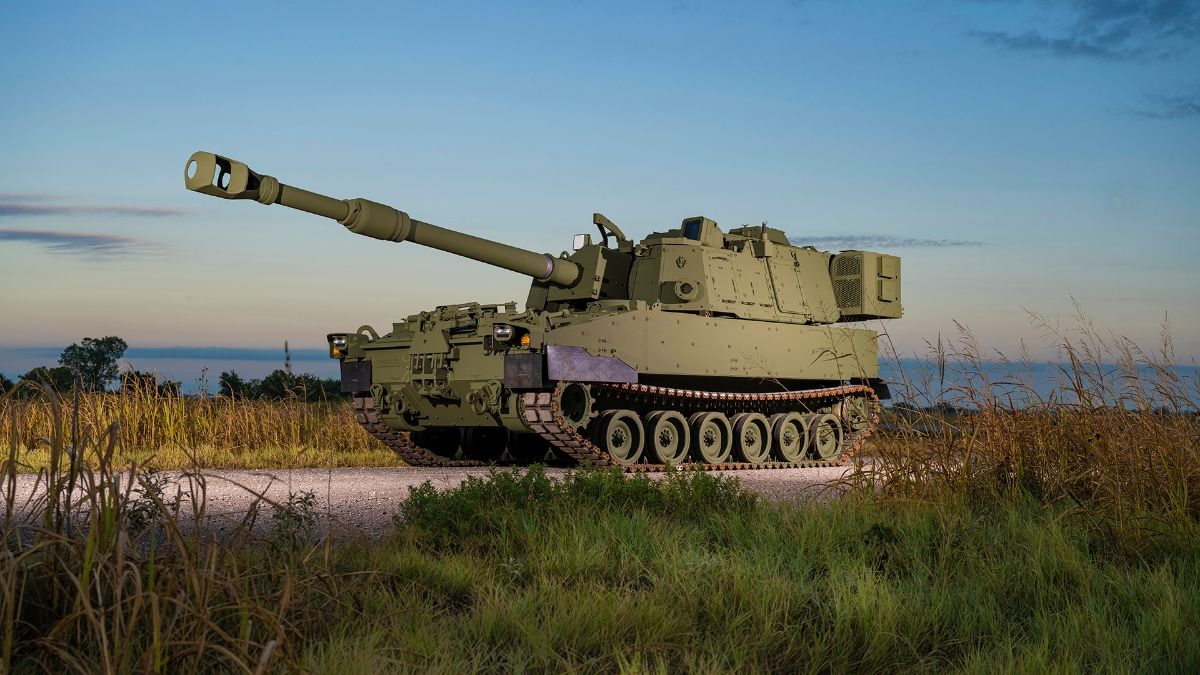
World
DETROIT ARSENAL, Michigan — May 15, 2026 : BAE Systems Land and Armaments has received a $535.6 million fixed-price-incentive contract from the U.S. Army for the production of self-propelled howitzer systems, tracked support vehicles, and total package fielding kits, according to a Department of Defense announcement released on May 14, 2026. The contract was awarded through Army Contracting Command at Detroit Arsenal, Michigan, and is scheduled to continue through December 31, 2029. The award supports continued production and sustainment of the Army’s tracked artillery fleet assigned to armored brigade combat teams. Although the Department of Defense did not specifically identify the vehicle variant in the contract notice, the award aligns with ongoing procurement of the M109A7 Paladin Integrated Management self-propelled howitzer and the M992A3 Carrier Ammunition Tracked vehicle. BAE Systems remains the Army’s sole domestic producer of the Paladin family of vehicles, with primary manufacturing operations located in York, Pennsylvania. The latest award follows a separate $473 million contract issued in January 2026 for 40 Paladin sets. Unlike a standard vehicle procurement contract, the May 2026 award includes broader fielding support packages intended to transition the systems into operational service. The package includes spare parts, specialized tools, technical manuals, training equipment, and other sustainment materials required for unit deployment and long-term operational readiness. M109A7 Modernization and Technical Specifications The M109A7 represents the latest modernization of the Army’s long-serving Paladin artillery platform. While retaining the 155 mm, 39-caliber M284/M284A2 cannon mounted on the M182A1 gun mount, the system integrates a redesigned chassis using common components from the Bradley Fighting Vehicle family, including the engine, transmission, and track systems. The self-propelled howitzer weighs approximately 84,000 pounds (38,101 kilograms) and operates with a four-person crew consisting of a commander, driver, gunner, and loader. The vehicle is powered by a 675-horsepower V903 engine and carries a 145-gallon fuel capacity. According to Army specifications, the M109A7 can achieve road speeds of approximately 38 miles per hour and has an operational range of about 186 miles. Mobility capabilities allow the vehicle to climb 60 percent longitudinal slopes, traverse 40 percent side slopes, cross trenches up to 72 inches wide, and ford water obstacles up to 42 inches deep. These mobility characteristics allow artillery units to maneuver alongside tanks and mechanized infantry during high-tempo combat operations while maintaining protected fire support capability. Firepower and Battlefield Role The M109A7 is designed to provide mobile long-range fire support under modern battlefield conditions. Standard 155 mm high-explosive projectiles allow engagement of targets at ranges between 22 and 24 kilometers, depending on ammunition type and propellant configuration. Rocket-assisted projectiles extend the range to approximately 30 kilometers. The system is also compatible with precision-guided munitions such as Excalibur, enabling accurate strikes against point targets while reducing collateral damage and ammunition expenditure. Modern battlefield conditions, including persistent unmanned aerial vehicle surveillance, counter-battery radar detection, and electronic warfare threats, have increased the importance of rapid displacement after firing missions. The M109A7 uses digital fire-control systems and onboard navigation equipment to conduct “shoot-and-scoot” operations, allowing crews to receive fire missions digitally, fire multiple rounds, and relocate before enemy targeting cycles can respond. M992A3 Ammunition Carrier Support Supporting the howitzer is the M992A3 Carrier Ammunition Tracked vehicle, which typically operates as part of a two-vehicle Paladin set. The armored ammunition carrier uses a related tracked chassis and can transport up to 98 artillery rounds or approximately 12,000 pounds of ammunition and supplies, depending on configuration. The vehicle enables artillery batteries to conduct resupply operations closer to frontline positions while reducing reliance on unarmored logistics vehicles operating in contested environments. This capability is considered increasingly important in conflicts involving drone surveillance and long-range precision fires. Strategic and Budgetary Context Continued procurement of the M109A7 follows the Army’s decision to terminate the Extended Range Cannon Artillery (ERCA) program, which had aimed to integrate a 58-caliber cannon onto the Paladin chassis to achieve significantly greater firing ranges. The ERCA effort was ended after testing revealed excessive barrel wear and technical limitations. While the Army evaluates future domestic and foreign artillery platforms under its Mobile Tactical Cannon requirement, the M109A7 continues to provide armored brigades with a fielded and operationally proven 155 mm artillery capability compatible with existing ammunition stocks, training systems, and maintenance infrastructure. The contract also reflects continued congressional support for the defense industrial base. The Army’s fiscal year 2026 budget request originally sought $250.2 million for 10 Paladin Integrated Management sets. Subsequent congressional appropriations increased available funding, with House appropriators identifying approximately $715 million for the program and the Senate FY2026 Defense Appropriations bill including an additional $464.8 million increase for Paladin Integrated Management procurement. Army procurement plans continue to target a total acquisition objective of 689 Paladin Integrated Management weapon systems, with estimated program costs exceeding $7.6 billion. Production of the vehicles and support systems at BAE Systems facilities in Pennsylvania, Oklahoma, and Alabama also sustains skilled labor, tracked vehicle manufacturing capacity, turret integration work, and artillery sustainment infrastructure while the Army develops future long-range cannon artillery systems.
Read More → Posted on 2026-05-15 14:21:49
World
PATUXENT RIVER, Md. — May 15, 2026 : The U.S. Navy is preparing to extend sustainment and technical support for the VAMPIRE counter-drone systems currently operated by the Ukrainian Navy, according to a presolicitation notice issued on May 14, 2026, by the Naval Air Warfare Center Aircraft Division (NAWCAD). The notice outlines a planned sole-source contract modification with Sierra Nevada Corporation for repairs, maintenance, sustainment materials, and technical assistance supporting systems deployed in Eastern Europe under NATO coordination. The action is intended to maintain operational readiness of VAMPIRE systems used by Ukrainian naval forces in active combat conditions. VAMPIRE System Developed for Rapid Deployment The VAMPIRE system, short for Vehicle-Agnostic Modular Palletized ISR Rocket Equipment, was developed by L3Harris Technologies and supplied to Ukraine as part of a U.S. military assistance package announced in July 2022. In January 2023, the U.S. Department of Defense awarded a contract valued at approximately $40 million covering 14 systems, with deliveries completed by the end of 2023. The platform combines a four-shot launcher with a WESCAM MX-10 RSTA targeting sensor capable of high-definition multi-spectral surveillance and laser designation. The system fires 70mm Advanced Precision Kill Weapon System (APKWS) laser-guided rockets originally designed for aircraft operations and later adapted for ground-launch counter-drone missions. In Ukrainian service, the APKWS rockets have been fitted with proximity fuzes intended to improve effectiveness against unmanned aerial vehicles (UAVs). The system provides a mobile kinetic intercept capability designed to counter Russian drone and missile attacks targeting coastal infrastructure, naval facilities, and operational positions. A defining feature of the VAMPIRE platform is its modular vehicle-agnostic configuration. The launcher package includes an independent power supply and can be mounted on commercial pickup trucks or flatbed vehicles in approximately two hours. This design has enabled Ukrainian forces to field the systems rapidly without relying on dedicated military vehicles or lengthy operator training requirements. Operational Role Within Ukrainian Naval Defense The Ukrainian Navy employs the VAMPIRE systems as part of a layered close-in air defense network protecting dispersed maritime and coastal assets. The systems are used to defend port infrastructure, naval facilities, and semi-fixed defensive positions that cannot always be covered by larger fixed air defense batteries. The platform’s mobility and relatively simple logistics allow Ukrainian forces to reposition the systems quickly across wide operational areas while maintaining protection against persistent Russian long-range strike threats. The use of commercially adaptable vehicles also reduces dependence on specialized support infrastructure. Sierra Nevada Corporation to Continue Sustainment Support Under the planned contract modification, Sierra Nevada Corporation will provide engineers, maintenance technicians, field service representatives (FSRs), and remote reach-back technical support for deployed systems. Sustainment activities will take place both within the continental United States and at forward operating locations supporting Ukrainian naval operations. The company previously received a contract worth nearly $15 million in September 2025 to provide counter-UAS maintenance and sustainment services for the Ukrainian Navy. SNC is also known for developing the Battery Revolving Adaptive Weapons Launcher (BRAWLR). According to the NAWCAD notice, the Navy justified the sole-source action on the basis that SNC is the only responsible source capable of meeting the requirement within the “critical fleet timeline.” The notice cited the company’s secure facility access and detailed familiarity with the deployed system configurations as key factors supporting the decision. Accelerated Acquisition Timeline The presolicitation notice was issued for informational purposes and does not invite competitive proposals. The response deadline is scheduled for May 29, 2026, with an inactive date of June 13, 2026, indicating that the Navy intends to complete the contract modification on an accelerated schedule. The timeline reflects the operational demands associated with sustaining military equipment in active combat environments, where spare parts consumption, maintenance requirements, and field repair demands increase significantly compared to peacetime operations. The sustainment effort highlights the broader U.S. approach to supporting Ukraine’s military capabilities through contractor-backed logistics, maintenance, and technical assistance programs designed to maintain long-term operational readiness of supplied defense systems.
Read More → Posted on 2026-05-15 14:31:57
World
ABU DHABI, — May 15, 2026 : The United Arab Emirates is accelerating construction of a major crude oil pipeline project linking Abu Dhabi’s onshore oil fields to the Port of Fujairah, as the country moves to strengthen export routes outside the Strait of Hormuz and expand national production capacity by 2027. The project, known as the West-East Pipeline expansion, is being fast-tracked under directives issued by Abu Dhabi Crown Prince Sheikh Khaled bin Mohamed bin Zayed to the Abu Dhabi National Oil Company (ADNOC). The new pipeline will run from the Habshan oil fields in Abu Dhabi to Fujairah on the Gulf of Oman, creating additional export capacity that bypasses the Strait of Hormuz. The UAE currently operates the Abu Dhabi Crude Oil Pipeline (ADCOP), also known as the Habshan–Fujairah pipeline, which was commissioned in 2012. The pipeline stretches approximately 360 to 406 kilometres and currently transports between 1.5 million and 1.8 million barrels of crude oil per day. During the ongoing regional conflict, the route has remained one of the UAE’s most important export channels as shipping traffic through the Strait of Hormuz faced major disruption. Upon completion of the new pipeline in 2027, the UAE’s combined transport capacity to Fujairah is expected to increase to approximately 3.3 million barrels per day. When combined with Fujairah’s storage terminals and loading infrastructure, total export capability from the port could reach nearly 4 million barrels per day. Fujairah has become a major international energy hub due to its strategic position on the Gulf of Oman outside the Strait of Hormuz. The emirate is currently regarded as the world’s third-largest storage hub for crude oil and refined petroleum products. UAE officials view the pipeline expansion as a critical component of the country’s long-term strategy to maintain reliable exports during periods of regional instability. The infrastructure expansion follows a major shift in the UAE’s energy policy after the country formally exited the Organization of the Petroleum Exporting Countries (OPEC) and the wider OPEC+ alliance on May 1, 2026. UAE officials said the decision followed a comprehensive review of national energy priorities and was intended to provide greater flexibility in production planning and export operations. Minister of Energy and Infrastructure Suhail Mohamed Al Mazrouei recently confirmed that the UAE is pursuing a target of increasing national crude production capacity to 5 million barrels per day by 2027. Officials stated that the Fujairah expansion will support higher output levels and help address growing global demand amid continuing wartime supply disruptions. The accelerated construction effort also reflects rising security concerns across the Gulf region. The Strait of Hormuz, through which approximately one-fifth of global oil supplies normally transit, has experienced severe disruption following Iranian military actions linked to the broader regional conflict earlier this year. While the underground pipeline system itself has not been directly targeted, associated energy infrastructure has sustained damage from Iranian missile and drone attacks. Facilities affected include sections of the Habshan natural gas processing complex and oil storage infrastructure near the Port of Fujairah. The disruption to Gulf shipping routes has contributed to higher global energy prices and fuel supply pressures in multiple countries. Market analysts said the UAE’s expanding bypass infrastructure could play an increasingly important role in improving supply resilience and reducing the impact of future disruptions in the Strait of Hormuz.
Read More → Posted on 2026-05-15 14:40:19
World
KHASAN, Russia / TUMANGANG, North Korea — May 15, 2026 : North Korea and Russia have completed the structural linking of a new automobile bridge across the Tumen River, a major cross-border infrastructure project designed to strengthen trade, transportation and logistics cooperation between the two countries. Officials from both governments stated that the bridge is scheduled to open for traffic on June 19, 2026. The project, known as the Khasan–Tumangang Bridge, marks the first direct road connection between Russia and North Korea. It supplements the existing Korea–Russia Friendship Bridge, a rail-only crossing located several hundred metres to the west. Bridge Connection Completed A ceremony marking the joining of the bridge spans was held on April 21, 2026, following more than a year of construction work. The project began in March–April 2025 after an agreement reached during a June 2024 summit between Russian President Vladimir Putin and North Korean leader Kim Jong-un in Pyongyang. Recent satellite imagery and construction updates show that the bridge structure has nearly been completed. The road deck has been installed over recent months, while temporary earth embankments placed in the Tumen River during construction are being removed as final works continue. Technical Specifications The bridge is located approximately 415 metres east of the existing railway crossing between Khasan in Russia and Tumangang in North Korea. The structure measures 1,005 metres in total length, including 581 metres on the North Korean side and 424 metres on the Russian side. The bridge features a two-lane roadway with a seven-metre-wide deck intended to support commercial and passenger traffic. According to official project data, construction required approximately 5,000 tons of metal structures and more than 9,000 cubic metres of concrete. Transport authorities estimate the crossing will be capable of handling up to 300 vehicles and approximately 2,850 people per day once fully operational. Border Infrastructure Development Both countries have simultaneously expanded border infrastructure to support the expected increase in cross-border movement. Russia is modernising the Khasan border checkpoint and constructing a 2.4-kilometre bypass road that will connect the bridge directly to the regional highway network in the Russian Far East. On the North Korean side, authorities have been developing a new border and customs complex covering roughly five square kilometres. The site includes customs buildings, warehouses, parking areas and a vehicle maintenance facility expected to function as a truck transfer hub. New structures have also appeared near both ends of the bridge and are expected to serve customs and border control operations. Road Connectivity and Construction Progress Although the bridge structure has been linked, some connecting road infrastructure on the North Korean side remains under development. Construction assessments previously indicated that direct road links between the new customs facilities and North Korea’s broader domestic road network were still limited. However, finishing works have continued steadily ahead of the planned opening date. Economic and Strategic Importance The new crossing is intended to improve logistics and expand trade, tourism and humanitarian exchanges between Russia and North Korea. Until now, cross-border transport has largely depended on the existing railway link, where freight transfers have been affected by differences in railway gauge systems. Russia uses broad-gauge railways, while North Korea operates standard-gauge lines. The new road bridge is expected to reduce reliance on rail transfers and simplify cargo transportation between the two countries. Officials in both Moscow and Pyongyang have described the project as an important element of expanding bilateral economic cooperation and transport connectivity. Regional Attention The development has also attracted attention from neighbouring countries due to the strategic location of the lower Tumen River near the borders of North Korea, Russia and China. In late May 2026, Chinese diplomats and regional officials reportedly inspected customs facilities in the nearby tri-border region. China has continued to monitor developments affecting regional transport access and maritime connectivity toward the East Sea, also known internationally as the Sea of Japan.
Read More → Posted on 2026-05-15 14:50:05
World
ABU DHABI — May 15, 2026 : Emirati state-owned defence conglomerate EDGE Group has released operational test footage of its SHADOW 25 jet-powered loitering munition in a newly demonstrated canister-launched configuration, highlighting the platform’s role as a rapid-response precision strike system designed for use in electronically contested environments. Developed by EDGE subsidiary ADASI, the SHADOW 25 is a medium-class one-way attack drone intended to conduct long-range precision strikes against fixed and hardened above-ground targets while maintaining a reduced logistical footprint and rapid deployment capability. Platform Specifications and Operational Performance According to company specifications and published datasheets, the SHADOW 25 carries a 25-kilogram warhead and has a baseline operational range of 250 kilometres, while some EDGE documentation lists a maximum range of up to 295 kilometres depending on mission profile and launch configuration. The system provides one hour of endurance, allowing it to loiter over a designated target area prior to terminal engagement. Cruise speed is listed at approximately 400 kilometres per hour, although EDGE Group materials indicate operational speeds can reach up to 450 kilometres per hour. The aircraft has a length of 2.25 metres, a wingspan of 2.15 metres and a maximum take-off weight ranging from 90 to 103 kilograms depending on the selected launch configuration. The platform can operate at altitudes of up to 20,000 feet and supports a datalink range of 100 kilometres. Canister Launch Configuration The newly released footage confirmed the operational use of the SHADOW 25’s sealed canister-launch architecture, designed to reduce deployment time and simplify field operations. Stored directly inside its launch canister, the munition can be launched using a rocket-assisted booster without requiring extensive assembly, dedicated launch rails or complex pre-flight preparation procedures. EDGE Group stated that the system can move “from standby to airborne in seconds,” enabling rapid strike response during time-sensitive missions. The canisterized configuration is intended to support expeditionary and mobile strike operations by minimizing logistical requirements and reducing the infrastructure needed for deployment. In addition to the canister launch method, ADASI states that the SHADOW 25 can also be deployed using a pneumatic launcher, providing operational flexibility based on available infrastructure and mission requirements. Guidance and Electronic Warfare Resilience The SHADOW 25 incorporates a multi-mode navigation and targeting system intended to maintain effectiveness in environments affected by electronic warfare, satellite navigation interference and GPS spoofing. The platform combines Global Navigation Satellite System (GNSS) navigation with visual navigation and optical guidance systems. According to company information, the onboard video navigation capability enables the munition to identify, track and confirm targets using camera imagery during terminal engagement phases, ensuring strike accuracy even if satellite navigation signals are degraded or denied. The system has been developed with operational conditions in electronically contested environments in mind, including regions where GPS jamming and signal disruption have become increasingly common. Domestic Production and Sovereign Capability EDGE Group was established in 2019 through the consolidation of more than 25 Emirati defence and technology entities and has since expanded across autonomous systems, precision-guided munitions, electronic warfare and advanced defence technologies. The SHADOW 25 forms part of the company’s broader SHADOW family of loitering munitions, which also includes the larger SHADOW 50 system. In February 2023, the United Arab Emirates awarded a contract valued at approximately $330 million for the acquisition of SHADOW 25 and SHADOW 50 systems for the country’s armed forces. The programme reflects the UAE’s broader strategy to expand sovereign defence manufacturing capabilities and reduce dependence on foreign suppliers for advanced strike systems. By producing the SHADOW 25 domestically, the UAE retains control over the platform’s supply chain, operational parameters and deployment doctrine while avoiding foreign export licensing and re-export restrictions associated with imported loitering munitions. The SHADOW 25 is positioned among a growing class of jet-powered loitering munitions that have gained increased international attention following recent operational use of autonomous strike systems in regional and international conflicts.
Read More → Posted on 2026-05-15 15:17:53 Ukrainian Drone Strike Destroys Be-200 Amphibious Aircraft and Hit Ka-27 Helicopter at Yeysk Airbase
World
YEYSK, Russia / KYIV — May 15, 2026 : Ukraine’s Unmanned Systems Forces (USF) carried out a coordinated overnight drone operation on May 15 targeting Russian military infrastructure across multiple regions, including a strike on the Yeysk military airbase in Russia’s Krasnodar Krai that destroyed a rare Beriev Be-200 amphibious aircraft and damaged a Ka-27 naval helicopter. According to Robert “Madyar” Brovdi, commander of the Ukrainian Unmanned Systems Forces, the attack on Yeysk was conducted by operators from the 1st Separate Center of the USF in coordination with the Deep Strike Centre of the Unmanned Systems Forces. The operation formed part of a wider campaign involving 55 fire strikes against 23 Russian military targets. Strike on Yeysk Airbase Footage released following the attack showed the complete destruction of the Be-200 aircraft on the airfield. Satellite imagery published on May 15 later confirmed the loss of the aircraft, identified as a Be-200PS amphibious platform. The Be-200 “Altair” is a jet-powered amphibious aircraft capable of operating from both conventional runways and water surfaces. Russia has historically struggled to produce the aircraft in large numbers, making it a relatively rare asset within Russian aviation. Powered by two D-436TP turbofan engines, the aircraft has a maximum speed of approximately 720 kilometers per hour and a range of up to 3,850 kilometers. In transport configuration, it can carry up to 72 passengers, while in firefighting missions it is capable of dropping up to 12 tons of water. Although commonly associated with firefighting operations, the aircraft is also used for maritime patrol, cargo transport and search-and-rescue missions. The estimated value of the destroyed aircraft is between $30 million and $40 million. Ka-27 Helicopter Hit A Russian Ka-27 helicopter was also struck during the operation. Drone targeting footage released by Ukrainian forces showed the helicopter positioned beneath a netted protective structure apparently intended to reduce vulnerability to drone attacks. The full extent of the damage to the helicopter remains under assessment. The Ka-27 is a ship-based multirole helicopter primarily designed for anti-submarine warfare, while also performing patrol, transport and search-and-rescue missions. The helicopter is estimated to have a value of approximately $15 million. Strategic Role of the Airbase Residents in Yeysk reported hearing multiple explosions shortly after 1:00 a.m. local time and posted images and videos on social media showing fires near the airfield area. The Yeysk airbase is one of Russia’s key naval aviation facilities and has been used throughout the war to support combat operations against Ukraine. The base hosts the 859th Center for Combat Employment and Retraining of Naval Aviation Flight Personnel of the Russian Navy. The facility also contains the NITKA ground-based aviation training complex, a specialized system designed to simulate the deck of an aircraft carrier. The installation allows Russian naval aviation pilots to practice carrier-style takeoff and landing procedures without deploying aboard an operational aircraft carrier. Wider Overnight Operation Ukrainian officials stated that the overnight operation targeted military and logistics infrastructure across several regions, including occupied Crimea, Donetsk, Zaporizhzhia and Luhansk oblasts, as well as locations in Taganrog and Berdyansk. Additional reported targets included a Pantsir-S1 air defence system in occupied Crimea, a Tor-M2 air defence system in Luhansk Oblast, a Russian army training center and a dry cargo vessel carrying ammunition in the port of Berdyansk. The strikes on Yeysk occurred simultaneously with a separate drone attack on the Ryazan Oil Refinery, located southeast of Moscow, reflecting Ukraine’s continued strategy of targeting both front-line military infrastructure and rear-echelon logistics facilities inside Russian-controlled territory.
Read More → Posted on 2026-05-15 15:30:52
World
WASHINGTON — May 15, 2026 : The F-35 Joint Program Office (JPO) is preparing a major cybersecurity upgrade for the F- 35 Lightning II fighter aircraft by integrating quantum-resistant cryptographic algorithms into its core encryption systems, reflecting growing concerns over advances in quantum computing and their future impact on military networks and combat platforms. The planned modification focuses on the aircraft’s In-Line File Encryption Device (IFED), a critical hardware and software component responsible for encrypting and protecting signed code within the fighter’s systems. The device functions as a security gateway that verifies software authenticity and prevents unauthorised or tampered code from operating on the aircraft. According to a presolicitation notice issued through Naval Air Systems Command on May 6, 2026, the Joint Program Office intends to award a sole-source contract to Lockheed Martin Aeronautics under Federal Acquisition Regulation 6.103-1 to carry out the software modification. Capability statements from other interested contractors are due by May 21, 2026. The Joint Program Office stated that the upgrade must be deployable through standard software update procedures at operational bases worldwide without requiring technicians to physically open the encryption device. The requirement is intended to simplify implementation across the global F-35 fleet while maintaining operational readiness. Transition to Post-Quantum Cryptography The upgrade forms part of a broader U.S. government effort to transition military systems toward post-quantum cryptography standards developed by the National Institute of Standards and Technology (NIST). Current public-key cryptographic systems, including Rivest-Shamir-Adleman (RSA) and elliptic curve cryptography (ECC), rely on mathematical problems that are difficult for classical computers to solve. However, sufficiently advanced quantum computers could potentially break these encryption methods using algorithms such as Shor’s algorithm, creating long-term risks for military communications, navigation systems and software authentication. Security officials have increasingly warned of a “harvest now, decrypt later” scenario in which adversaries collect encrypted military data today for future decryption once practical quantum computing systems become available. To address these vulnerabilities, NIST launched its post-quantum cryptography standardisation initiative in 2016. The programme selected several new algorithms designed to resist quantum attacks, including ML-KEM (formerly CRYSTALS-Kyber) for secure key exchange, along with ML-DSA (formerly CRYSTALS-Dilithium), FALCON and SPHINCS+ for digital signature protection. The F-35 is among the first operational U.S. military platforms publicly identified to implement these government-mandated post-quantum standards. Wider F-35 System Hardening The cryptographic update is part of a broader effort to strengthen several F-35 subsystems that rely on secure data exchange and encrypted communications. Affected systems include the Multifunction Advanced Data Link, Link 16 tactical communications network, M-code GPS receivers and mission data file systems used for sensor fusion, targeting, navigation and combat coordination. The F-35 Lightning II functions as a highly networked combat platform containing millions of lines of software code supporting sensors, weapons integration, electronic warfare systems and secure communications with allied aircraft and command centres. Protecting these systems from future cyber threats is considered essential to maintaining operational effectiveness in contested environments. Initial deployment of post-quantum cryptographic protections across affected F-35 systems is expected between 2027 and 2030. China’s Expanding Quantum Programme The urgency surrounding the programme aligns with China’s rapid expansion in quantum computing, communications and sensing technologies. Chinese President Xi Jinping has integrated quantum technology into China’s national security strategy and previously described it as an “advance-handed piece on the board,” comparing it to gaining a strategic advantage in the game of Go. China’s 14th Five-Year Plan released in 2021 identified quantum communications, quantum computing and precision measurement as strategic priority sectors. Recommendations tied to the country’s upcoming 15th Five-Year Plan (2026–2030) further classify quantum technology as a major future driver of economic and technological development. In 2016, China launched the Micius quantum science satellite into sun-synchronous orbit at an altitude of approximately 500 kilometres. The satellite successfully demonstrated long-distance quantum key distribution using entangled photons over distances of around 1,200 kilometres, establishing the foundation for secure quantum communication networks. Quantum Radar and Stealth Concerns Quantum technologies are also being studied for sensing applications that could affect future air combat and stealth survivability. Quantum radar concepts rely on a process known as quantum illumination. Under this approach, a radar system generates entangled photon pairs, transmitting one stream toward a target while retaining the paired reference stream at the radar site. If reflected photons return, the system compares them with the stored reference photons to distinguish targets from background noise with greater sensitivity than conventional radar systems. Researchers believe this method could theoretically improve the detection of low-observable aircraft, including stealth platforms such as the F-35 Lightning II, particularly in environments with heavy background clutter and weak radar returns. China has also reported progress in the development and production of single-photon detectors associated with quantum radar and sensing research. Strategic and Cybersecurity Implications Military analysts increasingly view quantum computing as a technology with broad implications for cyber warfare, artificial intelligence, military communications and defence system design. A 2019 paper published by the U.S. Army Command and General Staff College’s School of Advanced Military Studies concluded that the potential impact of large-scale quantum-enabled cyberattacks had elevated the issue to a level comparable to nuclear deterrence discussions during the Cold War. The study argued that the anticipated severity of future quantum cyber capabilities could influence strategic stability and create strong incentives for nations possessing advanced quantum systems to avoid direct confrontation. For the United States, the F-35 cryptographic upgrade represents an early operational step toward protecting frontline combat systems against future quantum-powered cyber threats while preserving the aircraft’s software integrity, communications security and mission effectiveness in potential high-intensity conflicts, particularly in the Indo-Pacific region.
Read More → Posted on 2026-05-15 15:48:40
World
EGLIN AIR FORCE BASE, Fla. — May 15, 2026 : The first publicly known images of the AIM-260 Joint Advanced Tactical Missile (JATM) have emerged following a U.S. Navy flight test conducted on May 13, 2026, offering the clearest view to date of the highly classified long-range air-to-air missile being developed to replace the AIM-120 Advanced Medium-Range Air-to-Air Missile (AMRAAM). The missile was photographed mounted on a VX-31 test squadron F/A-18F Super Hornet before departure from Eglin Air Force Base. Identified by red and yellow hazard bands indicating a live round, the AIM-260 was attached to one of the aircraft’s fuselage weapon stations typically used for AIM-120 missiles or targeting pods. According to aviation photographer Jonathan Tweedy, the aircraft departed at approximately 11:13 a.m. CST as part of a larger test formation operating over the Gulf of Mexico. The formation included a VX-9 E/A-18G Growler, another VX-31 F/A-18F Super Hornet, and an additional VX-9 F/A-18F. A Tyndall Air Force Base-based E-9A Widget surveillance aircraft was also airborne in the area to clear maritime and airspace traffic during the weapons testing activity. The VX-31 Super Hornet returned roughly one hour later without the missile attached, indicating that the sortie likely involved either a separation test or a live missile firing. Tweedy noted that the configuration and markings of the missile were consistent with an operational test article rather than a captive-carry training round. Missile Design and Configuration The newly released photographs closely match a rendering published by the U.S. Navy in 2025, which the U.S. Air Force later confirmed accurately represented the missile’s external design. Visual analysis shows that the AIM-260 retains a similar overall form factor to the AIM-120 AMRAAM, a requirement intended to preserve compatibility with existing launch rails and the internal weapons bays of stealth aircraft such as the F-22 Raptor and F-35 Lightning II. However, the missile incorporates several major aerodynamic changes compared to its predecessor. Unlike the AIM-120, the AIM-260 lacks mid-body control surfaces and instead uses four trapezoidal tail fins for stabilization and maneuvering. The missile also appears to feature a significantly larger rocket motor section, supporting assessments that it uses either a dual-pulse solid rocket motor or advanced high-energy propellant technology to maintain speed and energy during the terminal phase of flight. Defense assessments estimate the missile’s range at more than 200 kilometres, with reported minimum requirements around 190 kilometres. Maximum speed is estimated at approximately Mach 5. The missile is expected to use inertial mid-course guidance supported by a two-way datalink and a next-generation Active Electronically Scanned Array (AESA) radar seeker with enhanced electronic counter-countermeasure capabilities. Development and Earlier Testing The AIM-260 program is jointly managed by the U.S. Air Force and U.S. Navy and has been under development since 2017. The program was publicly acknowledged in 2019 as part of efforts to maintain a range and performance advantage over advanced foreign air-to-air missile systems, particularly China’s PL-15 and PL-17 missiles. The May 13 flight followed earlier sensor and integration trials conducted in March 2026. Between March 24 and March 26, a modified Northrop Grumman CRJ-700 testbed aircraft, registered as N806X and operating under the callsign “SCAN 06,” conducted flights over the Gulf of Mexico alongside a Raytheon-operated Boeing 727 test aircraft using the callsign “VOODOO 1.” The CRJ-700 featured a modified nose radome shaped similarly to the AIM-260 and was used to support testing of sensors, telemetry systems and communications equipment associated with the missile program. Budget Expansion and Planned Deployment Recent U.S. Department of Defense budget documents show a major planned increase in AIM-260 procurement and development funding as the program moves toward large-scale production. Projected spending for the missile program is estimated at approximately $15.6 billion over the coming years. Funding is expected to increase sharply from approximately $894 million in Fiscal Year 2026 to around $2.9 billion in Fiscal Year 2027. The AIM-260 has reportedly been in low-rate production since 2024, while flight testing has been underway since at least 2020. The timeline for initial operational capability remains classified. Although primarily intended for U.S. military use, the missile has also been approved for export through foreign military sales channels. The United States recently cleared a procurement package for the Royal Australian Air Force covering up to 450 AIM-260 missiles in a deal valued at more than $2.6 billion. The missile is expected to enter service first on the F-22 Raptor and F/A-18 Super Hornet, followed by integration onto the F-35 Lightning II, F-15EX Eagle II and future Collaborative Combat Aircraft unmanned systems. The AIM-260 is intended to complement continued modernization of the AIM-120 AMRAAM while extending engagement range and preserving compatibility with existing fighter aircraft weapon stations in contested operational environments.
Read More → Posted on 2026-05-15 15:57:36
World
BEIJING — May 15, 2026 : The United States delegation accompanying President Donald Trump during a high-level visit to China implemented extensive counter-intelligence and cybersecurity measures throughout the trip, including the disposal of all Chinese-provided items before boarding Air Force One for departure from Beijing on May 15, 2026. According to members of the traveling press corps, U.S. officials ordered that every item distributed by Chinese hosts—including gifts, commemorative pins, badges, press credentials and other materials—be discarded in designated trash bins positioned near the aircraft. No Chinese-origin items were permitted aboard Air Force One. The procedures also applied to American journalists traveling with the delegation. U.S. government personnel collected all materials issued to reporters by Chinese authorities, including temporary press credentials, delegation badges and burner phones used during the visit. Reporters were instructed that none of the items could be retained after departure. New York Post correspondent Emily Goodin reported that White House staff gathered accreditations, disposable phones, delegation pins and other locally issued materials at the base of the Air Force One boarding ramp before takeoff. Extensive Digital Security Measures The disposal of physical items formed part of a broader security framework implemented during the visit to reduce the risk of surveillance, cyber intrusion and unauthorized data collection. Members of the U.S. delegation did not travel with personal mobile phones, laptops or personal electronic devices. Instead, officials used temporary “clean” hardware prepared specifically for the trip, including stripped-down burner phones and temporary laptops configured with enhanced security protections. Communication methods were also tightly controlled during the visit. Standard messaging applications and synchronized communication systems were restricted, with many discussions conducted through temporary accounts, secure government-controlled channels or direct in-person meetings. Officials additionally avoided using local charging infrastructure, including USB charging stations, charging ports and locally sourced cables, due to concerns that compromised hardware could potentially be used to install malicious software or extract sensitive data from electronic devices. Corporate Executives Followed Same Procedures The security measures extended beyond government personnel. Senior executives traveling with the president from major American companies, including Apple, Boeing, Qualcomm and BlackRock, also followed the same operational security procedures during the Beijing visit. The trip included meetings between President Trump and Chinese President Xi Jinping focused on trade, technology, supply chains and broader security issues between the two countries. Longstanding Counter-Intelligence Protocols U.S. officials stated that the measures were consistent with longstanding government counter-intelligence procedures applied during high-level visits to countries considered elevated cyber and espionage environments. By relying on temporary hardware, restricting communications systems and disposing of all locally acquired materials before departure, U.S. authorities sought to minimize both physical and digital exposure before the presidential aircraft returned to the United States.
Read More → Posted on 2026-05-15 16:10:34
World
MELBOURNE, Florida — May 15, 2026 : L3Harris Technologies has unveiled Wraith Shield, a new software-defined counter-drone capability designed to convert existing tactical radios into systems capable of detecting, classifying and jamming first-person view (FPV) drones and other small unmanned aerial systems (sUAS) without requiring additional hardware. The capability was developed in partnership with DataShapes AI and is intended to provide frontline troops with an integrated electronic warfare tool using equipment already deployed across military formations. Software Upgrade Adds Counter-Drone Capability Wraith Shield operates by using the radio-frequency (RF) data already collected by tactical communication radios. The software scans the electromagnetic environment in real time, detects drone control signals and sends threat information directly to operators through their existing communication devices. DataShapes AI’s GlobalEdge platform provides the edge-native artificial intelligence layer that processes and classifies incoming RF signals locally at the tactical edge, eliminating the need for centralized cloud-based processing. Once a hostile drone signal is identified, operators can initiate jamming of the drone’s control link directly from the radio interface. According to the companies, the process significantly shortens the time between threat detection and electronic engagement by combining sensing and response functions within a single battlefield device. Initial Deployment on AN/PRC-171 Radios The software capability is built on L3Harris’ Wraith wideband waveform, which was originally developed to provide secure and resilient tactical communications in contested electronic warfare environments. Wraith Shield will initially be fielded on the AN/PRC-171 Compact Team Radio, also known as the RF-9820S, along with its embeddable RF-9820S-ER configuration later in 2026. Following the initial rollout, the software will be expanded across the broader Falcon IV family of Wraith-compatible radios, including the AN/PRC-158C, AN/PRC-163 and AN/PRC-167 tactical radio systems. L3Harris stated that the software upgrade could eventually be integrated into more than 100,000 tactical radios already fielded by the United States military, NATO members, Five Eyes partners and allied nations. Distributed Counter-UAS Network When multiple Wraith Shield-equipped radios are connected together, the system can function as a distributed sensor and electronic attack network. The current software version can coordinate simultaneous jamming operations across up to 40 connected radios, while future upgrades are planned to increase that capacity to approximately 100 synchronized units. The networked capability is designed to feed data into broader command-and-control and battlefield management architectures, including MissionOps tactical network management systems, hC2 battle management suites and layered air defense platforms such as the VAMPIRE counter-drone system. No Additional Hardware or Training Required L3Harris emphasized that the capability does not require new antennas, batteries or external electronic warfare equipment. Instead, Wraith Shield uses the existing transmitters and hardware already carried by infantry personnel. The company stated that the software upgrade adds no additional physical weight or logistical burden to frontline troops and can be operated through existing radio interfaces without requiring separate operator training. Chris Aebli, president of Mission Critical Communications at L3Harris, said the capability can be integrated at a cost in the single-digit thousands of dollars per radio. Response to Growing FPV Drone Threats The development of Wraith Shield comes amid increasing military focus on countering low-cost FPV drones, which have emerged as a major battlefield threat in recent conflicts, particularly during Russia’s war against Ukraine. L3Harris said its Rapid Prototyping Group began developing the capability last year in response to the growing operational use of commercial and improvised drone systems in combat zones. The announcement reflects a broader industry trend toward software-defined electronic warfare and counter-UAS solutions that leverage existing military hardware instead of relying solely on dedicated counter-drone platforms. The company noted that Wraith Shield can operate both as a standalone counter-drone capability against commercial drone command links and as part of larger integrated electronic warfare and layered air defense architectures. The release also follows previous L3Harris initiatives focused on software-defined autonomous systems, including the development of software architectures capable of coordinating large-scale drone swarm operations for future military applications.
Read More → Posted on 2026-05-15 17:07:11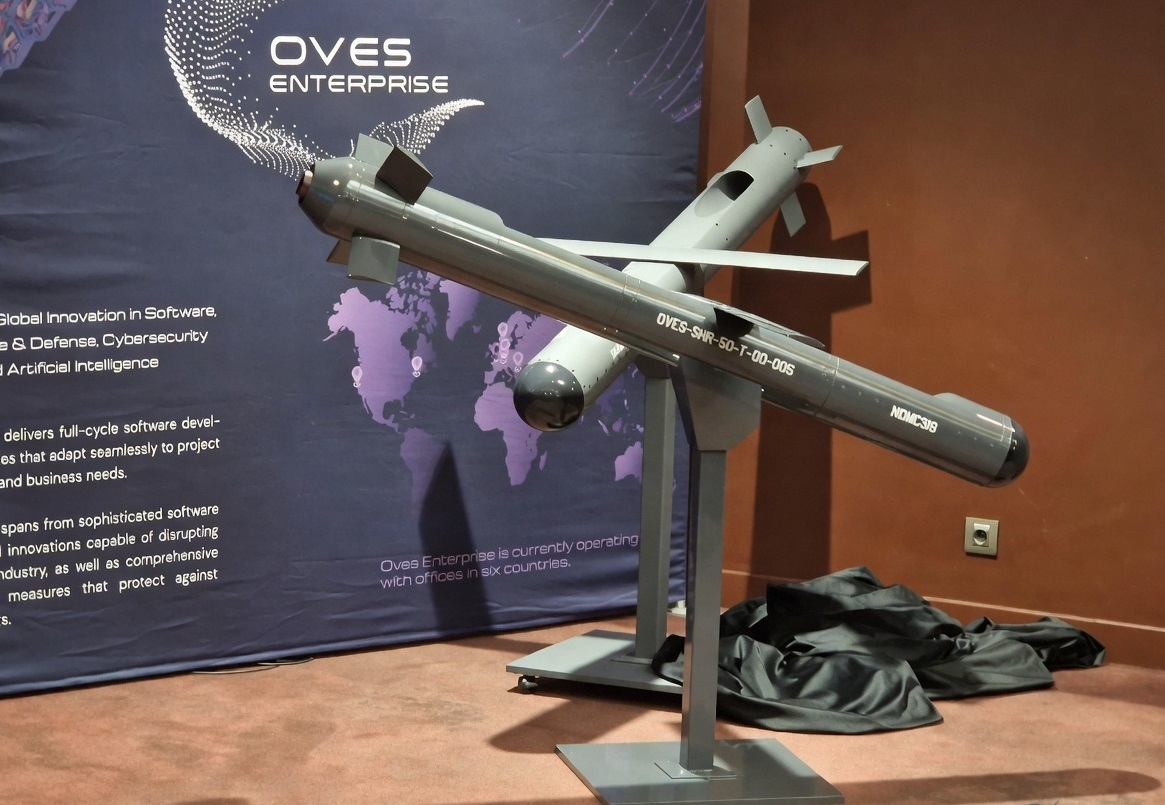
World
BUCHAREST — May 15, 2026 : Romanian technology company Oves Enterprise officially unveiled its Sahara Autonomous System, an AI-enabled low-cost cruise missile, during the Black Sea Defense, Aerospace and Security (BSDA) 2026 exhibition held at the ROMAERO facility in Bucharest from May 13 to 15. The Sahara is being presented as the first cruise missile developed entirely within Romania’s private sector, reflecting the growing role of smaller national defense industries in developing affordable long-range precision strike systems. The debut attracted high-level political attention, with Romanian Senate President Mircea Abrudean, Senate Vice President Mihai Coteț and Economy Minister Irineu Darău visiting the company’s exhibition stand during the event. The presence of senior officials highlighted government interest in domestic autonomous strike and defense technologies. Compact Cruise Missile Design According to specifications released by Oves Enterprise, the Sahara has a launch weight of 55 kilograms and can carry a payload of up to 10 kilograms. The missile is powered by a miniature turbojet engine producing 310 newtons of thrust and carries approximately 20 kilograms of fuel. The current configuration provides an operational radius of 200 kilometres and a projected maximum speed of Mach 0.85, depending on the final aerodynamic configuration. From Romanian territory, the missile’s range would provide coverage across significant sections of the Black Sea region. The system is designed to operate at very low altitude using a terrain-following flight profile. Sahara cruises at approximately 50 metres above ground level, autonomously adjusting its flight path to follow terrain contours. The low-altitude profile is intended to reduce radar detectability by exploiting terrain masking and ground clutter, complicating interception by integrated air defense systems. AI-Based Guidance and Autonomy Oves Enterprise stated that Sahara was designed as an AI-enabled autonomous weapon system rather than a conventionally guided munition. The missile integrates the company’s proprietary Nemesis AI platform, which manages onboard data processing, target identification, route adaptation, mission configuration and terminal guidance functions. The company said the missile’s software, avionics, electronics and flight-control systems were developed together as part of a fully integrated architecture. Nemesis AI operates in an on-premise mode, allowing operators to configure mission parameters and AI models locally before launch. The system is also intended to operate in electronically contested environments. If satellite navigation signals are jammed or spoofed, the missile can transition to an inertial navigation mode using onboard motion and orientation measurement systems to maintain stability and continue toward its assigned target. “We built this project as a complete system, because real autonomy cannot be achieved otherwise,” said Mihai Filip. “Everything is made in Romania, including the AI processing board; practically, the brain of the Sahara missile is built by us 100% in Romania.” Development Program and Future Plans Oves Enterprise invested more than 1 million euros in the research and development of the Sahara program. The project was developed by a team of 25 engineers and specialists in artificial intelligence, avionics and flight systems. The company plans to invest an additional 2 million euros in future testing, optimization and refinement phases. Oves Enterprise, which recently reached a reported valuation of 298 million euros, is also seeking to raise an additional 55 million euros to support future expansion and development activities. The Sahara project was first announced in November 2025 and reached an advanced stage of development by February 2026, when the system was initially presented publicly in Bucharest. Its appearance at BSDA 2026 marked the missile’s official exhibition debut. Initial live flight demonstrations are scheduled for May 2026, while a broader presentation of the missile’s operational capabilities is planned for the end of 2027. Follow-On Variants Planned Oves Enterprise stated that additional Sahara variants are planned with significantly extended operational ranges. Future versions are expected to achieve ranges between 500 and 600 kilometres, while larger variants could reach between 900 and 1,100 kilometres. The company estimates that the smallest Sahara configuration could be produced for approximately 150,000 euros per unit, positioning the system as a comparatively lower-cost precision strike platform. Despite the public unveiling, the Sahara remains in the testing and demonstration phase. Oves Enterprise has not announced completed flight qualification trials, procurement agreements with the Romanian armed forces or confirmed export customers. The program nevertheless reflects broader efforts among smaller defense industries to develop affordable precision strike capabilities shaped by operational lessons observed in recent conflicts, including the war in Ukraine.
Read More → Posted on 2026-05-15 17:17:13
World
WIESBADEN, Germany — May 15, 2026 : The United States Army and NATO allies have demonstrated an integrated digital kill chain during Exercise Arcane Thunder 26, combining high-altitude sensing balloons, targeting drones and M142 High Mobility Artillery Rocket System (HIMARS) launchers to accelerate battlefield detection and precision strike coordination across contested operational environments. The multidomain exercise, conducted from April 6 to April 29, 2026, across Germany, Poland and the United States, was reported by the U.S. Mission to NATO on May 15. The training event focused on improving the connection between aerial surveillance systems, digital command networks and long-range fires as NATO continues expanding multidomain warfare capabilities along the alliance’s eastern flank. Integrated Sensor Network At the center of Arcane Thunder 26 was a distributed battlefield sensing architecture built around micro high-altitude balloons and unmanned aerial systems. The elevated sensor platforms provided persistent intelligence, surveillance and electronic sensing coverage over large operational areas, enabling allied forces to identify hostile electromagnetic emissions, monitor troop movements and relay targeting information to command centers in near real time. The balloon operations were conducted by soldiers assigned to the U.S. Army’s Multi-Domain Command – Europe and the 2nd Multi-Domain Task Force (2MDTF). To validate interoperability and operational coordination across NATO territory, balloon launches were carried out in Sweden while recovery operations took place in Latvia after flight durations lasting between 24 and 30 hours. Targeting drones operated alongside the balloons to expand the detection network by providing close-range visual identification and target verification. The unmanned systems were directly linked into digital fire-control networks, enabling rapid transmission of targeting coordinates to strike units and significantly reducing the time between target acquisition and engagement. Military officials involved in the exercise stated that the architecture was designed to function without relying exclusively on satellites or vulnerable manned reconnaissance aircraft. The network demonstrated the ability to maintain battlefield awareness and targeting capabilities in degraded electromagnetic conditions and contested airspace environments. HIMARS Precision Strike Integration Following transmission of targeting data from the sensor network, U.S. Army HIMARS crews conducted simulated deep-strike fire missions against designated targets. The M142 HIMARS, manufactured by Lockheed Martin, is mounted on a wheeled Family of Medium Tactical Vehicles chassis and is designed for rapid deployment and repositioning after firing, allowing crews to reduce exposure to counter-battery threats through “shoot-and-scoot” operations. The launcher carries either a six-round pod of Guided Multiple Launch Rocket System (GMLRS) munitions or longer-range missile systems including the Precision Strike Missile (PrSM), which extends engagement ranges beyond 400 kilometres. Officials said the exercise reaffirmed HIMARS as a central component of NATO’s evolving counter-battery and deep-strike doctrine. The digital integration demonstrated during Arcane Thunder 26 enabled sensor platforms, targeting drones and artillery units to function as part of a single connected battlefield network capable of rapidly detecting, identifying and engaging high-value threats. NATO Multidomain Operations Arcane Thunder 26 formed part of the U.S. Army’s broader transition toward sensor-fused battlefield operations in which reconnaissance, cyber, electronic warfare, land and air assets operate as interconnected nodes sharing information across multiple combat domains. The exercise validated the deployment of Multi-Domain Company Teams from Multi-Domain Command – Europe, which combine cyber, space, electronic warfare and conventional combat capabilities to create synchronized operational effects. Military planners stated that the system is intended to shorten decision-making timelines and enable allied forces to engage mobile targets before they can relocate or conceal themselves. High-altitude balloons were also highlighted during the exercise as a lower-cost alternative to traditional airborne early-warning and surveillance systems. Unlike satellites operating in fixed orbital patterns or manned aircraft vulnerable to advanced air defenses, the balloons were able to provide extended intelligence coverage over operational areas for prolonged periods. Eastern Flank Deterrence The exercise directly supported NATO’s Eastern Flank Deterrence Initiative and reinforced alliance regional defense planning aimed at countering advanced anti-access and area denial (A2/AD) capabilities fielded by potential adversaries. NATO commanders have increasingly emphasized distributed surveillance systems, autonomous reconnaissance platforms and digitally connected long-range fires as part of preparations for potential high-intensity conflicts in Europe. Arcane Thunder 26 demonstrated how allied forces are attempting to integrate low-cost sensing technologies with precision strike systems to improve battlefield responsiveness and operational coordination. The exercise also highlighted the role of the U.S. defense industrial base in supporting NATO interoperability through secure communications systems, autonomous drones, battlefield networking technologies and precision-guided munitions. Officials stated that continued integration of these systems across allied forces remains essential for maintaining coordinated multidomain combat operations in future conflicts.
Read More → Posted on 2026-05-15 17:24:41
Space & Technology
KYOTO, Japan — Researchers from Kyoto University and Hiroshima University have successfully developed and experimentally demonstrated a method to identify a complex form of quantum entanglement known as the “W state” using a single measurement process, overcoming a major experimental limitation that has persisted in quantum physics for more than 25 years. The research, led by Shigeki Takeuchi and published in Science Advances, introduces a stable three-photon optical quantum circuit capable of directly distinguishing multipartite entangled W states without relying on conventional quantum state tomography, a process traditionally used to reconstruct quantum states through repeated measurements. The achievement is considered an important step for practical quantum information systems, particularly in the fields of quantum communication, quantum networking and photonic quantum computing, where efficient measurement of entangled states remains a major technical challenge. Long-Standing Measurement Problem in Quantum Physics Quantum entanglement is a physical phenomenon in which multiple particles become linked so that the state of one particle is directly connected to the state of another, even across large distances. Among multipartite entangled systems, W states are regarded as especially important because they distribute entanglement symmetrically among multiple particles and retain partial entanglement even when one particle is lost or measured. For a three-qubit system, a W state is represented as: In this configuration, measuring one particle does not completely destroy the entanglement among the remaining particles. This characteristic distinguishes W states from Greenberger-Horne-Zeilinger (GHZ) states, where measurement of one particle collapses the entire entangled system. Because of this robustness, W states are considered valuable for distributed quantum systems, quantum communication protocols and fault-tolerant quantum networking. Despite their importance, experimentally verifying W states has remained difficult for decades. Researchers have traditionally relied on quantum state tomography, a method that reconstructs a quantum state through a large number of repeated measurements on identical quantum systems. However, tomography is computationally expensive, slow and difficult to scale. As the number of photons or qubits increases, the number of required measurements grows exponentially, creating a major bottleneck for larger quantum systems. The process also introduces another limitation: quantum measurements typically destroy the original quantum state. Extensive measurement procedures therefore consume large numbers of usable entangled states, reducing efficiency for practical applications. Development of a Single-Measurement Technique To overcome these limitations, the Japanese research team developed an entangled measurement method capable of identifying W states through a deterministic one-shot process. The researchers exploited a mathematical property known as cyclic shift symmetry, which is naturally present in W states. Using this symmetry, the team designed a three-mode discrete Fourier transform optical circuit that projects incoming photons onto specific W-state configurations. The transformation applied inside the circuit is based on the quantum Fourier transform: The experimental setup was implemented using a displaced-Sagnac interferometer architecture combined with hybrid beam splitters. According to the researchers, the optical quantum circuit remains stable for extended periods without requiring active stabilization or continuous adjustment, an important feature for future scalable quantum systems. During the experiment, three single photons with carefully prepared polarization states were injected into the optical circuit. The system then analyzed the resulting non-classical correlations between the photons and successfully distinguished multiple types of three-photon W states. The circuit achieved a measurement discrimination fidelity of 0.871 ± 0.039, indicating a high probability of correctly identifying pure W-state inputs. The researchers described the system as a direct entangled measurement approach that eliminates the need for full quantum tomography and extensive post-processing. First Practical Entangled Measurement for Photonic W States The study represents the first experimental realization of entangled measurements for W states in photonic systems. Earlier theoretical and experimental work on entangled measurements primarily focused on GHZ states, which were first proposed more than two decades ago. However, practical measurement methods capable of directly identifying W states had not previously been demonstrated in stable photonic quantum systems. The research team included first author Geobae Park, theoretical physicist Holger F. Hofmann and quantum optics researcher Ryo Okamoto, who contributed to both the theoretical framework and experimental implementation. According to the researchers, the work builds upon earlier stable optical quantum circuits previously developed for other photonic quantum information tasks. Implications for Quantum Networks and Computing The ability to directly measure W states is expected to support several emerging quantum technologies. In quantum teleportation systems, multipartite entanglement can be used to transfer quantum information between distant nodes without physically transporting the particles carrying that information. In secure quantum communication systems, entangled states can create cryptographic channels that are resistant to interception because any attempt to observe the system alters the quantum correlations and becomes detectable. The findings are also relevant to development of the quantum internet, a proposed communication infrastructure designed to transmit quantum states and entanglement between distributed quantum processors, sensors and communication nodes. Photonic quantum computing may also benefit from the research. Measurement-based quantum computing architectures rely heavily on controlled measurements of entangled resource states rather than conventional transistor-based computational logic. Efficient entangled measurements are therefore considered essential for scaling photonic quantum processors. Researchers said the circuit’s stability and modular structure could allow future expansion to larger multipartite systems involving greater numbers of photons and more generalized entangled states. Future Research and On-Chip Quantum Circuits Following the successful three-photon demonstration, the research team plans to extend the technique to larger-scale multi-photon entangled systems. Future objectives include development of integrated on-chip photonic quantum circuits capable of performing practical entangled measurements in compact and scalable architectures. Such systems could improve long-term operational stability while reducing the size and complexity of photonic quantum devices. The researchers believe these advances could contribute to the development of scalable quantum communication networks and improve the performance of future photonic quantum processors. The study was funded through Japanese research programs and published in Science Advances (2025, Vol. 11, Issue 37, DOI: 10.1126/sciadv.adx4180). The results provide a verified experimental method for direct measurement of W states in photonic systems, addressing a long-standing challenge in quantum information science and advancing efforts toward scalable quantum technologies.
Read More → Posted on 2026-05-15 17:33:41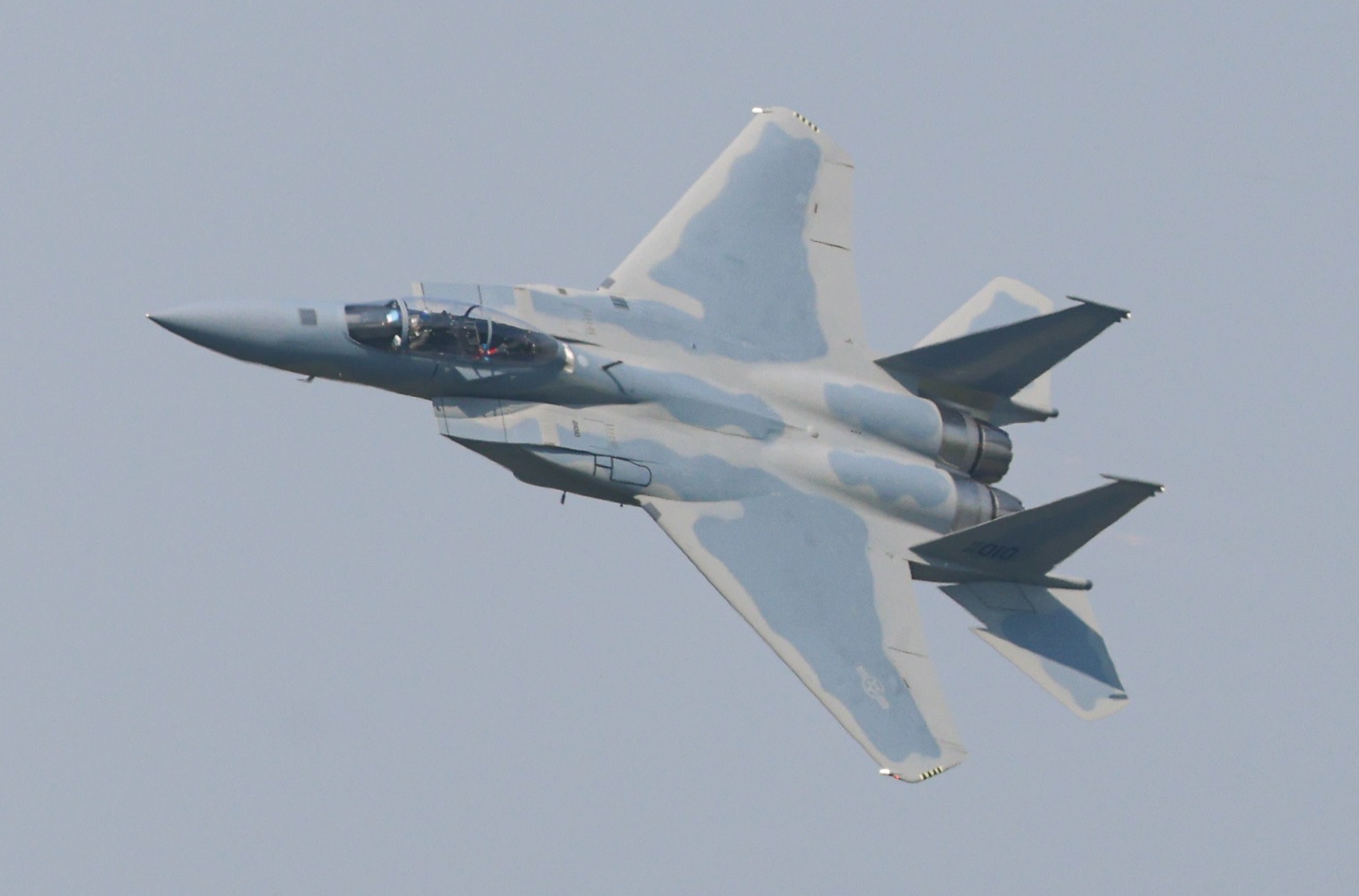
World
WASHINGTON — May 16, 2026 : The U.S. Air Force has significantly increased its planned procurement of Boeing’s F-15EX Eagle II fighter aircraft, raising the projected fleet size from 129 to 267 aircraft under the fiscal year 2027 budget proposal. Air Force officials said the decision was driven by delays affecting the F-35A Lightning II modernization program, as well as evolving operational requirements tied to the Indo-Pacific region and long-term force structure planning. The expanded procurement plan marks one of the most substantial revisions to the Air Force’s tactical aviation strategy in recent years and reflects growing concerns over maintaining fighter inventory levels as legacy aircraft age and next-generation modernization programs encounter delays. F-35 Upgrade Delays Prompt Procurement Shift Senior Air Force leaders told lawmakers that continued delays involving the F-35’s Technology Refresh 3 (TR-3) and Block 4 modernization efforts highlighted the need for additional fighter capacity. Testifying before the Senate Armed Services air-land subcommittee on May 12, Lt. Gen. David Tabor, deputy chief of staff for plans and programs, said disruptions affecting F-35 deliveries forced the Air Force to reconsider its fighter acquisition strategy. “As we encountered some slowdowns in deliveries of F-35s due to the previously discussed TR-3 and Block 4 upgrade issues, it became apparent to us that we needed another fighter capacity,” Tabor said during the hearing. The TR-3 modernization package is intended to provide upgraded computing power, improved displays, and expanded processing capability for the F-35 fleet, while the Block 4 upgrade program introduces additional weapons integration, sensor enhancements, electronic warfare improvements, and expanded mission capabilities. Delays in integrating and certifying those systems have slowed aircraft deliveries and operational fielding timelines. According to Air Force officials, the procurement adjustment was also influenced by force design studies focused on what the service describes as the “pacing challenge” posed by China. Service planners concluded that future operations in the Pacific would require a balanced fighter inventory combining stealth platforms with aircraft capable of carrying large weapons loads over extended distances. Air Force Seeks Balanced Fighter Fleet Air Force leaders emphasized that the F-15EX and F-35A are intended to serve complementary operational roles rather than compete against one another. The F-35A remains the service’s primary fifth-generation stealth fighter, designed for penetrating contested airspace using advanced sensor fusion, low observability, and networked targeting capabilities. The F-15EX, meanwhile, provides significantly larger weapons carriage capacity and extended stand-off engagement capability. The F-15EX is derived from the existing F-15E Strike Eagle platform but incorporates extensive upgrades, including advanced avionics, fly-by-wire flight controls, modern mission systems architecture, upgraded electronic warfare systems, and improved survivability features. The aircraft can carry up to 29,500 pounds of ordnance and is capable of transporting as many as 12 air-to-air missiles simultaneously. Air Force officials have described the aircraft as particularly valuable for homeland defense missions, long-range strike escort operations, and high-capacity missile carriage in potential Indo-Pacific conflict scenarios. The aircraft’s open mission systems architecture also allows for faster integration of future weapons, sensors, and software upgrades compared with older legacy platforms. Expanded Acquisition Broadens Mission Beyond Air National Guard Replacement The revised procurement target represents another major shift in the Air Force’s evolving F-15EX acquisition strategy. When Boeing first received the contract award in 2020, the Air Force projected a potential purchase of up to 144 aircraft. Subsequent budget plans later reduced the total to 80 aircraft before gradually increasing the figure to 104, then 129, and now 267 aircraft under the fiscal 2027 proposal. Tabor told lawmakers that earlier procurement limits were primarily tied to plans for replacing aging F-15C/D aircraft operated by Air National Guard units. He stated that the previous 104-aircraft target had effectively become an artificial limitation based solely on Guard recapitalization requirements. The newly expanded acquisition plan now extends beyond replacing older Air National Guard fighters and is intended to support recapitalization of portions of the aging F-15E Strike Eagle fleet. The Air Force currently operates approximately 216 F-15E aircraft. Previous service planning documents had proposed retaining only 99 Strike Eagles equipped with newer F100-PW-229 engines, while older aircraft would eventually be retired. Officials stated that the active F-15EX production line provides the Air Force with a direct pathway to replace older Strike Eagles without introducing an entirely new aircraft type into service. Budget Proposal Includes Additional Fighter Funding As of early 2026, the Air Force had accepted approximately 25 F-15EX aircraft, while more than 100 additional aircraft were already under contract. The fiscal 2027 budget request includes funding for 24 additional F-15EX fighters at an estimated cost of roughly $3 billion. The request forms part of a broader Air Force budget proposal totaling approximately $267.7 billion, with procurement funding increasing by about 30 percent compared with previous years. The service has repeatedly stated that it aims to acquire at least 72 new fighter aircraft annually in order to slow and eventually reverse the aging trend affecting the tactical aviation fleet. Air Force officials argue that expanding F-15EX procurement will help stabilize fighter inventory levels while modernization programs continue across multiple aircraft categories. Congress Pushes Broader Fighter Expansion The expanded procurement proposal also aligns with recent legislative efforts aimed at increasing tactical aircraft production capacity. In April, lawmakers introduced the bipartisan Airpower Acceleration Act, which would authorize the acquisition of up to 329 F-15EX aircraft and permit multiyear procurement contracts designed to reduce long-term acquisition costs while providing greater stability to the defense industrial base. Supporters of the legislation argue that higher production rates and long-term procurement commitments are necessary to sustain aircraft manufacturing capacity as the U.S. military modernizes its air combat fleet. The legislation also reflects broader concerns within Congress regarding fighter inventory shortfalls, aircraft aging trends, and the industrial challenges associated with maintaining large-scale tactical aircraft production. Production Challenges Continue at Boeing Facility Despite the expanded demand, the F-15EX program has faced production and delivery delays of its own. Aircraft deliveries were disrupted during a months-long labor strike in 2025 at Boeing’s manufacturing facility in St. Louis, Missouri, where the F-15EX is assembled. The strike affected assembly schedules and slowed planned aircraft deliveries to the Air Force. Those delays forced temporary operational adjustments, including the deployment of F-22 Raptor aircraft to Kadena Air Base while the installation awaited its planned permanent F-15EX squadrons. Air Force acquisition officials said the Pentagon and Boeing are currently negotiating measures intended to accelerate fighter production and align manufacturing capacity with the larger procurement target. Lt. Gen. Luke Cropsey, military deputy to the Assistant Secretary of the Air Force for Acquisition, Technology and Logistics, told lawmakers that Boeing has not yet reached the contractually required production rate of two aircraft per month on its current single production line. Cropsey stated that Boeing has presented what he described as a “well thought-out plan” to achieve the required production rate and has also outlined options for increasing output to three or four aircraft per month in the future. According to Air Force officials, reaching those production targets would require additional infrastructure development and capital investment at Boeing’s St. Louis facility, potentially including the construction of one or two additional production lines. “From an acquisition standpoint, we’ve got some work to do ahead of us to be able to get to the ramp rates that we’re talking about,” Cropsey said. “But I think Boeing is actively in good faith working with us to figure out what that would look like.” Long-Term Role in Air Force Modernization Under the revised procurement structure, the Air Force expects the expanded fleet of 267 F-15EX aircraft to support up to 13 operational squadrons consisting of approximately 21 aircraft each, in addition to test and training units. Air Force leaders continue to describe the F-15EX as a central element of the service’s broader fighter modernization strategy alongside ongoing F-35A procurement efforts. Officials have repeatedly stressed that the expanded F-15EX acquisition is intended to supplement, rather than replace, the F-35 program by ensuring the Air Force maintains sufficient fighter capacity, operational flexibility, and long-range strike capability during a period of modernization transition and increasing strategic competition in the Indo-Pacific region.
Read More → Posted on 2026-05-16 13:24:21
World
WASHINGTON — May 16, 2026 : The U.S. Army has awarded Lockheed Martin a $61 million cost-plus-incentive-fee contract to develop and demonstrate two major upgrades for the Patriot air and missile defense system, aimed at improving the system’s survivability, flexibility, and ability to counter modern multi-directional aerial threats. The contract, issued by the Army Contracting Command at Redstone Arsenal, Alabama, was awarded to Lockheed Martin Missile and Fire Control in Grand Prairie, Texas. The work includes development of the Missile Segment Enhancement (MSE) Containerized Launcher and the Remote Interceptor Guidance 360 Degrees (RIG-360) Containerized System. The agreement also covers hardware-in-the-loop testing activities, support for flight test execution, and production of three RIG-360 Integrated Assemblies. According to contract details, work locations and funding allocations will be determined on an order-by-order basis, with overall completion scheduled for May 31, 2027. The modernization effort forms part of the U.S. Army’s broader Integrated Air and Missile Defense strategy, which seeks to improve the ability of Patriot batteries to operate in highly contested environments against ballistic missiles, cruise missiles, drones, and coordinated saturation attacks. Patriot System Remains Backbone of U.S. Air Defense The Patriot system remains the U.S. military’s primary long-range surface-to-air missile defense platform and is currently operated by more than a dozen allied countries worldwide. Developed jointly by Lockheed Martin and RTX Corporation, the system has been continuously upgraded since entering service in the 1980s. Patriot batteries have seen operational deployment during the Gulf War, Operation Iraqi Freedom, and ongoing operations in Ukraine. The system is designed to intercept aircraft, cruise missiles, tactical ballistic missiles, and other aerial threats. Central to the Patriot system is the PAC-3 interceptor missile, manufactured by Lockheed Martin. Unlike conventional surface-to-air missiles that rely on blast fragmentation warheads, the PAC-3 employs hit-to-kill technology, destroying incoming targets through direct kinetic impact. This approach significantly increases interception precision against high-speed ballistic threats. The latest PAC-3 Missile Segment Enhancement interceptor variant offers improved range, maneuverability, and altitude performance compared to earlier Patriot interceptors and has become a core element of U.S. and allied missile defense architecture. Addressing Patriot’s Longstanding Sensor Coverage Limitation One of the primary objectives of the new contract is to resolve a longstanding operational limitation associated with conventional Patriot batteries. Current Patriot configurations rely primarily on the AN/MPQ-65 radar, a sectored fire-control radar that scans a fixed azimuth sector rather than providing complete hemispherical coverage around a defended position. While highly capable within its assigned sector, the radar does not provide native 360-degree surveillance and engagement capability. Because PAC-3 interceptors require continuous fire-control-quality tracking and uplink guidance during flight, Patriot batteries are most effective against threats approaching within the radar’s designated coverage arc. This has historically forced commanders to orient Patriot batteries toward the most likely direction of attack, creating operational rigidity in environments where threats can emerge from multiple axes simultaneously. Modern missile warfare increasingly involves coordinated attacks using ballistic missiles, cruise missiles, drones, and decoys launched from varying directions and altitudes. Such tactics can exploit gaps in sectored air defense systems by forcing defenders to divide coverage priorities or reposition sensors and launchers during combat operations. The Army’s new RIG-360 effort is intended to eliminate that limitation. RIG-360 Designed for Full 360-Degree Engagement Capability The Remote Interceptor Guidance 360 Degrees system, known as RIG-360, is a software-defined hemispherical missile communications system designed to provide uninterrupted PAC-3 missile uplink capability regardless of radar orientation. Instead of relying on a dedicated missile uplink antenna physically tied to a single Patriot radar, the RIG-360 operates through the Army’s Integrated Battle Command System (IBCS), developed by Northrop Grumman. IBCS serves as the Army’s next-generation integrated fire-control network and command-and-control architecture. The system links radars, launchers, command nodes, and interceptor systems from multiple air defense platforms into a unified network, enabling sensors and weapons from different systems to share targeting data in real time. Through integration with IBCS, the RIG-360 can receive fire-control-quality tracking data from any compatible sensor connected to the network rather than depending exclusively on the Patriot radar itself. The system then converts that targeting information into missile guidance communications for PAC-3 interceptors already in flight. This architecture allows Patriot missiles to engage threats approaching from any direction without requiring repositioning of the battery’s primary radar or launcher orientation. In practical terms, the system transforms Patriot from a largely sectored engagement platform into a network-enabled, all-direction engagement capability. The Army views the concept as essential for future battlefield environments where dispersed forces may face simultaneous attacks from multiple directions using mixed missile and drone salvos. Prior Testing and Development History The current contract builds upon earlier development milestones associated with the RIG-360 program. Lockheed Martin previously conducted a successful flight test of the prototype system at White Sands Missile Range in New Mexico in 2022. During the test, a PAC-3 interceptor successfully engaged a cruise missile target using guidance data transmitted through the prototype 360-degree architecture. The company also completed the first phase of the Engineering, Manufacturing and Development effort under a prior contract awarded in May 2025 reportedly valued at approximately $114 million. The latest $61 million award advances the program into additional demonstration and integration activities intended to support future operational deployment. Containerized Launcher Intended to Improve Mobility and Survivability In addition to the RIG-360, the contract funds development of the Missile Segment Enhancement Containerized Launcher, a redesigned Patriot launcher configuration intended to reduce logistical complexity and improve deployment flexibility. The standard Patriot M901 launcher is a large, highly specialized platform that requires dedicated transport equipment and significant support infrastructure for emplacement and sustainment. While effective in fixed or semi-fixed defensive roles, the traditional launcher design can limit rapid dispersal and mobility. The new containerized launcher concept places PAC-3 MSE missile launch capability onto a standard intermodal shipping container chassis. By using commercially compatible containerized transport formats, the Army aims to simplify transportation, increase deployment options, and reduce the logistical footprint associated with Patriot operations. The containerized design may also support more distributed defensive layouts, enabling missile launchers to be positioned farther apart rather than concentrated around a single radar unit. Military planners increasingly view such dispersion as necessary to improve survivability against precision-guided strikes targeting fixed air defense sites. The launcher modernization effort aligns with the Army’s broader transition toward distributed and mobile air defense architectures capable of operating in contested environments where static infrastructure is vulnerable to long-range missile attacks. Integration With Broader Army Air Defense Modernization The Patriot modernization program is closely tied to several parallel Army air and missile defense initiatives. One of the most significant is the Lower Tier Air and Missile Defense Sensor (LTAMDS), a next-generation radar developed to replace the AN/MPQ-65. Unlike earlier Patriot radars, LTAMDS is designed to provide native 360-degree radar coverage using active electronically scanned array technology. When combined with IBCS and RIG-360, LTAMDS is expected to create a fully integrated air defense architecture in which sensors, launchers, and interceptors operate as distributed networked nodes rather than isolated battery components. The Army’s long-term objective is to create a system where any available sensor can provide targeting data to any compatible interceptor within the network, improving engagement flexibility while reducing vulnerabilities associated with centralized radar dependence. IBCS itself has become a central element of that strategy by resolving historical interoperability limitations between different missile defense systems. The architecture enables systems such as Patriot, Sentinel radars, LTAMDS, and other air defense assets to share data across a common operational picture. Army officials have repeatedly identified integrated fire control and sensor networking as critical requirements for countering increasingly sophisticated missile threats developed by near-peer adversaries. Operational Lessons From Ukraine Recent combat experience in Ukraine has significantly influenced U.S. Army air defense modernization priorities. Ukrainian Patriot batteries have faced sustained attacks involving Russian ballistic missiles, cruise missiles, drones, and mixed salvos launched from multiple directions simultaneously. These attacks frequently combine varying altitudes, flight profiles, and approach vectors intended to stress air defense networks and expose coverage limitations. Such operational conditions have reinforced the importance of 360-degree engagement capability and distributed launcher configurations capable of surviving repeated precision strikes. Military analysts have noted that modern missile warfare increasingly favors dispersed defensive systems connected through resilient command-and-control networks rather than centralized batteries with fixed sensor orientation. The RIG-360 and containerized launcher efforts directly address those battlefield observations by improving Patriot’s ability to engage threats approaching from unexpected directions while enabling more flexible deployment concepts. The Army’s investment in the two programs reflects a broader effort to adapt existing air defense systems for future high-intensity conflicts involving large-scale missile and drone attacks against both military forces and critical infrastructure. With work continuing through 2027, the upgrades are expected to play a key role in shaping the next phase of Patriot modernization and the future architecture of U.S. integrated air and missile defense networks.
Read More → Posted on 2026-05-16 13:32:37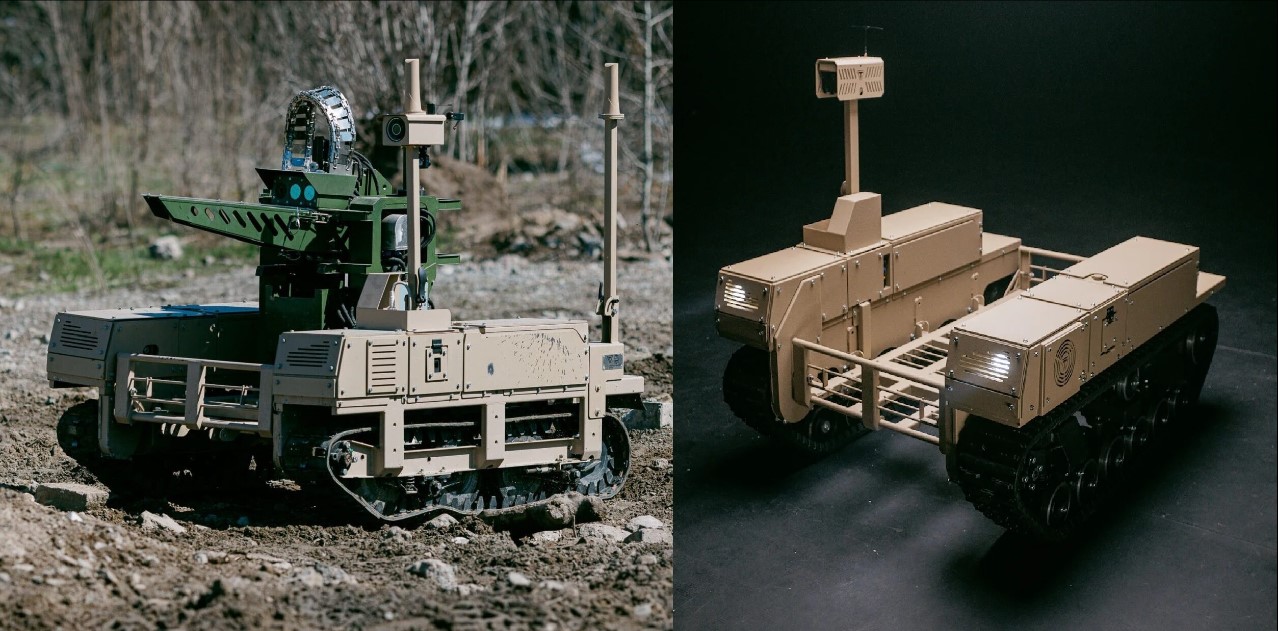
World
KYIV — May 16, 2026 : Ukrainian defense technology companies HIMERA and Tencore have jointly developed a domestic digital radio communication module for unmanned ground vehicles (UGVs), as part of Ukraine’s broader effort to localize critical military technologies and reduce dependence on foreign electronic components. The new communication system will be integrated into Tencore’s TerMIT 2.0 tracked robotic platform under a government contract scheduled for delivery later in 2026. The project is intended to provide Ukrainian military units with domestically produced, electronic warfare-resistant communication systems designed for frontline operations. “Chayna na Fri” Localization Initiative The development was publicly confirmed by Maksym Vasylchenko, co-founder and chief executive officer of Tencore, during an appearance on the Militarnyi podcast Zbroya. According to Vasylchenko, Tencore began investing in Ukrainian suppliers while fulfilling its first major government contract, launching an internal localization initiative referred to as “Chayna na Fri” (“China Free”). The initiative aims to gradually eliminate the use of Chinese-made electronic components in military equipment and establish secure domestic supply chains for critical battlefield systems. Vasylchenko stated that HIMERA was selected to develop a Ukrainian-made digital communication solution for the program and confirmed that the system is already operational. The partnership between HIMERA and Tencore was formally established in June 2025. At the time, both companies stated that combining technical expertise and conducting joint development work enabled the creation of communication systems adapted to active combat conditions and resistant to interference from electronic warfare systems. Integration Into the TerMIT 2.0 Platform The newly developed communication modules will be integrated into Tencore’s upgraded TerMIT 2.0 unmanned ground vehicle platform. The TerMIT 2.0 is a modular tracked robotic vehicle designed for multiple battlefield roles, including logistics support, engineering operations, casualty evacuation, remote mining missions, and fire support tasks. Compared with earlier versions, the upgraded platform incorporates expanded operational capabilities, including: An operational communication range of up to 40 kilometers. A maximum speed of 15 kilometers per hour. Twin electric motors with integrated cooling systems. Payload capacity of up to 300 kilograms. Support for interchangeable mission modules. One of the primary mission systems integrated into the TerMIT 2.0 is Tencore’s mine-laying module, which is capable of deploying TM-62 anti-tank mines during remote operations. The system allows robotic mine placement without exposing personnel directly to frontline combat zones. Tencore has stated that more than 2,000 TerMIT-series unmanned ground vehicles have already been delivered to Ukrainian military units. The addition of domestically developed communication systems is expected to improve operational independence and reduce reliance on imported electronics. Expansion of HIMERA’s Tactical Communication Ecosystem Alongside the UGV communications project, HIMERA has continued expanding its wider tactical communications infrastructure for ground and aerial systems. In early May 2026, the company launched serial production of its R1 repeater systems. The R1 is designed to relay communications between distant radio stations and can operate autonomously for up to 24 hours on battery power. The repeater supports secure radio data transmission over internet protocols, allowing local battlefield networks to connect through satellite communication systems such as Starlink. The system also enables wireless configuration of deployed communication networks. HIMERA additionally introduced the E1 IP network extender, a tactical Wi-Fi bridge designed to connect separate IP-based systems through secure radio data channels. The E1 is used for data exchange between drones, unmanned ground vehicles, cameras, sensors, and other battlefield systems. For expanded operational coverage, the E1 and R1 systems can operate together with HIMERA’s autonomous B1-101E network extenders. Electronic Warfare Protection and Encryption HIMERA’s tactical communication systems are designed specifically for operations in electronic warfare environments. The company’s equipment uses pseudo-random frequency hopping technology, which continuously changes operating frequencies in order to complicate enemy detection, interception, and jamming attempts by electronic warfare and electronic countermeasure systems. The systems also employ AES-256 encryption, recently reinforced through the introduction of an additional quantum-protected encryption layer utilizing 1024-bit key protection. As part of a recent software update to version 3.0, HIMERA introduced a remote wipe capability for its G1 PRO tactical radios. The feature enables operators to remotely erase network data if communication devices are captured during combat operations. The G1 PRO handheld radio platform supports voice communication, text messaging, positional coordinate sharing, and battlefield data transmission while operating within mesh and MANET networking architectures developed for contested environments. According to the company, HIMERA systems have undergone testing during NATO-standard exercises and have been integrated with battlefield management systems including ATAK and Kropyva. The company has also completed international deliveries to a European NATO member state, while additional testing has reportedly been conducted by the U.S. Air Force. Partnership With Swarmer for UAV Swarm Operations HIMERA has also expanded its activities into autonomous aerial operations. In late April 2026, the company signed a strategic partnership agreement with Ukrainian software developer Swarmer, which specializes in autonomous drone technologies. The agreement focuses on integrating HIMERA’s resilient mesh-network communication systems into Swarmer’s next-generation autonomous software architecture for unmanned aerial vehicle (UAV) swarms. The partnership is intended to provide secure communication, coordination, and network resilience for UAV swarm operations conducted in contested electronic warfare environments. Domestic Defense Production Efforts The cooperation between HIMERA and Tencore reflects Ukraine’s broader effort to increase domestic production of tactical communications equipment, unmanned systems, and electronic warfare-resistant technologies. The TerMIT 2.0 equipped with HIMERA’s domestic digital communication modules is expected to enter wider operational service with Ukrainian military units later in 2026.
Read More → Posted on 2026-05-16 13:47:17
World
BEIJING — May 16, 2026 : U.S. President Donald Trump concluded his three-day state visit to China on May 15 without securing major agreements on several core issues that had dominated Washington’s agenda ahead of the summit, including Iran, Taiwan, advanced semiconductor exports, rare earth mineral restrictions and the release of Hong Kong publisher Jimmy Lai. The visit, held from May 13 to May 15, marked the first trip by a sitting American president to China in nine years and was presented by both governments as an effort to stabilize relations after years of trade disputes, technology restrictions and rising geopolitical tensions. While the summit featured extensive ceremonial events and positive public messaging from both leaders, it produced limited concrete outcomes on the strategic and economic matters most closely watched by officials, businesses and analysts. President Trump and Chinese President Xi Jinping held formal talks at Beijing’s Great Hall of the People and the Zhongnanhai leadership compound. The visit included a state banquet, a military honor guard ceremony, private meetings between the two leaders and cultural events designed to emphasize diplomatic goodwill and state protocol. Throughout the summit, Trump repeatedly praised Xi and described U.S.-China relations as strong and productive. Chinese officials similarly characterized the meetings as constructive and important for long-term bilateral stability. However, despite the positive tone, the discussions ended without formal agreements on several key issues central to U.S. objectives. No Breakthrough on Iran One of the Trump administration’s primary goals during the visit was securing Chinese cooperation regarding the ongoing conflict involving Iran and broader Middle East stability. Following the talks, Trump stated that both governments agreed Iran should not obtain a nuclear weapon and that the Strait of Hormuz must remain open to ensure uninterrupted global energy shipments. However, Beijing did not announce any new commitments regarding pressure on Tehran or direct involvement in resolving the conflict. Chinese officials instead reiterated support for diplomatic negotiations and referenced a previously discussed peace proposal jointly developed with Pakistan. No joint action plan, military coordination or enforcement mechanism was announced during the summit. Although Trump later said the two sides shared similar views on regional stability, the visit produced no formal agreement addressing the conflict itself or outlining a Chinese role in ending hostilities. Taiwan Remains Central Point of Tension Taiwan emerged as one of the most sensitive topics discussed during the summit. According to the Chinese Foreign Ministry’s official statement, Xi told Trump that Taiwan remains “the most important issue” in China-U.S. relations and warned that mishandling the matter could place the broader relationship “in great jeopardy.” Xi reportedly stated that any miscalculation on Taiwan could lead to confrontation or conflict. No changes to official U.S. policy on Taiwan were announced following the meetings. Trump later acknowledged that he discussed a delayed U.S. arms package for Taiwan but said no final decision had been made. Chinese officials continued to insist that Washington adhere to the “One China” principle and avoid actions Beijing views as support for Taiwanese independence. The summit therefore ended without concessions from either side on one of the most contentious issues in bilateral relations. Technology Talks Produce No Major Agreements Technology and semiconductor exports were another major focus of the visit, particularly regarding Nvidia’s H200 artificial intelligence chips. Nvidia Chief Executive Officer Jensen Huang joined the American business delegation alongside executives from Apple and Tesla, reflecting Washington’s emphasis on technology cooperation and commercial engagement. Prior to the summit, the U.S. Commerce Department had approved potential H200 chip sales to several Chinese technology firms, including Alibaba, Tencent, ByteDance and JD.com. However, no purchase agreements or delivery schedules were announced during the visit. Trump later stated that Chinese firms had “chosen not to” proceed with the purchases at this stage, preferring to continue development of domestic semiconductor alternatives. Chinese officials did not publicly comment on the status of the negotiations. The summit also failed to produce agreements on broader technology restrictions, export controls or industrial supply-chain cooperation. Rare Earth Export Restrictions Remain Unresolved Discussions regarding rare earth minerals and industrial supply chains similarly ended without a breakthrough. U.S. officials had hoped to secure progress on Chinese export controls affecting heavy rare earth materials used in defense systems, electric vehicles, batteries and advanced manufacturing sectors. Talks also covered licensing procedures connected to trucking applications and industrial magnet production. Despite extensive discussions, Beijing announced no rollback or modification of existing restrictions. Existing export controls on several critical rare earth materials therefore remain in place, continuing to affect supply chains across multiple American industries. The lack of progress highlighted the continuing importance of rare earth minerals as a strategic leverage point in U.S.-China economic relations. Jimmy Lai Case Sees No Progress Human rights concerns also remained unresolved during the summit. Ahead of the visit, bipartisan lawmakers in Washington and international press freedom organizations urged the White House to seek the release of Jimmy Lai, the 78-year-old Hong Kong media owner and pro-democracy activist currently imprisoned under Hong Kong national security legislation. Trump acknowledged discussing Lai’s case with Xi but reported no progress toward securing his release. During remarks to reporters, Trump described the matter as “a tough one” for the Chinese leadership. The Chinese government made no mention of Lai in its official summary of the summit, and no policy changes related to Hong Kong were announced. Boeing Aircraft Deal Remains Unconfirmed Trade and commercial cooperation remained a central theme throughout the visit, with Trump highlighting what he described as a significant aviation agreement. Speaking aboard Air Force One after leaving Beijing, Trump announced that China planned to purchase 200 Boeing aircraft, with the possibility of expanding future orders to as many as 750 planes if the arrangement proved successful. If finalized, the deal would represent Boeing’s first major aircraft sale to China in nearly a decade. However, Chinese authorities did not formally confirm the agreement before Trump returned to Washington, and detailed terms were not publicly released. Industry analysts had expected a significantly larger initial commitment, with some pre-summit projections ranging between 300 and 500 aircraft. Boeing also did not immediately provide detailed confirmation regarding the proposed order. China Emphasizes “Strategic Stability” In its official post-summit readout, China’s Ministry of Foreign Affairs described the visit as “historic and landmark” and stated that both governments had agreed on a “constructive China-U.S. relationship of strategic stability.” According to Beijing, the new framework is intended to guide bilateral relations over the next three years and beyond while supporting “steady, sound and sustainable development” in ties between the two countries. The Chinese statement emphasized maintaining stability through careful management of disagreements, particularly on Taiwan and broader geopolitical issues. Analysts noted that Beijing’s emphasis on “strategic stability” reflected a broader effort to preserve stable relations with Washington without making substantive concessions on issues China considers core national interests. Throughout the summit, Chinese officials relied heavily on protocol, symbolism and high-level hospitality, including formal ceremonies, state banquets and private cultural events, while avoiding major policy shifts on Taiwan, export controls or regional security matters. Limited Outcomes Despite Positive Messaging Trump described the summit as highly successful, telling reporters that the two sides had “settled a lot of different problems” and secured “fantastic trade deals.” He also highlighted his personal relationship with Xi and formally invited the Chinese president to visit the White House later this year. However, the summit ultimately produced few measurable gains on the major objectives publicly emphasized by the U.S. administration before the trip. The meetings took place amid continuing efforts by both governments to stabilize relations following years of tariff disputes, technology sanctions and military tensions in the Indo-Pacific region. While the visit succeeded in maintaining direct engagement and reducing immediate diplomatic friction, it delivered limited concrete progress on Iran, Taiwan, advanced technology access, rare earth exports or human rights concerns. Both governments agreed to continue discussions on economic cooperation, trade purchases, agricultural imports, energy exports and strategic communication in the coming months. Additional meetings between senior officials are expected later this year as Washington and Beijing continue efforts to manage competition while preventing further deterioration in bilateral relations.
Read More → Posted on 2026-05-16 14:07:32
World
LATAKIA, Syria — May 16, 2026 : Russia has initiated a new phase in the reconstruction of Syria’s armed forces under the government of President Ahmad al-Sharaa, delivering two MiG-29 fighter interceptors to the Syrian Arab Air Force as part of a broader military rebuilding program coordinated with Syrian and Turkish authorities. The aircraft were flown on May 16, 2026, by Syrian pilots from Russia’s Hmeimim Air Base near Latakia, marking the first confirmed transfer of combat aircraft to Damascus since the collapse of Bashar al-Assad’s government in December 2024. Russian forces stationed at the base are currently providing security protection for the aircraft amid concerns over potential Israeli airstrikes targeting newly restored Syrian military assets. The delivery represents the first major step toward rebuilding Syria’s air combat capability following the formation of the transitional government led by Ahmad al-Sharaa, who formally assumed office in January 2025. Syrian military infrastructure and operational capabilities were significantly reduced during the political transition and subsequent restructuring of the armed forces, leaving only a limited number of operational aircraft from the pre-2024 inventory. The MiG-29 fighters are expected to restore part of Syria’s interceptor capacity and support future pilot training and air defense operations. The aircraft, originally developed by the Soviet Union and later modernized by Russia, are capable of conducting both air-to-air and limited air-to-ground missions. Turkey’s Role in the Rebuilding Program The transfer was facilitated following requests from Turkey, which has emerged as one of the principal external supporters of Syria’s transitional authorities. Ankara has pursued expanded security cooperation with Damascus as part of efforts to stabilize northern Syria, strengthen border security, and support the gradual return of Syrian refugees. Turkish and Syrian officials have held multiple discussions over the past year regarding the restructuring of Syria’s military institutions, including plans to integrate various armed factions into a centralized national command structure. The cooperation framework includes military training programs, equipment modernization efforts, and broader defense coordination initiatives aimed at rebuilding a unified Syrian military. Turkey’s support for rebuilding Syria’s armed forces reflects its broader objective of establishing long-term stability along its southern border while strengthening the authority of the transitional government in Damascus. Russia Maintains Strategic Military Presence Despite serving as the principal military backer of the former Assad government during the Syrian civil war, Russia has adjusted its strategy following the political transition in Damascus. Moscow has retained operations at Hmeimim Air Base and the Tartus naval facility while reducing activity at several smaller military outposts previously maintained across Syria. Under agreements reached between Moscow and the al-Sharaa administration, Russia has preserved operational access to both strategic facilities and expanded its role as a provider of military training, technical assistance, logistics support, and defense restructuring assistance. The rebuilding initiative follows diplomatic engagements conducted over the past year between Syrian and Russian officials. In October 2025, President Ahmad al-Sharaa traveled to Moscow for his first official visit to Russia, where he met with Russian President Vladimir Putin to discuss bilateral relations, military cooperation, and the future status of Russian military installations in Syria. During the meetings, al-Sharaa reaffirmed Syria’s commitment to honoring previously signed bilateral agreements governing Russian military access and cooperation. In return, Syrian officials requested Russian assistance in rebuilding the country’s military infrastructure and restoring operational defense capabilities, particularly within the air force and air defense sectors, which remain heavily dependent on Soviet-era systems and Russian technical expertise. Hmeimim Base Becomes Center of Air Force Reconstruction Hmeimim Air Base, located near Syria’s Mediterranean coast in Latakia province, has served as Russia’s primary air operations hub in Syria since 2015. Following the fall of the previous Syrian government in late 2024, the base remained operational and continued functioning as a logistics and military coordination center. Discussions between Damascus and Moscow have also included plans to convert parts of Hmeimim into joint training and operational facilities for the Syrian armed forces while maintaining Russia’s independent military capabilities at the site. Russian military advisers are reportedly involved in pilot instruction, aircraft maintenance support, and organizational restructuring programs linked to the restoration of the Syrian Air Force. The flights conducted by Syrian pilots from Hmeimim on May 16 are considered the first visible operational outcome of these agreements and signal the beginning of a broader long-term military rebuilding effort. Security Concerns and Israeli Monitoring The deployment of the MiG-29 fighters under Russian protection highlights ongoing security concerns surrounding Syrian airspace and regional military tensions. Since the weakening of the 1974 disengagement framework between Syria and Israel, Israeli military operations and limited incursions from the occupied Golan Heights into southwestern Syria have increased. Israeli authorities have closely monitored efforts by Damascus to restore heavy military capabilities, including combat aircraft, missile systems, and armored formations. Syrian officials are relying on Russia’s military presence as a deterrent against potential strikes targeting newly restored military assets. Russian forces operating from Hmeimim maintain radar surveillance systems, early-warning networks, and electronic warfare capabilities that historically complicated Israeli operations within Syrian airspace. By positioning the MiG-29 fighters under direct Russian security coverage, Damascus seeks to reduce the risk of preemptive attacks during the early stages of rebuilding the Syrian Air Force. Broader Strategic Implications The aircraft transfer demonstrates Russia’s continued effort to maintain influence in the Middle East through sustained military partnerships and long-term defense agreements while avoiding large-scale troop deployments. Although the United States has engaged pragmatically with the al-Sharaa administration through diplomatic contacts and official meetings, Russia continues to remain one of the most influential military actors inside Syria due to its established infrastructure, operational presence, and defense relationships. For Damascus, Russian military and technical support remains essential for restoring national defense institutions, rebuilding centralized military authority, and integrating former armed groups into a unified state structure following years of conflict and political transition. Syrian and Russian officials have not released additional operational details regarding future aircraft deliveries or deployment schedules. However, officials familiar with the rebuilding program indicate that additional equipment transfers, pilot training activities, and modernization initiatives are expected in future phases of the Syrian armed forces reconstruction effort.
Read More → Posted on 2026-05-16 14:27:48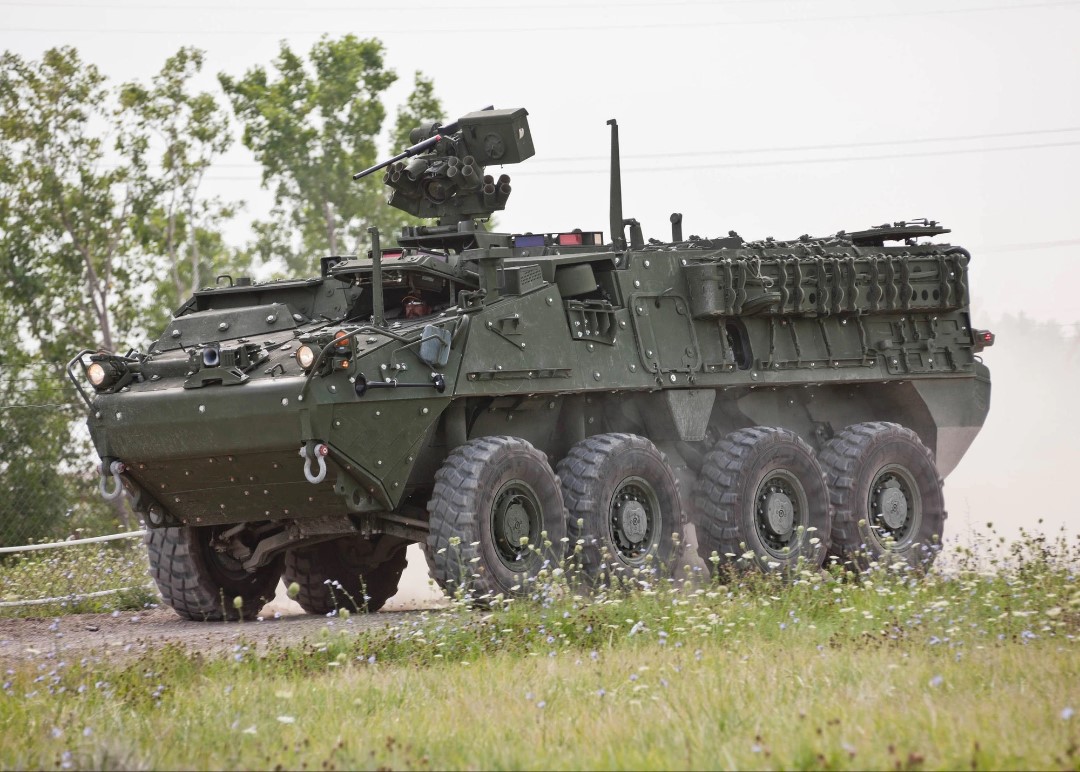
World
STERLING HEIGHTS, Mich. — May 16, 2026 : The U.S. Army has awarded General Dynamics Land Systems a $229.65 million fixed-price-incentive contract for the production of 50 Stryker Double V-Hull (DVH) A1 armored vehicles, continuing the service’s long-term modernization effort for its Stryker Brigade Combat Teams (SBCTs). The contract was issued on May 15, 2026, by Army Contracting Command at Detroit Arsenal, Michigan. The procurement supports the Product Manager Stryker Brigade Combat Team program. According to contract details, work locations and funding allocations will be determined with each individual order, while overall contract completion is scheduled for June 30, 2028. The solicitation was conducted through an internet-based process, with one bid received. General Dynamics Land Systems, headquartered in Sterling Heights, Michigan, is a subsidiary of General Dynamics and serves as the Army’s primary contractor for Stryker vehicle production and modernization. Stryker Fleet Modernization The Stryker is an eight-wheeled armored combat vehicle that entered U.S. Army service in 2002 and has since been deployed in Iraq, Afghanistan, Europe, and other operational regions. The platform forms the backbone of the Army’s Stryker Brigade Combat Teams, which are designed to provide a balance between the mobility of light infantry units and the firepower and protection of heavier armored formations. The standard infantry carrier variant is operated by a two-person crew and can transport up to nine fully equipped infantry soldiers. Over the past two decades, the Army has fielded numerous mission-specific variants based on the Stryker chassis, including command vehicles, medical evacuation vehicles, reconnaissance platforms, mortar carriers, engineer squad vehicles, and anti-tank missile carriers. The latest contract covers production of the Double V-Hull A1 configuration, one of the Army’s most advanced Stryker variants currently in service. Double V-Hull Protection Upgrade The Double V-Hull design was introduced after combat experience in Iraq exposed vulnerabilities in the original flat-bottom Stryker hull against improvised explosive devices (IEDs) and buried explosives. The redesigned hull structure incorporates angled lower surfaces that redirect blast energy away from the crew compartment, significantly improving protection for personnel during underbody explosions. The Army began fielding Double V-Hull Strykers around 2011 as part of a survivability improvement program aimed at reducing casualties from roadside bombs and mines encountered during counterinsurgency operations. A1 Automotive and Systems Enhancements The A1 modernization package introduces major improvements to the vehicle’s automotive, electrical, and digital systems to extend operational service life and support future battlefield technologies. A central component of the upgrade is the replacement of the earlier 350-horsepower Caterpillar C7 engine with a more powerful 450-horsepower Caterpillar C9 engine. The upgraded powertrain is intended to compensate for increased vehicle weight while improving mobility and operational reliability. The A1 configuration also includes an upgraded suspension system rated for approximately 60,000 pounds, enhanced driveline components, improved thermal management systems, and upgraded environmental conditioning equipment. These modifications increase the vehicle’s gross weight capacity from roughly 55,000 pounds to approximately 63,000 pounds. The vehicle’s electrical architecture has also been modernized through installation of a 910-amp alternator replacing the previous 570-amp system. The increased electrical generation capacity supports expanded communications equipment, onboard sensors, network systems, and future mission modules. In addition, the Stryker A1 incorporates a modern in-vehicle data network with gigabit Ethernet capability and compatibility with the Army’s VICTORY network integration standards, enabling improved digital communications and system interoperability across formations. Strategic Mobility and Operational Role One of the defining features of the Stryker platform is its strategic mobility. Unlike heavier tracked armored vehicles, the Stryker can be transported by both C-130 and C-17 military cargo aircraft, allowing rapid deployment to overseas theaters with reduced logistical requirements. The platform also uses a Central Tire Inflation System (CTIS), enabling crews to adjust tire pressure directly from inside the vehicle to improve traction across highways, mud, sand, and off-road terrain without stopping operations. Stryker Brigade Combat Teams are intended to provide theater commanders with rapidly deployable combined-arms forces capable of conducting infantry, reconnaissance, security, and urban combat missions while maintaining higher operational mobility than traditional armored brigades. Expanded Stryker Variants In recent years, the Army has continued expanding the Stryker family to address evolving battlefield threats and operational requirements. Among the newer variants are the Stryker Dragoon equipped with a 30mm cannon turret and the Interim Maneuver Short-Range Air Defense (IM-SHORAD) system designed to counter unmanned aerial systems, helicopters, and low-flying aircraft. Several upgraded Stryker variants have already been fielded with U.S. Army units deployed in Europe as part of broader modernization and deterrence initiatives focused on near-peer adversary environments. Long-Term Sustainment Strategy The latest procurement reflects the Army’s broader approach of incrementally modernizing existing combat vehicle fleets rather than pursuing immediate large-scale replacement programs. Army planners continue to focus on survivability, mobility, network integration, and power generation improvements across the Stryker fleet as the service evaluates future wheeled combat vehicle requirements. The May 2026 contract maintains active production of the combat-proven Stryker platform while supporting continued modernization of the Army’s Stryker Brigade Combat Teams through the end of the decade.
Read More → Posted on 2026-05-16 14:35:20
World
WASHINGTON — May 16, 2026 : U.S. President Donald Trump has reiterated that Washington does not support Taiwan independence while publicly questioning the practicality of direct U.S. military involvement in a potential conflict across the Taiwan Strait, following a two-day summit with Chinese President Xi Jinping in Beijing. In an interview with Fox News recorded during his visit to China and aired after his departure on May 15, 2026, Trump emphasized the geographic and military imbalance between China and Taiwan, describing the situation as strategically difficult for the United States. “The Chinese just don’t want to see this place — we’ll call it a place, because nobody knows how to define it — but they don’t want to see it go independent,” Trump said during the interview conducted aboard Air Force One after leaving Beijing. He added that he was not seeking a confrontation over Taiwan’s political status and questioned whether the United States should become militarily involved in a war so far from American territory. “I’m not looking to have somebody go independent. And, you know, are we supposed to travel 9,500 miles to fight a war? I’m not looking for that,” Trump stated. The U.S. president further highlighted the military and geographic realities surrounding the Taiwan issue, noting China’s proximity and comparative size. “When you look at the odds, China is a very, very powerful and big country. That’s a very small island. Think of it; it’s 59 miles away. We’re 9,500 miles away. That’s a little bit of a difficult problem,” he said. Trump also urged both Beijing and Taipei to avoid escalation and maintain stability across the Taiwan Strait, stating that he wanted “both sides to cool down.” The remarks came after extensive discussions on Taiwan during Trump’s summit with Xi in Beijing, which marked Trump’s first official visit to China in nearly a decade. According to Trump, Xi described Taiwan as the most important issue in China-U.S. relations and warned that mishandling the matter could lead to confrontation and damage broader bilateral ties. Trump stated that Xi assured him China would not invade Taiwan during his presidency, although no formal agreement or joint statement was announced regarding military commitments or cross-strait security arrangements. The U.S. president also reaffirmed that Washington’s overall policy toward Taiwan had not formally changed. No announcement was made regarding a shift away from the long-standing U.S. framework of “strategic ambiguity,” under which Washington does not explicitly confirm whether it would militarily defend Taiwan in the event of a Chinese attack. During the interview, Trump additionally addressed a pending U.S. arms sales package for Taiwan reportedly valued between $11 billion and $14 billion. He confirmed that he has not yet approved the package and characterized the proposed sale as leverage in broader negotiations with Beijing. “It’s a very good negotiating chip for us, frankly. It’s a lot of weapons,” Trump said, adding that a decision would be made in the near future and that he planned to speak directly with Taiwan’s leadership. The comments reflected Trump’s broader approach to balancing U.S.-China relations through trade, technology, and security negotiations while maintaining the existing “one China” policy framework recognized by Washington since 1979. Trump also repeated longstanding criticism of Taiwan’s dominance in the global semiconductor sector, arguing that previous American administrations allowed critical manufacturing capacity to shift overseas. “If you look at the history, Taiwan was developed because we had presidents that didn’t know what the hell they were doing. They stole our chip industry,” Trump said. He reiterated that he wants advanced semiconductor manufacturing relocated to the United States as part of ongoing efforts to strengthen domestic supply chains and reduce dependence on foreign production. Taiwan remains central to the global semiconductor industry, producing more than 90 percent of the world’s most advanced chips through companies including Taiwan Semiconductor Manufacturing Company (TSMC). Taiwan responded to Trump’s remarks on May 16, 2026, with the Presidential Office and Ministry of Foreign Affairs reaffirming that the Republic of China, Taiwan’s official name, is “a sovereign, independent democratic country.” Taiwanese Presidential Office spokesperson Karen Kuo stated that Beijing’s sovereignty claims over Taiwan “are without merit” and noted that senior U.S. officials, including Trump and Secretary of State Marco Rubio, had repeatedly stated that Washington’s policy toward Taiwan remains unchanged. Taipei also reiterated its commitment to preserving the status quo across the Taiwan Strait and maintaining regional peace and stability amid continued tensions between China and Taiwan. China, which considers Taiwan part of its sovereign territory, has consistently opposed any moves toward formal Taiwanese independence and has not ruled out the use of force to achieve unification. Chinese officials have repeatedly identified Taiwan as the most sensitive issue in relations between Beijing and Washington. Chinese Foreign Minister Wang Yi stated following the summit that Beijing believes Trump understands China’s core concerns regarding Taiwan and emphasized that stable handling of the issue remains essential to preventing broader confrontation between the two powers. Trump described the current U.S.-China relationship as a “G-2” dynamic during the interview and praised his personal relationship with Xi, presenting the Beijing summit as a major diplomatic engagement focused on trade, security, technology, and regional stability. The developments come amid continued monitoring of cross-strait military activity and broader geopolitical competition between the United States and China in the Indo-Pacific region. Discussions between Washington and Taipei regarding arms sales, semiconductor cooperation, and regional security are expected to continue in the coming weeks as the Trump administration reviews the pending defense package and other bilateral matters.
Read More → Posted on 2026-05-16 15:04:50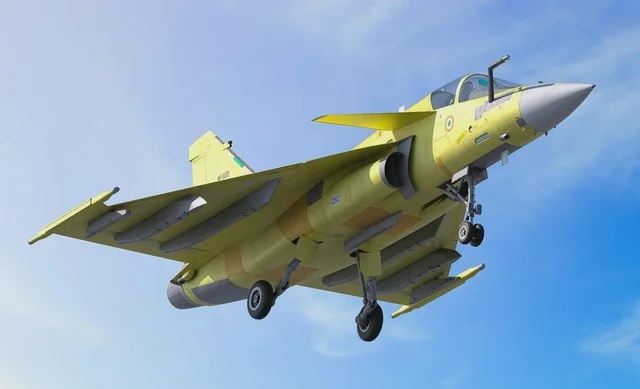
India
BENGALURU — May 16, 2026 : Hindustan Aeronautics Limited (HAL) has revised the rollout timeline for the first prototype of the indigenous Light Combat Aircraft (LCA) Tejas Mk2 to March 2027, extending the schedule for one of the Indian Air Force’s (IAF) principal fighter modernisation programmes. The updated target was disclosed during HAL’s Q4 FY26 earnings call, where company officials confirmed that structural assembly of the aircraft remains underway in coordination with the Aeronautical Development Agency (ADA). The revised schedule places the official rollout toward the end of the 2026–27 financial year. The Tejas Mk2 programme, also known as the Medium Weight Fighter (MWF), has experienced several timeline revisions over recent years as development activities continue across multiple agencies involved in the project. Programme Delays Linked to Integration and Technical Coordination Earlier expectations within the programme had indicated that an unofficial rollout could have already taken place, while the maiden flight was at one stage expected as early as the coming months. However, HAL officials stated that additional work related to structural integration, systems validation, and inter-agency coordination remains ongoing. The Tejas Mk2 is being jointly developed by HAL and ADA under the broader supervision of the Defence Research and Development Organisation (DRDO). Officials familiar with the programme stated that the aircraft’s development depends heavily on continuous coordination between the participating organisations for subsystem approvals, testing milestones, and technical clearances. Defence analysts noted that the revised rollout schedule is primarily tied to the integration of the General Electric F414-INS6 engine, which has been selected as the powerplant for the aircraft. The engine produces approximately 98 kN of thrust with afterburner and represents a substantial increase in capability compared to the GE F404 engines used on the Tejas Mk1 and Mk1A variants. HAL management described the GE F414 programme as the larger milestone for the overall project, stating that the rollout and maiden flight are secondary to successful engine integration, testing, and certification activities. Technical discussions between HAL and GE Aerospace regarding licensed production and technology transfer for the F414 engine have reportedly concluded, while the final agreement remains under finalisation. Eight engines have already been delivered for development and testing purposes. Multiple Timeline Revisions Since Initial Approval The Tejas Mk2 programme has undergone several schedule adjustments since its early development phase. Initial projections had targeted prototype rollout by August 2022. The schedule was later revised to the end of 2022 and subsequently shifted again into 2023. Following approval from the Cabinet Committee on Security (CCS) in September 2022, updated estimates projected rollout by late 2025 or early 2026. In early 2026, the Defence Research and Development Organisation estimated that the aircraft’s maiden flight could occur between June and July 2026. The latest revision now places the rollout target in March 2027, delaying the expected first flight beyond earlier projections. The CCS approved the programme with a sanctioned cost of approximately ₹10,000 crore, covering prototype development, testing, certification, and associated programme activities. Designed as a Medium-Weight Multirole Fighter The Tejas Mk2 is being developed as a 4.5-generation multirole combat aircraft intended to bridge the capability gap between the lighter Tejas Mk1A and India’s future Advanced Medium Combat Aircraft (AMCA). The aircraft is expected to replace several aging IAF fleets, including the Jaguar DARIN III, MiG-29UPG, and Mirage 2000 aircraft currently in service. Compared to the Tejas Mk1A, the Mk2 incorporates a larger and redesigned airframe with improved aerodynamic characteristics. The aircraft features close-coupled canards positioned near the cockpit section to enhance manoeuvrability, stability, and overall flight performance. The fighter will have a maximum take-off weight of approximately 17.5 tonnes, compared to 13.5 tonnes for the Mk1A. Payload capacity has also been significantly increased, allowing the aircraft to carry up to 6.5 tonnes of weapons and external stores across 11 hardpoints, compared to 3.5 tonnes across seven hardpoints on earlier Tejas variants. Advanced Indigenous Systems and Extended Combat Capability The Tejas Mk2 is planned to incorporate several indigenous systems and avionics upgrades aimed at improving survivability and network-centric combat capability. The aircraft will be equipped with the indigenous Uttam Active Electronically Scanned Array (AESA) radar and an indigenous electronic warfare suite. Additional avionics improvements include sensor fusion capability, advanced cockpit displays, enhanced mission systems, and compatibility with a wider range of precision-guided munitions and beyond-visual-range air-to-air missiles. The redesigned airframe also provides greater internal fuel capacity, extending operational endurance and combat reach. The aircraft is expected to achieve a combat range of approximately 1,200 kilometres, extendable to nearly 3,000 kilometres with external fuel tanks and aerial refuelling support. Prototype and Testing Plan Development of the Tejas Mk2 is being carried out jointly by DRDO, ADA, and HAL. The programme currently plans for four prototypes during the development phase. According to programme details, two prototypes will be dedicated to flight testing activities, while the remaining two aircraft will focus on weapons integration and systems evaluation. Following rollout, the aircraft will undergo ground testing, taxi trials, systems validation, and certification procedures overseen by the Centre for Military Airworthiness and Certification (CEMILAC). Flight testing will proceed only after successful completion of these stages. Indian Air Force Requirement The Indian Air Force has indicated an initial requirement for 120 Tejas Mk2 aircraft, although long-term production numbers could eventually exceed 200 fighters depending on future squadron requirements and procurement plans. The aircraft is intended to support the IAF’s long-term effort to restore squadron strength while increasing the proportion of domestically developed combat platforms within the force structure. Serial production and induction schedules will ultimately depend on the successful completion of development, engine integration, certification, and flight testing activities over the coming years.
Read More → Posted on 2026-05-16 15:17:23
World
NEVINNOMYSSK, Russia — May 16, 2026 : Ukrainian long-range strike drones reportedly targeted the Nevinnomyssk Azot chemical plant in Russia’s Stavropol Krai during the night of May 15–16, 2026, causing a fire within the industrial complex, according to local reports, monitoring channels, and footage circulating online. The attack began after regional authorities declared a drone threat alert at approximately 1:19 a.m. local time. Residents later reported hearing several explosions around 2:30 a.m., followed by visible flames and smoke rising from the direction of the chemical facility. Images and videos published on Russian and Ukrainian monitoring channels showed a fire burning inside the plant’s territory. The independent Russian Telegram channel Astra stated that an analysis of the available visual material confirmed that the source of the fire was located directly on the grounds of the Nevinnomyssk Azot enterprise. Local residents cited by monitoring channels also reported that they did not hear Russian air defense systems operating during the strike. Official Statements Contradict Visual Evidence Regional authorities acknowledged that Stavropol Krai had been targeted by drones but denied that any infrastructure was damaged. Stavropol Krai Governor Vladimir Vladimirov stated on his Telegram channel that Russian air defense systems had successfully repelled the raid and that there was “no damage on the ground.” At the federal level, the Russian Defense Ministry announced that air defense and electronic warfare units intercepted 138 Ukrainian drones overnight across 15 Russian regions. However, Stavropol Krai was not included in the ministry’s official list of affected regions despite the circulation of footage showing a fire at the chemical plant. Monitoring channels, including Exilenova Plus, continued to publish visual evidence indicating that a blaze had occurred at the facility following the reported drone strike. Strategic Industrial Facility Nevinnomyssk Azot, a subsidiary of the EuroChem holding group, is regarded as one of Russia’s largest chemical enterprises and a significant component of the country’s industrial sector. Located in the city of Nevinnomyssk at coordinates 44.659055, 41.940008, the plant lies approximately 400 kilometers (250 miles) from Ukrainian-controlled territory. The facility is Russia’s largest producer of nitrogen fertilizers and ammonia, manufacturing more than one million tons of ammonia annually along with over one million tons of ammonium nitrate. Its production portfolio also includes nitric acid, acetic acid, urea, melamine, potassium nitrate, liquid nitrogen fertilizers, vinyl acetate, methyl acetate, and complex mineral fertilizers. The enterprise additionally operates Russia’s first melamine production line and specialized units for high-purity acetic acid production. Links to Russian Military Supply Chains According to previous Reuters reporting, Nevinnomyssk Azot and Novomoskovsk Azot supplied at least 38,000 tons of acetic acid and nearly 5,000 tons of nitric acid to the Sverdlov Plant in Russia’s Nizhny Novgorod region between 2022 and 2024. Those chemicals are used in the production of military explosives, including octogen (HMX) and hexogen (RDX), which are utilized in artillery ammunition manufacturing. Because of these supply links, Ukrainian officials and analysts have described the facility as part of Russia’s defense-industrial infrastructure. Repeated Target of Drone Attacks The May 16 incident marks at least the sixth reported drone attack on the Nevinnomyssk Azot facility since the beginning of the full-scale Russia-Ukraine war. Previous strikes targeting the plant or nearby industrial areas were reported in March 2026, January 2026, December 2025, and August 2025, with additional incidents documented during June and July 2025. During the March 19, 2026 attack, local residents reported four separate drone impacts near the facility. Residents also described a strong chemical odor spreading across parts of the city following the strike. Broader Ukrainian Long-Range Strike Campaign The reported attack forms part of Ukraine’s broader campaign of long-range drone strikes against Russian military, industrial, logistical, and energy infrastructure located deep behind the front line. Ukrainian-produced drones have increasingly targeted facilities connected to ammunition production, fuel processing, chemical manufacturing, and military logistics across Russian territory. Earlier in 2026, the KuibyshevAzot chemical plant in Togliatti, Samara region, reportedly suspended operations after being targeted in a Ukrainian drone strike on the night of March 30. As of May 16, neither Nevinnomyssk Azot nor Russian federal authorities had released information regarding operational disruptions, production losses, casualties, or the extent of damage caused by the reported strike. Damage assessments and investigations were reportedly ongoing.
Read More → Posted on 2026-05-16 15:27:34
World
FORT WORTH, Texas — May 16, 2026 : Lockheed Martin has received a $991.13 million firm-fixed-price contract to produce 432 electronic warfare modernization kits for the global fleet of F-35 Joint Strike Fighter aircraft, in one of the largest single capability upgrade awards issued under the fifth-generation fighter program. The contract was awarded by the Naval Air Systems Command on May 15, 2026, under a previously established basic ordering agreement. The order covers the production and delivery of material modification kits intended to retrofit operational F-35 aircraft with upgraded electronic warfare systems and associated capability enhancements. Work under the contract will be performed at Lockheed Martin Aeronautics facilities in Fort Worth, Texas, with completion scheduled for March 2032. The award was issued without a competitive bidding process, consistent with the procurement structure used for long-term F-35 sustainment and modernization activities. Distribution of Upgrade Kits Across U.S. and Allied Fleets The 432 modernization kits will be distributed among U.S. military services and international F-35 operators. According to contract details, the United States allocation totals 193 kits, including 97 for the U.S. Air Force, 54 for the U.S. Marine Corps, and 42 for the U.S. Navy. International customers account for the remaining 239 kits, including 133 for non-U.S. Department of War program participants and 106 for Foreign Military Sales customers. The combined international allocation exceeds the total U.S. procurement quantity, reflecting the growing operational reliance of allied air forces on the F-35 platform and the alignment of modernization schedules across partner nations. The retrofit kits are intended for aircraft already in operational service and will likely be installed during scheduled maintenance periods and depot-level upgrade cycles. Modernization Linked to F-35 Block 4 Upgrade Program The electronic warfare upgrades form part of the broader F-35 Block 4 modernization effort, which introduces incremental hardware and software improvements designed to maintain the aircraft’s operational effectiveness against evolving air defense threats. The F-35A Lightning II, F-35B Lightning II, and F-35C Lightning II all share a common electronic warfare architecture, allowing a single modernization package to be applied across the broader international fleet. The F-35A is operated by the U.S. Air Force and most international users, while the F-35B serves the Marine Corps and allied operators including the United Kingdom. The carrier-based F-35C is used by the U.S. Navy for carrier strike operations. The common architecture across all variants simplifies integration, logistics support, software management, and future capability upgrades throughout the program. AN/ASQ-239 Electronic Warfare System The modernization effort centers on upgrades to the AN/ASQ-239 electronic warfare system developed by BAE Systems. The AN/ASQ-239 provides radar warning, threat detection, signal analysis, geolocation, and electronic attack capabilities across a wide electromagnetic spectrum. The system enables F-35 pilots to detect, identify, and respond to hostile radar emissions and missile guidance systems before the aircraft can be effectively targeted. In addition to defensive functions, the system supports electronic attack operations designed to jam, disrupt, or deceive adversary radar and communications networks. Electronic warfare data generated by the system is integrated into the F-35’s sensor fusion architecture, combining inputs from onboard radar, electro-optical targeting systems, distributed aperture sensors, datalinks, and other mission systems to generate a unified tactical picture for the pilot. Response to Evolving Air Defense Threats The modernization program is intended to address continuing advancements in integrated air defense systems and radar technologies developed by potential adversaries, particularly systems optimized to detect and track low-observable stealth aircraft. Defense analysts have increasingly identified improvements in long-range radar systems, passive detection networks, multi-band tracking systems, and advanced surface-to-air missile architectures developed by China and Russia as major drivers behind ongoing modernization requirements for fifth-generation aircraft. Upgrading the F-35’s electronic warfare suite is intended to preserve survivability, situational awareness, and mission effectiveness in increasingly contested electromagnetic environments. The retrofit approach also allows existing aircraft already in operational service to remain aligned with the latest mission-system standards instead of limiting upgrades to newly produced aircraft. Long-Term Sustainment and International Program Expansion Funding for the contract includes fiscal year 2026 and prior-year aircraft procurement appropriations from the Air Force and Navy, along with Foreign Military Sales funding and financial contributions from international program participants. The award further reinforces Lockheed Martin’s role as the prime contractor responsible for F-35 production, sustainment, modernization, and lifecycle support activities. The F-35 remains the world’s largest fifth-generation fighter aircraft program, with more than a dozen allied nations operating or preparing to operate the platform as their primary multirole combat aircraft.
Read More → Posted on 2026-05-16 15:40:20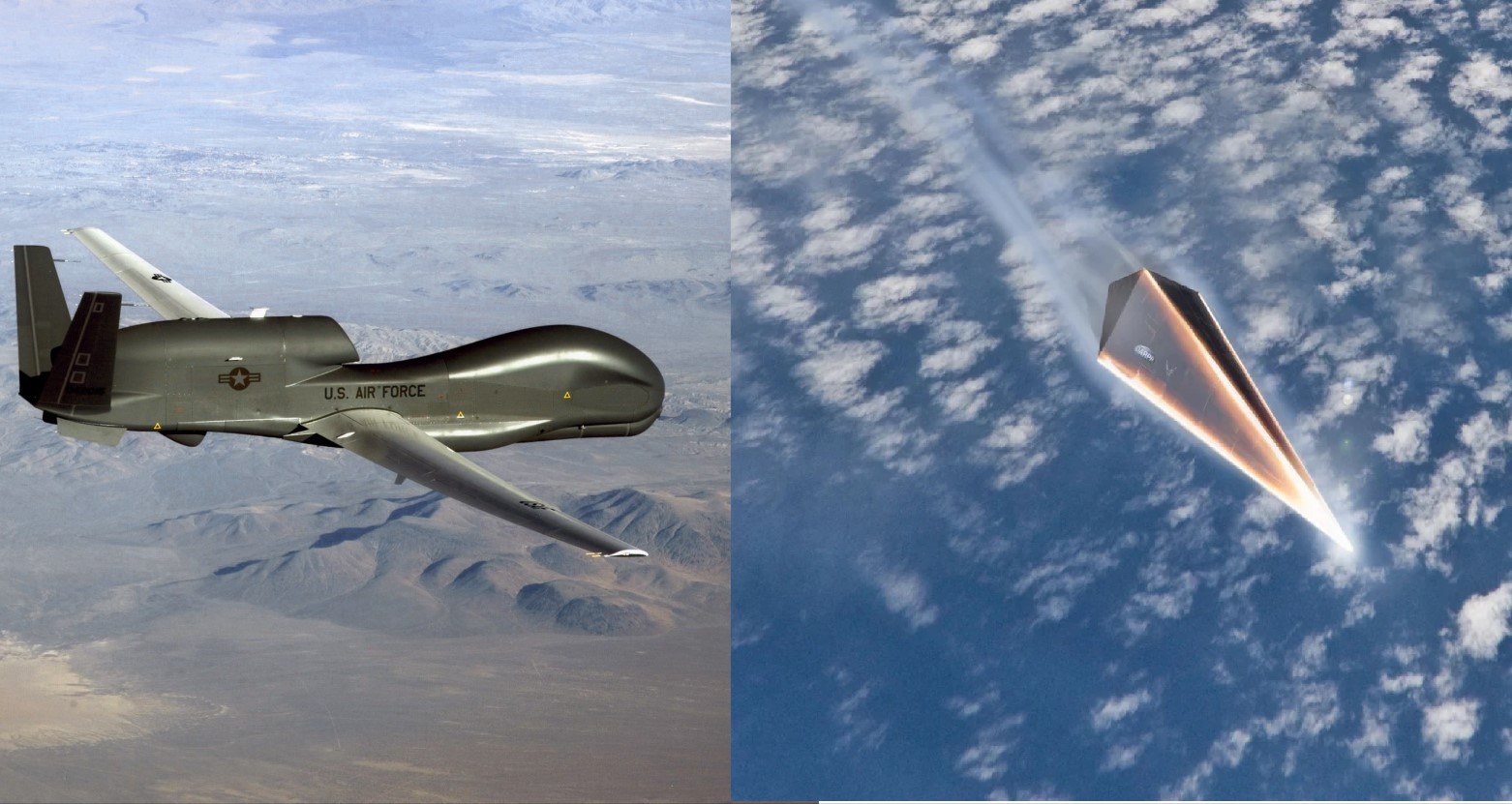
World
ORLANDO, Fla. — May 16, 2026 : The U.S. Army has awarded Northrop Grumman a $325.53 million cost-plus-fixed-fee contract to develop the RangeHawk high-altitude long-endurance (HALE) airborne test platform, a system intended to improve the Department of Defense’s ability to collect tracking and telemetry data from hypersonic and other high-speed weapons tests. The contract was issued by Army Contracting Command in Orlando, Florida, on May 15, 2026. According to contract details, the program includes prototype development, air vehicle modification, sensor integration, and logistics preparation for demonstration and validation activities. Work will primarily be performed at Northrop Grumman’s facility in San Diego, California, with completion scheduled for May 14, 2031. At the time of the award, the Army obligated approximately $65.66 million in fiscal year 2026 research, development, test and evaluation (RDT&E) funding. The remaining funding will be allocated incrementally as the program progresses through development and testing phases. High-Altitude Test Platform for Hypersonic Programs RangeHawk is being developed as a universal payload architecture prototype intended to support the testing of hypersonic missiles, boost-glide vehicles, and other advanced high-speed systems. The platform is designed to improve the agility and adaptability of airborne test data collection during flight trials. The program is part of the Department of Defense Test Resource Management Center’s SkyRange initiative, which repurposes retired U.S. Air Force RQ-4 Global Hawk Block 20 and Block 30 unmanned aircraft into airborne test and tracking platforms. Originally designed for intelligence, surveillance and reconnaissance missions, the RQ-4 airframes are being modified with specialized instrumentation systems capable of tracking high-speed vehicles during flight. The conversion shifts the aircraft’s mission from downward-looking battlefield surveillance to upward-looking telemetry, infrared and optical monitoring for weapons testing operations. Earlier SkyRange conversions involving RQ-4 Block 10 aircraft have already supported several hypersonic test events conducted over the Atlantic and Pacific Oceans since 2023. Addressing Gaps in Test Range Infrastructure The RangeHawk program is intended to address limitations in existing U.S. hypersonic test infrastructure. Defense officials have previously identified challenges in collecting complete telemetry and flight-performance data from vehicles traveling at speeds exceeding Mach 5. Ground-based radars and conventional tracking systems often struggle to maintain uninterrupted coverage of hypersonic vehicles throughout an entire flight profile. This limitation has contributed to delays and incomplete test evaluations in several U.S. hypersonic development programs. A high-altitude airborne platform such as RangeHawk can position itself directly along a flight corridor and maintain persistent tracking coverage during portions of a mission that ground stations or ship-based systems may not fully observe. Operating at altitudes above 60,000 feet and capable of remaining airborne for more than 30 hours, the modified Global Hawk platform can gather telemetry and sensor data at closer range than fixed infrastructure. The aircraft is expected to capture optical, infrared and electronic signature measurements that are not obtainable through traditional ground-based systems alone. According to program details, the system will provide engineers with more detailed information about vehicle behavior, thermal performance, flight stability and subsystem operation during high-speed flight testing. Universal Payload Architecture A central element of the contract is the development of a universal payload architecture that allows the aircraft to carry interchangeable sensor packages depending on mission requirements. Instead of using a permanently installed sensor suite tailored for a single test program, RangeHawk is being designed as a modular airborne range asset capable of supporting multiple weapons programs through rapid payload reconfiguration. This approach is intended to improve long-term flexibility while reducing the risk of obsolescence associated with single-purpose test instrumentation systems. Different payload combinations can be integrated depending on whether a mission requires telemetry collection, infrared imaging, electronic monitoring or other specialized measurement functions. The architecture is also expected to support future integration of emerging sensor technologies as hypersonic programs evolve. Northrop Grumman’s Role Northrop Grumman’s involvement in the program builds on its experience developing and manufacturing the RQ-4 Global Hawk unmanned aircraft system. The Global Hawk has served for years as one of the U.S. military’s primary HALE surveillance drones, conducting long-duration intelligence and reconnaissance missions across large operational areas. Its endurance, altitude performance and payload capacity made it suitable for adaptation into an airborne test support platform under the SkyRange initiative. The company is also the manufacturer of the B-21 Raider stealth bomber and remains involved in multiple advanced aerospace and defense modernization programs. Broader Hypersonic Competition The RangeHawk initiative supports ongoing U.S. military efforts to accelerate hypersonic weapons development amid growing competition with China and Russia in the field of high-speed strike systems. China has demonstrated systems including the DF-17 and DF-ZF boost-glide vehicle, while Russia has deployed the Kh-47M2 Kinzhal and the Avangard strategic glide system. The United States has continued testing multiple hypersonic programs across the Army, Navy and Air Force, though several efforts have experienced schedule delays and test failures linked partly to infrastructure and telemetry collection constraints. Defense officials view expanded airborne tracking capability as necessary for increasing the frequency, reliability and quality of future hypersonic testing campaigns. Army’s Role in Joint Test Operations The Army’s role as the contracting authority reflects its longstanding responsibility for managing portions of the Department of Defense’s test and evaluation infrastructure on behalf of the joint force. The U.S. Army Test and Evaluation Command and associated test ranges have historically supported national missile, rocket and advanced weapons testing programs for multiple military branches. RangeHawk extends that support function into high-altitude airborne instrumentation, providing a reusable airborne asset intended to support future hypersonic and high-speed weapons development programs across the Department of Defense.
Read More → Posted on 2026-05-16 15:54:50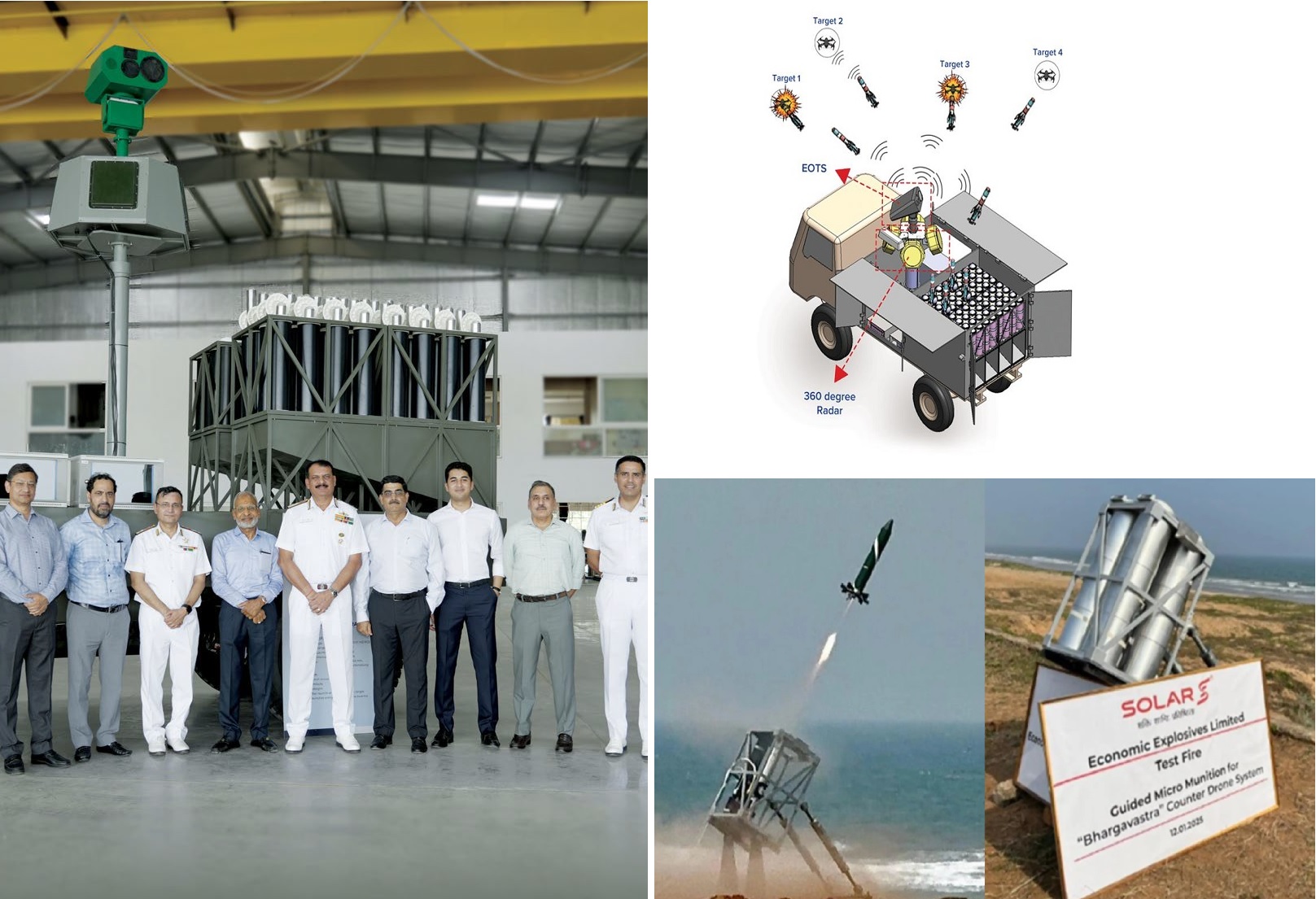
India
NAGPUR, India — May 16, 2026 : Solar Defence and Aerospace Limited (SDAL), a subsidiary of Solar Industries India Limited, has entered the final phase of testing for its indigenous Bhargavastra counter-drone system, with comprehensive trials scheduled for completion by the end of 2026. The Bhargavastra system is a hard-kill Counter-Unmanned Aerial System (C-UAS) developed to detect, track and neutralise hostile unmanned aerial vehicles (UAVs), loitering munitions and coordinated drone swarms. The programme was initiated by SDAL in response to the growing use of low-cost drones and autonomous aerial threats in modern warfare environments. Multi-Layer Counter-Drone Architecture Bhargavastra uses a layered interception architecture combining unguided micro-rockets and guided micro-missiles. The first defensive layer employs unguided micro-rockets designed to create a fragmentation effect with a lethal radius of approximately 20 metres. This layer is intended to rapidly engage and disrupt large drone swarms through area saturation. The second layer consists of precision-guided micro-missiles capable of hit-to-kill engagements against individual aerial targets. Each guided interceptor weighs approximately 2.5 kilograms and is powered by a solid-propellant rocket motor. The system is designed to neutralise aerial threats at ranges exceeding 2.5 kilometres. According to SDAL, Bhargavastra is among the few dedicated anti-drone systems globally capable of carrying and firing a large salvo of interceptors from a single launcher configuration. The platform carries up to 64 micro-missiles or micro-rockets arranged in an 8×8 cassette layout. All 64 interceptors can be launched in salvo mode within approximately 10 seconds, enabling simultaneous engagement of multiple aerial targets and dense drone swarms with 360-degree coverage. Detection and Command Network The system integrates an advanced Command-and-Control Centre equipped with C4I (Command, Control, Communications, Computers and Intelligence) technology for target detection, tracking and engagement coordination. Bhargavastra’s radar system can reportedly detect medium and large UAVs at ranges of up to 10 kilometres, while smaller drones can be identified at distances exceeding 6 kilometres. To improve tracking accuracy against targets with low radar signatures, the platform also incorporates an Electro-Optical/Infrared (EO/IR) sensor suite for visual and thermal target identification. Once a threat is confirmed, the system can rapidly assign and launch interceptors against incoming aerial targets using either guided or unguided munitions depending on the threat profile. Mobility and Operational Flexibility The complete Bhargavastra platform is mounted on a 4×4 high-mobility light truck, allowing rapid deployment and repositioning in operational areas. The system has been engineered for operations across multiple terrain conditions, including deserts, plains and high-altitude mountainous regions up to 5,000 metres above sea level. Its modular architecture also allows the integration of optional soft-kill systems, including radio-frequency jamming and GPS spoofing modules. This enables operators to combine electronic warfare measures with kinetic interception capabilities to establish a layered anti-drone defence network. The munitions used by the system were developed by Economic Explosives Limited, another company within the Solar Group. Trial Progress and Testing Milestones Testing of the Bhargavastra system began at the Gopalpur Seaward Firing Range in Odisha in January 2025 in the presence of Indian Army officials. During the initial trial phase, the system successfully engaged a stationary aerial target at a range of 2.5 kilometres and an altitude of approximately 400 metres. A follow-up firing achieved a successful engagement against a moving electronic target, validating the system’s tracking and interception capabilities. Additional evaluation firings were conducted in May 2025 before senior Indian Army Air Defence officers. The tests included two single-rocket firings and one rapid salvo launch involving two rockets fired within two seconds. SDAL stated that all launch parameters and operational objectives were successfully achieved during the trials. The current final testing phase is intended to evaluate the system’s operational reliability, target engagement accuracy, salvo-launch performance and battlefield readiness under varied environmental and tactical conditions ahead of the projected completion timeline in late 2026. Indigenous Counter-Drone Development Bhargavastra forms part of India’s broader effort to strengthen indigenous counter-drone and short-range air-defence capabilities through domestic defence industry participation. The system is the first micro-missile-based counter-drone platform of its type developed entirely by an Indian private-sector company. Upon successful completion of final trials and certification, the platform is expected to proceed toward user evaluation and potential induction into Indian Army Air Defence units.
Read More → Posted on 2026-05-16 16:35:24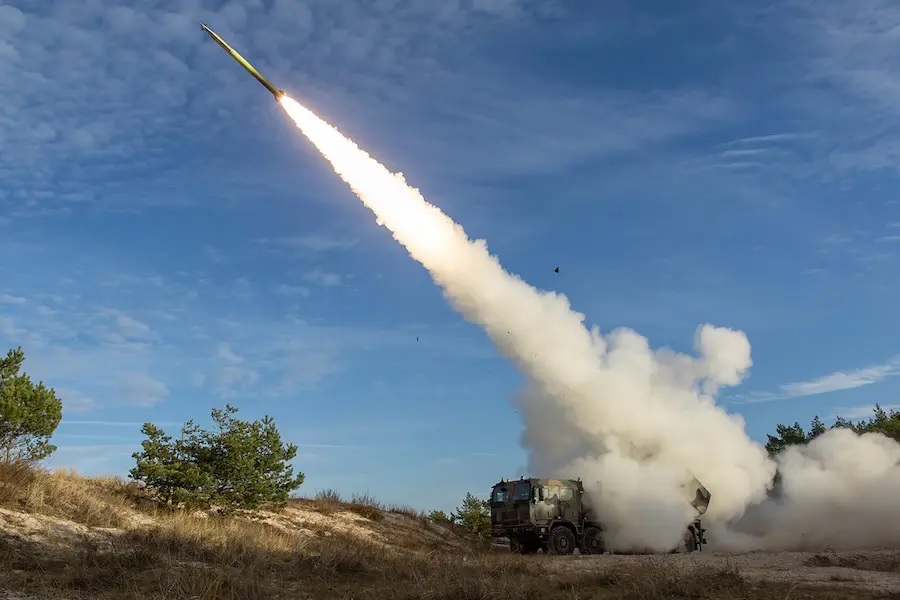
World
WARSAW — May 16, 2026 : The Polish Armed Forces achieved a record live-fire result with the Homar-K multiple rocket launcher system during the multinational Baltic Shield exercises, successfully striking a target at a distance of 79.6 kilometres using a CGR-080 precision-guided rocket. The achievement was announced by Polish Deputy Prime Minister and Minister of National Defence Władysław Kosiniak-Kamysz together with the General Command of the Polish Armed Forces. The firing was conducted from the Polish coastline during joint military drills held between Poland and Denmark from 8 to 14 May 2026 in the Baltic Sea region, including operational areas around the Danish island of Bornholm. The exercises represented the largest bilateral military training activity conducted by the two countries to date and involved coordinated land, maritime and air operations, including participation from special operations forces. Baltic Shield Focused on Regional Security and NATO Interoperability Exercise Baltic Shield was designed to improve operational coordination between allied forces in response to conventional and hybrid threats in the Baltic region. The drills also aimed to strengthen NATO deterrence and collective defence capabilities along the alliance’s eastern flank, an area viewed as strategically significant due to increasing regional security concerns. The exercise brought together units from multiple branches of the Polish and Danish armed forces and tested joint operational procedures, communications and rapid-response capabilities. Military activities were conducted across several domains simultaneously, including naval operations in the Baltic Sea, air coordination missions and long-range artillery exercises. During the live-fire phase, the Homar-K operated alongside other allied rocket artillery systems. Polish-operated M142 HIMARS launchers and Danish PULS systems also conducted coordinated firing drills near Bornholm. Polish defence officials stated that the exercise demonstrated the ability of allied artillery formations to integrate within a common operational framework while maintaining high readiness levels in a multinational environment. Homar-K Combines Korean Launcher Technology With Polish Systems The Homar-K is the Polish-configured version of South Korea’s K239 Chunmoo rocket artillery system developed by Hanwha Aerospace. The programme forms a major component of expanding defence industrial cooperation between Poland and South Korea and includes technology transfer, local industrial participation and future domestic production of guided rockets. Unlike the original Korean configuration, the Polish version integrates several domestically produced systems and components. The launcher is mounted on a Polish-manufactured Jelcz 8×8 military truck chassis produced by Jelcz and incorporates the TOPAZ automated battle-management and fire-control system developed by WB Group. The Fonet digital communications system and additional structural integration work provided by Polska Grupa Zbrojeniowa are also part of the Polish configuration. Each Homar-K launcher carries two interchangeable launch pods. Each pod can accommodate either six 239 mm CGR-080 guided rockets or one 607 mm CTM-290 tactical ballistic missile. This modular configuration allows the system to perform both medium-range precision strike missions and longer-range tactical strike operations. CGR-080 Rocket Provides Precision Strike Capability The CGR-080 rocket used during the record firing is a 239 mm precision-guided munition equipped with GPS and inertial navigation guidance systems. The rocket has a nominal operational range of approximately 80 kilometres and serves as the primary guided ammunition type for the Homar-K system. The successful 79.6-kilometre strike during Baltic Shield demonstrated the operational performance of the integrated Polish launcher configuration, including its targeting, communications and fire-control systems. Defence officials stated that the result confirmed the system’s capability to conduct accurate long-range engagements while operating within NATO command and coordination structures. The Homar-K system is also capable of deploying the CTM-290 tactical ballistic missile, which extends the launcher’s strike range to approximately 290 kilometres. The combination of guided rockets and tactical missiles is intended to provide the Polish Armed Forces with expanded long-range precision strike capabilities as part of the country’s broader artillery modernisation programme. Poland Expanding Domestic Production and Industrial Capacity Poland has ordered a total of 290 Homar-K launchers under multiple procurement agreements signed with South Korean industry partners. By mid-2025, more than 126 launcher modules had been delivered to Poland, including 72 systems transferred during 2025 alone. The launcher modules are integrated locally onto Polish chassis before entering operational service with the Polish Land Forces. At least 81 complete Homar-K systems are currently reported to be operational within Polish artillery units, with additional deliveries planned over the coming years. The programme is expected to become one of the largest rocket artillery modernisation efforts in Europe. In December 2025, the Polish Armament Agency signed a third executive agreement valued at approximately PLN 14 billion, or around $4 billion, with a Polish-Korean consortium involving Hanwha Aerospace and Hanwha WB Advanced Systems. The contract covers the licensed production and supply of thousands of CGR-080 precision-guided rockets within Poland. Rocket production is scheduled to begin in 2030 at a new manufacturing facility in Gorzów Wielkopolski. The agreement includes technology transfer and industrial know-how intended to establish domestic expertise in rocket manufacturing, integration, maintenance and logistical support. Polish officials have stated that local production capacity is expected to improve supply security for the Polish Armed Forces while also supporting potential future European operators of the Chunmoo platform. Homar-K Central to Poland’s Artillery Modernisation The Homar-K programme continues to expand as part of Poland’s broader effort to strengthen long-range artillery and precision-strike capabilities. Alongside the acquisition of HIMARS systems and other modern artillery assets, the programme is intended to improve operational flexibility, interoperability with NATO allies and rapid-response capability along the alliance’s eastern flank. The record strike achieved during Baltic Shield highlighted the operational readiness of Polish artillery forces and demonstrated the growing integration of advanced domestically produced systems with allied military infrastructure during multinational exercises in the Baltic region.
Read More → Posted on 2026-05-16 16:54:40
Space & Technology
WASHINGTON — May 16, 2026 : The Federal Communications Commission (FCC) has approved SpaceX’s acquisition of approximately 65 megahertz of nationwide wireless spectrum from EchoStar, a regulatory decision that significantly expands the company’s Starlink direct-to-device (D2D) mobile communications program. The approval, issued on May 12, authorizes SpaceX to obtain exclusive-use, contiguous wireless spectrum intended for satellite-to-phone connectivity services that allow standard smartphones to connect directly to low-Earth orbit satellites without requiring specialized hardware. The transaction is valued at approximately $17 billion and includes three separate spectrum assets previously held by EchoStar: 15 MHz of unpaired AWS-3 spectrum, 40 MHz of AWS-4 spectrum, and 10 MHz of H-Block spectrum. The acquisition gives SpaceX its first nationwide portfolio of dedicated wireless spectrum licenses. At the same time, the FCC approved EchoStar’s separate sale of an additional 50 MHz of spectrum to AT&T in a transaction valued at approximately $23 billion. Combined, the two agreements represent more than $40 billion in spectrum divestitures by EchoStar. Spectrum Approval Expands Starlink Direct-to-Device Capacity The newly acquired spectrum will support the expansion of Starlink’s next-generation direct-to-cell network, which is designed to provide mobile voice, text, and data connectivity directly from satellites to conventional smartphones. SpaceX’s initial direct-to-device operations relied on sharing terrestrial carrier spectrum through agreements with telecommunications companies including T-Mobile. That system enabled basic messaging and emergency communication services in areas without terrestrial cellular coverage, but shared-spectrum operations imposed substantial bandwidth limitations. According to FCC filings associated with the transaction, the addition of dedicated and contiguous spectrum is expected to increase network capacity by more than 100 times compared to SpaceX’s first-generation direct-to-device platform. SpaceX has stated that the long-term objective is to provide satellite-based connectivity comparable to conventional LTE and future 5G mobile services. The system is intended to operate similarly to terrestrial cellular networks, allowing smartphones to connect automatically to satellites when ground-based coverage is unavailable. FCC Grants Technology-Neutral Waivers As part of the approval, the FCC granted SpaceX a series of technology-neutral waivers that permit the deployment of a hybrid communications architecture integrating satellite and terrestrial network infrastructure. The waivers allow SpaceX to combine space-based and ground-based network components in order to improve service reliability, coverage continuity, latency performance, and spectral efficiency. The regulatory framework also enables more flexible deployment of future direct-to-cell infrastructure across the United States. The approval further strengthens Starlink’s broader second-generation satellite network expansion. Earlier FCC authorizations, including the January 2026 approval for an additional 7,500 Gen2 satellites, support the deployment of enhanced direct-to-device services both domestically and internationally. SpaceX Expands Role in Telecommunications Sector The acquisition substantially changes SpaceX’s position within the telecommunications industry. Previously, the company primarily operated as a satellite infrastructure provider supporting mobile carriers through partnership agreements. By securing its own nationwide wireless spectrum licenses, SpaceX gains the independent capacity necessary to operate large-scale mobile communications services directly under its own network framework. Although the company continues to maintain commercial partnerships with terrestrial operators, including T-Mobile, the spectrum ownership structure provides SpaceX with greater operational control over future mobile connectivity services and creates a new competitive dynamic within the wireless communications sector. Traditional mobile carriers are increasingly evaluating satellite-based coverage solutions to extend connectivity into rural, remote, maritime, and underserved regions where terrestrial infrastructure remains limited or economically difficult to deploy. FCC Imposes $2.4 Billion Escrow Requirement on EchoStar The FCC approval includes a major financial condition affecting EchoStar. The commission ordered the company to establish a $2.4 billion escrow account intended to cover potential liabilities involving third-party infrastructure companies. The condition is linked to ongoing litigation and multi-billion-dollar disputes involving telecommunications tower operators and fiber infrastructure providers following EchoStar and Dish Network’s earlier reduction of plans to construct a nationwide terrestrial 5G network. Companies connected to the disputes include major infrastructure operators such as Crown Castle and American Tower. EchoStar publicly objected to the escrow requirement, describing it as an “unprecedented involuntary escrow condition,” while also acknowledging that the FCC considered the spectrum transactions to be pro-competitive. Deployment Timeline and Regulatory Obligations The final closing of the spectrum transfer between EchoStar and SpaceX is expected on or about November 30, 2027. Following completion of the transaction, SpaceX will be required to comply with long-term FCC performance obligations covering technical and operational standards for the direct-to-device network. These requirements include measurable benchmarks for downlink quality, uplink throughput, and spectral efficiency over a nine-year period. The FCC stated that Starlink’s direct-to-device operations will remain subject to interference protections, international spectrum coordination requirements, and additional regulatory oversight governing satellite communications services. SpaceX has not yet announced a full commercial deployment timeline for expanded satellite-to-phone services, but the company continues testing and limited rollout operations in selected markets as it develops broader global direct-to-cell capabilities.
Read More → Posted on 2026-05-16 17:00:37
World
KUALA LUMPUR — May 16, 2026 : Norway has revoked export licenses for the Naval Strike Missile (NSM) system and associated launcher components intended for the Royal Malaysian Navy, abruptly canceling the transfer only days before the planned March 2026 delivery and creating a major setback for Malaysia’s naval modernization program. The decision affects missile systems ordered for the Royal Malaysian Navy’s Maharaja Lela-class Littoral Combat Ships (LCS) and has prompted Malaysia to evaluate legal action and alternative procurement options after already paying nearly the full contract value. The original agreement, signed in April 2018 between Malaysia and Kongsberg Defence & Aerospace, was valued at approximately €124 million, equivalent to around RM570 million. The contract covered the supply of NSM anti-ship missiles, launch systems, and associated equipment for six Maharaja Lela-class LCS vessels currently under construction for the Royal Malaysian Navy. Malaysia later expanded the procurement effort through an additional contract signed in 2025 worth approximately $11.19 million for launcher systems intended for the Lekiu-class frigates KD Jebat and KD Lekiu. The NSM was selected partly because of its compatibility with the SETIS combat management system installed aboard Malaysian naval platforms. The Norwegian Ministry of Foreign Affairs stated that the cancellation was the result of tightened defense export controls introduced in response to the evolving security environment in Europe and globally. Under the revised policy, exports of highly sensitive Norwegian-developed defense technologies are now limited to NATO members and Norway’s closest strategic partners. As Malaysia is a non-aligned country and not part of NATO, Norwegian authorities determined that it no longer qualified to receive the system under the updated regulations. Norwegian officials stated that the measure applies specifically to sensitive military technologies and does not represent a broader change in bilateral relations with Malaysia. However, the move has triggered diplomatic discussions between both governments and raised concerns in Kuala Lumpur regarding the reliability of long-term defense procurement arrangements with European suppliers. Unconfirmed reports also indicate that the revocation may be connected to separate export restrictions involving a U.S.-manufactured gyroscope component integrated into the NSM guidance system. Neither Norwegian nor Malaysian authorities have formally confirmed those reports. Kongsberg Defence & Aerospace stated that it is complying fully with Norwegian government regulations and emphasized that the cancellation resulted from state export policy decisions rather than commercial considerations. The company invoked force majeure provisions after the Norwegian government revoked the export licenses, arguing that the action was beyond the company’s control. Malaysia had reportedly already paid more than 95 percent of the contract value, amounting to over RM500 million, before the cancellation was implemented. Malaysian Prime Minister Anwar Ibrahim raised Malaysia’s “vehement objection” during a telephone conversation with Norwegian Prime Minister Jonas Gahr Støre. Anwar criticized the unilateral nature of the decision and stated that Malaysia had fulfilled all financial and contractual obligations under the agreement. He stated that signed defense contracts should be treated as binding commitments and warned that unilateral cancellations could undermine confidence in European defense suppliers as long-term strategic partners. Malaysia’s Defence Minister, Datuk Seri Mohamed Khaled Nordin, announced that the Ministry of Defence has established a special committee to evaluate legal action and determine compensation claims arising from the cancellation. The committee is reviewing possible refund demands, compensation for damages, and legal remedies through international arbitration or other dispute resolution mechanisms. The cancellation is expected to further complicate Malaysia’s already delayed Littoral Combat Ship program, which has faced years of procurement, budgetary, and construction challenges. The loss of the NSM integration package means Malaysian defense planners may need to restart portions of the weapons integration process for the affected ships. The NSM, jointly developed by Kongsberg and Raytheon, is a precision-guided anti-ship missile designed for littoral and open-sea warfare. The missile has an operational range of approximately 185 kilometers and incorporates stealth shaping, sea-skimming flight capability, and advanced target recognition systems. Malaysian defense officials are now assessing alternative anti-ship missile suppliers to maintain naval operational readiness and avoid additional delays to fleet modernization plans. Among the systems reportedly under consideration is the Atmaca anti-ship missile produced by Roketsan. The Turkish-made Atmaca system is reported to offer a longer operational range than the NSM while carrying a lower estimated procurement cost of around RM369 million. Malaysian officials have not yet announced a final replacement decision. The cancellation has also renewed broader debate within Malaysia’s defense establishment regarding procurement diversification and the risks associated with dependence on suppliers subject to changing geopolitical and export control policies.
Read More → Posted on 2026-05-16 17:10:24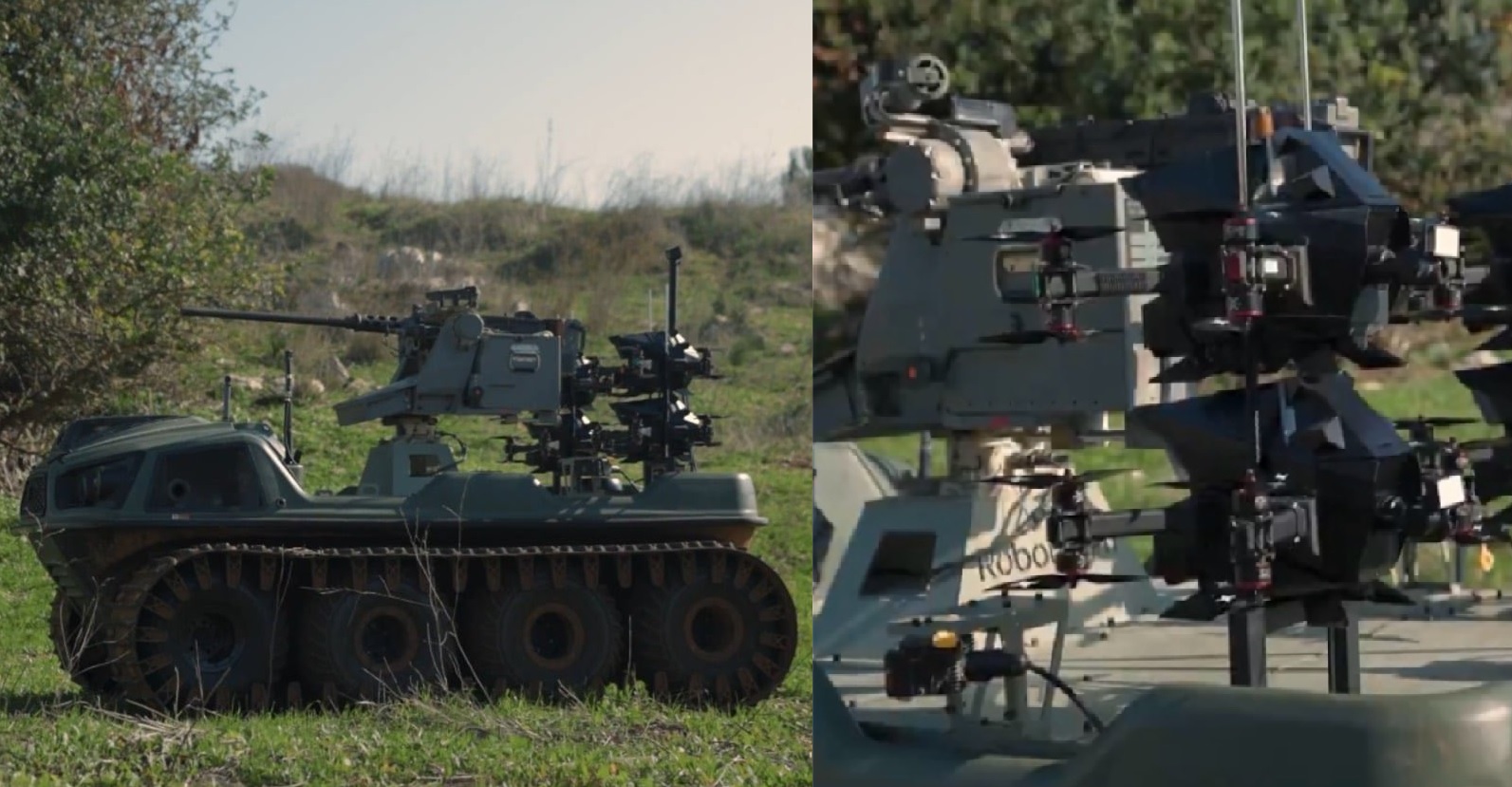
World
WEST PALM BEACH, Florida — May 16, 2026 : Ondas Holdings has unveiled “Iron-Wave,” a modular robotic warfare architecture designed to integrate unmanned ground vehicles (UGVs), autonomous aerial drones, intelligence, surveillance and reconnaissance (ISR) systems, and counter-unmanned aerial systems (C-UAS) into a unified command-and-control network. The system, announced on May 16, 2026, represents the company’s latest effort to expand its autonomous military technology portfolio and address operational challenges associated with large-scale deployment of unmanned systems in modern combat environments. Centralized Control for Multi-Domain Operations Iron-Wave is built around a centralized command hub capable of coordinating multiple robotic and autonomous platforms simultaneously. According to the company, the architecture allows a reduced number of operators to manage distributed unmanned assets across wider operational areas, addressing one of the primary limitations of current unmanned ground vehicle deployments. Conventional UGV operations often require at least one dedicated operator per vehicle, limiting operational scalability and reducing manpower efficiency. Ondas stated that Iron-Wave’s centralized operational model is intended to enable coordinated robotic operations with fewer personnel while improving battlefield coverage and response times. The architecture incorporates secure communications systems, onboard power infrastructure, operational management software, and AI-assisted command-and-control technologies designed to support multi-domain missions in contested environments. The system is built around a mobile robotic ground platform paired with a containerized remote operations unit intended for rapid deployment and sustained frontline support. The mobile infrastructure is designed to allow combat units to deploy autonomous systems closer to operational areas while maintaining centralized mission coordination. Modular Design and Mission Flexibility Iron-Wave uses a modular system-of-systems architecture rather than functioning as a single fixed-configuration platform. The design enables military operators to swap mission payloads and sensors depending on operational requirements instead of deploying separate specialized vehicles for individual mission types. According to Ondas, the modular approach is intended to reduce logistical complexity, improve operational flexibility, and allow faster adaptation to changing battlefield conditions. The architecture integrates robotic ground systems, ISR payloads, autonomous aerial systems, electronic warfare tools, advanced sensing technologies, and AI-supported battlefield management software into a unified operational framework. Integrated ISR and Autonomous Reconnaissance Capabilities A major component of Iron-Wave is its ability to support intelligence, surveillance, and reconnaissance missions in contested operational environments. The system can deploy advanced sensors and ISR payloads designed to extend situational awareness and reduce direct exposure of personnel to battlefield threats. By integrating autonomous reconnaissance systems with ground robotics, operators can conduct surveillance, route monitoring, target identification, and perimeter security missions remotely. The broader Ondas Autonomous Systems ecosystem integrated into Iron-Wave includes platforms such as the Optimus autonomous ISR drone system and tactical robotic vehicles developed by Roboteam Ltd. Counter-Drone Integration Iron-Wave also incorporates counter-unmanned aerial system capabilities intended to address the increasing use of drones in modern warfare. The architecture is designed to integrate Ondas’ Iron Drone Raider interceptor system, an autonomous counter-UAS platform capable of detecting, tracking, and neutralizing hostile drones. The interceptor uses radar guidance, computer vision technologies, and artificial intelligence-assisted target identification to engage aerial threats. According to the company, the Iron Drone Raider employs a net-based kinetic interception mechanism and operates without relying on GPS guidance or radio-frequency jamming, reducing interference risks for nearby friendly systems and communications networks. The integration of mobile counter-drone protection within a robotic ground architecture is intended to reduce the operational burden on dismounted soldiers responsible for local air defense while simultaneously managing frontline combat tasks. Expansion of Ondas Autonomous Systems Portfolio Iron-Wave forms part of Ondas’ broader strategy to develop integrated air-and-ground autonomous warfare technologies through its expanding network of subsidiaries and acquisitions. The company’s autonomous systems portfolio includes American Robotics, Airobotics, Sentrycs, and Rotron Aerospace. These companies provide aerial autonomy systems, counter-UAS technologies, propulsion systems, and tactical robotics that form part of the integrated Iron-Wave framework. Ondas stated that the development reflects operational lessons observed in recent conflicts, particularly the war in Ukraine and ongoing military operations across the Middle East and Africa, where commercial and military drones have become increasingly prominent in reconnaissance and strike operations. The company said demand for mobile autonomous systems and deployable counter-drone capabilities has increased significantly as militaries seek to reduce personnel exposure in high-intensity combat zones while expanding battlefield automation and multi-domain coordination capabilities. According to Ondas, initial Iron-Wave systems were delivered to combat units during the first quarter of 2026 and are currently operational with multiple military organizations. The company did not disclose customer identities, production numbers, contract values, pricing information, or broader deployment timelines at the time of the announcement.
Read More → Posted on 2026-05-16 17:15:01
World
LONDON — May 17, 2026 : The United Kingdom Ministry of Defence (MoD) has deployed the Advanced Precision Kill Weapon System (APKWS) on Royal Air Force (RAF) Typhoon fighter jets operating in the Middle East, introducing a lower-cost precision capability designed to counter the increasing threat posed by hostile drones and one-way attack munitions in the region. The laser-guided rocket system is now operational on Typhoon aircraft flown by 9 Squadron RAF from RAF Akrotiri in Cyprus. The deployment is intended to strengthen the UK’s regional air defence posture while reducing the cost of intercepting low-value aerial threats that have become increasingly common in Middle Eastern operations. Low-Cost Counter-Drone Capability The APKWS converts standard unguided 70 mm rockets into precision-guided weapons through the addition of a semi-active laser guidance kit. The system allows RAF aircraft to engage drones and short-range aerial threats at significantly lower cost than conventional air-to-air missiles. RAF Typhoons have traditionally relied on weapons such as the MBDA Meteor beyond-visual-range missile and the AIM-132 ASRAAM short-range missile for aerial interceptions. While those missiles are designed for high-value aircraft and complex air combat scenarios, they are considerably more expensive than the APKWS. According to defence officials, the APKWS provides a more sustainable and cost-effective option for counter-drone operations, particularly against inexpensive one-way attack drones and unmanned aerial vehicles increasingly used across the region. The system also increases the number of available engagements per sortie. Traditional air-to-air missile configurations typically allow one missile per pylon, while APKWS launch pods can carry seven rockets each. Typhoon aircraft can operate with multiple rocket pods alongside standard Meteor and ASRAAM missile loadouts. Recent images released by the Ministry of Defence showed RAF Typhoons carrying mixed combat configurations combining Meteor and ASRAAM missiles with APKWS rocket pods, allowing aircraft to engage both conventional airborne threats and smaller unmanned systems during the same mission. Rapid Integration and Testing Program The APKWS capability was integrated onto the Typhoon platform through a rapid procurement and testing effort involving the Ministry of Defence, BAE Systems and QinetiQ. The programme progressed from initial testing to operational deployment in less than two months. Testing milestones included a successful strike against a ground-based target in March 2026. In April, pilots from the RAF’s 41 Test and Evaluation Squadron conducted successful air-to-air firing trials at the MOD Aberporth range in Wales. QinetiQ supported the programme through aircraft integration work and by providing realistic aerial target systems during testing. The company used its Banshee Whirlwind high-speed uncrewed aerial targets to simulate modern drone threats and one-way attack platforms. The accelerated deployment was carried out under updated UK defence procurement rules designed to speed up the delivery of military equipment. Under the revised framework, contractors meeting delivery schedules and budget targets may receive incentive payments ranging from two to ten percent of project costs, while companies missing targets may face reduced profit margins. Ongoing RAF Operations in the Middle East UK aircraft continue to maintain a sustained operational presence across the Middle East in support of British interests, regional security and allied operations. The Ministry of Defence stated that RAF pilots and aircrew have accumulated more than 2,500 flying hours on defensive missions since the start of the current regional conflict, equivalent to more than three months of continuous flying operations. The deployment of the APKWS is intended to improve operational efficiency during these missions by allowing RAF aircraft to engage a larger number of drone threats without relying exclusively on high-cost air defence missiles. Statements From Government and Industry Officials Luke Pollard, the UK Minister for Defence Readiness and Industry, described the programme as an example of rapid cooperation between government and industry. “This has been a superb effort working with industry to test and deploy this system in a matter of months, which will help the RAF shoot down many more drones at a much lower cost,” Pollard said. He added that the Typhoon fleet remains central to both UK and NATO air defence operations, including missions protecting NATO’s eastern flank from Russian drone activity and supporting partners in the Middle East. Simon Barnes, Group Managing Director of BAE Systems’ Air Sector, said the integration highlighted the adaptability of the Typhoon platform against evolving threats. “Our priority is to ensure the Royal Air Force and its allies have the advanced technologies they need today and into the future, to keep them ahead of evolving threats,” Barnes stated. “This capability demonstrates Typhoon’s exceptional versatility and underlines its continued role as the backbone of combat air across Europe and the Middle East.” Steve Wadey, Group Chief Executive Officer of QinetiQ, said the company provided engineering expertise, live testing support and aerial target systems to accelerate deployment of the capability. “From engineering expertise to live trials, our teams are providing the fundamental support needed by our armed forces, to deliver the urgent capabilities that ensure the UK and its allies remain safe and warfighting ready,” Wadey said. Air Commodore Donal McGurk, Air 11 Group Deputy Director Operations, stated that the new weapon system would strengthen the RAF’s existing regional air defence package. “We welcome the speed of development and meticulous testing behind the deployment of these missile systems for use on our Typhoons,” McGurk said. “They are a valuable addition to the air defence package we are already employing with agility across the Middle East.” Broader UK Air Defence Upgrades The APKWS deployment forms part of a wider UK effort to strengthen regional air defence capabilities and improve protection against drones and loitering munitions. Several UK ground-based and helicopter-based air defence systems remain deployed at high readiness across the Gulf region, including the Sky Sabre system in Saudi Arabia, the Lightweight Multirole Missile (LMM) in Bahrain, and the Rapid Sentry and ORCUS systems operating in Kuwait. The deployment also follows a recent multi-million-pound Ministry of Defence contract for Skyhammer interceptor missiles designed specifically to counter Shahed-type attack drones and similar unmanned threats. In January 2026, the Ministry of Defence additionally committed more than £650 million to upgrade the RAF Typhoon fleet. The investment is intended to support the aircraft’s operational effectiveness until at least the 2040s while securing more than 1,500 jobs across the United Kingdom defence industry. The UK government has also stated that it plans to deliver the largest sustained increase in defence spending since the end of the Cold War, targeting defence expenditure of 2.6 percent of GDP from 2027. Shift Toward Sustainable Counter-Drone Operations The operational deployment of APKWS-equipped Typhoons reflects a broader shift among Western air forces toward lower-cost counter-drone solutions as unmanned aerial threats continue to expand in modern conflicts. Prior to the APKWS integration, RAF Typhoons conducting Middle East air defence missions primarily relied on ASRAAM and Meteor missiles to intercept hostile drones. Defence officials view the APKWS as a more sustainable option for prolonged operations against large numbers of inexpensive unmanned systems.
Read More → Posted on 2026-05-17 14:32:53
World
ABU DHABI, United Arab Emirates — May 16, 2026 : A drone strike targeted the Barakah Nuclear Power Plant in Abu Dhabi’s Al Dhafra region on Sunday, causing a fire at an external electrical generator located outside the facility’s inner perimeter, according to UAE authorities. The Abu Dhabi Media Office confirmed that emergency teams quickly contained the fire and that no injuries or casualties were reported. The UAE’s Federal Authority for Nuclear Regulation (FANR) stated that the incident did not affect reactor operations, nuclear safety systems, or radiation levels. The International Atomic Energy Agency (IAEA) also confirmed there was no radiological release from the facility. The agency said one reactor was temporarily supported by emergency diesel generators after the external equipment was damaged. IAEA Director-General Rafael Mariano Grossi expressed concern over military activity near nuclear infrastructure. The strike marked the first direct targeting of the Barakah facility since the start of the regional conflict involving the United States, Israel, and Iran. UAE authorities have not identified the source of the drone, and no group has claimed responsibility. The incident comes amid rising tensions in the Gulf following the collapse of negotiations between Washington and Tehran and continued disruption in the Strait of Hormuz. Three weeks before the attack, Iranian military officials warned that any military activity launched from UAE territory would face retaliation. The Barakah Nuclear Power Plant, located about 225 kilometers west of Abu Dhabi, is the first and only operational commercial nuclear power facility in the Arab world. Developed by the Emirates Nuclear Energy Corporation (ENEC) with South Korean support from Korea Electric Power Corporation (KEPCO), the four-reactor plant began operations in 2020 and is designed to provide up to 25 percent of the UAE’s electricity needs. The facility operates under a civil nuclear agreement with the United States that prohibits uranium enrichment and spent fuel reprocessing inside the UAE. The Al Dhafra region also hosts the Al Dhafra Air Base, where United States military forces are stationed. The strike occurred as the UAE continues expanding alternative energy export routes to bypass the Strait of Hormuz. Abu Dhabi has accelerated construction of a new oil pipeline linking inland facilities to the port of Fujairah on the Gulf of Oman, aiming to strengthen export security amid ongoing regional instability. UAE authorities said national air defence systems remain on high readiness and urged the public to rely only on official information regarding the incident.
Read More → Posted on 2026-05-17 14:44:18
World
TAMPA, Fla. — May 17, 2026 : Picket Defense Systems will unveil its new Inferno RTC counter-drone platform during SOF Week 2026, taking place from May 18 to 21 at the Tampa Convention Center, as the company seeks to address emerging threats posed by drone swarms and fiber-optic guided unmanned systems. The Inferno RTC is a close-range kinetic counter-unmanned aerial system (C-UAS) built around a continuously rotating turret architecture designed to remove the aiming delay associated with conventional single-barrel counter-drone weapons. The system mounts multiple munition barrels at fixed elevation angles on a spherical rotating frame that continuously sweeps a complete 360-degree hemisphere. According to company specifications, once onboard sensors detect and classify a target, the system automatically selects the optimal barrel and fires immediately without requiring additional slew-to-target movement. Picket states the platform creates a 40-meter assured-kill zone in every direction with effectively zero aiming latency. Rotating Architecture Designed for Swarm Defense The company says the Inferno RTC was developed to solve engagement sequencing problems commonly encountered by traditional gun-based counter-drone systems. Conventional systems must mechanically rotate and elevate a single barrel toward each incoming target before engagement, creating delays when multiple drones approach simultaneously from different directions. The Inferno’s continuously rotating architecture is intended to bypass this limitation by ensuring that a barrel is always positioned toward any potential threat vector. The design is particularly aimed at defending against fast-moving drone swarms and pop-up close-range attacks where reaction time is limited. Picket describes the platform as a final-layer defensive system capable of operating independently or integrating with external sensor networks and mobile platforms. Two Variants for Dismounted and Fixed Operations The Inferno RTC will be offered in two configurations. The smaller variant weighs approximately 45 pounds, measures 18 inches in diameter, and carries 36 barrels capable of firing 5.56mm, .410, or 20-gauge munitions. The system is designed to be manpack-portable, allowing dismounted teams to rapidly deploy the platform in austere environments without vehicle support. The larger variant weighs approximately 90 pounds and measures 24 by 30 inches. It carries 54 barrels and supports munitions ranging from 12-gauge ammunition up to 40mm low-velocity rounds. Both variants provide full hemispherical coverage and are constructed using 3D-printed resin materials rather than traditional machined aluminum or steel components. Picket states the manufacturing method reduces production costs and shortens fabrication timelines while supporting rapid replacement in high-attrition operational environments. Passive Detection and Onboard AI Processing The Inferno RTC uses a passive, non-emitting sensor architecture that combines a 3D acoustic microphone array with integrated camera systems. According to the company, the platform can detect drone threats at ranges between 90 and 120 meters without emitting radar or radio-frequency signals. The system’s onboard artificial intelligence processes threat data locally using TinyML classifiers to identify, classify, and prioritize targets in real time. Because processing occurs internally, the platform does not require continuous communication with external networks during operation. Picket states this architecture eliminates radar signatures and electronic emissions that adversaries could otherwise detect, jam, intercept, or target with anti-radiation systems. The acoustic detection capability is designed to identify drones through distinct sound signatures generated by rotor configurations, propulsion systems, flight profiles, and airframe sizes. Multi-Domain Effector Suite In addition to kinetic interceptors, the Inferno RTC incorporates several non-kinetic and less-lethal effectors integrated directly into the rotating turret assembly. These include: Nets Dazzlers Obscurants The company says the multi-domain configuration provides operators with engagement flexibility in environments where kinetic engagement may be restricted due to legal, operational, or collateral damage concerns. Picket identifies potential applications including civilian infrastructure protection, border security missions, force protection operations, and security environments requiring controlled escalation options. Designed to Counter Fiber-Optic Guided Drones The company also states the Inferno RTC is intended to engage fiber-optic guided drones, which have become increasingly difficult to defeat through conventional electronic warfare methods. Unlike radio-frequency-controlled drones, fiber-optic systems receive guidance commands through physical cables and cannot be disrupted through jamming. As a result, kinetic interception remains one of the primary available countermeasures. Picket argues that the Inferno’s continuously rotating architecture and immediate-fire capability provide a potential defense mechanism against these systems, though the company has not yet released detailed public test data regarding fiber-optic drone engagements. SOF Week 2026 Focus on Counter-Drone Technologies Counter-UAS systems remain a major focus at SOF Week 2026 as military and special operations forces continue to encounter drones across operational environments including the Sahel, the Middle East, Eastern Europe, and the Indo-Pacific. The annual event is co-sponsored by United States Special Operations Command (USSOCOM) and the Global SOF Foundation and is expected to attract more than 19,000 attendees, including operators, acquisition officials, allied delegations, and defense industry representatives. This year’s conference places strong emphasis on rapid acquisition, affordable mass, attritable systems, and scalable counter-drone defenses. The Inferno RTC will be part of a broader industry presence featuring layered defense architectures, passive detection technologies, modular kinetic interceptors, and cyber-over-radio-frequency counter-UAS solutions. Keynote presentations are scheduled from USSOCOM Commander Adm. Frank M. Bradley and Acquisition Executive Melissa A. Johnson, with discussions expected to focus heavily on lessons from current conflicts and the growing operational impact of low-cost autonomous aerial systems.
Read More → Posted on 2026-05-17 14:51:08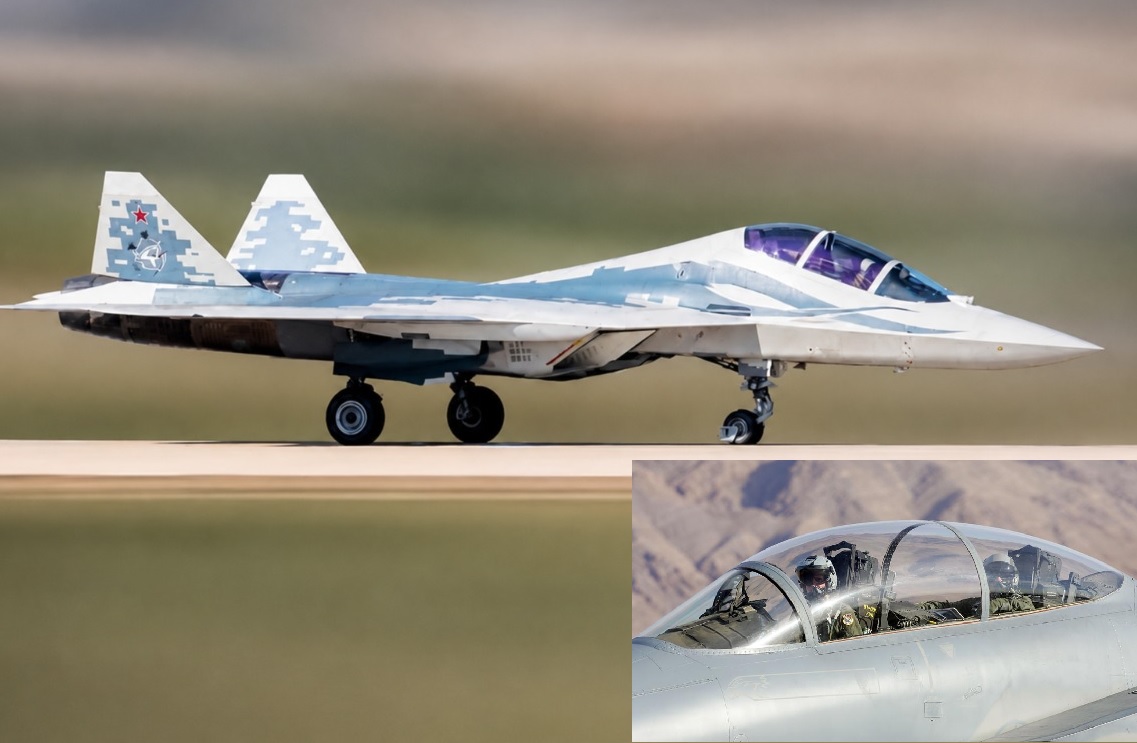
World
MOSCOW, — May 17, 2026 : Russia has begun preliminary ground taxi trials of a two-seat variant of the Su-57 fifth-generation stealth fighter, marking a new phase in the development of the country’s flagship combat aircraft as Moscow seeks to expand export sales and enhance operational flexibility. The existence of the modified aircraft was confirmed on May 16 by Russian military aviation blogger Ilya Tumanov, who operates the Fighterbomber Telegram channel. Photographs published in Russian defense media showed an Su-57 airframe with an elongated forward fuselage section designed to accommodate a tandem second cockpit, a configuration commonly used in Russian combat trainer aircraft. According to Tumanov, the aircraft’s final designation has not yet been determined, with possible names including Su-57D, Su-57UB, or Su-57ED. The aircraft is currently undergoing ground rolling and taxi tests to evaluate systems integration, braking performance, and handling characteristics ahead of flight trials expected later in 2026. The redesign introduces additional engineering requirements to preserve the fighter’s low-observable characteristics. Russian defense sources also indicate that the modified configuration could provide improved range and mission endurance compared to the standard single-seat model. Developed by Sukhoi and produced at the Komsomolsk-on-Amur aircraft plant, the Su-57 entered limited service with the Russian Aerospace Forces in 2020. The twin-engine multirole fighter features internal weapons bays, thrust-vectoring engines, and advanced avionics, and is positioned by Russia as its primary fifth-generation combat aircraft. Russian military commentators stated that the two-seat version is intended primarily for export customers rather than domestic service. A dedicated trainer variant is considered important for foreign operators that lack Russia’s extensive pilot training infrastructure and simulator systems. The development follows Russia’s renewed efforts to market the Su-57E export variant internationally. During the DSA-2026 defense exhibition in Kuala Lumpur in April, Russia’s state arms exporter Rosoboronexport announced new foreign contracts for the aircraft, although customer identities and order quantities were not disclosed. Algeria has emerged as the first confirmed foreign operator of the Su-57. In recent months, photographs and videos have shown Su-57 fighters carrying Algerian Air Force markings, while Algerian pilots have reportedly conducted familiarization and conversion flights. Defense observers have linked Algeria to a long-discussed order for approximately 14 aircraft. The export variant reportedly includes modifications such as English-language cockpit labeling, revised identification systems, and compatibility with selected non-Russian weapons. Russian defense analysts have also suggested that the two-seat Su-57 could support additional missions, including acting as a control platform for unmanned combat aerial vehicles such as the S-70 Okhotnik drone. At the same time, the Su-57 program continues to face operational security challenges. According to open-source tracking and Ukrainian military reporting, Russia has lost at least four Su-57 aircraft since the beginning of the full-scale war in Ukraine. All confirmed losses reportedly occurred on the ground during Ukrainian long-range drone strikes against Russian airbases rather than during aerial combat. Recent attacks targeting airfields deep inside Russian territory have highlighted continuing vulnerabilities in the protection of high-value military aviation assets, even as Russia works to increase production and export activity for its most advanced fighter aircraft.
Read More → Posted on 2026-05-17 15:01:33
World
WASHINGTON, — May 17, 2026 : Cuba has acquired more than 300 military drones from Russia and Iran since 2023 and has recently discussed the potential use of those systems against the U.S. naval base at Guantanamo Bay, U.S. military vessels operating in the region, and Key West, Florida, according to classified U.S. intelligence shared with Axios. The intelligence assessment states that Cuba has received attack drones of varying capabilities over the past three years. U.S. officials said the systems have been distributed and stored at multiple strategic locations across the island as Havana expands cooperation with Moscow and Tehran in the field of unmanned warfare. According to a senior Trump administration official familiar with the assessment, intelligence intercepts collected within the past month indicate that Cuban officials formally requested additional drones and military equipment from Russia. The same intercepts reportedly showed Cuban intelligence personnel studying Iranian methods of resisting U.S. economic pressure and military operations. U.S. officials also stated that Iranian military advisers are currently present in Havana, where they are believed to be assisting Cuban authorities in developing drone-related capabilities and broader security coordination. The intelligence has raised concerns within the U.S. government regarding the growing presence of Russian and Iranian military technology near the American coastline. A senior U.S. official told Axios that Washington is particularly concerned about advanced drone systems operating close to U.S. territory and the involvement of adversarial states, including Russia and Iran. The official stated that the intelligence reflects the Trump administration’s assessment that Cuba is becoming a more significant regional security concern due to developments in drone warfare and foreign military cooperation. The report comes amid an increase in U.S. intelligence-gathering activity around Cuba. Since early February 2026, the U.S. Navy and U.S. Air Force have conducted at least 25 reconnaissance missions near Cuban airspace and coastal areas. The operations involved P-8A Poseidon maritime patrol aircraft, RC-135V Rivet Joint signals intelligence aircraft, and MQ-4C Triton high-altitude surveillance drones. U.S. officials additionally noted that Russia and China continue to maintain advanced signals intelligence facilities on the island, which have long been monitored by American defense agencies. CIA Director John Ratcliffe traveled to Havana earlier this week to deliver direct warnings to Cuban officials. According to a CIA official, Ratcliffe warned Cuban leadership against engaging in hostile actions and stated that Cuba could no longer serve as a platform for adversaries seeking to advance hostile agendas in the Western Hemisphere. During a congressional hearing earlier this week, U.S. Defense Secretary Pete Hegseth addressed concerns over foreign military activity near the United States. Responding to questions from Representative Mario Diaz-Balart, Hegseth stated that the use of locations so close to U.S. shores by foreign adversaries presents a serious security concern. U.S. officials said the intelligence does not indicate that an attack is imminent. However, one senior administration official stated that the assessment could potentially be used as justification for future U.S. military action if tensions escalate further. Reuters reported that it could not independently verify the intelligence claims published by Axios. The developments coincide with additional legal and economic measures being prepared by Washington against Havana. The U.S. Department of Justice is expected to unseal an indictment against former Cuban leader Raúl Castro, accusing him of ordering the 1996 shootdown of two civilian aircraft operated by the Miami-based humanitarian organization Brothers to the Rescue. The Trump administration is also expected to announce additional economic sanctions targeting Cuba later this week as relations between Washington and Havana continue to deteriorate.
Read More → Posted on 2026-05-17 15:30:33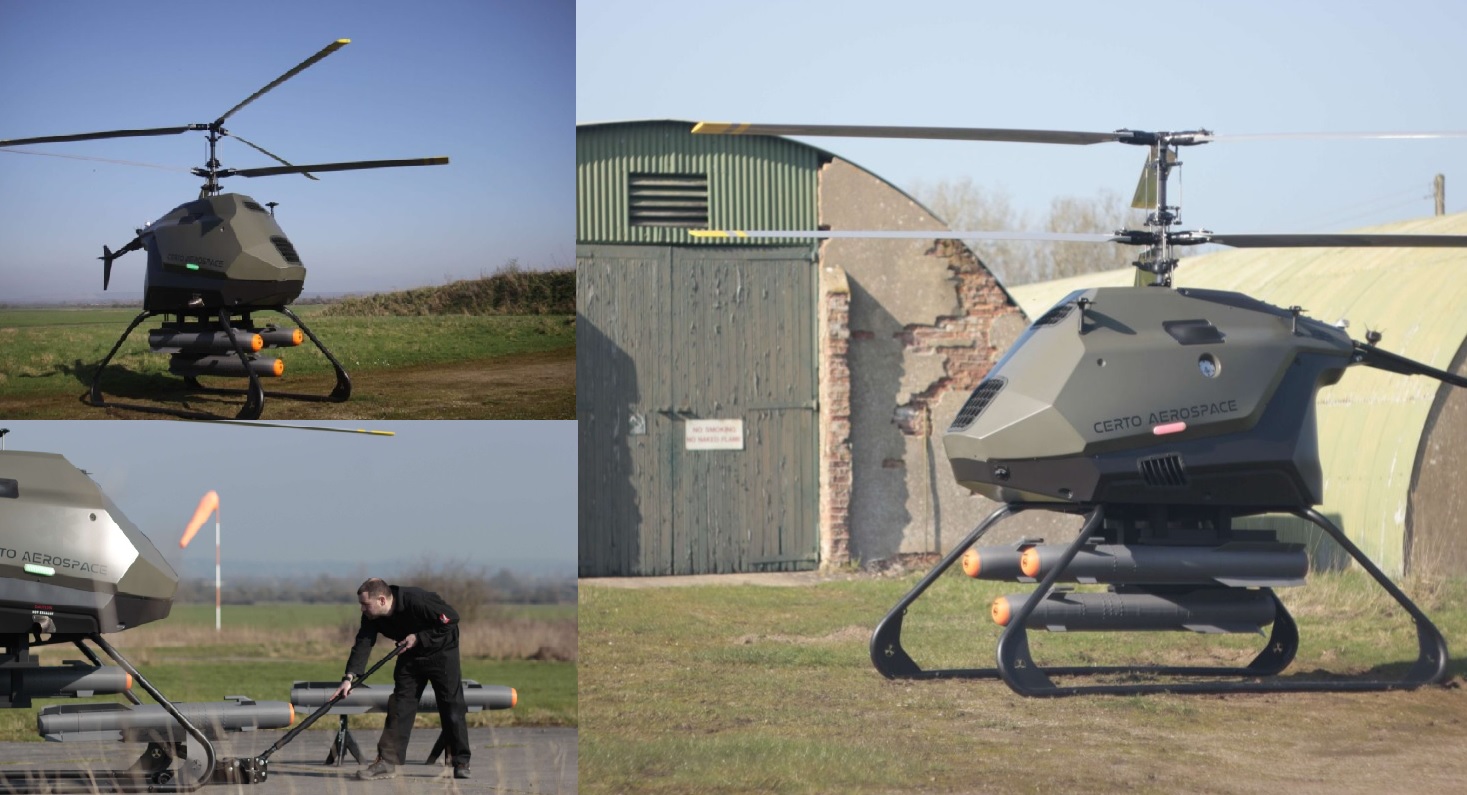
World
LONDON, — May 17, 2026 : Certo Aerospace has completed ground integration trials of its CAPSTONE unmanned air system using air-to-surface missile simulators, advancing the platform’s development as a potential autonomous support aircraft for the British Army’s AH-64E Apache fleet under Project NYX. The trials were confirmed by Certo Aerospace Managing Director and Chief Executive Officer Justin Tooth, who stated that the company recently conducted tests involving simulated air-to-surface weapons mounted on the CAPSTONE platform. Images released alongside the announcement showed mock-up versions of the AGM-114 Hellfire missile attached to the aircraft. According to the company, the evaluations focused on validating the aircraft’s mechanical mounting systems, electrical interfaces, and mission data connections with the simulated weapons prior to any future live-fire testing. The trials also assessed integration compatibility between onboard avionics and external stores systems. Project NYX and BAE Systems Partnership The testing comes as Certo Aerospace continues its partnership with BAE Systems under the British Army’s Project NYX programme, which aims to develop autonomous “loyal wingman” aircraft capable of operating alongside Apache AH-64E attack helicopters. The UK Ministry of Defence formally announced the programme in May 2026, selecting four industry teams to proceed into the next stage of the competition. The remaining participants are Anduril Industries UK, BAE Systems Operations Ltd partnered with Certo Aerospace, Tekever Ltd, and Thales UK Ltd. The selected companies will share an initial £10 million funding package for concept development and demonstration activities. Under the BAE Systems-Certo Aerospace arrangement, BAE Systems serves as the prime contractor and systems integrator, while Certo Aerospace provides the CAPSTONE aircraft platform and associated unmanned aviation technologies. The Ministry of Defence plans to reduce the competition to a maximum of two finalists by autumn 2026, with an operational capability expected to enter service by 2030. Project NYX is intended to introduce advanced manned-unmanned teaming (MUM-T) capabilities to the British Army’s Apache force. The programme seeks to enable autonomous drones to conduct forward reconnaissance, target acquisition, electronic warfare, logistics support, and precision strike missions while remaining under the supervision of Apache crews. British defence planners are also evaluating “command rather than control” concepts that would allow helicopter crews to direct autonomous systems through simplified control methods, including voice-command interfaces, without significantly increasing pilot workload. CAPSTONE Platform Capabilities CAPSTONE is a 600-kilogram-class rotary-wing unmanned air system designed around a co-axial contra-rotating rotor configuration that eliminates the need for a tail rotor. Originally developed for logistics operations, the aircraft has gradually expanded into multi-role applications including surveillance, casualty evacuation, maritime support, and combat support missions. The aircraft has an approximate dry weight of 300 kilograms and can carry up to 300 kilograms of combined payload and fuel depending on mission requirements. Certo Aerospace has previously demonstrated cargo and casualty evacuation configurations capable of transporting payloads of up to 216 kilograms using modular external carriage systems. The platform was developed using a Modular Open Systems Approach (MOSA), allowing rapid reconfiguration for different payloads and operational roles. CAPSTONE can be equipped with logistics pods, CASEVAC stretchers, surveillance systems, acoustic processing equipment, and other mission-specific payloads through standardized mounting interfaces. The aircraft is also designed with a command-and-control agnostic architecture, enabling integration with existing military communication networks through IP mesh-enabled radios, cellular communication systems, and satellite communication links. Performance specifications released by the company indicate a maximum operational range of approximately 300 miles, or 480 kilometres, with endurance of up to 10 hours depending on payload configuration. The co-axial rotor arrangement is intended to improve lift efficiency, manoeuvrability, hover stability, and acoustic performance compared with conventional helicopter designs. Expanding Apache Operational Reach The integration of Hellfire missile simulators represents a significant expansion of CAPSTONE’s operational profile beyond logistics and surveillance missions. The AGM-114 Hellfire is the standard laser-guided air-to-surface missile used by the AH-64E Apache and carries a warhead weighing approximately nine kilograms with a range of around eight kilometres. The recent ground trials serve as an initial technical step toward future armed capability demonstrations by validating weapon mounting hardware, electrical systems, and aircraft-to-weapon data interfaces. By integrating autonomous support aircraft into Apache operations, the British Army aims to extend sensor coverage and strike range while reducing the exposure of manned helicopters to battlefield threats such as man-portable air-defence systems and hostile ground fire. Ongoing Flight Testing CAPSTONE flight testing has been conducted at Keevil Airfield in Wiltshire under authorization from the UK Civil Aviation Authority and is currently in its third year of flight trials. Earlier in 2026, the platform also participated in Royal Navy anti-submarine warfare demonstrations involving sonobuoy deployment operations, highlighting the aircraft’s expanding role across multiple British military applications. Certo Aerospace, founded by former British Armed Forces personnel, continues to position CAPSTONE as a domestically developed unmanned rotorcraft platform capable of bridging the operational gap between smaller drones and conventional manned helicopters for logistics, surveillance, and combat support missions.
Read More → Posted on 2026-05-17 15:38:58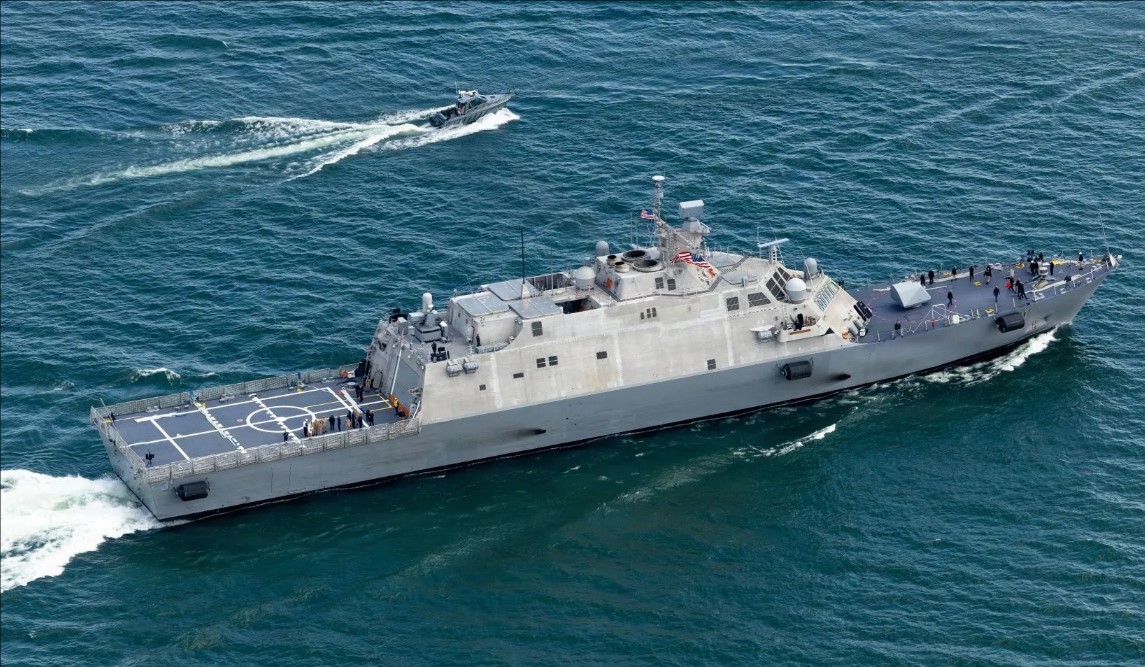
World
CLEVELAND, Ohio — May 17, 2026 : The U.S. Navy officially commissioned USS Cleveland (LCS 31), the 16th and final Freedom-variant littoral combat ship, during a ceremony held May 16 at the North Coast Yard in Cleveland, Ohio, marking the completion of the Freedom-class Littoral Combat Ship production program. The event also marked the first time in the U.S. Navy’s 250-year history that a warship has been commissioned within the state of Ohio. Acting Secretary of the Navy Hung Cao delivered the principal address and formally placed the ship into active service by hoisting the commissioning pennant and national colors. During the ceremony, Cao emphasized the role of the crew in bringing the vessel into operational service. “Today we celebrate the sailors who breathe life into this ship. To the officers and crew of USS Cleveland, today is your day,” Cao said. The ship’s sponsor, Robyn Modly, a Cleveland native and wife of former Acting Secretary of the Navy Thomas Modly, delivered the traditional order to the crew to “man our ship and bring her to life,” prompting sailors to ceremonially board the vessel. In the week leading up to the commissioning, the crew participated in public tours, community engagements, and local events alongside the sponsor to strengthen ties with the ship’s namesake city. USS Cleveland arrived in the city on May 9 ahead of the ceremony. Built by Lockheed Martin in partnership with Fincantieri Marinette Marine at the Marinette, Wisconsin, shipyard, USS Cleveland was launched on April 15, 2023, and delivered to the Navy on Nov. 26, 2025. Following commissioning, the ship will transit to its assigned homeport at Naval Station Mayport, Florida. USS Cleveland is the fourth U.S. Navy vessel named after Ohio’s second-largest city. Previous ships carrying the name include the protected cruiser USS Cleveland (C-19), commissioned in 1903 and later serving during World War I; the Cleveland-class light cruiser USS Cleveland (CL-55), which earned 13 battle stars during World War II; and the Austin-class amphibious transport dock USS Cleveland (LPD 7), which served from 1967 to 2011 and participated in operations including the Vietnam War, Operation Desert Storm, and humanitarian missions. The Freedom-variant Littoral Combat Ship was designed as a fast, mission-focused surface combatant optimized for operations in near-shore and contested maritime environments. The class features a steel monohull design and can operate independently or alongside larger multi-mission surface combatants such as cruisers and destroyers. USS Cleveland measures approximately 388 feet (118 meters) in length with a beam of 58 feet (18 meters) and a full-load displacement of around 3,500 metric tons. Powered by a combined diesel and gas turbine propulsion system driving four waterjets, the ship can exceed 40 knots and reportedly reach a top speed of approximately 47 knots. The vessel has an operational range of approximately 3,500 nautical miles at 18 knots and an endurance of up to 21 days. Its core crew consists of about 50 sailors, including nine officers and 41 enlisted personnel, with accommodations available for nearly 100 personnel depending on mission requirements. USS Cleveland is equipped with a flight deck and hangar capable of supporting two MH-60 helicopters or one MH-60 Seahawk helicopter alongside one MQ-8 Fire Scout unmanned aerial vehicle. Armament includes the BAE Systems Mk 110 57 mm naval gun, a Rolling Airframe Missile launcher for close-range air defense, and .50-caliber machine guns. Like other Littoral Combat Ships, USS Cleveland can be configured with interchangeable mission packages tailored for surface warfare, mine countermeasures, or anti-submarine warfare operations. The commissioning of USS Cleveland marks the conclusion of the Freedom-variant construction program as the Navy continues efforts to modernize its surface fleet and sustain forward-deployed naval operations. Commander, Naval Surface Force, U.S. Pacific Fleet remains responsible for manning, training, and equipping the Surface Force to provide fleet commanders with operational naval capabilities worldwide. The commissioning ceremony was livestreamed through the Defense Visual Information Distribution Service and included remarks from Cleveland Mayor Justin Bibb and the ship’s commanding officer, Cmdr. Bruce.
Read More → Posted on 2026-05-17 15:48:58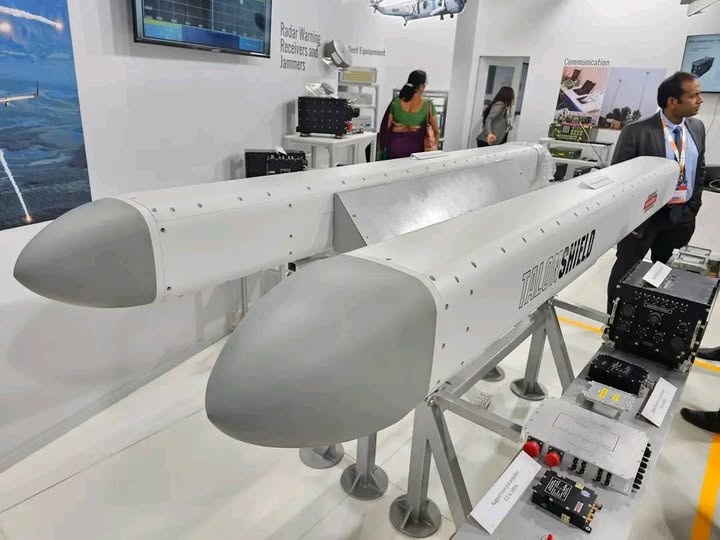
India
NEW DELHI — May 17, 2026 : Data Patterns (India) Ltd. is preparing to commence flight testing of its indigenously developed TALON SHIELD Airborne Self-Protection Jammer (ASPJ) pod with the Indian Air Force (IAF) in the coming months, as part of a broader effort to strengthen the electronic warfare capabilities of the Su-30MKI fighter fleet through domestically developed systems. The TALON SHIELD programme is intended to provide the IAF with an indigenous airborne electronic warfare solution capable of countering modern radar-guided threats while reducing long-term reliance on imported defence equipment. According to programme details, the complete testing and certification process is expected to take between 18 months and two years. The TALON SHIELD is a high-band self-protection jammer pod specifically designed for integration with the Su-30MKI multirole fighter aircraft. The system incorporates Active Electronically Scanned Array (AESA) technology based on Gallium Nitride (GaN) transmit-receive modules, enabling high-power electronic attack operations, agile beam steering and simultaneous multi-band functionality. The jammer is capable of operating across several frequency ranges, including L-band and S-band, to counter a broad range of airborne and ground-based radar systems. A key component of the system is its Digital Radio Frequency Memory (DRFM)-based electronic warfare architecture. Using DRFM techniques, the pod can intercept hostile radar emissions, digitally process the received signals and retransmit manipulated responses designed to confuse enemy sensors and missile seekers. The system is designed to conduct multiple forms of electronic countermeasures, including noise jamming, deceptive jamming and velocity gate pull-off techniques against fire-control radars, search radars, airborne interception radars and radar-guided missile systems. The TALON SHIELD is configured as a dual-pod arrangement mounted on the aircraft’s wingtip or underwing pylons. When operated together, the paired pods provide 360-degree electronic protection coverage around the aircraft. The system has been engineered for direct installation on the Su-30MKI without requiring significant structural modifications to the airframe. Ground integration trials and hardware compatibility testing have already been completed on Su-30MKI platforms in coordination with the Electronics and Radar Development Establishment (LRDE) in Bengaluru. Data Patterns has also completed aerodynamic validation, liquid-cooling evaluations and prototype manufacturing ahead of the upcoming flight test campaign. According to company officials, the upcoming trial programme will include captive carriage testing, avionics integration assessments, electromagnetic compatibility checks and live flight evaluations under operational conditions. The company has additionally offered the TALON SHIELD system for no-cost, no-commitment flight trials with the IAF. The indigenous jammer pod is being positioned as a replacement for foreign-origin self-protection jammer systems currently used on the Su-30MKI fleet, including the Russian SAP-518 and Israeli EL/L-8222 electronic warfare pods. The programme aligns with India’s wider defence industrial strategy focused on increasing indigenous content in critical aerospace and electronic warfare technologies under the “Make in India” initiative. The development is also linked to the IAF’s broader Super Sukhoi modernization programme, valued at approximately ₹65,000 crore, which aims to upgrade more than 250 Su-30MKI aircraft with new-generation indigenous systems. Planned upgrades under the programme include the Virupaksha AESA radar, next-generation Radar Warning Receivers (NG-RWRs), upgraded mission avionics and advanced electronic warfare suites intended to improve survivability in contested operational environments. In November 2025, the Ministry of Defence issued a Request for Information (RFI) for the procurement of 100 Aircraft Self-Protection Jammer pods for the Su-30MKI fleet. The RFI specified a minimum indigenous content requirement of 50 percent and outlined a delivery timeline of 36 months following the award of a production contract. Data Patterns is currently preparing for the expected Request for Proposal (RFP) phase while continuing development and validation activities for the TALON SHIELD system. Successful completion of the upcoming flight testing and certification campaign would enable operational integration of the TALON SHIELD across frontline Su-30MKI squadrons and support India’s continuing efforts to expand indigenous capabilities in advanced airborne electronic warfare systems.
Read More → Posted on 2026-05-17 15:57:45
World
ATHENS, Greece — May 17, 2026 : The Greek government is reassessing its €55 million acquisition of four Safran Patroller unmanned aerial vehicles (UAVs) following France’s decision to terminate the Patroller program, a move that has raised concerns in Athens over the long-term operational and industrial viability of the platform. The contract, signed in June 2023 through the NATO Support and Procurement Agency (NSPA), was intended to modernize the Hellenic Army’s tactical UAV fleet by replacing the aging Sperwer drones, which have been in service since the early 2000s. The Patroller systems were expected to expand Greece’s intelligence, surveillance and reconnaissance (ISR) capabilities over the Aegean Sea and the Thrace region. France formally cancelled the Patroller program in April 2026 as part of a revised military programming law that also ended the multinational Eurodrone project. French defense officials concluded that traditional Medium-Altitude Long-Endurance (MALE) UAVs have become increasingly vulnerable in modern combat environments shaped by advanced air defense systems, electronic warfare and the growing use of low-cost tactical drones in conflicts such as Ukraine and the Middle East. According to French military assessments, the Patroller platform was considered too slow, too large and too easily detectable for future operational requirements. The cancellation effectively removed the system’s primary domestic customer, creating uncertainty regarding long-term support, maintenance and production continuity. The French Patroller program was originally awarded to Safran Electronics & Defense in 2016 under a contract valued at approximately €330 million. France initially planned to procure 28 aircraft before reducing the requirement to 14 systems prior to the complete termination of the program. The first aircraft was delivered to the French Army’s 61st Artillery Regiment in May 2024 after several years of delays, including a 2019 crash linked to a faulty U.S.-made flight control computer. Greek defense officials are now evaluating whether continuing with the procurement would expose the Hellenic Armed Forces to unacceptable operational and logistical risks. Concerns have reportedly focused on future spare parts availability, software support, maintenance infrastructure and the overall sustainability of a platform no longer backed by its home country. The procurement has also faced technical complications related to interoperability requirements. Greek military authorities had requested the integration of the NATO-standard Link-16 tactical data link to ensure compatibility with allied command-and-control systems. However, defense sources reported repeated delays in integrating the capability into the Patroller platform. By the end of 2025, only one prototype aircraft associated with the Greek order had reportedly completed flight testing. The Safran Patroller is a medium-altitude tactical UAV derived from a motor-glider airframe. The aircraft has an 18-meter wingspan, a length of approximately 8.5 meters and a maximum takeoff weight ranging between 1,050 and 1,500 kilograms depending on configuration. It is designed to carry payloads of up to 210–250 kilograms, including electro-optical and infrared sensors, synthetic aperture radar, communications intelligence and signal intelligence systems. Equipped with Safran’s Euroflir 410 sensor suite, the drone was designed for long-duration ISR operations with an endurance ranging from 15 to 30 hours depending on payload configuration. The aircraft can operate at altitudes of up to 16,000 feet and cruise at relatively low speeds compared to newer tactical UAV designs now entering service internationally. Additional political concerns have emerged in Athens following Safran Electronics & Defense’s recent strategic partnership with Turkish drone manufacturer Baykar. Under the agreement, Safran will provide navigation systems and Euroflir optronic technologies for Turkish unmanned platforms. The cooperation has attracted attention within Greek defense circles given the broader geopolitical tensions between Greece and Turkey in the Eastern Mediterranean. Although the Greek procurement has not been formally cancelled, defense sources indicate that the likelihood of proceeding with the acquisition has narrowed considerably since France withdrew from the program. The Greek Ministry of National Defence and the Hellenic Army General Staff are now reviewing alternative UAV platforms available on the international market that can meet Greece’s ISR requirements while ensuring long-term logistical support, NATO interoperability and stable industrial backing. The Greek government has not yet announced a final decision regarding the future of the Patroller acquisition program.
Read More → Posted on 2026-05-17 16:09:39
World
TAIPEI, — May 17, 2026 : Taiwan’s Ministry of National Defense (MND) has released newly declassified footage showing the operational deployment of a remotely operated T75 20mm autocannon system with the Republic of China Army (ROCA) Dongyin Area Command, marking the first public view of the weapon in active service on Taiwan’s northernmost outlying islands. The footage was featured in the Military News Agency’s (MNA) latest episode of the National Defense Online programme and highlighted the system’s role in coastal security and force protection operations on Dongyin Island, part of the strategically important Matsu archipelago located approximately 50 kilometers from China’s Fujian Province. Remote Weapon System The remotely operated weapon station is built around Taiwan’s domestically produced T75 20mm revolver cannon and forms part of the military’s short-range automated defense network designed for coastal and near-shore operations. Developed by the National Chung-Shan Institute of Science and Technology (NCSIST), the system is available in two primary configurations: the XTR-101 single-barrel variant and the XTR-102 twin-barrel version. Shore-based installations are generally designated as XTR-102A1, while naval versions are identified as XTR-102A2. The system integrates electro-optical (EO) sensors, imagery identification systems, and automated target-tracking functions, enabling operators to monitor and engage threats remotely from protected positions. A single operator can control multiple cannons simultaneously, reducing troop exposure during combat and surveillance missions. Technical Capabilities According to defense information released by Taiwan, the system has an effective engagement range of approximately 2,000 meters and is designed to counter low-altitude and short-range threats in coastal environments. The weapon station provides 360-degree continuous traverse capability and elevation angles ranging from -15 degrees to +85 degrees, allowing engagement of both aerial and surface targets. Depending on configuration, the autocannon can achieve firing rates between 400 and 1,200 rounds per minute per barrel. The T75 autocannon itself is manufactured by the MND’s 205th Arsenal and is derived from the American M39 rotary cannon design. Chambered in 20×102mm ammunition, the weapon has been adapted for remote operation to improve survivability and operational efficiency in exposed island defense positions. Deployment on Dongyin Island Taiwan’s military procured six sets of the short-range automated defense systems in the early 2020s under a program valued at approximately NT$725 million (US$23.9 million). The systems were designed for flexible deployment across land-based sites, military vehicles, and naval vessels. Deployment of the systems on Dongyin Island was completed by the end of 2022 as part of broader efforts to strengthen defenses across Taiwan’s offshore territories. Dongyin is regarded as one of Taiwan’s most strategically significant forward positions due to its proximity to mainland China and its location near key maritime approaches in the Taiwan Strait. The newly released footage showed fixed shore-based installations integrated into the Dongyin Area Command’s defensive infrastructure and routine force protection operations. Role in Taiwan’s Coastal Defense Taiwanese defense officials said the automated systems are intended to counter asymmetric and low-altitude threats, including unmanned aerial vehicles (UAVs), fast attack boats, small surface craft, and low-flying aircraft operating near coastal areas. The deployment also supports Taiwan’s broader layered defense strategy for the Matsu Islands, complementing existing defensive assets and future deployments of longer-range systems such as the High Mobility Artillery Rocket System (HIMARS). The release of the footage reflects Taiwan’s continuing emphasis on indigenous defense production and the integration of automated weapon systems into frontline units tasked with protecting the country’s outlying territories.
Read More → Posted on 2026-05-17 16:19:36
World
BAGHDAD, — May 17, 2026 : Israel secretly operated at least two covert military bases in Iraq’s western desert to support operations against Iran, according to reports published by The New York Times and previously by The Wall Street Journal, citing senior Iraqi and regional security officials. According to Iraqi officials, one of the bases was established in western Iraq at the end of 2024 to prepare for possible future strikes on Iran and was later used extensively during the June 2025 Israel-Iran conflict, referred to in some reports as Operation Rising Lion. Officials stated that the installation proved “very useful” during the fighting by reducing flight distances for Israeli aircraft conducting missions against targets inside Iran. The bases reportedly functioned as logistical and operational hubs for the Israeli Air Force, providing refueling support, medical treatment facilities, staging areas for special forces, and search-and-rescue capabilities for downed aircrews. Iraqi security officials said the facilities enabled Israeli aircraft to operate more efficiently by shortening transit routes between Israel and Iranian targets. Regional security sources said the first installation was located near Al-Nukhaib in Iraq’s western desert region, while a second base was also confirmed by Iraqi officials. Open-source satellite imagery dated March 8 reportedly showed a 1.6-kilometre airstrip carved into a dry lakebed in the Anbar-Najaf desert, approximately 180 kilometres southwest of Najaf and Karbala. Iraqi officials stated that preparations for at least one of the sites began in late 2024, before the June 2025 conflict. The second base reportedly predated the later regional escalation involving the United States, Israel and Iran in early 2026 and remained operational during subsequent hostilities. According to Iraqi security officials, the United States was aware of at least one of the installations by the summer of 2025. Officials further alleged that Washington instructed Iraq to switch off national radar systems during both the June 2025 war and the later conflict in February 2026. Iraqi officials said the United States explained the measure as necessary to protect American aircraft operating in the region. The reported radar shutdowns effectively limited Iraq’s ability to independently monitor its airspace during the conflicts. Iraqi military and intelligence officials said they had long suspected the existence of covert Israeli activity inside Iraqi territory and had repeatedly requested clarification from the United States regarding unusual operations in remote desert areas, but received no response. The reports have renewed debate in Baghdad over Iraqi sovereignty and the implementation of the 2008 U.S.-Iraq Strategic Framework Agreement, which prohibits Iraqi territory from being used as a launch point for attacks against other countries. The secrecy surrounding one of the bases reportedly began to unravel on March 3, 2026, when a 29-year-old Bedouin shepherd identified as Awad Al-Shammari discovered the installation while travelling through the desert near Al-Nukhaib. According to Iraqi officials, Al-Shammari observed helicopters, tents, military personnel and an airstrip before contacting Iraqi military authorities to report the location. Officials stated that shortly after making the report, Al-Shammari’s vehicle was pursued and fired upon by a helicopter. His burned vehicle and remains were later found by relatives two days after the incident. Following the report, Iraqi military authorities dispatched a reconnaissance convoy toward the area. Iraqi officials said the unit came under aerial fire while approaching the site, resulting in the death of one Iraqi soldier, injuries to two others, and the destruction of two military vehicles before the force withdrew. The revelations have triggered political criticism inside Iraq, with lawmakers demanding investigations into the security breach and the presence of unauthorized foreign military infrastructure on Iraqi territory. Iraqi Member of Parliament Raed Al-Maliki accused the United States of facilitating the operations through the radar shutdown directives and described the incident as a serious violation of national sovereignty. The issue also presents an early challenge for newly appointed Iraqi Prime Minister Ali Al-Zaidi, who took office in mid-May and pledged to enforce the Strategic Framework Agreement and prevent Iraq from being used as a platform for regional military conflicts. Iraq’s parliamentary Security and Defense Committee has since summoned senior military and intelligence officials for questioning regarding the foreign military activity in the western desert. The Israeli military has not publicly commented on the reports. Iraqi authorities have previously condemned unauthorized foreign military operations conducted within Iraqi territory.
Read More → Posted on 2026-05-17 17:00:01
World
KYIV, — May 18, 2026 : Ukraine has officially approved its first domestically developed guided aerial bomb (KAB) for combat deployment after the weapon successfully completed all required testing phases, marking a significant step in the country’s expanding domestic precision-strike weapons program. The Ukrainian Ministry of Defence confirmed that an experimental batch of the munition has already been procured for operational use by the Ukrainian Air Force. Ukrainian pilots are currently conducting combat scenario training and integrating the new weapon into frontline operational procedures ahead of its expected combat debut. The guided aerial bomb was developed by DG Industry, a participant in Ukraine’s Brave1 defence technology initiative, with early-stage research and development supported through a Brave1 grant program. According to Ukrainian officials, the project was completed in 17 months. Officials stated that the weapon is a fully indigenous design rather than a modified version of existing Western or Soviet-era guided bombs. The Ministry of Defence said the system was engineered specifically for the operational realities of the current battlefield and incorporates combat-related requirements identified during the war. Indigenous Precision-Strike Capability The new weapon is equipped with aerodynamic control surfaces and a navigation and guidance module designed to maintain operational effectiveness in electronic warfare environments. The system uses universal guidance and correction modules that allow the bomb to glide toward targets with improved accuracy after release from an aircraft. The bomb carries a 250-kilogram warhead intended for strikes against fortified positions, command posts, logistics facilities, and other military infrastructure located behind frontline positions. According to Ukrainian officials, the system currently has an operational strike range of up to 60 kilometers. Defence analysts noted that the maximum range could potentially increase to between 80 and 100 kilometers under optimal launch conditions, including release from altitudes of around 10 kilometers. Recent testing involved deployment from a Sukhoi Su-24 frontline bomber during level flight. Footage released by Ukrainian authorities showed the munition separating from the aircraft before entering guided flight. Standoff Strike Advantage The primary operational advantage of the new bomb is its standoff capability. Unlike conventional unguided aerial bombs, the system allows aircraft to release the weapon dozens of kilometers away from intended targets, enabling pilots to operate outside the effective range of many frontline enemy air defence systems. This capability is intended to improve aircraft survivability while expanding Ukraine’s ability to conduct precision strikes against rear-area military targets. The Ministry of Defence stated that the bomb is expected to strengthen Ukraine’s ability to target enemy logistics nodes, defensive fortifications, ammunition storage areas, and command infrastructure with greater precision and reduced operational risk to aircraft crews. Operational Integration Underway Following the completion of testing, the Ministry of Defence procured the first experimental batch for operational evaluation and deployment preparation. Ukrainian Air Force personnel are now conducting training exercises and adapting combat tactics for the weapon’s integration into active service. Officials indicated that the first operational combat use of the bomb is expected in the near future. Ukraine’s Minister of Digital Transformation, Mykhailo Fedorov, who oversees the Brave1 defence technology initiative, described the project as part of a broader shift in Ukraine’s defence production strategy. “Ukraine is shifting from importing individual solutions to building indigenous high-tech weapons that systematically enhance the capabilities of the Defence Forces and provide technological superiority on the battlefield,” Fedorov said. He added that production scaling efforts are already underway as Ukraine seeks to expand domestic manufacturing of precision-guided weapons. “We are scaling solutions that extend strike range, enhance precision, and change the rules of modern warfare,” he stated. Expansion of Domestic Defence Production The introduction of the guided aerial bomb forms part of Ukraine’s wider effort to expand domestic defence manufacturing capabilities during the war. In recent years, Ukraine has accelerated local production of drones, electronic warfare systems, missile technologies, and precision-guided munitions aimed at reducing dependence on foreign military supplies. Brave1 officials stated that the new bomb was developed using operational feedback from frontline conditions and was designed in coordination with military personnel responsible for future deployment and tactical integration. The Ministry of Defence described the system as an important domestic high-technology capability intended to support long-range precision strike operations against Russian military infrastructure and logistical networks. Further procurement, production expansion, and operational integration are expected as the weapon enters active service with the Ukrainian Air Force.
Read More → Posted on 2026-05-18 14:16:59
World
MOUNTAIN HOME AIR FORCE BASE, Idaho — May 18, 2026 : Two U.S. Navy EA-18G Growler electronic warfare aircraft collided mid-air during an aerial demonstration at the Gunfighter Skies Air Show on Sunday, May 17, 2026, resulting in the destruction of both aircraft. All four crew members safely ejected and survived the incident, according to U.S. Navy officials. The accident occurred at approximately 12:10 p.m. local time during the second and final day of the air show. The collision took place about two miles northwest of Mountain Home Air Force Base while the aircraft were performing as part of the U.S. Navy Growler Demonstration Team. Officials confirmed that no spectators, military personnel on the ground, or civilians were injured. Collision During Demonstration Flight Video footage recorded by photographer Shane Ogden captured the sequence of events during the low-altitude aerial demonstration. The footage showed the two EA-18G Growlers maneuvering in close proximity at relatively slow speed before the aircraft appeared to make physical contact. According to the visual evidence, one aircraft appeared to begin a turn as the two jets converged, after which both aircraft abruptly pitched upward and departed controlled flight. The aircraft then rapidly descended while appearing briefly entangled. Moments before impact, all four crew members initiated their ejection procedures. Parachutes deployed successfully before the aircraft crashed and were destroyed on impact. Former military pilot and instructor Dave Berke stated that the successful low-altitude ejections left very little margin for error due to the limited time available for crew escape following the collision. Crew Members Safely Recovered The aircraft each carried two crew members in tandem-seat cockpits, consisting of a pilot and an electronic warfare officer. Emergency response teams from Mountain Home Air Force Base, local law enforcement, county agencies, and state emergency services responded immediately after the crash. Naval Air Forces officials confirmed that all four aviators survived the incident and were transported to medical facilities for evaluation. Initial reports indicated the crew members remained in stable condition. Cmdr. Amelia Umayam, spokesperson for Naval Air Forces, U.S. Pacific Fleet, confirmed that the aircraft involved belonged to the U.S. Navy Growler Demonstration Team and collided during the aerial performance. Aircraft and Squadron Information The aircraft involved in the collision were identified as: EA-18G Growler BuNo 168895 (“NJ-502”) EA-18G Growler BuNo 168252 (“NJ-540”) Both aircraft were assigned to Electronic Attack Squadron 129 (VAQ-129), known as the “Vikings,” based at Naval Air Station Whidbey Island in Washington state. VAQ-129 serves as the Fleet Replacement Squadron responsible for training U.S. Navy aviators and electronic warfare personnel assigned to the EA-18G Growler platform. The U.S. Navy established the Growler Demonstration Team in 2020 at NAS Whidbey Island to conduct public flight demonstrations showcasing the aircraft’s operational capabilities and maneuverability. Air Show Cancelled After Crash Following the incident, officials immediately halted the Gunfighter Skies Air Show and cancelled the remainder of the event. Mountain Home Air Force Base was temporarily placed under lockdown as emergency personnel secured the crash area and initiated response operations. The Idaho Transportation Department also closed portions of State Highway 167 between Simco Road and Highway 67 to support emergency access and investigative activity near the crash site. Col. David R. Gunter, commander of the 366th Fighter Wing at Mountain Home Air Force Base, thanked emergency response teams for their rapid actions and expressed relief that all four aircrew members survived the accident. Silver Wings of Idaho, one of the organizations involved in planning the air show, also confirmed that all crew members were safe and acknowledged the coordinated response from military and civilian agencies. Investigation Underway The EA-18G Growler is the U.S. Navy’s primary carrier-based electronic warfare aircraft and is derived from the F/A-18F Super Hornet. The platform is designed to conduct electronic attack missions, including radar jamming, suppression of enemy air defenses, and electronic surveillance operations. Each EA-18G Growler has an estimated unit cost of approximately $67 million, excluding specialized electronic warfare systems. Military authorities have launched a formal investigation into the cause of the mid-air collision. Investigators are expected to examine flight procedures, aircraft operations, maintenance records, witness statements, and video evidence as part of the inquiry. Recovery and site security operations remained ongoing as officials worked to preserve evidence and determine the circumstances that led to the accident.
Read More → Posted on 2026-05-18 14:24:06
World
PARIS — May 18, 2026 : Saab and Scania France have signed a contract with France’s Direction Générale de l’Armement (DGA) for the supply of Giraffe 1X radar systems integrated onto Scania tactical vehicles for the French Armed Forces, marking a new step in the modernization of France’s short-range and very short-range air defense capabilities. The agreement covers the procurement of 17 Giraffe 1X radar systems. Under the contract, 16 radar units will be operationally deployed on Scania V3P tactical vehicle chassis, while one additional radar will be delivered for testing and technical evaluation by the French military. The contract also includes spare parts, operational support, maintenance assistance, and training services for military personnel. Deliveries of the radar systems and integrated vehicles are scheduled between 2026 and 2027. To fulfill the program requirements, Saab and Scania France have established a joint consortium that will remain active throughout the duration of the contract. Vehicle integration activities will be carried out in France by Scania Public and Defense (SPAD), the defense division of Scania France located in Angers. Modernization of French Air Defense The acquisition is intended to strengthen the French Armed Forces’ ability to counter modern aerial threats, particularly low, slow, and small (LSS) targets such as tactical unmanned aerial vehicles (UAVs) and First-Person View (FPV) drones. The program forms part of France’s broader effort to modernize its ground-based short-range and very short-range air defense network by replacing older radar vehicles that have reportedly remained in service for nearly 30 years. Within French military service, the integrated systems are designated as VARDA, short for Véhicule d’Acquisition Radar de Défense Aérienne. Carl-Johan Bergholm, head of Saab’s business area Surveillance, stated that the partnership with Scania France is aimed at modernizing French short and very short-range air defense capabilities through mobile radar integration. Giraffe 1X Radar Capabilities The Giraffe 1X is a compact Active Electronically Scanned Array (AESA) 3D radar operating in the X-band frequency range. The radar is designed for both mobile and fixed-site deployment and provides continuous 360-degree surveillance with a complete search volume update every second. According to Saab, the radar has an instrumented detection range of up to approximately 75 kilometers for air targets. The system is capable of simultaneously tracking more than 100 airborne targets and over 200 surface targets. The radar is specifically optimized to detect low-signature aerial threats, including small unmanned systems. Saab states that the system can identify a UAV as small as a milk carton at ranges of up to 4 kilometers. In addition to conventional air surveillance missions, the Giraffe 1X supports multiple operational roles, including: Ground-based air defense Counter-Unmanned Aerial Systems (C-UAS) Counter-Artillery, Rocket, and Mortar (C-RAM) sense-and-warn operations Protection of military bases, buildings, and critical infrastructure The system uses a software-based architecture that allows remote upgrades and continuous capability improvements to address evolving operational threats without major hardware modifications. Lightweight Design for Mobile Operations Saab stated that the complete Giraffe 1X system weighs less than 300 kilograms, while the radar topside itself weighs under 150 kilograms. The lightweight design allows integration onto compact tactical vehicles while maintaining operational mobility. For the French Armed Forces, the radar will be mounted on the Scania V3P tactical chassis, a military vehicle platform developed specifically for defense applications. The engineering and final integration work will be performed by SPAD in Angers, ensuring the systems meet French Army mobility, deployment, and operational requirements across different terrains and mission environments. Broader France–Sweden Defense Cooperation The radar contract also reflects expanding defense cooperation between France and Sweden. The agreement follows a separate defense procurement signed in December 2025 between the DGA and Saab for the acquisition of two GlobalEye airborne early warning and control aircraft for the French Armed Forces. The Giraffe 1X radar is currently in service or under contract with multiple international operators, including the Swedish Armed Forces and the U.S. Army. Saab states that the radar can be deployed on both land and maritime platforms depending on operational requirements.
Read More → Posted on 2026-05-18 14:39:10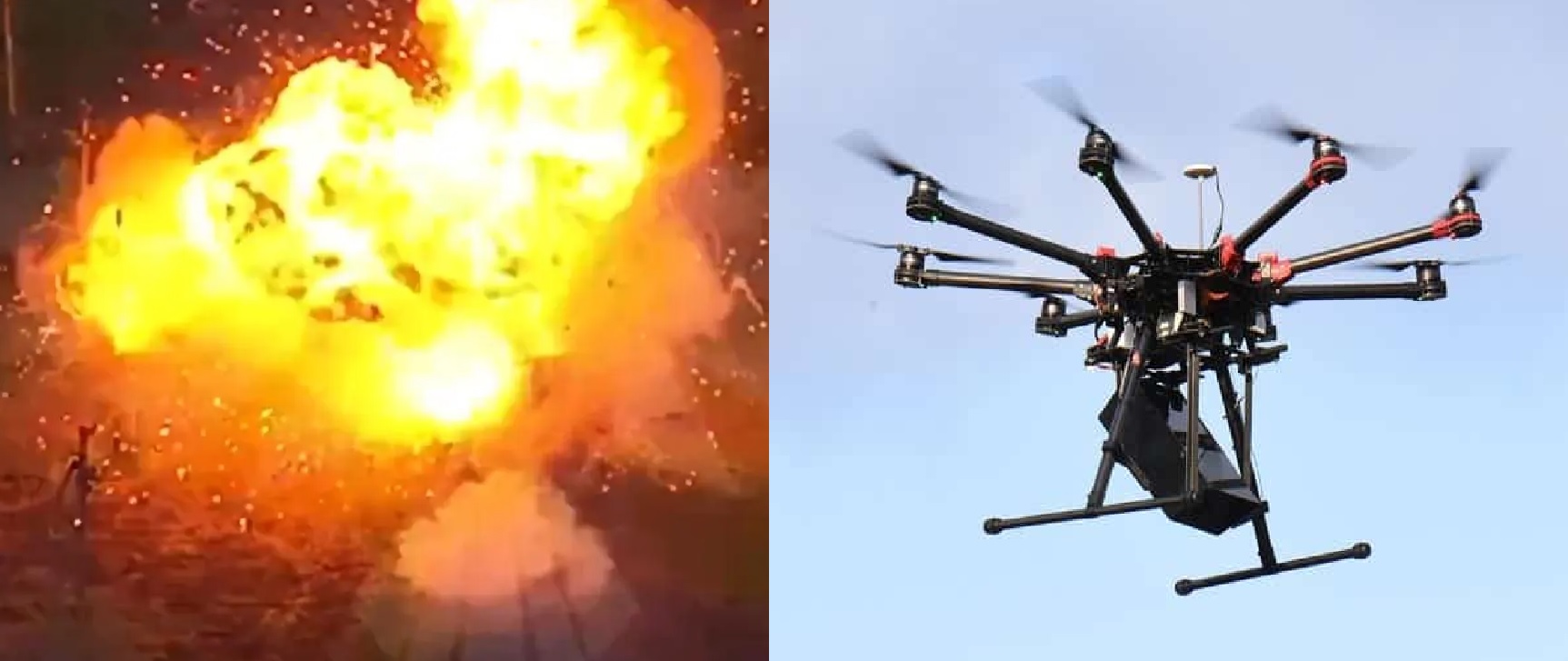
World
WASHINGTON, — May 18, 2026 : Northrop Grumman has been selected as one of five preferred payload providers for the Department of War’s (DoW) Drone Dominance Program through the Lethality Prize Challenge, positioning the company to support the large-scale deployment of small unmanned systems planned by the United States through 2027. The Drone Dominance Program is part of a broader DoW initiative valued at approximately $1.1 billion aimed at rapidly fielding low-cost, consumable unmanned systems and associated mission architectures. The department plans to deploy more than 200,000 drones by 2027 as part of a strategy focused on distributed battlefield operations, scalable strike capabilities, and expansion of the domestic defense industrial base. The initiative is also intended to reduce reliance on foreign supply chains while testing whether the American defense industry can manufacture large quantities of low-cost systems within accelerated procurement timelines. Common UAS Payload Selected for Program Under the program, Northrop Grumman will provide its Common UAS Payload, a standardized fuze and effects module designed for rapid integration across multiple unmanned platforms. The payload is engineered as an off-the-shelf system intended for use on unmanned aerial, maritime, and ground-based systems without requiring extensive redesign or platform-specific modification. According to the company, the payload uses mature energetics and ruggedized electronics designed to operate in demanding combat environments while delivering 360-degree lethality. The system is built to support rapid deployment and scalable production requirements associated with the Drone Dominance Program. The Common UAS Payload is aligned with the Department of War’s Modular Open Systems Approach (MOSA), utilizing standardized interfaces intended to eliminate proprietary integration barriers and simplify compatibility across different mission systems and platforms. Northrop Grumman stated that the payload also supports the U.S. Army’s Purpose-Built Attritable Systems (PBAS) requirements, an initiative focused on developing flexible, interoperable, and expendable unmanned systems with reduced lifecycle and sustainment costs. “The Drone Dominance Program demands payloads ready to integrate and deploy immediately – no delays, no redesigns,” said Tanya Santers, director for fuze and warheads at Northrop Grumman. “Our Common UAS Payload meets this need with speed, safety and interoperability in mind, enabling military dominance now and into the future,” she added. Lethality Prize Challenge and Selected Companies The Lethality Prize Challenge was established to identify modular lethal payload solutions for Group 1 small unmanned aircraft systems operating under the Drone Dominance Program. Alongside Northrop Grumman, the other selected companies include Bravo Ordnance, Kela Defense US Inc., Kraken Kinetics Inc., and Mountain Horse LLC. Each company received a $10,000 cash prize and placement on the program’s preferred munitions solutions list, qualifying them for participation in the Gauntlet II demonstration event scheduled for August 2026. Focus on Industrial Expansion and Production Capacity A central objective of the Drone Dominance Program is to evaluate whether the U.S. defense industry can rapidly scale production of low-cost unmanned systems and payloads to meet rising operational demand. Northrop Grumman stated that it has invested more than $2 billion in recent years in solid rocket motor technology, smart munitions development, and facility modernization efforts aimed at expanding manufacturing capacity and accelerating production timelines. According to the company, these investments have enabled it to double its tactical solid rocket motor production capacity, with additional expansion projects expected to be completed by 2027. Northrop Grumman currently operates with nearly 100,000 employees and more than 30 million square feet of manufacturing space across the United States. The company stated that its production infrastructure, research and development capabilities, workforce, and supply chain investments are intended to support current and future national security requirements under the Drone Dominance Program. Program Timeline The initial phases of the Drone Dominance Program are expected to focus on payload scaling, systems integration, and operational demonstrations. Later phases are anticipated to transition toward high-volume procurement and delivery as the Department of War moves closer to its target of fielding more than 200,000 drones by 2027.
Read More → Posted on 2026-05-18 14:47:42
World
WASHINGTON, — May 18, 2026 : U.S. President Donald Trump has urged global semiconductor manufacturers, particularly companies based in Taiwan, to relocate more production capacity to the United States, citing growing concerns over Taiwan’s security and the risks posed to global supply chains if tensions with China escalate. In an interview with Fox News, Trump said the United States must reduce its reliance on Taiwan for advanced semiconductor production and expand domestic manufacturing capacity as quickly as possible. “I’d like to see everybody making chips over in Taiwan come into America,” Trump said, adding that relocating production to the U.S. would be “the greatest thing you can do” under current geopolitical conditions. Trump stated that the administration wants the United States to account for 40% to 50% of the global semiconductor industry by the end of his term. He noted that some Taiwanese companies have already begun shifting part of their manufacturing operations to the United States and said further expansion should continue. The comments come amid increasing concerns within Washington over the possibility that China could move against Taiwan within the coming years. Advisers close to the administration have reportedly warned that Chinese President Xi Jinping may attempt actions involving Taiwan within the next five years, raising fears of major disruptions to the global semiconductor industry. Taiwan currently produces around 90% of the world’s most advanced semiconductors, including high-end chips used in artificial intelligence systems, consumer electronics, cloud computing infrastructure, and military technologies. Much of that production is controlled by Taiwan Semiconductor Manufacturing Company (TSMC), the world’s largest contract chipmaker. U.S. officials and industry groups have warned that any blockade or disruption affecting Taiwan’s chip exports could trigger severe shortages across the global technology sector. Analysts have also cautioned that a prolonged interruption in semiconductor supplies would significantly affect manufacturing output, financial markets, and economic growth in the United States and other major economies before domestic production could fully compensate for lost supply. Trump linked the push for domestic chip production directly to national security concerns. During the interview, he suggested the United States may not be able to guarantee Taiwan’s protection indefinitely if tensions escalate in the future. “We’re not going to be able to protect it if something happens,” Trump said, referring to possible developments after his presidency. The president’s remarks followed his recent summit with Xi in Beijing, where trade, tariffs, and regional security issues were discussed. Trump also addressed a potential U.S. arms package for Taiwan, describing it as “a very good negotiating chip” in broader discussions with Beijing. He indicated that future decisions regarding the package would depend partly on China’s actions and wider U.S.-China negotiations. Trump also reiterated support for maintaining the current status quo across the Taiwan Strait and cautioned against formal Taiwanese independence, stating he was “not looking to have somebody go independent.” The administration has continued using trade policy, tariff pressure, and industrial incentives to encourage companies to move advanced manufacturing operations into the United States. Semiconductor production has become a central element of U.S. economic and national security policy as Washington seeks to strengthen domestic supply chains for critical technologies. Taiwanese semiconductor firms have already announced major investments in the United States. TSMC has committed more than $100 billion to semiconductor manufacturing projects in Arizona, where multiple fabrication facilities are currently under construction or planned. However, industry experts and officials in Taipei have noted that relocating the broader semiconductor ecosystem remains difficult due to Taiwan’s established infrastructure, specialized workforce, and tightly integrated supplier network. Analysts have also pointed to significantly higher manufacturing and operational costs in the United States compared to Taiwan. In response to recent U.S.-China discussions, Taiwan President Lai Ching-te said Taiwan’s sovereignty and security would not be compromised in geopolitical negotiations. He reaffirmed the island’s commitment to maintaining its defense capabilities and emphasized the importance of continued U.S. security support. As tensions surrounding the Taiwan Strait remain a key focus in international relations, the United States continues expanding domestic semiconductor production capacity in an effort to reduce long-term dependence on overseas manufacturing and strengthen supply chain resilience for critical techn
Read More → Posted on 2026-05-18 14:56:36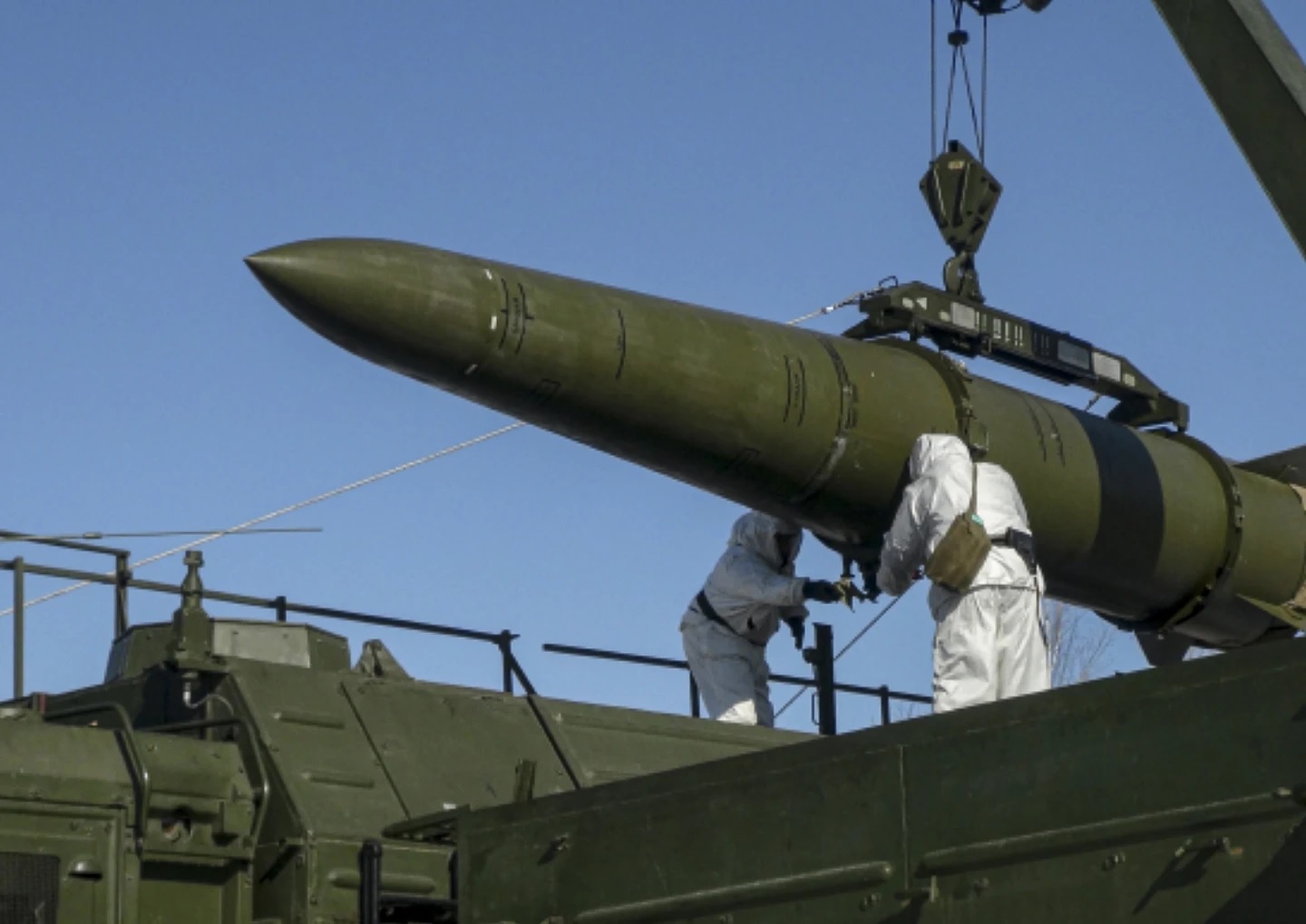
World
MINSK, — May 18, 2026 : Belarus and Russia have launched joint military exercises involving units trained in the combat use and logistical support of tactical nuclear weapons, the Belarusian Defense Ministry announced on Monday. The drills are being conducted under the command of the Chief of the General Staff of the Belarusian Armed Forces, who also serves as First Deputy Minister of Defense. Missile forces and aviation units from both countries are participating in the exercises, which focus on operational coordination, deployment readiness, and the handling of nuclear-capable systems. Focus on Nuclear Support and Deployment Operations According to the Belarusian Defense Ministry, the exercises are designed to evaluate personnel training and improve the operational readiness of forces equipped with modern weapons systems, including special munitions. In coordination with Russian military personnel, participating units are practicing the transport and delivery of nuclear warheads, as well as procedures related to their preparation for potential operational use. The drills also include coordination between missile forces, aviation units, and logistical support structures responsible for handling nuclear munitions. Military officials stated that one of the primary objectives of the training is to test the ability of units to conduct combat operations from temporary and unprepared positions across Belarusian territory. The exercises place particular emphasis on: Rapid redeployment of troops and equipment over long distances Concealed and coordinated troop movements Deployment from temporary operational sites Maintaining combat readiness during mobile operations Coordination of missile and aircraft systems capable of carrying tactical nuclear weapons Belarusian officials described the activities as routine and planned exercises conducted within the framework of the Russia-Belarus Union State. The Defense Ministry stated that the drills are not directed against third countries and do not pose a threat to regional security. Expansion of Russia-Belarus Nuclear Cooperation The exercises are part of a broader expansion of military and nuclear cooperation between Moscow and Minsk that has accelerated since the beginning of Russia’s full-scale invasion of Ukraine. In May 2023, Russia announced the deployment of tactical nuclear weapons to Belarus, marking the first deployment of Russian nuclear weapons outside Russian territory since the collapse of the Soviet Union. On May 25, 2023, the two countries signed agreements regulating the storage, deployment, and operational procedures governing the weapons. Belarus later confirmed that the transfer process had been completed by the end of 2023. Under the agreements, Russia retains full control over the nuclear weapons stationed in Belarus and maintains authority over any decision regarding their potential use. Since then, Belarusian military units have undergone extensive training related to the operation of nuclear-capable delivery systems and support infrastructure. Missile Systems and Nuclear-Capable Platforms Several strategic weapons systems are linked to the current exercises and Belarus’ ongoing military modernization efforts. Belarus has already deployed Russian-made Iskander-M and Iskander-K short-range ballistic missile systems, which are capable of carrying tactical nuclear warheads. In August 2023, the Belarusian Defense Ministry released photographs showing Belarusian troops operating Iskander systems during military exercises. The drills also involve upgraded military aircraft adapted for nuclear delivery missions. Aviation units from both Belarus and Russia are participating in the current maneuvers. In 2025, Russia reportedly deployed the Oreshnik hypersonic ballistic missile system to Belarusian territory as part of expanded strategic cooperation between the two countries. Belarus is also continuing development of its domestically produced Polonez multiple rocket launcher system. According to defense officials, Russian specialists are assisting efforts to modify the system for compatibility with nuclear warheads. Regional Security Developments The latest exercises are taking place amid broader changes in the international security environment and growing regional tensions in Eastern Europe. The New START arms control treaty between Russia and the United States formally expired in February 2026, ending the last remaining bilateral restrictions on the deployment of strategic nuclear arsenals by the two countries. Regional security concerns have also increased along Belarus’ borders. On May 15, Ukrainian President Volodymyr Zelenskyy stated that Russia continues attempts to draw Belarus more directly into the conflict in Ukraine. Following those statements, Ukrainian authorities ordered additional reinforcements to defensive positions along the northern border with Belarus, particularly in areas connected to the Chernihiv and Kyiv directions and regions bordering NATO member states. Continuing Joint Nuclear Training Belarusian and Russian forces have conducted multiple joint exercises involving tactical nuclear scenarios in recent years. Previous drills included operations involving missile forces, aviation units, and logistical support personnel responsible for transporting and preparing special munitions. The current exercises continue that pattern, with a focus on operational deployment, mobility, and coordination between Belarusian and Russian military units. The Belarusian Defense Ministry has not announced a timeline for the completion of the exercises.
Read More → Posted on 2026-05-18 15:02:57 Ukraine Begins Using Long-Range Hybrid Drones Armed With NURS Rockets for Deep Strikes Inside Russia
World
KYIV, Ukraine — May 18, 2026 : Ukraine’s Armed Forces have begun deploying modified long-range unmanned aerial vehicles (UAVs) capable of launching unguided aviation rockets during strike missions up to 500 kilometers inside Russian-controlled territory, according to Major Robert “Magyar” Brovdi, Commander of Ukraine’s Unmanned Systems Forces (USF). The new systems combine the functions of a kamikaze drone and a rocket-launch platform, allowing the UAVs to carry both a heavy explosive payload and multiple air-to-ground rockets in a single mission. Ukrainian officials say the development is intended to increase the effectiveness of deep-strike operations against Russian logistics, air defense positions, command nodes, and fuel infrastructure located far from the front line. Hybrid Drone Configuration According to Brovdi, the modified drones are equipped with a 60-kilogram high-explosive strike warhead along with up to eight NURS unguided aviation rockets. NURS rockets are traditionally used by attack helicopters and close air support aircraft against ground targets. The drones reportedly operate at distances where conventional Ukrainian aircraft and helicopters cannot safely conduct missions because of Russian air defense coverage. Brovdi stated that combining a kamikaze strike capability with rocket deployment creates additional tactical options for attacking defended targets. “No helicopter or plane can get to where the freedom-loving Ukrainian unmanned bird flies. Therefore, this combined method of using kamikaze + 8 NURS opens up completely different opportunities,” Brovdi said. The rockets are intended to suppress nearby defensive elements such as machine gun teams, MANPADS crews, and mobile surface-to-air missile (SAM) operators before the drone’s primary warhead strikes the main objective. Development and Early Testing Brovdi said the concept of integrating NURS rockets onto drones was first tested in 2022 during combat operations in eastern Ukraine. Initial deployments reportedly took place in the Bakhmut and Soledar sectors with the “Klima” unit, as well as near Urozhaine and Krasnohorivka. During the early operational phase, the drones were used primarily against Russian helicopters and defensive positions along the line of combat contact. Reflecting on the first combat tests, Brovdi remarked, “Although we survived, I didn’t like it.” Since then, the system has evolved into a dedicated long-range strike platform designed for operations deep behind Russian lines. Operations in Crimea The Unmanned Systems Forces stated that the hybrid drones have already been used in occupied Crimea. Video footage released by Brovdi reportedly showed drones striking a communications node connected to Russia’s Black Sea Fleet near Myrnyi (Mirne). According to Ukrainian military sources, the drones launched NURS rockets before the UAV’s main warhead impacted the target. Ukrainian officials say the dual-strike approach allows the system to engage defensive personnel and infrastructure simultaneously during a single attack run. Large-Scale Drone Operations The announcement came shortly after one of Ukraine’s largest coordinated long-range drone attacks of the war. On May 17, 2026, Ukrainian forces launched nearly 600 UAVs across 14 Russian regions, according to Russian authorities. Russia claimed that air defenses intercepted 556 drones, although several strategic facilities in and around Moscow were reportedly struck during the operation. Target Facility Location Strategic Sector Elma-Zelenograd Technopark Zelenograd, northwest of Moscow Microelectronics and defense manufacturing Angstrem Semiconductor Plant Zelenograd High-precision weapons components Solnechnogorsk Oil Depot Moscow Region Fuel logistics and storage Moscow Oil Refinery Kapotnya District, Moscow Fuel production and supply Residents in Moscow and nearby regions reported explosions and structural damage following the strikes. In a later statement, Brovdi commented that “Moscow never sleeps,” signaling the continuation of Ukrainian long-range drone operations. Expanding Unmanned Warfare Capabilities The integration of unguided aviation rockets into long-range UAV platforms marks a further expansion of Ukraine’s unmanned warfare capabilities. Ukrainian forces have increasingly relied on drones for reconnaissance, electronic warfare, precision strikes, and long-range attacks against military infrastructure beyond the frontline. Military analysts note that the hybrid drone concept provides Ukraine with a relatively low-cost method of striking protected targets while reducing risks to manned aircraft. The use of rockets against nearby defensive units may also improve the survivability and effectiveness of long-range drone strikes against heavily defended facilities. Ukraine’s Unmanned Systems Forces continue to expand both the operational range of UAVs and the variety of munitions integrated into drone platforms as part of broader efforts to increase long-range strike capacity during the ongoing conflict.
Read More → Posted on 2026-05-18 15:28:42
World
ATHENS/ANKARA, — May 18, 2026 : Greece is preparing for a possible declaration extending its territorial waters in the Aegean Sea to 12 nautical miles as Türkiye moves forward with legislation tied to its “Blue Homeland” (Mavi Vatan) maritime doctrine, according to Greek and Turkish diplomatic sources. The developments mark a significant stage in the long-running maritime dispute between the two neighboring NATO members over territorial waters, continental shelves, exclusive economic zones (EEZs), and maritime jurisdiction in the Aegean and Eastern Mediterranean. Currently, both Greece and Türkiye maintain six-nautical-mile territorial limits in the Aegean Sea. Greece argues that under the United Nations Convention on the Law of the Sea (UNCLOS), coastal states are legally entitled to extend territorial waters up to 12 nautical miles. Athens previously expanded its territorial waters in the Ionian Sea to 12 nautical miles in 2021. Greek diplomatic sources stated that Athens is considering administrative and legal measures related to a potential Aegean extension before Türkiye formally adopts its proposed maritime legislation. Greek officials maintain that all Greek islands possess full maritime rights under UNCLOS, including territorial seas, continental shelves, contiguous zones, and EEZs. Greek Foreign Minister Giorgos Gerapetritis recently reiterated that Greece retains the sovereign right to extend its territorial waters under international law. Greek Defense Minister Nikos Dendias also stated that Greek islands possess the same maritime rights as mainland territories under UNCLOS. Türkiye, however, rejects the full application of island-based maritime jurisdiction in the Aegean Sea. Ankara argues that the geographical structure of the semi-enclosed sea requires special consideration and maintains that granting full maritime zones to Greek islands located close to the Turkish coast would limit Türkiye’s access to international waters. Sources within Türkiye’s ruling Justice and Development Party (AKP) indicated that a comprehensive maritime zones bill linked to the “Blue Homeland” doctrine is expected to be submitted to parliament after the religious holiday ending on May 31, 2026. The proposed legislation aims to formally codify Türkiye’s maritime claims across the Black Sea, Aegean Sea, and Eastern Mediterranean into domestic law. Under the draft framework, Türkiye would preserve its current six-nautical-mile territorial limit in the Aegean while reaffirming 12-nautical-mile limits in the Black Sea and Mediterranean Sea. The bill also reportedly includes provisions allowing the Turkish president to declare maritime areas with special status and addresses issues involving disputed “grey zones” in the Aegean. Turkish officials say the legislation is intended to strengthen the country’s domestic maritime legal framework and protect sovereign rights related to seabed resources, hydrocarbons, fisheries, and mineral exploration. According to Turkish sources, the proposed law would require Turkish approval for economic, scientific, and environmental activities conducted within maritime areas claimed by Ankara as part of its EEZ. The dispute remains closely tied to the 1995 resolution passed by the Turkish Grand National Assembly, which declared that any unilateral Greek extension of territorial waters beyond six nautical miles in the Aegean would constitute a casus belli, or cause for war. Turkish presidential adviser Cagri Erhan recently reaffirmed that the parliamentary resolution continues to represent official Turkish policy. Greece has rejected Türkiye’s position, stating that maritime rights are governed by international law and not unilateral domestic legislation. Greek officials have described the proposed Turkish bill as lacking international legal validity and emphasized that UNCLOS remains the primary legal framework governing maritime jurisdiction. The dispute over maritime boundaries has gained additional importance due to natural gas discoveries and energy exploration projects in the Eastern Mediterranean over the past two decades. Control over EEZs and seabed resources has become increasingly significant for regional energy development, offshore drilling operations, and proposed pipeline routes. Turkish officials maintain that the “Blue Homeland” doctrine is intended to secure Türkiye’s maritime interests and prevent regional energy arrangements that exclude Ankara. Greek officials, meanwhile, continue to emphasize that maritime delimitation must be resolved through international legal mechanisms and diplomatic engagement. Despite ongoing disagreements, diplomatic communication channels between Athens and Ankara remain active. Both governments continue discussions aimed at managing tensions in the Aegean while advancing their respective legal and strategic positions on maritime jurisdiction.
Read More → Posted on 2026-05-18 15:41:05
World
TAIPEI, Taiwan — May 18, 2026 : The Republic of China Army (ROCA) is moving forward with a modernization program for its domestically produced CM-34 Clouded Leopard infantry fighting vehicles (IFVs), introducing an upgraded weapon system capable of firing programmable airburst ammunition. The enhanced variant is expected to receive the designation CM-34A1, with operational testing scheduled to conclude by the end of June. The upgrade program is being carried out by Taiwan’s Ministry of National Defense (MND) Armaments Bureau in cooperation with the National Chung-Shan Institute of Science and Technology (NCSIST), the two organizations responsible for the development and production of the Clouded Leopard armored vehicle family. New Mk-44 ABM Cannon Integration The primary improvement in the CM-34A1 centers on its main armament. Existing CM-34 vehicles currently use the first-generation 30 mm Mk-44 Bushmaster II long-barrel cannon. Under the new upgrade, the vehicle will receive the second-generation Mk-44 Air Burst Munition (ABM) Bushmaster cannon, which introduces programmable and timed firing functions. The new system enables the vehicle to fire airburst high-explosive ammunition designed to detonate at a pre-set point in flight. This capability improves effectiveness against infantry positioned behind cover, trench systems, unarmored vehicles, and other battlefield targets that are difficult to engage using conventional direct-fire ammunition. Military sources familiar with the program indicated that the upgraded weapon system will be integrated onto a new version of the CM-34 built on the second-generation Clouded Leopard 8x8 wheeled chassis. CM-34 Clouded Leopard Program The CM-34 is an infantry fighting vehicle variant within Taiwan’s Clouded Leopard armored vehicle family, a domestically developed 8x8 platform designed for mechanized infantry and rapid deployment operations. The program was developed to reduce reliance on foreign armored vehicle imports while strengthening Taiwan’s indigenous defense industry. Serial production of the CM-34 began in 2019, and the vehicle has since become a key component of Taiwan’s motorized infantry formations. Earlier production figures indicated that more than 300 vehicles had been manufactured by 2023, with additional procurement orders later approved for military police and security units. The standard CM-34 configuration is armed with a 30 mm Mk-44 Bushmaster II chain gun paired with a coaxial 7.62 mm machine gun. The vehicle is designed to provide both armored troop transport and direct fire support during combat operations. Mobility and Protection Systems The Clouded Leopard platform was developed for high mobility across Taiwan’s road infrastructure and urban terrain. The 8x8 wheeled vehicle can reportedly reach speeds of up to 100 kilometers per hour on paved roads. The vehicle is equipped with modular composite armor designed to provide protection against small arms fire and artillery fragments. Additional onboard systems include thermal imaging equipment for crew operations in low-visibility conditions, digital fire-control systems, and a full Chemical, Biological, Radiological, and Nuclear (CBRN) protection suite. The second-generation chassis used for the CM-34A1 is expected to provide improved integration capacity for upgraded combat systems and future modernization requirements. Taiwan’s Ongoing Defense Modernization The CM-34A1 project forms part of Taiwan’s broader effort to modernize its ground forces and expand domestic defense manufacturing capabilities. In recent years, Taiwan has continued investing in locally produced armored vehicles, missile systems, naval platforms, and unmanned technologies as part of its long-term military modernization strategy. Once operational testing and evaluation are completed later this year, the ROCA and the Ministry of National Defense are expected to proceed with further integration and deployment of the upgraded CM-34A1 vehicles into active military service.
Read More → Posted on 2026-05-18 15:49:00
World
BERLIN — May 18, 2026 : European aerospace company Destinus and German defense contractor Rheinmetall have accelerated the joint development of the RUTA Block 3 long-range precision strike missile, a system designed to engage targets at distances of up to 2,000 kilometers. Flight testing is scheduled to begin in Ukraine in 2027 as part of a broader European effort to expand industrial-scale production of deep precision strike weapons. The program is intended to strengthen Europe’s long-range strike capabilities while reducing reliance on limited stockpiles through sustained manufacturing capacity. According to the companies, the initiative focuses on combining sovereign European design authority with scalable production across multiple industrial sites. RUTA Block 3 Designed for Long-Range Precision Strike The RUTA Block 3 missile is being developed as the newest member of the RUTA strike missile family, extending the operational architecture already validated through earlier variants. The system is designed for operations in contested environments and incorporates a standard ISO containerized launch configuration, allowing deployment from land-based launchers, maritime platforms, and fixed-site installations. The missile will be powered by a next-generation turbojet engine derived from an enlarged version of the Destinus T220 engine currently under development. It is expected to carry a 250-kilogram-class payload and will incorporate advanced autonomous navigation systems optimized for operations in GNSS-denied or degraded environments. In addition to autonomous navigation, the missile will include terminal sensing and target detection systems intended to improve strike accuracy during the final engagement phase. Flight-test campaigns for the Block 3 system are planned to begin in Ukraine in 2027. Evolution of the RUTA Missile Family The RUTA missile family has progressed through several development stages, moving from operational validation to serial production. RUTA Block 1, the baseline variant, is currently in mass serial production in the Netherlands. Destinus has continued expanding annual production capacity for the missile family across its European industrial network. The second variant, RUTA Block 2, was developed with support from Ukraine’s Brave1 defense technology platform. The missile is designed as an extended-range cruise system capable of striking targets at distances exceeding 700 kilometers while carrying a 250-kilogram payload. Block 2 incorporates low-altitude terrain-following flight capability and is currently undergoing flight testing in Ukraine ahead of a planned production ramp-up in 2026. Earlier program details released by the companies indicated that the missile also features folding wings, an in-line booster, and a containerized launch architecture similar to the Block 3 configuration. The newly announced Block 3 variant is intended to provide long-range deep strike capability while maintaining compatibility with the broader RUTA production and deployment architecture. Distributed European Production Structure To support industrial-scale manufacturing, the RUTA program is organized across three primary European hubs located in the Netherlands, Ukraine, and Germany. The Netherlands serves as the main engineering, design, and manufacturing authority for the RUTA family, where large-scale production is already underway. Ukraine will support development activities and operational flight testing for the Block 3 variant while also producing selected essential missile components locally. Germany will host the planned joint venture Rheinmetall Destinus Strike Systems, which will manage high-rate mass production, qualification, certification, and final system integration for the Bundeswehr and additional European institutional customers. The joint venture was announced in April 2026 and is expected to be formally established later this year following regulatory approvals. Rheinmetall is expected to hold a 51 percent stake in the partnership, while Destinus will retain the remaining 49 percent. Production Timeline and Industrial Expansion Production at Rheinmetall’s Unterlüß facility in Germany is scheduled to begin with RUTA Block 1 and Block 2 systems during the 2026–2027 timeframe, complementing existing serial production operations in the Netherlands. Manufacturing of the RUTA Block 3 missile at the Unterlüß facility is planned to begin following completion of flight testing and certification activities. Rheinmetall executives stated that the accelerated establishment of the joint venture is intended to support the planned production schedule and expand European manufacturing capacity for long-range precision strike systems. European Control and Regulatory Compliance Destinus representatives stated that the partnership is intended to transition Europe’s long-range strike capability toward sustainable industrial-scale production while maintaining full European control over development and manufacturing activities. Both companies confirmed that all development, production, and export operations related to the RUTA program will comply with applicable national and European legislation, export control regulations, and required government approvals. The collaboration combines Destinus’ missile architecture and aerospace system development capabilities with Rheinmetall’s experience in defense manufacturing, qualification, and large-scale industrial production.
Read More → Posted on 2026-05-18 16:04:08
India
ISLAMABAD / RIYADH, — May 18, 2026 : Pakistan has deployed approximately 8,000 military personnel, a squadron of JF-17 fighter jets, military drones and advanced air defence systems to Saudi Arabia under the framework of a confidential Strategic Mutual Defence Agreement signed between the two countries in 2025, according to Pakistani security and government sources. The deployment, which reportedly began in early April, represents the first major operational activation of the bilateral defence pact signed in Riyadh on September 17, 2025, by Saudi Crown Prince Mohammed bin Salman and Pakistani Prime Minister Shehbaz Sharif. Deployment Details According to officials familiar with the arrangement, the Pakistani military package dispatched to Saudi Arabia includes around 8,000 troops operating in training, advisory and defensive roles. The deployment adds to thousands of Pakistani military personnel already stationed in the Kingdom under previous bilateral security agreements. Pakistan has also deployed a full squadron of approximately 16 JF-17 Thunder fighter aircraft, jointly developed by Pakistan and China. The fighter jets were reportedly transferred to King Abdulaziz Air Base in Dhahran during the initial phase of the operation. In addition to the aircraft deployment, Pakistan has sent two operational squadrons of military unmanned aerial vehicles (UAVs) and the Chinese-manufactured HQ-9 long-range surface-to-air missile defence system. Sources stated that all military hardware is being operated by Pakistani personnel, while Saudi Arabia is covering the financial costs associated with the deployment, including operational and logistical expenses. Strategic Mutual Defence Agreement The deployment falls under the Strategic Mutual Defence Agreement signed between Islamabad and Riyadh in September 2025. Although the full text of the agreement remains classified, officials from both countries have confirmed that the pact considers aggression against one state as aggression against the other. Security sources indicated that provisions within the agreement allow for the possible deployment of up to 80,000 Pakistani troops to Saudi Arabia if regional security conditions worsen. Pakistani Defence Minister Khawaja Asif has previously stated that the agreement effectively extends Pakistan’s strategic deterrence umbrella to Saudi Arabia, strengthening the Kingdom’s defence posture amid growing regional instability. Regional Security Environment The military deployment comes amid heightened tensions across the Middle East linked to the ongoing confrontation involving Iran and the United States. The move also follows previous Iranian strikes targeting Saudi energy infrastructure and oil facilities in recent years. At the same time, Pakistan has continued diplomatic efforts aimed at reducing tensions between Washington and Tehran. Islamabad has recently hosted high-level discussions focused on preserving a temporary ceasefire and encouraging broader diplomatic engagement between the two sides. Pakistan’s simultaneous role as a military partner of Saudi Arabia and a diplomatic intermediary between Iran and the United States reflects its increasingly complex position within the regional security environment. Defence Analysts’ Assessment Defence and geopolitical analysts said the practical structure of the 2025 defence pact reflects a longstanding strategic arrangement between Islamabad and Riyadh rather than a fully reciprocal military alliance. Under the arrangement, Pakistan provides trained military manpower, combat-capable systems and security guarantees, while Saudi Arabia offers financial assistance, investment and broader economic cooperation that supports Pakistan’s domestic economy. Analysts noted that the agreement does not include provisions for reciprocal Saudi troop deployments in the event of an attack on Pakistan. Instead, the operational focus remains centred on reinforcing Saudi territorial defence capabilities through Pakistani military support. Saudi Arabia, which hosts several United States military facilities, has increasingly sought to diversify its regional security structure beyond exclusive reliance on Washington. Analysts view the expanded military partnership with Pakistan as part of Riyadh’s broader effort to strengthen its deterrence capabilities through cooperation with a nuclear-armed ally possessing significant operational military experience. First Major Activation of the Pact Officials familiar with the deployment stated that the agreement remains defensive in nature and does not authorize Pakistani forces stationed in Saudi Arabia to conduct offensive operations against third countries from Saudi territory. The current deployment marks the first major operational implementation of the 2025 Strategic Mutual Defence Agreement and reflects a significant expansion of military coordination between Pakistan and Saudi Arabia, including the stationing of Pakistani fighter aircraft, drone units, air defence systems and combat-ready personnel on Saudi soil.
Read More → Posted on 2026-05-18 16:14:49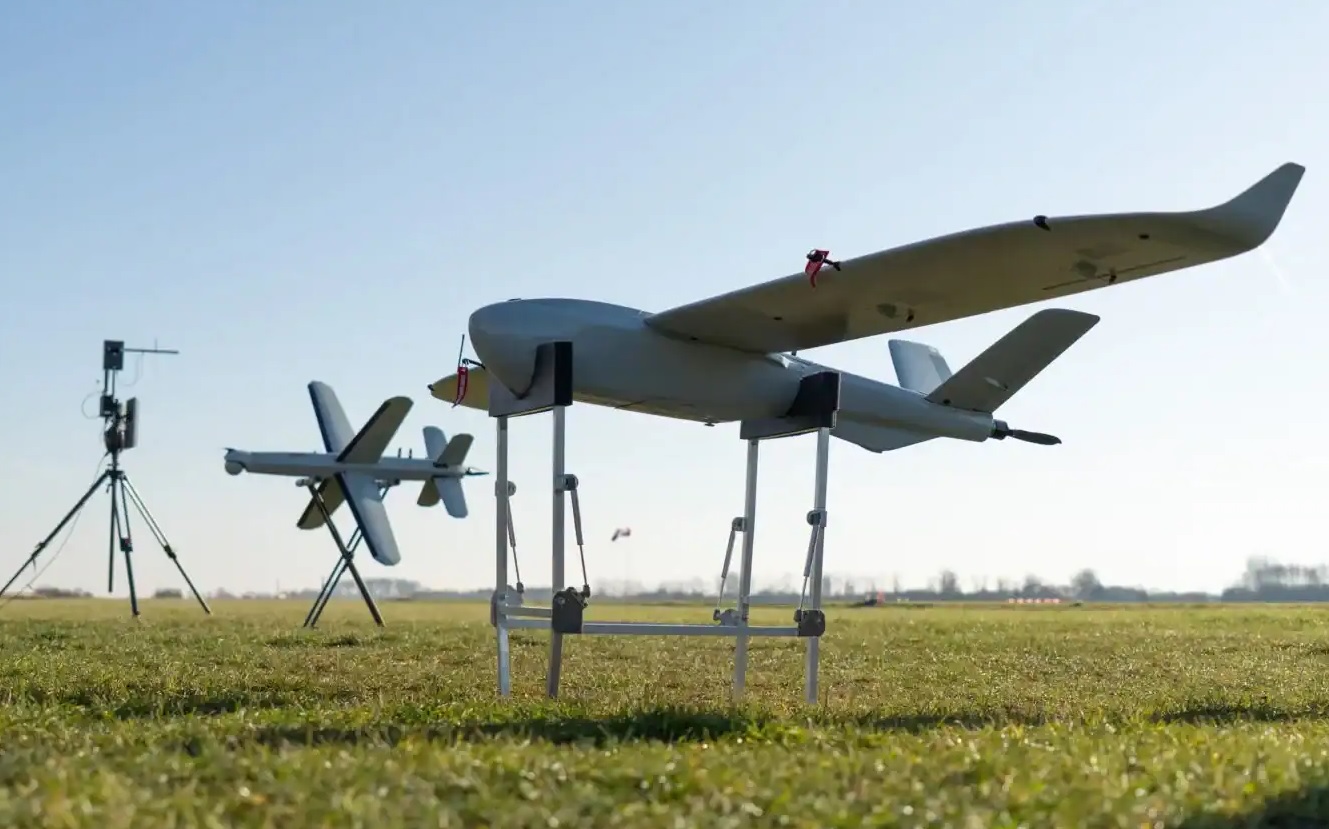
World
OLÍN, Czech Republic — May 18, 2026 : U&C UAS, a Czech Republic-based drone manufacturer founded by Ukrainian defense industry specialists, has secured a contract to supply reconnaissance unmanned aerial systems (UAS) to U.S. Army units stationed in Europe, marking a significant step in the company’s expansion into NATO and international defense markets. The agreement is being facilitated through ATP Gov, a U.S. government contractor serving as the intermediary between the manufacturer and the U.S. military. The systems will support intelligence, surveillance, and reconnaissance (ISR) missions for American forces operating across the European theater. The contract follows a series of operational evaluations conducted during military exercises designed to simulate modern high-intensity warfare conditions. According to the company, U.S. Army representatives assessed the drone platform under demanding operational scenarios that included communications degradation, electronic warfare interference, and sustained operational tempos similar to real combat environments. Following the evaluation process, U.S. military officials determined that the platform demonstrated strong reliability, operational efficiency, and stable performance during extended ISR missions. Evaluators noted that the system improved existing reconnaissance capabilities by providing persistent airborne surveillance and real-time intelligence transmission in contested environments. David Jirman, Chief Commercial Officer of U&C UAS, confirmed the agreement and stated that the customer highly valued the company’s ability to deliver critical ISR capabilities. “Our valued customer highly appreciated our ability to provide critical ISR capabilities, ensuring sustained surveillance and real-time data transmission to significantly enhance situational awareness,” Jirman said. “Our UAS system is a versatile reconnaissance tool and a reliable solution capable of meeting the stringent requirements of modern military missions.” Neither U&C UAS nor ATP Gov disclosed the value of the contract, the number of systems ordered, delivery timelines, or the exact U.S. Army units and deployment locations involved. The company also did not publicly identify the drone model included in the agreement. However, U&C UAS is primarily known for its Stork LR, also referred to as the Leleka-LR, an autonomous reconnaissance drone system designed for long-endurance ISR missions. The platform is equipped with encrypted digital communication systems and is engineered to maintain operations in electronically contested environments where GPS disruption and signal interference are common. The agreement comes as the U.S. military continues expanding its ISR requirements across Europe following the deterioration of the regional security environment since February 2022. U.S. forces deployed in Poland, Romania, Germany, and the Baltic states maintain elevated readiness levels and increasingly rely on persistent airborne surveillance to support operational awareness and force protection missions. Military reconnaissance drones are used to monitor border regions, observe troop and equipment movements, support base security, and provide early warning against emerging threats. Long-endurance ISR platforms also supplement larger unmanned systems by delivering continuous tactical intelligence in areas where satellite coverage may be limited or manned reconnaissance flights carry increased operational risk. U&C UAS was established in July 2022 in the Czech Republic by co-owners of Ukrainian drone manufacturer DeViRo, one of Ukraine’s largest producers of military reconnaissance drones and the developer of the widely used Leleka-100 system. The company operates a manufacturing facility in Kolín and focuses on producing unmanned systems for NATO member states and international defense customers. The company’s Ukrainian origins have provided direct operational experience in contested battlefield conditions heavily affected by electronic warfare and drone operations. According to the company, this experience has influenced the design, maintenance, and operational structure of its reconnaissance systems. Manufacturing operations within the Czech Republic also ensure compliance with NATO industrial and interoperability standards. U&C UAS is registered under the NATO codification system with NCAGE code 8400G, allowing integration into allied military logistics and procurement frameworks. ATP Gov, the U.S.-based contractor facilitating the procurement, specializes in unmanned systems and defense acquisition programs while maintaining compliance with applicable U.S. procurement regulations, including National Defense Authorization Act (NDAA) requirements. The U.S. Army agreement represents an important development in U&C UAS’s international export strategy. The contract follows a separate agreement signed in February 2026 with India’s TUNGA Aerospace Industries Private Limited involving UAV deliveries, training, and potential technology cooperation. Together, the recent agreements highlight the company’s transition from a regional drone supplier into an emerging international provider of reconnaissance and ISR systems for allied military forces.
Read More → Posted on 2026-05-18 17:04:11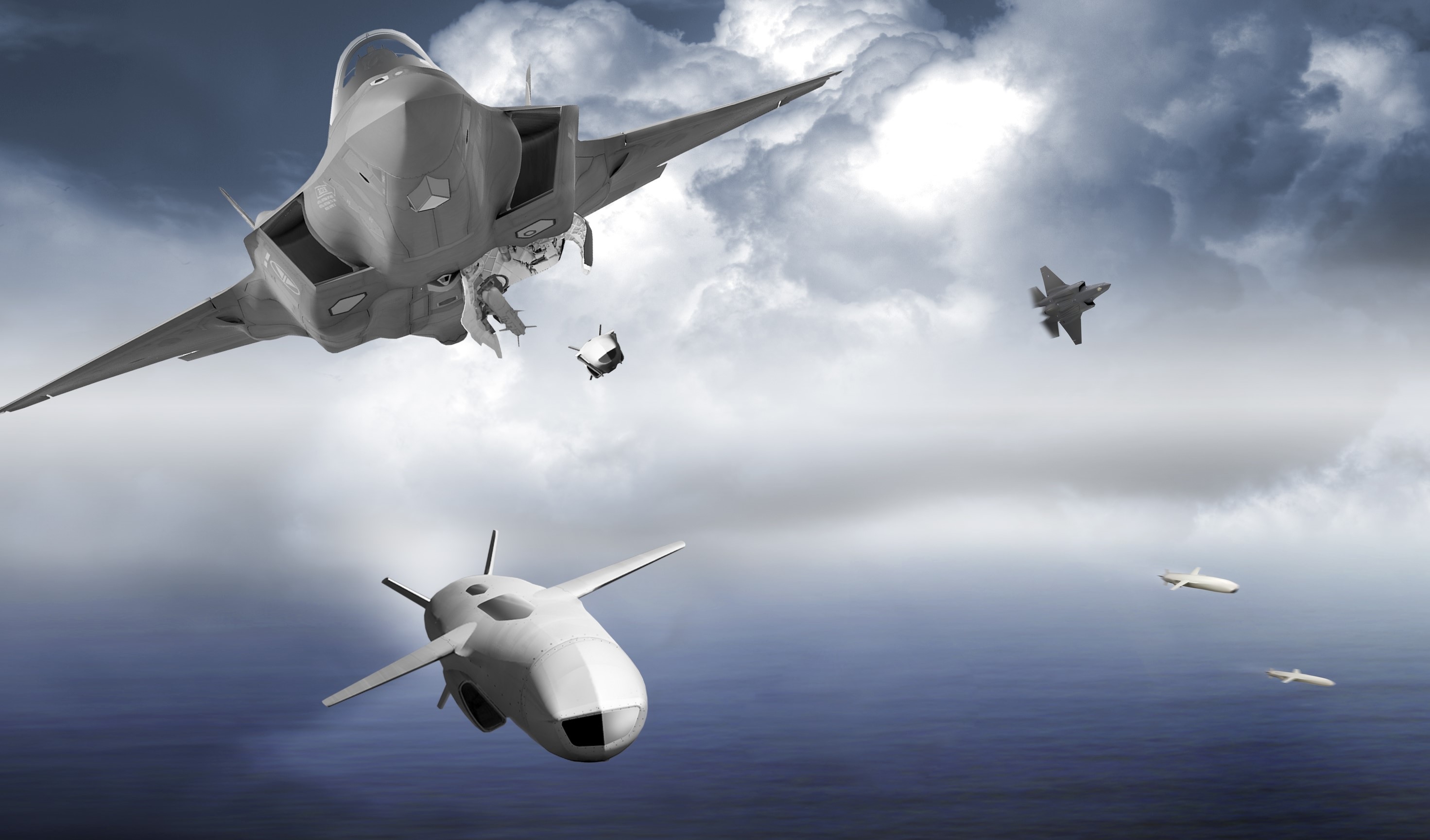
World
OSLO, Norway — May 18, 2026 : Germany has signed a follow-on contract with Norwegian defense manufacturer Kongsberg Defence & Aerospace for additional Joint Strike Missiles (JSM) intended for the German Air Force’s future fleet of F-35A Lightning II fighter aircraft. The agreement, finalized in May 2026, is valued at approximately NOK 3.5 billion and represents a further expansion of Germany’s precision-strike capabilities under its ongoing air force modernization program. The new procurement follows Germany’s initial JSM contract signed on June 30, 2025, which was valued at roughly NOK 6.5 billion. With the original order, Germany became the fifth nation to procure the missile system after Norway, Japan, Australia, and the United States. The agreement is structured as a government-to-government sale between Germany and Norway, with the Norwegian Defence Materiel Agency (NDMA) acting as the contracting authority on behalf of Berlin. The additional order is intended to increase missile stockpiles and readiness levels ahead of the introduction of Germany’s future F-35 fleet into operational service. F-35 Modernization Program Germany’s acquisition of the Joint Strike Missile is directly connected to its purchase of 35 F-35A Lightning II fighter jets through the U.S. Foreign Military Sales program. The aircraft are expected to gradually replace part of the German Air Force’s aging Panavia Tornado IDS strike fleet, including aircraft assigned to NATO nuclear-sharing missions. Deliveries of the first German F-35A aircraft are scheduled to begin in 2026. Initial pilot training and operational preparation will take place at Ebbing Air National Guard Base in Fort Smith, Arkansas, before the aircraft are transferred to their permanent operating location at Büchel Air Base in Germany in 2027. Øyvind Kolset, Executive Vice President of Kongsberg and head of the company’s Missiles and Aerostructures division, stated that the additional contract demonstrates the importance of the JSM for F-35 operations and supports Germany’s efforts to build up operational missile readiness for the future fleet. Joint Strike Missile Capability The Joint Strike Missile was jointly developed by Kongsberg and Raytheon Missiles & Defense as an advanced air-launched precision strike weapon derived from the Naval Strike Missile (NSM). The missile is currently the only weapon in its category specifically designed for internal carriage inside the weapons bays of the F-35A and F-35C variants, allowing the aircraft to retain its low-observable stealth characteristics during strike missions. Designed for both anti-ship and land-attack operations, the missile incorporates advanced navigation systems, low-altitude terrain-following flight profiles, and automatic target recognition technology. The JSM has a length of approximately 4 meters and a stowed width of 480 mm, dimensions specifically engineered to meet the internal carriage requirements of the F-35 platform. Certification of the missile for operational use is planned alongside the rollout of the F-35 Block 4 software standard, which is expected to introduce expanded weapons integration and enhanced combat capabilities for the aircraft. Expanding Germany-Norway Defense Cooperation Officials from both countries described the agreement as part of a broader expansion of bilateral defense cooperation between Berlin and Oslo. Norwegian Defence Minister Tore O. Sandvik stated that the missile agreements reflect the objectives of the Hansa Agreement signed earlier in 2026, which was established to strengthen operational defense cooperation between the two NATO members. According to Sandvik, the agreements demonstrate how the strategic partnership is being translated into practical military capabilities that support both national defense requirements and NATO collective security objectives. Kongsberg President and Chief Executive Officer Eirik Lie said the company is engaged in several additional projects with German industry partners beyond the JSM program. These include combat systems for the Type 212CD submarine program, remote weapon stations, and development of a new supersonic strike missile in cooperation with Diehl Defence and MBDA. The company is also working with European defense technology firm Helsing on projects related to advanced space and defense technologies as part of wider European industrial cooperation efforts. Procurement Overview Contract Phase Date Signed Estimated Value Key Details Initial JSM Order June 30, 2025 NOK 6.5 Billion Germany became the fifth JSM operator Follow-On JSM Order May 2026 NOK 3.5 Billion Expands missile inventory for F-35 readiness The latest procurement further strengthens Germany’s long-range strike capabilities as the Luftwaffe prepares for the operational introduction of the F-35A and continues broader modernization efforts within NATO’s integrated defense framework.
Read More → Posted on 2026-05-18 17:31:08
World
SEOUL, South Korea — May 18, 2026 : The Republic of Korea Marine Corps has publicly unveiled the KAAV-II, its next-generation amphibious infantry fighting vehicle, for the first time, revealing a new unmanned turret armed with a 40mm Cased Telescoped Ammunition (CTA) autocannon as part of South Korea’s ongoing amphibious warfare modernization program. Developed by Hanwha Aerospace, the KAAV-II is intended to replace or supplement the Marine Corps’ current fleet of KAAV-7A1 assault amphibious vehicles, which are derived from the AAV-7 platform currently in service. The unveiling provided the clearest look so far at the vehicle’s combat configuration and the advanced systems planned for integration into South Korea’s future armored vehicle fleet. Defense observers, including military commentator Mason Yeonhaku, noted that several technologies incorporated into the KAAV-II are also planned for the upcoming K-NIFV (Korean New Infantry Fighting Vehicle) program. By integrating these systems into the KAAV-II first, South Korean developers are establishing a common technological foundation for multiple next-generation armored platforms. A central feature of the KAAV-II is its unmanned turret equipped with a 40mm CTA autocannon. The new turret replaces the manned weapon station mounted on existing KAAV vehicles, which currently use a 40mm automatic grenade launcher alongside a 12.7mm heavy machine gun. The unmanned configuration is designed to improve crew survivability while increasing available internal space for embarked Marines and mission equipment. According to available defense data, the KAAV-II has a combat weight of approximately 35 tons and is designed to improve both amphibious mobility and ground combat effectiveness. The 40mm CTA autocannon is intended to provide greater firepower against light armored vehicles and low-altitude aerial threats, including unmanned aerial systems. The weapon system also reflects the increasing adoption of higher-caliber automatic cannons on modern infantry fighting vehicles to address evolving battlefield requirements. Development of the KAAV-II began around 2015 as part of the Republic of Korea Marine Corps’ long-term modernization effort. A scale model of the vehicle was first displayed during the Seoul ADEX defense exhibition in 2019. Since then, the program has continued through testing and development phases focused on improving water mobility, protection, and digital battlefield integration. The vehicle is expected to incorporate advanced command-and-control systems, modern sensor suites, and elements of active protection technologies aligned with systems under development for the K-NIFV program. Reports from South Korean defense sources indicate that the KAAV-II is also designed to achieve higher water speeds than current amphibious assault vehicles, with some estimates placing projected speeds at approximately 20 kilometers per hour or higher through the use of upgraded propulsion systems. Despite the recent public unveiling, the physical KAAV-II prototype has remained absent from several major South Korean defense exhibitions in recent years. Journalists and defense analysts attending events such as KADEX, MADEX, and Seoul ADEX reported that only scale models of the vehicle were displayed, while other future systems, including the HPRS and K-NIFV prototypes, were exhibited in person. Industry reports indicated that Hanwha Aerospace reduced public appearances of the physical prototype following a fatal amphibious testing accident near Pohang in September 2023. The incident reportedly resulted in additional evaluations and safety reviews during the vehicle’s ongoing development process. The Republic of Korea Marine Corps currently operates approximately 164 KAAV vehicles. Once development and testing requirements are completed, the KAAV-II is expected to proceed to mass production and gradually enter operational service alongside existing K-21 Infantry Fighting Vehicles and current-generation KAAV platforms. The KAAV-II program forms part of South Korea’s broader effort to strengthen indigenous amphibious warfare and armored combat capabilities while improving interoperability across future military vehicle programs.
Read More → Posted on 2026-05-18 17:43:33
World
TOKYO, — May 18, 2026 : Japan’s Ministry of Defense has released a comprehensive new briefing outlining a major expansion of the country’s military space capabilities, including increased defense spending, organizational restructuring, satellite development programs, and deeper operational cooperation with allies. The May 2026 document, titled “Strengthening Defense Capabilities in the Space Domain,” presents space as an increasingly contested operational environment and details how Japan plans to strengthen its ability to monitor, protect, and operate assets in orbit. Space Operations Group Expansion At the center of the expansion is the continued growth of the Space Operations Group within the Japan Air Self-Defense Force. The organization, headquartered at Fuchu Air Base in Tokyo, is expected to reach approximately 880 personnel by the end of fiscal year 2026. The force has expanded significantly since the creation of the original 20-member Space Operations Squadron in 2020. Personnel levels increased to approximately 670 members by the end of fiscal year 2025 as Japan accelerated the development of military space operations. As part of the restructuring, the Air Self-Defense Force is scheduled to be renamed the Aerospace Self-Defense Force during fiscal year 2026 to reflect the growing role of space operations in national defense planning. According to the ministry, the Space Operations Group will include three Space Operations Squadrons, a Space Support Unit, and a Space Intelligence Group. These units will oversee space situational awareness operations, satellite interference monitoring, intelligence collection, and operational support functions related to military space activities. Rapid Increase in Space Defense Spending The briefing shows a sharp increase in Japan’s space-related defense budget over the past several years. Space defense spending reached approximately 174 billion yen in fiscal year 2026 on a contract basis. The ministry stated that spending increased from approximately 79 billion yen in fiscal year 2022 to around 540 billion yen in fiscal year 2025, reflecting the rapid pace of capability development and infrastructure expansion. The funding increase supports satellite procurement programs, surveillance systems, launch infrastructure, and the establishment of new operational units dedicated to space missions. Threat Assessment and Orbital Security Concerns The Ministry of Defense briefing identifies the rapid growth of foreign military satellite capabilities as one of the primary drivers behind Japan’s expansion plans. Citing Military Balance 2024 data, the document states that China’s military satellite fleet increased from approximately 40 satellites in 2012 to 237 satellites in 2024 across multiple mission categories. The ministry outlined several threats it considers risks to Japanese and allied space assets, including: Physical co-orbital anti-satellite weapons Electronic jamming systems High-power microwave directed-energy systems Ground-based laser dazzling systems Cyber attacks targeting ground control facilities Anti-satellite missile systems The briefing also highlighted the growing danger posed by orbital debris. According to NASA figures referenced in the document, more than 30,000 tracked objects are currently present in orbit. Japan’s Space Domain Awareness network now operates continuously to monitor collision risks and provide warnings to satellite operators. Satellite Development Programs Japan is simultaneously expanding domestic satellite programs intended to strengthen independent surveillance and tracking capabilities. A constellation of information-gathering satellites is scheduled to begin operations during fiscal year 2026. Several private companies are participating in the effort through government-supported contracts. QPS Research Institute is developing small satellites capable of onboard imagery processing and optical communications transmission. IHI Aerospace and the Japan Aerospace Exploration Agency (JAXA) are using the HTV-X cargo spacecraft platform to demonstrate infrared sensors designed for detecting and tracking hypersonic glide vehicles. NTT Data is developing tactical AI satellites capable of integrating information from multiple data sources while supporting two-way communications with ground systems. Initial deployment is planned for fiscal year 2027. Mission Assurance and Launch Capabilities The Ministry of Defense has also initiated multiple programs focused on mission assurance and satellite resilience. Canon Electronics is developing a multi-orbit observation satellite designed to monitor spacecraft operating from low Earth orbit through geostationary orbit. Astroscale is conducting demonstrations involving rendezvous and proximity operations at geostationary altitude, along with optical communication data transfer between satellites. Space One is developing an upgraded Kairos small launch vehicle equipped with methane-engine technology and configurable payload systems intended to support responsive launch operations for defense missions. Expansion of Space Surveillance Infrastructure Japan’s space surveillance infrastructure is also being expanded through new radar systems, monitoring equipment, and planned orbital assets. The ministry confirmed that its Space Situational Awareness operations system has been operational since March 2023. Satellite interference monitoring equipment entered service in March 2024. SSA radar systems, including a facility near Sanyo-Onoda in Yamaguchi Prefecture, became operational in March 2025. Additional laser ranging equipment is scheduled for deployment during fiscal year 2026. A dedicated Space Domain Awareness satellite is also planned for launch during fiscal year 2026. Cooperation With the United States and Allies Japan’s military space expansion is being carried out alongside increased cooperation with allied nations, particularly the United States. In December 2024, the United States established U.S. Space Forces Japan at Yokota Air Base, creating a permanent American military space presence in the country to improve operational coordination and interoperability. During defense ministerial talks in March 2025, Japan and the United States confirmed cooperation on the development of a low Earth orbit satellite constellation focused on hypersonic glide vehicle detection and tracking. The two countries are also continuing collaboration under the Protected Anti-Jam Tactical Satellite Communications (PATS) framework. Japan has additionally expanded participation in multinational space security initiatives. The country joined the Combined Space Operations (CSpO) initiative in 2023 alongside the United States, Australia, Canada, France, Germany, Italy, New Zealand, Norway, and the United Kingdom. The Space Operations Group also joined the NATO-led multinational space exercise AsterX in 2024, increasing Japan’s participation in allied operational planning and military space exercises. Current Capability Assessment The Ministry of Defense briefing acknowledges that Japan currently remains behind several major space powers in dedicated military satellite capabilities. According to figures included in the document, China currently operates 167 reconnaissance satellites, while the United States maintains 46 early warning satellites. Japan currently operates no dedicated military reconnaissance or early warning satellite constellations at a comparable scale. The ministry identified commercial satellite constellations beginning operations in fiscal year 2026 as a near-term solution to narrow the capability gap. Future tactical AI satellite deployments and multi-orbit observation platforms are expected to support longer-term expansion plans. The document describes the overall effort as part of Japan’s broader strategy to establish sustained operational capabilities in space while strengthening surveillance, resilience, and allied interoperability in response to evolving security challenges in orbit.
Read More → Posted on 2026-05-18 17:56:01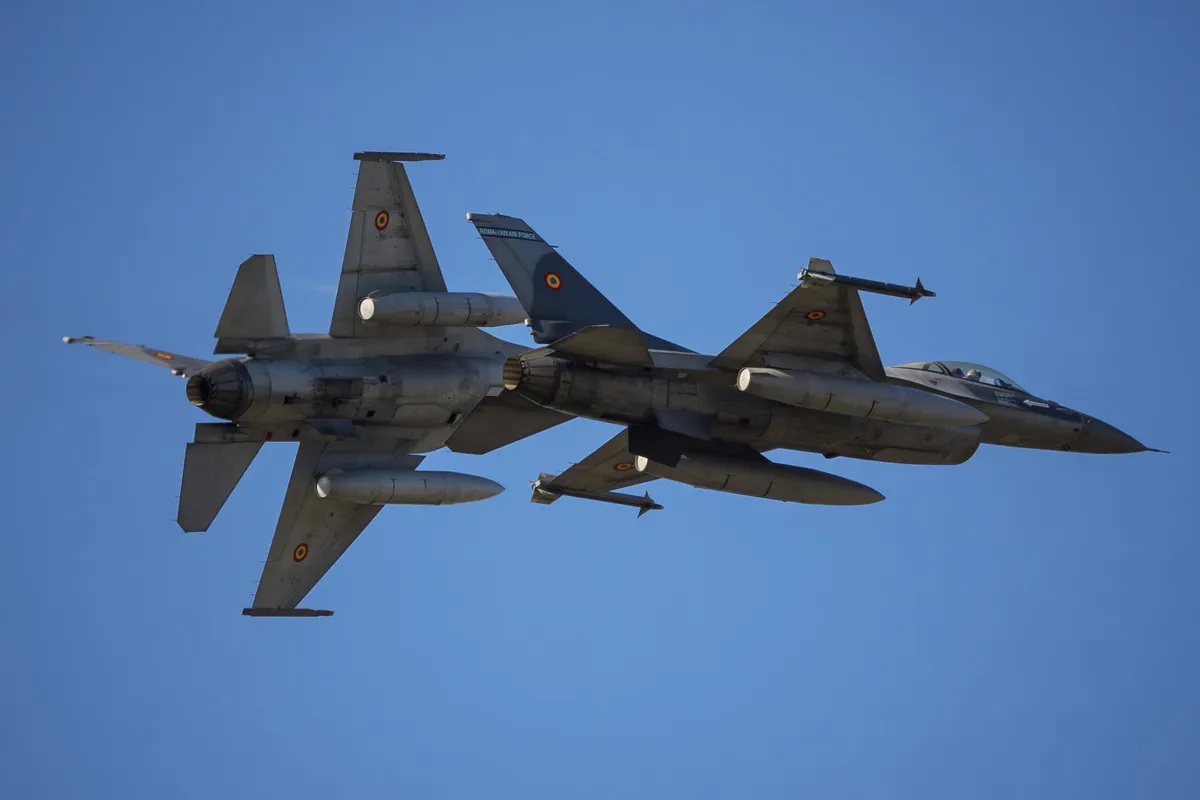
World
TALLINN / ŠIAULIAI, — May 19, 2026 : A Romanian Air Force F-16 Fighting Falcon operating under NATO’s Baltic Air Policing mission shot down a drone that entered Estonian airspace from Russian territory on Tuesday, after regional air defense authorities determined the aircraft posed a potential threat to air traffic safety and national security. Estonian authorities assessed the unmanned aerial vehicle as likely Ukrainian in origin and said it may have deviated from its intended route due to Russian electronic warfare measures, including GPS spoofing and jamming activity near the border region. Drone Entered Estonian Airspace From Russia According to the Estonian Defense Forces, the drone was detected at approximately 12:00 p.m. local time entering the south-eastern corner of Estonian airspace from Russia before continuing north-east toward central Estonia. Initial tracking information was provided by Latvian authorities after the drone was observed moving near Latvian-controlled monitoring sectors. Estonian radar systems subsequently confirmed the airspace violation, prompting the activation of agreed NATO and national air defense procedures. At the time of the incident, two Romanian F-16 fighters assigned to NATO’s Baltic Air Policing mission were already airborne on a routine training sortie from Šiauliai Air Base in Lithuania. NATO command redirected the aircraft to intercept the target as the closest available allied assets in the region. The intercept operation was coordinated through the Latvian Control and Reporting Center in cooperation with Estonian air defense authorities. Romanian F-16 Conducted Missile Engagement The Romanian fighters intercepted the drone south of Põltsamaa near Lake Võrtsjärv. Following visual identification conducted under standard peacetime engagement procedures, one of the F-16s launched a single air-to-air missile at the target. The drone was destroyed at approximately 12:14 p.m. local time. Romanian and Estonian defense officials did not disclose the exact missile type used during the engagement. Romanian F-16s deployed for Baltic Air Policing missions normally carry two AIM-120C AMRAAM missiles and two AIM-9X Sidewinder missiles as part of their standard air defense configuration. Romanian Acting Defense Minister Radu Miruță identified the pilot involved in the interception as Lieutenant Colonel Costel-Alexandru Pavelescu. The Romanian Ministry of Defense stated that all NATO identification, verification, and engagement authorization procedures were completed before the missile was launched. Romanian officials described the interception as the first kinetic engagement conducted by the current Romanian Baltic Air Policing detachment, known as the “Carpathian Vipers.” Miruță announced that he would propose awarding the pilot the First Class Peace Envoy Emblem. Wreckage Fell Near Residential Area The wreckage of the drone fell in a marshy and wooded area near Kablaküla village in Põltsamaa Municipality, close to Lake Võrtsjärv in southern Estonia. Authorities stated that debris landed approximately 30 meters from the nearest residential building. No injuries, fires, or property damage were reported. Bomb disposal teams, rescue services, police units, and security personnel secured the impact area shortly after the incident. Estonian authorities warned residents not to approach or touch any debris and instructed the public to report findings directly to emergency services. Search and recovery operations continued throughout Tuesday afternoon as investigators worked to collect wreckage fragments and assess the drone’s technical characteristics. Officials have not publicly released photographs or identified the drone model. The Estonian Internal Security Service opened a criminal investigation under statutes concerning attacks against air traffic safety. Estonia and Latvia Issued Air Threat Alerts Following confirmation of the airspace breach, Estonia activated its EE-Alarm warning system for several southern counties, including Tartu, Jõgeva, Viljandi, Valga, Võru, and Põlva. The alert remained active until approximately 12:45–12:55 p.m. local time, after authorities confirmed the airspace was secure. Latvia also issued temporary airspace threat warnings for several municipalities near its eastern border during the operation. Estonian Defense Minister Hanno Pevkur confirmed that Latvian authorities had provided advance information regarding the drone’s movement before it entered Estonian territory. Pevkur stated that Ukraine’s defense minister later apologized during a telephone conversation regarding the incident and welcomed the successful interception. He reiterated that Estonia has not granted permission for non-allied countries to use its airspace for military operations and noted that Ukraine had not requested authorization. Ukrainian Foreign Ministry spokesperson Heorhii Tykhyi also issued a public apology, describing the incident as unintended. Romanian Detachment Operating From Lithuania Romania deployed its current Baltic Air Policing detachment to Šiauliai Air Base in early April 2026. The deployment includes approximately six F-16 aircraft and around 100 personnel. The Romanian contingent operates alongside a French Air and Space Force Rafale detachment stationed at the same Lithuanian base and replaced a previous Spanish Air Force rotation. The deployment supports NATO’s Baltic Air Policing and Eastern Sentry activities, which maintain continuous Quick Reaction Alert coverage over the airspace of Estonia, Latvia, and Lithuania from bases including Šiauliai and Ämari. According to NATO Allied Air Command, the current mission marks Romania’s fourth Baltic Air Policing deployment from Lithuania. Romania first contributed to the mission in 2007 using MiG-21 LanceR aircraft before transitioning to F-16 operations after the retirement of the MiG-21 fleet. Incident Follows Previous Drone Violations Tuesday’s interception occurred amid continuing Ukrainian strikes on targets inside Russia and coincided with Russian air defense activity and temporary flight restrictions at airports in Pskov and at Pulkovo Airport. The incident also follows several previous drone incursions in the Baltic region. On March 25, 2026, a drone entering from Russian airspace struck the chimney of the Auvere power plant in north-eastern Estonia. In September 2025, Polish and allied aircraft, including Dutch F-35 fighters, intercepted and destroyed Russian drones that crossed into Polish airspace during a large-scale Russian missile and drone attack against Ukraine. Estonian Air Force Commander Brigadier General Riivo Valge stated that while the immediate threat had been neutralized, authorities continue monitoring the region for possible additional airspace violations linked to ongoing military activity near NATO’s eastern border. No further unauthorized drones were reported in Estonian airspace following the interception.
Read More → Posted on 2026-05-19 14:23:04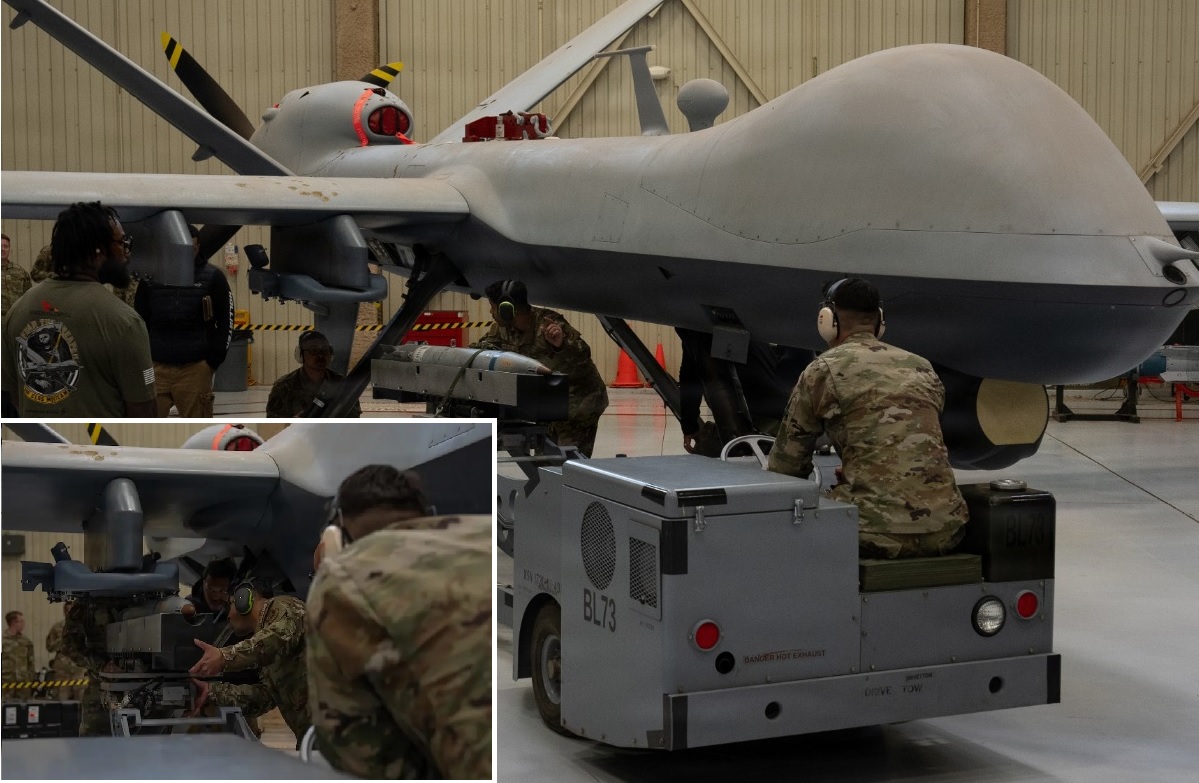
World
CANNON AIR FORCE BASE, N.M. — May 19, 2026 : The U.S. Air Force Special Operations Command (AFSOC) has officially integrated the GBU-39B Small Diameter Bomb (SDB) weapon system onto MQ-9 Reaper aircraft assigned to the 27th Special Operations Wing (SOW), significantly expanding the drone’s long-range precision strike capabilities in support of special operations missions. The capability reached operational status within the wing during the spring of 2026 as part of broader Air Commando modernization efforts aimed at improving survivability and precision engagement options in increasingly contested operational environments. Precision Strike Capability for MQ-9 Fleet Manufactured by Boeing, the GBU-39B is a 250-pound, low-yield, all-weather precision-guided glide bomb designed to strike targets while limiting collateral damage. The weapon uses a combined GPS and inertial navigation guidance system and deploys folding wings after release, allowing it to glide extended distances toward designated targets. According to U.S. Air Force data, the munition carries approximately 36 pounds of high explosive and can penetrate up to one meter of steel-reinforced concrete. When released from sufficient altitude and speed, the GBU-39B can glide up to 60 miles and strike within one meter of its intended target. The extended standoff range allows MQ-9 Reaper aircraft to engage targets while remaining outside the reach of many ground-based air defense systems, improving aircraft survivability during operations in contested airspace. “In this shifting battlespace, adversaries layer lethal obstacles to deny us,” said U.S. Air Force Lt. Col. Joshua Swann, an MQ-9 squadron commander assigned to the 27th Special Operations Wing. “The GBU-39’s reach guarantees we can stay in a fight under hostile threats and continue to solve the joint force’s hard tactical problems.” BRU-78 Dual Carriage System Expands Weapon Loadout To field the GBU-39B effectively, the MQ-9 utilizes the BRU-78 Dual Carriage System developed by L3Harris specifically for the Reaper platform. The 88-pound carriage system integrates two BRU-71 pneumatic ejector units, enabling the drone to carry two GBU-39B munitions on a single hardpoint without requiring structural modifications to the aircraft. Before the introduction of the BRU-78 system, each MQ-9 pylon was limited to carrying a single conventional munition. The upgraded configuration doubles the number of weapons available on a given station, allowing the aircraft to remain on station longer and prosecute multiple targets during a single sortie. “When striking targets, our intent is to maximize effects and minimize collateral damage,” said an MQ-9 pilot assigned to the 27th Special Operations Wing. “Carrying a higher number of low-yield munitions allows us to stay on station longer and provide more effective support to our troops on the ground.” GBU-39B Service History and Combat Use The GBU-39B first entered U.S. Air Force service in 2006 and has since become one of the military’s widely used precision-guided standoff weapons. According to Air Force information, the United States and partner nations have employed more than 17,000 Small Diameter Bombs across operations ranging from counterterrorism missions to large-scale conventional warfare. The weapon has previously been integrated onto multiple combat aircraft, including the F-15E Strike Eagle, F-16 Fighting Falcon, F-22 Raptor, F-35 Lightning II, B-1B Lancer, and B-2 Spirit bomber fleets. Within the 27th Special Operations Wing, the GBU-39B is also carried by AC-130 Ghostrider II gunships, which can carry up to eight of the munitions on wing-mounted stations. “The GBU-39 is one of our most versatile munitions,” said U.S. Air Force Lt. Col. Clifford Lucas, an AC-130 squadron commander assigned to the 27th Special Operations Wing. “By putting this level of adaptable firepower under our wings, we ensure our warfighters always have the exact tool needed to eliminate the threat.” Broader Modernization Effort The MQ-9 Reaper, manufactured by General Atomics Aeronautical Systems, has served as a primary intelligence, surveillance, reconnaissance, and strike platform for the U.S. military for nearly two decades. Valued at approximately $34 million per aircraft depending on configuration, the platform has been extensively employed in both counterterrorism and conventional military operations. Air Force officials stated that integrating long-range glide munitions onto the MQ-9 forms part of a broader effort to adapt legacy platforms to evolving operational requirements and increasingly sophisticated threats. Previous testing involving GBU-39B integration and BRU-78 dual carriage configurations was conducted during 2025 at multiple Air Force facilities before the capability entered operational service with the 27th Special Operations Wing. “This capability gives our crews greater flexibility to deliver precision effects while supporting the Joint Force across the spectrum of conflict,” said U.S. Air Force Col. Robert Johnston, commander of the 27th Special Operations Wing. “Our Air Commandos remain focused on providing relevant, ready and lethal options for today’s fight and while preparing for tomorrow’s challenges.” The 27th Special Operations Wing, based at Cannon Air Force Base, New Mexico, operates MQ-9 Reaper aircraft in support of global special operations missions, including intelligence gathering, armed overwatch, and precision strike operations.
Read More → Posted on 2026-05-19 14:36:16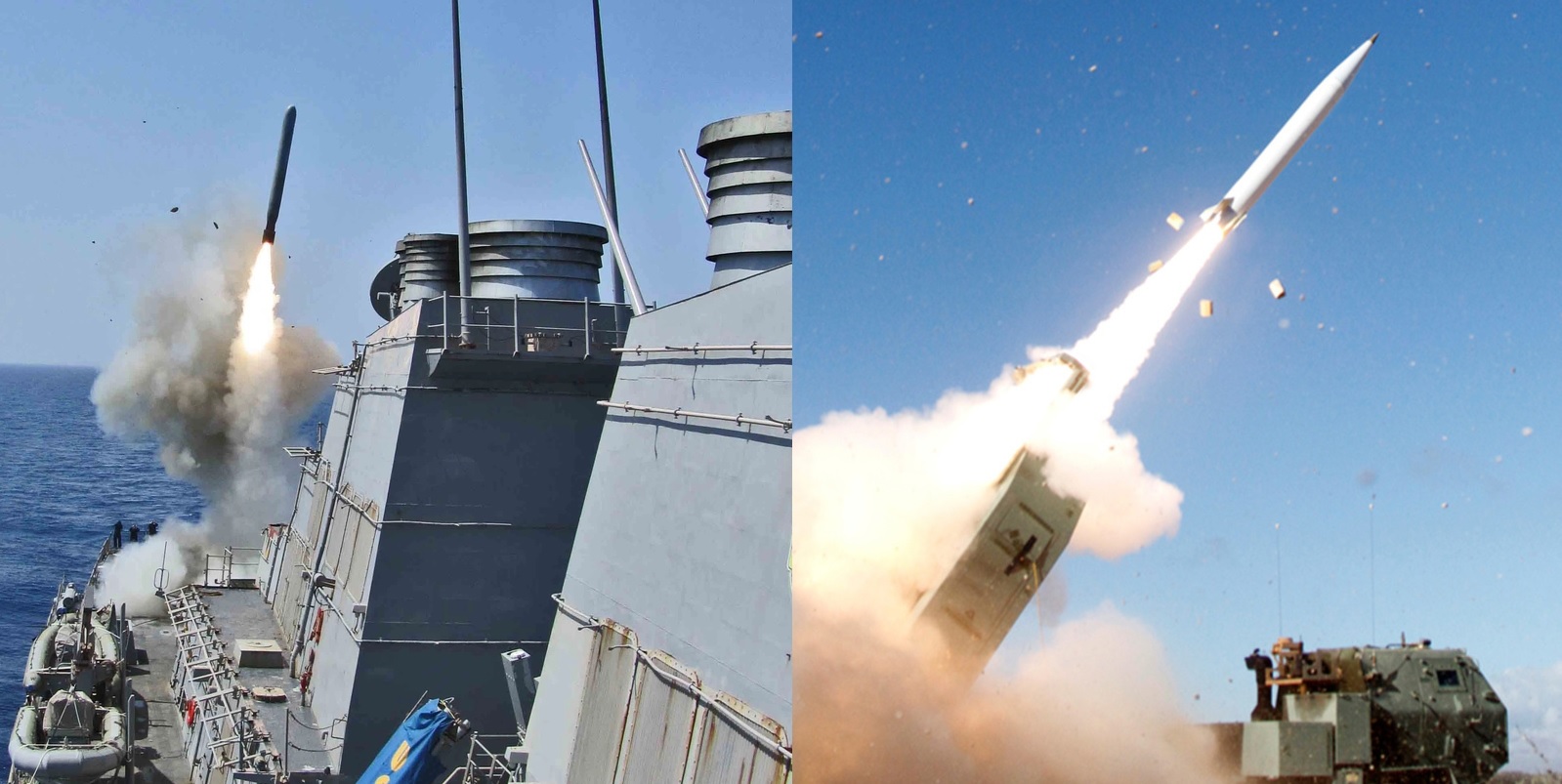
World
WASHINGTON — May 19, 2026 : The U.S. Department of Defense has initiated one of its largest recent long-range munitions procurement efforts, announcing framework agreements for the future acquisition of more than 10,000 low-cost cruise missiles and over 12,000 hypersonic missiles as part of a broader strategy to expand strike capacity, replenish depleted inventories, and strengthen deterrence capabilities in the Indo-Pacific region. The procurement initiative centers on the Pentagon’s Low-Cost Containerized Missiles (LCCM) program, which is designed to establish a large-scale pipeline for affordable precision-strike weapons that can be produced rapidly and deployed across multiple operational environments. The Department is simultaneously advancing a parallel hypersonic missile effort aimed at scaling production of lower-cost high-speed strike systems for future naval and air operations. Defense officials stated that the strategy reflects a shift toward a “high-low mix” of munitions, combining smaller inventories of advanced high-cost weapons with larger numbers of lower-cost systems capable of sustaining long-duration operations. Pentagon Awards LCCM Framework Agreements The Department of Defense awarded LCCM framework agreements to four companies — Anduril Industries, CoAspire, Leidos, and Zone 5 Technologies — to support future production contracts running from 2027 through 2029. Under the agreements, each company is expected to deliver approximately 3,000 missiles and associated launch systems during the three-year procurement period. The contracts establish fixed unit pricing for future production lots and are intended to accelerate acquisition timelines while reducing overall procurement costs. The effort is being led by the U.S. Army Program Executive Office for Fires in coordination with the Office of the Under Secretary of Defense for Research and Engineering, the U.S. Air Force weapons acquisition office, and additional defense agencies. The Pentagon plans to begin procuring test missiles from all four contractors starting in June 2026 to support experimentation, operational assessments, and a Military Utility Assessment process that will determine final production requirements and integration pathways. Containerized Missile Concept Expands Deployment Options A central element of the LCCM program is the use of standardized containerized launch systems capable of operating from dispersed locations on land and at sea. The missiles are designed to launch from commercial-style 20-foot ISO containers, enabling rapid deployment and flexible basing arrangements. The containerized approach has generated growing interest within the U.S. Navy, particularly for maritime strike operations and unmanned naval platforms. Chief of Naval Operations Adm. Daryl Caudle has previously emphasized the Navy’s interest in low-cost, distributed, and difficult-to-target launch systems capable of supporting maritime operations across contested regions. Several participating companies are now adapting their missile systems for deployment aboard unmanned surface vessels and other maritime platforms. Anduril Expands Barracuda Missile Production Anduril will supply the Surface-Launched Barracuda-500M (SLB-500M), a containerized cruise missile derived from the company’s Barracuda family of precision-strike weapons. The SLB-500M is designed to strike both land and maritime targets and carries a 100-pound payload with a range exceeding 500 nautical miles. Each 20-foot launch container can accommodate up to 16 missiles. The company has announced partnerships with Kraken Technology Group, HD Hyundai Heavy Industries, and Edison Chouest Offshore to integrate containerized Barracuda launch systems onto unmanned surface vessels. The air-launched Barracuda variant has already received the U.S. Air Force designation AGM-189A. According to company statements, Anduril intends to scale production to at least 1,000 missiles annually beginning in 2027. CoAspire and Leidos Develop Modular Cruise Missile Variants CoAspire will contribute the GHOST missile, a ground-launched and rocket-boosted variant of its Rapidly Adaptable Affordable Cruise Missile-Extended Range (RAACM-ER). The company stated that the missile uses a 3D-printed aluminum fuselage intended to reduce manufacturing complexity and lower production costs. CoAspire is also integrating maritime-targeting sensors to support operations against moving naval targets and contested electronic warfare environments. Leidos will provide an LCCM design derived from its AGM-190A Small Cruise Missile, also known as Black Arrow. The enlarged variant incorporates a modular airframe and Weapon Open Systems Architecture configuration designed to simplify future upgrades and subsystem integration. According to the company, the design supports both ground-launch and maritime-launch configurations. Zone 5 Technologies, which was acquired by Kongsberg Defence & Aerospace, is also participating in the program following earlier work on the Rusty Dagger cruise missile developed for the U.S. Air Force’s Extended Range Attack Munition initiative. Pentagon Advances Blackbeard Hypersonic Missile Program Alongside the cruise missile initiative, the Pentagon has also expanded efforts to field lower-cost hypersonic weapons through an agreement with Castelion for the Blackbeard hypersonic missile program. Following completion of flight testing and validation activities, the Department of Defense plans to award a multi-year procurement contract covering a minimum production rate of 500 Blackbeard missiles annually. Defense officials are additionally seeking congressional authorizations and appropriations to support procurement of more than 12,000 Blackbeard missiles over a five-year period. The U.S. Navy has identified Castelion as a potential supplier for future carrier-based hypersonic strike requirements. Current planning includes integration of an air-launched Blackbeard variant onto the Boeing F/A-18E/F Super Hornet fleet. The hypersonic missile program is intended to complement existing long-range strike systems such as the AGM-158C Long Range Anti-Ship Missile and the AGM-84 Harpoon while providing greater speed, range, and production scale for operations against advanced air defense networks. Castelion is also partnering with Saronic Technologies to integrate containerized Blackbeard launchers onto the company’s 180-foot Marauder unmanned surface vessel. Strategic Focus on Indo-Pacific Operations The Pentagon’s large-scale procurement effort is heavily aligned with evolving operational requirements in the Indo-Pacific region, where U.S. defense planners increasingly view affordable long-range strike weapons as essential for countering large naval formations and advanced integrated air defense systems. Defense officials stated that the new procurement framework is intended to establish a repeatable production model capable of sustaining large missile inventories without relying exclusively on expensive high-end systems such as the Tomahawk Land Attack Missile. Under Secretary of Defense for Research and Engineering Emil Michael stated that the agreements are designed to accelerate delivery timelines while encouraging private-sector investment in manufacturing infrastructure and production capacity. Under Secretary of Defense for Acquisition and Sustainment Michael Duffey said the initiative also expands the U.S. munitions industrial base by creating long-term demand signals for non-traditional defense suppliers and emerging technology firms. The Department of Defense is expected to finalize operational requirements and production allocations following completion of the assessment and testing phase scheduled to begin later in 2026.
Read More → Posted on 2026-05-19 14:44:07
India
VISAKHAPATNAM, — May 19, 2026 : India’s fourth and final Arihant-class nuclear-powered ballistic missile submarine (SSBN), currently designated S4* and expected to be commissioned as INS Arisudan, is undergoing advanced sea trials following its launch at the Ship Building Centre (SBC) in Visakhapatnam in October 2024. The submarine is expected to formally enter service with the Indian Navy around 2027, completing the first production series of India’s indigenous SSBN fleet under the classified Advanced Technology Vessel (ATV) programme. The submarine was launched on October 16, 2024, in the presence of Defence Minister Rajnath Singh. Following harbour integration and system validation trials, the vessel reportedly departed Visakhapatnam in late December 2025 to begin sea trials, a phase expected to continue through 2026 before commissioning preparations are finalized. Expanded Arihant-Class Design The S4* is the second “stretched” Arihant-class submarine and incorporates a larger hull section dedicated to missile storage and launch systems. The submarine is estimated to displace around 7,000 tonnes, compared to the 6,000-tonne displacement of the lead boat INS Arihant. The extended configuration increases the submarine’s missile carrying capacity while maintaining reduced acoustic signatures and survivability features designed for long-duration strategic patrols. Constructed with an indigenous content level estimated at 75–80 percent, the submarine reflects continued progress in India’s domestic nuclear submarine construction programme. The vessel was built at the Ship Building Centre in Visakhapatnam with support from Indian defence research, naval engineering, and heavy industrial sectors operating under the ATV programme. Missile Capability and Armament A major upgrade introduced with INS Aridhaman and S4* is the expansion of the vertical launch system (VLS) configuration. Earlier submarines in the class — INS Arihant and INS Arighaat — were equipped with four VLS tubes primarily optimized for K-15 Sagarika submarine-launched ballistic missiles. The later stretched variants feature eight VLS tubes, enabling the submarine to carry up to eight K-4 submarine-launched ballistic missiles (SLBMs). Developed by the Defence Research and Development Organisation (DRDO), the K-4 missile has a reported strike range of approximately 3,500 kilometres, significantly extending India’s sea-based deterrence reach. The submarine can alternatively carry up to 24 K-15 Sagarika SLBMs with a shorter range of around 750 kilometres. Specification Details Class Arihant-class SSBN (Stretch Variant) Displacement Approx. 7,000 tonnes Propulsion 83 MW Compact Light Water Reactor Primary Armament 8 × K-4 SLBMs Alternative Armament 24 × K-15 Sagarika SLBMs Torpedo Tubes 6 × 533 mm Expected Commissioning Around 2027 The integration of the K-4 missile allows the submarine to operate from relatively secure patrol zones in the Bay of Bengal and wider Indian Ocean while retaining the ability to engage distant strategic targets. Completion of India’s First SSBN Fleet India currently operates three Arihant-class submarines. INS Arihant (S2), the country’s first indigenous SSBN, was commissioned in August 2016. INS Arighaat (S3) entered service in August 2024, while INS Aridhaman (S4), the first stretched variant, was commissioned on April 3, 2026. The commissioning of S4* will complete the four-submarine Arihant-class production line. According to reports from January 2026, the Indian Navy’s ship-naming committee proposed the name INS Arisudan for the vessel. Final approval remains subject to clearance from the Defence Ministry and the President of India. All Four Arihant-Class SSBNs Reportedly Observed Together On January 27, 2026, all four Arihant-class submarines — S2, S3, S4, and S4* — were reportedly observed simultaneously at the Ship Building Centre in Visakhapatnam in imagery assessed by the International Institute for Strategic Studies (IISS). The reported sighting marked the first known instance in which all four Arihant-class submarines were identified together at the facility, highlighting the advanced stage of India’s indigenous SSBN programme and the near-completion of the class. Strategic Importance of the Arihant-Class The Arihant-class forms the sea-based leg of India’s nuclear triad alongside land-based ballistic missiles and air-delivered nuclear systems. Operating under India’s “No First Use” nuclear doctrine, the SSBN fleet provides a survivable second-strike capability designed to ensure deterrence credibility. Indian naval planners generally consider a fleet of at least four SSBNs necessary to maintain a Continuous At-Sea Deterrent (CASD) posture. Such a structure enables one submarine to remain on deterrence patrol while others rotate through maintenance, transit, training, or crew preparation cycles. Broader Submarine Modernization Programme Alongside the SSBN programme, India is expanding its nuclear-powered attack submarine capabilities. In late 2024, the Indian government approved Project 77, a ₹40,000 crore programme to construct the first two indigenous nuclear-powered attack submarines (SSNs) at Visakhapatnam. To bridge capability requirements before indigenous SSNs enter service in the mid-2030s, the Indian Navy is also expected to receive a leased Russian Akula-class nuclear-powered attack submarine by 2028. Development work is additionally continuing on the next-generation S5-class ballistic missile submarines, which are expected to feature larger displacement, increased missile capacity, and longer-range strategic systems beyond the current Arihant-class design.
Read More → Posted on 2026-05-19 15:00:48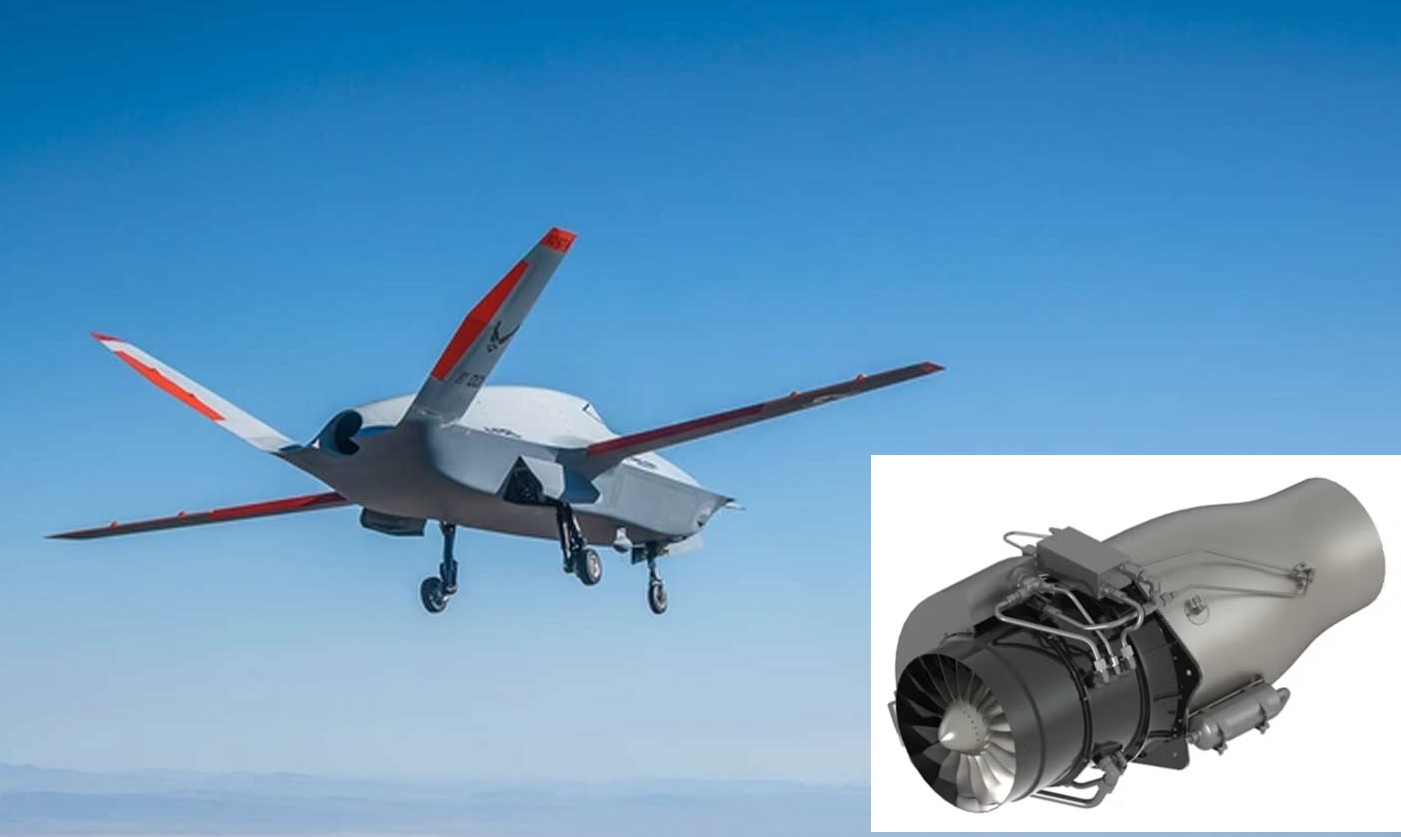
World
EVENDALE, Ohio — May 19, 2026 : GE Aerospace has secured a United States Air Force contract to advance the preliminary design of the GE426 turbofan engine, a new propulsion system being developed for the medium-thrust class of Collaborative Combat Aircraft (CCA) and Autonomous Collaborative Platforms (ACP) intended to operate alongside crewed fighter aircraft. The GE426, unveiled on May 19, is designed to generate between 4,000 and 9,000 pounds of thrust. The contract award follows the successful completion of the engine program’s concept design review in August 2025 and marks the next stage in maturing the propulsion system for future Air Force autonomous combat aircraft programs. Air Force Expands Autonomous Combat Aircraft Program The Autonomous Collaborative Platform initiative is managed by the Air Force Research Laboratory (AFRL) and forms the technical foundation for the U.S. Air Force’s broader effort to field large numbers of artificial intelligence-enabled uncrewed aircraft. These systems are intended to operate alongside manned fighter jets and support missions including surveillance, electronic warfare, weapons carriage, strike support, and operations in contested airspace. Rather than developing a single aircraft design, the Air Force is pursuing a family of autonomous platforms across multiple sizes and mission categories. This strategy has led the service to support several propulsion programs simultaneously in order to provide different thrust options for future aircraft requirements. In February 2026, the Air Force awarded engine development contracts to four industry teams: Beehive Industries, Honeywell, Pratt & Whitney, and a joint team formed by GE Aerospace and Kratos Defense & Security Solutions. The awards support propulsion development efforts for CCA Increment 2 and other ACP variants under the Air Force Life Cycle Management Center’s Propulsion Directorate. According to Air Force officials, the multi-vendor approach is intended to ensure a broad industrial base and provide multiple propulsion solutions for the evolving autonomous fleet. GE426 Expands GE Aerospace’s Propulsion Portfolio The GE426 is positioned in the medium-thrust category and is intended for larger autonomous combat aircraft requiring greater payload capacity, longer operational range, and increased mission flexibility compared to smaller attritable drone designs. GE Aerospace is also developing the GEK1500 engine in partnership with Kratos. That engine produces approximately 1,500 pounds of thrust and targets smaller collaborative combat aircraft applications. The GEK1500 is derived from the GEK800 cruise missile engine, which previously powered the Valkyrie-class experimental drone. With the introduction of the GE426, GE Aerospace now covers multiple propulsion categories within the Air Force’s autonomous combat aircraft strategy, ranging from lightweight autonomous systems to larger medium-thrust combat platforms. The company has not disclosed the financial value of the latest Air Force contract or released detailed technical specifications beyond the engine’s thrust range. However, GE Aerospace stated that affordability, manufacturability, scalability, and operational readiness are core design priorities for the program. Steve Russell, Vice President and General Manager of Edison Works at GE Aerospace, stated that the company intends to apply development processes used during the GEK800 program to accelerate the GE426 effort while maintaining cost and production targets required for future operational deployment. Lessons From CCA Increment 1 The Air Force’s push for purpose-built propulsion systems follows lessons learned during the initial phase of the Collaborative Combat Aircraft program. Under CCA Increment 1, General Atomics’ YFQ-42A and Anduril’s YFQ-44A were selected as competing prototype aircraft. General Atomics conducted the first flight of the YFQ-42A in August 2025, while Anduril flew the YFQ-44A in October 2025. To accelerate development timelines, both aircraft used commercially available off-the-shelf engines rather than dedicated propulsion systems designed specifically for collaborative combat aircraft missions. The prototypes are currently undergoing autonomy integration testing using mission software developed by Shield AI and Collins Aerospace. Defense officials have acknowledged that while commercial engines enabled rapid prototype testing, they do not fully meet the long-term operational requirements of future autonomous fleets. Key concerns include durability, fuel efficiency, manufacturing scalability, sustainment costs, and low-cost mass production capability. The GE426 and related propulsion programs are intended to address those limitations as the Air Force prepares for larger operational deployments in future CCA increments. Affordability and Production Scale Remain Central The Air Force’s long-term acquisition plans place significant emphasis on affordability and manufacturing scalability. Current budget projections estimate approximately $9 billion in spending on collaborative combat aircraft programs through fiscal year 2029. The service plans to acquire at least 1,000 Increment 1 aircraft before the end of the decade, making large-scale engine production a critical requirement for all participating contractors. Air Force officials have stated that propulsion systems requiring highly specialized manufacturing methods or exceeding strict unit cost targets could negatively affect the overall affordability model of the CCA program. GE Aerospace stated that producibility is a central design constraint for the GE426 program, reflecting the Air Force’s focus on scalable manufacturing and rapid production capability. Competitive Industry Development Efforts Several other companies are advancing propulsion systems for autonomous combat aircraft under related Air Force contracts. Honeywell is developing the SkyShot 1600 engine, which can be configured as either a turbojet or turbofan and is designed to generate between 800 and 2,800 pounds of thrust. Beehive Industries is developing an engine in the approximately 1,000-pound thrust class using additive manufacturing techniques based on metal powder production processes. Pratt & Whitney is also continuing propulsion development work under a separate Air Force contract focused on future autonomous aircraft applications. According to Air Force officials, successful small- and medium-thrust engines developed under the ACP and CCA programs could eventually be adapted for additional military systems, including uncrewed aircraft, aerial targets, and missile platforms. Such expansion could increase future production demand into the thousands of units across multiple defense programs. Next Development Phase The GE426 preliminary design phase will refine the engine configuration in accordance with Air Force medium-thrust autonomous aircraft requirements. Future program milestones are expected to include prototype manufacturing, ground testing, and flight demonstration activities depending on program progress and future funding decisions. GE Aerospace stated that the GE426 program remains part of the company’s broader strategy to expand propulsion technologies across small-, medium-, and large-thrust categories supporting next-generation autonomous combat aircraft operations.
Read More → Posted on 2026-05-19 15:11:37
World
HELSINKI, — May 19, 2026 : Swedish defense and security company Saab has introduced the Sirius Compact L24R, a new fixed-panel passive electronic warfare (EW) sensor developed for strategic surveillance and national security missions. The system was unveiled during the AOC EW Europe symposium in Helsinki as part of Saab’s expanding Sirius Compact electronic support measures (ESM) portfolio. The Sirius Compact L24R is designed to provide persistent wide-area surveillance by detecting, tracking, classifying, and localizing radar emissions from multiple threats, including fighter aircraft, surveillance radars, and surface vessels. Unlike conventional active radar systems that emit signals and reveal their position, the L24R operates passively by intercepting electromagnetic emissions, enabling covert monitoring of the spectrum without transmitting detectable signals. Strategic Surveillance Role Saab developed the L24R specifically for fixed-site strategic surveillance applications. The sensor is intended for installation on existing infrastructure such as towers and masts, allowing operators to establish long-duration monitoring coverage across large operational areas. The company stated that the new sensor extends the Sirius Compact R-ESM portfolio beyond tactical deployments into persistent strategic intelligence and surveillance operations. The system is designed to support national security missions requiring continuous electromagnetic monitoring and early warning capabilities. “The new Sirius Compact sensor, L24R, is a welcome extension to the existing tactical Sirius Compact R-ESM portfolio, with a sensor built specifically for persistent, fixed-site surveillance, offering wide area strategic coverage,” said Carl-Johan Bergholm, head of Saab’s Surveillance business area. Technical Specifications According to Saab, the Sirius Compact L24R provides frequency coverage from 1 to 18 GHz, covering the L-band through Ku-band spectrum commonly used by military radar systems. The sensor measures 450 mm x 170 mm x 170 mm and weighs approximately 8 kilograms. Saab stated that the system consumes 65 watts of power and operates without requiring external cooling equipment, simplifying deployment and sustainment requirements. The L24R also supports single-cable integration, reducing installation complexity and enabling rapid deployment in operational environments. Modular and Scalable Design Although optimized for fixed installations, Saab stated that the L24R maintains the modular and compact design characteristics of the broader Sirius Compact family. The company noted that the system can also support mobile deployment concepts where required. Its lightweight structure and scalable architecture allow integration into remote or austere locations where infrastructure access and maintenance capabilities may be limited. Saab stated that the sensor is installation-agnostic and can be integrated into different operational networks and platforms. Autonomous Operation and Secure Data Handling A key feature of the Sirius Compact L24R is its autonomous signal-processing capability. The system continuously intercepts and processes electromagnetic emissions to generate situational awareness and intelligence data in real time. Saab stated that sensitive threat libraries and classified intelligence data are not stored locally on the device itself. Instead, processed information is transmitted directly into command-and-control (C2) systems and distributed defense networks. According to the company, this approach supports cybersecurity protection and enables intelligence sharing across multiple connected platforms. The passive operational design also supports low-observable surveillance missions by reducing the risk of detection associated with active radar transmissions. Growing Demand for Passive EW Systems The launch of the L24R reflects increasing international demand for passive sensing and distributed electronic warfare technologies. Defense and security organizations are investing in systems capable of providing spectrum awareness, maritime surveillance, border monitoring, and early warning without relying solely on large airborne surveillance platforms or active radar networks vulnerable to detection and targeting. Passive electronic warfare systems are increasingly viewed as critical components of layered defense architectures, particularly in contested electromagnetic environments. Sirius Compact Family Expansion The Sirius Compact series includes both radar electronic support measures (R-ESM) and communication electronic support measures (C-ESM) variants designed for tactical and operational use. Previous Sirius Compact variants, including the L20R, A20R, and A21R, were developed for deployment on drones, ground vehicles, naval vessels, and man-portable configurations. The introduction of the L24R adds a dedicated fixed-site strategic surveillance capability to the existing product line. Research, development, and manufacturing activities for the Sirius Compact family are conducted across Saab facilities in Sweden and Finland. Earlier this year, Saab expanded its production capacity in Finland by establishing serial production operations for Sirius Compact sensors at a new facility in Tampere in response to growing market demand for compact passive EW systems.
Read More → Posted on 2026-05-19 15:21:22
World
STOCKHOLM, — May 19, 2026 : The Swedish government has selected French shipbuilder Naval Group to provide the Swedish Navy’s next-generation Luleå-class frigates, choosing the French Frégate de Défense et d’Intervention (FDI) design in a procurement valued at approximately 40 billion Swedish kronor ($4.25 billion). The announcement was made during a press conference aboard the Visby-class corvette HMS Härnösand at Skeppsbron in Stockholm. The event was attended by Prime Minister Ulf Kristersson, Defense Minister Pål Jonson, and Supreme Commander Michael Claesson. The procurement represents Sweden’s largest naval defense acquisition in decades and forms part of a broader modernization effort following the country’s accession to NATO. Swedish officials stated that the new frigates will significantly expand the Navy’s air-defense, anti-submarine warfare, and long-range operational capabilities in the Baltic Sea region. Prime Minister Kristersson described the program as a major step toward strengthening Sweden’s ground- and surface-based air-defense network and transitioning the Swedish Navy from a primarily coastal-defense force into a NATO-integrated maritime force capable of conducting extended regional operations. Selection Process and Evaluation The Luleå-class competition involved three European proposals: the Babcock Arrowhead 120, Navantia’s ALFA 4000, and Naval Group’s FDI platform. According to Defense Minister Jonson, the Swedish government selected the FDI design based on delivery speed, platform maturity, and long-term operational efficiency. The FDI frigate is already in active production at Naval Group’s Lorient shipyard in France. Sweden expects the first vessel to be delivered by 2030, with the remaining three ships scheduled for delivery at a rate of one vessel annually. Officials stated that the maturity of the FDI design was a key factor in the decision. The platform has already entered service with the French Navy and has also been ordered by Greece, reducing developmental risks compared with competing proposals that would have required additional engineering work. The Swedish government also emphasized the benefits of joining an existing frigate program, including shared lifecycle support, future upgrades, logistics cooperation, and reduced long-term maintenance costs with other FDI operators. Evolution of the Luleå-Class Program The program originally began in 2021 as a Saab-led initiative to develop four enlarged “Visby Generation Two” air-defense corvettes derived from the Visby-class design. Following Russia’s full-scale invasion of Ukraine in 2022 and Sweden’s subsequent NATO application, operational requirements changed significantly. The Swedish Navy identified the need for larger surface combatants with improved endurance, vertical launch systems, stronger area air-defense capability, and enhanced interoperability with NATO forces. In 2023, British shipbuilder Babcock was contracted to support the development of a larger frigate-sized concept. However, between 2024 and 2026, the Swedish Defence Materiel Administration (FMV) shifted the acquisition strategy toward evaluating existing foreign frigate platforms in order to accelerate deliveries and reduce program risk. The final requirement settled on a frigate-sized vessel measuring approximately 120 meters in length with a displacement of around 4,000 tonnes. Supreme Commander Michael Claesson stated that Sweden’s decision not to proceed with the Saab-Babcock proposal would not affect ongoing defense cooperation with the United Kingdom under the Joint Expeditionary Force (JEF) framework. Combat Systems and Swedish Integration Although the Luleå-class will utilize the French hull design and Naval Group’s SETIS combat management system instead of Saab’s traditional 9LV architecture, the ships will incorporate a wide range of Swedish-developed weapons and sensors. The frigates will be equipped with Saab RBS 15 anti-ship missiles, Torped 47 lightweight anti-submarine torpedoes, Saab Trackfire remote weapon stations, Giraffe 1X radar systems, and BAE Systems Bofors 57 mm and 40 mm naval guns. For air defense, the vessels will field the Aster 30 long-range surface-to-air missile alongside the CAMM-ER medium-range missile system. Swedish officials noted that the integration of the Aster 30 represents a major increase in capability, as the Swedish Navy has not operated a dedicated naval long-range air-defense missile system since the retirement of the Seacat system in the early 1980s. The Aster 30 will provide long-range area air defense and limited ballistic missile interception capability, while CAMM-ER missiles will strengthen protection against aircraft, cruise missiles, and precision-guided munitions. The ships are also expected to support anti-submarine warfare operations optimized for Baltic Sea conditions, with the Torped 47 system specifically designed for shallow-water environments. Program Timeline and Fleet Role The four vessels are expected to be named HSwMS Luleå, HSwMS Norrköping, HSwMS Trelleborg, and HSwMS Halmstad. The ships are intended to become the core of Sweden’s future surface fleet and will contribute to NATO maritime operations in Northern Europe and the Baltic region. The Luleå-class frigates will provide Sweden with expanded fleet air-defense capability, improved anti-submarine warfare performance, and greater operational endurance compared with the current Visby-class corvettes. With the evaluation phase now concluded, the Swedish Defence Materiel Administration will proceed with final contract negotiations with Naval Group to maintain the planned 2030 delivery schedule for the first vessel.
Read More → Posted on 2026-05-19 15:35:18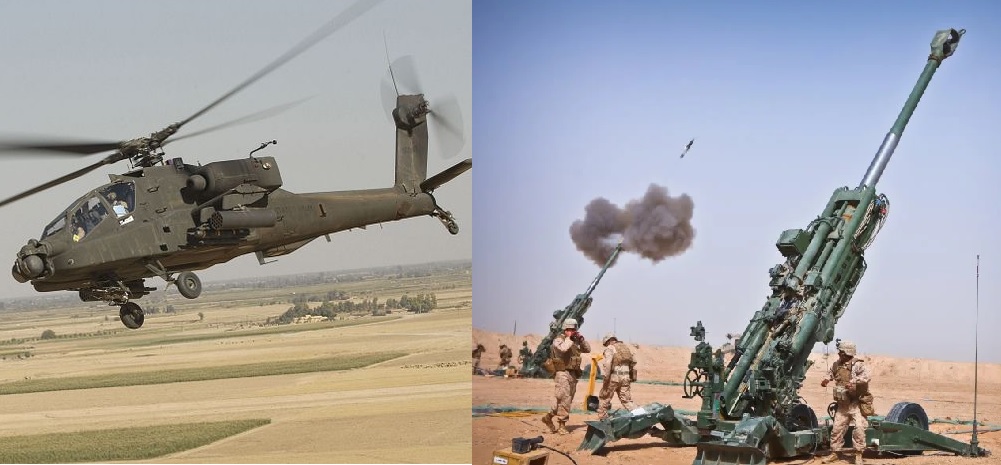
India
WASHINGTON, May 19, 2026 — The United States State Department has approved two Foreign Military Sales (FMS) sustainment packages for India worth a combined $428.2 million, aimed at maintaining the operational readiness of India’s AH-64E Apache attack helicopters and M777A2 Ultra-Light Howitzers. The proposed agreements, notified to the US Congress through the Defense Security Cooperation Agency (DSCA), focus on long-term maintenance, logistics, technical assistance, training, and lifecycle support for existing Indian military platforms rather than the acquisition of new systems. US officials stated that the proposed sales support Washington’s foreign policy and national security objectives by strengthening the defence capabilities of India, which the United States describes as a major defence partner and a key contributor to stability in the Indo-Pacific and South Asia regions. Apache Helicopter Sustainment Package The first package, valued at approximately $198.2 million, provides follow-on support for India’s AH-64E Apache attack helicopter fleet. Boeing and Lockheed Martin have been identified as the principal contractors. The package includes engineering support, technical and logistics assistance, personnel training, technical documentation, publications, and other programme support services required to maintain operational readiness. India currently operates 28 AH-64E Apache helicopters acquired through two separate agreements with the United States. The Indian Air Force received 22 helicopters between 2019 and 2020, while six additional helicopters for the Indian Army began arriving in late 2025. The AH-64E Apache is equipped with a 30 mm M230 chain gun, AGM-114 Hellfire anti-tank missiles, Hydra 70 rockets, Longbow fire-control radar, and advanced targeting and night-vision systems designed for day and night combat operations. M777A2 Howitzer Support Package The second package, valued at approximately $230 million, focuses on sustainment support for India’s M777A2 Ultra-Light Howitzers. BAE Systems will serve as the principal contractor for the programme. The agreement includes spare parts, repair and return services, ancillary equipment, technical assistance, field service representatives, training support, depot-level maintenance capability, and related logistics services. India originally ordered 145 M777A2 howitzers under a $737 million agreement signed in 2016. The first 25 systems were delivered in fully assembled “fly-away” condition, while the remaining 120 were assembled in India through cooperation between BAE Systems and Mahindra Defence Systems. The M777A2 is designed using lightweight titanium and aluminium alloys, allowing rapid deployment by helicopters and transport aircraft. The artillery system has been extensively deployed in high-altitude and mountainous regions due to its mobility and operational flexibility. Focus on Lifecycle Management The proposed agreements highlight the increasing emphasis within US-India defence cooperation on lifecycle sustainment and long-term operational support for advanced military systems. Defence officials stated that steady access to spare parts, maintenance infrastructure, technical expertise, and repair capability is essential for ensuring continuous operational availability of frontline military equipment. The State Department noted that the proposed sales would improve India’s ability to meet current and future security requirements while strengthening homeland defence capabilities and supporting deterrence efforts in the region. US officials also stated that the agreements would not alter the basic military balance in South Asia and would not affect the readiness of US armed forces. Expanding US-India Defence Cooperation The sustainment packages form part of broader defence cooperation between Washington and New Delhi, which has expanded significantly over the past decade through defence trade, joint military exercises, technology collaboration, and interoperability initiatives. India has become one of the largest operators of US-origin military systems in the Indo-Pacific region, including transport aircraft, maritime surveillance platforms, helicopters, artillery systems, and naval equipment. The proposed Foreign Military Sales packages will now undergo a mandatory review period in the US Congress before final implementation under the FMS programme.
Read More → Posted on 2026-05-19 16:00:20
World
WASHINGTON, D.C., — May 19, 2026 : The United States Department of State has approved a potential Foreign Military Sale (FMS) to the Republic of Korea for 24 MH-60R Seahawk multi-mission helicopters and associated military equipment in a package valued at an estimated $3.0 billion. The Defense Security Cooperation Agency (DSCA) announced that it has delivered the required certification notifying the U.S. Congress of the proposed transaction under the Arms Export Control Act. Strengthening South Korea’s Naval Capabilities According to U.S. officials, the proposed sale is intended to strengthen the Republic of Korea Navy’s ability to address current and future security threats while supporting Washington’s broader foreign policy and national security objectives in the Indo-Pacific region. The State Department stated that South Korea remains a major U.S. ally and an important force for political stability and economic progress in the region. The acquisition is expected to improve Seoul’s maritime defense capabilities, particularly in anti-submarine warfare and anti-surface warfare operations. Defense officials noted that the additional helicopters will provide South Korea with an enhanced deterrence capability amid continued regional maritime and submarine developments around the Korean Peninsula. The approval follows South Korea’s previous order of 12 MH-60R helicopters placed in 2020. Deliveries from that earlier acquisition recently entered operational service with the Republic of Korea Navy. U.S. authorities stated that South Korea will have no difficulty integrating the aircraft and associated systems into its armed forces and emphasized that the proposed sale will not alter the basic military balance in the region. Helicopters and Major Defense Equipment The proposed package includes: Twenty-four (24) MH-60R Multi-Mission Helicopters Fifty-two (52) Embedded GPS/Precise Positioning Service/Inertial Navigation Systems with Selective Availability Anti-Spoofing Modules, including 48 installed systems and four spare units Twenty-four (24) Airborne Low Frequency Sonars Eight (8) M240D 7.62mm machine guns Sensors, Avionics, and Mission Systems The package also contains a broad range of advanced avionics, sensors, mission equipment, and operational systems designed to support maritime combat and surveillance missions. Included systems are: APS-153(V) multi-mode maritime radars AN/AAS-44C(V) multi-spectral targeting systems AN/ALQ-210 Electronic Support Measures systems AN/AVS-9 Night Vision Devices Joint Mission Planning Systems Tactical Operational Flight Trainers Training Simulators and Operational Machine Interface Assistants Aviation Maintenance Weapons Loading Trainers Engines and Defensive Systems The proposed sale also covers propulsion systems and aircraft survivability equipment, including: T700-GE-401D engines Spare engine containers AN/AAR-47 missile warning systems AN/ALE-47 electronic countermeasure dispensers M514 impulse cartridges MJ20 cartridge actuated devices WB53 fire extinguisher cartridge actuated devices CCU-136A/A impulse cartridges Communications and Identification Equipment To support secure operations and interoperability, the package includes: AN/APX-123 Identification Friend or Foe (IFF) transponders KIV-78 IFF Mode 4/5 cryptographic appliques Standard communications equipment and associated support systems Logistics, Training, and Technical Support The agreement also includes extensive sustainment and operational support elements intended to maintain long-term readiness of the fleet. These include spare and repair parts, support and test equipment, ferry support, technical documentation, publications, personnel training, training equipment, and U.S. Government and contractor engineering, technical, logistics, integration, and testing support services. In addition, the package covers obsolescence engineering and integration activities required to support production readiness for South Korea’s MH-60R helicopters. Principal Contractor Lockheed Martin Rotary and Mission Systems, based in Owego, New York, has been identified as the principal contractor for the proposed program. The Defense Security Cooperation Agency stated that the proposed transaction will not negatively affect U.S. defense readiness. Background on the MH-60R Seahawk The MH-60R Seahawk is the U.S. Navy’s primary maritime helicopter platform and is derived from the UH-60 Black Hawk helicopter family. The aircraft is designed for anti-submarine warfare, anti-surface warfare, maritime surveillance, intelligence gathering, logistics support, and search and rescue operations. The helicopter is equipped with advanced radar systems, airborne low-frequency sonar, electronic warfare systems, targeting systems, and secure communications equipment for naval missions. South Korea’s continued procurement of the MH-60R forms part of a broader naval modernization effort focused on improving maritime domain awareness and strengthening undersea warfare capabilities. Congressional Review Process The State Department’s approval represents an executive branch authorization under the Foreign Military Sales process and does not finalize the sale. The proposed transaction will now proceed through the congressional review process before final agreements, production schedules, and implementation details are completed.
Read More → Posted on 2026-05-19 16:08:54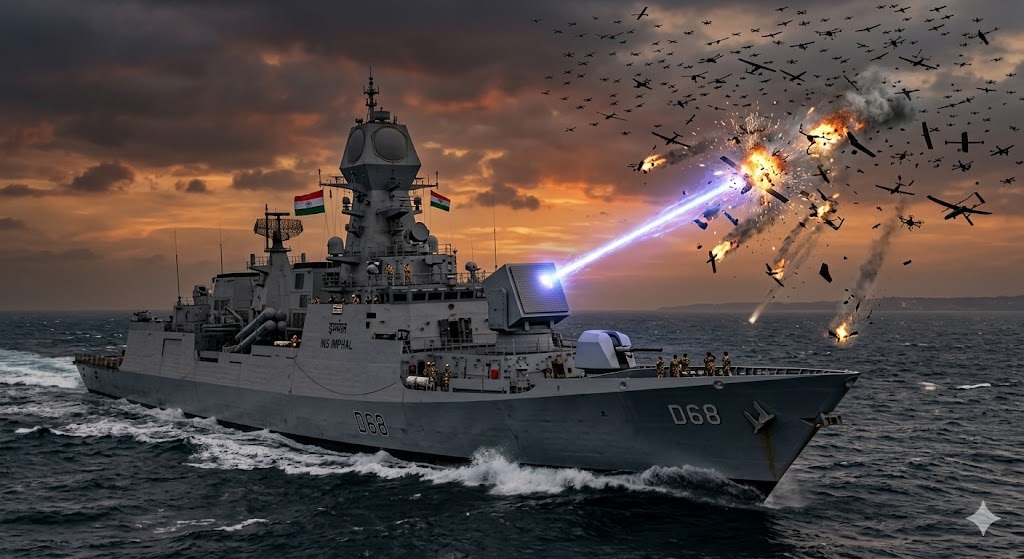
India
NEW DELHI — May 19, 2026 : The Indian Navy has awarded Bengaluru-based defence technology company Tonbo Imaging a contract for the integration and commissioning of a High Power Microwave (HPM) system for naval platforms under the ADITI 3.0 innovation framework. The programme is supported by the Ministry of Defence’s Innovations for Defence Excellence (iDEX) initiative and the Defence Innovation Organisation (DIO). Under the agreement, Tonbo Imaging will carry out system integration and commissioning activities for the HPM system. Following successful development, validation, and operational acceptance, the company will supply multiple production units to the Indian Navy. High Power Microwave systems are a class of directed-energy weapons that use concentrated electromagnetic energy to disable or disrupt electronic systems, sensors, communications equipment, and unmanned platforms. Unlike conventional kinetic weapons, HPM systems operate without physical projectiles or explosive warheads. The Indian Navy’s focus on HPM technology reflects growing interest in non-kinetic countermeasures for emerging maritime threats, including drone swarms and unmanned systems. Directed-energy systems are increasingly being explored for their potential role in electronic warfare and layered naval defence operations. A major factor in Tonbo Imaging’s selection is its indigenous capability in vacuum tube technologies, which are used as the primary power sources in operational HPM systems. According to the company, vacuum tube-based sources remain necessary for generating the extremely high peak power and pulse energy levels required for effective HPM applications. Arvind Lakshmikumar, Managing Director and CEO of Tonbo Imaging India Limited, said the company has invested for several years in developing indigenous HPM technologies and critical sub-systems. He stated that while solid-state radio frequency systems are widely used in many applications, they currently cannot achieve the required power output within the size, weight, and efficiency limitations needed for operational naval platforms. The contract marks an expansion of Tonbo Imaging’s role beyond electro-optics and imaging systems into advanced defence electronics, embedded systems, directed-energy technologies, and integrated mission systems. The ADITI (Advanced Defence Technology Incubation) framework was established to support the development, integration, and validation of advanced defence technologies before induction into military service. The programme is part of broader government efforts to strengthen indigenous defence manufacturing and increase private sector participation in strategic technology development. The development follows earlier indigenous work in directed-energy systems by the Defence Research and Development Organisation (DRDO) and its Microwave Tube Research and Development Centre (MTRDC), which in January 2026 unveiled a prototype High Power Microwave system designed to disable small quadcopters and unmanned aerial systems. Further technical specifications, deployment timelines, and operational details related to the Indian Navy’s HPM programme were not disclosed.
Read More → Posted on 2026-05-19 16:31:02
World
WASHINGTON, — May 19, 2026 : A newly released report by the Congressional Research Service (CRS) has outlined significant U.S. aircraft losses and damage sustained during Operation Epic Fury, the ongoing American military campaign against Iranian military infrastructure launched in coordination with Israel earlier this year. According to the report, U.S. forces lost or sustained damage to 42 aircraft during the opening phase of the operation, which began on February 28, 2026. The campaign has focused on strikes against Iranian missile production facilities, naval assets, air defense systems, and military infrastructure across multiple regions. The CRS report, updated on May 13, states that the figures were compiled from Department of Defense statements, U.S. Central Command releases, and publicly available reporting. The document notes that the numbers may change as operations continue and further investigations are completed. The Pentagon has conducted more than 13,000 sorties during the first 39 days of the campaign. Acting Pentagon Comptroller Jules W. Hurst III recently told lawmakers that the broader operational cost of the Iran campaign has reached approximately $29 billion. Defense estimates cited alongside the report indicate that replacing the affected fixed-wing aircraft, helicopters, and unmanned systems could exceed $7 billion, depending on procurement configurations and modernization requirements. Fighter and Attack Aircraft Losses Among the crewed combat aircraft listed in the report were four F-15E Strike Eagle fighters. According to CRS data, three of the aircraft were destroyed in friendly fire incidents over Kuwait on March 2, 2026. All six aircrew members involved successfully ejected and were later recovered. An additional F-15E was reportedly shot down over Iranian territory on April 5 during combat operations. Both crew members were recovered through combat search-and-rescue operations. The report states that replacing the out-of-production F-15E aircraft with newer F-15EX fighters could cost approximately $500 million. One F-35A Lightning II stealth fighter also sustained combat damage from Iranian ground fire on March 19 while operating over Iran. The pilot conducted an emergency landing and was later reported in stable condition. The CRS report further lists the loss of one A-10 Thunderbolt II ground-attack aircraft during the campaign, though additional operational details were not publicly released. Tankers, Special Operations Aircraft, and Support Platforms Support aircraft accounted for a significant portion of the reported losses and damage. Seven KC-135 Stratotanker aerial refueling aircraft were affected during operations. The figure includes one aircraft that crashed, resulting in the deaths of six crew members. Five additional KC-135s reportedly sustained damage from Iranian missile or drone attacks targeting regional air facilities. The report notes that replacing the affected tanker fleet with KC-46A Pegasus aircraft could cost an estimated $1.8 billion. Two MC-130J Commando II special operations aircraft were also destroyed inside Iran. According to the report, deteriorating ground conditions prevented the aircraft from departing the area, leading U.S. personnel to destroy the aircraft to prevent capture. One E-3 Sentry airborne warning and control aircraft sustained damage while on the ground, while one HH-60W Jolly Green II combat rescue helicopter was also reported damaged during operations. Estimated repair or replacement costs for the HH-60W were placed between $70 million and $80 million. Heavy Unmanned Aircraft Losses Unmanned aerial systems represented the largest share of losses recorded in the report, accounting for more than 60 percent of the total aircraft affected. The CRS document states that 24 MQ-9 Reaper drones were lost during the campaign. Based on current procurement costs and mission configurations, replacing the aircraft could cost approximately $720 million. The report also confirmed the crash of one MQ-4C Triton high-altitude naval surveillance drone. The aircraft has an estimated replacement value between $235 million and $250 million. The document notes that unmanned systems were heavily used throughout the operation for reconnaissance, targeting support, maritime surveillance, and strike coordination missions across Iranian territory and surrounding maritime areas. Operational and Congressional Considerations Operation Epic Fury was launched as part of coordinated U.S. and Israeli military actions targeting Iranian military infrastructure. Israel’s parallel campaign has been conducted under the designation Operation Roaring Lion. The CRS report does not assess the broader strategic outcome of the campaign or ongoing diplomatic developments. Instead, it focuses on cataloging reported aircraft losses and operational attrition for congressional review. The report highlights that the losses involved both combat-related incidents and non-combat events, including friendly fire and operational mishaps. It also underscores the wide range of aircraft types involved in the operation, including fighters, airborne warning aircraft, aerial refueling tankers, helicopters, special operations platforms, and unmanned systems. The Department of Defense has not yet issued a single comprehensive public assessment of all losses associated with Operation Epic Fury. CRS stated that additional details may emerge as investigations by CENTCOM and other defense agencies are completed and as combat operations continue.
Read More → Posted on 2026-05-19 17:03:00
World
MOSCOW, — May 19, 2026 : Russian state corporation Rostec, through its subsidiary Russian Helicopters, has officially presented the upgraded Ka-32A11M firefighting helicopter, a modernized version of the Ka-32 platform designed for operations in low-temperature environments. The aircraft was displayed during international aerospace exhibitions, including the Russia-China Expo, the China Helicopter Exposition, and IDEX. The Ka-32A11M is an upgraded variant of the Ka-32 family, which has been used for firefighting, search-and-rescue, cargo transport, and utility missions for several decades. More than 190 helicopters from the Ka-32 series are currently in service across over 20 countries, including Russia, China, Canada, Spain, Switzerland, South Korea, and Indonesia. New SP-32 Firefighting System The central upgrade of the Ka-32A11M is the integration of the new SP-32 fire-extinguishing system. The system includes a four-compartment water tank capable of carrying up to 4,000 liters of water and 400 liters of foam agent. According to Russian Helicopters, the helicopter can automatically refill the full water load within approximately 60 seconds. The SP-32 system incorporates electrically heated components, including the water tank, pipes, water cannon, and water bucket-flap mechanisms. These heating elements are designed to prevent freezing during winter operations and allow the helicopter to conduct firefighting missions in temperatures as low as -20 degrees Celsius. The helicopter is also equipped with a horizontal water cannon that can operate while hovering. This capability enables crews to direct water streams toward upper floors of high-rise buildings and industrial facilities, including oil and gas infrastructure, while avoiding dense smoke conditions that can complicate vertical water drops. Avionics and Engine Upgrades The Ka-32A11M modernization program includes the replacement of previously imported systems with domestically produced components. The helicopter now features a digital “glass cockpit” equipped with multifunction color LCD displays and an upgraded flight and navigation suite intended to reduce pilot workload. The avionics package is fully compatible with night-vision goggles (NVG), expanding the helicopter’s operational capability during nighttime and low-visibility missions. The aircraft is powered by VK-2500PS-02 engines managed by the BARK automatic digital control system. Russian Helicopters stated that the upgraded engines improve flight performance in hot and mountainous environments while increasing payload capability by approximately 1,600 kilograms under demanding operating conditions. Coaxial Rotor Configuration The Ka-32A11M retains the coaxial twin-rotor configuration developed by the Kamov Design Bureau. The absence of a tail rotor allows the helicopter to maintain a compact airframe while improving maneuverability and hovering stability in confined urban areas and mountainous terrain. According to the manufacturer, the rotor configuration enables the aircraft to maintain stable positioning near fire zones despite strong updrafts and turbulence, making it suitable for firefighting operations between high-rise buildings and in dense urban environments. International Display and Market Presence The Ka-32A11M was presented as part of Rostec’s broader helicopter lineup at the Russia-China Expo alongside other Russian platforms, including the Mi-8/171 series and the Ansat medical evacuation helicopter. Russian Helicopters stated that more than 450 Russian-made helicopters are currently operating in China. Company representatives also noted continued international interest in the Ka-32 platform for specialized aerial firefighting missions. Development Background The modernization program for the Ka-32A11M began several years ago, with initial flight testing of the upgraded prototype conducted in 2021. The program includes certification activities, avionics modernization, propulsion upgrades, and the integration of the new SP-32 firefighting system. Russian Helicopters did not disclose production schedules, export agreements, or delivery timelines for the upgraded helicopter during the exhibition presentations.
Read More → Posted on 2026-05-19 17:13:22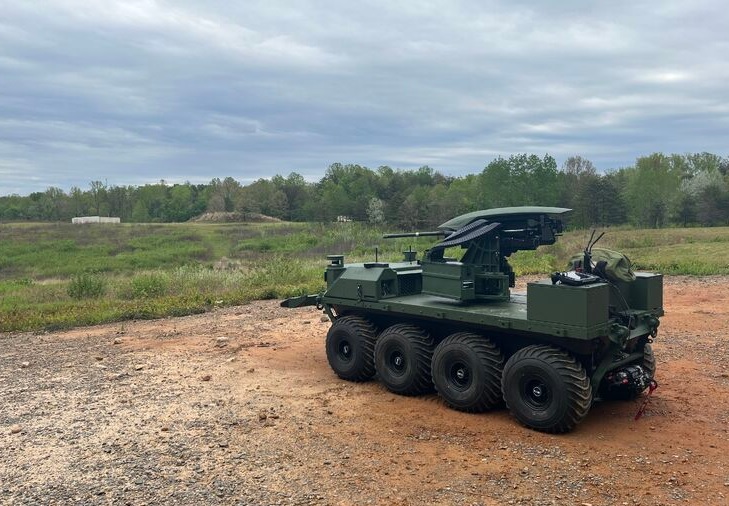
World
QUANTICO, Virginia — May 19, 2026 : American Rheinmetall has completed a week-long operator training program for the United States Marine Corps Warfighting Laboratory (MCWL) centered on the Fieldranger Remotely Controlled Weapon Station (RCWS), concluding with day and night live-fire exercises at Marine Corps Base Quantico. The training involved Marines from Fleet Marine Force combat units and personnel from the Supporting Establishment. The program combined classroom instruction with practical exercises focused on system operation, tactical employment, target acquisition, and sensor management under operational conditions. The Commanding General of the Marine Corps Warfighting Laboratory observed the final live-fire phase of the course, where Marines conducted simulated mission scenarios using the Fieldranger system. During the event, senior leadership and operators discussed potential battlefield applications and future operational concepts for remotely operated weapon systems within Marine Corps formations. Marine Corps Base Quantico, located south of Washington, D.C., covers more than 50,000 acres and operates over 40 live-fire ranges. The installation serves as a major testing and evaluation site for emerging military technologies and advanced combat systems. Fieldranger RCWS Designed for Protected Operations The Rheinmetall-developed Fieldranger is a family of remotely operated weapon stations designed for integration on multiple vehicle platforms, ranging from light tactical vehicles to heavily armored combat systems. The weapon station allows crews to conduct surveillance, identify targets, aim weapons, and engage threats while remaining inside the protected interior of the vehicle. All Fieldranger variants incorporate a stabilized electro-optical sensor package consisting of a high-resolution day camera, thermal imager, and laser rangefinder. The integrated system enables accurate target detection and engagement during day and night operations, including in poor weather and low-visibility environments. The Fieldranger family includes four primary variants configured for different operational roles: Fieldranger Light weighs less than 75 kilograms and supports 5.56mm or 7.62mm machine guns. Fieldranger Multi weighs approximately 200 kilograms and can mount either a .50 caliber heavy machine gun or a 40mm automatic grenade launcher. Fieldranger Dual weighs around 260 kilograms and supports a primary weapon alongside a coaxial secondary armament. Fieldranger 20 is equipped with a 20mm Oerlikon automatic cannon for medium-caliber fire support missions. Focus on Reducing Crew Vulnerability The training also emphasized the operational advantages of remotely controlled weapon stations compared to traditional ring-mounted crew-served weapons. Conventional vehicle-mounted gun positions often expose operators above the vehicle’s roofline, increasing vulnerability to small arms fire, fragmentation, and sniper attacks. The U.S. military identified these risks during operations in Iraq and Afghanistan, where elevated turret positions contributed to casualties during convoy security and patrol missions. Remote weapon stations reduce this exposure by allowing operators to remain under armor while using stabilized optics and automated fire-control systems for observation and engagement tasks. In addition to improving crew protection, RCWS platforms provide greater firing stability during vehicle movement and reduce operator fatigue during prolonged missions. Ongoing Marine Corps and Rheinmetall Collaboration The Quantico training represents another stage in the continuing partnership between American Rheinmetall and the Marine Corps Warfighting Laboratory, which was established in 1995 to support the development of expeditionary warfare concepts and evaluate emerging operational technologies. In recent years, cooperation between the two organizations has increasingly focused on autonomous and unmanned ground systems integration. In early 2023, American Rheinmetall Vehicles delivered the Mission Master SP autonomous unmanned ground vehicle (UGV) to the Marine Corps for evaluation. The platform was later tested during the multinational Talisman Sabre exercise in Queensland, Australia, in summer 2023, followed by additional assessments during the Apollo Shield exercise at Marine Corps Base Twentynine Palms, California, later that year. In March 2024, Rheinmetall conducted a live-fire demonstration at Fort Clinton, Ohio, featuring the Mission Master SP integrated with the Fieldranger RCWS. The demonstration evaluated capabilities including armed reconnaissance, sentry overwatch, fire support, flank security, and screening operations. Those evaluations followed a structured “crawl-walk-run” methodology designed to assess how infantry units can effectively operate alongside autonomous ground vehicles in combat environments. The Fieldranger RCWS used during the recent Quantico training is the same system previously integrated with the Mission Master SP platform during earlier demonstrations and field evaluations. American Rheinmetall has not released further details regarding future procurement decisions or additional follow-on testing activities related to the Fieldranger system.
Read More → Posted on 2026-05-19 17:24:13
World
TEHRAN, — May 19, 2026 : Iran’s main crude oil export facility at Kharg Island has recorded no major tanker loading activity for at least ten days, according to recent satellite imagery and maritime tracking data, highlighting the growing operational impact of the ongoing U.S. naval blockade on Iranian oil exports. Satellite images reviewed in mid-May showed that no large ocean-going crude tankers had been positioned at Kharg Island’s export berths since May 8. The island, located in the northern Persian Gulf, is Iran’s primary crude export hub and historically handles the majority of the country’s seaborne oil shipments through its network of loading jetties designed for very large crude carriers (VLCCs) and other large tankers. The extended absence of loading operations marks one of the longest interruptions recorded at the facility since the current regional tensions escalated. Maritime monitoring data also showed a buildup of more than 20 empty or waiting vessels anchored near Kharg Island, indicating increasing congestion and delays linked to restrictions on tanker movements in the region. The disruption follows the U.S. decision on April 13 to impose a naval blockade targeting Iranian ports and oil export routes after escalating regional conflicts and Iran’s efforts to strengthen control over the Strait of Hormuz. U.S. naval assets and Central Command forces have since increased patrols and interdiction operations around the strategic waterway, affecting commercial vessel traffic associated with Iranian crude exports. With operations at Kharg Island heavily constrained, Iran has shifted part of its export activity to the Jask oil terminal on the Gulf of Oman. The terminal, located east of the Strait of Hormuz, was developed as an alternative export route that allows crude shipments to bypass the narrow strait and reduce dependence on the Persian Gulf export corridor. Recent satellite imagery identified the sanctioned Aframax tanker Vernon loading crude at the Jask terminal. The vessel was observed moored at one of the terminal’s single buoy mooring systems connected to onshore storage infrastructure and pipeline networks. The use of Jask reflects Iran’s attempt to maintain limited export capability despite increasing restrictions around Kharg Island and the Strait of Hormuz. Commercial shipping intelligence firms reported that tanker routing patterns linked to Iranian crude exports have changed significantly in recent weeks, with some vessels remaining anchored offshore for extended periods as floating storage. While a limited number of empty tankers have continued operating in the region, the sustained absence of regular crude loadings at Kharg Island suggests mounting pressure on Iran’s export logistics and storage infrastructure. U.S. Treasury Secretary Scott Bessent recently stated that Washington believes Iran’s oil storage capacity is approaching its limits, arguing that restrictions on tanker access have reduced Iran’s ability to move or store crude exports at sea. Analysts monitoring the situation noted that prolonged disruption at Kharg Island could eventually affect Iran’s crude production levels if export bottlenecks continue. Kharg Island remains connected to Iran’s broader oil production system through extensive pipeline and storage networks, making it central to the country’s energy export operations. Any sustained interruption at the facility has the potential to reduce overall export volumes and force greater reliance on secondary terminals such as Jask. No official statement from Iranian authorities regarding the current status of loading operations at Kharg Island had been issued in the latest publicly available reports. Commercial satellite providers and maritime tracking firms continue monitoring tanker positions, anchorage activity, and export movements across the Persian Gulf and Gulf of Oman as additional imagery becomes available.
Read More → Posted on 2026-05-19 17:43:19
World
LONDON, — May 19, 2026 : The United Kingdom is preparing a major funding increase estimated at approximately £6 billion for the Global Combat Air Programme (GCAP), the trilateral sixth-generation stealth fighter initiative being jointly developed with Japan and Italy. The proposed investment is intended to support long-term development work and enable the signing of a full international contract with the programme’s industrial partners. The funding package is expected to form part of a wider UK defence spending settlement, although the proposal still requires final approval from the Treasury. British officials are aiming to finalize the agreement before the expiration of a temporary bridge funding arrangement scheduled to end in June 2026. Programme Designed to Replace Existing Fighter Fleets GCAP was established to develop a next-generation combat aircraft intended to replace the Eurofighter Typhoon currently operated by the United Kingdom and Italy, as well as the Mitsubishi F-2 used by the Japan Air Self-Defense Force. Programme partners continue to target an operational service entry date of 2035, a timeline viewed as important due to the planned retirement schedules of current fighter fleets. The future aircraft is expected to incorporate advanced stealth characteristics, sensor fusion systems, networked warfare capabilities, and integration with unmanned platforms. Officials involved in the programme have stated that the aircraft is being designed for operations in highly contested environments while supporting cooperation with autonomous systems and future collaborative combat drones. Interim Funding Agreement Nears Expiration The push for a long-term financial agreement follows increasing concern among both industry executives and partner governments regarding programme delays and funding uncertainty. In April 2026, GCAP partners approved a temporary contract worth approximately £686 million to maintain ongoing development and engineering work for a limited three-month period. The interim arrangement was introduced while the UK government finalized broader defence budget decisions. Industry officials have warned that failure to secure a long-term contract could disrupt workforce planning and industrial development activities. Executives from BAE Systems indicated that companies participating in GCAP may be forced to reduce costs and redeploy personnel if stable funding is not confirmed. Approximately 4,000 UK-based employees across BAE Systems, Rolls-Royce, and Leonardo are currently assigned to the programme, supporting work in areas including aircraft design, propulsion development, avionics, mission systems, digital engineering, and advanced manufacturing technologies. Japan Presses UK for Long-Term Commitment Japan has recently intensified diplomatic efforts urging Britain to formalize its financial commitment to the programme without additional delays. During a recent visit to Tokyo by UK Foreign Secretary Yvette Cooper, Japanese Defence Minister Shinjirō Koizumi reportedly emphasized that the United Kingdom needed to proceed with the signing of the full international development contract. Japanese officials have expressed concern that uncertainty surrounding UK defence spending decisions could affect wider strategic cooperation between London and Tokyo. According to officials familiar with the discussions, progress on GCAP has become closely linked to broader UK-Japan security relations and long-term Indo-Pacific defence cooperation. Officials also noted that continued delays could complicate preparations for a planned visit to Britain by Japanese Prime Minister Sanae Takaichi. Italy Advances Long-Term Funding Plan Italy has already approved a substantial long-term financial contribution for the programme’s early development stages. Italy’s parliamentary defence committee authorized approximately €8.77 billion in funding through 2037 as part of the country’s commitment to GCAP development activities. Italian parliamentary documents also showed that projected early-phase programme costs have increased significantly. Updated estimates place initial development expenses at approximately €18.6 billion, compared with earlier projections of around €6 billion. The increase reflects expanding requirements associated with technology maturation, testing infrastructure, prototype development, and system integration work. Industrial Structure and Development Activities The industrial framework supporting GCAP is based on a trilateral treaty signed by the United Kingdom, Japan, and Italy in December 2023. The programme’s primary industrial entity, Edgewing, was established as a joint venture headquartered in Reading, England. The partnership is equally owned by BAE Systems of the United Kingdom, Leonardo of Italy, and Japan Aircraft Industrial Enhancement Co., which is backed by Mitsubishi Heavy Industries. Edgewing is responsible for overseeing the aircraft’s design, development, and future delivery activities across all three partner nations. In addition to the main fighter programme, participating companies are currently developing a demonstrator aircraft intended to validate emerging technologies and operational concepts. The prototype is expected to conduct its first flight before the end of 2027, marking Britain’s first combat-air demonstrator flight since the Eurofighter development era. Next Phase of the Programme The UK Ministry of Defence has reiterated that Britain remains committed to GCAP and continues to work closely with Japan and Italy on finalizing the next stage of the programme. Once approved, the proposed £6 billion funding package is expected to provide the financial basis required for transitioning GCAP from its current interim development phase into a full long-term programme structure. The agreement would allow partner governments and industrial teams to expand engineering work, testing activities, technology integration, and production planning over the coming decade.
Read More → Posted on 2026-05-19 17:59:47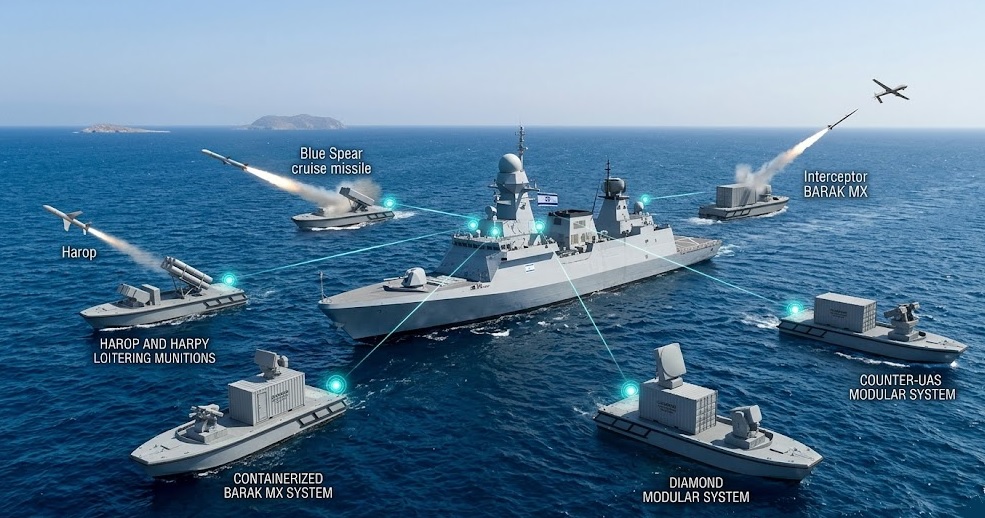
World
TEL AVIV, — May 20, 2026 : Israel Aerospace Industries (IAI) has unveiled DIAMOND, a hybrid and modular naval warfare solution designed to expand the operational capabilities of modern frigates through the use of remotely operated wing ships operating alongside a mothership frigate. The system is intended to support distributed maritime operations by decentralising offensive and defensive capabilities across multiple platforms. According to IAI, modular combat systems installed on smaller wing ships can be remotely controlled directly from the mothership while remaining fully integrated with the frigate’s radar, battle management and fire-control systems. IAI said the concept effectively expands the operational deck space and combat footprint of existing frigates without requiring the construction of additional major surface combatants. The company stated that the system is designed to provide greater operational flexibility, increased firepower and faster responses to evolving maritime threats. Modular Mission Configuration According to the company, the wing ships can be rapidly configured depending on operational requirements. The modular payloads use a standard container-based footprint, allowing systems to be deployed, replaced or reconfigured within hours. The DIAMOND architecture supports plug-and-play integration of multiple combat systems and mission packages. These include Harop, Harpy and Mini-Harpy loitering munitions, Blue Spear cruise missiles, LORA ballistic missiles and the BARAK MX air defence interceptor family. The system can also integrate counter-unmanned aerial system capabilities and additional mission-specific payloads. IAI stated that the wing ships are intended to increase the number of available interceptors and precision strike systems while extending the frigate’s effective operational range and combat endurance. The vessels are designed to support simultaneous offensive and defensive operations against both maritime and land-based targets. Distributed Maritime Operations The company described DIAMOND as part of a broader shift in naval warfare from platform-centric operations toward distributed and networked combat structures. By dispersing weapons and mission systems across multiple remotely operated platforms, the concept is intended to improve survivability, operational flexibility and force persistence in contested maritime environments. Boaz Levy, chairman of the board of Israel Aerospace Industries, said the system represents a new stage in maritime defence operations based on modular architecture and distributed combat capabilities. “IAI, as a system house for innovation is proud to lead the next generation in maritime defense with the introduction of the DIAMOND solution,” Levy said. He added that the system is designed to enable navies to transition rapidly between defensive and offensive missions while adapting continuously to changing operational requirements. Guy Barlev, executive vice-president and general manager of IAI’s Systems, Missiles and Space Group, said modern naval warfare increasingly requires adaptive and networked force structures rather than reliance on individual platforms. Barlev stated that DIAMOND was developed to expand combat capacity, survivability and mission endurance without relying on costly fleet expansion programmes. He said the concept is intended to transform how naval forces project power and defend strategic assets in contested operational environments. Off-the-Shelf Naval Solution According to IAI, DIAMOND is being offered as an integrated off-the-shelf solution designed to avoid lengthy warship construction programmes and complex integration processes. The company stated that the system can rapidly switch between mission configurations while supporting continuous modernisation as operational requirements and threats evolve. IAI added that the solution is intended to reduce operational timelines and costs while enabling navies to increase combat capacity using existing frigate fleets. No additional technical specifications, deployment schedules or detailed performance parameters for the wing ships have been publicly disclosed at this stage.
Read More → Posted on 2026-05-20 14:20:11
World
STOCKHOLM, — May 20, 2026 : Swedish defense and security company Saab has received a SEK 460 million (approximately $48.9 million) order from Lithuania for the procurement of Carl-Gustaf M4 weapon systems and associated training equipment, with deliveries scheduled between 2026 and 2029. The order forms part of a newly signed ten-year framework agreement between Saab and the Lithuanian Ministry of National Defence. In addition to the initial order value, the contract includes optional procurements that could increase the total value of the agreement to SEK 640 million over its duration. According to Saab, the procurement package includes Carl-Gustaf M4 recoilless rifle systems, sub-calibre adapters for training ammunition, and Carl-Gustaf Outdoor Trainers designed to improve operational readiness and collective training capabilities for Lithuanian forces. The agreement also includes cooperation with Lithuania’s domestic defense industry in accordance with national regulations, supporting local logistics, maintenance, and defense technology capabilities. “We are proud to continue providing the Lithuanian forces with the highly effective capabilities of the Carl-Gustaf weapon together with our training equipment, enabling the soldiers to prepare for and carry out their missions safely and with confidence,” said Görgen Johansson, head of Saab’s Dynamics business area. The Carl-Gustaf is an 84 mm man-portable, multi-role recoilless rifle system used by more than 40 countries worldwide. Designed primarily for dismounted infantry units, the weapon system is capable of engaging armored vehicles, structures, and enemy personnel across different battlefield environments. The M4 variant represents the latest evolution of the Carl-Gustaf family and incorporates several design improvements over earlier versions. Built using titanium and carbon fiber components, the system weighs approximately 6.6–7 kilograms and measures less than one meter in length, making it lighter and more compact than the previous M3 variant. The weapon supports a wide range of 84 mm ammunition types, including High-Explosive Dual-Purpose (HEDP) rounds for anti-armor and urban warfare operations, as well as high-explosive, smoke, illumination, and anti-structure munitions. The system also supports multiple sighting configurations, including open sights, red-dot sights, telescopic optics, and advanced fire-control devices. Saab stated that the associated training systems, including Outdoor Trainers and sub-calibre adapters, are intended to support advanced and collective skills training across a range of operational scenarios while improving training efficiency and safety. The latest order builds on Lithuania’s participation in a multinational Carl-Gustaf M4 framework agreement joined in 2022 alongside Sweden, Estonia, and Latvia. Lithuania also placed a previous order for Carl-Gustaf M4 systems and spare equipment in early 2025 as part of its broader military modernization efforts. The procurement comes as Lithuania continues increasing defense spending and strengthening military readiness along NATO’s eastern flank. The Baltic country has invested heavily in infantry weapons, armored vehicles, air defense systems, and military infrastructure in recent years, allocating approximately 4% of its GDP to defense amid regional security concerns. Regional cooperation through shared framework agreements among Baltic nations is also expected to improve interoperability, simplify logistics and ammunition support, and reduce procurement costs for NATO-aligned forces operating in Northern and Eastern Europe. Saab has not disclosed the number of weapon systems or training units included in the current order. Deliveries are expected to begin later this year and continue through 2029.
Read More → Posted on 2026-05-20 14:29:24
World
BALTIMORE, — May 20, 2026 : Northrop Grumman has delivered its 1,000th AN/APG-83 Scalable Agile Beam Radar (SABR) system, marking a significant production milestone in the modernization of fourth-generation fighter aircraft operated by the United States and allied nations. The milestone was announced on May 19 at the company’s radar manufacturing facility in Baltimore, Maryland, where SABR systems are assembled for both domestic and international operators. The AN/APG-83 is an Active Electronically Scanned Array (AESA) fire control radar designed primarily for the F-16 Fighting Falcon, replacing older mechanically scanned radar systems that have remained in service for decades. AESA Radar Technology Unlike conventional mechanically scanned radars that rely on physically rotating antenna assemblies, the APG-83 uses hundreds of electronically controlled transmit-receive modules to direct the radar beam almost instantly without moving parts. This architecture enables faster target acquisition, simultaneous tracking of multiple targets, improved reliability, and enhanced resistance to electronic jamming and spoofing. The radar also provides high-resolution synthetic aperture radar (SAR) ground mapping, moving target indication capability, and improved detection performance in contested electromagnetic environments. Publicly available information associated with the program indicates detection ranges of up to approximately 370 kilometers, depending on operational conditions and target profiles. Fifth-Generation Technology Integration Northrop Grumman developed the APG-83 using technology derived from the AN/APG-77 radar used on the F-22 Raptor and the AN/APG-81 radar integrated into the F-35 Lightning II. The company adapted those technologies into a configuration compatible with existing F-16 airframes while remaining within the aircraft’s original size, power, and cooling limitations. This allows operators to install the radar without requiring major structural modifications to the aircraft. F-16 Modernization Program The APG-83 serves as the standard radar for the U.S. Air Force F-16V modernization program and is installed as baseline equipment on all newly built F-16 Block 70 and Block 72 aircraft produced by Lockheed Martin. The U.S. Air Force is currently upgrading 608 F-16C/D Block 40/42 and 50/52 aircraft with the system as part of a broader fleet sustainment effort intended to keep the aircraft operational through the mid-2040s. Separate modernization work is also underway for Air National Guard F-16 units. More than 3,000 F-16 aircraft remain operational across approximately 25 countries, making the fighter one of the most widely used combat aircraft in the world. Many operators are pursuing modernization programs to maintain operational effectiveness against advanced air defense and electronic warfare threats. Operational Feedback Operational users have reported substantial improvements following the installation of the APG-83. In 2022, Lt. Col. Shaun Loomis of the 480th Fighter Squadron described the transition to SABR-equipped aircraft as a “night and day” improvement after nearly two decades with largely unchanged radar hardware. During Exercise Ramstein Flag in April 2025, a Greek F-16V pilot stated that the radar significantly improved long-range target tracking and overall situational awareness during multinational air operations. International Operators Taiwan became the first international customer for the APG-83 after receiving its first export systems in late 2016. Additional operators selecting F-16 variants equipped with the radar include Greece, Bulgaria, Slovakia, Bahrain, Jordan, and Singapore. Singapore previously signed a $2.43 billion modernization agreement for its F-16 Block 52 fleet, including the installation of 70 APG-83 radar systems. Northrop Grumman stated that the radar is currently deployed in nine countries. Integration With Electronic Warfare Systems The APG-83 integrates with Northrop Grumman’s Integrated Viper Electronic Warfare Suite (IVEWS), allowing simultaneous operation of radar and electronic warfare functions without mutual signal interference. According to the company, the radar’s software-defined architecture also enables future capability upgrades through software updates rather than extensive hardware modifications, reducing maintenance requirements and minimizing aircraft downtime. The system is powered by domestically produced American microelectronics intended to strengthen supply chain reliability and long-term sustainment. Expansion to Other Aircraft Platforms Although primarily associated with the F-16 program, Northrop Grumman has also explored integration of the SABR architecture on additional military aircraft platforms. The company previously conducted fit checks for U.S. Marine Corps F/A-18C/D Hornet aircraft and developed the SABR-GS variant for modernization of the Rockwell B-1 Lancer bomber fleet. Northrop Grumman stated that the 1,000-unit production milestone reflects continued global demand for AESA radar modernization programs as air forces seek to extend the operational relevance of legacy fighter fleets while incorporating capabilities associated with fifth-generation combat aircraft.
Read More → Posted on 2026-05-20 14:39:51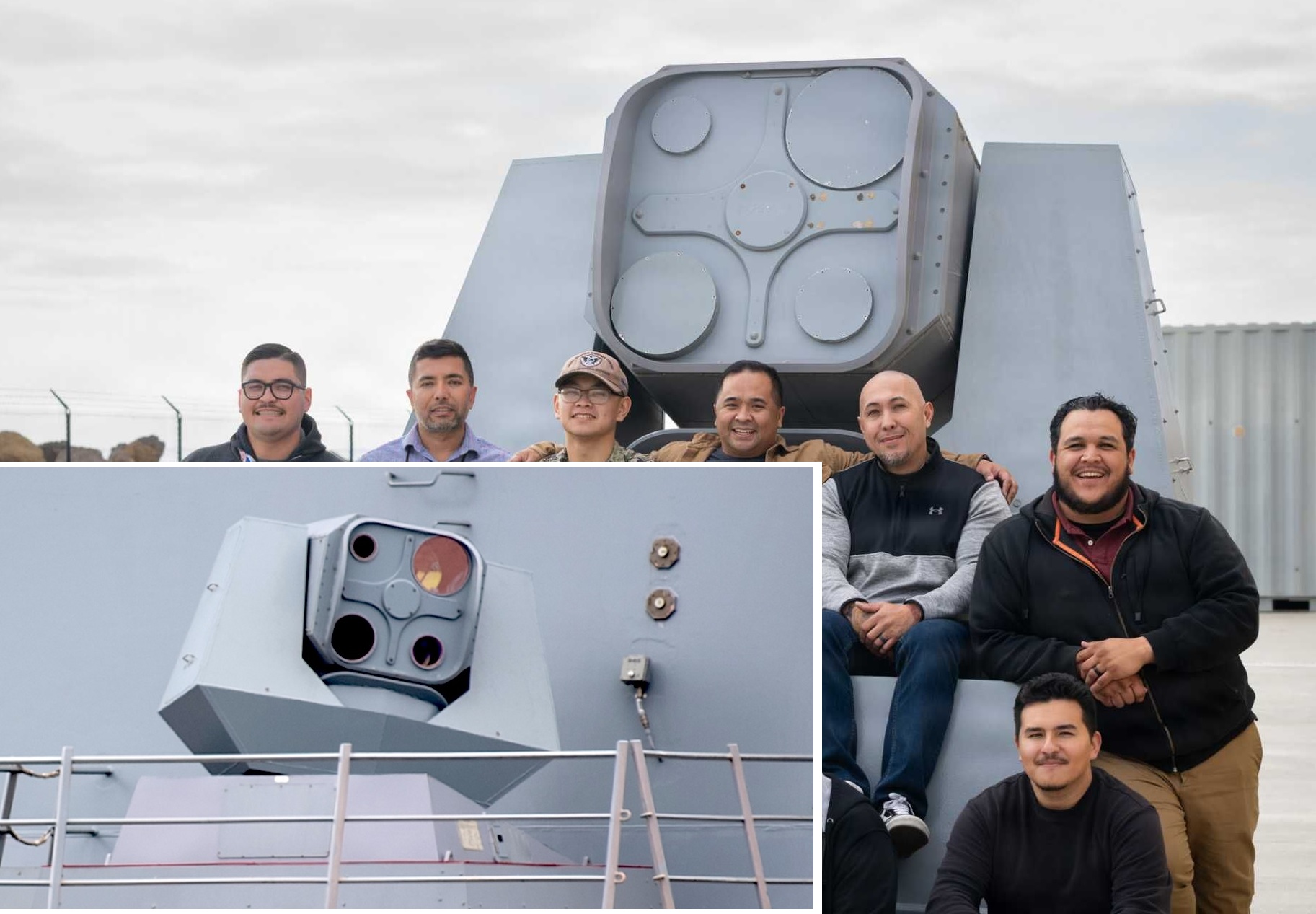
World
POINT MUGU, Calif. — May 20, 2026 : The U.S. Navy has completed the inaugural operational training cycle for the Optical Dazzling Interdictor, Navy (ODIN) laser weapon system at the Directed Energy Systems Integration Laboratory (DESIL) at Naval Base Ventura County Point Mugu, marking the Navy’s first formalized operator certification and sustainment framework for shipboard directed-energy weapons. Announced on May 12, 2026, the milestone represents a transition of the ODIN program from rapid prototyping into sustained operational fleet integration. The training initiative is managed by the Naval Surface Warfare Center Port Hueneme Division (NSWC PHD), which has been designated as the Navy’s official ODIN training authority. The newly established curriculum supports the Laser Weapon System Operator Navy Enlisted Classification (NEC), introduced on February 4, 2026, for sailors within the fire controlman rating responsible for advanced combat and fire-control systems aboard surface warships. The NEC supports ODIN systems currently deployed aboard seven Arleigh Burke-class guided-missile destroyers, while an additional unit remains assigned to Point Mugu for training and testing activities. Directed-Energy Training Framework Established The first operational training course concluded in late March 2026 at DESIL. To qualify for the NEC certification, sailors must complete two separate five-day training courses covering both operational and technical sustainment requirements. The Laser Weapon System Console Operation course focuses on target acquisition, tracking, lock maintenance, sensor management, firing procedures, and alert handling. The second course covers preventive maintenance, corrective diagnostics, subsystem replacement, Maintenance Requirement Cards, optical alignment, thermal management, laser safety procedures, cooling systems, and shipboard power-distribution requirements. According to the Navy, existing ordnance training pipelines were insufficient for the specialized technical demands associated with directed-energy weapons. The NEC was therefore developed jointly by NSWC PHD, the Navy Manpower Analysis Center (NAVMAC), the Office of the Chief of Naval Operations (OPNAV), and Program Executive Office Integrated Warfare Systems. ODIN Designed for Counter-Drone and ISR Denial Missions ODIN is a low-power infrared laser dazzler developed primarily for counter-unmanned aerial systems (C-UAS) and counter-intelligence, surveillance, and reconnaissance (C-ISR) missions. Rather than physically destroying targets, the system functions as a “soft-kill” capability designed to disrupt or degrade enemy optical and infrared sensors. The laser directs concentrated optical energy onto electro-optical imaging systems carried by unmanned aircraft, saturating infrared cameras and imaging arrays. The process causes image blooming, contrast degradation, and sensor disruption, interfering with navigation, surveillance, targeting, and reconnaissance functions. Depending on atmospheric conditions, target range, and dwell time, the laser may temporarily disable or permanently damage optical systems. By blinding electro-optical payloads, ODIN can render hostile drones mission-ineffective without physically destroying the aircraft. The system also incorporates high-resolution optical sensors and telescopic surveillance systems capable of identifying and tracking aerial contacts beyond unaided visual range during force-protection operations. Layered Ship Defense and Operational Limitations The Navy developed ODIN in response to increasing concerns regarding low-cost reconnaissance drones supporting maritime ISR and anti-ship targeting operations. Directed-energy systems are also intended to address the growing cost imbalance between inexpensive drones and high-cost missile interceptors traditionally used for ship defense. Unlike kinetic interceptors, ODIN relies primarily on shipboard electrical power and cooling systems, allowing engagements at the speed of light without requiring physical ammunition reloads. This provides what Navy officials describe as effectively unlimited magazine depth as long as sufficient electrical power and cooling capacity remain available. However, Navy officials continue to emphasize that directed-energy systems remain affected by environmental and operational limitations. Humidity, salt spray, fog, smoke, atmospheric attenuation, beam scattering, and thermal blooming can reduce beam coherence and engagement range. Effectiveness may also decline against hardened optical systems equipped with reflective coatings, filters, or autonomous navigation redundancy. As a result, ODIN is integrated within the Navy’s layered ship self-defense architecture alongside electronic warfare systems, Phalanx Close-In Weapon Systems (CIWS), and surface-to-air missile defenses rather than replacing kinetic interceptors entirely. Rapid Development and Fleet Integration Development of ODIN began in 2018 under the Naval Surface Warfare Center Dahlgren Division through Program Executive Office Integrated Warfare Systems following an urgent operational requirement issued by Pacific Fleet commanders. The system progressed from concept approval to initial operational deployment in approximately 30 months, significantly accelerating traditional procurement timelines. The first operational installation occurred aboard USS Dewey (DDG-105) during a 2019–2020 maintenance availability period. By 2026, operational ODIN systems had been installed aboard seven Arleigh Burke-class destroyers, including USS Dewey and USS Stockdale. Although the program currently remains outside the Navy’s formal acquisition baseline and does not yet possess stable program-of-record funding, the expansion of training, sustainment infrastructure, and fleet certification indicates movement toward long-term operational integration. DESIL Expands Directed-Energy Operations DESIL, established in May 2020, serves as the Navy’s primary facility for maritime directed-energy integration, operational testing, experimentation, and fleet evaluation. The 18,500-square-foot, three-story facility provides direct access to the Point Mugu Sea Range, which encompasses approximately 36,000 square miles of controlled sea and airspace. The site includes a permanently installed ODIN unit, sustainment workshops, operator consoles, rooftop laser emission positions, and integrated targeting capability for maritime, airborne, and land-based targets. Unlike conventional Surface Combat Systems Training Command facilities, DESIL combines operational hardware, engineers, maintainers, and live-range access within a single location. This enables sailors to train directly on operational systems rather than relying solely on simulator-based environments. Navy officials noted that live operational training is essential because small unmanned aerial systems operating at extended ranges frequently appear only as single-pixel signatures on operator displays, requiring realistic tracking and engagement practice under operational conditions. The ODIN unit currently installed at DESIL was transferred from USS Kidd (DDG-100) during a two-year maintenance availability in Everett, Washington. Additional destroyers entering extended maintenance periods are expected to rotate ODIN systems through Point Mugu to support future experimentation, sustainment development, operator training, and fleet integration efforts. HELIOS Integration and Future Expansion NSWC PHD plans to gradually transition the curriculum from civilian-led instruction to a “military training military” structure in which previously qualified sailors return as fleet instructors. The inaugural training cycle also included personnel from the Board of Inspection and Survey to prepare for future readiness inspections involving directed-energy-equipped warships. Regional Maintenance Centers are expected to receive additional sustainment training in order to decentralize technical support and reduce reliance on deployable specialist teams. The DESIL instructional framework is also being adapted for sailors assigned to the High Energy Laser with Integrated Optical-dazzler and Surveillance (HELIOS) system installed aboard USS Preble (DDG-88). Unlike ODIN’s low-power soft-kill architecture, HELIOS operates at approximately 60 kilowatts and is integrated directly into the Aegis Combat System, providing ISR capability, sensor dazzling functions, and limited hard-kill engagement capability. ODIN remains a standalone bolt-on capability focused primarily on ISR denial and counter-UAS operations, though both systems share portions of the Laser Weapon System Console interface and several sustainment procedures. In addition to HELIOS integration, DESIL continues supporting the Navy’s broader directed-energy modernization efforts, including the Solid State Laser Technology Maturation program and ongoing experimentation involving the former USS Portland Laser Weapon System Demonstrator hardware.
Read More → Posted on 2026-05-20 14:47:15
World
WASHINGTON / WARSAW — May 20, 2026 : The United States has announced a significant restructuring of its military presence in Europe, including the cancellation of a planned deployment of approximately 4,000 troops to Poland and the continued reduction of American forces across the continent under the Trump administration’s revised defense strategy. The Pentagon confirmed that the U.S. Army’s 2nd Armored Brigade Combat Team, 1st Cavalry Division — known as the “Black Jack” brigade — will no longer proceed with its scheduled nine-month rotational deployment to Poland. The brigade, based at Fort Cavazos, Texas, had been preparing to deploy with heavy armored vehicles, tanks, and support equipment. According to U.S. officials, the decision was implemented after some personnel and military equipment had already begun arriving in Poland, requiring planners to coordinate their return to the United States. Force Reduction Across Europe The canceled deployment forms part of a broader reduction in the U.S. military footprint in Europe. The Department of Defense is reducing its force posture from four brigade combat teams to three, while also moving forward with the previously announced withdrawal of roughly 5,000 U.S. troops from Germany. Combined, the two measures remove nearly 9,000 planned or active personnel from the European theater, marking one of the most notable adjustments to U.S. troop levels in Europe in recent years. During testimony before lawmakers, NATO Supreme Allied Commander Europe and Commander of U.S. European Command, Gen. Alexus Grynkewich, stated that the reductions include the return of the armored brigade combat team from Poland, the cancellation of a planned long-range fires battalion deployment, and several smaller force adjustments. Gen. Grynkewich said the changes are part of a longer-term force posture review and would be implemented gradually over several years in coordination with NATO allies rather than through a rapid withdrawal process. Strategic Shift Under “America First” Policy The drawdown aligns with the administration’s National Defense Strategy, which calls for the United States to provide “critical but more limited” support for European defense while encouraging NATO allies to assume a greater share of conventional deterrence responsibilities. Gen. Grynkewich noted that European NATO members have significantly expanded their ground combat capabilities since 2022, allowing Washington to reduce portions of its conventional presence while continuing to provide specialized military capabilities that allies cannot yet fully replicate. He also stated that the current troop reductions do not affect NATO’s regional defense plans or operational readiness on the alliance’s eastern flank. Vice President JD Vance has repeatedly argued that European nations should take greater responsibility for their own defense, saying that U.S. military resources must increasingly focus on other strategic priorities. Administration officials have also linked the force posture review to growing frustration over what they describe as insufficient support from some European allies for broader U.S. strategic operations outside Europe, particularly regarding tensions involving Iran. Poland Reassured Over Continued U.S. Presence Despite the reductions, U.S. officials have sought to reassure Poland that Washington remains committed to regional security cooperation. Defense Secretary Pete Hegseth held discussions with Polish Deputy Prime Minister and Defense Minister Władysław Kosiniak-Kamysz, describing Poland as a “model U.S. ally” and emphasizing that approximately 10,000 rotational and permanent American troops are expected to remain stationed in the country. Polish President Karol Nawrocki and other Eastern European leaders have continued to advocate for a sustained U.S. military presence in the region. Polish officials previously indicated willingness to host additional American forces relocated from Germany in an effort to strengthen deterrence along NATO’s eastern border near Russia. Congressional Concerns and NATO Debate The abrupt cancellation of the Poland deployment has also generated concern in Washington. During recent congressional hearings, Representative Don Bacon criticized the decision, warning that the sudden halt could create uncertainty among Eastern European and Baltic allies. The force reductions are expected to face further legislative scrutiny under provisions included in the proposed 2026 National Defense Authorization Act (NDAA), which would restrict reductions of U.S. troop levels in Europe below 76,000 personnel unless the Pentagon certifies that such moves would not compromise U.S. or NATO security commitments. The United States currently maintains approximately 80,000 troops across Europe. U.S. officials have described the latest reductions as limited in scope for the near term and part of a broader long-term review of American global military deployments.
Read More → Posted on 2026-05-20 14:53:06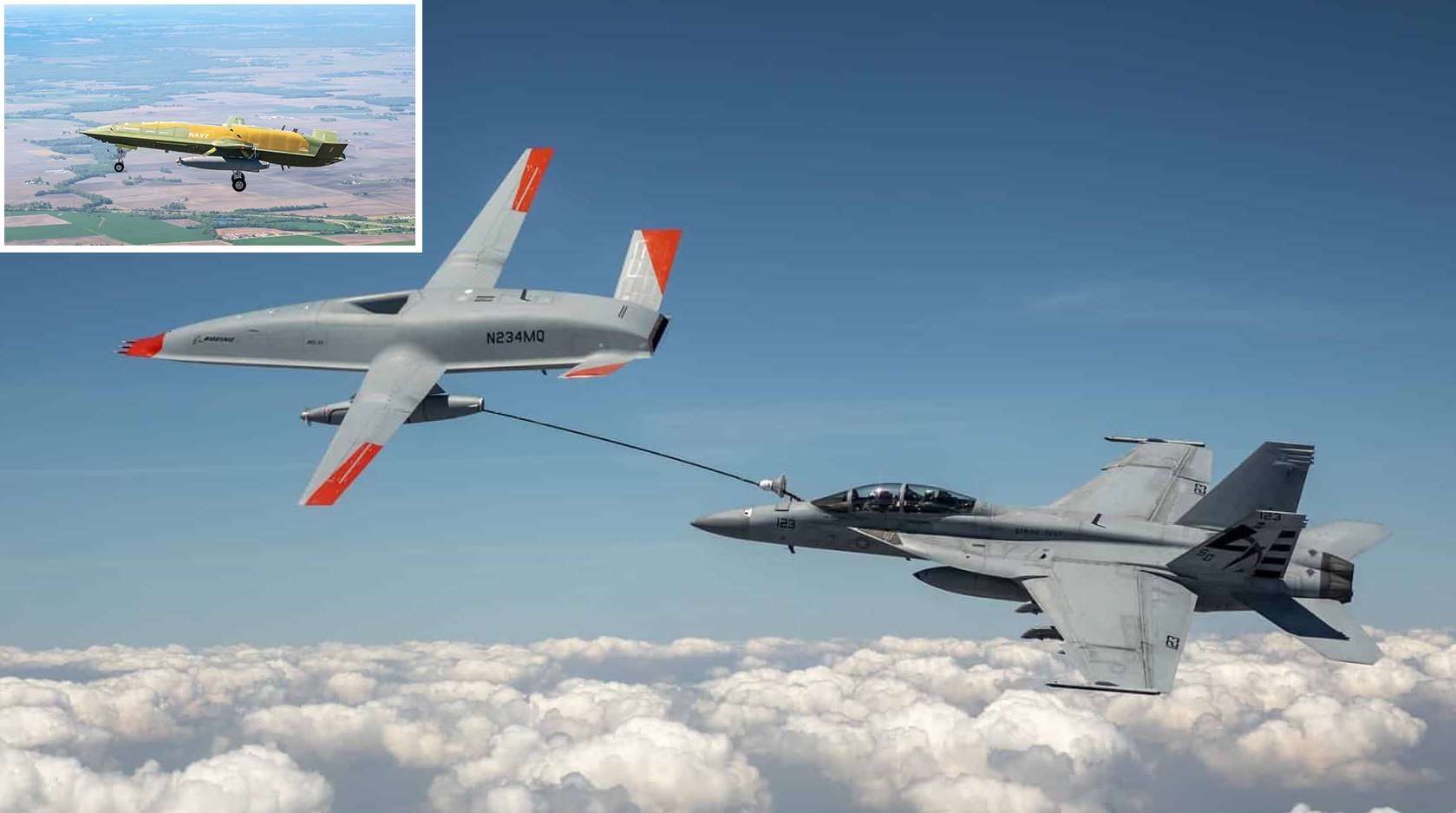
World
WASHINGTON, — May 20, 2026 : The U.S. Navy’s MQ-25A Stingray uncrewed aerial refueling aircraft has officially received Milestone C approval, allowing the program to transition into Low-Rate Initial Production (LRIP) and marking a major advancement toward operational carrier deployment. Acting Secretary of the Navy Hung Cao announced the decision during a Senate Armed Services Committee hearing on May 19, less than a month after the aircraft completed its first production-representative flight. According to the Navy’s Portfolio Acquisition Executive for Aviation, the first LRIP contract covering three MQ-25A aircraft is expected to be awarded this summer. The agreement will also include priced options for three additional aircraft under Lot 2 and five aircraft under Lot 3. “Unmanned refueling extends our reach against any adversary,” Cao said during the hearing. He stated that moving the MQ-25A Stingray into production would strengthen the operational capability and flexibility of U.S. carrier strike groups while increasing the availability of combat aircraft within the carrier air wing. Vice Adm. John E. Dougherty IV, Portfolio Acquisition Executive for Aviation, described Milestone C approval as a critical step for the program, stating that the aircraft would provide persistent aerial refueling capability and expand operational capacity across the air wing. Capt. Daniel Fucito, manager of the Unmanned Carrier Aviation Program Office (PMA-268), stated that the aircraft, production infrastructure, and supporting program elements are prepared to advance fleet capability, readiness, and operational capacity. Boeing, the prime contractor for the program, welcomed the approval. Troy Rutherford, vice president of Boeing’s MQ-25 program, stated that the company remains focused on delivering the aircraft to the fleet and integrating the system into carrier air wing operations. First Production Aircraft Completes Maiden Flight The production-representative MQ-25A completed its maiden flight on April 25, 2026, from MidAmerica St. Louis Airport in Mascoutah, Illinois. The aircraft flew for approximately two hours and successfully demonstrated basic flight controls, engine performance, autonomous taxiing, takeoff, landing, and handling characteristics during a pre-planned mission profile. Both Boeing and Navy Air Vehicle Pilots controlled the aircraft using the Unmanned Carrier Aviation Mission Control System (UMCS) MD-5 ground control station, which integrates Lockheed Martin’s MDCX control system. The sortie was supported by a company-owned TA-4J Skyhawk and a U.S. Navy UC-12M Huron operating as chase aircraft. The production-standard MQ-25A incorporates several modifications compared with the earlier T1 demonstrator, including a redesigned engine air inlet, a straight-wing configuration, and folding wings optimized for carrier deck handling and storage operations aboard aircraft carriers. The aircraft carried a Cobham Aerial Refueling Store (ARS) pod, the same system currently used by the Navy’s F/A-18 fleet. According to a Navy report submitted to Congress in August 2025, the MQ-25A is expected to deliver between 14,000 and 16,000 pounds of fuel at a range of 500 nautical miles while maintaining endurance exceeding 12 hours. The first flight of the production-representative aircraft occurred nearly seven years after the initial flight of the Boeing-owned MQ-25 T1 test asset in September 2019. Production Structure and Procurement Plans The aircraft used during the maiden flight is the first of four Engineering Development Model (EDM) aircraft being produced under an $805 million contract awarded to Boeing in 2018. The complete MQ-25 test fleet will include four Engineering Development Model aircraft, five System Demonstration Test Articles, and two dedicated ground test articles for static and fatigue testing. Assembly work is being conducted at Boeing’s 300,000-square-foot production facility in Mascoutah, Illinois. The U.S. Navy plans to procure a total of 76 MQ-25A aircraft, including EDM and System Demonstration aircraft. Current Navy estimates place the total program cost for 72 production aircraft at approximately $13 billion. Expanding Carrier Strike Group Reach The MQ-25A Stingray is designed primarily to provide carrier-based aerial refueling support for U.S. Navy aircraft operating from carrier strike groups. The aircraft will assume the aerial refueling mission currently performed by F/A-18E/F Super Hornets assigned to carrier air wings. By shifting this role to the MQ-25A, the Navy intends to free Super Hornets for combat and strike missions while reducing structural fatigue on the fighter fleet and improving aircraft availability. The Stingray will also become the first operational carrier-based uncrewed aircraft in U.S. Navy service, establishing a foundation for future manned-unmanned teaming operations aboard aircraft carriers. In addition to aerial refueling, the MQ-25A will support recovery tanking missions and provide intelligence, surveillance, and reconnaissance (ISR) capabilities for carrier strike groups. The Navy previously demonstrated the platform’s aerial refueling capability in 2021, when the Boeing-owned MQ-25 T1 test asset successfully transferred fuel to a U.S. Navy F/A-18F Super Hornet during the first air-to-air refueling mission conducted between an uncrewed tanker and a manned receiver aircraft. Fleet Integration and Carrier Qualification The Fleet Replacement Squadron for the MQ-25A, Unmanned Carrier-Launched Multi-Role Squadron Ten (VUQ-10), was established at Naval Air Station Patuxent River in October 2022. The Navy also plans to establish two operational squadrons, VUQ-11 and VUQ-12. Following completion of the initial flight-test series, the first production-representative aircraft is scheduled to relocate later this year to Naval Air Station Patuxent River to begin carrier qualification testing. Carrier qualification operations are expected to take place aboard the USS Theodore Roosevelt (CVN-71) as the Navy prepares the MQ-25A for operational integration into future carrier strike group deployments.
Read More → Posted on 2026-05-20 15:02:00
India
VISAKHAPATNAM, — May 20, 2026 : India has reportedly conducted a successful underwater “pop-up” ejection test of its next-generation K-5 submarine-launched ballistic missile (SLBM) in the Bay of Bengal near Visakhapatnam, marking another important step in the development of the country’s long-range sea-based nuclear deterrent. According to defence reports, the trial was carried out from a submerged underwater platform following a firing exercise notification issued for the region. The test has not yet been officially confirmed by the Defence Research and Development Organisation (DRDO) or the Ministry of Defence. The K-5 missile is being developed by the DRDO’s Advanced Systems Laboratory (ASL) in Hyderabad as part of India’s strategic “K-series” submarine-launched ballistic missile programme, named after former President Dr. A.P.J. Abdul Kalam. The missile is expected to become India’s longest-range SLBM once operational. Pop-Up Test and Launch Validation The recent trial involved a “pop-up” or cold-launch ejection procedure, which is considered a critical engineering validation before full powered flight testing begins. During the exercise, an unpowered missile was ejected from a submerged vertical launch tube using a high-pressure gas generator system. After breaching the water surface, the missile’s launch dynamics, hydrodynamic stability, structural integrity, and ejection trajectory were monitored through onboard sensors and tracking systems. The missile’s rocket motors were intentionally not ignited during the test, and the missile subsequently fell back into the sea after the required launch data was recorded. The test primarily focused on validating the performance of the missile canister, gas-ejection mechanism, structural nose cap, and underwater launch systems under high-pressure submerged conditions. Successful validation of these systems is considered essential before progressing to integrated powered flight trials. Defence analysts note that cold-launch technology significantly reduces the thermal and acoustic signature generated during submarine launches, as the missile’s rocket motor ignites only after clearing the water surface. This helps maintain the stealth of the launch platform and reduces the risk of exposing the submarine’s position. K-5 Missile Specifications The K-5 is reported to be a three-stage, solid-fuel submarine-launched ballistic missile with an estimated strike range of approximately 5,000 to 6,000 kilometres. Some assessments suggest the missile could eventually achieve a longer operational range. The missile is estimated to weigh around 20 tonnes and measure approximately 12 metres in length with a diameter between 2.4 and 2.45 metres. Reports indicate that it will be capable of carrying a payload of around two tonnes and achieving speeds exceeding Mach 7 during flight. One of the major advancements associated with the K-5 programme is the planned integration of Multiple Independently Targetable Re-entry Vehicle (MIRV) capability. This would allow a single missile to carry multiple nuclear warheads capable of striking separate targets independently while deploying penetration aids and countermeasures against missile defence systems. Strategic Importance The K-5 is intended to significantly expand the operational reach of India’s sea-based nuclear deterrent. India’s currently operational K-4 SLBM has a reported range of around 3,500 kilometres, requiring submarines to operate closer to strategic regions for certain target coverage. With the K-5’s extended range, Indian ballistic missile submarines would be able to remain within the comparatively secure waters of the Bay of Bengal while maintaining strategic reach. Defence experts consider this important for strengthening survivability and second-strike capability under India’s nuclear doctrine. The MIRV capability also increases strike flexibility by allowing a smaller number of missiles to engage multiple targets. Analysts state that this would improve the effectiveness of India’s sea-based deterrent while reducing dependence on larger launch salvos. Programme Development and Future Trials The latest underwater ejection test follows the successful November 2025 static test of the K-5’s 10-ton-class stage-2 solid rocket motor at DRDO facilities in Hyderabad. With the completion of the pop-up phase, the programme is expected to move toward full flight-development trials from submerged platforms. Future tests are expected to evaluate powered flight performance, guidance systems, navigation accuracy, stage separation, and maximum operational range before eventual induction into service. The K-5 is planned for deployment aboard India’s expanding fleet of nuclear-powered ballistic missile submarines (SSBNs). Initial testing and integration are expected to involve the stretched S4-class submarines, while the missile is primarily intended for the future S5-class SSBNs currently under development. The upcoming S5-class submarines are expected to displace between 13,500 and 17,000 tonnes and be powered by a 190 MW nuclear reactor. The K-5 missile is projected to enter operational service alongside the S5-class fleet during the early 2030s. India’s SLBM programme began with the K-15 Sagarika missile and later advanced to the longer-range K-4 system. The K-5 represents the next stage in the evolution of India’s underwater strategic deterrent and the sea-based component of the country’s nuclear triad. All information regarding the March 2026 pop-up test is based on publicly available defence analysis reports and open-source tracking accounts, as no official confirmation has yet been released by Indian authorities.
Read More → Posted on 2026-05-20 15:44:02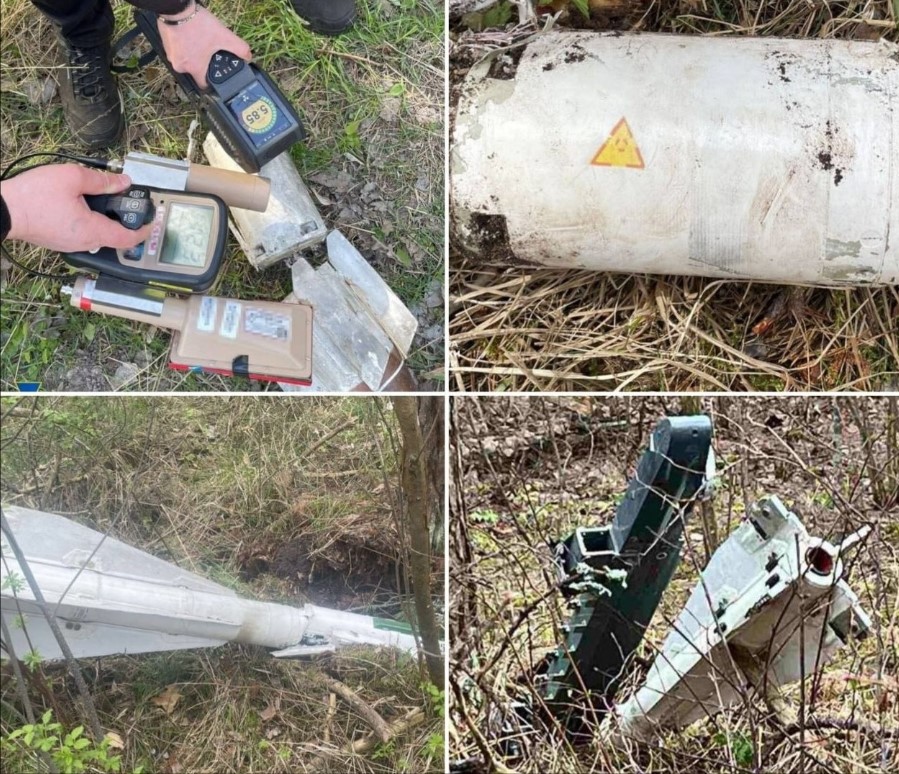
World
CHERNIHIV OBLAST, Ukraine, — May 20, 2026 : Ukraine’s Security Service (SBU) announced that laboratory testing conducted on missile fragments recovered from a modified Russian strike drone in the Chernihiv region detected depleted uranium components within the warhead assembly. According to the SBU, the debris was recovered after a Russian aerial attack carried out during the night of April 6–7, 2026, near the village of Kamka in northern Ukraine’s Chernihiv Oblast. Counterintelligence officers and investigators examining the crash site identified parts of an R-60 air-to-air missile mounted on a modified Geran-2 (Shahed-type) unmanned aerial vehicle. Radiation Detected at Crash Site During radiation reconnaissance operations at the impact area, Ukrainian specialists recorded gamma radiation levels reaching 12 microsieverts per hour (μSv/h). The SBU stated that the detected level significantly exceeded natural background radiation and could present a health risk to individuals exposed to the debris at close range. Subsequent laboratory analysis confirmed that striking elements inside the missile warhead contained depleted uranium materials, specifically identifying the presence of Uranium-235 and Uranium-238 isotopes. The SBU stated that the findings were established through forensic and radiological examinations conducted after the recovery of the wreckage. Modified R-60M Missile Identified Military analysts involved in the investigation identified the recovered weapon as an R-60M, a modernized version of the Soviet-designed R-60 short-range infrared-guided air-to-air missile. According to Ukrainian specialists, older variants of the missile traditionally used tungsten-based internal components, while the recovered R-60M configuration incorporated depleted uranium rods within parts of the warhead assembly. The SBU stated that Russian forces have increasingly adapted air-to-air missiles for use on unmanned strike platforms during large-scale drone attacks. Ukrainian analysts believe the modification is intended to target Ukrainian fighter aircraft and helicopters attempting to intercept incoming drones. Emergency Containment Operation Following the discovery, a joint operation involving the SBU, the State Emergency Service of Ukraine (SESU), and units of the Ukrainian Armed Forces was conducted to secure the area and neutralize potential radiological hazards. Officials stated that the missile warhead was isolated, rendered safe, and transported to a designated radioactive waste storage facility for controlled containment and storage. The Chernihiv Oblast Prosecutor’s Office, working under procedural supervision with the SBU, has opened a pre-trial criminal investigation under Article 438 of the Criminal Code of Ukraine, which concerns alleged violations of the laws and customs of war. Public Safety Advisory Ukrainian authorities issued a public warning urging civilians not to approach or handle debris from drones, missiles, or other military ordnance discovered after attacks. According to the SBU, the primary danger associated with depleted uranium arises when damaged or burned components release microscopic radioactive and chemically toxic particles into the surrounding environment. Residents were instructed to immediately report suspicious debris to emergency services and avoid any direct contact with wreckage until specialist teams complete inspection and decontamination procedures. The findings were publicly disclosed by the SBU on May 20, 2026. No independent international verification of the laboratory analysis had been publicly reported at the time of the announcement.
Read More → Posted on 2026-05-20 15:48:25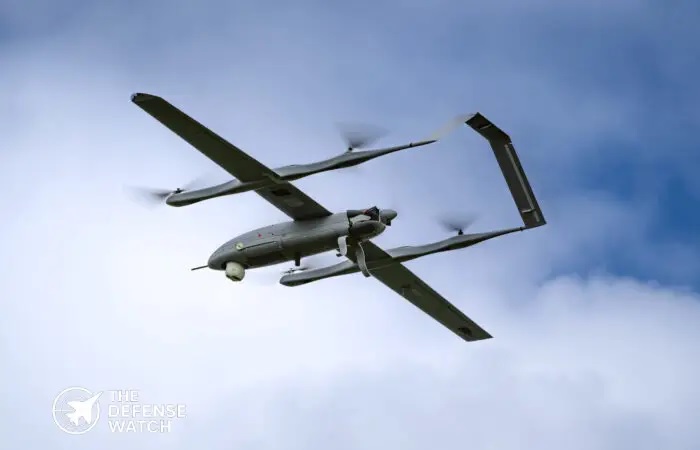
World
JACKSONVILLE, Florida — May 20, 2026 : Redwire Corporation has secured a multi-year contract to supply its Penguin Mk3 tactical uncrewed aerial system (UAS) to an undisclosed NATO allied nation, supporting the country’s ongoing tactical drone modernization program. The agreement, announced on May 19, was awarded through a competitive tender process and is valued in the “high eight-figure” range, placing the contract between $10 million and $99 million. The deal further expands Redwire’s defense presence among NATO operators following its 2025 acquisition of drone manufacturer Edge Autonomy for $925 million. Penguin Mk3 Designed for Long-Endurance ISR Missions The Penguin Mk3 is the latest version of Redwire’s fixed-wing tactical drone platform, developed to meet evolving operational requirements for NATO and allied forces. The aircraft is designed with a modular architecture that allows future software and hardware upgrades without replacing the core airframe, providing long-term operational flexibility. The system combines vertical takeoff and landing (VTOL) capability with fixed-wing endurance. Electric lift rotors enable launch and recovery without the need for runways or catapult systems, while an electronic fuel-injected internal combustion engine powers the aircraft during forward flight. According to company specifications, the Penguin Mk3 can exceed speeds of 60 knots (111 km/h), operate within a communication radius of 180 kilometers, and remain airborne for up to 14 hours during a single deployment. The drone can carry payloads of up to 8 kilograms, including electro-optical and infrared surveillance systems used for intelligence, surveillance, and reconnaissance (ISR) missions. The aircraft is also configured for all-weather operations and includes internal battery heaters and a heated pitot tube for operations in low-temperature environments. Fixed-Wing Drones Offer Greater Range and Endurance Fixed-wing tactical drones such as the Penguin Mk3 operate differently from rotary-wing quadcopters and FPV drones widely used in modern conflicts. While rotary systems are optimized for hovering, short-range reconnaissance, and precision strike operations, fixed-wing aircraft prioritize endurance, operational range, and persistent surveillance capability. Powered by fuel rather than batteries alone, the Penguin Mk3 can conduct extended ISR missions over large geographic areas while operating at higher altitudes and greater distances from frontline threats. This operational profile allows the system to monitor troop movements, artillery positions, and logistics routes for extended periods while remaining outside the effective range of small arms fire and some short-range electronic warfare systems. Combat Use in Ukraine Redwire has increasingly emphasized the Penguin platform’s operational record in Ukraine. The company has delivered more than 250 Penguin aircraft directly to the Ukrainian Armed Forces since 2022, with deliveries continuing through 2026. The system was also specifically identified in United States security assistance packages for Ukraine announced in July 2023 and December 2024, indicating sustained operational demand for the platform during active combat operations. Redwire recently showcased the Penguin Mk3 during the 2026 SOF Week defense exhibition, where the company highlighted the aircraft’s combat-tested operational experience and upgrade potential for allied military customers. European Operations to Handle Sustainment Program execution and long-term sustainment for the NATO customer will be managed through Redwire’s European operations, including regional engineering, maintenance, and logistical support infrastructure. European-based sustainment capability has become increasingly important for NATO members seeking rapid access to spare parts, technical support, and maintenance services without depending on transatlantic supply chains during potential crisis situations. Redwire currently employs approximately 1,400 personnel across Europe and North America, with its European defense operations expanding alongside increased regional demand for tactical unmanned systems. Steve Adlich, President of Redwire Defense Tech, said the contract reflects the company’s long-term approach to tactical UAS modernization for NATO allies. “Penguin Mk3 builds on years of operational, combat experience to deliver a scalable, adaptable solution aligned with the demands of modern defense environments,” Adlich said following the contract announcement. The contract represents continued international demand for long-endurance tactical drone systems as NATO countries expand ISR capabilities and modernize battlefield reconnaissance assets in response to evolving security requirements across Europe.
Read More → Posted on 2026-05-20 16:01:07
World
HILL AIR FORCE BASE, Utah — May 20, 2026 : The U.S. Air Force has awarded a $40 million indefinite-delivery/indefinite-quantity (IDIQ) contract to IAP World Services for the replacement of aging radomes protecting AN/FPS-124 short-range radar systems across the North Warning System (NWS) in northern Canada. The contract, announced on May 19, covers the production, transportation, installation, removal, and disposal of 28-foot composite radome assemblies through May 20, 2035. Work will be conducted at multiple locations across Canada and Florida under the management of the Air Force Life Cycle Management Center’s Homeland Surveillance Branch at Hill Air Force Base. The program is intended to restore and sustain protective infrastructure for unattended AN/FPS-124 low-altitude surveillance radars that form part of the binational North Warning System jointly operated by the United States and Canada under North American Aerospace Defense Command. The radar network provides early-warning coverage against low-flying aircraft and cruise missile threats approaching North America through Arctic routes North Warning System Infrastructure The North Warning System consists of approximately 15 AN/FPS-117 long-range radar sites and between 36 and 39 AN/FPS-124 short-range radar installations distributed across Alaska, Yukon, the Northwest Territories, Nunavut, Labrador, and other Arctic regions. The AN/FPS-124 systems serve as gap-filler radars designed to detect low-altitude targets beneath the coverage envelope of long-range radar systems affected by terrain masking and radar horizon limitations. The sites support continuous surveillance along the polar approaches to North America. Most of the existing radome structures were installed between 1990 and 1992 during the modernization effort that replaced the earlier Distant Early Warning (DEW) Line infrastructure. Arctic Environmental Degradation After more than three decades of exposure to Arctic operating conditions, the radomes have experienced structural degradation caused by extreme wind loading, repeated freeze-thaw cycles, icing, ultraviolet exposure, thermal cycling, and sea salt corrosion at coastal locations. According to contract documentation, the Air Force determined that complete replacement of the radome assemblies is required rather than localized repair work due to the condition of the structures. The program includes the disassembly and disposal of existing assemblies, installation of new composite radomes, and replacement of SCR-T28D zenith panels incorporating OSHA 1910.140-compliant fall-arrest anchor systems. Existing infrastructure components, including lightning protection systems, acrylic domes, photocell assemblies, and antenna interfaces, will remain in service where applicable. Contract Structure and Procurement The contract combines fixed-price and cost-reimbursement elements to account for operational uncertainties associated with Arctic sustainment work, including weather disruptions, transportation constraints, and limited seasonal access to remote radar sites. The contract also includes provisions for spare parts, technical data packages, installation and maintenance training materials, and contractor support services. Procurement activities began with a presolicitation notice issued on May 27, 2025, followed by a formal request for proposals released on August 5, 2025. Four proposals were submitted during the competition process. Initial planning documents estimated the effort at approximately $21.7 million, though the final contract ceiling increased to $40 million as sustainment and logistics requirements expanded. At the time of award, $4.576 million in fiscal years 2025 and 2026 funding had been obligated. AN/FPS-124 Radar Capabilities The AN/FPS-124 radar was specifically developed for unattended Arctic operations and low-altitude target detection during the late Cold War period. The radar operates within the 1218–1398 MHz frequency band using six selectable frequencies and provides 360-degree surveillance coverage ranging from approximately 3.2 kilometers to 113 kilometers. The system incorporates an electronically scanned stripline antenna array, eliminating the need for large rotating mechanical assemblies. Additional features include pulse compression, Doppler filtering, clutter cancellation, zero-Doppler detection capability, and Kalman-filter-based target tracking. The radar is capable of processing up to 200 target tracks every six seconds while maintaining high operational reliability in remote Arctic conditions. Remote Arctic Operations Radar data collected at the sites is processed locally and transmitted through satellite communications links to NORAD command centers, including Regional Operations Control Centers at Elmendorf Air Force Base and CFB North Bay. Many North Warning System locations operate without permanent on-site personnel and rely on autonomous power systems, remote diagnostics, and periodic maintenance visits supported by helicopter lift or seasonal air transport. Operational locations within the network include Hall Beach, Cambridge Bay, Cape Dyer, Saglek, Resolution Island, Dewar Lakes, Shepherd Bay, Brevoort Island, Cartwright, and Rowley Island. The sustainment effort will support continued operation of the North Warning System while future over-the-horizon radar networks, distributed sensing systems, and next-generation Arctic surveillance capabilities remain under development by the United States and Canada.
Read More → Posted on 2026-05-20 16:15:34
World
BEIJING, — May 20, 2026 : Chinese customs authorities have halted the import and domestic clearance of Nvidia’s GeForce RTX 5090D V2 graphics processing unit (GPU), effectively blocking sales of the China-specific gaming chip across the country, according to reports from Chinese technology industry sources and motherboard manufacturers. The restriction reportedly took effect on May 15 and coincided with the state visit to Beijing by U.S. President Donald Trump. Nvidia CEO Jensen Huang was also present in China during the visit after reportedly joining the U.S. delegation at the last minute during a stop in Alaska. Huang traveled alongside several American technology executives participating in trade and diplomatic discussions. The development came as the U.S. Department of Commerce reportedly authorized approximately 10 major Chinese companies to purchase Nvidia H200 artificial intelligence processors under a controlled licensing framework. The approvals were viewed as part of a limited export mechanism allowing select Chinese firms to access restricted AI hardware under strict regulatory conditions. At the same time, Beijing moved to block Nvidia’s GeForce RTX 5090D V2, a consumer-oriented Blackwell-based GPU specifically engineered for the Chinese market to comply with U.S. export regulations. The RTX 5090D V2 was developed by Nvidia as a downgraded version of the standard RTX 5090. The China-specific model featured 24GB of VRAM instead of 32GB and used a narrower memory bus intended to reduce performance in advanced computing and AI workloads while remaining within U.S. export compliance limits. Although marketed primarily toward gamers and professional 3D creators, industry reports indicated that Chinese AI developers increasingly adopted the GPU as an alternative to restricted enterprise-grade AI accelerators. Some reports also stated that certain firms modified the cards to increase VRAM capacity to as much as 48GB in an effort to improve AI model training performance and bypass built-in limitations. According to Chinese supply chain sources and local technology publications, customs officials informed importers, retailers, and motherboard manufacturers that the RTX 5090D V2 would no longer receive processing approvals or sales permits. Logistics companies reportedly received notices stating that import clearance for the product would not be granted. The move represents a significant policy shift because the restriction was initiated by Beijing rather than Washington. Analysts said the action reflects broader Chinese industrial efforts aimed at reducing reliance on modified American semiconductor products while accelerating the transition toward domestically developed alternatives. Chinese semiconductor companies including Huawei and Cambricon are expected to benefit as authorities continue encouraging AI developers and technology firms to adopt local hardware ecosystems and reduce dependence on foreign suppliers. Because the RTX 5090D V2 was manufactured exclusively for China, the customs restriction leaves Nvidia with limited alternative destinations for existing inventory. The development also adds further pressure on Nvidia’s China business following multiple rounds of U.S. export restrictions affecting advanced GPUs and AI accelerators, including earlier limitations involving the RTX 4090D and enterprise Blackwell products. Nvidia has not issued an official statement regarding the reported customs action as of the latest available information. No formal public decree or comprehensive government blacklist update has been independently confirmed beyond customs notifications referenced by industry sources and Chinese manufacturers.
Read More → Posted on 2026-05-20 16:41:03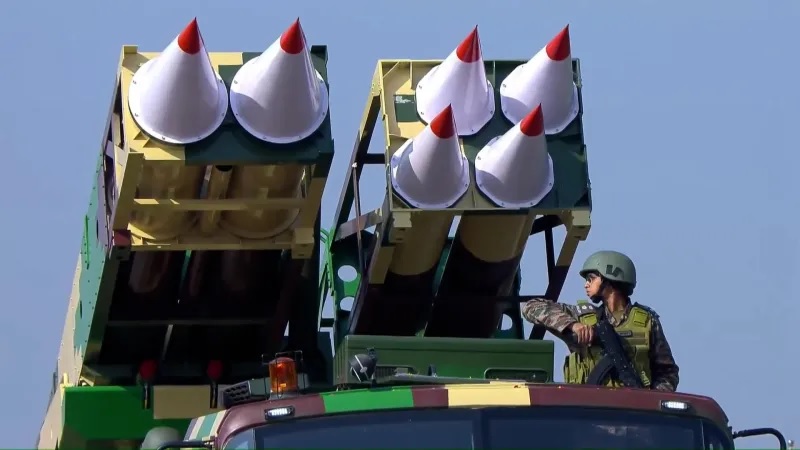
India
NEW DELHI, — May 20, 2026 : Pune-based private defence manufacturer Nibe Limited has successfully conducted firing trials of its indigenous Suryastra long-range rocket system for the Indian Army at the Integrated Test Range (ITR) in Chandipur, Balasore, Odisha. The consecutive trials were carried out on May 18 and 19 under an emergency procurement programme initiated by the Indian Army. The trials evaluated the system’s long-range strike capability, precision, operational reliability, and readiness for deployment. According to official trial data, the 150-kilometre range variant achieved a Circular Error Probable (CEP) of 1.5 metres, while the 300-kilometre range variant achieved a CEP of 2 metres. Both rocket variants successfully met all required operational and performance parameters during the demonstrations. CEP is a standard military metric used to measure the accuracy of guided weapons, indicating the radius within which 50 percent of fired munitions are expected to land. Defence analysts note that achieving a CEP of two metres or below at ranges extending up to 300 kilometres reflects a high degree of precision for long-range artillery systems. Indigenous Universal Rocket Launcher System The Suryastra is described as India’s first indigenous universal multi-caliber rocket launcher system. It has been developed by Nibe Limited under a technology collaboration agreement with Israeli defence company Elbit Systems and is based on the Precise and Universal Launching System (PULS) platform. The launcher is designed with modular architecture, enabling it to fire multiple categories of rockets and missiles from interchangeable launch pods without requiring hardware modifications. The system can integrate precision-guided rockets of different calibres, allowing operational flexibility across varying mission requirements. In addition to guided rockets, the Suryastra system is capable of launching loitering munitions and kamikaze drones with operational ranges of up to 100 kilometres. The integration of loitering munitions provides real-time reconnaissance and strike capability, allowing battlefield surveillance alongside precision engagement of targets. Mobility and Operational Capability The Suryastra launcher is mounted on a high-mobility all-terrain vehicle platform and incorporates “shoot-and-scoot” capability. This allows the launcher to rapidly relocate after firing, reducing vulnerability to enemy counter-battery strikes and improving survivability during combat operations. Military experts state that such highly mobile rocket systems are increasingly important in modern warfare environments where rapid deployment, mobility, and precision engagement are critical operational requirements. Indian Army Procurement Programme The firing demonstrations were conducted under a procurement contract signed between the Indian Army and Nibe Limited in January 2026 under the Army’s Emergency Procurement framework. The contract is valued at approximately ₹292.69 crore, equivalent to around $31 million. The agreement includes the supply of: Two Suryastra Universal Rocket Launcher systems Replenishment-cum-loader vehicles 150 km and 300 km range rockets and ammunition Ground support equipment and accessories Spare parts and engineering support packages Comprehensive technical and maintenance support Deliveries under the contract are scheduled to be completed in phased tranches within a 12-month period. Strategic and Industrial Significance The Suryastra programme is being manufactured in India under technology transfer arrangements and is intended to strengthen the Indian Army’s long-range precision strike capability. Defence experts note that the system bridges an operational gap between conventional artillery platforms and more expensive ballistic missile systems by providing rapid-response stand-off strike capability at extended ranges. The successful trials also represent a significant development under the government’s Aatmanirbhar Bharat initiative aimed at expanding indigenous defence manufacturing capacity. The programme marks one of the first instances of an Indian private-sector defence company successfully manufacturing and demonstrating a long-range guided rocket system of this category for the Indian Armed Forces. Nibe Limited stated that the successful demonstrations validated the performance, precision, and operational readiness of the Suryastra system for future induction into Indian Army artillery formations following completion of deliveries and additional evaluations.
Read More → Posted on 2026-05-21 14:23:09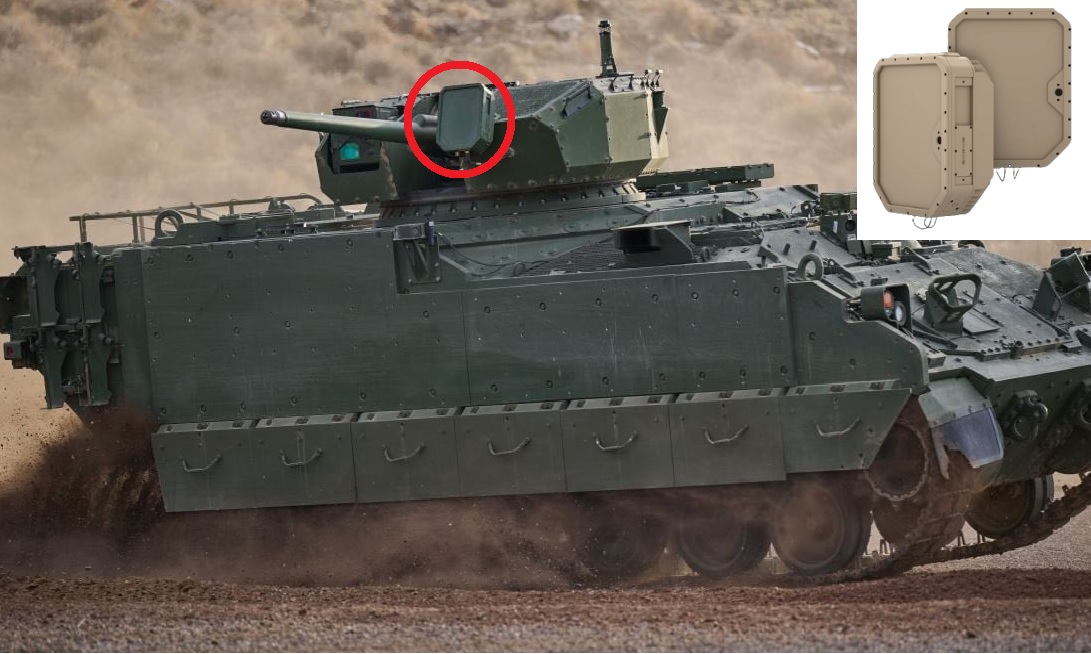
World
FORT CAVAZOS, Texas — May 21, 2026 : The U.S. Army’s 1st Cavalry Division is evaluating two prototype Armored Multi-Purpose Vehicle 30mm variants (AMPV-30) equipped with EchoShield radar systems for counter-unmanned aerial system (C-UAS) operations. The vehicles were developed and supplied by BAE Systems as company-funded prototypes and delivered to the Army in April 2026 under the service’s “Transformation in Contact” (TiC) 2.0 initiative. The program is intended to accelerate the field testing of emerging technologies by placing new systems directly into operational units for soldier evaluation. AMPV-30 Configuration The AMPV platform was originally developed by BAE Systems to replace the U.S. Army’s legacy M113 armored vehicle family, providing improved survivability, mobility, and onboard power generation for Armored Brigade Combat Teams (ABCTs). The AMPV-30 configuration transforms the standard support vehicle into a mobile counter-drone platform designed to provide localized air defense protection for armored formations operating in contested environments. The prototypes are equipped with the Kongsberg Gruppen MCT-30 remotely operated turret, derived from the RT-20 design. The turret is armed with a Mk 44 Bushmaster II 30mm autocannon capable of firing programmable airburst munitions (PABM), which are designed to engage aerial targets by creating fragmentation patterns along the drone’s projected flight path. The turret also includes a coaxial 7.62mm machine gun and can be configured to carry additional weapons such as FGM-148 Javelin anti-tank guided missiles or laser-guided 70mm rockets depending on mission requirements. EchoShield Radar Integration To provide aerial target detection and tracking capability, the AMPV-30 integrates the EchoShield radar system developed by U.S.-based radar manufacturer Echodyne. The radar is externally mounted on the vehicle and provides continuous low-altitude airspace surveillance for detecting and tracking small unmanned aerial systems operating near the ground. EchoShield is a software-defined cognitive 4D pulse-Doppler radar utilizing Echodyne’s proprietary Metamaterials Electronically Steered Array (MESA) architecture. The system operates in the Ku-band frequency range between 15.4 and 16.6 GHz and is specifically optimized to detect low-flying, slow-moving, and small radar cross-section targets in cluttered battlefield environments. The radar dynamically adjusts waveforms and beam scheduling through software to improve target detection and tracking performance without requiring physical hardware modifications. Radar Specifications According to published technical specifications, the EchoShield radar provides high-fidelity tracking data, including range, azimuth, elevation, and velocity information. Key specifications include: Tracking capacity for more than 1,000 objects simultaneously Angular tracking accuracy of less than 0.5 degrees in both azimuth and elevation Field of view of 130 degrees in azimuth and 90 degrees in elevation Track update rates of up to 10 Hz Detection range of approximately 3 kilometers for Group 1 drones Detection range of up to 11.4 kilometers for larger Group 3 UAVs Maximum instrumented range of 30 kilometers depending on mission configuration The radar panel measures approximately 42.5 × 33 × 18 centimeters, weighs 17.8 kilograms, and consumes less than 250 watts during operation, allowing integration onto mobile armored platforms with limited impact on vehicle power requirements. EchoShield also incorporates native target classification capability using Doppler signatures to distinguish drones from environmental clutter and other airborne objects, including hovering UAVs operating close to the ground. Operational Evaluation The AMPV-30 prototypes are being evaluated as part of the Army’s broader modernization effort to improve protection against emerging drone threats on the battlefield. The integration of mobile radar surveillance, programmable airburst munitions, and armored mobility reflects a shift in Army doctrine toward providing armored and cavalry formations with organic short-range air defense capabilities rather than relying solely on dedicated air defense artillery units. The Army has stated that the AMPV-30 vehicles remain prototype systems developed for testing and capability assessment purposes. At present, there is no formal procurement requirement or funded acquisition program for the configuration. The ongoing evaluation is intended to assess the operational effectiveness of combining counter-drone detection and engagement systems onto the AMPV platform to support future battlefield requirements.
Read More → Posted on 2026-05-21 14:37:42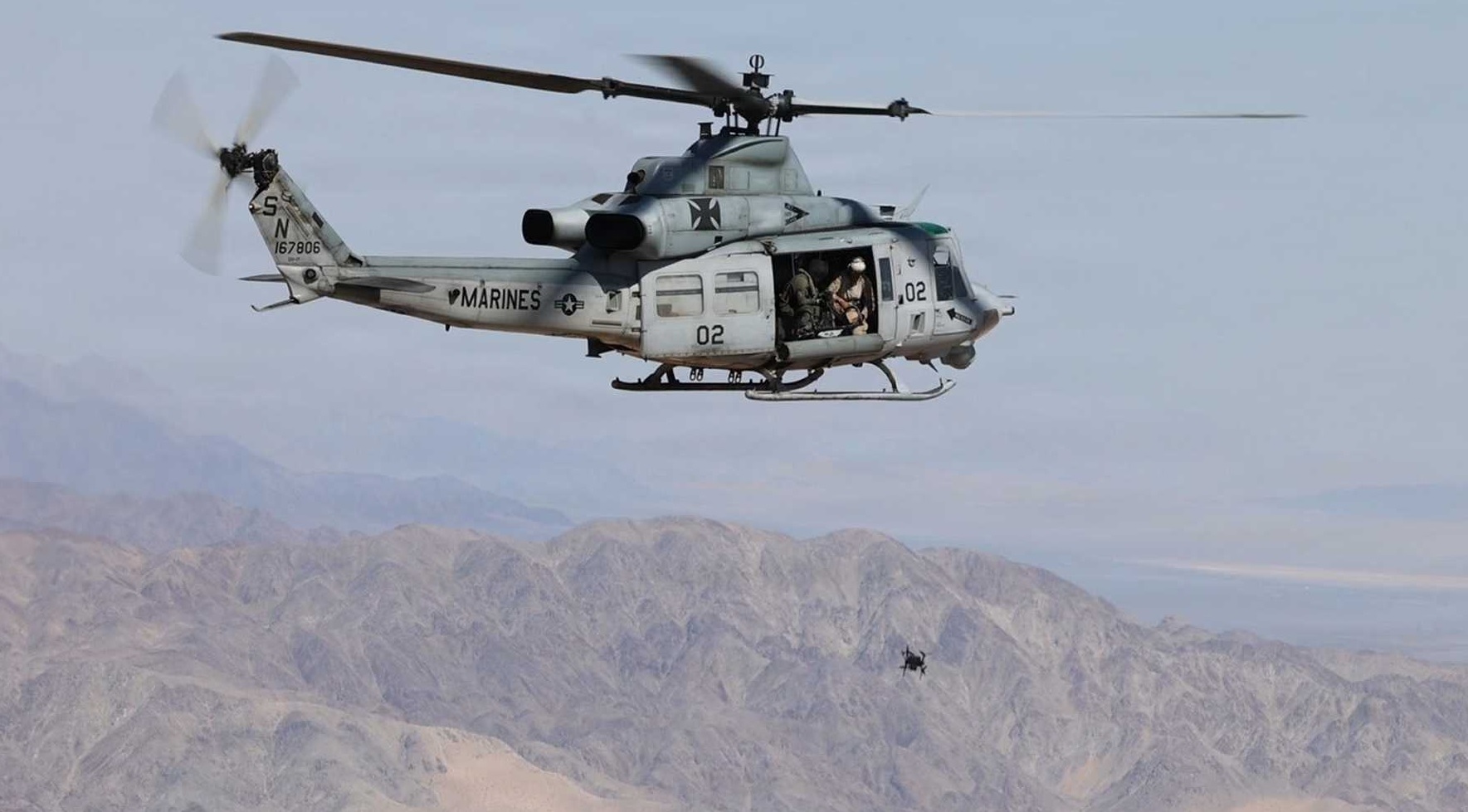
World
MARINE CORPS AIR GROUND COMBAT CENTER TWENTYNINE PALMS, Calif., — May 21, 2026 : The U.S. Marine Corps has demonstrated the use of UH-1Y Venom and AH-1Z Viper helicopters as airborne control platforms for first-person view (FPV) drones, validating a concept designed to extend operational reach while reducing risk to crewed aircraft operating near contested areas. The demonstration involved Marines from Marine Light Attack Helicopter Squadron 169 (HMLA-169), Marine Aircraft Group 39, 3rd Marine Aircraft Wing, and the 3rd Light Armored Reconnaissance Battalion, 1st Marine Division. The exercise was conducted at Marine Corps Air Ground Combat Center Twentynine Palms, California, as part of ongoing efforts to integrate uncrewed systems into Marine Corps aviation operations. During the exercise, Marines from the 3rd Light Armored Reconnaissance Battalion launched a Neros Archer FPV drone from a ground position before transferring control authority to a specialized operator team aboard a UH-1Y Venom helicopter operating miles away from the target area. Operators inside the aircraft then maneuvered the drone toward its designated target, demonstrating the helicopter’s ability to function as an airborne command and remote-control platform. The UH-1Y Venom served as an elevated communications and coordination node during the mission. By operating at higher altitude, the aircraft extended radio line-of-sight communications and reduced limitations caused by terrain, urban infrastructure, and ground-level interference that commonly affect drone operations. Capt. Quinton Thornbury, a UH-1Y Venom pilot with HMLA-169, said the primary objective of the exercise was to test the feasibility of deploying and controlling an FPV drone from a moving helicopter. “The primary objective was to test the feasibility of a non-kinetic drop and deployment of a first-person view drone from a moving helicopter, which we were able to do today,” Thornbury said. “From there, validate that we can control the maneuver of that drone from the back of the aircraft.” According to the Marine Corps, the concept is intended to address the growing threat posed by advanced integrated air defense systems that increasingly force conventional rotary-wing aircraft to operate from greater stand-off distances. By combining the endurance, altitude, and networking capabilities of the H-1 helicopter fleet with expendable FPV drones, the service aims to shift terminal battlefield risk from crewed aircraft to uncrewed systems. Sgt. Matthew Pocklington, a UH-1Y crew chief with HMLA-169, said the tactic allows helicopter crews to continue supporting ground forces while remaining farther from hostile threats. “This tactic allows us to keep our air crews safe and sound while pushing the lethal edge of the battlefield out to where the enemy is,” Pocklington said. “We are still providing our ground support, and close air support, but in a way that lets the drones close with and destroy the enemy, rather than putting our Marines in harm’s way.” The exercise used the Neros Archer FPV drone manufactured by Neros Technologies. The Marine Corps stated that the Archer system was selected because it is currently the most widely used FPV drone among Marine infantry units and already benefits from an established logistics and support network, which could accelerate integration across aviation units. Officials also highlighted the drone’s compact size and precision targeting capability, noting that the system can support operations in complex combat environments while reducing the risk of collateral damage. The demonstration further showed the potential for FPV drones to function as remote extensions of helicopter sensors and strike capabilities. Marine Corps officials stated that the concept could provide commanders with additional options for engaging enemy armor, fortified positions, and maritime targets using low-cost attritable systems instead of relying solely on expensive guided munitions. The integration is expected to provide operational advantages for the AH-1Z Viper attack helicopter. Under conventional tactics, the aircraft often must approach closer to targets for visual identification and engagement using onboard cannons or rockets. By assigning forward reconnaissance and terminal strike functions to FPV drones, helicopter formations can detect, track, and engage threats from significantly greater distances while reducing exposure to enemy air defenses. The Marine Corps said the demonstration forms part of broader efforts to evaluate new methods for integrating crewed aviation platforms with uncrewed systems across future operational environments.
Read More → Posted on 2026-05-21 15:04:18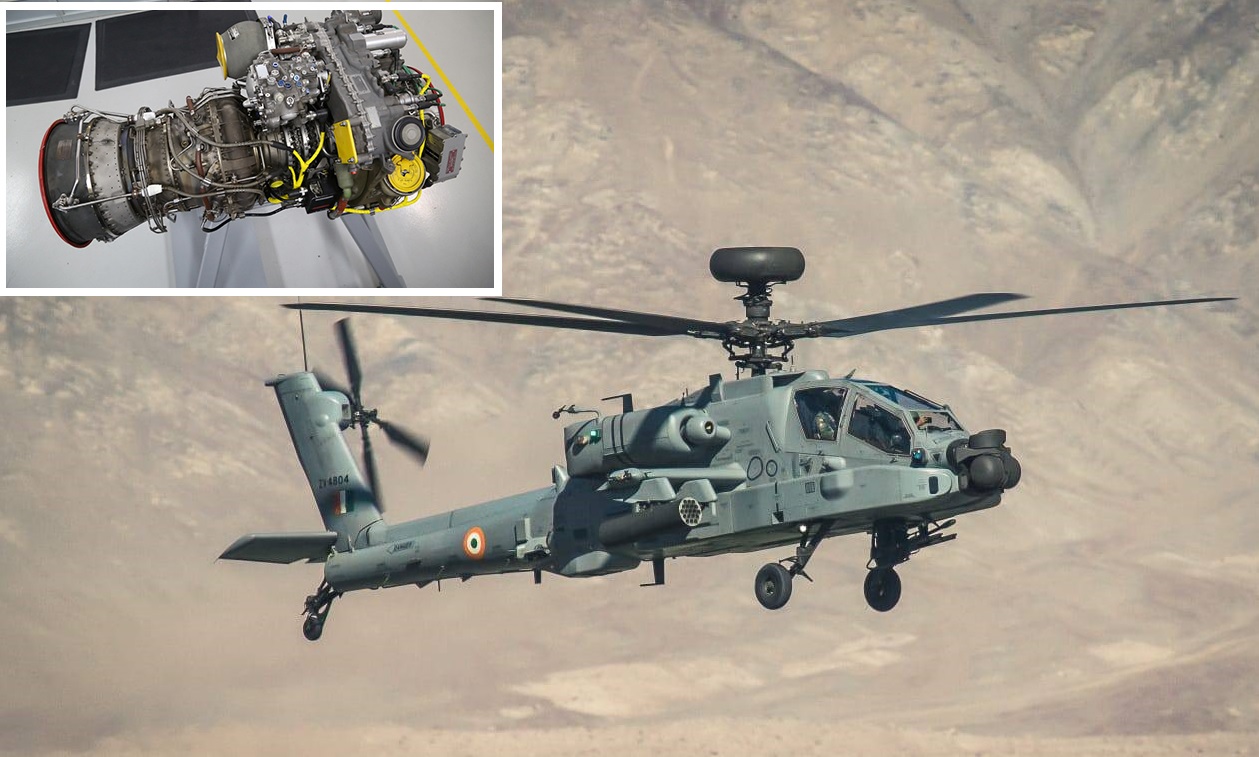
World
LONDON, — May 21, 2026 : GE Aerospace has been awarded a three-year contract by Boeing Defence UK to provide engine support services for the British Army’s fleet of AH-64E Apache Guardian attack helicopters. The agreement covers maintenance and support for the T700-GE-T701D turboshaft engines powering the AH-64E fleet and establishes a localized support network within the United Kingdom intended to improve aircraft availability and operational readiness while reducing dependence on overseas repair channels. The contract is structured under a Performance Based Logistics (PBL) model, under which compensation is tied directly to operational performance metrics such as fleet readiness and aircraft availability rather than the number of labor hours performed or spare parts supplied. The arrangement is designed to align industrial support with the British Army’s operational requirements by incentivizing reduced downtime and sustained mission capability. As part of the agreement, GE Aerospace will permanently station a field service representative at Wattisham Flying Station, the British Army’s primary Apache operating base in Suffolk. The on-site support presence is intended to provide immediate technical assistance to military maintenance crews and flight operations personnel. Major repair and overhaul work for the engines will be carried out at StandardAero’s facility in Gosport on England’s south coast. The site serves as a major rotary-wing maintenance, repair, and overhaul hub supporting several UK military aviation programs. Paul Ferraro, Vice President and General Manager for Defense Engines and Services at GE Aerospace, said the contract strengthens regional support and services for the UK Apache fleet while helping ensure readiness and availability. The T700-GE-T701D is the latest production variant of the T700 engine family, which has remained in continuous production since the late 1970s. The engine produces approximately 1,800 shaft horsepower and incorporates full-authority digital engine control (FADEC), improving fuel efficiency, engine management, and pilot workload compared with earlier variants. According to publicly available program data, the T700 engine family has accumulated more than 100 million flight hours worldwide, with over 25,000 engines delivered to approximately 130 operators across 50 countries. In addition to the Apache, the engine family powers platforms including the UH-60 Black Hawk and the SH-60 Seahawk. The British Army is currently transitioning from the earlier AH-64D Longbow Apache to the AH-64E Guardian under a government-to-government agreement signed with the United States in 2020. The modernization effort follows two decades of operational service by the AH-64D fleet, including combat deployments in Afghanistan. The UK plans to field a fleet of 50 AH-64E helicopters. The AH-64E variant incorporates upgraded avionics, improved networking capability, enhanced sensors, and greater interoperability with allied forces. The aircraft is also capable of coordinating operations with unmanned aerial systems. The UK Apache modernization effort aligns with broader allied procurement trends. Australia is also acquiring the AH-64E under Project LAND 4503, reflecting continued allied investment in the Boeing platform and its support infrastructure. Because the T700 engine family supports a significant portion of NATO and allied helicopter operations across missions including close air support, air assault, medical evacuation, maritime patrol, and search and rescue, maintaining regional maintenance and supply-chain capability remains an important operational requirement for allied forces. The three-year contract provides the British Army with a dedicated domestic repair and support framework intended to sustain Apache fleet readiness and ensure consistent engine maintenance aligned with operational requirements.
Read More → Posted on 2026-05-21 15:11:21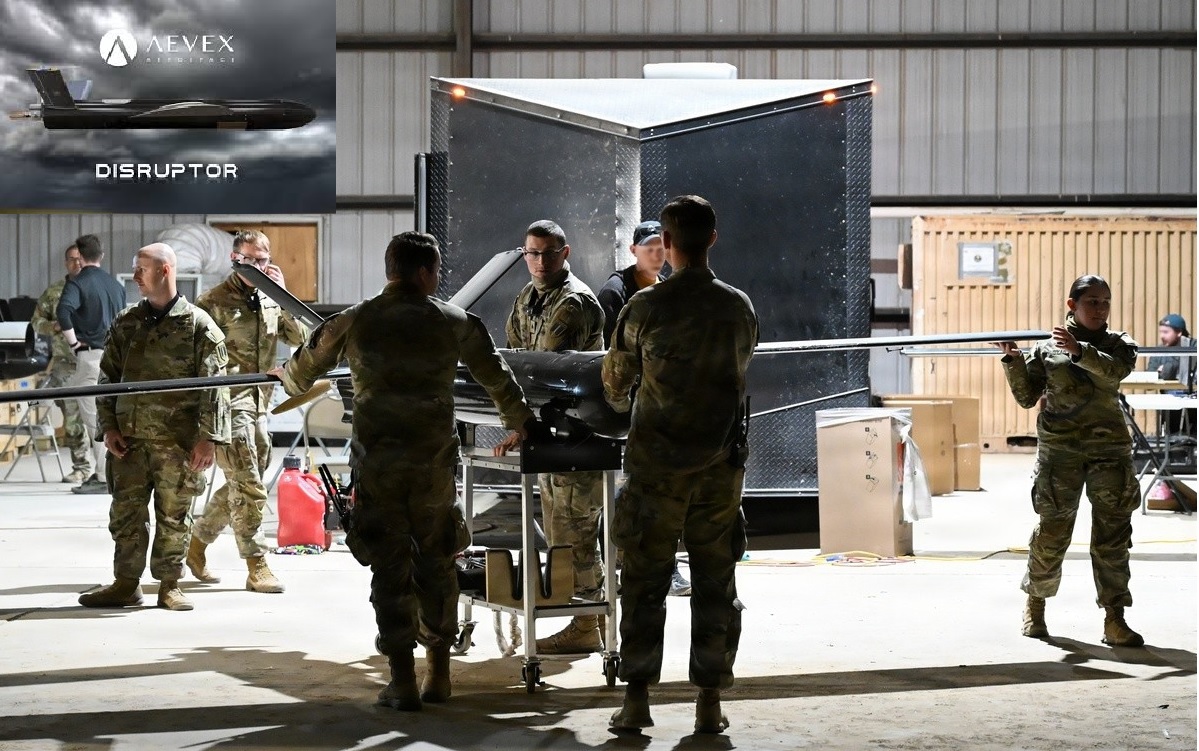
World
FORT IRWIN, Calif., — May 21, 2026 : The U.S. Army has publicly demonstrated the AEVEX Aerospace Disruptor loitering munition during the multinational Arcane Thunder 26 exercise, providing the clearest operational view so far of the long-range strike drone linked to the classified Phoenix Ghost program. Arcane Thunder 26 was conducted from April 6 to April 29, 2026, across Germany, Poland, and the United States. The unmanned systems portion of the exercise took place at the National Training Center in Fort Irwin, California, where soldiers from Multi-Domain Command Europe’s Innovations cell carried out night flight preparations and launch operations involving experimental unmanned aerial systems. Publicly released footage and photographs from the exercise confirmed the deployment of the Disruptor in a large-scale multinational training environment, marking a notable shift for a system that had previously remained largely undisclosed. Phoenix Ghost Program Origins The Disruptor is the largest and most capable platform within AEVEX Aerospace’s Phoenix Ghost family of loitering munitions. The Phoenix Ghost program was originally accelerated by the U.S. Air Force in April 2022 to support Ukraine with long-range strike capabilities. Although the program remained classified for several years, AEVEX publicly acknowledged the broader Phoenix Ghost family during the Association of the U.S. Army symposium in October 2024. At the time, Elizabeth Trammell, AEVEX’s Senior Director of Business Development, stated that the capability had existed “for a while” and that the company had received authorization to publicly discuss the system. Design and Technical Characteristics The Disruptor falls within the U.S. military’s Group 3 unmanned aircraft category, which includes systems weighing between 25 and 600 kilograms, operating at altitudes between 1,000 and 5,500 meters, and capable of speeds ranging from 185 to 460 kilometers per hour. The aircraft measures approximately 3 meters in length with a wingspan of 4.8 meters. It features a tubular carbon-fiber fuselage reinforced with aluminum structural components, straight wings with foam-filled aerofoil sections and wooden ribs, and a V-tail configuration. Propulsion is provided by a small internal combustion engine driving a two-blade pusher propeller. The baseline configuration has a launch weight of 84 kilograms and is deployed using a pneumatic catapult system. A larger 93-kilogram configuration employs a rocket-assisted takeoff booster. AEVEX has also confirmed that the system can be launched directly from a ground vehicle. Range, Payload, and Strike Capability The Disruptor was developed for long-range precision strike missions against light vehicles, radar systems, equipment, and personnel concentrations. The system is designed to conduct top-down air-burst attacks, improving effectiveness against unarmored targets positioned in trenches or behind cover. In addition to strike missions, the platform is also intended to support intelligence, surveillance, and reconnaissance operations. The drone incorporates the CompassX artificial intelligence-based sensor fusion navigation system, enabling visual-based navigation and alternative Positioning, Navigation, and Timing (PNT) capability for operations in GPS-denied or electronically contested environments. Performance varies depending on engine configuration. The standard carburetor-engine variant provides approximately 4.5 hours of endurance and a range of up to 600 kilometers while carrying a 22.5-kilogram warhead. An upgraded electronic fuel injection (EFI) configuration increases endurance to more than 11 hours, with manufacturer specifications indicating up to 14 hours, while extending operational range to approximately 1,300 to 1,400 kilometers with the same payload capacity. Ukraine Operations and Production Expansion AEVEX has confirmed that the Disruptor has been employed in Ukraine as part of the Phoenix Ghost effort. During the company’s first-quarter 2026 earnings call, AEVEX CEO Roger Wells stated that the company executed the Phoenix Ghost program from 2022 through 2025 and continues work under the EUCOM Deep Strike Program. According to company figures, the combined programs account for more than 9,300 systems delivered or committed through the end of 2026, representing contracts valued at approximately $1.2 billion. Operational details regarding combat deployment and targeting remain classified. To support expanded production, AEVEX has increased cooperation with propulsion and launch-system suppliers. In April 2026, X-Bow Systems announced a contract to provide hundreds of rocket-assist production kits and thousands of solid rocket motors for Disruptor launch systems. Deliveries under the contract are scheduled between March and August 2026. X-Bow Systems stated that the production effort relies on additive-manufactured solid propellant technology intended to accelerate manufacturing timelines and increase production capacity. Company CEO Jason Hundley said the contract demonstrated the ability to transition from contract award to operational field capability within a matter of months. Expanding Role in U.S. Military Operations The public appearance of the Disruptor during Arcane Thunder 26 reflects the increasing emphasis within the U.S. military on scalable long-range loitering munitions capable of operating in contested electronic warfare environments. The system’s integration into multinational exercises also highlights the growing operational focus on precision strike drones designed for distributed operations across NATO and other potential theaters of conflict.
Read More → Posted on 2026-05-21 15:39:26
World
CRIMEA — May 21, 2026 : Ukrainian drone strikes damaged components of a Russian RSP-28ME aircraft landing radar system at the Russian-controlled Belbek air base in temporarily occupied Crimea during the night of May 16–17, 2026, according to images published on May 20 by the Telegram channel Dosye Shpiona. The published photographs show visible damage to multiple elements of the radar complex, including the DRL-27SE air traffic control radar module and a central command module mounted on a KamAZ-6350 military transport truck. Images from the site also indicate that Russian forces had installed anti-drone protective netting around parts of the system before the strike, though the measures did not prevent the drones from reaching the target. Damage to Airfield Support Infrastructure The RSP-28ME is a modern mobile radar landing system used by the Russian Armed Forces to support aircraft operations at military airfields. The system is designed to provide radar guidance during aircraft approach and landing, monitor flight trajectories, and assist pilots with runway alignment and glide path control. According to publicly available Russian technical specifications, a complete RSP-28ME complex includes the DRL-27SE dispatch radar module, PRL-27SE or PRL-27SM landing radar modules, an automatic radio direction finder, a centralized command-and-control module, and a dedicated diesel power station for autonomous field operation. Russia began introducing the RSP-28ME system into service in 2021 as part of broader modernization efforts involving military aviation infrastructure. The system reportedly requires a crew of three personnel for operation. The strike on the landing radar complex represents another Ukrainian effort aimed at degrading Russian aviation support capabilities in occupied Crimea. Damage to airfield radar and landing control systems can complicate flight operations, particularly during night activity or adverse weather conditions. Belbek Air Base Remains Repeated Target Belbek air base remains one of Russia’s primary military aviation facilities in occupied Crimea and has repeatedly been targeted during Ukraine’s long-range strike campaign against Russian military infrastructure on the peninsula. The airfield is used for fighter aircraft operations and supports broader Russian air defense and aviation activity in the Black Sea region. Ukrainian strikes in Crimea have increasingly focused on air bases, radar systems, logistics facilities, ammunition depots, and command infrastructure linked to Russian military operations. FP-2 Drones Demonstrate Expanded Strike Capability In a separate development, Ukraine’s Unmanned Systems Forces released footage showing FP-2 strike drones launching unguided aircraft rockets during attacks on a Russian Black Sea Fleet communications facility near Myrne in occupied Crimea. The FP-2 drones, manufactured by the Ukrainian defense company Fire Point, reportedly targeted antenna arrays and radio infrastructure associated with the fleet’s communications network. The released footage showed the drones firing unguided aerial rockets while approaching their targets, indicating the integration of additional offensive capabilities into Ukrainian long-range unmanned systems. According to available reports, the FP-2 drones can carry rocket pods designed to launch Soviet-era 57mm S-5 or 80mm S-8 unguided rockets. The drones are reportedly capable of carrying two rocket pods with a combined salvo capacity of up to eight rockets. Military analysts noted that the addition of airborne rocket capability may allow the drones to engage Russian mobile fire groups, electronic warfare systems, and short-range air defense positions during the approach phase of an attack. Such tactics could improve the drones’ ability to penetrate defended areas before striking primary infrastructure targets. The dual-role use of FP-2 drones as both strike platforms and airborne rocket carriers reflects the continuing evolution of unmanned warfare capabilities being employed in the conflict. All information regarding the reported strikes, damage assessments, and FP-2 drone operations is based on Ukrainian sources, including material published by Ukraine’s Unmanned Systems Forces and the Telegram channel Dosye Shpiona. No official Russian confirmation regarding the extent of the reported damage has been issued.
Read More → Posted on 2026-05-21 15:58:08
World
WEST LAFAYETTE, Indiana — May 21, 2026 : L3Harris Technologies has completed a self-funded testing campaign for two advanced Rotating Detonation Engines (RDEs), marking a significant milestone in the company’s effort to develop next-generation propulsion systems for future missile applications. The tests were conducted at Purdue University’s Zucrow Laboratories and focused on validating both the operational physics and full-scale performance of the propulsion technology. According to the company, the campaign consisted of two separate testing phases designed to examine sustained engine operation and mission-representative performance across a simulated flight profile. Long-Duration Testing Validates Core Engine Physics The first phase of testing focused on long-duration engine runs intended to validate the fundamental physics governing rotating detonation engine operability. Engineers evaluated how the propulsion system behaved during extended operation and identified the conditions under which the technology performs most effectively under continuous thermal and mechanical stress. L3Harris stated that the test series provided important data regarding combustion stability, operational consistency, and overall engine behavior during prolonged operation. Full-Scale Engine Demonstrates Mission-Range Operation The second phase involved a full-scale rotating detonation engine operating in a test stand environment. During this series, the engine successfully demonstrated the ability to function across the complete simulated flight range associated with a relevant defense mission profile. According to the company, the testing confirmed that the propulsion system could maintain reliable operation throughout different phases of simulated mission conditions, providing data that will support future integration into operational flight systems. Scott Alexander, President of Missile Propulsion at L3Harris, stated that completing two successful rotating detonation engine test campaigns within a single year highlights the company’s expanding propulsion development capabilities. Alexander noted that L3Harris continues to develop a broad propulsion portfolio that includes solid rocket motors, highly loaded grains, ramjets, dual-mode ramjets, and advanced-cycle propulsion technologies intended to improve the range, speed, and operational capability of future defense systems for the United States and allied nations. Rotating Detonation Engines Offer Efficiency Advantages Rotating Detonation Engines represent an advanced form of air-breathing propulsion technology that differs significantly from conventional combustion systems. Unlike traditional engines that rely on subsonic deflagration combustion, RDEs use continuous detonation waves traveling around an enclosed combustion chamber. This detonation-based process is being studied across the aerospace and defense sector because of its potential thermodynamic efficiency advantages over conventional propulsion methods. The technology could allow future missile systems to achieve greater operational range and higher speed while reducing propulsion system complexity. L3Harris stated that RDE architectures generally require fewer moving components than traditional turbofan or ramjet systems, which could simplify manufacturing and maintenance requirements. Additive Manufacturing Used in Engine Production As part of the development effort, L3Harris utilized additive manufacturing techniques, including 3D printing, to produce critical engine components used during the testing campaign. The company stated that additive manufacturing helped reduce production timelines and lower manufacturing costs while allowing engineers to rapidly develop and test propulsion hardware during the research phase. More Than a Decade of Internal Development The propulsion effort was conducted under L3Harris’ Advanced Missile Propulsion Technology division and represents more than a decade of internal research and development investment focused on rotating detonation ramjet technology. George Thum, Director of Advanced Missile Propulsion Technology at L3Harris, stated that data collected during the Purdue University testing campaign will support future system integration efforts and help define operating requirements for next-generation RDE-powered systems. According to Thum, the tests provided valuable feedback regarding how the propulsion system can be adapted for near-term operational applications while also helping engineers expand the operating envelope of future RDE-powered platforms. Future Integration Efforts Continue L3Harris has not released detailed performance figures, thrust data, or timelines for future flight demonstrations. The company also did not identify which missile platforms or defense programs may eventually integrate the propulsion technology. However, with both the fundamental physics and full-scale operational characteristics now validated through testing, the company stated that it is continuing efforts to transition rotating detonation engine technology toward future flight-ready systems intended for high-speed and extended-range defense missions.
Read More → Posted on 2026-05-21 16:14:45
World
WASHINGTON, — May 21, 2026 : US President Donald Trump and Israeli Prime Minister Benjamin Netanyahu held a tense hour-long phone call on Tuesday, exposing growing differences between Washington and Tel Aviv over how to address the ongoing conflict with Iran, according to US and Israeli officials familiar with the discussion. The conversation highlighted a widening strategic divide between the two allies, with Trump favoring continued diplomatic negotiations while Netanyahu pressed for the immediate resumption of planned US military strikes against Iran. Trump Pauses Planned Iran Strikes According to US officials, the disagreement followed an earlier conversation on Sunday in which Trump informed Netanyahu that the United States was preparing a new wave of targeted strikes against Iranian-linked facilities. The planned military operation, internally referred to as “Operation Sledgehammer,” was expected to begin early this week. However, within approximately 24 hours, Trump paused the planned operation following consultations with key Gulf allies, including Qatar, Saudi Arabia, and the United Arab Emirates. Officials said those countries urged Washington to allow diplomatic efforts to continue in order to avoid a wider regional escalation. Since the decision to halt the strikes, Gulf states and Pakistani mediators have remained in close contact with both Washington and Tehran to develop a framework for further negotiations. Netanyahu Pushes for Military Action During Tuesday’s call, Netanyahu argued that delaying military operations would benefit Tehran and provide Iran additional time to strengthen its position, according to Israeli and US sources. Israeli officials said Netanyahu expressed disappointment that the strikes had been postponed and maintained that military pressure should continue as originally planned. Israeli officials remain skeptical that diplomacy alone can produce a long-term agreement capable of limiting Iran’s nuclear activities. A central concern for Israel remains Iran’s enriched uranium stockpile. Israeli sources familiar with the discussions said Netanyahu believes Tehran is unlikely to accept major nuclear concessions under the current negotiations. An Axios report, citing US officials familiar with the call, described Netanyahu’s reaction to the diplomatic pause as highly frustrated following Washington’s decision to suspend the planned operation. Diplomatic Framework Under Discussion US officials said Trump informed Netanyahu that mediators are attempting to secure a preliminary “letter of intent” between Washington and Tehran that could open a temporary negotiation period focused on key disputes. According to officials familiar with the discussions, negotiations are expected to address Iran’s nuclear program, sanctions relief, regional security concerns, and maritime stability in the Persian Gulf, including the Strait of Hormuz. The proposed diplomatic framework is reportedly being supported by Pakistan, Qatar, Saudi Arabia, Turkey, and Egypt as part of broader regional mediation efforts. Iran Continues Indirect Talks Iran’s Foreign Ministry confirmed on Wednesday that indirect communications between Tehran and Washington are continuing through Pakistani mediation channels. Foreign Ministry spokesperson Esmaeil Baghaei stated that discussions are proceeding based on Iran’s previously submitted 14-point proposal and that Tehran is currently reviewing the latest American positions. Iranian officials have continued to demand the release of frozen Iranian assets, an end to what Tehran describes as actions against Iranian shipping, and a halt to Israeli military operations in Lebanon as part of any broader agreement. Reuters reported, citing two unnamed senior Iranian sources, that Iranian Supreme Leader Mojtaba Khamenei has directed Iranian authorities not to transfer the country’s near-weapons-grade uranium stockpile abroad under any future agreement. Iranian state media has not officially confirmed the report, while US officials stated that the directive had not been formally communicated to the White House as of Thursday morning. Pakistan Expands Mediation Role Pakistan has emerged as a key intermediary in the negotiations between Washington and Tehran. Pakistani officials have facilitated several rounds of indirect talks in recent weeks, including previous discussions involving US Vice President JD Vance and Iranian Parliament Speaker Mohammad Bagher Ghalibaf. Pakistan’s army chief, Field Marshal Asim Munir, is scheduled to travel to Tehran on Thursday as part of ongoing diplomatic efforts aimed at reducing tensions and advancing negotiations. Trump Signals Diplomacy but Keeps Military Option Open Speaking to reporters on Wednesday, Trump said the United States was in the “final stages” regarding Iran and suggested that the situation could either result in a diplomatic agreement or renewed military action. “We’ll either have a deal or we’re going to do some things that are a little bit nasty,” Trump said, while expressing hope that military action would not become necessary. Trump also publicly insisted that relations with Netanyahu remain positive, stating that the Israeli leader “will do whatever I want him to do” regarding Iran policy. Despite those remarks, officials in both Washington and Tel Aviv acknowledged that differences over timing and strategy have become increasingly visible in recent days. Secretary of State Marco Rubio said Thursday that there were “some good signs” in the negotiations but cautioned that no agreement had yet been secured. “There’s some good signs, but I don’t want to be overly optimistic,” Rubio told reporters before departing for meetings in Sweden and India. Israeli officials indicated that Netanyahu is seeking a visit to Washington in the near future for direct discussions with Trump regarding Iran and regional security developments. The situation remains fluid as mediators continue efforts to prevent renewed military escalation while negotiations between Washington and Tehran remain ongoing.
Read More → Posted on 2026-05-21 16:27:04
World
ABU DHABI, — May 21, 2026 : A French Army Leclerc main battle tank assigned to the 5th Cuirassier Regiment successfully destroyed an aerial drone during live-fire trials conducted at Zayed Military City in Abu Dhabi, demonstrating a short-range anti-drone capability using the tank’s standard 120 mm main gun ammunition. The engagement, confirmed on May 20 by the French Military Governor of Strasbourg and commander of the 2nd Armored Brigade, was carried out using the 120 mm OEFC F1 canister round. The tests were conducted to evaluate whether existing armored vehicles could counter low-cost aerial threats such as FPV drones and loitering munitions without requiring external modifications or additional dedicated systems. The trials reflect a wider operational shift among Western militaries as armored formations adapt to the growing threat posed by small unmanned aerial systems observed extensively in the Russia-Ukraine war and recent Middle East conflicts. Live-Fire Trials Conducted in Abu Dhabi The testing campaign took place at Zayed Military City, where the French Army’s 5th Cuirassier Regiment has maintained a permanent deployment since June 2016. The regiment operates under the authority of the 2nd Armored Brigade and serves as France’s standing armored formation in the Gulf region. According to French military officials, the engagement conditions were intentionally designed to exceed the parameters commonly encountered during recent combat operations. The drone targets approached from perpendicular angles, creating high angular-speed tracking challenges for the tank crew. Additional testing conditions included erratic drone flight paths, smaller target dimensions, and engagement altitudes higher than those typically associated with FPV drone attacks. Military personnel involved in the trials noted that lateral drone trajectories are particularly difficult to engage because they move rapidly across the gunner’s line of sight. The Leclerc’s stabilized gun-laying system, rapid turret traverse, and digital fire-control architecture enabled the crew to track and engage maneuvering aerial targets during the exercise. OEFC F1 Canister Round Used for Drone Interception The interception was achieved using the OEFC F1 (Obus Explosif à Effets Canalisés F1) round developed by KNDS France, formerly Nexter and GIAT Industries. The ammunition is fired from the Leclerc’s CN120-26/52 smoothbore cannon and uses the standard NATO 120×570 mm cartridge format. Originally designed for close-range anti-personnel operations, trench clearing, convoy protection, and urban combat, the OEFC F1 operates through volumetric saturation rather than precision fragmentation. Immediately after leaving the barrel, the round disperses approximately 1,100 tungsten balls in a widening cone toward the target area. The projectile has a muzzle velocity of approximately 1,410 meters per second and an effective engagement range of around 500 meters. French Army assessments indicated that this dispersion pattern significantly increases hit probability against small and maneuvering drones by compensating for crew reaction delays and minor aiming inaccuracies. Military officials noted that FPV drones and quadcopters require only limited structural damage to become inoperable. Damage to rotors, wiring, flight-control systems, or onboard stabilization components is often sufficient to neutralize the aircraft. Although the Leclerc is equipped with an AANF1 7.62 mm machine gun, French military personnel stated that the 120 mm canister round provides a higher probability of interception against evasive low-altitude aerial targets. However, officials emphasized that the capability is intended as an opportunistic self-defense measure and not as a replacement for dedicated short-range air defense systems. Future Combat Command Oversaw the Trials The tests were conducted under the French Army’s Future Combat Command (CCF), established on August 1, 2023, to accelerate doctrinal adaptation, battlefield experimentation, and integration of operational feedback. The command is led by Army Corps General Bruno Baratz and reports directly to the French Army Chief of Staff. It combines several institutions, including the Command Doctrine and Leadership Training Center, the French Army Technical Section, the Army Battle Lab, and the Scorpion Combat Expertise Force. The Abu Dhabi trials were conducted as part of the ATHENA framework, which focuses on rapid unit-level experimentation and tactical adaptation without waiting for lengthy procurement or modernization programs. 5th Cuirassier Regiment Maintains Permanent UAE Deployment The 5th Cuirassier Regiment maintains a permanent armored presence at Zayed Military City and operates as both a desert warfare training center and logistical support hub for French operations in the region. Its current equipment inventory includes: 16 Leclerc main battle tanks 14 VBL light armored vehicles 14 VBCI infantry fighting vehicles 5 CAESAr 155 mm self-propelled howitzers VAB engineering vehicles 2 DCL armored recovery vehicles French military officials stated that the regiment’s long-term deployment in the Middle East exposed it to persistent UAV and loitering munition threats earlier than many France-based units, contributing to the development of localized counter-drone procedures. The regiment also participated in Operation Apagan in August 2021, deploying a combined-arms tactical group to Al Dhafra Air Base and Kabul airport during evacuation operations. The mission secured the evacuation of 2,834 individuals, including 142 French nationals, 62 European citizens, and 2,630 Afghan personnel. French Army officials stated that additional evaluation of engagement procedures, tactical integration, and fire-control coordination will continue under the Future Combat Command. No formal operational adoption of the anti-drone tactic across the wider Leclerc fleet has been announced.
Read More → Posted on 2026-05-21 16:38:23
World
MIAMI BEACH, Fla., — May 21, 2026 : SRC, Inc. has been selected as one of six winners in the U.S. Army’s xTech|Live competition during the eMerge Americas 2026 conference for its “Silent Impact” electronic warfare system, a modular high-altitude payload architecture designed to deliver scalable non-kinetic effects in contested environments. The xTech|Live competition is part of the Army FUZE xTech Program, which aims to identify and accelerate dual-use technologies capable of improving soldier readiness, operational effectiveness, and multi-domain mission support. The initiative also provides companies with a direct pathway to engage Army stakeholders and transition emerging technologies into operational testing and future deployment programs. SRC’s Silent Impact capability was selected under the competition’s “Stratospheric Effects” category, which focuses on technologies designed to extend sensing, cyber, and electronic warfare capabilities deep into contested battlespaces, including Anti-Access/Area Denial (A2/AD) environments. The Silent Impact system is designed as a small form-factor, platform-agnostic payload that can be deployed from high-altitude stratospheric platforms or integrated into kinetic delivery systems such as 155 mm artillery shells. Once released, the payload can operate as a temporary or persistent electronic warfare node behind enemy lines. Depending on mission requirements, the system can remain airborne using parachute-assisted deployment or continue operations after ground landing. According to SRC, the payload combines software-defined radios, onboard high-performance computing, and modular mission systems to conduct a range of cyber electromagnetic operations. These include electronic attack missions, radar jamming, communications disruption, cyber payload deployment, surveillance operations, deception activities, and anti-access/area denial effects. The system also supports Navigation Warfare (NAVWAR) operations, including Positioning, Navigation, and Timing (PNT) attacks such as GNSS and GPS spoofing or signal denial. These capabilities are intended to disrupt adversary coordination, navigation, and precision-strike operations during combat engagements. Silent Impact has been developed using a Modular Open Systems Architecture (MOSA), allowing operators to rapidly configure the payload with mission-specific electronic warfare, radar, cyber, or signals intelligence modules. The architecture is intended to support distributed operations while reducing reliance on large crewed aircraft operating near contested airspace. SRC stated that the system was engineered with low size, weight, power, and cost (SWaP-C) characteristics while extending sensing and non-kinetic effects into heavily defended operational areas. The technology builds upon the company’s broader experience in electronic warfare systems, tactical jammers, counter-unmanned aerial systems, and compact payload technologies. “Our Silent Impact family of systems are rooted in decades of experience in electronic warfare and small form factor systems, and we are excited about its potential to provide scalable, non-kinetic effects in support of distributed operations,” said Kevin Hair. As one of six winners selected from up to 36 live-pitch participants, SRC will receive a $100,000 cash prize to continue development of the technology. The award also provides the company with opportunities for additional Army engagement and operational evaluation. Later this month, SRC is scheduled to demonstrate the Silent Impact system to Department of Defense stakeholders and the 101st Airborne Division during the “Week of the Eagles” event at Fort Campbell. The demonstration will support future Army experimentation activities and potential operational integration efforts. The xTech|Live competition at eMerge Americas 2026 focused on four operational categories: Counter-sUAS for Dismounted Forces, Stratospheric Effects, Reconnaissance and Security for Reduced Formations, and Rear Area Security. Winners were selected following live presentations and evaluations conducted by Army and Department of Defense subject matter experts. SRC’s selection highlights growing Army interest in rapidly deployable electronic warfare and cyber electromagnetic capabilities designed to support future multi-domain operations in highly contested operational environments.
Read More → Posted on 2026-05-21 17:15:09
World
WASHINGTON / DUBAI, — May 21, 2026 : Iran’s Supreme Leader has ordered that the country’s stockpile of near-weapons-grade enriched uranium must remain inside Iran and cannot be exported, according to Iranian sources, hardening Tehran’s position in ongoing indirect negotiations with the United States. The directive directly challenges one of Washington’s primary demands in the talks, as U.S. officials have continued to insist that Iran’s stockpile of uranium enriched to 60% purity be removed, transferred, or neutralized as part of any future agreement. The latest development comes as Iranian officials review a new U.S. proposal delivered through mediators in Pakistan and Oman. Direct communication between Tehran and Washington remains suspended, with messages continuing to pass indirectly through officials in Islamabad and Muscat. Uranium Stockpile at Center of Talks Iran’s supply of uranium enriched to 60% purity has emerged as one of the most sensitive issues in the negotiations. U.S. officials have described the material as a key “red line” because enrichment at that level represents most of the technical process required to reach the 90% threshold associated with weapons-grade uranium. According to assessments by nuclear experts and U.S. energy officials, Iran currently possesses approximately 1,000 pounds of 60% enriched uranium. International monitors have warned that the stockpile could potentially be enriched further within a short period of time if Tehran decided to do so. Washington has repeatedly argued that transferring the material to a third-party country would extend Iran’s potential nuclear breakout timeline and reduce immediate proliferation concerns. However, the new directive from Iran’s leadership effectively removes the export option from the negotiations. Iranian officials said retaining the uranium inside the country reflects a broader consensus within Iran’s political and security establishment that exporting the material would increase the country’s vulnerability during future crises or negotiations. Iran Signals Openness to Diplomacy Despite adopting a firmer position on the uranium issue, Iranian officials have indicated that Tehran remains open to a diplomatic settlement. Iran’s Foreign Ministry confirmed that messages continue to be exchanged with the United States through Pakistani and Omani mediators. A ministry spokesperson stated that Tehran has received Washington’s latest viewpoints and is reviewing them as part of the ongoing negotiations. The current discussions involve not only Iran’s nuclear activities but also wider regional security concerns, sanctions relief, and efforts to reduce tensions across the Middle East. Iranian representatives stated that diplomacy is continuing alongside military preparedness. Officials said the country is maintaining a high-readiness defensive posture and deploying additional surveillance and protective systems while negotiations remain unresolved. U.S. Maintains Pressure Campaign In Washington, U.S. President Donald Trump said his administration is not under pressure to quickly finalize an agreement with Tehran. Trump pointed to the economic impact of ongoing U.S. naval operations and maritime pressure around the Strait of Hormuz, arguing that current measures are already placing significant strain on Iran’s economy and oil sector. The Strait of Hormuz remains one of the world’s most important maritime trade routes, with roughly 20% of global crude oil shipments passing through the corridor. U.S. officials said naval deployments and related disruptions in the Persian Gulf have affected Iranian shipping activity and regional trade operations. Trump also stated that military options remain available if diplomacy fails to produce what Washington considers an acceptable outcome. Regional Mediation Efforts Continue The latest round of diplomacy follows a reported pause in planned U.S. strike considerations earlier this week after Gulf partners, including Qatar, Saudi Arabia, and the United Arab Emirates, requested additional time for negotiations. Pakistan has continued to play a major role in facilitating indirect communication between Tehran and Washington. Pakistan’s army chief is expected to travel to Tehran as part of ongoing mediation efforts aimed at preserving dialogue and preventing further escalation in the region. No agreement has been reached so far, and negotiations remain ongoing as both sides continue reviewing proposals and assessing their positions on key nuclear and security issues.
Read More → Posted on 2026-05-21 17:27:33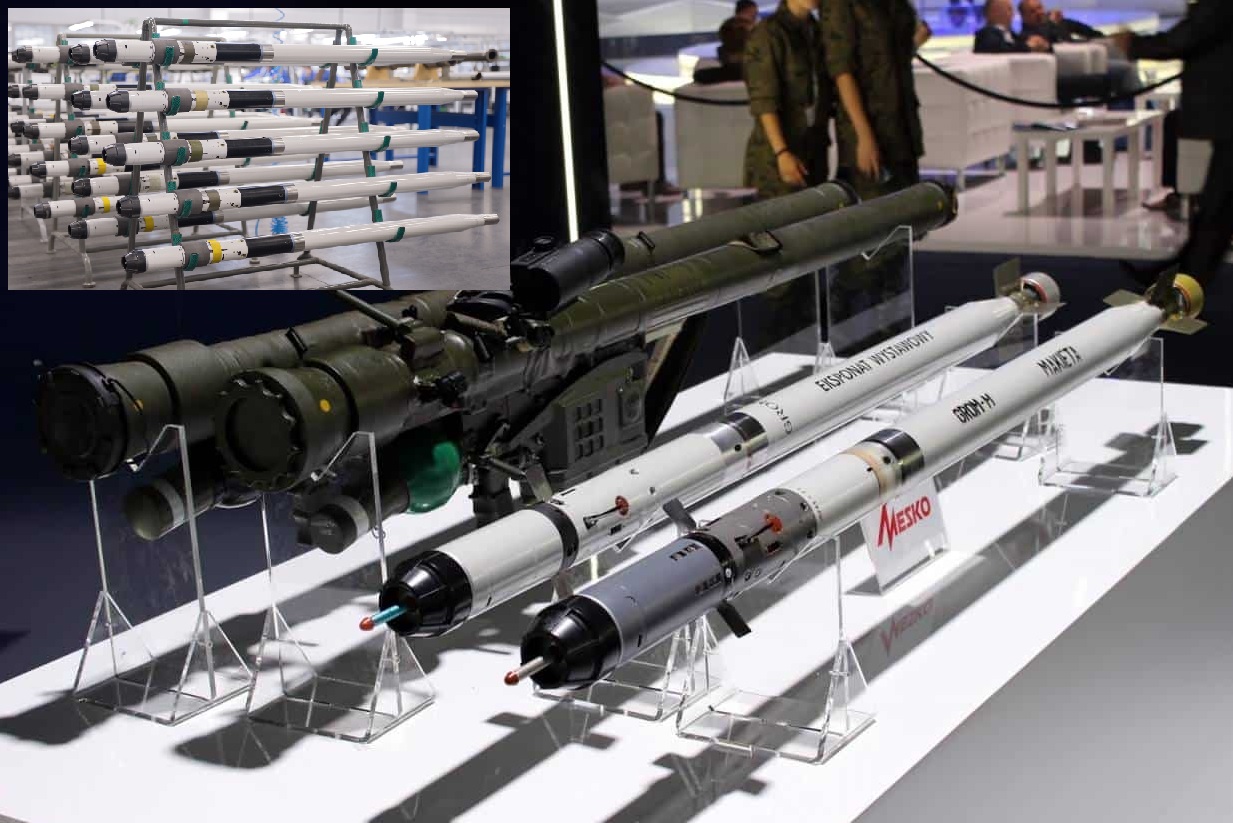
World
SKARŻYSKO-KAMIENNA, Poland — May 21, 2026 : Polish defense manufacturer MESKO S.A. has increased production of its Piorun man-portable air-defense system (MANPADS) missiles to more than six units per day as international demand for the combat-proven system continues to expand across Europe and NATO member states. The production increase was reported by Polish military analyst Jarosław Wolski after visiting the company’s manufacturing facility in Skarżysko-Kamienna. According to Wolski, the missiles are assembled manually from machine-produced components, with current daily output now exceeding six missiles. Production Expansion and SAFE Program Support MESKO is reorganizing its production lines to sustain higher manufacturing rates while simultaneously fulfilling domestic military contracts and growing export orders. The company is also preparing for future procurement projects expected under the European Union’s SAFE defense initiative. The SAFE (Security Action for Europe) program is a €150 billion European Union defense financing mechanism designed to accelerate military production and procurement among member states. Earlier in May 2026, Poland became the first EU member state to formally join the initiative after securing a €43.7 billion defense loan aimed at supporting defense modernization and industrial expansion. A significant portion of the funding is expected to support domestic defense companies, including MESKO, enabling additional investment in missile manufacturing infrastructure and long-term production capacity. Piorun System Capabilities The Piorun, meaning “Thunderbolt” in Polish, is an upgraded version of Poland’s earlier Grom MANPADS. The system is designed to engage low-flying aircraft, helicopters, cruise missiles, and unmanned aerial vehicles. During the modernization process, the sensitivity of the missile’s infrared homing seeker was increased fourfold compared to the previous Grom system. The upgraded seeker improves target detection range while increasing resistance to infrared countermeasures and electronic interference. The missile carries a 1.82-kilogram warhead equipped with both proximity and impact fuzes. It has an operational range of up to 6,500 meters and can engage targets at altitudes of up to 4,000 meters. The missile reaches a maximum speed of approximately 660 meters per second. Combat Use and Export Growth International interest in the Piorun system increased significantly after Poland transferred an undisclosed number of launchers and missiles to Ukraine in early February 2022 following the beginning of Russia’s full-scale invasion. The system was subsequently used in combat operations against Russian aircraft, helicopters, and drones, contributing to its growing reputation in the international defense market. Its operational performance, combined with shortages of MANPADS inventories in several countries, has led to a rise in export demand. MESKO has secured export contracts for the Piorun system from multiple countries, including the United States, Norway, Sweden, Estonia, Latvia, and Belgium. Recent reports also indicate that France is evaluating the system for potential procurement. Future MANPADS Development Alongside efforts to expand current production, Poland is also preparing for future short-range air-defense requirements. The Polish Armaments Agency has launched preliminary market consultations regarding the development and procurement of a next-generation MANPADS intended to eventually replace the Piorun system in Polish military service. The expansion of Piorun production reflects Poland’s broader effort to strengthen domestic defense manufacturing capacity while supporting increasing European demand for short-range air-defense systems under ongoing regional security modernization programs.
Read More → Posted on 2026-05-21 17:43:26
World
WASHINGTON, — May 21, 2026 : The United States Department of the Treasury on Thursday announced sanctions against nine individuals accused of supporting Hezbollah and undermining Lebanon’s sovereignty through political, diplomatic, and security networks linked to the Iran-backed group. The sanctions target four Hezbollah members of parliament, two senior Lebanese security officials, and Iran’s ambassador to Lebanon. According to the Treasury Department, the designated individuals used their official positions inside Lebanon’s political and security institutions to facilitate Hezbollah’s activities and obstruct efforts aimed at restoring state authority and stability. The sanctioned Hezbollah parliamentarians are Hassan Fadlallah, Ibrahim al-Mousawi, Hussein al-Hajj Hassan, and Mohammad Fanich. U.S. officials alleged that the lawmakers helped expand Hezbollah’s political influence while supporting the group’s broader operational objectives inside Lebanon. The Treasury Department also imposed sanctions on Lebanese security officials Samir Hamada and Khattar Nasser el-Din. U.S. authorities accused the two officials of abusing their institutional authority and access within Lebanon’s security apparatus to benefit Hezbollah and protect the group’s operational infrastructure. Iran’s Ambassador to Lebanon, Mohammad Reza Sheibani, was also included in the sanctions package. The Treasury accused Sheibani of coordinating Iranian support for Hezbollah and interfering in Lebanon’s internal affairs in violation of diplomatic norms and Lebanese sovereignty. The U.S. designation follows recent action by Lebanese authorities, who withdrew Sheibani’s diplomatic accreditation and declared him persona non grata after accusing him of violating diplomatic conventions and interfering in domestic political matters. In a statement released alongside the sanctions announcement, U.S. Treasury Secretary Scott Bessent said Hezbollah continues to obstruct Lebanon’s path toward stability and reconstruction by maintaining its armed structure and influence within state institutions. “Hezbollah is a terrorist organization and must be fully disarmed,” Bessent said. He further stated that the Treasury Department would continue targeting officials and individuals accused of enabling Hezbollah’s activities and supporting the group’s operations inside Lebanon. Under the sanctions, all property and financial interests belonging to the designated individuals that fall under U.S. jurisdiction are blocked. The measures also prohibit U.S. citizens and entities from engaging in transactions or business dealings with them. According to the Treasury Department, Hezbollah relies on political allies and loyalists positioned within Lebanon’s government and security agencies to preserve its military and logistical networks outside the authority of the Lebanese Armed Forces. U.S. officials stated that these networks assist Hezbollah in bypassing financial oversight, maintaining supply routes, and exerting influence over state institutions. The sanctions are part of broader U.S. efforts to increase pressure on Hezbollah and its regional support structure. The United States has repeatedly accused Iran of providing financial, military, and logistical support to Hezbollah, which Washington officially designates as a terrorist organization. U.S. officials stated that the latest measures are intended to support Lebanon’s sovereignty, strengthen the authority of state institutions, and counter activities that undermine peace, reconstruction, and long-term stability in the country.
Read More → Posted on 2026-05-21 17:57:14
World
WASHINGTON, — May 21, 2026 : The United States has deployed the USS Nimitz Carrier Strike Group into the Caribbean Sea as the U.S. Department of Justice unsealed a federal indictment against former Cuban leader Raúl Castro and five former Cuban officials over the 1996 shootdown of two civilian aircraft operated by the Miami-based exile organization Brothers to the Rescue. The coordinated timing of the naval deployment and legal action reflects an expanded U.S. pressure campaign against Cuba, combining military positioning, sanctions enforcement, intelligence monitoring, and judicial measures amid broader regional tensions involving Venezuela and Caribbean maritime security. Indictment Over 1996 Shootdown The indictment, announced on May 20 during a press conference at Miami’s Freedom Tower, accuses Castro and the co-defendants of murder, conspiracy to kill U.S. nationals, and destruction of aircraft in connection with the February 24, 1996 incident in which Cuban Air Force MiG-29 and MiG-23 fighter aircraft shot down two unarmed Cessna 337 Skymaster planes over international waters south of Florida. The aircraft belonged to Brothers to the Rescue, a Miami-based exile organization known for conducting humanitarian and reconnaissance flights over the Florida Straits. Four individuals were killed in the incident, including three U.S. citizens. According to U.S. officials, Castro was serving as Cuba’s defense minister at the time and oversaw the military chain of command responsible for authorizing the interception operation. Acting U.S. Attorney General Todd Blanche stated that the United States would continue pursuing accountability for attacks on American citizens regardless of the time elapsed since the incident. Jason Reding Quiñones, U.S. Attorney for the Southern District of Florida, stated that investigators concluded the Cuban military command structure approved the operation before the aircraft were intercepted and destroyed. Cuban authorities rejected the charges and defended the 1996 operation, maintaining that the Brothers to the Rescue aircraft had repeatedly violated Cuban airspace. Cuban President Miguel Díaz-Canel criticized the U.S. action and reiterated Havana’s longstanding position regarding the incident. USS Nimitz Carrier Strike Group Enters Caribbean At the same time, United States Southern Command confirmed that the USS Nimitz Carrier Strike Group entered the Caribbean Sea following completion of the Southern Seas 2026 deployment. The strike group includes the aircraft carrier USS Nimitz, Carrier Air Wing 17, the guided-missile destroyer USS Gridley, and the fleet replenishment oiler USNS Patuxent. The deployment marks the first major U.S. carrier presence in the Caribbean in 2026 and significantly increases American airborne surveillance, electronic warfare, and maritime monitoring capabilities across the northern Caribbean and surrounding sea lanes. Unlike previous regional operations, the current deployment does not include amphibious assault ships or Marine Expeditionary Units, indicating the mission is centered on deterrence, maritime security, intelligence collection, and sanctions enforcement rather than preparations for ground operations. Carrier Air Wing 17 operates F/A-18E/F Super Hornet multirole fighters, EA-18G Growler electronic attack aircraft, E-2D Advanced Hawkeye airborne early warning aircraft, and MH-60 Seahawk helicopters assigned to anti-submarine warfare and maritime patrol missions. Final Operational Transit for USS Nimitz The USS Nimitz departed Bremerton, Washington, on March 7 for its final operational transit ahead of planned inactivation and reactor defueling in Norfolk, Virginia. Because the carrier cannot transit the Panama Canal due to size limitations, the strike group sailed around Cape Horn and through the Strait of Magellan before entering the Atlantic Ocean. Prior to arriving in the Caribbean, the strike group conducted multinational exercises and interoperability operations with Brazil, Argentina, Chile, and Colombia during Southern Seas 2026, a pre-planned deployment focused on maritime security coordination and regional naval cooperation. USS Nimitz remains the longest-serving active aircraft carrier in the U.S. Navy. The nuclear-powered carrier displaces approximately 100,020 long tons at full load, measures 332.8 meters in length, and is capable of speeds exceeding 31 knots. Pressure Campaign on Cuba and Venezuela The deployment coincides with broader U.S. sanctions enforcement efforts targeting maritime fuel shipments between Venezuela and Cuba. Since early 2025, Washington has increased restrictions on tanker traffic supplying Cuban ports, particularly following the January 2026 U.S. operation that resulted in the capture of Venezuelan leader Nicolás Maduro. The Cuban government stated earlier this month that national diesel and oil reserves had been largely exhausted, contributing to severe fuel shortages and repeated electrical grid failures across Havana, Santiago de Cuba, Holguín, and Matanzas. Power outages lasting between 12 and 18 hours have disrupted transportation, telecommunications, industrial operations, and public services throughout the island. U.S. officials have also linked the current pressure campaign to wider geopolitical concerns involving Cuba’s reported security cooperation with China and Russia. Secretary of State Marco Rubio recently referenced Cuban links to Chinese intelligence activity and Russian military coordination in the region. CIA Director John Ratcliffe reportedly warned Cuban officials earlier this month that the timeline for diplomatic engagement with Washington was narrowing as U.S. sanctions and maritime enforcement measures intensified. President Donald Trump also publicly referenced Cuba during remarks on Wednesday, underscoring the administration’s continued focus on Havana as part of its broader regional security strategy. U.S. officials stated that the current operation remains focused on maritime domain awareness, intelligence collection, sanctions enforcement, and regional deterrence, with no amphibious or expeditionary ground forces currently assigned to the mission.
Read More → Posted on 2026-05-21 18:07:16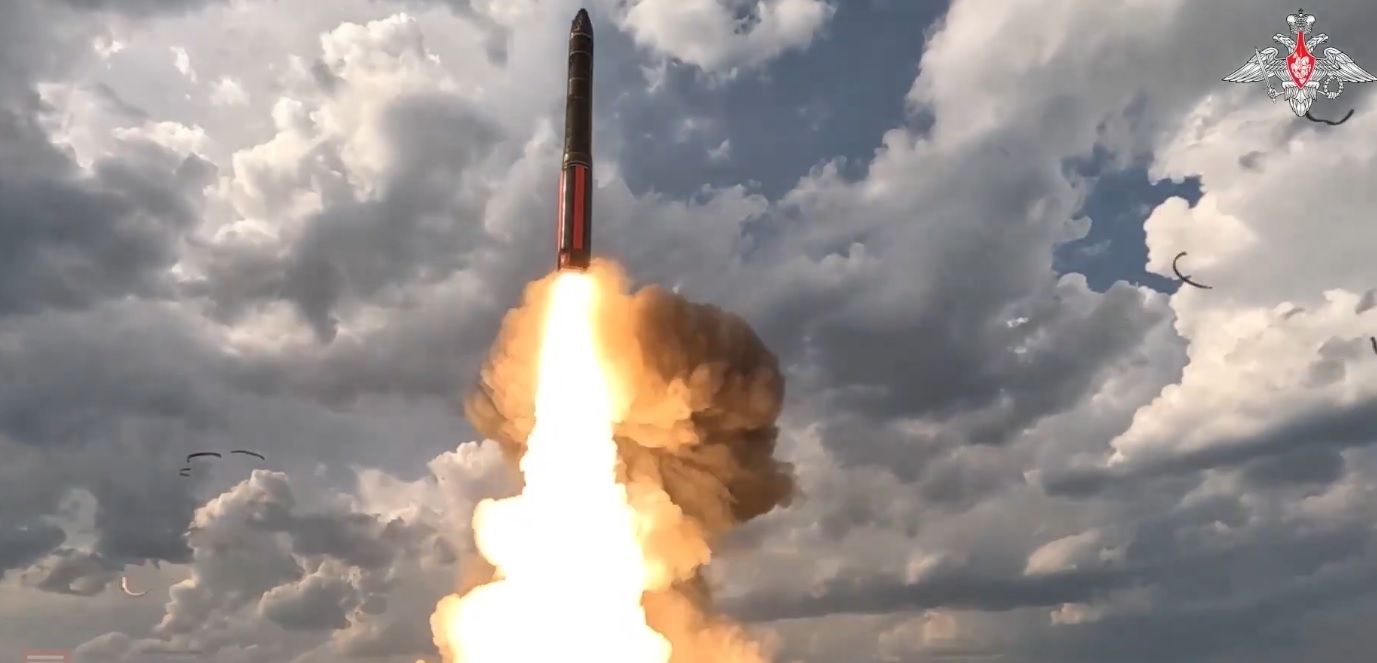
World
MOSCOW, — May 21, 2026 : Russia launched a Yars intercontinental ballistic missile (ICBM) during large-scale joint nuclear exercises with Belarus, as Moscow and Minsk carried out one of their most extensive strategic readiness drills in recent years involving land, air, and naval nuclear-capable forces. The three-day exercises, conducted from May 19 to May 21, included the operational deployment of strategic missile systems, long-range aviation assets, naval forces, and mobile missile units across Russia and Belarus. A major feature of the drills was the transfer of actual nuclear munitions to military units for operational training purposes, marking the first time live nuclear payloads were used during such joint tactical exercises. According to the Russian Defense Ministry, the Yars ICBM was launched from the Plesetsk Cosmodrome in northern Russia toward the Kura testing range in the Kamchatka region in the country’s Far East. Russian officials stated that the missile successfully reached its designated target area. The Yars missile system is a road-mobile intercontinental ballistic missile capable of carrying multiple independently targetable reentry vehicles (MIRVs). The system has a reported operational range exceeding 10,000 kilometers, enabling it to strike targets across Europe and North America. Russian military officials stated that the exercises were designed to test combat readiness, command coordination, and the operational handling of strategic and tactical nuclear systems under simulated wartime conditions. For the first time during joint Russian-Belarusian nuclear drills, live nuclear munitions were formally transferred to missile and aviation units operating in both countries. Previous exercises of this type generally relied on inert or mock warheads used to simulate the weight and electronic characteristics of actual nuclear payloads. The Russian Defense Ministry stated that military personnel practiced the transportation, storage, security, loading, and deployment of active nuclear munitions at field storage facilities and operational missile positions. Belarusian defense authorities confirmed that Belarusian crews participated in the preparation and handling of nuclear-capable systems stationed on Belarusian territory in coordination with Russian forces. Russia has maintained tactical nuclear weapons in Belarus following agreements announced in 2023, with deployment activities beginning in 2025. The exercises involved approximately 64,000 military personnel from both countries, according to Russian defense data. Naval components included 73 surface warships and 13 submarines, including eight submarines equipped with nuclear-capable ballistic missiles. More than 140 aircraft participated in the drills, including Tu-95MS strategic bombers and MiG-31 aircraft capable of carrying Kinzhal hypersonic missiles. Ground formations included over 200 mobile missile launchers and associated support systems deployed across multiple training areas. In addition to the Yars launch, Russian forces conducted a submerged launch of a Sineva submarine-launched ballistic missile. The drills also included launches of Kinzhal hypersonic missiles and Zircon hypersonic cruise missiles from naval platforms operating in northern waters, including the Barents Sea. Belarusian combat crews separately carried out a practical launch of a Russian-made Iskander-M short-range ballistic missile at the Kapustin Yar testing range in Russia as part of the joint operational training program. Russian President Vladimir Putin and Belarusian President Alexander Lukashenko observed the final stage of the exercises through a video conference link on Thursday. During the broadcast, Putin stated that the drills were intended to improve coordination between strategic and tactical nuclear forces under conditions involving potential external aggression. Russian officials described the exercises as defensive in nature and aimed at maintaining the operational readiness of the Union State’s nuclear deterrence forces. Belarusian authorities also stated that the exercises were planned military activities and were not directed against any specific third party. The drills were conducted amid heightened regional security measures near Belarus’ borders. In recent weeks, Ukraine has strengthened security along its northern frontier with Belarus due to concerns regarding possible cross-border military activity connected to the ongoing conflict in the region.
Read More → Posted on 2026-05-21 18:15:50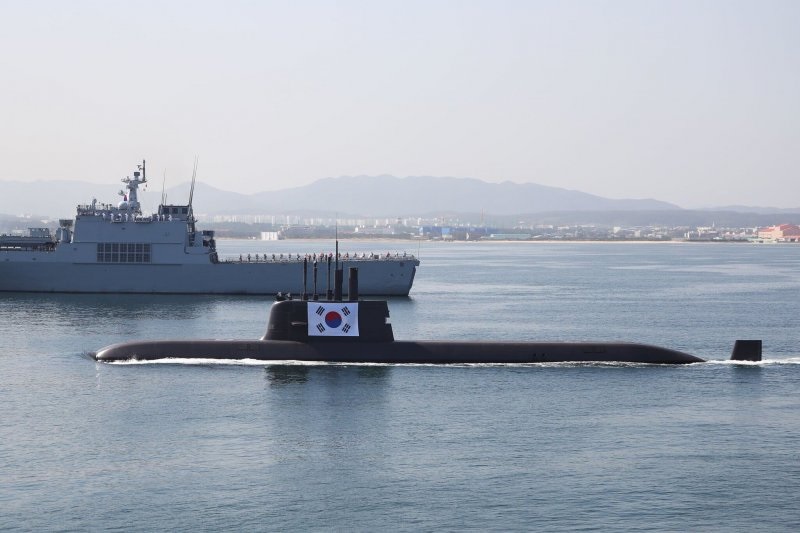
World
SEOUL, — May 22, 2026 : South Korea has officially initiated the formal military acquisition process for nuclear-powered submarines, marking a significant step in the country’s long-term effort to strengthen its underwater naval capabilities and expand strategic maritime operations. According to a newly disclosed Republic of Korea Navy document, the Navy recently submitted a formal Statement of Operational Requirements to the Joint Chiefs of Staff (JCS), beginning the first official stage required for the introduction of a new strategic weapons system into military service. The document, which was provided to Representative Kang Dae-sik of the main opposition People Power Party and member of the National Assembly’s National Defense Committee, outlines the operational necessity of the programme along with key military requirements. These include projected deployment timelines, desired operational capabilities, technical specifications, and the total number of submarines planned for acquisition. Administrative Review and Development Process The Joint Chiefs of Staff is currently reviewing the Navy’s proposal and is expected to hold a joint meeting later this month to finalize the operational requirements. Once the requirements receive formal approval, the programme will advance into preliminary research and feasibility assessments. The next stages are expected to include consultations with budget authorities regarding overall programme costs, followed by development planning, industrial coordination, and eventual construction phases. South Korean military officials are reportedly considering the construction of at least four 5,000-ton-class nuclear-powered attack submarines designed for deployment after the mid-2030s. The vessels would use compact nuclear reactors, allowing them to remain submerged for significantly longer periods compared to conventional diesel-electric submarines. Military planners believe the extended endurance capability would improve long-range patrol operations, underwater surveillance, and maritime deterrence missions in surrounding regional waters. U.S.-South Korea Agreements The submarine initiative follows agreements reached during a summit between South Korean and U.S. leaders held in Gyeongju in October 2025. A joint fact sheet released after the summit confirmed that the United States approved South Korea’s plan to pursue nuclear-powered attack submarines and agreed to cooperate on advancing the programme’s technical and regulatory requirements. Washington also committed to discussions regarding potential pathways for nuclear fuel sourcing and support for South Korea’s efforts to secure rights related to uranium enrichment and spent fuel reprocessing. However, implementation of the summit agreements has progressed slowly in recent months, prompting the South Korean Navy to move forward with formal internal procedures to accelerate the project. To support further negotiations, U.S. Under Secretary of State for Political Affairs Allison Hooker is expected to visit Seoul in the coming weeks to launch bilateral working groups dedicated to implementing the summit agreements and expanding security cooperation discussions. Nuclear Fuel and Regulatory Challenges Despite the programme’s advancement, securing nuclear fuel remains one of the most significant unresolved issues. Representative Kang stated that the military has not yet provided a definitive explanation regarding how enriched uranium required for submarine reactors would be obtained. Under current nuclear cooperation arrangements, South Korea faces restrictions on independent uranium enrichment and the military use of nuclear materials. To operate nuclear-powered submarines independently, Seoul would require a separate agreement with Washington explicitly permitting the transfer and use of nuclear materials for military propulsion purposes. The issue is expected to become a central topic in upcoming bilateral negotiations between the two allies. Upcoming Government Roadmap The South Korean government is also preparing to announce a comprehensive roadmap for the programme, reportedly titled the Basic Plan for Nuclear-Powered Submarine Development. The roadmap is expected to outline the programme’s overall development timeline, construction strategy, operational objectives, and compliance measures related to international nuclear non-proliferation obligations. Officials are also expected to emphasize that the submarines will carry conventional weapons and serve a defensive military role. South Korea currently operates 21 conventionally powered submarines, including the domestically developed KSS-III class diesel-electric submarines with a displacement of approximately 3,000 tonnes. The proposed nuclear-powered fleet would represent a major advancement in propulsion capability and long-duration underwater operations for the Republic of Korea Navy. The latest submission to the Joint Chiefs of Staff formally places the programme into South Korea’s military acquisition framework, where operational standards, procurement scale, technical requirements, and deployment schedules will continue to undergo review before the project advances toward full-scale development and construction.
Read More → Posted on 2026-05-22 14:36:54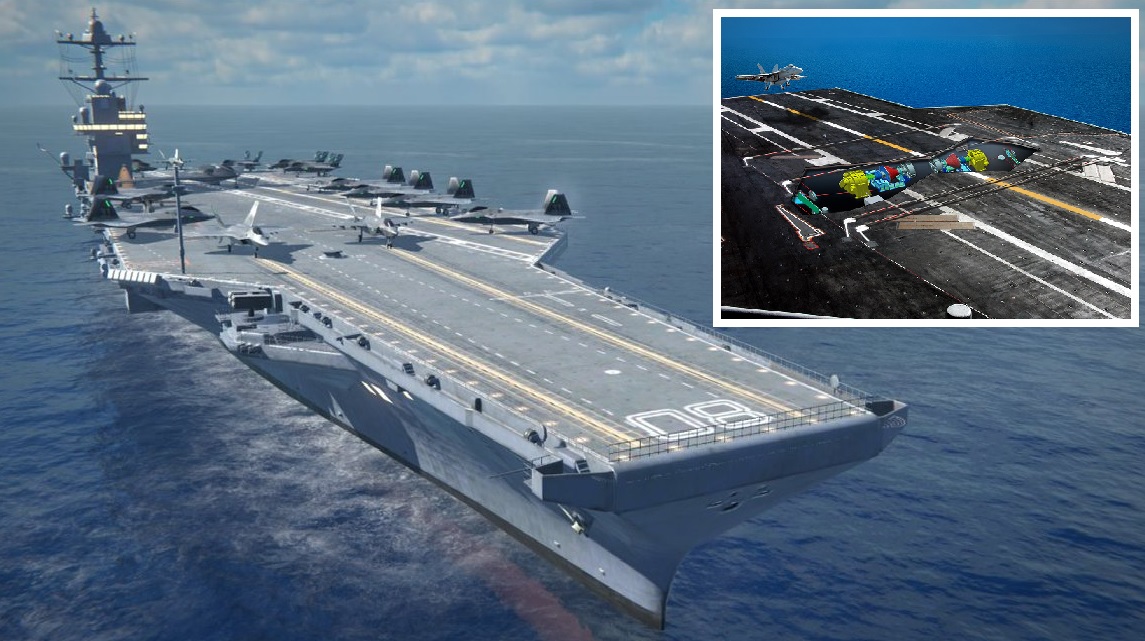
World
WASHINGTON, — May 22, 2026 : The U.S. Naval Air Systems Command has awarded General Atomics a $15.58 million contract modification to continue corrective engineering work on the Electromagnetic Aircraft Launch System (EMALS) aboard the future USS Enterprise (CVN-80), as the U.S. Navy continues refining critical launch technologies for its Ford-class aircraft carrier fleet. The modification, announced on May 21, 2026, focuses on resolving power-conversion reliability issues, launch-system integration deficiencies, and network modernization requirements affecting sortie generation capability and aircraft readiness aboard the carrier. The award forms part of the long-running contract framework under contract N0001914C0037, originally initiated in May 2014 for long-lead EMALS and Advanced Arresting Gear (AAG) procurement for both USS John F. Kennedy (CVN-79) and CVN-80. Contract Scope and Engineering Work According to the Navy, the latest modification funds several critical engineering activities tied to the EMALS architecture aboard CVN-80. These include the migration of the launch system’s network architecture toward a single-mode fiber infrastructure, correction of deficiencies involving the Prime Power Interface Subsystem transformer rectifiers, associated hardware installation aboard the carrier, and management of hardware storage through April 2028. Work under the contract will be performed in San Diego, California (70.7 percent), Boston, Massachusetts (18.9 percent), Tupelo, Mississippi (9.1 percent), and Lakehurst, New Jersey (1.3 percent). The Navy obligated $15,575,652 in shipbuilding and conversion funds at the time of award. The modification continues a multi-year sequence of corrective engineering contracts issued for both EMALS and Advanced Arresting Gear systems. Previous awards included $36.4 million in May 2021 for AAG Water Twister Mod-II shipsets, $9.63 million in September 2021 for Generation 3 EMALS position sensor blocks, $42.85 million in January 2023 for hardware and software integration work aboard CVN-79 and CVN-80, and $27.96 million in December 2023 for additional position sensor blocks and transformer rectifier engineering support. Transition From Steam Catapults to EMALS EMALS represents the most significant transition in U.S. Navy carrier launch technology since the introduction of the C-13 steam catapult aboard Cold War-era carriers. Steam catapult systems achieved high operational maturity aboard Nimitz-class carriers but required extensive steam piping, large freshwater generation capacity, and intensive maintenance support. Navy studies associated with the CVN-21 program determined that steam systems conflicted with reduced crew objectives and future requirements for launching lighter unmanned aircraft due to limitations in launch-force modulation. Integrated directly into the Ford-class electrical architecture, EMALS replaces steam propulsion with electromagnetic acceleration generated through a linear induction motor. The launch architecture consists of four principal subsystems: the linear induction motor, energy storage subsystem, power conversion subsystem, and digital control subsystem. The launch track functions as a linear electric motor approximately 91 meters long. Energy is stored kinetically through four rotating disk alternators, each generating 121 megajoules, providing a combined storage capacity near 484 megajoules. During launch operations, stored rotational energy is converted into electrical output while cycloconverters regulate voltage and frequency to sequentially energize stator coils that accelerate the aircraft shuttle. The system can accelerate aircraft weighing up to 45 tonnes to speeds approaching 240 km/h within two to three seconds, while maintaining recharge intervals near 45 seconds between launches. Unlike steam catapults that apply relatively fixed acceleration curves, EMALS continuously adjusts tow force using closed-loop digital feedback, improving launch precision while reducing structural stress on aircraft. Reliability Challenges and Operational Testing Despite its technological advantages, EMALS has faced significant reliability challenges throughout development and operational deployment. Developmental testing conducted at Joint Base McGuire-Dix-Lakehurst recorded 201 failed launches out of 1,967 attempts during a 2013 test sequence. Operational evaluations aboard USS Gerald R. Ford (CVN-78) later identified recurring issues involving transformer rectifiers, launch motor durability, synchronization software faults, overheating electrical components, braking chopper systems, and repeated position sensor failures. A January 2021 assessment by the Director, Operational Test and Evaluation measured achieved reliability at 181 Mean Cycles Between Operational Mission Failure (MCBOMF) following 3,975 launches conducted between November 2019 and September 2020. This remained substantially below the Navy’s target requirement of 4,166 MCBOMF. Subsequent evaluations by the Government Accountability Office concluded that EMALS and AAG reliability goals were unlikely to be fully achieved before the 2030s because several subsystems still required redesign and configuration refinement. However, operational performance has gradually improved. By June 2022, EMALS and AAG systems aboard CVN-78 had completed more than 10,000 launch and recovery cycles, although corrective modifications affecting transformer rectifiers, launch motors, braking systems, and sensors continued. USS Enterprise (CVN-80) Construction Status The USS Enterprise (CVN-80) is currently under construction at Huntington Ingalls Industries Newport News Shipbuilding in Virginia and is the third vessel in the Ford-class carrier program. Steel cutting for the carrier began in August 2017, while keel laying occurred on April 5, 2022. CVN-80 is also the first Ford-class carrier designed entirely within a fully digital manufacturing and design environment from the beginning of fabrication. The ship’s delivery timeline has experienced repeated delays. Originally scheduled for delivery in March 2028, the date later shifted to July 2030 before being revised again to March 2031. Navy officials attributed the delays to sequence-critical material shortages, supply chain disruptions, dry dock availability constraints, and the complexity associated with integrating advanced launch and combat-support systems during construction. Once completed, CVN-80 will displace approximately 100,000 tonnes at full load and measure 337 meters in length with a 41-meter beam. Propulsion will be provided through two Bechtel A1B nuclear reactors driving four shafts. The carrier is designed to support an embarked air wing of more than 75 aircraft depending on mission configuration. Compared with Nimitz-class carriers, Ford-class vessels aim to increase sortie generation rates by approximately 25 percent while operating with several hundred fewer personnel through increased automation and digital integration. Naval Heritage and Program Evolution The new carrier also preserves substantial U.S. naval heritage linked to previous vessels bearing the Enterprise name. Builders are integrating four original portholes recovered from the World War II-era USS Enterprise (CV-6) into the ship’s structure. In addition, sixteen tonnes of steel recovered from the decommissioned USS Enterprise (CVN-65) are being recycled into CVN-80 during construction. Although CVN-80 shares the same baseline architecture as CVN-78 and CVN-79, the carrier incorporates nearly a decade of corrective engineering improvements derived from operational testing and fleet experience. These modifications include revised EMALS hardware baselines, updated network architecture, modified power electronics, altered installation sequencing, and expanded digital integration between shipyard workflows and onboard systems. The broader Ford-class program has experienced persistent schedule and integration challenges because several advanced technologies — including EMALS, Advanced Arresting Gear, Advanced Weapons Elevators, Dual Band Radar systems, and the A1B reactor architecture — entered serial production while still undergoing developmental refinement. As a result, the continuing engineering modifications awarded across the Ford-class program have transformed the Navy’s next-generation carrier launch and recovery systems into a long-term iterative modernization effort focused on improving operational reliability, launch efficiency, and future carrier air wing integration.
Read More → Posted on 2026-05-22 14:45:06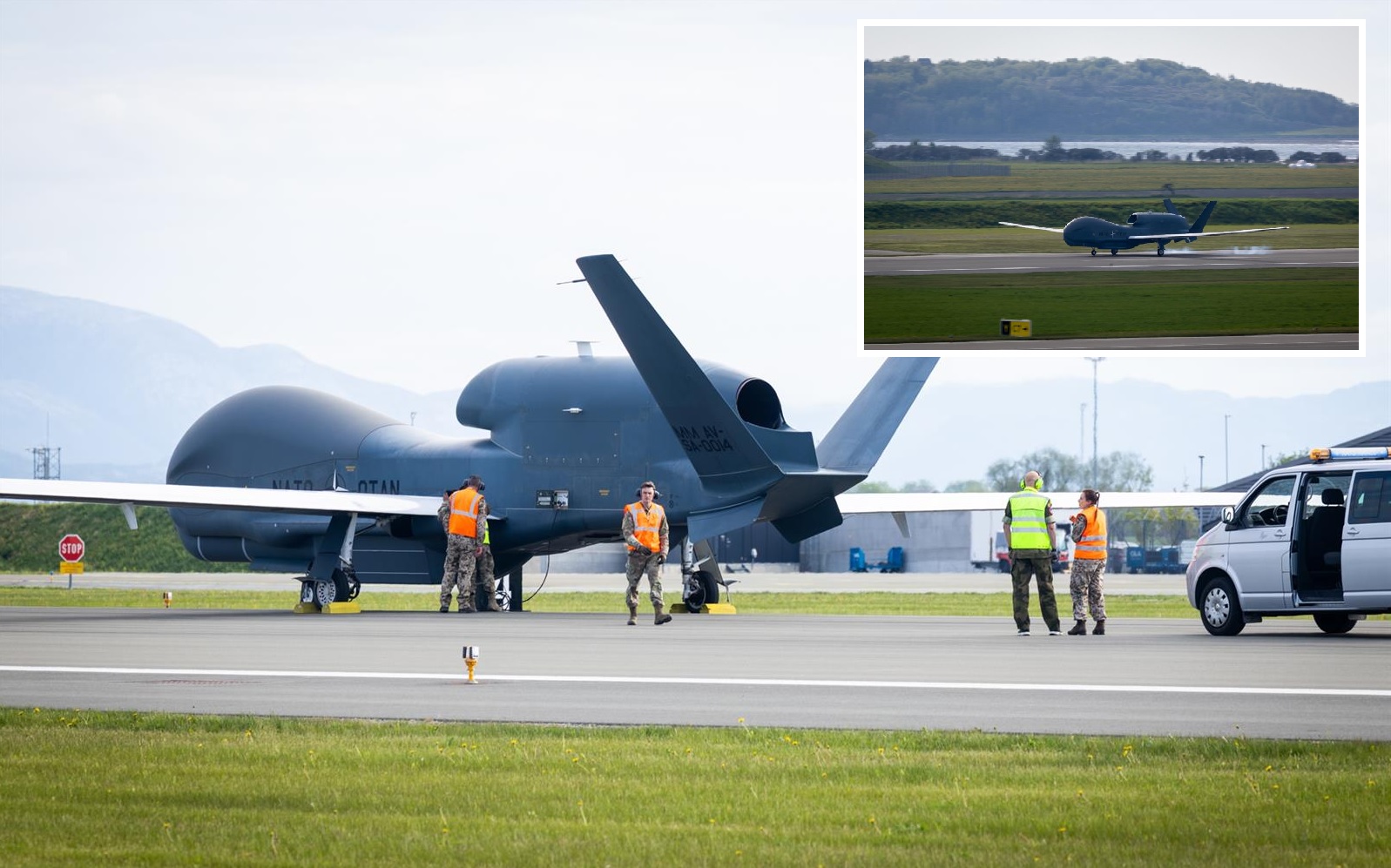
World
ORLAND, Norway, — May 22, 2026 : The NATO Intelligence, Surveillance and Reconnaissance Force (NISRF) has conducted the first-ever deployment of an RQ-4D Phoenix remotely piloted aircraft to Norway, marking a new operational milestone for NATO’s Alliance Ground Surveillance (AGS) programme and its expanding Agile Combat Employment (ACE) strategy. The high-altitude, long-endurance (HALE) unmanned aircraft arrived at Ørland Air Base on May 21, 2026. The deployment represents only the third time the RQ-4D Phoenix has operated outside its main operating base at Sigonella Air Base in Sicily, Italy. According to NATO, the mission demonstrated the NISRF’s capability to conduct persistent intelligence, surveillance and reconnaissance (ISR) operations from dispersed and flexible locations beyond southern Europe. The deployment follows a similar operation conducted from Finland in 2025 and reflects NATO’s broader effort to improve operational resilience and survivability through distributed air operations. Expanding NATO’s Agile Combat Employment Operations The operation was carried out under NATO’s Agile Combat Employment concept, which focuses on dispersing aircraft and support infrastructure across multiple operating locations rather than relying solely on fixed main bases. NATO considers the concept important for maintaining operational continuity and improving survivability in contested or high-intensity operational environments. Brigadier General John B. Creel, Commander of the NISRF, stated that the deployment highlighted the flexibility and readiness of the multinational ISR force. “This underscores the flexibility and readiness of the NATO Intelligence, Surveillance and Reconnaissance Force,” Creel said. “Operating the RQ-4D Phoenix from Norway highlights our ability to deliver ISR effects wherever required in support of our Alliance.” NATO officials stated that the successful deployment confirmed the Alliance’s ability to sustain ISR operations from decentralized northern locations while continuing to provide real-time intelligence support to NATO commanders. Coordination With Norwegian Forces Preparations for the deployment included advance training conducted by personnel from the NISRF Training Centre. Local Norwegian support teams received specialized instruction to ensure aircraft procedures, mission support operations and maintenance activities could be integrated efficiently at Ørland Air Base. The operation was conducted in close coordination with the Royal Norwegian Air Force and the 132 Air Wing stationed at Ørland. Colonel Ole Marius Tørrisplass, Base Commander and Chief of the 132 Air Wing, said the deployment strengthened interoperability and operational cooperation between Norwegian forces and NATO. “Hosting the RQ-4D Phoenix in Norway is a significant step in strengthening our cooperation with NISRF and NATO,” Tørrisplass stated. “This reflects our shared commitment to collective defence and operational readiness.” NATO Alliance Ground Surveillance Capability The NISRF is a multinational NATO force responsible for operating the Alliance’s fleet of five NATO-owned RQ-4D Phoenix aircraft. The system forms the core of NATO’s AGS capability and provides continuous ISR support for NATO operations and the Supreme Allied Commander Europe. The AGS programme was jointly acquired by 15 NATO member states: Bulgaria, Czechia, Denmark, Estonia, Germany, Italy, Latvia, Lithuania, Luxembourg, Norway, Poland, Romania, Slovakia, Slovenia and the United States. The capability achieved initial operational capability in February 2021. RQ-4D Phoenix Capabilities The RQ-4D Phoenix is derived from the United States Air Force RQ-4 Global Hawk Block 40 but has been modified extensively to meet NATO operational requirements. The aircraft is capable of remaining airborne for more than 32 hours and has an operational range of approximately 16,000 kilometres. It can operate at altitudes of up to 18,000 metres, or around 60,000 feet, enabling wide-area surveillance from significant stand-off distances. The system is equipped with the Multi-Platform Radar Technology Insertion Programme (MP-RTIP) radar and Synthetic Aperture Radar (SAR) sensors, allowing continuous detection and tracking of moving targets while generating high-resolution radar imagery in all weather conditions, both day and night. The aircraft has a wingspan of 39.8 metres, a length of 14.5 metres and a maximum take-off weight of 14,628 kilograms. It is powered by a Rolls-Royce AE 3007H turbofan engine and uses both line-of-sight and beyond-line-of-sight wideband communication links for long-range data transmission to NATO command centres. NATO stated that the successful operation from Norway demonstrated the ability of the RQ-4D Phoenix fleet to support Alliance ISR missions from dispersed operating locations while maintaining persistent situational awareness across multiple operational theatres.
Read More → Posted on 2026-05-22 14:53:50
World
NAGASAKI / ŌMINATO, Japan, — May 22, 2026 : The Japan Maritime Self-Defense Force (JMSDF) officially commissioned JS Natori (FFM-9), the ninth vessel of the Mogami-class multirole frigate program, during delivery and self-defense ship flag-raising ceremonies held on May 21, 2026, at Mitsubishi Heavy Industries’ (MHI) Nagasaki Shipyard. The ceremony was attended by MHI President Eisaku Ito and Vice Admiral Tatsuya Fukuda, Commandant of the Sasebo District. Commanded by Commander Yoichiro Hiratsuka, the vessel was assigned to Patrol and Defense Squadron 5 of the newly established Patrol and Defense Group based at Ōminato Naval Base in Aomori Prefecture. The frigate is named after the Natori River in Miyagi Prefecture in northeastern Japan. It becomes the second Japanese warship to carry the name following a Nagara-class light cruiser that served with the Imperial Japanese Navy during World War II. Construction and Commissioning JS Natori was built under Japan’s fiscal year 2022 procurement plan at Mitsubishi Heavy Industries’ Nagasaki Shipyard & Machinery Works at a cost of approximately 51.4 billion yen ($323 million). The ship was laid down on July 6, 2023, launched on June 24, 2024, and formally commissioned into JMSDF service on May 21, 2026. The construction timeline reflects Japan’s continued effort to accelerate naval shipbuilding amid regional maritime security developments. Natori is the third Mogami-class frigate to enter service with the Mk 41 Vertical Launching System (VLS) installed from the outset, following JS Niyodo (FFM-7) and JS Yubetsu (FFM-8). The first six vessels of the class are scheduled to receive the Mk 41 VLS during future modernization refits. Automation-Focused Warship Design The Mogami-class has gained international attention for its extensive use of automation and reduced manpower requirements. The design reflects Japan’s long-term strategy to sustain naval operational capability despite demographic pressures and recruitment challenges affecting the Self-Defense Forces. While conventional JMSDF destroyers generally require crews of approximately 200 personnel, Mogami-class frigates operate with a complement of around 90 sailors. The bridge is normally operated by only four personnel, compared with seven or eight aboard older destroyers. A major factor enabling this reduction is the ship’s redesigned Combat Information Center (CIC). The CIC integrates radar, sonar, electronic warfare, tactical data, anti-submarine warfare operations, and engineering controls into a centralized real-time operational picture. The system includes a 360-degree circular display wall, 14 multifunction consoles, four additional consoles, and two large tactile command tables. The layout allows senior officers and operators to share situational awareness more efficiently while supporting faster operational decision-making. The architecture is also designed to support future integration with unmanned aerial vehicles (UAVs), unmanned surface vehicles (USVs), and unmanned underwater vehicles (UUVs), positioning the frigate as a networked command node within Japan’s evolving maritime warfare structure. Specifications and Combat Systems The Mogami-class features a stealth-oriented hull design intended to reduce radar cross-section and improve survivability. JS Natori is also part of the first JMSDF surface combatant class to employ a combined diesel and gas (CODAG) propulsion system. The vessel has a standard displacement of 3,900 tons and a full-load displacement of approximately 5,500 tons. It measures 132.5 meters in length, with a beam of 16.3 meters and a draft of 9 meters. The propulsion system consists of one Rolls-Royce MT30 gas turbine and two MAN 12V28/33D STC diesel engines, enabling speeds exceeding 30 knots. JS Natori is equipped with a modern multirole weapons suite that includes: One BAE Systems 5-inch (127 mm) Mk 45 Mod 4 naval gun Two Japan Steel Works 12.7 mm remote weapon systems One 16-cell Mk 41 Vertical Launching System Eight Type 17 anti-ship missiles One Raytheon SeaRAM close-in weapon system Type 12 torpedoes Simplified mine-laying capability The ship’s sensor package includes the Mitsubishi OPY-2 AESA multifunction radar, OAX-3 electro-optical/infrared sensor, Hitachi OQQ-11 sonar, and NEC OQQ-25 anti-submarine warfare sonar system featuring variable depth and towed-array capabilities. Future upgrades are expected to include unmanned underwater and unmanned surface systems for mine countermeasure operations. Growing International Interest The commissioning of JS Natori comes amid increasing international interest in Mogami-derived frigate designs. Australia recently selected an upgraded Mogami-based design for its future general-purpose frigate program, while New Zealand and Indonesia have also expressed interest in the platform. At the same time, Japan’s Ministry of Defense has begun procurement of a larger and more capable successor known as the New FFM or 06FFM. Designed by Mitsubishi Heavy Industries, the New FFM will feature a larger hull and significantly expanded missile capacity, including 32 Mk 41 VLS cells, double the number carried by the current Mogami-class configuration. The future class is expected to incorporate enhanced anti-air and anti-submarine warfare capabilities, including the Type 23 ship-to-air guided missile and an upgraded long-range version of the Type 12 surface-to-ship missile. The first two New FFM vessels are scheduled to enter service in fiscal year 2028. Under Japan’s current naval procurement schedule, all 12 ships of the class are expected to be commissioned by fiscal year 2032.
Read More → Posted on 2026-05-22 15:06:18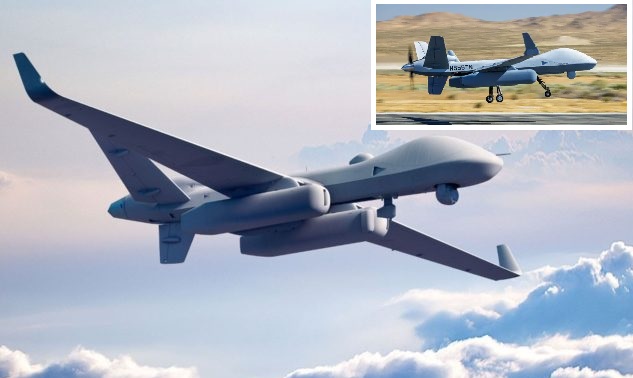
World
SAN DIEGO, Calif., — May 22, 2026 : General Atomics Aeronautical Systems, Inc. (GA-ASI) and Swedish defense manufacturer Saab have successfully completed the first flight of an MQ-9B remotely piloted aircraft equipped with LoyalEye Airborne Early Warning (AEW) radar pods, marking a significant milestone in the development of an unmanned airborne early warning capability. The validation flight was conducted on May 19, 2026, at GA-ASI’s Desert Horizon flight operations facility in Southern California using a company-owned MQ-9B aircraft. The test represents the first operational integration of Saab’s newly developed LoyalEye AEW system onto the MQ-9B platform following the strategic partnership announced between the two companies in 2025. The aircraft was fitted with Saab’s LoyalEye sensor pods featuring advanced Active Electronically Scanned Array (AESA) radar technology. The configuration includes specialized pods mounted under each wing housing the radar arrays, while an additional centerline pod contains common avionics and mission processing systems. According to the companies, the LoyalEye system is designed to provide early warning, long-range detection and tracking, and simultaneous monitoring of multiple airborne threats. The radar system is capable of detecting and tracking tactical air munitions, guided cruise missiles, drone swarms, fighter aircraft, and bomber aircraft. The capability operates using both line-of-sight communications and satellite communications (SATCOM) connectivity, allowing operators to monitor the radar picture remotely from command centers over extended distances. The integration of AEW capabilities onto a Medium-Altitude, Long-Endurance (MALE) uncrewed aircraft is intended to provide militaries with a persistent and comparatively cost-effective airborne surveillance platform. The MQ-9B platform offers endurance exceeding 30 to 40 hours, depending on configuration and payload, with an operational range of approximately 6,900 miles. The extended endurance allows continuous radar coverage in remote or contested operational areas without exposing onboard aircrews to risk. GA-ASI President David R. Alexander said the AEW capability for the MQ-9B will provide critical airborne sensing against tactical air munitions, guided missiles, drones, fighter aircraft, bomber aircraft, and other aerial threats. He added that medium-altitude, long-endurance unmanned aircraft provide among the highest operational availability rates while keeping aircrews out of harm’s way. Saab Senior Vice President and Head of Business Area Surveillance Carl-Johan Bergholm stated that the integration of LoyalEye with the MQ-9B is intended to complement existing crewed airborne early warning platforms by providing persistent surveillance, improved situational awareness, greater operational flexibility, and extended operational reach. The LoyalEye AEW capability is planned for the broader MQ-9B family, including the SkyGuardian, maritime-focused SeaGuardian, the United Kingdom’s Protector RG.1, and the developing MQ-9B STOL (Short Takeoff and Landing) variant designed for naval and aircraft carrier operations. The companies stated that the first flight marks the beginning of a multi-month development and evaluation campaign expected to continue through 2026. A full-capability demonstration flight is planned later this year before the system is made available to existing MQ-9B operators and prospective international customers. The MQ-9B platform currently supports a wide range of missions including intelligence, surveillance, reconnaissance (ISR), maritime patrol, strike operations, and anti-submarine warfare. The addition of the LoyalEye AEW pods further expands the aircraft’s operational role into airborne early warning and air surveillance missions.
Read More → Posted on 2026-05-22 15:11:17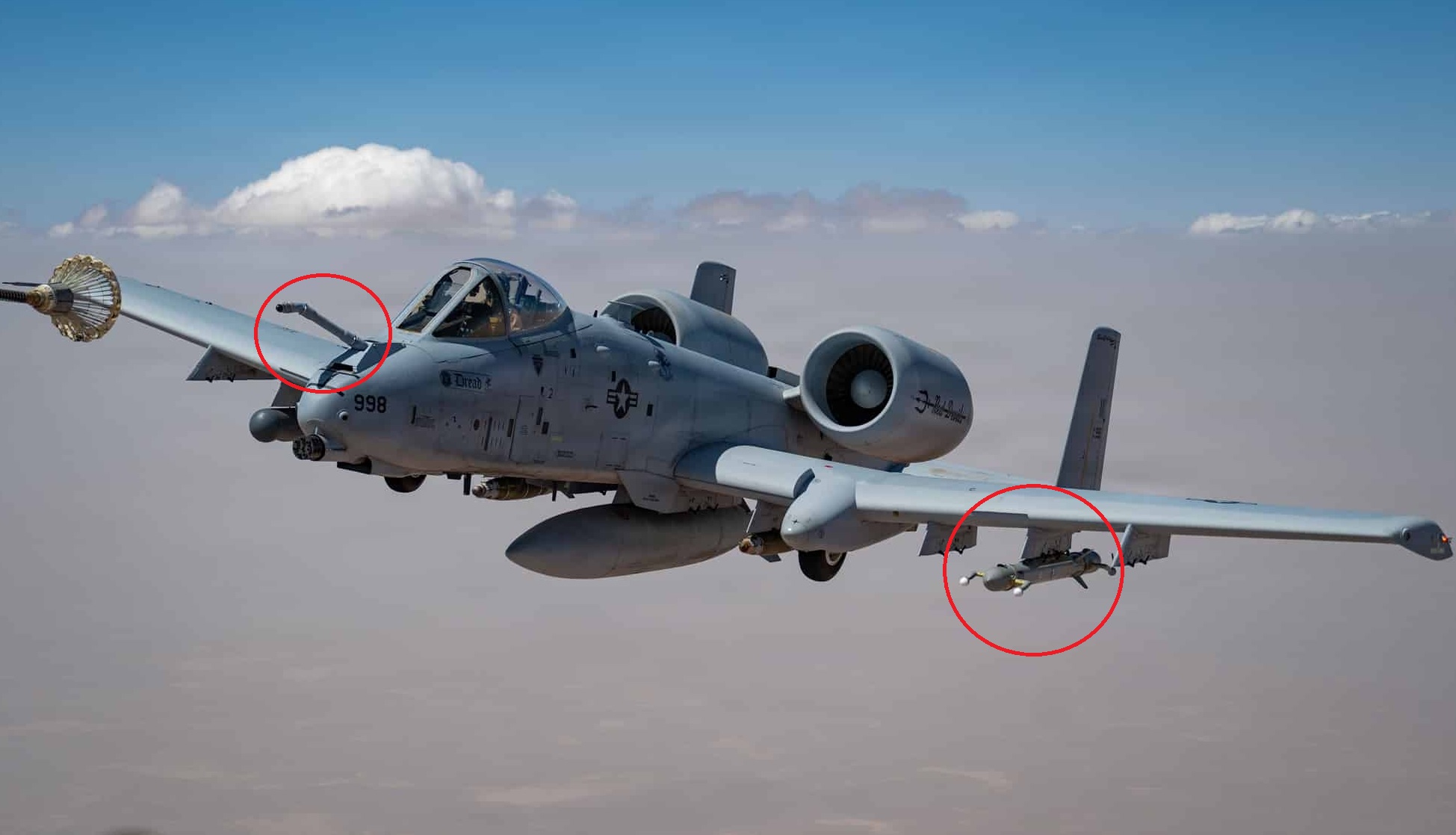
World
U.S. Central Command Area of Responsibility, — May 22, 2026 : The United States Air Force has confirmed that A-10C Thunderbolt II attack aircraft operating in the Middle East are now equipped with two major capability upgrades: a newly developed Probe Refueling Adapter and the advanced “Angry Kitten” electronic warfare (EW) pod. Photographs released by the U.S. Air Force on May 21, documenting operations conducted on May 9, show A-10Cs assigned to the Michigan Air National Guard’s 107th Fighter Squadron receiving fuel from an HC-130J Combat King II aircraft using the new adapter system. The images also confirmed the first publicly observed operational deployment of the Angry Kitten pod on the A-10C in a forward operational theater. The 107th Fighter Squadron, based at Selfridge Air National Guard Base, Michigan, deployed to the Middle East in early April 2026. Additional footage released on May 20 showed A-10Cs from Moody Air Force Base, Georgia, conducting the first operational employment of the adapter with an HC-130J on May 19. Probe Refueling Adapter Expands A-10C Tanker Compatibility The newly fielded Probe Refueling Adapter was developed to address an urgent aerial refueling limitation affecting A-10C operations in the region. The aircraft has traditionally relied on the KC-135 Stratotanker following the retirement of the KC-10 Extender fleet, while certification for refueling from the KC-46 Pegasus remains incomplete. Testing revealed that the A-10C’s comparatively low refueling speed created compatibility problems with the KC-46’s hydraulic boom system. The A-10C typically refuels at approximately 200 knots, significantly slower than the roughly 300 knots used by most U.S. fighter aircraft. The lower speed prevents the aircraft from maintaining sufficient aerodynamic stability with the KC-46’s boom, forcing the tanker to operate at unusually low speeds and altitudes while heavily loaded with fuel. To resolve the issue, the Air National Guard Air Force Reserve Command Test Center (AATC), in coordination with ARCWERX and industry partners, rapidly developed the Probe Refueling Adapter as a field-configurable solution. The adapter fits directly into the aircraft’s existing nose-mounted refueling receptacle, converting the A-10C from a boom-refueling configuration to a probe-and-drogue system. This allows the aircraft to refuel from C-130-based tankers, including the HC-130J, MC-130J, and KC-130J, which operate more effectively at lower speeds and altitudes compatible with the A-10C’s flight profile. The system completed its first successful test on April 2, 2026, following approval from the Air Refueling Certification Authority with support from the 418th Flight Test Squadron. According to the Air Force, operational flight line crews can install or remove the adapter within hours without requiring depot-level maintenance, enabling squadrons to switch between boom and probe refueling capability depending on mission requirements and tanker availability. Angry Kitten Pod Adds Modern Electronic Warfare Capability The released photographs also confirmed operational deployment of the Angry Kitten electronic warfare pod aboard A-10C aircraft in the Middle East. Originally developed in 2013 by the Georgia Tech Research Institute (GTRI) as a threat-emulation system for pilot training, the pod has evolved into a combat-capable Digital Radio Frequency Memory (DRFM)-based electronic warfare platform derived from the AN/ALQ-167 system. Unlike traditional jamming systems, Angry Kitten can detect, classify, record, manipulate, and retransmit hostile radio frequency signals in order to confuse enemy radar systems and generate false targets. The pod uses a cognitive electronic warfare architecture built around its “Technique Description Language”, combining high-speed processing hardware with adaptive software capable of selecting tailored responses against evolving threats. A key feature of the system is its rapid reprogrammability. Engineers and government operators can update jamming techniques and threat libraries in near real-time without returning the hardware to a contractor facility, allowing faster adaptation to unfamiliar or changing air defense systems. Before its operational deployment on the A-10C, the pod had been tested on multiple platforms, including the MQ-9 Reaper, F/A-18 Hornet, and C-130 Hercules. Its first documented combat employment occurred aboard F-16CJ Block 52 aircraft during Suppression of Enemy Air Defenses (SEAD) missions conducted as part of Operation Epic Fury. Enhanced Survivability for Operations in Contested Environments The integration of the Probe Refueling Adapter and Angry Kitten pod significantly expands the operational flexibility and survivability of the A-10C fleet in the U.S. Central Command theater. By enabling compatibility with additional tanker aircraft and providing advanced electronic countermeasures against modern radar-guided threats, the upgrades improve the aircraft’s ability to conduct close air support, combat support, maritime patrol, and other low-altitude missions in contested operational environments.
Read More → Posted on 2026-05-22 15:16:53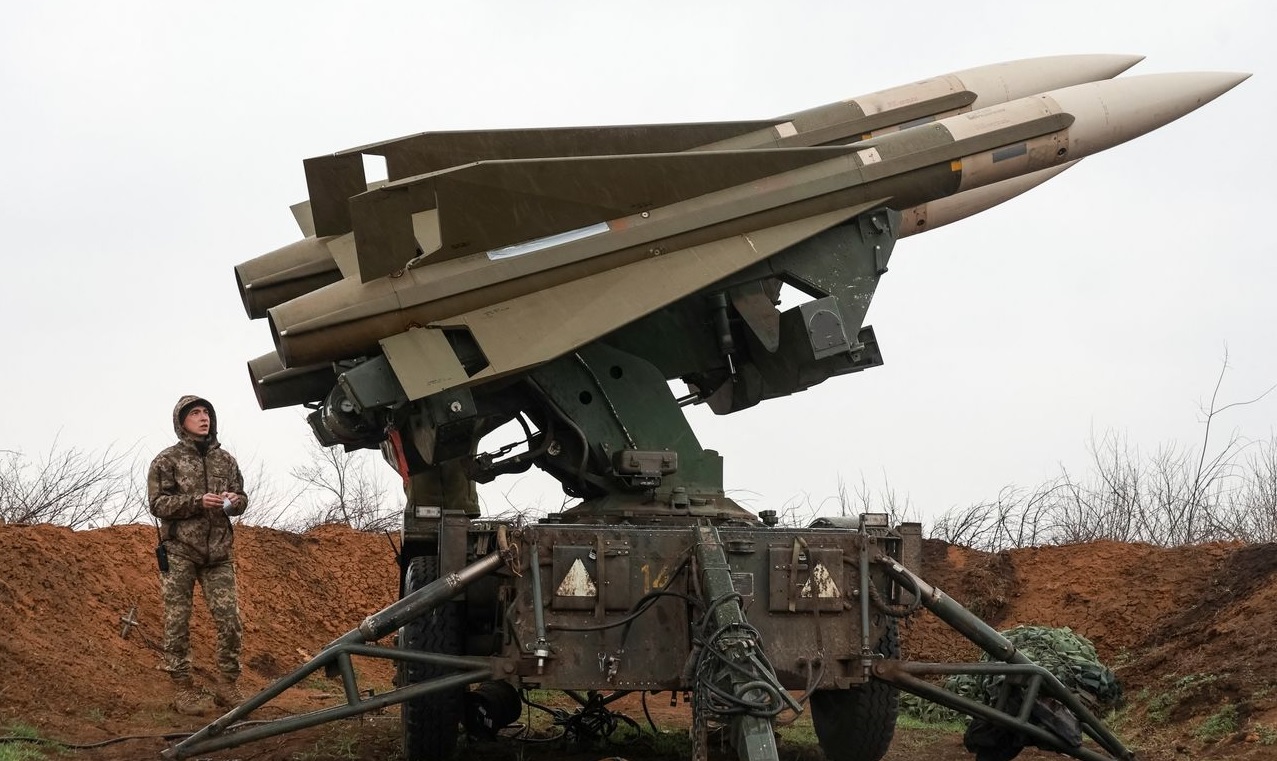
World
WASHINGTON, — May 22, 2026 : The U.S. Department of State has approved a possible $108.1 million Foreign Military Sale (FMS) to Ukraine for the sustainment and support of HAWK air defense missile systems, according to a notification issued by the Defense Security Cooperation Agency (DSCA). The package is intended to maintain and enhance Ukraine’s existing FrankenSAM HAWK air defense configurations, which combine Western missile technologies with Soviet-era launchers and infrastructure already operated by Ukrainian forces. According to the DSCA notification transmitted to Congress on May 21, 2026, Ukraine requested a comprehensive support package that includes erectable mast trailers, major system modifications, maintenance support, spare parts, consumables, accessories, repair and return services, and U.S. government and contractor engineering, technical, and logistics support. The notification, designated as No. 26-51, is the first official DSCA announcement to formally use the term “FrankenSAM” in relation to HAWK system support. The FrankenSAM initiative was developed to accelerate deployment of air defense capabilities by integrating Western missiles, including the MIM-23 HAWK, with Ukraine’s Soviet-era air defense systems. The U.S. State Department stated that the proposed sale supports American foreign policy and national security objectives by strengthening the security of a partner country that contributes to political and economic stability in Europe. Officials added that the assistance would improve Ukraine’s ability to counter current and future aerial threats through a more capable integrated air defense network. The department further noted that Ukraine is expected to absorb the equipment and services without difficulty and emphasized that the proposed sale would not alter the basic military balance in the region or negatively affect U.S. defense readiness. The principal contractor for the program will be Sierra Nevada Corporation. The MIM-23 HAWK is a medium-range surface-to-air missile system originally developed by the United States during the 1960s. The system has an engagement range of approximately 45 to 50 kilometers and can intercept targets at altitudes of up to 20 kilometers. The missile travels at speeds of around Mach 2.4 and uses semi-active radar homing guidance. Despite its Cold War-era origins, upgraded HAWK systems remain operational in nearly 20 countries and continue to provide defense against aircraft, cruise missiles, and unmanned aerial systems. Within Ukraine’s layered air defense structure, the HAWK system operates as an intermediate-range platform between short-range systems such as Stinger and Avenger systems and long-range strategic systems including Patriot batteries. Ukraine has integrated HAWK equipment supplied by the United States, Spain, and the Netherlands into hybrid FrankenSAM configurations for operations against Russian drones, cruise missiles, and aircraft. Ukrainian units, including the 208th Kherson Anti-Aircraft Missile Brigade, have previously been documented operating HAWK launchers in southern operational areas. The newly approved package represents the third HAWK-related Foreign Military Sale provided to Ukraine over the past two years. Previous assistance efforts included refurbishment of fire units, missile repair components, spare parts, and additional logistics and sustainment support aimed at maintaining operational readiness of Ukraine’s air defense assets. The equipment and services will be delivered through the U.S. Foreign Military Sales program to sustain Ukraine’s existing HAWK air defense systems and support continued operational deployment.
Read More → Posted on 2026-05-22 15:30:32
World
WASHINGTON, — May 22, 2026 : The Trump administration has suspended a proposed $14 billion arms sale to Taiwan as the United States moves to preserve critical weapons stockpiles depleted during the ongoing military campaign against Iran, known as Operation Epic Fury. Acting Navy Secretary Hung Cao confirmed the decision during a Senate Appropriations Defense Subcommittee hearing, stating that the temporary pause was necessary to ensure the U.S. military maintains adequate munitions reserves for continued operations in the Middle East. “Right now we’re doing a pause in order to make sure we have the munitions we need for Epic Fury,” Cao told lawmakers. He added that the United States still possesses “plenty” of weapons and indicated that foreign military sales would resume once inventory levels stabilize. The delayed package for the Republic of China Armed Forces was originally expected to proceed in 2025 and includes several major defense systems, including F-16 Block 70 fighter aircraft, Patriot PAC-2 and PAC-3 surface-to-air missile systems, AGM-154C glide bombs, and MK-48 heavy torpedoes. Heavy Munitions Expenditure During Operation Epic Fury The suspension highlights the scale of weapons consumption during Operation Epic Fury, the large-scale U.S.-led military campaign against Iran that began in late February 2026. According to assessments from the Center for Strategic and International Studies (CSIS), the rate of munitions expenditure has placed significant pressure on U.S. inventories and created what analysts described as a “near-term risk” to readiness. During the first 10 days of the conflict alone, U.S. forces reportedly struck more than 6,000 Iranian targets while firing over 2,000 anti-ballistic missile interceptors against Iranian retaliatory attacks. Among the weapons systems reportedly used extensively were Tomahawk cruise missiles, Precision Strike Missiles (PrSM), Patriot interceptors, THAAD interceptors, SM-3 and SM-6 air defense missiles, ATACMS tactical missiles, and GBU-57 guided bombs. Analysts estimated that nearly 1,000 Tomahawk cruise missiles were expended out of a total U.S. inventory estimated between 3,000 and 4,500 missiles. Reports also suggested that as much as 80 percent of available THAAD interceptor stockpiles may have been used during the campaign. The conflict additionally resulted in the loss of high-value military assets. U.S. Army AN/TPY-2 radars associated with THAAD systems deployed in Jordan were reportedly destroyed during engagements with Iranian forces. Each radar is valued at close to $1 billion. Despite concerns regarding shortages, Defense Secretary Pete Hegseth recently dismissed suggestions that U.S. stockpiles had reached dangerous levels, stating that the Pentagon “knows exactly” what inventories it possesses and still has “plenty of what we need.” Global Impact on U.S. Military Commitments The high operational demands of the Iran conflict have affected U.S. military commitments across multiple regions. Washington previously informed several NATO allies in Europe that deliveries of military equipment could face delays because of depleted inventories. Reports also indicated that military equipment originally designated for Ukraine was redirected to support operations in the Middle East, a move publicly defended by Hegseth as necessary to prioritize immediate operational requirements against Iran. The United States also redeployed key THAAD and Patriot air defense systems from South Korea to the Middle East to reinforce regional defenses during the conflict. To address the financial burden of sustained military operations and continued deployments around Iran during the current ceasefire period, the White House is preparing to request between $80 billion and $100 billion in supplemental funding from Congress. Chief of Naval Operations Admiral Daryl Caudle warned earlier in May that the Fiscal Year 2026 defense budget did not account for the costs associated with the war, forcing the Navy to implement operational reductions. Growing Delays for Taiwan For Taiwan, the suspension adds to an already substantial backlog of undelivered U.S. military equipment. By December 2025, outstanding U.S. defense deliveries to Taipei had exceeded $21.45 billion. Taiwanese officials had already acknowledged delays involving multiple systems scheduled for delivery in 2025, including F-16 Block 70 fighters, AGM-154C glide bombs, Patriot missile systems, and MK-48 torpedoes. Responding to delays surrounding an $8.2 billion order for 66 F-16 fighters, Taiwanese Premier Cho Jung-tai stated in late 2025 that Taipei did not rule out pursuing legal action against the manufacturer. However, because the purchases are conducted through the U.S. Foreign Military Sales (FMS) process, Taiwan and other clients such as Japan face administrative limitations in seeking compensation or legal recourse for delayed deliveries. Taiwan’s limited international recognition has also left Taipei with few viable alternatives to the United States for advanced defense procurement, making delays particularly significant for the island’s military modernization plans. Taiwan Arms Sale Linked to Wider U.S.-China Relations The issue has also become increasingly connected to broader U.S.-China diplomatic relations. Following a recent meeting in Beijing with Chinese President Xi Jinping, President Donald Trump reportedly described the Taiwan arms package as a potential “negotiating chip” in discussions with China. Trump confirmed that he had not yet approved the sale and stated that the matter had been discussed “in great detail” with Xi. The remarks marked a departure from the long-standing 1982 “Six Assurances” policy under which Washington pledged not to consult Beijing regarding arms sales to Taipei. Taiwanese President Lai Ching-te and Taiwan’s representative to the United States, Alexander Yui, have publicly urged Washington to proceed with the deliveries, arguing that strengthening Taiwan’s defensive capabilities remains essential for deterrence and regional stability in the Indo-Pacific region. Although U.S. officials maintain that the temporary suspension does not alter the broader military balance in the Taiwan Strait, the decision reflects the growing logistical and operational pressures facing the Pentagon following months of high-intensity combat operations in the Middle East.
Read More → Posted on 2026-05-22 15:44:41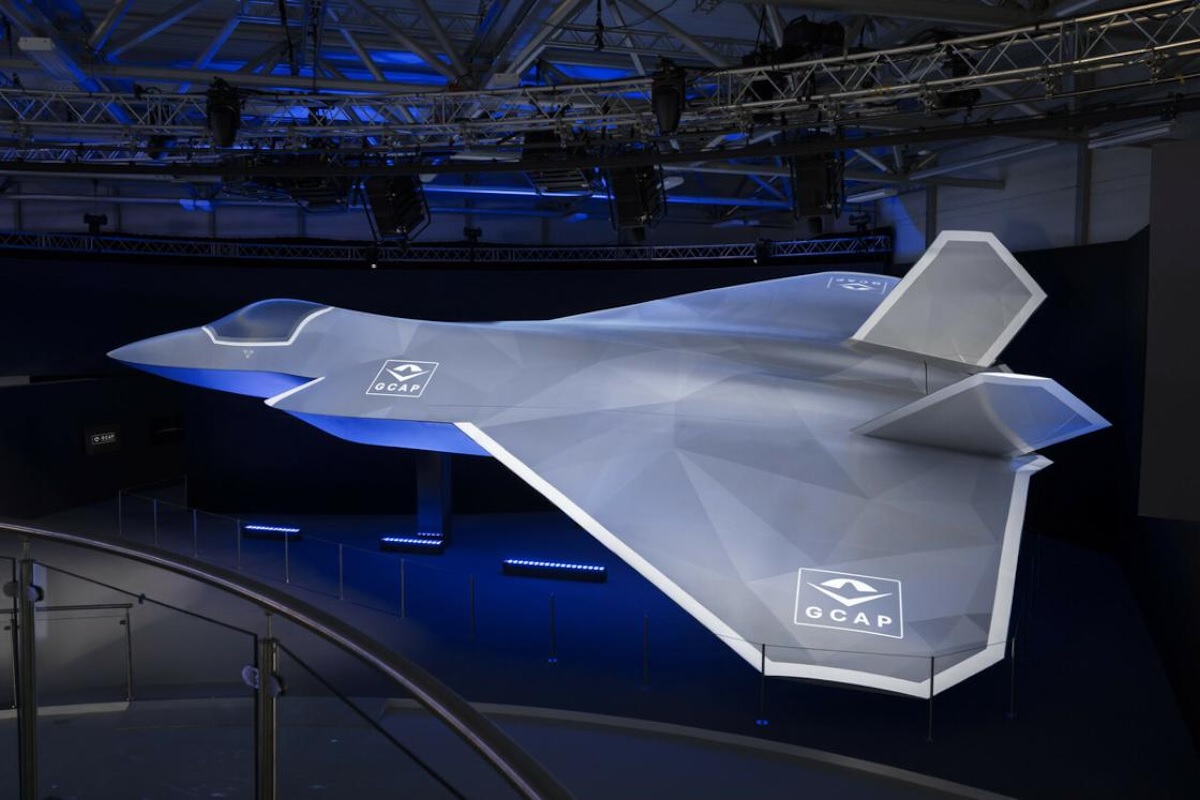
World
TOKYO, — May 22, 2026 : Japanese Defense Minister Shinjiro Koizumi held talks on Wednesday with Marco Zoff, chief executive officer of Edgewing, regarding the accelerated development of the Global Combat Air Programme (GCAP), the trilateral sixth-generation fighter initiative involving Japan, the United Kingdom, and Italy. According to Nikkei, Koizumi described GCAP as “an extremely important project that will determine Japan’s future air capabilities,” underlining the strategic significance of the program for Japan’s long-term defense planning. The meeting took place at the Japanese parliament and focused on maintaining development momentum as the partner nations work toward the target of introducing the aircraft into service by 2035. During the discussions, Zoff emphasized the importance of advancing the project at an accelerated pace. The talks reflected one of the central challenges surrounding GCAP since its formal announcement in December 2022 — balancing the political objective of delivering a sixth-generation combat aircraft by the mid-2030s with the complex engineering and industrial timelines required for advanced aerospace programs. Edgewing Leading Unified International Design Effort Edgewing was officially launched in June 2025 to serve as the single design authority for the multinational fighter program. The joint venture combines the expertise of BAE Systems, Leonardo, and Japan Aircraft Industrial Enhancement Co. (JAIEC). JAIEC includes Mitsubishi Heavy Industries, which currently manufactures and sustains key aircraft in Japan’s fighter fleet, including the domestically developed Mitsubishi F-2 and licensed F-15J Eagle fighters. The establishment of Edgewing marked a significant industrial and diplomatic consolidation between the three partner nations. Zoff, formerly Managing Director of Leonardo’s Aircraft Division, was appointed as the company’s first chief executive officer, while the headquarters was established in the United Kingdom to align closely with the GCAP International Government Organisation. £686 Million Development Contract Awarded In April 2026, the GCAP Agency, led by Chief Executive Masami Oka, awarded Edgewing its first international design and development contract valued at £686 million ($905 million). The contract transitioned early engineering activities from separate national programs into a unified multinational framework and supports critical design and engineering work associated with the next-generation aircraft program. The future fighter aircraft is intended to replace Japan’s Mitsubishi F-2 fleet as well as the Eurofighter Typhoon fleets operated by the United Kingdom and Italy. All three nations face similar modernization timelines, with their current combat aircraft expected to approach the end of operational service in the mid-2030s. Sixth-Generation Capabilities Planned GCAP is expected to deliver capabilities beyond current fifth-generation aircraft such as the F-35 Lightning II. The platform is planned to incorporate advanced stealth features, sensor fusion, artificial intelligence-supported systems, high-capacity networking, and potential directed-energy technologies. The aircraft is also being designed for manned-unmanned teaming operations, enabling pilots to control collaborative uncrewed systems, often referred to as drone wingmen, during combat missions. Program officials have stated that the fighter will operate within a broader “system of systems” combat architecture integrating crewed and uncrewed assets into a unified operational network. A demonstrator aircraft is expected to conduct its first flight in 2027, while production aircraft are scheduled to begin entering service from 2035 onward. Edgewing will oversee design and development activities, while manufacturing and final assembly responsibilities will be shared among BAE Systems, Leonardo, Mitsubishi Heavy Industries, and their respective industrial supply chains. Japan Pursuing Long-Term Defense Industrial Sovereignty For Japan, participation in GCAP represents a broader strategic effort to preserve sovereign fighter aircraft development and manufacturing capability rather than relying exclusively on foreign procurement for future airpower requirements. Japanese defense planners consider the program increasingly important as the country operates within a challenging regional security environment shaped by the rapid modernization of China’s air force, including the deployment of fifth-generation fighters and ongoing sixth-generation aircraft development efforts. Regional security concerns also include North Korea’s expanding ballistic and cruise missile capabilities, while observations from Russian air operations in Ukraine continue to provide operational lessons influencing future combat aircraft design and survivability requirements. Lessons From the F-35 Program To meet the ambitious 2035 operational target, GCAP partners are applying lessons learned from the multinational F-35 Lightning II program, which required nearly two decades to progress from concept development to initial operational capability, followed by additional years of software integration and refinement. Program officials have stated that the use of advanced digital engineering tools and model-based development methods is intended to accelerate design iteration, systems integration, and testing throughout the development process. The success of the timeline will depend largely on how effectively the three partner nations coordinate industrial production, software integration, and large-scale systems engineering under the unified multinational structure established through GCAP.
Read More → Posted on 2026-05-22 16:59:48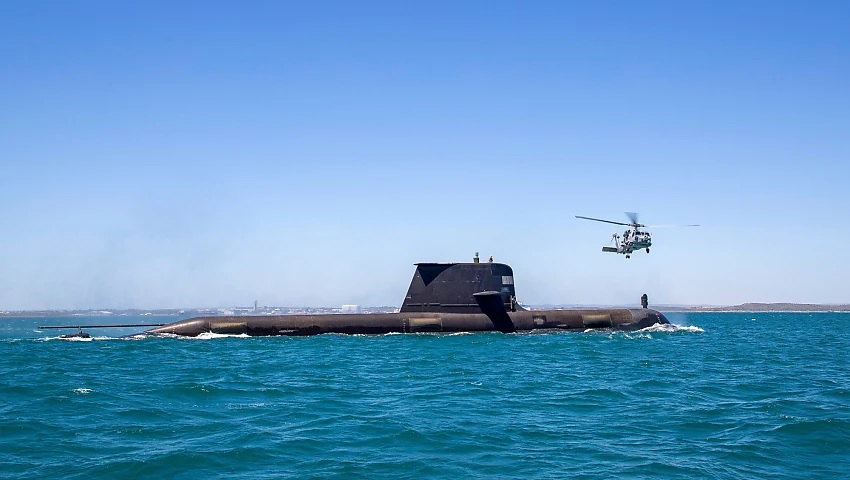
World
CANBERRA, — May 22, 2026 : The Australian government has officially launched the Life of Type Extension (LOTE) program for the Royal Australian Navy’s six Collins-class submarines, committing up to A$11 billion (approximately US$7.8 billion) over the next ten years to sustain the fleet into the 2040s during Australia’s transition to nuclear-powered submarines under the AUKUS partnership. The announcement was made on May 19 by Defence Minister Richard Marles and Minister for Defence Industry Pat Conroy. The program is intended to prevent a submarine capability gap before the future SSN-AUKUS fleet enters service and before the planned transfer of U.S. Virginia-class nuclear-powered submarines to Australia during the 2030s. HMAS Farncomb to Begin Initial LOTE Work The LOTE program will commence at the end of May with HMAS Farncomb, the second submarine of the Collins class, commissioned in 1998. Defence officials stated that the vessel will undergo a detailed engineering assessment period to determine the exact upgrade requirements and establish the baseline scope for the remaining submarines in the fleet. Alongside Farncomb’s overhaul, the Department of Defence will prioritise sustainment work on the fleet’s youngest submarine, HMAS Rankin, as part of broader efforts to maintain operational availability across the class. The work will be carried out by government-owned ASC at Osborne Naval Shipyard in South Australia and facilities in Henderson, Western Australia. Conditions-Based Modernisation Approach Despite the major funding commitment, the final scope and total cost of the complete LOTE effort remain uncertain. Defence has adopted what it describes as a “conditions-based sustainment approach,” meaning each submarine may receive a different level of modernisation depending on its condition and operational requirements. Planned work could include overhaul or replacement of diesel engines, battery arrays, generators, propulsion systems, electrical power conversion equipment, and distribution systems. Defence officials indicated that limiting major upgrades on some submarines to reduce engineering risks could result in operational restrictions or lower readiness levels for boats receiving reduced modifications. Each submarine is expected to undergo docking and extension work lasting up to two years. Wear, Corrosion, and Structural Challenges The Collins-class submarines were built through cooperation between Swedish designer Kockums and Australian builder ASC and entered service between 1996 and 2003. The class was originally designed for an operational life of approximately 30 years, with retirement previously scheduled between 2026 and 2036. However, prolonged operational use has created greater wear and structural fatigue than initially expected. In 2024, Defence disclosed severe corrosion issues aboard HMAS Farncomb and separate structural defects affecting HMAS Sheean, commissioned in 2001. Officials have noted that the submarines were constructed under varying manufacturing conditions, meaning each vessel now presents different maintenance and engineering challenges. As a result, the full extent of required repairs and upgrades will only become clear after detailed inspections are completed during each docking cycle. Previous Upgrade Reductions The scope of the LOTE program has already undergone several reductions in recent years. In 2024, Australia cancelled plans to install Safran-manufactured optronic sensor masts on the Collins-class fleet. Although contracts for the systems remain active, the equipment is now expected to remain in storage indefinitely. Defence also abandoned a feasibility study examining the integration of torpedo-tube-launched Tomahawk cruise missiles on the submarines after determining that the capability was not viable for the class. Years of Procurement Changes The current extension effort follows more than a decade of changing Australian submarine procurement policies. The 2009 Defence White Paper released under former Prime Minister Kevin Rudd proposed expanding Australia’s submarine fleet from six to twelve domestically built boats while modernising the Collins class throughout the 2010s with sonar and systems upgrades. However, repeated government changes and shifting defence priorities delayed major modernisation work during that decade, leaving the submarines to accumulate additional operational stress without comprehensive structural renewal. In 2016, Australia selected France’s Naval Group to build twelve conventionally powered Attack-class submarines under the SEA 1000 project. The accompanying Defence White Paper allocated up to A$3 billion for Collins-class upgrades, including sonar replacements, advanced satellite communication systems, and a new submarine escape-and-abandonment system. Shift to AUKUS Nuclear Submarines Australia’s submarine strategy changed again in 2021 when the government of former Prime Minister Scott Morrison cancelled the Attack-class program and joined the trilateral AUKUS partnership with the United States and the United Kingdom. Under the 2023 “Optimal Pathway” arrangement, Australia will receive at least three U.S. Virginia-class nuclear-powered submarines between 2032 and 2037 as an interim capability before the future SSN-AUKUS submarines enter service in the early 2040s. The revised timeline transformed the Collins LOTE from a conventional mid-life upgrade program into a long-term extension effort designed to keep the existing fleet operational for approximately 15 additional years. Audit Highlights Rising Costs and Delays The government announcement coincided with the release of an Australian National Audit Office (ANAO) report on May 22, 2026, examining Defence planning for the Collins-class extension program. According to the audit, planning challenges emerged as Defence transitioned from the cancelled Attack-class project to the AUKUS submarine strategy. The report stated that the LOTE design contract increased from approximately A$125 million in 2022 to A$813 million. The ANAO also noted accumulated delays and adjustments to project scope and delivery strategy, while Defence accepted recommendations aimed at strengthening project risk management and oversight. Long-Term Transition Period As the Royal Australian Navy moves into the 2030s, it will face the complex task of managing extended docking and sustainment work for the Collins-class fleet while simultaneously preparing infrastructure, workforce training, and support systems for the induction of Virginia-class nuclear-powered submarines. The completion of HMAS Farncomb’s engineering assessment is expected to become a key decision point for Defence and the Australian government in determining the final scale of the LOTE program and how many submarines will ultimately undergo the full extension process.
Read More → Posted on 2026-05-22 17:33:31
World
LOSSIEMOUTH, SCOTLAND — May 22, 2026 : The first Boeing E-7 Wedgetail Airborne Early Warning and Control (AEW&C) Mk1 aircraft for the Royal Air Force (RAF) arrived at RAF Lossiemouth on May 21, 2026, marking a major milestone in restoring the United Kingdom’s long-range airborne surveillance and battle management capability. The aircraft, registered WT001, flew from STS Aviation Services at Birmingham Airport to its future permanent operating base in Scotland. The flight was conducted by a mixed crew of Boeing UK and RAF personnel. On arrival, the aircraft was welcomed by Group Captain Sarah Brewin, Station Commander at RAF Lossiemouth, representatives from Boeing UK, the Wedgetail Project Team, No. 8 Squadron personnel, and members of the RAF Lossiemouth Pipe Band. The arrival marks the beginning of the aircraft’s final Test and Evaluation phase before formal entry into RAF service later in 2026. Testing activities will take place at both RAF Lossiemouth and MOD Boscombe Down in Wiltshire, the UK’s primary military aircraft testing facility. The programme is intended to verify the aircraft’s radar, communications, mission systems, and operational performance before formal handover from Boeing UK to the RAF. Once testing is completed and the aircraft achieves its planned Initial Operational Capability (IOC), WT001 will transition into operational service with No. 8 Squadron, the RAF unit that previously operated the Boeing E-3D Sentry fleet for more than three decades. The E-7 Wedgetail programme is replacing the RAF’s retired E-3D Sentry airborne warning aircraft, which were withdrawn from service in 2021 due to rising maintenance costs and aging airframes. The remaining E-3D aircraft were later sold to Chile in 2022. During the capability gap, NATO allies, particularly the United States and other alliance partners, supported the UK’s airborne early warning requirements. Advanced Radar and Mission Systems The E-7 Wedgetail is based on the Boeing 737 Next Generation commercial airframe. WT001 itself is a converted Boeing Business Jet originally delivered in 2010. The aircraft is equipped with the Northrop Grumman Multi-Role Electronically Scanned Array (MESA) radar, mounted in a fixed dorsal rotodome on the fuselage spine. Unlike older airborne warning aircraft that rely on mechanically rotating radar dishes, the MESA radar uses electronically steered beams to provide simultaneous multi-sector coverage. The radar is capable of tracking hundreds of airborne and maritime targets across long distances while providing commanders with a real-time operational picture. According to programme data, the system can detect fighter-sized targets at ranges exceeding 400 kilometres in look-down mode and more than 850 kilometres in look-up conditions at altitude. The aircraft is also fitted with secure communication systems including UHF, VHF, HF, SATCOM, and Link 16, along with electronic support measures and ten operator mission consoles. These systems allow the platform to coordinate missions involving RAF Typhoon and F-35 combat aircraft, tanker fleets, intelligence and surveillance assets, and naval forces operating in joint environments. RAF Lossiemouth’s Strategic Role RAF Lossiemouth was selected as the main operating base for the Wedgetail fleet because of its strategic location on the northeastern coast of Scotland, providing rapid access to the North Sea and North Atlantic approaches. These areas remain important monitoring corridors for NATO due to regular Russian long-range aviation activity near alliance airspace. The station already hosts RAF Typhoon fighter squadrons and a fleet of nine Boeing P-8 Poseidon maritime patrol aircraft. Since both the Poseidon and Wedgetail are based on the Boeing 737 Next Generation airframe, the RAF and Boeing plan to use common maintenance infrastructure, spare parts logistics, and technical expertise across the two fleets. New engineering, maintenance, and squadron facilities have also been constructed at Lossiemouth to support the Wedgetail programme and future operational activities. Programme Background and International Operators The UK originally signed a contract in 2019 to procure five E-7 Wedgetail aircraft, though the order was later reduced to three aircraft during the 2021 Integrated Review as part of wider defence cost-saving measures. However, the 2025 Strategic Defence Review indicated that future fleet expansion remains under consideration. The programme also experienced schedule adjustments due to aircraft integration and conversion work. WT001 was formally unveiled in RAF markings in October 2024 before entering the current testing phase. The E-7 platform already has an established operational history internationally. It entered service with the Royal Australian Air Force in 2009 and is also operated by the Republic of Korea Air Force and the Turkish Air Force. In 2022, the United States Air Force selected the E-7 as its future airborne early warning aircraft to replace portions of its aging E-3 Sentry fleet. Official Statements Group Captain Sarah Brewin stated: “We are delighted to welcome the arrival of the first Wedgetail aircraft to RAF Lossiemouth to continue its Test and Evaluation phase. This marks a significant step in delivering the Royal Air Force’s next generation of airborne surveillance and control capabilities that will support the defence of the UK for the years to come.” Stu Voboril, Boeing E-7 Vice President and Program Manager, said: “The E-7 will provide the UK with the world’s most advanced, capable and reliable Airborne Early Warning and Control platform, while supporting British industry through UK jobs and supply chain opportunities.” The RAF expects the E-7 Wedgetail to deliver long-range airborne surveillance, battlespace management, target tracking, and coordination of fighter, tanker, intelligence, surveillance, and reconnaissance assets once the aircraft formally enters service later in 2026.
Read More → Posted on 2026-05-22 17:48:21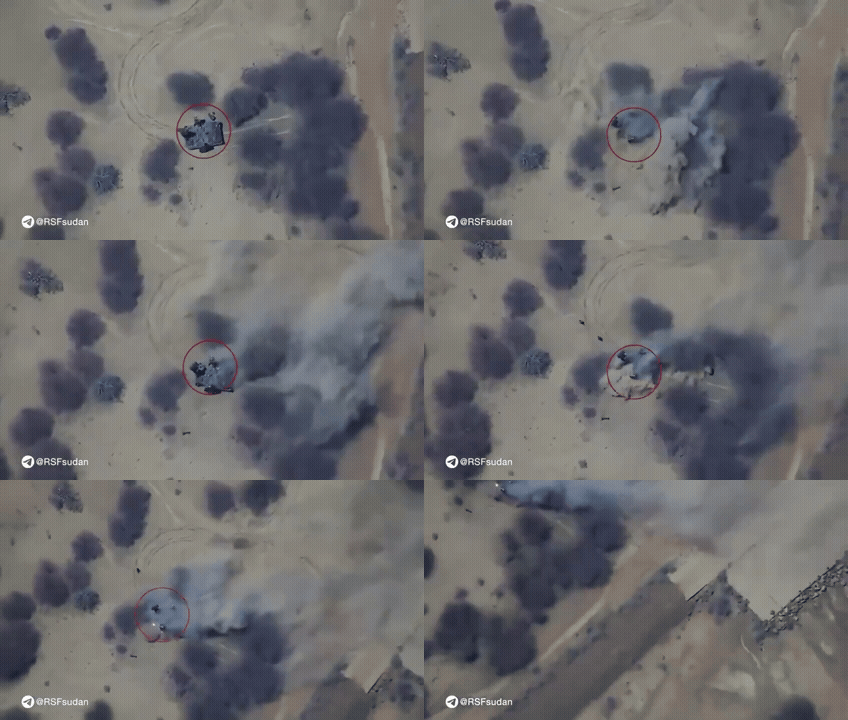
World
KHARTOUM, — May 22, 2026 : The Rapid Support Forces (RSF) have released combat footage claiming to show the destruction of a Turkish-made HİSAR-A mobile low-altitude air defense system operated by the Sudanese Armed Forces (SAF) during ongoing fighting in Sudan’s North Kordofan region. The reported strike took place near Rahid al-Nuba, also referred to as Rihaid al-Nuba, amid continued escalation in the country’s civil war. According to the RSF, the operation was conducted through coordination between its military intelligence, air force, and special forces units. The released footage reportedly shows a precision-guided munition launched from a Chinese-manufactured combat drone striking the HİSAR-A system shortly after deployment. The video shows crew members exiting the vehicle moments before missiles onboard detonated in secondary explosions, resulting in the system catching fire. The RSF stated that the targeted platform belonged to forces aligned with the Sudanese Armed Forces. Open-source analysts reviewing the footage said the strike location was geolocated to coordinates near 14.809, 31.607 in North Kordofan. Metadata associated with the footage reportedly corresponds to May 21, 2026. However, no independent third-party verification confirming the destruction of the system has been released. Some accounts aligned with the SAF have disputed the authenticity of the footage, describing it as unverified or fabricated. Turkish-Made HİSAR-A System The HİSAR-A is a short-range air defense (SHORAD) system jointly developed by Turkish defense companies Aselsan and Roketsan. The mobile missile system is designed to intercept low-altitude threats including unmanned aerial vehicles, helicopters, cruise missiles, and fixed-wing aircraft. The system uses infrared-guided missiles with a reported engagement range of up to 15 kilometers and can operate within layered air defense networks. Sudan has received Turkish defense equipment, including drones and air defense systems, through bilateral military cooperation agreements signed before the conflict intensified. The Sudanese Armed Forces have also previously operated Turkish-made Bayraktar Akıncı unmanned combat aerial vehicles during operations against RSF positions. Expanding Drone Warfare in Sudan The reported strike highlights the growing role of drones in the Sudan conflict, where both the SAF and RSF have increasingly relied on unmanned systems for reconnaissance missions and precision attacks. Military analysts note that the incident reflects a broader trend in modern warfare, where relatively low-cost drones are increasingly being used to target expensive air defense systems and armored platforms. The reported destruction of the HİSAR-A system has renewed attention on the vulnerability of traditional air defense assets against small, low-observable UAV threats operating in active combat zones. Defense observers also state that the Sudan conflict has increasingly become a live operational environment for foreign-supplied military technology. Since the outbreak of war in 2023 between forces led by General Abdel Fattah al-Burhan and RSF commander Mohamed Hamdan Dagalo, both sides have relied heavily on externally supplied drones, missile systems, and surveillance platforms. Debate Over Operational Testing Standards The incident has also renewed discussion regarding operational testing standards for rapidly developed military systems. Turkey has expanded its defense exports significantly over the past decade, gaining international attention through platforms such as the Bayraktar TB2 drone series and the HİSAR family of air defense systems. However, some defense analysts argue that rapidly fielded systems can face operational challenges when exposed to evolving threats such as low-signature drones, coordinated UAV attacks, and electronic warfare environments. This approach is often contrasted with procurement and testing cycles used by countries such as India, where the armed forces and the Defence Research and Development Organisation (DRDO) conduct extensive multi-environment field trials before large-scale induction. Such testing procedures are intended to identify vulnerabilities under varied operational and climatic conditions prior to deployment. Escalation in North Kordofan The reported strike comes amid intensified fighting across North Kordofan and several other regions of Sudan. The United Nations and humanitarian organizations have repeatedly expressed concern regarding the increasing use of combat drones by both sides, citing repeated strikes on military facilities, infrastructure, and civilian-populated areas. UN reporting indicates that drone-related incidents now account for a significant portion of verified civilian casualties recorded during 2026. As the conflict enters its third year, battlefield performance of imported military systems is expected to remain under close international observation, particularly as drone warfare continues to shape tactical operations across Sudan. No official statement regarding the reported strike has been issued by the Sudanese Armed Forces, Turkish authorities, or the manufacturers of the HİSAR-A system as of May 22, 2026.
Read More → Posted on 2026-05-22 18:09:55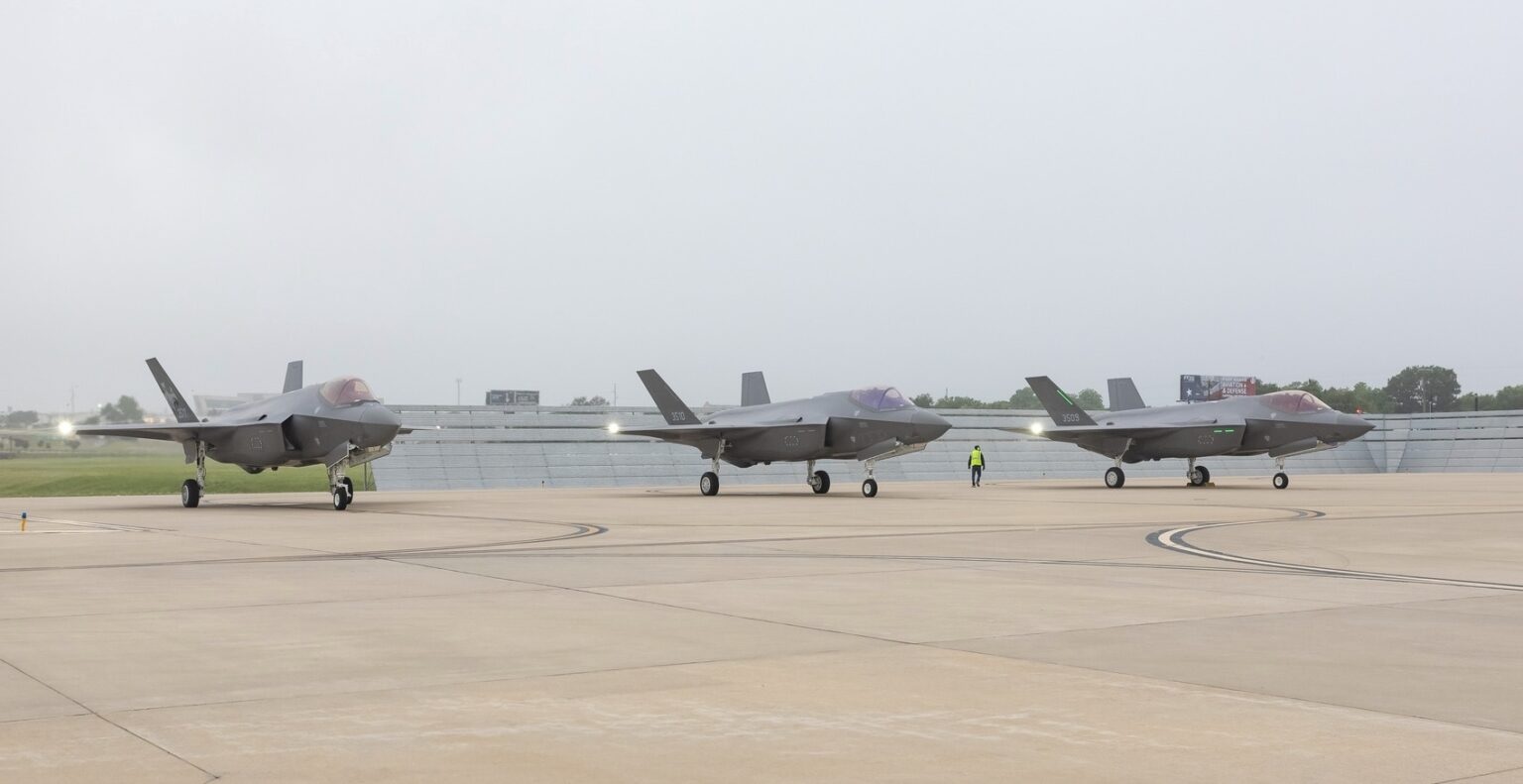
World
ŁASK, Poland, — May 22, 2026 : Poland has officially received the first three Lockheed Martin F-35A Lightning II fighter aircraft at the 32nd Tactical Air Base in Łask, marking the beginning of operational deployment of the country’s first fifth-generation combat aircraft. The aircraft arrived in central Poland following a transatlantic flight from a Lockheed Martin production facility near Fort Worth, Texas. The delivery route included a scheduled stop at Lajes Field Air Base in the Azores before the aircraft continued to Poland. During the transit, the aircraft legally remained under United States jurisdiction and were flown by American pilots, while the Polish national insignia on the jets remained temporarily covered until the formal transfer process was completed. The delivery is part of Poland’s $4.6 billion agreement signed with Lockheed Martin on January 31, 2020, for the procurement of 32 F-35A fighter aircraft. The contract, concluded during the first term of U.S. President Donald Trump, also includes flight simulators, logistics support, technical assistance, and training programs for 24 Polish pilots and approximately 90 ground personnel. Although these are the first F-35A aircraft delivered to Polish territory, earlier aircraft from the order were previously sent to Ebbing Air National Guard Base for training activities. Since January 2025, Polish pilots, engineers, logistics personnel, and system administrators have been undergoing operational and maintenance training in the United States. Pilots completing instructor-level qualification are expected to return to Poland to support future domestic training operations. The Polish Air Force has officially designated the aircraft as the “F-35A Husarz”, referencing Poland’s historic winged hussar cavalry formations. The aircraft is a fifth-generation multirole fighter equipped with low-observable stealth technology, advanced electronic warfare systems, sensor fusion capabilities, and network-centric combat systems designed to share real-time operational data with allied forces. The 32nd Tactical Air Base in Łask, which currently operates F-16C/D Block 52+ fighter aircraft, underwent extensive modernization work ahead of the arrival of the F-35A fleet. Infrastructure upgrades began in 2022 and included the construction of secure maintenance hangars, specialized technical facilities, mission planning systems, and integrated support infrastructure compatible with both F-16 and F-35 operations. The base received official certification for F-35 operations in March 2026 and will serve as the primary operating location for the first squadron of 16 aircraft. Poland plans to base the second squadron of 16 F-35A aircraft at the 21st Tactical Air Base in Świdwin, which is currently undergoing infrastructure adaptation work to support future operations. According to current delivery schedules, additional aircraft are expected to arrive progressively through 2029. Polish defense authorities expect all 32 aircraft to enter service by the end of 2030, while full operational readiness of the fleet is projected in the following years after completion of infrastructure integration and personnel training. The new F-35A fleet will gradually replace Poland’s aging Soviet-era MiG-29 and Su-22 aircraft as part of the country’s broader air force modernization program. Polish Defense Minister Władysław Kosiniak-Kamysz stated that the introduction of the aircraft marks the deployment of the first fifth-generation fighter capability on NATO’s eastern flank and will improve operational interoperability between Poland, the United States, and other NATO allies operating the F-35 platform. The arrival of the first three aircraft marks the beginning of long-term operational integration of the F-35A into the Polish Air Force, strengthening Poland’s national air defense capabilities and supporting NATO collective defense operations in Eastern Europe.
Read More → Posted on 2026-05-22 18:14:27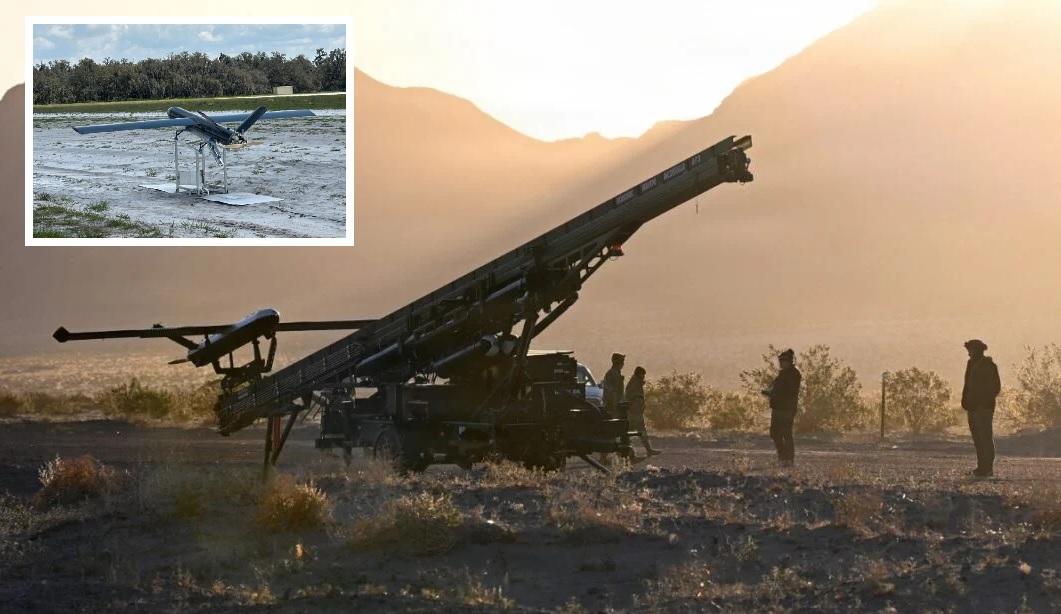
World
ALBUQUERQUE, N.M., — May 23, 2026 : X-Bow Systems has delivered its 600th rocket-assisted takeoff (RATO) motor to AEVEX Aerospace under a $12.2 million contract supporting the U.S. Army’s Disruptor strike drone program, marking a production milestone in the Army’s effort to field long-range unmanned systems capable of operating without fixed runway or catapult infrastructure. The contract covers the supply of hundreds of RATO production kits, thousands of solid rocket motors, and associated components, with deliveries scheduled between March and August 2026. The agreement centers on X-Bow Systems’ RATO² (Rapidly Assembled Tactical Option for Rocket-Assisted Takeoff) system, which enables the Disruptor drone to launch from unprepared surfaces, confined spaces, and temporary operational sites without reliance on traditional runway facilities or large pneumatic launch systems. Additive Manufacturing Supports Rapid Production The milestone also marks the first high-volume operational use of X-Bow’s patented Additive Manufactured Solid Propellant (AMSP) technology in a Group 3 unmanned aircraft system (UAS), introducing additive manufacturing into large-scale solid rocket motor production for tactical drones. The AMSP process builds solid propellant layer by layer, similar to industrial 3D-printing manufacturing techniques, allowing tighter control over propellant geometry and burn characteristics compared with conventional casting or pressing methods. According to the company, the approach improves manufacturing flexibility and enables efficient scaling of production during periods of rapid demand growth. X-Bow Systems, headquartered in Albuquerque, New Mexico, stated that its manufacturing model is designed to reduce timelines between contract award, production, and field deployment. The company has secured approximately $212 million in contracts over the past six months, reflecting broader efforts within the U.S. defense industrial base to expand scalable propulsion production and strengthen supply chain resilience for unmanned systems. RATO² System Expands Tactical Mobility The RATO² system consists of compact solid rocket motors and launch cradle assemblies attached directly to the aircraft during takeoff. Once airborne, the booster burns out and separates from the drone, removing the requirement for heavy, stationary launch systems. Traditionally, Group 3 fixed-wing drones require large pneumatic catapults that involve significant setup time, level terrain, calibration, and logistical support. These systems are often difficult to conceal and limit operational mobility. By contrast, the RATO² system enables launches from dirt roads, field clearings, temporary launch sites, or nearly any surface accessible by military vehicles, significantly reducing deployment time and allowing units to relocate quickly after launch. This capability supports a more mobile operational approach without leaving launch equipment behind. Disruptor Drone Origins and Design The AEVEX Disruptor serves as the long-range tier of the U.S. Army’s Launched Effects family of unmanned systems and is designed for intelligence, surveillance, reconnaissance, and precision-strike missions. The platform evolved from the classified Phoenix Ghost family of loitering munitions, which was originally fast-tracked by the U.S. Air Force beginning in April 2022 for operational requirements linked to Ukraine. Between the Phoenix Ghost initiative (2022–2025) and the subsequent EUCOM Deep Strike Program, AEVEX Aerospace has delivered or committed more than 9,300 systems valued at approximately $1.2 billion through the end of 2026. The aircraft is classified as a Group 3 UAS, a military category covering systems weighing 25 to 600 kilograms, operating at altitudes between 1,000 and 5,500 meters, and flying at speeds ranging from 185 to 460 kilometers per hour. Structurally, the drone is built around a 3.06-meter tubular carbon-fiber fuselage reinforced with aluminum structural elements. It features a V-tail configuration and straight wings spanning 4.8 meters, incorporating foam-filled aerofoil sections and wooden rib structures. When launched using traditional pneumatic systems, the Disruptor has a maximum takeoff weight of 84 kilograms. Integration of the X-Bow RATO kit increases safe takeoff capacity to approximately 93 kilograms, expanding payload flexibility. Engine Variants and Strike Capabilities AEVEX produces the Disruptor in two primary engine configurations, both designed to carry a 22.5-kilogram warhead capable of engaging light vehicles, radar systems, equipment, and personnel concentrations. The standard configuration, powered by a carburetor engine, provides approximately 4.5 hours of endurance and an operational range of up to 600 kilometers. The extended-range configuration, equipped with an electronic fuel injection engine, can remain airborne for more than 11 hours and extend operational reach to roughly 1,300 to 1,400 kilometers. To maintain effectiveness in contested environments where satellite navigation signals may be disrupted or denied, the aircraft integrates alternative positioning, navigation, and timing systems supported by visual-based navigation frameworks. Operational Validation During Exercise Arcane Thunder 26 The Disruptor’s operational role was formally validated during Exercise Arcane Thunder 26, conducted between April 6 and April 29, 2026, across Germany, Poland, and the United States. During the exercise, soldiers from Multi-Domain Command Europe’s (MDC-E) Innovations Cell conducted night preparation and launch operations involving the system at the National Training Center at Fort Irwin, California. The exercise confirmed the Disruptor’s role as the long-range launched effects platform within the Army’s evolving unmanned systems structure and demonstrated its suitability for multi-domain operational environments. Growing Interest in the RATO² Launch Concept Beyond U.S. Army integration, X-Bow Systems recently demonstrated the RATO² system to international special operations forces during SOF Week in Tampa, Florida, indicating growing allied interest in both the launch system and the additive manufacturing approach supporting rapid drone deployment. The delivery of the 600th RATO motor represents a production milestone achieved within months of contract execution and reflects continuing efforts to scale manufacturing capacity for the Disruptor program as the U.S. Army expands deployment of long-range unmanned strike systems.
Read More → Posted on 2026-05-23 11:32:33
India
AVADI, — May 23, 2026 : Armoured Vehicles Nigam Limited (AVNL) delivered the 1000th T-90(IM) tank to the Indian Army on May 22, 2026 . The tank was produced at the Heavy Vehicles Factory (HVF) of AVNL in Avadi, near Chennai. The T-90(IM), also designated as the T-90 Bhishma in Indian service, is a main battle tank manufactured under licence from Russia. Production at HVF began with the assembly of tanks supplied in semi-knocked-down and completely-knocked-down kits following a 2001 contract for 310 tanks, of which 124 were completed in Russia and the remainder assembled in India. A subsequent 2006 agreement provided for the licensed production of 1,000 T-90S/SK tanks at HVF. The first fully indigenous T-90S tanks rolled out from the facility in 2009. In November 2019, the Indian Army contracted for an additional 464 tanks of an upgraded configuration, designated T-90 Mk III (Bhishma Mk III). Deliveries of the first batch of 10 such tanks took place in May 2024, with the remainder scheduled over the following five years. The 1000th T-90(IM) delivered today forms part of this ongoing licensed production programme. AVNL, established in 2021 as a public sector undertaking following the restructuring of the Ordnance Factory Board, oversees tank production at HVF. The factory, located in Avadi and operational since 1965, has manufactured a range of armoured vehicles including the T-72 Ajeya, Arjun MBT, and Vijayanta tanks, in addition to the T-90 series. Production has progressed from initial assembly of imported components to deep indigenisation of major systems. AVNL has achieved full localisation of the V-92S2 engine used in the T-90 Bhishma, along with engines for the T-72 and BMP-2 platforms. Overall indigenisation levels for the T-90 have reached high percentages, with continued efforts on subsystems such as electromagnetic turret traverse systems to replace older hydraulic drives. These developments have reduced reliance on imported parts. The T-90 Bhishma is equipped with a 125 mm smooth-bore main gun capable of firing guided missiles, APFSDS, HEAT, and HE rounds at a rate of eight rounds per minute. It has a crew of three, weighs 46.5 tonnes, and is powered by a 1,000 hp engine providing a power-to-weight ratio of 21.5 hp per tonne. Maximum road speed is 60 km/h. Additional features include explosive reactive armour, CBR protection, smoke grenade launchers, and fording capability up to 5 metres with a snorkel. The Indian Army operates the T-90 Bhishma as a key element of its armoured formations, alongside the T-72 fleet. The delivery brings the total number of T-90 tanks produced under the programme to 1,000 units at HVF/AVNL. AVNL continues production and upgrade work on armoured vehicles to support army requirements.
Read More → Posted on 2026-05-23 11:34:33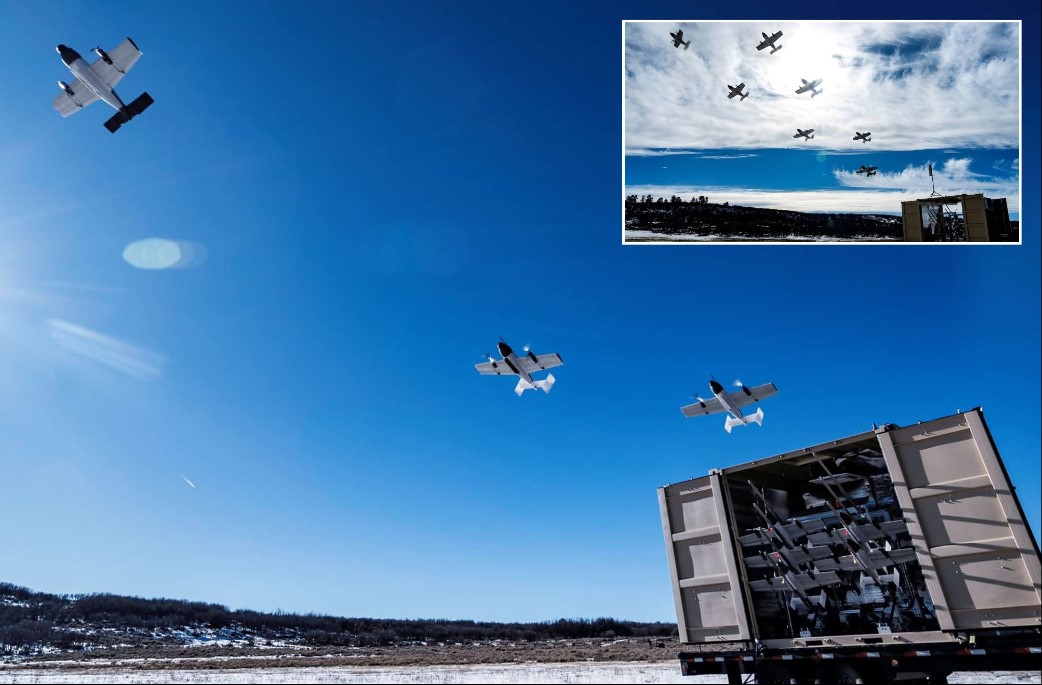
World
TAMPA, Fla., — May 23, 2026 : DZYNE Technologies has officially unveiled Blitz, a next-generation expendable Group 1 unmanned aerial system (UAS) designed to provide affordable mass, rapid adaptability and autonomous operations for modern military requirements. Displayed at the SOF Week 2026, the platform is intended to support the growing demand for small, attritable and cost-effective unmanned aircraft capable of operating individually or in coordinated, high-volume deployments. The fixed-wing aircraft is designed to bridge the operational gap between shorter-range multi-rotor drones and larger Group 2 unmanned systems by combining portability, modularity and scalable deployment options. According to the company, Blitz reflects lessons learned from contemporary conflicts and aligns with defence priorities focused on affordable, interoperable and rapidly deployable unmanned capabilities. Compact Design for Rapid Deployment Blitz is a fixed-wing aircraft weighing approximately 15 pounds (6.8 kg) and features a compact airframe with dual tailfins and mid-mounted wings. Constructed using molded foam and powered by quiet electric propulsion, the aircraft is intended to maintain a low operational signature during missions. Designed for expeditionary and small-unit operations, Blitz uses a foldable and packable airframe with removable wings that fits entirely inside an 80-litre rucksack. The company stated that operators can assemble and prepare the aircraft for hand launch in under two minutes, enabling rapid deployment in austere operating environments. “Blitz represents a fundamental shift in how warfighters can project mass, adaptability, and speed,” said Connor Toler, Blitz Product Manager at DZYNE Technologies. Toler stated that the platform combines affordability with a modular architecture, enabling operators to scale missions from single-asset reconnaissance to synchronized multi-aircraft operations while integrating into existing digital ecosystems. Modular Architecture and Mission Flexibility DZYNE Technologies designed Blitz using a Modular Open Systems Approach (MOSA), enabling operators to rapidly reconfigure the aircraft for different operational requirements. The system includes two primary payload bays, interchangeable nose sections, modular wingtips, telemetry tails, GNSS and visual navigation modules, and multiple battery configurations. According to the company, these components can be swapped in the field with minimal tools, allowing operators to modify mission profiles without replacing aircraft platforms. Open interfaces and Payload Development Kits also allow integration of DZYNE payloads, third-party systems and end-user-developed modules, including mission-specific payload configurations. Blitz integrates natively with ATAK and MAVLink, enabling compatibility with existing command-and-control ecosystems while reducing integration and mission preparation time. The aircraft’s tail-mounted communications package also supports multiple radio configurations for short-range line-of-sight missions and longer-range operational requirements. Performance and Payload Capability DZYNE Technologies stated that Blitz offers an estimated operational range of 50 to 93 miles (80 to 150 kilometres) without forward staging and an endurance of one to two hours, depending on battery configuration. Long-endurance battery options are also available. The aircraft operates within a cruise envelope of 40 to 75 knots equivalent airspeed (KEAS) and can achieve speeds of up to 86 mph when equipped with a high-performance propulsion kit. Blitz is capable of carrying payloads of up to 5 pounds (2.3 kg) and can be configured for intelligence, surveillance and reconnaissance (ISR), electronic warfare (EW), kinetic effects, seekers, deception systems and other mission requirements. The company stated that a baseline aircraft costs under $10,000, excluding payloads. Scalable Launch Options and BlitzBox System In addition to hand-launch capability for low-footprint missions, DZYNE Technologies has developed multiple deployment methods to support larger and distributed force operations. Small teams or maritime platforms can employ a four-pack rail launcher for repeated sorties, while larger synchronized deployments can be conducted using BlitzBox, an ISO container-based launch system developed for scalable mass deployment. BlitzBox is available in multiple configurations, including a 10-foot variant capable of housing up to 16 drones on rail launchers and a 40-foot version capable of carrying up to 100 mission-ready aircraft or as many as 900 disassembled units. The containerized system includes integrated charging infrastructure and can be transported by truck, ship or cargo aircraft. While fully autonomous swarming capabilities remain under development, DZYNE Technologies stated that current software enables a single operator to assign missions to dozens of aircraft simultaneously, automatically sequencing launches and deconflicting flight paths to reduce the risk of in-air collisions. Training and Production Readiness The company stated that Blitz has been designed for ease of use, with ATAK compatibility and an intuitive interface allowing unfamiliar operators to be trained in under two hours. To support potential high-volume demand, DZYNE Technologies reported that its existing manufacturing footprint can currently produce up to 5,000 aircraft per month, with additional expansion capacity available if required. Blitz is currently available for demonstrations and procurement to eligible U.S. and allied customers, with the system being showcased alongside its modular payload architecture and deployment configurations during SOF Week 2026.
Read More → Posted on 2026-05-23 11:44:34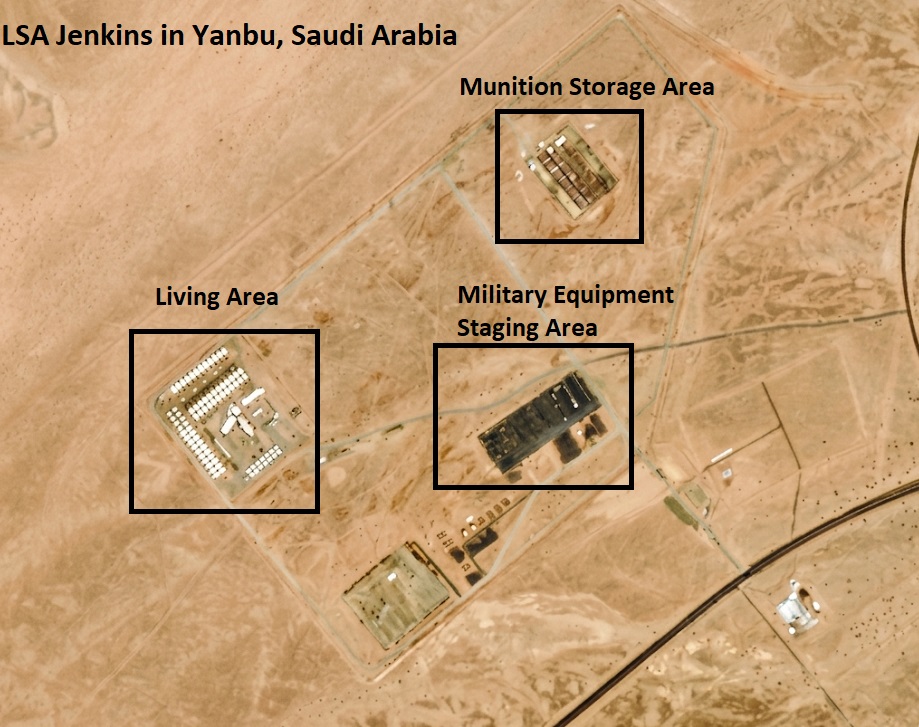
World
WASHINGTON, — May 23, 2026 : Recent satellite imagery has confirmed that significant expansion work has been underway since April 2026 at the U.S. Army Logistics Support Area (LSA) Jenkins in Yanbu, Saudi Arabia, highlighting a continued increase in American military logistics activity along the Red Sea corridor. LSA Jenkins, located approximately 30 kilometres inland from the Yanbu commercial port on Saudi Arabia’s western coast, functions as a logistical support facility for U.S. forces, providing depot, accommodation and transportation hub capabilities. The installation relies on the nearby King Fahd Industrial Port in Yanbu for the offloading of military equipment, which is subsequently moved inland through overland transportation networks. Infrastructure Expansion Observed in Satellite Imagery Satellite imagery collected since April 2026 shows visible construction activity across the installation, including the development of additional paved areas, newly established structures and expanded logistical zones. The imagery further indicates a higher presence of U.S. personnel and military materiel, suggesting increased operational activity at the site. Recent developments also point to upgrades in troop accommodation facilities, logistical storage areas and protective infrastructure designed to support sustained military operations. Expanded depot functions and additional staging areas appear intended to improve the handling and movement of personnel, equipment and supplies entering through the Red Sea. Defence-related assessments and observational reporting additionally indicate the presence of increased military hardware and force-protection systems around the base. This includes motor transport assets, support vehicles and reports of defensive systems such as Patriot and Terminal High Altitude Area Defense (THAAD) batteries, alongside radar infrastructure aimed at strengthening the security of logistical operations. Strategic Role of Yanbu in U.S. Military Logistics Situated on Saudi Arabia’s Red Sea coast and facing Egypt across the waterway, Yanbu provides an important logistical access point for military operations across the Arabian Peninsula. In military planning, logistics support areas function as central depots that receive, store and transport personnel and supplies to operational locations. The western positioning of LSA Jenkins provides direct access to Red Sea maritime shipping routes while remaining geographically separated from U.S. military facilities concentrated in the Persian Gulf. The location also benefits from Saudi Arabia’s road network, enabling overland transportation of military cargo to operational areas across the region. Military analysts note that the site offers strategic logistical depth by positioning key infrastructure farther from regional missile and drone threat environments concentrated in eastern areas of the Gulf region. This allows supply operations to be sustained through alternate maritime and land routes while maintaining force protection and operational flexibility. Development Since 2022 and Native Fury Exercises LSA Jenkins was first identified in commercial satellite imagery in early 2022 and has since developed into a key support location for U.S.-Saudi military cooperation. The facility played a role in joint exercises including Native Fury 2022 and Native Fury 24 in 2024, where U.S. Marine Corps and U.S. Army personnel worked with Saudi counterparts on port operations, joint limited technical inspections, equipment offloading and long-distance convoy operations across the Arabian Peninsula. During those exercises, military units utilised the Yanbu port to unload vehicles, equipment and supplies before transporting them inland to LSA Jenkins for staging and operational support. According to reporting published by The New York Times in June 2025, development at the facility accelerated beginning around 2024. Earlier upgrades focused on expanding ammunition storage, troop accommodation, logistical functions and perimeter security. Prior to that expansion phase, the site reportedly consisted primarily of tents, shipping containers, scattered barbed wire, abandoned bunker infrastructure and limited paved areas. Part of Broader U.S. Regional Military Posture The ongoing expansion of LSA Jenkins coincides with a broader adjustment of U.S. military posture across the Middle East. Beginning in late January 2026, the United States increased regional deployments amid heightened geopolitical tensions, involving additional naval assets, air power and ground support forces operating under U.S. Central Command (CENTCOM). As troop levels and operational requirements increase, logistics facilities such as LSA Jenkins are expected to play a greater role in supporting equipment throughput, troop accommodation, sustainment operations and secure supply chains necessary for long-term regional readiness. U.S. officials have not issued public statements regarding the latest expansion activities at LSA Jenkins. The facility continues to operate as a logistical support site for U.S. military requirements in coordination with Saudi Arabia.
Read More → Posted on 2026-05-23 11:57:00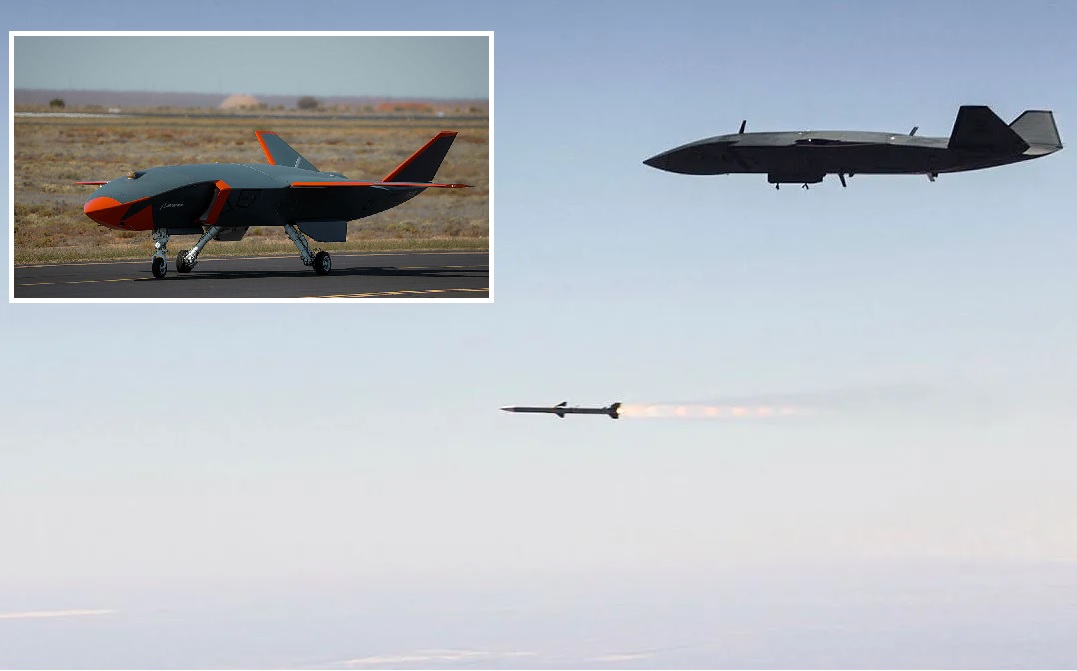
India
NEW DELHI, — May 23, 2026 : India is considering the acquisition of 50 Australian-developed MQ-28 Ghost Bat unmanned combat aerial vehicles (UCAVs) amid reports of Turkey’s potential transfer of Bayraktar Kizilelma unmanned fighter aircraft to Pakistan, as New Delhi evaluates options to strengthen autonomous air combat capabilities and maintain operational balance in the region. The proposed procurement is being examined as part of the Indian Air Force’s (IAF) broader push toward manned-unmanned teaming (MUM-T), an operational concept that enables crewed fighter aircraft to operate alongside autonomous systems. The MQ-28 Ghost Bat is designed to function as a collaborative combat aircraft capable of supporting frontline fighters such as the Su-30MKI and Rafale in high-risk operational environments through artificial intelligence, sensor sharing, electronic warfare, and long-range mission support. India is understood to be in discussions regarding the possible acquisition of 50 MQ-28 Ghost Bat platforms, developed by Boeing Defence Australia in partnership with the Royal Australian Air Force (RAAF). The aircraft is the first military platform designed, manufactured, and flown in Australia in more than five decades and has been developed specifically to operate as a “loyal wingman” supporting crewed combat aircraft. Regional Context Behind the Consideration The reported interest in the MQ-28 Ghost Bat comes amid expanding defence interactions between Turkey and Pakistan concerning the Bayraktar Kizilelma, a jet-powered stealth UCAV developed by Turkish defence company Baykar. Recent defence engagements, including the Pakistan Air Force Chief’s visit to Turkey and briefings on advanced Turkish aerospace systems, have increased attention around a possible Kizilelma sale or co-production arrangement between Islamabad and Ankara. The Bayraktar Kizilelma is designed for operations in contested airspace and incorporates low-observable characteristics, artificial intelligence-assisted autonomy, and beyond-visual-range air combat capability. The platform has reportedly demonstrated air-to-air missile functionality during recent tests and is scheduled for initial deliveries to the Turkish Armed Forces during the first quarter of 2026. Indian defence planners are assessing developments in autonomous combat aviation as part of wider military modernisation efforts, with emphasis on expanding electronic warfare, intelligence, surveillance and reconnaissance (ISR), and force-multiplying capabilities without increasing operational risk to pilots. Technical Profile of the MQ-28 Ghost Bat The MQ-28 Ghost Bat has been designed as a stealth-enabled collaborative combat aircraft capable of supporting crewed fighter jets through independent mission execution and coordinated network operations. The platform measures approximately 11.7 metres in length, features a 7.3-metre wingspan, and has a maximum take-off weight of around 3,175 kilograms. Powered by a Williams FJ44 turbofan engine, the aircraft can operate at high subsonic speeds reaching up to Mach 0.9 and altitudes exceeding 40,000 feet. It possesses an operational range of more than 3,700 kilometres, making it suitable for long-range operations across the Indo-Pacific and South Asian theatres. The platform incorporates a modular mission architecture that enables rapid payload reconfiguration according to operational requirements. Ground crews can modify mission systems through a configurable nose section designed to accommodate ISR payloads, electronic warfare systems, communications support equipment, tactical sensors, and other mission-specific technologies. Combat and Operational Capabilities The MQ-28 Ghost Bat is intended to perform a broad mission set, including intelligence gathering, surveillance, tactical early warning, electronic warfare, combat support operations, and autonomous mission coordination with manned aircraft. In December 2025, the platform successfully demonstrated an autonomous air-to-air combat engagement by firing an AIM-120 AMRAAM missile against a target drone while operating in coordination with crewed Royal Australian Air Force aircraft. The demonstration highlighted the aircraft’s intended role in collaborative combat operations, where autonomous platforms provide additional combat mass, persistence, and survivability during high-risk missions. The aircraft is also designed to integrate with existing command-and-control systems, allowing seamless coordination with fighter aircraft while extending sensor reach and reducing exposure of pilots to contested environments. In operational scenarios, the Ghost Bat could support electronic suppression missions, ISR collection, tactical targeting, stand-off strike support, and reconnaissance activities while crewed platforms operate from safer distances. Growing India–Australia Defence Cooperation The discussions surrounding the MQ-28 Ghost Bat acquisition are taking place alongside expanding defence cooperation between India and Australia in advanced aerospace and autonomous systems. During the 12th India-Australia Air Staff Talks held earlier in May 2026, Australian officials showcased the MQ-28 Ghost Bat to representatives of the Indian Air Force as part of discussions focused on interoperability, autonomous warfare systems, air power cooperation, and future aerospace technologies. The engagement reflected growing strategic coordination between New Delhi and Canberra in emerging defence sectors, including unmanned systems, network-centric warfare, and advanced combat aviation technologies. No Official Confirmation Yet India has not issued an official statement regarding the reported talks or a formal procurement timeline for the acquisition of 50 MQ-28 Ghost Bat UCAVs. However, the reported discussions indicate continued evaluation of advanced autonomous combat systems as regional air forces expand investments in next-generation unmanned aerial combat platforms.
Read More → Posted on 2026-05-23 12:09:53
World
WASHINGTON, — May 23, 2026 : The United States Special Operations Command (USSOCOM), in coordination with the Naval Surface Warfare Center (NSWC) Crane, has launched the Hypervelocity Improved Capability Assault Rifle (HICAR) program to develop a next-generation individual weapon system designed to improve the combat effectiveness of U.S. special operations forces. The initiative seeks industry partners to design a new carbine platform capable of significantly extending the effective range of the standard 5.56×45 mm NATO system while maintaining compatibility with existing operational equipment. The effort was formally announced through the U.S. government procurement platform SAM.gov under solicitation N0016426SCA004, issued on May 18, 2026. The program is intended to replace or upgrade the current M4A1 Upper Receiver Group – Improved (URG-I) while retaining interoperability with the existing M4A1 lower receiver group used across USSOCOM formations. USSOCOM’s primary objective is to integrate advancements in materials science, weapon durability, and ammunition performance into a technically improved lightweight assault rifle capable of effective engagement at 600 meters and beyond, doubling the approximately 300-meter recognized effective range of current standard 5.56 NATO platforms. Focus on Hypervelocity Ammunition Capability A central objective of the HICAR program is the ability to operate reliably with both currently fielded ammunition and emerging hypervelocity 5.56 mm ammunition developed to deliver increased ballistic performance. The system must fire and cycle standard M855A1 Enhanced Performance Round, Mk262 77-grain ammunition, and government-supplied M855A1+ hypervelocity ammunition loaded to chamber pressures of up to 82,000 pounds per square inch (82 kpsi). The rifle must also remain adaptable to future hypervelocity ammunition designs. According to program requirements, hypervelocity ammunition is intended to improve battlefield performance through greater effective range, enhanced terminal performance, and improved penetration against body armor and hardened barriers. Increased projectile velocity allows rounds to retain energy over longer distances, providing improved lethality and engagement capability in extended-range combat scenarios. Because chamber pressures associated with M855A1+ ammunition are substantially higher than those of conventional 5.56 mm systems, USSOCOM is requiring significant engineering improvements to gas systems, bolts, barrels, and materials to ensure reliability and durability during prolonged operational use. Technical Requirements and Weapon Specifications USSOCOM has outlined strict technical specifications aimed at preserving the portability and ergonomics of a standard assault rifle while significantly improving performance. The HICAR system must be compatible with the M4A1 lower receiver without irreversible modifications, with zero modification preferred. The weapon must feature a barrel length between 11 and 12 inches, measured from the bolt face to the open muzzle, enabling compact maneuverability for special operations missions. The unloaded weapon weight, excluding ammunition and suppressor, must remain below 8 pounds (3.63 kilograms), while a preferred target weight of 6.5 pounds (2.95 kilograms) has been identified. Overall length from the receiver extension to the muzzle device must not exceed 31 inches, with an objective target of 28 inches. USSOCOM has also established demanding precision standards. The weapon must maintain accuracy of no worse than 1 minute of angle (1 MOA) when fired without a suppressor, while a preferred performance target of 0.5 MOA has been established. Accuracy testing will involve multiple ten-round shot groups fired from separate rifles at 100 meters using Black Hills Mk262 Mod1-C 77-grain ammunition, with no single group permitted to exceed 2.5 MOA extreme spread. Additional system requirements include: Trigger pull weight below 5 pounds, with a preferred objective of under 3 pounds. Safe and semi-automatic fire modes as baseline requirements, with full automatic capability listed as an objective. A minimum 16-inch M1913 Picatinny rail at the 12 o’clock position for optics and accessories. Compatibility with all existing USSOCOM Visual Augmentation Systems (VAS) and Weapon Accessories (VASWA) enablers. Recoil impulse lower than that of the Mk17 7.62 NATO rifle. Compatibility with Gen3 PMAG magazines. M-LOK mounting points at seven radial positions on the handguard. Ambidextrous controls, including bolt release, charging handle, magazine release, and safety selector, as an objective requirement. Protective fencing around controls to reduce accidental activation during operations. Suppressor and Signature Reduction Requirements Until a suppressor optimized for hypervelocity ammunition becomes available, USSOCOM has specified the use of the HUXWRX Flow 556k L suppressor in the Black Magic configuration, manufactured from Inconel 718, during evaluation and testing. The suppressor will be used to reduce visual and acoustic signatures while providing a standardized baseline for prototype assessment. The HICAR system must also include heat mitigation rail covers, a multi-point adjustable buttstock, seven Gen3 PMAG 5.56 magazines, a field maintenance kit, a cleaning kit, and both user and maintenance manuals as part of the complete weapon package. Durability, Reliability, and Environmental Performance Given the mechanical stress generated by 82 kpsi chamber pressures, durability and reliability remain major program priorities. USSOCOM requires a minimum barrel life of 8,000 rounds when firing M855A1+ ammunition, while a preferred objective of 20,000 rounds has been outlined. Barrel degradation thresholds will be determined through muzzle velocity reduction and shot dispersion measurements. Reliability requirements call for a minimum of 800 Mean Rounds Between Stoppages (MRBS), with a preferred objective of 1,600 MRBS. Additionally, the system must achieve 5,000 Mean Rounds Between Failures (MRBF) as a threshold and 10,000 MRBF as an objective. The rifle must remain fully functional across extreme operating conditions, including temperatures ranging from –40°C to 73.9°C (–40°F to 165°F). It must also withstand submersion in three feet of seawater for up to two hours and be capable of firing within 30 seconds after immersion, with a preferred objective of firing within 10 seconds. USSOCOM also requires corrosion-resistant, abrasion-resistant, and NBC-environment-compatible protective coatings, with self-lubricating materials preferred to reduce debris accumulation and maintenance demands in harsh operating environments. Procurement Timeline and Industry Participation USSOCOM has established a defined acquisition schedule for the HICAR initiative. White papers from interested industry partners are due by June 8, 2026, after which selected companies will be invited to physically demonstrate prototype systems during pitch days scheduled for September 15–16, 2026, at the U.S. Army Marksmanship Unit Parks Range at Fort Moore, Georgia. The procurement process will be conducted under Other Transaction Authority (OTA) through a Commercial Solutions Opening (CSO) mechanism, enabling faster prototyping and development pathways with the potential for follow-on production contracts. Program guidance also states that if a prototype is manufactured outside the United States, developers must submit a detailed industrialization plan for transitioning production to U.S.-based facilities before contract completion. Supply chains must comply with restrictions under the National Defense Authorization Act (NDAA) and avoid dependence on components sourced from adversary nations where possible. Broader U.S. Military Rifle Modernization Context The HICAR initiative runs parallel to wider U.S. military modernization efforts focused on next-generation infantry weapons. While USSOCOM seeks to extend the effectiveness of the 5.56 mm platform for special operations missions, the U.S. Army is separately introducing the XM8 compact rifle, a lightweight derivative of the M7 rifle chambered in 6.8×51 mm. The Army accepted initial deliveries of XM8 carbines from Sig Sauer in April 2026, with early operational fielding expected from October 2026 among close combat formations. However, HICAR remains distinct from the Army’s rifle transition effort, focusing specifically on improving special operations capability through enhanced 5.56 mm hypervelocity ammunition compatibility, extended range, reliability, and interoperability with existing M4A1 systems.
Read More → Posted on 2026-05-23 14:17:50
World
WASHINGTON, — May 23, 2026 : Director of National Intelligence (DNI) Tulsi Gabbard plans to release findings from several high-profile intelligence investigations before stepping down from office on June 30, 2026, according to reporting by The Daily Wire, which cited officials familiar with the matter. The documents are expected to be released in weekly installments over the coming month, continuing Gabbard’s broader declassification and transparency efforts during her tenure. The planned releases follow Gabbard’s formal resignation announcement on May 22, in which she informed President Donald Trump that she would step down from the administration to support her husband, Abraham Williams, who was recently diagnosed with an extremely rare form of bone cancer. In her resignation letter, Gabbard stated that she must “step away from public service” to fully support him through treatment while remaining committed to ensuring continuity within the intelligence leadership structure. Trump later confirmed her resignation and praised her work in office. Weekly Intelligence Releases Planned According to officials cited in the report, the Office of the Director of National Intelligence (ODNI) plans to publish a series of declassified materials and investigative findings covering several politically and strategically significant subjects. These include intelligence assessments related to the origins of the COVID-19 pandemic, information concerning Havana Syndrome, also known as Anomalous Health Incidents (AHI) affecting U.S. diplomatic and intelligence personnel, materials tied to the alleged politicization and weaponization of federal institutions, and documents connected to the 2020 U.S. presidential election. The releases are expected to occur on a weekly basis throughout Gabbard’s final month in office, although officials have not publicly detailed exact publication dates for the first installment. Focus on 2016 Election Intelligence Activities A significant portion of the forthcoming disclosures is expected to focus on intelligence community actions surrounding the 2016 U.S. presidential election and the so-called “Russian case.” Officials familiar with the effort said Gabbard directed particular attention toward examining intelligence assessments and investigative actions connected to allegations of Russian election interference. The declassifications are also expected to include materials tied to the 2017 Intelligence Community Assessment on Russian interference and records linked to Crossfire Hurricane, the FBI investigation launched in 2016. Gabbard has previously argued that the administration of Barack Obama used intelligence agencies against Trump’s presidential campaign, an issue that reportedly remains central to several of the investigations. Broader Declassification Effort During Tenure During her roughly 15-month tenure as DNI, Gabbard oversaw the declassification of more than 500,000 pages of government records, according to officials. Previously released materials included historical archives related to the assassinations of John F. Kennedy, Robert F. Kennedy, and Martin Luther King Jr. Her office also released documents concerning the disappearance of Amelia Earhart and internal records from the administration of Joe Biden related to the federal government’s Strategic Implementation Plan for Countering Domestic Terrorism. Much of the declassification work has reportedly been conducted through the Director’s Initiatives Group (DIG), a task force established under Gabbard to review classified material, investigate allegations of politicization within intelligence agencies, examine the origins of COVID-19, and review intelligence matters tied to Crossfire Hurricane and broader transparency efforts. Leadership Transition After June 30 Gabbard formally submitted her resignation during a meeting in the Oval Office and emphasized in her letter that she remained committed to a smooth transition process to avoid disruption in intelligence operations. Following her departure on June 30, Principal Deputy Director of National Intelligence Aaron Lukas is expected to assume responsibilities as acting director until a permanent replacement is appointed.
Read More → Posted on 2026-05-23 14:31:49
World
NEW YORK, — May 23, 2026 : U.S. authorities have charged Mohammad Baqer Saad Dawood Al-Saadi, a 32-year-old Iraqi national allegedly linked to Iran-backed militant networks, in connection with multiple terrorism-related offenses, including a reported assassination plot targeting Ivanka Trump and nearly 20 attacks or attempted attacks across North America and Europe. According to a criminal complaint unsealed by the U.S. Department of Justice, Al-Saadi, described as a senior commander of Kata’ib Hezbollah and an operative allegedly linked to Iran’s Islamic Revolutionary Guard Corps (IRGC), was arrested in Turkey on May 15, 2026, while reportedly in transit to Russia. He was later extradited to the United States and appeared before U.S. Magistrate Judge Sarah Netburn in Manhattan federal court, where he was ordered detained pending trial. He is currently being held at the Metropolitan Detention Center in Brooklyn. Alleged Plot Targeting Ivanka Trump According to intelligence sources cited by the New York Post, investigators discovered what authorities described as an alleged assassination plot targeting Ivanka Trump, the eldest daughter of President Donald Trump. Officials reportedly found detailed blueprints of Ivanka Trump’s residence on Indian Creek Island, Florida, allegedly in Al-Saadi’s possession. Investigators believe the alleged plot was motivated by retaliation for the January 3, 2020, U.S. drone strike in Baghdad that killed Qasem Soleimani, commander of the IRGC’s Quds Force, and Abu Mahdi al-Muhandis, former leader of Kata’ib Hezbollah. Authorities allege Al-Saadi considered Soleimani a mentor and maintained close operational links with Iran-backed militant figures. Former Iraqi deputy military attaché in Washington Entifadh Qanbar, cited in reporting on the case, stated that Al-Saadi allegedly expressed intent to target members of the Trump family following Soleimani’s death. Investigators also reportedly linked the suspect to online threats directed at Americans and the Trump family. Authorities allege Al-Saadi posted warnings on social media suggesting that security protections would not prevent retaliation and shared images of weapons, including firearms equipped with silencers. Prosecutors also stated that he frequently praised Soleimani and promoted retaliatory attacks against American and Israeli interests online. Broader Terrorism Allegations Across Europe and North America Federal prosecutors allege that Al-Saadi coordinated and directed at least 18 terrorist attacks and attempted attacks between March and May 2026, targeting American, Israeli, and Jewish-linked institutions across Europe and North America. According to court filings, incidents linked to the case include an explosive attack on the Bank of New York Mellon office in Amsterdam in March 2026, the stabbing of two Jewish men in London in April, and a shooting at the U.S. consulate in Toronto. Prosecutors also cited an arson attack on a synagogue in Skopje, North Macedonia, attempted attacks in Belgium, and incidents in Rotterdam, including an alleged arson attack on a religious institution. In North America, prosecutors allege Al-Saadi directed attacks and plots targeting Jewish institutions in the United States and Canada. Authorities claim he supplied maps, photographs, and exact location details to an undercover operative in connection with plans to target a prominent synagogue in New York City, as well as institutions in Los Angeles, California, and Scottsdale, Arizona. Alleged Network, Travel Cover, and IRGC Links The Department of Justice alleges Al-Saadi maintained close operational connections with senior Iran-linked figures, including Soleimani and his successor Esmail Qaani. Investigators further allege he used a religious travel agency as operational cover while coordinating with militant networks and frequently traveled internationally using an Iraqi service passport, which prosecutors say enabled easier movement with reduced screening. Authorities also allege that Al-Saadi posted photographs of himself at various European locations while maintaining communication channels connected to militant operations. Charges and Legal Proceedings Federal prosecutors charged Al-Saadi with six terrorism-related offenses, including conspiracy to provide material support to Kata’ib Hezbollah and the IRGC, providing material support for acts of terrorism, conspiracy to commit acts of terrorism, conspiracy to bomb a place of public use, and attempted destruction of property by fire or explosive. Following his arrest and extradition, Al-Saadi was presented before Judge Sarah Netburn in Manhattan federal court and ordered detained pending trial. No trial date has yet been announced. In a statement, FBI Director Kash Patel described the arrest as a significant counterterrorism action involving an individual accused of directing international terrorist activity. U.S. Attorney for the Southern District of New York Jay Clayton stated that prosecutors allege Al-Saadi spent years advancing the objectives of Kata’ib Hezbollah and IRGC-linked networks through violent operations and intimidation targeting civilians and institutions. Although the publicly available Justice Department complaint does not explicitly name Ivanka Trump, officials familiar with the matter said she and her family remain safe. The investigation remains ongoing with support from the FBI, the U.S. Department of Justice, and interagency partners.
Read More → Posted on 2026-05-23 14:43:30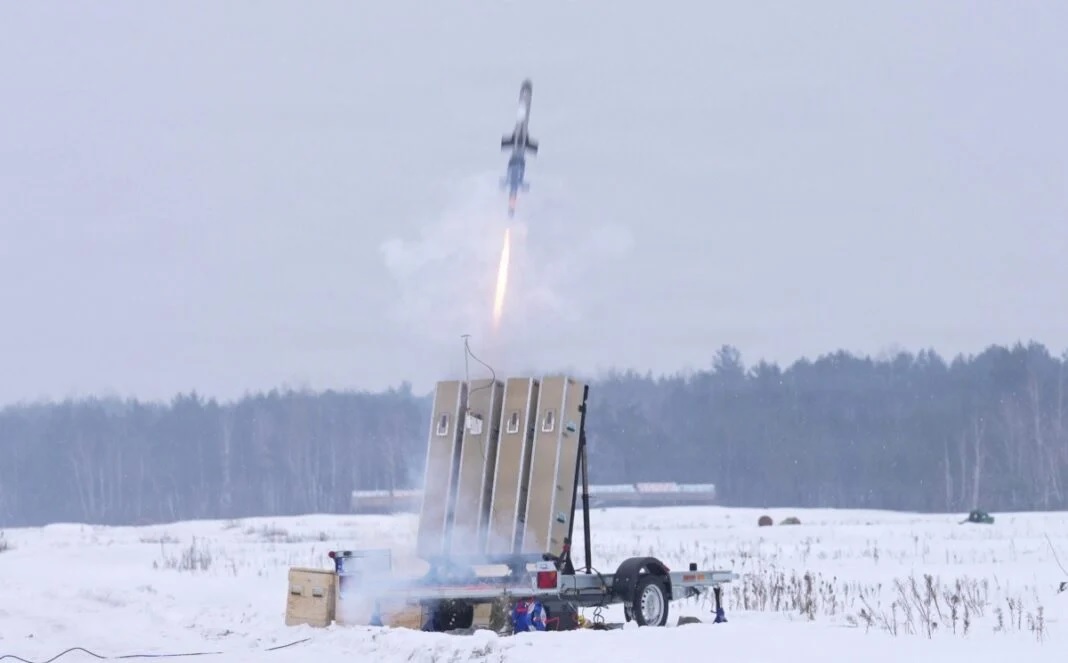
World
SEMBACH, Germany, — May 23, 2026 : The U.S. Army’s 52nd Air Defense Artillery Brigade (52d ADA Brigade) is testing and evaluating the IonStrike low-cost kinetic interceptor developed by DZYNE Technologies in Europe this spring as part of efforts to strengthen layered air and missile defense against one-way attack drones and other unmanned aircraft systems (UAS). The evaluation is focused on determining whether IonStrike can provide a mid-range kinetic air defense capability capable of countering low-cost aerial threats while integrating into existing U.S. Army and NATO air defense networks. Senior leaders from U.S. Army Europe and Africa (USAREUR-AF) and NATO’s Allied Land Command observed recent demonstrations of the interceptor, while soldiers from the brigade conducted hands-on assessments to evaluate how the system integrates with equipment already used in operational environments. Army Evaluates Cost-Effective Response to Drone Threats The assessment comes amid increasing concerns over the growing battlefield use of low-cost unmanned aircraft systems. Since 2022, conflicts in Eastern Europe, particularly the war in Ukraine, have demonstrated how inexpensive one-way attack drones—often costing only a few hundred dollars—can strike armored vehicles, logistics infrastructure, and fixed military installations. Military planners have identified a significant economic challenge in defending against such threats, as traditional missile interceptors frequently cost far more than the drones they are used to destroy. During saturation attacks involving multiple aerial threats, reliance on expensive missile systems can become increasingly difficult to sustain. IonStrike is being evaluated as a low-cost kinetic alternative intended to address this cost imbalance by offering an interceptor designed to cost less than the threats it defeats while expanding available defensive options within the Army’s layered air defense structure. The interceptor is positioned between electronic warfare systems, gun-based defenses such as M-SHORAD, and higher-end missile interceptors, providing an additional engagement layer intended to increase operational flexibility against evolving aerial threats. Designed for Flexibility During Swarm Attacks Unlike conventional fire-and-forget interceptors that commit fully to a target immediately after launch, IonStrike incorporates a precision terminal infrared seeker paired with a proximity-fuzed warhead, enabling operators to adjust engagements after launch if operational conditions change. According to Army officials, operators can abort an engagement or redirect the interceptor toward another target if a threat is reclassified or battlefield priorities shift. The capability is viewed as particularly important during swarm attacks, where commanders may need to adapt rapidly as multiple drones enter defended airspace. Maj. Cody Davis, operations officer for the 52d ADA Brigade, stated that IonStrike provides an additional kinetic option without requiring soldiers to learn an entirely new engagement process. He said the interceptor integrates into approved command-and-control systems, uses existing radar feeds, and supports commanders within established air defense architectures. Integration With Existing Army Networks A key feature of IonStrike under evaluation is its ability to function without requiring a separate radar system. Instead, the interceptor receives targeting cues from radars already connected to approved Army command-and-control networks, including the Forward Area Air Defense (FAAD) system and the Integrated Battle Command System Maneuver (IBCS-M). This integration is intended to reduce operational complexity by enabling soldiers to employ the system using existing kill chains and familiar battlefield management systems rather than introducing entirely new infrastructure. The interceptor currently launches from a multi-interceptor pallet equipped with four interceptors, though the brigade is working with DZYNE Technologies to develop a 12-interceptor launcher configuration aimed at increasing magazine depth during saturation attacks involving multiple incoming drones. Army planners view greater launcher capacity as necessary for maintaining defensive endurance in scenarios where adversaries attempt to overwhelm defenses through mass aerial attacks. Linked to NATO Eastern Flank Defense Efforts The ongoing evaluation is tied to the Eastern Flank Deterrence Initiative (EFDI), a warfighting concept designed to strengthen NATO’s eastern flank through integrated command systems supported by unmanned and minimally manned technologies. Headquartered in Sembach, Germany, the 52nd Air Defense Artillery Brigade, assigned to the 10th Army Air and Missile Defense Command, conducts air and missile defense operations across the areas of responsibility of both the U.S. European Command and U.S. Africa Command. Because the brigade operates in regions where drone threats continue to evolve, Army officials view the formation as well positioned to assess emerging counter-unmanned aircraft capabilities under operational conditions. Summer Operational Assessment to Measure Performance A larger operational assessment planned for summer 2026 will evaluate multiple aspects of IonStrike’s performance under realistic battlefield conditions. The testing will assess command-and-control integration, radar cueing performance, launcher configuration, reload procedures, lethality against representative one-way attack drones, and the reliability of the system’s abort and retasking capabilities. Maj. Benjamin Bowman, the brigade’s forward operations officer, stated that the assessment will determine whether IonStrike can function as a repeatable and sustainable combat layer in operational environments. He said evaluators will focus on whether the system can integrate into existing command structures, extend defended areas, be redirected in flight, and remain sustainable for soldiers during field operations. The Army stated that the 52d ADA Brigade continues to identify, test, and integrate capabilities intended to strengthen layered air defense and provide commanders with additional options against increasingly complex aerial threats, particularly the growing use of low-cost drones in modern combat operations.
Read More → Posted on 2026-05-23 15:07:41
World
WASHINGTON, — May 23, 2026 : Newly declassified infrared footage released by the U.S. Department of War has provided the first visual record of the February 12, 2023, shootdown of an unidentified aerial phenomenon (UAP) over Lake Huron, with federal analysts assessing that the object was likely balloon-like in nature. The 46-second black-and-white infrared video, officially titled “USAF ANG F-16C (callsign [CALLSIGN]) Shoots Down UAP over Lake Huron with [Weapon System], 12 Feb 2023,” was made public on May 22, 2026, as part of the second batch of records released under the Presidential Unsealing and Reporting System for UAP Encounters (PURSUE), a federal transparency initiative established to review and declassify unidentified aerial incident files. The footage, recorded by an F-16C fighter jet’s Advanced Targeting Pod (ATP), documents an engagement that concluded a week of heightened military aerial interceptions across North American airspace in February 2023 following changes to radar filtering systems and Rules of Engagement (ROE), which enabled earlier detection of slow-moving airborne objects considered potential risks to aviation and national security. Lake Huron Engagement On February 12, 2023, an F-16C from the Minnesota Air National Guard’s 148th Fighter Wing, based in Duluth, intercepted an unidentified object flying in Canadian airspace above Lake Huron before it entered the North American Aerospace Defense Command (NORAD) monitoring zone. The aircraft reportedly launched from Madison, Wisconsin, to engage the target. Military officials at the time described the object as octagonal in appearance and operating at an altitude of approximately 20,000 feet. Authorities said it lacked a visible propulsion system or identifiable payload but was regarded as a possible hazard to commercial aviation because of its altitude and flight path. According to newly released details, an initial AIM-9X Sidewinder infrared-guided missile reportedly missed the object during the interception. A second AIM-9X missile successfully struck and destroyed the target at approximately 2:42 p.m. CST, ending the operation. Footage Analysis and AARO Assessment The newly declassified footage was assessed by the U.S. government’s All-domain Anomaly Resolution Office (AARO), which stated that the infrared sensor begins tracking a distinct area of thermal contrast near the center of the frame at approximately the 11-second mark. At around the 20-second mark, the footage depicts what AARO described as a “kinetic interaction” between two distinct areas of contrast, representing the missile’s impact with the target. Following the strike, the object fragments in what officials described as a radial displacement pattern, consistent with a high-energy event. Visual analysis of the footage indicates the object possessed a roughly spherical structure with a cluster of tangled wires or cable-like material suspended beneath it. No visible payload is immediately identifiable in the video. Officials said the way the object ruptures and disperses upon impact is broadly consistent with balloon-like behavior under sudden kinetic force, though the object remains technically classified as unidentified in official documentation. AARO further stated that the footage originated from an infrared sensor aboard a U.S. military platform operating within the United States Northern Command (NORTHCOM) area of responsibility and was uploaded to classified systems in February 2023. Officials noted that some records in the reviewed collection do not contain a fully substantiated chain of custody. Fourth Aerial Intercept in February 2023 The Lake Huron incident marked the fourth aerial shootdown over North America in just over one week, during a period of heightened monitoring after military radar settings were adjusted to better identify slow-moving high-altitude objects. The sequence began on February 4, 2023, when a Chinese high-altitude surveillance balloon was shot down off the coast of South Carolina by an F-22 Raptor from the 1st Fighter Wing using an AIM-9X missile. On February 10, 2023, another high-altitude object described by officials as “cylindrical” and “silver-ish gray” was intercepted and destroyed over Alaska by an F-22 launched from Joint Base Elmendorf-Richardson. A day later, on February 11, 2023, a third unidentified object was shot down over Canada’s Yukon territory by another U.S. Air Force F-22 operating in coordination with Canadian authorities. Subsequent reporting and government assessments suggested the Alaska and Yukon objects were also likely balloon-related, although significantly smaller than the Chinese surveillance balloon intercepted earlier that month. Yukon Evidence and Recovery Details Visual evidence connected to the Yukon incident later surfaced through a Canadian freedom of information request after a grainy image obtained by CTV News showed a cylindrical object featuring a metallic upper section, a white lower body, and a wire measuring approximately 20 feet suspending a small package beneath it. Additional reporting related to the Lake Huron incident indicated debris linked to the destroyed object was recovered by Canadian authorities from shoreline areas in March 2023 and later associated with commercial weather-monitoring equipment, reinforcing assessments that the object may not have been a sophisticated surveillance platform. Military aviation analysts have continued to note that despite the advanced targeting pods and imaging systems carried by front-line fighter aircraft, publicly released imagery connected to unidentified aerial encounters often remains limited in resolution, complicating definitive identification and contributing to early uncertainty surrounding such incidents. PURSUE Declassification Initiative The Lake Huron footage was released under the PURSUE declassification initiative following a February 2026 directive issued by President Donald Trump ordering expanded transparency concerning government-held records on unidentified anomalous phenomena. The program involves cooperation between the Department of War, the Office of the Director of National Intelligence (ODNI), the FBI, NASA, and other federal agencies through a centralized disclosure portal. According to government records, the latest disclosures stem in part from a March 6, 2026 request by eight members of the U.S. House of Representatives seeking access to 51 potentially UAP-related records reportedly held across the Department of War and the Intelligence Community, prompting AARO to identify and compile responsive materials. The first batch of PURSUE files was released on May 8, 2026, while the second tranche, including the Lake Huron footage, became public on May 22, 2026. Officials said additional records are expected to be released on a rolling basis as the federal review of historical classified files continues.
Read More → Posted on 2026-05-23 15:44:00
World
PARIS, — May 23, 2026 : France has prepared a draft resolution for the United Nations Security Council aimed at establishing an international mission to restore freedom of navigation in the Strait of Hormuz, as diplomatic efforts intensify to address maritime insecurity in one of the world’s most critical shipping corridors. The French Foreign Ministry confirmed on May 21 that the draft text could be introduced to the Security Council when diplomatic conditions are considered favourable. The proposal comes as a separate draft resolution co-sponsored by the United States and Bahrain continues to face delays due to expected opposition from Russia and China. French Foreign Ministry spokesman Pascal Confavreux confirmed that Paris is working on an international mission focused on restoring maritime movement and protecting commercial shipping in the Strait of Hormuz. He stated that France, as a permanent member of the Security Council, has prepared a draft resolution that may be discussed when conditions are appropriate. French President Emmanuel Macron announced that Paris will soon propose a Franco-British led initiative at the United Nations for an international maritime mission intended to reopen the strait once the security situation permits. According to French officials, the initiative follows consultations with Washington and Tehran and is designed to remain separate from parties directly involved in the conflict. French-Led Defensive Maritime Mission The proposed mission is intended to operate as a strictly defensive and multinational force focused on restoring safe maritime transit through the Strait of Hormuz. French and British officials stated that the mission would prioritize the protection of merchant vessels, escort commercial shipping, and conduct mine-clearance operations in accordance with international law. Military planning is currently being coordinated between France, the United Kingdom, and potential partner countries. Officials said deployment would only take place after a sustainable ceasefire or when security conditions allow for safe operations in the region. France and the United Kingdom had earlier reinforced their plans during a mid-April international summit on the Strait of Hormuz attended by representatives from more than 50 countries. A joint statement issued after the meeting confirmed preparations for an independent multinational mission aimed at ensuring safe passage for merchant shipping. Separate US-Bahrain Resolution Faces Diplomatic Delays France’s proposal remains separate from an ongoing United States-Bahrain draft resolution currently under discussion at the Security Council. The US-Bahraini text, operating under Chapter VII of the UN Charter, calls on Iran to immediately cease attacks and threats against merchant vessels, halt the laying of naval mines, and disclose mine locations to assist international clearance operations. Although the United States reportedly secured support from nearly 140 co-sponsoring countries, repeated delays have prevented a vote from taking place. Russia and China have indicated that they may veto the proposal, arguing that the text unfairly targets Tehran and lacks diplomatic balance. Paris has not formally endorsed the US-Bahraini draft, despite previously supporting related maritime security measures. In April 2026, France voted in favour of an earlier Bahrain-led Security Council resolution on maritime security in the Strait of Hormuz. However, that proposal failed after vetoes from Russia and China. France’s Permanent Representative to the United Nations, Jérôme Bonnafont, defended France’s position at the time, stating that freedom of navigation and maritime security in the Strait of Hormuz remain essential for regional stability in the Middle East and global international security. Iran Rejects US-Bahraini Proposal Iran has strongly criticized the US-Bahraini draft resolution. Iranian Foreign Minister Abbas Araghchi sent letters to the United Nations Secretary-General and member states urging them to reject the proposal, describing it as “one-sided and provocative.” Iran argued that the draft overlooks the broader causes of regional instability, including recent military actions by the United States and Israel. Tehran warned that adopting the resolution could damage the credibility of the Security Council and stated that normal maritime transit could resume if hostilities decline and sanctions are eased. Maritime and Economic Impact The diplomatic negotiations are unfolding against the backdrop of a three-month regional conflict involving the United States, Israel, and Iran, which has significantly disrupted maritime activity in the Strait of Hormuz. The strategic waterway remains a vital route for global energy supplies and international trade, and insecurity in the region has disrupted merchant shipping, fertilizer transport, and humanitarian deliveries. Ongoing disruptions have also contributed to rising global oil prices and increased concerns over international supply chain stability. Ongoing Diplomatic Coordination France continues to coordinate with the United Kingdom and international partners regarding preparations for a defensive multinational mission aimed at restoring maritime security and freedom of navigation in the Strait of Hormuz. French officials stated that no timeline has yet been set for formally presenting the draft Security Council resolution, with diplomatic consultations expected to continue as regional conditions evolve.
Read More → Posted on 2026-05-23 15:57:15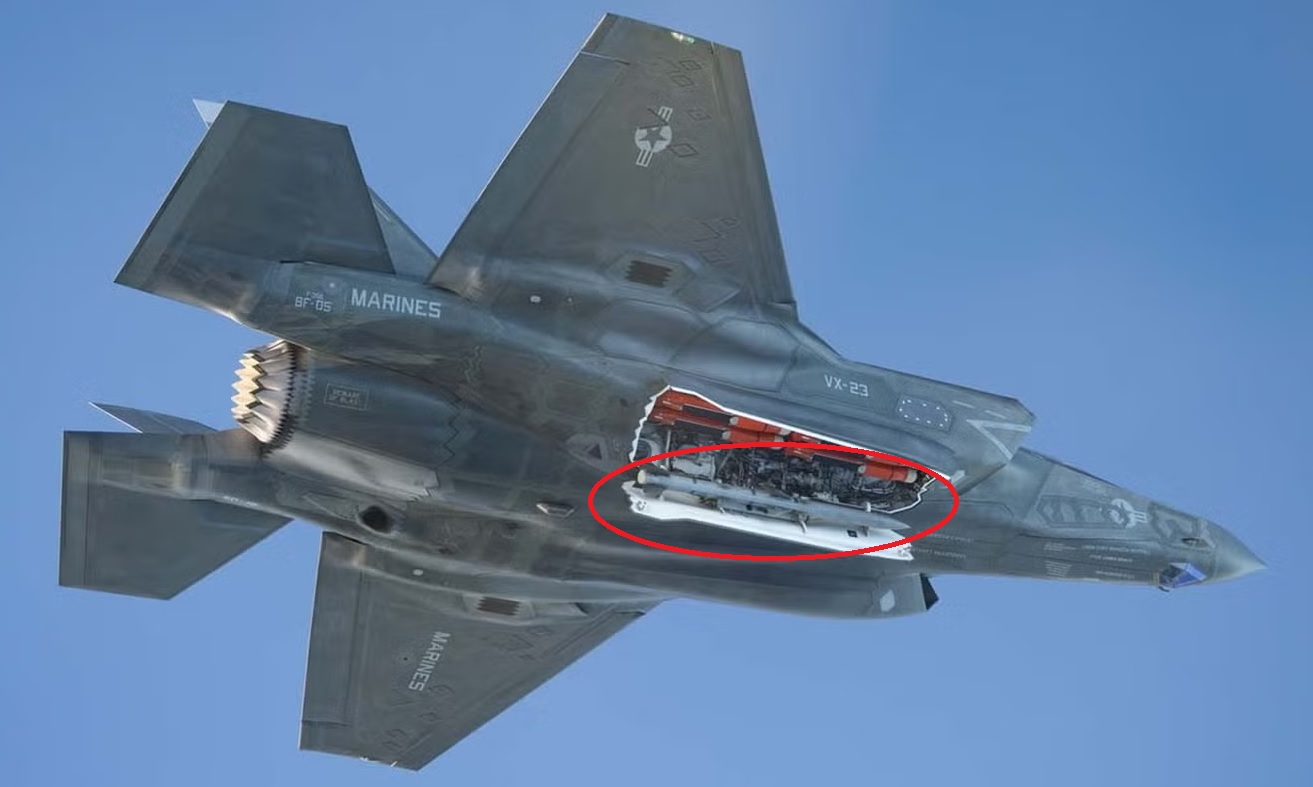
World
PATUXENT RIVER, Maryland, — May 23, 2026 : A United States Marine Corps F-35B Lightning II fighter jet has conducted its first integration and carriage flight tests with the British-developed SPEAR 3 small-diameter air-to-ground cruise missile, marking an early milestone in efforts to equip the fifth-generation stealth aircraft with a new stand-off precision weapon. The milestone was confirmed by the official F-35 Lightning II program and follows flight trials carried out earlier in 2026 at Naval Air Station Patuxent River by the F-35 Integrated Test Force. The tests were conducted jointly by specialists from the aerospace manufacturer Lockheed Martin and British missile developer MBDA UK as part of a broader engineering effort to formally integrate the SPEAR 3 into the Royal Air Force (RAF) and Royal Navy F-35B fleets. Internal Weapons Bay Configuration and Stealth Preservation Official photographs released during the trials showed a U.S. Marine Corps F-35B carrying four SPEAR 3 missiles fitted inside one internal weapons bay alongside a single AIM-120 Advanced Medium-Range Air-to-Air Missile (AMRAAM). Under an operational configuration, the aircraft is expected to carry up to eight SPEAR 3 missiles across both internal bays while maintaining air-to-air armament. The internal carriage arrangement enables the aircraft to preserve its low-observable stealth characteristics by avoiding the use of external hardpoints, which can increase radar visibility. The integration is also expected to expand future export prospects for the missile, with countries including Italy and Germany evaluating the SPEAR 3 for potential use on F-35 and Eurofighter Typhoon aircraft. UK Sovereign Weapons Integration Program The SPEAR 3 integration forms part of a wider United Kingdom Ministry of Defence effort to strengthen sovereign missile and precision-strike capabilities while reducing dependence on U.S.-produced weapons systems. Alongside SPEAR 3, British authorities are also progressing plans to integrate the Meteor Beyond Visual Range Air-to-Air Missile (BVRAAM) onto the F-35 platform. The UK’s F-35B fleet already employs domestically integrated weaponry, including the ASRAAM short-range air-to-air missile and the Paveway IV laser-guided precision bomb. Britain’s ability to independently integrate such systems originates from its position as the sole Tier 1 partner in the original Joint Strike Fighter program, which later evolved into the F-35 Lightning II program. This role granted the United Kingdom technical access and integration capabilities not available to most countries procuring the aircraft through standard U.S. Foreign Military Sales (FMS) channels. In addition, the country operates as one of Europe’s largest maintenance and support centers for F-35 variants, particularly the short takeoff and vertical landing (STOVL) F-35B. Building on Previous Typhoon Trials in Sweden The current F-35B integration effort builds upon earlier SPEAR 3 guided firing tests conducted in November 2024 at the Vidsel military range in northern Sweden. During those trials, a Royal Air Force Eurofighter Typhoon from the 41st Test and Evaluation Squadron, operating alongside a BAE Systems test team, launched a telemetry-equipped missile in place of a live warhead. The missile autonomously navigated its flight path and successfully engaged a target during guided firing evaluations. Data gathered during these Typhoon trials is currently being used to support software development and compatibility work required for full F-35B integration. SPEAR 3 Missile Technical Specifications The SPEAR 3 (Selective Precision Effects At Range Capability 3) is a compact air-launched cruise missile derived from the Brimstone anti-armor missile family. Measuring approximately 1.8 meters in length and 180 millimeters in diameter, and weighing under 90 kilograms, the missile replaces a traditional rocket motor with a PBS TJ150 turbojet engine and deployable wings. This propulsion system enables high subsonic flight and extends the missile’s launch range to approximately 150 kilometers. During mid-course flight, the weapon relies on an inertial navigation system (INS) combined with GPS guidance to track position and trajectory. For terminal engagement, SPEAR 3 uses a modular seeker package that can be configured with active radar, semi-active laser, or anti-radiation guidance depending on mission requirements. This flexibility enables the missile to engage armored targets, radar stations, and enemy air defense systems. Due to its compact size, the missile can also be mounted on triple-launch configurations, theoretically allowing a Eurofighter Typhoon to carry up to 18 SPEAR 3 missiles. However, under current operational planning, the F-35B remains the primary integration platform, maximizing both stand-off strike range and low-observable combat characteristics. Future Integration Timeline Data collected during the recent carriage flight tests is expected to support future mission systems integration, weapons separation and jettison testing, and software validation activities. According to current program expectations, the SPEAR 3 is anticipated to enter operational service with the UK F-35B fleet in the early 2030s, further expanding the aircraft’s precision stand-off strike capabilities.
Read More → Posted on 2026-05-23 16:12:19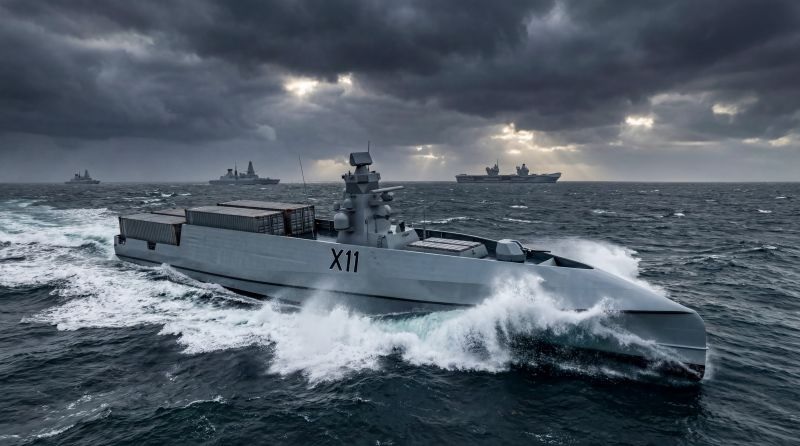
World
FARNBOROUGH, United Kingdom — May 23, 2026 : Navantia UK has unveiled a scale model of its new Large Autonomous Surface Vessel (LASV75) concept during the Navy Leaders Combined Naval Event (CNE), held at the Farnborough International Exhibition Centre from May 19 to 21, 2026, presenting a platform designed to support the UK Royal Navy’s evolving “hybrid navy” doctrine that combines crewed and uncrewed naval systems. Developed by Navantia UK’s Bristol-based design team, the LASV75 is intended to provide a persistent, mission-adaptable capability capable of operating independently or alongside traditional warships. The concept reflects growing emphasis within naval planning on integrating autonomous systems into fleet operations to enhance endurance, operational flexibility, and force sustainability. Vessel Design and Specifications The LASV75 features a 75-metre modular hull, an 11.8-metre beam, and a displacement of more than 1,000 tonnes. Unlike conventional naval vessels, it has been designed from the keel up as an entirely uncrewed platform, removing traditional crew accommodation and life-support systems to maximise mission payload capacity and operational endurance. According to Navantia UK, the vessel’s architecture prioritises adaptability, enabling rapid reconfiguration for different operational requirements. The scale model displayed at CNE showcased a highly configurable payload deck designed to accommodate containerised mission systems, interchangeable sensor packages, and modular mast configurations. Depending on mission requirements, the LASV75 is designed to undertake a range of operational roles including intelligence gathering, surveillance, escort missions, electronic warfare, and strike-related operations, including the integration of mounted naval gun systems. The platform is also intended to operate either independently or in support of a wider naval task group. Hybrid Navy Vision and Operational Role Speaking at the event, Simon Jones, Product Development Director at Navantia UK, said the vessel was developed to meet anticipated operational demands of the Royal Navy and allied fleets, particularly in harsh maritime environments requiring long-duration deployment capability. “This is our vision for what we think the hybrid navy will need in the future to have a credible and persistent capability,” Jones said. “To have true persistent capability in the North Atlantic, for example, in harsh cold weather conditions, we believe something of this scale is necessary.” The company stated that the concept is intended to support future hybrid force structures where autonomous vessels operate alongside crewed surface combatants to expand mission coverage, reduce risk exposure, and improve operational persistence. Modular Payloads and NATO Interoperability To improve compatibility with allied naval forces, Navantia UK is incorporating ‘NavyPOD’-style modular payload systems and interfaces aligned with NATO standards, allowing mission equipment and operational systems to be exchanged more efficiently between partner navies. According to Simon Jones, the company is focusing on common standards to ensure future interoperability and flexibility across allied maritime operations. “We’re thinking about standard interfaces aligned to NATO standards to make these as interoperable and interchangeable as possible,” he stated. The modular approach is expected to allow the platform to adapt quickly to evolving operational needs without requiring major structural redesigns, while also simplifying maintenance and mission reconfiguration. Manufacturing Strategy and Industrial Scale Navantia UK stated that manufacturability was a key consideration during the LASV75’s design phase. The company is working with autonomy and mission-system partners across industry to mature the concept while ensuring that future vessels can be produced more rapidly and at lower cost than similarly sized crewed platforms. Initial construction of the LASV75, if progressed, would take place at Navantia UK’s Appledore shipyard in Devon, a facility capable of manufacturing vessels of up to 120 metres in length. The company said scalable production and lower-cost manufacturing are central objectives as autonomous naval systems become more prominent in future fleet structures. Wider Shipyard Modernisation Programme The unveiling of the LASV75 comes during a broader period of industrial expansion following Navantia UK’s acquisition of Harland & Wolff assets in early 2025. Navantia UK is currently implementing a £157 million investment programme to modernise its four UK shipyards located at Appledore, Arnish, Belfast, and Methil. The initiative includes digital shipbuilding technologies and advanced automated manufacturing systems aimed at improving efficiency and reducing production timelines. Among the upgrades is a new automated panel line in Belfast for the production of large steel sections, alongside digital design and engineering tools being introduced across all facilities. The company said the effort is intended to transition operations toward a “Shipyard 5.0” model, focused on advanced automation and digitally integrated production processes. Derek Jones, Chief Commercial and Business Development Officer at Navantia UK, said autonomous systems will become increasingly important to future sovereign naval capability. “Autonomous vessels are fundamental to the future of sovereign defence capabilities. Naval capabilities of the future will comprise a hybrid mixture of crewed warships with uncrewed escorts and ancillary ships,” he said. According to Navantia UK, the industrial improvements are expected to reduce standard naval vessel delivery timelines by up to 30 percent, supporting ambitions outlined in the 2025 Strategic Defence Review, which aims to accelerate the delivery of major modular naval platforms. Progress on Fleet Solid Support Programme While Appledore could support future LASV75 production, Navantia UK’s Belfast facility remains focused on the £1.6 billion Fleet Solid Support (FSS) programme for the Royal Fleet Auxiliary. The programme advanced following the cutting of first steel for the lead vessel at Appledore in December 2025. To support distributed manufacturing between facilities, Navantia UK launched an 85-metre transport barge, Seahorse, in early May 2026 from the Methil yard. The barge is intended to transport major ship sections and structural components between Appledore and Belfast for final assembly, supporting production continuity across multiple shipyards.
Read More → Posted on 2026-05-23 16:30:10
India
TAMPA, Florida, — May 23, 2026 : A viral image emerging from the recently concluded joint capability demonstrations at Special Operations Forces (SOF) Week 2026 has sparked discussion among defence analysts and military observers regarding soldier-level tactical equipment used by Indian Special Forces, particularly the apparent absence of visible tactical hearing protection during helicopter operations. India made a significant appearance at the event, held in Tampa, Florida, from May 18 to 21, where a high-level Indian Armed Forces delegation participated in multinational engagements and showcased operational capabilities alongside partner nations during the “Battle in the Bay” capability demonstration. The exercise highlighted interoperability, tactical coordination, and special operations readiness among participating forces. However, attention shifted to a widely circulated photograph showing a mixed team of Indian and US Special Forces personnel seated on the edge of a helicopter flying low over water during an operational demonstration. In the image, US personnel, including a visible door gunner, appear equipped with advanced tactical communication headsets widely recognized as 3M PELTOR ComTac systems, while one Indian Special Forces operative is clearly seen covering both ears with his hands to shield himself from helicopter rotor noise. The image has triggered questions among defence analysts and social media users over why Indian Special Forces personnel visible during the helicopter demonstration were not wearing tactical hearing protection systems in an environment known for extreme noise exposure. Several defence observers have questioned whether the absence of visible headsets reflected equipment availability, mission-specific loadout decisions, interoperability limitations, or differing operational practices. Many analysts have particularly questioned why an Indian Special Forces operative, participating in a multinational special operations event, was seen manually covering his ears from rotor noise while US Special Forces personnel in the same helicopter were visibly equipped with integrated hearing protection and communication systems. The viral image has intensified discussion around whether Indian Special Forces units possess standardized access to advanced hearing-protection headsets, such as PELTOR ComTac systems, or equivalent tactical equipment. Role of Tactical Hearing Protection in Helicopter Operations In modern special operations environments, tactical communication headsets such as PELTOR ComTac and equivalent systems are generally regarded as standard mission equipment, particularly during helicopter-based operations. Military helicopters generate sustained high-decibel noise levels capable of causing discomfort, temporary hearing disruption, and long-term auditory damage during prolonged exposure. Tactical hearing protection systems are designed to reduce harmful noise while allowing operators to remain operationally aware and connected during missions. These systems generally perform two key operational functions: Active Hearing Protection Electronic suppression or compression of dangerous sound levels, including rotor noise, aircraft engines, explosions, and gunfire, while amplifying low-level environmental sounds required for situational awareness. Integrated Tactical Communication Connection to squad radios and helicopter intercom systems, enabling operators to receive instructions, coordinate movement, and maintain communication during high-risk operations, including air insertion, maritime assault missions, and fast-roping exercises. The viral image has drawn wider attention because the Indian operative appears to be physically covering his ears rather than using visible electronic hearing protection, while US Special Forces personnel in the same aircraft are seen wearing integrated tactical communication headsets. Procurement and Modernization Questions The incident has also renewed questions regarding equipment standardization and modernization priorities for elite Indian units. Currently, 3M PELTOR ComTac and SWAT-TAC tactical communication headsets are commercially available in India, and specialized Indian military formations are known to operate different secure communication systems during missions. The Indian defence establishment has also accelerated modernization efforts through programmes such as Innovations for Defence Excellence (iDEX), supporting tactical communication systems, secure battlefield networking, tactical LAN radios, and indigenous soldier modernization initiatives. However, there is no publicly known record of a recent large-scale standardized procurement specifically involving advanced active hearing protection systems, such as PELTOR ComTac headsets, for widespread issue across Indian Special Forces battalions. The viral photograph has therefore raised a broader operational question among defence observers: why Indian Special Forces personnel at SOF Week 2026 were not visibly wearing tactical hearing protection during helicopter operations while US counterparts in the same operational environment appeared equipped with integrated headset systems. Military analysts continue to note that Indian Special Forces are globally recognized for combat effectiveness, operational capability, and performance in high-risk and demanding environments. At the same time, the incident has highlighted continued discussion surrounding modernization of individual soldier equipment, particularly systems linked to hearing protection, communication, mission safety, and interoperability during multinational special operations exercises.
Read More → Posted on 2026-05-23 16:50:17
World
MOSCOW / NIZHNY NOVGOROD, Russia — May 23, 2026 : Russian technology firm Inferit Security, operating within the Softline Group ecosystem, has unveiled a laser-based anti-unmanned aerial vehicle (UAV) system designed specifically for the civilian sector. The system was presented on May 19, 2026, during the CIPR (Digital Industry of Industrial Russia) conference, with the company describing it as the first fully domestically developed and manufactured laser complex of its kind in Russia. The newly introduced system is intended to protect industrial facilities, transport infrastructure, energy installations, and other critical civilian assets against drone threats. According to Inferit Security, the laser complex is designed for deployment at fuel and energy sector facilities, nuclear and hydroelectric power plants, logistics hubs, manufacturing sites, and densely populated infrastructure zones where minimizing collateral damage is essential. The system can operate autonomously or function as part of a layered air-defense and security network integrated alongside traditional air-defense and electronic warfare systems. Technical Design and System Capabilities Inferit Security stated that the laser complex operates through an integrated combination of radar, optical-electronic sensors, thermal imaging systems, LiDAR technology, and artificial intelligence-assisted software to detect, track, and neutralize UAV threats. The system’s standard configuration includes a 3-kilowatt (kW) laser module, while the company plans to expand output capability to 12 kW without altering the external dimensions or structural form factor of the platform. The transmitting unit incorporates a dedicated refocusing mechanism and precision beam-positioning technology, reportedly maintaining an error margin of approximately 2 centimeters at a range of 1,000 meters. According to the developer, the system achieves a destruction accuracy exceeding 90 percent against copter-type UAVs. The platform is also designed to counter drones operating in autonomous flight mode, radio-controlled UAVs employing frequency-hopping technology, and systems controlled through fiber-optic communication links. The laser complex can reportedly operate continuously for up to 100 seconds, while average engagement time against small UAVs ranges between three and five seconds, depending on target type and operational conditions. Three-Stage Operational Process Inferit Security stated that the laser complex neutralizes aerial threats through a sequential three-stage operational process involving detection, tracking, and engagement. During the detection phase, an integrated radar system scans surrounding airspace and identifies UAVs at distances of up to 3,000 meters, simultaneously registering target coordinates, speed, altitude, direction, and trajectory data. In the tracking and identification phase, optical-electronic systems functioning across visible and infrared spectrums assume responsibility for target recognition and monitoring. These systems, supported by thermal imaging equipment, a video surveillance module, LiDAR complex, and laser rangefinder, continuously track objects at distances ranging from approximately 2,000 meters to 200 meters. The final engagement phase begins once the UAV enters direct line of sight at distances of up to 1,000 meters. The laser module can apply either functional suppression, intended to blind or disable drone optics and onboard systems, or physical suppression, in which thermal energy is used to damage and neutralize the target. For standard quadcopter-type drones, Inferit Security stated that neutralization may occur in roughly three seconds, depending on operational conditions and target exposure. Cost Efficiency and Operational Advantages A key operational characteristic highlighted by Inferit Security is the system’s economic efficiency. Since the platform relies on directed laser energy rather than missiles or kinetic interceptors, it possesses an effectively unlimited ammunition supply, removing the logistical constraints associated with conventional interception systems. The company stated that the financial cost of a single engagement corresponds primarily to the electricity consumed during laser firing, significantly lowering operational expenses during sustained infrastructure protection missions. Inferit Security also emphasized that the point-focused nature of laser engagement minimizes risks associated with falling debris, explosive fragmentation, or collateral structural damage. This characteristic is particularly relevant for deployment near sensitive facilities such as industrial plants, nuclear infrastructure, hydroelectric stations, and densely populated urban environments. Launch of Dedicated UAV Countermeasures Center Alongside the unveiling of the laser complex, Inferit Security announced the establishment of a dedicated UAV Countermeasures Center, intended to support physical infrastructure protection requirements beyond traditional cyber and information security measures. According to the company, the center will deploy specialized teams responsible for evaluating industrial sites, conducting risk assessments, developing drone-threat models, and integrating laser counter-UAV technologies into existing security ecosystems. Ivan Kireev, Managing Director of Inferit Security, stated that the project was developed in response to increasing market demand for practical infrastructure protection solutions suited to civilian-sector operations. He noted that the system was designed to provide operational cost efficiency, reduced collateral damage, compatibility with layered security systems, and technological independence from export restrictions. Deployment Status Inferit Security positioned the laser complex as a mobile and scalable solution intended for seamless integration into existing protection systems for civilian and industrial infrastructure. However, the company has not released information regarding serial production schedules, procurement agreements, deployment timelines, or confirmed contracts for operational use.
Read More → Posted on 2026-05-23 17:18:17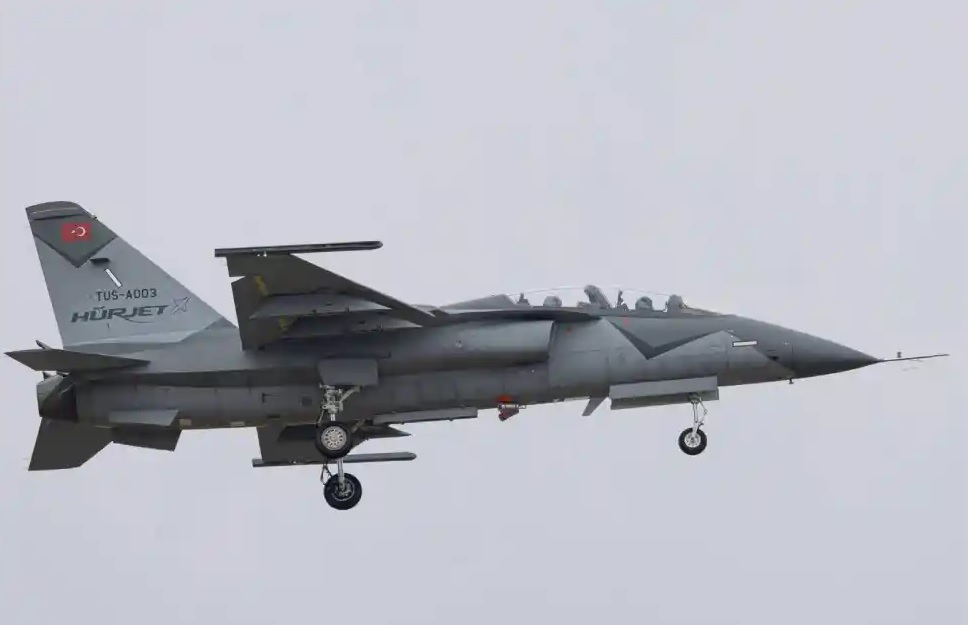
World
ANKARA, — May 24, 2026 : Turkish Aerospace Industries (TAI) has continued development of its Hürjet advanced jet trainer, with new imagery indicating progress toward an armed light combat configuration after a prototype aircraft was photographed equipped with a full complement of weapon pylons during a recent test flight. On May 19, 2026, aviation photographer Enes Ötken published images showing the second Hürjet prototype, designated TUS-A003 (PT-2), flying with wingtip and underwing pylons while returning from a test sortie near Turkish Aerospace Industries facilities northwest of Ankara. The aircraft was photographed during landing with its landing gear and speedbrakes extended, reinforcing indications that the flight formed part of ongoing developmental testing of the platform’s combat-oriented configuration. The sighting follows earlier reports this month that TAI is actively pursuing a light attack variant of the Hürjet aimed at competing in the international market for advanced trainers and lightweight combat aircraft. Flight Test Configuration and Prototype Details The aircraft photographed is the second Hürjet prototype and previously debuted a new light and dark gray camouflage scheme in November 2024. The latest imagery revealed an extensive external pylon arrangement, including wingtip pylons intended for within-visual-range air-to-air missiles, four underwing pylons, and one centerline fuselage pylon, representing a full external weapons carriage configuration under evaluation. Several pieces of flight-test instrumentation were also visible. A pitot tube mounted on the nose was installed for air-data collection, while cameras positioned in a V-pattern behind the landing gear and ahead of the fuselage pylon appeared to monitor structural and aerodynamic behavior during flight. Such systems are commonly used to assess pylon vibration, airflow interaction, and the mechanical impact of external stores on the airframe during testing. TAI has not publicly issued a statement regarding the exact purpose of the flight or confirmed details surrounding the pylon-equipped configuration observed on TUS-A003. Weapons Integration and Combat Role The Hürjet program has entered the serial production phase, with four prototypes currently engaged in flight testing. The armed version of the aircraft is expected to support close air support, armed air policing, and secondary light combat operations alongside its primary training mission. Industry reporting, including information published by Turkish defense outlets, indicates the combat Hürjet will integrate the domestically developed MURAD family of Active Electronically Scanned Array (AESA) radars. Planned air-to-air armament includes the Gökdoğan beyond-visual-range missile and Bozdoğan within-visual-range missile, both developed to enhance indigenous air combat capability. Initial production aircraft are expected to remain powered by the U.S.-manufactured General Electric F404-GE-104 turbofan engine, producing approximately 17,700 pounds of thrust with afterburner, allowing speeds of up to Mach 1.4. Over the longer term, future production batches are expected to transition to Turkey’s domestically developed TF-series turbofan engines under development by TUSAŞ Engine Industries (TEI). Aircraft Specifications and Program Development The Hürjet is a single-engine, tandem-seat supersonic aircraft developed by TAI to serve both training and light combat missions. The platform incorporates a full-authority digital fly-by-wire flight control system, glass cockpit, head-up display, helmet-mounted display compatibility, night-vision imaging system support, and aerial refueling capability. The aircraft has a reported service ceiling of 45,000 feet, an operational range of approximately 1,060 nautical miles, and a payload capacity of up to 3,400 kilograms distributed across seven hardpoints. Measuring 13.6 meters in length, with a 9.5-meter wingspan and 4.1-meter height, the Hürjet is intended to provide a modern replacement for aging trainer fleets while maintaining operational flexibility for light combat missions. Development of the Hürjet program began in 2017, while the first prototype completed its maiden flight on April 25, 2023. The second prototype, TUS-A003, completed its maiden flight on November 12, 2024, before later appearing in an updated camouflage scheme. Turkish Air Force Modernization and Naval Variant Plans For the Turkish Air Force (Türk Hava Kuvvetleri), the Hürjet is expected to replace the service’s aging fleet of 68 T-38 Talon advanced jet trainers. Turkey has ordered 12 Hürjet aircraft, which are expected to support pilot training requirements while also providing secondary operational capability for limited combat tasks. TAI has also officially outlined plans for a carrier-capable Hürjet variant. Unveiled during SAHA EXPO 2026, the naval derivative is being designed for Short Take-Off But Arrested Recovery (STOBAR) operations aboard Turkey’s planned MUGEM aircraft carrier, while retaining future compatibility with Catapult Assisted Take-Off But Arrested Recovery (CATOBAR) systems if operational requirements evolve. Spain’s SAETA II Export Program The Hürjet has secured its first international export customer through Spain’s Integrated Combat Training System (ITS-C) program, under which the Spanish Air and Space Force (Ejército del Aire y del Espacio) will acquire 30 aircraft designated as the SAETA II. The fleet will replace 19 F-5M Freedom Fighter trainers currently operated by Ala 23 (23rd Wing) at Talavera La Real Air Base, supporting pilot transition training for frontline aircraft including the Eurofighter Typhoon and F/A-18 Hornet. Spain’s procurement places strong emphasis on domestic industrial participation, with approximately 60% of production and systems integration to be handled locally through an Airbus-led consortium. Under the agreement, Airbus will lead certification, aircraft nationalization, and simulator systems, while GMV will contribute mission computers and navigation systems, Sener datalink communications, Aertec and Airtificial fly-by-wire technologies and interface systems, and Indra identification friend-or-foe (IFF) systems. The rollout of the SAETA II fleet will take place in two phases. Beginning in 2028, Spain will receive 21 baseline aircraft, including one configured as a dedicated test platform for Spanish avionics and mission systems. Ground-based training systems are scheduled to become operational between 2029 and 2030. During the second phase, running from 2031 to 2035, the remaining nine aircraft will be delivered and standardized to the final SAETA II configuration. The total program value is estimated at approximately €2.6 billion. Market Position The emergence of weaponized testing on TUS-A003 highlights TAI’s effort to position the Hürjet beyond a conventional trainer platform and into the competitive global market for advanced training and light combat aircraft. The aircraft is expected to compete against platforms including the South Korean KAI T-50 and FA-50, Boeing-Saab T-7A Red Hawk, Leonardo M-346 Master, and Yakovlev Yak-130, as countries increasingly seek cost-effective platforms capable of combining pilot training and limited combat operations within a single airframe.
Read More → Posted on 2026-05-24 13:12:36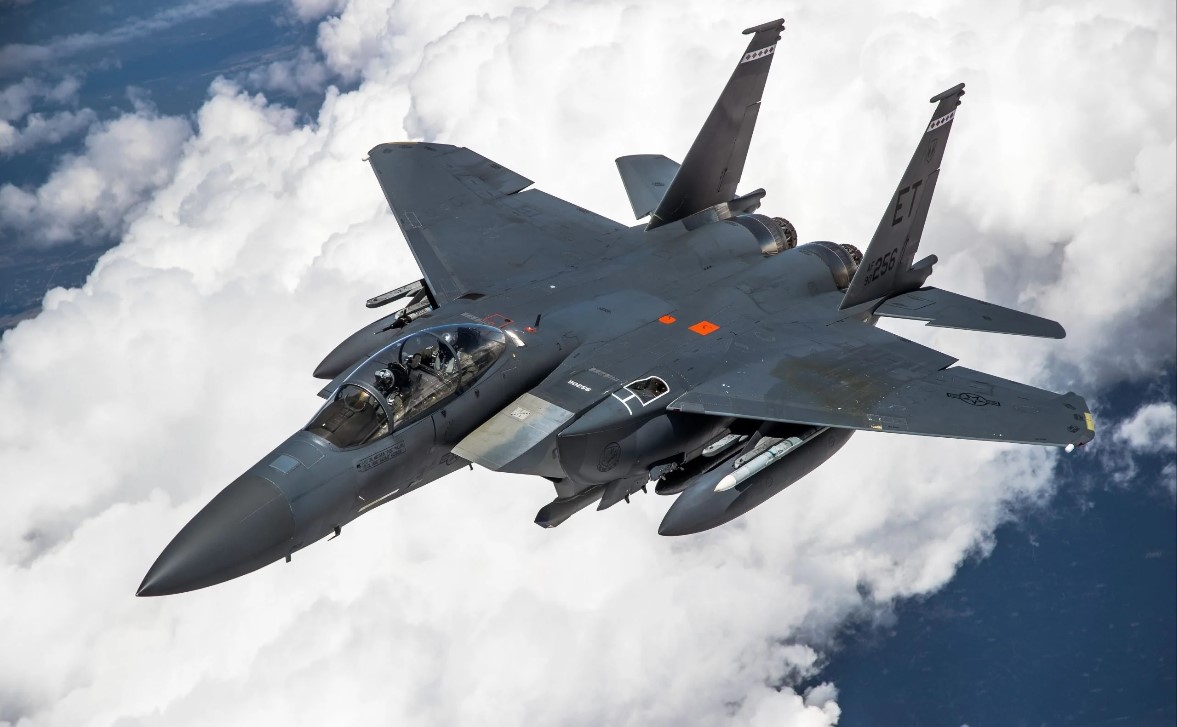
World
WASHINGTON, — May 24, 2026 : The U.S. Department of Defense’s fiscal 2027 budget proposal includes an emergency request to acquire 24 additional F-15EX Eagle II heavy fighter aircraft for the U.S. Air Force at a projected cost of $2.66 billion, reinforcing the service’s ongoing effort to modernize its combat fleet and replace aging fighter platforms. According to fiscal 2027 procurement documents, the aircraft are planned for distribution across both active-duty operational units and the Air National Guard. The proposal also indicates that F-15EX production is expected to continue through fiscal year 2031 as part of a broader long-term fighter recapitalization strategy. Fleet Modernization and Expanded Procurement The F-15EX program was originally established to provide a rapid replacement for the Air Force’s aging F-15C/D fleet, which has faced years of structural fatigue, declining operational readiness, and increasing sustainment costs. Over time, however, the role of the aircraft has expanded in response to changing modernization priorities and budget planning. Initial acquisition plans envisioned a procurement ceiling of 144 aircraft, but later budget revisions significantly expanded the objective. Current planning documents outline a target fleet of 267 aircraft, more than double the earlier plan of 129 fighters. The expanded fleet is intended not only to retire the remaining F-15C/D interceptor force but also to gradually replace portions of the aging F-15E Strike Eagle inventory. Air Force officials view the aircraft as a practical near-term capability to preserve fighter capacity while next-generation modernization programs continue to develop. Advanced Systems and Digital Combat Capabilities Derived from the advanced F-15QA and F-15SA export variants, the F-15EX incorporates mission systems specifically tailored to U.S. Air Force operational requirements. The platform modernizes the long-serving F-15 design into a digitally enhanced combat aircraft designed for modern network-centric warfare. The aircraft features advanced digital avionics, large-area cockpit displays, and an open mission systems architecture intended to support rapid software updates, future weapons integration, and evolving mission requirements. For sensor performance and survivability, the F-15EX is equipped with the Raytheon AN/APG-82(V)1 active electronically scanned array radar and the Eagle Passive/Active Warning and Survivability System, improving threat detection, situational awareness, and electronic warfare protection in contested operational environments. Payload Capacity and Mission Flexibility One of the F-15EX’s major operational advantages is its large payload capacity. The aircraft can carry up to 14,000 kilograms of weapons and equipment, allowing it to transport significantly larger weapons loads than many stealth aircraft. The fighter can carry more than 13 air-to-air missiles on external pylons and is capable of conducting multiple mission types, including homeland air defense, maritime strike operations, precision attacks against ground targets, and weapons transport to forward operating bases. Its external weapons carriage capability also positions the F-15EX as a platform for future long-range strike systems, including hypersonic weapons and extended-range standoff munitions that exceed the internal carriage limits of fifth-generation stealth fighters. Production Timeline and Operational Integration The Department of Defense awarded Boeing an initial production contract valued at approximately $1.2 billion in July 2020 for the first lot of F-15EX aircraft. The first aircraft was delivered to the U.S. Air Force in March 2021, and operational examples have already entered service with Air National Guard units, including at Portland Air National Guard Base. Production of the aircraft takes place at Boeing’s facility in St. Louis, Missouri. Powered by two Pratt & Whitney F100-PW-229 engines, the aircraft can reach speeds of up to Mach 2.5 and is designed with an operational service life of approximately 20,000 flight hours. A major advantage of the Eagle II program is its compatibility with existing Air Force infrastructure. The F-15EX can be integrated into current maintenance systems, support equipment, operational bases, and pilot training pipelines with minimal infrastructure modification. This allows the Air Force to field the aircraft more rapidly and at lower transition costs while continuing wider modernization efforts, including procurement of the F-35A Lightning II.
Read More → Posted on 2026-05-24 13:22:12
World
KYIV, Ukraine — May 24, 2026 : Russian forces carried out a large-scale overnight aerial attack on Ukraine between the evening of May 23 and the morning of May 24, launching a total of 690 aerial assets, including 90 missiles and 600 drones, according to the Ukrainian Air Force. Kyiv and the surrounding Kyiv region were identified as the primary targets of the assault, which resulted in casualties, widespread infrastructure damage, and emergency operations across multiple districts. Large-Scale Missile and Drone Barrage The Ukrainian Air Force reported that the attack began at approximately 18:00 on May 23 and involved a combination of ballistic missiles, cruise missiles, hypersonic weapons, strike drones, loitering munitions, and decoy drones launched from multiple locations in Russia and Russian-occupied Ukrainian territories. According to Ukrainian officials, Russia launched one intermediate-range ballistic missile (IRBM) identified as an Oreshnik from the Kapustin Yar launch site in Russia’s Astrakhan region. Ukrainian President Volodymyr Zelenskyy stated that the missile struck Bila Tserkva in the Kyiv region, describing it as the third known use of the multiple-warhead Oreshnik missile during the war. The missile attack also included two Kh-47M2 Kinzhal air-launched ballistic missiles fired from Russia’s Lipetsk region, along with three 3M22 Zircon anti-ship hypersonic missiles launched from occupied Crimea and the Kursk region. In addition, Russian forces launched 30 Iskander-M/S-400 ballistic missiles from the Bryansk and Kursk regions and occupied Crimea. Ukraine’s Air Force further reported the launch of 54 cruise missiles, including Kh-101, Iskander-K, and Kalibr variants, fired from the Vologda and Kursk regions, as well as from Russian naval platforms operating in the Black Sea. Hundreds of Drones Deployed Alongside the missile barrage, Russia launched 600 drones of various types, including Shahed unmanned aerial vehicles (UAVs), Gerbera and Italmas drones, Banderol loitering munitions, and Parodiya decoy drones. According to military officials, launch sites included Russia’s Bryansk, Kursk, Oryol, and Rostov regions, including the Millerovo area, as well as Primorsko-Akhtarsk in Krasnodar Krai and the Hvardiiske and Chauda bases in occupied Crimea. Air Defense Response Despite the scale of the assault, the Ukrainian Air Force stated that air defense systems and electronic warfare units destroyed or electronically suppressed 604 aerial targets. The reported interceptions included: 11 Iskander-M/S-400 ballistic missiles 44 Kh-101, Iskander-K, and Kalibr cruise missiles 549 drones of various types Military officials also reported that approximately 19 missiles failed to reach their intended targets due to electronic jamming and suppression measures. Casualties and Damage in Kyiv As of 11:00 a.m. on May 24, Ukrainian authorities confirmed that at least four people were killed and 65 injured across Kyiv and the surrounding Kyiv region, while later local updates indicated the number of injured had approached 100 as rescue efforts continued. In Kyiv city, officials reported that two women aged 44 and 86 were killed. A total of 56 people were injured, including two children, with 30 hospitalized in city medical facilities. Authorities said three people remained in critical condition. Kyiv Mayor Vitali Klitschko stated that damage had been recorded in every district of the capital. Authorities confirmed damage to at least 27 apartment buildings, a shopping mall, a business center, and local markets. Emergency services also reported that a school building caught fire while civilians were sheltering inside, while the Ukrainian National Chornobyl Museum in Kyiv’s Podil district and nearby civilian businesses sustained damage. Damage Across Kyiv Region In the wider Kyiv region, two additional people were killed and nine injured, according to regional authorities. Officials reported damage and destruction affecting private homes, apartment buildings, a medical outpatient clinic, and a logistics center across the Vyshhorod, Brovary, Fastiv, and Bucha districts. Regional governor Mykola Kalashnyk stated that emergency teams continued inspections, debris removal, and recovery operations throughout the affected areas. The State Emergency Service of Ukraine released images showing damaged residential buildings, emergency response operations, and rescue personnel working in Kyiv following the overnight strikes. Retaliation Context The attack followed warnings issued by both the U.S. Embassy in Kyiv and President Zelenskyy regarding intelligence assessments indicating a possible combined Russian missile and drone strike. Russia’s Defense Ministry stated that the operation was conducted in retaliation for a Ukrainian drone strike on the Russian-occupied town of Starobilsk in the Luhansk region between the night of May 21 and May 22. According to Russian emergency services and occupation authorities, the Starobilsk strike hit a college dormitory, killing at least 18 people, primarily young women born between 2003 and 2008, and injuring 42 others. Ukrainian officials said the operation targeted a Russian drone unit stationed in the area. Prior to the overnight attack, Russia’s Foreign Ministry stated that strikes on Russian-controlled territory would face what it described as “inevitable and severe punishment.”
Read More → Posted on 2026-05-24 13:59:42
India
NEW DELHI, — May 24, 2026 : India and Cyprus have elevated bilateral ties to a Strategic Partnership, with defence cooperation emerging as a key area of engagement during Cypriot President Nikos Christodoulides’s state visit to India. A major outcome of discussions in New Delhi was Cyprus expressing interest in acquiring India-made drones used during Operation Sindoor, with officials specifically seeking details regarding the Nagastra-1 loitering munition drone developed by Solar Group. According to officials familiar with the discussions, Cypriot representatives specifically asked for information on the Nagastra-1 drone, which was deployed during Operation Sindoor, India’s May 2025 military operation targeting terrorist infrastructure in Pakistan. Officials stated that Cyprus showed interest in systems that demonstrated operational effectiveness under real combat conditions, with the Nagastra-1 emerging as the primary system of identified interest during bilateral discussions. Focus on Nagastra-1 Drone The Nagastra-1, manufactured by Solar Group, is an indigenous loitering munition drone designed for surveillance and precision strike missions. The system is capable of remaining airborne over an operational area before engaging designated targets, providing armed forces with rapid-response strike capability while reducing direct risks to personnel. Officials indicated that Cyprus views such systems as relevant to its broader military modernization efforts, particularly in strengthening aerial surveillance, precision strike capability, and deterrence planning amid evolving security concerns in the Eastern Mediterranean. Cyprus has allocated approximately €1.2 billion for defence modernization, with efforts focused on improving military readiness and operational capabilities. Cypriot officials emphasized that no procurement decision has been finalized, and discussions remain at an exploratory stage. However, officials acknowledged that the operational performance of Indian defence systems during Operation Sindoor increased confidence in India’s defence manufacturing capabilities and the reliability of indigenous platforms tested under operational conditions. While broader India-Cyprus defence cooperation was discussed during the visit, officials indicated that the Nagastra-1 drone was the specifically identified platform requested during discussions. Any broader evaluation of additional Indian defence systems remains part of wider exploratory cooperation and has not been formally identified by officials. Defence Cooperation and Strategic Partnership To strengthen engagement, India and Cyprus announced a five-year defence cooperation roadmap for 2026–2031, aimed at expanding collaboration in defence manufacturing, maritime security, cyber security, counter-terrorism coordination, and strategic dialogue. A business-to-business Memorandum of Understanding (MoU) was also signed between the Society of Indian Defence Manufacturers (SIDM) and the Cyprus Defence and Space Industries Cluster, intended to support industrial partnerships, supply chain cooperation, and future co-development opportunities. Beyond defence, the newly announced Strategic Partnership expanded cooperation in trade, connectivity, higher education, and institutional coordination. Cyprus also reiterated support for India’s bid for permanent membership in a reformed United Nations Security Council (UNSC). No formal defence acquisition agreement has been concluded so far. However, officials from both countries described the discussions as an important step toward expanding long-term strategic and defence cooperation between New Delhi and Nicosia, with the Nagastra-1 drone emerging as the clearest and specifically identified area of Cypriot interest during the visit.
Read More → Posted on 2026-05-24 14:18:44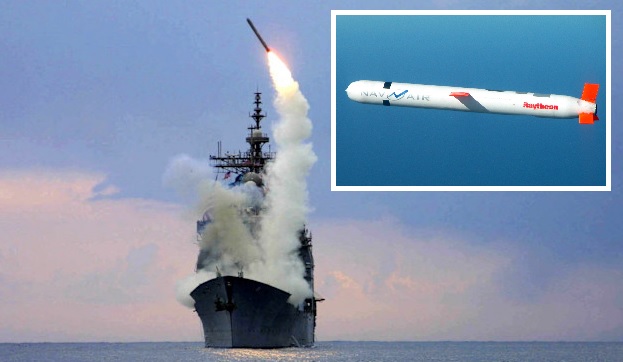
World
WASHINGTON/TOKYO, — May 24, 2026 : The United States has indefinitely suspended the planned delivery of 400 RGM-109 Tomahawk cruise missiles to Japan following significant shortages in U.S. Navy munitions caused by the 39-day military campaign against Iran. The delay affects Japan’s $2.35 billion missile acquisition program and is expected to slow Tokyo’s efforts to field a long-range counterstrike capability. U.S. Secretary of Defense Pete Hegseth formally informed Japanese Defense Minister Shinjiro Koizumi earlier in May that delivery of the missiles would be postponed indefinitely. The contract for the 400 Tomahawk missiles was signed in January 2024 and originally scheduled deliveries between fiscal years 2025 and 2027. The Tomahawk acquisition was intended to serve as an interim capability while Japan develops indigenous long-range strike systems. The suspension now raises operational and procurement challenges for Japan’s evolving military posture, particularly as the country accelerates plans to expand its ability to strike hostile targets at greater distances. Rapid Depletion of U.S. Missile Stockpiles The suspension comes after heavy consumption of U.S. precision munitions during operations against Iran. By the final week of March, Pentagon estimates suggested the U.S. Navy had expended nearly 1,000 Tomahawk cruise missiles from a pre-conflict inventory estimated at between 3,000 and 4,500 missiles. During the opening phase of the campaign, U.S. forces reportedly struck more than 6,000 Iranian targets in the first 10 days, relying extensively on beyond-visual-range precision weaponry. Pentagon officials and defense analysts subsequently raised concerns over the pace of munitions expenditure and the strain it placed on U.S. readiness and replenishment timelines. The Tomahawk remains the U.S. Navy’s principal medium- and long-range land-attack missile and is deployed aboard destroyers, cruisers, and attack submarines. Since the late 2010s, the system has increasingly been adapted for ground-based launchers, further expanding its operational role. Historically, the U.S. Navy procured Tomahawk missiles at relatively low annual rates of approximately 50 units. Although Washington has expanded agreements with RTX Corporation to significantly increase manufacturing, defense officials note that restoring depleted stockpiles will likely take several years due to industrial production constraints and lead times that may extend up to two years. The munitions shortage extends beyond Tomahawk cruise missiles. U.S. stockpiles of Precision Strike Missiles (PrSM), Patriot and THAAD interceptors, SM-3 and SM-6 air-defense interceptors, and GBU-57 penetrative bombs were also heavily depleted during the conflict, with several categories reportedly exhausted at even faster rates than Tomahawks. Impact on Japan’s Defense Transition The delay directly affects Japan’s ongoing transition toward deploying long-range offensive strike capabilities. In March 2026, the Japanese Maritime Self-Defense Force destroyer JS Chokai (DDG-176) became the first Japanese vessel to complete the required modifications and crew training to operate Tomahawk Block IV and Block V missiles. The destroyer underwent integration work and operational training at Naval Base San Diego beginning in October 2025. Japan intends to eventually deploy Tomahawk missiles across its eight Aegis-equipped destroyers, including four Kongō-class, two Atago-class, and two Maya-class vessels, while two additional Aegis system-equipped ships are scheduled to enter service in 2027 and 2028. For decades, Japanese naval doctrine focused primarily on anti-submarine warfare and missile defense missions rather than long-range strike operations. However, Tokyo gradually shifted policy beginning in the late 2010s to develop capabilities aimed at striking hostile military infrastructure if necessary. The transition has generated domestic political debate because of restrictions associated with Japan’s pacifist constitution, although the move has received considerable support from Western security partners. Regional allies such as the United States and Australia have long operated Tomahawk-equipped AEGIS destroyers, while South Korea maintains domestically developed cruise missile systems. Wider Foreign Military Sales Delays Japan is among several U.S. defense clients facing procurement disruptions linked to post-conflict shortages. In January 2026, a Japanese government audit found that 118 defense procurement contracts worth approximately 1.14 trillion yen ($6.9 billion), purchased under the U.S. Foreign Military Sales (FMS) system, had remained undelivered more than five years after signing. On May 22, Acting U.S. Navy Secretary Hung Cao confirmed that deliveries of approximately $14 billion in defense equipment to Taiwan had also been temporarily suspended. The delay adds to a broader backlog of undelivered U.S. military equipment to Taiwan that had already exceeded $21.45 billion by December 2025. Washington had also previously informed several European allies to expect delays in military deliveries as depleted inventories forced the Pentagon to prioritize replenishment. Reports from late March further indicated that equipment originally designated for Ukraine had been redirected to support operations against Iran, with Secretary Hegseth stating that restoring U.S. military stockpiles would take precedence. Strategic Repositioning and Regional Implications The Iran conflict also prompted adjustments in U.S. overseas force deployments. During the campaign, THAAD and Patriot air-defense systems stationed in South Korea were reportedly withdrawn and redeployed to the Middle East to support regional operations. The move contributed to renewed debate in Seoul regarding long-term reliance on Washington for national defense under the administration of President Lee Jae-myung, with calls increasing for stronger domestic military self-reliance. Asia security expert Zack Cooper of the American Enterprise Institute stated that despite repeated assurances regarding Indo-Pacific priorities, the Pentagon’s immediate focus had shifted toward Middle East requirements, adding that Asian allies could continue to experience the effects of wartime munitions shortages due to lengthy production timelines.
Read More → Posted on 2026-05-24 14:53:14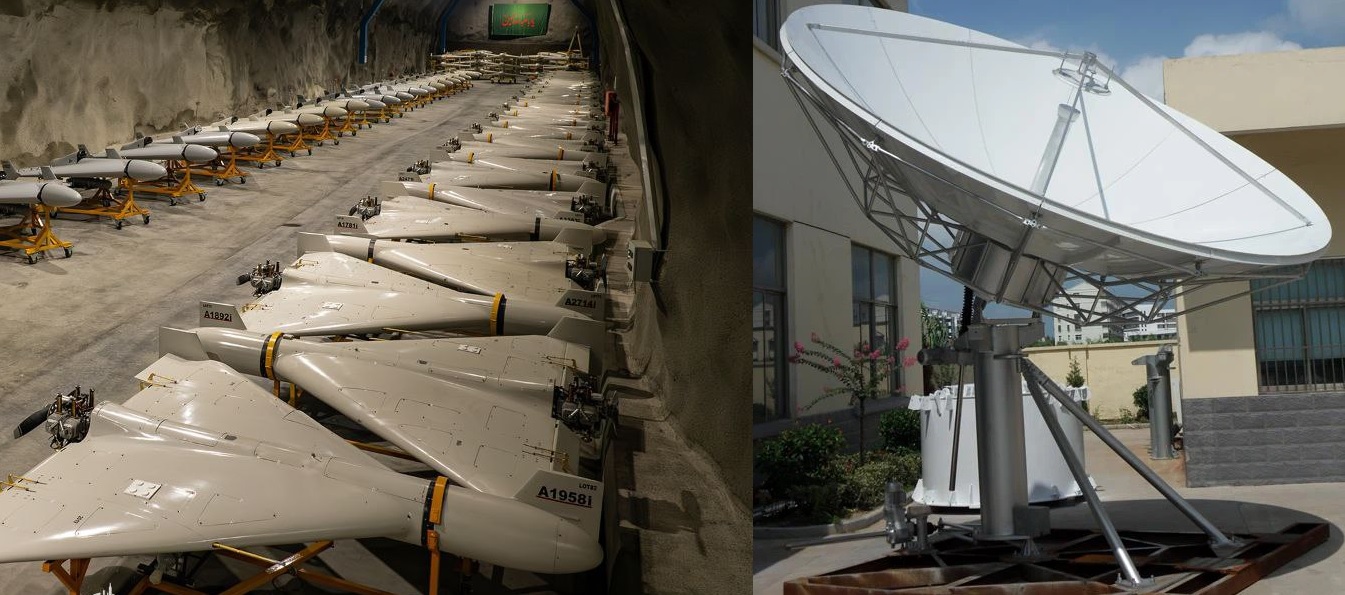
World
LONDON, — May 24, 2026 : Iran’s Islamic Revolutionary Guard Corps (IRGC) utilized a procurement network operating through the United Arab Emirates (UAE) to obtain advanced Chinese satellite communication equipment intended to support its missile and drone programs, according to leaked commercial contracts, customs records, shipping manifests, maritime tracking data, and satellite imagery reviewed by the Financial Times. The disclosures indicate that the procurement was carried out in late 2025 through a logistics route linking China, the UAE, and Iran, involving commercial intermediaries and maritime transport networks. According to the records, the shipment was facilitated by Telesun, a company registered in the emirate of Ras al-Khaimah, which reportedly handled the transit of satellite equipment on behalf of Iranian entities connected to the IRGC’s military-industrial infrastructure. Shipment Routed Through UAE Logistics Network Customs and shipping records reviewed in the report show that the consignment consisted of approximately 1.8 metric tons of Chinese-made satellite communication equipment, packed in six cases and declared in customs documentation as “antennas and accessories.” The shipment reportedly included a 4.5-meter motorized satellite antenna manufactured by the Chinese company StarWin, designed for satellite communications and signal transmission. The cargo departed Shanghai, China, aboard the Chinese container ship Zhong Gu Yin Chuan before arriving at Dubai’s Jebel Ali Container Terminal on August 28, 2025. After reaching the UAE, the equipment was reportedly transferred through a secondary logistics chain and later loaded onto the Iranian vessel Rama III, which collected the shipment in November for onward transport to Iran. The documents indicate that the shipment was formally procured by Ertebatat Faragostar Kish (EFK), an Iranian telecommunications company. According to leaked contracts, EFK acquired the equipment for a project managed by the Saman Industrial Group, an Iranian entity sanctioned by the United States in December 2023. The U.S. Treasury Department previously identified the Saman Industrial Group as a commercial front for the Aerospace Force Self Sufficiency Jihad Organization, a research and development branch of the IRGC Aerospace Force responsible for advancing ballistic missile systems, electronic warfare programs, and unmanned aerial vehicle (UAV) technologies. Maritime Tracking and Alleged GPS Spoofing Analysis of maritime navigation data and satellite imagery reviewed by the Financial Times suggested that Rama III employed deceptive maritime tracking practices during its transit to Iran. According to the report, the vessel transmitted false navigational coordinates through its Automatic Identification System (AIS) in what maritime analysts describe as GPS spoofing, a method used to conceal actual movements by broadcasting inaccurate location data. While AIS transmissions showed the vessel pausing near Oman, satellite imagery reportedly showed no ship at the indicated position. On November 29, 2025, imagery reportedly identified a vessel matching the dimensions and appearance of Rama III docked at Shahid Rajaee Port in Bandar Abbas, Iran. Shipping documentation listed the port as the cargo’s final destination. Iranian Delivery Network and Sanctioned Entities The domestic handling of the shipment inside Iran was reportedly managed by Blue Calm Marine Services, a company sanctioned by the United States in 2023 for facilitating deliveries connected to Iran’s missile procurement network and missile propellant development programs linked to the country’s defence sector. The report stated that the satellite equipment was intended to support secure communications, operational coordination, and military connectivity for the IRGC’s missile and drone infrastructure, particularly programs overseen by the Aerospace Force. UAE’s Role in Sanctions Circumvention Networks The disclosures also renewed attention on the UAE’s role as a regional transshipment and financial hub for goods and payments linked to sanctioned countries, including Iran and Russia. Previous investigations, including reporting by the media outlet Militarnyi using data obtained by the PRANA Network hacker group, alleged that Iranian intermediary firms used UAE-registered shell companies and financial accounts to route payments for UAV components and conceal procurement-related transactions from international financial monitoring systems. According to those findings, intermediary companies allegedly used UAE free-trade zones and logistics infrastructure to bypass restrictions and obscure the financial origin and destination of sensitive defense-related acquisitions. Broader Expansion of IRGC Aerospace Capabilities The procurement forms part of a broader pattern of efforts by the IRGC Aerospace Force to expand satellite-enabled surveillance, communications, and targeting capabilities. Separate reporting cited by the Financial Times indicated that Iran also obtained access to data from a Chinese-built satellite operated by The Earth Eye, identified in previous reports as TEE-01B, which was allegedly used to monitor regional military infrastructure, including U.S. military installations in the Middle East. Neither Telesun, the UAE foreign ministry, nor Iran’s embassy in London responded to requests for comment cited in the report. The disclosures are expected to increase scrutiny of commercial logistics networks, shipping channels, and free-trade zones allegedly used for the transfer of dual-use satellite and aerospace-related technologies to sanctioned entities in Iran.
Read More → Posted on 2026-05-24 15:12:42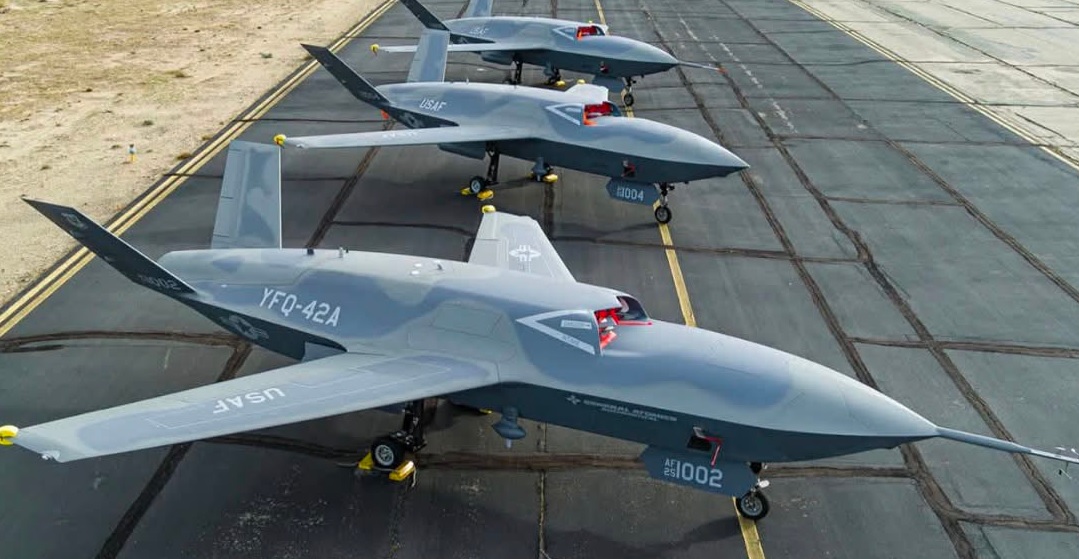
World
PALMDALE, California, — May 24, 2026 : The YFQ-42A Collaborative Combat Aircraft (CCA), officially nicknamed the “Dark Merlin,” has resumed flight testing after a six-week suspension caused by the crash of a prototype in April, following software corrections and a joint safety review conducted by the U.S. Air Force and General Atomics Aeronautical Systems, Inc. (GA-ASI). Flight operations restarted on May 21, 2026, after investigators determined that the April 6 mishap resulted from an autopilot miscalculation involving the aircraft’s weight and center of gravity. Officials stated that the issue originated in the drone’s flight autonomy software, which governs the aircraft’s basic aerodynamics and flight control systems. The incident occurred shortly after takeoff at approximately 1:00 p.m. Pacific Time near Gray Butte Field Airport, a GA-owned test facility in the California desert. Although the uncrewed aircraft was completely destroyed in the crash, no injuries were reported. Multiple production-representative YFQ-42A aircraft had already been manufactured under low-rate initial production, enabling testing to resume without major disruption. Following the investigation, GA-ASI updated the aircraft’s autopilot software to correct the issue. Technical authorities reviewed and approved the changes, clearing the YFQ-42A fleet to return to flight operations. During the temporary grounding, the program continued with ground testing, software refinement, and other technology maturation activities, ensuring development work progressed despite the suspension of flight operations. Flight Autonomy Software Separate From AI Mission System Officials clarified that the software responsible for the malfunction belongs to the aircraft’s flight autonomy system, which manages the physical flying of the aircraft, including stability, aerodynamics, and control functions. This system operates separately from the higher-level mission autonomy software currently under development by Shield AI and Collins Aerospace. The mission autonomy architecture functions as an AI-enabled mission pilot, capable of executing complex maneuvers and operational tasks based on instructions provided by a human operator. The system supervises mission execution while working independently from the aircraft’s core flight-control software. Designed To Operate Alongside Crewed Fighters The YFQ-42A Dark Merlin is being developed as a loyal wingman aircraft, purpose-built to operate alongside crewed fighter aircraft, particularly the F-15EX Eagle II. Under this concept, the F-15EX’s two-seat cockpit enables a Weapons Systems Officer (WSO) to coordinate and direct multiple uncrewed aircraft simultaneously, effectively serving as a battle manager. The Air Force expects the YFQ-42A to provide force multiplication by increasing combat mass, extending operational reach, improving survivability, and enhancing combat effectiveness in contested environments. Planned functions include extending sensor networks, carrying additional missiles, acting as decoys or electronic jamming platforms, and conducting higher-risk missions to reduce danger to human pilots. Part Of The Air Force’s Collaborative Combat Aircraft Program The broader Collaborative Combat Aircraft (CCA) initiative forms part of the Air Force’s Next Generation Air Dominance (NGAD) family of systems, which envisions semi-autonomous drones flying alongside crewed fighters such as the F-22 Raptor, F-35 Lightning II, and future combat aircraft. For Increment 1 of the CCA program, the Air Force is evaluating two competing platforms: GA-ASI’s YFQ-42A Dark Merlin and Anduril Industries’ YFQ-44A Fury. Both aircraft are currently intended for strike and combat-support missions, though future increments may expand into electronic warfare, intelligence, surveillance, and reconnaissance (ISR), along with additional mission roles. The return of the Dark Merlin comes at a significant stage in the competition, as the Air Force prepares to select a production design for Increment 1 by the end of fiscal year 2026, concluding on September 30. Air Force Continued Testing During Flight Pause Despite the temporary grounding of the YFQ-42A, the Air Force continued experimental operations with Anduril’s YFQ-44A Fury at Edwards Air Force Base, California during early April. According to officials, airmen assigned to the Experimental Operations Unit (EOU) conducted multiple sorties using the aircraft, handling operations directly rather than relying on engineers or dedicated test pilots. Personnel managed pre- and post-flight procedures, taxi operations, and loading of inert AIM-120 AMRAAM missiles as part of efforts to refine operational and logistical procedures for sustaining collaborative combat aircraft in contested environments. Air Force officials said the exercise demonstrated continued technology maturation and risk reduction activities during the six-week pause affecting the YFQ-42A program. Officials Emphasize Learning Through Testing GA-ASI President David R. Alexander stated that lessons learned from the April setback were being applied to improve reliability across the company’s growing fleet of collaborative combat aircraft and support the development of dependable, cost-efficient unmanned fighter systems. Meanwhile, Col. Timothy Helfrich, the Air Force’s portfolio acquisition executive for fighters and advanced aircraft, said the response to the crash reflected the program’s broader strategy of identifying risks during testing rather than during operational deployment. According to Helfrich, the CCA program is structured to continue development while learning from setbacks, allowing technical risks to be identified, corrected, and incorporated into future improvements without halting overall progress. The YFQ-42A received its official designation in March 2025 and was formally named Dark Merlin on February 23, 2026, after a falcon species. GA-ASI was selected in April 2024 to build production-representative test aircraft, while the platform completed its maiden flight on August 27, 2025, before conducting early testing involving mission autonomy software in 2026.
Read More → Posted on 2026-05-24 15:27:19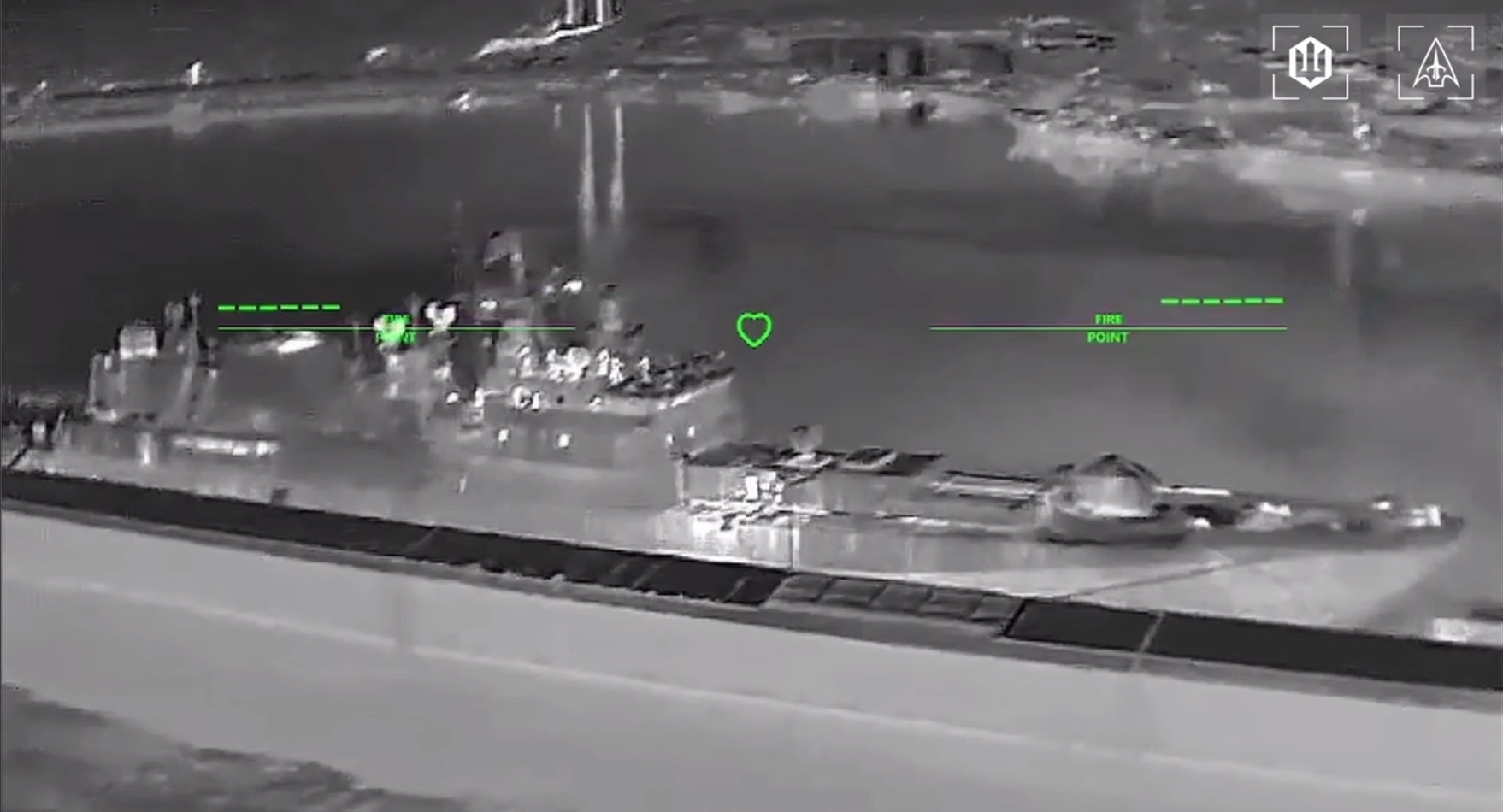
World
KYIV/NOVOROSSIYSK, — May 24, 2026 : Ukrainian Defense Forces conducted a coordinated overnight unmanned aerial vehicle (UAV) strike on Russian naval assets and energy infrastructure at the Black Sea port of Novorossiysk on the night of May 23, targeting the guided-missile frigate Admiral Essen, a Project 1239 hovercraft missile ship, and major oil storage facilities in Russia’s Krasnodar region. According to Ukraine’s Unmanned Systems Forces (USF), the operation was executed by the 9th “Kairos” Battalion of the 414th Unmanned Strike Aviation Brigade, widely known as the “Birds of Madyar,” alongside the 1st Center of the USF. The units reportedly operated in coordination with deep-strike elements of Ukraine’s Special Operations Forces. Robert “Madyar” Brovdi, commander of the USF, confirmed the operation and later published video footage showing drone strikes on naval and industrial targets in Novorossiysk. Strike on Admiral Essen and Russian Naval Assets Footage released following the operation showed one strike UAV impacting the Admiral Essen, a Project 11356R Burevestnik (Grigorovich-class) guided-missile frigate, near the deck area on the vessel’s side. Ukrainian officials stated the frigate attempted to repel incoming drones using its standard Osa-M air defense system while at least three additional UAVs approached the target. The Admiral Essen serves as a carrier of 3M14 Kalibr cruise missiles and forms part of Russia’s Black Sea Fleet strike capability. The frigate is equipped with an eight-cell vertical launch system capable of deploying Kalibr, Oniks, and Zircon missiles, alongside a 100 mm A-190 naval gun, Shtil-1 surface-to-air missile system, AK-630 close-in weapon systems, torpedo tubes, and an RBU-6000 anti-submarine rocket launcher. The vessel reportedly operates with a crew of around 180 personnel and has previously participated in Russian missile strikes against targets in Ukraine and Syria. The May 23 operation marked the fourth reported Ukrainian drone attack against the Admiral Essen since early March 2026. Earlier reported strikes allegedly damaged sections of the ship’s superstructure, radar systems, and bow area. However, the extent of damage caused during the latest strike remains unconfirmed and has not been independently verified. Ukrainian forces also targeted a Project 1239 hovercraft missile ship of the Sivuch class, also referred to under the NATO reporting name Bora class. Video released after the operation indicated the vessel was struck, although no confirmed assessment regarding structural or operational damage has been issued. Project 1239 Sivuch-Class Hovercraft Missile Ship The Project 1239 missile ship was developed by the Almaz Central Marine Design Bureau during the 1980s as an evolution of the Project 1234 Ovod missile ship program. Designed for anti-surface warfare and coastal defense operations, the vessel was intended to destroy large enemy warships and provide cover for naval formations and convoys in coastal and inland maritime areas. Only two vessels of the planned 16-unit program — Bora and Samum — were ultimately completed and entered service with Russia’s Black Sea Fleet. The ship has a displacement of approximately 1,000 tons and measures 64 meters in length and 17.2 meters in width. Its draft stands at 3.8 meters, reducing to around one meter while operating in air-cushion mode. The vessel features a dual-hull catamaran structure built from corrosion-resistant aluminum-magnesium alloys linked by a platform measuring roughly 64 meters by 18 meters, with internal bulkheads also constructed using lightweight materials. A two-tier flexible partition system located in the bow and stern creates an air cushion beneath the vessel, allowing it to transition from catamaran cruising speeds of around 20 knots to hovercraft speeds reaching up to 45 knots. The vessel reportedly has an operational range of 2,500 nautical miles at 12 knots or approximately 800 nautical miles at maximum speed, with endurance of up to 10 days and a crew complement of 68 personnel. Armament includes one 76 mm AK-176 naval gun, two six-barrel 30 mm AK-630 automatic cannons, two four-cell launchers for supersonic Moskit anti-ship missiles, and a two-cell Osa-M air defense launcher carrying up to 20 missiles. Strikes on Novorossiysk Oil Infrastructure In addition to naval targets, Ukrainian forces reported direct strikes on the Sheskharis transshipment complex, which includes the Sheskharis marine terminal and the Grushovaya Balka (Grushova) oil depot in Novorossiysk. Located on the Black Sea coast, the facility is regarded as one of the largest petroleum storage and export hubs in southern Russia and serves as a terminal point for pipelines operated by the state-controlled company Transneft. The complex reportedly maintains a storage capacity of approximately 1.2 to 1.25 million cubic meters of petroleum products across between 40 and 47 active storage tanks. Ukraine’s military later reported impacts and fires at both the Sheskharis terminal and the Grushova oil depot following the strike operation. Russian local authorities, including Novorossiysk Mayor Andrey Kravchenko, stated that falling drone debris caused a fire at the oil terminal and resulted in injuries to two individuals. Russian officials have not released detailed assessments regarding the condition of the naval vessels targeted during the operation. Wider Overnight Drone Campaign The Novorossiysk operation formed part of a broader overnight Ukrainian drone offensive, according to Ukrainian military sources. Additional targets reportedly struck included an Osa air defense system in Donetsk, a logistics hub linked to Russia’s 6th Air and Air Defense Forces Army in Rovenky, a drone command center in Oleshky, and multiple fuel trucks and armored vehicles in the Zaporizhzhia region. The overall extent of damage to Russian naval assets, oil infrastructure, and other military targets remains unconfirmed, and claims made by both sides have not been independently verified.
Read More → Posted on 2026-05-24 15:43:09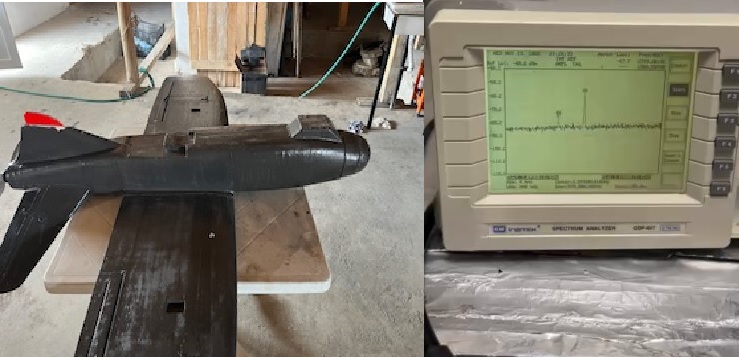
World
ISTANBUL, — May 24, 2026 : A Turkish defense research startup led by researcher Yunus İnce has developed a spray-applicable radar-absorbing material (RAM) named Kürşat 3.0, aimed at reducing the radar visibility of drones and other aircraft by absorbing electromagnetic signals instead of reflecting them back to radar systems. The material, developed over a seven-year period, was recently presented to The Defence Blog through technical specifications and test footage. Unlike traditional stealth coatings that require engineered composite panels bonded to aircraft structures, Kürşat 3.0 is designed to be sprayed directly onto aircraft surfaces, functioning similarly to paint while offering radar-absorption properties. Development Focused on Practical Stealth Application Modern stealth aircraft reduce radar cross-section (RCS) through a combination of specialized geometry and radar-absorbing materials. Platforms such as the F-117 Nighthawk, F-35 Lightning II, and B-21 Raider are engineered to redirect radar waves away from detection systems while absorbing residual electromagnetic energy through advanced coatings. Conventional radar-absorbing materials are generally manufactured as precision composite panels that must be carefully integrated into aircraft structures. These systems involve extensive maintenance, inspection requirements, and high production costs, making them difficult to adapt for smaller unmanned platforms. Kürşat 3.0 seeks to address this limitation by eliminating the need for bonded composite materials. According to the developer, the spray-on coating conforms to curved and irregular airframe geometries without seams or gaps that could reduce absorption performance. The material also reportedly adds negligible weight and does not require structural modification of the platform. Material Composition and Radar Absorption Claims According to İnce, Kürşat 3.0 uses microscopic pore structures derived from naturally occurring volcanic materials, particularly basalt and pumice. These materials are engineered to trap incoming electromagnetic waves and convert them into thermal energy rather than reflecting them toward radar receivers. Basalt and pumice are inexpensive and widely available materials that have drawn academic interest in recent years because of their electromagnetic absorption properties. Their porous structure may support broadband radar-wave attenuation when engineered for defense-related applications. Recent testing footage shared by the startup reportedly demonstrated an attenuation level of 43.2 decibels (dB), indicating the amount of radar energy absorbed by the coating. If independently verified across operational radar frequency bands, the result would place Kürşat 3.0 above many radar-absorbing coatings documented in academic literature, where attenuation figures between 20 and 30 dB are commonly reported under standardized conditions. However, no independent third-party testing or publicly available verification of the reported performance figures has yet been released. Relevance to Modern Drone Warfare The emergence of low-cost drones in modern conflict has increased interest in technologies that reduce detection and improve survivability. The ongoing conflict in Ukraine demonstrated how commercially accessible unmanned aerial systems can support reconnaissance missions, attack logistics networks, and place sustained pressure on armored formations and supply routes. In response, militaries have expanded radar-based detection systems, electronic warfare networks, signal-jamming capabilities, and layered interception methods, including kinetic interceptors, laser systems, microwave-based defenses, and other counter-drone technologies. Defense specialists note that a radar-absorbing coating alone does not create full stealth capability, particularly for quadcopters and commercially available drones that feature exposed rotor systems and airframes not optimized to deflect radar signals. However, reducing radar returns may shorten detection ranges and complicate tracking, potentially improving survivability in contested environments. Turkey’s Expanding Defense Technology Ecosystem The development of Kürşat 3.0 emerges within a growing Turkish defense industry that has increasingly focused on unmanned technologies and indigenous defense manufacturing. Turkey gained international recognition through the operational deployment and export success of the Bayraktar TB2 unmanned combat aircraft. Meanwhile, the Bayraktar Kızılelma, which entered service with the Turkish Armed Forces in 2025, incorporates radar-absorbing technologies directly into its airframe design. Turkey’s defense exports reached $7.1 billion in 2024, reflecting continued government investment in domestic defense capabilities and creating opportunities for smaller firms developing enabling technologies for unmanned systems and aerospace applications.
Read More → Posted on 2026-05-24 16:34:20
India
PRAYAGRAJ, India — May 24, 2026 : Bharat Electronics Limited (BEL) has unveiled the BE-VAHAN 50, an indigenously developed high-altitude logistics drone designed to support military supply operations in extreme and mountainous terrain. The platform was showcased during the North Tech Symposium 2026 (Raksha Triveni Sangam) in Prayagraj, a three-day defence technology event inaugurated by Defence Minister Rajnath Singh under India’s “Atmanirbhar Bharat” (self-reliant India) initiative. The BE-VAHAN 50 is engineered as a high-reliability autonomous logistics platform aimed at solving operational supply chain challenges faced by armed forces deployed in remote and high-altitude areas, particularly along mountainous regions such as the Himalayas. BEL stated that the drone is intended to provide a cost-effective alternative to conventional helicopter supply missions and mule-based transport, enabling reliable last-mile delivery where terrain, weather, and altitude make traditional mobility slow, risky, or impractical. Designed as a variable-pitch propulsion-based electric quad-rotor unmanned aerial vehicle (UAV), the BE-VAHAN 50 uses a Vertical Take-Off and Landing (VTOL) configuration, allowing deployment without runways and enabling operations from confined spaces and Forward Operating Bases (FOBs). The platform is optimized for rapid logistics support in difficult operational environments while maintaining resilience in extreme weather conditions. According to BEL’s technical specifications, the drone features a payload capacity of up to 50 kilograms, a range of approximately 10 kilometres, and a service ceiling of around 5,000 metres, making it suitable for high-altitude sustainment missions. The system also demonstrates high payload efficiency, carrying cargo equivalent to nearly 33 percent of its Maximum Take-Off Weight (MTOW). To improve reliability and survivability in contested or demanding operational conditions, BEL has integrated multiple mission-critical systems into the BE-VAHAN 50. The platform supports fully autonomous logistics operations, including resilience for GPS-denied environments, enabling continued functioning in areas where satellite signals may be jammed or unavailable. Its internal redundancy architecture includes a dual GPS system and a parachute fail-safe mechanism designed to reduce the risk of losing the aircraft or payload during emergencies. The drone is also equipped with an Electro-Optical/Infrared (EO/IR) camera for real-time surveillance, navigation assistance, and precise payload targeting during supply-drop operations. In addition, BEL has incorporated a low aural signature design, utilizing low-RPM propulsion to reduce acoustic detectability during missions and lower the likelihood of exposing supply operations in sensitive areas. A demonstration of the BE-VAHAN 50 was organised for Defence Minister Rajnath Singh during the symposium, where BEL displayed the platform alongside advanced communication systems, radars, and electro-optic solutions. Senior officers of the Indian Army, including personnel from Northern Command, also visited the BEL exhibition area and received technical briefings on the drone and its intended operational role. The unveiling of the BE-VAHAN 50 reflects India’s broader effort to strengthen indigenous unmanned systems for defence logistics and operational sustainment in high-altitude regions. BEL has also established a dedicated unmanned systems business vertical focused on payloads, data links, and ground control systems in collaboration with the Defence Research and Development Organisation (DRDO), Indian academic institutions, and startups. BEL has not released additional details regarding production schedules, procurement timelines, unit costs, or induction plans for the BE-VAHAN 50. However, the platform is positioned as a potential addition to the Indian Army’s future unmanned logistics capability for difficult and inaccessible operational zones.
Read More → Posted on 2026-05-24 17:06:27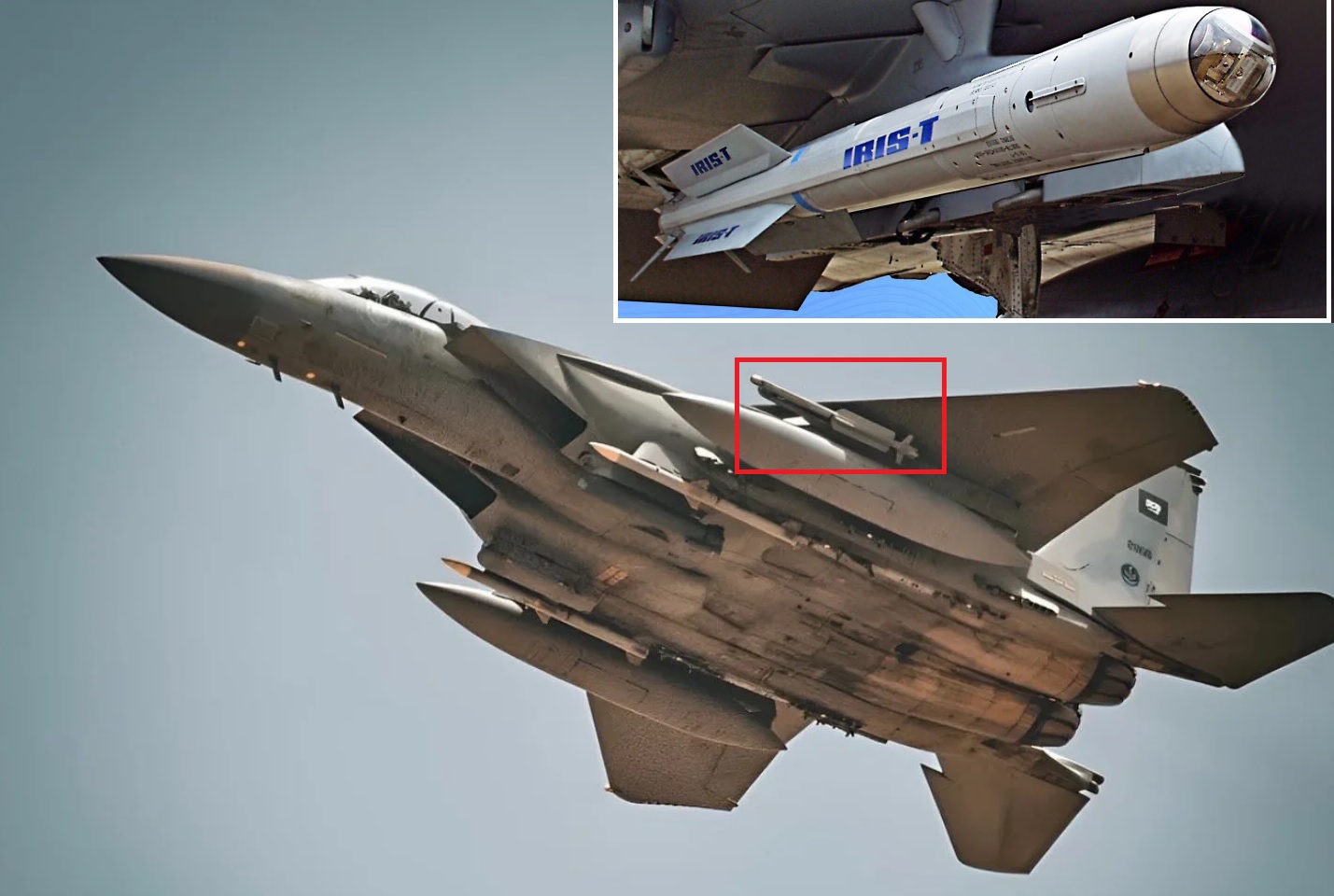
World
RIYADH, — May 24, 2026 : A Royal Saudi Air Force (RSAF) F-15SA fighter jet has been publicly observed carrying the European-developed IRIS-T short-range air-to-air missile, marking the first known appearance of the advanced missile integrated onto a Boeing F-15 platform. The development, first reported by Arab Defense through published imagery, signals an expansion of Saudi Arabia’s aerial weapons integration strategy and highlights efforts to increase compatibility across its mixed fighter fleet. The RSAF’s F-15SA fleet has traditionally relied on the U.S.-manufactured AIM-9X Sidewinder for short-range air-to-air combat. However, defense analysts note that the integration of the IRIS-T does not indicate a replacement of the AIM-9X. Instead, it reflects an effort to broaden available weapon options, enabling Saudi Arabia to utilize different missile characteristics depending on operational requirements, threat environments, and electronic warfare conditions. Strategic Interoperability Across Fighter Fleets The integration of the IRIS-T on the F-15SA also improves interoperability between Saudi Arabia’s U.S.- and European-origin combat aircraft. The RSAF operates the Eurofighter Typhoon, which already employs the IRIS-T as part of its standard air combat loadout. Standardizing missile access across both fleets may provide benefits in pilot training, mission planning, logistical coordination, and ammunition management. Defense observers suggest that using a common short-range missile across multiple fighter platforms can simplify maintenance and supply procedures while increasing operational flexibility during joint missions involving different aircraft types. Technical Profile of the IRIS-T Missile The Infra Red Imaging System Tail/Thrust Vector-Controlled (IRIS-T) was developed by a European consortium led by Germany’s Diehl Defence, with participation from Italy, Sweden, Greece, Norway, and Spain. The missile entered service in 2005 and has since become the standard short-range air-to-air weapon used by most European fighter aircraft. A defining feature of the missile is its Imaging Infrared (IIR) seeker, which generates a high-resolution image of a target rather than relying solely on thermal signatures. This capability improves target discrimination and increases resistance to infrared countermeasures such as flares and advanced decoys, enhancing performance in contested air combat environments. The missile is designed for high maneuverability through a combination of thrust-vectoring propulsion and gas-dynamic control surfaces, enabling it to withstand maneuvers of up to 60 g. This allows the system to engage highly maneuverable and supersonic aerial targets during close-range engagements. Another notable capability is its high off-boresight targeting envelope, allowing engagement of threats at angles exceeding 90 degrees relative to the aircraft’s forward direction. This permits pilots to target aircraft positioned beside or behind their own platform without requiring significant changes in flight path. The missile has an effective operational range of approximately 25 kilometers. Wider Platform Integration and Air Defense Role Beyond the Eurofighter Typhoon and Saudi Arabia’s F-15SA, the IRIS-T has been integrated into several fighter aircraft platforms, including the JAS 39 Gripen, F-16 Fighting Falcon, and modified F/A-18 Hornet fleets operated by multiple air forces. The missile family has also been adapted into ground-based air defense systems through the IRIS-T SLS (Short-Range) and IRIS-T SLM (Medium-Range) variants. These systems have seen operational deployment in several countries and have been used extensively in Ukraine’s active air defense network, further demonstrating the flexibility of the platform. Procurement History and Policy Context Saudi Arabia has maintained a long-term procurement relationship with the IRIS-T program. According to data from the Stockholm International Peace Research Institute (SIPRI), Riyadh ordered approximately 1,400 IRIS-T missiles in 2009, with deliveries completed between 2010 and 2014 to support Eurofighter Typhoon and Tornado aircraft operations. In 2024, the German government approved the export of an additional 150 IRIS-T air-to-air missiles to Saudi Arabia. The decision marked the end of a five-year restriction period imposed by Berlin following Saudi Arabia’s involvement in the Yemen conflict and the 2018 killing of journalist Jamal Khashoggi. The approval enabled replenishment of Saudi missile stocks and supported broader integration across combat platforms. F-15SA Capability Expansion The F-15SA represents the most advanced F-15 variant in RSAF service and incorporates several modern combat systems, including the APG-63(V)3 Active Electronically Scanned Array (AESA) radar, digital fly-by-wire flight controls, advanced electronic warfare systems, a digital cockpit architecture, and an Infrared Search and Track (IRST) capability. The aircraft can carry a wide range of air-to-air and air-to-surface weapons across 11 external hardpoints, giving it significant operational flexibility for air superiority, strike, and multirole missions. Operational Significance The appearance of the IRIS-T missile on the F-15SA aligns with Saudi Arabia’s broader efforts to diversify combat aircraft armament while improving compatibility between U.S.- and European-origin defense systems already in service. Although no official statement has been released by the Royal Saudi Air Force, Boeing, or Diehl Defence regarding the timeline or operational certification of the integration, the public sighting suggests the capability is progressing within Saudi operational planning.
Read More → Posted on 2026-05-24 17:29:19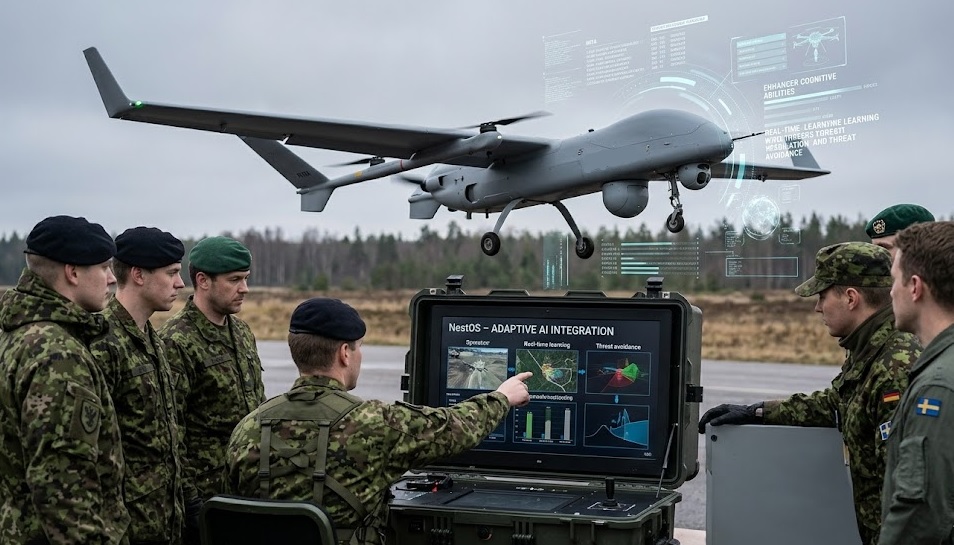
World
HELSINKI, Finland — May 25, 2026 : Finnish defence and technology provider Patria has entered into a technology partnership with Finnish artificial intelligence laboratory NestAI to integrate adaptive artificial intelligence into unmanned aerial systems used by European defence forces. The agreement combines Patria’s drone platforms with NestOS, an open, modular and adaptive operating system developed by NestAI, to improve battlefield performance in contested and rapidly changing operational environments. The collaboration is aimed at combining established defence hardware with software capable of responding to changing battlefield conditions in real time. According to both companies, European armed forces are increasing investments in unmanned systems, creating demand for intelligence technologies specifically designed for real-world combat environments and unpredictable operational conditions. Partnership Focus on Adaptive Battlefield Capabilities Under the partnership, Patria will provide its unmanned aerial platforms, operational expertise and manufacturing capability, while NestAI will contribute adaptive software infrastructure through NestOS. The operating system is designed to continuously learn from operational data, allowing unmanned systems to adapt after deployment and function effectively in changing conditions. NestOS is also designed as an open and interoperable system capable of integrating across multiple sensors, platforms and vendors. The companies stated that this architecture is intended to reduce long-term vendor dependency and allow European defence operators to maintain control over system behaviour, operational data and capability development. A central objective of the agreement is to ensure the technology is developed and deployed through Europe’s sovereign industrial and technological ecosystem. Both companies emphasized that future unmanned capabilities for European defence forces should be developed within Europe to meet regional operational requirements and reduce external technological dependence. Patria’s Expanding Unmanned Systems Portfolio Patria’s unmanned aerial systems form part of its Defence and Weapon Systems business area, which has expanded following the company’s acquisition of Nordic Drones. The company currently operates several unmanned platforms, including the Patria ONE modular tactical unmanned aerial vehicle, Patria SKY long-range multi-mission platform and Patria GEO mapping and surveillance system. These platforms are expected to support future integration of adaptive AI capabilities under the partnership, combining existing defence hardware with software designed to evolve after deployment. Leadership Statements Highlight Modern Warfare Requirements Panu Routila, President and CEO of Patria, said current conflicts continue to shape the company’s understanding of operational requirements for modern warfare. “The war in Ukraine helps us better understand what warfare looks like now and in the future,” Routila said. He added that Patria continues to focus on future-oriented product development and strengthening unmanned systems for demanding operational conditions in Europe through advanced artificial intelligence capabilities. Routila further stated that integrating NestAI’s software would improve the intelligence and effectiveness of unmanned systems for military operators working in complex operational environments. Peter Sarlin, founder and chairman of NestAI, said European defence increasingly requires artificial intelligence systems tailored to battlefield conditions and capable of evolving after deployment. Sarlin stated that the partnership combines Patria’s expertise in unmanned aerial systems with NestOS adaptive software to support European operational requirements through sovereign, Europe-built technologies designed for modern battlefield operations. NestAI and Patria’s Defence Ecosystem Presence Founded in 2024 and headquartered in Finland, NestAI develops adaptive intelligence technologies for defence and security applications where systems must react to changing conditions in real time. The company employs more than 150 engineers and scientists and raised €100 million in funding from Nokia and Finnish sovereign fund Tesi in November 2025. NestAI also collaborates with the Finnish Defence Forces, Nokia, FORCIT Defence and ReOrbit. Patria, which has operated for more than 100 years, maintains operations across Finland, Sweden, Norway, Latvia, Belgium, the Netherlands, Germany, Poland, Slovakia and Japan. The company is owned 50.1 percent by the State of Finland and 49.9 percent by Kongsberg Defence & Aerospace AS and also holds a 50 percent stake in Nammo. No financial details, deployment timeline or implementation schedule related to the partnership were disclosed. The companies said the agreement is intended to strengthen Europe’s sovereign defence capabilities in unmanned systems by integrating adaptive post-deployment software intelligence with existing drone platforms.
Read More → Posted on 2026-05-25 12:52:11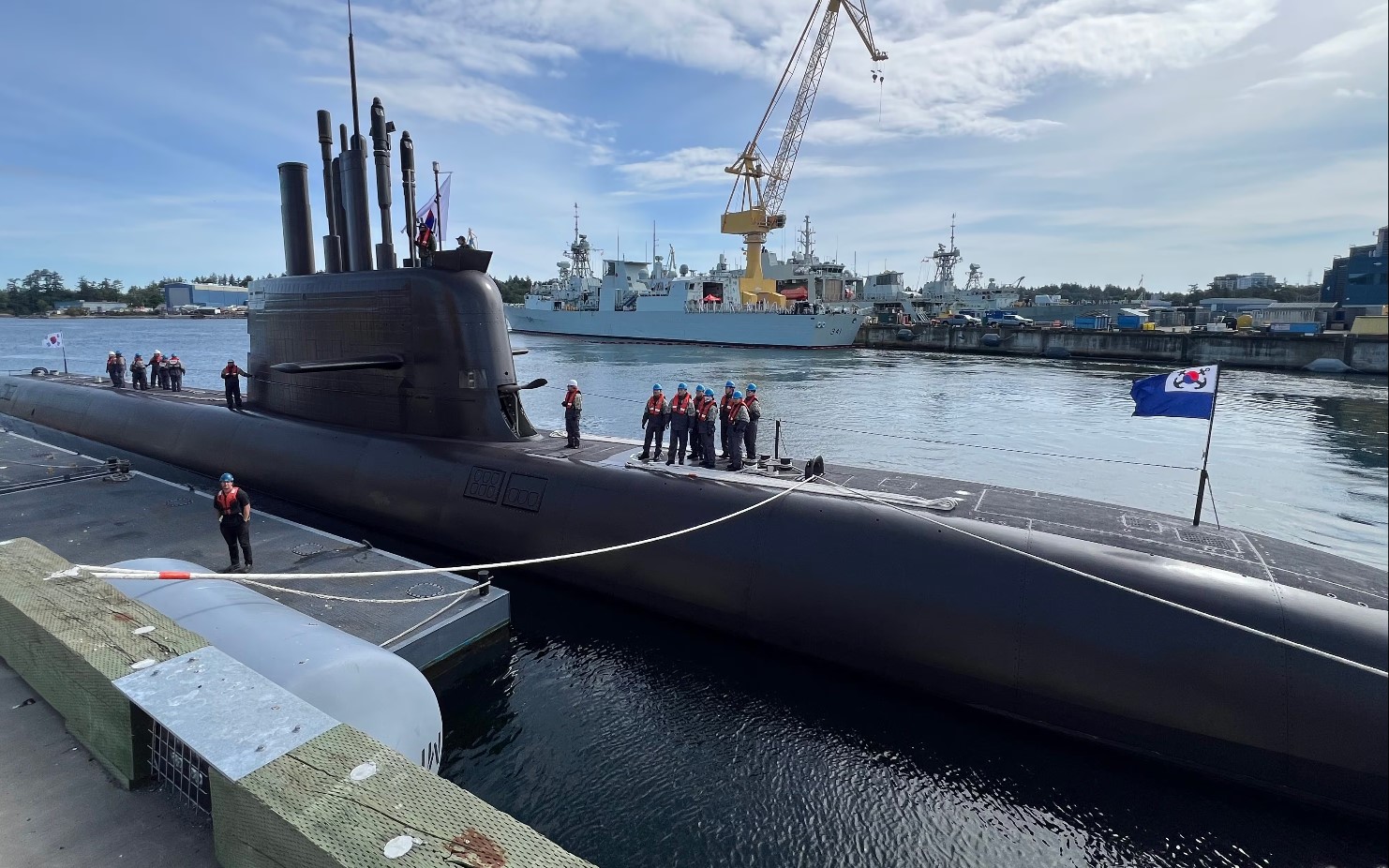
World
Victoria, British Columbia — May 25, 2026 : The Republic of Korea (ROK) Navy’s KSS-III submarine, ROKS Dosan Ahn Changho (SS-083), arrived at Canadian Forces Base Esquimalt on May 23, completing the first trans-Pacific deployment to North America ever undertaken by a South Korean submarine. The deployment marks the longest operational voyage in the history of the ROK Navy submarine force and represents a significant demonstration of South Korea’s domestically developed undersea capabilities. The submarine departed from Jinhae Naval Base on March 25 and travelled approximately 14,000 kilometres across the Pacific Ocean before reaching Canada’s west coast. Throughout the deployment, the submarine was accompanied by the ROK Navy frigate ROKS Daejeon (FFG-823), a 3,100-ton Daegu-class vessel that supported the mission from departure to arrival. Historic Deployment and Operational Significance The deployment marks the first time a South Korean submarine has crossed the Pacific Ocean to reach North America. Although ROK Navy submarines have previously operated as far as Hawaii, this mission extended operational reach significantly farther, demonstrating long-range endurance and overseas deployment capability of the KSS-III submarine platform in a blue-water environment. ROKS Dosan Ahn Changho is the lead vessel of South Korea’s KSS-III program, a 3,000-ton-class submarine developed for extended-range missions and enhanced operational flexibility. The submarine is powered by a diesel-electric propulsion system equipped with lithium-ion batteries and air-independent propulsion, enabling longer underwater endurance and reduced operational dependence on surface support. The voyage also served as a live operational demonstration of South Korea’s indigenous submarine-building capability, reflecting efforts to strengthen long-distance naval operations and interoperability with allied and partner navies. Arrival in Canada and Naval Engagements Upon arrival at Esquimalt, the crews of ROKS Dosan Ahn Changho and ROKS Daejeon rendered naval honours at the pier to Canadian and South Korean officials. Officials present included Rear Admiral David Patchell, commander of Maritime Forces Pacific, and South Korea’s ambassador to Canada, Lim Woongsoon. The port visit, scheduled from May 23 to June 2, is intended to support professional exchanges, naval cooperation activities and combined training with the Royal Canadian Navy. During the visit, crews of both navies are expected to conduct operational discussions, personnel interactions and maritime engagement activities designed to improve interoperability. Canadian Submariners Embark During Final Transit As part of the operational cooperation effort, two Royal Canadian Navy submariners embarked aboard ROKS Dosan Ahn Changho in Hawaii for the final leg of the journey to Victoria. The embarkation provided Canadian personnel with an opportunity to directly observe KSS-III submarine operations, onboard systems and crew procedures during active transit conditions. One Royal Canadian Navy submariner who participated in the voyage described the platform as technologically familiar and indicated that adapting to the submarine’s systems would not involve a steep learning process, reflecting similarities with future submarine operational requirements. Communications Interoperability Demonstrated at Sea Before entering Canadian waters, ROKS Dosan Ahn Changho conducted a communications interoperability activity with Canadian naval authorities on May 18. According to the ROK Navy Submarine Force Command, the submarine successfully established communications with Maritime Forces Pacific through its onboard combined C4I command-and-control system. The communication marked the first known instance of a South Korean-built submarine establishing connectivity with Canada’s Pacific naval command through a combined C4I framework. The activity demonstrated the ROK Navy’s ability to maintain command-and-control interoperability with partner nations outside its traditional alliance structure and highlighted expanding naval coordination with Canada. Connection to Canada’s Future Submarine Program The submarine visit comes amid Canada’s ongoing Canadian Patrol Submarine Project (CPSP), a major defence procurement initiative intended to replace the Royal Canadian Navy’s aging Victoria-class submarines. The project seeks to acquire up to 12 conventionally powered submarines and is estimated to be worth approximately 60 billion Canadian dollars. South Korea’s Team Korea consortium, comprising Hanwha Ocean and HD Hyundai Heavy Industries, has proposed the KSS-III submarine design for the requirement. The South Korean proposal is competing against the Type 212CD design offered by ThyssenKrupp Marine Systems. Glenn Copeland, chief executive of Hanwha Canada, was also present at Esquimalt during the submarine’s arrival, reflecting industry interest in the ongoing procurement process. Defence and Industrial Cooperation Discussions Parallel to the submarine deployment, senior military and government-level meetings took place in Ottawa to discuss naval cooperation and defence-industrial coordination. On May 22, Republic of Korea Navy Chief of Naval Operations Admiral Kim Kyung-ryul met Vice Admiral Angus Topshee to discuss practical measures aimed at strengthening bilateral military cooperation, expanding combined exercises and increasing personnel exchanges. At the government level, South Korean Industry Minister Kim Jung-kwan met Canadian Foreign Minister Mélanie Joly and Energy and Natural Resources Minister Tim Hodgson to discuss the submarine procurement process and broader industrial cooperation between the two countries. Industrial Partnerships and Domestic Support To strengthen the industrial component of its CPSP campaign, Hanwha Ocean has expanded partnerships within Canada to support domestic shipbuilding and workforce development. The company has signed agreements with Ontario Shipyards and Mohawk College to support technical training, industrial participation and long-term sustainment requirements. Additional memorandums of understanding have also been signed with Canadian universities and industrial partners to integrate local research institutions and suppliers into the broader submarine supply chain. Next Phase of Deployment Following completion of activities in Canada, ROKS Dosan Ahn Changho is scheduled to proceed to Hawaii to participate in the U.S.-led multinational maritime exercise RIMPAC 2026 before returning to South Korea. The deployment concludes the first trans-Pacific voyage by a South Korean submarine and represents the longest operational mission conducted by the Republic of Korea Navy’s submarine force to date.
Read More → Posted on 2026-05-25 13:04:06
World
TAMPA, Florida — May 25, 2026 : The U.S. Department of War (DoW) has increased its use of artificial intelligence (AI) by 1,775 percent over the past year, expanding its AI user base from approximately 80,000 personnel to nearly 1.5 million across a workforce of more than 3 million, according to senior department officials. The figures were disclosed by Emil Michael, Under Secretary of War for Research and Engineering and Chief Technology Officer of the department, during a panel discussion at Special Operations Forces Week 2026. Michael said the department is accelerating the integration of artificial intelligence into military systems and administrative operations as part of a broader modernization effort. The increase follows an artificial intelligence strategy introduced earlier this year by War Secretary Pete Hegseth aimed at reducing bureaucratic barriers and expanding operational deployment of AI technologies across defense missions. Three Levels of AI Integration The Department of War currently organizes AI implementation into three operational categories: enterprise, intelligence, and warfighting. The enterprise level focuses on administrative functions, productivity systems, and data management. This includes GenAI.mil, an internal platform providing personnel access to large language models and AI tools for organizational use. The intelligence level applies AI to analyze sensor data, signals, imagery, and operational information to support military planning and decision-making. The warfighting level, identified by Michael as the department’s highest priority, focuses on embedding AI directly into military systems to improve battlefield precision, speed decision-making, strengthen force protection, and enhance operational effectiveness. Drone Dominance Program Michael highlighted the Drone Dominance Program as an example of AI integration into military operations. Overseen by Hegseth, the initiative allocates $1.1 billion to procure more than 200,000 small lethal drones by 2027. The program uses a competitive procurement process known as the “Gauntlet” to widen participation beyond traditional defense contractors and encourage faster innovation. Its first phase, Gauntlet I, concluded in February 2026 and resulted in an order for approximately 30,000 drone systems. Officials said the strategy is intended to replace a system historically dominated by a limited number of approved vendors by allowing a wider range of companies to compete for drone and counter-drone contracts. Recruitment of AI Talent The department also faces challenges recruiting engineers, data scientists, and AI specialists due to lower government salaries compared with the private sector. Michael said the department has hired several hundred recent graduates and plans to recruit several hundred more by the end of the year. Recruitment efforts focus on mission-driven work and providing technical experience that can later translate into private-sector careers. During the panel, industry participants said defense-related work has become more attractive among younger professionals. Peter Tague said interest in defense missions has improved recruitment, while Tara Murphy Dougherty said supporting warfighter-focused missions remains a core requirement for employees at her company. Adoption Growth, Not Full Capability Michael clarified that the increase to nearly 1.5 million users reflects AI adoption rather than full capability maturity. A significant portion of the growth is tied to enterprise productivity tools, while warfighting applications continue to develop. However, the increase indicates that earlier institutional resistance to AI integration has declined, with department leadership accelerating deployment across administrative, intelligence, and military systems.
Read More → Posted on 2026-05-25 13:17:13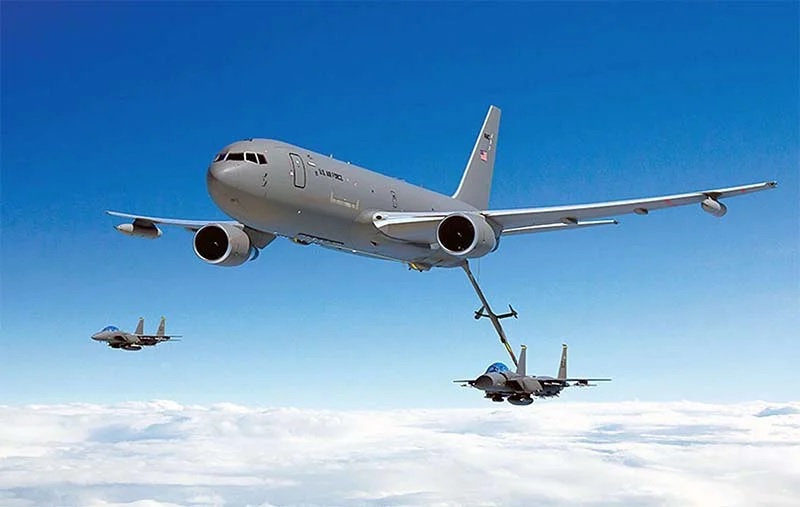
World
WASHINGTON — May 25, 2026 : The U.S. Air Force has finalized plans to procure 15 additional KC-46A Pegasus aerial refueling aircraft under its Fiscal Year 2027 budget proposal, reinforcing a long-term modernization strategy focused on sustaining global air operations, expanding force mobility, and supporting combat readiness in contested operational environments, particularly across the Indo-Pacific region. The proposed acquisition, valued at approximately $3.52 billion, forms part of the Department of the Air Force’s broader FY2027 modernization framework and reflects continued investment in aerial refueling capacity, a capability considered essential for extending the operational range of fighters, bombers, surveillance aircraft, and airborne command systems. According to FY2027 Aircraft Procurement budget justification documents released in April 2026, the KC-46A program remains a central pillar of the Air Force’s long-term recapitalization effort aimed at replacing aging tanker aircraft and strengthening global force projection. The procurement is included within the Department of the Air Force’s FY2027 budget request totaling $338.8 billion, of which $267.7 billion is allocated to the Air Force and $71.1 billion to the Space Force. Aircraft procurement accounts for approximately $73.3 billion and supports multiple modernization programs, including the B-21 Raider long-range bomber, F-35A Lightning II stealth fighter, the F-47 sixth-generation fighter initiative, and the development of Collaborative Combat Aircraft (CCA) designed to operate alongside crewed aircraft. Strategic Role in Indo-Pacific Operations The KC-46A procurement aligns with a broader Pentagon strategy focused on strengthening mobility, survivability, and operational endurance in the Indo-Pacific, where vast distances and limited basing infrastructure create significant logistical challenges for sustained air operations. Aerial refueling enables combat aircraft to remain operational far from forward bases, reducing dependence on fixed regional infrastructure that may become vulnerable during high-intensity conflict. By extending mission endurance, tanker aircraft support long-range bomber missions, persistent fighter patrols, airborne intelligence operations, rapid reinforcement deployments, and command-and-control activities across geographically dispersed theaters. The Air Force increasingly views aerial refueling as a decisive enabling capability in scenarios involving contested airspace and long-range operations over maritime regions such as the Pacific Ocean, where distance significantly affects combat persistence and operational flexibility. Addressing an Aging Tanker Fleet A principal driver behind the modernization effort is the advanced age of the Air Force’s existing tanker inventory, which continues to rely heavily on the KC-135 Stratotanker fleet. Originally introduced into service during the late 1950s, the KC-135 was derived from the Boeing 367-80 prototype, the same aircraft design that later evolved into the commercial Boeing 707 airliner. The platform played a central role in supporting Strategic Air Command nuclear deterrence operations during the Cold War before becoming an essential logistical asset in military operations across Europe, the Middle East, and the Indo-Pacific. Today, many of the Air Force’s approximately 370 remaining KC-135 aircraft are more than 60 years old, resulting in increasing sustainment costs, maintenance demands, and readiness concerns that affect long-term operational availability. To address these limitations, the KC-46A recapitalization program is intended to progressively replace aging tankers while introducing improved fuel transfer capacity, digital avionics, enhanced survivability systems, and longer operational endurance. Legislative requirements established under the National Defense Authorization Act (NDAA) mandate an expansion of the military tanker fleet from 466 to 502 aircraft by fiscal year 2029. To support this transition, the Air Force plans to retire 20 KC-135 aircraft while simultaneously taking delivery of 20 new KC-46A tankers during the upcoming fiscal cycle to preserve operational capacity. The service currently operates approximately 105 KC-46A Pegasus aircraft and maintains a long-term acquisition objective of 263 aircraft. Procurement is expected to increase to approximately 18 aircraft annually between fiscal years 2028 and 2031. Multi-Role Capability and Technical Specifications Based on the Boeing 767-2C commercial airframe, the KC-46A Pegasus incorporates extensive military modifications designed to support both refueling and transport operations. The aircraft is equipped with boom and hose-and-drogue aerial refueling systems, allowing it to service a wide range of U.S., NATO, and allied combat aircraft during joint and coalition operations. This dual-system configuration increases operational flexibility by enabling support for fighters, bombers, surveillance aircraft, mobility fleets, and allied aviation platforms. In addition to aerial refueling, the KC-46A performs passenger transport, cargo delivery, and aeromedical evacuation missions. The aircraft can transport cargo pallets and medical patients, expanding logistical flexibility during both military operations and humanitarian response efforts. Its multi-role functionality supports the Air Force’s Agile Combat Employment (ACE) concept, which emphasizes distributed deployments, operational mobility, and reduced vulnerability through flexible force positioning. The KC-46A features a wingspan of 156 feet 1 inch, a length of 159 feet 2 inches, a maximum takeoff weight of 415,000 pounds, and fuel capacity of approximately 212,299 pounds, enabling long-duration missions and sustained operational support across large theaters. Program Development and Industrial Considerations The Pegasus program originated from the Air Force’s KC-X tanker replacement competition launched to modernize the aging refueling fleet. Boeing secured the contract in 2011 following a competitive procurement process, though the program subsequently experienced development delays and technical issues during fielding. One of the most significant modernization priorities remains the aircraft’s Remote Vision System (RVS), used by boom operators to guide aerial refueling operations remotely. Early operational deficiencies affected depth perception and boom alignment under certain environmental and lighting conditions. To resolve these issues, Boeing and the Air Force developed the upgraded Remote Vision System 2.0 (RVS 2.0), which is expected to improve refueling precision and operational effectiveness. Initial fielding is scheduled for summer 2027, while Air Force planning documents project resolution of major technical deficiencies by 2028 to support full combat certification across the fleet. From an industrial perspective, continued KC-46A procurement sustains Boeing’s military aircraft production infrastructure and supports specialized aerospace manufacturing capacity across the United States. The Air Force has relied on the Tanker Production Extension program to maintain production continuity and avoid a prolonged interim tanker competition as Boeing continues to manage more than $7 billion in cumulative financial losses tied to the program’s original firm fixed-price development structure. Long-Term Strategic Importance The FY2027 procurement request underscores the Air Force’s assessment that aerial refueling is not solely a logistical support function but a strategic operational capability directly tied to deterrence, sustained combat readiness, and global power projection. As the service advances broader modernization programs—including the B-21 Raider, F-35A Lightning II, F-47 fighter initiative, and Collaborative Combat Aircraft—the KC-46A Pegasus is expected to remain a central component of future U.S. airpower architecture, supporting long-range operations in increasingly contested environments.
Read More → Posted on 2026-05-25 14:28:20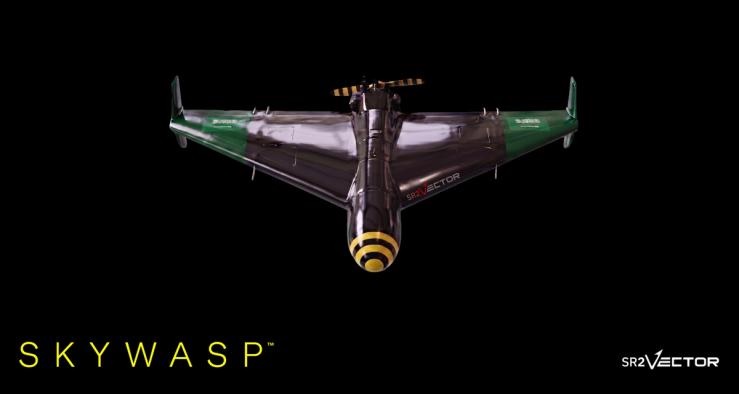
World
RIYADH, SAUDI ARABIA — May 25, 2026 : A joint venture between a United States defense startup and a Saudi Arabian defense company will establish a manufacturing facility near Riyadh to produce long-range combat drones modeled on Iran’s Shahed system. The partnership, named SR2Vector, will manufacture the SKYWASP one-way attack drone for Saudi Arabia’s military requirements and exports to allied countries. The venture brings together Utah-based Vector Defense and Saudi startup SR2 Defense Systems. The project is part of Saudi Arabia’s efforts to expand local defense manufacturing and increase domestic military production. SKYWASP Drone The SKYWASP is an attritable one-way attack drone developed by Vector Defense. The drone has a range of up to 1,500 kilometers (930 miles), covering roughly the distance from northeastern Saudi Arabia to Tehran, Iran. According to SR2 Defense Systems, the drone is intended for long-range strike operations and cost-effective deployment. Lucien Zeigler, chief strategy officer and co-founder of SR2 Defense Systems, said the facility will produce drones in “operationally relevant volumes” aligned with Saudi Arabia’s deterrence requirements. Iranian Shahed drones are estimated to cost between $20,000 and $50,000, while interceptor systems used against them are significantly more expensive. The project aims to support local production of lower-cost attritable drone systems. Vision 2030 and Local Manufacturing The project aligns with Saudi Arabia’s Vision 2030 programme, which aims to localize 50 percent of military spending by 2030. The Riyadh facility will support local manufacturing, assembly, sustainment, and production of unmanned aerial systems in Saudi Arabia. The project also supports Saudi efforts to reduce dependence on foreign defense manufacturing. The partnership was formalized during the World Defense Show 2026 in Riyadh, where Andy Yakulis, chief executive officer of Vector Defense, and Idris Al-Zakari, chief executive officer of SR2 Defense Systems, signed a memorandum of understanding for cooperation in drone production and industrial development. SR2 Defense Systems and Funding SR2 Defense Systems, established in November 2025 as a U.S.-Saudi joint venture, was co-founded by Idris Al-Zakari of Science Technology for Investment and Industrial Development and Lucien Zeigler of REDSALT Defense. The project will receive financial backing from MASNA Ventures, a defense-technology fund supporting U.S.-Saudi defense cooperation and industrial projects. Vector Defense recently secured a $20 million loan from JPMorgan Chase to expand manufacturing in the United States. The Saudi facility is part of the company’s broader production expansion plans. U.S.-Saudi Defense Cooperation The project comes amid expanding defense ties between Washington and Riyadh. In November 2025, Saudi Arabia was designated a major non-NATO ally of the United States during a meeting between Saudi Crown Prince Mohammed bin Salman and President Donald Trump at the White House. No timeline for factory completion or production volume has been announced. The project follows earlier cooperation between Vector Defense and SR2 Defense Systems announced in March 2026 for localization of attritable unmanned defense systems in Saudi Arabia.
Read More → Posted on 2026-05-25 14:29:28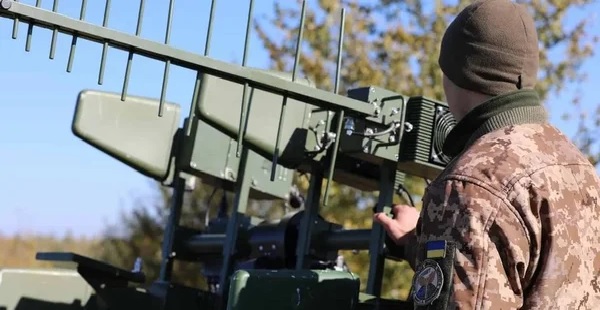
World
KYIV, UKRAINE — May 25, 2026 : Ukraine is increasingly deploying the Lima electronic warfare (EW) system to disrupt Russian drones, missiles, and guided aerial weapons as the country supplements limited interceptor missile supplies with lower-cost, non-kinetic air defence measures. According to reports, the domestically developed system interferes with satellite navigation signals, causing incoming threats to miss intended targets by disrupting or altering their guidance systems. Developed by Cascade Systems, a Ukrainian defence startup registered in the United States, the Lima system was initially designed in 2022 to counter unmanned aerial vehicles (UAVs), particularly Shahed-136/Geran-2 loitering munitions and UMPK-equipped guided aerial bombs. The system entered deployment with Ukrainian military units in July 2024 and, by October 2025, was expanded for the protection of civilian infrastructure and urban areas amid increasing long-range attacks. Strategic Electronic Warfare Platform Unlike conventional air defence systems that physically destroy incoming threats, Lima is designed to redirect or disrupt aerial weapons by targeting the navigation systems that guide them. The platform generates powerful jamming fields to interfere with satellite navigation signals, including GPS and GLONASS, while simultaneously using spoofing techniques to transmit false positioning information. According to technical explanations provided by Ukrainian military-linked sources, when missiles or drones lose access to satellite navigation, they often revert to inertial navigation systems (INS). However, without periodic satellite correction, accuracy degrades over distance, increasing targeting errors. Lima reportedly expands this deviation further by feeding manipulated coordinates to incoming weapons, redirecting them away from populated zones or critical infrastructure. The system combines digital jamming, spoofing, and cyber information attacks against navigation receivers. Unlike mobile tactical jammers deployed near frontlines, Lima is designed for wide-area, stationary protection and can be integrated into networked configurations to secure entire cities, infrastructure facilities, and military sites through modular coverage. Operational Use and Deployment Scale The Lima system is being used against multiple categories of Russian aerial threats, including Shahed drones, cruise missiles, ballistic missiles, glide bombs, and guided aerial bombs. According to Cascade Systems, more than 400 Lima units have been delivered to Ukrainian forces since deployment began. The company states that the system has disrupted over 20,500 Shahed drones and redirected dozens of cruise and ballistic missiles during the past 18 months. Operational statistics released for the first quarter of 2026 indicate that Lima neutralized 26 Russian Kh-47M2 Kinzhal aeroballistic missiles, increasing the total number diverted since deployment to 58. During the same period, Ukrainian military-linked data reported that the system deflected 33 cruise missiles and more than 10,000 UAVs. Separate operational assessments also claimed that Lima disrupted 58 out of 59 launched Kinzhal missiles within protected operational zones. Developers stated that newer modifications were adapted to improve effectiveness against guided aerial bombs, including KAB glide bombs, which present operational challenges due to shorter flight times and weaker dependence on satellite guidance. According to Cascade Systems, the system reportedly achieves a neutralization rate exceeding 98 percent against guided bombs operating within its effective engagement range. Military Operators and System Development The Lima system is operated by the Night Watch electronic warfare unit of Ukraine’s Territorial Defence Forces. One of its developers, serving under the military call sign “Alchemist,” stated that the system combines navigation suppression with coordinate substitution to intentionally increase missile deviation and redirect threats toward less populated areas. Maksym Skoretskyy, head of the electronic warfare department of Ukraine’s land forces, stated that the latest iterations of Lima are capable of suppressing long-range weapons, including ballistic missiles dependent on GLONASS satellite navigation. Cascade Systems describes Lima as an implementation of an “asymmetric sky protection” concept designed to integrate into layered air defence systems, including frameworks compatible with NATO standards. Ukrainian officials describe the system as a supplement to conventional missile defence rather than a replacement, particularly as interceptor inventories remain limited. Cost and Strategic Significance The Lima system is also being expanded due to cost considerations. Each unit reportedly costs up to approximately 3 million Ukrainian hryvnias, equivalent to around €58,000 depending on configuration. According to Cascade Systems, securing a major city may require between 30 and 100 Lima units, placing the estimated cost of metropolitan protection at approximately €5 million. This amount is broadly comparable to the cost of a single Patriot PAC-3 interceptor missile, making Lima a comparatively low-cost electronic defence layer against high-volume drone and missile attacks. Military officials have noted, however, that redirected missiles and drones still pose risks when they fall to the ground, though such incidents generally result in lower casualties and infrastructure damage than direct impacts on populated areas. No further information regarding future production rates, procurement schedules, or precise deployment locations has been publicly disclosed.
Read More → Posted on 2026-05-25 15:23:27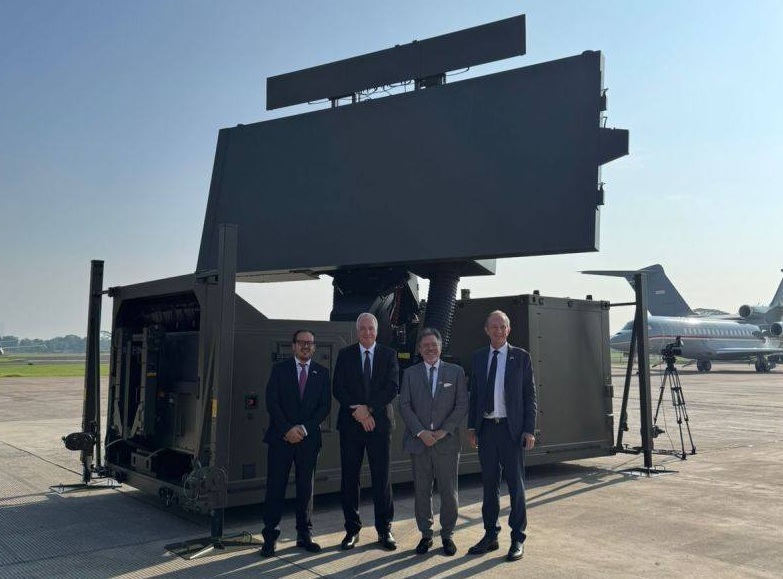
World
JAKARTA, INDONESIA — May 25, 2026 : The Indonesian Air Force (TNI-AU) formally received its first two Thales Ground Master (GM) 403 long-range air surveillance radars during an official military ceremony at Halim Perdanakusuma Air Base on May 18, 2026, attended by Indonesian President Prabowo Subianto. The delivery marks an important stage in Indonesia’s broader effort to strengthen national airspace monitoring and defence infrastructure amid evolving regional security dynamics in the Indo-Pacific. The radar systems were delivered under a multi-year procurement programme finalized in 2023 between Indonesia and French defence technology company Thales, under which the country ordered 13 units of the latest-generation GM403 tactical air surveillance radars. The programme is being implemented in partnership with Indonesian state-owned defence electronics manufacturer PT Len Industri. Deliveries of radar system components began in 2025, while the remaining 11 units are expected to be installed across Indonesia within the next 12 months. GM403 Radar Capabilities and Airspace Integration The GM403 is part of Thales’ Ground Master 400 Alpha family of mobile S-band 3D active electronically scanned array (AESA) radars and incorporates Gallium Nitride (GaN) technology to enhance operational performance and reliability. Designed for long-range air surveillance and ground-controlled interception missions, the radar can track aerial targets at distances of up to 515 kilometres while simultaneously monitoring high-, medium-, and low-altitude threats. The system is engineered to detect a broad range of airborne targets, including fighter aircraft, guided missiles, low-flying unmanned aerial vehicles (UAVs), and hovering helicopters. To process large volumes of operational information in real time, the radar integrates artificial intelligence-enabled functions for target classification and threat assessment. All 13 radar systems are being digitally integrated with Thales’ Air C4I SkyView command-and-control system, enabling sensor feeds from across Indonesia to be consolidated into a single 360-degree recognized air picture. The integration is intended to strengthen early warning functions, improve situational awareness, support interoperability between defence systems, and facilitate faster operational decision-making through automated threat response coordination. Industrial Cooperation and Technology Transfer Beyond equipment procurement, the programme includes technology transfer and industrial cooperation measures aimed at strengthening Indonesia’s domestic defence manufacturing base. Under the division of work, Thales is responsible for producing the radar cores, information-processing computer systems, and command-and-control software, while PT Len Industri manages local infrastructure development, civil works, radar station installation, and systems integration across the Indonesian archipelago. PT Len Industri is also producing selected radar components domestically as part of the localization effort. The cooperation builds upon nearly five decades of collaboration between Thales and the Indonesian Armed Forces and supports Indonesia’s objective of increasing defence-sector self-reliance. In November 2022, Thales and PT Len Industri launched a joint initiative to establish a local Maintenance, Repair, and Overhaul (MRO) centre of excellence in Indonesia. The facility is expected to support software upgrades, engineering assistance, hardware repairs, and long-term maintenance requirements close to operational users, reducing reliance on overseas support networks. Broader Defence Modernization Effort The radar delivery coincided with a display of newly acquired military platforms at Halim Perdanakusuma Air Base, highlighting Indonesia’s wider defence recapitalization programme. During the event, President Prabowo inspected six newly delivered Rafale fighter aircraft from Dassault Aviation, four Dassault Falcon 8X transport aircraft, and an Airbus A400M Atlas multi-role transport aircraft. Addressing attendees, President Prabowo stated that Indonesia would continue strengthening defence capabilities to support deterrence and protect national sovereignty, emphasizing that the country’s objective remains safeguarding its territorial integrity. Guy Bonassi, Senior Vice-President for Asia and Latin America at Thales, said Indonesia and France continue to benefit from a partnership that combines complementary industrial and technological strengths. He added that Thales remains committed to expanding local knowledge, industrial expertise, maintenance capabilities, and sovereign defence support in Indonesia. The programme is also expected to create future opportunities for cooperation between Thales and PT Len Industri in sovereign command-and-control systems, naval combat management technologies, advanced radar systems, defence expertise transfer, and indigenous military satellite development. Indonesian authorities did not disclose the operational deployment locations of the first two radar systems or provide further production details beyond the planned 12-month delivery schedule for the remaining units.
Read More → Posted on 2026-05-25 15:29:06
Space & Technology
MOSCOW — May 25, 2026 : New Cloud Technologies, the Russian software developer behind the MyOffice office productivity suite, is preparing large-scale workforce reductions after reporting multibillion-ruble losses and a sharp decline in revenue, according to reports from Russian business newspaper Vedomosti. The planned restructuring marks a significant challenge for Russia’s broader effort to replace Western software products with domestic alternatives. Employees at the company reportedly received internal notifications in mid-May warning of upcoming staff cuts across multiple divisions. Sources familiar with the matter told Vedomosti that entire departments may be dissolved as part of the restructuring, while technical support operations are expected to remain largely intact to ensure continuity for existing customers and government clients. MyOffice was launched in 2014 by businessman Dmitry Komissarov as part of Russia’s long-term import-substitution strategy aimed at reducing dependence on foreign technology providers, particularly following sanctions and increasing geopolitical tensions. The software suite was promoted as a domestic replacement for Microsoft Office and later adopted by several Russian public institutions, including the State Duma, which reportedly allocated more than 20 million rubles in 2023 for MyOffice licenses to support the transition away from Microsoft products. Financial Decline Deepens The planned layoffs follow what company management described as a period of severe financial deterioration despite restructuring efforts undertaken throughout 2025. In an internal letter to staff, Chief Executive Officer Vyacheslav Zakorzhevsky acknowledged declining performance across major business segments, stating that the company’s operational model required substantial changes to ensure long-term sustainability. Financial records from Russia’s SPARK corporate database indicate that New Cloud Technologies employed slightly more than 1,000 personnel at the conclusion of 2025. During the same period, the company recorded a net loss exceeding 4 billion rubles (approximately $50 million), more than tripling compared with losses reported a year earlier. Revenue performance also weakened considerably. According to financial statements referenced by Vedomosti, company revenue declined by approximately 50 percent in 2025, falling to around 1 billion rubles (approximately $12.7 million). Debt obligations to the company’s majority shareholder simultaneously increased by roughly one-third, reaching nearly 25 billion rubles (around $318 million). Historical financial data further shows that MyOffice has struggled to sustain profitability over time. The company reported positive net income only once in the previous five fiscal years, posting a profit of 386.5 million rubles in 2022. Workforce Disputes Emerge The restructuring process has also generated internal tensions between management and employees. Former staff members cited by Vedomosti alleged that company leadership initially sought to encourage workers to resign voluntarily, a move that would reduce severance-related costs. According to those accounts, employees were reportedly warned about possible disciplinary dismissal for relatively minor workplace violations, including arriving around ten minutes late to work or submitting travel documentation after reporting deadlines. In response, employees reportedly formed a labor union and formally warned management about potential legal proceedings concerning alleged unlawful dismissal practices. Zakorzhevsky had earlier informed staff on March 23, 2026, that restructuring plans would involve revisions to the company’s organizational structure and product portfolio. He also reportedly assured employees that the process would comply with Russian labor regulations and that affected staff could receive consideration for vacant positions at Kaspersky Lab. Ownership and Broader Economic Context Corporate registry records show that Russian cybersecurity company Kaspersky Lab currently holds approximately 68.8 percent of New Cloud Technologies, making it the majority shareholder. Founder Dmitry Komissarov retains a smaller stake of roughly 5 percent. The operational difficulties facing MyOffice coincide with broader concerns surrounding Russia’s corporate sector. Earlier assessments issued by Ukraine’s Foreign Intelligence Service suggested that both private and state-linked Russian companies could begin broader workforce reductions during mid-2026 amid elevated interest rates, weaker commercial revenues, slowing consumer demand, and mounting macroeconomic pressure. Neither New Cloud Technologies nor company management disclosed the exact number of jobs expected to be eliminated or a timeline for completing the layoffs.
Read More → Posted on 2026-05-25 15:39:29
India
NEW DELHI, INDIA — May 25, 2026 : The Indian Air Force (IAF) has issued a Request for Proposal (RFP) for the procurement and integration of anti-jamming navigation systems for 258 Su-30MKI fighter aircraft, as part of a broader effort to improve survivability and navigation reliability in electronically contested combat environments. Issued under tender reference AIRHQ/D PROJ/26-27/01, the procurement seeks the acquisition, installation, testing, certification, and operational integration of Anti-Jamming Navigation System (Antenna) Electronic Units across the IAF’s frontline Sukhoi fleet. The programme is being managed by the Wing Commander Projects (SU-30) at Air Headquarters, Vayu Bhawan, New Delhi, and has been classified as a limited tender under the “Services” category using a buy form of contract. The tender has been opened exclusively to technically and financially capable indigenous Indian companies, reflecting the government’s emphasis on domestic defence manufacturing and electronic systems development. Participating vendors are required to submit an Earnest Money Deposit (EMD) of ₹6,00,00,000, payable to the Principal Controller of Defence Accounts (PCDA), Air Force. Multi-Constellation Navigation Upgrade for Electronic Warfare Conditions The primary objective of the RFP is to replace or upgrade existing navigation antennas on the Su-30MKI with anti-jamming, anti-spoofing multi-constellation GPS Antenna Electronic Units, intended to improve navigation resilience in contested electromagnetic environments. Modern combat aircraft increasingly operate in conditions where adversaries attempt to disrupt navigation systems through Global Navigation Satellite System (GNSS) jamming and spoofing, making conventional positioning systems vulnerable to interference. The proposed system is intended to allow uninterrupted navigation and operational continuity even in GPS-degraded or electronically denied environments. According to the technical requirements outlined in the RFP, the upgraded system will support multiple satellite navigation constellations, including NavIC, GPS, GLONASS, BeiDou, Galileo, and the GAGAN augmentation system. By receiving navigation data from multiple global and regional sources, the system is intended to maintain positioning accuracy and mission continuity during electronic disruption. The antenna unit is required to deliver jamming rejection capability of up to 85 dB against a single interference source and 80 dB against multiple interference sources, enabling resistance against hostile electronic attacks. The system must also remain operational at altitudes up to 21 kilometres, at speeds up to Mach 1.5, and under aircraft acceleration forces ranging from -2g to +9g, reflecting the demanding flight profile of the Su-30MKI platform. Procurement Scope and Integration Requirements Under the procurement plan, selected vendors will be required to supply and integrate 300 antenna systems, exceeding the aircraft requirement to support reserves, testing, and maintenance needs. The contract additionally includes the delivery of 50 field-level testers and 10 base-level testers for diagnostics and sustainment support. The RFP mandates certification trials on two Su-30MKI aircraft prior to broader fleet integration. In addition, training for Indian Air Force personnel will be conducted at the 9 TETTRA School, ensuring operational and maintenance readiness following system induction. The upgraded navigation systems are expected to enhance aircraft survivability and operational continuity during long-range missions, precision targeting operations, and standoff strike profiles in heavily contested electromagnetic environments. Part of the Broader “Super Sukhoi” Modernisation Programme The anti-jamming navigation initiative forms part of the Indian Air Force’s wider Su-30MKI modernisation roadmap, commonly referred to in defence circles as the “Super Sukhoi” or “Super-30” programme. India currently operates a Sukhoi fleet of approximately 272 aircraft, with around 260 aircraft in active service, forming the backbone of the Indian Air Force’s combat aviation inventory. The wider modernisation effort seeks to improve avionics, mission survivability, sensor performance, and electronic warfare capability. Parallel upgrades under consideration include the replacement of the aircraft’s legacy 32-bit mission computer architecture with a 64-bit Digital Flight Control Computer developed by the Defence Avionics Research Establishment (DARE), enabling faster processing of mission and sensor data. The IAF is also pursuing plans to replace the N011M Bars Passive Electronically Scanned Array (PESA) radar with the indigenous Virupaksha Active Electronically Scanned Array (AESA) radar, intended to improve tracking, target engagement, and detection capability. Separately, the Air Force has issued a Request for Information (RFI) for 100 Advanced Self-Protection Jammer (ASPJ) pods incorporating Digital Radio Frequency Memory (DRFM) and Gallium Nitride (GaN) technologies to strengthen aircraft self-protection against hostile airborne and ground-based radar systems. The anti-jamming navigation system is expected to interface with these future electronic warfare systems to ensure navigation continuity under electronic suppression conditions. Tender Timeline and Administrative Framework The RFP was officially e-published on May 20, 2026, with the clarification period remaining open until May 29, 2026. A pre-bid meeting is scheduled for May 26, 2026, at Air Headquarters, Vayu Bhawan, where participating firms will be able to seek technical and procedural clarifications. The bid submission window will open on June 1, 2026, and close on June 22, 2026, while technical bids are scheduled to be opened on June 23, 2026. Submitted bids will remain valid for 180 days. Under contract conditions, the selected vendor will be required to complete procurement, installation, certification, and aircraft integration activities within a 730-day (24-month) performance period from contract signing. The Ministry of Defence has not disclosed the estimated value of the programme or specific vendor shortlisting criteria in the RFP documentation.
Read More → Posted on 2026-05-25 15:45:06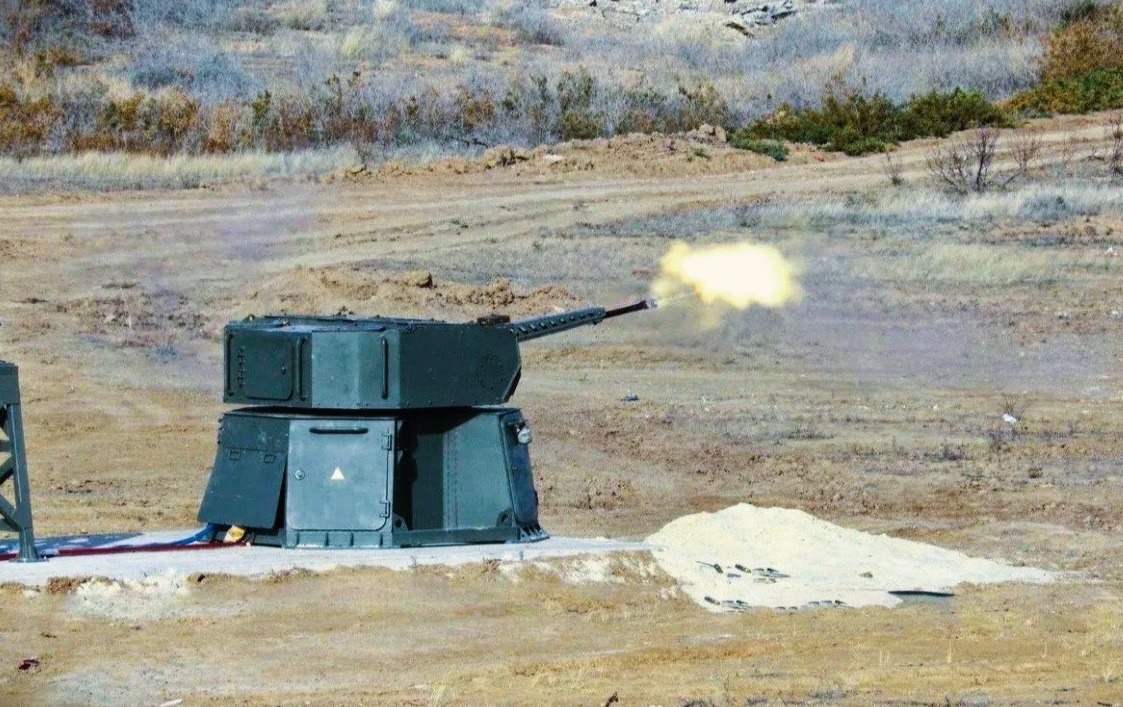
World
MOSCOW REGION — May 25, 2026 : Russian state defense conglomerate Rostec has publicly unveiled the ZAK-30 “Citadel” (Tsitadel), a new short-range anti-aircraft artillery complex designed to defend stationary facilities against unmanned aerial vehicle (UAV) threats. The 30 mm caliber system is being presented at the First International Security Forum, scheduled to be held at the Live Arena venue in the Moscow Region from May 26 to 29 under the auspices of the Security Council of the Russian Federation. System Designed for Counter-UAV Protection The ZAK-30 “Citadel” is intended for the continuous protection of fixed infrastructure against attacks by both fixed-wing unmanned aircraft and smaller multi-copter drones. Developed as a stationary and modernized version of the BM-30-D “Spitsa” combat module, the system has been configured specifically for point defense missions requiring permanent coverage and rapid response. According to Rostec, the platform’s operational performance has already been validated in combat conditions. The company stated that the system has been used against long-range kamikaze drones, including the Ukrainian AN-196 “Lyuty”, as part of efforts to improve localized air defense against small aerial threats. Programmable Munitions and Fire-Control System A central feature of the Citadel is its integration of a 30 mm automatic cannon with programmable fragmentation ammunition equipped with remotely programmable time and proximity fuzes. Rather than depending entirely on direct hits against small and maneuverable aerial targets, the system is designed to intercept UAVs through controlled airburst detonation. The platform’s automated fire-control system calculates an optimal detonation point based on a target’s real-time flight trajectory. Once fired, the munition detonates at predetermined coordinates along the drone’s projected path, releasing a fragmentation cloud intended to neutralize the target. Rostec stated that this engagement approach reduces ammunition consumption compared with conventional unguided cannon fire, where multiple rounds may be required to achieve a successful interception. Dual-Channel Detection and Tracking Framework To support continuous operation across varying weather and visibility conditions, the Citadel incorporates a dual-channel detection and tracking architecture consisting of radar and electro-optical systems operating in both visible and infrared spectrums. The infrared tracking channel is intended to improve the detection of smaller drones that may have limited radar visibility but generate thermal signatures through propulsion motors and onboard electronics. Radar and optical inputs are processed simultaneously, enabling the system to either combine sensor data or prioritize individual channels depending on environmental interference, visibility limitations, or target behavior. Rostec described the engagement sequence—from target detection and tracking to fire calculation and target destruction—as highly automated. However, the company did not specify whether the platform is capable of operating under fully autonomous engagement rules or requires operator approval prior to weapons release. Technical Characteristics and Engagement Parameters The ZAK-30 “Citadel” is equipped with a 30 mm cannon and carries an ammunition load of 250 ready-to-fire programmable rounds. The system features elevation angles ranging from −10° to +60°, enabling engagement of targets approaching at low altitude as well as those descending at steeper angles. Its horizontal traverse capability extends ±150° from the centerline, providing a 300-degree firing sector from a fixed mounting position rather than full circular coverage. According to Rostec, the system can detect fixed-wing UAVs at distances of up to 2,000 metres, while multi-copter drones can be identified at ranges of up to 1,000 metres. The effective engagement range against fixed-wing UAVs is reported to be between 1,000 and 1,300 metres, placing the Citadel within the category of short-range point-defense systems designed for localized infrastructure security. Cost, Deployment Requirements, and Infrastructure Protection The estimated procurement cost of a single ZAK-30 Citadel unit is approximately 600 million rubles, or roughly $8 million depending on exchange rates. The system additionally relies on programmable ammunition, which carries a higher unit cost than standard 30 mm rounds due to its fuze programming and airburst capabilities. Because the Citadel is a stationary platform with a 300-degree firing sector rather than full 360-degree rotation, larger facilities require overlapping defensive positioning to maintain perimeter coverage. A typical large Russian oil refinery spans approximately 6 to 13 square kilometres, exceeding the effective defensive area of a single unit. Based on the platform’s engagement radius of approximately 1.2 kilometres against fixed-wing UAVs, defense estimates suggest that between six and ten Citadel systems would be required to provide overlapping protection around an industrial facility of that scale. At current estimated procurement costs, such a deployment would require hardware spending between approximately 3.48 billion and 5.8 billion rubles, excluding maintenance, logistics, ammunition replenishment, and associated support infrastructure. Ongoing Counter-UAV Development The unveiling of the ZAK-30 “Citadel” reflects continuing Russian efforts to strengthen counter-UAV capabilities around strategic and industrial infrastructure amid increasing use of long-range drones in modern conflict environments. Rostec did not provide further details regarding production schedules, procurement plans, export availability, or future integration timelines during the system’s presentation announcement.
Read More → Posted on 2026-05-25 16:06:13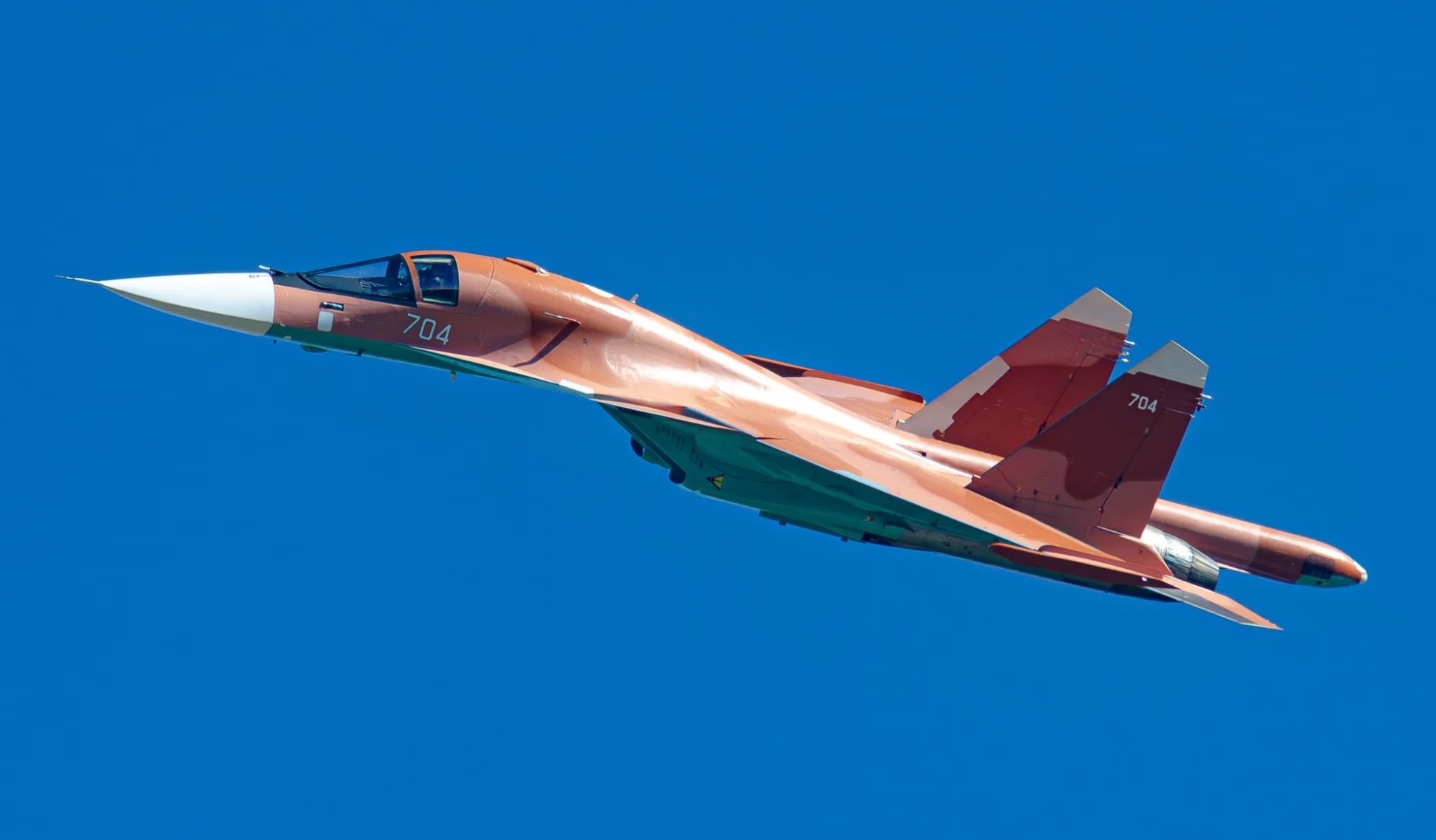
World
MOSCOW, Russia — May 25, 2026: Export-configured Sukhoi Su-34 fighter-bombers intended for the Algerian Air Force have been observed conducting training operations in Russia, marking a significant stage in Algeria’s ongoing combat aviation modernisation programme. Newly emerged footage showed aircraft carrying tail numbers 703 and 704 operating at Zhukovsky Airfield near Moscow, where Algerian pilots are reportedly completing advanced flight and operational training before the aircraft are formally delivered. Zhukovsky Airfield, located outside Moscow, serves as the home base of the M. M. Gromov Flight Research Institute (LII) and is widely used for aircraft testing, avionics certification, pilot conversion, and evaluation programmes. According to regional defence analysts and open-source intelligence assessments, the observed flights are part of a structured pre-delivery process designed to familiarise Algerian aircrew with the aircraft and prepare them for operational deployment once transferred to Algeria. Export Su-34E Aircraft Seen in Desert Camouflage The aircraft observed during training are identified as the Su-34E, also referred to in defence reporting as the Su-34ME, an export version of Russia’s Su-34 “Fullback” twin-seat fighter-bomber. Unlike aircraft operated by the Russian Aerospace Forces, the Algerian-bound jets feature a distinct desert camouflage pattern in brown and yellow tones, adapted for North African operational environments and desert-based missions. The Su-34E preserves the core combat characteristics of the Russian platform, including a side-by-side twin-seat cockpit intended to improve crew coordination during long-duration strike missions. The aircraft are designed for long-range precision attack operations and retain all-weather strike capability supported by advanced avionics and mission systems. According to available information, the export aircraft include terrain-following and side-looking radar systems for low-altitude interdiction missions, enabling improved navigation and targeting performance in contested operational environments. The platform also maintains compatibility with a broad range of guided and unguided munitions, including precision-guided air-to-surface missiles, anti-ship weapons, guided glide bombs, and heavy strike ordnance. Customer-Specific Modifications for Algeria The Algerian Su-34E fleet reportedly incorporates several modifications compared with aircraft operated by Russia, including an enhanced electronic warfare system and customer-specific sensor fairings tailored to Algeria’s operational requirements. The aircraft are also configured for sustained operations in desert conditions while preserving the Su-34’s long-range strike profile, supersonic performance, and heavy payload capacity. The training programme at Zhukovsky reportedly includes test flights, familiarisation sorties, and pilot conversion activities, allowing Algerian aircrew to gain operational experience before aircraft handover. Such programmes are standard practice for advanced combat aircraft deliveries and are intended to reduce transition time once the aircraft enter national service. Algeria’s Su-34 Procurement Programme Algeria became the first confirmed international customer for the Su-34 export platform after signing a contract in 2019 for 14 Su-34E fighter-bombers, according to defence reporting. The procurement formed part of a broader defence package that also included Su-57E and Su-35E combat aircraft. Negotiations surrounding the acquisition, however, date back nearly a decade. Initial discussions reportedly began around 2016, when Algeria considered a smaller order of approximately 12 aircraft to gradually replace aging Soviet-era strike platforms in frontline service. Production of the Algerian aircraft is being carried out at the Novosibirsk Aircraft Plant, with export-configured examples first observed during testing activities in 2025 before entering the current training and pre-delivery phase. Role Within the Algerian Air Force Once delivered, the Su-34E is expected to gradually replace Algeria’s Su-24M tactical strike aircraft, which have served for decades as a key component of the country’s bombing and interdiction capability. The aircraft will also complement Algeria’s broader Russian-origin fleet, which includes Su-30MKA multirole fighters, MiG-29 variants, and Yak-130 advanced jet trainers. The acquisition reflects Algeria’s long-standing defence relationship with Moscow and forms part of a wider military modernisation effort focused on expanding long-range strike, multi-role aviation, and precision engagement capabilities. Increased Logistics Activity Linked to Deliveries The progress of the Su-34E programme also coincides with increased logistical activity between Russia and Algeria. Independent tracking data reportedly identified at least 167 military cargo flights between Russian state airfields linked to the United Aircraft Corporation (UAC) and Algerian military air bases over a 14-month period leading into mid-2026. The movements are believed to involve transfers of technical components, support equipment, maintenance systems, spare parts, and associated defence infrastructure connected to Algeria’s expanding inventory of Russian-built military platforms. No official statement has been released regarding the exact delivery timeline for the Su-34E aircraft or whether Algeria plans to expand procurement beyond the publicly reported 2019 contract for 14 aircraft. However, the continued pilot training activity at Zhukovsky Airfield indicates that the aircraft are progressing toward operational transfer and eventual integration into Algerian Air Force service.
Read More → Posted on 2026-05-25 16:32:07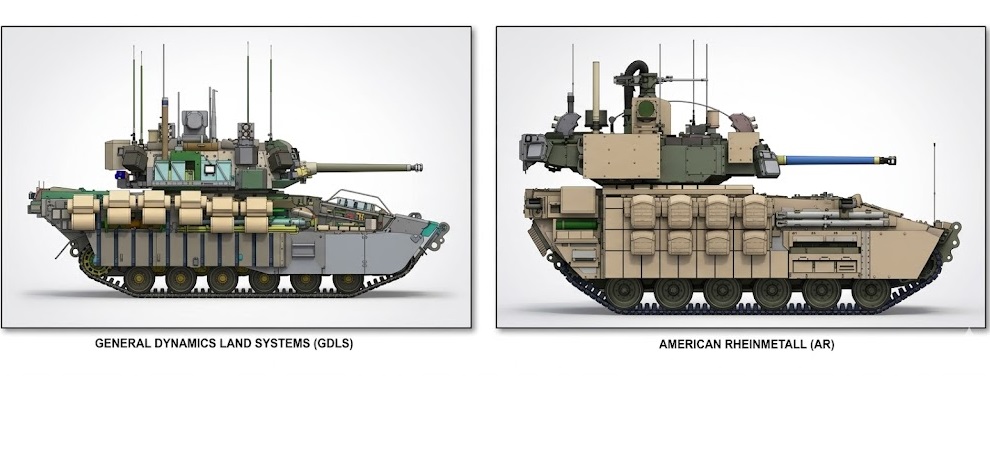
World
DETROIT, MICHIGAN — May 25, 2026 : The U.S. Army has officially unveiled the competing engineering concepts for the XM30 mechanized combat vehicle programme, providing the first public look at the next-generation platforms intended to replace the Bradley Infantry Fighting Vehicle (IFV). The reveal marks a significant milestone in one of the Pentagon’s largest future ground combat modernization programmes, focused on delivering a digitally connected, highly survivable, and software-defined armored platform for future high-intensity warfare. The Computer-Aided Design (CAD) renderings from competing prime contractors, General Dynamics Land Systems (GDLS) and American Rheinmetall, were presented on May 13 by XM30 Program Manager Colonel Novak during the National Defense Industrial Association Maneuver Defense and Expeditionary Conference (NDIA MDEX 2026) in Detroit. The concepts currently represent the vehicle configurations advancing through detailed engineering, prototype manufacturing, and testing phases. Programme Schedule and Acquisition Strategy The U.S. Army confirmed that the CAD models displayed at MDEX 2026 represent designs advancing through Phases 3 and 4 of the XM30 programme, covering detailed design work, prototype construction, and physical testing. Evaluation activities are expected to continue through December 2027, after which the programme will move into Phase 5, transitioning to a Middle Tier Acquisition – Rapid Fielding pathway. A formal request for proposals (RFP) for production is scheduled to be issued during the first quarter of Fiscal Year 2027, while the Pentagon’s Fiscal Year 2027 budget request has already allocated $547 million for the procurement of 19 initial XM30 test vehicles. Contracts awarded to both competing teams in June 2023 for Phases 3 and 4 are collectively valued at approximately $1.6 billion, underlining the strategic importance of the programme to the Army’s future armored force structure. Design Philosophy and Operational Role The XM30 programme is intended to replace the Bradley IFV fleet with a next-generation mechanized combat vehicle optimized for network-centric warfare, autonomous battlefield integration, and high-intensity operations against technologically advanced adversaries. Unlike legacy Cold War-era infantry fighting vehicles, the XM30 is being developed with a focus on artificial intelligence-supported battlefield awareness, modular combat systems, software-defined architecture, and greater resistance to emerging threats such as drones, loitering munitions, and precision-guided weapons. Army planners expect the future platform to operate alongside next-generation armored formations while supporting rapid battlefield connectivity, sensor integration, and future autonomous mission systems. The programme also prioritizes lower crew workload through automation and advanced digital systems intended to improve battlefield decision-making and engagement speed. Crew Layout, Armament, and Internal Configuration Although exact dimensions and survivability specifications remain classified, publicly available programme information indicates that both tracked concepts will exceed 40 tonnes and feature an almost identical internal layout. Each vehicle is designed around a two-person crew seated side-by-side directly behind the engine compartment, while the rear troop section provides space for six fully equipped infantry soldiers. The platform is also expected to support an optionally manned operational configuration, allowing future integration of autonomous and remotely operated combat functions. Both concepts feature large uncrewed turrets, ensuring that turret systems do not penetrate internal crew space and thereby maximizing internal survivability and usable volume. The primary weapon system on both designs is the Northrop Grumman XM913 50 mm chain gun, firing 50×228 mm ammunition, paired with a coaxial 7.62 mm M240 machine gun. The vehicles are additionally configured to support a roof-mounted remotely operated weapon station armed with a 12.7 mm Browning M2A1 heavy machine gun to provide close-range defensive fire and battlefield flexibility. Alongside cannon armament, the XM30 incorporates a universal missile launcher system capable of deploying TOW anti-tank guided missiles, Combat Common Missile System-Heavy (CCMS-H) munitions, or future loitering drone systems, allowing the platform to engage armored vehicles, hardened defensive positions, and emerging battlefield threats. Mobility and Hybrid-Electric Systems Mobility requirements remain central to the programme because the XM30 is expected to maneuver alongside modern main battle tanks, including future Abrams formations, while reducing logistical burden and improving battlefield endurance. Both competing concepts incorporate hybrid-electric propulsion systems, InArm hydropneumatic suspension, and six pairs of road wheels to support improved ride stability and cross-country performance. The vehicles also employ composite tracks, intended to reduce vibration, improve mobility, and lower maintenance requirements while supporting the platform’s increasing electrical power demands for sensors, networking systems, and future upgrades. General Dynamics Land Systems’ “Wolf XM30” The GDLS proposal, known as Wolf XM30, emphasizes a compact turret profile, enhanced side-hull protection, and an extensive distributed digital sensor architecture intended to improve survivability and battlefield awareness. Engineering renderings presented during MDEX 2026 show multiple communication antennas, modular armor layouts, and elevated observation masts designed to feed automated, artificial intelligence-supported threat detection systems. The vehicle appears optimized for reduced battlefield signature and rapid digital integration across Army formations operating in contested environments. The concept is also reported to incorporate components associated with the ASCOD armored vehicle platform while utilizing composite tracks supplied by Soucy. American Rheinmetall’s “Lynx XM30” The competing proposal from American Rheinmetall, designated Lynx XM30, is derived from the KF41 Lynx infantry fighting vehicle family and adopts a larger turret structure optimized for modular upgrades and expanded internal growth capacity. The design prioritizes increased internal space to accommodate advanced electronics, autonomous mission software, electronic warfare suites, and expanded ammunition handling systems. American Rheinmetall is leading the development effort through Team Lynx, an industrial consortium involving Textron Systems, RTX, L3Harris Technologies, Allison Transmission, and Anduril Industries. Survivability and Battlefield Protection Survivability has emerged as a key requirement for the XM30 programme following battlefield lessons observed in Ukraine, where drones, loitering munitions, top-attack systems, and precision artillery have transformed armored warfare. To address these threats, both competing vehicles incorporate modular armor protection, advanced situational awareness systems, and the Iron Fist Active Protection System (APS) developed by Elbit Systems. The protection suite is currently undergoing U.S. Army standardization under the XM251 designation, with the system expected to transition to the fully standardized M251 configuration for use across the XM30 platform, the future M1E3 Abrams main battle tank, and the Stryker armored vehicle family. Fielding Timeline Initial prototype deliveries are scheduled to begin during 2026, followed by testing and operational evaluations continuing through 2027. Following the Army’s future production downselect process, the XM30 programme is expected to move toward initial operational fielding between 2028 and 2030, depending on acquisition timelines and final contract awards.
Read More → Posted on 2026-05-25 16:53:26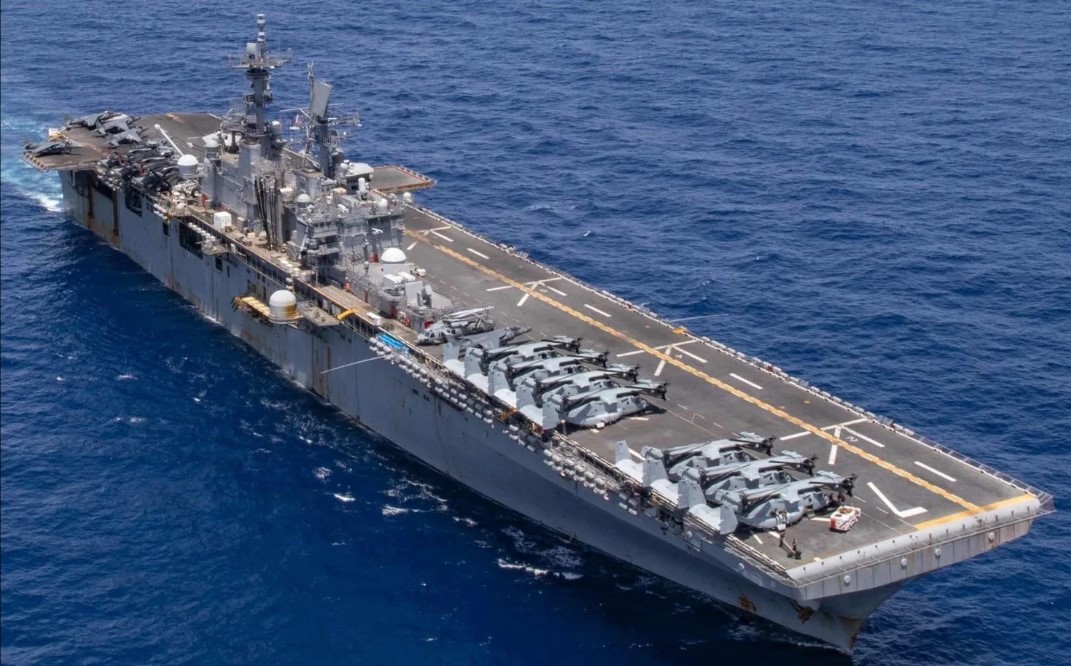
World
WASHINGTON — May 26, 2026 : The U.S. Navy has approved a $17.45 million contract modification for the Fiscal Year 2026 Selected Restricted Availability (FY2026 SRA) of the Wasp-class amphibious assault ship USS Iwo Jima (LHD-7), extending a major maintenance and modernization effort designed to support long-term F-35B Lightning II operations and preserve the ship’s operational readiness into the 2030s. The modification, announced on May 22, 2026, exercises options under a Naval Sea Systems Command contract awarded on January 8, 2026 to BAE Systems Maritime Solutions Norfolk. The original contract carried a base value of $204.16 million and a cumulative potential value of $255.88 million, with maintenance work scheduled to continue through May 2028 in Norfolk, Virginia. Maintenance Program and Contract Scope The FY2026 SRA is categorized as a Chief of Naval Operations maintenance period and is being conducted primarily pier-side rather than through a major overhaul or drydock modernization. The availability combines depot-level repairs, structural restoration, combat systems modernization, aviation support upgrades, and lifecycle extension work intended to sustain USS Iwo Jima’s operational effectiveness after more than two decades of service. The contract covers labor, supervision, testing, certification, facilities use, engineering support, and production activities required to restore material condition and improve shipboard capabilities. Planned work includes corrosion repair, steel replacement, preservation coatings, propulsion plant inspections, electrical distribution maintenance, and overhauls of pumps, valves, piping systems, ventilation systems, and auxiliary machinery. F-35B Modernization and “Lightning Carrier” Transition A central objective of the modernization effort is preparing USS Iwo Jima for sustained F-35B Lightning II operations as the U.S. Marine Corps transitions away from the legacy AV-8B Harrier II fleet toward fifth-generation expeditionary aviation. The upgrades support the Navy and Marine Corps’ “Lightning Carrier” concept, under which amphibious assault ships embark larger F-35B air wings to supplement conventional aircraft carrier operations. In this configuration, Wasp-class ships can conduct sea-control missions, expeditionary advanced base operations, and distributed maritime warfare while increasing strike capacity during regional contingencies. Traditionally, USS Iwo Jima embarked a mixed aviation detachment that included six AV-8B Harrier II or six F-35B aircraft, four CH-53E Super Stallion helicopters, four AH-1 attack helicopters, three to four UH-1 utility helicopters, and 12 MV-22B Osprey tiltrotors. Under the Lightning Carrier model, however, Wasp-class vessels can embark between 16 and 20 F-35B aircraft, substantially increasing sortie generation and operational flexibility. Aviation Infrastructure and Engineering Upgrades To support sustained F-35B operations, the ship is undergoing modifications to aviation infrastructure and engineering systems. Because the F-35B generates significantly greater thermal stress during short takeoff and vertical landing operations, reinforced flight deck sections and thermal spray non-skid coatings are being installed to protect landing areas from heat-related degradation. The modernization package also includes upgrades to electrical power distribution systems and expanded cooling capacity required to sustain the increased technical demands associated with stealth fighter operations. Aviation maintenance facilities and support spaces are being strengthened to support higher operational tempos and larger embarked fighter detachments. Additional improvements include modernization of JP-5 aviation fuel systems, fueling stations, aviation ordnance handling equipment, logistics support areas, and maintenance infrastructure necessary for prolonged F-35B deployment cycles. Secure digital infrastructure compatible with the aircraft’s sustainment ecosystem is also being incorporated, including networking systems supporting the Autonomic Logistics Information System (ALIS) and the Operational Data Integrated Network (ODIN), both required for mission planning, diagnostics, software support, and maintenance management. Combat Systems and Shipboard Modernization Alongside aviation-focused improvements, USS Iwo Jima is receiving combat systems upgrades intended to improve command, communications, and battlespace awareness. Modernization efforts include upgrades to Consolidated Afloat Networks and Enterprise Services (CANES), replacing segmented information systems with integrated shipboard networking architecture. The ship is also receiving Ship’s Signal Exploitation Equipment (SSEE) Increment F enhancements intended to improve signals intelligence processing, electronic surveillance, and electromagnetic battlespace awareness. The availability further addresses long-term material wear accumulated during extensive deployments across the Atlantic, Mediterranean, Fifth Fleet, and U.S. Central Command areas of operation. USS Iwo Jima: Service History and Capabilities Commissioned on June 30, 2001, USS Iwo Jima is the seventh and final conventionally powered Wasp-class amphibious assault ship in U.S. Navy service. The vessel displaces approximately 40,500 tons at full load and measures 257 meters (843 feet) in length with a beam of 31.8 meters. Powered by two steam turbines generating approximately 70,000 shaft horsepower, the ship can sustain speeds of roughly 22 knots. USS Iwo Jima features a full-length flight deck, hangar deck, aircraft elevators, aviation fuel systems, and a well deck for amphibious landing craft, enabling simultaneous aviation and amphibious operations. The vessel can embark roughly 1,900 Marines alongside armored vehicles, helicopters, MV-22B Osprey tiltrotors, landing craft, and fixed-wing aircraft. Since entering service, the ship has participated in operations connected to Afghanistan and Iraq following the September 2001 attacks and deployed with the 26th Marine Expeditionary Unit across the Mediterranean Sea, Red Sea, and Arabian Gulf during 2003 and 2004. In 2005, USS Iwo Jima served as a sea-based aviation, logistics, medical, and command platform during Hurricane Katrina relief operations near New Orleans. The ship later supported Operation Odyssey Dawn near Libya in 2011 and conducted repeated Atlantic and Fifth Fleet deployments involving MV-22B Osprey operations and F-35B interoperability activities. Most recently, on January 3, 2026, USS Iwo Jima participated in Operation Absolute Resolve, during which Nicolás Maduro and Cilia Flores were transferred aboard the vessel before transportation to the United States in connection with federal narcoterrorism-related charges issued in 2020. Industrial Base and Fleet Readiness The modernization effort draws on technical experience developed during previous F-35B integration work aboard sister ships including USS Wasp, USS Essex, USS Bataan, USS America, and USS Tripoli. Work is being carried out by BAE Systems Maritime Solutions Norfolk, one of the Navy’s principal private-sector maintenance facilities on the U.S. East Coast. The availability also reflects broader pressure on the U.S. naval industrial base, where amphibious ship maintenance must compete for skilled labor, facilities, and technical resources alongside aircraft carrier overhauls, submarine maintenance programs, and Columbia-class ballistic missile submarine construction. Once completed, the FY2026 Selected Restricted Availability is expected to preserve USS Iwo Jima’s amphibious readiness while strengthening its ability to support higher-capacity F-35B operations and expanded expeditionary strike missions in future maritime operations.
Read More → Posted on 2026-05-26 12:25:22
World
MONTREAL — May 26, 2026 : Bombardier Defense will supply three Global 6500 aircraft to support maritime surveillance missions for the Australian Border Force (ABF) under a new fixed-wing aerial surveillance programme aimed at strengthening Australia’s border monitoring and national coverage capabilities. The aircraft will be operated by Metrea, a defence company that provides effects-as-a-service to national security partners, as part of a broader contract awarded by Australia’s Department of Home Affairs to Metrea Australia Pty Ltd. Under the agreement, the Australian Border Force will receive a fleet of 11 fully crewed, technologically advanced fixed-wing aircraft to conduct short- and long-range aerial surveillance missions. Operations under the programme are scheduled to begin on January 1, 2028, with the fleet expected to provide continuous 24/7, year-round surveillance coverage to enhance maritime monitoring, border protection and national aerial surveillance operations across Australia. Global 6500 to Strengthen Maritime Surveillance Capability The three Bombardier Global 6500 aircraft will be adapted in a dedicated special mission configuration to meet the operational requirements of maritime surveillance. Their introduction will support the transition to enhanced fixed-wing aerial surveillance capabilities under the new Metrea-operated contract for the Australian Border Force. Bombardier said the Global 6500 is designed for missions requiring long range, speed, endurance and reliability, making it suitable for extended maritime patrol operations over large operational areas. The aircraft has a range of 6,600 nautical miles, a maximum operating speed of Mach 0.90 and endurance exceeding 18 hours. Bombardier also highlighted the platform’s class-leading electrical power generation capacity for mission systems and ample cabin space, enabling the integration of specialised surveillance equipment and mission personnel. “The Global 6500 aircraft brings a new level of capability for maritime surveillance, with exceptional range, speed, endurance and reliability,” said Michael Anckner, Vice President, Worldwide Sales at Bombardier Defense. “Our teams are proud that this game-changing aircraft is the trusted choice to support the Australian Border Force’s aerial surveillance program,” he added. Expansion of Bombardier’s Special Mission Presence in Australia The programme will introduce Bombardier’s Global aircraft platform into Australia in a dedicated special mission role, further expanding the company’s footprint in the country’s defence and security aviation sector. Bombardier has previously supported several special mission programmes worldwide using the Global platform, while its Learjet and Challenger aircraft are already used in Australia for search-and-rescue and medical evacuation operations. The company currently has more than 75 business aircraft operating across Australia within its Learjet, Challenger and Global families and has expanded regional infrastructure to support both commercial and special mission customers. In 2022, Bombardier opened a Melbourne Service Centre at Essendon Fields Airport to strengthen support for operators in the region. In May 2024, Bombardier Defense established its first international office in Adelaide to provide dedicated assistance for special mission customers in Australia. The company later announced a new Line Maintenance Station in Perth in March 2025 to expand sustainment and maintenance support. Global 6500 Platform for Government and Military Missions Bombardier Defense stated that governments, military operators and mission partners select the Global 6500 for specialised operations due to its combination of performance, reliability, flexibility and outer-mould line configuration options. The company combines Challenger and Global aircraft platforms with engineering, maintenance and mission integration expertise to deliver customised solutions for government and defence customers. Through its worldwide support network, Bombardier aircraft are used for intelligence, surveillance and reconnaissance (ISR), airborne early warning and control (AEW&C), border and maritime patrol, head-of-state transport, medical evacuation, humanitarian assistance and multi-role operations.
Read More → Posted on 2026-05-26 14:19:41
World
PARIS — May 26, 2026 : French defense company Thales has successfully completed the first live firings of its sovereign X-Fire launcher, marking a development milestone in France’s effort to modernize long-range land strike capabilities under the FLP-T Programme. Conducted on May 20, 2026, the tests validated the maturity of the land-based strike platform, which has been developed in partnership with Soframe and is intended to support long-range precision engagements at distances exceeding 150 kilometers. The X-Fire launcher is being developed as part of France’s FLP-T (Frappe Longue Portée Terrestre) program to replace the French Armed Forces’ aging LRU (Unitary Rocket Launcher) systems, a French adaptation of the M270 multiple launch rocket system that is expected to reach the end of operational service around 2027. The program seeks to address two key requirements: maintaining immediate operational continuity and restoring sovereign industrial capability for deep-strike missions. Capability Continuity and Sovereign Strike Development As France prepares to phase out the LRU fleet, the X-Fire system has been designed with a flexible and modular architecture capable of operating both sovereign and allied munitions. This transitional capability is intended to ensure uninterrupted long-range strike readiness by allowing the launcher to employ foreign or partner-produced rockets until France’s indigenous precision munition enters operational service later in the decade. The latest launcher firings follow the demonstration of the FLP-t 150 sovereign ballistic munition on May 5, 2026, at the DGA-EM test range on Île du Levant. Developed jointly by Thales and ArianeGroup, the FLP-t 150 is expected to become the primary munition integrated with the X-Fire platform and forms a central component of France’s future long-range precision strike architecture. Under the industrial partnership, Thales is responsible for the overall system architecture, including the launcher, fire-control systems, launch interfaces, navigation and targeting systems, while ArianeGroup oversees propulsion and guidance technologies derived from ballistic missile expertise. The FLP-t 150 munition is designed to travel at largely supersonic speeds and incorporates a rear-mounted fin guidance system enabling terminal maneuvers during flight. According to program details, the munition is expected to strike targets beyond 150 kilometers with sub-decametric precision, including in contested electromagnetic environments. Mobile Platform and Navigation Systems The X-Fire launcher is mounted on an agile 8×8 mobile platform compatible with the French Army’s existing logistics fleet, supporting rapid deployment and operational integration with current land-force structures. The system is designed to enhance battlefield mobility while ensuring compatibility with multiple munition types during the transition toward sovereign strike capability. To preserve precision in electronically contested environments, the launcher integrates resilient navigation systems developed by Thales, including the TopStar Smart Receiver, a GNSS anti-jamming device, and TopAxyz, an inertial measurement unit. Together, the systems provide continuous positioning, navigation and timing capabilities while supporting high-precision targeting and firing even in the presence of severe electromagnetic interference or electronic warfare jamming. Training and Transition Capability The May 20 firing campaign also demonstrated the launcher’s compatibility with the Thales-developed 68mm X-Fum training rocket, previously tested on platforms including the Tiger combat helicopter. The X-Fum munition is intended to allow military personnel to conduct regular training and familiarize operators with the X-Fire system during the transition period before sovereign long-range munitions become fully operational. Julien Assoun, Vice-President of Vehicles and Tactical Systems at Thales, stated that the X-Fire launcher had been developed to address the requirement for sovereign deep-strike munitions while ensuring continuity of operational capability as current LRU systems near retirement. He added that the successful live firings demonstrated system performance and that preparations for production ramp-up are already underway. Program Outlook and Industrial Footprint The X-Fire launcher forms part of France’s broader FLP-T effort to modernize sovereign long-range land strike capabilities and restore an indigenous precision-strike industrial base. Production activities are expected to involve multiple Thales sites, including facilities in Cholet, Élancourt, Gennevilliers, La Ferté-Saint-Aubin and Valence, alongside Soframe’s manufacturing site in Duppigheim. France is expected to finalize a decision later this year regarding its future long-range land strike system. The Thales-ArianeGroup proposal is competing against alternatives such as the Thundart system being developed by a consortium of MBDA and Safran, as well as foreign systems including the M142 HIMARS.
Read More → Posted on 2026-05-26 14:28:20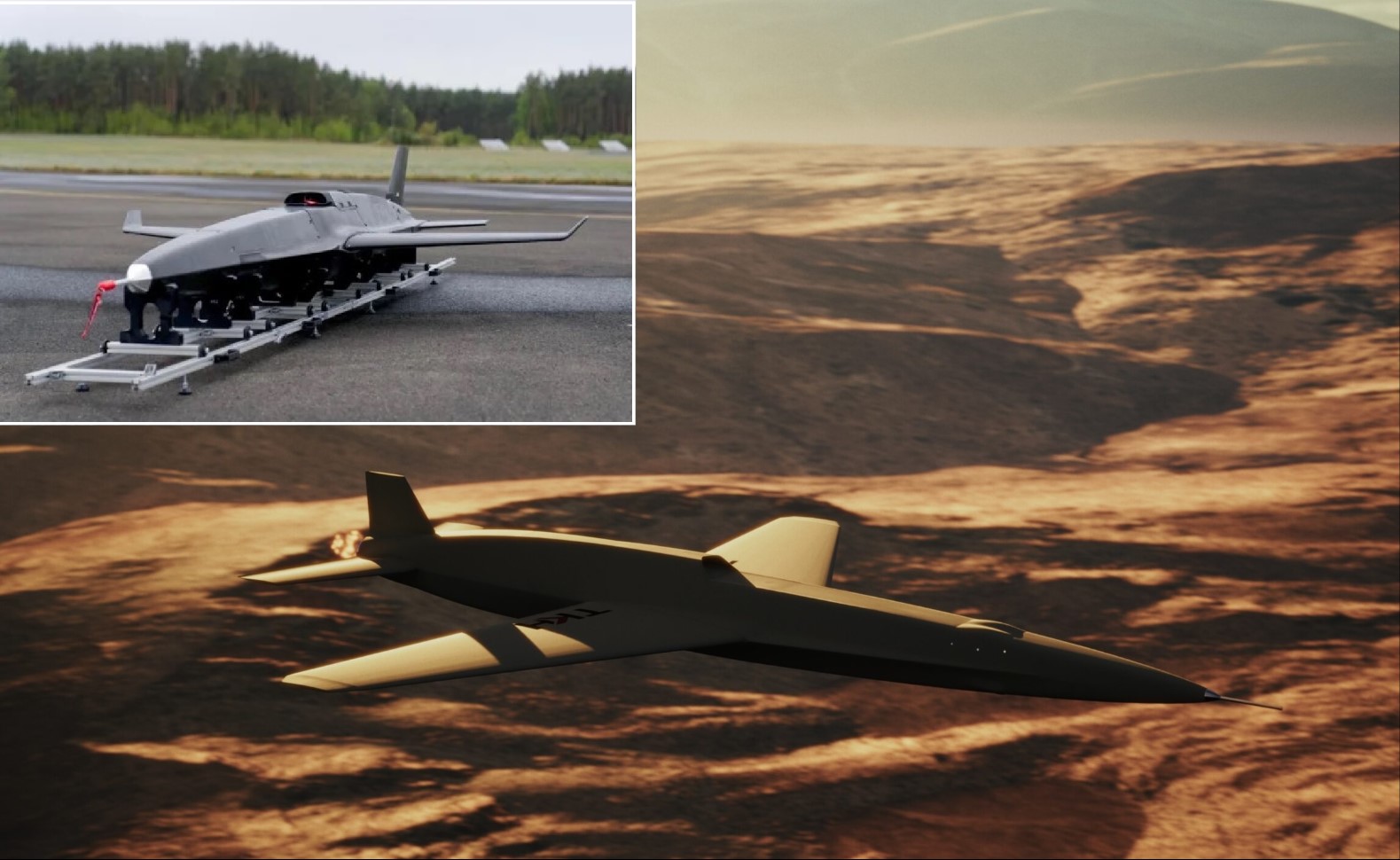
World
WARSAW — May 26, 2026 : Polish defense contractor TKH Technology has successfully completed the flight testing phase of the MTJD-15 (Modular Turbo Jet Drone), the first platform in a new family of domestically developed turbojet-powered unmanned aerial vehicles (UAVs) intended for military and civil applications. Developed in cooperation with the licensed defense entity TOP GUN, the program represents a step in Poland’s effort to establish sovereign long-range unmanned aerial capabilities. The completion of testing follows a campaign conducted on Polish military proving grounds that began in November 2025. Recently released video footage by TKH Technology confirmed the conclusion of flight trials after several months of evaluation, demonstrating the aircraft’s operational performance and validating the platform’s core design. Program Development and Domestic Production The MTJD program was initiated to develop a highly adaptable and modular aerial platform built entirely with domestic engineering and industrial resources. According to TKH Technology, the MTJD-15 was developed in Poland from the architectural design stage through to avionics, hydraulic systems, flight control systems, and a proprietary turbojet engine, making it one of the country’s few fully indigenous jet-powered drone projects. The company states that all key systems are sourced through Polish technologies and production capabilities, reducing dependence on imported components and limiting vulnerability to potential export restrictions or supply chain disruptions. This approach also provides the manufacturer with greater control over serial production and future modernization. Development of the MTJD family reportedly began around 2022 as part of a broader effort to establish long-range unmanned platforms for reconnaissance, strike, and support missions. The MTJD-15 was publicly unveiled during the 2025 edition of the MSPO 2025 held in Kielce, where the project received the Defender award. MTJD-15 Design and Mission Flexibility The MTJD-15 serves as the baseline model of the Modular Turbo Jet Drone family and is designed around a modular architecture that enables rapid reconfiguration depending on mission requirements. The platform can be adapted for tactical and strategic reconnaissance, strike operations, patrol missions, and transportation of medical supplies or equipment. The drone also supports autonomous operation and is optimized for high-altitude flight, allowing improved operational endurance and fuel efficiency during long-range missions. According to the manufacturer, the modular design enables operators to adjust payload configurations without extensive modifications to the airframe. Technical Specifications and Performance The MTJD-15 measures approximately 3.2 meters in length and features a wingspan of 2.4 meters. It has an empty weight of 45 kilograms and a maximum takeoff weight of 105 kilograms, while supporting a payload capacity exceeding 15 kilograms. In terms of performance, the UAV achieves a cruising speed exceeding 600 kilometers per hour, equivalent to approximately Mach 0.54. At sea level, the drone is capable of speeds exceeding 624 kilometers per hour, while at maximum operational altitude its speed remains above 576 kilometers per hour. The platform has an operational range of approximately 1,000 kilometers and a service ceiling of 13,000 meters. It requires a runway length of roughly 430 meters for takeoff. Operating at higher altitudes allows the platform to improve fuel efficiency and conduct missions at ranges that may reduce exposure to radar detection and interception. TKH Technology describes the system as a long-range platform capable of supporting observation or strike missions without relying on higher-cost manned aircraft or cruise missile systems. Future MTJD Variants and Production Expansion The MTJD-15 is the first of three planned variants in the Modular Turbo Jet Drone family. TKH Technology is currently developing larger and more capable configurations intended to expand payload and speed performance. The MTJD-70 is being designed to carry a payload of up to 70 kilograms while maintaining a cruising speed of approximately Mach 0.8 and an estimated operational range of around 800 kilometers. The larger MTJD-100 variant is intended to carry payloads exceeding 100 kilograms and is projected to reach speeds of up to Mach 2.3, with an operational ceiling above 15,000 meters and a range exceeding 1,000 kilometers. To support anticipated demand, TKH Technology has established a production line capable of manufacturing approximately 1,000 drones annually. The company is also expanding its industrial infrastructure to support future serial production of the heavier MTJD-70 and MTJD-100 variants, contributing to Poland’s domestic defense manufacturing and long-range UAV development capabilities.
Read More → Posted on 2026-05-26 14:33:26
World
CAMBRIDGE, Mass. — May 26, 2026 : Cambridge-based AI startup Tycho.AI has successfully demonstrated its Halley Group 1 vertical take-off and landing (VTOL) uncrewed aerial system (UAS) during a recent U.S. military evaluation in Indiana, where the platform intercepted a replica of an Iranian-designed Shahed-type one-way attack drone in mid-air and completed a separate strike against a ground target. The demonstration took place during the Technology Readiness Experimentation event, T-REX 26-2, held at Camp Atterbury from May 4 to 15, 2026. Organized by the Office of the Under Secretary of War for Research and Engineering, the exercise evaluates emerging military technologies in operationally representative conditions. The latest event focused on low-cost short-range air defense systems and interceptor capabilities designed to counter modern aerial threats. During the evaluation, the Halley VTOL completed 39 assessed test flights in both operator-controlled first-person view and fully autonomous configurations. One of the most significant demonstrations involved the successful interception of a replica of the Iranian-designed Shahed-136, a long-range loitering munition that has been widely employed in conflicts against military and infrastructure targets over distances of hundreds of kilometers. In addition to the aerial intercept, the platform also conducted a one-way attack mission against a ground target during the same event, demonstrating its ability to perform multiple operational roles. Tycho.AI stated that the Halley system is intended to provide a lower-cost approach to countering one-way attack drones, addressing the cost imbalance that often emerges when militaries rely on expensive air defense assets to intercept relatively inexpensive loitering munitions. Flight Performance and Platform Design Classified as a Group 1 UAS, Halley weighs approximately 5.2 pounds (2.3 kilograms) and is built around a lightweight modular tailsitter VTOL configuration with folding wings. The platform uses a zero-tool assembly design that allows deployment from storage to operational flight in less than 30 seconds. Its modular architecture also supports rapid mission reconfiguration, including extended-range winglets for missions exceeding 80 kilometers and a high-speed setup capable of dash speeds above 200 miles per hour. During T-REX 26-2, the system achieved a maximum speed of 165 miles per hour, operated at altitudes ranging from 9 feet to 10,000 feet, and completed missions with a maximum flight distance of 35 kilometers. The aircraft carries a payload capacity of roughly one kilogram and can operate either through operator control or fully autonomous mission execution using Tycho.AI’s Voyager autonomy stack. Following the exercise, Halley achieved Technology Readiness Level 6 (TRL-6), indicating the system had been demonstrated in a relevant operational environment and marking an important step between laboratory validation and field-ready capability. Autonomous Operations in Contested Environments A central feature of the Halley platform is its ability to function without a persistent communications link. Using onboard artificial intelligence-enabled processing, the drone can continue navigation and mission execution even when operating in jammed or GPS-denied conditions. Tycho.AI said its Voyager technology stack, developed by engineers from the Massachusetts Institute of Technology (MIT), supports autonomous navigation through visual-inertial odometry, sensor fusion, and onboard processing rather than relying entirely on satellite-based positioning systems. During testing, the platform also passed a cyber evaluation designed to assess resilience against electronic warfare and communications disruption in contested environments. The company additionally demonstrated a video stream tokenization and compression method intended to maintain navigation-quality visual data over low-bandwidth links. According to Tycho.AI, the transmitted data remains encrypted to reduce vulnerability if communications are intercepted. Halley also demonstrated Automatic Target Recognition (ATR), enabling the system to autonomously identify and classify objects using onboard visual data. The feature is intended to reduce operator workload and improve response times by distinguishing relevant aerial or ground targets more rapidly during time-sensitive missions. Company Plans and Production Outlook In comments following the exercise, Sertac Karaman, founder of Tycho.AI and a professor at MIT, said the T-REX demonstrations validated the company’s concept for a small, fast, and agile tactical UAS capable of supporting multiple mission requirements in operational settings. Tycho.AI publicly introduced the Halley platform during the 2026 edition of SOF Week 2026 in Tampa, Florida. The company, which secured $10 million in Series A funding in October 2025, is now focused on further autonomous flight validation, integration of a kinetic payload, and scaling production capacity. According to the company, Halley is designed for multiple mission sets, including counter-UAS interception, one-way attack operations, intelligence, surveillance and reconnaissance, and tactical scouting in communications-contested environments.
Read More → Posted on 2026-05-26 14:43:17
World
SEOUL — May 26, 2026 : South Korea’s Ministry of National Defense on Tuesday announced the “Basic Plan for the Development of the Republic of Korea Nuclear-Powered Submarine,” formally outlining the country’s first long-term roadmap for the systematic development of domestically built nuclear-powered submarines. The initiative, officially designated as the Jangbogo-N Project, aims to launch the lead submarine in the mid-2030s, with operational commissioning planned after the late 2030s. The announcement was made during the inaugural Future Defense Strategy Committee meeting held at the naval submarine command in Jinhae, South Gyeongsang Province. The meeting was attended by President Lee Jae-myung, while Defense Minister Ahn Gyu-back presented the development plan. According to the Ministry of National Defense, the document establishes a framework for both domestic and international understanding of the direction of South Korea’s nuclear-powered submarine development. Officials described the effort as a national strategic project intended to strengthen maritime deterrence and improve the Republic of Korea Navy’s ability to respond to North Korea’s growing submarine-based nuclear and missile threats. The planned submarines are expected to displace approximately 5,000 tons and will provide significantly greater endurance and operational flexibility compared with the navy’s existing diesel-electric fleet. Unlike conventional submarines that must periodically surface or snorkel, nuclear-powered submarines can remain submerged for extended periods while sustaining higher mobility and longer operational reach. Development Framework Based on Five Principles The Defense Ministry stated that the submarine program will be developed systematically and in phases under five key principles intended to ensure operational reliability, domestic self-reliance, safety, and long-term sustainability. First, the propulsion reactor will use low-enriched uranium fuel and will be designed for long-cycle operation to minimize the need for nuclear fuel replacement during service. Officials said the decision reflects South Korea’s intention to maintain compliance with international non-proliferation norms while developing an operationally sustainable propulsion system. Second, the submarines will be designed, built, maintained, and sustained within South Korea to strengthen autonomy in force acquisition, logistics, maintenance, and long-term operational support. Authorities stated that domestic production will reduce external dependency and secure stability in future naval operations. Third, the submarine platform and propulsion system will incorporate technologies accumulated through South Korea’s civilian nuclear energy and shipbuilding sectors. The government said extensive industrial experience gained over decades in commercial shipbuilding and reactor technologies will be actively utilized to ensure a high level of safety, reliability, and technical maturity. Fourth, the program will be managed under a total life-cycle system covering every phase of the submarine’s service, including design, construction, operation, maintenance, nuclear fuel management, dismantlement, and radioactive waste treatment. Officials said this approach is intended to secure sustainable and stable operation over several decades. Fifth, the government reaffirmed that all development milestones will remain aligned with its current schedule, targeting the launch of the first submarine in the mid-2030s and entry into active naval service after the late 2030s. Non-Proliferation Commitments and Nuclear Safety South Korea also emphasized that the submarine program will proceed within strict international non-proliferation obligations. The Ministry reiterated the government’s position that the country neither possesses nuclear weapons nor intends to develop them in any form. Officials stressed that the nuclear-powered submarines will rely exclusively on nuclear propulsion and not nuclear armament. The procurement, management, and safeguarding of low-enriched uranium fuel will be conducted transparently and in close coordination with the United States to maintain compliance with international nuclear standards. In addition, Seoul announced plans to establish a safeguards system jointly with the International Atomic Energy Agency to oversee fuel management and ensure adherence to high-level non-proliferation commitments. The government also stated that all radioactive waste generated by nuclear-powered submarines will be safely and systematically managed in accordance with relevant domestic laws and international safety regulations. Industrial and Economic Significance The Defense Ministry described the submarine initiative as a national industrial development program expected to extend over more than 40 years, including roughly ten years of construction and more than three decades of operational service. Authorities said the project will connect South Korea’s defense, nuclear energy, and shipbuilding industries, while contributing to industrial expansion, technological development, and infrastructure growth. Technologies accumulated during submarine construction are expected to spread into related industrial sectors and support broader advancements in national manufacturing capabilities. The government estimates that the program could generate more than 40,000 stable, high-quality jobs while strengthening regional industrial competitiveness and long-term economic growth potential. Legacy of the Jangbogo-N Project Officials confirmed that the nuclear-powered submarine initiative will be promoted under the name Jangbogo-N Project, inheriting the legacy of the Republic of Korea Navy’s first submarine, ROKS Jang Bogo (SS-061), which entered service in 1992 before later being decommissioned. The designation is intended to preserve the symbolic heritage of the original submarine while introducing a next-generation naval platform integrating nuclear propulsion and advanced technologies for future maritime operations. The Republic of Korea Navy currently operates a submarine force consisting of nine Jang Bogo-class Type 209/1200 diesel-electric submarines, seven Son Won Il-class Type 214 submarines equipped with air-independent propulsion systems, and the Dosan Ahn Changho-class KSS-III hybrid diesel-electric and fuel-cell-powered submarines. The Ministry of National Defense stated that national resources will continue to be concentrated to ensure the successful implementation of the nuclear-powered submarine project as part of South Korea’s long-term maritime security planning.
Read More → Posted on 2026-05-26 14:50:40
World
WASHINGTON — May 26, 2026 : The United States military conducted targeted self-defense strikes against Iranian military assets in southern Iran on May 25, as diplomatic negotiations between Washington and Tehran continued amid a fragile ceasefire, according to U.S. Central Command (CENTCOM). The strikes targeted two Islamic Revolutionary Guard Corps (IRGC) naval vessels in the Strait of Hormuz that were reportedly laying naval mines and a surface-to-air missile (SAM) site in Bandar Abbas that U.S. officials said had been tracking American aircraft operating in the region. “U.S. forces conducted self-defense strikes in southern Iran today to protect our troops from threats posed by Iranian forces,” CENTCOM spokesperson U.S. Navy Capt. Tim Hawkins said in a statement. “U.S. Central Command continues to defend our forces while using restraint during the ongoing ceasefire.” CENTCOM stated that the operation was limited in scope and aimed at neutralizing immediate threats to U.S. personnel and military operations. The military did not disclose the platforms used during the strikes but confirmed that forces deployed under Operation Epic Fury remain positioned throughout the region to respond to emerging threats. Targets in the Strait of Hormuz and Bandar Abbas According to CENTCOM, the operation focused on two IRGC vessels actively engaged in laying naval mines in the Strait of Hormuz, one of the world’s most critical maritime trade corridors. U.S. officials said the activity posed a direct risk to regional security and commercial navigation. In a separate engagement, U.S. forces struck a SAM site in Bandar Abbas after the system reportedly tracked and targeted American aircraft conducting operations over southern Iran and nearby waters. U.S. fighter aircraft, including F-16s operating under “Project Freedom,” have continued armed patrols over the Persian Gulf and Strait of Hormuz to secure maritime routes and escort commercial shipping. While officials did not specify which assets carried out the May 25 operation, military aircraft and naval platforms already deployed in the region were available to respond. Iranian Response and Drone Claims Following the strikes, Iran’s Fars news agency published a statement attributed to the IRGC claiming Iranian air defenses had shot down a U.S. MQ-9 Reaper drone and fired on a second MQ-9 Reaper as well as a U.S. Air Force F-35 Lightning II aircraft. “The IRGC warns against any violation of the ceasefire by the invading American army and considers its right to reciprocal response both legitimate and certain,” the statement said. CENTCOM has not commented on the Iranian claims, and no visual evidence or independent confirmation of a downed MQ-9 has emerged. If verified, the reported drone loss would raise the number of MQ-9 Reaper drones lost since the beginning of Operation Epic Fury on February 28 to 25, based on figures cited in a recent Congressional Research Service report documenting 24 earlier losses. Maritime Blockade and Economic Pressure The strikes occurred as the United States continues enforcement of “Project Freedom,” a military mission launched on May 4 to secure the Strait of Hormuz and maintain a naval blockade around Iranian ports. According to CENTCOM data released on May 23, U.S. forces have redirected 100 commercial vessels away from Iranian waters, disabled four ships accused of violating blockade measures, and permitted 26 humanitarian aid vessels to proceed. “Our service members are doing extraordinary work,” CENTCOM Commander Adm. Brad Cooper said. “They have been highly effective by executing the mission with precision and professionalism, allowing zero trade into and out of Iranian ports which has squeezed Iran economically.” U.S. defense officials have also stated that earlier phases of Operation Epic Fury significantly reduced Iran’s conventional military capabilities, including missile systems and naval infrastructure, though no updated independent assessment has been publicly released. Diplomatic Talks Continue The military action took place during a critical stage of diplomatic engagement between Washington and Tehran. Hours before the strikes, Iranian negotiators reportedly met with Qatari mediators acting on behalf of the United States as efforts continued to formalize an agreement aimed at ending the conflict. U.S. President Donald Trump said on social media that a diplomatic agreement may be close, while Secretary of State Marco Rubio stated additional negotiations scheduled for May 26 suggest a deal remains possible. Iranian officials, however, said a final agreement is not imminent. One of the principal issues in the negotiations remains Iran’s enriched uranium stockpile. The current U.S. position calls for the material to either be transferred immediately or destroyed inside Iran under joint coordination involving Iranian authorities and the International Atomic Energy Agency (IAEA). The May 25 strikes occurred during a ceasefire that has remained in effect since early April following the main phase of Operation Epic Fury. U.S. officials described the latest operation as limited and defensive, intended to address immediate security concerns while avoiding disruption to the broader diplomatic process. It remains unclear whether the military exchange will affect negotiations in the coming days.
Read More → Posted on 2026-05-26 15:51:41
World
ARLINGTON, Va., May 26, 2026 : Raytheon, a business unit of RTX, has been awarded a phase two contract by the Defense Advanced Research Projects Agency (DARPA) to continue development of adaptable solid rocket motor (SRM) technology under DARPA’s Burn n’ Go program, a project aimed at improving flexibility, scalability, and manufacturing efficiency in missile propulsion systems. The programme is being conducted in collaboration with Northrop Grumman and Luna Innovations, with Raytheon serving as the prime contractor. The initiative seeks to move solid rocket motors away from traditional single-use designs by developing a “composable” propulsion system capable of adjusting thrust after manufacturing to meet different operational requirements. Burn n’ Go Programme Focuses on Flexible Rocket Motor Design DARPA’s Burn n’ Go programme is designed to enable a common solid rocket motor architecture that can support multiple missions and weapon systems through tailorable thrust control. Unlike conventional motors designed for a single mission profile, the new concept aims to allow propulsion systems to be adapted after production, reducing dependence on mission-specific motor designs. The approach is intended to improve operational flexibility for military users by allowing a single motor configuration to support different weapon requirements, while also enabling more efficient procurement, production, and stockpiling of missile systems. According to DARPA, the programme uses advances in materials science to alter the burn surface area of solid rocket motors after manufacturing, enabling post-production thrust modification. The concept is also expected to streamline quality control timelines associated with ignition systems and propellant casting while supporting real-time motor health monitoring to improve reliability and predictability. Phase Two Follows Accelerated Feasibility Demonstration The phase two award follows a seven-month phase one effort completed on an accelerated timeline by Raytheon and Northrop Grumman, during which the companies demonstrated the feasibility of the composable propulsion concept. Under the new phase, Raytheon’s Advanced Technology division will focus on maturing and scaling the system through a series of demonstrations intended to validate performance in increasingly realistic rocket motor configurations. The effort is expected to assess the technology’s operational viability and readiness for future applications. “Solid rocket motor production has become a critical bottleneck for many missile programs,” said Colin Whelan, president of Advanced Technology at Raytheon. “By pursuing a composable approach to how these motors are designed and built, we’re helping lay the groundwork for faster, more adaptable munitions production across multiple mission sets.” Industry Team to Support Development Effort As prime contractor, Raytheon is leading the programme alongside Northrop Grumman’s Allegany Ballistic Laboratory (ABL), which will provide expertise in solid rocket motor design and manufacturing. Luna Innovations is contributing advanced material development capabilities intended to support DARPA’s objective of creating highly flexible and scalable missile propulsion technologies. The development effort aligns with Raytheon’s broader composable weapons strategy, which focuses on reducing development cycle times, lowering manufacturing costs, and accelerating missile production amid continuing supply chain and industrial capacity challenges affecting the defense sector. Financial terms of the phase two contract were not publicly disclosed.
Read More → Posted on 2026-05-26 16:05:36
World
SEOUL, — May 26, 2026 : South Korea is accelerating the development of indigenous jet engines for future combat drones and next-generation fighter aircraft as part of a broader national effort to strengthen aerospace self-sufficiency, secure domestic propulsion supply chains, and reduce long-term dependence on foreign engine technology. The initiative is focused on two key areas of military aviation: unmanned Cooperative Combat Aircraft (CCA) and next-generation manned fighter jets. Multiple state-backed programs are advancing simultaneously, with government agencies and domestic defense companies coordinating efforts to establish full-cycle indigenous propulsion capabilities. KASA Launches Combat Drone Engine Program On Tuesday, the Korea AeroSpace Administration (KASA) formally launched a state-funded next-generation dual-use aircraft engine program during a joint kickoff briefing in Sacheon, South Gyeongsang Province. The project is being led by Hanwha Aerospace in partnership with the Korea Aerospace Research Institute (KARI), universities, and domestic subcontractors, with approximately 900 billion won in government funding allocated between 2026 and 2029. The immediate objective is to develop a 4,500-pound-force (lbf) high-bypass turbofan engine designed primarily for future unmanned aerial vehicles and collaborative combat aircraft while maintaining dual civil and military applications. South Korean authorities are targeting operational deployment by 2029. A major technical focus of the program is the integration of a starter-generator directly into the engine’s rotating shaft. Unlike externally mounted systems, the embedded design is intended to reduce weight while producing up to 100 kilowatts of electrical power to support advanced onboard systems. Officials say the high power output will be essential for future CCAs operating artificial intelligence computing, advanced sensors, radar systems, and electronic warfare equipment. Indigenous Fighter Engine for the KF-21 Block III Alongside the unmanned engine effort, South Korea is advancing a longer-term program aimed at achieving propulsion independence for future manned combat aircraft. Working with the Defense Acquisition Program Administration (DAPA), Hanwha Aerospace is leading the Advanced Aviation Engine Development Project to produce an indigenous turbofan engine in the 15,000–16,000 lbf thrust class for future variants of the KF-21 Boramae fighter and potential sixth-generation combat aircraft. The fighter engine development initiative is scheduled to run from 2027 to 2040 and is backed by approximately $3.4 billion in government investment. The project is being conducted in partnership with Doosan Enerbility and supported by the Agency for Defense Development (ADD). The domestically developed engine is intended for the KF-21 Block III configuration, replacing foreign propulsion systems currently used in earlier aircraft variants. Officials have indicated that the same core propulsion technologies may later support future sixth-generation fighter concepts. Transitioning Beyond Licensed Production The KF-21, South Korea’s indigenous 4.5-generation multirole fighter, entered serial production earlier this year and is expected to begin frontline service with the Republic of Korea Air Force in 2026. Current Block I aircraft and the upcoming Block II configuration continue to rely on F414 turbofan engines manufactured domestically under licensing agreements with GE Aerospace. An indigenous engine for the Block III variant would mark a major milestone in South Korea’s effort to achieve end-to-end domestic combat aircraft production, including engine research, prototype development, testing, manufacturing, and platform integration. The transition from licensed manufacturing to indigenous design represents a significant technological step for South Korea’s aerospace sector. Military turbofan engines remain among the most complex aerospace systems and are produced by only a small number of countries and companies worldwide. Hanwha Aerospace recently marked production of its 10,000th military engine after decades of manufacturing propulsion systems under license and supplying components to major aerospace firms, including GE, Pratt & Whitney, and Rolls-Royce. The company is also upgrading domestic facilities to support future research, testing, and large-scale engine manufacturing requirements. Expanding Indigenous UAV Propulsion Programs In addition to the 4,500 lbf-class combat drone engine, South Korea is expanding indigenous propulsion programs for other unmanned aerial systems. Ongoing efforts include development of a 5,500 lbf-class engine intended for the LOWUS stealth wingman drone and a 1,400-horsepower turboprop engine for a domestically developed medium-altitude long-endurance (MALE) unmanned aircraft. The MALE UAV engine is targeted for operational service by 2028. These projects build on earlier efforts to develop multiple indigenous military propulsion systems and form part of a wider aerospace industrial strategy overseen by KASA, DAPA, the Ministry of Trade, Industry and Energy, and ADD through an interagency task force established in late 2025. Strategic and Industrial Objectives Government and industry officials say indigenous propulsion capability is intended to strengthen national defense supply resilience, reduce vulnerability to external supply disruptions, and improve export competitiveness for domestically developed aircraft. South Korea also views proprietary engine technology as a strategic requirement for long-term participation in the expanding global military aviation market. Industry projections indicate that more than 3,000 collaborative combat aircraft could be operational worldwide by the 2040s, creating growing demand for advanced unmanned combat aviation technologies and associated propulsion systems.
Read More → Posted on 2026-05-26 16:17:30
World
LONDON, — May 26, 2026 : The United Kingdom’s Royal Air Force (RAF) is continuing to strengthen its electronic warfare and suppression capabilities through the operational integration of the StormShroud unmanned aerial vehicle (UAV), the first platform in a new family of Autonomous Collaborative Platforms (ACP). Designed to operate alongside crewed combat aircraft including the F-35B Lightning and Eurofighter Typhoon, StormShroud carries Leonardo UK’s BriteStorm electronic warfare payload to support operations in contested environments and enhance aircraft survivability. The platform is intended to support Suppression of Enemy Air Defences (SEAD) missions by disrupting hostile radar systems and degrading an adversary’s ability to detect, track and engage allied aircraft. Operating ahead of high-value crewed platforms, StormShroud is designed to suppress enemy air defence networks and provide greater operational freedom for RAF fighter aircraft operating in high-threat airspace. StormShroud Platform and Technical Specifications StormShroud is based on the Tekever AR3 tactical uncrewed aerial system, a lightweight platform featuring a wingspan of 3.5 metres, a length of 1.9 metres and a payload capacity of approximately four kilograms. The system supports both vertical take-off and landing (VTOL) and fixed-wing configurations, allowing operational flexibility depending on mission requirements. In fixed-wing mode, the UAV can remain airborne for up to 16 hours and operate at a service ceiling of around 3,600 metres above mean sea level. The platform’s endurance and deployable configuration enable persistent operations in support of RAF strike packages and electronic warfare missions. BriteStorm Electronic Warfare Payload At the core of StormShroud’s mission capability is Leonardo UK’s BriteStorm payload, a low Size, Weight and Power (SWaP) stand-in jammer weighing approximately 2.5 kilograms. Derived from Leonardo’s BriteCloud countermeasure technology, the payload employs Digital Radio Frequency Memory (DRFM) technology to detect, record and manipulate hostile radar signals in real time. The system is designed to suppress and deceive integrated air defence systems (IADS) by generating false radar returns and disrupting radar tracking functions through digital jamming techniques. BriteStorm can create deceptive “ghost” targets on enemy radar systems while interfering with surveillance, early warning and target-tracking radars operating across A–J frequency bands. Integrated onto uncrewed platforms and launched effects, BriteStorm is intended to provide stand-in jamming support ahead of crewed aircraft, helping RAF combat aircraft maintain operational freedom in contested electromagnetic environments. Operational Role and RAF Integration StormShroud entered operational service with the RAF on May 2, 2025, becoming the first operational system within the service’s Autonomous Collaborative Platforms family. The capability is operated by RAF 216 Squadron with support from the RAF Regiment and personnel drawn from the Regular RAF, the Royal Auxiliary Air Force and specialist reservists with industry expertise. The system is designed with an open software architecture that enables operators to rapidly update mission software and electronic countermeasure packages between sorties using newly gathered intelligence, allowing adaptation to evolving threat systems. The RAF classifies StormShroud as an “attritable” platform, meaning the system is considered expendable within acceptable operational limits if its deployment helps protect higher-value crewed aircraft and contributes to mission success. Development and Industry Collaboration Development of StormShroud progressed rapidly from an Urgent Capability Requirement (UCR) to operational deployment within approximately one year. The accelerated timeline reflected lessons observed from the conflict in Ukraine, where uncrewed systems and electronic warfare capabilities have demonstrated increasing battlefield importance. The programme was developed through collaboration between the RAF Rapid Capabilities Office, the Defence Equipment & Support (DE&S) organisation, the Defence Science and Technology Laboratory (Dstl), Tekever and Leonardo UK. Although Tekever is headquartered in Portugal, the AR3 air vehicles used for StormShroud are manufactured in West Wales and Southampton in the United Kingdom. Leonardo UK produces the BriteStorm payload at its facility in Luton. Prior to RAF adoption, the Tekever AR3 platform accumulated more than 10,000 operational flight hours supporting Ukrainian operations, contributing to the system’s operational maturity. Testing, Exercises and Capability Development Following its introduction into RAF service, StormShroud has undergone continued operational testing and integration activities. During late 2025 and early 2026, RAF 216 Squadron conducted dynamic exercises at training locations including RAF Spadeadam and Salisbury Plain, demonstrating coordinated operations involving multiple StormShroud platforms and validating integration alongside wider RAF operational concepts. The RAF plans additional domestic and international exercises throughout 2026 as the service continues refining the capability and expanding operational experience with autonomous collaborative systems integrated into crewed combat operations.
Read More → Posted on 2026-05-26 16:26:14
World
LONDON — May 26, 2026 : British analysts writing for The Telegraph have projected that the Global Combat Air Programme (GCAP), the joint sixth-generation stealth fighter initiative involving the United Kingdom, Japan, and Italy, may encounter financial, industrial, and operational challenges based on the historical performance of previous British-led multinational combat aircraft programmes. The assessment argues that the programme, intended to deliver a next-generation fighter designated Tempest in British service by 2035, risks placing substantial pressure on defence budgets while potentially affecting investment in other aerial warfare priorities. Analysts warned that the multibillion-pound programme could absorb resources required for complementary capabilities, including affordable unmanned systems and supporting air combat infrastructure. GCAP was formally established through a trilateral treaty in December 2023, integrating the United Kingdom’s BAE Systems-led Tempest programme with Japan’s Mitsubishi F-X initiative, while Italy joined as a full partner. The programme is designed to replace the Eurofighter Typhoon fleets operated by the UK and Italy and succeed Japan’s Mitsubishi F-2 fighter during the mid-2030s. The initiative is managed through a trilateral government structure alongside an industrial partnership established in June 2025 under the name Edgewing, with equal participation from BAE Systems, Leonardo, and Japan Aircraft Industrial Enhancement. A demonstrator aircraft is expected to fly before 2027, while full operational service remains targeted for 2035. Concerns Over the Multinational Development Model According to the assessment, GCAP may struggle to avoid the procurement and development issues experienced by earlier British collaborative fighter programmes. Analysts questioned whether the multinational development structure can maintain schedule discipline, control costs, and deliver an aircraft capable of remaining competitive against rapidly evolving combat aviation technologies. The Telegraph assessment argued that Britain’s previous multinational fighter projects — the Panavia Tornado and Eurofighter Typhoon — experienced prolonged development cycles, cost overruns, and capability compromises that weakened value for money and delayed operational effectiveness. The article concluded: “First, we built a jet called Tornado in collaboration with Italy and Germany; which resulted in an expensive, prolonged disaster. Then we developed a jet called Typhoon in collaboration with Italy and other nations. This led to an even more expensive and even more prolonged disaster. Now once again, Britain is preparing to embark on a multinational collaboration, building a jet called the Tempest with Italy and Japan. What do we think the result will be?” Tornado Cited as an Example of Past Procurement Problems To illustrate concerns surrounding multinational combat aircraft development, analysts highlighted the Panavia Tornado, developed during the Cold War by the United Kingdom, West Germany, and Italy. The assessment stated that Tornado’s primary operational concept — flying at low altitude and high speed to avoid enemy radar — ultimately proved vulnerable under combat conditions. During the 1991 Gulf War, eight Royal Air Force Tornados were reportedly lost from a deployed force of 48 aircraft. Analysts further argued that later Tornado fighter variants attracted criticism regarding operational effectiveness while procurement and sustainment costs increased due to the aircraft’s complex variable-geometry “swing-wing” configuration. By the time Tornado entered widespread service, competing fighter programmes in the United States, Soviet Union, and France had largely transitioned toward fixed-wing aircraft that offered greater efficiency in maintenance and combat performance. Eurofighter Typhoon’s Delays and Cost Concerns The assessment applied similar criticism to the Eurofighter Typhoon, jointly developed by the United Kingdom, Germany, Italy, and Spain. According to the analysis, the Typhoon entered Royal Air Force service in 2007 following a lengthy and expensive development period. British defence officials reportedly classified early Tranche 1 aircraft as “early fourth-generation” in capability, while the United States had already introduced the fifth-generation F-22 Raptor into operational service two years earlier. The report further highlighted that early Tranche 1 Typhoon aircraft, which initially formed a large portion of the British fleet, were retired before reaching half of their intended service life because upgrading them to newer operational standards was considered financially impractical. Financial concerns also featured prominently in the assessment. Analysts argued that Typhoon procurement costs exceeded those of the U.S. F-22 stealth fighter, while sustainment costs reportedly ranged between £45,000 and £48,000 per flight hour. This figure was assessed as significantly higher than the estimated operating costs of the more advanced F-35 Lightning II, reported at approximately £31,000 per hour. Questions Over GCAP Capability and Timeline Beyond financial concerns, the assessment questioned whether GCAP can successfully deliver a sixth-generation aircraft capable of matching or exceeding advanced “5+ generation” variants of the U.S. F-35 and China’s J-20 stealth fighter if programme delays and budget pressures continue. The report noted that delays affecting early programme development have already generated frustration among Japanese officials, raising speculation that Tokyo could consider increasing procurement of additional F-35 aircraft should GCAP timelines slip further. Additional uncertainty has emerged following delays to a major trilateral design and development agreement reportedly linked to the United Kingdom’s postponed defence investment planning process. Concerns over programme execution have also intensified after reports that the UK’s National Infrastructure and Strategy Authority assigned GCAP a “RED” programme rating, citing the project’s scale, complexity, and early-stage maturity. Funding and Programme Execution Under Scrutiny As the United Kingdom approaches future defence spending reviews and projected budgetary pressures later in the decade, analysts argue that GCAP will remain under close financial and operational scrutiny among all three partner nations. The assessment concludes that unless structural procurement challenges observed in earlier multinational fighter programmes are addressed, GCAP risks repeating a pattern of elevated costs, schedule delays, and capability trade-offs that affected previous British-led combat aviation projects.
Read More → Posted on 2026-05-26 17:11:23
World
BOURKE, NEW SOUTH WALES — May 26, 2026 : A consortium of defense companies has successfully completed the test detonation of a locally co-produced warhead near Bourke, New South Wales, marking a further step in Australia’s effort to establish sovereign guided weapons manufacturing capability under the Guided Weapons and Explosive Ordnance (GWEO) enterprise. The project, completed in just 11 weeks, brought together Lockheed Martin Australia, Northrop Grumman Australia and Thales Australia to demonstrate Australia’s ability to rapidly design, manufacture and test production-quality warhead technologies domestically using existing industrial resources and facilities. Accelerating Australia’s Sovereign Guided Weapons Capability The tested warhead, manufactured by Northrop Grumman with industrial support from Thales Australia, is designed for integration into Lockheed Martin’s Guided Multiple Launch Rocket System (GMLRS), a precision-guided munition used by the Australian Army’s High Mobility Artillery Rocket System (HIMARS). GMLRS is capable of striking targets at ranges exceeding 70 kilometers and forms a key component of Australia’s emerging long-range precision strike capability. According to the companies, the demonstration was intended to establish a rapid and low-risk pathway toward domestic warhead production while supporting the Australian Government’s broader GWEO strategy, which seeks to expand sovereign guided weapons and explosive ordnance manufacturing capacity. The 11-week timeline highlighted an accelerated approach to engineering, manufacturing and testing, reflecting efforts among allied defense industries to improve production responsiveness and strengthen supply chain resilience for precision-guided munitions. Jeremy King, Chief Executive of Lockheed Martin Australia and New Zealand, said the demonstration showed the strength of cooperation across Australia’s defense industry and represented progress toward meeting the Commonwealth’s GWEO objectives. He stated that the partnership supports the development of GMLRS-related warheads required to establish a sovereign guided weapons capability for the Australian Defence Force. Building on Earlier GMLRS Production Milestones The Bourke detonation test follows another recent milestone in Australia’s guided weapons program. In April 2026, the Australian Army conducted the first live-fire test of an Australian-assembled GMLRS missile at the Woomera Test Range in South Australia. Those missiles were assembled at Lockheed Martin Australia’s facility in Port Wakefield, demonstrating an early stage of domestic GMLRS assembly capability and supporting the next phase of local production. Lockheed Martin Australia has also established a dedicated GMLRS production facility in Australia as part of its role in the GWEO enterprise, aimed at strengthening sovereign missile manufacturing and reducing reliance on overseas supply chains. Strategic Industrial Collaboration and Supply Chain Development Executives from the partner companies emphasized that the program relies on existing domestic industrial infrastructure and collaboration between industry, government and local suppliers to improve long-term supply certainty. Jeff Connolly, Chief Executive of Thales Australia and New Zealand, said the effort demonstrates the ability of industry partners to establish in-country manufacturing and support the Australian Defence Force with sovereign capabilities. He noted that Lockheed Martin has established a GMLRS factory in Australia, while Northrop Grumman serves as the original equipment manufacturer of the selected warhead system, with Thales contributing industrial support to expand domestic production. Rob Denney, Country Executive for Northrop Grumman Australia, said the company’s manufacturing expertise, program planning and production experience are intended to help accelerate sovereign warhead manufacturing in Australia. He added that cooperation between Lockheed Martin, Thales Australia, the Commonwealth and local suppliers is focused on creating a scalable, affordable and effective long-range guided weapons capability. Supporting Future Domestic Defense Manufacturing The companies stated that results from the Bourke warhead detonation exceeded expectations and positioned the partnership for future production of more complex systems. Beyond defense capability, the program is expected to support local employment, industrial development and economic activity as Australia expands domestic guided weapons manufacturing under the GWEO framework.
Read More → Posted on 2026-05-26 17:25:36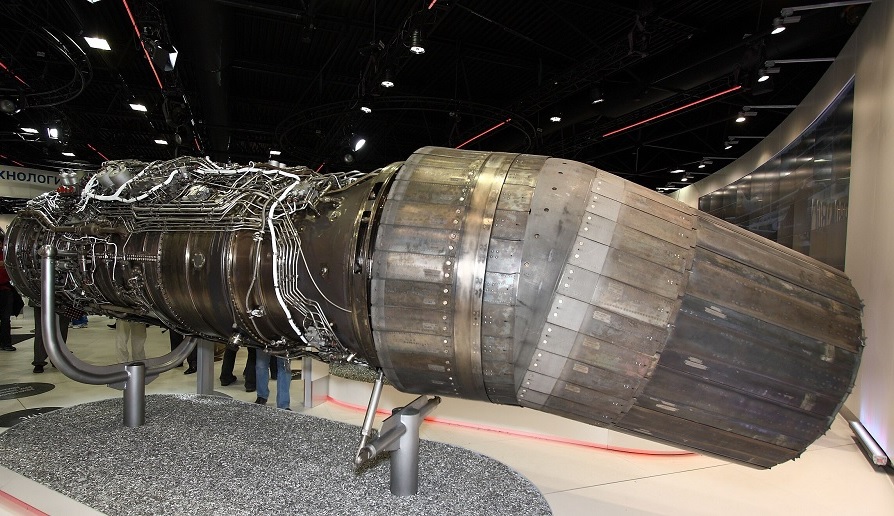
India
BENGALURU — May 26, 2026 : Hindustan Aeronautics Limited (HAL) is developing a digital twin of the GTDE-117 gas turbine starter, a critical subsystem used to initiate the AL-31FP engines powering every Su-30MKI fighter aircraft operated by the Indian Air Force (IAF). The initiative is intended to support the gradual replacement of Russian-origin components with Indian alternatives as indigenisation efforts for the country’s frontline combat aircraft continue to expand. The GTDE-117 functions as a gas turbine drive engine responsible for starting the AL-31FP thrust-vectoring turbofan engine installed on the Su-30MKI. Produced originally by Russian manufacturers, including Klimov Corporation and Krasny Octyabr, the GTDE-117 is a compact turboshaft engine with a free turbine that acts as an auxiliary power unit during engine start-up. It provides the mechanical shaft power necessary to rotate the AL-31FP engine to self-sustaining revolutions per minute (RPM) required for ignition and stable operation. Since each Su-30MKI is powered by two AL-31FP engines, the reliability of the starter system remains directly linked to aircraft availability and operational readiness. Digital Twin to Support Testing, Maintenance and Indigenous Manufacturing A digital twin is a virtual replica of a physical system that reproduces its performance, operational behaviour and mechanical characteristics in a simulated environment. HAL’s digital model of the GTDE-117 is expected to replicate thermodynamic properties, fluid dynamics, structural loads and operating parameters in real time, allowing engineers to assess system performance without repeated physical testing. The platform will enable HAL to simulate engine start-up sequences, analyse performance under different operational and environmental conditions and monitor component behaviour during stress cycles. Engineers will also be able to evaluate wear patterns, identify possible failure points and forecast maintenance requirements before degradation occurs in physical hardware. The use of a digital twin is expected to reduce dependence on repeated prototype development and shorten validation timelines for subsystem modifications. It will also provide HAL with the capability to conduct virtual testing of replacement parts, allowing performance and compatibility checks before physical integration into the engine system. Entry Point for Replacing Russian-Origin Components The GTDE-117 project is being viewed as a practical entry point for reducing dependence on Russian supply chains supporting the Su-30MKI fleet. By digitally replicating the starter engine’s specifications, performance limits and operating tolerances, HAL can support the design, validation and certification of Indian-manufactured replacement parts for components currently imported from Russia. The capability is expected to assist HAL in addressing spare-part availability challenges, improving overhaul planning and ensuring long-term sustainment of the Su-30MKI fleet. Virtual validation of components through simulation may also reduce maintenance downtime and improve lifecycle support efficiency. HAL’s Expanding AL-31FP Manufacturing Base The AL-31FP engine, developed by Saturn (Lyulka) in Russia, has been licence-produced by HAL at its Engine Division in Koraput, Odisha, since the early 2000s. The facility currently undertakes assembly, manufacturing, testing and overhaul of the engine and its modular systems for the IAF’s Su-30MKI fleet. As of 2026, HAL has manufactured nearly 1,000 AL-31FP engines at Koraput, reflecting a steady increase in indigenous production capability over the past two decades. In September 2024, the Ministry of Defence signed a contract valued at approximately ₹26,000 crore with HAL for the production of 240 additional AL-31FP engines to sustain the Su-30MKI fleet. The programme began with an indigenous content level of about 54 per cent and is targeted to reach 63 per cent by the end of the eight-year delivery schedule, under which HAL is expected to manufacture around 30 engines annually. Wider Su-30MKI Indigenisation Programme The digital twin initiative aligns with HAL’s broader effort to increase self-reliance in aero-engine technologies and critical aircraft subsystems. HAL has also established partnerships, including a Centre of Excellence in Digital Twin Technology with the University of Hyderabad, to advance simulation-based engineering, predictive maintenance and lifecycle management technologies across aerospace platforms. The effort forms part of India’s larger Su-30MKI modernisation and localisation programme, which includes upgrades to avionics, radar systems, weapons integration and structural improvements. Officials associated with the programme have stated that increasing indigenous content in propulsion systems and accessories is expected to improve fleet availability, reduce supply-chain dependence and lower long-term maintenance costs. For HAL, the GTDE-117 digital twin represents a focused technical effort aimed at improving the reliability, maintainability and domestic support ecosystem of a critical subsystem directly tied to Su-30MKI engine start-up and aircraft readiness.
Read More → Posted on 2026-05-26 17:37:18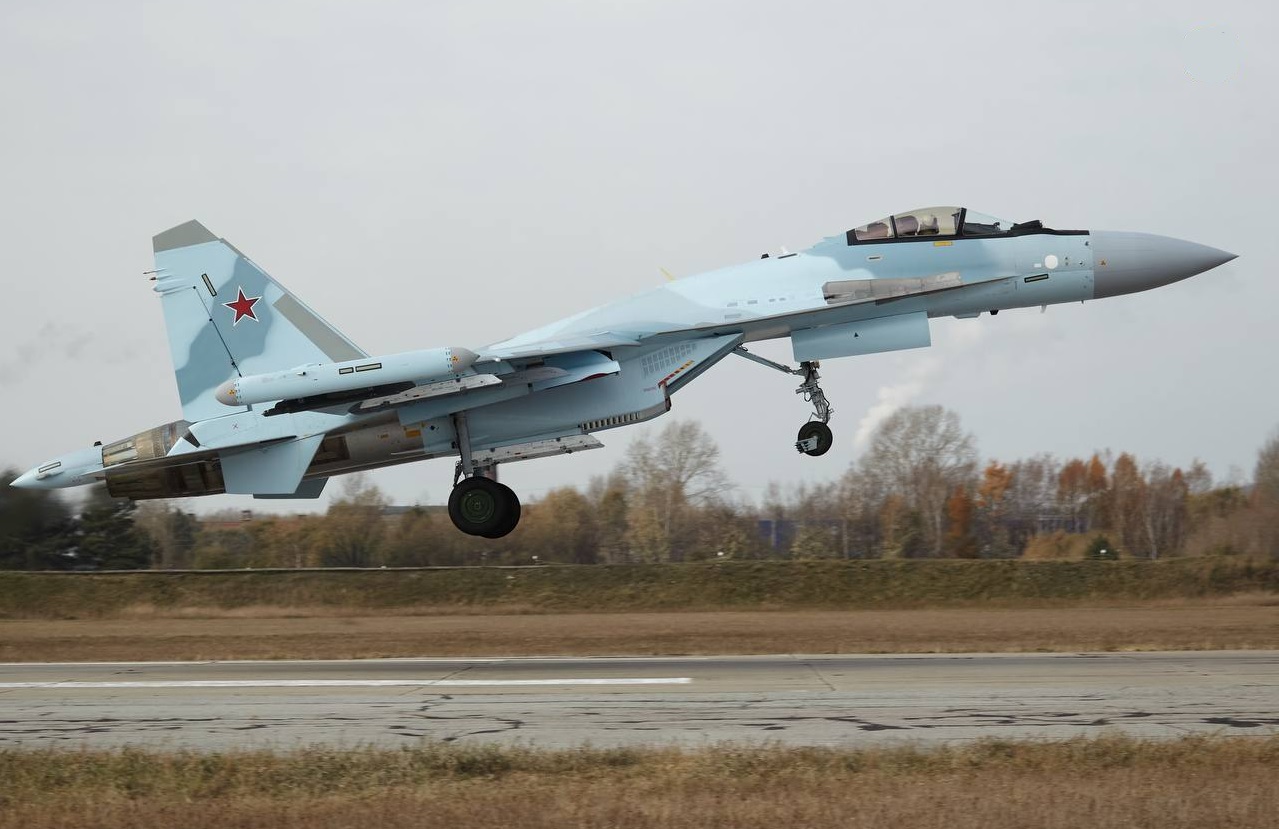
World
MOSCOW, — May 26, 2026 : The Russian Aerospace Forces (VKS) have officially received a new batch of Su-35S long-range air superiority fighters from the state-owned United Aircraft Corporation (UAC), marking the second publicly confirmed delivery of the aircraft in 2026 following an earlier transfer in mid-April. The handover underscores Russia’s continued effort to sustain tactical aviation production despite international sanctions, wartime pressures and expanding export commitments. Production Continues Despite Sanctions The Su-35S is manufactured at the Komsomolsk-on-Amur Aviation Plant (KnAAZ) named after Yuri Gagarin, one of Russia’s principal combat aircraft production facilities. Continued manufacturing at the plant reflects Moscow’s effort to preserve output for its tactical aviation fleet despite restrictions affecting supply chains and access to foreign technology. The latest transfer follows a sustained rise in production activity. Industry estimates indicate KnAAZ delivered seven batches of Su-35S fighters to the Russian Aerospace Forces during 2025, amounting to approximately 17 to 20 aircraft, compared with roughly 15 aircraft delivered across four batches in 2024. The first publicly confirmed batch of 2026 was transferred in mid-April, with the latest handover arriving in late May. Continuous deliveries since the aircraft entered operational service in 2014 have expanded the operational Su-35S fleet to an estimated more than 150 aircraft, up from roughly 135 units one year earlier. The fighter has increasingly become a key component of Russia’s tactical combat aviation fleet, supporting air superiority, interception and strike missions. Combat Operations and Expanding Operational Role The Su-35S first gained extensive operational experience after deployment to Syria in late 2015, where it provided air cover for Syrian government operations and monitored regional military activity involving Turkey, Israel and NATO member states operating in nearby airspace. Since then, the aircraft has become one of Russia’s most combat-tested post-Cold War fighter platforms in air-to-air operations. In the ongoing Ukrainian theater, the Su-35S has been used for long-range combat air patrols, escort missions, strike support, reconnaissance and interception tasks. Russian sources attribute the aircraft with the destruction of several Ukrainian Air Force MiG-29 and Su-27 fighters, in addition to an F-16 reportedly shot down in mid-May 2026. The aircraft has also continued to interact with Western military aviation in international airspace. In early March, Royal Norwegian Air Force F-35A fighters intercepted Su-35S aircraft escorting Tu-95MS strategic bombers over the Barents Sea during a long-range aviation mission. During the latest delivery, a Russian Aerospace Forces pilot outlined the fighter’s mission profile, describing the Su-35S as a manoeuvrable multirole aircraft used for long-range interception, protection of strike groups and ground facilities, destruction of unmanned aerial vehicles, precision-guided strikes against ground and maritime targets, and reconnaissance missions identifying enemy positions deep behind frontline areas. Technical Capabilities and Limitations Russia classifies the Su-35S as a “4++ generation” fighter, combining long operational range, multirole capability and high maneuverability. Powered by twin thrust-vectoring engines, the aircraft is designed for enhanced agility during close-range engagements and has an unrefuelled combat radius exceeding 2,000 kilometres. However, the fighter lacks low-observable stealth technologies found on fifth-generation aircraft such as the American F-35 and China’s J-20. Its avionics suite relies on the Irbis-E passive electronically scanned array (PESA) radar rather than the active electronically scanned array (AESA) systems increasingly fielded by modern competitors. For beyond-visual-range combat, the aircraft primarily employs R-77-1 and R-27 air-to-air missiles, both older designs relative to newer Western and Chinese systems. Russia integrated the more advanced R-77M missile onto the Su-35S in 2025, though procurement levels remain limited. In short-range engagements, the aircraft uses the R-74 missile, which analysts assess as having a more restricted high-angle targeting capability compared with systems such as the AIM-9X Block 2 and PL-10. Although the Su-35S remains a highly capable platform for long-range interception and tactical operations, analysts continue to assess limitations in stealth, sensor technologies and weapons integration when compared with the most advanced U.S. and Chinese fighter aircraft. Foreign Components and Supply Chain Concerns Despite being assembled domestically, the Su-35S programme remains dependent on imported electronic components. A recent investigation conducted by the International Partnership for Human Rights (IPHR) and the Independent Anti-Corruption Commission (NAKO), based on the wreckage of downed Russian aircraft, identified 889 foreign-made components produced by 138 international companies inside Su-35S avionics systems. According to the investigation, the components were sourced primarily from the United States, alongside suppliers in Japan, the European Union, Switzerland, Taiwan and South Korea. Researchers stated that procurement networks involving intermediary firms and shell companies are believed to facilitate access to restricted technologies despite Western export controls. Export Orders Expand Production Demands Before 2025, the Su-35S had achieved limited export success, with China remaining the aircraft’s only confirmed foreign operator after purchasing 24 fighters. Export demand expanded significantly after an unannounced delivery of 18 aircraft to Algeria beginning in February 2025. Leaked Russian government documents later indicated that Iran ordered 48 fighters to modernize its air force, while Ethiopia placed an order for six aircraft. Combined with previous sales to China and Algeria, confirmed export commitments have increased to 96 aircraft across four international customers. Production for Iran’s order reportedly began in late 2025, leading to questions over how export obligations may influence future delivery rates to the Russian Aerospace Forces as KnAAZ balances domestic procurement and international contracts. Industry observers have additionally suggested that Moscow may attempt to market the aircraft to North Korea amid expanding defence ties, although Russia’s more advanced Su-57 fifth-generation fighter — which recorded its first export delivery to Algeria in November 2025 — is expected to attract greater long-term attention from potential foreign operators. Continued Role in Russian Tactical Aviation The latest delivery reinforces the Su-35S’s position as one of the Russian Aerospace Forces’ principal tactical fighter platforms. The aircraft continues to support long-range interception, strike escort, reconnaissance, unmanned aerial vehicle interception and precision-guided strike missions, while production efforts continue under sanctions, expanding export obligations and sustained operational demand.
Read More → Posted on 2026-05-26 17:45:48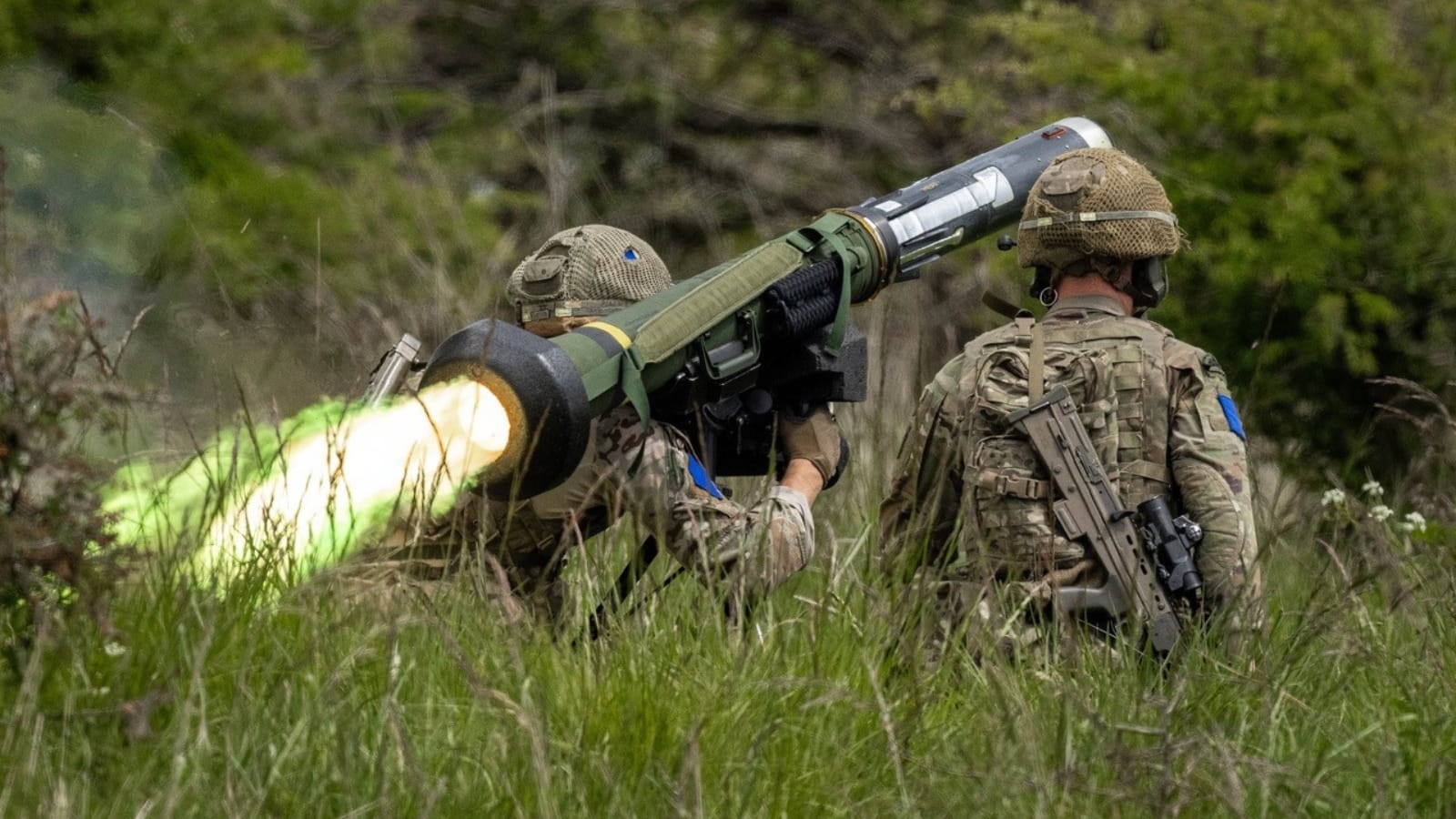
World
TUCSON, Arizona — May 26, 2026 : The Javelin Joint Venture (JJV), a partnership between Raytheon—an RTX business—and Lockheed Martin, has delivered the first Lightweight Command Launch Units (LWCLU) to the U.S. Army, marking the beginning of a modernization effort aimed at replacing the legacy command launch unit used with the Javelin anti-tank missile system. The LWCLU is designed as a next-generation launcher that will fully replace the existing Javelin command launch unit while maintaining compatibility with all past, current and future variants of the missile system. The launcher is intended to modernize how soldiers operate the weapon in combat environments while preserving interoperability across existing inventories. Enhanced Detection, Optics and Battlefield Capability According to the Javelin Joint Venture, the LWCLU introduces several operational improvements over the legacy system, including a significant increase in target acquisition performance. The new launcher provides twice the target detection and recognition range, enabling soldiers to identify threats from greater distances and improving battlefield awareness. The upgraded sight unit includes enhanced optics that maximize surveillance capability and support high-resolution engagement in both day and night conditions. In addition to missile-launch operations, the LWCLU is capable of supporting stand-alone intelligence, surveillance and reconnaissance missions due to its improved visual systems. The system also extends Javelin engagement range to approximately 4 kilometers, compared with 2.5 kilometers on the previous Block I Command Launch Unit, further improving operational flexibility for infantry formations. Reduced Weight and Improved Mobility Engineers redesigned the LWCLU to reduce the physical burden placed on soldiers operating the system. Compared with the legacy launcher, the new unit is approximately 30% smaller and 25% lighter, changes intended to improve mobility, reduce fatigue and increase survivability for troops operating in combat environments. The lighter design is expected to improve portability for infantry personnel while maintaining the precision engagement capability that has defined the Javelin system since its introduction. Production Expansion and Manufacturing Investment To support the transition to the new launcher, Raytheon invested $22 million to modernize its LWCLU production facility in Tucson, Arizona. The investment focused on upgrading manufacturing infrastructure, increasing production speed and expanding factory capacity as demand for the system grows. The Tucson facility is currently ramping annual production output in coordination with the U.S. Army to support fielding requirements and future operational demand. The first deliveries follow two production contracts worth $267 million awarded to the Javelin Joint Venture by the U.S. Army in October 2024. The agreements covered both full-rate production and low-rate initial production of the LWCLU and support U.S. Army requirements alongside Foreign Military Sales for Estonia, Latvia and Lithuania. Low-rate initial production of the launcher began following a contract awarded in June 2022, with first deliveries originally scheduled for 2025. Production work is performed in Tucson, while completion of the current contracts is expected in 2026 and 2028. Company and Program Statements “Delivering the first LWCLUs to the U.S. Army reflects the Javelin Joint Venture’s commitment to continuously advancing technology for service members,” said Jenna Hunt Frazier, president of the Javelin Joint Venture and Javelin program director at Raytheon. “Our investments in modernization and production capacity ensures soldiers receive this cutting-edge capability faster.” “The production and delivery of the LWCLU marks a pivotal step in modernizing the Javelin system for today’s warfighter,” said Rich Liccion, vice president of the Javelin Joint Venture and Javelin program director at Lockheed Martin. “Its innovative design enhances mobility and survivability while preserving the precision firepower that users rely on.” Long-Term Modernization of the Javelin System The Javelin weapon system is jointly developed and produced by Raytheon in Tucson, Arizona, and Lockheed Martin in Orlando, Florida. The medium-range “fire-and-forget” anti-armor missile system uses automatic infrared guidance, allowing operators to lock onto targets and seek cover immediately after launch instead of maintaining continuous line-of-sight guidance. The system entered full-rate production in 1994 and operational service in 1996. To date, more than 50,000 missiles and over 12,000 command launch units have been delivered. With ongoing modernization efforts, the Javelin system is projected to remain in service with the U.S. military through at least 2050.
Read More → Posted on 2026-05-26 17:48:32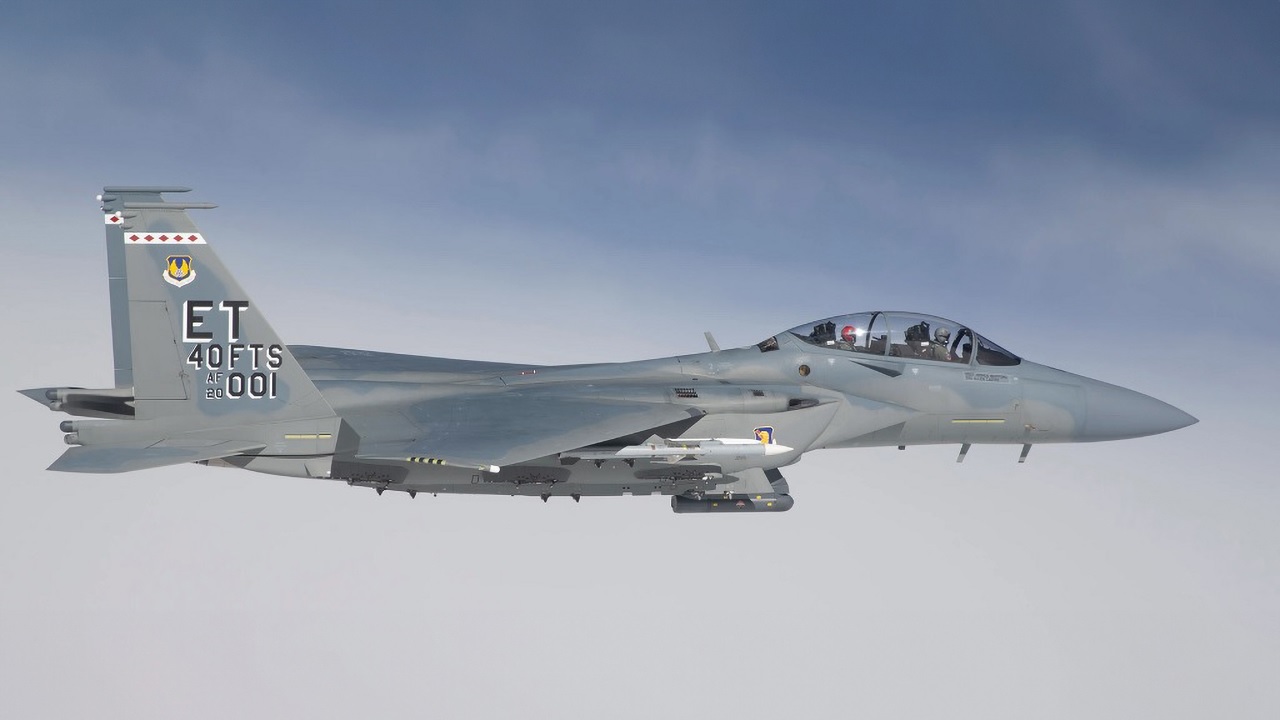
World
ROBINS AIR FORCE BASE, Georgia — May 27, 2026 : The U.S. Air Force has established a dedicated installation pathway to accelerate integration of the AN/ALQ-250 Eagle Passive Active Warning Survivability System (EPAWSS) across the F-15E Strike Eagle fleet, separating the advanced electronic warfare upgrade from routine maintenance schedules to speed delivery to operational squadrons. Announced by the Air Force Life Cycle Management Center (AFLCMC) on May 26, 2026, the new EPAWSS “Speedline” at the Warner Robins Air Logistics Complex in Georgia will begin receiving F-15E aircraft for modification in June 2026. The independent installation line is designed to operate separately from the aircraft’s standard Programmed Depot Maintenance (PDM) process, enabling aircraft not yet scheduled for depot work to receive the survivability upgrade earlier. Dedicated Installation Line to Speed Fielding Historically, EPAWSS integration was conducted during scheduled PDM cycles at Warner Robins, a process that consolidated maintenance but restricted installation rates because upgrades could only occur when aircraft entered depot maintenance. A 2025 Government Accountability Office assessment noted that linking modifications to PDM timelines delayed broader fleet fielding of the system. The newly established Speedline removes this limitation by creating a dedicated pathway exclusively for EPAWSS modifications. According to AFLCMC, the separation provides flexibility to install the system on aircraft that may not be scheduled for depot maintenance for another five to seven years. “The newly established Speedline resolves this limitation and operates entirely independent of the standard PDM line,” AFLCMC said. “This vital separation provides the program with the necessary flexibility to complete installations of this critical defensive system on aircraft that may not be due for PDM for another five to seven years.” Lt. Col. Matthew Heil, EPAWSS Materiel Leader for the F-15 Program Office, said the upgrade is essential to maintaining the Strike Eagle’s effectiveness in modern combat environments. “The F-15E Strike Eagle remains a cornerstone of our tactical airpower and deep strike capabilities,” Heil said. “We are not merely extending the life of this platform; we are aggressively expanding its lethality and survivability to ensure it dominates the modern battlespace.” Program Timeline and Fleet Implementation EPAWSS completed Initial Operational Test and Evaluation (IOT&E) for both the F-15E Strike Eagle and F-15EX Eagle II in early 2024 before entering full-rate production in January 2025. Boeing, serving as prime integrator, received a $615.8 million contract to support procurement and installation activities through 2030, while BAE Systems manufactures the system and develops its software architecture. The Air Force plans to retrofit 99 F-15E Strike Eagles with EPAWSS, while the system is installed as standard equipment on all new-production F-15EX aircraft. Before broader operational fielding, installations were limited to developmental and operational test aircraft assigned to Eglin Air Force Base, Florida, and Nellis Air Force Base, Nevada. Operational integration began with aircraft assigned to the 48th Fighter Wing at RAF Lakenheath in the United Kingdom. Modification work on the first operational F-15E started in May 2023, and the first two EPAWSS-equipped aircraft were delivered to the wing in January 2025. AN/ALQ-250 EPAWSS Capabilities Manufactured by BAE Systems and integrated by Boeing, the AN/ALQ-250 EPAWSS is a fully digital self-protection system designed to detect, identify, locate, deny, degrade, disrupt, and defeat airborne and surface-to-air threats in contested electromagnetic environments. According to the Director of Operational Test and Evaluation, EPAWSS functionally replaces three legacy Tactical Electronic Warfare System components: AN/ALR-56C Radar Warning Receiver AN/ALQ-135 Internal Countermeasures Set AN/ALE-45 Countermeasures Dispenser Set The system integrates with the F-15’s AN/APG-82(V)1 Active Electronically Scanned Array radar and the Advanced Display Core Processor II mission computer, improving threat detection, situational awareness, and survivability in electronically contested environments. EPAWSS is smaller and lighter than previous F-15 electronic warfare systems due to its digital architecture while providing broad instantaneous bandwidth and high-speed scanning to counter modern radio-frequency threats, including low-probability-of-intercept signals and agile emitters. Expanded Countermeasure Capacity and Cognitive EW A visible external feature of EPAWSS-equipped aircraft is the addition of two tail fairings positioned outboard of each engine, housing electronic warfare components and additional expendable countermeasure dispensers. The upgrade increases the F-15’s chaff and flare capacity by 50 percent through four added dispensers, bringing the aircraft total to 12 dispensers capable of carrying up to 360 cartridges. The expanded capacity enables greater use of defensive expendables in modern combat environments, including against shoulder-fired missile threats. EPAWSS also supports cognitive electronic warfare processing, enabling the system to analyze previously unencountered electromagnetic threats and optimize countermeasure techniques in real time. The capability was demonstrated during the Northern Edge 2023 exercise, where the system processed in-mission data to generate new techniques and adapt waveforms against unfamiliar threats. “EPAWSS is a leap in technology, improving the lethality and combat capabilities of the F-15E and F-15EX in contested, degraded environments against advanced threats,” said Maj. Bryant “Jager” Baum, EPAWSS Test Director for the Air Force Operational Test and Evaluation Center. “EPAWSS has set the baseline for EW within the fighter community.” BAE Systems officials said the system was designed for rapid software updates and future capability insertion through agile development methods. While EPAWSS is not currently integrated with the AN/AAR-57A(V) Common Missile Warning System for infrared missile detection, its architecture allows future integration with additional sensors, and the F-15EX retains mounting provisions for potential expansion. The establishment of the dedicated EPAWSS Speedline is expected to increase the pace of fleet modernization by enabling the Air Force to install the survivability suite outside standard depot maintenance schedules while sustaining long-term upgrades to the F-15E Strike Eagle fleet.
Read More → Posted on 2026-05-27 13:27:24
World
WASHINGTON, — May 27, 2026 : The U.S. Space Force has awarded SpaceX a $2.29 billion firm-fixed-price contract to develop the Space Data Network (SDN) Backbone, a proliferated low Earth orbit (pLEO) satellite constellation designed to provide resilient, high-capacity and low-latency military data transport worldwide. The award, announced by Space Systems Command (SSC) on May 26, was issued under an Other Transaction Authority (OTA) agreement as part of the Space Force’s effort to build a hybrid space-based communications architecture capable of rapidly transferring operational data between military systems. Previously known as MILNET, the SDN Backbone is a joint initiative between the Space Force and the National Reconnaissance Office (NRO), aimed at moving information from sensors to operational shooters worldwide by integrating military and commercial satellite capabilities. According to Space Systems Command, the SDN Backbone will serve as an integrated network providing robust, resilient, high-capacity and low-latency data transport while supporting worldwide tactical communications and broadband services. The system is intended to function as a core communications layer connecting satellites, sensors, command systems and weapons platforms to enable near real-time data movement during military operations. SpaceX to Deliver Operational Prototype by 2027 Under the agreement, SpaceX is required to provide a fully operational prototype capability by the end of 2027. The service, however, has not confirmed whether the effort will involve launching newly built satellites or leveraging spacecraft already operating in orbit. The architecture is based on SpaceX’s Starshield satellites, a militarized version of the Starlink platform developed for national security applications. The constellation will operate in proliferated low Earth orbit and function as an optically interconnected mesh network, allowing data to move across multiple satellites efficiently and securely. The SDN Backbone is expected to become the foundational backhaul layer of the broader Space Data Network architecture. Satellite Procurement and Budget Expansion Space Force budget documents indicate the service plans to procure 13 satellites for the Space Data Network in fiscal year 2026, followed by 21 satellites in fiscal year 2027 as part of the initial deployment phases. Earlier planning documents for the MILNET program referenced a potential constellation of approximately 480 satellites, although current efforts remain focused on early procurement tranches and operational capability. Funding allocated to the program reflects a significant expansion in investment. While the fiscal year 2026 budget allocated approximately $277 million for MILNET, the fiscal year 2027 request includes nearly $1.5 billion for SDN Backbone research and development and approximately $1.6 billion for procurement activities, indicating a larger push toward proliferated low Earth orbit communications infrastructure. The broader Space Data Network will also include a Mission Operations Center responsible for managing the hybrid transport constellation and coordinating operational data movement across the system. Competitive Contracting and Industrial Base Expansion Space Systems Command stated the SpaceX award was made through a competitive process but did not immediately confirm whether additional bids were submitted. A Space Force spokesperson previously stated that the service intends to strengthen the U.S. industrial base to meet future proliferation requirements and continues efforts to identify additional contractors capable of building SDN satellites and supporting architecture components. Lt. Col. Jeffrey Fry, SDN Backbone system program manager, said competition remains central to the acquisition strategy. “Our acquisition strategy is designed to foster competition and broaden our industrial base,” Fry stated. “We aren’t trading speed for scale; we are demanding both. By using rapid prototyping and Other Transaction Authorities, we are ensuring our advanced solutions are integrated and delivered to the warfighter as fast as possible.” Integration With Wider Defense Space Architecture The SDN Backbone will operate alongside the Space Development Agency’s Transport Layer, with both systems intended to create a unified and open architecture supporting current and future Department of Defense missions. Together, the systems are expected to provide resilient global connectivity for military data transport requirements. To support interoperability across the constellation, the Space Force is also advancing the Enterprise Space Terminal (EST) program. Contractors including CACI, General Atomics and Viasat are developing standardized long-range laser communication terminals designed to implement common waveforms and enable crosslink compatibility between satellites across the network. Col. Ryan Frazier, acting Portfolio Acquisition Executive for Space-Based Sensing and Targeting, said the SDN Backbone will strengthen the Space Force’s ability to maintain continuous, global and secure communications between military systems. “The SDN Backbone leverages the best of commercial innovation and delivers a strong foundation for the SDN mission set,” Frazier stated. “The SDN Backbone supports the broader SDN, which acts as a core communications layer for the U.S. Space Force warfighting systems, ensuring our sensors and shooters are connected continuously, globally and securely.” Space Systems Command, which oversees a $15.6 billion annual space acquisition portfolio, is responsible for acquiring, developing and delivering the SDN Backbone through its Portfolio Acquisition Executive for Space-Based Sensing and Targeting as the broader architecture continues development.
Read More → Posted on 2026-05-27 13:52:14
World
HAIFA, Israel — May 27, 2026 : Elbit Systems Ltd.’s subsidiary FUSE has completed the acquisition of 100% of the shares of Blue White Robotics Ltd. (Bluewhite), an Israeli developer of AI-powered off-road autonomy solutions, expanding its portfolio of autonomous systems across air, land, and indoor operational domains. Financial terms of the transaction were not disclosed. Founded in 2017 and headquartered in Tel Aviv, Bluewhite develops OEM-agnostic off-road autonomy technology that enables conventional vehicles to be converted into autonomous systems without replacing entire fleets. Initially focused on agricultural automation in permanent-crop environments such as orchards and vineyards, the company has adapted its technologies for defense, homeland security, and industrial applications operating in rugged and unstructured terrain. Bluewhite’s core offering consists of two integrated systems: the Pathfinder autonomy kit and the Compass fleet management platform. Pathfinder retrofits existing vehicles with sensors, onboard computing hardware, and control systems to support autonomous operations, allowing manned vehicles to perform missions with limited human intervention. Compass functions as a cloud-based operational platform designed for planning, supervision, coordination, and remote monitoring of multiple autonomous vehicles simultaneously. Unlike road-focused autonomous systems that depend on structured infrastructure, Bluewhite’s platform is designed for challenging off-road environments where terrain conditions are unpredictable and GPS access may be degraded or unavailable. The company states that its autonomy stack incorporates physical AI and sensor fusion capabilities, enabling operations in GPS-denied environments while maintaining vehicle navigation and mission execution. According to Elbit Systems, Bluewhite has accumulated more than 100,000 cumulative autonomous operating hours across agricultural and defense platforms. Its ground autonomy technology has reached Technology Readiness Levels (TRL) 8 to 9, indicating systems that have progressed beyond testing and demonstration phases and are considered mature for operational deployment. Integration into FUSE’s Multi-Domain Ecosystem FUSE, formerly known as Flying Production, operates under Elbit Systems’ C4I and Cyber division and specializes in the development of AI-enabled autonomous combat systems, unmanned aerial platforms, and swarm technologies. The acquisition introduces an additional ground robotics layer into FUSE’s existing autonomy portfolio, supporting more coordinated operations between aerial, land-based, and indoor robotic systems. The integration is intended to strengthen FUSE’s ability to provide unified autonomous capabilities under a single command-and-control framework, enabling robotic systems across different operational environments to coordinate more efficiently during defense and security missions. “Autonomy and robotics are reshaping how defense forces operate today,” said Eyal Dahan, Chief Executive Officer of FUSE. “The world is changing rapidly, and modern battlefields require vast adoption of robotics capabilities. The integration of Bluewhite’s technologies into FUSE’s multi-domain ecosystem enhances our ability to deliver unified autonomous solutions across air, land, and indoor domains. This step enhances FUSE’s autonomous robotics capabilities, positioning the company to effectively address the growing global demand for scalable, AI-powered autonomy.” Focus on Manned-Unmanned Teaming and Operational Roles The acquisition supports growing military requirements for manned-unmanned teaming (MUM-T), a concept in which personnel supervise and coordinate fleets of robotic systems rather than conducting high-risk or repetitive activities directly. Bluewhite’s technologies could support military and security missions including logistics support, reconnaissance, perimeter security, cargo transportation, route clearance, and communications relay operations in difficult terrain. The company’s retrofit-based approach also offers defense operators the ability to modernize selected vehicles already in service instead of replacing complete fleets. This approach may simplify adoption timelines while lowering integration complexity for organizations seeking incremental deployment of autonomous systems. Bluewhite Leadership and Expansion Strategy Ben Alfi, Chief Executive Officer of Bluewhite, said the acquisition provides an opportunity to scale the company’s autonomy technologies into broader operational sectors. “Our mission has always been to bring practical autonomy to the field. By joining forces with FUSE and Elbit Systems, we gain a unique platform to bring our AI-driven ground autonomy technology to scale across defense, security and industrial applications,” he said. Founded by Ben Alfi, Yair Shahar, and Aviram Shmueli, Bluewhite had previously raised approximately $89 million in investment funding, including a $39 million Series C financing round announced in January 2024 backed by Insight Partners, Entrée Capital, and Peregrine Ventures. No specific military customers, vehicle platforms, delivery schedules, or deployment timelines connected to the acquisition have been announced. However, the transaction aligns with Elbit Systems’ broader strategy to integrate specialized autonomy technologies aimed at accelerating the deployment of operational robotic systems capable of supporting coordinated missions across multiple domains.
Read More → Posted on 2026-05-27 14:04:26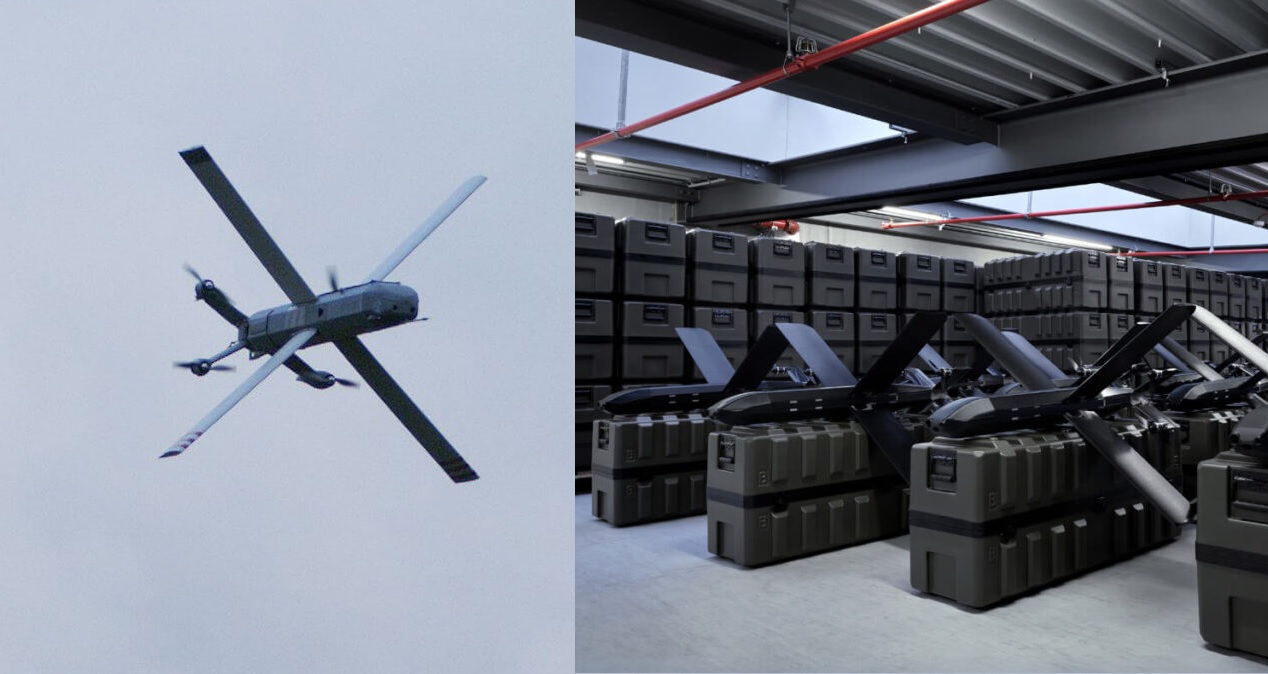
World
TOKYO — May 27, 2026 : The Japan Ground Self-Defense Force (JGSDF) has reached an initial agreement to procure the HX-2 loitering munition system from Helsing, marking an early step in Japan’s effort to expand advanced unmanned strike capabilities and integrate autonomous systems into its military structure. The agreement, facilitated through a local intermediary partner, comes as Japan accelerates investment in artificial intelligence-enabled defense technologies and unmanned warfare capabilities. The HX-2 is a software-defined, electrically propelled X-wing loitering munition designed for beyond-line-of-sight precision strikes against artillery systems, armored vehicles, defensive positions, and other military targets. Unveiled in December 2024, the system combines reconnaissance and strike capabilities in a single platform, enabling operators to monitor an area before conducting a precision attack. According to available technical specifications, the HX-2 weighs approximately 12 kilograms, can reach speeds of up to 220 kilometers per hour, and has an operational range of up to 100 kilometers. The system supports multiple payload configurations, including anti-tank and anti-structure munitions, and can carry warheads of up to five kilograms depending on mission requirements. A key feature of the HX-2 is its artificial intelligence-assisted operating system, which enables target recognition, tracking, and navigation in contested environments. The munition employs machine vision and stored mapping data to navigate in GPS-denied conditions and is designed to continue operating even when communications are disrupted by electronic warfare. While the system incorporates autonomous functions, Helsing states that it remains under human-on-the-loop oversight for engagement decisions. The HX-2 is integrated into Helsing’s Altra reconnaissance-strike software platform, allowing coordinated operations with other unmanned and manned systems. The platform is intended to support synchronized targeting, reconnaissance, and swarm-style operations involving multiple loitering munitions and battlefield assets. Japan Expands Unmanned Warfare Capabilities Japan’s procurement effort forms part of a broader military modernization strategy focused on unmanned systems and artificial intelligence. In April 2026, the JGSDF established two specialized offices within the Ground Staff Office — the Unmanned Defense Capability Promotion Office and the Unmanned Systems Office — to oversee the development and operational integration of autonomous capabilities. These organizations are tasked with developing doctrine for the deployment of loitering munitions alongside manned tanks, coastal artillery systems, and wider land-based defense operations. Japanese defense planners increasingly view autonomous systems as force multipliers capable of improving battlefield effectiveness while addressing manpower limitations. Japanese Defense Minister Shinjiro Koizumi has also launched a national public-private roadmap aimed at strengthening Japan’s domestic loitering munition and small unmanned aerial vehicle industry. The initiative seeks to support Japanese technology startups in developing low-cost, AI-enabled, mass-producible systems while reducing long-term dependence on foreign suppliers. At the same time, Japan plans to procure mature foreign systems to address immediate operational requirements until domestic production capabilities are sufficiently developed. The agreement with Helsing therefore represents both a near-term acquisition effort and part of a wider industrial transition strategy. The move also reflects personnel pressures within the JGSDF. The force has reported a personnel sufficiency rate of 89.1 percent, increasing interest in technologies that can supplement manpower requirements. Japan’s defense budget is expected to significantly expand spending on unmanned capabilities, including coastal defense systems such as the Shield architecture, which incorporates loitering munitions and other uncrewed platforms. Germany Expands HX-2 and Loitering Munition Procurement Japan’s agreement comes amid a broader expansion of loitering munition procurement across Europe. In March and April 2026, Germany placed orders for a five-digit number of loitering munitions from Helsing, Stark Defence, and Rheinmetall, with deliveries scheduled for the following year. The associated framework agreements permit expansion to a six-digit total in subsequent years, contingent upon contractor performance and production benchmarks. Germany’s initial procurement tranche for the HX-2, signed in February 2026, was valued at approximately €300 million under a larger framework agreement potentially worth up to €1 billion. Similar contracts valued between approximately €268 million and €300 million were also awarded to Stark Defence for its Virtus loitering munition system as part of Germany’s broader effort to diversify procurement and expand precision-strike drone inventories. The Bundeswehr has already begun integrating loitering munitions into operational formations. Field exercises conducted by the Loitering Ammunition Battery of Artillery Battalion 455 reportedly included tests against moving armored targets, including Leopard 2 tanks, as part of wider military evaluations. Combat Use in Ukraine The HX-2 is currently the only German-developed loitering munition system deployed on a large scale in Ukraine. Thousands of systems have reportedly been delivered to Ukrainian forces, where multiple frontline units are operating the munition in combat conditions. Ukrainian officials have publicly cited positive operational feedback regarding the system. Serhii Beskrestnov, an adviser involved in Ukraine’s digital transformation and defense technology initiatives, has shared footage showing successful strike missions using the HX-2. Russian military reporting has also referenced the system’s operational accuracy in battlefield assessments. According to Helsing, military testing conducted in Germany, the United Kingdom, and Kenya demonstrated hit rates approaching or reaching 100 percent under controlled testing conditions. The company continues to supply several hundred HX-2 systems per month to Ukraine while expanding manufacturing through resilience-focused production facilities in Europe designed to maintain supply continuity. Growing International Interest Japan’s agreement with Helsing adds to growing international interest in the HX-2, which has undergone testing and evaluation in Germany, France, Sweden, and the United Kingdom. Loitering munition systems are increasingly viewed as cost-effective precision-strike platforms capable of operating in contested environments while complementing traditional artillery and conventional airpower. No details regarding procurement quantities, delivery schedules, or the total financial value of Japan’s agreement with Helsing have been disclosed.
Read More → Posted on 2026-05-27 14:19:24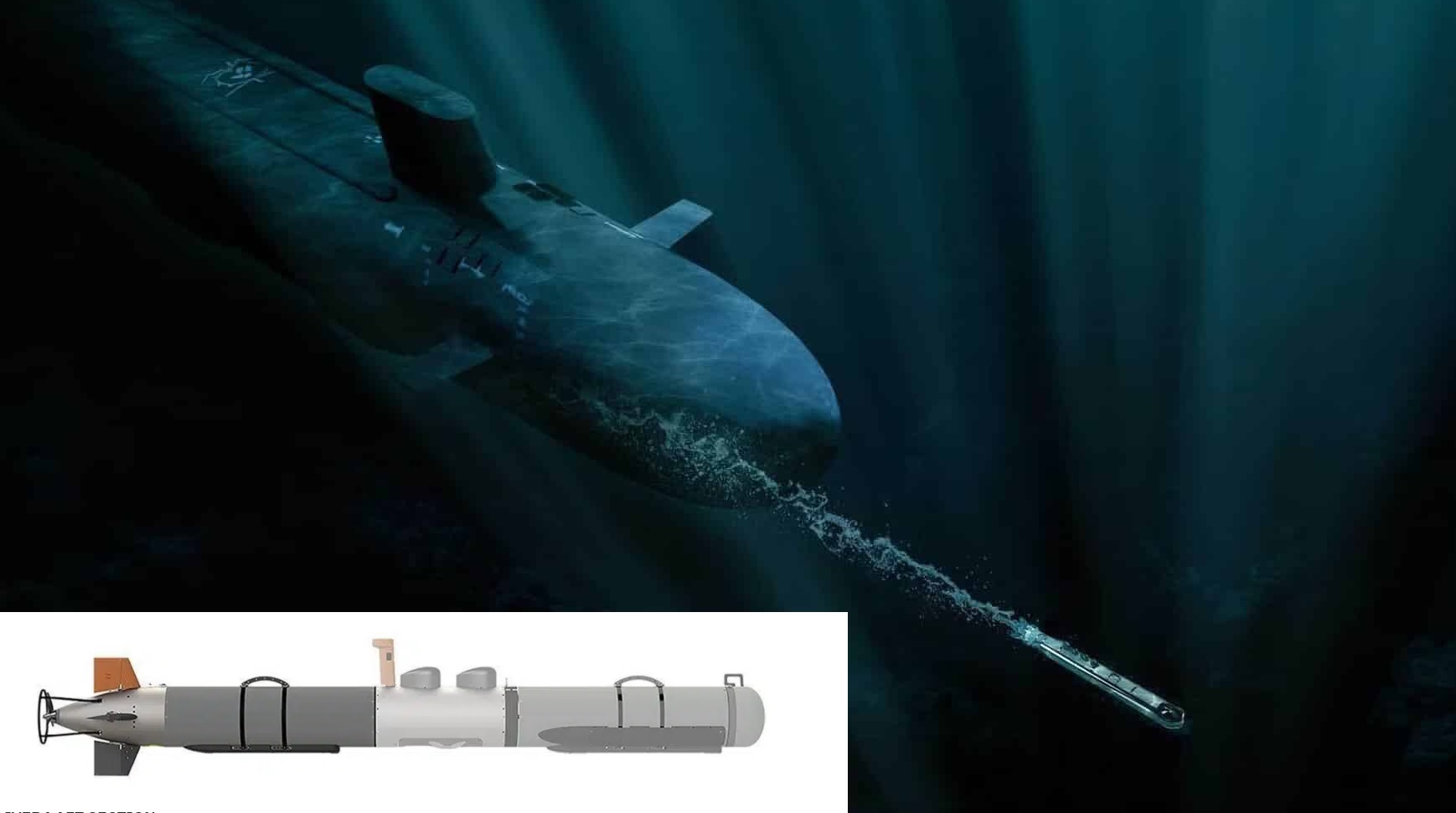
World
NATIONAL HARBOR, Maryland — May 27, 2026 : L3Harris Technologies is advancing production and operational integration of its Iver4 900 autonomous underwater vehicle (AUV) for the U.S. Navy’s attack submarine fleet under a Defense Innovation Unit (DIU) program designed to enable torpedo tube launch and recovery of unmanned underwater systems. The effort aims to provide submarines with an organic unmanned capability for intelligence gathering, mine warfare, and seabed mapping missions while reducing risks to crews operating in contested environments. The company received an Other Transaction Authority (OTA) contract from the DIU to deliver a Torpedo Tube Launch and Recovery (TTLR) system capable of deploying and autonomously recovering the Iver4 900 through standard submarine torpedo tubes. Announced on March 25, 2026, the contract supports the U.S. Navy’s broader effort to expand manned-unmanned teaming and launched effects for undersea warfare operations. The Iver4 900 is intended to function as an underwater “loyal wingman” for attack submarines, supporting forward intelligence, surveillance, reconnaissance (ISR), mine countermeasure operations, seabed mapping, and other undersea missions without exposing the host vessel to higher-risk areas. Operating untethered and autonomously, the vehicle extends a submarine’s sensing and operational reach while remaining integrated into existing fleet infrastructure. TTLR System Designed for Existing Submarine Infrastructure At the center of the DIU initiative is the TTLR system, which enables the launch and recovery of the Iver4 900 while submarines remain submerged and underway. The system uses a specialized enclosure known as the Shock and Fire Enclosure (SAFECAP), which fits inside a standard torpedo tube. The vehicle launches from the enclosure, conducts assigned missions independently, and autonomously navigates back into the SAFECAP upon completion. Because the system uses existing torpedo tubes, submarines do not require structural modifications to their hulls or dedicated permanent storage space inside torpedo rooms. This approach allows the capability to be integrated across multiple submarine classes while preserving operational flexibility and stealth. L3Harris President of Maritime, Space & Mission Systems Nino DiCosmo stated that the capability is already intended to meet operational requirements rather than remain in a developmental phase. “The Torpedo Tube Launch and Recovery system is not a future capability, it’s answering combatant commander needs today,” DiCosmo said. “Our system is the first to successfully launch and recover AUVs from a submarine, providing commanders flexibility for persistent undersea operations and maintaining essential stealth.” Operational Role and Fleet Integration According to L3Harris, the Iver4 900 is designed to serve as an organic extension of submarine sensor systems and forms part of the Navy’s launched effects portfolio intended to improve targeting, intelligence collection, and mission endurance. The vehicle can perform forward ISR, seabed mapping, mine warfare tasks, and other classified operational missions typically associated with submarine deployments. During the Sea Air Space 2026 Symposium in National Harbor, Maryland, JR Gear, Vice President and General Manager of Integrated Systems and Encryption at L3Harris, described the operational rationale behind integrating autonomous systems into submarine missions. “When a diver is out there in the ocean, a lot of times they have a dive buddy for safety,” Gear said. “Unmanned systems are really good for the dull, dirty, and dangerous business. So you think of all those things together—what’s the dive buddy that a submarine has?” The system is currently undergoing operational evaluation through at-sea exercises involving Virginia-class submarines, where the U.S. Navy and L3Harris are refining concept-of-operations procedures and testing how submarines can employ autonomous systems in contested or denied environments. These exercises are also being used to validate deployment, recovery, and mission workflows before broader operational implementation. Modular Design Supports Multiple Mission Sets The Iver4 900 incorporates a modular, open-architecture design intended to support a wide range of mission requirements. Payload sections in the nose, tail, and side compartments are removable and field-swappable, enabling crews to rapidly configure the vehicle for different operational tasks. The system supports third-party sensors, autonomy software, sonar systems, ISR payloads, and mine countermeasure technologies. Available configurations include interferometric synthetic aperture sonar such as Northrop Grumman’s µSAS, multiple-aperture sonar systems, 3D underwater lidar for detailed seabed mapping and mine detection, and forward-looking echo sounders used for object avoidance and underwater navigation. L3Harris said the platform’s open architecture allows continued payload development with external industry partners, enabling future capability upgrades without redesigning the vehicle itself. Technical Specifications and Endurance The Iver4 900 measures approximately 2.5 meters in length, features a 9-inch diameter titanium and carbon-fiber pressure housing, weighs less than 230 pounds, and is rated for operations at depths of up to 300 meters. The AUV can travel at speeds exceeding three knots during transit and more than five knots in sprint operations. Mission endurance varies depending on payload configuration and battery type. The platform uses the first submarine- and aviation-approved lithium-ion battery technology certified for Navy AUV operations, supporting hot-swappable battery replacement. In a lithium-ion configuration, the system can operate for over 40 hours and travel approximately 80 nautical miles under mission-minimal payload conditions. Standard nickel-metal hydride (NiMH) battery packs provide more than 20 hours of endurance and roughly 40 nautical miles of range. Supporting Manned-Unmanned Undersea Operations The DIU program is focused on reducing sailor workload by leveraging autonomous navigation and automated launch-and-recovery procedures. Rather than directly piloting the vehicle, operators are intended to focus on mission execution, data exploitation, and threat analysis. “Let’s let the sailor do the mission and concentrate on the threat,” Gear said. “Let’s not have the sailor worry about how to fly, drive, or steer.” The system has also undergone testing on multiple submarine platforms, including evaluations by the United Kingdom’s Royal Navy on Astute-class submarines under Project SCYLLA, supporting interoperability efforts associated with AUKUS Pillar 2 advanced defense technology cooperation. L3Harris continues to expand the Iver family’s payload ecosystem through third-party partnerships while manufacturing the systems at its facility in Fall River, Massachusetts. The company and the DIU have not disclosed contract value details or a production delivery timeline.
Read More → Posted on 2026-05-27 14:30:59
World
SEOUL — May 27, 2026 : North Korea tested a newly developed lightweight multi-purpose missile launcher, an upgraded 240mm guided artillery rocket system, and AI-supported tactical cruise missiles on Tuesday, May 26, under the direct supervision of leader Kim Jong Un, according to state media reports released on Wednesday. The tests, conducted by North Korea’s Missile Administration and the Academy of Defense Sciences, took place off North Korea’s west coast and were described by the state-run Korean Central News Agency (KCNA) as part of ongoing efforts to modernize artillery and missile forces under the country’s five-year national defense development plan. South Korea’s military detected the launches from the Jongju area in North Phyongan Province, reporting that multiple projectiles, including close-range ballistic missiles, traveled approximately 80 kilometers toward the Yellow Sea. The launches marked North Korea’s eighth weapons test of 2026 and the first in 37 days, following a period of reduced activity since an April cluster bomb warhead test. According to KCNA, the tests examined the power of a “special mission warhead” mounted on a tactical ballistic missile while also evaluating the reliability, precision, and combat performance of expanded-range artillery and cruise missile systems. Analysts said the combined launch activity reflects a continued effort by Pyongyang to strengthen conventional precision-strike capabilities alongside its nuclear deterrence. Lightweight Multi-Purpose Missile Launcher Among the systems tested was a newly developed lightweight multi-purpose missile launcher mounted on a highly mobile wheeled vehicle. Images released by state media showed a compact launcher with a modular configuration, drawing comparisons from analysts to the American M142 HIMARS due to its truck-mounted design and ability to deploy precision-guided munitions. Informally described by some observers as a “Juche-HIMARS,” the launcher appears designed to support interchangeable munition pods capable of firing multiple weapon types, including guided artillery rockets and short-range tactical ballistic missiles. North Korea publicly displayed a similar system during a military parade in 2023. The modular configuration is intended to provide rapid-response strike capability while complicating adversary targeting by allowing operational flexibility between artillery and missile missions from a single mobile platform. 240mm Guided Artillery Rocket System North Korea also tested an upgraded version of its long-deployed 240mm multiple rocket launcher system. KCNA stated that the new controlled artillery rocket incorporates an expanded firing range and an “ultra-precision autonomous navigation system,” representing a technological shift from earlier unguided variants used for saturation bombardment. The test verified the reliability of the guided rocket and assessed operational performance under modern combat conditions. The integration of autonomous navigation and automated fire-control systems is intended to improve targeting precision while maintaining the system’s role in long-range artillery operations. The 240mm launcher has historically formed a major component of North Korea’s artillery posture directed toward South Korea, particularly against military targets and infrastructure near the border. AI-Guided Tactical Cruise Missile KCNA reported that the tactical cruise missile system tested during the drills incorporates terrain-contour matching navigation (TERCOM), enabling low-altitude flight by comparing terrain data with preloaded maps to improve survivability and radar evasion. The missiles also reportedly employ an artificial intelligence-supported terminal guidance system to improve strike accuracy during the final phase of flight. According to North Korean claims, the system combines glide and propulsion flight modes and is capable of striking targets within a range of approximately 100 kilometers. If deployed along forward positions near the inter-Korean border, the missile’s range would place South Korean military facilities, airfields, command centers, and populated areas within operational reach. KCNA said all systems tested during the event incorporated automated fire-control technologies adapted to modern warfare conditions, suggesting North Korea is seeking faster targeting and operational response times across frontline artillery and missile formations. Kim Jong Un’s Assessment and Deployment Orders KCNA quoted Kim Jong Un as describing the tests as “a clear signal of upgrading of our military force” and evidence of technical progress in the country’s weapons programs. He reportedly emphasized the importance of possessing sufficient destructive capability to ensure battlefield effectiveness and ordered accelerated modernization of artillery forces. The North Korean leader specifically instructed that the tactical cruise missile systems be rapidly deployed to long-range artillery brigades stationed near the “southern border area,” Pyongyang’s term for the border with South Korea. Earlier in May, Kim directed military authorities to strengthen defenses near the border and transform the area into what he described as an “impregnable fortress.” Hong Min, an analyst based in Seoul, described the weapons package as a “precision-strike complex,” highlighting its emphasis on precise, long-range and automated conventional firepower intended to strengthen North Korea’s battlefield capabilities below the nuclear threshold. The May 26 launch event follows earlier weapons demonstrations in 2026, including tests involving upgraded 600mm multiple rocket launchers overseen by Kim in January and March. The simultaneous testing of three distinct systems indicates continued progress in North Korea’s efforts to modernize tactical guided weapons, artillery systems and operational missile capabilities despite continued international sanctions targeting its ballistic missile and nuclear programs.
Read More → Posted on 2026-05-27 14:49:01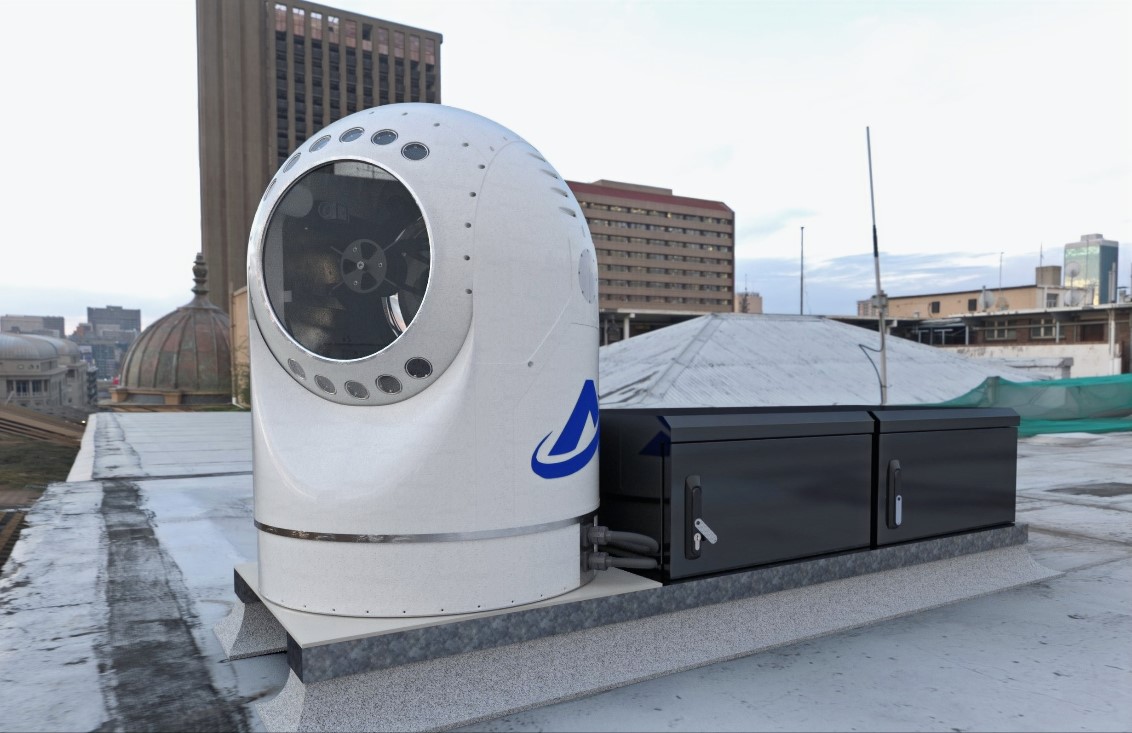
World
OXFORD, United Kingdom — May 27, 2026 : Archangel Lightworks, an Oxford-based laser communications company, has successfully completed field trials of its TERRA-M system, which the company describes as the world’s smallest deployable operational optical ground station. Funded by the UK Defence Science and Technology Laboratory (Dstl), the demonstration marked the United Kingdom’s first successful optical downlink from space using a deployable laser communications ground station and represented a significant step in secure, high-speed satellite connectivity. The multi-day trials were conducted earlier this month in the Mediterranean region and demonstrated the secure transfer of data between a low Earth orbit (LEO) satellite and the TERRA-M system. During multiple satellite passes lasting approximately 90 seconds each, the system successfully downloaded many gigabits of data. According to the company, the tests were conducted using the U.S. Space Development Agency’s laser communication standards and repeated across multiple passes to verify reliability and operational performance. Compact System Designed for Rapid Deployment TERRA-M has been developed as a smaller and more flexible alternative to conventional optical ground stations. The system features an optical head measuring 1.1 meters in height and 0.7 meters in diameter with a 30-centimeter aperture, allowing it to operate without requiring an external protective dome or a dedicated building. Archangel Lightworks said the modular system was engineered using low size, weight, power and cost (SWaP-C) principles, enabling transportation by light vehicle or aircraft and deployment on building rooftops or in remote areas lacking communications infrastructure. Unlike traditional fixed installations, TERRA-M is designed for rapid deployment and redeployment at the point of need while supporting autonomous, multi-mission operations. The company added that the system is interoperable with a broad range of laser communication terminals and standards, making it adaptable to both commercial and government satellite architectures. Laser Communications for Secure, High-Speed Data Transfer Laser communications, also known as free-space optical communications, transmit information using low-power, non-visible light rather than traditional radio frequencies (RF). The technology enables higher-volume data transfer and provides a more secure alternative to radio-based transmission because narrow optical beams have a substantially lower probability of interception or detection. Archangel Lightworks stated that TERRA-M currently supports transmit and receive speeds of up to 10 gigabits per second, while future development efforts are aimed at enabling terabit-per-second downlinks to support expanding satellite data requirements. The company said optical ground station infrastructure is becoming increasingly important as satellite traffic grows and computing capabilities gradually expand into orbit through emerging orbital data centers. The technology is designed to provide seamless connectivity between networks in space and communications systems on Earth while reducing dependence on terrestrial and subsea cable infrastructure. Commercial and Defense Applications According to Archangel Lightworks, the technology has dual-use applications across defense and commercial sectors. Military uses include intelligence, surveillance and reconnaissance operations, where secure and rapid transfer of large volumes of information is critical. Commercial applications include satellite internet backhaul, Earth observation data transfer and future connectivity requirements for orbital computing infrastructure. The company also said laser communication systems can support space exploration missions, including the Artemis program, while helping extend high-volume satellite connectivity to underserved communities and reducing the digital divide. Company and Government Statements “The TERRA-M is uniquely capable of rapid, secure data transfer with satellites while also being small enough to be deployed and redeployed at the point of need,” said Richard Johanson, CEO of Archangel Lightworks. “We are on a pathway to providing resilient, large-scale deployable networks of optical ground stations. The demand for space-based information and connectivity solutions continues to grow exponentially, and we are pleased that our technology will play a role in this exciting new global communications infrastructure,” Johanson added. UK Space Minister Liz Lloyd welcomed the successful demonstration and highlighted its strategic significance for Britain’s growing space sector. “Archangel Lightworks is a prime example of British innovation leading the world in next-generation space technology,” Lloyd said. “The successful trials of the TERRA-M show the UK is at the forefront of laser communications, developing the kind of cutting-edge products that will underpin the future of global connectivity.” “Investing in homegrown capability like this strengthens our national security, drives economic growth, and brings opportunities to communities that need them most,” she added. “The UK Government is proud to have supported Archangel Lightworks, and this is a clear demonstration of what our space sector can deliver.” Funding, Customers and Future Deployment Archangel Lightworks confirmed that TERRA-M systems and ground-station-as-a-service contracts are already being purchased and delivered to customers. The company has established memoranda of understanding with telecommunications firms Starcloud and Omantel alongside several commercial agreements. Supported by the UK Space Agency, the Department of Science, Innovation and Technology and the UK Ministry of Defence, Archangel Lightworks recently completed an oversubscribed Series A funding round worth $13.5 million (£10 million), bringing its total funding to approximately $20 million. Institutional investors in the round include Santander Alternative Investments, the National Security Strategic Investment Fund (NSSIF), Blackfinch Ventures, Oxford Capital, Lycka Limited and Oxford Science Enterprises. The company said it is targeting wider deployment of TERRA-M systems by 2027 to support commercial broadband constellations, government sovereign communications networks and resilient high-volume data transfer from proliferated low Earth orbit satellite constellations.
Read More → Posted on 2026-05-27 15:34:31
World
YEREVAN — May 27, 2026 : Armenia has unveiled a newly developed digitalized and automated 8-tube 122mm light Multiple Launch Rocket System (MLRS) mounted on an Indian-made Tata LPTA 713 4x4 military truck chassis, with the platform observed during military rehearsals in central Yerevan ahead of the Republic Day event scheduled for May 28. The appearance of the system reflects Armenia’s continued military modernization efforts and expanding defense cooperation with India. The new artillery platform was spotted on the streets of Yerevan as Armenian military units rehearsed for the Republic Day event, which will take place at Republic Square to commemorate the founding of the First Republic of Armenia. Armenian Prime Minister Nikol Pashinyan has described the event as a public presentation of military capabilities acquired in recent years, including imported and domestically produced systems introduced as part of wider defense reforms. The display is also expected to include newly introduced field and ceremonial military uniforms. The newly observed system features an 8-tube launcher chambered in the 122mm caliber, a widely used rocket artillery standard traditionally associated with the Soviet-origin BM-21 Grad family of systems. Unlike conventional 40-tube Grad launchers designed for saturation bombardment, Armenia’s lighter configuration prioritizes mobility, lower weight, and a reduced logistical burden. The compact design is intended to provide a more flexible rocket artillery capability capable of rapid deployment and relocation in difficult terrain. The system is reported to incorporate digitalized and automated fire control technologies aimed at improving operational efficiency. Modern automated fire control systems enable launch crews to calculate firing coordinates, receive target information through secure digital networks, and align launch tubes without extended manual preparation. Such capabilities can significantly reduce deployment and firing times, supporting “shoot-and-scoot” tactics in which artillery units reposition quickly after launch to reduce vulnerability to counter-battery fire. A key feature of the system is its integration onto the Tata LPTA 713 4x4 military truck chassis manufactured by Tata Motors. The Tata LPTA 713 is a light tactical military vehicle widely used by the Indian Army in the 2.5-ton class and designed for transport and operational support roles across rugged terrain. The platform is powered by a six-cylinder inline water-cooled Cummins diesel engine and features live axles, differential locks, hydraulically assisted clutch systems, independent pneumatic-hydraulic braking circuits, and a gradeability of approximately 31 degrees. Its high ground clearance and off-road mobility make it suitable for operations in mountainous environments such as the South Caucasus. The Armenian variant provides a stable platform capable of carrying light rocket artillery while maintaining tactical mobility across uneven terrain. The combination of a compact launcher system and a highly mobile chassis suggests an emphasis on rapid deployment, operational flexibility, and reduced logistical requirements compared to heavier rocket artillery systems. The appearance of the Tata-mounted MLRS follows Armenia’s broader effort to diversify military procurement and deepen defense ties with India. In recent years, Yerevan has acquired a range of Indian military systems, including the Pinaka multiple launch rocket system, ATAGS artillery systems, anti-tank munitions, Swathi weapon-locating radars, and the Akash-1S air defense system. The mounting of a domestically developed or modified Armenian rocket launcher on an Indian-made chassis indicates growing technical integration between the defense sectors of the two countries. The Armenian Ministry of Defense has stated that Republic Day activities will include the display of military equipment acquired during recent reforms, while Armenian Air Force units have also conducted training flights over central Yerevan as preparations continue. Authorities have additionally restricted unauthorized filming and photography of military equipment movements until after the May 28 event. No official technical specifications, including firing range, ammunition compatibility, automation details, or targeting systems, have yet been released by Armenian authorities. The new 8-tube 122mm light MLRS has not been formally introduced by the Ministry of Defense and is expected to receive wider public attention during the Republic Day event at Republic Square.
Read More → Posted on 2026-05-27 15:43:23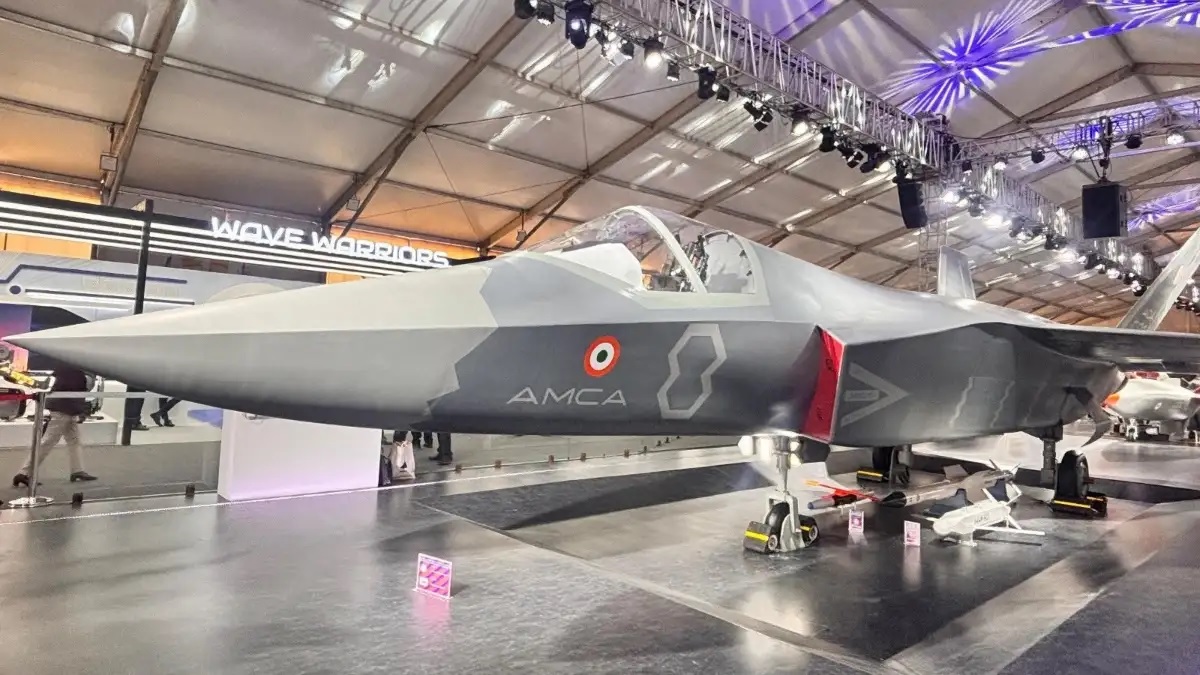
India
NEW DELHI — May 27, 2026 : India’s Ministry of Defence has issued a Request for Proposal (RFP) for the prototype development phase of the indigenous fifth-generation Advanced Medium Combat Aircraft (AMCA) programme, marking a significant step in the country’s effort to establish an advanced domestic combat aircraft manufacturing ecosystem. The RFP, administered through the Defence Research and Development Organisation (DRDO)’s Aeronautical Development Agency (ADA), has been issued to three shortlisted private-sector-led bidders following technical and commercial evaluations completed earlier in 2026. Defence officials confirmed the development on May 27, 2026, according to reports by ANI. The shortlisted contenders include Tata Advanced Systems, bidding independently; a consortium led by Larsen & Toubro (L&T) in partnership with Bharat Electronics Limited (BEL) and Dynamatic Technologies; and a Bharat Forge-led consortium that includes BEML and Data Patterns. These firms emerged after an assessment process involving seven original competitors. The RFP covers the development and manufacture of five flying AMCA prototypes, one structural test specimen, and the supporting testing ecosystem required for full-scale engineering development. The selected industry partner will work in collaboration with the ADA, which remains the nodal agency responsible for programme design, technical oversight and execution under DRDO. The prototype and engineering development phase is valued at approximately ₹15,000 crore and received approval from the Cabinet Committee on Security in 2024. Under the execution model approved by Defence Minister Rajnath Singh in May 2025, both public and private sector entities were allowed to compete on equal terms for participation in the programme. The three shortlisted entities are expected to submit detailed techno-commercial proposals within approximately two months. Following technical and financial evaluation, the government is expected to select the lowest qualifying bidder (L1), with contract negotiations projected to conclude by early 2027. Under the current execution framework, the selected consortium will be required to establish a dedicated special purpose company exclusively for the AMCA programme within three months of selection. A notable aspect of the process is the exclusion of state-run Hindustan Aeronautics Limited (HAL), which was not shortlisted for the production partner role. Defence officials indicated that concerns regarding HAL’s manufacturing bandwidth contributed to the decision, as the company is currently engaged in major programmes including Tejas Mk-1A production, Su-30MKI upgrades, Light Combat Helicopter manufacturing and the Indian Multi Role Helicopter (IMRH) project. The AMCA is planned as a 25-tonne, twin-engine, multirole fifth-generation stealth fighter intended for the Indian Air Force’s future combat fleet. The aircraft is designed to incorporate low observable shaping, radar-absorbent materials, internal weapons bays, advanced sensor fusion, artificial intelligence-enabled decision support systems, network-centric warfare capability and an Active Electronically Scanned Array (AESA) radar. The platform is also expected to feature supercruise capability and a combat radius of around 1,000 kilometres. Under current plans, initial prototypes and early production variants will be powered by American GE-F414 engines. Future versions are expected to transition to a customised 120-kN-class powerplant being explored through international cooperation, including discussions with France’s Safran. To support prototype development and flight testing, dedicated infrastructure is also being developed. On May 15, 2026, Defence Minister Rajnath Singh and Andhra Pradesh Chief Minister N. Chandrababu Naidu laid the foundation stone for the ADA’s Core Integration & Flight Testing Centre in Puttaparthi, Sri Sathya Sai district. The facility, being built at an estimated cost of around ₹2,000 crore, is expected to support prototype integration, testing and future programme requirements. Programme officials currently target the first prototype rollout in the 2028–29 timeframe, followed by extensive stealth validation, engine integration and weapons testing. Full-scale serial production and induction into Indian Air Force service are projected around the mid-2030s, with current planning aimed at operational induction by approximately 2035.
Read More → Posted on 2026-05-27 15:54:40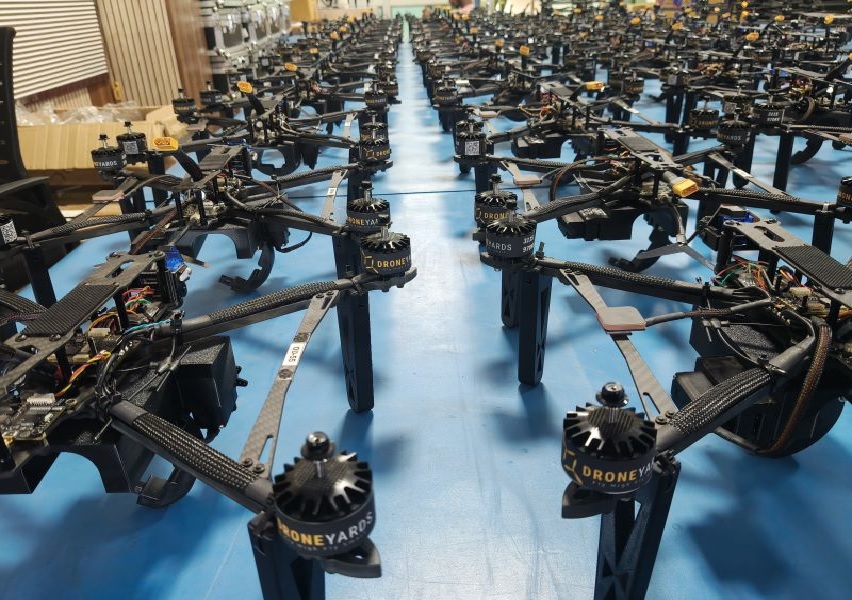
India
GHAZIABAD, India — May 27, 2026 : Ghaziabad-based aerospace startup DroneYards Aerial Solutions Pvt. Ltd. has delivered 300 ordnance-dropping drones capable of deploying 51 mm mortar payloads to the Northern Command of the Indian Army, marking a notable addition to India’s expanding indigenous tactical drone inventory. The company announced the delivery in late May 2026 as part of its growing defense-focused manufacturing portfolio. The unmanned aerial vehicles (UAVs) are specifically engineered to carry and precisely deploy 51 mm mortar shells, a lightweight infantry munition widely used by the Indian Army for close-range engagements and suppressing enemy positions. By integrating mortar-dropping mechanisms into tactical drones, frontline troops gain the ability to conduct localized precision strikes against enemy trenches, bunkers, fortified positions, and concealed hideouts while maintaining stand-off distance from direct hostile fire. According to the company, the drones supplied to the Northern Command are equipped with advanced electronic warfare (EW) capabilities intended to improve survivability and mission continuity in contested operational environments. The systems feature secure telemetry, triple radio redundancy, enhanced flight stability, and mission adaptability designed to maintain battlefield reliability during tactical operations where signal interference or electronic disruption may occur. Military observers view the capability as particularly relevant for operations in mountainous and high-altitude sectors along the Line of Control (LoC) and the Line of Actual Control (LAC), where difficult terrain and obstructed lines of sight can limit conventional targeting methods. In such conditions, small ordnance-dropping drones offer infantry units the ability to strike localized targets using aerial deployment while reducing troop exposure in forward areas. The newly delivered platforms also support real-time reconnaissance missions, enabling troops to gather battlefield intelligence while retaining the option for precision ordnance deployment using existing 51 mm mortar ammunition already in operational use by infantry formations. This dual-role capability strengthens lower-echelon tactical flexibility during frontline operations. Headquartered in Kaushambi, Ghaziabad, DroneYards focuses on indigenous defense-grade unmanned systems, including customized combat UAVs, first-person view (FPV) drones, surveillance systems, and rapid deployment aerial platforms. The company states that its platforms are designed without foreign components in critical subsystems as part of efforts to strengthen domestic defense manufacturing capability. The ordnance-dropping drone delivery follows DroneYards’ earlier supply of more than 200 FPV drones to the Indian Army in early 2026. That deployment included operator training for over 350 soldiers at forward locations, including areas near the Manipur–Assam border, aimed at improving tactical drone integration and field-level operational readiness. In addition to the newly delivered 51 mm mortar-dropping systems, the company’s defense portfolio includes the VINASH kamikaze FPV drone, developed for precision-strike tactical missions, and the Dhanush night surveillance drone equipped for low-light monitoring and long-range aerial observation. The procurement aligns with the Indian Ministry of Defence’s broader push under the “Aatmanirbhar Bharat” initiative to expand domestic sourcing of military equipment and reduce reliance on foreign defense imports. In recent years, the Indian Armed Forces have increasingly procured tactical drones, loitering munitions, logistics UAVs, and surveillance systems from Indian startups and MSMEs to
Read More → Posted on 2026-05-27 16:06:34
World
NORTHOLT, United Kingdom — May 27, 2026 : The United Kingdom and Poland signed the Northolt Treaty on Wednesday at RAF Northolt air base in west London, formalising a new bilateral defence and security agreement aimed at expanding military cooperation, defence industrial collaboration and regional security coordination between the two NATO allies. British Prime Minister Keir Starmer and Polish Prime Minister Donald Tusk signed the agreement during a ceremony at RAF Northolt, a site with historical significance as the base from which Polish pilots operated during the Second World War and where a memorial to them remains. The Northolt Treaty establishes a framework for closer defence and security cooperation, including the joint development and production of next-generation military systems. Key areas identified in the agreement include missile defence systems, medium-range missiles and drone technologies. The pact also provides for the co-production of a next-generation medium-range air defence missile by combining industrial expertise and manufacturing capabilities in both countries. A central pillar of the agreement is the expansion of military interoperability between British and Polish forces through large-scale joint exercises. These exercises are expected to focus on counter-drone warfare, electronic warfare, advanced missile defence operations and engineering support, while also improving operational coordination between both militaries. The treaty further strengthens defence industrial cooperation by promoting closer coordination between defence manufacturers, industrial planning and export strategies to secure supply chains and support long-term production requirements. The agreement also aims to deepen collaboration between domestic defence sectors in both countries. Security cooperation under the treaty extends beyond conventional military matters. The agreement includes measures to counter hybrid threats such as cyber attacks, disinformation campaigns and hostile influence operations, while also covering border security, cybersecurity resilience and efforts to combat organised crime. The treaty explicitly identifies Russia as the most significant long-term threat to Euro-Atlantic security and outlines measures intended to improve deterrence and strengthen regional security, particularly across Eastern Europe. It includes a mutual assistance commitment under which both countries agreed to support one another in the event of an armed attack, while aligning these obligations with Article 5 of the North Atlantic Treaty Organization. British and Polish leaders emphasised that the agreement is intended to complement, rather than replace, NATO commitments. Tusk said the treaty would strengthen Polish and British security, protect cyberspace and reinforce NATO as a whole. He stated that the agreement transforms political partnerships into practical measures intended to address security threats before they escalate, while reinforcing shared democratic principles, the rule of law and human rights. Starmer described the Northolt Treaty as the biggest step forward in the UK’s defence and security relationship with Poland in a generation, stating that the agreement would strengthen joint capabilities, deepen bilateral cooperation and enable both countries to address modern security challenges while jointly developing and manufacturing advanced military systems. The agreement builds upon the 2017 UK–Poland Treaty on Defence and Security Cooperation and expands an already growing defence relationship between the two countries. In 2024, Poland signed a £4 billion procurement agreement for more than 1,000 CAMM-ER surface-to-air missiles and launchers from European missile manufacturer MBDA. Poland’s state-owned defence group Polska Grupa Zbrojeniowa also entered a strategic partnership with BAE Systems to support production of 155mm artillery shells. The Northolt Treaty follows similar bilateral defence agreements recently signed between the United Kingdom, France and Germany, while Poland also concluded a defence treaty with France in 2025. These agreements reflect broader efforts among several European military powers to strengthen defence cooperation, industrial coordination and regional security planning. No information regarding the treaty’s duration or specific financial commitments linked to the agreement was disclosed at the time of signing.
Read More → Posted on 2026-05-27 16:29:06
World
PASCAGOULA, Mississippi — May 27, 2026 : The U.S. Navy is moving forward with a major modernization program for its three Zumwalt-class guided-missile destroyers, integrating Conventional Prompt Strike (CPS) hypersonic missiles while significantly increasing the ships’ operational range and endurance to support prolonged deployments in the Indo-Pacific region. According to recently released modernization documents, the upgrades are intended to improve the stealth destroyers’ ability to remain deployed for extended periods without requiring frequent logistical support, a capability viewed as increasingly important amid the long distances and operational challenges of the Pacific theater. A key component of the modernization effort is a “Fuel Endurance and Range” modification planned for USS Michael Monsoor (DDG-1001). Under the plan, engineers will convert several existing saltwater ballast tanks into fuel storage tanks to increase onboard fuel oil capacity. Additional changes to the ships’ underway replenishment systems will also allow Zumwalt-class destroyers to take on larger volumes of fuel during resupply operations at sea. The increase in fuel capacity is expected to enable the Navy’s first sea-based hypersonic strike platforms to remain on station for longer periods and conduct extended deterrence patrols without frequent replenishment. Naval planners consider the enhancement necessary to sustain operations across the Indo-Pacific, where long transit distances, dispersed support infrastructure and limited logistics access continue to shape operational planning. “The Zumwalt class, with its advanced stealth design and integration of the Conventional Prompt Strike weapons system, will be the Navy’s premier offensive surface combatant, providing sea-based precision capabilities that can effectively engage strategic targets with long-range fires,” said Capt. Clint Lawler, Program Manager for the Zumwalt-class Destroyer program office, during a presentation at the 2025 Surface Navy Association symposium. Hypersonic Missile Integration As part of the modernization effort, the Navy is removing both of the destroyers’ original 155 mm Advanced Gun System (AGS) turrets to make room for the new hypersonic weapons infrastructure. The forward gun position will be replaced with a Large Missile Vertical Launching System containing four Advanced Payload Modules. Each module will carry three CPS hypersonic missiles, giving every Zumwalt-class destroyer a total capacity of 12 hypersonic weapons. According to Naval Sea Systems Command, the second AGS mount will remain empty for unspecified future capabilities. The CPS weapon system is being developed jointly with the U.S. Army and shares common technology with the Army’s Long Range Hypersonic Weapon (LRHW), also known as Dark Eagle. While the Army’s ground-based system can be rapidly deployed using transport aircraft, the Navy’s version will be fielded aboard Zumwalt-class destroyers and future Virginia-class nuclear-powered attack submarines. Although technical details surrounding the Navy’s CPS remain classified, the Army’s associated hypersonic system has demonstrated an operational range of at least 2,175 miles and employs a conventional boost-glide design intended to strike high-value targets at long distances with short response times. Modernization Timeline and Shipyard Work The modernization program is being carried out at HII Ingalls Shipbuilding in Pascagoula, Mississippi. USS Zumwalt (DDG-1000), the lead ship of the class, entered CPS conversion in 2023 and completed initial installation of missile tubes before returning to the water in December 2024. USS Lyndon B. Johnson (DDG-1002), the third and final ship in the class, arrived at the shipyard in 2025 to begin its refit, while USS Michael Monsoor (DDG-1001) is scheduled to undergo the same modernization process. Live-fire testing of the CPS hypersonic missile system aboard USS Zumwalt is expected to begin between 2027 and 2028. The modernization effort across all three ships is projected to cost approximately $2 billion. Strategic Shift for the Zumwalt-Class The modernization reflects a broader shift in the mission of the Zumwalt-class destroyers, originally conceived in the late 1990s and early 2000s as stealth warships intended to provide naval gunfire support for operations near coastlines. Only three of the originally planned 32 destroyers were ultimately built. Over time, the ships’ original mission lost relevance due to the growing proliferation of land-based anti-ship missile systems, while the specialized ammunition required for the AGS became prohibitively expensive, leading the Navy to cancel further procurement. With growing emphasis on deterrence and long-range strike capabilities in response to China’s expanding military capabilities and the operational demands of the Indo-Pacific region, the Navy has repositioned the Zumwalt-class as stealthy conventional strike platforms capable of launching hypersonic weapons against strategic targets while remaining deployed for longer periods at sea.
Read More → Posted on 2026-05-27 17:22:25
World
AUSTIN, Texas — May 27, 2026 : BAE Systems has secured the U.S. Army’s Soft Kill Active Protection System (APS) program of record contract to equip military ground vehicles with advanced electronic warfare-based defensive capabilities using the company’s Rapid Optical Observation and Kill (ROOK) system. The award supports the Army’s ongoing effort to improve ground vehicle survivability through layered, non-kinetic protection technologies. The ROOK system is designed to counter incoming threats such as unmanned aerial systems (UAS) and anti-tank guided missiles (ATGMs) through soft-kill electronic warfare measures. Rather than physically intercepting threats, the system jams or disrupts hostile guidance systems, preventing munitions from accurately striking vehicles. According to BAE Systems, this capability enhances crew survivability and mission effectiveness by improving situational awareness and reducing response time in complex battlefield conditions. As a soft-kill countermeasure, ROOK is intended to neutralize threats before impact while preserving the limited magazine depth of traditional hard-kill systems, which depend on kinetic interceptors. By relying on electronic disruption instead of expendable munitions, the system enables crews to conserve hard-kill defenses for specialized engagements and maintain sustained protection against multiple threats. BAE Systems said the system forms part of its broader “Intrepid Shield” layered protection concept, which integrates multiple defensive technologies to create a comprehensive protective architecture for military platforms. The approach combines electronic warfare, sensors, and countermeasure systems to strengthen vehicle survivability in contested environments. “Modern ground warfare demands a layered defense, and soft-kill technologies are a critical, complementary component,” said Dave Gillespie, director of Optics and Countermeasure Solutions at BAE Systems. “ROOK offers a cost-effective, sustainable defense with an infinite magazine depth, continuously disrupting enemy systems.” The contract builds upon earlier Army-supported research and development efforts, including the Advanced Layered Soft Kill System (ALSKS) and Layered Soft Kill System (LSKS) programs, which helped mature electronic warfare-based active protection technologies for armored vehicles. The current program is sponsored by the U.S. Government under an Other Transaction agreement through the National Advanced Mobility Consortium to support the accelerated fielding of adaptable vehicle protection systems. In addition to ROOK, the contract will support continued development of BAE Systems’ Stormcrow and TERRA RAVEN countermeasure systems. These modular, laser-based infrared countermeasures are adapted from aircraft self-protection technologies and designed to protect military vehicles against guided threats, including anti-tank missiles. The systems can also operate in conjunction with BAE Systems’ 360 MVP Sensor suite, which uses longwave infrared camera cores to provide continuous 360-degree threat detection and early warning capabilities. The agreement further includes delivery of prototype systems for vehicle integration and operational testing as part of the U.S. Army’s objective to rapidly deploy scalable and adaptable active protection systems across its ground combat vehicle fleet. No contract value has been disclosed. BAE Systems has supplied survivability and protection equipment to the U.S. Department of Defense and allied military forces for decades. Development and manufacturing of its vehicle protection technologies are conducted at the company’s Austin, Texas facility, while specialized research and development support is provided through its FAST Labs organization in Merrimack, New Hampshire.
Read More → Posted on 2026-05-27 17:33:21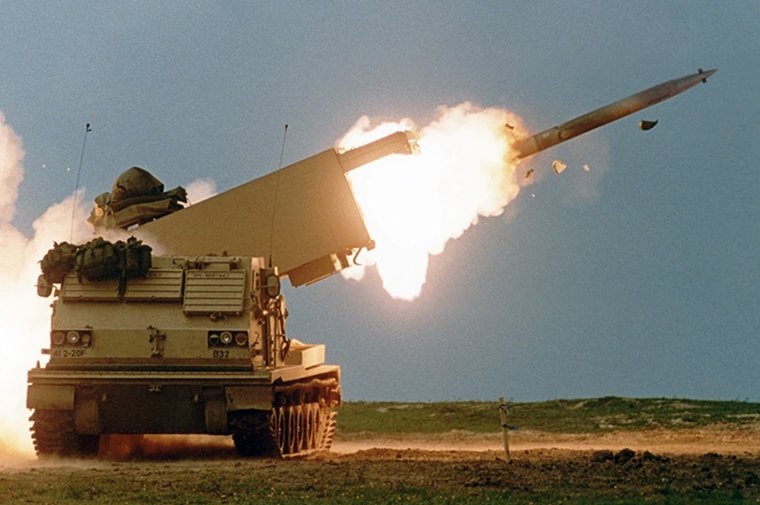
World
GRAND PRAIRIE, Texas — May 27, 2026 : The U.S. Army has awarded Lockheed Martin a $14.3 million contract modification to provide engineering support for the Multiple Launch Rocket System (MLRS) across all production variants, reinforcing long-term sustainment and modernization of one of the Army’s primary long-range artillery capabilities. The award was issued by the Army Contracting Command at Redstone Arsenal, Alabama, under contract W31P4Q-24-C-0007, increasing the cumulative value of the underlying agreement to approximately $230 million. The modification covers engineering services focused on system performance, safety, reliability, maintainability, and product improvement, ensuring the continued operational effectiveness of the MLRS ecosystem. Work will be carried out at Lockheed Martin’s Missiles and Fire Control facility in Grand Prairie, Texas, with completion scheduled for May 27, 2027. Funding for the effort is sourced from fiscal year 2025 U.S. Army research, development, test, and evaluation appropriations. Sustaining a Long-Range Precision Fires Capability The engineering support effort covers the full MLRS architecture, including the tracked M270 Multiple Launch Rocket System and the wheeled M142 High Mobility Artillery Rocket System (HIMARS). Both launchers are designed to deliver salvos of unguided rockets and precision-guided munitions, providing ground forces with long-range strike capabilities beyond conventional tube artillery. The MLRS family supports a broad range of munitions, including the Army Tactical Missile System (ATACMS) and the next-generation Precision Strike Missile (PrSM), which is intended to provide extended-range precision strike capability at distances exceeding 499 kilometers. Ongoing engineering work also supports compatibility with newer extended-range Guided Multiple Launch Rocket System (GMLRS) munitions and evolving battlefield requirements. First introduced in the early 1980s, the MLRS has remained a core component of U.S. Army and allied artillery operations for more than four decades. Maintaining a mature weapons system across multiple configurations requires continuous engineering oversight to sustain readiness, improve reliability, maintain safety standards, and integrate upgrades without requiring complete platform redesigns. Engineering Support and System Sustainment Under the modification, Lockheed Martin will provide engineering services intended to sustain launcher performance while addressing reliability and maintainability requirements across operational fleets. Such efforts are critical for preventing hardware failures, validating incremental improvements, and ensuring systems continue to operate effectively under changing operational demands. The work also supports long-term product improvement initiatives that allow the Army to modernize existing launchers rather than replace entire fleets, helping maintain interoperability between older and newer configurations across U.S. and allied inventories. Lockheed Martin’s Grand Prairie facility serves as the central hub for the company’s missiles and fire control operations and has supported MLRS and HIMARS production, sustainment, and modernization for decades. The site houses engineering expertise, technical infrastructure, and manufacturing support capabilities necessary to address both routine maintenance requirements and urgent operational needs identified by users in the field. Rising Global Demand for MLRS Systems The contract modification reflects a broader trend of sustained U.S. Army investment in the MLRS family, which has intensified since 2022 as demand for long-range precision fires systems increased globally. The operational use of HIMARS and ATACMS in Ukraine demonstrated the effectiveness of precision strikes against logistics hubs, command positions, and ammunition depots, contributing to renewed international interest in rocket artillery systems capable of deep battlefield engagements. In response, several allied countries have accelerated procurement efforts through Foreign Military Sales agreements. Nations including Poland, Romania, Estonia, Lithuania, and Latvia have ordered HIMARS launchers and associated munitions or expanded modernization efforts tied to MLRS-family systems. As the number of operators grows, engineering sustainment requirements also increase. Each additional user expands the need for system upgrades, software integration, maintenance support, and long-term fleet management supported through contracts such as the current Lockheed Martin agreement. Broader Modernization Efforts Separate from this engineering services modification, the U.S. Army has awarded Lockheed Martin additional contracts in recent years for Guided Multiple Launch Rocket System production and launcher modernization efforts, including upgrades of legacy M270A1 launchers to the M270A2 configuration. The M270A2 modernization program incorporates the Common Fire Control System, enabling compatibility with Precision Strike Missile integration and future long-range guided munitions while extending the operational relevance of existing launcher fleets. The $14.3 million contract modification reflects the Army’s continued emphasis on sustaining platform readiness, supporting incremental modernization, and maintaining long-term operational effectiveness across the MLRS family for both U.S. and allied forces.
Read More → Posted on 2026-05-27 17:43:42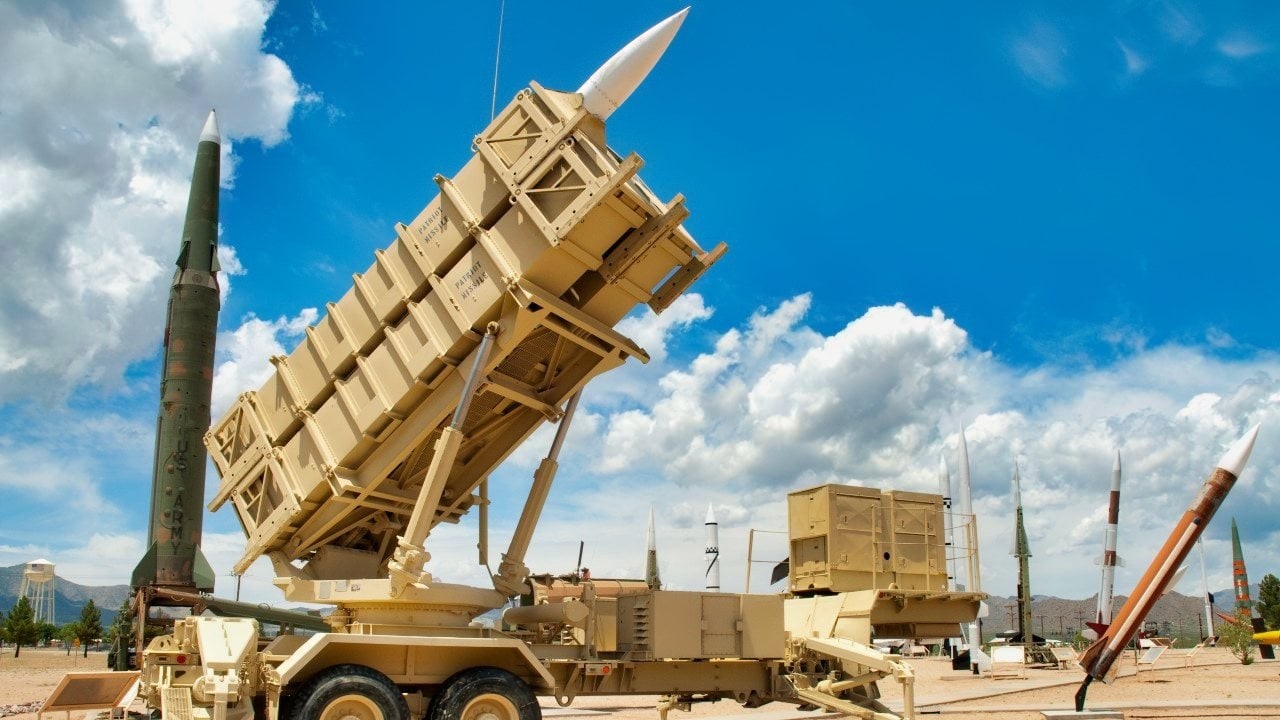
World
WASHINGTON — May 27, 2026 : A new analysis by the Center for Strategic and International Studies (CSIS) has concluded that the United States will require multiple years to replenish key missile inventories depleted during the recent 39-day air and missile campaign against Iran under Operation Epic Fury, raising concerns over near-term readiness for other potential military contingencies, particularly in the Indo-Pacific. The assessment was detailed in two CSIS reports — Last Rounds? Status of Key Munitions at the Iran War Ceasefire, released on April 21, 2026, and a follow-up analysis, Rebuilding U.S. Missile Inventory: A Multiyear Project, published on May 27, 2026. The studies, authored by senior adviser and former Marine Corps Colonel Mark F. Cancian and research associate Chris H. Park, examined seven major precision-guided munitions systems used during combat operations and estimated the time required to restore inventories to prewar levels. Significant Missile Expenditures During Iran Campaign According to the report, U.S. forces expended substantial quantities of advanced missiles during the seven-week campaign against Iran, reducing inventories of long-range strike weapons and air-defense interceptors. Among the most heavily used systems were Tomahawk cruise missiles. CSIS estimates that more than 850 Tomahawks were launched during the conflict, with some estimates exceeding 1,000 missiles. This represented approximately 27 to 32 percent of the prewar inventory, which stood at roughly 3,100 missiles. Due to limited procurement in previous years and production timelines, analysts estimate that rebuilding Tomahawk inventories to prewar levels could take until late 2030 or early 2031, despite efforts by Raytheon to increase production to approximately 1,000 missiles annually. Patriot air-defense interceptors also experienced significant drawdowns. The report estimates that U.S. forces fired between 1,060 and 1,430 Patriot missiles during the campaign, representing nearly half of prewar stockpiles. Based on projected production and scheduled deliveries, replenishment is expected to continue until approximately mid-2029. The Terminal High Altitude Area Defense (THAAD) system also experienced heavy use, with an estimated 190 to 290 interceptors fired. According to CSIS, this amounted to roughly 50 percent or more of available inventories, with higher estimates placing depletion at as much as 80 percent of operational stocks. Deliveries of replacement interceptors from Lockheed Martin are projected to continue through mid-to-late 2029. Additional munitions also saw notable depletion. More than 1,000 Joint Air-to-Surface Standoff Missiles (JASSM) were reportedly fired, accounting for over 20 percent of available stocks, while Precision Strike Missiles (PrSM) declined by an estimated 45 percent. However, analysts assess that both systems could be replenished within months to roughly one year because of recent procurement increases and expanded production schedules. Naval missile systems, including Standard Missile-3 (SM-3) and Standard Missile-6 (SM-6) interceptors, also experienced inventory reductions estimated at roughly 20 to 24 percent. CSIS projects these naval interceptors may require approximately two years to return to pre-conflict levels. Strategic Implications for the Indo-Pacific The report concludes that while the United States retains sufficient munitions to continue operations associated with the Iran conflict under plausible scenarios, depleted stockpiles have reduced readiness for additional high-intensity contingencies. CSIS stated that Tomahawk cruise missiles, Patriot interceptors, and THAAD systems play a central role in long-range strike operations and theater missile defense in the Western Pacific. In a potential conflict involving the People's Republic of China, these systems would be essential for countering large inventories of cruise and ballistic missiles as well as advanced air-defense networks. The report further noted that prewar inventories were already considered insufficient for a prolonged high-intensity conflict against a peer competitor. The depletion caused during operations against Iran has intensified those limitations, creating what analysts described as a temporary “window of vulnerability” until production catches up with operational demand. Production Constraints and Defense Spending To address the shortfall, the proposed FY2027 U.S. defense budget includes a broader $1.5 trillion framework intended to increase procurement of Tomahawk missiles, Patriot and THAAD interceptors, long-range strike systems, and defense manufacturing capacity. Defense manufacturers, including Raytheon and Lockheed Martin, have initiated expansion efforts in states such as Alabama and Arizona to increase output. Industry agreements include plans to significantly expand interceptor production, including increasing THAAD output from approximately 96 missiles annually to as many as 400 per year. Despite increased funding, CSIS emphasized that manufacturing limitations remain the primary challenge to rapid replenishment. Advanced missile systems rely on highly specialized components, including solid rocket motors, guidance systems, electronics, and rare-earth materials, while production expansion requires long-term investment and lead times of 24 to 36 months or longer. As a result, analysts concluded that financial investment alone cannot quickly resolve near-term shortages or significantly shorten replenishment timelines. Pentagon Response and Near-Term Measures According to the report, the Pentagon has reportedly re-sequenced some scheduled deliveries to prioritize U.S. operational requirements over certain foreign military sales commitments as inventories recover. Reduced stockpiles may also temporarily affect Washington’s ability to supply systems such as Patriot, THAAD, and PrSM missiles to allies and partners, including Ukraine. Defense Secretary Pete Hegseth has stated that replenishment will take “months and years,” depending on the specific weapon system, while Pentagon officials maintain that current military resources remain adequate to meet operational requirements across combatant commands.
Read More → Posted on 2026-05-27 17:50:34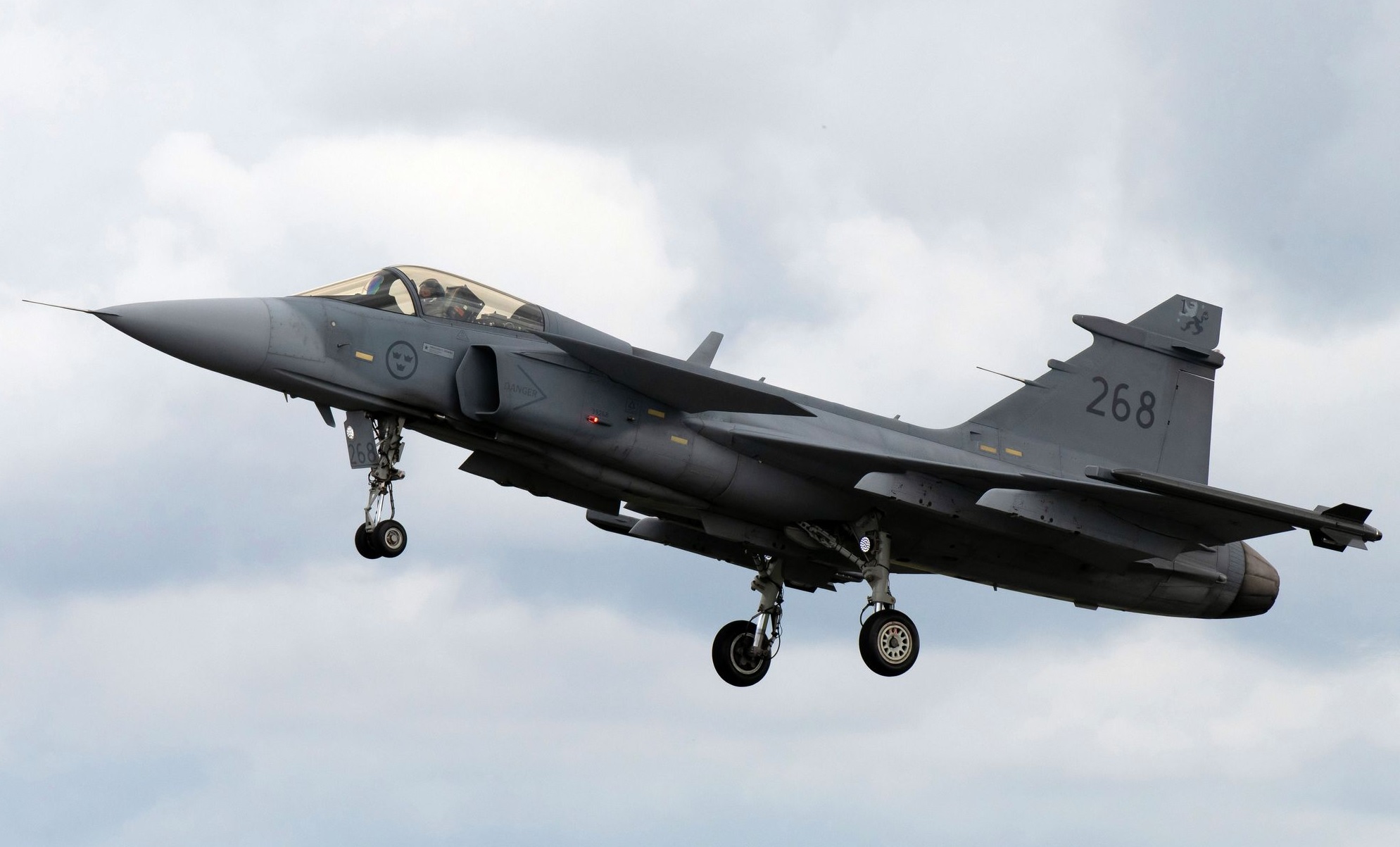
World
UPPSALA, Sweden — May 28, 2026 : Sweden announced on Thursday that it will donate up to 16 Saab JAS 39 Gripen C/D fighter jets to Ukraine, while Kyiv intends to purchase an initial batch of up to 20 newer Gripen E/F aircraft in a long-term effort to modernize its air force and expand defense cooperation with Stockholm. The announcement was made during a joint press conference by Swedish Prime Minister Ulf Kristersson and Ukrainian President Volodymyr Zelenskyy at the Uppland Air Wing in Uppsala, where both leaders outlined plans covering the immediate transfer of fighter aircraft and Ukraine’s future procurement ambitions. The fighter jet package represents a major addition to Ukraine’s expanding Western-supplied aviation fleet, which already includes U.S.-made F-16s and French Mirage 2000 aircraft. Officials said the Gripen integration is intended to strengthen Ukraine’s air defense capabilities, improve protection of civilian infrastructure, and support longer-range operational requirements. Donation Of 16 Gripen C/D Aircraft Under the agreement, Sweden intends to transfer up to 16 JAS 39 Gripen C/D fighter jets from its existing fleet to Ukraine, with deliveries expected to begin by early 2027. The Swedish government confirmed that funds have already been allocated to replace the donated aircraft within Sweden’s own air force, while dialogue on replenishing the capability will proceed alongside defense planning and industrial coordination. The transfer of Gripen C/D aircraft forms part of a broader Swedish military assistance package for Ukraine valued at approximately $2.7 billion. The package also includes nearly $400 million allocated for Ukrainian drone production support, according to Swedish officials. Sweden’s military assistance to Ukraine since Russia’s full-scale invasion in 2022 has reached approximately SEK 103 billion and has included armored vehicles, artillery systems, air defense equipment, radars, electronic warfare systems, spare parts, and aviation-related support. Ukraine Plans Purchase Of 20 Gripen E/F Fighters Alongside the aircraft donation, Ukrainian officials confirmed plans to purchase an initial batch of up to 20 Gripen E/F fighter jets, the latest and more advanced version of the aircraft. Ukraine intends to finance the acquisition through approximately €2.5 billion (around $2.9 billion) from a European Union-backed Ukraine support loan. Swedish officials stated that negotiations on the final procurement agreement remain ongoing, with deliveries of the Gripen E/F models expected to begin by 2030. Officials indicated that the acquisition would likely occur in phased batches as negotiations progress and financing arrangements are finalized. The planned purchase follows a letter of intent signed between Sweden and Ukraine in October 2025 during President Zelenskyy’s visit to Linköping, establishing a framework for Kyiv’s potential acquisition of up to 150 Gripen E/F aircraft. Although the current proposal focuses on an initial order of 20 jets, Zelenskyy reiterated that Ukraine continues to seek financing mechanisms that could eventually support procurement of the larger fleet. Saab Preparing For Future Support Swedish defense manufacturer Saab confirmed that no formal contracts or purchase orders have been signed at this stage but stated that the company is preparing to support both Ukraine’s potential acquisition and Sweden’s replacement of the donated aircraft. Saab CEO and President Micael Johansson said the company expects to support Ukraine’s transition to the Gripen platform as well as discussions concerning Sweden’s replacement requirements. According to Saab, future negotiations between Swedish and Ukrainian authorities will determine the structure of the procurement process, support arrangements, and the timeline for deliveries. Gripen Designed For Dispersed Operations The JAS 39 Gripen is regarded as suitable for Ukraine’s operating environment due to its ability to conduct dispersed operations under contested conditions. Originally designed during the Cold War to function in scenarios involving attacks on established air bases, the aircraft can operate from short runways, temporary airstrips, and sections of civilian highways or roads. The platform is also designed to be cost-effective and comparatively easier to maintain, requiring a smaller ground support crew than many conventional fighter aircraft. These characteristics reduce dependence on large, fixed air bases that remain vulnerable to missile strikes. The newer Gripen E/F variant planned for acquisition includes upgraded avionics, a more powerful engine, and an Active Electronically Scanned Array (AESA) radar intended to improve detection, tracking, and combat effectiveness. Discussions on future support packages, including advanced munitions such as IRIS-T, AMRAAM, and Meteor missiles, are continuing as negotiations advance. The proposed Gripen transfer and procurement program marks a further expansion of Swedish-Ukrainian defense cooperation, while providing Kyiv with both short-term combat aircraft support and a framework for long-term air force modernization.
Read More → Posted on 2026-05-28 13:39:19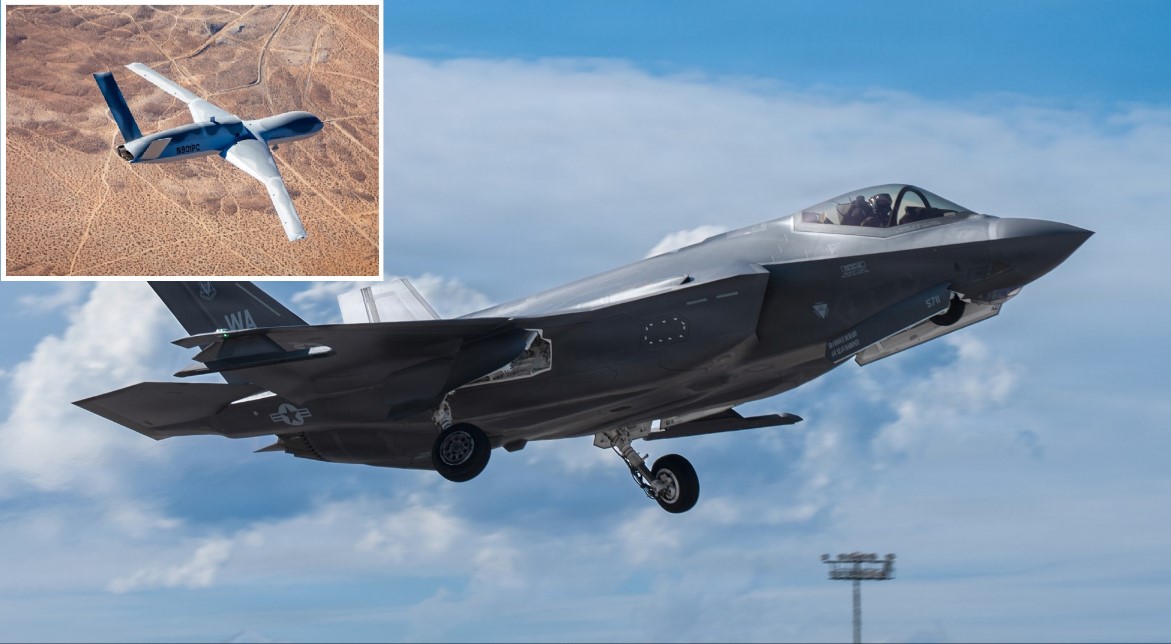
World
SAN DIEGO — May 28, 2026 : General Atomics Aeronautical Systems, Inc. (GA-ASI) has successfully demonstrated advanced manned-unmanned teaming capabilities by pairing an F-35 Lightning II fighter jet with an MQ-20 Avenger unmanned aircraft in support of the U.S. Air Force’s Collaborative Combat Aircraft (CCA) program. The test marked a key step in validating how crewed fighters could coordinate with semi-autonomous drones during future combat operations. The demonstration was conducted in partnership with the F-35 Joint Program Office, Lockheed Martin, autonomy firm Autonodyne, the 309th Software Engineering Group, and the 461st and 370th Flight Test Squadrons. During the exercise, the F-35 remained on the ground while the MQ-20 Avenger operated in flight as a surrogate Collaborative Combat Aircraft, enabling operators and engineers to evaluate command-and-control functions, autonomy systems, and tactical data exchange. Beyond-Line-Of-Sight Control Demonstrated According to GA-ASI, the demonstration relied on beyond-line-of-sight (BLOS) communications linked through a proliferated low Earth orbit satellite network. A pilot seated inside the F-35 cockpit used a tablet through the Bashi Pilot Vehicle Interface to issue tactical autonomy commands to the MQ-20, showing how future operators may manage autonomous wingmen during missions. The commands directed the MQ-20 to perform tactical maneuvers, dynamically adjust flight waypoints, and relay ADS-B track data back to the F-35. At the same time, the unmanned aircraft transmitted operational data including location, altitude, velocity, and autonomous response status, enabling the pilot to monitor aircraft activity and mission execution in real time. GA-ASI stated that the exercise validated seamless communication between a crewed aircraft and a surrogate CCA platform through an operationally relevant data link while confirming the functionality of supporting hardware, software, and network architecture needed for future autonomous combat operations. TacACE Autonomy Software And Integration The MQ-20 Avenger was powered by GA-ASI’s TacACE (Tactical Autonomy Ecosystem) software, which is based on the Autonomy Government Reference Architecture (A-GRA). The architecture is designed to accelerate software integration and enable rapid adoption of commercial and government technologies, allowing autonomy systems to be updated more efficiently as operational requirements evolve. Michael Atwood, vice president of Advanced Programs at GA-ASI, described the demonstration as an important integration milestone for the Collaborative Combat Aircraft effort and said it highlighted near-term opportunities for operational force integration using mission autonomy and advanced data links. The MQ-20 Avenger has served as a primary Air Force surrogate platform for autonomy testing and CCA-related experimentation for more than five years. The latest F-35 demonstration follows earlier manned-unmanned teaming tests involving the F-22 Raptor, including an October 2025 exercise at the Nevada Test and Training Range and another test conducted at Edwards Air Force Base in February 2026. Path Toward Operational Collaborative Combat Aircraft While the MQ-20 continues to support software, networking, and autonomy validation, the Air Force’s long-term objective is to field purpose-built Collaborative Combat Aircraft capable of operating alongside crewed fighters during combat missions. In April 2024, the Air Force selected GA-ASI and defense technology company Anduril to develop the first operational increment of the CCA program. GA-ASI’s aircraft, designated the YFQ-42A and later named Dark Merlin, completed its maiden flight in August 2025. The aircraft resumed testing in late May 2026 after software corrections addressed a non-fatal April 6 incident caused by miscalculations involving aircraft weight and center-of-gravity data. The Air Force plans to begin procurement of its first production Collaborative Combat Aircraft in fiscal year 2027, viewing the systems as a lower-cost means of increasing combat mass, strike capacity, reconnaissance capability, and electronic warfare support while reducing operational risks to pilots. Congressional Support And Indo-Pacific Considerations Support for the program has also expanded in Congress. In a proposed National Defense Authorization Act (NDAA) draft released on May 26, the House Armed Services Committee included several provisions backing continued CCA development and praised the pace of cooperation between the Air Force and industry. Lawmakers noted that General Atomics and Anduril conducted initial flight demonstrations within approximately 18 months, describing the timeline as faster than recent tactical fighter-like aircraft development efforts. The committee also supported the Air Force’s plans to transition the first CCA increment toward production. At the same time, lawmakers highlighted long-term operational concerns related to a potential Indo-Pacific contingency, particularly the threat posed by Chinese long-range weapons systems. Committee members stated that future Collaborative Combat Aircraft may require sufficient range, speed, and endurance to self-deploy across extended distances or launch from outside contested zones if operations from forward bases near the first island chain become impractical. Under the proposed legislation, the Air Force and Navy secretaries would be required to submit a report to Congress by January 15, 2027, detailing the cost implications and operational tradeoffs of their respective CCA requirements. Separately, the Navy secretary has been directed to brief lawmakers by December 15, 2026, on the service’s acquisition strategy and plans to incorporate technologies and development approaches pioneered through the Air Force’s CCA Increment 1 program.
Read More → Posted on 2026-05-28 13:51:48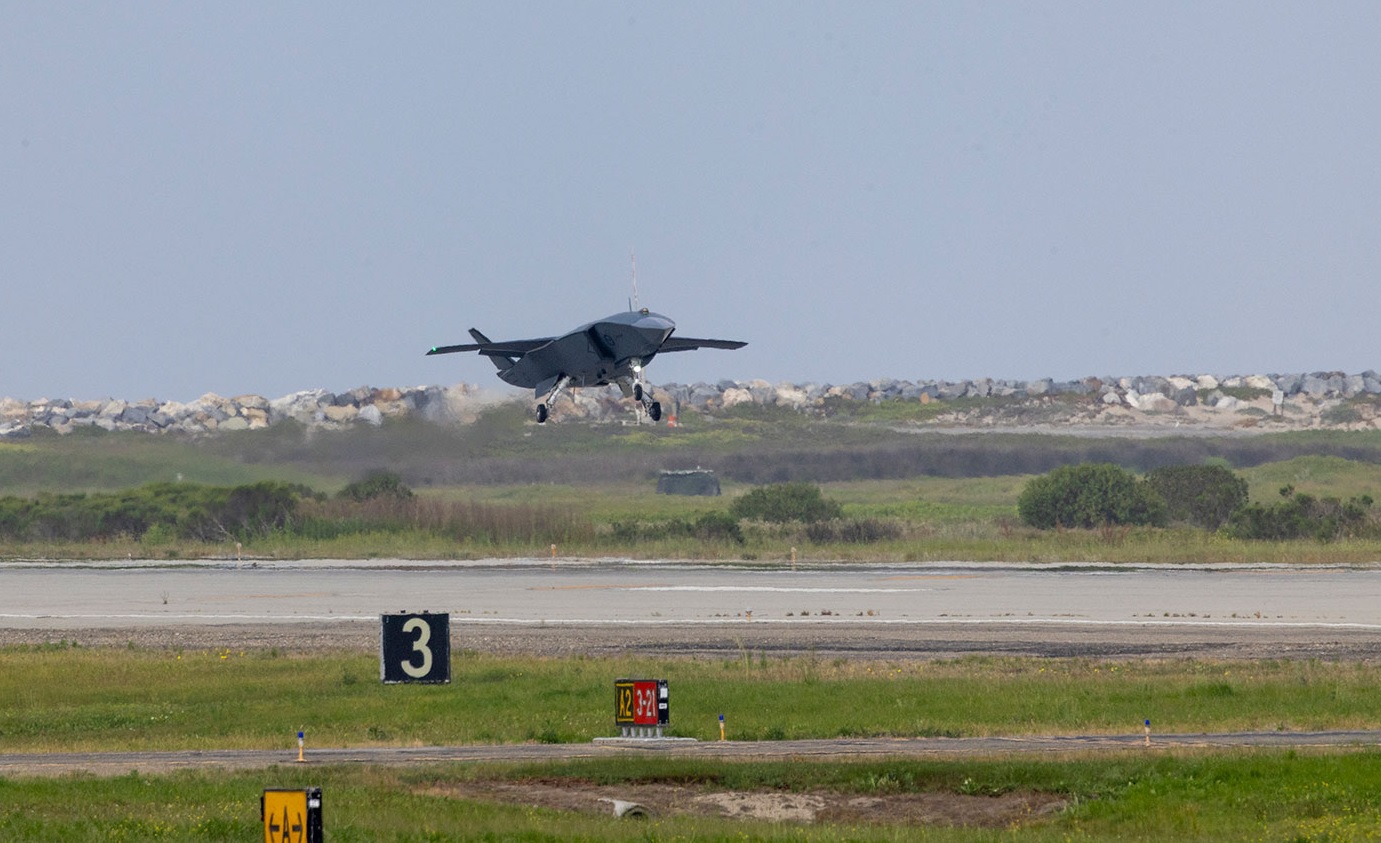
World
POINT MUGU, California — May 28, 2026 : Boeing’s MQ-28 Ghost Bat autonomous combat drone has successfully completed three operational flight tests over the Pacific Ocean at the Point Mugu Sea Range, located at U.S. Naval Base Ventura County in California, marking the aircraft’s first international deployment and its inaugural operations in allied airspace outside Australia. The flight campaign was conducted to validate the MQ-28’s autonomous systems and demonstrate its ability to support rapid deployment and sustained operations from allied military facilities. Boeing stated that the MQ-28 completed three sorties over the Pacific Ocean during the testing activity. According to the company, the flight test team coordinated with local authorities, employed certified range assets, and operated under required airspace, range safety, and regulatory approvals to reduce operational risks during the deployment. Developed As A Collaborative Combat Aircraft The MQ-28 Ghost Bat is being developed by Boeing Defence Australia in partnership with the Royal Australian Air Force (RAAF) as a Collaborative Combat Aircraft (CCA), designed to function as a “loyal wingman” alongside crewed combat and surveillance aircraft. The platform is intended to operate with aircraft including the F-35, F/A-18F Super Hornet, and E-7 Wedgetail, providing additional combat mass, mission persistence, survivability, and operational flexibility in contested environments while reducing exposure risks for human pilots. “The activity at Point Mugu is part of Boeing's ongoing flight test program to mature the MQ-28 and demonstrate operations from allied locations,” said Glen Ferguson, Boeing’s MQ-28 global program director. “MQ-28 is using this location to further prove the maturity of the program and inform future exportability.” Aircraft Capabilities And Autonomous Operations The MQ-28 Ghost Bat measures approximately 38 feet in length and has a flight range exceeding 2,000 nautical miles. The aircraft incorporates a modular mission package system integrated into its nose section, allowing rapid reconfiguration of payloads for different mission profiles. The platform can support intelligence, surveillance, reconnaissance (ISR), tactical early warning, and electronic support missions. Using artificial intelligence-enabled autonomy, the aircraft can independently execute portions of assigned missions, reducing pilot workload for accompanying crewed aircraft. Expanding U.S.-Australia Defense Cooperation The successful testing in U.S. airspace represents a further step in U.S.-Australian defense cooperation on autonomous combat aviation programs. A bilateral arrangement established in 2023 supports collaborative development of Collaborative Combat Aircraft technologies between the two countries. Boeing stated that demonstrating the MQ-28’s ability to operate from allied military installations supports efforts to validate the aircraft’s maturity and future exportability for allied defense customers seeking modular and cost-effective force-multiplier capabilities. Program Progress And Future Plans The MQ-28 Ghost Bat first flew at the RAAF Woomera Test Range Complex in February 2021 and became the first military aircraft designed, manufactured, and flown in Australia in more than 50 years. By March 2025, MQ-28 prototype aircraft had completed more than 100 test flights, including demonstrations involving multi-ship operations and integration with crewed aircraft. In December 2025, the platform also completed a live air-to-air missile engagement involving an AIM-120 AMRAAM during testing at Woomera. Australia is expected to receive its first three operational Block 2 MQ-28A aircraft by the end of 2026, with the planned fleet projected to expand to ten aircraft by 2030 as Boeing and the RAAF continue evaluating autonomous performance, interoperability, and operational readiness.
Read More → Posted on 2026-05-28 14:00:30
World
MOSCOW, — May 28, 2026 : Russia has continued expanding Moscow’s urban air defense network by deploying upgraded Pantsir-SMD-E air defense systems onto the rooftops of civilian skyscrapers to strengthen protection against aerial threats, particularly drones. Recent footage analyzed by military observers on May 27 showed Russian forces using Mil Mi-26T heavy-lift helicopters to airlift and position the systems directly on high-rise buildings. One of the latest deployments involved a Mi-26T helicopter lowering a Pantsir-SMD-E system onto the roof of the 42-story Nordstar Tower business center on Begovaya Street in Moscow’s Northern Administrative District. Russia Expands Rooftop Air Defense Strategy The latest installation reflects an intensification of a defensive strategy first introduced in January 2023, when Russia began placing Pantsir-S1 air defense systems on elevated structures in Moscow, including the headquarters of the Russian Defense Ministry on Frunzenskaya Embankment and another administrative building on Teterinsky Lane. Early deployments were conducted using cranes and helicopters to position the systems on rooftops. Since 2023, Moscow’s air defense network has expanded significantly. Military analysts estimate that more than 100 Pantsir-S1 and related short-range air defense systems have been integrated into the capital’s defensive ring, including installations on specialized towers, landfill mounds, government sites, and civilian infrastructure. In 2025 alone, more than 40 Pantsir systems were reportedly repositioned from other Russian regions to reinforce the Moscow area, including locations near major airports, the Central Ring Road (TsKAD), and the “small concrete ring” highway, where they operate alongside layered S-300 and S-400 air defense systems. Pantsir-SMD-E Designed For Urban Drone Defense The system observed on Nordstar Tower is the Pantsir-SMD-E, a newer stationary missile-only configuration developed for urban point defense against drones and small aerial targets. Unlike the standard Pantsir-S1, the SMD-E variant does not include twin 30mm automatic cannons, reducing overall weight and making the platform more suitable for deployment on civilian rooftops with structural limitations. Instead, the Pantsir-SMD-E relies entirely on missile armament. Its weapons package includes 95Ya6 surface-to-air missiles capable of engaging larger aerial targets at ranges of up to 20 kilometers (12.4 miles), as well as smaller TKB-1055 interceptor missiles designed to counter drone swarms and low-cost unmanned threats. These mini-interceptors can engage targets at distances of up to 7 kilometers and altitudes of up to 5 kilometers, with a single launcher capable of carrying up to 48 missiles. The system is equipped with an Active Electronically Scanned Array (AESA) surveillance radar capable of detecting targets at distances of up to 24 kilometers, supported by millimeter-wave radar technology for improved targeting precision against low-flying aerial threats. Rooftop Deployments Address Urban Defense Challenges Russian military planners have increasingly used rooftop deployments to address limitations faced by ground-based air defense systems in dense urban areas, where tall buildings can obstruct radar visibility and reduce lines of sight. Positioning systems on elevated structures is intended to improve radar coverage and tracking performance against low-flying unmanned aerial vehicles (UAVs). Drone Threats Drive Moscow’s Air Defense Expansion The continued expansion of rooftop air defense positions follows a sustained campaign of long-range drone strikes targeting facilities within the Moscow region over the past three years, including oil refineries, logistics hubs, military-industrial facilities, and airfields. Russian authorities have not issued an official statement regarding the latest Nordstar Tower deployment or the broader expansion of rooftop Pantsir installations across Moscow.
Read More → Posted on 2026-05-28 14:56:34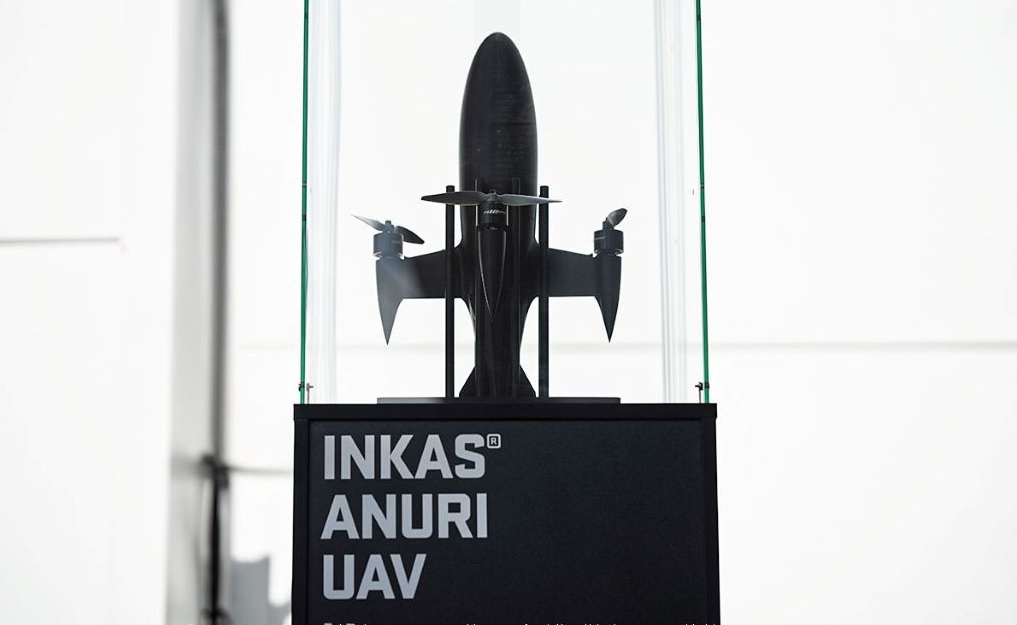
World
OTTAWA, — May 28, 2026 : INKAS Defense and Aerospace unveiled two new defense platforms at CANSEC 2026, introducing the Modular Light Tactical Vehicle (MLTV) and the ANURI Unmanned Aerial Vehicle (UAV) as part of the company’s growing focus on adaptable, multi-domain defense systems for military mobility and critical infrastructure protection. The announcement was made at the Cohere Centre (formerly EY Centre) during Canada’s largest defense and security exhibition, organized by the Canadian Association of Defence and Security Industries (CADSI). The Toronto-based manufacturer is showcasing its systems at booths 4200–4203, with the MLTV displayed at booth 4201 and the ANURI UAV exhibited at booth 4202. MLTV Developed As Replacement For Legacy Utility Fleets The INKAS MLTV was developed to replace aging light utility military vehicle fleets through a joint development effort involving INEOS Automotive and the WELP Group. Built on an established OEM platform, the vehicle combines factory-backed engineering, lifecycle support, and a modular configuration designed to meet changing operational requirements for both military and institutional users. Its modular architecture allows operators to rapidly configure the platform for a range of mission profiles, including armored transport, reconnaissance, assault operations, medical evacuation (MEDEVAC), and search and rescue missions. A central feature of the vehicle is its scalable bolt-on armor system, which enables users to increase or modify ballistic protection depending on mission requirements and operational threat levels without affecting mobility or structural integrity. The approach is intended to provide flexibility for defense organizations operating in different security environments while reducing reliance on multiple specialized vehicle types. David Khazanski, CEO of INKAS, said legacy fleets frequently face limitations related to insufficient protection against evolving threats and rising sustainment costs. According to the company, the MLTV is designed to improve mission adaptability and operational mobility while providing long-term engineering and lifecycle support. ANURI UAV Designed For Counter-Drone Operations Alongside the MLTV, INKAS introduced the ANURI UAV, an AI-enabled interceptor platform developed for counter-unmanned aerial system (C-UAS) operations and force protection missions. The system is designed to detect, track, and neutralize consumer, commercial, and modified first-person view (FPV) drones traveling at speeds of up to 400 km/h. The company stated that the interceptor can achieve a time-to-target of under 80 seconds at a distance of five kilometers, enabling rapid engagement of aerial threats against deployed forces or critical infrastructure. To support operational flexibility, the ANURI can be launched using quad-rotor extended vertical takeoff and landing (X-VTOL), silo tubes, vehicle-mounted systems, or by hand, removing the requirement for prepared launch infrastructure. The UAV incorporates a proprietary twist-lock modular nose section that allows field operators to quickly change warheads, sensor payloads, or AI guidance modules within seconds depending on mission requirements. Flight operations can be conducted through direct first-person view (FPV) pilot control or AI-assisted terminal guidance while maintaining a human operator in the decision-making process. The system also employs inertial navigation and AI visual terminal homing to sustain targeting capability in GNSS-denied environments affected by electronic warfare. Margarita Simkin, Chairwoman of INKAS, described the ANURI as an attritable counter-UAS interceptor platform developed to address the growing challenge posed by low-cost aerial threats while maintaining deployment speed, operational flexibility, and modularity. Expansion Of INKAS Defense Portfolio The unveiling of the MLTV and ANURI follows the recent introduction of the INKAS M1 Mine-Resistant Ambush Protected (MRAP) vehicle, developed through a partnership with KNDS Mobility. The NATO-aligned platform recently completed brake performance, vehicle control, and stability trials at the Applus+ IDIADA testing facility in Spain as part of ongoing validation efforts. CANSEC 2026, held in Ottawa from May 27 to 28, brings together more than 280 exhibitors and thousands of defense professionals, providing a platform for showcasing developments in military mobility, survivability, counter-drone technologies, and integrated defense systems.
Read More → Posted on 2026-05-28 15:05:25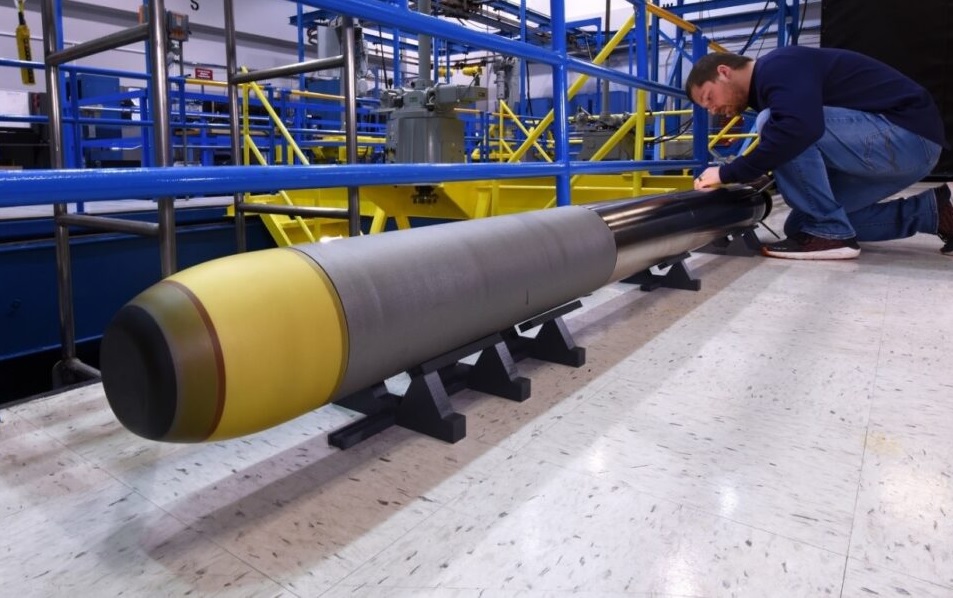 Raytheon Prepares Mark 58 CRAW Increment 2 Testing as U.S. Navy Advances Lightweight Torpedo Program
World
NATIONAL HARBOR, MD — May 28, 2026 : The U.S. Navy is advancing development of the Mark 58 Compact Rapid Attack Weapon (CRAW), a next-generation lightweight torpedo designed for anti-submarine warfare and hard-kill anti-torpedo operations, as Raytheon prepares for Increment 2 (Technology Insertion 2/TI-2) testing later this year. Speaking at the Sea Air Space 2026 Symposium, Bill Guarini, Director of Requirements for the Naval Systems and Sustainment Business at Raytheon, provided an update on the Navy’s 6.75-inch diameter torpedo programme, confirming that the company remains on schedule with development, integration, and testing activities. The Mark 58 CRAW is designed as a compact, lightweight torpedo measuring approximately 85–108 inches in length and weighing under 100 kilograms (around 200 pounds). The weapon supports dual operational roles, including offensive anti-submarine warfare and defensive hard-kill interception of incoming torpedoes. The programme builds upon earlier Very Lightweight Torpedo efforts and prototype work conducted by Penn State University’s Applied Research Laboratory. Penn State University’s Applied Research Laboratory developed the initial Increment 1 (Technology Insertion 1/TI-1) units to rapidly field operational prototypes, while Raytheon was later selected to lead Increment 2 after a Navy down-select process. Under TI-2, Raytheon’s role focuses on transitioning the torpedo toward operational deployment by improving manufacturability, producibility, military hardening, and long-term supportability while addressing component obsolescence for larger-scale production. Increment 2 Testing Planned According to Guarini, in-water testing of the Mark 58 CRAW is scheduled to take place at a U.S. Navy range before the end of 2026. The upcoming tests will focus primarily on the weapon’s forebody, specifically the processing systems, guidance architecture, control mechanisms, and sensor arrays responsible for target detection and tracking. Guarini explained that this phase concentrates on validating the torpedo’s ability to locate, process, and engage threats while refining system integration for future fleet deployment. Raytheon’s current work scope remains centered on forebody integration and operational readiness, while broader propulsion-related requirements continue to be reviewed separately by the Navy. Navy Evaluating Electric And Chemical Propulsion Systems As part of ongoing programme development, the U.S. Navy has expanded requirements for the torpedo’s afterbody and propulsion system following an industry day held in April 2026. One propulsion option under evaluation involves a 100-horsepower electric propulsion system designed to operate within the weapon’s compact 6.75-inch diameter. Navy planners are studying high-voltage systems exceeding 600Vdc combined with high power-density battery technology to reduce maintenance requirements by as much as 50 percent compared with conventional propulsion systems. A second propulsion pathway under review is the Stored Chemical Energy Propulsion System (SCEPS), which generates heat to produce steam that drives a turbine-based propulsion mechanism. The system is intended to provide sustained propulsion within the compact torpedo structure. Guarini noted that these Navy-directed propulsion modifications do not affect Raytheon’s Increment 2 contract timeline or scheduled testing activities. L3Harris is supporting the Raytheon team through contributions to propulsion, integrated afterbody systems, and powerplant development. Expanding Submarine Magazine Capacity Alongside torpedo development, the Office of Naval Research (ONR) is progressing the Multi-Vehicle Torpedo Tube Defense System (MVTTDS), also referred to as the Revolver Innovative Naval Prototype or Revolver MP project. The initiative is intended to increase submarine magazine capacity by allowing a standard 21-inch torpedo tube aboard Virginia-class submarines to carry up to a dozen 6.75-inch Mark 58 CRAW torpedoes or other compact payloads, including unmanned systems. The concept is aimed at increasing the number of stowed effectors available during submarine operations, particularly for Indo-Pacific requirements. Although Raytheon is not contracted for the Revolver programme, Guarini acknowledged that the Navy is separately funding torpedo launch variants intended to support expanded undersea payload capacity. The Navy’s Small Business Innovation Research (SBIR) programme is also seeking composite materials to replace stainless-steel launch tubes, which currently account for nearly half of launcher assembly weight. The effort is intended to reduce launcher mass and improve deployment efficiency. Potential Expansion Beyond Submarines Raytheon’s present contract focuses on anti-submarine warfare and hard-kill anti-torpedo variants launched from Virginia-class submarine external countermeasure launchers (ECL). However, the Navy is also evaluating opportunities to expand the Mark 58 CRAW across additional operational domains. Defense contractor Ultra Maritime has proposed launcher systems for surface warships to provide hard-kill torpedo defense capability for major naval combatants. In addition, the torpedo’s compact dimensions and weight make it suitable for possible future deployment from aviation platforms, including the P-8A maritime patrol aircraft and MH-60R helicopter. While such concepts remain outside current programme funding, Guarini stated that Raytheon is prepared to support future launcher mechanisms and share technical data with Navy-selected partners as additional deployment pathways are pursued. Programme Timeline And Current Status Raytheon received the Navy contract to produce 18 Mark 58 CRAW prototypes and 12 turnaround kits based on Penn State’s updated design following a competitive programme down-select. Initial TI-2 deliveries are expected during Fiscal Year 2026, with development testing focused on both anti-submarine and counter-torpedo missions. Guarini stated that Raytheon remains on schedule with development, integration, and testing milestones, adding that the Navy programme office has expressed satisfaction with the company’s progress as the Mark 58 CRAW advances toward broader fleet integration.
Read More → Posted on 2026-05-28 15:18:43
World
HERNDON, Va. — May 28, 2026 : BlackSky Technology Inc. (NYSE: BKSY) has secured a seven-figure, multi-year contract renewal aimed at accelerating automation of its future non-Earth imagery (NEI) services, expanding an existing programme focused on strengthening space domain awareness (SDA) capabilities. The follow-on agreement broadens the programme’s scope to include development of a next-generation imaging payload and specialised mission-planning software to support automated space-to-space collection. The contract is intended to improve the speed, scale and reliability of real-time monitoring in an increasingly congested and contested orbital environment. Automated Space-To-Space Collection System Under the agreement, BlackSky will provide very high-resolution imagery combined with artificial intelligence-enabled analytics of objects in orbit. The integration is designed to support a dual-use platform capable of conducting both conventional Earth observation (EO) missions and highly dynamic space domain awareness operations. The company stated that the programme focuses on developing a fully automated collection system capable of delivering timely intelligence to decision-makers while supporting tracking and monitoring activities in low-Earth orbit, including unidentified satellites and orbital debris fields. BlackSky said the system will leverage satellite capacity that would otherwise remain underutilised, particularly during periods when spacecraft pass over open oceans or operate in eclipse while travelling across the dark side of Earth. During these periods, onboard sensors can be redirected to capture orbital data, increasing operational efficiency across the constellation. Gen-2 And Gen-3 Integration According to BlackSky, the effort builds upon the operational heritage of its high-cadence Gen-2 constellation while integrating the company’s Gen-3 architecture with a specially designed imaging payload to expand coverage and collection capacity across the space domain. The company stated that Gen-3 satellites provide 35-centimetre resolution imagery and multispectral sensing capabilities, including shortwave infrared (SWIR), with four Gen-3 satellites currently operating in orbit to support high-frequency monitoring and rapid tasking requirements. Brian O’Toole, Chief Executive Officer of BlackSky, said the contract reflects customer confidence in the company’s ability to rapidly design and field advanced space technologies for national security partners. He stated that BlackSky is progressing toward a fully automated and dynamic space-to-space collection system by integrating proven Gen-3 capabilities with a specialised imaging payload to improve coverage, capacity and efficiency for non-Earth imagery services. O’Toole added that BlackSky’s Gen-3 architecture is designed to support advanced Earth observation and space domain awareness missions, including monitoring orbital debris and tracking unidentified satellites operating in low-Earth orbit. AI-Driven Technology Framework BlackSky said the programme will operate within its broader AI-first, software-oriented technology framework, which combines high-cadence Gen-2 monitoring capabilities, very high-resolution Gen-3 systems and the company’s planned Advanced Remote Observation System (AROS) platforms. The AROS satellites are intended to provide large-area multispectral collection capabilities for broad-area search, change monitoring and three-dimensional mapping, with initial launches targeted as early as 2027. The company provides space-based imagery and AI-enabled analytics to government and commercial customers through on-demand subscription services, assured access models and full sovereign systems. According to BlackSky, the renewed contract will support ongoing efforts to improve space domain security by delivering real-time intelligence when and where it is required.
Read More → Posted on 2026-05-28 15:25:25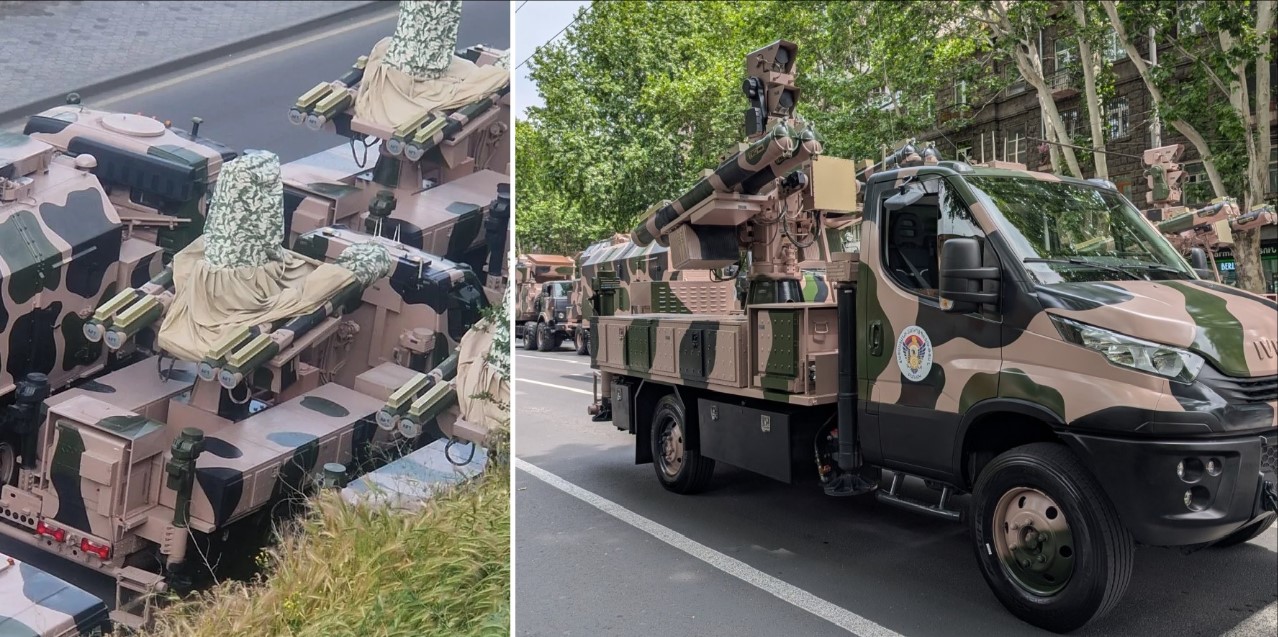
World
YEREVAN, Armenia — May 28, 2026 : Armenia marked Republic Day on May 28 with its first military parade in a decade, publicly displaying a significantly modernized military inventory acquired from multiple international suppliers. Held in Republic Square in Yerevan roughly a week before parliamentary elections, the parade featured the first public appearance of Iranian-made Majid AD-08 short-range air defense systems and Chinese-made CH-4 Rainbow reconnaissance and strike drones. During a speech lasting more than two hours, Prime Minister Nikol Pashinyan said Republic Day was being observed in a new historical context, emphasizing that after nearly 35 years of conflict, Armenia and Azerbaijan initialed a peace agreement in Washington in August 2025, although the document still awaits formal signing. Pashinyan described the military display as a report to the Armenian public, presenting an Armed Forces equipped with new systems and operating under a revised military doctrine. The Iranian Majid AD-08 Air Defense System The public display confirmed Armenia as the first known foreign operator of the Iranian-made Majid AD-08 short-range air defense system. Open-source analysts initially identified around four units during parade rehearsals in Republic Square on May 25, days before the official event. The systems are reportedly part of an estimated $500 million arms agreement reached between Tehran and Yerevan in the summer of 2024. The Armenian configuration differs from Iran’s domestic version. While Iranian forces deploy the Majid system on locally produced Aras 2 pickup trucks, Armenia mounted the launchers on Italian-made Iveco Daily light commercial vehicles. The modification improves maintenance accessibility, spare parts availability, and compatibility with European logistics networks that Armenia has increasingly integrated into its military support structure. Developed by Iran’s Defense Industries Organization and first publicly introduced in 2021, the Majid AD-08 is designed to defend military bases, administrative facilities, and critical infrastructure from unmanned aerial vehicles (UAVs), cruise missiles, and low-flying helicopters. Unlike radar-based systems, the Majid relies entirely on a passive architecture, using electro-optical and thermal targeting systems without radar emissions for detection or missile guidance. The system’s electro-optical sensor suite can reportedly detect aerial targets at distances of up to 15 kilometers. Each launcher carries four ready-to-fire AD-08 missiles equipped with imaging infrared seekers and proximity fuzes, allowing missiles to track thermal signatures and detonate near targets to produce fragmentation effects without requiring a direct impact. The missile has an engagement range of up to 8 kilometers, an altitude ceiling of 6 kilometers, measures approximately 2.67 meters in length, weighs around 75 kilograms, and reaches speeds approaching Mach 2. The Majid system is also reported to support 360-degree coverage and multi-target tracking, with some reports suggesting integration of electro-optical components similar to L3Harris Wescam MX-series systems. Because the platform does not emit detectable electromagnetic signals, it is considered less vulnerable to conventional electronic warfare jamming than radar-dependent systems. Iranian sources have claimed that Majid batteries damaged a U.S. F-35 fighter during military operations earlier in 2026 by exploiting infrared emissions from the aircraft’s propulsion system. However, the claim remains independently unverified. Western reporting confirmed that an F-35 sustained damage from ground fire during the conflict, though no public evidence has linked the incident specifically to the Majid system. Chinese CH-4 Rainbow Strike Drones Armenia also officially confirmed the acquisition of Chinese-made CH-4 Rainbow medium-altitude long-endurance reconnaissance and strike drones, addressing operational gaps identified during the 2020 Nagorno-Karabakh conflict. Comparable in operational role to the U.S. MQ-9 Reaper, the CH-4 supports both surveillance and precision strike missions and operates using beyond-line-of-sight satellite communications (SATCOM). Prior to the parade, satellite imagery reportedly identified two CH-4 airframes and six 40-foot logistical containers at Russia’s 102nd Military Base in Gyumri, indicating the presence of an operational support, maintenance, and sustainment network. In its armed CH-4B configuration, the drone can remain airborne for between 30 and 40 hours and carry up to 345 kilograms of precision-guided weapons, including AR-1 missiles and laser-guided bombs. Procurement Diversification And Strategic Shift The procurement of passive Majid air defense systems and CH-4 strike drones directly reflects lessons from the 44-day war in 2020, during which Armenian forces faced Azerbaijani drone operations involving Israeli-made Harop loitering munitions and Turkish Bayraktar TB2 drones. The newly acquired systems are intended to strengthen both short-range air defense and offensive unmanned strike capabilities that were identified as vulnerabilities during the conflict. The Republic Day parade featured military equipment acquired from seven countries since 2022, underscoring Yerevan’s broader defense procurement strategy aimed at reducing dependence on a single supplier. Alongside Iranian and Chinese systems, Armenia has expanded acquisitions to include Caesar self-propelled howitzers from France, Pinaka multi-barrel rocket launchers from India, and Aster 30 surface-to-air missile systems obtained through Greece under a NATO-linked framework. Armenian authorities did not provide additional official details regarding procurement contracts or delivery timelines during the parade.
Read More → Posted on 2026-05-28 15:50:22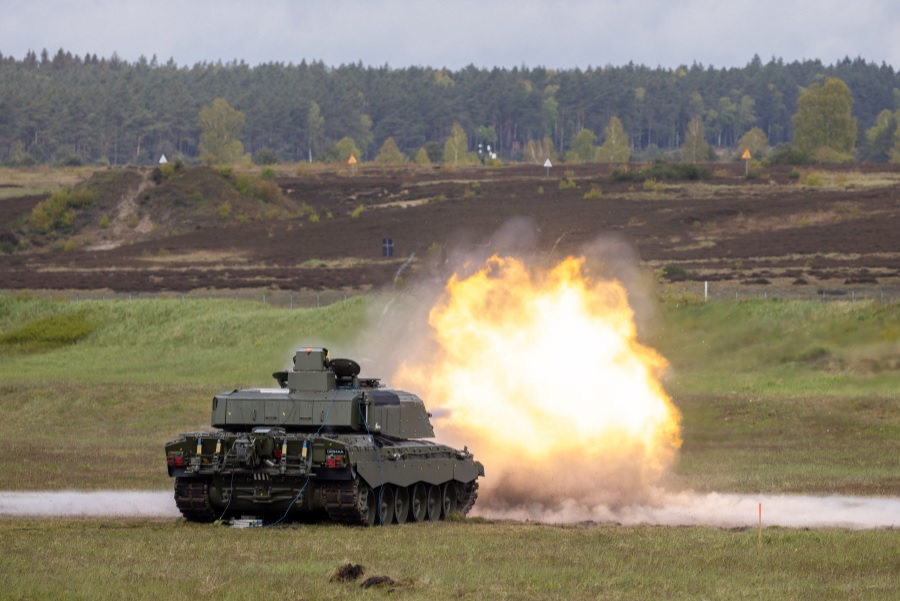
World
TELFORD, United Kingdom — May 28, 2026 : The United Kingdom’s Challenger 3 main battle tank programme has entered a major stage of testing and development following recent mobility and live-fire milestones, as the British Army moves forward with plans to modernize its armored fleet to meet evolving NATO operational requirements. Managed by Rheinmetall BAE Systems Land (RBSL) under an £800 million contract with the UK Ministry of Defence, the programme will upgrade 148 existing Challenger 2 tanks to the Challenger 3 standard. The modernization is intended to improve battlefield lethality, survivability, interoperability, and digital integration while retaining key elements of the Challenger 2 chassis to reduce logistical complexity. Firepower And Lethality Upgrades At the center of the Challenger 3 modernization is the integration of the Rheinmetall Rh-120 L55A1 120mm smoothbore cannon, replacing the Challenger 2’s L30A1 rifled gun. The transition aligns the British Army with NATO-standard ammunition used by platforms such as the Leopard 2 and M1A2 Abrams, improving ammunition commonality and interoperability with allied armored forces. The L55A1 smoothbore gun is designed to deliver greater muzzle energy, improved armor penetration, enhanced long-range accuracy, and extended engagement ranges against modern battlefield threats. The weapon system also supports advanced kinetic energy penetrators and programmable multipurpose ammunition. To further enhance firepower, the United Kingdom and Germany signed a statement of intent to jointly develop an Enhanced Kinetic Energy (EKE) armor-piercing round optimized for Challenger 3’s new weapon system. Digital Architecture And Battlefield Integration The Challenger 3 incorporates a redesigned turret featuring advanced digital architecture and an open-system design intended to support future upgrades and network-enabled warfare. The digital structure enables faster data exchange between reconnaissance assets, artillery units, drones, infantry formations, and armored vehicles operating in contested environments. The upgraded tank is equipped with the Thales Orion commander sight and the Day/Night Gunner And Panoramic Sight (DNGS T3), improving target acquisition, tracking, and engagement capabilities during both day and night operations. The enhanced sensor suite enables crews to identify threats more efficiently while sharing targeting information in near real time, reducing sensor-to-shooter timelines and improving coordination with NATO partner forces. Survivability And Mobility Enhancements To address evolving battlefield threats—including anti-tank guided missiles, loitering munitions, armed drones, and precision-guided strikes—the Challenger 3 incorporates a newly developed modular armor system intended to improve protection levels. The platform is also configured to integrate the Trophy Active Protection System (APS), a radar-based defensive system designed to detect and intercept incoming projectiles before impact. Although retaining elements of the Challenger 2 chassis, mobility improvements are being introduced through the Heavy Armour Automotive Improvement Project (HAAIP). Planned upgrades include a third-generation hydrogas suspension system, hydraulic track tensioners, an electric cold-start system, improved engine cooling, updated electronics, improved power distribution, and maintainability enhancements to support the platform’s increased weight and operational demands. Testing Milestones And Programme Progress The Challenger 3 programme has recently completed several important testing milestones. In September 2025, RBSL completed initial mobility trials involving nearly 800 kilometers of testing across multiple terrain conditions in the United Kingdom. The trials gathered performance data related to vehicle vibration, noise, crew interfaces, off-road maneuvering, and the effects of movement on onboard ammunition and internal systems. Following the mobility phase, Challenger 3 completed its first crewed live-firing trials in January 2026 at a UK Ministry of Defence training centre. The event marked the first crewed firing activity involving a newly developed British main battle tank in more than three decades and evaluated operation of the Rh-120 L55A1 smoothbore cannon. Additional reliability growth trials, crewed firing activities, and battlefield mission serials are planned throughout 2026 to evaluate crew coordination, communications, maneuver performance, and target engagement capabilities under operational conditions. The programme remains in its demonstration and qualification phase, with a forthcoming System Qualification Review expected to establish manufacturing standards for production vehicles before full-rate production advances. Industrial Base And Strategic Context Production and conversion work is centered at RBSL’s Telford facility, supported by a £40 million investment aimed at modernizing manufacturing infrastructure. The £800 million programme supports approximately 200 to 300 skilled jobs directly at RBSL and around 450 additional positions across the UK supply chain, including facilities in the West Midlands, Glasgow, Newcastle upon Tyne, and the Isle of Wight. The Challenger 3 programme reflects a broader NATO shift toward conventional armored warfare and territorial defence following decades of focus on counterinsurgency operations. The platform is intended to provide the British Army with a digitally integrated, interoperable, and highly protected capability for operations in contested environments involving drones, electronic warfare, precision fires, and networked battlefield systems. Initial operating capability is targeted for 2027, while full operating capability remains planned for 2030. However, defence industry reporting in May 2026 has highlighted potential schedule pressures linked to modernization timelines and concerns over the availability of serviceable Challenger 2 hulls for conversion, factors that may influence the final fleet size and Britain’s NATO armored force commitments. Recent mobility and live-fire milestones nevertheless indicate continued technical progress as the British Army advances the Challenger 3 programme toward operational deployment.
Read More → Posted on 2026-05-28 16:35:03
World
YEREVAN, Armenia — May 28, 2026 : Armenia showcased an expanded range of unmanned aerial systems (UAS), electronic warfare assets, and armored platforms during a large-scale Republic Day military parade in Yerevan’s Republic Square, highlighting the country’s continuing defense modernization efforts and growing emphasis on domestically produced and imported military technologies. Expansion Of Unmanned Capabilities And Defense Cooperation The event featured units of Armenia’s recently established unmanned aerial vehicle forces marching through Republic Square alongside advanced drone systems, reflecting a broader restructuring of the country’s military capabilities and procurement strategy. According to Armenian Prime Minister Nikol Pashinyan, military equipment from seven countries participated in the parade, underscoring Armenia’s expanding military-technical partnerships and diversification of defense suppliers. CH-4B “Rainbow” Combat UAV Makes Public Debut Among the most notable systems publicly displayed was the Chinese-made CH-4B “Rainbow” combat unmanned aerial vehicle, marking its first confirmed public appearance in Armenian service and officially confirming earlier unofficial reports of its acquisition. Produced by China Aerospace Science and Technology Corporation (CASC), the medium-altitude, long-endurance unmanned combat aerial vehicle is designed to conduct reconnaissance, surveillance, and precision strike missions. During the parade, the CH-4B was displayed armed with AR-2 anti-tank guided missiles, lightweight precision-guided munitions equipped with semi-active laser guidance and a 5-kilogram armor-piercing warhead. The missile has an operational range of up to eight kilometers. The UAV itself supports up to six external weapon stations, carries a payload of approximately 250–345 kilograms, and is reported to have an endurance of between 30 and 40 hours with an operational range of roughly 3,500–5,000 kilometers. ASN-301 Loitering Munition Displayed In Multiple Configurations Armenia also showcased the ASN-301 anti-radiation loitering munition, a Chinese-developed suicide drone designed to detect, track, and destroy enemy radar systems during suppression and destruction of enemy air defense operations (SEAD/DEAD). The system was displayed in both single-launch and group container-based launch configurations, allowing multiple drones to be deployed from a single vehicle platform. The ASN-301 features a delta-wing airframe with a rear-mounted pusher propeller and operates using passive homing technology to detect radar emissions in a fire-and-forget mode. The loitering munition measures approximately 2.5 meters in length with a 2.2-meter wingspan, weighs around 135 kilograms, and carries a 30-kilogram high-explosive fragmentation warhead. It has a reported endurance of up to four hours, a maximum speed of approximately 220 kilometers per hour, and an operational range estimated at around 280–288 kilometers. Domestic Drone Industry And Joint Development Programs Alongside foreign systems, Armenia highlighted progress in its domestic defense sector and international industrial partnerships. A key platform displayed was the AHEGH (Agheg) unmanned aerial vehicle, jointly developed by Armenian defense enterprises and several European companies. Although detailed technical specifications were not disclosed during the event, the UAV represents part of Armenia’s broader effort to expand indigenous and jointly developed unmanned capabilities. The parade also included several domestically manufactured drone systems, including the “Kaytsak” (Lightning) strike UAV, designed to engage both stationary and moving targets at distances of up to 17 kilometers, and the “Meghu-5”, an artificial intelligence-enabled drone produced by Armenian company Aerodynamics for missions targeting armored vehicles and enemy personnel. Armored Vehicles, Mortars, And Electronic Warfare Systems Beyond unmanned systems, Armenia displayed a broader range of military equipment, including French-made Bastion light armored vehicles, intended for rapid troop transport, reconnaissance, and special operations mobility. Domestic defense production was further represented by 82 mm “Hrazdan” and 120 mm “Sevan” mortars, as well as electronic warfare systems developed for battlefield support. These included the “Duman” electronic warfare complex, designed to detect aerial targets and suppress satellite systems, and the “Sard” complex, intended to disrupt tactical radio communications during military operations. Additional newly acquired equipment displayed during the parade included Iranian Majid AD-08 air defense systems, presented as part of Armenia’s broader modernization efforts following the 2020 Nagorno-Karabakh conflict. Defense Investment And Modernization Efforts Addressing senior military leadership, diplomats, and invited officials during the ceremony, Prime Minister Nikol Pashinyan stated that Armenia has invested approximately 170 billion drams ($434 million) into the domestic defense industry since 2022. He described the Republic Day parade as a presentation of ongoing military modernization efforts and accountability regarding defense investments, while no official details were released concerning procurement quantities or operational deployment timelines for the showcased systems.
Read More → Posted on 2026-05-28 16:46:23
World
WASHINGTON — May 28, 2026 : Members of the U.S. House Armed Services Committee (HASC) are moving to restrict the U.S. Navy from beginning construction of the first Trump-class nuclear-powered battleship until key onboard weapon systems are proven technologically mature, according to draft provisions included in the Fiscal Year 2027 National Defense Authorization Act (NDAA). The proposed measure would prevent the Secretary of the Navy from entering into any contract or agreement involving construction work for the lead ship of the battleship program unless congressional defense committees are formally certified that the planned weapon systems have reached a “sufficiently mature technology readiness level.” The restriction reflects growing congressional scrutiny over the integration of highly advanced systems into one of the Navy’s most expensive future surface combatants. If enacted, the requirement could delay construction of the program’s first vessel by several years, forcing the Navy to demonstrate the operational readiness of major systems before proceeding with shipbuilding contracts. Congressional Technology Readiness Requirement The draft FY2027 NDAA provision specifically bars the Navy from signing contracts related to the construction of the lead Trump-class battleship until certification is provided to Congress regarding the maturity of planned weapons technologies. While lawmakers did not define precise readiness metrics or publicly identify every system under review, the scrutiny is primarily aimed at the ship’s proposed directed-energy weapons and electromagnetic railgun. The legislation represents a broader congressional effort to reduce procurement risks associated with integrating developmental technologies into large-scale defense programs before they are fully tested or operationally validated. Trump-Class Battleship Program Announced by President Donald Trump in December 2025 under the administration’s “Golden Fleet” initiative, the Trump-class battleship — identified in Navy planning documents as BBG(X) or BBGN — is envisioned as a nuclear-powered guided-missile surface combatant designed to provide long-range strike capability, endurance, and increased combat mass. The lead ship, planned as USS Defiant (BBG-1), is expected to displace approximately 35,000 tons and is estimated to cost between $17.6 billion and $18.9 billion. Procurement of the first vessel is currently targeted for Fiscal Year 2028, while delivery is projected around Fiscal Year 2036. The Navy’s long-range shipbuilding plan estimates the first three ships could cost approximately $43.5 billion in total. The battleship is expected to use an A1B nuclear reactor similar to that aboard Ford-class aircraft carriers, providing the power generation capacity necessary for advanced combat systems and extended operational endurance. Planned Weapons And Integration Challenges According to Navy planning documents, the Trump-class would carry a large Vertical Launch System (VLS) array designed to deploy a mix of conventional and nuclear-capable weapons, including the Surface Launch Cruise Missile-Nuclear (SLCM-N) and hypersonic Conventional Prompt Strike (CPS) missiles. In addition to missile systems, the ship is planned to include a 32-megajoule electromagnetic railgun, high-power laser directed-energy systems for close-in defense, and two conventional 5-inch naval guns. Congressional concern, however, is centered largely on the technical maturity of the railgun and laser systems, which remain developmental technologies. The Navy’s railgun development effort, active between 2005 and 2021, encountered repeated technical challenges involving power requirements, barrel degradation, and delays to planned sea-based testing. The program was ultimately shelved in 2021, with the BAE Systems-developed prototype moved to storage at White Sands Missile Range in New Mexico. Limited railgun testing resumed at White Sands in February 2025, though it remains unclear whether the Navy intends to revive the previous design or pursue an entirely new system for the Trump-class. Defense contractor General Atomics has publicly expressed interest in supporting future railgun development for the battleship program. Additional Scrutiny On The FF(X) Frigate The draft FY2027 NDAA also includes provisions targeting the Navy’s FF(X) frigate program. Lawmakers are seeking to compel the Navy to submit, within 180 days, a strategy outlining future subvariants of the frigate, including options for versions equipped with an integrated Vertical Launch System (VLS). The requirement follows recent scrutiny of the frigate’s combat capability after confirmation that the initial FF(X) design — based on the Legend-class National Security Cutter — will not include a built-in VLS and will instead rely on containerized payload systems. Critics have questioned whether the platform will provide sufficient offensive lethality without a dedicated missile-launch capability. Oversight Of Future Fleet Programs The proposed NDAA provisions signal increasing congressional oversight of major Navy modernization efforts, particularly programs dependent on advanced or developmental technologies. Both the Trump-class battleship and FF(X) frigate are positioned as key elements of the Navy’s future fleet architecture, but lawmakers are seeking greater assurance that technical, cost, and integration risks are sufficiently addressed before large-scale procurement begins. The draft NDAA will continue through committee review and congressional floor consideration in the coming months, during which lawmakers may revise, expand, or remove provisions affecting future Navy shipbuilding priorities.
Read More → Posted on 2026-05-28 17:31:19
World
KYIV — May 28, 2026 : Ukraine’s parliament, the Verkhovna Rada, has approved legislation eliminating value-added tax (VAT) on the supply of ground-based robotic systems, commonly known as unmanned ground vehicles (UGVs), for the country’s Defense Forces, in a move aimed at reducing procurement costs and accelerating the deployment of robotic platforms to frontline units. Bill No. 15259 was adopted in both its first reading and as a whole, with 294 Members of Parliament voting in favor. The legislation will now be forwarded to President Volodymyr Zelenskyy for signature and will officially enter into force following its publication. Legislative Changes To Defense Procurement The newly adopted law amends Ukraine’s Tax Code to temporarily exempt the supply of ground-based robotic systems from the standard 20% VAT for the duration of martial law. Ukrainian lawmakers said the measure is intended to improve procurement efficiency, lower defense acquisition costs, and facilitate faster deliveries of robotic systems required for military operations. The legislation addresses a procurement gap that emerged after January 1, 2026, when a broader VAT exemption covering certain electric vehicles expired. Ground-based robotic systems had previously benefited from that exemption, and its expiration automatically increased procurement expenses for unmanned ground systems by 20%. By adopting Bill No. 15259, Ukraine has restored tax relief specifically for military robotic platforms, reducing the financial burden on state defense procurement and supporting expanded acquisition efforts. Scope Of The VAT Exemption Under the provisions of the law, the VAT exemption applies to robotic systems classified under commodity groups 84, 85, 87, 90, and 93 of the Ukrainian Classification of Goods for Foreign Economic Activity. These categories include machinery, electrical and electronic equipment, land transport systems, precision instruments, and defense-related products associated with military robotic systems. The exemption will apply under defined procurement conditions. Supplies must be executed through state defense procurement contracts, while final recipients are limited to designated defense and security entities, including the Ministry of Defense, the Armed Forces of Ukraine, law enforcement agencies, volunteer territorial defense formations, and enterprises carrying out state defense contracts. “The adopted amendments will allow for meeting the combat units’ needs for ground-based robotic systems, as well as improve the efficiency of budget funds during their supply to the defense forces,” the Verkhovna Rada stated following the parliamentary vote. Expanding Battlefield Role Of Ground Robots Ground-based robotic systems are playing an increasingly important role in Ukraine’s military operations, supporting reconnaissance, mine clearance, ammunition transportation, casualty evacuation, and logistics missions while reducing direct exposure of personnel to frontline threats. These systems are also used for combat support operations in contested areas, enabling supplies and equipment to reach forward positions without requiring soldiers to move into high-risk environments. Domestic Production And Procurement Expansion Ukraine has simultaneously increased investment in domestic production of unmanned ground systems as part of broader efforts to strengthen defense industrial capacity. In April, government officials announced that contracts had already been signed for 25,000 ground-based robotic systems for the Armed Forces during 2026, with planned procurement expected to exceed the total number acquired during all of 2025. To support the growing fleet, Ukraine’s domestic defense industry has expanded localized manufacturing capabilities, including the production of specialized rubber tracks designed specifically for ground robotic systems, reducing reliance on imported components and improving production sustainability. By removing the 20% VAT burden, Ukrainian authorities expect to facilitate larger-scale procurement, improve budget efficiency, and accelerate the delivery of unmanned ground systems to combat units during the ongoing period of martial law.
Read More → Posted on 2026-05-28 17:51:10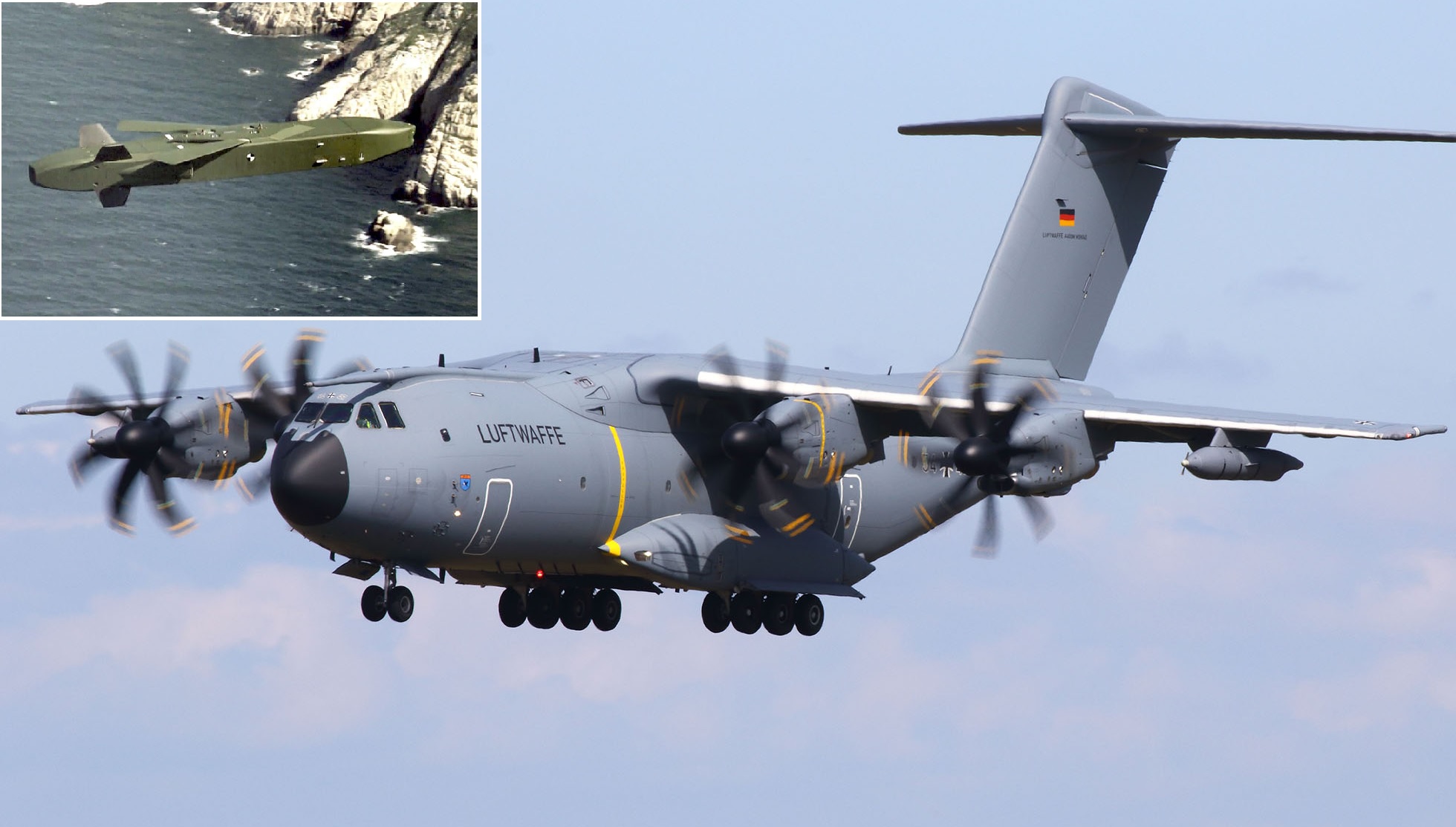
World
BERLIN — May 28, 2026 : The German Air Force (Luftwaffe) is evaluating plans to modify its Airbus A400M Atlas transport aircraft into cruise missile carriers, a move aimed at increasing long-range strike capacity while retaining the aircraft’s primary logistical role. The proposal centers on a modular “Mothership” configuration developed by Airbus Defence and Space, which would allow the A400M to deploy palletized cruise missiles or drones without permanent structural changes. The system uses a roll-on/roll-off (Ro-Ro) launch mechanism installed inside the cargo bay, enabling rapid installation and removal depending on operational requirements. Under the proposed configuration, an A400M could carry and launch up to 12 Taurus KEPD 350-class cruise missiles through the aircraft’s rear cargo ramp. The missile pallets would be released during flight and stabilized before the weapons ignite and proceed toward assigned targets. Airbus has stated that the same configuration could alternatively support the deployment of up to 50 medium-sized drones, offering additional operational flexibility. The concept is broadly comparable to the U.S. Air Force’s Rapid Dragon programme, which uses palletized launch systems to deploy cruise missiles from transport aircraft without major airframe modifications. By adopting a similar approach, the Luftwaffe could potentially increase stand-off strike capacity using existing transport assets rather than dedicated bomber platforms. The integration effort focuses on the Taurus KEPD 350, a German-Swedish air-launched stand-off cruise missile jointly developed by MBDA Deutschland and Saab Bofors Dynamics. The missile measures approximately 5.1 meters in length, weighs around 1,400 kilograms, and has a range exceeding 500 kilometers. Equipped with a two-stage MEPHISTO penetrator warhead, the Taurus is designed to strike hardened targets such as bunkers, command centers, and protected infrastructure. The A400M’s payload and cargo capacity make it suitable for such a mission profile. Powered by four EPI TP400-D6 turboprop engines, the aircraft can transport payloads of up to 37 tonnes across operational ranges exceeding 3,300 kilometers. In addition to tactical transport duties, the aircraft supports missions including paratroop deployment, cargo airdrop, medical evacuation, and aerial refueling. A key aspect of the proposal is its modularity. The removable “bomber kit” allows the A400M to return to standard transport operations once the launch system is removed, ensuring no permanent impact on the aircraft’s primary mission set. Airbus confirmed development of the Mothership concept on April 18, 2026, coinciding with the delivery of the 53rd and final A400M to the Luftwaffe. The company said work is underway with an undisclosed European customer and builds on earlier drone release testing conducted with the French and German air forces. Germany currently operates 53 A400M aircraft, and the modification could provide additional long-range strike capacity without requiring a dedicated new platform. Other A400M operators, including the United Kingdom, France, Spain, and Turkey, could potentially adopt similar modifications to increase missile salvo capacity using existing fleets. No final procurement decision or implementation timeline for the Luftwaffe has been announced. The proposal aligns with broader European efforts to expand stand-off capabilities and improve the ability to deliver larger volumes of precision-guided munitions in contested environments.
Read More → Posted on 2026-05-28 18:08:14 Trump Administration Explores Newly Designed $250 Bill With Trump’s Image Despite Legal Restrictions
World
WASHINGTON — May 28, 2026 : Officials within the Trump administration are advancing efforts to prepare a proposed $250 commemorative banknote featuring President Donald Trump’s portrait as part of activities linked to the United States’ 250th anniversary, according to a report published by The Washington Post on May 28. The proposal, which remains under internal review and would require congressional approval, has reportedly been discussed despite a longstanding federal law enacted in 1866 prohibiting living individuals from appearing on U.S. paper currency. Treasury Officials Pursue Preliminary Planning According to the report, U.S. Treasurer Brandon Beach and senior adviser Mike Brown, both Trump administration appointees, repeatedly directed staff at the Treasury Department’s Bureau of Engraving and Printing (BEP) to prepare design concepts and prototypes for the proposed denomination beginning in 2025. Treasury officials reportedly shared mock-up designs depicting President Trump’s portrait in the center of the note, accompanied by the signatures of the President and Treasury Secretary Scott Bessent. The proposal is tied to broader preparations for the country’s semiquincentennial, marking 250 years since American independence. Design Concept and Commemorative Features British painter Iain Alexander, who created the concept artwork, said he met with President Trump to review the designs. According to Alexander, Trump endorsed the artwork and suggested specific revisions, including the addition of American flag colors and a logo commemorating the nation’s 250th anniversary. The proposed design reportedly also includes a Betsy Ross-themed reverse side, reflecting themes associated with the country’s founding and anniversary celebrations. Legal and Legislative Challenges The proposal faces legal barriers under federal law commonly referred to as the 1866 restriction, which prohibits the image of a living person from appearing on U.S. bonds, securities, notes, or postal currency. Existing U.S. currency law also limits portraits on federal banknotes to deceased individuals. To address those restrictions, Representative Joe Wilson (R-S.C.) introduced the Donald J. Trump $250 Bill Act in February 2025. The legislation would direct the Treasury Department to issue a $250 Federal Reserve note featuring Trump’s likeness and establish an exemption for individuals who have served as President. The bill was referred to the House Financial Services Committee and has not advanced further. Bureau Concerns Over Feasibility Current and former Bureau of Engraving and Printing employees reportedly expressed concerns over both legal authorization and implementation timelines. Currency experts cited in the report said designing, securing, and testing a new high-denomination banknote typically takes between six and eight years to ensure compatibility with anti-counterfeiting systems, ATMs, and broader financial infrastructure. Former BEP Director Patricia “Patty” Solimene reportedly pushed back against requests from Treasury officials, informing leadership that the bureau lacked authority to proceed without congressional approval and emphasizing the extended timeline required for production. Following internal disagreements, Solimene was reassigned from her post by Treasury management in late April 2026. Treasury Department Response In a public statement, a Treasury Department spokesperson confirmed that the Bureau of Engraving and Printing is conducting preliminary planning related to active legislation introduced by Representative Wilson. The department said the bureau is carrying out due diligence to prepare for potential future authorization and stated that Treasurer Brandon Beach had “never asked staff to print the bill before congressional passage.” Broader Semiquincentennial Initiatives The proposed $250 note forms part of a broader set of commemorative initiatives linked to the July 2026 anniversary celebrations. In March 2026, the Treasury Department announced that President Trump’s signature, alongside Treasury Secretary Scott Bessent’s, would appear on standard U.S. paper currency. Separately, a federal arts panel recently approved the final design of a 24-karat gold commemorative coin bearing Trump’s likeness. As of May 28, 2026, no $250 banknote featuring President Trump has been approved, authorized, or produced, and discussions on the proposal remain under review within the Treasury Department and Congress.
Read More → Posted on 2026-05-28 18:18:24
World
RAF MARHAM, Norfolk — May 28, 2026 : The United Kingdom has completed the initial procurement phase of its F-35B Lightning II programme following the arrival of the final two aircraft, BK43 and BK45, at Royal Air Force Marham, bringing the UK’s operational F-35B fleet to 47 aircraft. The delivery completes the first tranche of 48 F-35B aircraft ordered by the UK and produced by Lockheed Martin at its Fort Worth, Texas, manufacturing facility. One aircraft, BK18, was lost during an accident aboard HMS Queen Elizabeth in November 2021, leaving the current operational inventory at 47 jets. Lightning Wing at RAF Marham RAF Marham in Norfolk serves as the home base of the UK’s F-35B Lightning Wing, a joint force composed of personnel from both the Royal Air Force and the Royal Navy. The wing is responsible for pilot and ground crew training, force generation, and frontline combat operations. The Lightning Wing currently operates through three squadrons. 207 Squadron functions as the Operational Conversion Unit (OCU), responsible for training F-35B pilots and maintenance personnel before their assignment to frontline units. 617 Squadron (The Dambusters) serves as a frontline combat formation, while 809 Naval Air Squadron (The Immortals) provides additional frontline operational capacity following its reformation. The F-35B is the short take-off and vertical landing (STOVL) variant of the Lightning II, enabling operations from conventional land bases as well as the ski-jump flight decks of the Royal Navy’s Queen Elizabeth-class aircraft carriers, HMS Queen Elizabeth and HMS Prince of Wales. The platform combines low-observable characteristics, advanced sensors, network-enabled warfare systems, intelligence-gathering capabilities, electronic warfare functions, air superiority missions, and precision strike capabilities. Operational Activity The UK’s F-35B fleet has maintained operational activity over the past year. In 2025, Lightning Wing aircraft participated in a global carrier strike deployment as part of UK naval operations. More recently, aircraft from 617 Squadron deployed to RAF Akrotiri in Cyprus, where they conducted combat missions in support of UK personnel across the Middle East, including the interception of one-way attack drones during regional escalations. “I’m delighted to welcome the final aircraft of our initial procurement of F35Bs to Marham,” Air Commodore Layden, Combat Air Force Commander, said in a statement. “This marks an important milestone in our 5th-generation combat air power journey, reinforcing our declaration of full operational capability last year.” Layden added that the Lightning Wing’s operational activity over the past year demonstrated the continued growth of the UK’s fifth-generation combat air capability from both land and sea-based operations. Future Procurement Plans Although the initial procurement phase has concluded, the UK Ministry of Defence has reaffirmed its long-term commitment to procuring up to 138 F-35 aircraft over the lifetime of the programme. Further details on acquisition timelines and future procurement plans are expected in the upcoming Defence Investment Plan. Following the 2025 Strategic Defence Review, the UK adjusted its future acquisition strategy to include 12 conventional take-off and landing F-35A aircraft for the Royal Air Force to support NATO’s nuclear delivery mission. As a result, the anticipated second procurement batch of F-35B aircraft is expected to be reduced from 27 to 15 jets. Capability Upgrades and Industrial Contribution The newly delivered aircraft are built to the Technical Refresh 3 (TR-3) configuration, which provides the hardware foundation for future Block 4 software upgrades. These upgrades are required to integrate UK-developed weapons systems, including the SPEAR 3 precision strike missile and Meteor beyond-visual-range air-to-air missile, with planned integration targeted for the late 2020s and early 2030s. The United Kingdom also continues to play a significant industrial role in the Joint Strike Fighter programme as its only Tier 1 partner. UK industry, led by BAE Systems, manufactures approximately 15 percent of every F-35 produced globally, supporting thousands of skilled jobs across the country.
Read More → Posted on 2026-05-28 18:25:20
World
WARSAW, Poland — May 29, 2026 : Polish Armaments Group (PGZ) and BAE Systems have received the British-Polish Collaboration Award in recognition of their strategic partnership on 155mm artillery ammunition production in Poland. The award was jointly presented by the British Embassy in Warsaw and the British Polish Chamber of Commerce (BPCC). The recognition highlights the partnership’s contribution to Poland’s national security, European defence resilience, and long-term industrial cooperation between the United Kingdom and Poland. The UK-Poland Business Awards initiative was launched in 2025 to honour companies and individuals supporting bilateral trade and investment relations. Winners are selected by a jury of senior experts representing both the British Embassy and the BPCC. Dame Melinda Simmons DCMG, His Majesty’s Ambassador to the Republic of Poland, said the awards reflect the expanding economic and strategic relationship between both countries. “The economic partnership between the United Kingdom and Poland is stronger today than ever before,” Simmons stated. “The second edition of the UK–Poland Business Awards demonstrates how dynamically and on multiple fronts our cooperation is developing — from growing direct investment and trade to joint initiatives in energy transition, new technologies, and security.” Strategic Ammunition Production Partnership The award recognises the industrial cooperation between PGZ and BAE Systems to establish a new 155mm artillery ammunition manufacturing facility in Poland. The project is intended to support increasing NATO and European demand for artillery ammunition while strengthening Poland’s domestic defence manufacturing capability. The partnership followed an intensive year-long cooperation process that resulted in the signing of a Strategic Partnership Agreement in September 2025. Under the agreement, BAE Systems is transferring production technology, manufacturing expertise, and automated production systems to PGZ. The 155mm calibre is the standard NATO artillery ammunition currently used by the Polish Armed Forces in the Krab and K9 self-propelled howitzer systems. The Polish government previously allocated PLN 1.3 billion for investments at the Dezamet S.A. facility in Nowa Dęba to support expansion of ammunition production capacity. According to the companies, the new facility is expected to eventually manufacture approximately 130,000 to 180,000 shells annually, representing a significant increase in Poland’s current production capability. Construction work is planned to begin in 2025, while completion of the facility is expected between 2027 and 2028. Official Statements Miroslaw Janicki, Director of BAE Systems Poland, said the company remains committed to supporting Poland’s defence requirements through large-scale ammunition production. “We are honoured to be recognised in such a positive way alongside our friends at PGZ,” Janicki said. “As Poland’s proven defence partner, BAE Systems remains dedicated to the mission of helping to ensure national security through the provision of 155mm artillery ammunition in great quantities and high quality to meet our nation’s objectives.” Adam Leszkiewicz, President of the Management Board of PGZ S.A., said the partnership combines British industrial expertise with Polish production capability while also creating opportunities for future market cooperation. “This is an example of collaboration with a foreign partner – on the one hand, we are benefiting from BAE Systems’ vast experience and know-how, and on the other, we are opening a path to the British market, where we can introduce our explosives production technologies,” Leszkiewicz stated. Wider Defence Cooperation The award presentation follows the signing of a broader UK-Poland Security and Defence Partnership Treaty in London earlier this week. The agreement covers defence cooperation, military interoperability, industrial collaboration, and joint defence projects. The PGZ-BAE Systems partnership also includes plans for future cooperation in the production of munitions components, energetics, and additional defence-related technologies. Both companies stated that the cooperation supports long-term industrial development, technology transfer, workforce skills enhancement, and future export opportunities within the European defence sector.
Read More → Posted on 2026-05-29 14:43:00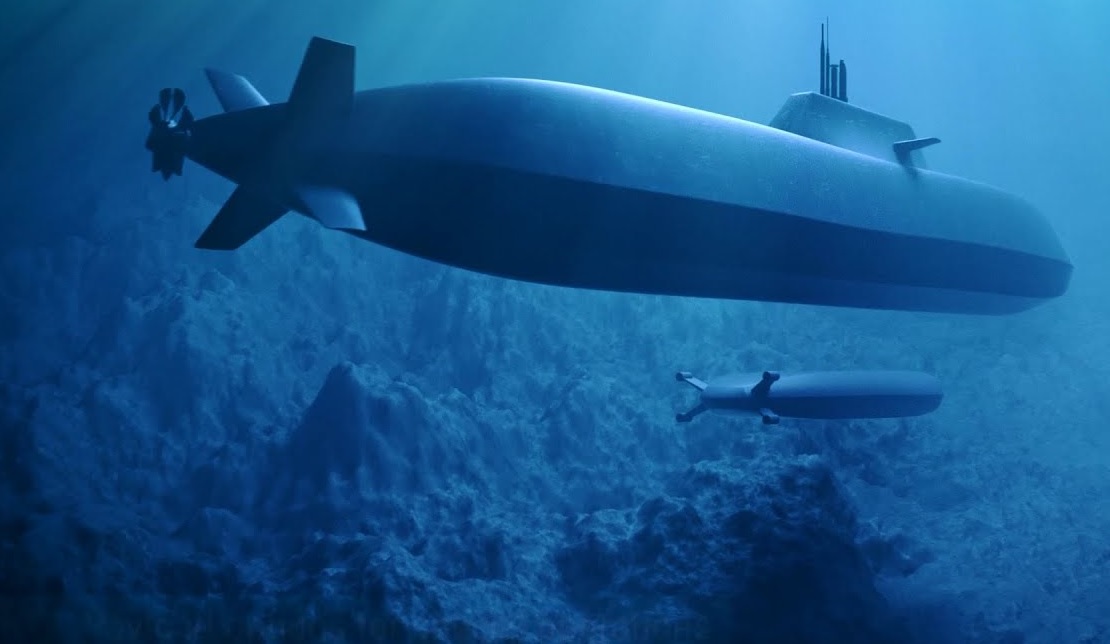
World
OTTAWA, CANADA — May 29, 2026 : Germany has proposed an accelerated delivery arrangement for four Type 212CD submarines to Canada, offering a pathway for the Royal Canadian Navy to receive new submarines before the planned retirement of its aging Victoria-class fleet in the mid-2030s. The proposal, disclosed by German Defence Minister Boris Pistorius to CBC News during the CANSEC defence exhibition in Ottawa, is part of Germany’s bid for Canada’s C$60 billion Canadian Patrol Submarine Project (CPSP). The offer directly competes with South Korea’s Hanwha Ocean and its KSS-III Batch II submarine proposal as Ottawa approaches a final procurement decision. Under the German-Norwegian arrangement, Berlin and Oslo are prepared to temporarily reallocate submarines from their own procurement programmes, allowing Canada to enter an active production line rather than waiting for newly assigned construction slots. German officials argue the approach would reduce the risk of an undersea capability gap as Canada begins retiring its Victoria-class submarines. Canadian Patrol Submarine Project Canada plans to acquire up to 12 conventionally powered, under-ice capable submarines under the CPSP to replace the Victoria-class fleet, which was originally built in the 1980s and later acquired by Canada in the 1990s. The programme requires delivery of the first submarine, alongside supporting training systems and maintenance infrastructure, by 2035. In August 2025, the Canadian government narrowed the competition to two qualified suppliers: Germany’s ThyssenKrupp Marine Systems (TKMS), offering the Type 212CD submarine, and South Korea’s Hanwha Ocean, proposing the KSS-III Batch II submarine. A final decision is expected before the end of June 2026. German-Norwegian Delivery Proposal Germany and Norway currently maintain a combined procurement plan for 12 Type 212CD submarines. Germany is scheduled to receive six submarines, while Norway expanded its order from four to six vessels in January 2026. Under the proposal presented to Canada, Germany and Norway would each reallocate one submarine from their production sequence to support earlier Canadian deliveries. Replacement hulls would be delivered later in the programme as production capacity increases to an estimated three or four submarines annually. The €5.5 billion Type 212CD programme was launched under a contract signed in July 2021, with construction of the lead submarine beginning in September 2023. Norway’s first submarine is scheduled for delivery in 2029. The programme completed its critical design review in August 2024 and is currently in full-rate production. Type 212CD Capabilities Developed for operations in northern European waters, the North Atlantic, and Arctic environments, the Type 212CD is an advanced diesel-electric submarine optimized for low observability and long-duration underwater operations. The submarine displaces approximately 2,500 tonnes surfaced and 2,800 tonnes submerged, measures 73 metres in length with a 10-metre beam, and uses two MTU 4000-series diesel generators, lithium-ion batteries, and fourth-generation proton exchange membrane (PEM) fuel-cell air-independent propulsion (AIP). The system enables underwater endurance of up to 41 days without frequent snorkeling. The platform is equipped with six 533 mm torpedo tubes capable of launching heavyweight torpedoes and supporting future missile systems, anti-torpedo interceptors, and unmanned underwater vehicles. Combat operations are managed through the ORCCA combat management system, while the submarine’s hull design reduces acoustic, magnetic, and sonar signatures for stealth operations in contested maritime environments. NATO Integration and Industrial Benefits German officials have emphasized that a Type 212CD selection would integrate Canada into a multinational submarine framework shared with Germany and Norway, creating common logistics, sustainment, training, and modernization pathways across NATO’s northern operating region. If Canada proceeds with a 12-submarine purchase, the combined fleet could expand to 24 submarines operating shared systems and maintenance standards. Germany’s proposal also includes an industrial package estimated to generate C$86 billion in cumulative GDP impact and 654,695 job-years over the programme’s lifecycle. Planned investments include maintenance facilities on both Canadian coasts, domestic production of heavyweight torpedoes and anti-torpedo systems, expanded training cooperation with CAE, and industrial partnerships involving Seaspan and other Canadian firms. Additional investment commitments include expansion of the Port of Churchill in Manitoba, carbon-capture projects in Alberta, rare-earth processing, battery manufacturing, artificial intelligence, and advanced industrial production. Competing South Korean Offer Germany’s proposal competes directly with Hanwha Ocean’s KSS-III Batch II offer, which promises delivery of four submarines by 2035, with the first potentially arriving as early as 2032 if a contract is signed in 2026. Hanwha has also emphasized domestic industrial participation and sovereign sustainment capabilities for Canada. A final Canadian decision on the CPSP is expected before the end of June 2026 and will determine whether Ottawa joins a European-Nordic submarine enterprise focused on NATO interoperability in the Arctic and North Atlantic or selects South Korea’s KSS-III programme.
Read More → Posted on 2026-05-29 14:53:42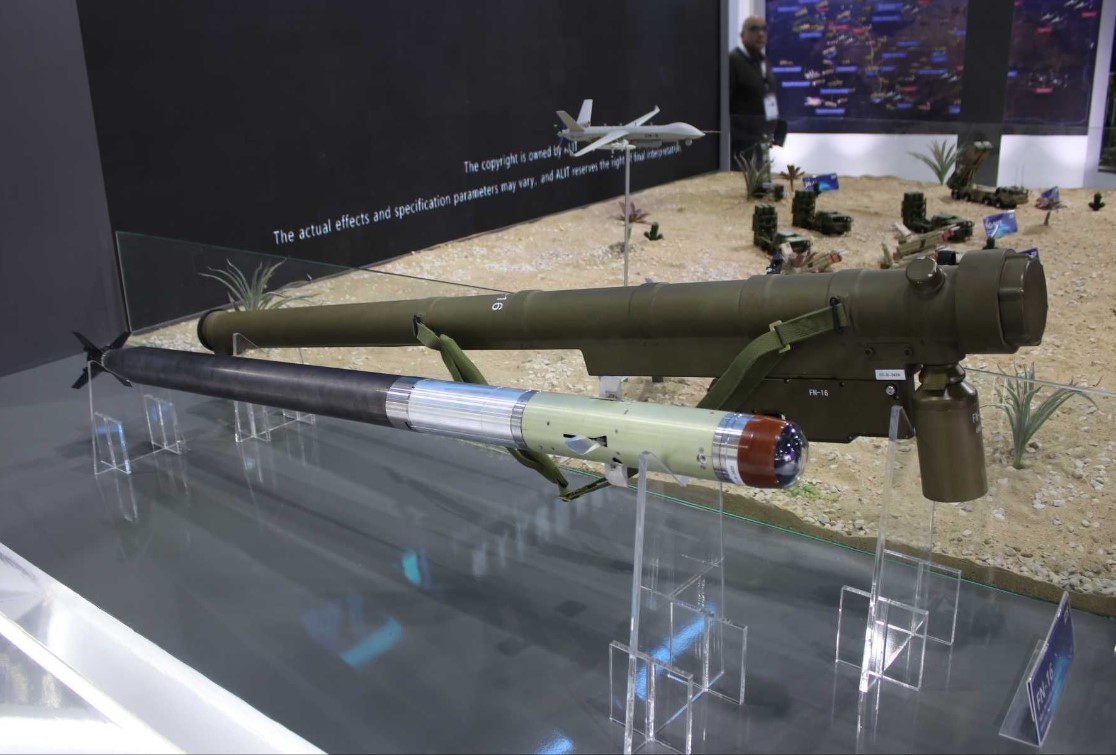
World
MOSCOW — May 29, 2026 : Afghanistan’s Taliban-led government is set to receive Man-Portable Air-Defense Systems (MANPADS) and broader aerial defense systems from Russia under a newly signed military-technical cooperation agreement, marking a further expansion of security ties between Moscow and Kabul. The security pact was formalized on May 27 during an international security forum held in the Moscow region. The agreement was signed by Sergei Shoigu, Secretary of Russia’s Security Council, and Mawlawi Mohammad Yaqub, Afghanistan’s Taliban Defense Minister. While initial public statements following the summit did not disclose the exact inventory to be transferred, the agreement includes the supply of MANPADS and additional aerial defense systems intended to strengthen Afghanistan’s air defense infrastructure. Military-technical cooperation agreements generally include arms transfers, defense licensing, training, maintenance support, technical assistance, and military technology exchange. Officials have not disclosed the types, quantities, or delivery schedule of the systems to be supplied. The inclusion of MANPADS—lightweight, shoulder-fired surface-to-air missile systems designed to engage low-flying aircraft—represents a significant enhancement of Afghanistan’s existing anti-aircraft capabilities. Prior to the agreement, Taliban forces largely relied on aging Soviet-era systems and military equipment inherited after the withdrawal of U.S. and NATO forces in 2021, including older stocks of FIM-92 Stinger and SA-24 Igla-S systems. Taliban officials had previously expressed interest in acquiring Russian-made air defense systems to improve national airspace control and strengthen aerial defense capabilities. In 2024, Taliban representatives publicly discussed plans to procure Russian equipment for air defense and reconnaissance support. The pact also reflects expanding diplomatic relations between the two governments. Russia removed the Taliban from its domestic list of banned terrorist organizations in 2025 and became the first country to formally recognize the Taliban administration as Afghanistan’s legitimate government in July 2025. During discussions at the Moscow security forum, Shoigu highlighted threats posed by ISIS-affiliated militant groups and other armed factions operating in Afghanistan, emphasizing shared concerns over regional stability and security along Central Asia’s southern flank. Defense analysts note that practical factors may influence implementation. Russia’s defense export capacity continues to face pressure from domestic military requirements linked to the ongoing war in Ukraine and the effects of Western sanctions. Early phases of the agreement are expected to focus on aerial defense systems, technical training, maintenance support, and operational integration for Taliban security forces. The agreement is expected to strengthen Afghanistan’s ability to secure key infrastructure, airspace monitoring, and ground operations, while reflecting Kabul’s efforts to expand international defense partnerships outside Western frameworks.
Read More → Posted on 2026-05-29 15:01:04
World
ADELAIDE, Australia — May 29, 2026 : Ultra Maritime Australia has been awarded a contract by the Australian Department of Defence to supply Acoustic Device Countermeasure (ADC) units for the Royal Australian Navy (RAN), continuing a defence partnership that has spanned more than a decade in support of Australia’s undersea warfare and torpedo defence capabilities. The ADC units form part of Ultra Maritime’s Sea Deceptor family of torpedo countermeasures and are designed to provide “soft-kill” protection against incoming torpedo threats. The expendable systems are engineered to detect, classify, confuse, and defeat hostile torpedoes through intelligent acoustic outputs tailored to mimic a vessel’s acoustic signature, helping divert or deceive incoming weapons during maritime operations. Designed for rapid deployment and reliable performance in complex operational environments, the ADC systems are intended to enhance survivability for naval surface ships operating in contested undersea environments. Ultra Maritime is also the manufacturer of ADC systems currently in service with the U.S. Navy, UK Royal Navy, and Royal Australian Navy, with more than 35,000 units delivered globally to date. The new contract complements Ultra Maritime’s previous selection to provide the Surface Ship Torpedo Defence (SSTD) system for the Royal Australian Navy’s Hunter-class frigates, currently under development by BAE Systems Maritime Australia. The SSTD integrates a towed array with automatic threat detection and alert functions, enabling a layered “sense-to-effect” torpedo defence capability that links detection systems with countermeasure deployment while reducing operator workload. In addition to the SSTD system, Ultra Maritime’s Hull Mounted Sonar, including the 2150 Bow Sonar, has been selected for integration into the Hunter-class program, strengthening undersea surveillance and protection capabilities across the future RAN fleet. Together, these systems are intended to support integrated undersea protection and improved operational readiness for Australia’s surface combatants. Operating in Australia for more than 15 years with a presence in Mawson Lakes, South Australia, Ultra Maritime continues to expand cooperation with domestic industry partners, including BAE Systems Maritime Australia, as part of ongoing naval modernization efforts. The contract value and delivery timeline for the ADC procurement were not disclosed by the company or the Australian Department of Defence.
Read More → Posted on 2026-05-29 15:08:44 Finance Ministry Approves ₹70,000-Crore Project-75I Submarine Programme; Final CCS Clearance Pending
India
NEW DELHI — May 29, 2026 : The Union Finance Ministry has approved the ₹70,000-crore Project-75I (P-75I) submarine programme, moving one of India’s largest naval acquisition efforts to its final stage before contract signing. The proposal now awaits approval from the Cabinet Committee on Security (CCS), chaired by the Prime Minister, which will provide the final clearance required for implementation. Project-75I involves the construction of six advanced conventional diesel-electric submarines for the Indian Navy under the Strategic Partnership Model. State-owned Mazagon Dock Shipbuilders Limited (MDL) will manufacture the submarines at its Mumbai facility in partnership with Germany’s thyssenkrupp Marine Systems (tkMS). The MDL-tkMS consortium was selected after successfully meeting technical requirements and prevailing over the competing bid submitted by Larsen & Toubro (L&T) and Spain’s Navantia. Design, Technology Transfer and Capabilities The six submarines will be based on a variant of Germany’s HDW Class 214 design, also referred to as the Type 214 Next Generation platform. As part of the agreement, tkMS will undertake a comprehensive transfer of submarine design and manufacturing technology to India, strengthening domestic industrial expertise and long-term maintenance capabilities. A key operational requirement of Project-75I is the integration of a sea-proven Air-Independent Propulsion (AIP) system. The technology uses polymer electrolyte membrane hydrogen fuel cells to generate electricity, enabling submarines to remain submerged for extended periods—often up to two weeks—without surfacing or snorkeling for oxygen. This capability significantly lowers acoustic and thermal signatures, reducing the likelihood of detection by hostile sensors during underwater operations. In addition to AIP capability, the submarines are expected to incorporate advanced underwater warfare systems, including modern sensors, heavyweight torpedoes, missile-launch capability, enhanced stealth features, and improved survivability. The vessels are projected to have a submerged displacement of approximately 3,400 to 3,500 tonnes, making them among the largest conventional submarines planned for service with the Indian Navy. Delivery Timeline and Indigenisation According to the planned delivery schedule, the first submarine will be delivered to the Indian Navy seven years after contract finalization. The remaining five vessels are scheduled to be delivered at a rate of one submarine per year. Production activities are expected to begin in the third year after the contract is signed, following detailed design work and infrastructure preparations. The programme also includes phased indigenous manufacturing requirements aimed at supporting India’s long-term defence self-reliance goals. Under contractual provisions, the first submarine must incorporate at least 45 percent indigenous content. This figure will progressively rise across the programme, reaching 60 percent by the sixth and final submarine through greater domestic manufacturing and supply-chain participation. Programme Background and Strategic Context Project-75I succeeds the earlier Project-75 programme, under which MDL constructed six Kalvari-class (Scorpene) diesel-electric submarines with technology transfer from France’s Naval Group. The final vessel of the class, INS Vaghsheer, entered service in January 2025, marking the completion of the first phase of India’s modern conventional submarine-building effort. The programme forms part of India’s 30-year submarine-building plan approved in 1999 to modernize the Navy’s underwater fleet and replace aging submarines amid expanding maritime security requirements in the Indian Ocean Region. Project-75I also aligns with broader India-Germany defence industrial cooperation, following the signing of a defence industrial roadmap in Berlin to support joint development, co-production, and technology partnerships in military systems. Project-75I received approval from the Defence Acquisition Council in 2014, while a Request for Proposal (RFP) was issued in July 2021. Negotiations involving the Ministry of Defence, MDL, and tkMS—including cost discussions and programme structuring—have since been completed. With Finance Ministry approval now secured, CCS clearance remains the final administrative step before formal contract signing, release of initial funding, and commencement of detailed design and construction activities.
Read More → Posted on 2026-05-29 15:30:19
Space & Technology
CAPE CANAVERAL, Fla. — May 29, 2026 : Blue Origin’s New Glenn rocket was destroyed Thursday evening after an anomaly occurred during a routine static fire test at Cape Canaveral Space Force Station in Florida, resulting in an explosion at the launch site. The company confirmed that all personnel were accounted for and no injuries were reported. The incident occurred at approximately 9:00 p.m. EDT at Space Launch Complex 36 (LC-36), where engineering teams were conducting a hotfire static fire test as part of preparations for the rocket’s fourth overall mission, designated NG-4. During a static fire test, a rocket’s engines are ignited while the vehicle remains firmly secured to the launch pad to verify propulsion system performance, engine behavior, and overall launch readiness prior to flight. According to preliminary information, the fully fueled 320-foot-tall New Glenn rocket experienced a failure moments after ignition of its seven BE-4 engines, triggering an explosion and fire at the launch complex. Video footage from the site showed a large fireball and pressure wave shortly after engine startup. Residents in nearby Cocoa Beach reported hearing the blast and feeling vibrations. Public Safety and Damage Assessment Following the explosion, local emergency authorities, including Brevard County Emergency Management and the U.S. Space Force, confirmed there was no threat to public safety from toxic fumes or other hazards. Officials stated that all personnel at the launch facility were accounted for, while the Federal Aviation Administration (FAA) said the test was not part of licensed launch operations and had no impact on commercial air traffic. Although Blue Origin has not yet released a complete damage assessment, local reports and visual evidence indicate that the blast caused major destruction to the launch vehicle and infrastructure at LC-36. Early reports suggested structural damage at the site, including the collapse of a nearby lightning tower. Engineers are continuing evaluations to determine the full extent of the damage. NG-4 Mission and Planned Satellite Deployment The static fire test was being conducted ahead of New Glenn’s fourth planned mission, NG-4, which had been scheduled to launch as early as June 4, 2026. The mission was expected to carry 48 broadband satellites into low-Earth orbit for Amazon’s Project Kuiper, also referred to as Amazon Leo, a satellite internet constellation intended to compete with SpaceX’s Starlink network. Blue Origin confirmed that the payload of satellites was not installed on the rocket during the test, meaning losses were limited to the launch vehicle itself and infrastructure at Space Launch Complex 36. Statements from Blue Origin and Industry Leaders Following the incident, Blue Origin issued a public statement confirming that an anomaly had occurred during the hotfire test and that all personnel remained safe. Founder Jeff Bezos later stated that it was too early to determine the root cause of the failure but confirmed that an investigation had begun to identify what caused the explosion. Industry leaders also reacted to the incident. SpaceX Chief Executive Elon Musk described the event as unfortunate and acknowledged the technical difficulty involved in rocket development. NASA Administrator Jared Isaacman said the agency was monitoring the situation closely and would coordinate with partners to evaluate possible mission impacts while supporting a thorough investigation. New Glenn Program and Broader Impact New Glenn is Blue Origin’s two-stage, partially reusable heavy-lift launch vehicle designed for commercial, government, and lunar exploration missions. Standing approximately 98 meters tall, the rocket uses seven methane-fueled BE-4 engines on its first stage and two BE-3U engines on the second stage. The vehicle is designed to carry up to 45 metric tons to low-Earth orbit and around 13 metric tons to geostationary transfer orbit. The rocket is also a key component of Blue Origin’s participation in NASA’s Artemis lunar exploration program, where New Glenn is expected to support launches related to the Blue Moon lunar lander system. Thursday’s explosion represents another setback for the New Glenn program after an engine-related issue during the vehicle’s third flight in April 2026 resulted in a satellite being inserted into an incorrect orbit. The FAA had recently cleared the rocket to resume flights following that investigation. With LC-36 currently serving as Blue Origin’s only launch facility capable of supporting New Glenn missions, the damage is expected to delay upcoming operations while investigators determine the cause of the failure and repair work begins at the launch site.
Read More → Posted on 2026-05-29 15:39:17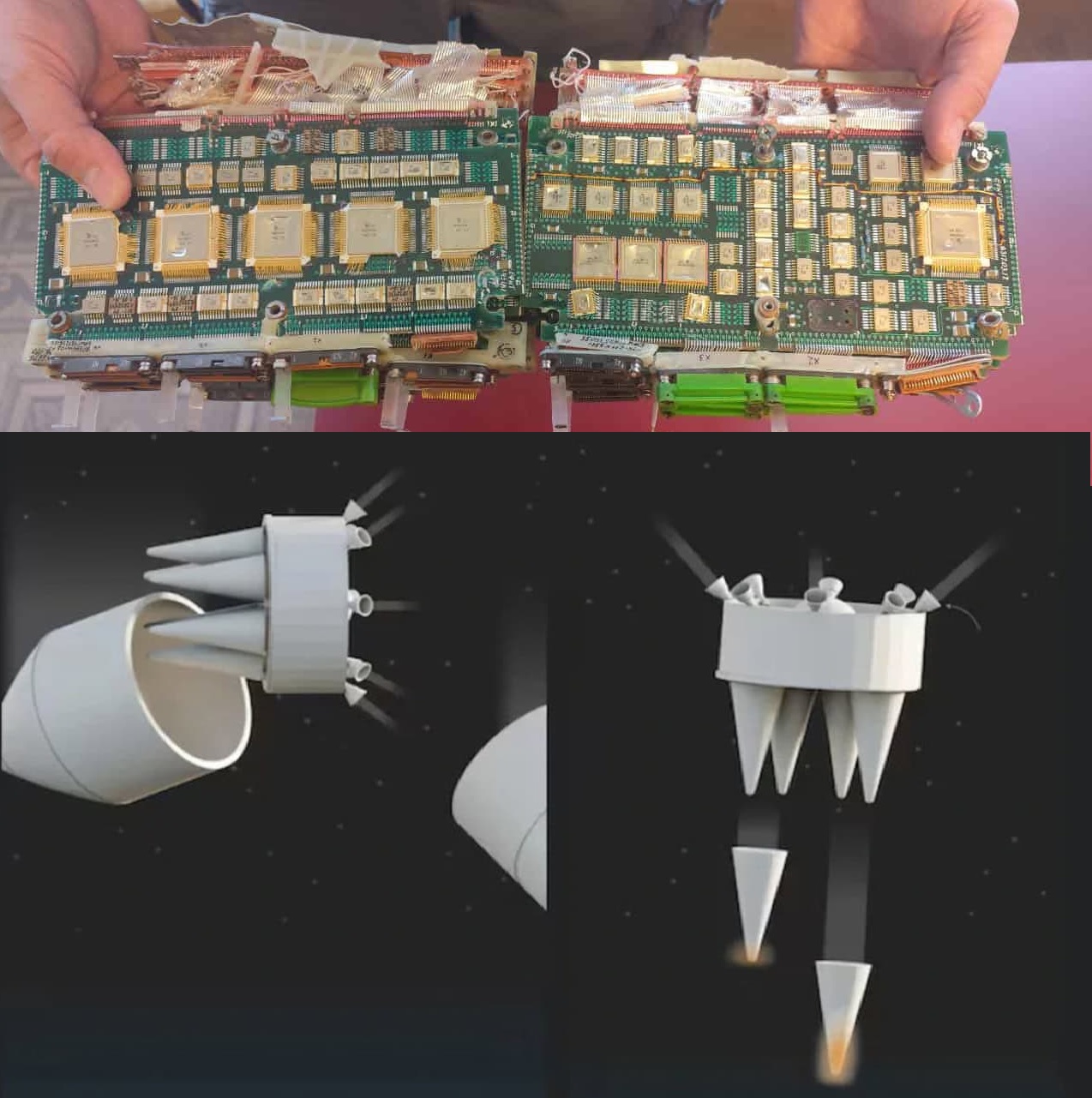
World
KYIV, Ukraine — May 29, 2026 : Ukrainian specialists have completed a detailed technical assessment of debris recovered from a Russian Oreshnik medium-range ballistic missile, concluding that the system relies entirely on Russian and Belarusian electronic components manufactured before 2017. The findings were presented during a briefing in Kyiv and later shared with European ambassadors following missile strikes on the Lviv region on the night of January 8–9, 2026, and a subsequent attack on Bila Tserkva. Missile Debris Analysis According to Ukrainian experts, a section of the missile body detached during flight and did not completely burn up, enabling specialists to recover and examine internal systems. Investigators studied surviving fragments of the processor unit and the main onboard computer board, which are responsible for controlling flight operations and transmitting signals to the missile’s engines and aerodynamic control surfaces. Technical examination found that all printed circuit boards and microchips in the processor unit were manufactured between 2014 and 2016, leading specialists to conclude that the missile itself was assembled no later than 2017. Officials stated that the recovered components provide insight into the missile’s technological origin and production timeline. Belarusian and Russian Components Identified The investigation found no modern American, Chinese, or European-made electronic components from 2024 or 2025 in the recovered sections of the missile. Ukrainian specialists noted that this differs from Russian drones and some precision-guided systems where foreign electronics have previously been identified. Instead, analysts reported that all recovered electronics were of Russian and Belarusian origin. Components manufactured by the Minsk-based Integral plant were identified on multiple circuit boards recovered from the missile. Integral is one of Eastern Europe’s largest producers of integrated circuits, semiconductor devices, and electronic components used in telecommunications and military systems. According to investigators, the majority of the missile’s electronic component base originated from industrial facilities located in Moscow and the surrounding Moscow region, indicating continued reliance on domestic production chains for critical missile electronics. Modernization of Existing Missile Systems Based on the technical findings, Ukrainian experts assessed that the Oreshnik represents a significant modernization of existing Soviet or Russian missile systems rather than a fundamentally new technological development. Specialists stated that the missile appears to incorporate modifications and updated configurations built around older technological foundations instead of newly developed electronic frameworks. The assessment also contradicts Russian claims describing the Oreshnik as an entirely new missile platform, with Ukrainian analysts arguing that the recovered electronics indicate an adaptation of pre-existing technologies. Missile Characteristics and Guidance System The Oreshnik is classified as a medium-range strategic ballistic missile with an estimated operational range of between 3,000 and 5,000 kilometers. Ukrainian specialists stated that the missile was originally designed as a carrier for nuclear payloads and therefore exhibits guidance characteristics commonly associated with strategic ballistic systems. The missile uses a fully passive inertial navigation system based on a gyroscopic guidance module and does not rely on active satellite navigation networks such as GPS. According to experts, coordinates are preloaded into the onboard computer before launch, allowing the missile to autonomously navigate during flight and toward its designated target area. MIRV Capability and Warhead Configuration Technical analysis showed that the missile is equipped with a separable warhead bus capable of MIRV (Multiple Independently Targetable Reentry Vehicle) deployment. Ukrainian experts stated that the system can release up to six guidance units, each carrying six submunitions, creating a total of 36 individual elements intended for simultaneous delivery. In non-nuclear variants, these submunitions are inert cast-iron dummies weighing between 50 and 100 kilograms. Specialists stated that, in the absence of explosive payloads, the system’s destructive effect is limited primarily to kinetic impact against specific targets. Data gathered from recent attacks showed different deployment methods. During the January strike on the Lviv region, the missile’s warhead reportedly separated at an altitude of approximately five to six kilometers, causing wide dispersal of submunitions. During the later attack on Bila Tserkva, separation occurred at a significantly lower altitude, concentrating impacts in a smaller area, including a cluster of garages. Interception Challenges Military specialists stated that the Oreshnik presents significant interception difficulties because of its ballistic trajectory, high speed, and MIRV configuration involving multiple descending elements. Ukrainian experts assessed that conventional air defense systems, including Patriot PAC-3 batteries, would face difficulty intercepting the missile once the warhead separates. According to the assessment presented in Kyiv, even specialized high-altitude missile defense systems such as THAAD are not considered capable of reliably neutralizing a MIRV-configured missile carrying dozens of independently descending reentry elements. Ukrainian officials said the findings were shared with European diplomats to highlight the role of Belarusian-produced components in supporting Russia’s missile manufacturing supply chain.
Read More → Posted on 2026-05-29 15:57:38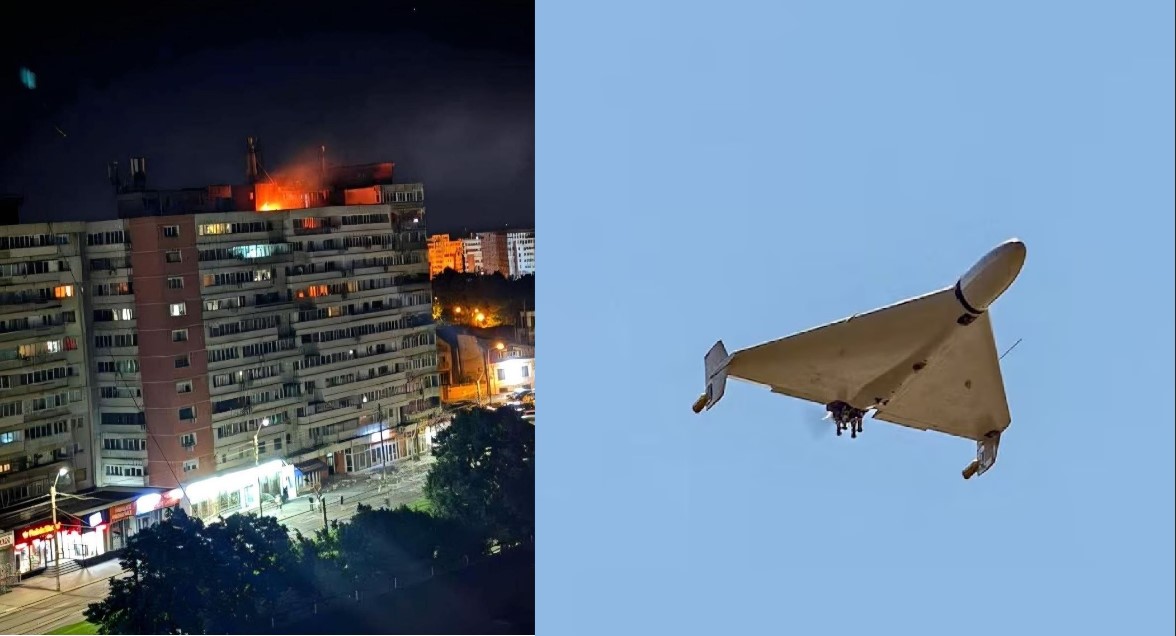
World
GALAȚI, ROMANIA — May 29, 2026 : A Russian Geran-2 drone struck a residential apartment building in the southeastern Romanian city of Galați during the early hours of May 29, injuring two civilians and marking the first reported incident in which the war in neighboring Ukraine has caused casualties inside a NATO member state. Romanian authorities said the drone crossed into national airspace during a wider Russian overnight attack targeting Ukrainian civilian infrastructure near the Danube River ports of Izmail and Reni, located close to Romania’s border. Galați is situated approximately 13 kilometers (8 miles) from Ukraine. The drone, identified as a Russian Geran-2 loitering munition — the Russian version of the Iranian-designed Shahed-136 — struck the roof of a 10-story apartment building, where its explosive payload detonated and triggered a fire. Emergency services evacuated residents shortly after impact. A 14-year-old boy and a 53-year-old woman sustained injuries and received medical treatment, authorities confirmed. Military Response and Interception Challenges Romanian military radar tracked the drone after it breached national airspace and remained inside Romania for approximately four minutes while flying at low altitude. In response, the Romanian Air Force scrambled two F-16 Fighting Falcon aircraft and an IAR 330 SOCAT helicopter, while emergency warning alerts were issued to nearby residents. Although military commanders were authorized to engage the drone, Romanian officials said interception was ultimately ruled out because of operational and civilian safety concerns. Brigadier General Gheorghe Maxim, acting commander of Romania’s joint staff, stated that the aircraft’s low altitude made radar tracking difficult and reduced the time available for a safe engagement. Romanian officials also confirmed that a U.S.-supplied Merops Counter-UAS system, designed to intercept hostile drones, was operational in the area but was not activated due to concerns that debris could fall over a densely populated urban zone. Diplomatic Measures and Security Response The incident prompted an immediate response from Bucharest. Romanian President Nicușor Dan convened an emergency meeting of the Supreme Council of National Defense, describing the event as the most serious security incident affecting Romanian territory since Russia launched its full-scale invasion of Ukraine in 2022. Romania’s Ministry of National Defense condemned the strike, stating that such actions undermine regional stability in the Black Sea region, violate international norms, and endanger both Romanian citizens and NATO’s collective security framework. In response, Romania declared the Russian consul general in the Black Sea city of Constanța persona non grata and announced the closure of the Russian consulate there. Romanian authorities also formally requested NATO to accelerate the transfer of additional anti-drone and air defense systems to strengthen protection against future incursions. International Reaction The incident drew swift condemnation from NATO and European leaders. NATO Secretary-General Mark Rutte reaffirmed the alliance’s solidarity with Romania, stating that NATO remains committed to defending allied territory against reckless actions threatening regional security. European Commission President Ursula von der Leyen said Russia had “crossed yet another line” and confirmed that the European Union is preparing a 21st sanctions package targeting Moscow. Moldovan President Maia Sandu also condemned the strike, warning that repeated military incidents near borders increase risks to regional security. Russian Response Russian officials rejected the criticism and downplayed the diplomatic backlash. Foreign Ministry spokeswoman Maria Zakharova dismissed international concern surrounding the incident and warned that retaliatory measures would follow Romania’s expulsion of a Russian diplomat. Former Russian President Dmitry Medvedev also questioned responsibility for the strike, claiming ambiguity remained regarding the drone’s origin. Romanian authorities rejected those claims, citing radar tracking data and forensic identification linking the drone to a Russian Geran-2 platform. Rising Concerns Over Cross-Border Drone Incidents Romanian defense officials said the Galați strike marked the 29th reported breach of national airspace by Russian drones since attacks on Ukrainian Danube River infrastructure intensified. Previous incidents involved drone fragments or debris falling in sparsely populated areas without causing civilian injuries. Officials noted that such incursions are frequently linked to technical failures or electronic warfare measures, including GPS jamming and spoofing, which can disrupt drone navigation systems. A similar incident occurred on May 19, when a Ukrainian drone entered Estonian airspace after reportedly being affected by Russian electronic warfare activity. Romanian F-16 aircraft deployed in Lithuania under NATO’s Baltic Air Policing mission participated in the response, while Ukraine later issued a public apology and described the incident as unintended. Romania’s Ministry of National Defense said air defense readiness along the Ukrainian border has since been reinforced as authorities continue monitoring the security situation near the frontier.
Read More → Posted on 2026-05-29 16:07:56
World
BEIJING — May 29, 2026 : Recent satellite imagery has confirmed rapid progress in the construction of China’s first nuclear-powered aircraft carrier at the Dalian Shipyard in Liaoning Province, reflecting the pace and production capacity of the country’s maritime shipbuilding industry. In less than a year, prefabricated hull sections have been assembled into a clearly recognizable structure, reinforcing assessments that the vessel could enter service in the early to mid-2030s. Widely designated by analysts as the Type 004, the carrier forms part of a broader naval shipbuilding program involving the simultaneous construction of two supercarriers. While Dalian Shipyard is leading development of the nuclear-powered platform, a conventionally powered supercarrier is also under construction. Both vessels are understood to be based heavily on the design and technical framework of the Fujian, China’s first supercarrier, which officially entered service in November 2025. Design and Construction Progress The Type 004 is expected to be significantly larger than the conventionally powered Fujian, with analysts estimating a full-load displacement of approximately 110,000 to 120,000 tons. Recent satellite imagery indicates a hull measuring roughly 286 meters in length and 46 meters in beam, highlighting the scale of the platform as construction advances. The vessel is expected to integrate four electromagnetic aircraft launch catapults and three aircraft elevators, structural additions projected to increase aircraft launch capacity and sortie generation rates by approximately 33 percent compared with the Fujian. Construction accelerated after hull sections first appeared in dry dock during early 2025, with imagery captured by May 2026 showing substantial structural progress. Recent satellite observations have also revealed reactor-related compartments and 15-by-15-meter containment structures consistent with assessments that the carrier will employ nuclear propulsion. Nuclear Propulsion and Supporting Infrastructure Evidence of the propulsion system aligns with reports from November 2024 that identified a land-based prototype naval reactor under development near Leshan in Sichuan Province. The project, known as the Longwei program at Base 909, is intended to test the pressurized water reactor architecture expected to power the Type 004. The adoption of nuclear propulsion is expected to provide the carrier with greater operational endurance and expanded deployment flexibility compared with conventionally powered platforms, supporting sustained operations across distant maritime regions. Infrastructure development is also underway to support future carrier operations. In Qingdao, Shandong Province, where the aircraft carrier Liaoning is currently based, naval facilities are being expanded through new pier construction and demagnetization infrastructure designed to accommodate larger supercarriers expected to enter service in the early 2030s. Air Wing and Fleet Development The Type 004 is expected to operate an air wing composed of aircraft currently deployed or undergoing testing aboard the Fujian. These include the J-35 fifth-generation fighter, which has already conducted takeoffs from the supercarrier, the J-15T long-range air superiority fighter, the J-15D electronic attack aircraft, and the KJ-600 airborne early warning and control (AEW&C) aircraft. Supporting helicopters from the Z-20 family are also expected to operate from the vessel. China’s carrier development strategy is expected to divide production responsibilities between major shipyards. The Jiangnan Shipyard, builder of the Fujian, is likely to continue producing conventionally powered supercarriers, while Dalian Shipyard focuses on nuclear-powered designs. This approach would provide the People’s Liberation Army Navy (PLAN) with a mixed fleet structure, combining conventionally powered carriers suited for regional operations with nuclear-powered vessels capable of sustained deployments in the mid-Pacific, Middle East, and Indian Ocean. Carrier Expansion Outlook The rapid advancement of the Type 004 program aligns with a U.S. Department of Defense assessment projecting that the PLAN intends to field six additional aircraft carriers capable of operating fixed-wing manned aircraft by 2035, increasing China’s total carrier fleet to nine vessels. Analysts assess that the Type 004 could be launched between 2027 and 2028, with entry into service anticipated during the early 2030s as China continues expanding both its carrier fleet and supporting naval infrastructure.
Read More → Posted on 2026-05-29 16:26:48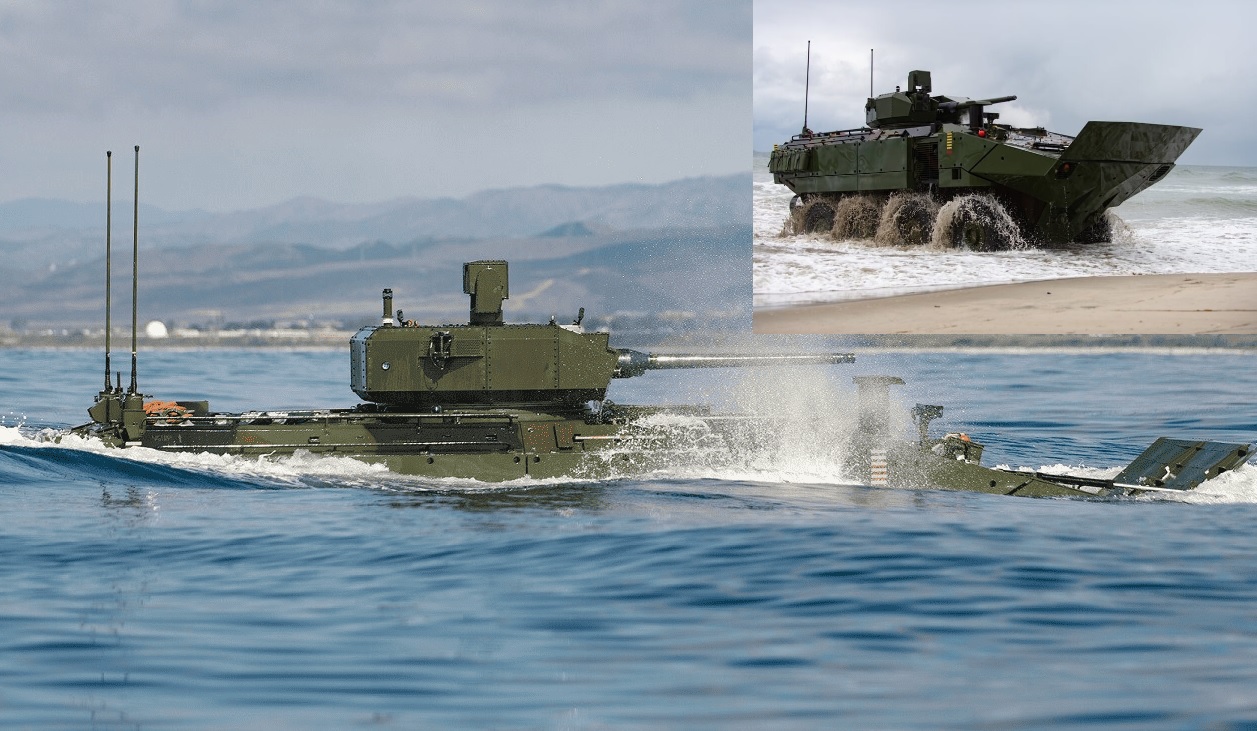
World
WASHINGTON — May 29, 2026 : The U.S. Marine Corps has officially begun the operational fielding of the Amphibious Combat Vehicle 30mm (ACV-30), marking the introduction of a dedicated direct-fire infantry fighting variant to Marine amphibious units, according to a May 28, 2026 announcement by prime contractor BAE Systems. The ACV-30 is designed to transport Marines from ship to shore while providing organic medium-caliber fire support against light armored vehicles, fortified positions, and dismounted infantry during amphibious and littoral operations. The platform introduces a new level of protected firepower to Marine formations, enabling forces to transition from amphibious assault to sustained inland maneuver while maintaining combat support capability. Platform and Armament The ACV-30 is based on the baseline 8x8 Amphibious Combat Vehicle chassis developed by BAE Systems in partnership with Iveco Defence Vehicles and builds upon the ACV Personnel variant (ACV-P). The platform retains the amphibious and mobility characteristics of the standard vehicle while integrating a dedicated combat system designed for direct-fire support missions. A defining feature of the vehicle is the Medium Caliber Turret (MCT-30), manufactured by Kongsberg Defence & Aerospace in Johnstown, Pennsylvania. The stabilized, remotely operated turret is equipped with a 30mm Mk.44 Bushmaster II automatic cannon and a coaxial 7.62mm machine gun, enabling the vehicle to engage infantry positions, light armored threats, and fortified targets while crews remain protected inside the hull. Because the MCT-30 is unmanned and remotely operated, the three-person crew remains under the protection of the vehicle’s modular composite armor. Unlike traditional turret systems that extend into the crew compartment, the turret architecture preserves internal hull space for embarked Marines and mission equipment. The vehicle can transport up to 8–10 Marines depending on mission configuration while carrying approximately 300 ready rounds for the 30mm cannon and up to 800 rounds for the coaxial machine gun. Technical Specifications and Mobility The ACV-30 combines amphibious capability with high mobility on land. It is powered by an Iveco Cursor 16 turbocharged diesel engine generating 700 horsepower, allowing road speeds of up to 105 kilometers per hour (65 mph). In water, the platform operates at speeds between 6 and 8 knots and is capable of conducting ship-to-shore operations at distances of up to 12 nautical miles (22 kilometers). The vehicle has an operational range of approximately 523 kilometers (325 miles), with the ability to continue inland operations for more than 250 miles after amphibious insertion. Weighing approximately 35 tonnes, the ACV-30 incorporates a blast-resistant V-hull design for improved survivability and provides a payload capacity of approximately 3.3 tonnes. Procurement and Development Timeline The operational fielding follows a structured testing and procurement effort that began in 2022, when the Marine Corps awarded BAE Systems a contract to produce production representative test vehicles (PRTVs) for the ACV-30 program. The first test vehicle was delivered in February 2024 to support operational evaluation and systems integration. In November 2024, Kongsberg received a $51 million contract for long-lead turret components to prepare for broader production of the MCT-30 system. Following successful testing, BAE Systems was awarded a $188.5 million full-rate production contract in April 2025 covering 30 ACV-30 vehicles, spare parts, fielding support, and test equipment. A subsequent August 2025 contract valued at up to $330 million was awarded to Kongsberg for full-rate production of MCT-30 turrets. Manufacturing activities are conducted in York and Johnstown, Pennsylvania, while final integration takes place in Charleston, South Carolina. Fleet Structure and Strategic Role The ACV-30 forms part of the broader Amphibious Combat Vehicle family, which includes the ACV-P personnel carrier, ACV-C command-and-control variant, and the upcoming ACV-R recovery vehicle. The Marine Corps plans to acquire a total of 608 ACVs, including 152 ACV-30 variants, as part of the replacement of the legacy Assault Amphibious Vehicle (AAV), which primarily served as a troop transport platform since the Vietnam era. The deployment aligns with the Marine Corps’ Force Design 2030 modernization initiative, which emphasizes distributed maritime operations across contested littoral and island environments. In operational scenarios such as the Indo-Pacific, the ACV-30 is expected to provide Marine units with independent direct-fire support during early amphibious assaults and inland maneuver operations, reducing reliance on external artillery and close air support while improving tactical flexibility in coastal combat environments.
Read More → Posted on 2026-05-29 17:06:18
World
Taganrog, Russia — May 30, 2026 : Ukrainian unmanned systems forces carried out an overnight drone strike on Russian military and energy infrastructure in the Rostov region on May 29–30, targeting the aviation hub and port facilities in Taganrog, according to Ukrainian officials and regional authorities. Major Robert “Madyar” Brovdi, Commander of Ukraine’s Unmanned Systems Forces (USF), said the operation was conducted by the “Birds of the 1st Separate Center of the USF” under the coordination of the newly established USF Deep Strike Center. Brovdi stated that the operation destroyed two Tupolev Tu-142 long-range aircraft, including a rare Tu-142MR strategic radio-relay variant, and an Iskander operational-tactical missile launcher positioned near Taganrog. Footage released by the Ukrainian military appeared to show strikes on aircraft undergoing work at facilities linked to the Taganrog aviation complex. Strike on Taganrog Aviation Hub Situated along the coast of the Sea of Azov, Taganrog serves as a major center of Russia’s aviation industry and military aircraft maintenance network. The targeted complex includes the Beriev Aircraft Company and the 325th Aircraft Repair Plant, facilities responsible for the repair, modernization, and servicing of several Russian military aircraft platforms. The facilities support amphibious aircraft, A-50 airborne early warning aircraft, transport aircraft including the Il-76, An-12 and An-72, as well as Tu-95MS and Tu-142 strategic bombers. The surrounding industrial zone also hosts Atlant Aero, an enterprise reportedly involved in unmanned aircraft development. Rare Tu-142MR Strategic Aircraft Defense and aviation analysts identified one of the reportedly destroyed aircraft as a Tu-142MR, known by the NATO reporting name “Bear J.” Derived from the Tu-142 maritime patrol and anti-submarine warfare aircraft, the platform performs a specialized communications role within Russia’s nuclear command-and-control structure. According to aviation journalist Piotr Butowski, the aircraft operates using the Oryol communications system, enabling national command authorities to relay launch instructions to submerged ballistic missile submarines (SSBNs), guided missile submarines (SSGNs), and attack submarines (SSNs). The aircraft performs a role comparable to the U.S. E-6 Mercury (TACAMO) platform. The Tu-142MR is visually distinguishable by a forward-pointing pod mounted on the tailfin and a ventral fairing housing a very low frequency (VLF) trailing wire antenna used to maintain communications with submerged submarines. Analysts estimate that between seven and fourteen Tu-142MR airframes were produced, with approximately twelve believed to remain in operational service, split between Russia’s Northern Fleet at Kipelovo and Pacific Fleet at Mongokhto. The fleet has reportedly undergone upgrades under the “Kipelovo” modernization programme to improve compatibility with newer-generation submarines. As no active production line for the Tu-142 family exists, the loss of an operational aircraft could affect fleet availability. Conflicting Claims Over Aircraft Status Conflicting reports emerged following the strike regarding the condition of the aircraft present at Taganrog. A Russian military blogger operating under the name “FighterBomber” claimed the damaged airframes included a Tu-142MK and a Tu-142MR transferred from Nikolaev, Ukraine, for repairs in 1998 and 2002 and later abandoned because of insufficient funding. However, defense analysts note that Taganrog remains Russia’s principal maintenance and modernization center for the Tu-142 fleet, suggesting the aircraft were more likely active Russian platforms undergoing repair, maintenance, or upgrade work. Iskander Launcher and Port Infrastructure Targeted In addition to the aviation assets, Brovdi reported the destruction of an Iskander operational-tactical missile system launcher at a firing position located in marshland near Taganrog. The mobile Iskander system is used by Russian forces to launch short-range ballistic and cruise missiles against targets in Ukraine. Drone strikes also reportedly affected commercial and energy-related infrastructure in the city’s port zone. Rostov Oblast Governor Yuri Slyusar said drone impacts caused fires involving a commercial oil tanker, a specialized fuel storage reservoir, and a port administrative building within the Port of Taganrog industrial area. Additional drone activity was reported in neighboring Krasnodar Krai, where an oil facility in Armavir was reportedly targeted during the coordinated overnight operation. Previous Strikes on Taganrog Facilities The latest operation follows earlier Ukrainian strikes on military-industrial facilities in Taganrog. In November 2025, satellite imagery reportedly showed the destruction of two rare Russian aircraft at the Beriev plant, including an A-60 laser aircraft and an A-100LL airborne early warning and control platform based on the Il-76 airframe. The 325th Aircraft Repair Plant was also reportedly targeted in late May 2026 prior to the latest overnight operation. Russian authorities have not officially confirmed the reported destruction of the aircraft or missile system, and independent verification of the full extent of damage remains limited.
Read More → Posted on 2026-05-30 13:44:51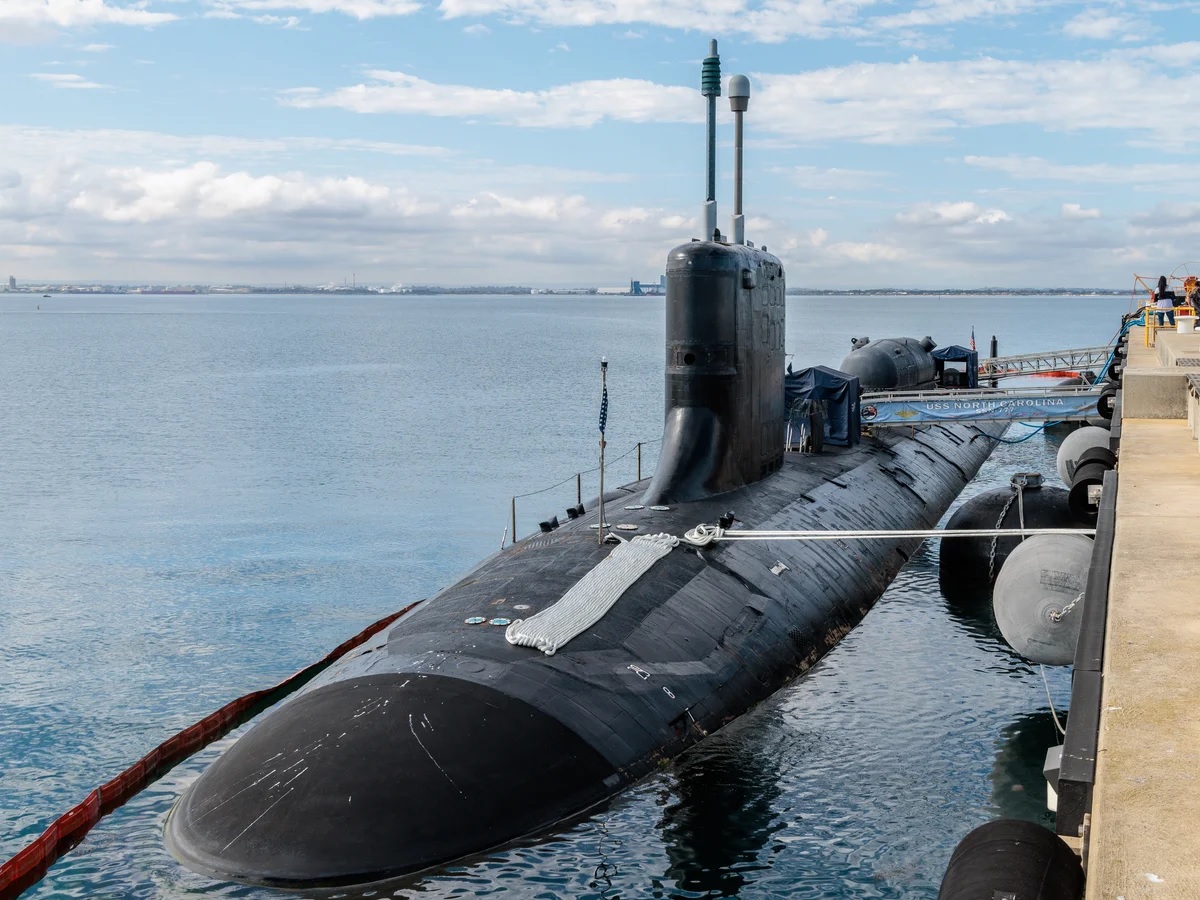
World
SINGAPORE — May 30, 2026 : Defence ministers from Australia, the United States and the United Kingdom met on the sidelines of the Shangri-La Dialogue security summit in Singapore on Saturday to finalise next steps in the AUKUS trilateral security partnership, confirming that AUKUS Pillar I remains on schedule while announcing new cooperation measures on submarine operations, industrial coordination and uncrewed maritime technologies. Australian Deputy Prime Minister and Minister for Defence Richard Marles, U.S. Secretary of Defense Pete Hegseth and UK Defence Secretary John Healey reaffirmed their commitment to AUKUS, describing continued progress toward Australia’s acquisition of conventionally armed, nuclear-powered submarines and the strengthening of trilateral defence cooperation across the Indo-Pacific. Streamlined Virginia-Class Submarine Acquisition The ministers announced a revised approach to Australia’s acquisition of U.S.-built Virginia-class submarines under AUKUS Pillar I, confirming that Canberra will exclusively purchase three in-service submarines instead of a previously proposed mix of new and in-service variants. According to officials, the decision is intended to simplify supply chain management, operational planning, training and maintenance requirements for the Royal Australian Navy while improving cost efficiency. The revised plan is also expected to reduce additional pressure on U.S. shipyards currently managing Virginia-class submarine production and sustainment requirements. The ministers additionally noted continued progress on the development of SSN-AUKUS, a conventionally armed, nuclear-powered attack submarine programme designed to provide Australia and the United Kingdom with advanced warfighting capability. Officials said the programme remains supported by substantial national investments, including the United Kingdom’s £6 billion commitment announced in 2025. Submarine Rotational Force-West at HMAS Stirling The meeting also finalised arrangements for the establishment of Submarine Rotational Force–West (SRF-West) at HMAS Stirling in Western Australia, a key element of the AUKUS submarine pathway intended to expand regional submarine maintenance and sustainment capacity. The United States has authorised the deployment of U.S. Navy support elements to HMAS Stirling and will begin rotating personnel later this year. The first deployment of a U.S. nuclear-powered submarine to the Australian base is scheduled for 2027, followed by a rotational presence of a UK Astute-class submarine. British officials reaffirmed London’s commitment to rotational submarine deployments and highlighted the successful completion earlier this year of a Submarine Maintenance Period for HMS Anson, a UK Astute-class submarine serviced at HMAS Stirling. Officials said SRF-West is intended to accelerate Australia’s readiness to regulate, operate, maintain and sustain a sovereign conventionally armed, nuclear-powered submarine capability by improving maintenance access, logistics support and operational readiness. Australian Infrastructure Investments To support the wider AUKUS submarine programme, Australia outlined major infrastructure and logistics spending linked to submarine operations and sustainment. The investments include up to AUD 8 billion for SRF-West facilities and logistics support at HMAS Stirling, an initial AUD 3.9 billion payment toward the construction of a new Submarine Construction Yard in South Australia and AUD 12 billion for the Henderson Defence Precinct, which will provide contingency docking and depot-level maintenance capabilities. Officials said these investments form part of the broader AUKUS submarine pathway and are intended to support long-term sustainment and sovereign industrial capability. AUKUS Pillar II Signature Project on Uncrewed Undersea Vehicles Alongside submarine cooperation, the ministers announced the first AUKUS Pillar II “Signature Project,” focused on jointly developing payloads and enabling systems for uncrewed undersea vehicles (UUVs), with the first capabilities expected to enter service in 2027. The project will support the development of sensors, weapons systems and enabling technologies capable of operating across the UUV fleets of all three AUKUS partners. Officials said the systems are intended to improve surveillance, reconnaissance and strike operations while expanding capabilities for logistics support, anti-submarine warfare, anti-surface warfare, mine countermeasures, electronic warfare and contested littoral manoeuvres. The UK Ministry of Defence said the project will also strengthen efforts to protect critical seabed infrastructure, including underwater pipelines and telecommunications cables, while supporting collective deterrence across the Indo-Pacific and Euro-Atlantic regions. The technology is expected to contribute to the Royal Navy’s transition toward a “Hybrid Navy” model combining crewed and uncrewed systems, while also reinforcing the future SSN-AUKUS submarine fleet through shared payload integration between the United Kingdom, Australia and the United States. Defence Industry Cooperation and Innovation UK Defence Secretary John Healey announced the winners of the 2025 AUKUS Maritime Innovation Challenge, which focused on technologies supporting command, control and teaming of undersea systems. The selected companies — Decision Analysis Services Ltd. in Basingstoke, SEA Ltd. in Frome, A-2i in Dorchester and MSI Transducers in Boston, United States — will share £3 million to further develop and test their technologies. The UK Ministry of Defence said the funding supports defence innovation, industrial growth and skilled employment across companies of varying sizes. The ministers also confirmed steps to expand the AUKUS licence-free trade environment by narrowing the list of excluded technologies subject to export controls. They reaffirmed support for the Advanced Capabilities Industry Forum, which is intended to strengthen cooperation across the trilateral defence industrial base. Officials said the latest agreements build upon the Geelong Treaty signed in July 2025, which established a formal framework for expanded defence cooperation between Australia and the United Kingdom under the wider AUKUS partnership.
Read More → Posted on 2026-05-30 14:07:52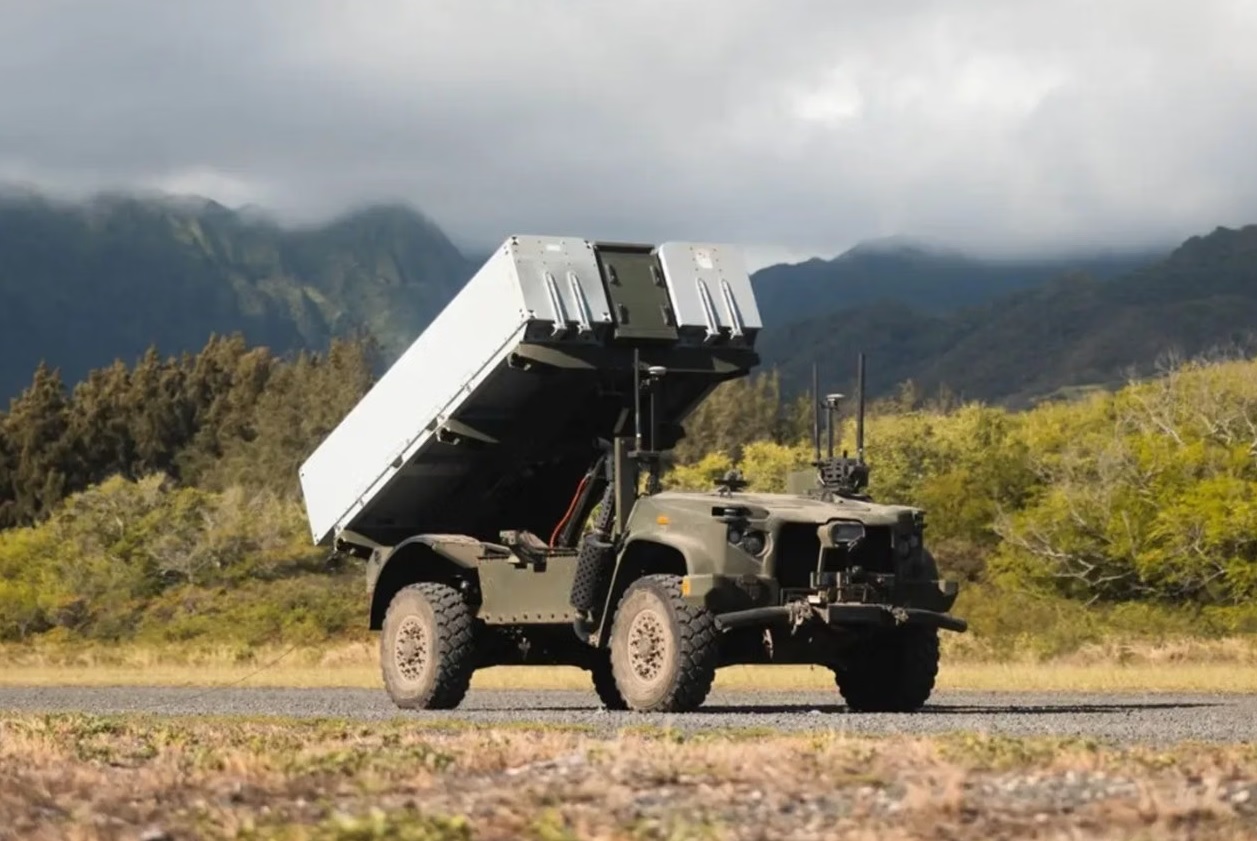
World
OSHKOSH, Wis. — May 30, 2026 : The U.S. Marine Corps has awarded Oshkosh Defense a $70.6 million contract for the production of additional Remotely Operated Ground Unit for Expeditionary Fires (ROGUE-Fires) carriers, extending procurement of the unmanned launch platform central to the Navy/Marine Expeditionary Ship Interdiction System (NMESIS). The award, announced on May 30, 2026, was issued by Marine Corps Systems Command (MARCORSYSCOM) on a sole-source basis and funded through Fiscal Year 2025 and Fiscal Year 2026 Marine Corps procurement appropriations. Under the contract, Oshkosh Defense will continue production of ROGUE-Fires vehicles through September 2028. While the exact number of launch platforms included in the award has not been publicly disclosed, production will primarily take place in Oshkosh, Wisconsin, with additional supporting work conducted in Virginia, Maryland, and Pennsylvania. The procurement reflects continued Marine Corps investment in unmanned long-range strike systems intended to support distributed maritime operations in contested environments. Contract Supports Expansion of NMESIS Capability ROGUE-Fires serves as the launch platform for NMESIS, a ground-based maritime strike system designed to provide the Marine Corps with a remotely operated anti-ship capability. The system combines the Naval Strike Missile (NSM) with an unmanned mobile launcher, enabling Marines to engage hostile surface vessels from dispersed coastal positions while minimizing direct exposure of personnel to enemy fire. The continued procurement of additional carriers supports the Marine Corps’ broader transition toward distributed anti-access and area-denial operations, particularly in maritime regions where mobile and survivable missile forces are considered essential. By relying on unmanned launch vehicles, the Marine Corps aims to establish harder-to-target expeditionary strike networks capable of operating inside contested areas while rapidly relocating after launch. ROGUE-Fires Built on JLTV Platform The ROGUE-Fires carrier is derived from Oshkosh Defense’s Joint Light Tactical Vehicle (JLTV), adapting an existing tactical platform into an autonomous launch system capable of operating without an onboard crew. The vehicle retains the JLTV’s independent suspension, expeditionary mobility, and off-road performance while integrating robotic control systems and remote-driving technologies. Autonomous architecture for the vehicle has been developed in partnership with Forterra, a company specializing in autonomous ground mobility systems. Demonstrated configurations incorporate autonomous navigation capabilities, secure communications, and launcher assemblies capable of carrying two ready-to-fire Naval Strike Missiles. The system is intended to operate across austere terrain and expeditionary environments where conventional missile systems may face deployment limitations. Naval Strike Missile Provides Long-Range Precision Fires At the center of NMESIS is the Naval Strike Missile, a fifth-generation anti-ship missile developed by Kongsberg Defence & Aerospace and integrated for U.S. production through Raytheon. The missile has a range exceeding 185 kilometers and is designed to strike hostile surface combatants operating in contested maritime environments. The NSM employs a sea-skimming flight profile, imaging infrared seeker, autonomous target-recognition capability, and terrain-reference navigation. Unlike missile systems dependent primarily on radar guidance, the NSM is designed to maintain effectiveness in environments where electronic warfare or electromagnetic disruption may degrade conventional targeting systems. Role in Marine Corps Expeditionary Strategy The procurement of additional ROGUE-Fires carriers is closely linked to the Marine Corps’ Expeditionary Advanced Base Operations (EABO) concept. Under this operational framework, small Marine units deploy across islands and coastal regions to establish temporary firing positions capable of controlling maritime chokepoints and strategic sea lanes. The concept emphasizes mobility, survivability, and rapid repositioning. Following missile launches, NMESIS-equipped units are expected to relocate quickly to reduce vulnerability to enemy surveillance and counterfire systems. In geographically fragmented operating areas such as the Indo-Pacific, dispersed launch positions could establish overlapping anti-ship engagement zones intended to complicate hostile naval movement. Marine Corps planners view the system as an important component of maritime denial operations, particularly in regions where adversary naval and missile forces continue to expand. Operational Testing and Exercise Integration The Marine Corps has tested NMESIS during multiple operational demonstrations and large-scale exercises across the Pacific. Previous exercises, including Sink at Sea Live Fire Training Exercises (SINKEX) in Hawaii and broader maritime strike demonstrations, validated the system’s ability to conduct engagements using targeting data received from external platforms. Testing confirmed that NMESIS can receive targeting information from aircraft, naval vessels, intelligence systems, and networked sensors, enabling missile launches beyond the direct line of sight of the launch platform. Earlier demonstrations also marked one of the first operational uses of an unmanned, ground-based anti-ship missile system within U.S. military service. Industrial Cooperation and Program Structure The NMESIS program relies on cooperation among several defense companies supporting different aspects of the system. Oshkosh Defense manufactures the launch platform, Forterra provides autonomous driving technologies, Kongsberg supplies the Naval Strike Missile, and Raytheon supports U.S.-based missile production and integration. Oshkosh Defense recently showcased the ROGUE-Fires platform during the Modern Day Marine 2026 exposition in Washington, D.C., highlighting its role in supporting distributed maritime operations and expeditionary precision fires. The latest $70.6 million contract reflects the Marine Corps’ continued effort to expand distributed precision-strike networks and unmanned expeditionary capabilities. As the service advances force modernization efforts, additional ROGUE-Fires carriers are expected to strengthen the operational reach of Marine Littoral Regiments and broader maritime deterrence requirements in contested regions, particularly across the Indo-Pacific.
Read More → Posted on 2026-05-30 14:20:27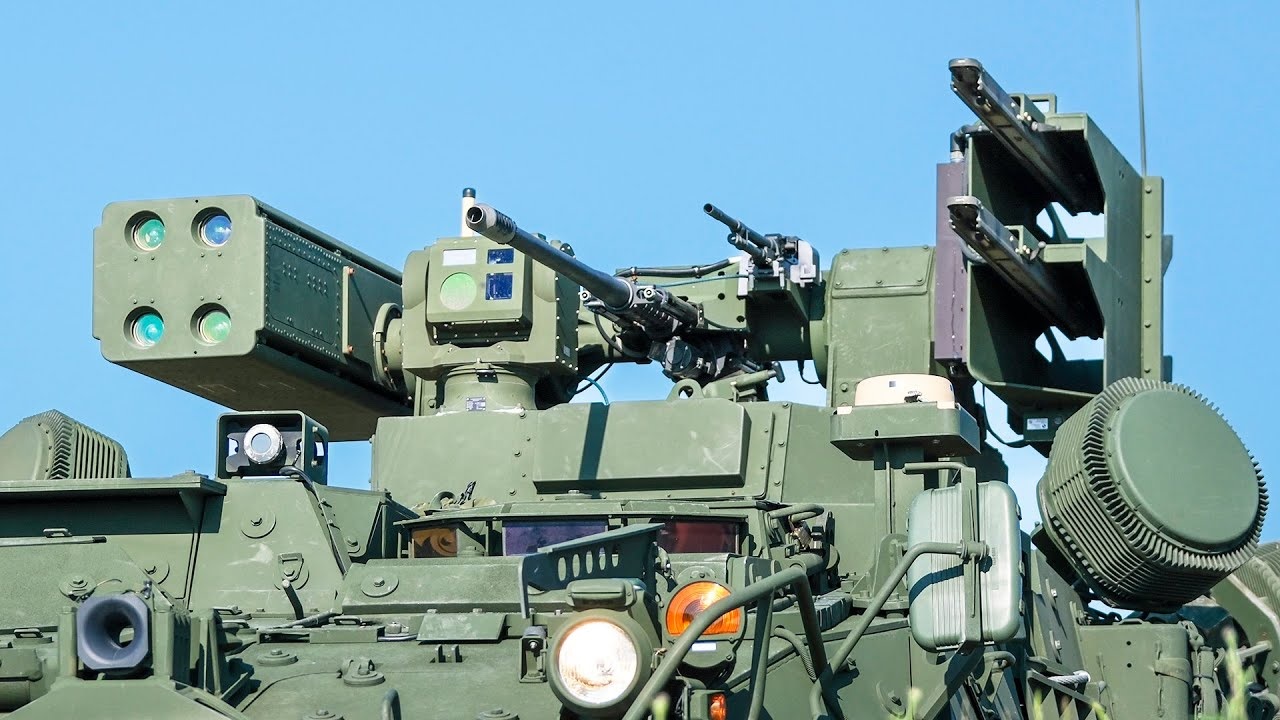
World
WASHINGTON — May 30, 2026 : The U.S. Army is seeking $461 million for its Maneuver Short-Range Air Defense (M-SHORAD) program in the fiscal year 2027 budget, a significant increase from the $296 million allocated in the previous fiscal year, as the service continues efforts to rebuild short-range air defense capabilities reduced during the post-Cold War period and years of counterinsurgency operations. The funding request reflects a broader modernization effort to strengthen protection for ground forces against an expanding range of aerial threats, including unmanned aircraft systems (UAS), rotary-wing aircraft, cruise threats, and conventional fixed-wing platforms. Army planners have divided the investment into three parallel priorities: developing a next-generation interceptor missile, advancing directed energy air defense systems, and expanding short-range protection to light and airborne formations through modular platforms. Rebuilding Short-Range Air Defense Capability The Army’s renewed focus on short-range air defense follows force structure reductions made in the early 2000s, when air defense formations were downsized to support operations in Iraq and Afghanistan, where hostile air threats were largely absent. By the mid-2000s, the Army had reduced active short-range air defense capability to two active-component battalions alongside selected National Guard units. Recent conflicts, particularly the war in Ukraine, have prompted a reassessment of those decisions. The widespread use of drones against armored vehicles, logistics convoys, and fixed positions has highlighted the need for mobile air defense systems capable of moving alongside maneuver forces and protecting frontline formations from persistent low-altitude threats. SGT Stout Forms the Core of Current Capability The Army’s current M-SHORAD capability is built around the SGT Stout, a modified Stryker A1 armored vehicle formally named in honor of Sgt. Mitchell Stout, a Medal of Honor recipient killed during the Vietnam War. Designed to accompany brigade combat teams, the platform combines mobility with layered air defense capability through a Mission Equipment Package developed by Leonardo DRS. The system integrates multiple weapons designed to counter varying threat profiles. These include FIM-92 Stinger surface-to-air missiles for short-range engagements, AGM-114L Longbow Hellfire missiles adapted for aerial targets, an XM914 30mm automatic cannon for drones and close-range threats, an M240 7.62mm machine gun for secondary protection, and a Ku-band 360-degree radar system for target detection and tracking. $215 Million for Next Generation Short Range Interceptor The largest share of the FY2027 request, approximately $215 million, is allocated to the Next Generation Short Range Interceptor (NGSRI) program, which is intended to replace the legacy Stinger missile introduced during the 1980s. Army officials view the replacement as necessary because the Stinger’s single-mode infrared seeker, limited engagement range, and smaller warhead present challenges against modern aerial threats, particularly maneuverable drones with reduced thermal signatures and swarm tactics. Lockheed Martin and Raytheon are developing competing interceptor systems featuring multi-mode seekers, advanced signal processing, and increased engagement ranges. In May 2026, Lockheed Martin completed a seeker characterization flight test for its QuadStar missile at White Sands Missile Range, while Raytheon has reported multiple successful subsystem demonstrations. Although the Army is targeting production by 2028, a June 2025 report from the Government Accountability Office (GAO) identified seven immature critical technologies within the program that could affect development timelines. $95 Million for Directed Energy Air Defense The FY2027 request also includes approximately $95 million for upgrades to the Directed Energy M-SHORAD (DE M-SHORAD) system, which replaces traditional kinetic interceptors with a 50-kilowatt high-energy laser. Raytheon, which received a $123 million development contract in 2021, delivered initial prototypes to the Army in 2023. During live-fire testing at Yuma Proving Ground, Arizona, the laser-equipped platform successfully engaged Group 1 through Group 3 unmanned aircraft. Army officials consider the system’s primary advantage to be lower engagement costs and increased magazine depth, as laser engagements do not require physical missile reloads and significantly reduce per-shot costs. FY2027 funding will focus on broadening the laser system’s target set to include helicopters, rockets, artillery, and mortar threats while improving performance based on operational feedback. $108 Million for Air Defense of Light Forces The remaining $108 million is allocated to M-SHORAD Increment 4, a program intended to provide air defense capability to light and airborne formations, including units such as the 101st Airborne Division. Army officials have stated that Stryker-mounted systems are not optimized for airborne insertions or expeditionary missions involving light infantry formations. To address the requirement, the Army is developing a modular palletized or “sled” system capable of integration with lighter platforms, including the Joint Light Tactical Vehicle (JLTV), Infantry Squad Vehicle (ISV), Humvee, and commercial pickup trucks. According to Army requirements outlined in a November 2025 Request for Information (RFI), the system must be transportable aboard a C-130 aircraft and support dismounted maneuver operations. The Army is targeting an initial operational capability for fiscal year 2029. Expanding Air Defense Across the Force The FY2027 budget request reflects a broader Army effort to restore short-range air defense as an organic capability integrated across multiple force structures. By pursuing interceptor modernization, directed energy systems, and mobile air defense solutions for light formations simultaneously, the Army aims to ensure both armored brigades and expeditionary units maintain protection against increasingly diverse aerial threats.
Read More → Posted on 2026-05-30 14:35:53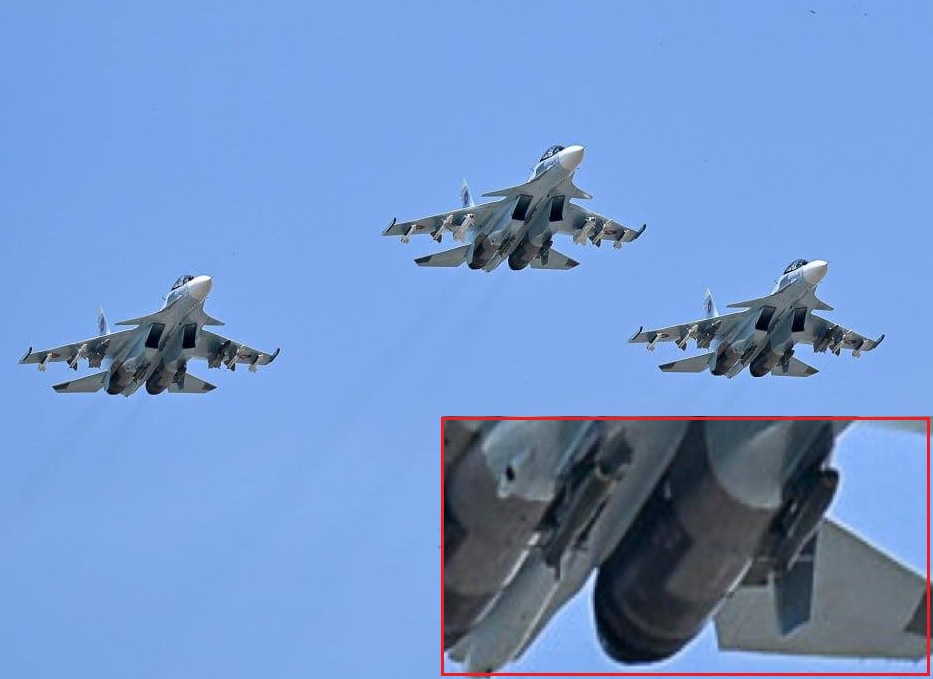
World
YEREVAN, — May 30, 2026 : Armenia’s Air Force publicly displayed Iranian-made Yasin precision-guided glide bombs mounted on its Sukhoi Su-30SM multirole fighters during Republic Day celebrations in Yerevan on May 28, providing the clearest public indication to date of previously undisclosed military procurement cooperation between Armenia and Iran. All three operational Su-30SM fighters flew over Republic Square carrying two Yasin glide bombs each on external hardpoints, marking the first public appearance of Armenian Su-30SM aircraft equipped with precision-guided air-to-ground munitions. The display indicates that Armenia has successfully integrated Iranian-origin strike weapons onto Russian-built aircraft that were originally delivered without a complete weapons package. Armenia’s Su-30SM Procurement and Weapons Gap Armenia signed a contract with Russia in January 2019 to procure four Su-30SM multirole fighters for approximately $120 million, with deliveries completed by May 2020. However, the aircraft arrived without primary medium- or long-range guided munitions, significantly limiting their operational utility and restricting their role as strategic deterrence platforms. The absence of compatible weapons became a subject of political scrutiny after the 2020 Nagorno-Karabakh war. Former Chief of the Armenian General Staff Movses Hakobyan stated in November 2020 that Armenia had acquired the aircraft without Su-30SM-compatible air-to-air missiles, citing Russian export restrictions. He argued that the procurement process had failed to secure the weapons necessary to make the aircraft combat-ready. Prime Minister Nikol Pashinyan later acknowledged in March 2021 that Armenia had received the aircraft but had not acquired missiles before the war. As a result, the fighters were not employed in combat operations during the conflict and were subsequently used mainly for pilot training, ceremonial flights and limited operational duties. The Republic Day flyover carrying Yasin munitions represents the first public demonstration of Armenia’s Su-30SM fleet equipped with serviceable precision-guided strike ordnance. Yasin Glide Bomb: Technical Characteristics and Strike Role The Yasin glide bomb, officially unveiled by Iran in 2019, is a precision-guided standoff munition developed for air-to-ground strike operations. The weapon is generally configured with either a 225-kilogram (500-pound) or larger warhead and uses deployable folding wings to extend engagement range after release. The munition combines an internal inertial navigation system (INS) with satellite-assisted guidance capable of using navigation systems such as GPS, GLONASS and BeiDou. According to technical assessments, this enables precision targeting with a reported circular error probable (CEP) below 10 meters. Iranian state-linked sources have cited an engagement range of up to 120 kilometers under favorable launch conditions. However, independent analysts and assessments based on launch altitude and aircraft performance estimate a more realistic operational range of approximately 50–60 kilometers when released from high altitude at speed. The glide bomb converts altitude-derived energy into extended flight distance after release, allowing aircraft to strike targets while remaining outside the immediate engagement envelope of many short-range air defense systems. This capability provides Armenia with a limited standoff strike option against forward military positions, logistics hubs and command infrastructure. Integration Challenges Between Russian Aircraft and Iranian Weapons Defense analysts assess that integrating Iranian-made Yasin glide bombs onto Russian-built Su-30SM aircraft likely required technical modifications because the two systems do not share common native electronic communication protocols. One likely integration method involves an autonomous pre-briefed targeting mode, in which target coordinates are programmed into the bomb’s onboard guidance system before takeoff. Under this arrangement, pilots manually release the munition from a designated launch point while onboard systems independently guide the weapon to its programmed target. A second possible approach involves the use of an umbilical translation interface, a hardware adapter installed between the aircraft and munition that converts the Su-30SM’s release signals into commands compatible with the Iranian weapon. Both approaches carry operational limitations. Since targeting data is generally uploaded before flight, pilots may be unable to update coordinates in real time if a target changes position after takeoff, reducing flexibility against dynamic battlefield targets. Armenia’s Expanding Defense Diversification Strategy The public appearance of Iranian glide bombs on Armenian aircraft reflects a broader shift in Yerevan’s defense procurement policy following supply delays and restrictions affecting military cooperation with Russia. Between 2011 and 2020, Russia accounted for approximately 94 percent of Armenia’s major arms imports. That dependence has declined since the 2020 Nagorno-Karabakh conflict as Armenia accelerated efforts to diversify military suppliers. Defense spending increased substantially between 2020 and 2025, reaching approximately $1.7 billion, while total procurement programs are estimated at around $2.5 billion. India has emerged as Armenia’s largest new defense supplier, with acquisitions including ATAGS towed artillery systems, MArG self-propelled artillery, Pinaka multiple-launch rocket systems, Akash surface-to-air missile systems, anti-drone technologies, Konkurs-M anti-tank missiles and ammunition. Armenia and India also signed agreements covering military training and institutional cooperation. France has expanded military ties with Armenia through artillery transfers, defense cooperation agreements, training programs and planned deliveries of Mistral short-range air defense systems. Armenia has additionally signed defense cooperation arrangements with the Czech Republic, though specific procurement details remain undisclosed. Iran has increasingly been viewed as a practical logistics and procurement partner due to Armenia’s geographic constraints. With borders closed by Azerbaijan and Turkey, Iran and Georgia remain Armenia’s primary overland transportation corridors for military deliveries. Strategic Significance of the Republic Day Display The Republic Day flyover represents the clearest public evidence to date that Armenia has secured a practical air-to-ground precision strike capability for its Su-30SM fleet through alternative procurement channels outside the original Russian supply framework. The display also resolves longstanding questions surrounding how Armenia intended to arm aircraft that had remained operationally constrained since delivery. Neither Armenia’s Ministry of Defense nor Iranian authorities have publicly confirmed the apparent transfer, procurement quantity or financial terms associated with the Yasin glide bombs. Armenia currently operates three of the four Su-30SM aircraft originally acquired from Russia. The Republic Day appearance carrying Iranian-made Yasin glide bombs marks the first confirmed public indication that the fleet has moved beyond training and ceremonial use toward an operational standoff strike role.
Read More → Posted on 2026-05-30 14:47:20
World
WARSAW — May 30, 2026 : Poland has finalized a major package of defense procurement contracts valued at 60 billion PLN (approximately €14.18 billion) with domestic manufacturer Huta Stalowa Wola (HSW), financed through the European Union’s Security Action for Europe (SAFE) initiative. The SAFE mechanism, valued at €150 billion, is intended to help European Union member states modernize military capabilities through defense-related financing. The contracts were expedited by Poland’s Armaments Agency ahead of the May 2026 deadline for signing unilateral procurement agreements under the SAFE framework. Under the terms of the agreements, all contracted equipment is scheduled for delivery to the Polish Armed Forces by 2030, supporting Warsaw’s ongoing ground force modernization program. Expansion of the Borsuk Infantry Fighting Vehicle Program A central element of the procurement package is an executive order for 146 additional Borsuk Infantry Fighting Vehicles (IFVs), valued at approximately 7.5 billion PLN ($2.07 billion). The contract follows an earlier March 2025 agreement worth 6.6 billion PLN for 111 vehicles, increasing Poland’s confirmed Borsuk orders to 257 units. The current acquisition package is expected to equip four mechanized infantry battalions, while 25 vehicles will be reserved for training purposes. The procurement also forms part of a broader framework agreement signed in 2023, covering the potential acquisition of nearly 1,400 tracked vehicles built on the Universal Modular Tracked Platform. Developed domestically to replace Soviet-era BMP-1 infantry fighting vehicles, the Borsuk weighs 28 metric tons and carries a crew of three alongside six infantry troops. The platform is powered by an MTU 8V199 turbo diesel engine and retains an open-water amphibious crossing capability, allowing mobility across rivers and water obstacles. The vehicle is equipped with the ZSSW-30 unmanned turret, jointly developed by HSW and WB Group. The system integrates a 30mm Mk44S Bushmaster II autocannon alongside two Spike-LR anti-tank guided missiles, providing anti-armor and infantry support capabilities. To meet expected production requirements, HSW introduced a dual-shift manufacturing model in the third quarter of 2025 and is targeting an output capacity of approximately 100 Borsuk vehicles annually by mid-2026. Artillery, Mortars, and Support Systems Beyond the Borsuk procurement, the 60 billion PLN package includes a broad range of artillery systems and supporting equipment manufactured by HSW. The agreements include 96 AHS Krab 155mm self-propelled howitzers, intended to form four Regina modular artillery battalions. The Krab system combines a modified South Korean K9 Thunder chassis with a turret derived from the British AS-90M Braveheart design and can fire extended-range projectiles at distances of up to approximately 40 kilometers. Poland has also approved procurement of more than 1,000 support vehicles for the Homar-K multiple launch rocket system (MLRS) fleet. The Homar-K is Poland’s domestically integrated variant of the South Korean K239 Chunmoo system, mounted on Jelcz 8×8 vehicles and designed to provide long-range rocket artillery capabilities. Additional support vehicles will be acquired for six K9PL-equipped artillery battalions, complementing Poland’s wider artillery modernization effort under the K9 program. Further contracts include 64 RAK-120 self-propelled mortars, accompanied by support vehicles for eight mortar companies. The 120mm mortar system, mounted on the Rosomak armored platform, is capable of delivering rapid indirect fire support. The procurement package additionally covers 11 Bobak-K mine-laying systems, dozens of Waran armored personnel carriers designated for artillery support roles, and refinancing arrangements for existing Rosomak wheeled armored vehicles integrated with the ZSSW-30 turret, shifting those contracts under the SAFE financing structure rather than creating new procurement orders. Poland’s SAFE Financing and Domestic Industrial Policy Poland has emerged as the largest beneficiary of the EU SAFE initiative, securing approximately €43.7 billion (around 190 billion PLN) in defense-related loans. Warsaw has directed that roughly 90 percent of SAFE funding be spent domestically, supporting the national defense industry and an estimated 10,000 companies across Poland’s supply chain network. HSW, a subsidiary of the state-owned Polska Grupa Zbrojeniowa (PGZ) defense group, is expected to play a central role in delivering the systems covered by the agreements. The acquisitions are intended to strengthen Poland’s broader military modernization effort by improving integration between mechanized infantry, armored formations, artillery systems, and battlefield support capabilities, complementing recently acquired platforms including K2 main battle tanks, HIMARS launchers, Homar-K systems, and K9PL self-propelled artillery.
Read More → Posted on 2026-05-30 15:17:46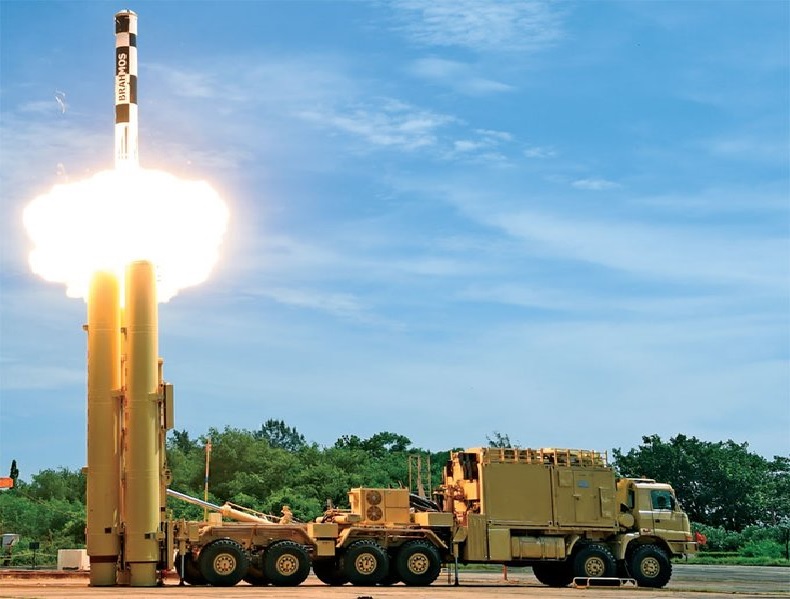
India
SINGAPORE, — May 30, 2026 : India has officially finalized an agreement to export the BrahMos supersonic cruise missile system to Vietnam in a deal valued at approximately ₹60 billion ($629 million), marking a major development in defence cooperation between the two countries and strengthening India’s growing role as a military exporter in Southeast Asia. The agreement was publicly confirmed by Defence Secretary Rajesh Kumar Singh during the Shangri-La Dialogue in Singapore, Asia’s leading defence and security summit. Speaking during a session on “Building Defence Industrial Resilience,” Singh said the agreement with Vietnam had already been signed, although it had not been formally announced earlier. “My understanding is that with both Indonesia and Vietnam, the deal is in the final stages. In fact, for Vietnam, I understand that it has already been signed — probably not publicly announced, but it's already been signed,” Singh said while responding to a question from a Vietnamese delegate. Under the agreement, Vietnam will procure the BrahMos Block 3 land-based coastal defence variant, designed primarily for shore-based anti-ship operations to strengthen maritime border security. The package includes an Integrated Logistics Support (ILS) framework, operator training, and technical instruction for Vietnamese maintenance personnel to ensure long-term operational readiness and sustainment capability. The BrahMos missile, jointly developed by India’s Defence Research and Development Organisation (DRDO) and Russia’s NPO Mashinostroyeniya, is capable of speeds between Mach 2.8 and Mach 3.0. The Block 3 variant has a strike range of up to 290–300 kilometres, can carry a 300-kilogram warhead, and is equipped with sea-skimming flight capability as low as 10 metres above sea level along with steep-dive terminal attack capability. The missile can be launched from land, naval vessels, submarines, and aircraft, although Vietnam’s current acquisition is focused on land-based coastal batteries. Reports also indicate Hanoi has shown long-term interest in air-launched variants. The deal makes Vietnam the second Southeast Asian country to acquire the BrahMos missile system after the Philippines, which signed a $375 million agreement in January 2022 for three shore-based anti-ship batteries, becoming India’s first BrahMos export customer. Deliveries to the Philippines began in April 2024, followed by the arrival of a second battery in April 2025, while training programs for Philippine personnel were conducted in India. The agreement also places Vietnam among confirmed international BrahMos operators as India continues expanding defence exports to regional partners. Singh stated that negotiations with Indonesia for a similar BrahMos procurement agreement are in the final stages. Indonesia reportedly signed a $300 million contract in December 2025 for three coastal defence batteries with a projected 36-month delivery schedule, in a configuration similar to the Philippine package. The BrahMos export agreement aligns with India’s broader objective to expand domestic defence manufacturing and raise defence exports to ₹50,000 crore by 2030, with BrahMos positioned as a flagship export platform. To support increasing domestic and overseas demand, India established a dedicated BrahMos production facility in Lucknow, Uttar Pradesh. The missile agreement also reflects expanding defence and strategic engagement between New Delhi and Hanoi. Earlier this month, Defence Minister Rajnath Singh held talks in Hanoi with Vietnamese Defence Minister General Phan Van Giang focused on maritime security, defence industry cooperation, and regional stability. The discussions coincided with the 10th anniversary of the India–Vietnam Comprehensive Strategic Partnership, recently elevated to an Enhanced Comprehensive Strategic Partnership during Vietnamese President To Lam’s state visit to India. During the Shangri-La Dialogue, Singh emphasized that India considers ASEAN member states trusted partners for defence cooperation and advanced military technology sharing, highlighting New Delhi’s continued focus on strengthening defence ties across Southeast Asia.
Read More → Posted on 2026-05-30 15:28:30
World
WASHINGTON, — May 30, 2026 : U.S. intelligence and defense officials are investigating the April downing of an American F-15E Strike Eagle over southwestern Iran after evidence indicated the aircraft was likely struck by a Chinese-manufactured shoulder-launched missile system, according to officials familiar with the matter. The incident, which occurred on April 3 in Iran’s Kohgiluyeh and Boyer-Ahmad province, marked the first known combat loss of a U.S. crewed aircraft during the recent conflict and the first time in decades that a U.S. fighter jet was reportedly brought down by hostile enemy fire. U.S. officials believe the aircraft was likely hit while operating at lower altitude during combat operations. Rescue Operation After Shootdown Both crew members aboard the F-15E successfully ejected after the strike and established communication using onboard systems following the aircraft’s loss. According to Pentagon officials, the pilot was rescued within several hours during an initial recovery mission. During that operation, Iranian forces struck a U.S. Black Hawk helicopter involved in the rescue effort, wounding crew members, although the helicopter remained operational and was able to continue flying. The weapons systems officer avoided capture after taking cover in the foothills of the Zagros Mountains. U.S. forces recovered the officer alive on April 5 during a nighttime combat search-and-rescue mission involving dozens of aircraft, specialized commando personnel, and extensive air cover. Suspected Chinese-Made Missile Under Investigation U.S. intelligence agencies are investigating indications that the F-15E was struck by a Chinese-manufactured man-portable air defense system (MANPADS), a shoulder-fired missile designed to target low-flying aircraft. Such systems are typically around seven feet long, weigh approximately 40 pounds, and are designed to engage helicopters and fixed-wing aircraft operating at lower altitudes. Officials have not determined whether the suspected missile system was recently transferred to Iran or drawn from military stockpiles acquired years earlier. Investigators have not reached a final conclusion regarding the specific weapon involved, and intelligence reviews remain ongoing. Questions Over Chinese Radar Support In addition to the missile investigation, U.S. officials are examining whether China supplied Iran with a YLC-8B UHF-band long-range early-warning radar system capable of detecting low-observable aircraft. Developed by China’s Nanjing Research Institute of Electronics Technology, the YLC-8B is designed to detect targets with a radar cross-section of roughly one square meter at ranges between 270 and 330 kilometers and may track aircraft beyond 200 kilometers under certain conditions. The radar operates in the UHF frequency band, which analysts say can reduce the effectiveness of radar-absorbent materials commonly used on stealth aircraft. Defense analysts note that such systems could strengthen Iran’s layered air-defense architecture by improving long-range detection capabilities against advanced aircraft, including the F-35 Lightning II and B-2 Spirit. The system is also designed for rapid deployment and dismantling, reportedly requiring less than 30 minutes to become operational or relocated. However, U.S. intelligence agencies have not confirmed whether the radar was fielded or operational during the recent conflict. U.S. Assessment and Chinese Response A U.S. official familiar with the matter said Washington remains aware of Chinese support to Iran but assessed that such assistance “was not significant” and had “no decisive operational impact” on the overall course of hostilities. Military planners and intelligence analysts continue reviewing operational data from the shootdown to evaluate how foreign-made missile systems, sensor networks, and defense supply chains could influence future U.S. aerial operations and regional military planning. China’s embassy in Washington rejected allegations of direct involvement, stating that Beijing exercises strict oversight of military exports, complies with international obligations, and acts responsibly in defense-related cooperation. Chinese officials described claims surrounding assistance to Iran as unfounded. Broader Concerns Over Chinese Support to Iran The investigation comes amid wider scrutiny of alleged Chinese support to Tehran during the conflict. Earlier, the U.S. State Department imposed sanctions on three Chinese satellite companies — The Earth Eye, Meentropy Technology (Hangzhou), and Chang Guang Satellite Technology — accusing them of providing imagery and geospatial intelligence that enabled Iranian forces to identify and monitor American military facilities during Operation Epic Fury. The sanctions formed part of a broader package targeting 11 entities and three individuals in Iran, China, Belarus, and the United Arab Emirates. Beijing rejected those allegations. The incident also adds complexity to U.S.-China relations as the Trump administration continues diplomatic efforts related to ceasefire negotiations with Iran while preparing for discussions with Chinese leadership. Previous U.S. intelligence assessments cited by media reports suggested China had explored supplying additional air-defense systems to Tehran, while some officials believed portions of that intelligence were publicly disclosed to expose or discourage such transfers.
Read More → Posted on 2026-05-30 15:46:45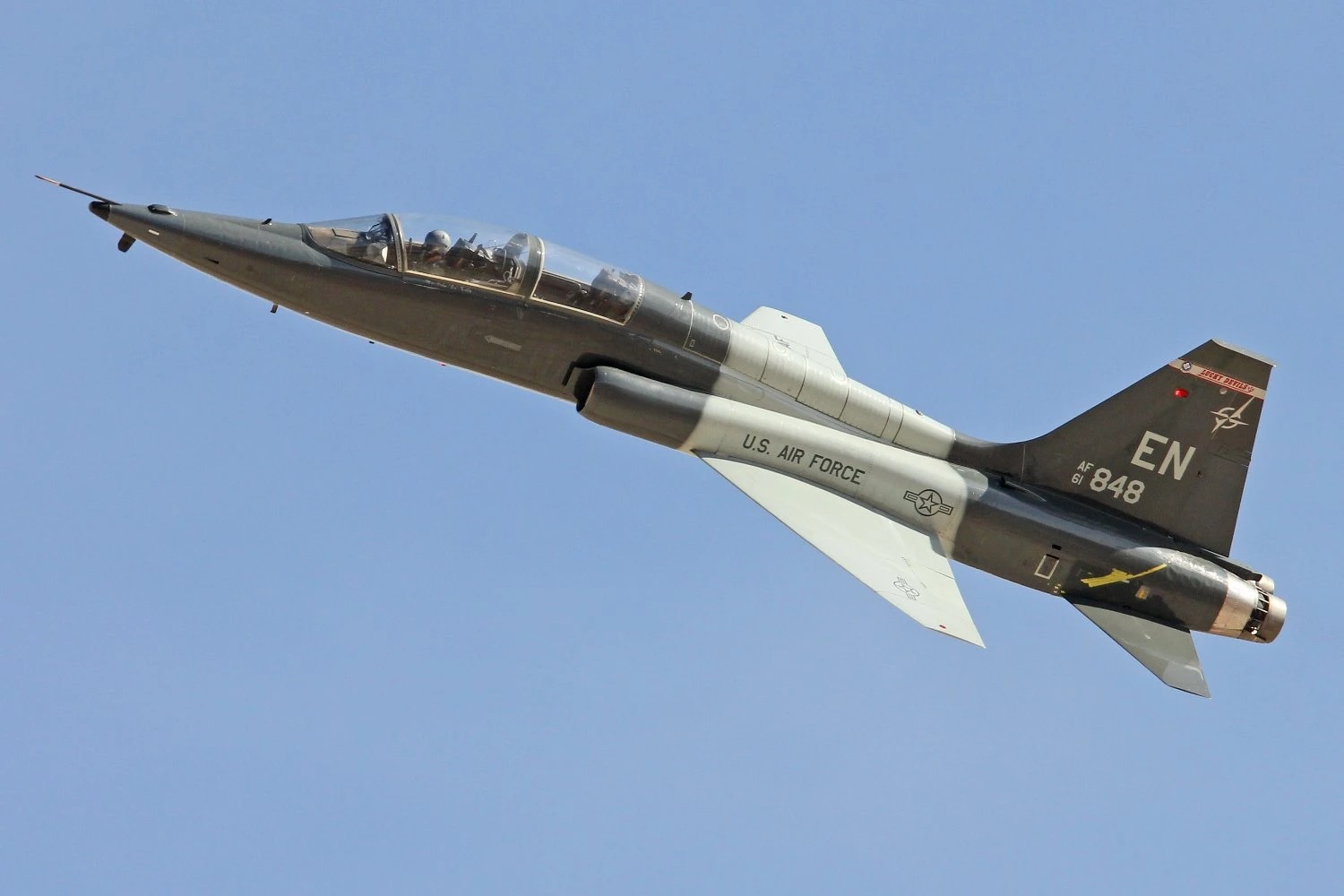
World
WASHINGTON, — May 30, 2026 : The U.S. Air Force has lifted the fleet-wide operational pause for the T-38 Talon trainer aircraft following the completion of inspection procedures developed after a training mishap involving the platform earlier this month. The pause officially ended on May 28, allowing inspected aircraft to gradually return to flying operations in the coming days. The operational stand-down was imposed on May 20 and affected approximately 546 T-38 aircraft assigned across four major Air Force commands: Air Education and Training Command (AETC), Air Combat Command (ACC), Air Force Materiel Command (AFMC), and Air Force Global Strike Command (AFGSC). The measure was introduced after a May 12 crash involving a T-38 assigned to Columbus Air Force Base in Mississippi, with the Air Force temporarily suspending operations to support safety assessments and engineering reviews. According to the Air Force, collaborative engineering and maintenance teams across the joint force finalized detailed inspection procedures to ensure aircraft safety before returning individual airframes to service. Aircraft that complete mandatory inspections and any required maintenance are expected to resume flying incrementally, while affected commands continue efforts to minimize disruptions to training pipelines, operations, and readiness. The May 12 mishap occurred at approximately 12:00 p.m. during a routine training mission involving a T-38 assigned to the 14th Flying Training Wing at Columbus Air Force Base, which operates under AETC’s 19th Air Force. The aircraft crashed in rural Lamar County, Alabama, near the Mississippi border. Both crew members ejected safely, and no fatalities or serious injuries were reported. A Safety Investigation Board continues to examine the cause of the incident, with the operational pause initially intended to allow investigators to locate and assess evidence from the crash site. During the temporary grounding, aircrews and student pilots across affected commands increased simulator-based training to maintain operational proficiency and meet flight currency requirements. The pause also affected international training activities, temporarily halting flying operations for Canadian pilots participating in fighter lead-in training through the Euro-NATO Joint Jet Pilot Training (ENJJPT) program at Sheppard Air Force Base in Texas. The T-38 Talon, a twin-engine supersonic trainer designed and produced by Northrop Corporation, entered service with the U.S. Air Force in 1961 and became the world’s first supersonic trainer aircraft. More than 70,000 Air Force pilots have trained on the platform since its introduction. Nearly 1,200 aircraft were produced between 1961 and 1972, with approximately 500 remaining in operational service today. Beyond AETC training duties, the aircraft is also used by ACC for fighter lead-in training, AFGSC for bomber pilot preparation, and NASA as a proficiency and companion trainer for astronauts. Columbus Air Force Base has experienced previous T-38-related incidents in recent years. In November 2022, a T-38C crashed roughly 20 miles from the installation, with the pilot ejecting safely and sustaining non-life-threatening injuries. Two weeks later, another T-38C experienced an in-flight emergency that resulted in a gear-up landing. As the Air Force works to sustain pilot training capacity, it is continuing the transition toward the Boeing-Saab T-7A Red Hawk, the planned replacement for the aging T-38 fleet. In April 2026, the service approved low-rate initial production after the program achieved Milestone C and placed an initial order for 14 aircraft valued at $219 million. Initial Operational Capability for the T-7A remains scheduled for 2027, with procurement plans calling for 23 aircraft in fiscal year 2027, followed by 36 in 2028 and 42 in 2029. The aircraft is intended to prepare pilots for fourth- and fifth-generation combat platforms, including the F-15EX, F-35A, F-22, B-21 Raider, and future systems such as the F-47.
Read More → Posted on 2026-05-30 15:55:48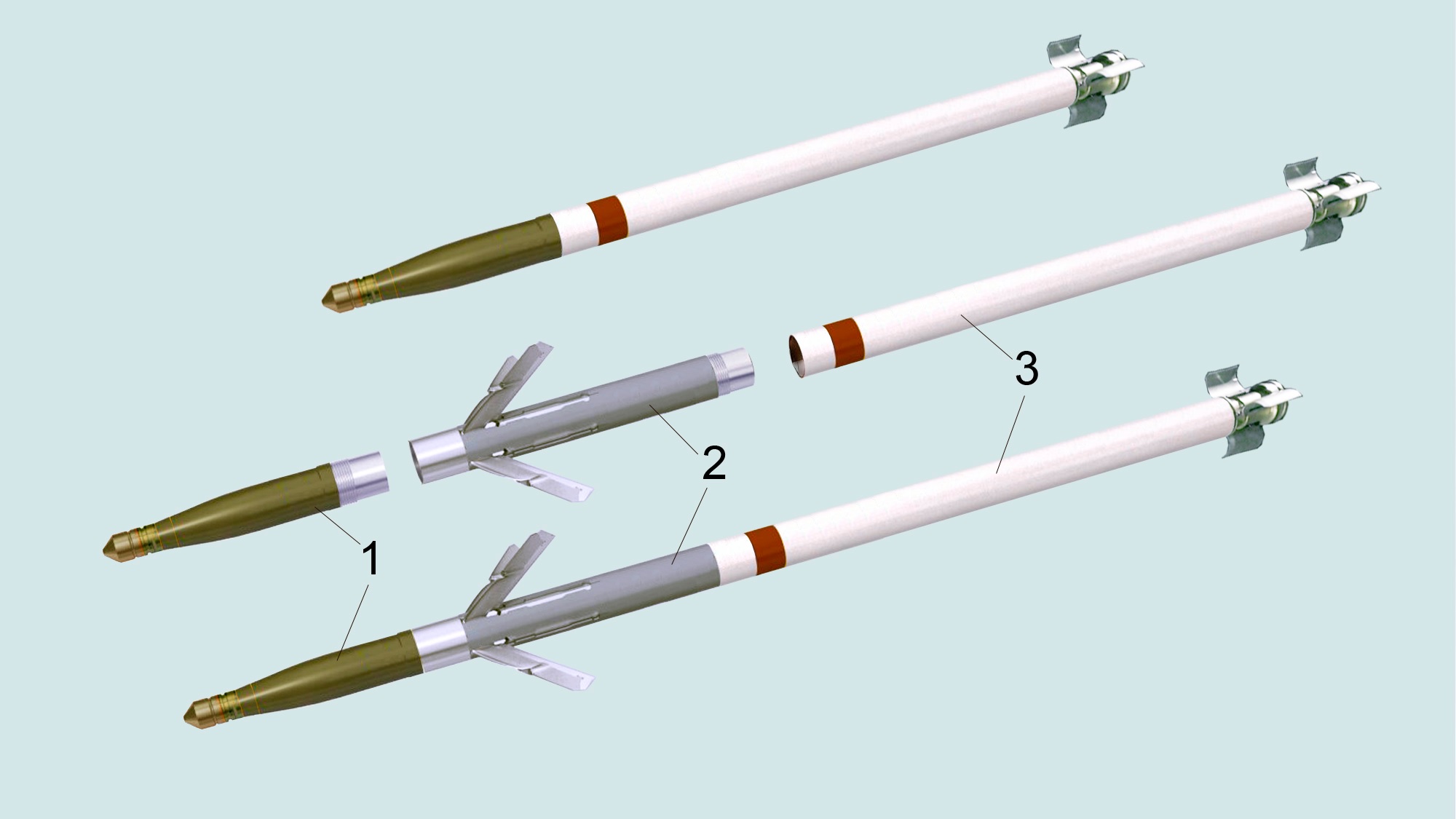
World
WASHINGTON — May 30, 2026 : The U.S. Department of Defense has awarded L3Harris Technologies a $48.5 million contract to produce proximity fuzes for the Advanced Precision Kill Weapon System (APKWS), supporting efforts to improve counter-drone and cruise missile defense capabilities. The contract was issued by the Naval Surface Warfare Center Indian Head Division and awarded to L3Harris Fuzing and Ordnance Systems in Cincinnati, Ohio. If all contract options are exercised, the agreement could reach approximately $98.4 million, with production continuing through September 2028. Funding reflects adoption across multiple military branches, with approximately 68 percent coming from U.S. Air Force ammunition procurement accounts and around 28 percent from the Navy and Marine Corps. The contract follows prototype development completed under a separate Other Transaction Agreement and was awarded directly to accelerate fielding of the capability. APKWS Adapted for Air-to-Air Drone Intercepts The APKWS is a 70-millimeter (2.75-inch) precision-guided rocket developed from the Hydra 70 rocket family. Originally designed as a low-cost precision strike weapon for ground targets, the system uses a laser-guidance kit produced by BAE Systems that converts unguided rockets into guided munitions. The upgraded proximity fuze expands the rocket’s air-to-air role. Developed using radio-frequency sensor technology from Technology Service Corporation (TSC) and integrated with an L3Harris safe-and-arm device, the fuze detonates when the rocket passes near a target rather than requiring a direct hit. This enables fragmentation to engage drones and cruise missiles more effectively, improving interception success against fast-moving or maneuvering aerial threats. Testing and Combat Use The Pentagon’s Joint Counter-Small Unmanned Aircraft Systems Office validated the fuze during testing at Yuma Proving Ground, Arizona. During evaluations, the system demonstrated a reported 100 percent effectiveness rate against Group 3 drones, which typically operate above 1,200 meters (3,940 feet) and at speeds exceeding 185 kilometers per hour (115 miles per hour). The upgraded air-to-air APKWS variant, designated AGR-20F, achieved its first combat intercepts in 2024 when U.S. Air Force F-16 aircraft operating over the Red Sea used proximity-fuzed rockets to shoot down Houthi drones. Lower-Cost Counter-Drone Capability An APKWS round costs an estimated $20,000 to $30,000, compared with roughly $400,000 for an AIM-9X Sidewinder missile, providing a lower-cost option for counter-drone operations. The system also increases aircraft magazine capacity. Because APKWS rockets use standard 70-millimeter launcher pods, an F-16 equipped with six seven-tube launchers can carry up to 42 guided rockets, offering significantly greater engagement capacity than conventional air-to-air missile loadouts. Continued Development and Wider Integration In February 2026, BAE Systems received a contract worth up to $145 million under the Fixed Wing, Air Launched, Counter-Unmanned Aircraft Systems Ordnance (FALCO) program to develop a dual-mode APKWS variant for counter-drone missions. The upgraded configuration combines laser guidance with a Long Wave Infrared (LWIR) seeker, allowing the rocket to continue tracking targets after launch and reducing the need for continuous laser designation. The Marine Corps is also integrating the air-to-air APKWS variant onto legacy F/A-18C/D Hornet aircraft under Aviation Plan 2026 to expand counter-drone capacity while preserving higher-cost missile inventories. The proximity fuze technology has additionally been adapted for ground-based defense through L3Harris’ Vehicle-Agnostic Modular Palletized ISR Rocket Equipment (VAMPIRE) system, which combines sensors and APKWS launchers into a mobile counter-drone platform. VAMPIRE systems deployed to Ukraine in 2023 have been used against Russian drone attacks using the same proximity-fuzed rocket concept.
Read More → Posted on 2026-05-30 16:12:27
World
PARIS — May 30, 2026 : General Dynamics European Land Systems (GDELS) and KNDS Germany have partnered to develop a next-generation wheeled self-propelled artillery system that integrates the fully automated 155 mm Artillery Gun Module (AGM) onto the newly introduced PIRANHA Heavy Mission Carrier (HMC) 10x10 armored chassis. The platform, first unveiled during the Future Artillery Conference in Paris earlier this year, is designed to provide NATO and allied militaries with a highly mobile, protected, and long-range artillery capability suited to modern high-intensity warfare. The joint development comes as NATO member states and allied armed forces continue to accelerate artillery modernization efforts following lessons from recent conflicts. Modern battlefields increasingly expose artillery systems to persistent drone surveillance, counter-battery radars, loitering munitions, and precision-guided strikes, creating growing demand for platforms capable of executing rapid “shoot-and-scoot” operations while maintaining high levels of protection and operational mobility. At the center of the new artillery platform is the KNDS Artillery Gun Module (AGM), an unmanned and fully automated turret armed with a NATO-standard 155 mm/L52 cannon. The automated loading mechanism significantly reduces crew workload while enabling a high rate of fire and Multiple Rounds Simultaneous Impact (MRSI) capability, allowing multiple projectiles fired on different trajectories to strike a target simultaneously. Depending on ammunition type, the system can engage targets at ranges exceeding 40 kilometers, while extended-range and rocket-assisted projectiles can further increase engagement distance. The artillery module supports conventional ammunition, precision-guided munitions, and future long-range projectiles, while also retaining the ability to conduct both indirect and direct fire missions against moving land and maritime targets when required. The AGM is mounted on the newly introduced PIRANHA HMC 10x10 platform developed by GDELS specifically to support heavy mission payloads beyond the capability of conventional wheeled armored vehicles. The chassis incorporates a reinforced automotive structure and multi-link suspension system designed to carry heavy combat systems while preserving operational mobility across both road networks and off-road terrain. The vehicle has a gross weight of up to 40 tonnes and payload capacity of approximately 17 to 18 tonnes. The platform features five axles, four of which are steerable, allowing improved maneuverability and a turning radius of less than 18 meters despite the vehicle’s size. This mobility profile enables long-distance operational redeployment without the transport burden typically associated with tracked artillery systems. One of the system’s key engineering characteristics is its ability to fire without deploying stabilizing outriggers or vertical supports, a requirement commonly associated with many truck-mounted artillery platforms. Instead, the PIRANHA HMC chassis absorbs recoil forces directly through its structural design and suspension system. This configuration enables 360-degree firing capability while significantly reducing setup and withdrawal times during artillery missions. The absence of external stabilizers improves responsiveness and survivability by allowing artillery crews to relocate quickly after firing, reducing exposure to counter-battery attacks and surveillance systems. Automation plays a central role in the platform’s operational design. According to GDELS and KNDS, the system can be operated by a standard crew of only two personnel without restrictions, supported by advanced robotics, automated ammunition handling, and digital fire-control technologies. Space remains available for an optional third crew member or additional ammunition and mission equipment. The integrated digital architecture supports autonomous navigation, fire-control calculations, targeting, and command functions, enabling artillery formations to shorten sensor-to-shooter timelines. The system is designed to receive target information from drones, surveillance systems, radars, and battlefield management networks and rapidly execute fire missions within minutes. The PIRANHA HMC 10x10 occupies a distinct operational category between lighter wheeled artillery systems and heavier tracked self-propelled howitzers. While tracked systems often require heavy transporters for long-distance movement, the wheeled platform can rapidly redeploy using existing road infrastructure while retaining armored protection and cross-country mobility. The system is already entering procurement pathways. In November 2024, Switzerland’s procurement agency armasuisse selected the AGM mounted on the PIRANHA IV 10x10 chassis as the future backbone of the Swiss Army’s motorized artillery force, replacing aging M109 tracked self-propelled howitzers that have remained in service for more than 50 years. By leveraging the globally operated PIRANHA vehicle family, GDELS and KNDS seek to provide existing operators with commonality in logistics, maintenance, spare parts, and training infrastructure. KNDS also offers the AGM integrated onto the BOXER 8x8 platform, known as the RCH 155, alongside tracked variants, supporting interoperability and standardization across NATO artillery forces. The partnership between GDELS and KNDS Germany reflects broader European defense industrial cooperation aimed at delivering mature, scalable, and interoperable artillery systems to meet growing operational requirements. As NATO members continue to invest in long-range precision fires and protected mobile artillery, the PIRANHA HMC 10x10 AGM platform is positioned as a new option for future artillery modernization programs.
Read More → Posted on 2026-05-30 17:00:04
World
KYIV — May 30, 2026 : Ukraine’s Main Intelligence Directorate (GUR) of the Ministry of Defense has confirmed a major expansion in its long-range unmanned strike capability, announcing that its drone division is now operating systems capable of reaching distances of up to 3,500 kilometers. The disclosure was made by the commander of the GUR’s long-range drone unit, known by the call sign “Vector,” who stated that the increased operational reach places all regions of European Russia and territories extending as far as the Krasnoyarsk region in Siberia within potential strike range. According to Vector, Ukrainian forces are now capable of reaching areas across Russia up to the Ural Mountains, marking a significant increase in operational depth. The announcement reflects a substantial evolution in Ukraine’s long-range strike capability. Earlier in the conflict, Ukrainian unmanned systems primarily operated within a range of approximately 1,000 kilometers. Vector noted that long-range UAVs are now being launched in higher numbers as part of systematic strike operations intended to disrupt military-related infrastructure deep inside Russian territory. Long-Range Drone Fleet Expands According to military operators, one of the primary platforms used for deep-strike missions is the domestically developed Liutyi strike drone. The UAV is reported to routinely cover distances between 1,500 and 1,700 kilometers depending on operational and weather conditions while carrying payloads estimated at 50 to 70 kilograms. Ukraine has also introduced a jet-powered strike platform known as Peklo, which operators describe as functioning similarly to a cruise missile. The system reportedly flies at speeds ranging between 700 and 1,000 kilometers per hour and has already been employed in precision strikes against selected infrastructure targets, including facilities in the Moscow region. The reported 3,500-kilometer capability suggests continued expansion beyond previously disclosed systems. In March 2025, Ukrainian President Volodymyr Zelenskyy stated that a Ukrainian-developed long-range drone capable of flying 3,000 kilometers had successfully completed testing, describing it as an important milestone in the country’s indigenous defense-industrial program. Operational Planning and Air Defense Penetration Vector stated that deep-strike operations rely on a structured planning process designed to improve survivability against Russian air defense networks and electronic warfare systems. According to the GUR commander, intelligence teams first identify the positioning of Russian air defense assets, including Pantsir and Tor surface-to-air missile systems, while simultaneously mapping areas affected by electronic warfare intended to disrupt UAV navigation. Flight routes are then programmed to exploit identified gaps in radar and missile coverage. To increase strike effectiveness, Ukrainian operators also deploy unarmed decoy drones aimed at saturating enemy radar systems and occupying defensive resources. These decoys are intended to improve the likelihood that armed UAVs successfully reach their assigned targets. Vector stated that repeated strike operations have gradually reduced the effectiveness of some layered Russian air defense sectors, creating operational corridors for drone formations. Advances in Navigation and Drone Production The expansion of long-range strike capabilities coincides with rapid growth in Ukraine’s domestic drone industry. Since the start of Russia’s full-scale invasion in 2022, Ukraine has transitioned from relying largely on commercial drone components to producing increasingly sophisticated military-grade systems domestically. Recent defense assessments estimate Ukraine’s total annual drone production capacity has expanded to approximately 10 million UAVs across multiple operational classes, ranging from frontline tactical systems to long-range strike platforms. Newer generations of Ukrainian drones have also received upgrades intended to improve resistance against electronic warfare and GPS jamming. Military operators report that long-range UAVs increasingly rely on inertial navigation systems, ground triangulation, and visual navigation technologies to maintain route accuracy in electronically contested environments. Drones Become Central to Ukraine’s Military Strategy Unmanned aerial systems have become a central component of Ukraine’s military planning, with operational estimates indicating drones are currently used to engage approximately 80 to 85 percent of frontline targets. Officials argue that long-range UAV operations are intended to disrupt logistics networks, reduce pressure on frontline units, target military-industrial facilities, and force Russia to distribute air defense assets across a wider geographic area. The newly confirmed 3,500-kilometer operational range is expected to significantly expand Ukraine’s ability to target logistics hubs, air bases, ammunition depots, transport infrastructure, defense manufacturing facilities, and military support sites located deep inside Russian territory as Kyiv continues to prioritize domestically produced long-range strike systems.
Read More → Posted on 2026-05-30 17:10:40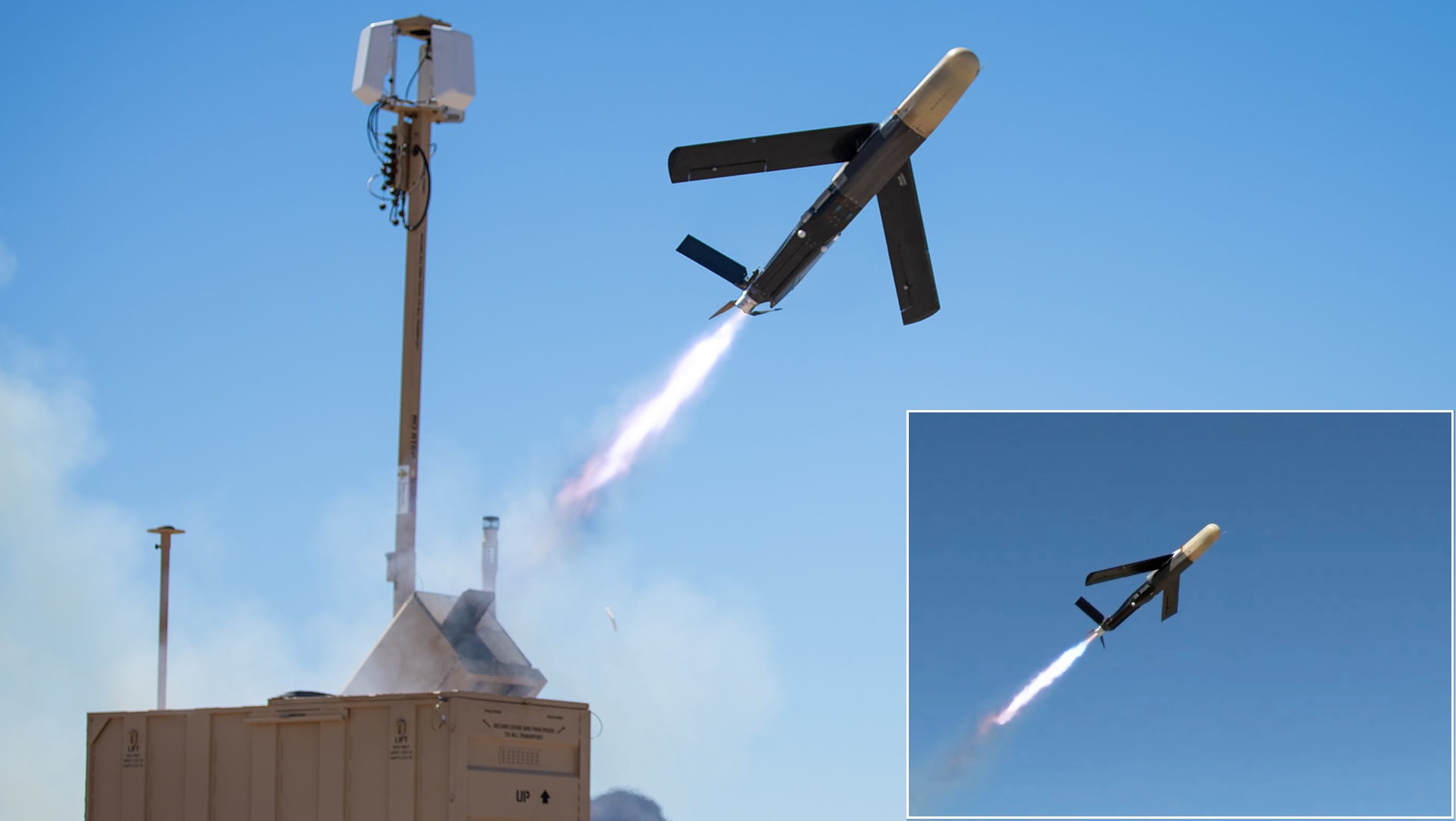
World
WASHINGTON — May 30, 2026 : Raytheon, an RTX business, has successfully demonstrated its reusable Coyote Block 3 Non-Kinetic (3NK) counter-drone system during a recent U.S. Army test, validating a new capability designed to counter increasingly complex drone swarm threats while reducing operational costs and limiting collateral damage. According to Raytheon, the Coyote Block 3NK successfully completed its full operational cycle during the demonstration, including launch, airborne loitering, threat detection, swarm interception, and safe recovery after mission completion. The system reportedly defeated multiple drone swarms during the exercise, confirming its ability to remain operational after engagements rather than being expended like traditional interceptors. Unlike conventional kinetic counter-drone interceptors that rely on explosive warheads or direct-impact destruction, the Block 3NK employs a non-kinetic payload intended to disable hostile unmanned aerial systems without physical collision. While Raytheon has not publicly disclosed the system’s exact mechanism, defense analysts suggest the interceptor may use electronic warfare effects, radio-frequency disruption, or directed-energy technologies to interfere with drone navigation, communications, or control systems. The non-kinetic approach is intended to reduce risks to nearby personnel, military infrastructure, civilian areas, and friendly forces by avoiding explosive fragmentation and debris commonly associated with conventional interceptors. During demonstration footage released by the company, targeted drones were observed losing control and falling from the sky without visible explosions or direct impact. A major feature of the Coyote Block 3NK is its recoverable and reusable design. After completing an engagement, the interceptor can be returned, refurbished, and redeployed for future operations, addressing a growing challenge faced by air-defense planners as relatively inexpensive drones increasingly force defenders to rely on costly missile interceptors. The reusable concept is intended to improve sustainability and provide a more cost-effective response to large-scale drone attacks. Originally developed as a small tube-launched unmanned aerial system capable of deployment from land, sea, and air platforms, the Coyote family has evolved into a modular counter-drone platform supporting surveillance, reconnaissance, electronic warfare, and air-defense operations across several U.S. military programmes. Raytheon stated that both kinetic and non-kinetic variants of the Coyote system are designed to defeat small and larger unmanned aerial systems at extended ranges and higher altitudes than many comparable systems in their class. The company has also introduced upgrades aimed at improving launch speed, engagement range, flight performance, and operational flexibility against heavier payload threats. The Coyote interceptor forms a key component of the U.S. Army’s Low, Slow, Small-Unmanned Aircraft Integrated Defeat System (LIDS), a layered counter-drone architecture designed to detect, track, identify, and neutralize aerial threats using radar, electronic warfare systems, command-and-control networks, and interceptors. The system integrates with Raytheon’s Ku-band Radio Frequency System (KuRFS) radar, which provides targeting data and guidance for engagements against incoming drones. Raytheon’s role in the Army’s counter-drone efforts has expanded significantly in recent years. The company was awarded a major counter-UAS contract valued at up to $5 billion through 2033 under the Army’s LIDS programme, covering Coyote interceptors, launch systems, fixed and mobile configurations, and KuRFS radar systems. Tom Laliberty, president of Land & Air Defense Systems at Raytheon, said the Coyote system is designed to provide warfighters with a cost-effective defence against both individual drones and swarm attacks while maintaining an affordable operational advantage against evolving unmanned threats. The successful demonstration reflects continuing efforts by the U.S. military to field reusable, scalable, and sustainable counter-drone systems capable of defending forces against increasingly coordinated unmanned aerial threats.
Read More → Posted on 2026-05-30 17:23:51
Space & Technology
GREENBELT, Md. — May 30, 2026 : NASA is preparing an unprecedented commercial spacecraft-servicing mission to extend the operational life of the Neil Gehrels Swift Observatory, a scientific satellite facing increasing orbital decay after more than two decades in low Earth orbit. The mission, scheduled for launch no earlier than June 2026, will attempt to raise Swift’s orbit before atmospheric drag forces the spacecraft to re-enter Earth’s atmosphere, potentially ending one of NASA’s most important astrophysics programs dedicated to observing short-lived cosmic events. The operation is being conducted in partnership with Arizona-based Katalyst Space Technologies, which will deploy a robotic servicing spacecraft known as LINK to rendezvous with and reposition the observatory. NASA officials view the mission as both an operational effort to preserve an active scientific platform and a demonstration of emerging commercial satellite-servicing capabilities intended to support long-term sustainability of spacecraft operating in orbit. Swift Observatory remains operational despite growing orbital challenge Launched on Nov. 20, 2004, the Neil Gehrels Swift Observatory was developed to detect and study gamma-ray bursts, among the most energetic electromagnetic explosions in the universe. The spacecraft was designed to rapidly identify these brief but powerful cosmic events and immediately reposition itself to collect follow-up observations. Over the last 21 years, Swift has become a major component of NASA’s astrophysics fleet, contributing to research involving gamma-ray bursts, neutron star mergers, supernovae, black holes, active galaxies and other transient astronomical events. The observatory carries three primary scientific instruments capable of observing the universe across multiple wavelengths, including gamma-ray, X-ray, ultraviolet and visible light. Its Burst Alert Telescope is responsible for detecting gamma-ray bursts and triggering rapid spacecraft targeting, while onboard follow-up instruments help astronomers analyze newly detected cosmic activity. Despite remaining fully operational, Swift is facing an increasingly serious orbital problem. The spacecraft was originally placed in low Earth orbit at an altitude of roughly 600 kilometers but was launched without an onboard propulsion system, meaning it cannot independently raise or maintain its orbit. Solar activity accelerates orbital decay Since launch, atmospheric drag has gradually lowered Swift’s orbital altitude. However, NASA reported that orbital decay accelerated significantly following increased solar activity associated with the recent solar maximum cycle, which peaked in 2024. Solar activity heats and expands Earth’s upper atmosphere, increasing atmospheric density at higher altitudes and producing greater drag on spacecraft operating in low Earth orbit. According to NASA, this process caused Swift’s altitude to steadily decline to approximately 370 kilometers. Orbital projections conducted during 2025 indicated that, without intervention, the spacecraft could re-enter Earth’s atmosphere and burn up by mid-to-late 2026 or potentially before the end of the year depending on atmospheric conditions. Because Swift lacks propulsion capability, NASA determined that external assistance would be required to preserve the observatory and extend scientific operations. NASA awards Katalyst contract for robotic servicing mission To prevent the loss of the spacecraft, NASA awarded a $30 million contract in September 2025 to Flagstaff, Arizona-based Katalyst Space Technologies to conduct a commercial orbital-servicing mission. Under the agreement, Katalyst will launch its 400-kilogram robotic servicing spacecraft, LINK, which is specifically designed to autonomously rendezvous with, inspect and maneuver satellites in orbit. The mission is scheduled to launch no earlier than June 2026 aboard Northrop Grumman’s Pegasus XL launch vehicle. Unlike conventional rockets launched from fixed ground pads, Pegasus XL is deployed from a modified Stargazer L-1011 aircraft during flight, allowing increased flexibility for orbital insertion and improved access to mission-specific trajectories. NASA selected Pegasus partly because Swift operates in an orbital inclination that can be reached efficiently through the air-launched system. LINK spacecraft faces complex capture operation Once deployed into orbit, LINK will begin autonomous rendezvous and proximity operations to intercept the observatory. The servicing spacecraft is equipped with lidar imaging systems, navigation sensors and three robotic arms designed to support spacecraft inspection and capture. Engineers face a significant challenge because Swift was never designed for in-orbit servicing. Unlike more recently designed satellites that may include docking mechanisms or servicing interfaces, Swift lacks dedicated docking ports, grappling fixtures and standardized attachment hardware. To address those limitations, LINK will first perform a detailed flyby inspection to evaluate spacecraft condition, confirm orientation and identify structural attachment points. Following inspection, robotic grippers are expected to attach to one of Swift’s load-bearing structural flanges originally designed for launch integration rather than servicing operations. After securing the observatory, LINK will activate onboard Hall-effect thrusters to conduct an orbital reboost maneuver intended to move Swift into a safer and more stable orbit above approximately 300 kilometers. Mission planners expect the maneuver to significantly extend Swift’s operational life and allow continued scientific observations before the robotic spacecraft detaches following completion of the boost. NASA modifies Swift operations to preserve altitude The mission is progressing under a compressed development timeline. While satellite-servicing missions typically require years of planning and systems integration, NASA and Katalyst advanced the project from contract award to launch preparation in roughly eight months due to the urgency created by Swift’s declining altitude. To increase the probability of mission success, NASA temporarily adjusted Swift’s operations during early 2026 to reduce atmospheric drag and preserve altitude. Controllers suspended portions of the observatory’s science activities, powered down the Burst Alert Telescope and halted rapid spacecraft-targeting maneuvers that normally allow Swift to quickly reposition toward new gamma-ray burst detections. NASA also placed the spacecraft into a low-drag orientation designed to minimize atmospheric resistance and conserve onboard power while engineers continued orbital tracking and mission planning. Flight dynamics teams at NASA’s Goddard Space Flight Center continue generating updated orbital forecasts and weekly assessments to ensure Swift remains above approximately 300 kilometers, a threshold considered important for maximizing the likelihood of a successful servicing mission. Environmental testing completed ahead of launch As preparations continue, LINK recently completed a series of environmental and systems tests at NASA’s Goddard Space Flight Center in Maryland. Testing included vibration evaluations, thermal-vacuum assessments, robotic arm deployment checks, propulsion verification and spacecraft systems validation intended to confirm launch readiness and operational reliability during orbital servicing. NASA officials stated that successful completion of these milestones supports final launch integration efforts ahead of the June 2026 launch opportunity. Mission could influence future orbital infrastructure planning Beyond preserving Swift, the mission is being closely watched as a demonstration of commercial robotic satellite-servicing technology. If successful, the operation would become the first known instance of a privately developed robotic spacecraft autonomously rendezvousing with, capturing and boosting an operational U.S. government scientific satellite that was not originally designed for servicing. Government agencies and commercial aerospace firms are increasingly investing in technologies capable of satellite inspection, orbital repositioning, refueling, component replacement, debris management and mission-life extension as operators seek alternatives to replacing expensive spacecraft prematurely. For NASA, the mission provides an opportunity to preserve a still-functional observatory that continues producing valuable astrophysics data more than 20 years after launch. During its operational lifetime, Swift has detected thousands of gamma-ray bursts and played a major role in time-domain astronomy through rapid observations of short-duration cosmic phenomena. The mission also reflects broader cooperation between government agencies and commercial aerospace providers in maintaining orbital infrastructure. Rather than replacing an aging but operational observatory, NASA is attempting to preserve an existing spacecraft through robotic servicing — an approach that may influence how future scientific satellites are designed, operated and maintained. NASA and Katalyst Space Technologies are continuing final mission readiness activities ahead of the planned June 2026 launch window as teams complete preparations for one of the agency’s most significant robotic spacecraft-servicing demonstrations in low Earth orbit.
Read More → Posted on 2026-05-30 17:42:24
World
OTTAWA — May 31, 2026 : Canada and Ukraine have finalized a government-to-government agreement to manufacture Ukrainian-designed uncrewed aerial systems (UAS) in Canada, integrating Ukraine’s drone production capabilities into the North American defence industrial ecosystem. The arrangement, signed on May 29, 2026, during the CANSEC defence exhibition in Ottawa, establishes a 50-50 joint venture named Airlogix-Sentinel to support the Armed Forces of Ukraine and strengthen allied production capacity. The agreement was signed by representatives of Canada’s Department of National Defence and Ukraine’s Ministry of Defence, marking expanded defence-industrial cooperation between the two countries. Airlogix-Sentinel Joint Venture The newly established Airlogix-Sentinel joint venture brings together Ukrainian defence technology company Airlogix and Sentinel Research and Development, a Hamilton, Ontario-based uncrewed systems manufacturer. The partnership will oversee production of Ukrainian-designed drones in Canada, with systems supplied to the Armed Forces of Ukraine. Under the agreement, Sentinel will manufacture drone airframes through an intellectual property licensing arrangement with Airlogix, enabling Canadian facilities to produce Ukrainian-designed systems. Airlogix is known for the GOR tactical reconnaissance drone, designed for battlefield surveillance, intelligence gathering, operational planning, and reconnaissance missions. Sentinel’s manufacturing portfolio includes the Rekam fixed-wing system, Rekam Ascent vertical-takeoff drone, and Rekam Echo jet-powered system. Although officials have not disclosed production volumes, timelines, or delivery schedules, the joint venture’s initial focus will be on reconnaissance drones intended to support intelligence collection and battlefield awareness. Dmytro Piatrin, Chief Commercial Officer of Airlogix, stated the immediate objective is to deliver operational planning and intelligence-support systems to frontline units as rapidly as possible. Expanding Drone Production Outside Ukraine Ukraine’s defence industry currently produces a broad range of combat-tested uncrewed systems, including first-person-view (FPV) attack drones, long-range strike drones, reconnaissance drones, loitering munitions, and naval surface drones. Ukrainian officials report domestic drone production has expanded to several million units annually, though manufacturing remains vulnerable to Russian long-range missile and drone strikes, supply-chain disruptions, component shortages, and production bottlenecks. By transferring part of drone manufacturing to Canada, Ukraine seeks to improve industrial resilience and reduce wartime vulnerabilities. Manufacturing outside Ukraine provides geographical security, removes production infrastructure from the range of Russian strikes, and creates industrial redundancy through an additional supply line. The arrangement also gives Ukraine greater access to North American suppliers, components, and industrial manufacturing capabilities capable of supporting production at scale. Canadian Defence Commitments and Military Assistance The manufacturing agreement supports an August 2025 commitment by Canadian Prime Minister Mark Carney to invest in drone systems, counter-drone capabilities, and electronic warfare through international industrial partnerships. Alongside the announcement at CANSEC, Canadian Minister of National Defence David J. McGuinty confirmed approximately $2 billion in military assistance for Ukraine during the 2026–2027 fiscal year, continuing Canada’s financial and military support. Implications for Canada and NATO For Canada, the Airlogix-Sentinel partnership provides access to combat-tested drone technologies refined in contested battlefield conditions. Ukrainian systems have been modified to operate in environments affected by GPS interference, spoofing, jamming, and electronic warfare, offering lessons for Canadian defence modernization. The partnership supports Canada’s Defence Industrial Strategy, domestic manufacturing activity, industrial modernization, workforce development, and expertise in uncrewed and autonomous systems. The agreement also reflects growing NATO interest in distributed and decentralized defence production models designed to improve industrial resilience and accelerate procurement by combining allied manufacturing capacity with combat-tested technologies. Long-Term Industrial Cooperation Officials from both countries stated that drones produced under the Airlogix-Sentinel joint venture will be transferred to the Armed Forces of Ukraine under existing Canada-Ukraine defence cooperation frameworks. At this stage, no production targets, exact quantities, timelines, or additional drone models beyond reconnaissance-focused capabilities have been publicly disclosed. Officials described the arrangement as an initial step toward long-term industrial cooperation in uncrewed systems, counter-drone technologies, and autonomous military capabilities.
Read More → Posted on 2026-05-31 13:28:09
World
OTTAWA — May 31, 2026 : Ottawa-based defence technology startup Dominion Dynamics has secured major private investment and government support to develop what could become Canada's first domestically produced Autonomous Collaborative Platform (ACP), an uncrewed combat aircraft designed to operate alongside crewed fighter jets in long-range and high-risk missions, particularly across the Arctic region. Founded by Canadian-born former Anduril Industries executive Erik Pence, Dominion Dynamics is developing a sovereign Canadian "loyal wingman" aircraft intended to operate alongside the Royal Canadian Air Force (RCAF)'s future fleet of Lockheed Martin F-35A fighter aircraft. Funding Supports Development Programme To support the initiative, Dominion Dynamics has secured advisory services and up to C$500,000 in funding from the National Research Council of Canada Industrial Research Assistance Program (NRC IRAP), alongside C$21 million in seed funding led by Toronto-based venture capital firm Georgian. Additional participation in the investment round came from Bessemer Venture Partners and the British Columbia Investment Management Corporation (BCI). Speaking during the CANSEC defence exhibition in Ottawa, Dominion Dynamics Head of Growth Robert Waye said the company plans to complete a subscale prototype of a long-range, weaponised Autonomous Collaborative Platform within 18 months. Waye said the aircraft is being designed around Canada's northern defence requirements and Arctic operational conditions. "We saw there's market opportunity to build an airframe that meets the requirements of the RCAF in their Northern mandates, so that's the aircraft that we're designing for," Waye said. Aircraft Optimised for Arctic Operations Internally referred to as "Scout," the Autonomous Collaborative Platform is being developed for long-range operations into Canada's Arctic frontier. The aircraft is expected to operate from southern Canada while retaining the ability to launch from short and unimproved runways, enabling deployment into remote northern regions. Dominion Dynamics said the aircraft must be capable of flying thousands of miles into the Arctic while carrying a heavy weapons payload, supporting missions including surveillance, strike coordination and electronic warfare. Airframe Design and Engine Discussions A concept rendering released in March depicts the aircraft as a large delta-wing platform equipped with two embedded turbofan engines, reflecting requirements for long range, endurance and payload capacity. Dominion Dynamics is currently in discussions with several engine manufacturers, including Pratt & Whitney Canada, regarding potential integration of the PW800 engine. The aircraft's larger size is intended to support extended operations and the ability to carry multiple weapons simultaneously. Operating Alongside the F-35 Although the Royal Canadian Air Force has not publicly released formal requirements or announced a programme of record for an Autonomous Collaborative Platform, Dominion Dynamics is proceeding with development using a combination of private investment and government support while consulting with RCAF officials. The ACP is designed to operate alongside the Lockheed Martin F-35A, supporting missions through surveillance, electronic warfare, strike support and extended operational reach. Autonomy and Arctic Communication Challenges Dominion Dynamics anticipates that while the aircraft will generally operate alongside crewed fighters, Arctic missions may sometimes place the platform beyond the communication range of a pilot in a crewed aircraft. In such situations, the ACP would be supervised by ground-based operators through satellite communications links, allowing continued operations over long distances while maintaining human oversight. Simulation and Digital Testing As part of its development efforts, Dominion Dynamics is developing a simulation engine to digitally test combat scenarios, mission profiles and operational concepts before physical manufacturing begins. The work is being supported through advisory services and up to C$500,000 in funding from NRC IRAP. The digital environment is being developed in partnership with AI computing provider Denvr, enabling engineers to evaluate autonomy functions, mission planning and operational coordination in a virtual environment. The company stated that the aircraft will feature a modular architecture designed for interoperability with NATO and Five Eyes command-and-control networks. Manufacturing Expansion and Future Production On June 1, Dominion Dynamics plans to relocate to a 35,000-square-foot facility near Ottawa, which will support prototype manufacturing, systems integration, testing and future aircraft production. The ACP programme also builds upon Dominion Dynamics' broader defence technology portfolio, including Auranet, a distributed and attritable mesh network currently deployed to monitor remote Arctic airstrips. While the Royal Canadian Air Force has not announced a formal acquisition programme for a collaborative combat aircraft, Dominion Dynamics is continuing prototype development with the aim of delivering a platform tailored to Canada's geography, Arctic operational environment and long-range defence requirements.
Read More → Posted on 2026-05-31 13:37:55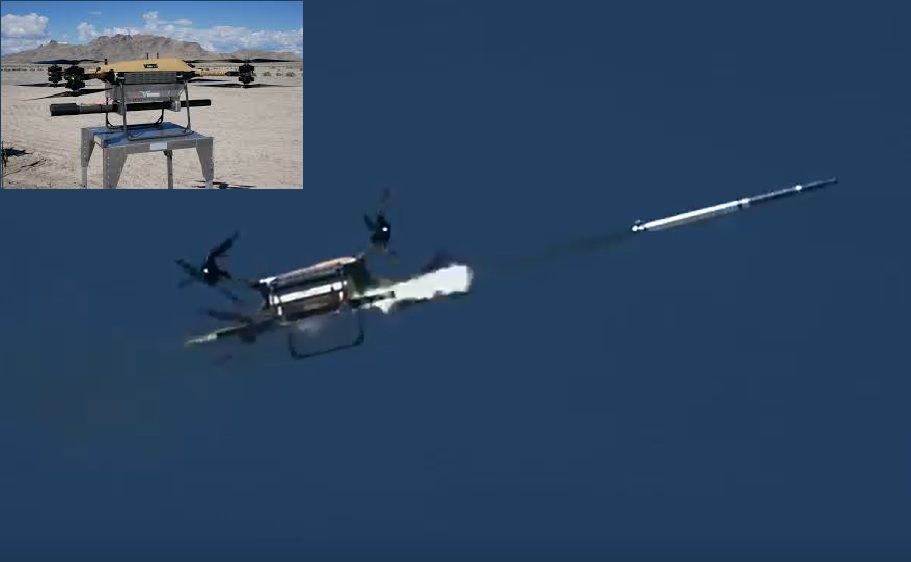
World
FORT RUCKER, Alabama — May 31, 2026 : Defense industry partners, alongside multiple U.S. Army aviation and development organizations, successfully tested a three-shot rocket launcher integrated onto a TRV 150 logistics drone during a live-fire event at Fort Rucker on May 20, aiming to extend precision-strike capabilities to lower-echelon formations, including the battalion level. The test combined the TRV 150 tactical resupply drone, manufactured by Survice Engineering Company, with a three-pack Advanced Precision Kill Weapon System (APKWS) launcher developed by BAE Systems FalconWorks. The system fires 70 mm laser-guided rockets derived from standard Hydra rockets fitted with APKWS guidance kits, adding a precision engagement capability to a platform primarily designed for logistics and resupply missions. The demonstration was supported by the Program Executive Office–Maneuver Air, Aviation Future Concepts Directorate, U.S. Army Combat Capabilities Development Command (DEVCOM) Armaments Center, Capability Program Executive Aviation, and the U.S. Army Aviation Center of Excellence. According to Survice Engineering, the project was an industry-led and self-funded initiative, rather than a government requirement. Clark Dutterer, vice president of business development for Survice Engineering, said the company identified a potential operational capability and moved forward without waiting for formal Army requirements. “Normally, industry waits for requirements to come out of the government, and they meet that requirement,” Dutterer said. “In this case, we saw that there was something that we could prove out, a new capability, and we didn’t want to wait for a requirement. We self-funded this to go ahead and do that.” The project has been supported through internal research and development funding since January 2025, focusing on integrating existing fielded technologies rather than developing a new weapons system. Platform and Weapon Integration The TRV 150 is currently fielded as a logistics and resupply platform and serves as a program of record with both the U.S. Army and Marine Corps. Developed in collaboration with Malloy Aeronautics and derived from the Malloy T-150 copter, the aircraft is an electric vertical take-off and landing (eVTOL) drone designed for logistics resupply operations. The platform has a payload capacity of up to 150 pounds (68 kilograms), allowing it to carry the three-shot APKWS launcher and munitions. Each APKWS-guided 70 mm rocket weighs approximately 15.8 kilograms, remaining within the drone’s carrying limits when integrated with launcher hardware. Rob Baltrusch, chief engineer at Survice Engineering, described the drone as the “pickup truck” of the sky, noting that it provides power, data connections, and expansion interfaces for different payloads. The TRV 150 operates through an interface based on the Android Tactical Assault Kit (ATAK) and uses simplified encrypted communications to reduce operator workload. “It calculates all of the range estimation and takes a lot of the pilot duties away from the Soldier, to where they can literally give it a grid coordinate, wait, and it tells you if it can make it there, delivers the payload, and calculates the route,” Baltrusch said. Flight Testing and Safety Evaluation Testing at Fort Rucker focused on evaluating the drone’s flight-control software and physical response during rocket launches. Engineers assessed yaw and impulse compensation, particularly when firing from the outboard tubes of the horizontally mounted launcher. Because multirotor drones can experience instability during weapon release, maintaining airborne stability and safe weapons deployment was a primary objective. Tristan Decker, a system safety engineer with the DEVCOM Armaments Center, said Fort Rucker’s safety protocols for unmanned aerial systems helped streamline testing and operational procedures. Expanding Precision Strike to Lower Echelons The integration of APKWS onto the TRV 150 aims to move precision-guided strike capability closer to frontline formations. APKWS rockets are currently deployed from platforms such as the AH-64 Apache and other higher-tier aviation systems. Integrating the same munition onto the TRV 150 could make precision engagement capabilities available at the battalion level and below, increasing expeditionary flexibility. “APKWS is currently deployed from Apache and other more exquisite assets, so core and above deployment,” Dutterer said. “With that same effect on a TRV 150, you’re bringing it down to potentially battalion and below, and making it more expeditionary. You can wrap different [concepts of operations] around it for different units, depending on what their needs may be.” The effort also aligns with senior military guidance requiring unmanned aerial vehicles to include a lethal payload option using existing inventory wherever possible. Previous Demonstrations and Future Testing The Fort Rucker demonstration followed an earlier single-shot test at Dugway Proving Ground in May 2025, which included an air-to-air engagement against a Group 2 fixed-wing drone and two air-to-ground engagements. The May 20 test marked the first successful flight and firing using a three-shot launcher, expanding payload and testing capability beyond the earlier demonstration. Both the TRV 150 and APKWS rockets are currently in service with Ukraine’s defense forces, highlighting the operational relevance of the capability in modern conflict environments. The system is scheduled for further evaluation during Joint Readiness Exercises (J-REX), including tier-two experimentation at White Sands Missile Range in June 2026 and Eglin Air Force Base in September 2026. Future tests will evaluate the system in base defense, air defense, and counter-unmanned aerial system (counter-UAS) roles, including its ability to defeat one-way attack drones. Officials said the effort is intended to provide expeditionary units with a more adaptable precision-strike capability using mature technologies already in service, though no formal program of record for the armed configuration has been announced.
Read More → Posted on 2026-05-31 13:54:22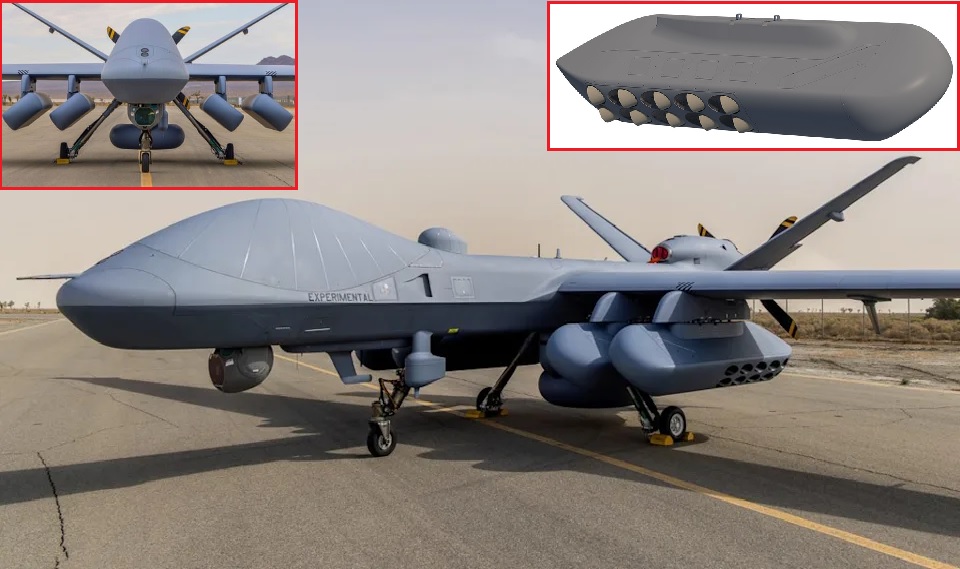
World
OTTAWA — May 31 2026 : General Atomics Aeronautical Systems, Inc. (GA-ASI) has unveiled an expanded anti-submarine warfare (ASW) configuration of its MQ-9B SeaGuardian Remotely Piloted Aircraft (RPA), displaying the unmanned platform equipped with four Sonobuoy Dispensing System (SDS) pods during the Canada Security (CANSEC) 2026 defence exhibition held from May 27 to May 28. The new aircraft configuration, revealed through imagery released at CANSEC 2026, marks a development in the SeaGuardian’s maritime warfare role. Earlier public renderings, promotional material, and testing imagery had largely shown the aircraft carrying only two SDS pods. The newly displayed arrangement doubles the number of pods and expands the aircraft’s sonobuoy deployment capacity for anti-submarine missions. Expanded Sonobuoy Payload for Maritime Surveillance The MQ-9B SeaGuardian displayed at CANSEC 2026 features four Sonobuoy Dispensing System (SDS) pods mounted diagonally beneath its wings. In addition to the sonobuoy payload, the aircraft carries a centerline pod capable of hosting maritime surveillance radar systems, enabling simultaneous surface and subsurface monitoring during naval operations. According to GA-ASI, the centerline payload position can integrate maritime search multi-mode radar systems including the Leonardo Seaspray 7500E V2 and the Raytheon SeaVue radar. These systems are designed to improve maritime situational awareness by detecting and tracking vessels, monitoring sea traffic, and supporting naval surveillance operations. The addition of four SDS pods effectively doubles the sonobuoy payload previously demonstrated by the platform. Each pod can carry up to 10 U.S. Navy standard “A” size sonobuoys or 20 smaller “G” size sonobuoys. As a result, the aircraft can carry a total of 40 “A” size sonobuoys or 80 “G” size sonobuoys in a single mission configuration. GA-ASI states that an empty Sonobuoy Dispensing System pod weighs approximately 132 kilograms, while a fully loaded pod can weigh roughly 340 kilograms depending on payload configuration. Combined with the centerline radar pod, the four-pod arrangement represents one of the heaviest maritime mission loadouts publicly shown for the MQ-9B SeaGuardian. Sonobuoy Monitoring and Control System Integration The Sonobuoy Dispensing System (SDS) operates alongside the Sonobuoy Monitoring and Control System (SMCS), enabling operators to remotely deploy, monitor, and manage acoustic sensors during anti-submarine warfare operations. The integrated system allows operators to dispense sonobuoys, process underwater acoustic information, and generate submarine target tracks, including estimated speed, heading, and depth. Through this capability, the MQ-9B SeaGuardian can extend maritime surveillance beyond surface monitoring to include persistent subsurface tracking. By combining long-endurance flight capability with remote acoustic monitoring, the aircraft is designed to maintain submarine surveillance over wide maritime areas without continuous deployment of crewed aircraft. December 2025 Flight Testing Expanded ASW Capability The increased sonobuoy configuration was previously employed during a December 2025 flight test conducted in cooperation with the U.S. Navy. During the trial, the MQ-9B SeaGuardian became the first unmanned aircraft to successfully deploy Multi-static Active Coherent (MAC) sonobuoys, specifically the AN/SSQ-125 underwater sensing system. Although imagery released from the testing period publicly showed only two visible sonobuoy pods, GA-ASI indicated that the trial involved a larger sonobuoy loadout than previous demonstrations, reflecting the aircraft’s expanded ASW capability. Multi-static Active Coherent (MAC) technology is intended to improve submarine detection across broader operational areas while reducing the number of sonobuoys required. The system works by coordinating acoustic signals between multiple deployed sensors, improving underwater detection and tracking performance. Multiple Sonobuoy Types Tested for ASW Missions In addition to the AN/SSQ-125 MAC sonobuoys, GA-ASI has completed testing involving several other sonobuoy systems compatible with the MQ-9B SeaGuardian’s SDS payload. These include the AN/SSQ-36 Bathythermal sonobuoy, which provides underwater temperature profile measurements to improve sonar performance assessment; the AN/SSQ-53G Directional Frequency Analysis and Recording (DIFAR) passive sonobuoy for acoustic submarine detection; and the AN/SSQ-62F Directional Command Activated Sonobuoy System (DICASS), an active sonobuoy used for underwater target localization. Testing conducted through January 2025 and later evaluations supported the integration of these systems into the SeaGuardian’s mission architecture, expanding the aircraft’s capability to support submarine search and monitoring operations. Endurance and Payload Trade-Offs The MQ-9B SeaGuardian offers an endurance ranging from approximately 24 to 40 hours depending on mission profile, payload weight, and operating conditions. However, carrying four SDS pods alongside a centerline maritime radar pod may reduce range and flight endurance because of increased weight and power requirements. Even with such trade-offs, the aircraft’s long-duration flight capability remains central to its operational concept, enabling prolonged maritime surveillance missions across large sea areas. Expanding Role in Maritime Operations The development of the MQ-9B SeaGuardian for anti-submarine warfare reflects a broader shift toward employing uncrewed systems in specialised maritime missions. Unlike operations in highly contested airspace where unmanned aircraft may face increased survivability risks, anti-submarine warfare missions are often conducted over open water, friendly territory, maritime chokepoints, and shipping lanes, allowing aircraft to operate farther from hostile engagement zones. GA-ASI states that the SeaGuardian’s ASW mission configuration is intended to reduce personnel requirements, operational costs, equipment burdens, and mission risk compared with relying exclusively on crewed platforms. In operational deployment, the SeaGuardian is designed to function as a networked asset alongside crewed maritime systems rather than replace them. The platform can operate in coordination with the P-8A Poseidon maritime patrol aircraft and MH-60R naval helicopters, extending surveillance coverage and deploying sonobuoy fields while crewed systems conduct response activities. Broader Mission Expansion and Cost The SeaGuardian’s anti-submarine warfare adaptation comes alongside broader mission expansion efforts. In a related development, GA-ASI and Saab recently announced the first flight of an MQ-9B equipped with Airborne Early Warning and Control (AEW&C) pods, indicating continued efforts to diversify the platform’s operational roles. Depending on configuration, sensors, and payload systems, a single MQ-9B SeaGuardian is estimated to cost between approximately $16 million and $30 million. The four-pod configuration showcased at CANSEC 2026 highlights ongoing development of the MQ-9B SeaGuardian as a long-endurance maritime surveillance platform capable of supporting anti-submarine warfare operations, although GA-ASI has not announced a timeline for operational deployment of the expanded sonobuoy arrangement.
Read More → Posted on 2026-05-31 14:08:37
World
WASHINGTON — May 31, 2026 : The U.S. Navy has selected seven industry-developed designs to advance into the at-sea testing phase of its Medium Unmanned Surface Vessel (MUSV) program, marking a major step in efforts to expand autonomous maritime capabilities and increase fleet capacity through unmanned systems. The move is part of a broader modernization effort aimed at integrating autonomous platforms into future naval operations. The MUSV initiative, supported by multi-billion-dollar funding, is expected to play a central role in the Navy’s future force structure planning. The seven selected companies are Sea Machines, Leidos, Saronic Technologies, Galliano Marine Services, PacMar Technologies, Birdon, and Huntington Ingalls Industries (HII). Each company will receive an additional $15 million to support prototype development and at-sea testing activities. Testing is scheduled to begin in June 2026 and continue through October 2026. During the roughly four-month assessment period, the Navy will evaluate operational readiness, endurance, autonomy, mission flexibility, and technical performance of each proposed vessel design. Designs that meet requirements and successfully complete testing will become eligible for follow-on production. Marketplace Procurement Model The MUSV initiative is being developed under a marketplace procurement strategy that transfers a significant share of research, development, and initial production risks to private industry. Rather than relying on government-led development of limited prototypes, the Navy requires participating companies to deliver mature, operationally relevant designs capable of meeting standardized performance requirements. This model is intended to accelerate acquisition timelines, encourage industrial competition, and broaden participation among established defense contractors and emerging technology firms. Program officials stated that the seven finalists were selected from more than two dozen submissions. The current MUSV program evolved from the earlier Modular Surface Attack Craft (MASC) effort introduced in 2025, reflecting a restructuring of Navy priorities toward scalable autonomous vessels capable of supporting distributed maritime operations. Standardized Operational Requirements To ensure interoperability and mission effectiveness, the Navy established common performance standards for all MUSV designs. Selected vessels are required to achieve a range of 2,500 nautical miles, carry a 25 metric ton payload, sustain operations in Sea State 4 conditions, and maintain speeds of up to 25 knots. Each design must also include autonomous operational capability, enabling missions with minimal direct human involvement. A key feature of the program is the requirement for modular, containerized payload systems, allowing rapid mission adaptation without extensive redesign. Under current planning, MUSVs are expected to support missions including strike operations, intelligence, surveillance and reconnaissance (ISR), logistics support, and transport functions. By using interchangeable payload systems, the Navy aims to improve flexibility while reducing integration complexity. Industry Development and Prototype Progress Several participating firms have already demonstrated progress ahead of the formal testing period. Saronic Technologies recently launched its first Marauder MUSV and transitioned the vessel to on-water trials less than one year after beginning development. The approximately 150-foot platform incorporates a large flatbed mission area designed to support modular payload arrangements and multiple operational profiles. According to available program information, the Marauder significantly exceeds baseline Navy payload requirements, supporting up to 150 metric tons and accommodating as many as four 40-foot or eight 20-foot ISO containers, depending on mission configuration. Other participants have also introduced vessel concepts aligned with MUSV requirements. Huntington Ingalls Industries has proposed its Romulus design, while Sea Machines has advanced the STEAM RACER concept. Although detailed specifications for all seven submissions have not been publicly disclosed, Navy officials confirmed that each selected design includes autonomous capabilities and modular payload architecture. Budget Commitments and Procurement Timeline The Navy has committed substantial resources to establish unmanned maritime systems as a core component of future fleet operations. In the Fiscal Year 2026 budget cycle, approximately $1.95 billion has been allocated to the MUSV program. A further $3 billion is planned over the next five years to sustain testing, procurement, and production activities. Current procurement plans call for the acquisition of 81 MUSVs by Fiscal Year 2031. According to the projected schedule, the Navy intends to acquire 36 vessels in FY2026, 3 in FY2027, 10 in FY2028, 10 in FY2029, 12 in FY2030, and 12 in FY2031. Strategic Role in Future Naval Operations Senior military leadership has emphasized the growing importance of robotic and autonomous systems in military operations. Admiral Brad Cooper, Commander of U.S. Central Command (CENTCOM), said robotic autonomous systems provide commanders with flexible operational tools adaptable to varying mission requirements. “I’ve observed firsthand how Robotic Autonomous Systems deliver a wide array of capabilities that swing the advantage in conflict,” Cooper stated. “The Commander’s ability to tailor these forces to meet unique security demands is essential.” Looking ahead, the Navy projects a total of 83 unmanned vessels—including MUSVs, smaller unmanned surface vessels (USVs), and unmanned underwater vehicles (UUVs)—to be in service by FY2031. Navy planning documents indicate that by FY2030, the number of unmanned vessels will exceed traditional auxiliary ships in service. The MUSV effort also aligns with the Navy’s broader “Golden Fleet” initiative, which seeks to increase fleet mass through a combination of crewed and autonomous systems while controlling procurement and sustainment costs. Following completion of at-sea evaluations in October 2026, the Navy is expected to review testing data and determine which designs will advance toward production, shaping the future composition of its expanding unmanned fleet.
Read More → Posted on 2026-05-31 14:21:51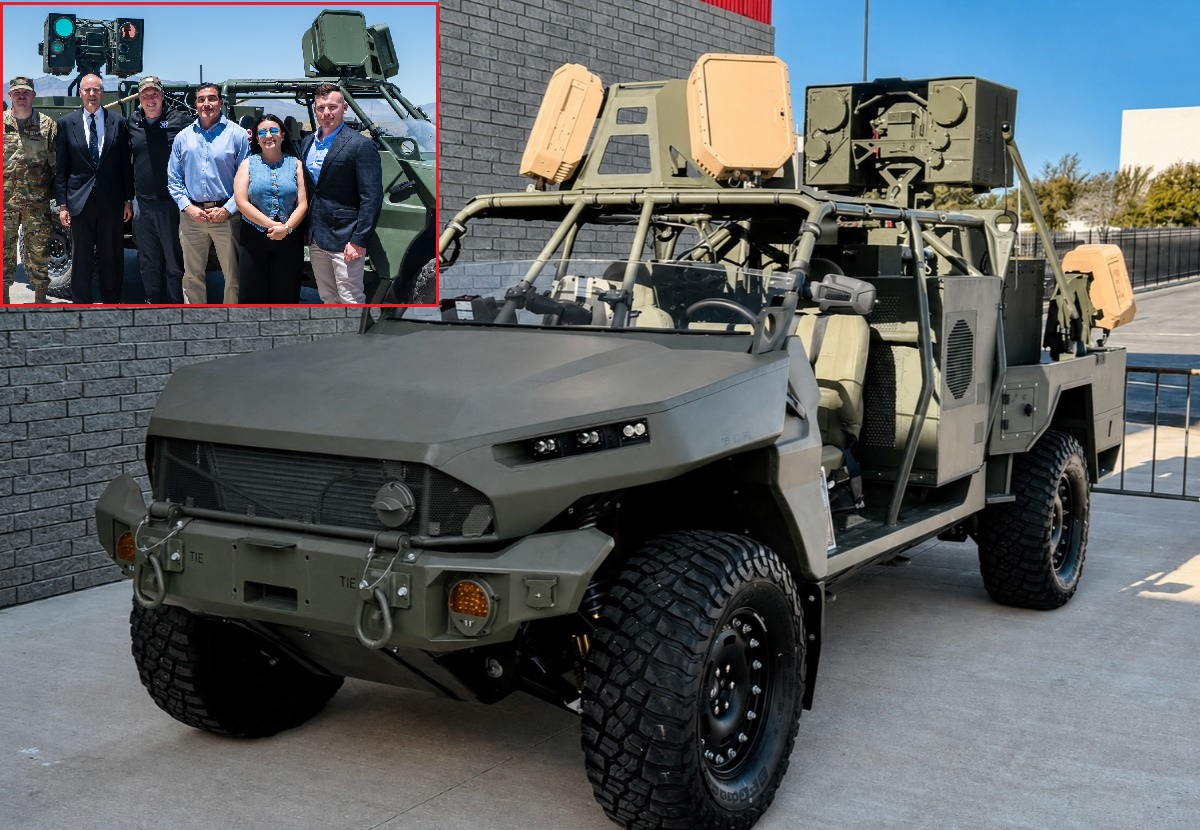
World
WHITE SANDS MISSILE RANGE, New Mexico — May 31, 2026 : The U.S. Army is expanding testing of directed-energy weapons to strengthen counter-drone defenses, with the Army Multi-Purpose High Energy Laser (AMP-HEL) program moving toward fieldable operational capability through accelerated prototyping and live testing. On May 27, 2026, Secretary of the Army Dan Driscoll visited White Sands Missile Range and personally operated the AMP-HEL system during a demonstration involving a drone target. Mounted on a General Motors Defense Infantry Squad Vehicle (ISV), the system used AeroVironment’s LOCUST laser weapon system to engage an unmanned aerial system (UAS) target. Following the demonstration, Driscoll highlighted the role of White Sands Missile Range in evaluating technologies intended to address evolving battlefield threats. “Today I visited White Sands Missile Range to see firsthand the technologies reshaping modern warfare,” Driscoll stated. “The scale of their airspace allows the U.S. Army to test UAS and counter-UAS capabilities at scale, making this one of the most important proving grounds in the world.” AMP-HEL Program and Army Testing The AMP-HEL program is overseen by the Army’s Rapid Capabilities and Critical Technologies Office (RCCTO), which is managing an accelerated prototyping effort designed to shorten traditional acquisition timelines and move directed-energy technologies toward operational use. The system is intended to provide mobile counter-UAS capability for brigade- and division-level formations, allowing maneuver forces to defend against drone threats using existing tactical vehicle platforms. The program originated through an Other Transaction Authority award issued in 2023. White Sands Missile Range remains a key testing location due to its large restricted airspace and infrastructure supporting UAS and counter-UAS experimentation. Army evaluations focus on system reliability, mobility, engagement performance, and integration with layered air defense systems. LOCUST Laser System and Technical Capabilities The AMP-HEL system integrates AeroVironment’s LOCUST (Laser on Universal Combinable Ultra-light System Technology) laser weapon system, designed to counter small drones through sustained high-energy laser engagement. The baseline LOCUST system generates approximately 20 kilowatts of continuous laser power, sufficient to heat structural materials on small drones to the point of physical failure within seconds of sustained illumination. During the demonstration, the laser system was integrated onto a General Motors Defense Infantry Squad Vehicle (ISV), a nine-seat light tactical platform based on the Chevrolet Colorado ZR2 pickup truck. The Army has also expanded integration to the Oshkosh Joint Light Tactical Vehicle (JLTV), which features a larger beam director aperture intended to improve engagement effectiveness at longer ranges. AeroVironment delivered the first two ISV-mounted LOCUST systems in September 2025, followed by two JLTV-mounted systems in December 2025 as part of the ongoing prototyping effort. The upgraded LOCUST X3 system offers a scalable laser output ranging from 20 to more than 35 kilowatts and incorporates artificial intelligence-enabled functions with AV_Halo PINPOINT software to automate target detection, tracking, and engagement. The system follows a Modular Open Systems Approach (MOSA), allowing compatibility across multiple military vehicle platforms and supporting future upgrades and production requirements. Mary Clum, Senior Vice President of AeroVironment’s Space and Directed Energy Group, stated in 2025 that the AMP-HEL effort represented a major step toward fieldable directed-energy capabilities and that the LOCUST system demonstrated reliability for counter-UAS missions. Cost Challenges Driving Directed-Energy Adoption The Army’s investment in laser weapons is partly driven by the economics of countering low-cost drone threats. Traditional short-range air defense interceptors can cost between $50,000 and $400,000 per shot, while many adversary drones, including variants derived from Iranian-designed Shahed systems, are estimated to cost between $20,000 and $50,000. This cost imbalance raises concerns about relying solely on kinetic missile interceptors during large-scale drone attacks. Speaking during an interview with 60 Minutes, AeroVironment CEO Wahid Nawabi said a Patriot missile battery costs approximately $1 billion to procure, while interceptor launches may cost around $4 million per engagement. By comparison, LOCUST laser engagements are estimated to cost roughly $3 per shot, while the upgraded LOCUST X3 reportedly operates at under $5 per engagement, depending primarily on available electrical power rather than missile stockpiles. Safety Testing and Civilian Airspace Validation In March 2026, the Joint Interagency Task Force 401 (JIATF 401), working with the Federal Aviation Administration (FAA), conducted safety demonstrations involving the AMP-HEL system at White Sands Missile Range. The evaluations validated whether the laser system could safely operate without endangering civilian aviation or friendly aircraft. According to program assessments, automated hardware and software safety interlocks prevent the laser from firing if directed toward protected “keep-out” zones or if friendly aircraft are identified within the integrated air picture. The laser beam is designed to focus energy at a controlled distance, concentrating destructive effects at the engagement point before dispersing and losing intensity beyond the target area to reduce unintended hazards. Operational Limitations and Layered Defense Role Despite progress in testing, Army officials describe directed-energy systems as one component of a broader layered counter-drone architecture rather than a replacement for traditional air-defense systems. Recent naval live-fire exercises involving a palletized version of the laser system reportedly achieved a 100 percent success rate during drone engagements aboard an aircraft carrier. However, laser weapons face operational limitations. A single laser system can generally engage one target at a time, reducing effectiveness against coordinated drone swarm attacks. Environmental conditions including dust, smoke, humidity, and rain may reduce effectiveness by degrading beam quality, reducing range, and limiting energy transfer. Adversaries, including Russia, have reportedly experimented with reflective coatings and aerosol dispersants intended to reduce laser effectiveness. To address these limitations, the Army is integrating AMP-HEL into a layered air defense framework that includes radar systems, electronic warfare and jamming equipment, kinetic interceptors, proximity-fuzed rocket systems, and other counter-UAS technologies. Production Outlook The Army has not announced formal fielding timelines beyond the current prototyping phase, though the Enduring High Energy Laser program is expected to reach a production decision in the fourth quarter of fiscal year 2026. Army planning identifies an initial requirement for 24 systems, with AeroVironment positioning the LOCUST X3 architecture for scalable production and compatibility across tactical vehicle fleets, including the ISV and JLTV. The AMP-HEL program continues to support the Army’s effort to expand mobile counter-drone capabilities and integrate directed-energy systems into broader layered air defense operations.
Read More → Posted on 2026-05-31 15:04:40
World
FRANKLIN, La. — May 31, 2026 : Defense technology company Saronic has launched its first Marauder Medium Unmanned Surface Vessel (MUSV), introducing a new autonomous maritime platform designed for both defense and commercial operations in offshore environments. The launch marks the beginning of on-water trials for the vessel at the company’s shipyard in Franklin, Louisiana, while additional hulls are already progressing through production. The first Marauder moved from initial design to launch in less than one year, a development pace Saronic says reflects an integrated production model combining ship design, manufacturing, and autonomy development under one structure. “I’m incredibly proud of our team for achieving this milestone. Designing, building, and launching an entire new class of ships in under a year is a feat the American shipbuilding industry hasn’t seen in generations,” said Dino Mavrookas, Co-Founder and Chief Executive Officer of Saronic. “It’s what happens when design, production, and manufacturing are fully integrated under one roof. With multiple hulls already underway and our shipyard continuing to grow, this is what revitalizing American shipbuilding actually looks like — autonomous ships delivered at speed and scale, with the production capacity to back it up.” Vessel Designed for Long-Range Autonomous Operations Built for sustained missions far from shore, the 180-foot Marauder is designed to perform operations that traditionally place heavy logistical burdens on ships or expose crews to elevated operational risks. The vessel can operate fully autonomously or under remote human supervision, eliminating the need for a permanent onboard crew. Saronic stated that the vessel is capable of top speeds exceeding 25 knots and has an operational range of up to 5,400 nautical miles, enabling long-distance deployment across maritime regions. A key feature of the platform is its 150-metric-ton payload capacity and modular mission design. The vessel can carry up to four 40-foot ISO containers or eight 20-foot ISO containers, allowing payloads to be adapted without changing the core platform. According to the company, the vessel can support missions including logistics support, maritime domain awareness, marine research, persistent intelligence, surveillance and reconnaissance (ISR), transport operations, and other autonomous maritime activities. Shipyard Expansion and Production The Marauder is being built at Saronic’s shipyard in Franklin, Louisiana, a facility previously operated as Gulf Craft that the company acquired to support autonomous vessel manufacturing. The company said the shipyard uses modern aluminum shipbuilding methods, including modular construction, manufacturing-optimized subassemblies, and production sequencing intended to improve efficiency. The second Marauder hull, flipped in March 2026, is currently being outfitted with mechanical, electrical, and autonomy systems and is progressing 25 percent faster than the first hull. Construction is also underway on the third and fourth hulls, reflecting plans for scalable production. To support larger-scale manufacturing, Saronic is investing $300 million to expand the Franklin shipyard, with completion expected by the end of 2026. The expansion will add more than 300,000 square feet of production space, including a dedicated large-vessel assembly line, three new slips, and expanded warehouse capacity. Once completed, the facility is expected to produce up to 20 Marauder vessels annually and create approximately 1,500 direct jobs. Software-Based Fleet Intelligence Platform Alongside vessel production, Saronic has developed a software-based fleet intelligence platform to provide operators with real-time oversight through a human-on-the-loop control system. According to the company, onboard systems continuously provide telemetry, vessel condition, subsystem status, and operational performance data. The platform includes logging, alerting, diagnostics, historical data replay, monitoring, and remote actuation capabilities, enabling remote intervention when required. U.S. Navy MUSV Program The launch comes as the U.S. Navy advances efforts to expand unmanned maritime capabilities. Saronic was recently selected as one of seven companies participating in the Navy’s MUSV Marketplace program, which will conduct at-sea demonstrations from June through October 2026. Each selected company is expected to receive $15 million to support testing and demonstrations. Platforms that successfully complete evaluations may become eligible for larger follow-on production contracts for missions involving ISR, logistics support, maritime sensing, modular transport, and distributed naval operations. With the first Marauder now in water trials and multiple additional hulls under construction, Saronic is positioning the platform for scalable autonomous vessel production. The company did not announce specific delivery schedules or production contract awards alongside the launch.
Read More → Posted on 2026-05-31 15:27:02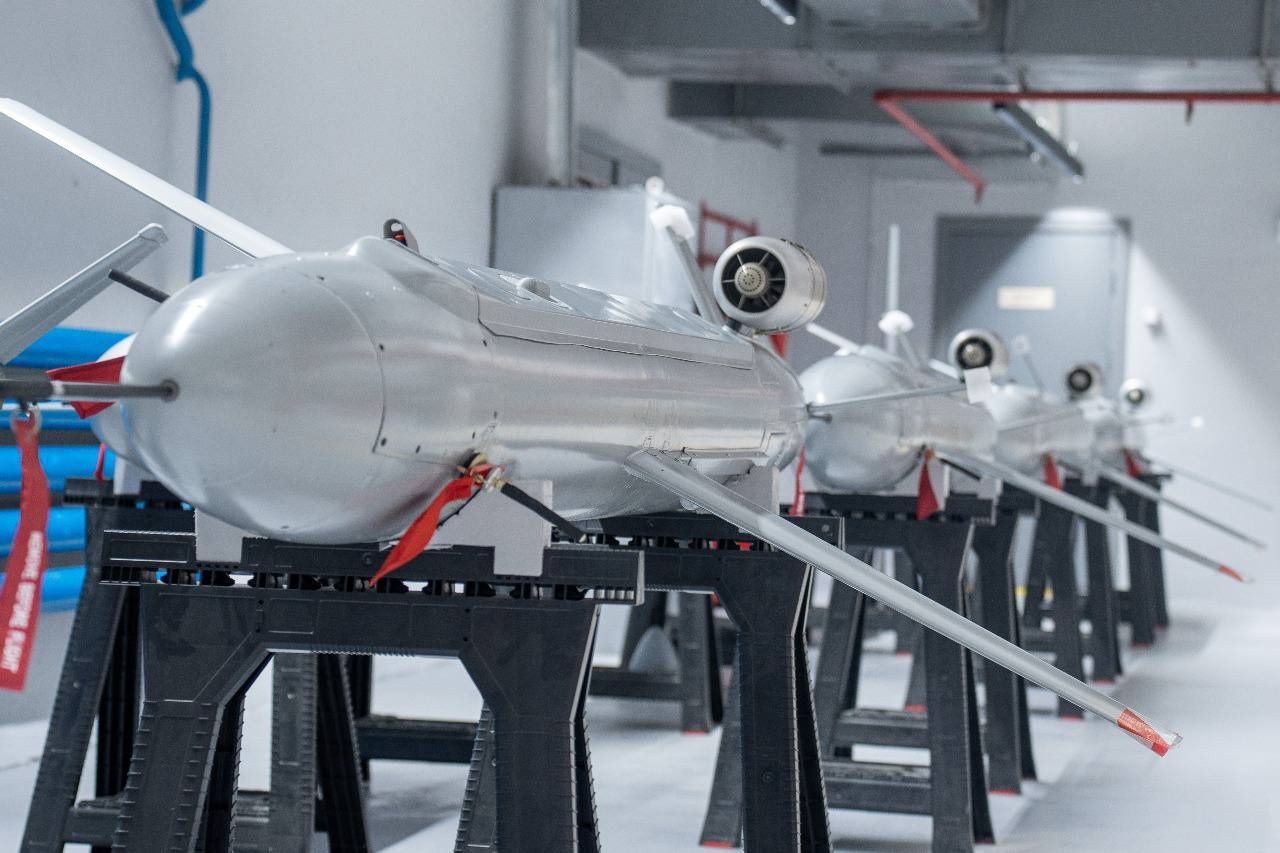
World
KYIV — May 31, 2026 : The Defense Intelligence of Ukraine (DIU) has officially integrated the domestically produced Peklo jet-powered kamikaze drone into its operational arsenal, marking a further expansion of Ukraine’s long-range strike capabilities. Recent photographs published by Associated Press photojournalist Efrem Lukatsky provide visual confirmation of the system’s deployment, showing Ukrainian military personnel preparing the drones for operations at an undisclosed location in Ukraine. The images, taken on May 28, 2026, show launch equipment and airframes for five Peklo drones positioned alongside the An-196 “Lyutyi” (Fierce) long-range strike unmanned aerial vehicle (UAV). The presence of both systems highlights Ukraine’s continued use of domestically developed strike platforms intended for operations against targets located far from the frontline. The Peklo, translated as “Hell,” is a jet-powered loitering munition that functions more similarly to a compact cruise missile than a conventional propeller-driven drone. Unlike slower one-way attack UAVs, the Peklo is powered by a turbojet engine, enabling it to reach subsonic speeds of up to 700 kilometers per hour, equivalent to approximately Mach 0.57. According to available specifications, the system has an operational strike range of up to 700 kilometers, allowing Ukrainian forces to target objectives deep inside adversary-controlled territory. Guidance and navigation are conducted through an autonomous inertial navigation system supported by GPS satellite correction to improve strike accuracy during flight. Defense analysts estimate the Peklo carries a warhead weighing between 30 and 50 kilograms. Its payload capacity is considered limited by the aerodynamic design and size of the airframe, though it remains suitable for attacking logistical infrastructure, support facilities, and lightly protected targets. The system was developed by Ukroboronprom and officially introduced to the public in December 2024 during a presentation by President Volodymyr Zelenskyy. At the time, Ukrainian officials announced the delivery of the first batch consisting of several dozen Peklo systems to the country’s Defense Forces. Officials stated that approximately 70 percent of the drone’s components are produced domestically, reflecting Ukraine’s broader effort to strengthen sovereign defense manufacturing and reduce dependence on foreign-supplied systems. Ukrainian authorities have increasingly focused on expanding local production of long-range strike systems as part of efforts to sustain military operations. According to developers, the Peklo is also designed to remain cost-efficient in production despite its jet-powered configuration. Ukrainian sources reported that manufacturing costs are lower than those of the propeller-driven An-196 Lyutyi kamikaze drone, which was estimated to cost approximately $200,000 per unit in early 2024. Lower production costs could support larger-scale procurement and sustained operational use. Although official photographs of the system in DIU service have only recently emerged, the Peklo has reportedly been used in combat since its initial delivery. The first known evidence of the drone’s battlefield use appeared in June 2025 after Russian military sources reported strikes in occupied territory. According to Russian reports, a coordinated strike targeted a crossing over the Aidar River along with a nearby pumping station. Initial assessments from Russian forces incorrectly identified the incoming munition as an An-196 Lyutyi drone. However, recovered debris from the strike area reportedly included fragments of a tail section fitted with a jet-powered engine, later confirming the munition as a Peklo system. Russian sources reported that the attack caused structural damage to the pumping station and destroyed the river crossing. Defense analysts assessing the reported damage noted that, given the Peklo’s estimated 30–50 kilogram payload, the targeted crossing was likely a light pontoon structure rather than a reinforced concrete bridge. The Peklo operates alongside the An-196 Lyutyi, also referred to as Liutyi, a propeller-driven long-range one-way attack drone developed by Antonov ASTC in cooperation with Ukroboronprom. The Lyutyi reportedly has a range exceeding 1,000 kilometers, with some reports indicating operational employment at distances of up to 2,000 kilometers. It carries a larger estimated warhead of between 50 and 75 kilograms and features a distinctive V-shaped tail configuration designed for long-range strike missions. The concurrent deployment of both systems indicates Ukraine’s continued reliance on a combination of high-speed jet-powered munitions and longer-range propeller-driven drones to support deep-strike operations. While the Peklo provides faster strike capabilities against selected targets, the Lyutyi offers extended range and greater payload capacity. Ukrainian officials have not disclosed the exact number of Peklo drones delivered to the DIU or detailed future operational plans. However, the integration of the system reflects Ukraine’s ongoing effort to expand domestically produced long-range unmanned strike capabilities for sustained military operations.
Read More → Posted on 2026-05-31 15:57:07
World
KUALA LUMPUR — May 31, 2026 : Malaysia has formally demanded approximately $251 million (RM1 billion) in compensation from Norwegian defense company Kongsberg Defence & Aerospace after Norway revoked export approvals for the Naval Strike Missile (NSM) system intended for the Royal Malaysian Navy, a decision that has triggered diplomatic concerns and disrupted a key naval modernization effort. Malaysian officials said the cancellation has damaged trust in international defense cooperation and raised concerns about the reliability of long-term procurement agreements after major payments and integration work had already been completed. Contract Cancellation Disrupts Naval Modernization Program The dispute stems from a 2018 agreement between the Royal Malaysian Navy and Kongsberg Defence & Aerospace for the delivery of NSM anti-ship missile systems to arm Malaysia’s Littoral Combat Ships (LCS) under the country’s long-term maritime modernization strategy. The missile package was intended for six Littoral Combat Ships, with additional systems reportedly planned for two future vessels. The NSM was selected to strengthen Malaysia’s maritime strike capability and improve operational readiness in coastal waters. The contract was valued at approximately €124 million to €145 million ($145 million to $147 million). According to Malaysian Defence Minister Mohamed Khaled Nordin, Kuala Lumpur had already paid around €126 million, equivalent to nearly 95 percent of the contract value, before Norway revoked export licenses in March 2026, days before scheduled deliveries. Malaysia Demands Compensation for Direct and Indirect Losses Following the cancellation, Malaysia issued a formal notice of demand to Kongsberg Defence & Aerospace, seeking compensation exceeding RM1 billion ($251 million). The claim covers both direct and indirect financial losses resulting from the failed procurement. A major portion of the claim includes reimbursement of nearly $146 million already paid for missile systems and launcher components that were never delivered. Malaysian officials said additional costs stem from work already carried out to integrate the missile system into naval platforms. These expenses include dismantling missile mounting equipment installed aboard Littoral Combat Ships, replacing infrastructure designed around the NSM system, retraining naval personnel, and integrating an alternative weapons platform into the navy’s operational structure. The cancellation has also affected integration timelines for Malaysia’s Littoral Combat Ship program, which had been configured around the Norwegian missile system to improve naval strike capabilities. Norway Cites Export Control Restrictions Norwegian authorities defended the decision by citing revised export control regulations and national security considerations. Under updated restrictions, Norway reportedly limits exports of certain advanced defense technologies to NATO members and its closest strategic partners. Norway’s foreign ministry declined to discuss specific details of the case, citing confidentiality obligations under the country’s Export Control Act. During a bilateral meeting on the sidelines of the Shangri-La Dialogue security forum in Singapore on May 31, 2026, Norwegian Defence Minister Tore O. Sandvik formally apologized to Malaysian Defence Minister Mohamed Khaled Nordin for the disruption. While expressing regret, Sandvik confirmed that Norway’s decision to revoke export approval would remain permanent. Malaysia Raises Concerns Over Trust and Consistency Malaysia’s leadership criticized the decision, arguing that unilateral policy changes after years of contractual compliance undermine confidence in international defense partnerships. Prime Minister Anwar Ibrahim described Norway’s action as unilateral and unacceptable, stating that Malaysia had fulfilled its contractual obligations since 2018 and expected the same commitment from its defense partners. Speaking during the Shangri-La Dialogue, Defence Minister Khaled Nordin said the incident raised wider concerns regarding confidence in long-term strategic agreements. He warned that withdrawing from legally binding commitments after payments and preparations have been completed risks weakening trust in rules-based international cooperation. Khaled also questioned what he described as unequal standards in global defense arrangements, arguing that smaller developing nations often bear financial and operational burdens when export restrictions are introduced after agreements have already been finalized. Why the Naval Strike Missile Was Important to Malaysia The Naval Strike Missile (NSM) had been chosen for Malaysia’s Littoral Combat Ship fleet because of its suitability for maritime and coastal operations. The missile is a stealthy, sea-skimming anti-ship system with a range exceeding 185 kilometers. It uses inertial navigation, GPS guidance, terrain contour matching, and an imaging infrared seeker for terminal targeting. Defense analysts suggested the cancellation may involve concerns linked to foreign-supplied components, including U.S.-origin technologies such as gyroscopes used in missile guidance systems. However, the United States denied direct involvement in the cancellation and said it had supported Malaysia’s acquisition efforts. Malaysia Reviews Replacement Missile Options With the NSM deal cancelled, Malaysia has begun evaluating alternative missile systems to maintain operational readiness and avoid delays to its naval modernization plans. Defence Minister Khaled Nordin confirmed that the United States has offered an alternative missile system to replace the cancelled Norwegian platform. Malaysian officials are also reviewing proposals from South Korea. At the same time, Kuala Lumpur continues to examine possible legal options related to the cancelled contract and potential breaches. No resolution has been reached regarding the compensation claim, while Malaysia continues efforts to secure replacement systems for its Littoral Combat Ship fleet. The case highlights challenges in international defense procurement, particularly when export policies change after contracts are signed, payments completed, and integration work has already taken place.
Read More → Posted on 2026-05-31 16:08:16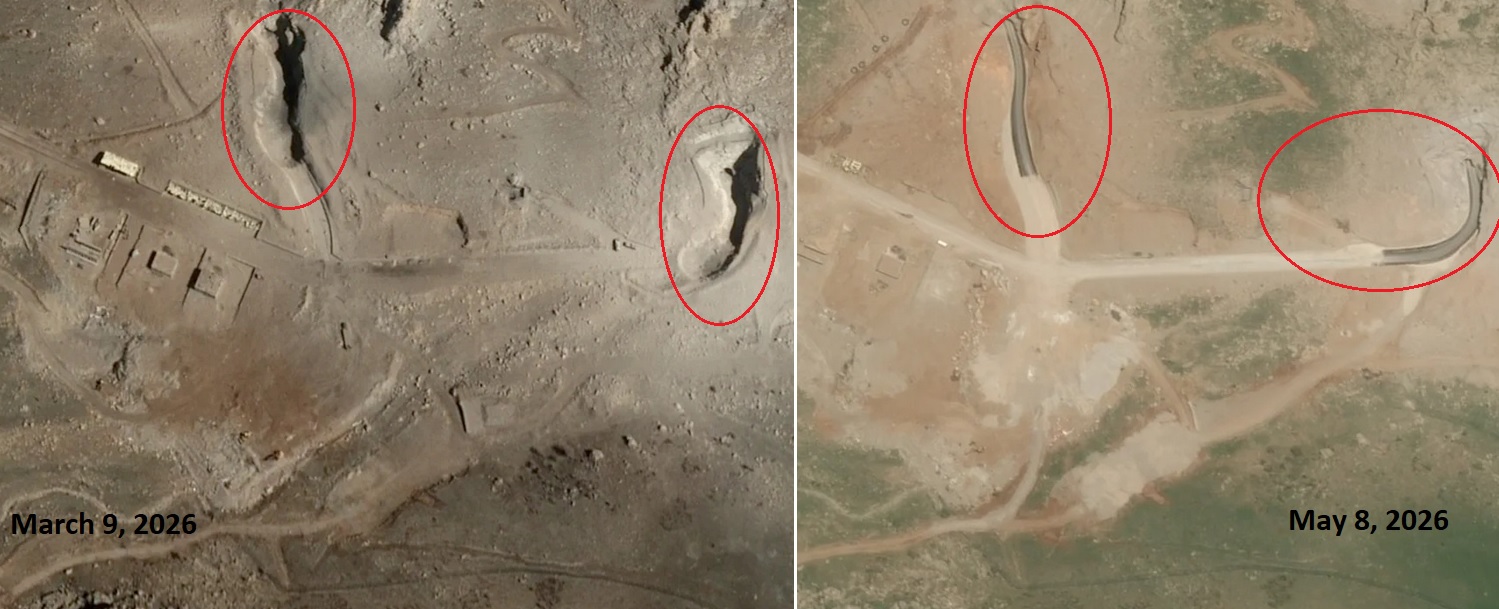
World
WASHINGTON — May 31, 2026 : Iran has restored access to most of the underground missile facilities targeted during recent strikes by the United States and Israel, according to a CNN analysis of commercial satellite imagery, indicating a faster-than-expected recovery of critical military infrastructure following the conflict. Satellite imagery reviewed by CNN and provided by Airbus Defence and Space shows that Iran has reopened 50 of 69 tunnel entrances struck at 18 underground missile facilities since a ceasefire was declared more than seven weeks ago. The images suggest Tehran has accelerated efforts to repair access routes, clear debris, and restore access to missile sites damaged during the campaign. Tunnel Entrances Reopened Across Missile Sites The recovery work has been visible across multiple underground missile bases, where heavy engineering equipment has been deployed to remove rubble and reopen blocked entrances. Satellite imagery showed bulldozers, excavators, front-end loaders, dump trucks, and debris-clearing vehicles operating near tunnels sealed during bombing. At a missile base in Dezful, satellite imagery captured on May 12 showed that four of the facility’s five underground entrances had been reopened, leaving only one access point blocked. Similar activity was documented near Khomein and Isfahan, where trucks were observed clearing debris from tunnel entrances damaged during the strikes. Roads damaged during bombing operations have also largely been repaired, with satellite imagery showing access routes restored to near pre-conflict condition. The images further indicate that nearly all bomb craters along roads leading to missile facilities have been filled, allowing movement to resume at several military locations. At some bases, additional repair work was visible, suggesting continued efforts to restore operational readiness. Focus of the US-Israeli Air Campaign During the conflict, US and Israeli forces concentrated attacks on tunnel entrances, access roads, and supporting infrastructure rather than attempting to destroy underground storage areas directly. Military planners targeted surface-level infrastructure to trap missile launchers and stockpiles underground by sealing entrances and cutting off access routes. Analysts note that many of Iran’s missile facilities are deeply buried inside granite mountains and protected beneath hundreds of meters of solid rock, making direct destruction through airstrikes significantly more difficult. Because of this underground design, the military campaign relied heavily on blocking entry points and disrupting operations instead of penetrating fortified storage complexes. Questions Over Long-Term Effectiveness The speed of Iran’s recovery has renewed discussion among military analysts over the long-term effectiveness of surface strikes against deeply buried missile infrastructure. Experts say the strikes disrupted missile operations during the conflict and slowed launch activity but may not have caused major damage to underground arsenals. During the fighting, Iran reportedly continued excavation efforts even as US and Israeli strikes targeted engineering equipment used to reopen blocked access routes. Despite operating at reduced launch rates, Tehran continued missile launches during the conflict while attempting to restore damaged facilities. According to assessments cited in the report, Iran is believed to retain approximately 1,000 missiles stored inside underground facilities. Before the conflict, Tehran was estimated to possess around 2,500 medium-range ballistic missiles, with intelligence assessments now suggesting that more than 1,000 remain available. Experts Say Missile Capability Remains Sam Lair, a research associate at the James Martin Center for Nonproliferation Studies at the Middlebury Institute of International Studies, told CNN that Iran could continue launching missiles as long as it maintains launchers and trained crews, even if missile production slows. According to Lair, Iran’s underground missile system was designed to absorb attacks, restore access, and continue operations after strikes. He said the recovery pattern seen in satellite imagery aligns with the operational structure of Iran’s “missile cities.” Lair also noted that ceasefires generally create opportunities for both sides in a conflict to restore damaged military systems and rebuild operational capacity. Timur Kadyshev, a senior researcher at the Institute for Peace Research, said Iran had spent decades preparing for a conflict involving attacks on strategic military infrastructure, contributing to the pace of current recovery efforts. Recovery Faster Than Initial Intelligence Estimates US intelligence assessments cited in the report suggest Iran’s military recovery is progressing faster than initially expected. Four sources familiar with intelligence evaluations said Iranian forces had surpassed earlier timelines related to the restoration of missile sites, launchers, and operational infrastructure. One assessment reportedly increased estimates of surviving missile launchers to around two-thirds of pre-conflict levels, partly because the ceasefire period allowed Iran to excavate launchers buried during earlier strikes. Officials also believe Tehran is replacing missile launchers and rebuilding weapons production capabilities faster than expected, increasing concerns over Iran’s ability to restore military readiness in the near term. Drone Production Resumes During Ceasefire In addition to missile recovery efforts, US intelligence agencies reportedly assess that Iran has restarted parts of its drone production network during the ceasefire period that began in early April. According to the latest estimates, Tehran could restore its drone strike capability within roughly six months, supported by existing technical expertise, manufacturing infrastructure, and continued access to dual-use commercial components. A March 2026 Atlantic Council report noted that Iran retains established production systems and technical capabilities that could support the rebuilding of missile and drone-related programmes. Broader Strategic Situation The ceasefire announced by US President Donald Trump in April paused fighting between Iran, the United States, and Israel, but several broader objectives linked to the military campaign remain unresolved. Among the stated goals were preventing Iran from acquiring nuclear weapons capability, degrading its missile programme, and weakening broader military infrastructure. However, satellite imagery and intelligence assessments suggest Iran continues to rebuild access to key underground facilities while restoring elements of its missile and drone capabilities.
Read More → Posted on 2026-05-31 16:22:52
World
OTTAWA — May 31, 2026 : The Canadian government has entered formal negotiations with Swedish defence company Saab to acquire the GlobalEye Airborne Early Warning and Control (AEW&C) aircraft as part of a wider effort to strengthen Arctic surveillance, modernize NORAD contributions, and support domestic aerospace manufacturing. Prime Minister Mark Carney announced the decision on May 27 during the CANSEC defence exhibition in Ottawa, confirming Saab as the preferred supplier for the programme. The Department of National Defence is expected to acquire six GlobalEye aircraft in a project valued at more than C$5 billion, covering aircraft procurement, infrastructure, training, and long-term support. A final contract has not yet been signed. The GlobalEye was selected following a competition involving Boeing’s E-7 Wedgetail and L3Harris’ Aeris X platform. Both GlobalEye and Aeris X are based on the Toronto-built Bombardier Global 6500 business jet, while Boeing offered the U.S.-built E-7 platform. Arctic Security and NORAD Modernization Canadian officials said the procurement responds to growing security requirements in the Arctic, where large distances and limited infrastructure create challenges for continuous monitoring. Government officials noted that Russia has expanded military infrastructure in northern regions, including radar stations, airfields, naval facilities, missile defence systems, and sites supporting long-range bomber operations. China has also increased its Arctic presence through scientific research, satellite infrastructure, shipping routes, and dual-use technologies. The GlobalEye fleet is intended to improve surveillance over Canada’s northern approaches by providing mobile sensor coverage alongside fixed radar systems. Officials said the aircraft will strengthen Canada’s role in the North American Aerospace Defense Command (NORAD) and improve early warning capabilities. According to the Canadian government, the aircraft will help detect threats such as cruise missiles, hypersonic weapons, and long-range unmanned systems earlier than ground-based systems alone, providing additional response time. Aircraft Capabilities The GlobalEye is built on the Bombardier Global 6000/6500 long-range business jet manufactured in Toronto and equipped with Saab’s Erieye Extended Range radar, an Active Electronically Scanned Array (AESA) system. The aircraft can simultaneously monitor air, sea, and land activity and track objects and signals at distances of up to 650 kilometres. Its sensor package includes electro-optical systems, electronic support measures, maritime surveillance radar, and command-and-control systems capable of sharing real-time information with military headquarters, naval forces, fighter aircraft, and allied networks. Officials said the AESA radar provides faster target updates, improved resistance to jamming, and better detection of low-flying and low-observable targets. The GlobalEye is intended to replace the operational role traditionally associated with older airborne warning aircraft such as the Boeing E-3 Sentry AWACS while offering a lower-maintenance and more fuel-efficient platform. Industrial Impact Prime Minister Carney stated that at least one-third of an estimated GlobalEye production pipeline of around 40 aircraft over the next 15 years, including expected allied orders, will be manufactured in Canada. The government estimates the programme will support approximately 3,000 jobs in Canada’s aerospace and defence sector, including engineering, technical, and manufacturing roles. Following the announcement, Saab CEO Micael Johansson said Saab plans to establish an industrial collaboration hub in Canada alongside Bombardier to support production and long-term programme requirements. The acquisition aligns with Canada’s Defence Industrial Strategy, which outlines approximately C$180 billion in defence procurement opportunities and C$290 billion in defence-related capital investment over the next decade. Defence Partnerships and Timeline Defence Minister David McGuinty said the programme reflects Canada’s effort to diversify defence partnerships and reduce long-term reliance on U.S.-controlled supply chains by working with technologically advanced allied countries. The GlobalEye platform is already in service or on order with countries including the United Arab Emirates and Sweden, while France announced plans in 2025 to procure the aircraft. The selection also represents an accelerated timeline for Canada’s airborne surveillance programme. In late 2025, the government expected programme requirements to begin in 2032, with initial deliveries planned for 2037 or 2038. No timeline has been announced for final contract signing with Saab.
Read More → Posted on 2026-05-31 17:17:19
World
WASHINGTON / EL SEGUNDO, Calif., — May 31, 2026 : The U.S. Space Force has awarded SpaceX a $4.16 billion contract to develop a satellite-based system designed to detect and track airborne threats from orbit under the Space-Based Airborne Moving Target Indicator (SB-AMTI) program. The contract, announced by Space Systems Command on May 29, is intended to accelerate deployment of an initial satellite constellation by 2028. The program aims to establish a persistent airborne target tracking capability from space and improve surveillance across large geographic areas. For decades, the U.S. military has relied on aircraft such as the E-3 Sentry Airborne Warning and Control System (AWACS) and the E-7 Wedgetail for airborne surveillance. However, operating such aircraft in regions protected by advanced anti-access and area-denial (A2/AD) systems has become increasingly difficult due to long-range air defenses, electronic warfare, and other threats. The SB-AMTI program is designed to complement existing airborne surveillance systems by moving initial detection and tracking missions into orbit. The architecture combines advanced space-based sensors, secure communication links, and AI-enabled ground processing to provide persistent awareness of contested airspace. According to the Space Force, traditional airborne early warning aircraft will continue to support command, control, battle management, and tactical coordination roles, while space-based tracking is expected to improve monitoring of aircraft, cruise missiles, and drones and reduce surveillance gaps. The system is expected to support operations across regions including the Indo-Pacific, Europe, the Arctic, and the Middle East by improving tracking over large areas where airborne monitoring is operationally challenging. Before awarding the contract, the Space Force and the National Reconnaissance Office (NRO) tested prototype systems to demonstrate that airborne moving target tracking from orbit is technically viable. The agreement was awarded through a competitive Other Transaction Authority (OTA) process overseen by Col. Ryan Frazier, acting U.S. Space Force Portfolio Acquisition Executive for Space-Based Sensing and Targeting. Space Systems Command said the program will follow a layered acquisition strategy that combines commercial technologies from traditional and non-traditional defense firms. Although SpaceX received the largest contract under SB-AMTI, the Space Force said additional awards are expected over the coming year to maintain competition and avoid reliance on a single provider. The SB-AMTI program is part of the broader Golden Dome missile defense initiative, whose estimated cost has increased to approximately $185 billion as investments in space-based sensing and tracking systems expand. In its fiscal year 2027 budget request, the Space Force is seeking $7.06 billion for the program to expand coverage. The contract follows another recent Space Force award to SpaceX worth $2.29 billion for the Space Data Network Backbone, a secure military communications system. Combined, the two contracts total approximately $6.45 billion. Development work on SB-AMTI is expected to begin immediately, with the initial satellite constellation scheduled for deployment by 2028. Traditional airborne surveillance aircraft are expected to remain in service alongside the new space-based tracking architecture.
Read More → Posted on 2026-05-31 17:25:28
World
Moscow - May 31, 2026 : New footage circulating online appears to show Russian forces deploying the handheld “Yolka” interceptor drone system in combat, indicating a wider operational rollout of the low-cost anti-drone platform designed to counter reconnaissance and first-person view (FPV) drones on the battlefield. The videos show Russian soldiers launching the compact interceptor using a pistol-style handheld launcher. After launch, the drone autonomously tracks and intercepts aerial targets, reflecting expanded battlefield use across frontline and border areas. The Yolka, meaning “fir tree” in Russian, was first publicly noticed during Russia’s Victory Day military parade in May 2025. Since then, the interceptor has entered mass production in Moscow and is reported to be actively deployed in the special military operation zone and border regions. Russian military-linked sources describe it as a portable “fire-and-forget” anti-drone system for frontline and point-defense missions. Designed as a kinetic interceptor, the Yolka destroys hostile unmanned aerial vehicles (UAVs) through direct collision instead of an explosive warhead. The absence of explosives reduces the risk of collateral damage, allowing use near roads, infrastructure, and populated areas. The interceptor features a cylindrical body, two sets of X-shaped wings, and four electric motors mounted at the rear. The drone weighs approximately 1.3 kilograms, while the complete launcher system weighs around 6 kilograms, making it portable for operation by a single soldier. The Yolka can reportedly reach speeds of up to 230 km/h with an operational range of 3 to 4 kilometres and an operating altitude of up to 800 metres. The system uses a bi-spectral guidance system combining thermal and optical tracking with an onboard artificial intelligence (AI) module. After target lock, the interceptor transitions to autonomous flight, allowing pursuit without continuous operator control. Its AI-assisted guidance is intended to improve resistance to electronic warfare (EW) interference and jamming. According to reported specifications, the Yolka is designed to engage FPV drones, bomber UAVs ranging from 30 centimetres to two metres, and fixed-wing drones with wingspans between two and five metres. Russian operators identified heavy Ukrainian hexacopters known as “Baba Yaga”, along with strike UAVs such as Lyuty and Bober, among its targets. Russian frontline air-defense teams are reportedly integrating the interceptor into mobile anti-drone operations. A commander from a Russian anti-aircraft battery under the “Center” grouping, identified by the callsign “Tiger34”, stated the system has shown effectiveness against reconnaissance platforms and fixed-wing strike drones. Air observation posts also deploy the Yolka alongside thermal-imaging-equipped small arms to counter increased nighttime drone activity. Russian military-linked reporting has claimed the interceptor is achieving hit rates of up to 90 percent and is in regular use among mobile fire teams. Recent footage has also shown the Yolka operating with a dedicated launcher and radar system, indicating expansion toward semi-automated point-defense missions. The increasing deployment of the Yolka appears to be affecting battlefield drone tactics. According to a Ukrainian UAV countermeasures commander using the callsign “Kot”, Ukrainian drone operators have altered flight profiles due to the threat posed by kinetic interceptors. Ukrainian drones that reportedly operated at 150 to 200 metres in 2023 are now said to fly between 900 and 1,200 metres in some sectors to reduce interception risks. At the same time, Ukrainian defense advisor Serhii Beskrestnov stated that the system has operational limitations, including daylight-only operation, restrictions during rainfall, and reduced effectiveness in wind conditions above eight metres per second. With an estimated cost of approximately $500 per interceptor, the Yolka provides a lower-cost method of countering commercially available drones and reconnaissance UAVs, reducing the need to use more expensive Man-Portable Air-Defense Systems (MANPADS) against low-cost aerial threats. The system has also been observed with Vladimir Putin’s security detail during Victory Day events, indicating its use may extend beyond battlefield operations to high-priority protection roles.
Read More → Posted on 2026-05-31 17:34:53
India
NEW DELHI — May 31, 2026 : New technical details have emerged regarding the indigenous Active Electronically Scanned Array (AESA) radar being developed for India’s Advanced Medium Combat Aircraft (AMCA), indicating that the system will feature a 10.5 kW cooling capacity and approximately 1,540 Gallium Nitride (GaN)-based Transmit/Receive Modules (TRMs) designed to support the stealth fighter’s performance, thermal management, and operational efficiency requirements. The radar is being developed by the Defence Research and Development Organisation (DRDO)’s Electronics and Radar Development Establishment (LRDE) as part of India’s wider effort to equip the AMCA with domestically developed mission systems and sensors. During Aero India 2025, LRDE displayed a 1:2 scale model of the radar, highlighting a GaN-based AESA configuration integrated with DRDO’s newly developed Vivaldi antenna technology. Cooling Capacity and TRM Configuration According to technical details now in circulation, the AMCA radar will incorporate a cooling capacity of 10.5 kW, equivalent to the Vapour Compression Machine developed for the Virupaksha AESA radar currently being designed for the Indian Air Force’s Su-30MKI upgrade programme. However, while the Virupaksha radar is reported to feature around 2,400 TRMs, the AMCA radar is expected to integrate approximately 1,540 modules. The reduced TRM count is understood to reflect the stealth fighter’s design requirements, where compactness, thermal efficiency, and optimized integration within a fifth-generation airframe are prioritized. The radar is expected to maintain high operational efficiency within the same thermal envelope due to the use of GaN semiconductor technology. Compared to older Gallium Arsenide (GaAs)-based systems, GaN TRMs provide higher power density and improved efficiency per module, enabling stronger performance with a comparatively smaller module count. Vapour Compression Cooling System Thermal management for the AMCA radar will rely on a closed-loop Vapour Compression System engineered to absorb and dissipate up to 10.5 kW of continuous heat load. The cooling system is intended to maintain stable thermal conditions for radar electronics, power supplies, and signal-processing units, particularly during prolonged missions and sustained high-power radar operation. Maintaining thermal efficiency is considered particularly important for stealth aircraft because excessive localized heating can affect system performance and increase infrared detectability. By regulating temperatures across radar components, the system is intended to support both operational reliability and sustained mission effectiveness. Tile-Based Radar Architecture For the AMCA platform, LRDE is developing a tile-based radar array architecture in which GaN TRMs are arranged in a circular layout compatible with the aircraft’s stealth-oriented nose cone design. Unlike conventional approaches focused primarily on maximizing TRM numbers, the AMCA radar emphasizes efficiency, compactness, bandwidth, and integration within a limited internal volume. The tile-based configuration is also modular in design. Individual tiles can be replaced independently in the event of failure, reducing maintenance complexity without requiring the complete radar array to be dismantled. In parallel, LRDE is also developing phased-array and tile-array configurations for different aircraft categories. Available details indicate a tiered radar architecture strategy in which plank-based radar designs are intended for lighter fighter aircraft such as the Tejas family, while tile-based systems are being developed for larger and more advanced platforms, including the upgraded Su-30MKI and the AMCA, where bandwidth, range, and electronic resilience are operational priorities. Vivaldi Antenna for Wideband Performance A key feature of the AMCA radar is the incorporation of DRDO’s Vivaldi antenna, also known as a Tapered Slot Antenna (TSA). The antenna was selected to meet operational requirements involving bandwidth greater than 50 percent of the centre frequency and dual-polarisation capability. According to available technical information, commonly used antenna types such as microstrip patches and printed dipoles were not suitable for these requirements. The Vivaldi antenna provides a symmetrical radiation pattern, high gain, and broad bandwidth, enabling transmission across a wide frequency range. Its low-profile design and wideband characteristics are expected to support efficient signal transmission while improving resistance to interference and electronic countermeasures. Combined with GaN-based TRMs, the radar is expected to deliver a higher power beam than the Uttam AESA radar for Tejas Mk1A platform. L-Band Antenna for Identification Friend or Foe The AMCA radar suite will also incorporate a dedicated L-band TRM antenna for Identification Friend or Foe (IFF) functions. L-band frequencies operate at longer wavelengths, making them suitable for reliable identification and communication tasks in contested environments. The dedicated IFF antenna is intended to complement the radar’s primary fire-control functions by supporting secure and efficient identification of friendly airborne and ground assets during operations. Parallel Development with Virupaksha Radar The AMCA AESA radar programme is progressing simultaneously with the development of the Virupaksha radar for the Su-30MKI upgrade programme. Both systems are being undertaken by DRDO’s LRDE and reflect a broader effort to establish an indigenous airborne radar ecosystem for India’s present and future combat aircraft fleet. By advancing technologies such as GaN-based TRMs, tile-array radar architectures, Vivaldi antennas, L-band IFF integration, and high-efficiency thermal management systems, India is working toward a domestically developed radar capability tailored to both current-generation and fifth-generation combat platforms.
Read More → Posted on 2026-05-31 17:51:57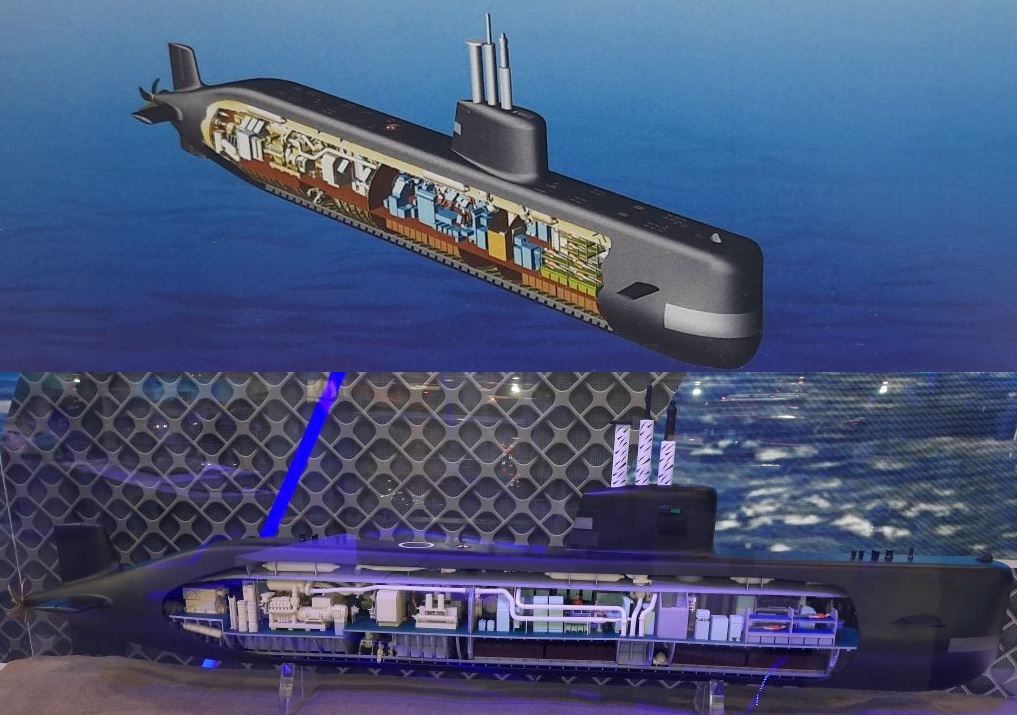
India
NEW DELHI — 01 June 2026 : The Indian Navy is advancing plans to acquire Special Operations Vessels (SOVs) and Swimmer Delivery Vehicles (SDVs) to strengthen the covert underwater operational capabilities of its elite Marine Commandos (MARCOS), reviving a long-pending requirement for specialised platforms designed for stealth missions in coastal and littoral waters. Commonly referred to as midget submarines, these specialised vessels are intended to support covert operations including reconnaissance, underwater infiltration, and the insertion and extraction of MARCOS personnel in areas where larger submarines and surface ships may face operational constraints. As part of the procurement process, the Navy has initiated discussions with Indian shipbuilders Mazagon Dock Shipbuilders Limited (MDL) and Larsen & Toubro (L&T), alongside two European manufacturers. The requirement outlines a platform of approximately 500 tonnes displacement capable of carrying around 20 personnel, including crew members and special forces operators. The programme reflects a distinct operational requirement within the Indian Navy. While India’s conventional and nuclear submarine fleets are designed for long-range maritime operations and strategic deterrence, midget submarines are intended for stealth-focused missions closer to shore, particularly in shallow and confined waters where covert access and rapid deployment of special forces are essential. In addition to SOVs, the Navy plans to acquire Swimmer Delivery Vehicles, smaller underwater platforms designed specifically to transport combat divers and MARCOS teams during covert missions. Together, the systems are expected to improve the Navy’s ability to conduct underwater special operations, intelligence gathering, and maritime reconnaissance in contested coastal environments. A Requirement Shaped by Operational Needs Unlike larger submarine platforms used for blue-water missions, midget submarines are optimised for shallow-water operations, coastal defence, and stealthy deployment of special operations forces. Their smaller size and lower acoustic signature make them suitable for missions requiring secrecy and flexibility near hostile coastlines. Globally, these platforms occupy a specialised niche. Countries including Iran, North Korea, and Pakistan have relied on midget submarines for asymmetric maritime operations and covert coastal defence roles. Iran, for instance, operates the domestically built Ghadir-class midget submarines, which are designed for operations in the shallow waters of the Persian Gulf. Major conventional submarine manufacturers such as Germany’s TKMS, France’s Naval Group, South Korea’s Hanwha Ocean, and Spain’s Navantia largely focus on full-sized conventional or nuclear submarine programmes and do not currently offer dedicated midget submarine platforms for special operations. A Programme Nearly Two Decades in Development The Indian Navy’s interest in midget submarines dates back almost 20 years. The original programme began in 2006 and led to a formal tender in 2009, attracting participation from several Indian shipyards working with foreign partners. During that process, Larsen & Toubro partnered with Russia’s Rubin Design Bureau, while Mazagon Dock Shipbuilders Limited and Hindustan Shipyard Limited (HSL) worked with Italy’s Fincantieri. Other participants included ABG Shipyard and Pipavav Shipyard in collaboration with overseas firms. Despite early momentum, the programme was eventually scrapped. A second effort to revive the project emerged during 2016–17 when Hindustan Shipyard Limited (HSL) was nominated for the programme. However, progress slowed as the shipyard struggled to finalise either an indigenous design or a suitable foreign partner. South Korea’s Hyundai Heavy Industries showed interest in the project, but its proposed all-electric platform reportedly failed to meet operational requirements laid down by the Navy. Attempts to transfer the programme to other shipyards also did not move forward, causing the project to lose momentum once again. The requirement resurfaced in late 2022, when the Navy issued a fresh Request for Information (RFI) for Special Operations Vessels. Responses were received from MDL, L&T, and HSL, reopening the competition for a capability that has remained under consideration for years. Indian Shipyards Present Indigenous Designs Among domestic contenders, Larsen & Toubro and Mazagon Dock Shipbuilders Limited are positioning themselves as key candidates for the programme. L&T has developed an indigenous mini-submarine concept drawing on industrial expertise gained through the Arihant-class nuclear submarine programme. The company has showcased various designs at defence exhibitions and is promoting its proposal under the Defence Acquisition Procedure’s Buy (Indian-IDDM — Indigenously Designed, Developed, and Manufactured) category. Its concept has evolved toward the 500-tonne category sought by the Navy and is expected to incorporate systems such as torpedo tubes, sonar arrays, and accommodation for both crew and MARCOS operators during extended covert operations. Mazagon Dock Shipbuilders Limited publicly unveiled a scaled model of its ‘Arowana’ midget submarine in May 2024. Although the display model generated online criticism regarding its appearance, officials associated with the programme maintain that the submarine remains under active development and that the final design continues to evolve. The Arowana concept is expected to incorporate indigenous systems including sonar, inertial navigation, GPS, and secure communication equipment to support stealthy underwater missions. Foreign Designs Also Under Evaluation Alongside indigenous proposals, the Navy is examining European platforms, particularly from Italian defence firms Fincantieri and Drass, both of which are established players in the small submarine segment. Fincantieri’s S800A is based on concepts derived from the larger U212 submarine programme. The platform measures approximately 51 metres and has a displacement of around 750 to 850 tonnes. Equipped with Air Independent Propulsion (AIP), the submarine is designed to remain submerged for extended durations and accommodate a crew of 18 in addition to eight special operations personnel. Drass is offering its DGK-class submarine, a modular platform designed for covert operations and operational flexibility. The submarine can reportedly be transported discreetly by road without compromising structural integrity, deploy swimmer delivery vehicles, and carry up to four heavyweight torpedoes. The company has previously supplied midget submarines to Pakistan and countries in West Asia and signed a framework agreement in February to provide DGK-class submarines and SDVs to the Indonesian Navy. However, despite their detailed designs and projected capabilities, the latest Italian platforms remain conceptual at present and have not yet entered operational service with any navy in their current form. Procurement Decision Ahead The final direction of the programme will depend on decisions taken by the Ministry of Defence regarding procurement priorities, timelines, and budget allocations. If the government chooses an indigenous route, Indian shipyards such as L&T and MDL are expected to lead development under domestic manufacturing categories. Alternatively, the Navy could proceed with a direct foreign acquisition if operational timelines favour an off-the-shelf solution. Given the limited number of vessels planned and the specialised nature of the requirement, local production through a transfer of technology arrangement is generally viewed as economically less practical. For the Indian Navy, the programme represents an effort to strengthen underwater special operations capability and provide MARCOS with dedicated platforms suited for covert maritime missions in shallow and contested waters.
Read More → Posted on 2026-06-01 14:05:45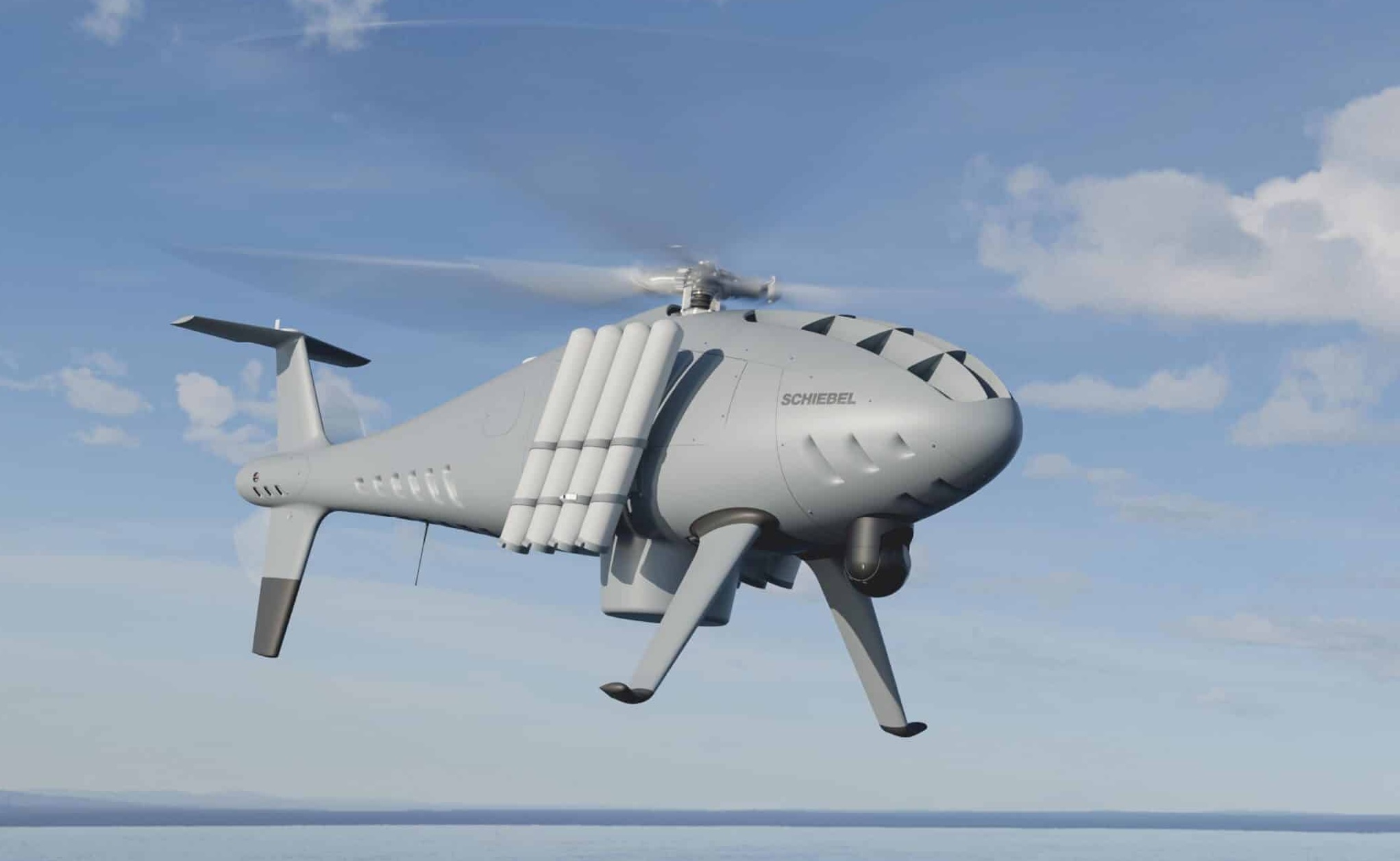
World
VIENNA/NEW DELHI, — June 01, 2026 : Austrian unmanned systems manufacturer Schiebel Group has announced that its CAMCOPTER S-300 unmanned aerial system (UAS) has been selected as the airborne platform for the European Union-funded SWORD program, a major defence initiative focused on developing next-generation stand-off anti-submarine warfare (ASW) capabilities for European naval forces. The project, formally titled Stand-off Anti-Submarine Warfare Operations by Remote Deployment (SWORD), is a 36-month research effort operating under the European Defence Fund (EDF) with a budget of approximately €20 million. Led by German naval systems manufacturer TKMS ATLAS ELEKTRONIK, the multinational initiative seeks to build an integrated “sensor-to-shooter” operational chain capable of detecting, tracking, classifying, and neutralizing underwater threats while reducing risks to crewed naval platforms. At the centre of the project is a shift in how anti-submarine operations are conducted. Traditionally, naval vessels hunting submarines must move close to suspected underwater contacts to deploy sonar systems and confirm detections. This process often places surface ships within the potential engagement range of hostile submarines. SWORD aims to reduce this risk by using remotely deployed sensors carried by unmanned platforms, enabling naval forces to monitor and respond to submarine threats from safer distances of at least 40 nautical miles. Growing Focus on Undersea Security The program comes amid increasing attention to undersea security in Europe. Over the past decade, Russia and China have modernized and expanded their submarine fleets, introducing quieter and more capable platforms designed for intelligence gathering, surveillance, and strategic operations across maritime regions including the North Atlantic, Arctic, and Mediterranean. As submarines become harder to detect, naval planners are placing greater emphasis on stand-off anti-submarine concepts that combine manned and unmanned systems to improve surveillance coverage and operational response times. SWORD is intended to create a system-of-systems architecture that allows remote deployment of sensors while maintaining continuous situational awareness over large maritime areas. Why the CAMCOPTER S-300 Was Selected Schiebel’s CAMCOPTER S-300 was selected due to a combination of payload capacity, endurance, and shipborne operational flexibility that aligns closely with SWORD’s requirements. The heavy-lift vertical take-off and landing (VTOL) drone can operate from the flight decks of standard naval vessels without requiring a runway. Its three-bladed foldable rotor system allows it to be stored within existing ship hangars, making it suitable for deployment aboard ships with limited onboard space. The platform is capable of carrying substantial mission payloads required for anti-submarine warfare. According to Schiebel, the S-300 has a maximum takeoff weight of approximately 700 kilograms (1,545 pounds), an empty weight of around 320 kilograms (705 pounds), and payload capacity of up to 350 kilograms (772 pounds), including fuel. This capacity enables the aircraft to transport sonar equipment, multiple sonobuoys—including NATO-standard A-size and G-size variants—and additional surveillance systems used to establish acoustic detection fields over wide maritime zones. These systems can help naval operators search for submerged contacts without moving crewed ships directly into potentially contested areas. Another key advantage is endurance. The S-300 can reportedly remain airborne for up to 24 hours with lighter payload configurations of around 50 kilograms, while missions involving heavier payloads of roughly 250 kilograms generally allow flight durations of around six hours. Such endurance supports persistent monitoring, an important requirement in anti-submarine warfare where maintaining continuous contact with a suspected submarine can be operationally significant. In terms of performance, the platform measures approximately 4.85 meters in length, stands 1.89 meters high, and uses a main rotor diameter of 5.3 meters. It offers a dash speed of up to 120 knots, a cruise speed of around 55 knots optimized for endurance, a service ceiling reaching 21,000 feet, and a data-link range of up to 200 kilometers. Building on an Existing Naval Ecosystem The S-300 also benefits from compatibility with Schiebel’s smaller and widely operated CAMCOPTER S-100 platform. Both systems use the same ground control station, allowing military operators already familiar with the S-100 to transition to the larger aircraft without major retraining or new operational infrastructure. The S-100 platform has accumulated extensive operational experience with naval and defence users in countries including Germany, France, Italy, and the United Arab Emirates. According to Schiebel, the S-300 builds upon this operational foundation while expanding payload and endurance capabilities for more demanding missions. The aircraft has undergone testing campaigns in France and surpassed 100 flight hours during evaluation programs, supporting its maturation for operational use. European Defence Cooperation The SWORD initiative reflects broader European efforts to strengthen defence cooperation and reduce duplication across national military research programs. Supported through the European Defence Fund, the project brings together companies, research institutions, and universities from several countries including Germany, Denmark, Greece, Cyprus, Italy, the Netherlands, and Poland. Among the contributors is Poland’s Military University of Technology (WAT), which is involved in work related to multi-platform effectors and rapid-response operational networks. Additional partners include defence and research organizations such as MBDA Deutschland, Fraunhofer-Gesellschaft, and TNO in the Netherlands. TKMS ATLAS ELEKTRONIK, which leads the project, contributes expertise in naval combat systems, underwater detection technologies, and submarine-related operations. As part of thyssenkrupp Marine Systems, one of Europe’s principal submarine builders, the company brings technical understanding of submarine operating behaviour, tracking requirements, and underwater detection challenges. “We are proud that the CAMCOPTER S-300 has been selected for this important European Defence initiative,” Hans Georg Schiebel, Chairman of the Schiebel Group, said in a statement. He described SWORD as an example of European cooperation in a strategically relevant maritime defence area and said the selection highlights the S-300’s ability to support future unmanned anti-submarine warfare concepts. With operational facilities in Austria, France, the United States, Australia, and the UAE, Schiebel said participation in SWORD represents an important step in advancing heavy-lift unmanned systems for maritime defence missions. Development under the SWORD program will continue over the next three years, with participating organizations expected to focus on technology integration, operational testing, and demonstrations as Europe advances stand-off anti-submarine warfare capabilities for future naval operations.
Read More → Posted on 2026-06-01 14:14:00
World
TEHRAN — June 1, 2026: Iranian President Masoud Pezeshkian has reportedly submitted a resignation letter to the office of Supreme Leader Mojtaba Khamenei, according to multiple international media reports citing unnamed sources. The reports claim the president raised concerns over his administration’s exclusion from major state decision-making and the growing role of hardline factions within the Islamic Revolutionary Guard Corps (IRGC). Iranian officials, however, have firmly rejected the reports and described them as false. According to a report by Fox News citing sources from the London-based media outlet Iran International, Pezeshkian allegedly submitted a letter requesting to step down from office immediately. The reported letter stated that his administration had become increasingly sidelined from important government decisions, preventing him from effectively carrying out his constitutional and executive responsibilities. The reported resignation letter allegedly claimed that hardline elements within the IRGC had assumed control over key national affairs, leaving the elected administration unable to function independently. Pezeshkian reportedly wrote that under such conditions he could no longer govern effectively or fulfill his legal obligations as president. Iran International reported that the letter was sent to the office of Supreme Leader Mojtaba Khamenei on May 31, though there has been no confirmation from Iranian authorities regarding its existence or authenticity. The outlet claimed that Pezeshkian warned in the letter that the structure of government had deviated from official processes and that key parts of the administration were under the control of a particular political spectrum. The reported development comes amid ongoing concerns regarding tensions between Iran’s civilian leadership and the IRGC, which holds significant authority in national security, military affairs, and regional policy. Independent reports have pointed to differences between civilian institutions and military commanders over the management of recent conflicts and their economic impact on Iranian citizens. One reported area of disagreement concerns the management of shipping through the Strait of Hormuz, a strategically important maritime route. According to reports, Iran’s foreign ministry and civilian government have sought to maintain commercial shipping access for selected partner countries, including India, while IRGC units have at times acted independently in maritime operations involving commercial vessels. Reports have also suggested communication challenges between the civilian administration and the country’s highest leadership. Following his succession earlier this year, Supreme Leader Mojtaba Khamenei is reportedly operating from a secure undisclosed location, with communication allegedly taking place through intermediary channels. According to these accounts, IRGC officials have reportedly acted as intermediaries between the president’s office and the Supreme Leader, contributing to reported institutional difficulties within the government structure. Iranian authorities moved quickly to reject the resignation claims. Seyed Mehdi Tabatabaei, Deputy for Communications and Information Dissemination in the President’s Office, described the reports as baseless and rejected suggestions that President Pezeshkian intended to leave office. Tabatabaei stated that statements regarding the president’s position should not be taken seriously and characterized the reports as “childish behaviors of a few misguided elements.” He also said that Iran has many capable young people who are prepared to contribute to governance and leadership responsibilities. He further described the reports as “rumor-mongering by a disreputable foreign network” and said they represented a continuation of what he called previous media campaigns aimed at promoting inaccurate narratives about Iran’s political system. Separately, an informed government source cited by Tasnim News Agency dismissed Iran International’s report and denied that President Pezeshkian had submitted a resignation letter to Supreme Leader Mojtaba Khamenei. The source described Iran International as a “factory of fabrications” and claimed the outlet was affiliated with Mossad. “The president has not resigned. He worked today and his future plans will proceed as usual,” the source said. According to the source, the spread of such reports is intended to collect intelligence for Mossad and the CIA and to create division and weaken social cohesion inside Iran. Tabatabaei emphasized that President Pezeshkian remains committed to his responsibilities and will continue serving the country. He also rejected claims of political deadlock between the civilian government and military institutions, stating that the administration continues to carry out its daily executive operations without interruption. Masoud Pezeshkian, considered a reformist-leaning political figure, assumed office as president in 2024. His administration has overseen a period marked by regional tensions, economic challenges, and continuing debate over the balance of authority between elected institutions and influential security organizations such as the IRGC. As of June 1, there has been no official confirmation from the office of the Supreme Leader regarding the reported resignation letter, and President Pezeshkian continues to perform his official duties.
Read More → Posted on 2026-06-01 14:30:49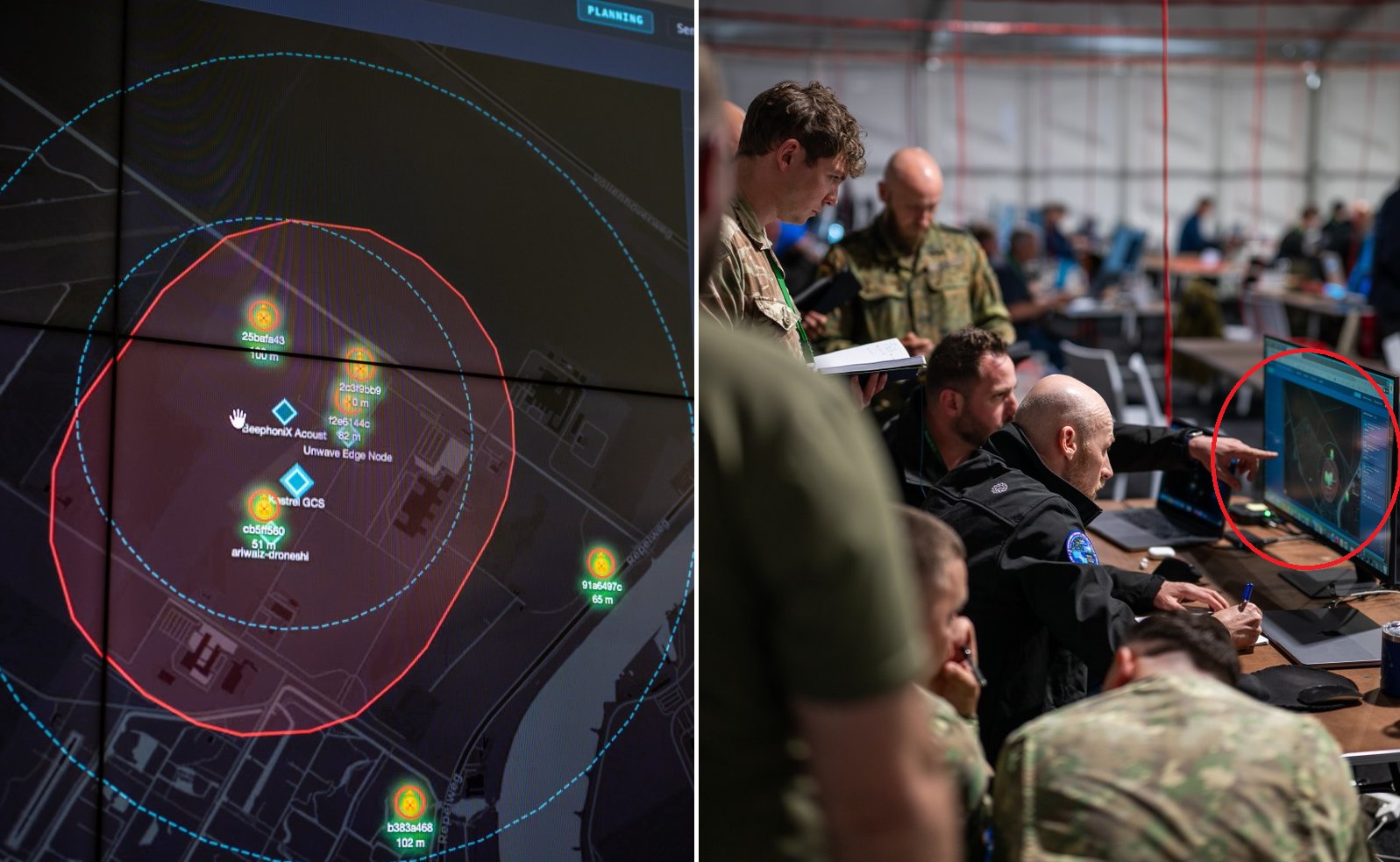
World
THE HAGUE, Netherlands — June 01, 2026 : Airwayz’s OVERWATCH airspace governance platform has received official interoperability certification from NATO’s Communications and Information Agency (NCIA) after successfully participating in NATO’s Technical Interoperability Exercise (TIE 26), a major multinational counter-drone exercise held in the Netherlands. The certification follows the platform’s role as the primary command and control (C2) system for “Team BRAVO,” where it integrated sensor and response systems from 13 countries into a single operational picture during live testing against simulated drone threats. Held from May 11 to 22, 2026, at the Royal Netherlands Aerospace Centre (NLR) in Marknesse, TIE 26 is NATO’s principal exercise for evaluating interoperability among counter-unmanned aircraft systems (C-UAS). Organized by the NCIA, this year’s event brought together nearly 300 military personnel, technical specialists, and industry participants from 11 allied nations, alongside partner countries Australia and Ukraine. The exercise focused on testing how military and commercial counter-drone systems can operate together in realistic operational conditions. More than 60 counter-drone systems and 40 command-and-control software applications from around 40 companies were evaluated during the 11-day event. The testing process reflected lessons from recent conflicts, particularly the growing role of small drones and the increasing complexity of countering unmanned threats in contested environments. OVERWATCH Demonstrates Multi-Nation Integration During the live performance challenge, OVERWATCH served as Team BRAVO’s central command-and-control platform and connected with 46 counter-drone nodes under NATO’s STANREC 4869 framework, a standardized recommendation for countering Class I unmanned aircraft systems, which include small tactical drones widely used in modern conflicts. The integrated network included 31 Fusion Nodes, designed to combine information from multiple sensors, and 15 Edge Nodes, consisting of individual sensors and effectors operating at the tactical level. Through this structure, OVERWATCH combined data from systems that had not previously been integrated and generated a single Recognised Air Picture for operators. According to Airwayz, the platform managed information from a wide range of technologies contributed by participating countries, including acoustic detection systems, passive radio-frequency sensing, radar systems, jammers, kinetic interceptors, and remote identification tools. The company said the level of interoperability achieved during the exercise demonstrated the platform’s ability to connect multiple systems rapidly under operational conditions. SAPIENT Architecture and Command Capability An important element of the certification process involved the platform’s performance within the SAPIENT architecture, short for Sensing for Asset Protection with Integrated Electronic Networked Technology. SAPIENT provides a common data language that allows sensors, effectors, and command systems developed by different manufacturers to exchange information without requiring custom software integration. Beyond data sharing, OVERWATCH demonstrated direct SAPIENT Tasking capability during the exercise. This enabled the platform not only to receive and process sensor information but also to issue commands to response systems, allowing operators to coordinate mitigation measures through a single command layer. Brigadier General (Res.) Yaron Rosen, Executive Chairman of Airwayz, said the results of TIE 26 demonstrated the operational importance of systems capable of processing large-scale drone activity and integrating multiple technologies under a unified command framework. Operational Use Beyond Testing The NATO certification builds on OVERWATCH’s operational deployment in civilian and security environments. The platform has been operating at the Port of Rotterdam for approximately three and a half years, where it supports the management of complex civilian airspace and coordinates more than 80 drone operations each day without interruption. Airwayz said the platform has also been used in operational environments linked to security and conflict-related applications. In addition, OVERWATCH has supported live security exercises at large public events, including FIFA World Cup fan zones, where authorities require coordinated airspace monitoring and response capabilities. Next Phase: Baltic Trust 2026 Successful validation at TIE 26 qualifies OVERWATCH for Baltic Trust 2026 (BATT26), a NATO operational field exercise scheduled for August 2026 in Latvia. The exercise is expected to focus on counter-drone preparedness and interoperability in NATO’s eastern region, where member states continue to strengthen defenses against unmanned aerial threats. Participation in BATT26 will allow Airwayz to further demonstrate the platform’s capabilities to military commanders and operational planners seeking scalable systems capable of integrating technologies from multiple allied countries. The certification achieved during TIE 26 highlights NATO’s broader emphasis on interoperable counter-drone systems that can connect sensors, command networks, and response tools within a common operational framework. As drone technologies continue to expand across civilian and military environments, alliance members are increasingly focusing on systems that support coordinated and standardized responses across different operational settings.
Read More → Posted on 2026-06-01 14:43:44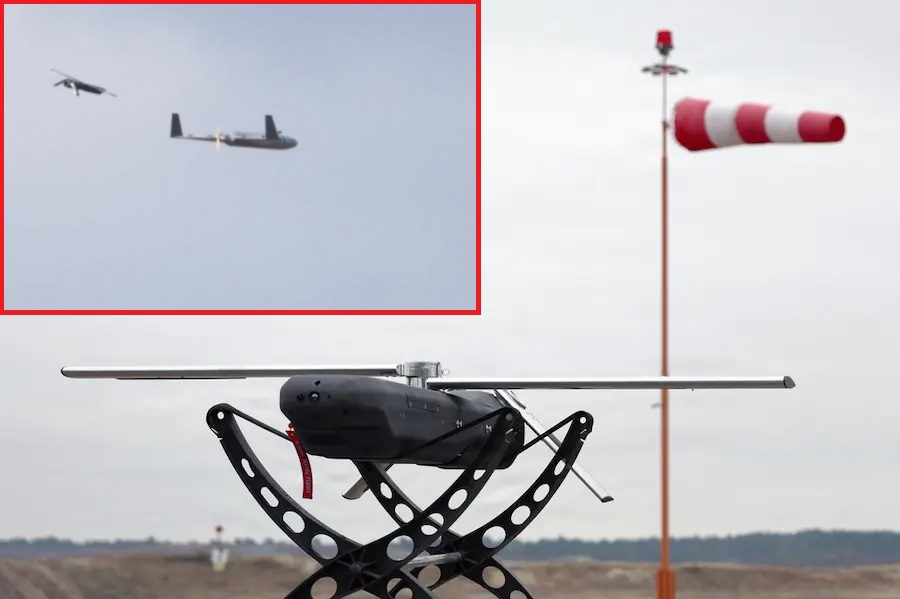 U.S. Army Tests Low-Cost Skyhammer Interceptor in Europe to Counter Drone and Cruise Missile Threats
World
SEMBACH, Germany — June 01, 2026 : The U.S. Army’s 52nd Air Defense Artillery Brigade (52d ADA BDE) has conducted developmental testing of the Skyhammer interceptor during the Project Bullfrog exercise series in Europe, evaluating the system’s role in strengthening layered air and missile defense against drones and low-speed cruise missile threats. The testing forms part of the brigade’s broader effort to identify cost-effective air defense capabilities for forward-deployed forces across the European and African theaters. Brigade personnel worked alongside engineers and operational planners to assess Skyhammer’s flight control, performance, and integration potential within existing air defense networks. Developed by UK-based Cambridge Aerospace, Skyhammer is designed as a lower-cost interceptor intended to address growing operational concerns over the use of expensive missile systems against low-cost aerial threats such as one-way attack drones. Modern air defense systems often rely on high-value interceptors to destroy targets that are significantly cheaper to produce, creating operational and budgetary challenges. Founded in late 2024 by aerospace specialist Steven Barrett and former UK Defence Secretary Grant Shapps, Cambridge Aerospace developed Skyhammer to support layered air defense at lower cost. The jet-powered, tube-launched interceptor weighs approximately 18 kilograms, has a range exceeding 30 kilometers, and can reach speeds of around 700 kilometers per hour, or approximately Mach 0.58. During Project Bullfrog, soldiers and technical teams evaluated how Skyhammer could improve defensive depth, increase magazine capacity, and expand engagement options against aerial threats within an integrated defense architecture. The testing is linked to the Eastern Flank Deterrence Initiative (EFDI), a NATO-supported operational concept led by U.S. Army Europe and Africa (USAREUR-AF) and NATO Allied Land Command. The initiative focuses on the use of unmanned and minimally manned systems supported by integrated mission command networks that process live operational data to improve battlefield decision-making and force coordination. Capt. Kurt Blumeyer, Weapons Evaluation Test Cell Officer for the 52nd Air Defense Artillery Brigade, said the testing enabled soldiers and developers to assess operational requirements and evaluate emerging technologies against identified defense gaps. “The threat is adapting quickly, and our formations must move with the same urgency,” Blumeyer said. “These tests allowed Soldiers and developers to work side by side, identify operational requirements, and evaluate whether emerging technology can help close real gaps in the current defense design.” Cambridge Aerospace officials said the exercise provided operational feedback to support refinement of the interceptor for military use. Chris Sylvan, Chief Commercial Officer and co-founder of Cambridge Aerospace, said feedback from brigade personnel contributed to understanding how the system could be adapted to operational requirements. “This partnership with the 52nd Air Defense Artillery Brigade allowed us to put Skyhammer in front of Soldiers who understand the threat and the mission,” Sylvan said. “Their feedback was direct, operationally grounded, and invaluable as we continue refining the system for real-world use.” Alongside Skyhammer, the brigade is also working with Cambridge Aerospace on Starhammer, a higher-speed interceptor intended for counter-cruise missile operations. Starhammer is described as a solid-rocket-powered interceptor capable of speeds up to Mach 2 with a range of approximately 10 kilometers. Maj. Cody Davis, Operations Officer for the 52nd ADA Brigade, said the Army is seeking to expand magazine depth for both counter-drone and counter-cruise missile operations while reducing overall costs. “Along with increasing magazine depth amongst c-UAS capabilities, we are looking to do the same in the counter cruise missile space, at a low cost, to augment our exquisite interceptors,” Davis said. “Currently, we are planning to integrate Starhammer into existing joint-force and European multinational exercises.” Brigade officials emphasized that the developmental testing does not represent a procurement or fielding decision. Following the recent tests, the U.S. Army’s Global Tactical Edge Acquisition Directorate (G-TEAD) is expected to invite Cambridge Aerospace to participate in a formal operational assessment scheduled for this summer. The assessment will evaluate Skyhammer under operational conditions relevant to current and future ground-based air defense requirements and provide additional data on potential integration and future employment. Through Project Bullfrog, the 52nd Air Defense Artillery Brigade continues to evaluate emerging technologies intended to strengthen air defense capabilities and improve protection of critical assets across Europe and Africa.
Read More → Posted on 2026-06-01 14:54:09
World
KUWAIT CITY/TEHRAN, — June 01, 2026 : Iran’s Islamic Revolutionary Guard Corps (IRGC) launched retaliatory missile and drone strikes against a Gulf airbase used by United States forces on Monday, prompting Kuwait to activate air defense systems and intercept incoming threats as tensions increased despite an ongoing ceasefire between Washington and Tehran. The IRGC said the operation was carried out in response to a recent U.S. military strike targeting an Iranian communications and telecommunications tower on Sirik Island in Hormozgan Province. According to the IRGC, its Aerospace Force targeted the airbase from which the U.S. operation allegedly originated, stating that the “predicted targets were destroyed.” Although the IRGC did not initially identify the location of the targeted installation, the U.S. Central Command (CENTCOM) later confirmed that American personnel stationed in Kuwait were the intended target. CENTCOM stated that U.S. forces intercepted two Iranian ballistic missiles at approximately 11 p.m. Eastern Time on Sunday, adding that no American personnel were harmed during the attack. The command said the missiles were “immediately defeated” and noted that U.S. forces remain prepared to protect personnel and facilities in the region while continuing to support the ceasefire agreement currently in effect between the two countries. Regional reports indicated that the attack was directed toward Ali Al Salem Air Base in Kuwait, with debris from intercepted projectiles reportedly damaging MQ-9 Reaper drones stationed at the facility. However, U.S. officials maintained that there were no personnel casualties. Kuwait’s air defense systems were activated after warning sirens sounded across Kuwait City during the incident. Kuwaiti authorities reported that missiles and drones approaching the country’s airspace were intercepted before reaching their intended targets. In a statement issued Monday, Kuwait’s Foreign Ministry condemned the attack and reiterated the country’s right to take all necessary measures to safeguard its sovereignty, territorial integrity, and civilian safety. Kuwaiti officials emphasized that national security measures would continue amid rising regional tensions. The exchange followed a series of U.S. military operations conducted over the weekend, which American officials described as “self-defense” strikes. According to CENTCOM, U.S. forces targeted Iranian radar systems and drone command-and-control facilities located in the city of Goruk and on Qeshm Island after what Washington described as aggressive Iranian actions in the Gulf region. Among the developments preceding the escalation was the destruction of a U.S. MQ-1 Predator drone. The United States stated that the drone had been operating over international waters in the Persian Gulf when it was downed by Iranian air defense systems. Iran, however, disputed the claim and stated that the drone had entered Iranian territorial waters, leading to its interception. Iranian officials have argued that countries hosting U.S. military facilities used in operations against Iranian territory cannot avoid responsibility for the consequences of such actions. The IRGC also warned that any repetition of similar strikes against Iranian assets could prompt further responses. Despite the recent military exchanges, an April 8 ceasefire agreement between Iran and the United States officially remains in place. The truce, which largely halted a three-month period of hostilities, continues to be tested by repeated incidents and competing security claims by both sides. Diplomatic efforts aimed at preventing further escalation remain ongoing. Delegations from both countries are reviewing a potential memorandum of understanding intended to establish a longer-term framework for ending hostilities. However, reports indicate that negotiations have recently slowed amid disagreements over proposed conditions and differing interpretations of security commitments. U.S. officials have described recent military actions as measured responses intended to protect forces and maintain regional stability, while Iranian authorities maintain that retaliatory measures are necessary to respond to attacks on their territory. The latest exchange highlights continuing tensions in and around the Strait of Hormuz, a strategically important waterway for regional security and global energy shipments, even as diplomatic discussions continue.
Read More → Posted on 2026-06-01 15:47:18
World
MOSCOW, — June 01, 2026 : The Russian Aerospace Forces (RuAF) have taken delivery of another upgraded A-50U Airborne Early Warning and Control (AEW&C) aircraft, marking a continued effort to restore airborne radar and surveillance capabilities following fleet attrition and production delays linked to industrial constraints and sanctions. Images of the aircraft handover surfaced on May 31 through the Fighter-Bomber Telegram channel, a platform known for connections to Russian frontline aviation units. The post stated that “another upgraded and modernized A-50U has been handed over to the military.” In the released images, the aircraft’s registration and tactical “Bort” number were blurred, preventing open-source verification of the specific airframe. The Russian aerospace manufacturer United Aircraft Corporation (UAC) had not released official photographs or issued a public statement regarding the delivery at the time of reporting. However, military analysts believe the aircraft has likely been assigned to the 2457th Aviation Base for Combat Operation of Airborne Early Warning Aircraft at Ivanovo Severny, the primary operating location for Russia’s A-50 fleet. A-50U Modernization and Operational Capabilities The A-50U, designated “Mainstay” by NATO, is an upgraded version of the Soviet-era A-50 airborne early warning aircraft that entered service in 1984. The aircraft is built on the Ilyushin Il-76MD strategic airlifter platform and forms part of a modernization program launched in 2003 to improve Russia’s airborne surveillance and command capabilities. The upgrade program, led by Beriev and supported by radar systems produced by JSC Vega, introduced major improvements in radar performance, avionics, and mission systems. At the center of the modernization is the Vega-M radar, which significantly expands target detection and tracking capacity compared to the original A-50 platform. According to available specifications, the A-50U can simultaneously track up to 150 aerial targets at distances of up to 595 kilometers. By comparison, the original A-50 was capable of tracking approximately 45 targets at around 225 kilometers. The aircraft is also capable of guiding up to 12 fighter aircraft during interception missions. Its radar can detect low-flying fighter-sized targets amid ground clutter at distances ranging from 200 to 400 kilometers, while maritime targets can reportedly be identified at ranges of up to 400 kilometers. Modernization work has replaced legacy analog systems with digital signal processing equipment, updated mission computers, modern liquid-crystal displays, and improved communication and navigation systems. The use of lighter onboard electronics has also improved computing efficiency and reduced crew fatigue during extended patrol operations. Fleet Losses and Operational Challenges The latest delivery comes as Russia continues efforts to rebuild a fleet that has experienced significant losses during the war in Ukraine. Prior to this addition, estimates suggested that between five and seven operational A-50U aircraft remained in Russian service. Ukraine destroyed at least three A-50 aircraft between early 2024 and mid-2025. The first confirmed loss occurred on January 14, 2024, when an A-50 and an Il-22 radio relay aircraft were lost over the Sea of Azov. A second A-50 was destroyed on February 23, 2024, in the same region. The U.S. Army later stated that the aircraft had been targeted in a “SAMbush” operation involving a Patriot surface-to-air missile system. Another setback followed on June 1, 2025, during Ukraine’s Operation Spiderweb, when First-Person View (FPV) drones struck at least one A-50 aircraft at an airfield. The operation also targeted several long-range aviation assets, including seven Tu-95 bombers, four Tu-22M aircraft, and an An-12 transport aircraft. Russia’s airborne radar production and modernization process has historically progressed slowly, with aircraft often completed at intervals of one to two years. Analysts have linked the limited number of operational airborne warning aircraft to reduced radar coverage and challenges in detecting long-range drone and missile attacks inside Russian territory. In response, Moscow has accelerated domestic production of electronic components and reinforced ground-based air defense systems around key cities and strategic infrastructure. A-100 Premier Program Russia’s long-term replacement for the A-50U is the A-100 Premier airborne early warning aircraft, which is based on the newer Il-76MD-90A platform. The A-100 is designed to incorporate an Active Electronically Scanned Array (AESA) radar system with improved tracking and surveillance capabilities. According to reported specifications, the aircraft can monitor up to 300 targets at distances of approximately 643 kilometers and remain airborne for around 10 hours without refueling. Radar testing of an A-100 prototype reportedly took place in June 2024, and at least two aircraft are believed to have been constructed. However, serial production has yet to begin as testing schedules and component availability continue to affect program timelines. Broader Russian Aviation Capability Despite limitations in airborne radar coverage, Russia continues to maintain a substantial combat aviation inventory. By the end of 2025, Russian frontline forces reportedly operated 142 Su-34 interdiction bombers, including the upgraded Su-34M variant developed using operational lessons from Ukraine. The fleet also included approximately 384 multirole fighters across the Su-27, Su-30, and Su-35 series. Russia’s long-range aviation force reportedly consisted of 57 Tu-22M bombers, 47 Tu-95 strategic bombers, and 15 Tu-160 aircraft. Production of specialized aviation systems has also continued, including reported work on a two-seat Su-57D variant of Russia’s fifth-generation fighter aircraft. The delivery of the latest A-50U reflects Russia’s ongoing effort to maintain and gradually rebuild airborne early warning capacity while the A-100 Premier remains under development. The aircraft is expected to support surveillance, air coordination, and command functions as part of Russia’s wider air defense and aviation network.
Read More → Posted on 2026-06-01 15:59:35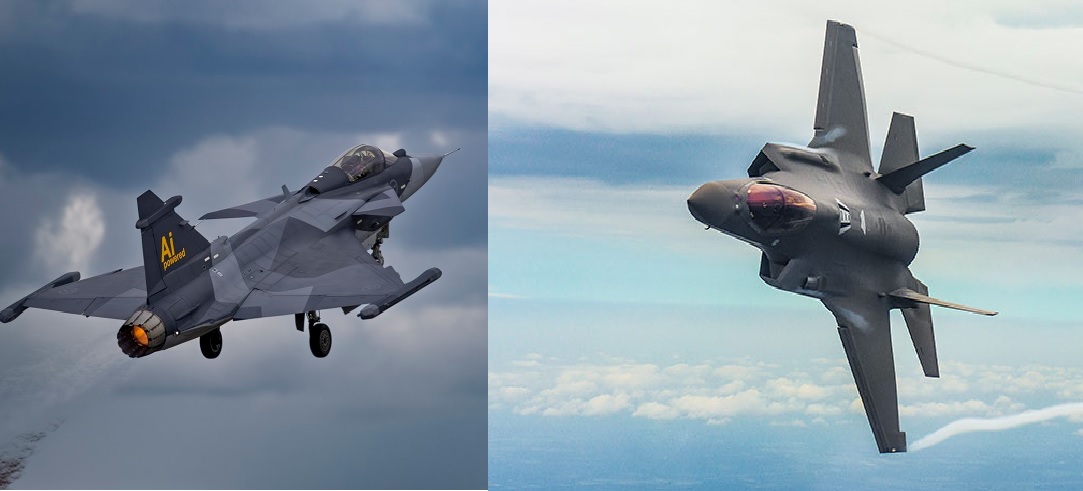
World
OTTAWA — June 01, 2026 : The Canadian government is advancing a revised fighter aircraft procurement strategy for the Royal Canadian Air Force (RCAF), moving toward a mixed fleet of approximately 30 Lockheed Martin F-35 Lightning II stealth fighters and around 60 Saab JAS 39 Gripen aircraft as part of efforts to modernize Canada’s air force while reducing dependence on a single defence supplier. The proposal, led by Prime Minister Mark Carney’s government, marks a significant change from Canada’s previous plan to acquire a sole fleet of 88 F-35 fighter jets. The revised approach is intended to diversify military procurement, strengthen domestic industrial participation, and balance operational requirements with long-term economic considerations. Review of Canada’s Fighter Procurement Strategy Canada originally selected the F-35 programme in 2022 to replace the aging CF-18 Hornet fleet. In early 2023, Ottawa signed a contract valued at approximately C$19 billion for the acquisition of 88 F-35 aircraft. Canada remains committed to the first 16 aircraft already in production, with deliveries scheduled to begin in 2026. However, Prime Minister Carney initiated a procurement review in March 2025 to examine alternatives to exclusive reliance on United States defence suppliers. The reassessment follows broader discussions surrounding defence diversification and trade-related tensions with Washington. The review includes options to reduce the size of the planned F-35 purchase while supplementing the fleet with European-made aircraft, particularly the Swedish Saab Gripen. Proposed Mixed Fleet Structure Under the proposed procurement model, Canada would retain approximately 30 F-35 aircraft to preserve fifth-generation stealth capabilities and maintain interoperability with the United States and NATO allies. Defence planners view the F-35 as essential for fulfilling North American Aerospace Defense Command (NORAD) responsibilities and participating in joint operations requiring advanced stealth, intelligence gathering, and strike capabilities. At the same time, Ottawa is considering the purchase of around 60 Saab Gripen fighters, which are regarded as a lower-cost multirole platform with simplified maintenance requirements and lower operating expenses compared to the F-35. The Gripen is designed to operate from shorter and dispersed runways, including improvised airstrips, giving it flexibility in remote and harsh operating environments such as northern Canada and Arctic regions. Saab’s Manufacturing Proposal in Canada A central part of Saab’s proposal is a commitment to establish a manufacturing and assembly facility in Canada if the Gripen programme is approved. The facility would assemble all Gripen aircraft intended for the RCAF while also supporting long-term maintenance, lifecycle upgrades, and sustainment operations. Saab has proposed technology transfer and intellectual property sharing to strengthen Canada’s domestic aerospace capabilities and allow greater sovereign control over fleet maintenance. Economic projections linked to the proposal estimate that the programme could create up to 9,000 direct and indirect jobs across Canada’s aerospace and defence industries during the life of the programme. Earlier Saab submissions suggested total employment benefits could exceed 12,600 positions when including related programmes such as production support for GlobalEye airborne surveillance aircraft. Potential Support for Ukraine Saab’s proposal also includes using Canadian production facilities to manufacture additional Gripen aircraft intended for Ukraine under future European defence support arrangements. Sweden has committed to supporting future Gripen transfers to Ukraine, with plans involving up to 20 Gripen E/F aircraft through European Union-backed financing mechanisms. Saab Deputy Chief Executive Officer Anders Carp has stated that Canada could serve as a production and export hub for Gripen aircraft designated for Ukraine if Ottawa proceeds with the programme. The Gripen is considered particularly valuable by Ukrainian defence officials due to its ability to operate from dispersed, short, or improvised runways, an operational requirement shaped by continued attacks on conventional airbases during the ongoing conflict. Saab has previously implemented similar domestic production and technology transfer arrangements in Brazil, where local assembly facilities were established for the country’s Gripen fleet. Strategic and Operational Considerations The proposed mixed-fleet structure reflects a broader strategic adjustment by the Carney government aimed at balancing operational effectiveness, industrial benefits, and defence independence. By maintaining a smaller F-35 fleet, Canada would preserve advanced stealth capabilities required for high-end combat operations while ensuring compatibility with NORAD and NATO systems. Meanwhile, a larger fleet of domestically assembled Gripens could reduce operating costs and provide Canada with greater control over aircraft maintenance, spare parts, upgrades, and supply chains. Supporters of the proposal argue that domestic manufacturing would strengthen industrial sovereignty and expand long-term aerospace employment opportunities within Canada. However, some defence analysts have raised concerns regarding the operational complexity of maintaining two separate fighter platforms. Critics argue that a mixed fleet may create additional logistical demands, training requirements, and sustainment costs because of separate maintenance systems and supply chains. Questions have also been raised about the potential impact of reducing Canada’s F-35 fleet on defence integration within NORAD and broader continental defence planning. Decision Timeline Defence Minister David McGuinty confirmed in April 2026 that the government’s procurement review remains active, though no final timeline has been announced for a decision. Government officials and defence stakeholders are expected to assess cost projections, production schedules, industrial benefits, and operational requirements in the coming weeks before any formal contracts are finalized. Prime Minister Carney has stated that Canada’s defence procurement policy must support both national security requirements and domestic economic interests. The final decision is expected to shape the Royal Canadian Air Force’s modernization programme and Canada’s defence partnerships for decades.
Read More → Posted on 2026-06-01 16:11:08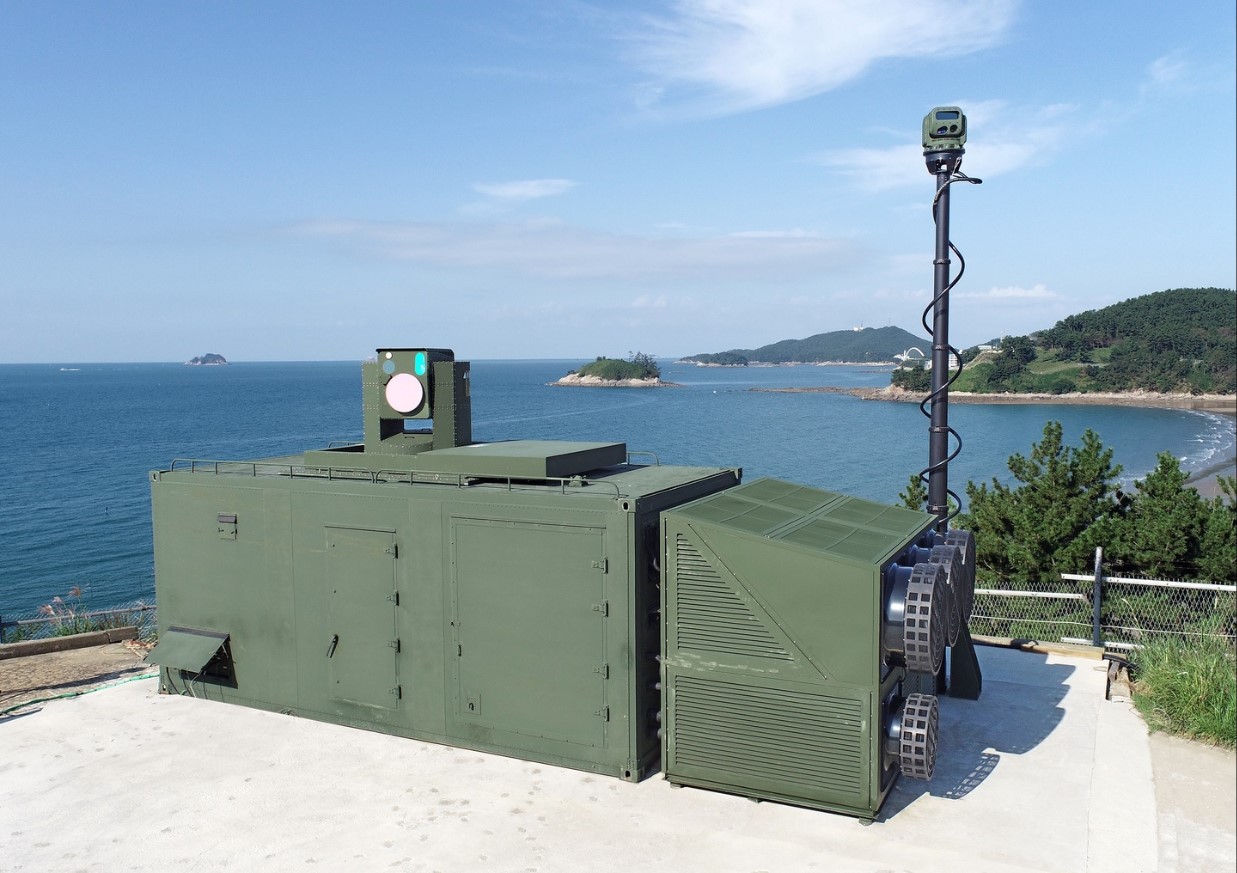
World
SEOUL, — June 01, 2026 : South Korea’s Defense Acquisition Program Administration (DAPA) announced on Monday the successful domestic production of the laser oscillator used in the country’s Cheongwang (Sky Light) Block-I directed energy air defense system, marking a major step in strengthening local defense manufacturing and counter-drone capabilities. The development, finalized in late May, increases the domestic component rate of the Cheongwang system from 76 percent to 90 percent by value. With the achievement, South Korea joins the United States, Israel, China, and Germany as one of the few countries capable of independently manufacturing high-performance laser oscillators, a technology subject to strict export controls. The laser oscillator is the central component of a high-energy laser weapon system. It generates the coherent laser beam and directly affects output power, beam quality, precision, and operational efficiency. Until now, South Korea relied on imported German-made oscillators for the system. To reduce supply dependency and shorten procurement timelines, South Korea pursued a parallel localization strategy during system development. The Agency for Defense Development (ADD) led the project, while Hanwha Systems served as the prototype manufacturer for the domestically developed oscillator. The Cheongwang weapon system itself was jointly developed by ADD and Hanwha Aerospace. According to DAPA, testing showed that the new domestic oscillator improved key performance indicators, including output power, by more than 50 percent compared with the imported system it replaces. Performance testing conducted on the Cheongwang Block-I prototype demonstrated shorter engagement times against aerial threats. Rotary-wing drones, including first-person-view (FPV) systems, saw interception times reduced from 2–4 seconds to 1–2 seconds. For fixed-wing unmanned aerial vehicles (UAVs), interception time decreased from more than 10 seconds to within a few seconds. Cheongwang is a 20-kilowatt-class fiber-optic laser system designed to neutralize small drones and multicopter-type aerial threats at distances of approximately 2 to 3 kilometers (1.2 to 1.9 miles). The system destroys targets by concentrating heat on vulnerable sections and operates silently and invisibly. Unlike missile-based air defense systems, the laser weapon does not require traditional ammunition and can maintain continuous operation as long as electrical power is available, effectively providing an unlimited magazine capacity. DAPA estimates the cost of a single interception at around 2,000 won (approximately $1.33 to $1.50), making it a lower-cost option compared with conventional missile interceptors, which can cost tens of thousands of dollars per engagement. South Korea became the first country to operationally deploy a military high-energy laser weapon after the Cheongwang system entered service in December 2024. Hanwha Aerospace-built units are currently deployed at frontline military positions and key government facilities in central Seoul, including locations near the Ministry of National Defense and the Presidential Office in Yongsan. Following the standardization of defense specifications completed in May 2026, all future mass-produced Cheongwang Block-I systems will incorporate the domestically manufactured laser oscillator. The effort to accelerate deployment and modernization of the system was influenced by growing concerns over aerial incursions from North Korea. In December 2022, five North Korean drones crossed into South Korean airspace, with one briefly entering the no-fly zone in central Seoul near the Presidential Office. The incident highlighted vulnerabilities in defending against low-cost and small unmanned aerial systems and contributed to a faster development and deployment timeline for Cheongwang. In June 2024, South Korea signed a production contract worth approximately 100 billion won (about $72 million) with Hanwha Aerospace, enabling the initial deployment of the system later that year. Jeong Gi-yeong, head of DAPA’s Future Forces Bureau, said the application of more capable domestically produced laser oscillators to the Cheongwang system is expected to strengthen the military’s independent response capabilities against hostile drones and unmanned aircraft threats. Building on the successful localization effort, DAPA has also outlined plans for the next-generation Cheongwang Block-II system. The future program will focus on increasing output power and precision while reducing size and weight to improve mobility. A more compact design is expected to support vehicle-mounted versions, allowing laser-based counter-drone capabilities to expand beyond fixed installations and frontline positions to mobile field units. The localization of the laser oscillator forms part of South Korea’s wider effort to improve self-reliance in critical defense technologies while developing cost-effective responses to evolving aerial threats.
Read More → Posted on 2026-06-01 16:27:49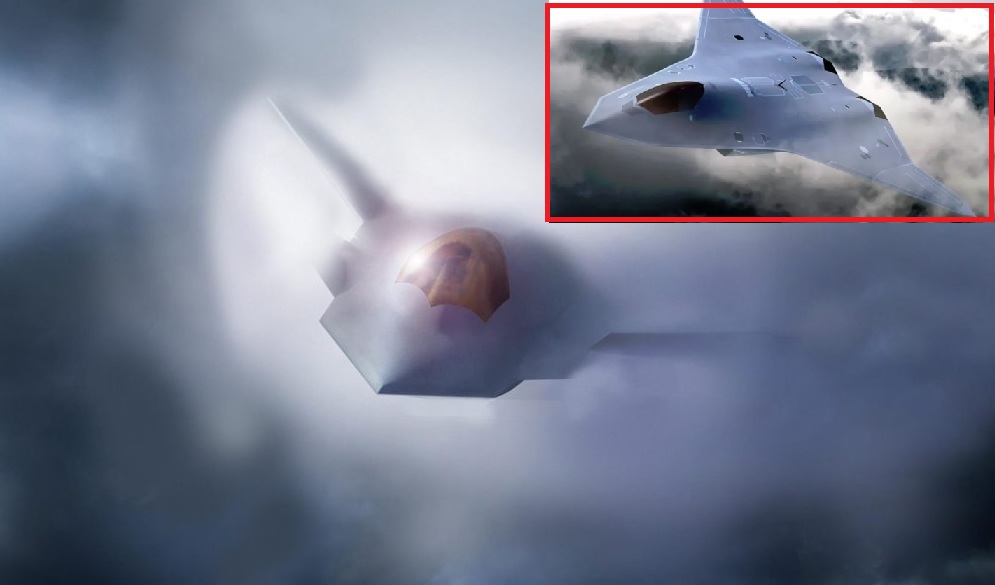
World
WASHINGTON, D.C. — June 01, 2026 : The U.S. Air Force has requested $5.03 billion in Fiscal Year 2027 funding for the Boeing F-47, the country’s first sixth-generation fighter aircraft, marking a major increase in investment as the Next Generation Air Dominance (NGAD) program moves deeper into development. According to budget documents released this week, the funding request represents a 65% increase compared with approximately $3.05 billion allocated to the program in Fiscal Year 2026. The increase reflects the Air Force’s effort to accelerate development of a future replacement for the aging F-22 Raptor and expand long-term air superiority capabilities. F-47 Program Enters Key Development Phase The F-47 program officially entered the Engineering and Manufacturing Development (EMD) phase after Boeing secured the NGAD contract in March 2025 under an agreement valued at more than $20 billion. The contract award marked Boeing’s first clean-sheet fighter aircraft program in decades and established the company as the lead developer of the Air Force’s next-generation combat jet. The EMD phase represents one of the most resource-intensive periods of development and includes system integration, prototype construction, digital engineering, testing, and preparation for operational capability. Of the total $5.03 billion requested for FY2027, approximately $4.92 billion is allocated specifically for direct aircraft development. This includes funding for prototype production, advanced digital design systems, flight testing, and engineering activities required to mature the aircraft before operational deployment. Budget projections indicate annual F-47 spending will remain above $3.2 billion through 2030, with program expenditures expected to peak at around $5.3 billion in FY2028. By the end of FY2027, cumulative spending on the F-47 is projected to reach nearly $8.5 billion, while the broader five-year NGAD development budget stands at approximately $19.6 billion, separate from Boeing’s EMD contract value. Defense analysts note that the annual development cost of the F-47 program alone is comparable to the procurement cost of nearly 60 F-35A fighter aircraft. Development Timeline Extends Into Next Decade Although experimental NGAD-related X-plane demonstrators have reportedly been flying in classified testing since 2020, the operational version of the F-47 remains several years from entering service. The Air Force expects the EMD phase to continue through late 2031, requiring further investment before the aircraft becomes ready for combat deployment. Current planning places the first flight of the finalized F-47 prototype in 2028 or 2029. Air Force Chief of Staff Gen. David Allvin stated in late 2025 that the aircraft remained on track for a first flight target in 2028. At the same time, development of the aircraft’s propulsion system has encountered delays. The Next Generation Adaptive Propulsion (NGAP) program, responsible for producing advanced variable-cycle engines for the F-47, has reportedly accumulated around three years of delays. Engine contractors GE Aerospace and Pratt & Whitney are now expected to complete prototyping work in 2031, raising the possibility that early production aircraft may initially operate using interim propulsion systems before the final NGAP engines become available. Long-Range Capability and Networked Combat Role The F-47 is being designed for long-range operations, particularly in large operational areas such as the Indo-Pacific theater. Program details indicate the aircraft is expected to feature a combat radius exceeding 1,000 nautical miles, significantly greater than the F-22 Raptor’s estimated combat radius of approximately 590 nautical miles and the F-35A’s roughly 670 nautical miles. The aircraft is also expected to sustain speeds exceeding Mach 2 while incorporating advanced stealth characteristics, broadband signature reduction, improved thermal management, and survivability features intended to counter future integrated air-defense systems. Reports further indicate the aircraft may be compatible with the B61 family of nuclear gravity bombs, expanding its mission flexibility. A central feature of the F-47 concept is its integration into a broader “family of systems” operating environment. Rather than functioning independently, the fighter is designed to coordinate with satellites, other aircraft, and highly autonomous Collaborative Combat Aircraft (CCA), commonly described as drone wingmen. The Air Force plans to procure at least two CCA systems for every F-47 fighter, enabling crewed-uncrewed teaming during future combat operations. These autonomous aircraft are expected to support missions ranging from surveillance and electronic warfare to strike operations and force protection. Strategic Pressure From Global Competition The accelerated investment in the F-47 program comes amid growing international competition in advanced military aviation. U.S. defense officials and analysts have increasingly focused on developments in China’s next-generation fighter efforts, including the Chengdu J-36 and Shenyang J-50 programs, which reportedly entered the prototype flight stage in late 2024. Some defense analysts estimate that the F-47 could enter operational service several years behind competing foreign sixth-generation fighter projects, increasing pressure on the Pentagon to maintain development schedules and industrial production capacity. The Air Force internally refers to the F-47 system as “Phoenix,” reflecting its role in maintaining future air dominance against technologically advanced competitors. Procurement Plans and Long-Term Costs The Air Force has outlined plans to acquire at least 185 F-47 fighters over the long term, though some projections place the potential fleet size between 185 and 250 aircraft. When the fighter enters production, the projected unit cost is expected to exceed $300 million per aircraft, roughly three times the procurement cost of an F-35 fighter. Program spending is also expected to rise substantially over time. While development spending alone is projected in the tens of billions of dollars, total program costs, including procurement and long-term sustainment, are expected to reach into the hundreds of billions over the aircraft’s service life. Congressional Review Ahead The FY2027 budget request now moves to Congress for review, where lawmakers will determine final funding levels for the program. The proposal highlights the Pentagon’s growing emphasis on sixth-generation combat aviation as it seeks to modernize the Air Force fleet and sustain operational advantages in future high-intensity conflicts.
Read More → Posted on 2026-06-01 16:51:43
World
TEHRAN / JERUSALEM, — June 1, 2026 : Indirect diplomatic communications between Iran and the United States have stalled after Tehran announced the suspension of message exchanges with Washington, citing Israel’s military operations in Lebanon as a violation of a ceasefire framework established earlier this year. The decision, reported by Tasnim News Agency, comes amid renewed fighting in southern Lebanon and increased Israeli military activity targeting Hezbollah positions. Iranian officials stated that no further diplomatic engagement with the United States would take place until specific conditions are met, including the cessation of Israeli operations and withdrawal from areas Tehran considers occupied. The latest development marks a setback in efforts to reduce tensions after months of regional conflict. According to reports, U.S. and Iranian representatives had continued exchanging proposals through intermediaries regarding a broader ceasefire arrangement and maritime security, although progress remained limited. Israel Expands Military Operations in Lebanon Tensions escalated after the Israel Defense Forces (IDF) launched their deepest ground advance into southern Lebanon in more than two decades, capturing the historic Beaufort Castle and the surrounding strategic ridge. The site, approximately 900 years old, overlooks key areas in southern Lebanon and holds military significance due to its elevated position. Following the advance, the IDF reissued evacuation warnings covering southern Lebanon on Sunday, urging residents to move away from areas expected to face military activity. On Monday, Israeli Prime Minister Benjamin Netanyahu and Defense Minister Israel Katz directed the military to expand strikes into Beirut’s Dahiyeh district, a southern suburb regarded as a Hezbollah stronghold. In a joint statement, Israeli authorities said the decision followed repeated violations of the Lebanon ceasefire by Hezbollah and continued missile and drone attacks targeting Israeli soldiers and northern communities. “Following the repeated violations of the ceasefire in Lebanon by the Hezbollah terror organization and the attacks against our cities and citizens, Prime Minister Benjamin Netanyahu and Defense Minister Israel Katz instructed the IDF to strike terror targets in the Dahiyeh quarter of Beirut,” the statement said. Israeli operations in Beirut had previously remained limited after pressure from the administration of former U.S. President Donald Trump, which sought to maintain conditions favorable for a broader diplomatic understanding involving Iran. However, Israeli officials said a rise in Hezbollah drone and missile attacks prompted renewed military action. Hezbollah Rejects U.S. De-escalation Proposal Diplomatic efforts to reduce hostilities in Lebanon encountered difficulties after Hezbollah reportedly rejected a recent U.S.-backed de-escalation proposal on Monday. According to reports, the proposal required Hezbollah to halt attacks before Israel implemented reciprocal measures. Hezbollah began attacks against Israel on March 2, shortly after the United States and Israel launched a joint air campaign against Iran. Since then, cross-border exchanges between Hezbollah and Israeli forces have continued despite ceasefire efforts. Lebanese Parliament Speaker Nabih Berri, who has acted as an intermediary in negotiations, reportedly conveyed Hezbollah’s position to U.S. officials, emphasizing that any sustainable ceasefire arrangement would require Israel to stop military activity first. Iran Suspends Talks and Raises Ceasefire Concerns Iranian officials maintain that the ceasefire reached between Tehran and Washington on April 8 extended beyond direct U.S.-Iran tensions and included military activity across regional fronts, including Lebanon. While Israeli strikes briefly slowed after the agreement took effect, military confrontations resumed as Israel maintained that operations against Hezbollah were not covered by the U.S.-Iran agreement. Iranian Foreign Minister Abbas Araghchi said on Monday that Tehran views the ceasefire as applicable to all regional fronts. “The ceasefire between Iran and the US is unequivocally a ceasefire on all fronts, including in Lebanon. Its violation on one front is a violation of the ceasefire on all fronts,” Araghchi said in a post on X. Tasnim reported that Iran would not resume diplomatic exchanges with the United States until Israeli military operations stop and forces withdraw from areas in Lebanon and Gaza. Iran’s chief negotiator and Parliament Speaker Mohammad Bagher Ghalibaf accused Washington of failing to uphold commitments related to the ceasefire, citing a U.S. naval blockade of Iranian ports that Tehran says began on April 13. Ghalibaf described the blockade and Israeli escalation in Lebanon as evidence of “US non-compliance with the ceasefire,” adding in a post on X that “every choice has a price and the bill comes due.” Threat of Maritime Disruption Alongside the suspension of diplomatic contacts, Iranian officials and allied groups within the “Resistance Front”, including partners in Yemen, Lebanon, and Iraq, have reportedly discussed plans to increase pressure through maritime chokepoints. The proposed measures include a potential blockade of the Strait of Hormuz and the Bab el-Mandeb Strait, two globally significant maritime routes used for energy exports and international trade. The Strait of Hormuz, located between Iran and Oman, serves as one of the world’s most important oil transit corridors. The Bab el-Mandeb Strait, near Yemen and linking the Red Sea to the Gulf of Aden, is a major commercial route connecting shipping through the Suez Canal. A disruption in either route could affect global energy transportation, shipping schedules, and trade flows, particularly for cargo moving between Asia, Europe, and the Middle East. Separately, U.S. military officials confirmed that American forces intercepted two Iranian ballistic missiles targeting military bases in Kuwait late Sunday night. According to U.S. Central Command, no casualties or damage to personnel were reported. International Response and Humanitarian Concerns The growing regional tensions have prompted an international response. The United Nations Security Council is scheduled to hold an emergency meeting on Monday following requests from international leaders seeking discussions on the expanding conflict in Lebanon and Israel’s continued military operations. Meanwhile, renewed evacuation warnings in southern Lebanon and anticipated strikes near Beirut’s southern suburbs have contributed to additional civilian displacement. Humanitarian agencies estimate that more than one million people have already been displaced in Lebanon since the broader conflict began. Diplomatic uncertainty now surrounds the future of U.S.-Iran engagement, with regional stability increasingly tied to developments in Lebanon, military exchanges involving Hezbollah, and the potential impact of threats to international shipping routes.
Read More → Posted on 2026-06-01 17:21:25
World
WASHINGTON — June 01, 2026 : The United States Army is seeking funding for 2,798 Patriot PAC-3 Missile Segment Enhancement (MSE) interceptor missiles under its Fiscal Year 2027 budget proposal, a procurement effort valued at approximately $12.2 billion that would rank among the largest missile defense acquisitions in the service’s history. The proposal reflects a major shift in US military planning as Pentagon officials seek to strengthen missile defense inventories for prolonged, high-intensity conflicts in which advanced munitions could be consumed at far higher rates than previously anticipated. According to details reported by Army Recognition on June 1, the procurement represents a substantial increase in Patriot interceptor purchases and highlights a growing focus on sustaining air defense operations during extended missile and drone campaigns. Budget Structure and Scale of Procurement The interceptor acquisition forms part of the Army’s broader FY2027 budget request of approximately $252.8 billion, which prioritizes force expansion, modernization programs, industrial base development, and military readiness. Funding for the proposed 2,798 Patriot PAC-3 MSE interceptors would be divided across two budget streams. Approximately $1.3 billion would come through standard discretionary funding, while $10.9 billion would be allocated through mandatory funding, covering 2,554 missiles and requiring separate congressional approval. The scale of the proposal marks a significant increase from previous procurement levels. In comparison, the Army’s FY2026 budget funded 357 PAC-3 MSE interceptors, meaning the FY2027 request would increase purchases by nearly eight times. At an estimated unit cost of approximately $5.3 million per interceptor, the proposal illustrates a broader Pentagon shift toward ensuring sufficient missile inventories for sustained operations rather than preparing primarily for limited engagements or isolated attacks. Military planners increasingly assess that future conflicts may involve repeated and coordinated missile barrages over prolonged periods, making stockpile size as important as interceptor capability. Under such conditions, even advanced missile defense systems could face operational limitations if inventories cannot be replenished rapidly enough. PAC-3 MSE Capabilities and Technology Manufactured by Lockheed Martin, the PAC-3 Missile Segment Enhancement interceptor is the most advanced missile currently deployed within the Patriot air and missile defense system. Unlike older air defense interceptors that rely primarily on blast fragmentation to destroy incoming threats near a target, the PAC-3 MSE uses hit-to-kill technology, neutralizing threats through direct kinetic impact. The interceptor incorporates a larger dual-pulse rocket motor designed to improve range and altitude performance, enhanced maneuverability, and upgraded guidance electronics. While optimized to defeat tactical ballistic missiles, the system also retains the capability to intercept cruise missiles, advanced aircraft, and other airborne threats. Within the Patriot defense architecture, PAC-3 MSE interceptors operate as part of a networked system linking launchers, sensors, radars, and command-and-control systems. The interceptor currently receives targeting information through legacy Patriot radar systems but is expected to benefit from integration with the Lower Tier Air and Missile Defense Sensor (LTAMDS), a next-generation radar developed to improve tracking and targeting performance against complex aerial threats. Lessons from Ukraine and the Middle East Recent combat experience in Europe and the Middle East has played a significant role in shaping the Army’s procurement strategy. Patriot batteries continue to operate as critical elements of United States and allied missile defense networks, protecting military airbases, logistics centers, ammunition depots, command infrastructure, and civilian facilities against missile and drone attacks. In Ukraine, officials have reported successful Patriot interceptions of advanced Russian missile systems, including the Kh-47M2 Kinzhal, demonstrating the system’s ability to engage high-speed aerial threats under combat conditions. At the same time, the conflict has highlighted how quickly advanced interceptor stockpiles can be depleted during sustained operations involving repeated drone and missile strikes. Military assessments have similarly noted operational pressures in the Middle East, where US and allied forces continue to maintain readiness against ballistic missiles, cruise missiles, drones, and other aerial threats requiring constant defensive preparedness. These operational experiences have reinforced Pentagon concerns that advanced capability alone may prove insufficient if interceptor inventories are exhausted during prolonged combat. Focus on Missile Stockpile Sustainability US defense planners increasingly emphasize what military officials describe as “magazine depth” — the ability to maintain sufficient interceptor inventories throughout a conflict. The concept reflects a broader conclusion emerging from recent military operations: effective air defense depends not only on advanced systems but also on the capacity to sustain long-duration operations through adequate stockpiles and industrial production. Ukrainian President Volodymyr Zelenskyy recently highlighted this challenge while urging Washington to authorize licensed domestic production of Patriot interceptors in Ukraine. Zelenskyy stated that monthly production of approximately 60 to 65 anti-ballistic missiles per month remains inadequate given battlefield conditions and called on both previous and current US administrations to expand manufacturing arrangements. Wider Army Air Defense Modernization The Patriot procurement proposal forms part of a broader Army modernization effort aimed at building a layered air and missile defense architecture. Key modernization programs include the Indirect Fire Protection Capability (IFPC), Maneuver-Short Range Air Defense (M-SHORAD), the Terminal High Altitude Area Defense (THAAD), and LTAMDS radar integration. Alongside the Patriot request, the Army’s FY2027 draft budget also includes plans to procure 857 THAAD interceptors as part of efforts to improve layered protection against increasingly sophisticated regional missile arsenals. US military planning has increasingly focused on strengthening defenses for forward operating bases and allied facilities, particularly in regions such as the Indo-Pacific, where officials continue to monitor expanding missile capabilities, including those of the People's Liberation Army Rocket Force. Congressional Approval Ahead The proposed acquisition still requires congressional approval, particularly for the mandatory funding component supporting most of the interceptor purchase. If approved, the $12.2 billion request would provide a major production boost for Lockheed Martin and represent one of the most significant missile defense procurement efforts undertaken by the US Army in decades. The proposal reflects a broader Pentagon assessment that future conflicts are likely to involve sustained missile and drone attacks, requiring not only advanced defensive systems but also sufficient production capacity and large operational inventories to maintain readiness over extended periods.
Read More → Posted on 2026-06-01 17:33:57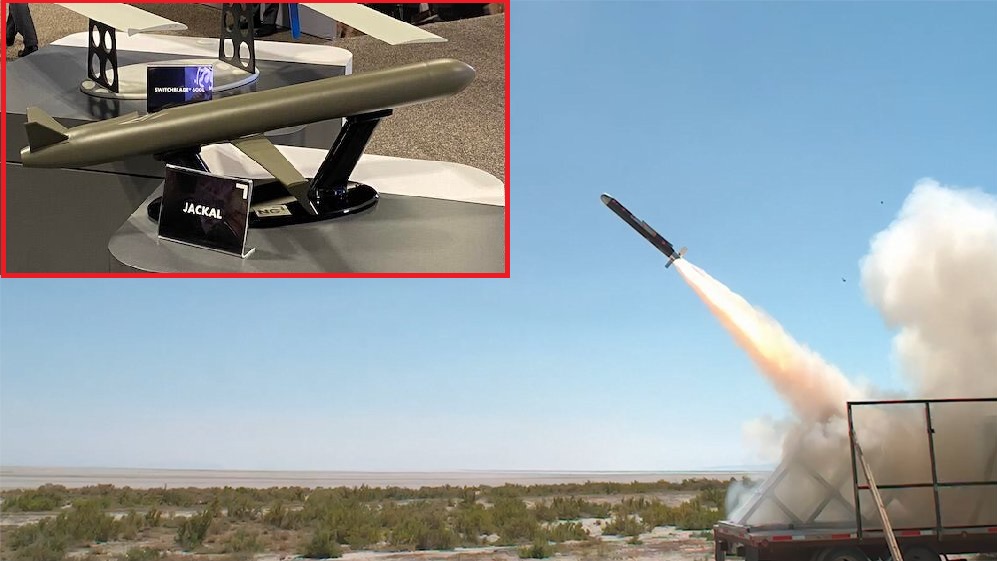
World
WASHINGTON — June 01, 2026 : Northrop Grumman has completed a successful flight test of its Jackal precision strike missile, validating key technologies intended to support the next stage of development for the long-range autonomous strike system. The June 1 test confirmed several critical capabilities, including automated turbojet engine startup, autonomous flight controls, navigation systems, autopilot-controlled flight, and high-speed maneuvering. According to the company, the test demonstrated that the missile’s propulsion, guidance, airframe, and control systems have reached an important level of maturity for continued testing and development toward operational use. The Jackal missile is being developed in partnership with AeroVironment and incorporates avionics and mission control systems refined through the Switchblade 600 program. Designed for operations in contested environments, the missile is intended to provide ground forces with a precision strike capability while reducing dependence on crewed aircraft operating inside heavily defended airspace. Northrop Grumman developed Jackal to bridge the gap between smaller loitering munitions and larger cruise missiles. The system is designed to conduct long-range precision strikes while allowing military units to engage targets from stand-off distances beyond many air defense threat zones. Powered by a fuel-efficient turbojet engine, Jackal can sustain speeds exceeding 300 mph (approximately 600 km/h), enabling rapid engagement of time-sensitive targets. The ground-launched version has a range of up to 100 kilometers, while an air-launched variant extends the range to approximately 125 kilometers. At maximum ground range, the missile can reach targets in roughly 12 to 15 minutes depending on mission conditions. The missile also includes a loiter capability of up to 15 minutes, allowing it to gather intelligence or observe targets before engagement. Its open-architecture design supports modular payloads of up to 10 pounds (4.5 kilograms), enabling configurations for lethal strike missions, electronic warfare, intelligence, surveillance and reconnaissance operations, and non-lethal effects. A key feature of the Jackal system is its autonomous targeting capability. Unlike traditional precision-guided weapons that rely mainly on fixed GPS coordinates, Jackal incorporates artificial intelligence-based algorithms capable of recognizing target characteristics during the final stage of flight. This enables the missile to adapt to changing battlefield conditions, track mobile targets, and select optimal impact points. The system is also designed to operate in GPS-denied and electronically contested environments, reducing vulnerability to jamming and spoofing techniques increasingly used in modern warfare. Another major feature of the missile is its rapid launch capability. The automated turbojet startup system removes the need for complex manual preparation, allowing operators to launch the weapon quickly after a strike order is issued and improving responsiveness against emerging targets. Northrop Grumman states that Jackal can be integrated onto standard light tactical vehicles, with a single platform capable of carrying up to eight launch canisters. This setup allows ground forces to conduct precision strikes across an area of more than 31,000 square kilometers while maintaining mobility and a relatively small logistical footprint. The company confirmed that the Jackal program remains in active development. Future testing will focus on guidance accuracy, target recognition performance, mission effectiveness, and operational integration as the missile moves closer to operational readiness.
Read More → Posted on 2026-06-01 17:43:09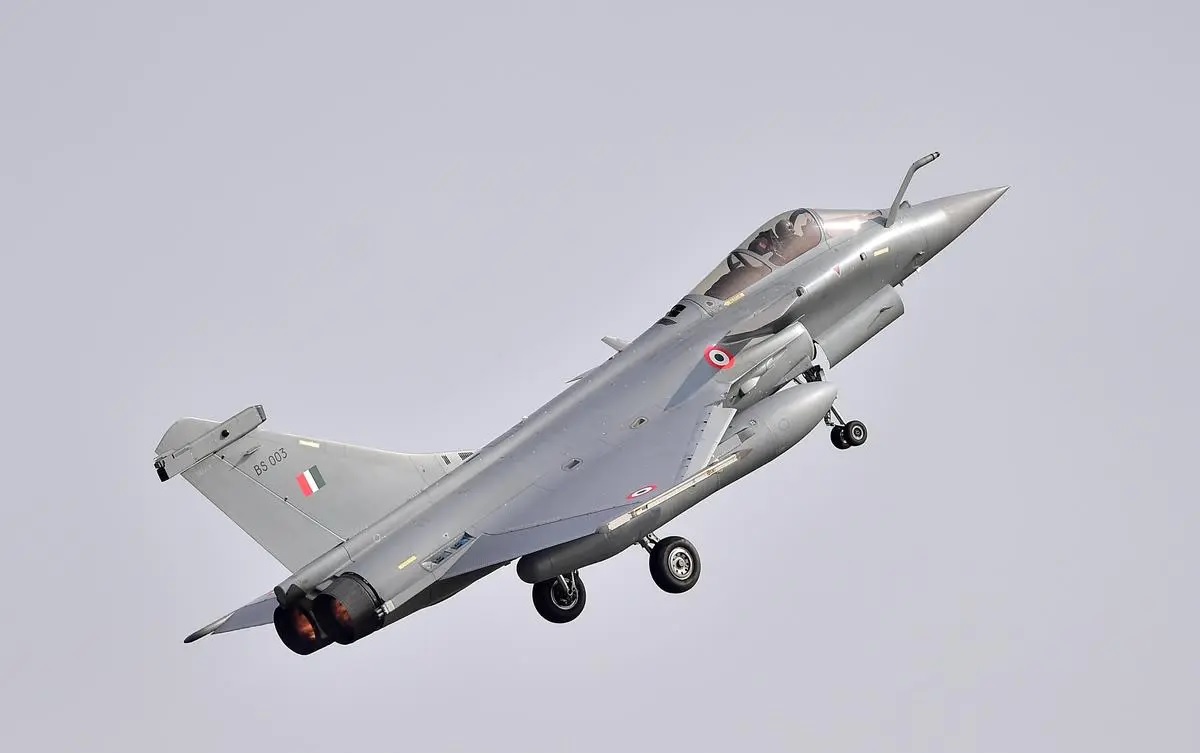
India
NEW DELHI, — June 01, 2026 : India has formally issued a Letter of Request (LoR) to France for the acquisition of 114 Rafale fighter aircraft for the Indian Air Force (IAF), advancing one of the country’s largest military aviation procurement programmes. According to Defence Ministry sources, the request was sent by the Ministry of Defence’s Acquisition Wing following clearance from the Defence Acquisition Council (DAC). The proposed government-to-government deal is estimated at approximately ₹3.25 lakh crore and is aimed at strengthening the Indian Air Force’s combat capabilities while addressing its fighter squadron shortage. France is expected to respond to India’s request within the next two to three months with details related to pricing, availability, logistics support, technology transfer, and manufacturing arrangements. Formal negotiations are expected to begin after the response, with officials anticipating completion within the next year. Under the proposed programme, 94 of the 114 Rafale jets are planned to be manufactured in India through a partnership between Dassault Aviation and an Indian defence company, while the remaining aircraft will be delivered directly from France in fly-away condition. The programme would mark the first time Rafale fighter jets are manufactured outside France. Defence Ministry sources said the project is expected to achieve nearly 50 percent localisation and support domestic aerospace manufacturing under the Make in India initiative. A key feature of the proposal is India receiving authority and technical access to integrate indigenous weapon systems onto the aircraft. This would allow future integration of Indian-made systems such as the Astra and BrahMos-NG missiles. The acquisition comes as the Indian Air Force continues to face a shortage of fighter squadrons. The IAF is currently operating around 29 fighter squadrons against a sanctioned requirement of 42.5 squadrons, making additional fighter inductions important for maintaining operational capability. The Indian Air Force currently operates 36 Rafale aircraft acquired under a 2016 agreement with France. India has also ordered 26 Rafale Marine aircraft for the Indian Navy, with deliveries expected to begin in 2028 for carrier operations. If the proposed acquisition is finalised, the total number of Rafale aircraft in Indian military service would increase to 176. Defence officials have also indicated that the Navy has expressed interest in acquiring an additional 31 Rafale Marine aircraft in the future, which could raise India’s Rafale fleet to more than 200 aircraft. Officials believe operating a larger standardised Rafale fleet across the armed forces could improve logistics, maintenance, training, and operational support efficiency over the long term. The Rafale is a 4.5-generation multirole fighter aircraft capable of conducting air superiority, strike, reconnaissance, and maritime missions. Indian Rafales currently operate with weapons including Meteor, SCALP, and MICA missile systems. Officials said deliveries under the new programme could begin around three-and-a-half years after the contract is finalised. The development comes during a period of high-level India-France defence engagement. Air Chief Marshal AP Singh is currently visiting France for discussions with French defence officials and visits to facilities operated by Dassault Aviation and missile manufacturer MBDA. The Rafale programme is also expected to feature prominently during Prime Minister Narendra Modi’s scheduled visit to France in mid-June as both countries continue to expand defence and industrial cooperation.
Read More → Posted on 2026-06-01 17:54:42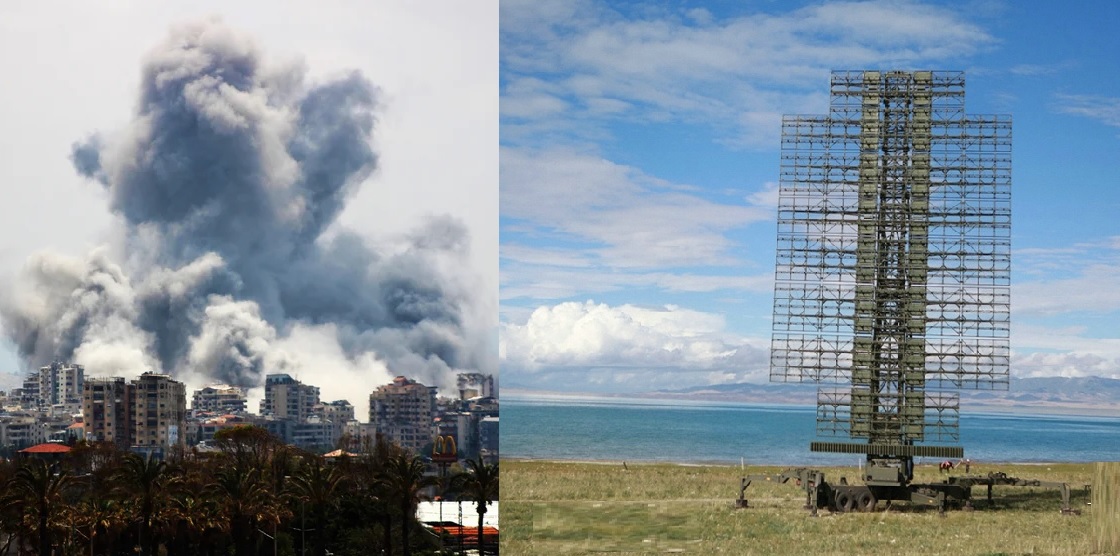 U.S. Destroys Iranian Radar and Air Defense Sites on Goruk and Qeshm Islands in Self-Defense Strikes
World
WASHINGTON — June 01, 2026 : The United States military carried out what it described as targeted “self-defense strikes” against Iranian radar, air defense, drone command-and-control, and military infrastructure on Goruk and Qeshm islands on May 31, following the reported downing of an American MQ-9 surveillance drone near the Strait of Hormuz. According to U.S. Central Command (CENTCOM), the operation was launched in response to what Washington said was Iran’s targeting of a U.S. drone operating in international airspace. CENTCOM stated that the strikes focused on facilities believed to be involved in threatening U.S. forces and maritime traffic in the region, including Iranian air-defense assets, drone control infrastructure, and radar systems. Defense reports indicate that among the primary targets on Goruk Island were Chinese-supplied military systems, including the JY-27A long-range radar and the HQ-9 surface-to-air missile defense system. Reports circulating after the operation claimed that both systems were destroyed during the strikes. However, neither the United States nor Iran has officially confirmed the destruction of these specific systems. The JY-27A is a Chinese-made Very High Frequency (VHF) radar system designed for long-range surveillance and marketed as capable of detecting stealth aircraft. Defense analysts said the radar was supplied to Iran to strengthen monitoring capabilities around the Strait of Hormuz and improve detection of advanced military aircraft operating in the region. Several defense reports and intelligence assessments have suggested that the U.S. operation involved F-35 Lightning II stealth fighter jets, although the Pentagon has not officially disclosed the aircraft used in the mission. According to reports circulating among defense analysts, the JY-27A radar did not detect the approaching aircraft during the strike. The reports further stated that the aircraft involved in the operation were able to bypass Iranian radar coverage and target military infrastructure on Goruk Island, including air-defense systems, a drone ground control station, and two one-way attack drones before a coordinated response could be initiated. Independent verification of these claims remains pending. Goruk Island and Qeshm Island hold strategic importance due to their location near the Strait of Hormuz, a critical maritime route through which a significant portion of global energy shipments passes. Iran has developed radar, missile, drone, and surveillance infrastructure across the area to monitor military and commercial activity and strengthen coastal defense capabilities. The reported destruction of the JY-27A radar and HQ-9 air-defense system has also drawn attention to the effectiveness of modern air-defense systems when operating against advanced stealth aircraft. Analysts noted that the incident may lead to closer examination of the operational performance of radar and missile defense systems supplied for counter-stealth roles, though official assessments have not yet been released. The strikes took place amid heightened tensions between Washington and Tehran in and around the Strait of Hormuz. Following the U.S. operation, Iran’s Islamic Revolutionary Guard Corps (IRGC) announced that it had launched a retaliatory strike targeting an undisclosed air base that it claimed had supported the U.S. mission. At the same time, Kuwait activated air-defense systems after reports of incoming drones and projectiles in regional airspace. Kuwaiti authorities also implemented precautionary flight diversions as a security measure. Despite the recent military exchanges, diplomatic discussions aimed at reducing tensions and ensuring maritime security in the Strait of Hormuz are continuing. No formal agreement or resolution has been announced so far, while independent verification of several battlefield claims from both sides remains ongoing.
Read More → Posted on 2026-06-01 18:07:28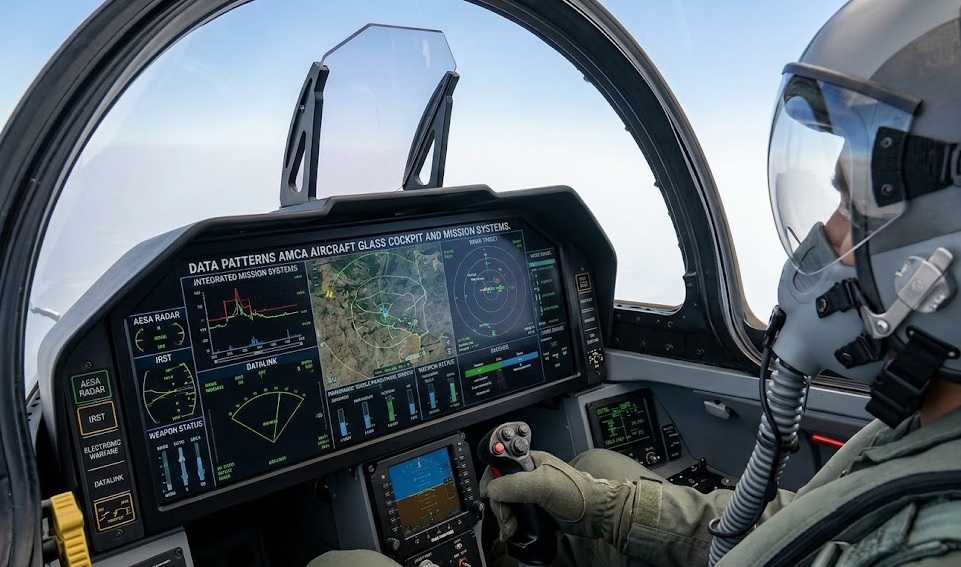
India
CHENNAI — June 01, 2026 : Data Patterns (India) Limited has confirmed that cockpit and mission-system technologies being developed for the Light Combat Aircraft (LCA) Tejas Mk2 programme will directly support India’s fifth-generation Advanced Medium Combat Aircraft (AMCA), creating a technological link between the two indigenous fighter programmes. The company is developing advanced avionics, smart cockpit systems, mission computers, display technologies, and sensor-fusion architecture for the Tejas Mk2. According to industry reports, several of these systems are being designed for future scalability, allowing them to be adapted for the AMCA as development progresses. For the Tejas Mk2 programme, Data Patterns is working on a next-generation glass cockpit architecture featuring high-brightness rugged multifunction displays (MFDs), digital mission-management systems, pilot-machine interfaces, and integrated sensor-fusion capabilities intended to improve pilot situational awareness during operations. The cockpit systems include custom LED backlights, compatibility with Night Vision Imaging Systems (NVIS), and compliance with military standards such as MIL-STD-810 and DO-178B. The company is also integrating digital flight-control infrastructure and multi-sensor data fusion technologies for the aircraft. The avionics and cockpit architecture developed for the Tejas Mk2 are expected to provide the foundation for the AMCA’s cockpit environment, mission-management systems, and sensor-processing framework. By adapting tested technologies from the Tejas Mk2, the Aeronautical Development Agency (ADA) and industry partners aim to reduce development risks, shorten integration timelines, and support the AMCA’s network-centric warfare and stealth requirements. The Tejas Mk2 is considered an important technology bridge toward the AMCA programme. The aircraft is a larger and more capable evolution of the Tejas Mk1A, featuring increased payload capacity, greater combat radius, enhanced electronic warfare systems, and more advanced sensors. The AMCA is being developed as a twin-engine, stealth-capable multirole fighter designed for air-superiority, deep-strike, suppression of enemy air-defence, and electronic warfare missions. The aircraft is expected to feature internal weapon bays, sensor fusion, indigenous mission avionics, advanced mission computers, and integrated data-link systems. The cockpit and mission-system development forms part of the broader ₹15,000 crore AMCA prototype programme. Data Patterns, along with other private-sector defence firms, will work with the Aeronautical Development Agency (ADA) and the Defence Research and Development Organisation (DRDO) to support the construction of five flying prototypes and one structural test aircraft. A new greenfield manufacturing facility is being established in Puttaparthi, Andhra Pradesh, to support integration and testing activities for the AMCA programme. The Defence Ministry has issued a Request for Proposal (RFP) for AMCA prototype development and manufacturing, with multiple Indian private defence firms participating under the programme managed by ADA within the DRDO framework. The Tejas Mk2 is expected to make its first flight in 2026, while the AMCA programme aims for prototype rollout by late 2026 or early 2027, followed by a maiden flight in 2028. Serial production of the aircraft is targeted for the mid-2030s. The use of common technologies across the Tejas Mk2 and AMCA programmes is expected to standardise key avionics systems, simplify testing and certification, and improve long-term maintenance and operational logistics for future Indian Air Force fighter fleets.
Read More → Posted on 2026-06-01 18:14:42
World
KYIV — June 01, 2026 : Recent footage broadcast by CNN has provided a rare look inside a forward command post operated by Ukraine’s Main Directorate of Intelligence (GUR), revealing the use of an AI-powered air attack monitoring and mission-analysis system known as PRISMA. Developed in cooperation with US technology company Palantir Technologies, the software is being used to coordinate and monitor long-range drone operations targeting locations deep inside Russian territory. The footage marks the first visual confirmation of PRISMA’s operational deployment after Ukrainian officials announced the platform in early May following meetings between Ukrainian Deputy Prime Minister and Digital Transformation Minister Mykhailo Fedorov and Palantir CEO Alex Karp, where both sides discussed expanding artificial intelligence support for Ukraine’s defense operations. Inside Ukraine’s Decentralized Drone Command Network CNN journalists were granted access to a GUR deep-strike unit preparing unmanned aerial vehicles (UAVs) for a nighttime launch. Video from the command post showed operators monitoring real-time maps, drone flight paths, target locations, battlefield intelligence, and air-defense data processed through AI-assisted systems. The unit commander, identified by the call sign “Vector,” said the GUR operates through a decentralized command structure rather than centralized operational hubs. “We don't have any common centers and we use dozens of places,” Vector said. According to Vector, this structure allows operations to continue even if one command node is disrupted, as control can be transferred to other locations without interrupting active drone missions. How the PRISMA System Supports Drone Strike Planning According to CNN footage and related reports, PRISMA is designed to track and coordinate thousands of drones through a single interface by combining large volumes of battlefield data. The platform integrates real-time battlefield intelligence, drone telemetry, satellite imagery, reconnaissance reports, radar emissions, target coordinates, and previous mission data into one operational system. By analyzing thousands of variables, the software identifies vulnerabilities in Russian air-defense networks, evaluates interception points from previous drone waves, studies air-defense coverage, and calculates flight routes intended to reduce exposure to air defenses and electronic warfare systems. Defense analysts describe such platforms as part of a broader shift toward AI-assisted battlefield management, allowing commanders to process operational data more quickly and support mission planning. Use of Strike Drones and Decoy UAVs Vector said Ukrainian operations frequently combine armed strike drones with unarmed decoy UAVs to improve mission effectiveness. While some drones carry payloads to target anti-aircraft systems and strategic infrastructure, others are flown without weapons to map radar coverage, identify defensive patterns, and trigger enemy interception systems, helping reveal weaknesses and deplete missile inventories. During the night covered in the CNN report, the GUR unit reportedly prepared approximately 200 drones for coordinated launch from multiple locations. Integration Into Ukraine’s Broader Defense Strategy The deployment of PRISMA aligns with a broader strategy outlined by Mykhailo Fedorov, structured around air, land, and economic domains. Within the economic domain, Ukraine has prioritized long-range strikes targeting infrastructure linked to Russia’s military economy, including oil refineries, aviation facilities, logistics centers, and defense-related industrial sites. Ukrainian officials say AI-assisted systems are intended to improve operational coordination and help commanders process battlefield information more efficiently. Palantir’s Role in Ukraine’s Defense Technology Since 2022, Palantir Technologies has provided Ukraine with intelligence-fusion, battlefield decision-support, satellite imagery processing, and data-analysis tools. The PRISMA platform represents a specialized extension of this partnership, supporting battlefield intelligence analysis, route optimization, target assessment, mission planning, and coordination of large-scale drone operations.
Read More → Posted on 2026-06-01 18:20:09
World
Washington — June 02, 2026 : The United States Navy officially accepted delivery of the guided-missile destroyer USS Patrick Gallagher (DDG 127) on May 28, 2026, more than two months ahead of schedule. Constructed by General Dynamics Bath Iron Works in Maine, the vessel becomes the 77th Arleigh Burke-class destroyer and the final ship built under the Flight IIA configuration. The delivery marks the formal transfer of the ship from the shipbuilder to the Navy and concludes production of the Flight IIA variant, before the Navy transitions to the newer Flight III design for future destroyers. Construction Timeline and Program Background Bath Iron Works received the contract to build USS Patrick Gallagher on September 28, 2017. Construction began on November 9, 2018, while the keel was laid on March 30, 2022, marking a major milestone in the ship’s assembly. The destroyer was christened on July 27, 2024, in a ceremony attended by the family of its namesake. Patrick Gallagher’s sisters served as ship sponsors and officially christened the vessel in his honor. USS Patrick Gallagher is the final Flight IIA destroyer in the long-running Arleigh Burke-class program, one of the U.S. Navy’s primary multi-mission surface combatant programs. Future destroyers will be built under the Flight III configuration, which introduces upgraded systems and enhanced operational capabilities. Accelerated Sea Trials Enabled Early Delivery The ship departed Bath Iron Works on April 27, 2026, to begin builder’s sea trials, which assessed propulsion systems, maneuverability, combat systems, electrical performance, and overall ship readiness. According to Navy officials, the early handover was enabled through an optimized sea trial process that reduced the time between testing phases. During a streamlined testing period, USS Patrick Gallagher completed evaluations of hull, mechanical, electrical, and combat systems in sequence. The destroyer also conducted a scheduled stop in Portland, Maine, to facilitate crew rotations during testing. Officials stated that the vessel demonstrated an outstanding material condition during trials, enabling acceptance ahead of schedule while maintaining required performance and safety standards. Capt. Jay Young, program manager for the DDG-51 destroyer program, credited coordination between the Navy and Bath Iron Works for supporting the ship’s accelerated delivery timeline. Additional Time for Crew Training and Readiness Because the destroyer was delivered ahead of schedule, the Navy will gain additional time to prepare the ship for operational deployment. The extended preparation period will support crew familiarization, operational training, certification, systems testing, and integration activities before the vessel enters active service. Officials noted that the additional preparation time will contribute to fleet readiness before the destroyer joins front-line operations. Named After a Decorated Vietnam War Marine USS Patrick Gallagher is named after United States Marine Corps Corporal Patrick Gallagher, an Irish-born Marine who later served during the Vietnam War. Gallagher received the Navy Cross for exceptional heroism after saving fellow Marines during combat by jumping on an enemy grenade and throwing it into a nearby river, preventing casualties among his unit. He was later killed in action approximately one year after the incident for which he received the award. The destroyer’s christening ceremony in July 2024 formally recognized his service and sacrifice, with his sisters serving as ship sponsors. Ship Specifications and Combat Capabilities USS Patrick Gallagher is a Flight IIA Arleigh Burke-class guided-missile destroyer designed for missions including air and missile defense, anti-submarine warfare, surface strike operations, maritime security, and fleet escort duties. The vessel measures 509.5 feet (155.3 meters) in length and has a full-load displacement of 9,200–9,500 tons. Power is provided by four General Electric LM2500 gas turbines, producing more than 100,000 shaft horsepower and enabling speeds exceeding 30 knots. The destroyer is equipped with a 96-cell Mk 41 Vertical Launch System (VLS) capable of launching Tomahawk cruise missiles, Standard Missile interceptors, and other missile systems. Additional armament includes a 5-inch Mk 45 naval gun, torpedoes, close-in defensive systems, and facilities for two MH-60R Seahawk helicopters through an onboard hangar and flight deck. The ship operates with a crew of approximately 329 personnel. Flight IIA destroyers also incorporate helicopter facilities, upgraded computing systems, radar improvements, and the Aegis combat system, designed to improve detection, targeting, and response times against modern air and missile threats. Fleet Role and Transition to Flight III Destroyers USS Patrick Gallagher will be homeported in Norfolk, Virginia, where it will join the Navy’s destroyer fleet. The ship enters service as the Navy continues transitioning toward the Flight III configuration, which includes the AN/SPY-6 radar and additional combat system upgrades aimed at improving detection, tracking, and missile defense performance. The early delivery of USS Patrick Gallagher reflects continued efforts to improve production efficiency and fleet readiness during the transition from Flight IIA to Flight III destroyers.
Read More → Posted on 2026-06-02 13:45:35
World
PARIS — June 02, 2026 : European defence technology company Helsing has officially unveiled Area 9, a new advanced research division focused on artificial intelligence (AI) and autonomous systems, alongside the launch of RX-1, the company’s first robotics research platform designed and manufactured entirely in Europe. The announcement, made on 1 June 2026, marks Helsing’s expansion beyond aviation and aerospace software into field robotics. The initiative reflects a broader European effort to strengthen domestic capabilities in next-generation defence technologies and reduce reliance on non-European systems. Area 9 Established to Translate Research into Operational Systems Area 9 will function as Helsing’s dedicated research division under the leadership of Chief Scientist Antoine Bordes. The unit has been established to identify high-impact scientific and engineering opportunities and transform advanced research in AI and autonomous systems into deployable technologies. The division will operate as an internal incubator for experimental programmes, focusing on long-term projects while maintaining pathways toward practical defence applications. Helsing describes Area 9 as an effort to bridge the gap between research and operational military systems. Speaking during the launch, Bordes stated that changing battlefield conditions increasingly require technologies capable of operating in hazardous environments without exposing personnel to unnecessary risk. According to him, Area 9 aims to invest in systems capable of functioning effectively in such settings. One of Area 9’s earliest achievements has been the development of Centaur, an AI-based pilot software system designed for air combat operations. Centaur AI and Development of the CA-1 Europa Centaur uses scaled reinforcement learning, a machine-learning method in which the system learns through repeated simulated trial-and-error scenarios rather than relying solely on predefined programming. The AI processes radar, sensor, and tactical information to improve decision-making in combat environments. According to Helsing, Centaur demonstrated advanced beyond-visual-range (BVR) manoeuvre capabilities in simulations and live testing. In 2025, the system was integrated into a Saab JAS 39 Gripen E fighter aircraft during tests above the Baltic Sea under Project Beyond, a collaboration between Helsing and Saab supported by the Swedish government. During the trials, the AI reportedly controlled the aircraft for portions of the flight, executed manoeuvres against other aircraft, and provided firing recommendations to the pilot. Helsing stated that the tests demonstrated the ability of AI systems to support high-speed operational decision-making in complex air combat scenarios. Centaur now serves as the technological foundation for the CA-1 Europa, an autonomous uncrewed combat aerial vehicle (UCAV) under development by Helsing alongside partners including Grob Aircraft, HENSOLDT, and other European aerospace firms. The CA-1 Europa is being developed as a high-subsonic combat aircraft in the 3-to-5 tonne class, designed for multi-role operations, deep-strike missions, and swarm-based operations in contested environments. It will feature an internal weapons bay, electronic warfare systems, and the capability to operate independently or alongside crewed and uncrewed assets. Production-ready variants are targeted for operational availability within the next several years. RX-1 Introduced as Europe’s Robotics Research Platform RX-1 is Area 9’s first major ground robotics programme, a quadrupedal robotics platform engineered for field research and outdoor autonomy. Designed as a European alternative to robotics platforms largely manufactured in the United States and China, the system is intended for real-world field operations. Helsing stated that RX-1 has been developed for speed, strength, environmental durability, and operation in difficult outdoor settings, including uneven and debris-filled terrain. The platform is intended to support research into autonomous mobility in unpredictable environments. The company designed and manufactured the platform entirely in Europe, including key components such as actuators, which are responsible for joint movement, balance, and mechanical force generation. According to Bordes, Helsing’s robotics team designed RX-1 to withstand demanding outdoor environments while serving as a common research platform for institutions across Europe. Hardware and Software for Autonomous Operations Helsing describes RX-1 as a complete robotics research stack rather than a remotely operated machine. The system combines a physical robotic chassis with an integrated software environment, allowing researchers to test and refine advanced autonomy algorithms in real time. The platform processes information from onboard sensors, including cameras and LiDAR systems, through onboard computing systems to understand terrain and environmental conditions. This enables the robot to adjust movement, recognize obstacles, maintain stability, and autonomously navigate unstructured outdoor environments. The RX-1 platform has also been designed to support research in perception systems, locomotion, navigation, autonomous decision-making, and robotic mobility. Key features include a fully integrated European hardware and software stack, environmental durability, and optimisation for robotics and AI experimentation in real-world conditions. Academic Partnerships with ETH Zurich and INRIA Paris To accelerate development in field robotics and autonomous systems, Helsing has announced partnerships with research institutions across Europe. The first two collaborations involve the robotics group at ETH Zurich, led by Professor Marco Hutter, and the French national research institute INRIA Paris. Both organisations will receive RX-1 systems for advanced robotics research. Professor Hutter stated that RX-1 provides an advanced European-developed hardware platform for field robotics research and said the collaboration with Area 9 would contribute to expanding capabilities in outdoor autonomy. Researchers at ETH Zurich and INRIA Paris are expected to use the system to improve autonomous navigation, perception systems, locomotion, and machine intelligence in outdoor environments. Strategic Importance and European Technological Independence The launch of Area 9 and RX-1 aligns with a broader European emphasis on strategic autonomy in defence, robotics, and artificial intelligence. European governments and defence firms have increasingly prioritised domestic capabilities to reduce dependence on external supply chains for advanced systems and sensitive technologies. By developing software platforms such as Centaur and physical systems including RX-1 within Europe, Helsing aims to establish an integrated domestic technological ecosystem capable of supporting future defence requirements. The company stated that this approach enables research, development, manufacturing, and iterative improvements to remain within Europe while providing institutions and industrial partners access to next-generation autonomous technologies. The launch of Area 9 and RX-1 represents both a technological expansion for Helsing and a broader effort to strengthen Europe’s long-term capabilities in autonomous systems across air and land operational domains.
Read More → Posted on 2026-06-02 13:58:52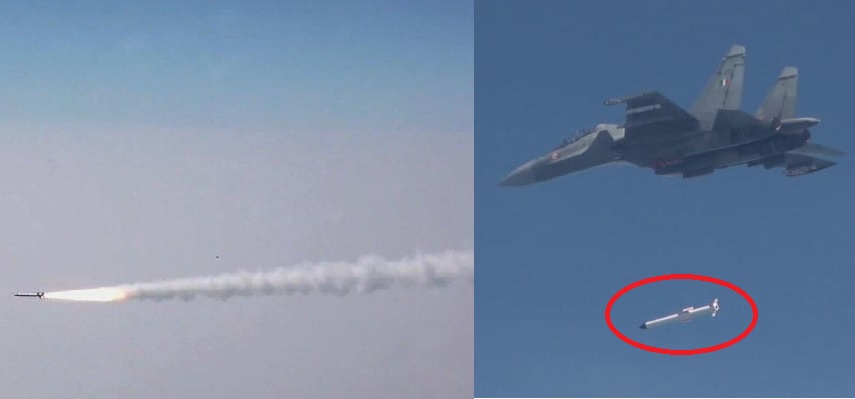
India
NEW DELHI — June 02, 2026 : The Defence Research and Development Organisation (DRDO) and the Indian Air Force (IAF) have successfully conducted a flight test of the indigenous RudraM-II air-to-surface missile, strengthening India’s efforts to expand domestically developed precision-strike capabilities. The missile was test-fired on May 29, 2024, from a Su-30MKI fighter aircraft under challenging release conditions off the coast of Odisha. According to official information, the missile achieved a direct hit on its intended target, while all mission objectives were completed successfully. Flight Test Conducted Under Extreme Release Conditions The flight trial was carried out at the Integrated Test Range (ITR) in Chandipur, Odisha, where the missile’s performance was continuously monitored through a network of electro-optical systems, radars, telemetry stations, and down-range tracking ships. Officials stated that the collected flight data confirmed the missile’s operational performance under demanding release conditions from the Su-30MKI platform. The test validated the RudraM-II’s solid-propulsion system along with its control mechanisms, navigation systems, and guidance algorithms. The successful trial also demonstrated the missile’s ability to maintain accuracy and operational reliability during long-range precision strike missions. RudraM-II Designed for Suppression of Enemy Air Defences RudraM-II is an indigenously developed next-generation anti-radiation missile designed to detect, track, and destroy enemy radar systems, communication nodes, and air-defence assets that emit radio-frequency signals. The missile is intended to strengthen the IAF’s Suppression of Enemy Air Defenses (SEAD) capability by targeting hostile tracking and targeting systems from long stand-off distances. By neutralising radar and communication infrastructure, RudraM-II enables friendly aircraft to operate with reduced exposure in contested airspace. The missile can also engage targets even if enemy radar systems are switched off after detection, improving operational effectiveness against modern air-defence tactics. Technical Specifications and Operational Features RudraM-II is powered by a solid-propellant motor and is capable of reaching speeds of up to Mach 5.5, enabling rapid engagement of high-priority targets. The missile has an estimated strike range of approximately 300–350 kilometres and can reportedly detect hostile radio-frequency emissions from distances exceeding 100 kilometres. Weighing around 800 kilograms, RudraM-II carries a 200-kilogram warhead designed to deliver penetration and fragmentation effects against reinforced radar shelters, communication systems, and soft-skinned antenna infrastructure. To improve engagement flexibility, the missile incorporates advanced multi-mode guidance systems supporting both Lock-On-Before-Launch (LOBL) and Lock-On-After-Launch (LOAL) modes. These capabilities allow pilots to engage targets either before launch or after missile deployment depending on operational requirements. The missile is additionally equipped with a passive homing head and an Imaging Infrared (IIR) seeker, enabling continued target engagement even if hostile radar emissions are discontinued to avoid detection. Potential Replacement for Kh-31 Missile Fleet RudraM-II is expected to gradually replace the Russian-origin Kh-31 anti-radiation missile currently integrated into the IAF’s Su-30MKI fleet. While the missile has been primarily developed for deployment from the Su-30MKI fighter platform, future integration with aircraft such as the Mirage 2000 remains a possibility. The missile can reportedly be launched from altitudes ranging between 3 and 15 kilometres, increasing mission flexibility across different operational conditions. Part of India’s Broader Indigenous Missile Programme The RudraM-II programme forms part of India’s wider effort to expand indigenous air-launched precision weapon systems. Earlier variants in the RudraM family, including RudraM-I, have undergone testing and entered service, while development efforts continue on RudraM-III, which is expected to provide extended strike range and enhanced operational capability. The successful test of RudraM-II represents an important step toward operational readiness and future induction into service. Officials Congratulate DRDO and IAF Defence Minister Rajnath Singh congratulated the DRDO, the IAF, and industry partners involved in the programme following the successful test. DRDO Chairman Dr. Samir V. Kamat also acknowledged the achievement and highlighted its contribution to India’s efforts to strengthen indigenous defence technologies. With successful validation of its propulsion, guidance, and targeting systems, RudraM-II is expected to contribute to the IAF’s long-range precision strike capability while supporting India’s objective of reducing dependence on imported defence systems.
Read More → Posted on 2026-06-02 14:16:08
World
NEW YORK — June 02, 2026 : Israeli defense technology company Smart Shooter has secured a $1.8 million contract to supply the U.S. Navy with its SMASH 2000LE fire control systems, marking the company’s first major procurement agreement with the naval service and completing its operational integration across all four major branches of the U.S. military. The company announced on June 1 that the Navy agreement follows earlier procurement contracts with the U.S. Army, Marine Corps, and Air Force over the past year. Deliveries of the systems are scheduled for the second half of 2026. The contract was awarded by the Naval Surface Warfare Center (NSWC), the U.S. Navy’s principal institution for research, engineering, testing, and development of surface warfare systems. Procurement will be managed through Atlantic Diving Supply (ADS), an authorized tactical equipment and logistics provider for the U.S. Department of Defense, enabling faster delivery through an existing acquisition framework. Navy Procurement Reflects Growing Counter-Drone Focus The Navy’s adoption of the SMASH 2000LE, also designated in some configurations as the SMASH 3000SA, aligns with a broader U.S. defense effort to strengthen counter-drone capabilities for military personnel and force protection teams. The increasing use of small unmanned aerial systems (sUAS) in modern conflicts has created new operational challenges for conventional infantry and security forces. Unlike traditional rifle training, which is largely designed for stationary or slow-moving ground targets, engaging small aerial threats requires rapid tracking and precise ballistic calculations. Military assessments have shown that small drones can move unpredictably and often reach speeds of up to 20 meters per second, making them difficult to engage using standard optics and conventional shooting techniques. The growing use of weaponized and reconnaissance drones has increased demand for kinetic counter-UAS systems capable of improving engagement accuracy. How the SMASH 2000LE Fire Control System Works The SMASH 2000LE is an external optical fire control system mounted on standard service rifles, including weapons such as the M4 carbine. Known in Hebrew as “Pigyon,” the system uses artificial intelligence, computer vision, and ballistic processing to improve firing precision. The system locks onto a target and processes variables including target speed, trajectory, distance, wind conditions, and humidity through an onboard dual-core computer. During operation, the user tracks a drone or moving target through the optic while pulling the trigger. However, the weapon does not discharge immediately. The fire control mechanism electronically delays firing until the system calculates the highest probability of a successful hit, reducing missed rounds and improving ammunition efficiency. The system also provides visual aiming support through a digital display, including indicators such as a red dot or targeting cross, allowing operators to maintain continuous tracking of moving aerial targets. System Specifications and Features According to Smart Shooter, the SMASH 2000LE is designed primarily for kinetic counter-unmanned aerial system (C-UAS) missions while also improving accuracy against ground threats. The system offers an effective engagement range of up to 250 meters against small aerial targets and includes features intended for field deployment: Lightweight construction of approximately 740 grams Day and night operational capability See-through optics with integrated digital display Lock-and-track targeting for moving threats Integration with battle management systems Ruggedized construction for operational environments The system is designed to be attached to standard infantry rifles without requiring major modifications. Growing U.S. Defense Contracts The Navy agreement follows Smart Shooter’s expansion within the U.S. defense sector. In March 2026, the U.S. Joint Interagency Task Force 401 (JIATF-401) awarded the company a $6.1 million contract for 210 SMASH systems intended to protect domestic infrastructure and military facilities against emerging drone threats. The company also secured a $10.7 million follow-on contract with the U.S. Army in May 2026 for additional SMASH 2000LE systems, with deliveries expected in the third quarter of 2026. Separate procurement agreements have also been reported with the U.S. Marine Corps and U.S. Air Force as part of broader efforts to improve counter-drone protection at military bases and operational facilities. Company Statement Smart Shooter Chief Executive Officer Michal Mor described the Navy contract as an important development in the company’s expansion across U.S. defense organizations. “Securing our first significant contract with the U.S. Navy marks an important milestone in Smart Shooter’s continued expansion across U.S. defense organizations,” Mor said. “Together with our recent agreements with the U.S. Army, U.S. Marine Corps, and U.S. Air Force, this latest award underscores the growing operational need for precise, reliable, and field-ready solutions to address the drone threat.” Counter-Drone Systems Becoming a Procurement Priority The growing adoption of systems such as SMASH reflects lessons drawn from operational environments including Ukraine, the Red Sea, and the Middle East, where small weaponized drones have increasingly been used for reconnaissance, attacks, and force disruption. These developments have pushed portable counter-UAS systems from a specialized capability into a broader procurement priority for military organizations seeking to strengthen force protection for ships, bases, and frontline units. With deliveries scheduled for the second half of 2026, the Navy’s acquisition of the SMASH 2000LE is expected to support sailors, force protection personnel, and security teams tasked with defending naval facilities and operational assets from small aerial threats.
Read More → Posted on 2026-06-02 14:23:21
World
WASHINGTON — June 02, 2026 : Supply chain constraints affecting missile interceptor production are increasing U.S. interest in alternative missile defense technologies that could reduce dependence on traditional rocket-powered systems. Recent operational demands following the Iran conflict exposed pressure on American interceptor stockpiles. According to an analysis by the Center for Strategic and International Studies (CSIS), the U.S. military fired more than 1,000 Patriot interceptor missiles during operations linked to the conflict but received only 172 replacement units. The resulting shortfall is expected to continue until at least 2029, highlighting concerns about interceptor sustainability. A key challenge in replenishment efforts lies in missile propulsion production. Current air defense interceptors, including the Patriot PAC-3 and Terminal High Altitude Area Defense (THAAD), rely on solid rocket motors powered by ammonium perchlorate, a chemical oxidizer used in missile propellant. The United States currently depends on a single domestic producer of ammonium perchlorate, creating a supply chain bottleneck that limits rapid interceptor production. As a result, increasing manufacturing output remains difficult even with additional government funding or rising military demand. To address this issue, defense planners and private contractors are examining alternative launch methods that reduce reliance on chemical propulsion. Among the companies developing such technology is California-based startup Auriga Space, founded in 2022 by former SpinLaunch vice president Winnie Lai. How Auriga’s Electromagnetic Launch System Works Auriga is developing a linear electromagnetic accelerator designed to launch missile interceptors without relying on conventional rocket propulsion during the initial launch phase. Instead of generating thrust through chemical combustion, the system uses magnetic fields to levitate and accelerate a projectile along a launch track. Electricity stored in industrial batteries or capacitors is discharged rapidly to propel the interceptor to hypersonic speed. Once the required velocity and altitude are achieved, the payload separates from the launcher. For missile defense applications, the interceptor continues toward its target using the kinetic energy generated during launch. In space-related missions, a secondary motor can activate after separation to support ascent requirements. The system draws on concepts similar to magnetic levitation transport, electromagnetic launch catapults, and railgun research, while replacing expendable propulsion hardware with reusable electrical infrastructure. Potential Operational and Cost Benefits Auriga’s concept could introduce operational and economic advantages for missile defense systems. A Patriot PAC-3 interceptor costs approximately $4 million per round, and each launch consumes the propulsion system, guidance seeker, and warhead. This cost structure becomes increasingly difficult when intercepting lower-cost threats such as drones or one-way attack unmanned systems. Because the electromagnetic launcher itself is reusable, interception costs could be reduced by limiting expendable components primarily to payload systems, including guidance and warheads. The removal of chemical propellants may also improve storage safety and increase inventory capacity by allowing military units to maintain larger interceptor stocks without storing volatile rocket fuel. In addition, the system is intended to support repeated high-frequency launches during swarm attacks or saturation strike scenarios. Auriga is also developing the launcher to fit inside standard shipping containers, enabling deployment aboard naval vessels, at forward operating bases, or across distributed missile-defense networks without requiring permanent infrastructure. Development Roadmap and Defense Support Auriga is advancing the technology through a phased development program. The first stage, Prometheus, is a laboratory-scale accelerator designed for ballistic testing and recoverable hypersonic subsystem validation. The second stage, Thor, is a full-scale outdoor track scheduled to begin hypersonic field testing later in 2026 under operational conditions. The company’s long-term objective is Zeus, a proposed orbital launch complex aimed at supporting commercial and defense-related space launch requirements. The technology has received early support from U.S. defense agencies. The Missile Defense Agency (MDA) awarded Auriga a Phase I Small Business Technology Transfer (STTR) contract, supported by researchers from Purdue University and Texas A&M University, to study electromagnetic accelerator applications for missile defense. Separately, the Air Force Research Laboratory’s AFWERX program granted the company a $1.25 million Direct-to-Phase II Small Business Innovation Research (SBIR) contract to support development of the Prometheus system. Auriga has raised approximately $12.2 million through venture capital investment and government grants. Funding was led by OTB Ventures, with participation from Seraphim Space, Trucks Venture Capital, and Automotive Ventures. The company’s advisory board includes retired Army Lieutenant General Neil Thurgood, former Director of Hypersonics. In March 2026, Auriga also signed a Memorandum of Understanding with the University of North Dakota to jointly advance research in hypersonics, counter-unmanned aerial systems (counter-UAS), and space applications.
Read More → Posted on 2026-06-02 14:38:45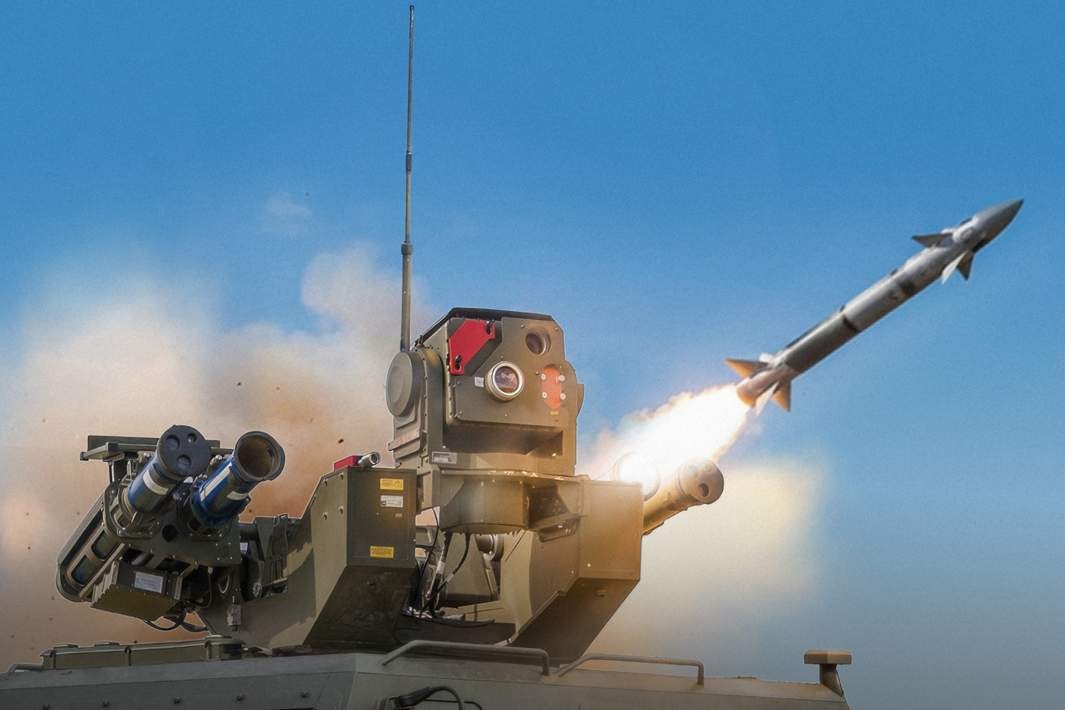
World
LONDON — June 02, 2026 : The United Kingdom has signed a £36 million ($48.5 million) procurement contract with Thales for hundreds of additional Lightweight Multirole Missiles (LMM), known as the Martlet in Royal Navy service, as part of efforts to strengthen counter-drone defence capabilities and replenish operational stockpiles. The agreement, confirmed by the UK Ministry of Defence and Thales on June 1, 2026, supports Britain’s effort to improve short-range air defence against low-cost uncrewed aerial systems (UAS). Deliveries are scheduled to begin in the coming months and continue through 2026. The procurement follows an earlier Martlet order placed in April 2026 and is intended to reinforce protection for British forces, naval platforms, airbases, and critical infrastructure, particularly in regions facing persistent drone threats, including the Middle East. Recent operational use has reinforced the missile’s role in force protection. According to defence officials, the Martlet has intercepted more than 100 drones during deployments in the Middle East, supporting short-range defence missions against low-cost aerial threats and contributing to the UK’s layered air defence framework. Martlet Missile Designed for Short-Range Interception The Martlet is a compact precision-guided missile developed to engage small and highly manoeuvrable targets at short range. The system weighs approximately 13 kilograms, measures 1.3 metres in length with a 76 mm diameter, and can be deployed across air and ground platforms. The missile is designed to engage uncrewed aircraft, helicopters, light surface vessels, light armoured vehicles, and other agile targets in maritime and land environments. Powered by a two-stage solid propellant rocket motor, the Martlet reaches speeds exceeding Mach 1.5 (more than 1,150 miles per hour) and has an engagement range exceeding six kilometres, extending to approximately eight kilometres depending on operating conditions. The missile carries a three-kilogram dual-effect warhead combining blast fragmentation effects with a shaped charge to improve effectiveness against lightly protected targets. Detonation occurs through laser proximity or direct impact depending on mission requirements. Guidance System Designed to Resist Electronic Interference The Martlet primarily employs a laser beam-riding guidance system, enabling operators to track a target while projecting a laser beam that the missile follows until interception. This guidance approach reduces vulnerability to electronic jamming and signal interference, which are increasingly common in contested environments. The system also supports precision engagement while limiting unnecessary collateral effects. In addition to surface-to-air missions, the missile can operate in air-to-air, air-to-surface, surface-to-surface, and maritime engagement roles, increasing operational flexibility. Expanding “Magazine Depth” Against Low-Cost Drone Threats The procurement forms part of British efforts to improve “magazine depth,” or the ability to sustain defensive operations without rapidly exhausting missile inventories. Lessons from conflicts in Ukraine and the Middle East have shown that large numbers of low-cost reconnaissance drones and one-way attack systems, including Iranian-designed Shahed-series drones, can place pressure on air defence stockpiles when expensive interceptors are used against low-cost threats. Military planners view the Martlet as filling a gap between short-range gun systems and larger, more costly interceptor missiles typically reserved for cruise missiles or combat aircraft. This provides commanders with a proportionate interception option without unnecessarily consuming premium munitions. Wildcat Helicopters Provide Airborne Counter-Drone Layer The Royal Navy deploys Martlet missiles aboard Leonardo AW159 Wildcat HMA2 helicopters, which can carry up to 20 missiles on external weapon pylons. Following increased drone threats in early 2026, Wildcat helicopters from the 815 Naval Air Squadron were deployed to RAF Akrotiri in Cyprus, operating in two-aircraft formations to extend surveillance and interception coverage. The helicopters function as mobile sensor-and-shooter platforms, allowing forces to investigate aerial tracks and intercept hostile drones before they approach naval vessels or defended facilities. British defence authorities declared full operational capability for the Wildcat-Martlet combination in October 2025. Rapid Sentry Strengthens Ground-Based Air Defence On land, the RAF Regiment operates the Rapid Sentry short-range air defence system, which uses Martlet missiles as part of a layered counter-UAS architecture. Rapid Sentry has recently been deployed to locations including Kuwait to counter Iranian UAV threats and is intended to intercept drones that bypass surveillance or electronic warfare layers. The system integrates radar-based tracking, sensor networks, and electronic warfare tools capable of providing soft-kill effects before missile engagement becomes necessary. Martlet serves as the hard-kill component and can integrate with systems such as ORCUS for improved situational awareness and sensor fusion. Saab Giraffe 1X Radars Improve Detection Supporting this layered defence network are Saab Giraffe 1X compact three-dimensional surveillance radars. The United Kingdom ordered 11 Giraffe 1X radars in 2023 to improve detection of small, low-flying drones operating near terrain features that complicate radar identification. The radar systems provide higher-quality tracking data to command networks, enabling faster and more accurate engagement decisions while reducing unnecessary missile expenditure on false targets. Domestic Production Supports UK Defence Industry Beyond operational requirements, the £36 million contract reinforces Britain’s domestic missile production capability. Martlet missiles are designed and manufactured at Thales’ Belfast facility in Northern Ireland, supporting approximately 700 skilled jobs. The procurement helps maintain sovereign manufacturing capacity amid increasing demand for air defence systems and pressure on global munition supply chains. Maintaining domestic production lines is viewed as important for sustaining deployed operations, replenishing stockpiles, and supporting industrial resilience during periods of increased demand. UK Expands Layered Counter-Drone Capability The latest Martlet order reflects the UK’s continued adaptation to evolving aerial threats in which low-cost uncrewed systems are playing an increasing role. By increasing missile inventories and integrating the Martlet across helicopter, vehicle-mounted, and ground-based systems, Britain is strengthening a layered defence network designed to protect deployed forces, naval formations, airbases, and critical infrastructure against persistent drone threats.
Read More → Posted on 2026-06-02 14:49:49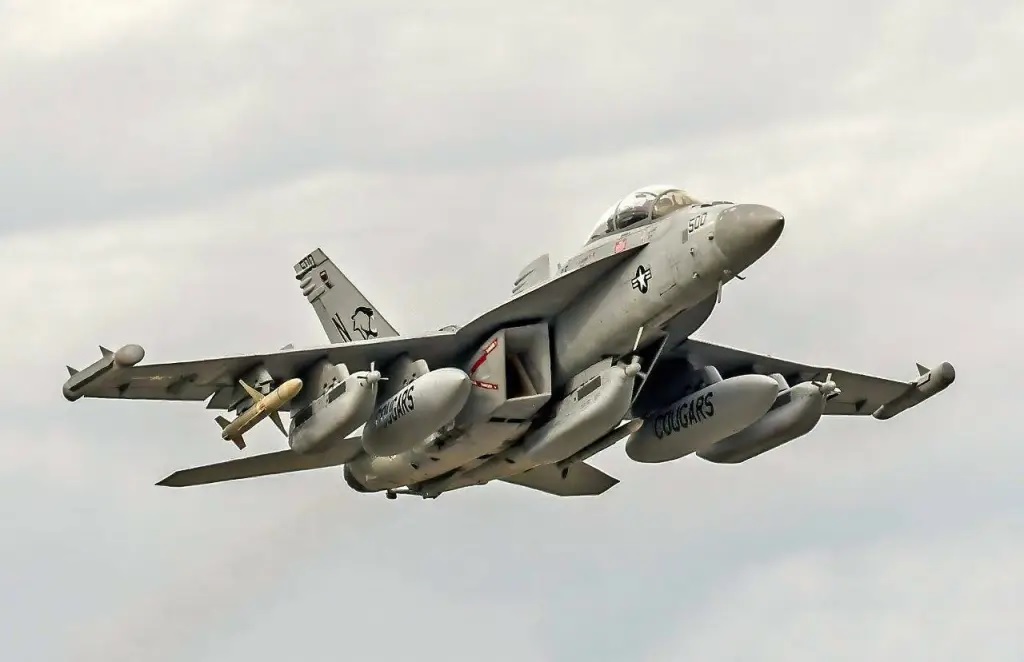
World
PATUXENT RIVER NAS, Md. — June 02, 2026 : The U.S. Navy has awarded a $61 million contract to Northrop Grumman Mission Systems for upgrades to the AN/ALQ-218 tactical jamming receiver aboard the EA-18G Growler, the Navy’s dedicated airborne electronic warfare aircraft. The contract is intended to strengthen the aircraft’s ability to detect, classify, and locate enemy radar and communications systems in increasingly contested electromagnetic environments. The award was issued by the Naval Air Systems Command (NAVAIR) at Patuxent River Naval Air Station in Maryland. According to contract details, Northrop Grumman will manufacture and deliver 28 processor unit upgrade assemblies, 30 Digital Measurement Receiver (DMR) assemblies, and 77 Low Band Dedicated Receiver (LBDR) assemblies. All funding was obligated at the time of the award through fiscal year 2026 Navy aircraft procurement accounts. Work will be carried out at Northrop Grumman’s Linthicum, Maryland facility and is scheduled to continue through February 2030. AN/ALQ-218 to Receive Core Sensor Enhancements The AN/ALQ-218 serves as the core passive sensing system of the EA-18G Growler and plays a central role in the aircraft’s electronic warfare missions. Unlike active radar systems that emit signals, the system passively listens across multiple radio frequency bands to detect and identify radar emissions, communications signals, and electronic activity without revealing the aircraft’s position. Operating across RF bands 0, 1, 2, and 3, the system functions as a radar warning receiver, electronic support measures (ESM) suite, and electronic intelligence collector, helping crews build a detailed picture of the electromagnetic environment before conducting jamming or suppression missions. The contract funds three major hardware improvements designed to improve processing power, signal measurement accuracy, and low-frequency detection capability. Processor Unit Upgrades The contract includes 28 processor unit upgrade assemblies aimed at improving computational performance inside the AN/ALQ-218 system. These processors sort, classify, and prioritize large volumes of signals detected in dense operational environments. The upgraded processors are expected to improve the Growler’s ability to rapidly organize and analyze overlapping radar and communications signals to support faster operational decisions. Digital Measurement Receiver Enhancements Northrop Grumman will also provide 30 Digital Measurement Receiver (DMR) assemblies to improve signal identification accuracy. These receivers precisely measure intercepted signals, allowing the system to distinguish specific radar emitters and operating modes rather than grouping them into broader categories. Improved signal precision supports more accurate threat identification, targeting, and electronic disruption. Low Band Dedicated Receiver Improvements The contract additionally covers 77 Low Band Dedicated Receiver (LBDR) assemblies intended to improve performance in lower-frequency portions of the electromagnetic spectrum. These frequencies are commonly used by long-range surveillance radars, early warning systems, and military communications networks, improving the aircraft’s ability to monitor systems that higher-frequency receivers may not efficiently capture. Responding to a More Complex Electromagnetic Environment The Navy’s decision to modernize the AN/ALQ-218 reflects changes in electronic warfare environments since the EA-18G Growler entered service in 2008. Potential adversaries have increasingly invested in frequency-agile radar systems capable of rapidly changing wavelengths to reduce vulnerability to detection and jamming. Modern military operations also involve denser electromagnetic environments with overlapping sensors, communications traffic, and electronic counter-countermeasure systems. As a result, improvements in receiver sensitivity, signal processing speed, and threat classification are intended to help Growler crews build a more accurate threat picture before selecting jamming strategies or supporting strike operations. Role of the EA-18G Growler Built by Boeing as a specialized variant of the F/A-18F Super Hornet, the EA-18G Growler is operated by a pilot and a naval flight officer responsible for managing electronic warfare systems. The aircraft specializes in suppression and destruction of enemy air defenses (SEAD/DEAD), escort jamming, communications disruption, and real-time electronic intelligence collection. The U.S. Navy currently operates approximately 160 Growlers assigned to carrier air wings and land-based electronic attack squadrons. Operational Use in Venezuela The Growler’s operational role was demonstrated during Operation Absolute Resolve in Venezuela in January 2026, where EA-18G aircraft were used to suppress Venezuelan air defense systems, enabling special operations helicopters to enter and exit operational areas without engagement from surface-to-air missile systems. The operation highlighted the aircraft’s role in mapping hostile electromagnetic activity and disrupting enemy systems in defended airspace. Foundation for Growler Block II Modernization The newly funded receiver upgrades support the Navy’s broader EA-18G Growler Block II modernization program, which expanded through contracts issued during 2025 and 2026. A key element of the program is the integration of the AN/ALQ-249 Next Generation Jammer Mid-Band (NGJ-MB) developed by Raytheon, replacing the aging AN/ALQ-99 tactical jamming pod with active electronically scanned array (AESA) technology for improved jamming precision and flexibility. Additional Block II upgrades include open mission systems architecture, upgraded Joint Tactical Terminals, satellite communications enhancements, and machine learning-enabled software designed to adapt jamming techniques based on observed threat behavior. However, advanced jamming capabilities depend on accurate threat detection before engagement. The upgraded AN/ALQ-218 system provides the sensing foundation required to identify, classify, and geolocate enemy emitters before electronic attack measures are employed. The Navy views these upgrades as an important step toward maintaining the EA-18G Growler’s operational effectiveness and sustaining U.S. electronic warfare capabilities into the 2030s.
Read More → Posted on 2026-06-02 15:42:39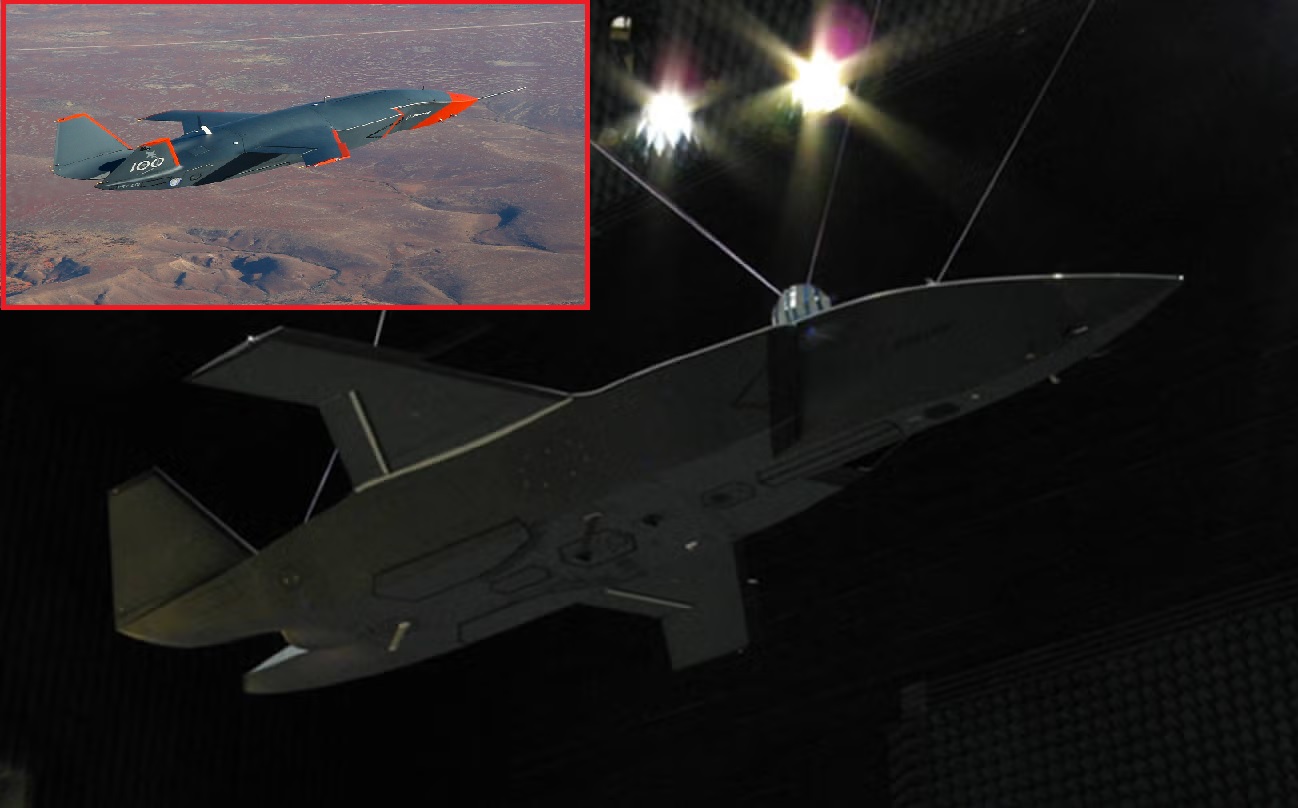
World
WASHINGTON — June 02, 2026 : Boeing has validated the stealth performance of its MQ-28 Ghost Bat Collaborative Combat Aircraft (CCA) through Radar Cross Section (RCS) testing, a milestone announced on June 1, 2026, that further advances the autonomous aircraft program and supports future certification, procurement, and export efforts. The announcement comes shortly after Boeing confirmed that the MQ-28 had completed its first operational flights outside Australia, conducting test missions in California to validate autonomous operations in an allied environment. Stealth Performance Validation Boeing conducted the RCS assessments to measure the MQ-28 Ghost Bat’s radar detectability and evaluate the effectiveness of its low-observable design. Radar Cross Section (RCS) refers to the amount of radar energy reflected back toward a receiver from a target. Aircraft with lower RCS values are more difficult to detect, track, and engage by enemy radar systems. The tests were carried out inside a specialized anechoic chamber designed to measure radar signatures under controlled conditions. Boeing assessed the aircraft from multiple angles, including elevation, azimuth (nose-to-tail), and roll, generating repeatable and objective data regarding survivability and detection risks. According to Boeing, the results validated the aircraft’s stealth-oriented design, production methods, and material choices intended to reduce radar visibility. Lower radar detectability reduces the engagement range of hostile radar systems and improves survivability during operations in contested airspace. Brad Thompson, Director of Phantom Works Australia, stated that the combination of stealth characteristics, advanced autonomy, artificial intelligence, and a capable operational platform enhances mission effectiveness and flexibility for military operators. He added that the collected data will support procurement decisions, certification activities, and tactical development. What Radar Cross Section Means Radar Cross Section (RCS) is a critical measurement used to evaluate stealth performance in military aircraft. Rather than representing the physical size of an aircraft, RCS measures how effectively an object reflects radar energy back toward the radar source. A lower RCS reduces the range at which radar systems can identify and track an aircraft, improving survivability in contested environments. Boeing stated that the MQ-28 primarily relies on its airframe shape and design features to reduce detectability, with testing helping verify and refine those characteristics. First Operational Flights Outside Australia The stealth validation announcement followed Boeing’s confirmation that the MQ-28 recently conducted three flight tests over the Point Mugu Sea Range at U.S. Naval Base Ventura County in California, marking the first time the aircraft has flown outside Australia. The deployment was intended to validate autonomous operations in a different airspace environment, test integration with foreign command-and-control systems, and demonstrate the aircraft’s ability to be rapidly deployed and sustained from an allied operating location. The California deployment is also viewed as an important step in demonstrating export readiness, particularly for allied nations in the Indo-Pacific region and the United States. Although Boeing did not disclose the exact dates of the California missions, at least one MQ-28 had previously been observed in video footage during a December 2025 visit by U.S. Secretary of Defense Pete Hegseth to the Ventura County installation. Additional footage released by Boeing in May 2026 showed an MQ-28 featuring a two-tone gray livery and an integrated Infrared Search and Track (IRST) sensor mounted in the nose section, indicating that multiple test configurations are currently operating in the United States. MQ-28 Ghost Bat Program Overview Originally developed as the Boeing Airpower Teaming System, the MQ-28 Ghost Bat was designed and manufactured by Boeing Defence Australia in partnership with the Royal Australian Air Force (RAAF) as an autonomous aircraft intended to operate alongside crewed combat and support aircraft. Development of the program began around 2013, followed by the unveiling of the prototype in 2019 and the aircraft’s maiden flight in February 2021. Boeing states that the MQ-28 test fleet has completed more than 150 flights. The aircraft is comparable in size to a light fighter and incorporates cranked-kite wings, canted V-tail stabilizers, and side-mounted air intakes that contribute to aerodynamic performance and reduced radar visibility. The MQ-28 has a range approaching 3,200 kilometers, while some specifications indicate endurance exceeding 2,000 nautical miles (approximately 3,700 kilometers) depending on mission configuration. The platform is capable of speeds up to Mach 0.9 and can operate at altitudes exceeding 40,000 feet. Payloads and Mission Flexibility A key feature of the Ghost Bat is its modular 1.5-cubic-meter nose section, which enables operators to rapidly swap mission payloads based on operational requirements. The aircraft can be configured for Intelligence, Surveillance, and Reconnaissance (ISR) missions, Electronic Warfare (EW), Electronic Intelligence (ELINT) operations to locate or disrupt enemy radar systems, Infrared Search and Track (IRST), and air-to-air attack missions. The MQ-28 uses artificial intelligence and autonomous systems to fly independently while receiving mission-level direction from human operators. Loyal Wingman and Teaming Concept The Ghost Bat was developed under the “loyal wingman” concept, enabling the aircraft to operate alongside crewed military platforms as part of a Manned-Unmanned Teaming (MUM-T) structure. In a typical mission, a ground-based launch and recovery operator manages takeoff and landing before control is transferred to a crewed platform, which assigns mission tasks to the aircraft. Compatible platforms include the E-7A Wedgetail, F-35A, F-15EX, and F/A-18F Super Hornet. Missions may be conducted in close formation or with the MQ-28 operating dozens of kilometers away from crewed aircraft while receiving mission instructions. Operational Milestones and Combat Testing The MQ-28 program has recorded several operational milestones over the past year. In June 2025, an E-7 Wedgetail successfully controlled two MQ-28 aircraft during a mission involving a simulated airborne target, demonstrating the aircraft’s teaming capability. Later, in December 2025, Boeing and the Royal Australian Air Force conducted the platform’s first live-fire exercise. During the test, the MQ-28 launched an AIM-120 Advanced Medium-Range Air-to-Air Missile (AMRAAM) against an aerial target while operating alongside an E-7 Wedgetail and an F/A-18F Super Hornet. In that demonstration, the Ghost Bat functioned as an off-board weapons release platform, receiving targeting information from crewed aircraft and engaging the target using relayed data. The MQ-28 program has also involved participation from more than 55 Australian companies and continues to receive government support, with Block 2 aircraft expected to achieve initial operational capability in 2028 with the Royal Australian Air Force. The successful completion of Radar Cross Section testing represents another development milestone for the MQ-28 Ghost Bat program as Boeing continues work toward operational deployment and potential international customers.
Read More → Posted on 2026-06-02 15:49:50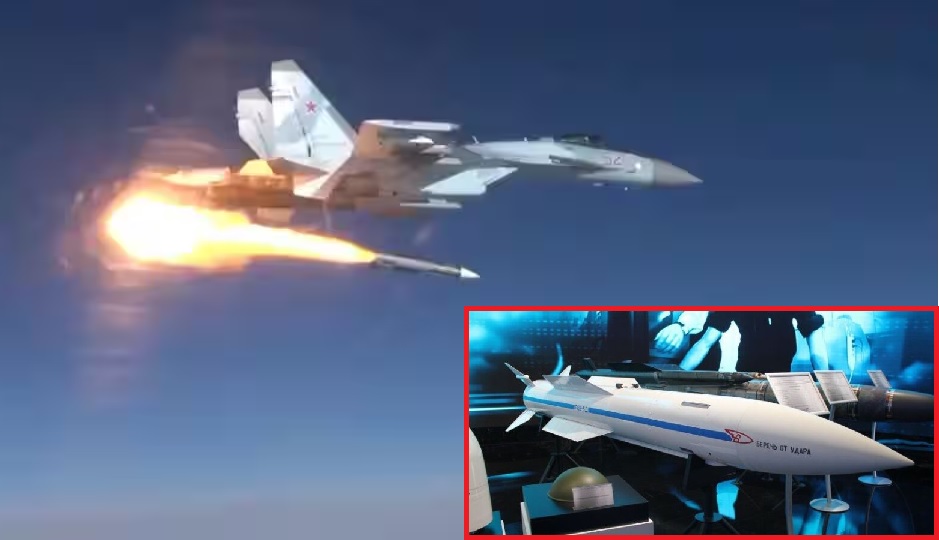
India
NEW DELHI — June 02, 2026 : India has finalized a contract worth approximately $1.2 billion with Russia for the acquisition of around 300 R-37M ultra-long-range air-to-air missiles to strengthen the Indian Air Force (IAF) beyond-visual-range combat capabilities. The missiles will be integrated into the IAF’s Su-30MKI fighter fleet, significantly expanding long-range interception and targeting capabilities against high-value airborne assets. The agreement, concluded by the Indian Ministry of Defence, is intended to provide an immediate enhancement in long-range air combat capability while complementing India’s ongoing indigenous missile development efforts. Deliveries are expected to begin within 12 to 18 months. R-37M Designed to Engage High-Value Airborne Targets The R-37M, also known by its export designation RVV-BD and NATO reporting name AA-13 Axehead, is among the longest-range air-to-air missiles currently in operational service. It has been developed to target force multipliers such as Airborne Warning and Control System (AWACS) aircraft, airborne command centers, aerial refueling tankers, and airborne surveillance platforms operating at stand-off distances. These aircraft are considered critical to modern combat operations because they support battlefield coordination, aerial refueling, surveillance, command, and long-range targeting functions. Missile Specifications and Performance The missile has a reported operational range of 300 to 400 kilometers, depending on launch conditions such as altitude, speed, and engagement profile. It is capable of reaching speeds approaching Mach 6 and carries a 60-kilogram high-explosive fragmentation warhead intended to neutralize large airborne support aircraft. The R-37M measures approximately 4.2 meters in length, has a body diameter of around 0.38 meters, and weighs nearly 600 kilograms at launch. It is optimized for high-speed, long-range intercept missions and can engage aerial targets flying at speeds of up to 2,500 kilometers per hour. The missile uses a guidance system consisting of inertial navigation, mid-course radio corrections, and an active radar seeker during the terminal engagement phase. It also employs lofted trajectories to maximize range and preserve energy during long-distance engagements. Seamless Integration With the Su-30MKI Fleet A key operational advantage of the procurement is the missile’s compatibility with India’s existing Su-30MKI fleet. Integration is expected to require mainly software upgrades to the aircraft’s N011M Bars radar system rather than extensive hardware modifications. The Su-30MKI, which forms the backbone of the Indian Air Force with more than 260 aircraft in service, is expected to gain a substantial increase in beyond-visual-range engagement capability, allowing it to target hostile aircraft from significantly greater distances. Reports indicate that each aircraft may be capable of carrying multiple R-37M missiles, improving mission flexibility during long-range air superiority and interception operations. Passive Engagement Capability Through External Sensor Networks Another operational feature of the missile is its ability to support passive or semi-passive engagement tactics. Indian Air Force pilots will be able to launch the R-37M using targeting information supplied by external sensor systems without activating the aircraft’s onboard radar. Through data links connected to the Netra Airborne Early Warning and Control (AEW&C) platform and ground-based radar systems, Su-30MKI aircraft can engage hostile targets from distances exceeding 300 kilometers while remaining electromagnetically silent. This capability reduces the likelihood of early detection by enemy sensors and improves survivability during contested air operations. Lessons From Operation Sindoor Shaped the Procurement Decision The decision to fast-track the missile acquisition follows strategic assessments conducted after Operation Sindoor in May 2025. During the short border conflict, Indian military planners reportedly identified the requirement for longer-range beyond-visual-range engagement capability. Although India used indigenous systems, precision-guided strikes, and drone-based warfare, the presence of adversarial aircraft equipped with long-range missiles highlighted the need to expand interception distances away from frontline areas. The R-37M is expected to provide an immediate capability to threaten adversary airborne support assets at extended ranges and potentially disrupt networked combat operations. Indigenous Missile Programs Continue Alongside Imports While the R-37M acquisition addresses immediate operational requirements, the Indian Air Force is simultaneously pursuing indigenous missile development to strengthen long-term defence self-reliance. Astra Mk2 India’s Astra Mk2 beyond-visual-range missile is expected to enter operational service between 2026 and 2027. The missile uses an indigenous dual-pulse solid rocket motor designed to maintain high terminal energy during engagements. The Astra Mk2 is projected to have an engagement range between 160 and 240 kilometers and is expected to become a primary medium-to-long-range air-to-air missile for platforms including the Su-30MKI, Tejas Mk1A, and future fighter aircraft. Gandiva (Astra Mk3) The Astra Mk3, also known as Gandiva, is under development and testing as India’s next-generation long-range air-to-air missile. The system uses Solid Fuel Ducted Ramjet (SFDR) propulsion technology, enabling sustained speed during long-range flight. It is expected to achieve engagement ranges of up to 340 kilometers at high altitude and is targeted to become operational by the end of the decade. Successful SFDR testing has demonstrated progress toward sustained high-speed missile technology for future Indian combat aircraft. Building a Layered Air Combat Architecture By integrating the R-37M while advancing indigenous systems such as Astra Mk2 and Gandiva, the Indian Air Force is establishing a layered beyond-visual-range engagement framework. The approach is designed to address immediate operational requirements for extreme long-range interception while gradually transitioning India’s air combat missile inventory toward domestically developed systems, supporting greater self-reliance in defence manufacturing and long-term operational flexibility.
Read More → Posted on 2026-06-02 16:03:23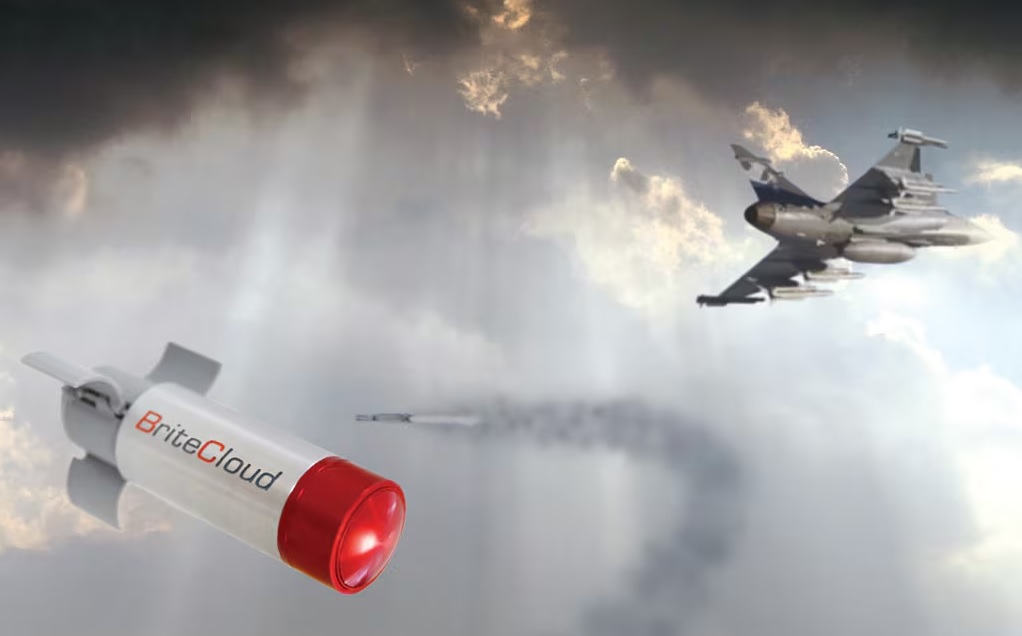
India
NEW DELHI — June 02, 2026 : The Indian Air Force (IAF) is reportedly planning to equip its future fleet of Rafale fighter aircraft with advanced self-contained expendable Digital Radio Frequency Memory (DRFM) jammers, a next-generation electronic warfare capability designed to improve survivability against modern radar-guided missile threats. According to recent defence industry reports, the proposed system is expected to function in a manner similar to Leonardo’s BriteCloud expendable active decoy, providing Rafale fighters with an additional defensive layer against sophisticated surface-to-air and air-to-air missile systems operating in contested environments. The move reflects the IAF’s continuing focus on strengthening electronic warfare capabilities as modern air defence systems increasingly rely on advanced radar technologies capable of identifying, tracking, and engaging aircraft with greater accuracy than legacy systems. Advanced Countermeasure Against Radar-Guided Threats Traditional aircraft countermeasures such as chaff—small metallic strips dispersed in the air to confuse enemy radar—have long been used to counter radar-guided missiles. However, improvements in missile seeker technology and fire-control radars have reduced the effectiveness of conventional countermeasures against modern threats. To address this challenge, air forces worldwide are increasingly adopting expendable active decoys based on DRFM technology. These systems are designed to deceive enemy radars by generating realistic electronic signatures rather than relying solely on reflected radar energy. A DRFM jammer captures incoming radar signals, digitally stores and processes them, modifies their characteristics, and retransmits them back toward hostile radar systems with precise timing. Because the transmitted signal closely resembles the radar return from the actual aircraft, hostile systems may struggle to distinguish the false target from the fighter aircraft. Unlike traditional onboard electronic warfare systems, expendable DRFM jammers function as independent off-board decoys once deployed. Self-Contained and Expendable Design Expendable DRFM jammers, also known as Expendable Active Decoys (EADs), are compact, battery-powered systems contained within a small cartridge. The system integrates a receiver, processor, transmitter, antenna, and power source into a single expendable package. Typically designed to match standard flare cartridges, including 55mm countermeasure formats, these jammers can be launched through existing aircraft chaff and flare dispensers without requiring major structural modifications. Once ejected, the decoy physically separates from the aircraft and independently emits electronic signals intended to mislead enemy radar systems. The “active” nature of the system refers to its ability to transmit off-board jamming signals rather than passively reflecting radar energy. How the System Operates The functioning of a self-contained DRFM jammer involves automated electronic responses triggered by incoming threats. When the aircraft’s Radar Warning Receiver (RWR) detects an incoming radar-guided missile or hostile tracking radar, the onboard defensive suite can initiate deployment of the decoy. After ejection, the jammer activates and scans for radar emissions considered the highest operational priority. Using a pre-programmed digital threat library, the system identifies and classifies incoming radar signals before employing DRFM technology to generate deceptive responses. The jammer receives the enemy radar signal, digitizes and alters it in real time to imitate the aircraft’s radar cross-section and electronic signature, then retransmits a modified signal back toward the threat. As the decoy physically moves away from the aircraft, enemy radar systems and missile seekers may begin tracking the false electronic target instead of the fighter aircraft, increasing separation from the missile’s projected intercept point and improving survivability. Operational Benefits for Future Rafale Aircraft If integrated into future IAF Rafales, expendable DRFM jammers could provide multiple operational advantages. One key benefit is enhanced protection against modern radar-guided missile systems, particularly those capable of rejecting traditional chaff countermeasures. The system could also help counter missiles equipped with “home-on-jam” capability, which are designed to target the source of jamming emissions. Because expendable DRFM decoys separate physically from the aircraft, they may divert these missiles toward empty airspace instead of the fighter. Another advantage lies in simplified aircraft integration. Since these decoys can fit within standard countermeasure dispensers, they require minimal airframe modification and can complement existing defensive systems. The autonomous operation of the jammer may also reduce pilot workload during high-threat engagements. Once released, the system independently manages threat detection and electronic deception, allowing pilots to focus on aircraft maneuvering and mission execution. Integration With Rafale’s Existing SPECTRA Suite The Rafale already operates with the integrated SPECTRA (Self-Protection Equipment Countering Threats to Rafale Aircraft) electronic warfare suite, which combines radar warning receivers, missile warning systems, electronic support measures, and onboard jamming functions. Any future expendable DRFM jammer would likely complement rather than replace the existing system. In a combat environment, SPECTRA could detect, classify, and assess an incoming threat while the expendable decoy acts as a separate off-board electronic target intended to draw radar-guided missiles away from the aircraft. Broader Evolution of IAF Electronic Decoys The reported interest in expendable DRFM jammers comes as the IAF continues efforts to strengthen its electronic warfare capabilities against increasingly sophisticated surface-to-air and air-to-air missile threats. The IAF has also been linked with plans to acquire advanced decoy systems such as the X-Guard Fibre-Optic Towed Decoy (FOTD), intended to improve aircraft survivability against radar-guided threats. Unlike expendable decoys, a fibre-optic towed decoy remains connected to the aircraft through a retractable cable and is designed to replicate the aircraft’s electronic and Doppler signature to mislead hostile radars and missile seekers. If introduced in the future alongside self-contained expendable DRFM jammers, such systems could contribute to a multi-layered electronic warfare architecture aimed at improving the survivability of frontline combat aircraft operating in contested environments and against advanced air defence networks.
Read More → Posted on 2026-06-02 16:31:24
Science
WASHINGTON — June 02, 2026 : Google’s life sciences division, Verily, has formally requested permission from the U.S. Environmental Protection Agency (EPA) to release up to 32 million specially treated male mosquitoes across California and Florida as part of a large-scale mosquito population control initiative aimed at reducing the spread of mosquito-borne diseases. The proposed project, known as the “Debug” program, seeks to reduce populations of disease-carrying mosquitoes without relying heavily on traditional chemical pesticides. The EPA is currently reviewing Verily’s application for an experimental use permit and accepting public comments on the proposed two-year program through June 5 before making a final decision. If approved, the initiative would become one of the largest mosquito population-control efforts conducted in the United States and may help assess whether biological and technology-driven mosquito suppression systems can be expanded on a larger scale. Wolbachia-Based Method Designed to Reduce Mosquito Populations At the center of the program is a naturally occurring bacterium called Wolbachia, which is already present in many insect species, including butterflies, beetles, and fruit flies. Scientists involved in the project state that the bacterium is harmless to humans, animals, and the environment. The program primarily targets Aedes aegypti mosquitoes, a species known for spreading diseases such as dengue fever, Zika virus, chikungunya, yellow fever, and, in some regions, West Nile virus. Under the proposed system, Verily scientists introduce Wolbachia into healthy male mosquitoes before releasing them into the wild. Once released, the males mate with wild female mosquitoes that do not carry the same Wolbachia strain. This biological incompatibility prevents fertilized eggs from hatching, reducing mosquito numbers over time through repeated release cycles. Importantly, only male mosquitoes are released under the program. Male mosquitoes do not bite humans or animals because they feed on flower nectar rather than blood and therefore do not transmit mosquito-borne diseases. Artificial Intelligence and Robotics Used for Large-Scale Operations Although insect-based pest control methods have been used in scientific programs for decades, managing mosquito releases at industrial scale presents logistical challenges. Verily’s Debug program addresses this issue using automation technologies, robotics, computer vision systems, and artificial intelligence (AI). The company has developed AI-powered mosquito sorting systems designed to distinguish male mosquitoes from females with high accuracy. Since female mosquitoes are responsible for biting humans and spreading disease, the sorting process is considered a key operational requirement. Following separation, automated systems and specially equipped vehicles are used to distribute the male mosquitoes across selected neighborhoods in target regions of California and Florida. Alternative to Chemical Mosquito Spraying Supporters of the program say the Wolbachia-based approach provides a more targeted method of mosquito control than conventional insecticide spraying. Traditional chemical pesticides can affect beneficial insect species, including bees and butterflies, while mosquito populations in several regions have also developed resistance to standard chemical treatments. Because the Wolbachia method targets one mosquito species through biological reproduction, researchers argue it may help avoid those limitations while reducing environmental impact. Public health experts note that lowering mosquito populations over time could help reduce the transmission risk of diseases linked to infected mosquitoes, particularly in regions vulnerable to seasonal outbreaks. Previous Trials Reported Significant Results Verily’s mosquito-control efforts have previously been tested in California. During field trials in Fresno, the company reported reductions of up to 95% in local biting female mosquito populations. Internationally, mosquito suppression programs using Wolbachia technology have also produced notable results. In Singapore, similar deployments reportedly reduced Aedes aegypti mosquito populations by between 80% and 90%, while treated areas recorded an estimated 70% decline in dengue fever cases. Researchers say such results suggest biological mosquito-control systems may become an increasingly important tool for managing disease risks in densely populated regions. EPA Review and Next Steps The EPA is evaluating the proposal under biological pest-control regulations because the project uses a biological mechanism to suppress pest populations rather than chemical insecticides. As part of the review process, the agency is collecting scientific analysis, expert feedback, and public comments before deciding whether to approve, reject, or impose conditions on the proposed two-year field deployment. If the project receives approval, Verily would begin gathering additional field data to evaluate whether AI-supported mosquito suppression programs can be scaled more broadly in the United States as part of long-term public health and pest-management efforts. The proposal also reflects increasing interest in biological pest-control technologies that rely on natural reproductive mechanisms instead of chemical treatments to manage disease-carrying insects while limiting environmental disruption.
Read More → Posted on 2026-06-02 17:29:38
World
WASHINGTON — June 02, 2026 : The U.S. Navy has awarded Northrop Grumman Systems a contract worth nearly $100 million to continue supporting the GQM-163A Coyote supersonic target missile program through May 2031. The contract, issued by the Naval Air Warfare Center Weapons Division at Point Mugu, California, will support missile-defense testing and training against advanced anti-ship cruise missile threats. The GQM-163A Coyote is a non-recoverable aerial target missile designed to simulate the flight characteristics and attack profiles of modern anti-ship cruise missiles. It remains the only supersonic sea-skimming target missile produced in the United States and serves as the Navy’s primary platform for high-speed threat simulation. Designed to Simulate Modern Missile Threats The GQM-163A is designed to replicate missile threats comparable to China’s YJ-12 and Russia’s P-800 Oniks anti-ship missiles, which are capable of high-speed maritime attacks. The P-800 Oniks has also been exported to countries including India and Vietnam, while Iran operates Russian-origin missile systems with similar attack profiles. The missile operates in two primary attack modes used by modern anti-ship weapons. Sea-Skimming Flight Profile In sea-skimming mode, the GQM-163A flies at speeds exceeding Mach 2.5 while maintaining an altitude as low as four meters (13 feet) above the ocean surface. This profile reduces radar detection time and tests a warship’s ability to detect and intercept incoming threats. High-Altitude Dive Profile The missile can also climb to approximately 15,850 meters (52,000 feet) before diving toward a target at speeds exceeding Mach 3.5, simulating high-speed terminal attacks. The GQM-163A uses a solid-fuel ducted rocket and ramjet propulsion system to maintain sustained supersonic flight during testing. Contract Covers Testing and Operational Support The contract includes flight trajectory planning, technical data support, launcher preparation, telemetry support, and operational services required for live-fire missile-defense exercises. Each exercise is planned to test specific naval defense systems, including radar tracking, missile interceptors, and close-range defensive weapons. The agreement also includes loading and preparation of Coyote targets onto launch systems before testing. Supporting U.S. and Allied Naval Forces The program supports not only the U.S. Navy but also allied countries including Japan, Israel, and France, which use the system to test shipboard missile-defense capabilities. Work under the contract will be carried out across seven U.S. locations and international facilities in Scotland and Israel. Point Mugu, California, accounts for 27 percent of work and serves as the primary Pacific missile test range. Facilities in Camden and Chandler, Arizona, handle manufacturing and assembly, while the Hebrides Range in Scotland supports NATO missile-defense exercises. Operations in Israel reflect continued use of the system for naval defense testing. Program History and Continued Demand The program began in 2000 when Orbital Sciences, later acquired by Northrop Grumman, received a Navy contract to develop a supersonic target missile. Following its first launch in 2003 and developmental testing, the GQM-163A entered operational service in 2005. Northrop Grumman delivered the 200th GQM-163A Coyote missile to the U.S. Navy in June 2025, reflecting continued demand for the system. Growing Importance for Naval Missile Defense The importance of the GQM-163A program has increased as anti-ship missile threats continue to expand, particularly in regions such as the South China Sea where naval forces operate within range of land-based missile systems, submarines, and surface combatants. The U.S. Navy uses the Coyote to test and validate defense systems including the Aegis Combat System, Standard Missile interceptors, the Evolved Sea Sparrow Missile, and close-in weapon systems under realistic operational conditions. By extending the program through 2031, the Navy will continue to support missile-defense testing and readiness for U.S. and allied naval forces.
Read More → Posted on 2026-06-02 17:41:47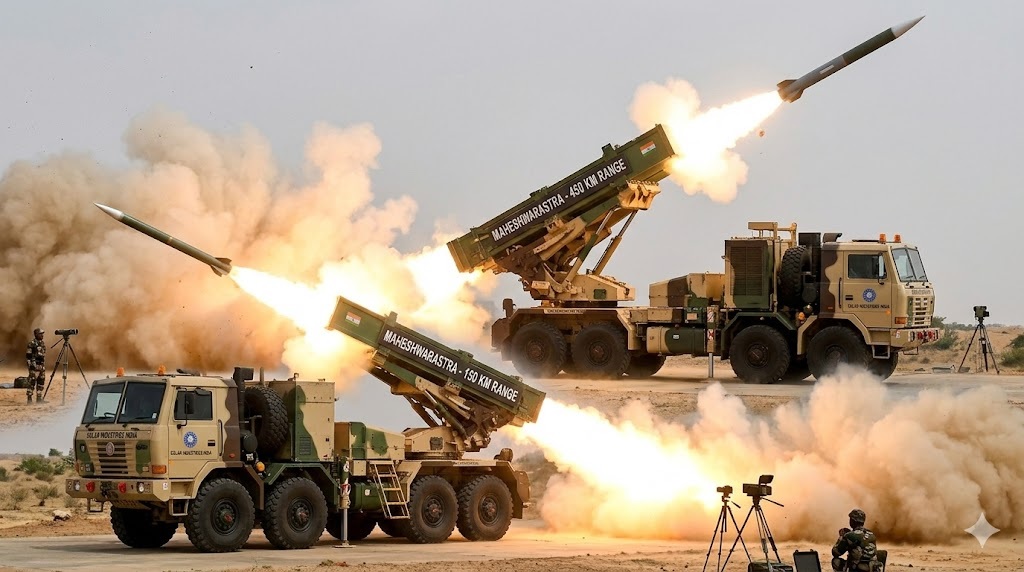
India
NAGPUR — Solar Industries India Limited is awaiting approval from the Indian Army for its proposed Maheshwarastra long-range precision-guided rocket programme, an indigenous initiative submitted under the Ministry of Defence’s Make-II acquisition framework. The programme is aimed at providing the Army with a cost-effective precision strike capability while supporting India’s ongoing push for self-reliance in advanced defence technologies. If approved, the Maheshwarastra programme would add a new category of indigenous long-range guided rocket systems to India’s expanding precision strike arsenal and strengthen the role of private sector firms in defence manufacturing. Maheshwarastra Programme and Proposed Capabilities Solar Industries has proposed the Maheshwarastra family as a high-mobility, precision-guided rocket system capable of conducting long-range strikes against battlefield and operational targets. The programme will initially include two variants. The Maheshwarastra-1 is proposed to deliver precision strikes at a range of approximately 150 kilometres, providing a medium-to-long-range engagement capability for tactical and operational missions. The Maheshwarastra-2 is being designed as a longer-range precision strike system with a planned baseline range of approximately 300 kilometres. According to Solar Industries, the system has been designed with future growth potential and can be adapted to meet evolving operational requirements. The company has indicated that if the Indian Army requires extended strike capability, the Maheshwarastra-2 platform could potentially achieve a range between 400 and 450 kilometres. Such an expansion would place it among the longest-range precision-guided rocket systems currently under development in India. Complementary Role Alongside BrahMos Solar Industries has positioned Maheshwarastra as a complementary capability rather than a replacement for existing strategic strike platforms. The system is expected to operate alongside the BrahMos supersonic cruise missile by offering a comparatively lower-cost precision strike option for a wider set of operational scenarios. While BrahMos is primarily intended for high-value strategic targets requiring high-speed engagement, Maheshwarastra is designed to provide precision strike capability against broader battlefield objectives at lower operational cost. This approach could provide the Indian military with greater flexibility in employing long-range precision strikes in larger numbers across multiple tactical environments. India’s Expanding Long-Range Strike Capability The proposal comes as India continues to expand indigenous long-range artillery and stand-off precision strike capabilities. Alongside the Guided Pinaka programme, the Defence Research and Development Organisation (DRDO) is also working on Extended Range Pinaka variants and other long-range indigenous systems aimed at increasing strike range, accuracy, and operational flexibility for the armed forces. Solar Industries has already established itself as an important contributor to these efforts through its role in the Pinaka Multi-Barrel Rocket Launching System. The company has developed composite propellants and manufactured rockets used for the Pinaka programme, supporting India’s domestic production of guided artillery systems. Further highlighting its growing role in defence manufacturing, Solar Industries recently flagged off its first tranche of Guided Pinaka rockets for export to Armenia, reflecting India’s expanding footprint in the global defence export market. Growing Role of the Private Sector in Defence The Maheshwarastra programme also reflects the increasing role of private companies in India’s defence research, development, and manufacturing ecosystem. Under the leadership of Chairman Satyanarayan Nuwal, Solar Industries has expanded from an industrial explosives manufacturer into a major defence company with capabilities across rockets, loitering munitions, and counter-drone technologies. The company’s Nagastra series of loitering munitions has completed user trials with the Indian Army and was recently used during Operation Sindoor, demonstrating Solar Industries’ growing participation in operational military systems. In parallel, the company is developing Bhargavastra, a counter-drone platform integrating missile and laser-based technologies intended to neutralise unmanned aerial vehicle (UAV) swarm threats. Government Push for Defence Self-Reliance The Indian government has continued to place emphasis on stronger public-private cooperation in defence production as part of the broader Atmanirbhar Bharat initiative. Defence Minister Rajnath Singh has recently reiterated the government’s objective of increasing private sector participation in defence manufacturing to 50 percent or more, with the long-term goal of reducing dependence on imports and positioning India as a major defence exporter. The Maheshwarastra programme currently remains under evaluation within the Make-II framework. A final approval from the Indian Army would allow the project to move forward and could further strengthen India’s indigenous long-range rocket and missile manufacturing capability.
Read More → Posted on 2026-06-02 17:53:25
World
Moscow — June 02, 2026 : The Russian Navy’s heavy nuclear-powered battlecruiser Admiral Nakhimov (Pennant Number 080), a modernized Project 11442M Kirov-class warship, officially entered the final phase of sea trials on June 1, 2026, marking a major milestone in one of Russia’s longest and most extensive naval modernization programs. The warship is currently undergoing final evaluations of its navigational, propulsion, combat, and defensive systems before its expected return to operational service with Russia’s Northern Fleet. The testing phase follows years of modernization work intended to transform the vessel into one of the Russian Navy’s most capable surface combatants. A Long Modernization Program Originally commissioned into the Soviet Navy in 1988 under the name Kalinin, the battlecruiser served for roughly a decade before being withdrawn from active operations following the collapse of the Soviet Union. In 1999, the vessel was docked at the Sevmash shipyard in Severodvinsk after funding shortages and maintenance limitations affected the Russian Navy’s ability to sustain large warships. The decision to modernize the cruiser was formally approved in 2006, although intensive reconstruction and modernization work began between 2013 and 2014. Over nearly 25 years of inactivity and refitting, the program has reportedly cost an estimated $5 billion. The vessel entered factory sea trials in the second half of 2025 after leaving Sevmash under its own power for the first time in more than two decades. Initial testing in the White Sea and Barents Sea focused on propulsion systems, navigational safety, and general operational performance. The current phase of sea trials is expected to concentrate on validating weapons integration, radar performance, defensive systems, combat readiness, propulsion reliability, and overall operational capability before final acceptance into naval service. Size and Propulsion Capabilities With a fully loaded displacement of approximately 28,000 tons and a length of 251.1 meters (823 feet 10 inches), Admiral Nakhimov remains among the world’s largest surface combatants excluding aircraft carriers. The Kirov-class warships continue to be regarded as the largest operational combat vessels of their category. To support operations of a vessel of this size, Admiral Nakhimov uses a combined nuclear and steam propulsion system (CONAS). During the modernization period, the ship’s two KN-3 nuclear reactors received new fuel elements, with reactor start-ups taking place between late 2024 and early 2025. The propulsion system generates approximately 300 megawatts of thermal power and 140,000 horsepower, allowing the cruiser to reach speeds of up to 32 knots (59 km/h) when operating with combined nuclear and steam power. On nuclear propulsion alone, the vessel can reportedly reach speeds of approximately 25 knots (46 km/h). Comprehensive Weapons Upgrade A central objective of the modernization effort involved replacing the ship’s Cold War-era launch systems with a modern modular Vertical Launch System (VLS) architecture. The upgraded battlecruiser now integrates a total of 176 vertical launch cells designed to improve offensive strike, fleet air defense, and anti-submarine warfare capabilities. Offensive Strike Systems The cruiser is equipped with 80 launch cells arranged in 10 octuple complexes for anti-ship and land-attack missions. These launchers are designed to fire several missile systems, including the 3M-55 Oniks supersonic anti-ship missile, the 3M14Y Kalibr-NK land-attack cruise missile, and the newer 3M-22 Tsirkon (Zircon) hypersonic missile. The Tsirkon missile is reported to be capable of carrying both conventional and nuclear warheads, increasing the vessel’s long-range strike flexibility. Air Defense Systems An additional 96 launch cells are reportedly reserved for surface-to-air missile systems intended to provide fleet-wide air defense. Reports indicate the ship may carry naval variants of the S-400 air-defense system or the S-300 Fort-M system. For close- and medium-range protection against missiles, aircraft, and drones, the vessel is equipped with Pantsir-M naval air-defense systems designed to intercept incoming aerial threats. Anti-Submarine Warfare Capability The ship has also received anti-submarine warfare upgrades through the integration of Paket-NK and Otvet systems, which are intended to improve defense against underwater threats and strengthen protection for naval formations. Fleet Integration and Operational Role Upon successful completion of sea trials, Admiral Nakhimov is expected to formally rejoin the Russian Navy and be assigned to the Northern Fleet. The vessel is widely expected to assume a flagship role, replacing its sister ship Pyotr Velikiy, which is not expected to undergo a similar modernization due to operational expenses and defense budget limitations. Russian reports suggest Pyotr Velikiy could face early retirement and possible scrapping. Once commissioned, Admiral Nakhimov will become a unique asset in global naval operations as the only nuclear-powered surface combatant of its class and size expected to remain in active blue-water service following an extensive modernization program.
Read More → Posted on 2026-06-02 18:02:18
World
COURTLAND, ALABAMA — June 02, 2026 : Lockheed Martin has inaugurated a new missile production facility in Courtland, Alabama, dedicated to manufacturing the Next Generation Interceptor (NGI), a system designed to strengthen the United States’ homeland missile defense network. The company officially opened the 88,000-square-foot Missile Assembly Building 5 (MAB-5) on June 1, 2026, marking a major step in transitioning the NGI program from development to production. The facility has been built specifically to manufacture the interceptor that will replace the aging Ground-Based Interceptors (GBIs) deployed under the Ground-Based Midcourse Defense (GMD) system at Fort Greely, Alaska, and Vandenberg Space Force Base, California. These systems have supported U.S. homeland ballistic missile defense since the early 2000s. The opening of MAB-5 is expected to support the Pentagon’s missile defense modernization plans under the “Golden Dome for America” initiative, aimed at integrating advanced missile defense systems into a layered national security framework. Next Generation Interceptor Program The NGI is being developed for the Missile Defense Agency’s Ground-Based Midcourse Defense system to counter increasingly advanced intercontinental ballistic missile (ICBM) threats. In 2024, the Missile Defense Agency awarded Lockheed Martin a contract worth approximately $17 billion to develop and deliver 20 NGIs. The interceptor is intended to counter evolving threats, including missiles equipped with multiple independently targetable reentry vehicles (MIRVs), advanced decoys, maneuverable warheads, and other countermeasures designed to complicate interception. According to Lockheed Martin, the NGI is designed to improve target discrimination, tracking, and engagement capabilities. It also features a modular open-system architecture, allowing upgrades to be integrated while the missile remains deployed, reducing the need for lengthy removal from operational silos. Christopher Jewell, vice president and program manager for NGI at Lockheed Martin, said the interceptor’s digital foundation is designed to support future technology integration without disrupting operational readiness. Initial deliveries are targeted for 2028, while flight testing is expected to begin in 2029. Courtland Facility and Digital Manufacturing Missile Assembly Building 5 (MAB-5) has been established at the site of the former Courtland Army Airfield, activated in 1942 to train pilots during the Second World War. The location has since developed into a defense manufacturing center supporting missile and aerospace production. Lockheed Martin said the facility introduces digitally enabled missile manufacturing through automation, advanced engineering systems, and virtual modeling tools. A key feature of the facility is “digital twin” technology, which creates a virtual replica of each interceptor during production. This system links design and engineering data directly to factory operations, helping engineers simulate performance and identify hardware issues before physical production is completed. The production line also integrates automated workflows, robotic assembly, and precision tooling to improve consistency and support scalable manufacturing. Investment in Alabama Defense Manufacturing The opening of MAB-5 forms part of Lockheed Martin’s broader $250 million investment in northern Alabama. Operations in Courtland will be supported by the company’s Troy, Alabama, facility, which will contribute hardware integration for the interceptor program. U.S. Representative Dale Strong said the investment reinforces Courtland’s role in supporting skilled industrial jobs and defense manufacturing linked to national security programs. Role in the Golden Dome for America Initiative The NGI program is closely linked to the Department of Defense’s “Golden Dome for America” initiative, which seeks to establish an integrated missile defense architecture capable of responding to modern ballistic missile threats. The initiative aims to combine advanced interceptors such as NGI with next-generation space-based tracking systems, ground-based radars, and command networks connected through artificial intelligence-enabled battle management systems. During the inauguration, Gen. Mike Guetlein, director of the Golden Dome program, described the Courtland facility as part of the nation’s “Arsenal of Freedom” and emphasized the importance of expanding manufacturing capacity for homeland missile defense. With Missile Assembly Building 5 now operational, Lockheed Martin has expanded production capacity for the Next Generation Interceptor program as the United States moves to modernize its homeland ballistic missile defense system.
Read More → Posted on 2026-06-02 18:33:52
World
BERLIN — June 03, 2026 : Israel Aerospace Industries (IAI) has unveiled OPAL Next Generation (OPAL-NG), an advanced airborne decentralized battle management system designed for sixth-generation combat platforms and multi-domain military operations. The system is making its public debut at the ILA Berlin Air Show. OPAL-NG is the latest evolution of IAI’s OPAL battle management architecture, building on the operational foundation of the original system introduced in 2019. The legacy OPAL network is currently deployed across fighter aircraft, helicopters, unmanned aerial vehicles (UAVs), airborne early warning aircraft, naval vessels, and ground command centers. Designed as a network-centric, software-defined avionics architecture, OPAL-NG enables real-time data sharing, multi-domain situational awareness, and interoperability across air, land, and maritime forces. The system creates a shared operational picture by allowing connected platforms to exchange voice communications, imagery, video, intelligence, and mission-level information in real time. A major enhancement in OPAL-NG is the integration of edge-based artificial intelligence, which enables real-time data processing, task prioritization, and decision support directly at the platform level. The AI capability is intended to support manned-unmanned teaming (MUM-T) and Collaborative Combat Aircraft (CCA) operations, allowing unmanned systems to operate as extensions of crewed platforms. Through continuous real-time collaboration, participating assets can dynamically share sensing and intelligence data, electronic warfare activities, target interception tracking, and strike functions. By processing large volumes of information from multiple sources and converting them into actionable insights within milliseconds, the system is designed to shorten the sensor-to-shooter cycle and support time-critical targeting and mission execution. OPAL-NG utilizes an open, standards-based architecture that enables military operators to integrate existing hardware, datalinks, and software-defined radios (SDRs) without extensive platform modifications. The system is interoperable with NATO communication standards, including Link-16, allowing integration with allied forces and coalition networks. The open architecture also enables users to develop indigenous operational applications and mission-specific software while retaining existing infrastructure. This flexibility supports both legacy and next-generation platforms and allows future capability upgrades without major hardware changes. Commenting on the launch, IAI Chairman of the Board Boaz Levy said future combat operations will depend on interoperability, speed, and the ability to operate as a unified multi-domain force. He noted that OPAL-NG combines AI-enabled processing with enhanced collaboration between manned and unmanned systems to support faster and more informed decision-making. Yaacov Berkovitz, Executive Vice President and General Manager of IAI Aviation, said the system provides a shared operational picture across platforms and domains while improving real-time coordination between distributed assets. He added that OPAL-NG’s open architecture enables operators to integrate existing systems while enhancing operational capabilities on both current and future platforms. With the introduction of OPAL-NG, IAI is expanding its battle management portfolio to address the growing demand for AI-enabled, networked, and distributed operations that are expected to define future combat environments.
Read More → Posted on 2026-06-03 14:38:36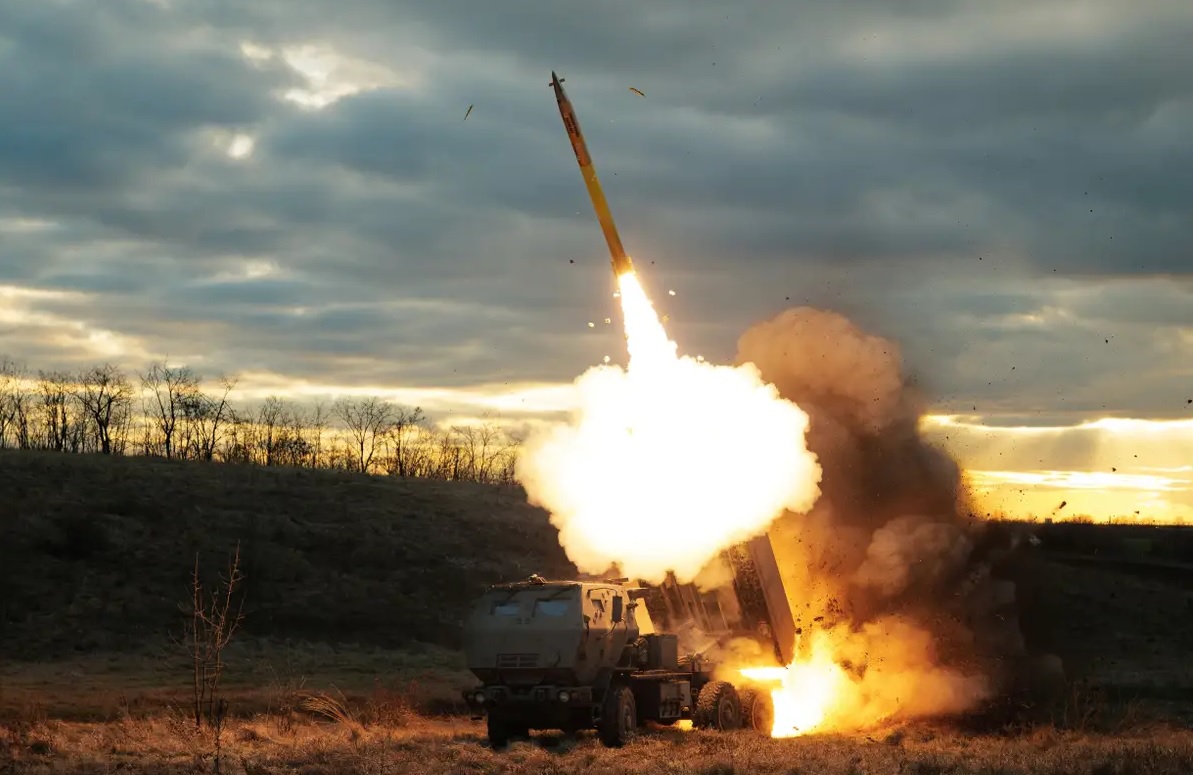
World
OTTAWA — June 03, 2026 : Canada has finalized a CAD $2.6 billion (USD $1.8 billion) agreement to acquire 26 M142 High Mobility Artillery Rocket System (HIMARS) launchers, significantly enhancing the Canadian Army’s long-range precision strike capabilities. The Government of Canada confirmed the deal on June 2, 2026, following an agreement negotiated with the United States in January through the Foreign Military Sales (FMS) program. The acquisition forms the core of the Canadian Army’s Long Range Precision Strike (Land) [LRPS(L)] project and includes launchers, an initial stock of munitions, spare parts, training, and support services. Deliveries are expected to begin in 2029. Expanding Long-Range Firepower The HIMARS acquisition will substantially increase the Canadian Army’s strike range. While current artillery systems generally reach around 40 kilometres, HIMARS can engage targets beyond 300 kilometres when equipped with precision-guided munitions. The system enables forces to strike command centres, logistics hubs, and other high-value targets from long distances. Its wheeled design allows rapid movement after firing, improving survivability against counter-battery systems, surveillance assets, and drone threats. The fleet of 26 launchers will provide Canada with a dedicated long-range fires capability, supporting both operational deployments and training requirements. Supporting Arctic and Coastal Defence The procurement aligns with Canada's 2024 defence policy, Our North, Strong and Free, which identified long-range missile capabilities as a key modernization priority. Because HIMARS can be transported by Royal Canadian Air Force C-130J and C-17 aircraft, it can be rapidly deployed across Canada's vast territory, including remote northern regions. Canadian Army Commander Lieutenant-General Michael Wright has highlighted the system’s value for deterrence, area-denial, and sovereignty missions in the Arctic. The Department of National Defence has also noted that HIMARS could support future land-based anti-ship missile capabilities, strengthening coastal defence across Canada's Atlantic, Pacific, and Arctic approaches. Enhancing NATO Interoperability The acquisition was conducted through the U.S. Foreign Military Sales framework because HIMARS is not commercially available and Canada does not produce the launcher or its associated long-range missile systems domestically. The system will provide Canada access to established U.S. logistics, training, and fire-control networks, improving interoperability with U.S. and NATO forces that already operate HIMARS. Economic Benefits Under Canada's Industrial and Technological Benefits (ITB) Policy, Lockheed Martin is required to generate business activity in Canada equal to the value of the contract. The company plans to integrate Canadian businesses into its global supply chain and support domestic research and development initiatives. Defence Minister David J. McGuinty described the acquisition as a critical step in ensuring the Canadian Armed Forces remain prepared to protect Canada and support allied operations. Other federal ministers emphasized that the project will strengthen both national defence capabilities and Canada's defence industrial base. The HIMARS purchase marks a major modernization effort for the Canadian Army, providing a long-range precision strike capability that will support Arctic sovereignty, coastal defence, and allied operations for decades to come.
Read More → Posted on 2026-06-03 14:43:51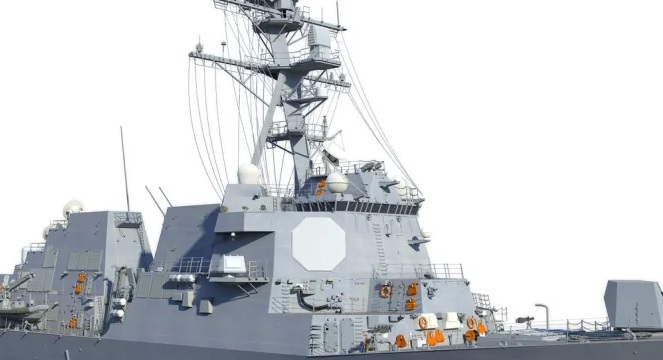
World
ANDOVER, Massachusetts — June 03, 2026 : The U.S. Navy has awarded Raytheon, an RTX business, a contract modification valued at approximately $515.8 million to continue integration, testing, production support, and modernization efforts for the AN/SPY-6(V) family of naval radars. The contract is a follow-on to a June 2025 agreement and will support the radar program through May 2027. The award ensures continued engineering, software development, testing, ship installation support, and technical improvements for the Navy’s next-generation radar system as it expands across the fleet. The contract also supports the ongoing installation of the SPY-6(V)4 variant aboard Flight IIA Arleigh Burke-class destroyers, extending advanced air and missile defense capabilities to existing warships. Key Sensor for Air and Missile Defense The AN/SPY-6(V) radar family has been developed to replace the legacy AN/SPY-1 radar system and serves as the primary sensor for integrated air and missile defense operations aboard modern U.S. Navy surface combatants. The radar is designed to detect, track, and discriminate a wide range of threats, including ballistic missiles, hypersonic weapons, cruise missiles, aircraft, unmanned systems, and surface targets. Built using gallium nitride (GaN) semiconductor technology, the radar delivers significantly greater sensitivity and efficiency compared with previous-generation systems. According to the Navy, the SPY-6 can detect smaller objects at greater distances while simultaneously tracking multiple threats in complex operational environments. The radar utilizes a modular architecture based on Radar Modular Assemblies (RMAs), self-contained radar units housed in 2-foot-by-2-foot-by-2-foot modules. These building blocks can be combined in different configurations to meet the requirements of various ship classes, making the SPY-6 the Navy’s first scalable radar system. Supporting Fleet Modernization The SPY-6(V)1 variant serves as the primary radar aboard Flight III Arleigh Burke-class destroyers, while the SPY-6(V)4 version is being integrated onto upgraded Flight IIA destroyers. Variants of the radar are also planned for additional naval platforms as part of the Navy’s broader modernization strategy. More than 15 SPY-6 radars have been delivered to date. The system is currently operational aboard commissioned U.S. Navy vessels, including the Flight III destroyer USS Jack H. Lucas, while additional ships equipped with the radar are undergoing testing and construction. Over the coming decade, the Department of Defense expects the SPY-6 family to be deployed on more than 50 U.S. Navy ships, with long-term plans covering at least 60 vessels across multiple ship classes. The radar is integrated with the Aegis Combat System, providing enhanced target detection and tracking capabilities that support long-range missile engagements and multi-domain operations. Production Expansion and Industrial Investment To support growing demand for the SPY-6 program, Raytheon recently completed an $800 million investment in its radar manufacturing infrastructure. The modernization effort includes upgrades to production facilities and the establishment of a 30,000-square-foot Radar Development Facility in Andover, Massachusetts, featuring an in-house gallium nitride semiconductor foundry. According to Raytheon, the expanded manufacturing capacity is expected to double SPY-6 production output by 2028. Barbara Borgonovi, president of Naval Power at Raytheon, stated that the radar has demonstrated operational success over more than a decade of development and testing, providing advanced sensing capabilities and multi-mission readiness for the U.S. Navy. International Participation Approximately 26 percent of the contract value is allocated to Foreign Military Sales (FMS) activities. Germany is identified as a participant under the agreement after selecting the SPY-6(V)1 radar for its future F127-class frigates. The selection marks the first international adoption of the SPY-6 system and is intended to enhance interoperability between German and NATO naval forces. The contract structure allows additional allied nations to participate in future procurements as demand for integrated air and missile defense systems continues to grow. Work Locations and Funding Contract work will be performed across multiple locations in the United States. The largest share, approximately 54 percent, will take place at Raytheon’s facilities in Marlborough, Massachusetts, which serves as the primary center for software development, systems engineering, and program management. Additional work will be conducted in Pascagoula, Mississippi (14 percent), near Huntington Ingalls Industries' shipyard where SPY-6-equipped destroyers are under construction, and Moorestown, New Jersey (9 percent), a key location for radar development and Aegis combat system integration. Other activities will be carried out in Newport News and Chesapeake, Virginia; Kauai, Hawaii; Wallops Island, Virginia; Bath, Maine; Portsmouth, Rhode Island; Aurora, Colorado; and San Diego, California. Funding for the contract comes from a combination of Navy appropriations spanning fiscal years 2017 through 2026, including shipbuilding and conversion accounts, research and development funding, operations and maintenance budgets, and other procurement programs. Of the total award, approximately $17.5 million in fiscal year 2026 operations and maintenance funding is required to be obligated before the end of the current fiscal year. The contract is managed by the Naval Sea Systems Command (NAVSEA) in Washington, D.C., which oversees the Navy’s shipbuilding, combat systems, and fleet modernization programs. Long-Term Strategic Role The SPY-6 radar is a central component of the Navy’s effort to enhance maritime air and missile defense capabilities against increasingly advanced threats. Its active electronically scanned array design and digital beamforming technology provide substantially greater sensitivity than earlier radar systems, enabling improved detection ranges and target discrimination. The latest contract ensures continued integration, testing, software upgrades, and sustainment support as the SPY-6 enters broader operational service across the U.S. fleet and among allied navies, supporting the long-term modernization of naval air and missile defense capabilities.
Read More → Posted on 2026-06-03 14:55:33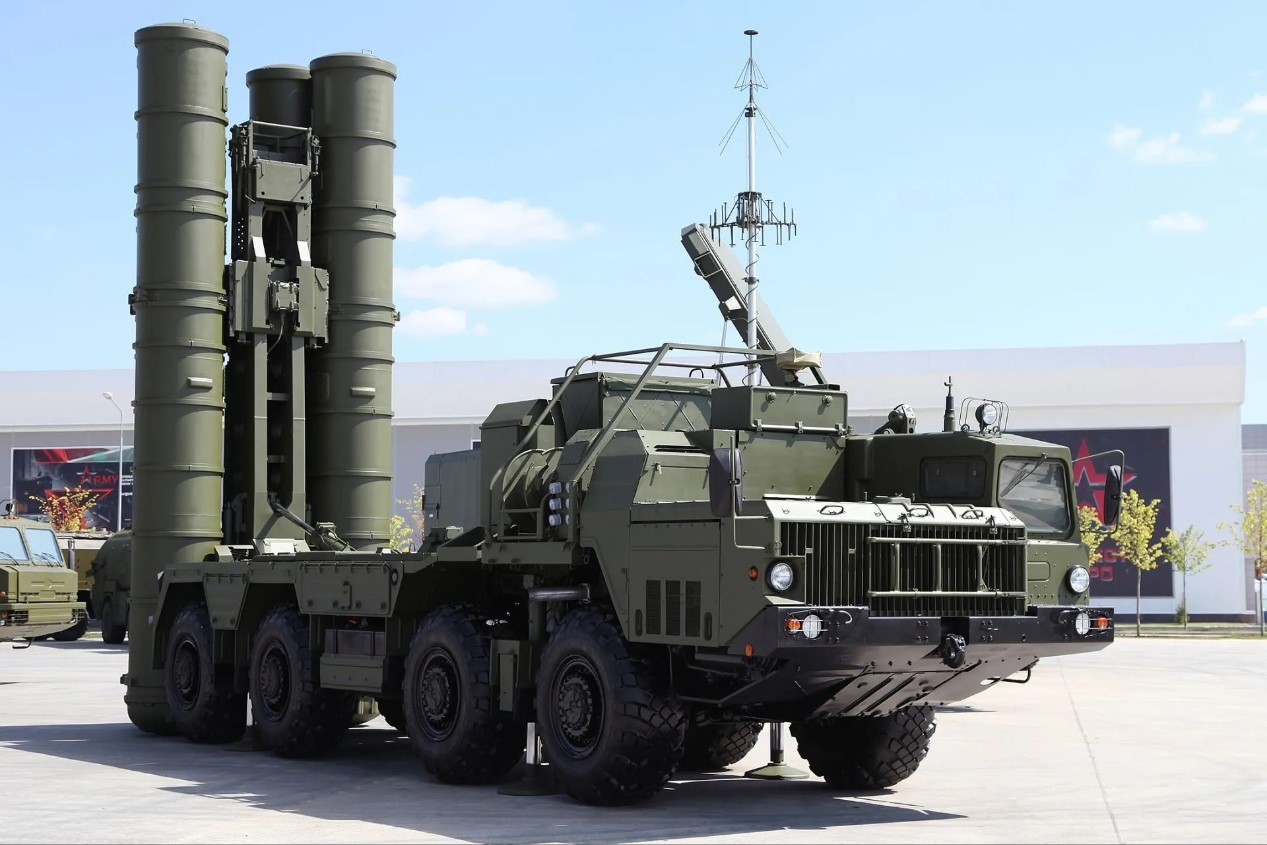
India
NEW DELHI — June 03, 2026 : India has received the fourth squadron of the Russian-made S-400 Triumf air defence system, known in Indian Air Force (IAF) service as Sudarshan, marking another significant step in enhancing the country's long-range air defence capabilities. The system arrived in India by ship recently and is expected to be deployed in an operational sector soon. The delivery is part of the $5.43 billion agreement signed between India and Russia in 2018 for the procurement of five S-400 squadrons. Three squadrons had already been inducted into service, while deliveries of the fourth and fifth units were delayed due to disruptions caused by the Russia-Ukraine conflict. Defence sources indicate that the fifth and final squadron under the contract is expected to arrive in the coming months. The S-400 is one of the world's most advanced long-range surface-to-air missile systems, capable of engaging aircraft, drones, cruise missiles, and ballistic missile threats at ranges of up to 400 kilometres, depending on the missile variant. Equipped with advanced radar systems and multiple launchers, it provides layered air defence coverage and strengthens India's ability to detect and respond to aerial threats. According to defence sources, the fourth squadron is likely to be deployed in the western sector, potentially covering areas in Rajasthan and Punjab, further enhancing air defence along the western frontier. The system integrates with India's existing air defence architecture and improves overall situational awareness and operational readiness. The S-400 system played an important role during Operation Sindoor, where it supported India's air defence operations. Defence officials stated that the system was involved in a long-range engagement against a Pakistani surveillance aircraft, highlighting its capability to engage aerial targets at extended distances. India is also pursuing the expansion of its air defence network. The Defence Acquisition Council (DAC) has cleared a proposal for the procurement of five additional S-400 squadrons, with discussions reportedly continuing with Russia. Alongside these acquisitions, India is developing an indigenous long-range air defence system under Project Kusha, also known as the Extended Range Air Defence System (ERADS). Led by the Defence Research and Development Organisation (DRDO), the programme aims to develop a domestic system with engagement ranges of up to 400 kilometres against aircraft, drones, cruise missiles, and other aerial threats. Defence manufacturer Solar Industries is participating as a development and production partner. Project Kusha is expected to enter service around 2028 and will form part of India's broader effort to establish a self-reliant and multi-layered air defence network. The combination of imported S-400 systems and indigenous programmes is expected to strengthen India's long-term air defence capabilities across multiple operational sectors.
Read More → Posted on 2026-06-03 14:59:41
World
LINKÖPING, SWEDEN — June 03, 2026 : Swedish aerospace company Saab has officially unveiled the first Gripen F two-seat fighter aircraft for the Brazilian Air Force during a rollout ceremony held at its facilities in Linköping on June 2, 2026. The aircraft, designated F-39F in Brazil and carrying serial number 4000, represents a significant milestone in the long-running defense and technology partnership between Sweden and Brazil. The Gripen F is the two-seat variant of the Gripen E fighter and has been developed to serve both as an advanced training platform and a fully operational combat aircraft. Following its public presentation, the aircraft will undergo a dedicated flight test campaign at Saab’s Flight Test Centre in Sweden before being delivered to the Brazilian Air Force. While sharing the same sensors, mission systems, combat avionics, thrust, maximum takeoff weight, and weapon hardpoints as the single-seat Gripen E, the Gripen F features a fully independent second cockpit. The aircraft is approximately 70 centimeters longer than the single-seat version to accommodate the additional crew member and does not carry the internal Mauser BK27 cannon found on the Gripen E. The second cockpit is designed to support pilot training and operational missions. It allows instructors to guide trainee pilots during live missions under realistic conditions, helping accelerate pilot conversion training. In combat operations, the additional crew member can assist with mission management, sensor operation, and tactical coordination, improving overall mission effectiveness in complex environments. Brazil is the launch customer for the Gripen F and played a central role in its co-development. The aircraft forms part of a 2014 agreement between Saab and the Brazilian government for the development and production of 36 Gripen fighters, including 28 single-seat Gripen E aircraft and eight Gripen F variants. The contract, valued at approximately $5.4 billion, also includes an extensive technology-transfer program aimed at strengthening Brazil’s aerospace industry. Under the program, hundreds of Brazilian engineers and technicians received specialized training in Sweden. Brazilian aerospace company Embraer, Saab’s main local partner, has been assembling Gripen aircraft at its facility in Gavião Peixoto and is responsible for producing 15 of the single-seat aircraft in Brazil. “The rollout of Gripen F represents a shared achievement between Saab, Brazilian industry, and the Brazilian Air Force, reflecting the deep trust we have built together over many years,” said Lars Tossman, head of Saab’s Aeronautics business area. Deliveries of Gripen aircraft to Brazil began in 2020, and 11 aircraft have been handed over to the Brazilian Air Force so far. Earlier this year, Saab and Embraer also presented the first Gripen E assembled in Brazil, marking the beginning of local production under the program. The cooperation between Saab and Brazil may expand further. Brazilian Defense Minister José Múcio Monteiro confirmed that discussions are ongoing regarding the establishment of a dedicated Gripen research and development center in São José dos Campos, a major aerospace hub and the location of Embraer’s headquarters. Saab also confirmed that the Gripen F has attracted international customers beyond Brazil, with orders received from Thailand and Colombia. The growing adoption of the two-seat variant is expected to expand its role in both advanced pilot training and frontline combat operations within multiple air forces.
Read More → Posted on 2026-06-03 15:08:12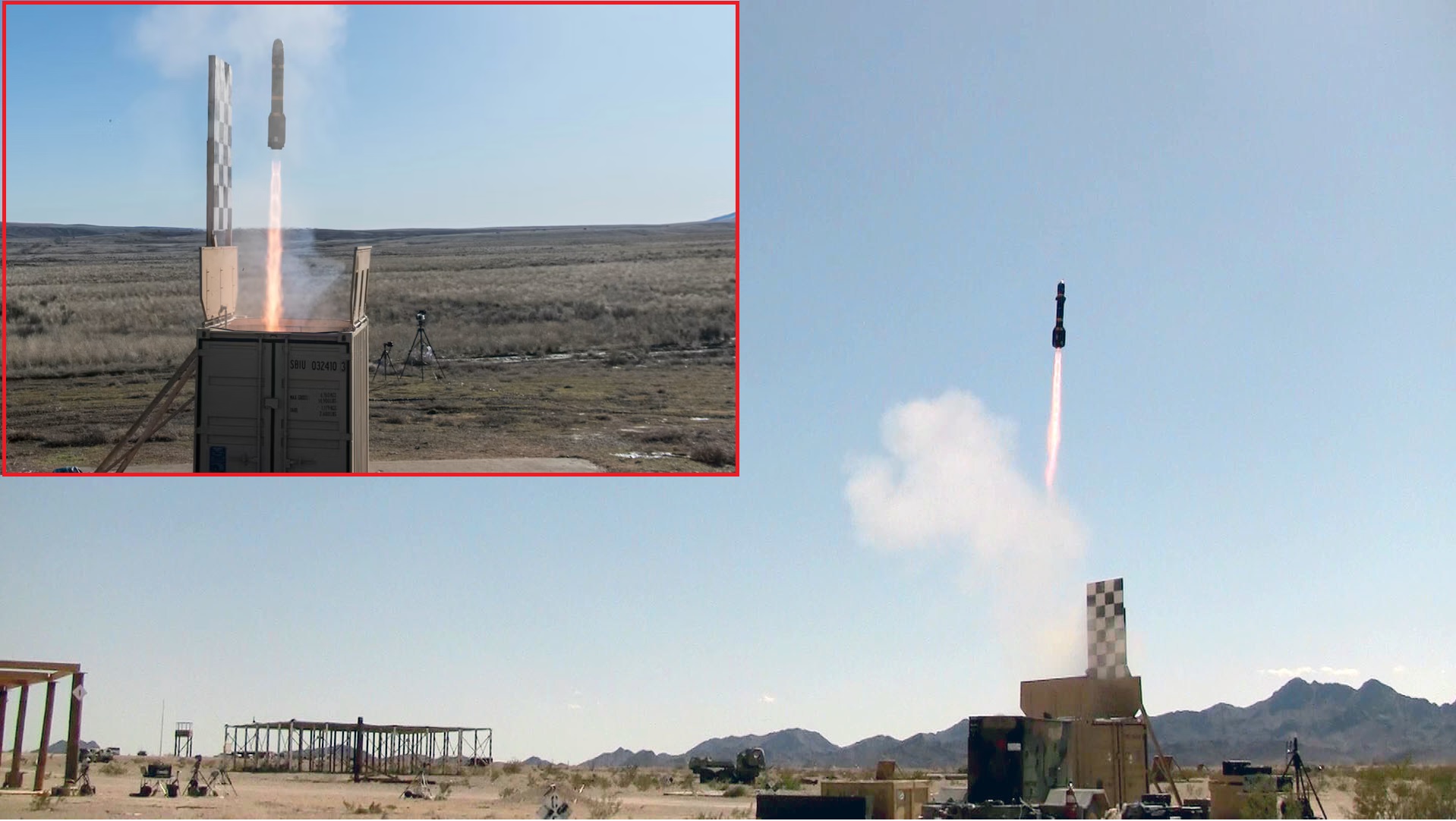
World
YUMA PROVING GROUNDS, Arizona — June 03, 2026 : Lockheed Martin has successfully intercepted a Group 3 one-way attack drone during the first live-fire demonstration of its GRIZZLY containerized launcher integrated with the Sanctum Counter-Unmanned Aerial System (C-UAS). The test, conducted at Yuma Proving Grounds in Arizona, also marked the first operational launch of a Joint Air-to-Ground Missile (JAGM) from the GRIZZLY system. The demonstration brought together Fortem Technologies’ R-40 radar, the Sanctum battle management system, and the GRIZZLY launcher to execute a complete counter-drone engagement sequence. According to Lockheed Martin, the entire effort—from hardware-in-the-loop integration to the successful live-fire event—was completed in less than 45 days. During the test, the R-40 radar detected and tracked the incoming unmanned aerial vehicle. The target data was then processed by Sanctum’s mission management software, which coordinated the engagement and directed the launcher to fire a JAGM missile. The missile successfully intercepted and destroyed the drone. The JAGM is equipped with a dual-mode seeker that combines semi-active laser and millimeter-wave radar guidance, enabling accurate target engagement in a range of operational conditions. Lockheed Martin developed the GRIZZLY launcher as a compact and mobile counter-drone solution. Built within a standard 10-foot shipping container using commercial off-the-shelf materials, the system can be rapidly transported and deployed with minimal infrastructure requirements. The launcher can be installed at fixed ground locations or mounted on maritime platforms, expanding its operational flexibility. The launcher carries up to eight missiles and features a toolless reload mechanism designed to simplify maintenance and sustainment operations. Its wireless architecture allows radars, battle management software, and launchers to communicate without extensive cabling, supporting distributed deployments and flexible sensor placement. The integrated system is designed to counter a broad range of unmanned aerial threats, including Group 1 through Group 4 drones. Lockheed Martin said the capability is intended to support the protection of forward operating bases, critical infrastructure, military facilities, and maritime assets. The Sanctum C-UAS functions as the system’s central battle manager, integrating sensor data, mission management software, artificial intelligence-enabled processing tools, and engagement systems into a unified defensive network. The architecture can operate independently or connect with higher-level command-and-control networks through Sanctum’s mesh communications framework. Commenting on the achievement, Randy Crites, Vice President and General Manager of Lockheed Martin Advanced Programs, said the rapid integration of GRIZZLY and Sanctum demonstrated the company’s ability to accelerate delivery of layered defense capabilities through cross-program collaboration and battlefield-driven innovation. Paul Lemmo, Vice President and General Manager of Lockheed Martin Sensors, Effectors and Mission Systems, said the test validated a low-cost, modular point-defense solution capable of being deployed on land or at sea within days. He added that the system can operate as a standalone capability or as part of a larger integrated defense network. The successful demonstration comes amid growing demand for counter-drone systems capable of addressing one-way attack UAVs and other emerging aerial threats. Lockheed Martin said the combination of Sanctum, GRIZZLY, and JAGM provides a scalable and rapidly deployable solution designed to meet evolving operational requirements across multiple domains.
Read More → Posted on 2026-06-03 15:43:19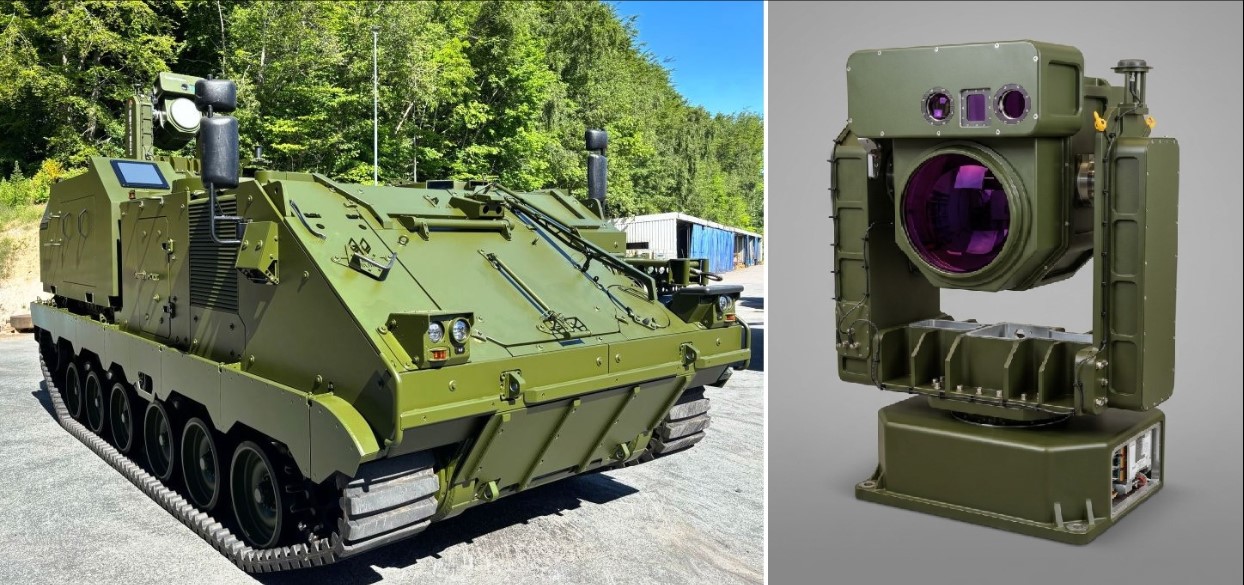
World
OMER, Israel — June 03, 2026 : Israeli defense technology company Esh-Tech has unveiled DroneLight, a new laser-based counter-drone system designed to neutralize unmanned aerial vehicles (UAVs) while consuming significantly less power than conventional directed-energy weapons. The system is scheduled to make its public debut at the Eurosatory 2026 defense exhibition in Paris from June 15 to 19. According to the company, DroneLight is currently undergoing customer evaluations in several international markets and is intended to provide a lower-cost alternative to existing laser air defense systems. Esh-Tech estimates the system could reduce the acquisition cost of laser effectors by up to 75 percent compared with traditional continuous-wave (CW) laser technologies. Pulsed-Laser Interception Method Unlike conventional military laser systems that rely on continuous energy beams to heat and destroy targets, DroneLight employs a pulsed-laser architecture that removes material through rapid ablation. The system fires high-intensity laser pulses lasting 10 milliseconds each at a pulse repetition frequency of 5 Hz. This approach allows DroneLight to operate using approximately 4 kilowatts of power, enabling integration with standard military vehicle electrical systems without the need for dedicated generators. By comparison, many fielded military laser systems require between 20 and 60 kilowatts of power. According to Esh-Tech, the laser can disable drones within one to two seconds by penetrating critical components such as batteries, electronic systems, or cameras. Testing conducted on more than 20 drones showed that creating multiple perforations in vital areas was sufficient to achieve a near-certain kill probability. The company stated that the system directs hundreds of small laser beams toward a target. Once a vulnerable point is identified, additional beams focus on the same location to accelerate target neutralization. Countering Drone Swarm Threats DroneLight is designed to engage up to 30 drones per minute, providing a potential defense against drone swarm attacks that have become an increasing concern in modern conflicts. As military forces seek cost-effective methods of countering large numbers of UAVs, directed-energy systems are attracting growing interest due to their low cost per engagement and virtually unlimited magazine depth when sufficient power is available. AI-Enhanced Target Engagement The system incorporates an artificial intelligence-based atmospheric monitoring capability to improve laser effectiveness under changing environmental conditions. A 300 mm optical aperture and a high-speed camera operating at 1,000 frames per second continuously analyze the atmosphere between the laser emitter and the target. The AI software can delay firing by 50 to 60 milliseconds to exploit more favorable atmospheric conditions, a feature that Esh-Tech says can improve performance by up to 50 percent. DroneLight's tracking system can move at speeds of up to 120 degrees per second in both azimuth and elevation, enabling engagement of fast-moving aerial targets. Mobile Design and Urban Operations Although not man-portable, DroneLight has been designed for tactical mobility. The system's optical head weighs approximately 450 kilograms, while a separate support module weighs around 350 kilograms and can be installed inside a vehicle. Esh-Tech is expected to display the system mounted on an FFG armored tracked vehicle at Eurosatory 2026. The system provides 360-degree coverage and creates a defensive zone with a radius of approximately one kilometer. Esh-Tech also highlighted DroneLight's suitability for urban environments. The narrow beam path, absence of side lobes, and short engagement time are intended to reduce collateral risks during operations in populated areas. Planned Deployment Esh-Tech CEO Erez Riahi said the combination of low power requirements, reduced costs, and effective hard-kill capability could allow armed forces to deploy laser-based protection more broadly at the tactical level. The company has received three grants from the Israel Innovation Authority and expects to field its first operational DroneLight system by September 2026. Esh-Tech has also reported receiving orders from multiple customers worldwide and is exploring future applications for naval platforms in addition to ground-based deployments.
Read More → Posted on 2026-06-03 15:50:31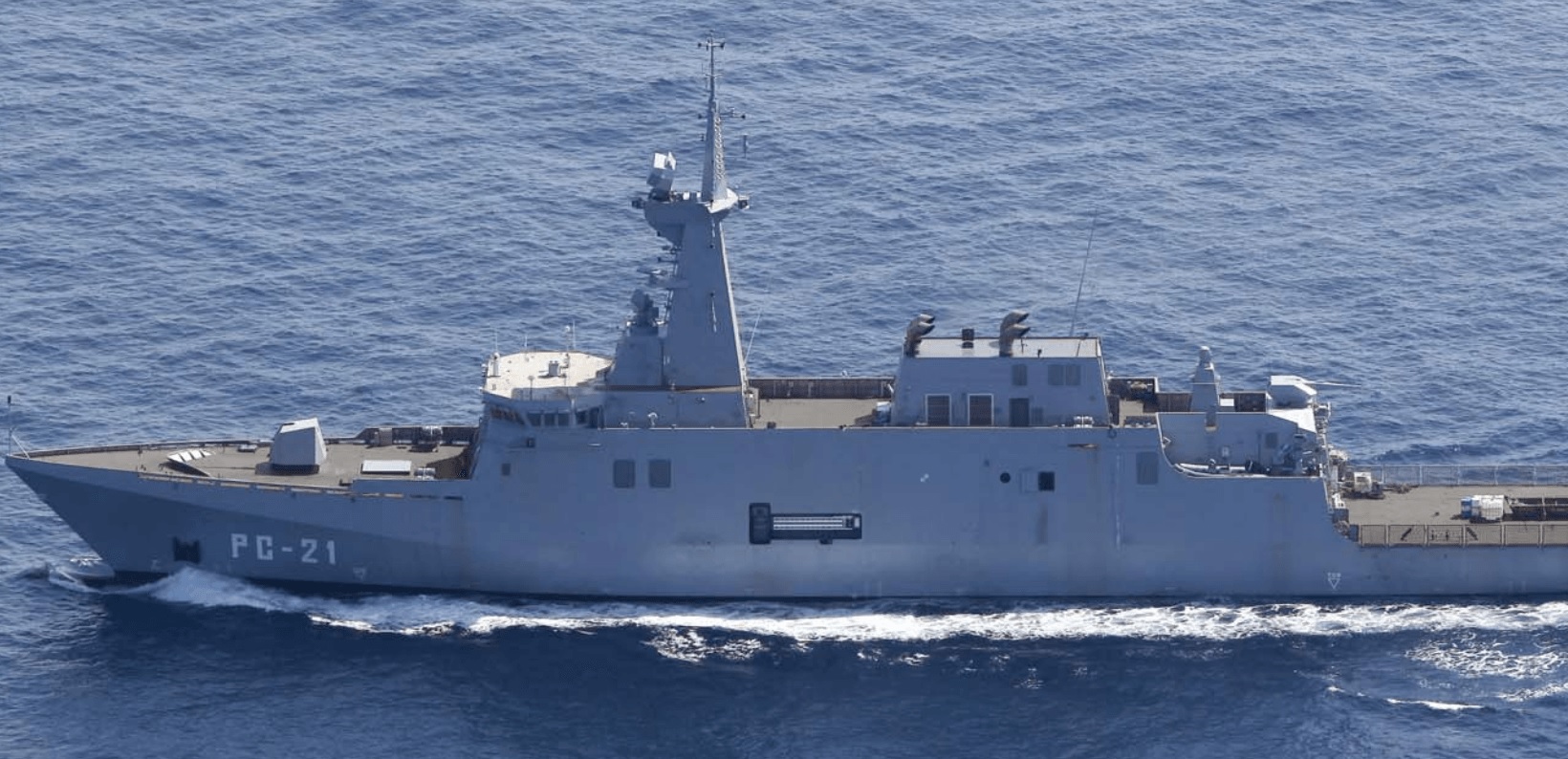
World
MADRID/JEDDAH — June 03, 2026: Spanish state-owned shipbuilder Navantia has signed a five-year Follow-On Support (FOS) contract with Saudi Arabia’s Ministry of Defence to provide maintenance and sustainment services for the first batch of five Avante 2200 corvettes delivered to the Royal Saudi Naval Forces (RSNF). The agreement expands lifecycle support activities that Navantia has been providing since the commissioning of the first corvette, HMS Al-Jubail, in 2022. The contract will be carried out at King Faisal Naval Base in Jeddah and is intended to maintain fleet readiness, ensure technical support continuity, and strengthen long-term sustainment capabilities for the Saudi Navy. Under the new agreement, Navantia will increase the number of specialized technicians deployed to Saudi Arabia to oversee both platform maintenance and combat system support for the five vessels. The expanded technical presence will support routine maintenance requirements and ensure the operational availability of onboard systems. In addition to maintenance services, the contract includes a continuous supply of spare parts for all five corvettes. The arrangement is designed to support uninterrupted sustainment activities and reduce maintenance delays by ensuring the availability of essential components throughout the ships’ service lifecycle. A major element of the agreement is a localization programme aimed at expanding Saudi Arabia’s domestic naval support capabilities. Navantia will provide specialized training and technical knowledge transfer to Saudi personnel, enabling local manufacturing of spare parts and supporting the development of in-country maintenance expertise. The localization effort builds upon the existing SAMINavantia joint venture, which was established to support local combat system integration. Through training and industrial cooperation, the programme is expected to strengthen the Royal Saudi Naval Forces’ long-term sustainment and logistics capabilities while aligning with Saudi Arabia’s broader domestic industrial objectives. The five vessels are based on Navantia’s Avante 2200 design and have been customized to meet Saudi operational requirements. The corvettes are designed for high survivability, strong seakeeping performance, and sustained operations in the high-temperature maritime environments of the Gulf and Red Sea regions. The ships are equipped to conduct maritime surveillance, traffic monitoring, search and rescue missions, and the protection of strategic infrastructure. They also possess anti-surface, anti-aircraft, anti-submarine, and electronic warfare capabilities, allowing them to perform a broad range of naval operations. The corvettes are integrated with several advanced systems, including the HAZEM combat system delivered through the SAMINavantia partnership, the HERMESYS integrated communications system, the DORNA fire-control director, the Integrated Platform Control System, and the MINERVA integrated bridge system. The original programme for the first five vessels entered into force in November 2018. Following the launch of the first corvette in July 2020 at Navantia’s Bay of Cadiz shipyards in Spain, the company maintained a production schedule under which the remaining vessels were launched at intervals of approximately four months. Construction of the first batch was completed within three years, with final delivery concluded in March 2024. Beyond ship construction, the initial programme also included integrated logistics support, operational training for Royal Saudi Naval Forces personnel, and the establishment of dedicated Training and Education Centers in Jeddah for combat systems and platform control systems. These facilities were intended to strengthen operational preparedness and long-term fleet sustainment. The signing of the five-year support agreement has also been positively received by Navantia’s workforce and labor representatives in San Fernando, Cadiz, as it provides long-term workload stability and employment continuity associated with maintenance and technical support activities. The performance and delivery of the first five corvettes contributed to a follow-on contract signed in December 2024 for three additional Avante 2200 vessels with identical capabilities. Construction of the second batch is currently underway, with the keel laying of the seventh ship, HMS NEOM, completed in May 2026. According to programme details, the second batch represents approximately four million hours of industrial work and is expected to support around 2,000 direct, indirect, and induced jobs. The final vessel of the new series is scheduled for delivery in 2028.
Read More → Posted on 2026-06-03 16:07:36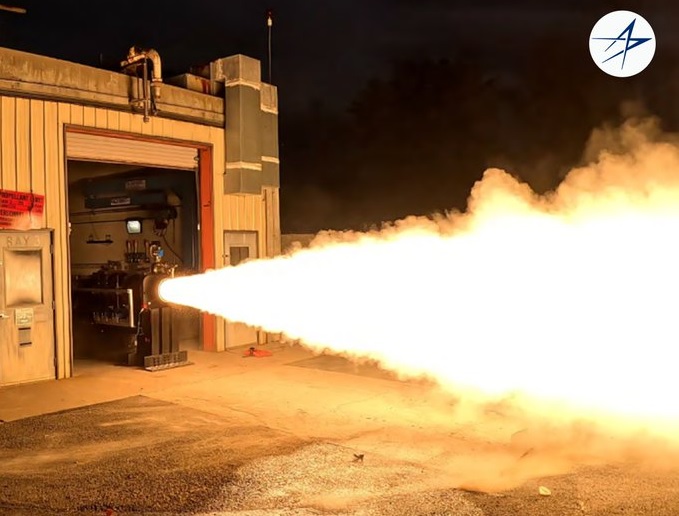
World
ORANGE COUNTY, VIRGINIA — June 03, 2026 : Lockheed Martin and L3Harris Technologies have completed a major propulsion milestone for the U.S. Army’s Precision Strike Missile (PrSM) Increment 4 program, successfully validating a key technology designed to extend the Army’s long-range precision strike capability beyond current operational limits. The achievement follows a successful Direct Connect Transition Test conducted at L3Harris’ specialized high-speed air-breathing propulsion facility in Orange County, Virginia, with representatives from the U.S. Army Aviation and Missile Center present during the demonstration. The test marks an important step in the development of the Army’s next-generation long-range strike missile and clears the primary technical hurdle before flight testing begins. During the trial, the developmental missile successfully demonstrated a clean transition from its solid rocket motor to ramjet-powered sustained flight. This propulsion phase, often described as a “booster-to-ramjet handoff,” allows the missile to shift from initial launch acceleration to sustained cruise propulsion during flight. According to program officials, the successful test validates a critical risk-reduction activity and confirms the operational viability of the missile’s combined-cycle propulsion system. With the ground-based milestone completed, the program is now moving beyond laboratory and propulsion validation activities toward airborne testing, scheduled to begin later this year. The Precision Strike Missile Increment 4 is being developed to significantly expand the Army’s long-range strike reach while maintaining compatibility with launch systems already in service. Unlike conventional missile propulsion systems, the weapon incorporates ramjet technology—an air-breathing engine that uses forward motion to compress incoming air and generate thrust, enabling longer-range and more efficient sustained flight. The missile combines a solid rocket booster with a ramjet propulsion system in a dual-mode configuration. The solid rocket motor provides the initial acceleration required after launch, while the ramjet engine sustains high-speed flight over extended distances. The baseline Precision Strike Missile has already replaced the Army’s legacy Army Tactical Missile System (ATACMS), but Increment 4 introduces a substantial range increase. While the Army’s latest operational requirement seeks a strike range of approximately 800 kilometers, Lockheed Martin’s design objective targets ranges exceeding 1,000 kilometers, or more than 620 miles—roughly doubling the operational reach of current PrSM variants. The extended range is intended to improve standoff strike capability in contested operational environments, allowing forces to engage targets from safer distances. The missile is designed to target relocatable land-based objectives as well as moving maritime threats, including ships. In addition to increased range, the system combines high-control authority with high terminal velocity, characteristics intended to complicate interception by enemy air defense systems and improve strike effectiveness during terminal engagement. Despite the significant increase in capability, the program has been designed to avoid major infrastructure changes for the Army. PrSM Increment 4 maintains the same form factor and transport container used by earlier missile variants, allowing it to remain fully compatible with the Army’s existing High Mobility Artillery Rocket System (HIMARS) and M270 Multiple Launch Rocket System (MLRS). The missile can also be transported using existing logistics infrastructure, including standard C-130 cargo aircraft, reducing the need for additional transportation systems or supply chain modifications. By retaining compatibility with current launchers and transport systems, the Army can integrate the upgraded missile without requiring extensive retraining or new platform procurement. “The Direct Connect Transition Test shows the missile’s core propulsion is not a future concept but a validated capability that can be loaded onto current HIMARS and M270 launchers quickly, dramatically shortening the time to warfighter delivery,” said Randy Crites, vice president of Lockheed Martin Advanced Programs. To support future manufacturing demands, Lockheed Martin and L3Harris have jointly invested more than $300 million in additive manufacturing and automation technologies. The investment is intended to establish a scalable production pipeline capable of accelerating manufacturing while supporting operational fielding requirements. “Advancing our next-generation propulsion system quickly through ground testing so we are ready now for flight testing confirms our ability to deliver on the Army’s mission requirements,” said Scott Alexander, president of Missile Propulsion at L3Harris. “L3Harris’ propulsion system strikes a balance between capability and affordability by meeting the Army’s requirements for speed, range, and lethality.” With propulsion risk-reduction activities now completed, the program remains on schedule for operational fielding. Initial flight testing is expected to begin in the fall of 2026 and will focus on validating near-tactical range performance and confirming propulsion maturity under operational conditions. Additional testing is expected to continue through 2027 as the missile advances toward full operational capability. PrSM Increment 4 forms part of the U.S. Army’s broader modernization effort to expand deep-strike precision fire capabilities against land and maritime targets while leveraging existing launch and logistics systems to accelerate deployment and reduce implementation costs.
Read More → Posted on 2026-06-03 16:16:42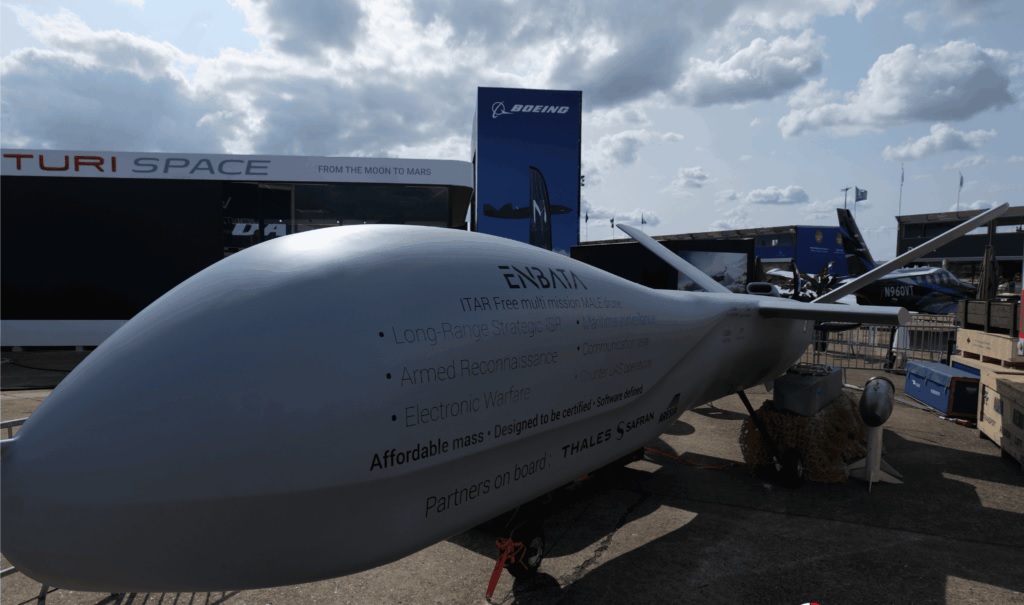
World
PARIS — June 03, 2026 : French aerospace manufacturer Aura Aero will unveil the definitive version of its ENBATA Medium Altitude Long Endurance (MALE) drone at the Eurosatory 2026 defense and security exhibition in Paris, scheduled from June 15 to June 19. The presentation marks a step in France’s sovereign defense capabilities and strengthens Europe’s independent unmanned aerial systems sector. Developed by Aura Aero’s defense division, Aura M, the ENBATA is designed as a fully sovereign and ITAR-free platform, meaning it is built without components subject to United States export restrictions. The approach is intended to provide greater operational independence and export flexibility for European and allied operators. Aura Aero positions ENBATA as a European alternative in the MALE drone segment, where many countries continue to rely on imported systems such as the MQ-9 Reaper. The aircraft is designed for both military and civilian use with an open architecture system to support future upgrades and evolving operational requirements. Assembly of the prototype has already begun at Aura Aero’s Toulouse-Francazal Airport facility in France, with the aircraft expected to be displayed at Eurosatory ahead of its planned maiden flight later in 2026. According to confirmed specifications, ENBATA will have a maximum takeoff weight of approximately 2,000 kilograms, payload capacity approaching one metric ton, and endurance of up to 55 hours. The drone will also support up to 340 kilograms of payload under each wing and use a hybrid-electric propulsion system. The aircraft is being developed as a dual civil-military platform and is expected to pursue European Union Aviation Safety Agency (EASA) certification. Mission roles include intelligence, surveillance and reconnaissance (ISR), maritime and land surveillance, communications relay, electronic warfare, and anti-drone operations. Civilian applications may include search-and-rescue missions, forest fire monitoring, and aerial surveillance. Aura Aero said ENBATA could also support collaborative mission testing linked to future Collaborative Combat Aircraft (CCA) concepts beginning in 2027, allowing operations alongside piloted aircraft or coordination with multiple unmanned systems. The program is being developed with support from France’s Ministry of Armed Forces and the Directorate General of Armaments (DGA), alongside industrial partners Thales, Safran, and Aresia. Aura Aero Chief Executive Officer Jérémy Caussade said the program was created to address a capability gap in Europe by providing a sovereign MALE drone developed outside large multinational frameworks. The defense effort is overseen by Aura M Chief Defense Officer General Stéphane Mille, former Chief of Staff of the French Air and Space Force. To support future production, Aura Aero recently completed a €50 million Series B funding round and secured permits for a new 538,000-square-foot manufacturing and assembly facility at Toulouse-Francazal Airport. The site will support serial production of ENBATA as the platform moves toward operational service following its planned first flight later this year.
Read More → Posted on 2026-06-03 16:33:29
World
KUWAIT CITY — June 03, 2026 : Kuwait came under a series of Iranian drone and ballistic missile attacks early Wednesday, resulting in significant damage to Kuwait International Airport, casualties among civilians, and renewed tensions between Iran and the United States despite ongoing ceasefire efforts in the region. Kuwaiti authorities confirmed that Terminal 1 (T1) at Kuwait International Airport sustained major damage after being struck during the overnight attacks. The incident forced aviation authorities to suspend airport operations and divert incoming commercial flights to alternative airports in neighboring countries, including Dammam in Saudi Arabia. The passenger terminal had resumed full operations only on Monday after remaining partially inactive during a 55-day wartime disruption linked to regional hostilities. According to Kuwaiti officials, one person was killed and 63 others were injured in the attack. The deceased was identified as an Indian national. Kuwait’s Health Ministry deployed 25 ambulances to the airport following the strike, while emergency medical teams transferred injured individuals to seven hospitals across the country. Health authorities stated that the injured suffered blast-related wounds, head trauma, fractures, and other serious injuries, with several patients requiring immediate surgical treatment. The Embassy of India in Kuwait confirmed the death of an Indian citizen in a statement issued on the social media platform X, expressing condolences to the bereaved family. The embassy stated that it was coordinating with Kuwaiti authorities to provide assistance to the family of the deceased and support injured Indian nationals. Kuwait’s Ministry of Defence said its armed forces detected and intercepted 13 ballistic missiles and 17 drones launched from Iran since dawn. Officials stated that debris and fragments from intercepted projectiles fell in several residential areas, prompting security and emergency responses. Military authorities reported that air defense systems remained active throughout the incident, while at least six ballistic missiles were believed to be part of the wider attack wave directed toward Kuwait and surrounding military sites. Iranian strikes reportedly targeted military facilities hosting United States and allied forces, including Camp Arifjan and Ali Al-Salem Air Base in Kuwait. The Ali Al-Salem base is known for hosting helicopter operations and supporting coalition military activities. The Islamic Revolutionary Guard Corps (IRGC) claimed responsibility for the attacks, stating that Iranian forces targeted U.S. military infrastructure in Kuwait as well as the headquarters of the U.S. Navy’s Fifth Fleet in neighboring Bahrain. According to the IRGC, the operation was carried out in response to a recent U.S. military strike on an Iranian ground control station located on Qeshm Island in the Strait of Hormuz. Iranian officials described Wednesday’s attacks as retaliatory measures. The United States military confirmed that multiple drones and missiles had been launched toward American and allied military positions in Kuwait and Bahrain. U.S. Central Command stated that joint air defense systems operated by the United States, Kuwait, and Bahrain intercepted most threats, while several incoming missiles reportedly disintegrated before reaching intended targets. U.S. officials stated that no confirmed impacts occurred on American military facilities in Kuwait or Bahrain. Bahraini and U.S. naval defense systems also intercepted incoming projectiles aimed toward Bahrain, where the U.S. Navy’s Fifth Fleet is based. The attacks have placed additional strain on a ceasefire reached on April 8, which had largely paused more than a month of active military exchanges between Tehran and Washington. Both Iran and the United States have described their recent military actions as defensive and retaliatory responses to earlier attacks. In the diplomatic aftermath of the strikes, Kuwait moved to formally protest Iran’s actions. The Kuwaiti Foreign Ministry summoned Iran’s chargé d’affaires and issued an official protest note condemning the attacks. Kuwaiti authorities also announced measures to reduce the size of Iran’s diplomatic mission in the country and declared two Iranian diplomats persona non grata, ordering them to leave Kuwait within 24 hours. Regional governments have also reacted to the escalation. Officials from the United Arab Emirates called for a coordinated Gulf response to attacks targeting civilian facilities and critical infrastructure, amid concerns over regional security and uninterrupted transportation and trade routes.
Read More → Posted on 2026-06-03 17:13:28
World
TAIPEI — June 03, 2026 : Taiwan’s National Chung-Shan Institute of Science and Technology (NCSIST) has publicly unveiled three military robotic dog variants designed for reconnaissance, patrol, surveillance, and combat-support missions, as part of the island’s broader effort to expand autonomous defense capabilities amid growing regional security concerns. The systems, unveiled on June 2, 2026, are intended to operate in high-risk environments while reducing the exposure of military personnel to frontline threats. Developed using the Vision 60 quadruped platform manufactured by US-based Ghost Robotics, the robotic dogs have been modified by NCSIST with domestically developed reconnaissance sensors, surveillance systems, and weapon integration technologies tailored to Taiwan’s operational requirements. According to NCSIST, the decision to build the systems on an established US-developed platform is intended to accelerate deployment and maintain a reliable non-Chinese supply chain for autonomous military technologies. Platform Specifications and Operational Design The robotic dogs are based on the Vision 60 quadruped system, which is engineered to operate in austere and physically demanding environments. The platform includes self-righting capabilities and three degrees of freedom in each leg, allowing it to move across uneven terrain, stairways, steep slopes, muddy areas, and wet conditions, including heavy rain. The platform weighs 52.4 kilograms and can carry payloads of up to 10 kilograms. It is capable of reaching speeds of 2.5 meters per second, or approximately 9 kilometers per hour, and can operate continuously for between eight and ten hours on a single charge. NCSIST stated that the system is designed to function in extreme environmental conditions, with an operational temperature range between minus 40 degrees Celsius and 55 degrees Celsius. Three Military Variants Developed by NCSIST To support different mission requirements, NCSIST has integrated proprietary Taiwanese-developed systems into the base platform to produce three operational variants for military use. Autonomous Patrol and Security Variant The first configuration is designed for autonomous patrol, facility security, and surveillance missions. Equipped with a 32-line three-dimensional LiDAR system and thermal imaging sensors, the robotic dog is capable of autonomous navigation, obstacle avoidance, heat-source detection, and real-time environmental mapping. Officials stated that the system is intended to support base security operations and nighttime monitoring of sensitive military facilities and critical infrastructure. The LiDAR system enables the platform to generate detailed three-dimensional spatial maps while moving independently through complex environments. Intelligence, Surveillance, and Reconnaissance (ISR) Variant The second configuration focuses on intelligence gathering and battlefield reconnaissance. Equipped with an in-house electro-optical reconnaissance payload, the ISR variant is designed to search for, identify, and track targets while transmitting real-time information to military operators and command centers. The robotic platform can zoom in on suspected targets and relay operational data to a smart command-and-control system, allowing commanders to maintain battlefield awareness without deploying personnel into potentially dangerous operational zones. Taiwanese defense planners view such systems as useful tools for reducing risks during surveillance and reconnaissance missions. Armed Combat and Fire Support Variant The third variant combines reconnaissance capabilities with offensive functions and represents the most combat-oriented version of the robotic dog platform. The system incorporates a domestically developed remote-controlled weapon station mounted on its back and was demonstrated carrying a riot gun intended for crowd-dispersal and defensive operations. The platform uses artificial intelligence-enabled multi-target recognition technology capable of identifying, tracking, and locking onto moving threats. According to NCSIST, the combat version is intended to support military fire-support missions, urban defense operations, and the protection of critical facilities where unmanned systems can supplement frontline personnel. Focus on Remote Offshore Defense A major operational driver behind the robotic dog program is Taiwan’s requirement to strengthen monitoring and security capabilities across remote offshore territories in the South China Sea. Jen Kuo-kuang, deputy director of NCSIST’s Missile and Rocket Systems Research Division, stated that Taiwan’s Coast Guard and Marine Corps have identified a requirement to monitor coastlines on the Pratas (Dongsha) Islands and Spratly (Nansha) Islands, including the strategically significant outpost of Itu Aba. Taiwanese authorities have observed increasing Chinese coast guard patrols and drone activity near these sensitive outposts. Officials believe robotic systems could provide persistent surveillance and monitoring while reducing the need for personnel to remain stationed in exposed coastal positions for extended periods. The robotic dogs could also support deterrence and security operations in sparsely populated areas where maintaining permanent human patrols is operationally challenging. Future Integration into Multi-Domain Networks NCSIST stated that the robotic systems are designed to communicate with one another and exchange targeting and operational data in real time. Future development efforts will focus on integrating the robotic dogs with uncrewed aerial vehicles (UAVs) and unmanned surface vessels (USVs) to establish a coordinated multi-domain combat network. The institute said the objective is to create a three-dimensional operational system capable of sharing intelligence and battlefield information across land, maritime, and aerial domains to improve situational awareness and operational coordination. Although the robotic dog systems remain in the demonstration and prototyping phase, the unveiling marks an important step in Taiwan’s effort to expand unmanned military capabilities and strengthen defense resilience through automation and advanced battlefield technologies. Taiwan has increasingly invested in unmanned systems, including drones, autonomous maritime platforms, and artificial intelligence-enabled technologies, as part of its wider defense modernization strategy. Defense analysts note that quadruped robotic systems are increasingly being tested globally for reconnaissance, security patrols, logistics support, and combat-assistance missions in complex operational environments.
Read More → Posted on 2026-06-03 17:59:52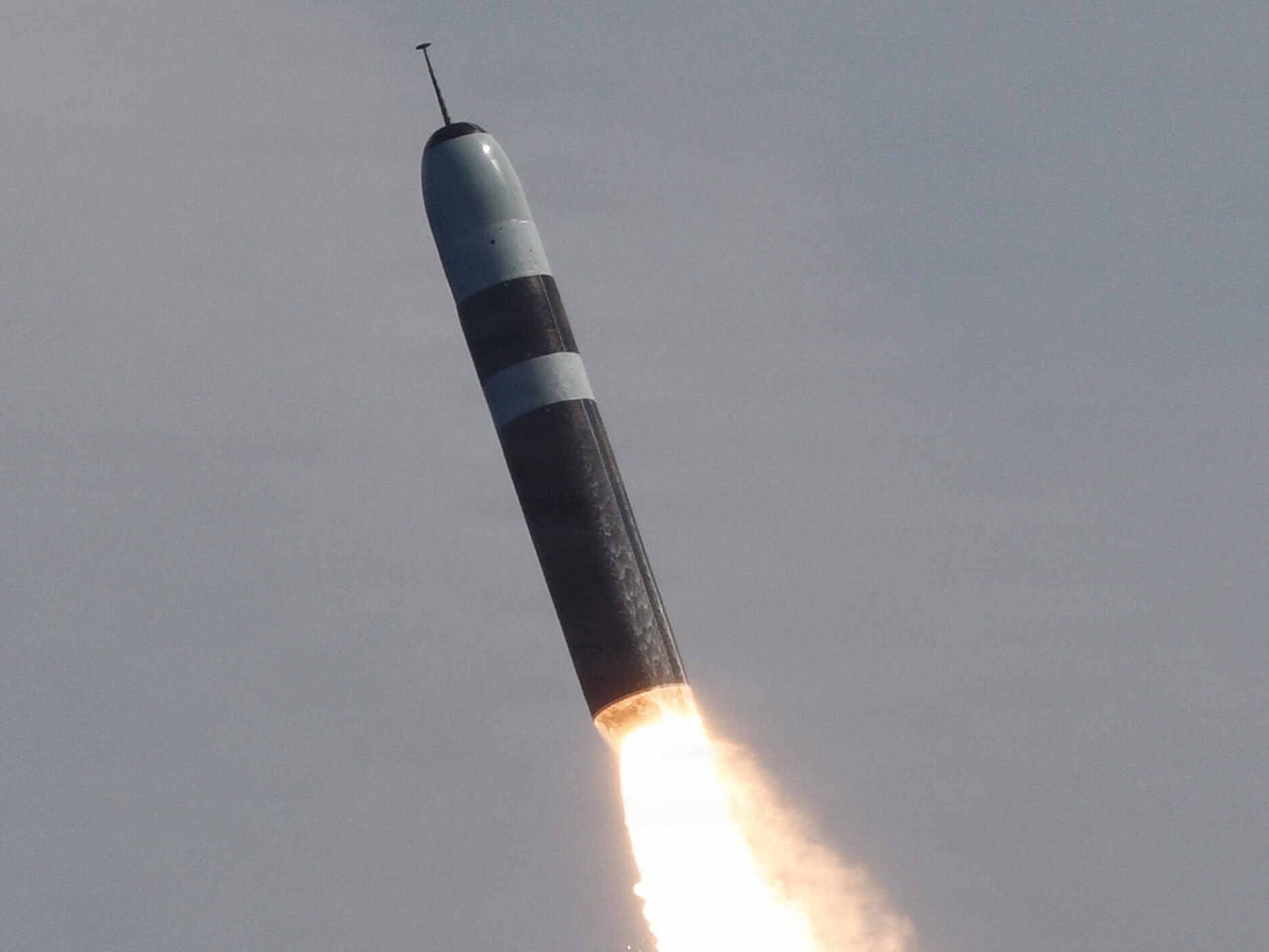
World
BRUSSELS/WASHINGTON — June 03, 2026 : The United States is holding confidential discussions with NATO allies over a possible eastward expansion of the alliance’s nuclear-sharing arrangement, a move that could bring part of NATO’s nuclear deterrence infrastructure closer to Russia’s borders for the first time since the Cold War. According to a June 2, 2026 report by the Financial Times, U.S. officials have indicated openness to allowing additional NATO members on the alliance’s eastern flank to host dual-capable aircraft (DCA) and potentially support elements of the nuclear-sharing mission currently concentrated in Western Europe. If approved, the move would represent the first deployment of U.S. nuclear deterrence infrastructure into former Warsaw Pact countries and the most significant geographic adjustment to NATO’s nuclear posture since the Soviet Union’s collapse. NATO Reviews Deterrence Strategy Amid Force Restructuring The discussions come as Washington reassesses its military posture in Europe following Russia’s 2022 invasion of Ukraine and broader changes to U.S. force deployments on the continent. The Pentagon is reviewing reductions in conventional troop presence, including the announced withdrawal of around 5,000 personnel from Germany under the administration of President Donald Trump. Against this backdrop, U.S. officials are examining nuclear-sharing arrangements as a way to maintain deterrence credibility and reassure allies of continued American security commitments. Officials involved in planning indicate that the proposal would not increase the total number of U.S. nuclear weapons stationed in Europe. Instead, the focus is on redistributing existing capabilities, increasing operational flexibility, and strengthening NATO’s deterrence posture along its eastern flank. Current NATO Nuclear-Sharing Structure NATO’s nuclear-sharing framework has remained a central component of alliance deterrence since the Cold War. Under the arrangement, approximately 100 U.S.-owned B61-series gravity bombs are believed to be stored under American custody at six military bases across Europe: Kleine Brogel in Belgium, Büchel in Germany, Aviano and Ghedi in Italy, Volkel in the Netherlands, and Incirlik Air Base in Türkiye. Although hosted by allied countries, the weapons remain under full U.S. ownership, maintenance, and release authority. Participating nations contribute aircraft and trained crews capable of carrying nuclear weapons if authorized during wartime. Oversight of the mission is conducted through NATO’s Nuclear Planning Group, established in 1966 to coordinate alliance nuclear policy and consultation. Operational readiness is maintained through the annual Exercise Steadfast Noon, NATO’s principal nuclear preparedness exercise involving around 2,000 personnel and 60 to 70 aircraft operating without live nuclear weapons. Poland Seen as the Most Likely Candidate Among NATO’s eastern members, Poland is viewed as the strongest candidate for a future expansion of the mission due to its strategic position, military modernization, and expanding defense infrastructure. Poland currently allocates more than 4 percent of GDP to defense, the highest proportion within NATO, while undertaking one of Europe’s largest military procurement programs. Warsaw has ordered 32 F-35A Lightning II fighters, 250 M1A2 Abrams tanks, 96 AH-64E Apache helicopters, Patriot air-defense batteries, and hundreds of HIMARS launchers from the United States. The country also hosts the forward headquarters of the U.S. Army V Corps and functions as a key logistics hub for military support entering Ukraine. Former Polish President Andrzej Duda previously called for the deployment of U.S. nuclear weapons on Polish territory, arguing that NATO’s deterrence posture should reflect the alliance’s eastward security shift after Russia’s invasion of Ukraine. Poland has also reportedly discussed aspects of France’s forward deterrence initiative, including the temporary deployment of nuclear-capable Rafale aircraft during periods of heightened tension. Baltic States Express Interest Estonia, Latvia, and Lithuania have also shown interest in closer participation in NATO’s nuclear-sharing framework as security concerns along the alliance’s eastern frontier increase. However, analysts note that the Baltic states currently lack the scale of military infrastructure, logistics capacity, and U.S. military presence available in Poland, making Warsaw the more practical option should NATO move forward with an eastward expansion. Infrastructure and Certification Requirements Expanding the nuclear-sharing mission would require extensive investment and long-term preparation. Potential host nations would need hardened aircraft shelters equipped with underground Weapons Storage and Security System (WS3) vaults, highly secured storage areas, specialized maintenance facilities, encrypted communications networks, and integration into U.S. nuclear command-and-control systems. Security requirements for such facilities exceed those of conventional ammunition depots and involve permanent surveillance, multiple layers of protection, dedicated emergency response forces, and recurring certification inspections. Military officials indicate that establishing nuclear-certified infrastructure could require years of preparation and substantial financial investment. F-35 Fleet Expansion Shapes Future Planning NATO’s transition toward the F-35A Lightning II is expected to play a major role in future nuclear-sharing decisions. For decades, the mission relied on legacy F-16 variants and Panavia Tornado aircraft. As those fleets age, NATO members are shifting toward the F-35A, which is certified to carry the upgraded B61-12 nuclear gravity bomb. The aircraft’s internal weapons carriage allows it to retain low-observable characteristics during operations, while the B61-12’s guided tail-kit system improves accuracy and mission flexibility. Poland, Belgium, the Netherlands, Italy, Germany, Norway, Denmark, and Finland are all introducing F-35 aircraft into service, creating a larger pool of NATO members capable of supporting future nuclear-sharing responsibilities. By the early 2030s, European NATO countries are projected to collectively operate more than 600 F-35 aircraft. Strategic Implications No formal agreement is believed to be imminent, and any change to NATO’s nuclear posture would require political consensus among alliance members as well as major infrastructure investments. However, positioning nuclear-certified aircraft closer to NATO’s eastern flank could improve response flexibility, shorten operational flight distances, and further integrate eastern member states into NATO’s deterrence framework as the alliance continues adapting to Europe’s changing security environment.
Read More → Posted on 2026-06-03 18:20:01
World
MUNICH — June 03, 2026 : German defense technology company ARX Robotics announced on June 3 a major expansion strategy across Europe, including plans to open a new headquarters and manufacturing facility in Munich later this year as it scales operations to support rising demand for autonomous military systems. According to a company announcement released on June 3, ARX Robotics is expanding operations across Europe, including in Ukraine and the United Kingdom, as part of a broader strategy to strengthen manufacturing capacity and support growing deployment of unmanned military systems. The company said the expansion aims to increase its production capacity in Germany fivefold by the end of 2026 while strengthening its position as a supplier of unmanned ground systems (UGVs) for European defense forces. The move comes as European governments continue investing in robotics, artificial intelligence (AI), and autonomous defense technologies as part of military modernization programs. The planned Munich facility will serve as both the company’s headquarters and its primary production center for robotic systems. ARX Robotics said the site will function as the central manufacturing hub for its GEREON unmanned ground vehicles, supporting increased production volumes over the coming years. To support the expansion, the company plans to double its workforce by the end of 2026, with investments focused on engineering, research and development (R&D), software development, manufacturing, and autonomous systems capabilities. Berlin Office to Support Government and Defense Cooperation Alongside the Munich expansion, ARX Robotics confirmed the opening of a new office in Berlin focused on engagement with government institutions, defense organizations, and European security stakeholders. The Berlin office will not handle manufacturing operations and will instead focus on coordination with policymakers, military institutions, and defense-sector partners involved in procurement and defense planning. The expansion also coincides with the unveiling of a new corporate identity, which ARX Robotics said reflects its transition from a startup founded in 2022 into an established European defense technology manufacturer. “Europe is entering a new era of defense—an era of speed, autonomy, and sovereignty. This idea has been at the core of ARX Robotics since the beginning,” said Marc Wietfeld, Chief Executive Officer and co-founder of ARX Robotics. Wietfeld said the company has evolved from a startup into a defense technology manufacturer focused on developing battlefield-proven autonomous systems while maintaining its long-term mission of supporting future military capabilities. Focus on Autonomous Ground Systems and AI Integration ARX Robotics specializes in software-defined unmanned ground systems and autonomous military technologies designed for operational support missions. Its hardware portfolio centers on the GEREON unmanned ground vehicle series, developed for frontline logistics, casualty evacuation, surveillance, and battlefield support operations. According to the company, the platform is capable of carrying payloads of up to 500 kilograms, enabling transportation of equipment, supplies, and operational materials in frontline environments. The systems are supported by Mithra OS, an AI-powered operating system designed to integrate autonomous capabilities and fleet-wide connectivity into both newly built and existing military vehicles. ARX Robotics said the software enables coordination between multiple robotic systems, operational planning, and improved communication across fleets. The company stated that its systems are already in service with several European armed forces and that it has launched localized manufacturing in the United Kingdom to fulfill early orders for the British Army, expanding its production footprint beyond Germany. Expanded Operations and Contracts in Ukraine ARX Robotics said it is currently the largest Western supplier of unmanned ground vehicles operating in Ukraine. On May 11, the company announced a contract with the Ukrainian Defense Forces to deliver several hundred additional GEREON systems, expanding an existing fleet already operating in the country or ordered for delivery. To support faster deliveries and strengthen supply chain resilience, ARX Robotics said it is localizing parts of production in Ukraine and working with local supply partners to improve delivery timelines. The company added that integration of Mithra OS across deployed systems is intended to allow multiple robotic platforms to operate together during coordinated frontline missions, supporting logistics, surveillance, and battlefield support operations. Rising European Demand for Autonomous Defense Technologies ARX Robotics’ expansion reflects broader growth in Europe’s investment in autonomous defense technologies, including robotics, AI systems, and unmanned military platforms, as governments continue military modernization efforts and expand procurement of advanced defense systems. With a new Munich headquarters, expanded production capacity, workforce growth, and operations across multiple European countries, ARX Robotics is positioning itself to meet increasing demand for autonomous military systems in the coming years.
Read More → Posted on 2026-06-03 18:36:13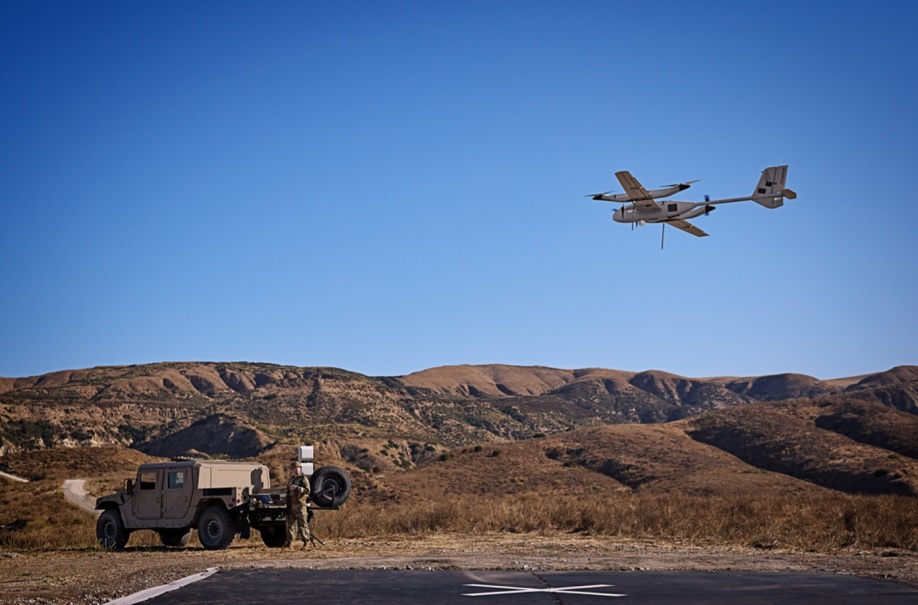
World
EDSTONE ARSENAL, AL — June 04, 2026 : The U.S. Army has awarded defense contractor AeroVironment a $117.3 million firm-fixed-price contract for the procurement of 82 P550 long-range reconnaissance drones. Announced on June 3, 2026, the deal represents a significant step in the Army’s effort to push advanced intelligence, surveillance, and target acquisition (RSTA) capabilities directly down to the battalion level. By placing persistent airborne reconnaissance under the direct control of battalion commanders, the Army is actively reducing its reliance on higher-echelon brigade aviation assets. The accelerated procurement—which mandates a completion date of July 23, 2026—highlights a broader military shift toward distributed, adaptable, and drone-centric operations shaped by recent lessons from modern battlefields. Bridging the Capability Gap The P550 occupies the upper end of the Pentagon's Group 2 unmanned aircraft category. With a maximum take-off weight of 24.9 kg (55 lbs)—just below the 25 kg threshold for Group 3 drones—it fills a long-standing capability gap between short-range platoon quadcopters and scarcer, brigade-level fixed-wing assets. AeroVironment unveiled the P550 in October 2024 as a purpose-built, all-electric vertical takeoff and landing (eVTOL) system. It combines multiple operational advantages into a single airframe: Endurance & Payload: The drone can remain airborne for over five hours on battery power alone while carrying up to 6.8 kg (15 lbs) of multi-sensor payloads. Rapid Deployment: The system requires no runways or catapults. It breaks down into a compact transport package (1.8m × 0.6m × 0.6m) that fits inside standard tactical vehicles like HMMWVs and JLTVs. Soldiers can unpack, assemble, and launch the drone tool-free in under ten minutes. Operational Range: Standard communications reach up to 40 km, extending to 60 km with advanced digital datalink architectures. It cruises at speeds of 30 to 52 knots. Modularity and Autonomous Edge Computing A core feature driving the Army's interest is the P550’s Modular Open Systems Approach (MOSA). Instead of locking into proprietary tech or dedicating specific airframes to single missions, operators can hot-swap the drone's front payload module and batteries in less than five minutes without tools. This allows the exact same aircraft to transition seamlessly between diverse mission profiles: Baseline Intelligence, Surveillance, and Reconnaissance (ISR) Communications relay Electronic warfare (such as integrating CACI's Pit Viper module) Strike missions (employing precision-guided munitions like the L3Harris/Corvid Shryke) To reduce the cognitive load on operators, the P550 integrates AeroVironment's Avacore computing architecture and SPOTR-Edge software. This onboard artificial intelligence autonomously detects and classifies personnel, vehicles, and maritime targets in real time. Furthermore, a Visual Navigation System utilizing lidar, infrared, and electro-optical sensors allows the drone to operate effectively in environments where GPS signals are jammed or spoofed. The Long-Range Reconnaissance (LRR) Strategy This contract marks the first major production purchase of the P550, working out to a notional value of roughly $1.43 million per system. It follows initial deliveries for evaluation in August 2025 and earlier funding agreements that integrated the platform into the Army's wider unmanned systems architecture. The acquisition is a direct output of the Long-Range Reconnaissance (LRR) program and the "Transformation in Contact" initiatives. Rather than selecting a single winner, the Army opted to simultaneously field the P550 alongside Edge Autonomy's Stalker Block 35X. This multi-vendor approach preserves industrial base competition and allows operational units to evaluate different designs under identical combat conditions. Crucially, the Army designed the LRR program to be Military Occupational Specialty (MOS) agnostic. Instead of requiring highly specialized drone pilots, soldiers from diverse occupational backgrounds can operate the platforms via the Vigilant Spirit ground control architecture. Speed of Relevance The rapid timeline—less than two months from the June award to the July contract completion—reflects the urgency of the July 2025 "Unleashing U.S. Military Drone Dominance" initiative. By utilizing accelerated acquisition frameworks, the Army has condensed traditional procurement timelines from years to merely days. As AeroVironment scales its production capacity to anticipate demand in the thousands of units annually, the P550 represents the first wave of a persistent, adaptable reconnaissance network designed to ensure tactical superiority in future contested environments.
Read More → Posted on 2026-06-04 13:55:02
World
KUWAIT CITY — June 4, 2026 : CCTV footage released by Kuwait's Directorate General of Civil Aviation (DGCA) appears to confirm that an Iranian Shahed-136 loitering munition directly struck Terminal 1 (T1) of Kuwait International Airport, contradicting claims by Iran's Islamic Revolutionary Guard Corps (IRGC) that the damage was caused by a failed U.S. Patriot interceptor. The surveillance footage, recorded from multiple angles, shows a delta-wing unmanned aerial vehicle (UAV) approaching the airport from the east before impacting the terminal building. The drone's shape, flight profile, and terminal dive closely match the characteristics of the Shahed-136 loitering munition. The impact was followed by a large explosion, fire, and extensive structural damage to the terminal. Investigators examining the site also recovered an MD550 piston engine from the debris inside Terminal 1. The engine is a known component of the Shahed-136 drone and has been repeatedly identified in previous investigations involving the Iranian-designed loitering munition. The strike killed one Indian national and injured at least 63 people, including airport employees and passengers. Terminal 1 sustained significant damage, forcing the temporary suspension of flight operations and the diversion of several incoming aircraft. Kuwaiti authorities later resumed limited operations after conducting safety assessments. Following the attack, the IRGC denied targeting Kuwait International Airport. Iranian officials stated that the destruction of the terminal was caused by a malfunctioning U.S.-made Patriot air defense interceptor that allegedly failed during an interception attempt and struck the airport. However, Kuwaiti and U.S. officials rejected the explanation, pointing to the CCTV footage showing an inbound drone impacting the terminal and the recovery of Shahed-136 components from the scene. U.S. Central Command (CENTCOM) described the incident as a deliberate attack on civilian infrastructure and dismissed the IRGC's account of a Patriot missile malfunction. The attack occurred amid renewed regional tensions involving Iran, the United States, and Gulf states. Kuwait has formally protested to Tehran and expelled two Iranian diplomats in response to the strike, while authorities continue repair work and investigations at the airport. The release of the CCTV footage has become a key piece of evidence in the investigation, with the video and recovered MD550 engine strengthening Kuwait's position that Terminal 1 was struck directly by a Shahed-136 loitering munition rather than by a malfunctioning Patriot interceptor.
Read More → Posted on 2026-06-04 14:34:42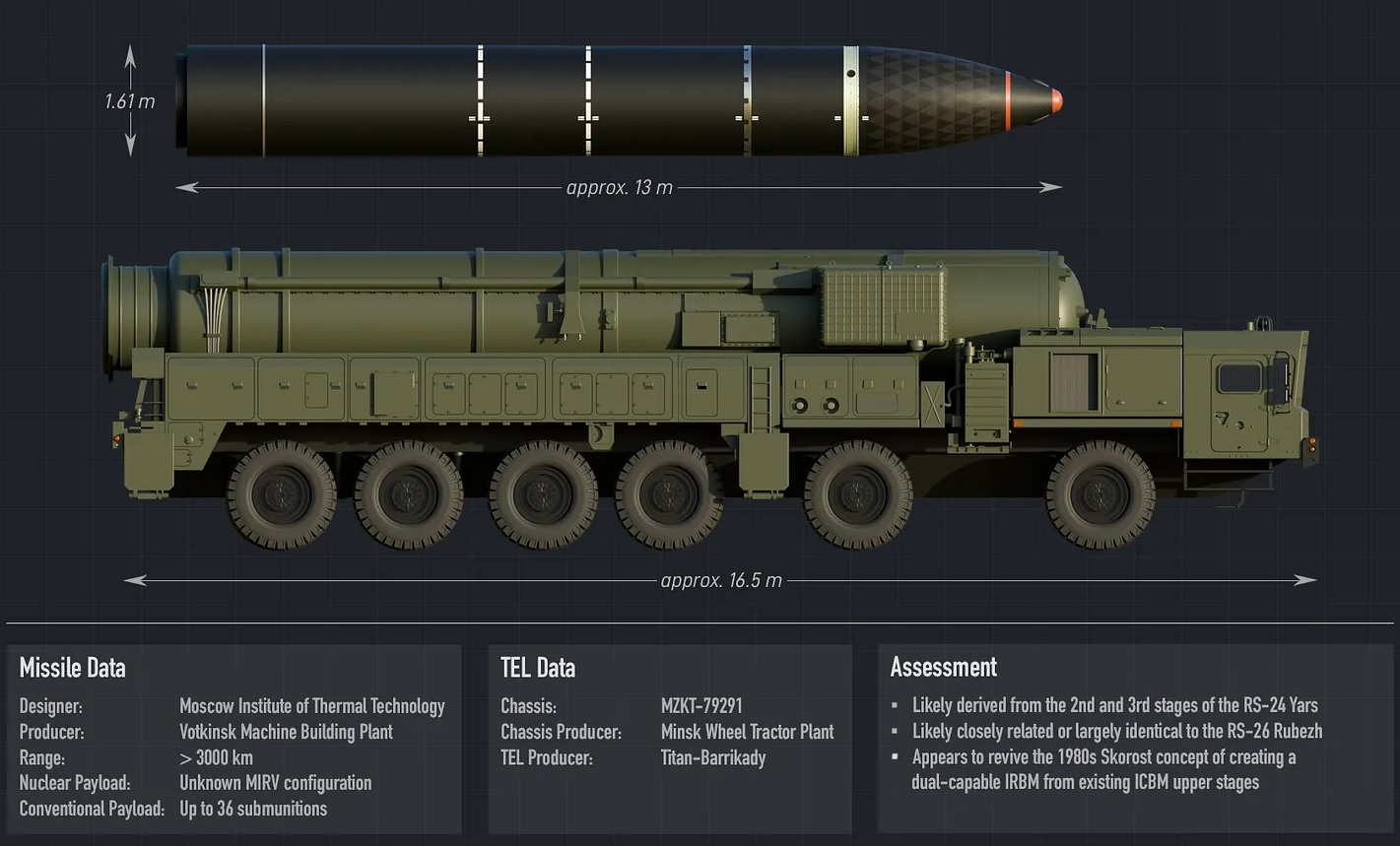
World
KYIV — June 04, 2026 : A new open-source intelligence assessment has provided the clearest picture yet of Russia’s Oreshnik medium-range ballistic missile, concluding that the weapon was likely developed using key stages of the RS-24 Yars intercontinental ballistic missile (ICBM). The findings, published by the LUFTLAGE project following a detailed examination of missile debris recovered in Ukraine, shed new light on a system that has remained largely undocumented since its first combat use in late 2024. Since its debut during a strike on the Ukrainian city of Dnipro in November 2024, the Oreshnik has been one of Russia’s most closely guarded missile programs. Russian authorities have not publicly displayed the missile or its launcher, leaving analysts to rely on recovered wreckage, official statements, and open-source intelligence to understand the system’s design and capabilities. Debris Analysis Points to Yars-Derived Design According to the LUFTLAGE project, comparative analysis of recovered missile components indicates that the Oreshnik was developed using the second and third stages of the RS-24 Yars ICBM. The conclusion reinforces earlier assessments linking the missile to Russia’s existing strategic missile programs. Shortly after the Oreshnik’s first operational use in 2024, the Pentagon described it as an experimental intermediate-range ballistic missile derived from the RS-26 Rubezh. The Rubezh itself had previously been linked to the Yars program. Russian Strategic Missile Forces officials stated in 2013 that the RS-26 was developed on the basis of the RS-24 Yars while incorporating a lower launch mass and modified characteristics. Additional evidence supporting this connection emerged in 2026 when footage from a forward deployment area in Belarus showed combat support vehicles accompanying Oreshnik units. Analysts noted that these vehicles were identical to those used by RS-24 Yars missile formations, further strengthening the assessment that the three missile programs share a common technological foundation. The latest findings suggest that Russia adapted existing strategic missile technology to create a medium-range system capable of employing hypersonic reentry vehicles while reducing development costs and timelines through the reuse of proven components. Recovered Components Reveal Internal Architecture The examination of missile debris recovered from multiple strike locations across Ukraine has provided significant insight into the Oreshnik’s internal structure. Among the recovered fragments were components associated with the missile’s booster-stage control system. Analysts believe the missile employs a continuous-operation solid-fuel gas generator that supplies gas to valve-controlled steering engines responsible for maintaining stability and flight control during powered flight. Researchers also identified a pressurized instrument compartment designed to house navigation, guidance, and flight-control equipment. This sealed section protects sensitive electronics during high-speed flight and enables the missile to maintain its trajectory while traveling at hypersonic velocities before deploying its payload. The Oreshnik is assessed to be a road-mobile, solid-fueled ballistic missile with an estimated range of between 3,500 and 5,500 kilometers. Such a range would allow the system to engage targets across much of Europe. Analysts also estimate that the missile can achieve speeds exceeding Mach 10 during the terminal phase of flight. Evidence Suggests MIRV Payload Configuration While researchers have gained a clearer understanding of the missile’s propulsion and guidance systems, the warhead section remains one of the least documented aspects of the Oreshnik. New evidence emerged following the missile strike on Bila Tserkva on May 24, 2026. Video footage from the attack showed 36 luminous objects descending toward the target area in six distinct groups. Based on the observed flight pattern, analysts assess that the missile employs a Multiple Independently Targetable Reentry Vehicle (MIRV) configuration consisting of six warhead blocks. Each warhead block is believed to release six submunitions during atmospheric reentry, resulting in a total of 36 individual striking elements. Researchers attempting to reconstruct the missile’s payload section noted significant internal space limitations. As a result, they estimate that each submunition measures no more than 10 to 13 centimeters in diameter. Ukrainian defense specialists further estimate that each projectile weighs approximately 50 kilograms. According to a Ukrainian Ministry of Defense expert, the submunitions are not conventional explosive warheads. Instead, they appear to consist of solid cast-iron striking elements, described as simple metal ingots designed to inflict damage through kinetic energy generated by extremely high impact speeds. Analysts also note that neither the warhead blocks nor the individual submunitions appear to possess independent terminal guidance systems. After separation, the projectiles are believed to follow pre-programmed trajectories toward their designated target area. Operational Use Highlights Current Limitations The Oreshnik has reportedly been employed at least three times during the conflict in Ukraine. The first known strike occurred against Dnipro in November 2024, followed by another launch in January 2026 and the most recent documented use against Bila Tserkva in May 2026. Observations from these attacks have provided important clues regarding the missile’s effectiveness in its current conventional configuration. Despite the extreme speeds involved—estimated to exceed Mach 10 during terminal descent—the strikes have produced relatively limited physical destruction compared with conventional ballistic missile warheads carrying high-explosive payloads. During the Bila Tserkva strike, several storage facilities were reportedly damaged or destroyed. However, analysts noted the absence of significant blast effects or large impact craters typically associated with conventional explosive warheads. The damage pattern was instead consistent with impacts generated primarily through kinetic energy. Military observers therefore assess that the current version of the Oreshnik relies heavily on high-speed impact effects rather than explosive force. Some analysts argue that without a dedicated conventional explosive warhead, the missile’s destructive capability remains restricted despite its advanced delivery system and hypersonic performance. Production Expansion and Future Development The Oreshnik is believed to be nuclear-capable and is launched from road-mobile platforms similar to those used by other Russian strategic missile systems. The weapon is also understood to have been developed within the design tradition of the Moscow Institute of Thermal Technology, the organization responsible for several of Russia’s strategic missile programs, including the Yars. Russian officials have indicated plans to expand serial production of the missile and continue modernization efforts. Potential upgrades could include improvements to the warhead section and other performance enhancements intended to increase the system’s operational effectiveness. Reports indicate that more than 50 enterprises are currently involved in the missile’s production and supply chain, reflecting the scale of Russia’s effort to field and further develop the system. New Findings Offer Clearer Picture of Oreshnik Program The LUFTLAGE project’s latest assessment provides the most detailed public examination of the Oreshnik missile to date. By linking the system directly to the RS-24 Yars and RS-26 Rubezh programs, the analysis offers new insight into the missile’s origins, architecture, guidance systems, and payload configuration. While several aspects of the weapon remain unclear, particularly regarding its warhead technology and future upgrades, the recovered debris has allowed researchers to build a more comprehensive understanding of a missile system that continues to play a role in Russia’s ongoing military operations. Further deployments and additional recovered components are expected to provide greater clarity regarding the Oreshnik’s capabilities and future development path.
Read More → Posted on 2026-06-04 14:52:34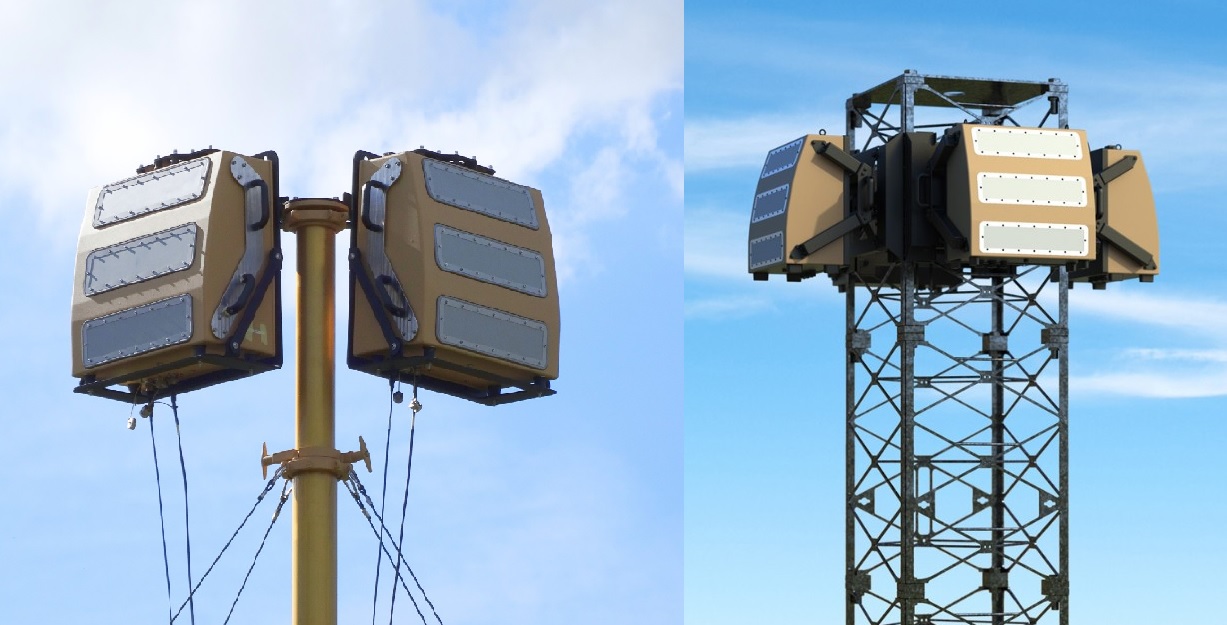
World
CAMBRIDGE, United Kingdom — June 04, 2026 : UK-based radar manufacturer Blighter Surveillance Systems has secured a follow-on contract from an undisclosed Eastern European army for the supply of its A800 Mk2 4D multi-mode radars, further strengthening the military's border surveillance and counter-drone capabilities. The agreement covers the deployment of the A800 Mk2 radar systems at fixed border locations as well as their integration onto army reconnaissance vehicles. The latest order follows an earlier contract with the same customer and reflects continued efforts to enhance protection against ground incursions and increasingly sophisticated unmanned aerial threats. Addressing the Challenge of Low-Altitude Drone Threats The procurement comes amid growing concerns over the use of small, low-flying drones in modern conflicts. Such systems often operate close to terrain, possess a low radar cross-section (RCS), and can evade detection by conventional air surveillance radars. According to the company, the Eastern European military selected the A800 Mk2 because of its ability to detect, classify, and track a wide range of aerial and ground threats simultaneously. The radar is specifically designed to counter targets that are difficult to identify using traditional surveillance systems, including first-person-view (FPV) drones, fibre-optic-guided drones, and Shahed-type one-way attack drones. The radar utilizes an electronic-scanning array (ESA) design with no moving parts, combining Ku-Band sensing technology, micro-Doppler signature analysis, and AI-assisted target classification. These technologies allow the system to distinguish genuine threats from birds, wildlife, and environmental clutter while maintaining reliable detection performance. Advanced Detection and Tracking Capabilities The A800 Mk2 is capable of simultaneously detecting, classifying, and tracking ground, sea, and air targets at distances of up to 20 kilometers. The radar can also monitor fast-moving objects travelling at speeds of up to Mach 1, making it suitable for a wide range of operational scenarios. Key technical features of the system include: 4D target measurement, providing range, azimuth, elevation, and Doppler velocity data. Fully electronic scanning in azimuth with multi-beam monopulse elevation measurement. Instrumented ranges of 3.5 km, 10 km, or 20 km. Fast scan rates, with a minimum scan time of 0.25 seconds in spotlight mode. Automatic rain mitigation for all-weather operations. Low Size, Weight and Power (SWaP) design suitable for both fixed and mobile deployments. Gigabit Ethernet connectivity supporting secure and encrypted data transfer. The radar is also capable of detecting nano-quadcopter drones at ranges of up to 3 km, Class 2 winged drones at distances of up to 7 km, and walking personnel at ranges reaching 5 km. In addition, the system supports simultaneous multi-mode operation for air, ground, and coastline surveillance and can process more than 500 targets per scan, enabling effective monitoring of complex operational environments. BlighterNexus Software to Enhance Command and Control Beyond the radar hardware, the contract includes the delivery of BlighterNexus, the company's integrated software platform designed to connect radar systems directly into military command-and-control (C2) networks. The software links the radars with operator interfaces and third-party sensors, creating a unified Common Operating Picture (COP) across multiple border regions. This allows military personnel to receive consolidated situational awareness data from various surveillance assets through a single operational framework. BlighterNexus also serves as a multi-sensor connectivity and processing platform, incorporating AI-assisted capabilities to improve target identification and information management. Company Highlights Operational Advantages Commenting on the contract award, James Long, Chief Executive Officer of Blighter, said the company was pleased to receive the follow-on order from the military customer. He stated that the radars would provide 24/7 all-weather protection against both ground incursions and the increasing threat posed by low-altitude drones, which have become a significant feature of recent conflicts. Long noted that the company's ground-based radar technology is particularly effective in detecting low-and-fast targets, including FPV drones, fibre-optic-guided drones, and fixed-wing unmanned aircraft. He added that the A800 Mk2 is among a limited number of radar systems available at a price below US$1 million that can detect targets travelling at speeds of up to Mach 1. Global Deployment and Operational Experience Blighter's radar systems have established a broad operational footprint in both military and civilian applications. The company's technology is currently deployed for counter-unmanned aerial system (C-UAS) missions, border security, and critical infrastructure protection worldwide. According to the company, its radars are used for drone detection at international airports, by the United States Air Force, at multinational forward-operating bases in the Middle East, and across various government national security projects. More than 800 Blighter radar units have been fielded globally for applications including border surveillance, critical infrastructure protection, counter-drone operations, and military reconnaissance missions. The A800 Mk2 builds upon the company's earlier A400 and A800 series radar platforms, which have also been supplied to NATO customers for tactical surveillance and border security roles. Growing Demand for Counter-Drone Surveillance Systems The latest contract underscores the increasing demand for cost-effective, high-performance ground-based radar systems capable of addressing modern threats from small unmanned aircraft and ground-based incursions. As military forces continue to strengthen border security and counter-drone defenses, advanced surveillance solutions such as the A800 Mk2 are expected to play an increasingly important role in protecting critical operational areas. The company did not disclose the value of the contract, the number of radar systems ordered, or the delivery schedule.
Read More → Posted on 2026-06-04 15:00:05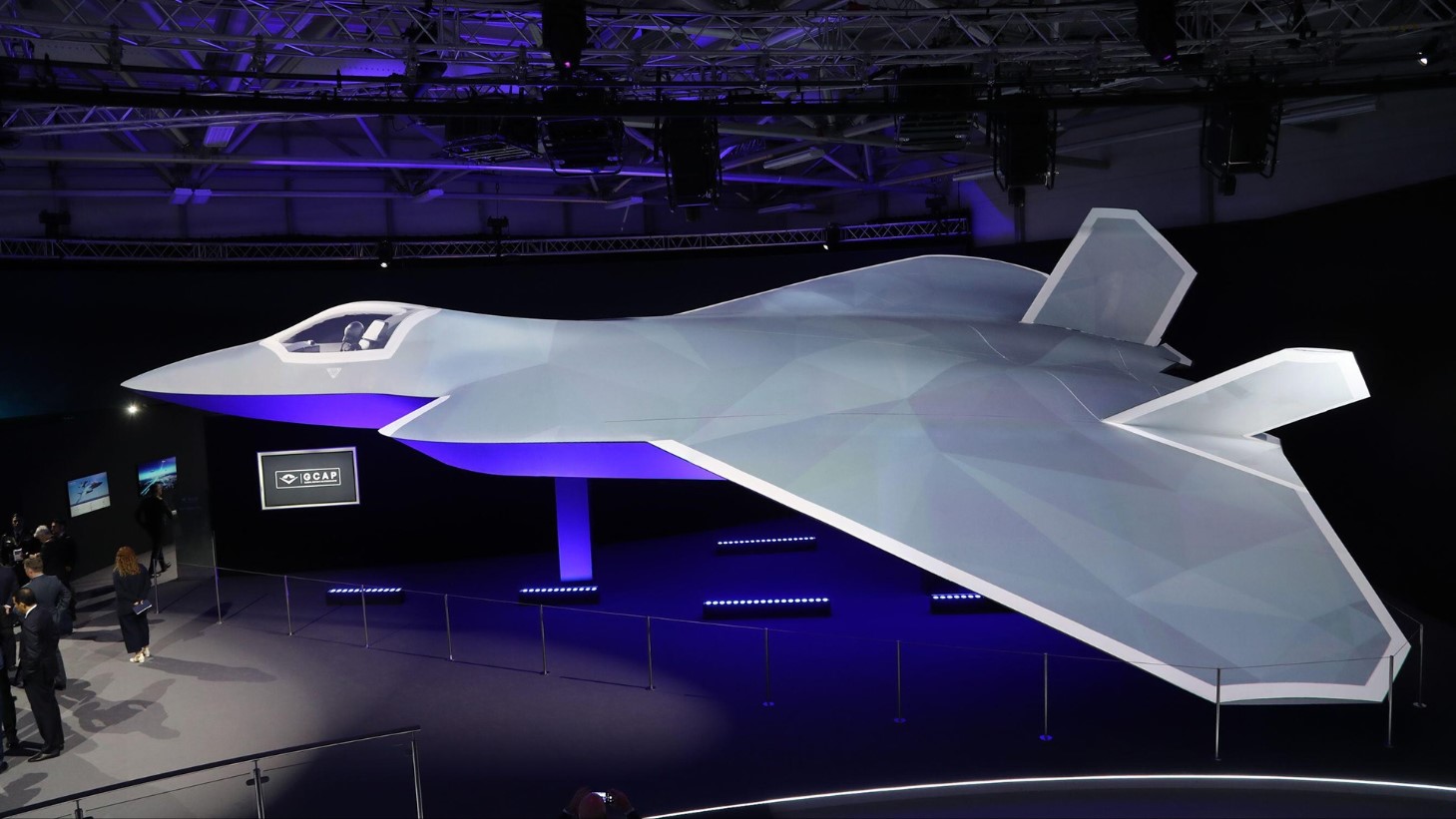
World
LONDON — June 04, 2026 : The UK Treasury is preparing to assume direct oversight of spending for the Global Combat Air Programme (GCAP), also known as Tempest, the trilateral sixth-generation fighter jet initiative involving the United Kingdom, Italy, and Japan. The move comes amid growing concerns over potential cost overruns as the British government finalizes a broader £15 billion defence funding package ahead of a critical funding deadline at the end of June. £15 Billion Defence Settlement and GCAP Funding The Treasury's intervention is expected to be included in the government's forthcoming Defence Investment Plan (DIP), which will outline Britain's long-term defence spending priorities through 2030. Under the proposed settlement, Prime Minister Keir Starmer is expected to announce approximately £15 billion in additional defence funding, with around £6 billion in new funding allocated to GCAP. The investment is intended to support the programme's next development phase and enable the partner nations to move forward with a longer-term contract. According to reports, the Treasury believes tighter financial oversight is necessary due to the scale and complexity of the multinational programme, as well as concerns regarding the Ministry of Defence's (MoD) history of cost overruns and budget management challenges on major procurement projects. Chancellor Rachel Reeves has reportedly expressed concerns that, without stronger controls, the programme could face significant cost growth and delays, prompting the Treasury to take a more direct role in monitoring expenditure. June 30 Funding Deadline Creates Urgency The funding decision has become increasingly urgent as a £686 million bridge funding agreement, signed in April 2026, is scheduled to expire on June 30, 2026. The temporary contract currently supports ongoing design, engineering, and development activities across the three partner nations while negotiations continue on a permanent funding arrangement. Industry representatives have warned that failure to secure a long-term contract before the deadline could have immediate consequences for the UK's defence industry. More than 4,000 engineers and specialists working for major defence companies, including BAE Systems, Rolls-Royce, and Leonardo, are currently assigned to the programme. Without continued funding, companies may be forced to implement cost-containment measures and redeploy personnel to other active projects. Risk to Programme Schedule and 2035 Service Target Defence industry executives have cautioned that the redeployment of highly skilled workers would result in a significant loss of programme momentum. A disruption in engineering and development activities could slow or temporarily halt critical work streams, making future recovery more expensive and time-consuming. Such delays could ultimately affect the programme's planned 2035 in-service date, with some industry assessments warning that the timeline could potentially slip into the late 2030s if funding uncertainty continues. The programme currently supports approximately 9,000 jobs across the United Kingdom, Italy, and Japan, highlighting its importance to the defence industrial base of all three partner nations. International Concerns Growing Over UK Funding Delays The financial uncertainty has also raised concerns among Britain's international partners. GCAP operates on the basis of equal commitments from the United Kingdom, Italy, and Japan, with the programme managed through the joint industrial venture Edgewing, which brings together BAE Systems, Leonardo, and Japanese industry partners responsible for key design and engineering activities. Delays in confirming Britain's long-term funding commitment have reportedly caused concern in Tokyo, where officials fear that cash-flow uncertainties could affect programme progress. The issue is considered significant enough that Japanese Prime Minister Sanae Takaichi is expected to make GCAP funding assurances a key topic during her upcoming visit to Britain next week. Italy and Japan have previously expressed frustration over delays and uncertainty surrounding UK funding decisions. While all three nations remain committed to achieving the programme's objectives, prolonged uncertainty could place additional strain on the trilateral partnership. GCAP's Role in Future Air Combat Capability The Global Combat Air Programme was created through the merger of the UK's Tempest initiative and Japan's F-X fighter programme. The aircraft is being developed as a sixth-generation stealth combat platform equipped with advanced sensors, integrated weapons systems, enhanced networking capabilities, and the ability to operate alongside autonomous drone wingmen. Once operational, the aircraft is expected to replace the Eurofighter Typhoon fleets currently operated by the United Kingdom and Italy, while also succeeding Japan's Mitsubishi F-2 fighter aircraft. Funding Decision Expected Within Weeks The Treasury's planned takeover of spending oversight is intended to strengthen financial discipline, provide greater budget certainty, and maintain confidence among industrial and international partners. With the June 30 funding deadline rapidly approaching, government decisions in the coming weeks will determine whether GCAP can continue progressing on schedule toward its planned 2035 entry into service while preserving momentum across one of the world's most significant next-generation combat aircraft programmes.
Read More → Posted on 2026-06-04 15:22:39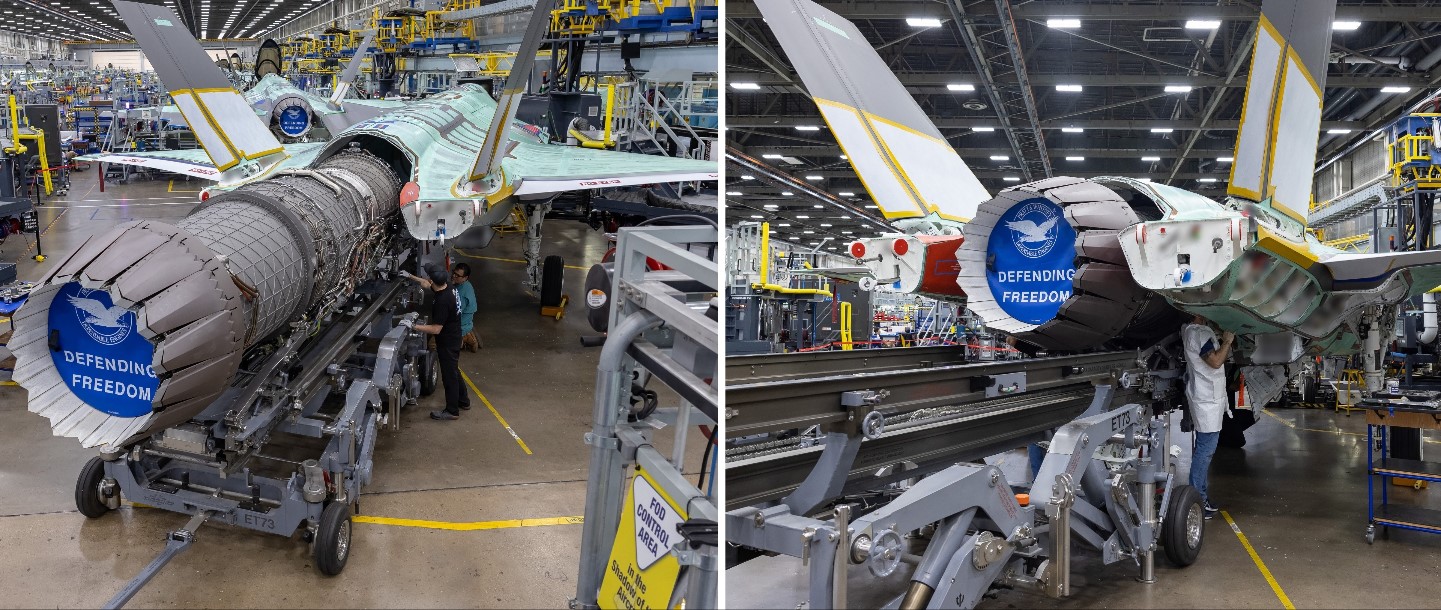
World
FORT WORTH, TEXAS — June 04, 2026 : Lockheed Martin has completed the installation of the Pratt & Whitney F135 engine on Germany’s first F-35A Lightning II, marking a major production milestone as the aircraft moves closer to delivery to the German Air Force (Luftwaffe). The aircraft, designated MG-01, recently underwent engine installation at Lockheed Martin’s production facility in Fort Worth, Texas, after successfully progressing through key stages of structural assembly. The development represents an important step in Germany’s effort to modernize its air force and replace part of its aging Panavia Tornado fleet. Engine Installation Marks Transition to Final Assembly Before the engine was installed, the aircraft’s major structural sections—including the forward, center, and aft fuselage components, as well as the wings—were joined using advanced laser-guided alignment systems. Following the installation of the landing gear and completion of structural assembly, the aircraft became capable of supporting its own weight, allowing technicians to begin final integration work. Assembly teams are now focused on installing the remaining systems, including the cockpit canopy, control surfaces, avionics, sensors, and other onboard equipment required before testing can begin. Once systems integration is completed, the aircraft will enter the finishing phase, where it will receive its exterior paint scheme and the specialized radar-absorbing stealth coating that forms a critical part of the F-35A’s low-observable design. Germany’s F-35 Acquisition Program Germany officially joined the F-35 program in December 2022, placing an order for 35 F-35A conventional takeoff and landing aircraft. The procurement package, valued at approximately €10 billion, includes the aircraft, engines, mission systems, spare parts, logistics support, training, and armament. The acquisition is intended primarily to replace a portion of the Luftwaffe’s aging Tornado fleet, particularly aircraft assigned to NATO’s nuclear-sharing mission involving U.S.-owned B61-12 tactical nuclear bombs. A key reason behind Germany’s selection of the F-35A was its ability to perform the nuclear-sharing role currently carried out by the Tornado. In addition, the aircraft offers a range of fifth-generation capabilities, including stealth technology, sensor fusion, advanced situational awareness, and secure data-sharing capabilities that enhance interoperability with allied forces. Eight Aircraft Currently in Production Production of Germany’s F-35 fleet began with major assembly activities at Lockheed Martin’s facility in Marietta, Georgia, in December 2024. The first aircraft, MG-01, entered final assembly in Fort Worth in March 2026. According to Lockheed Martin, eight German F-35As are currently in various stages of production, reflecting continued progress across the broader acquisition program. Testing and Delivery Timeline Following completion of final assembly, MG-01 will undergo a series of critical activities, including systems verification, avionics and sensor evaluations, ground testing, and pre-delivery flight testing. The aircraft is also expected to participate in an official rollout ceremony later in 2026. Deliveries of the first German F-35As are scheduled to begin in 2026. However, the initial batch of eight aircraft will not immediately deploy to Europe. Instead, they will be delivered to Ebbing Air National Guard Base in Fort Smith, Arkansas, where German pilots and maintenance personnel will undergo extensive training as the Luftwaffe prepares to transition to the new fighter platform. Path to Operational Service The aircraft are expected to begin arriving in Germany from 2027, with permanent basing planned primarily at Büchel Air Base. The Luftwaffe is targeting initial operational capability in 2028, while deliveries of all 35 aircraft are expected to continue through the latter part of the decade. The introduction of the F-35A will significantly enhance Germany’s ability to operate alongside NATO allies already flying the aircraft, including the Netherlands, Norway, Belgium, Finland, and Poland. In parallel, German defense company Rheinmetall is expanding its role in the program through a new fuselage production facility in Weeze, Germany, which is expected to support future F-35 manufacturing for Germany and other international customers. Program Remains on Schedule The successful installation of the Pratt & Whitney F135 engine on MG-01 represents one of the final major assembly milestones before testing and delivery. With eight aircraft already progressing through production, the achievement keeps Germany’s F-35 modernization program on track as the Luftwaffe prepares to introduce its first fifth-generation fighter aircraft into operational service.
Read More → Posted on 2026-06-04 15:32:35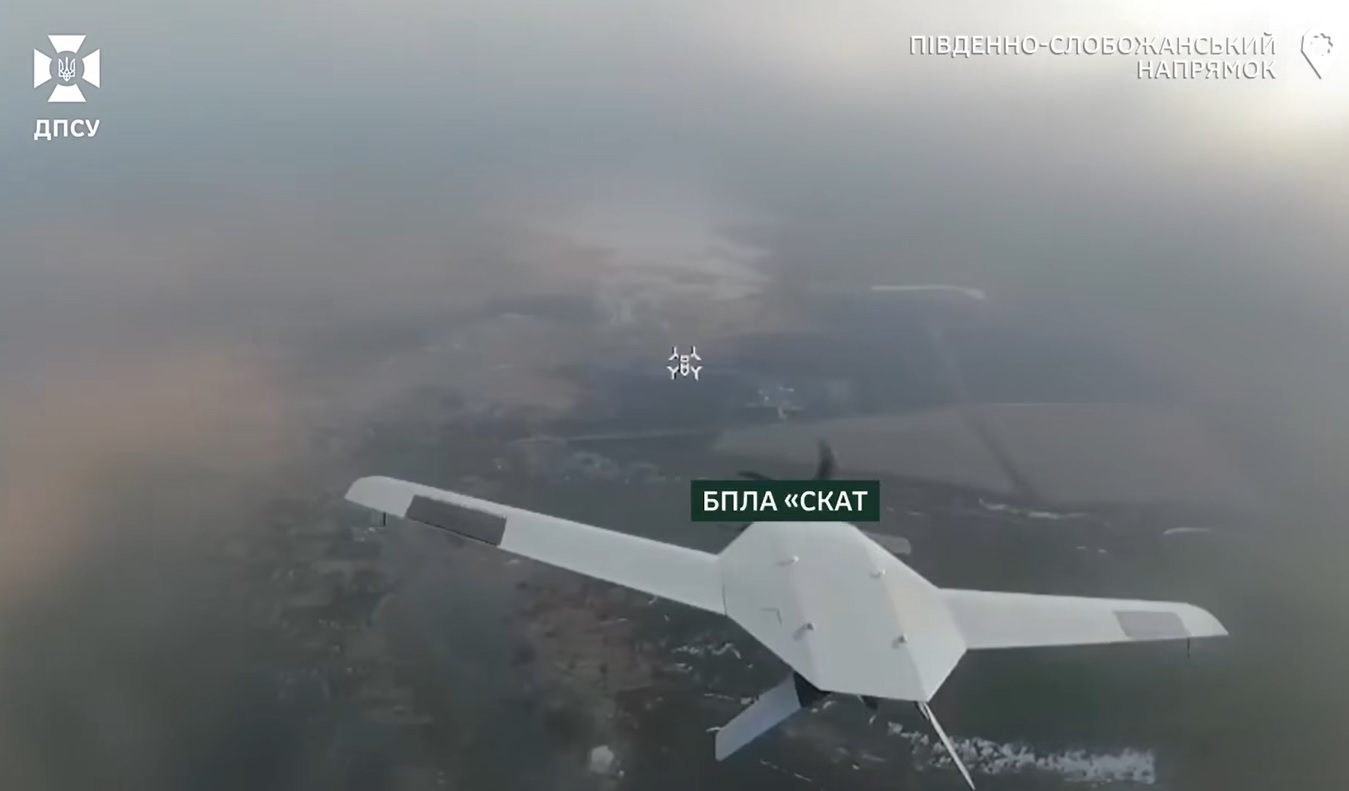
World
KYIV, — June 4, 2026 : Ukrainian border guards from the Strix unit have successfully destroyed a rare Russian Skat-450M deep-reconnaissance drone operating on the Southern Slobozhanshchyna axis, according to Ukraine’s State Border Guard Service. The interception, reported on June 4, marks a significant loss for Russia’s aerial surveillance and targeting network, as the drone is used to identify high-value targets and support long-range precision strikes. High-Value Reconnaissance Asset Shot Down The Skat-450M is a specialized unmanned aerial vehicle (UAV) designed for deep reconnaissance missions behind the front line. Equipped with advanced optical cameras and thermal imaging systems, the drone is tasked with locating military positions, tracking troop movements, adjusting artillery fire, and providing targeting data for precision attacks. One of its most important roles is supporting strikes by Russia’s Iskander operational-tactical missile systems. By transmitting real-time intelligence and target coordinates, the drone helps improve the accuracy of long-range missile and artillery operations. With an estimated value of approximately $400,000 per unit, the Skat-450M is considerably more expensive and technologically advanced than the smaller commercial and FPV drones commonly seen on the battlefield. Rare Interception by Ukrainian Forces According to Ukrainian officials, this is the second Skat-450M destroyed by the Strix unit. Since the beginning of the full-scale conflict, Ukrainian forces have reportedly managed to shoot down fewer than 20 drones of this type, highlighting both their limited deployment and the difficulty of intercepting them. The loss of such a platform extends beyond its financial value. The drone serves as a critical reconnaissance tool that enables Russian forces to conduct deep surveillance and coordinate precision strikes. Its destruction reduces Russia’s ability to gather real-time battlefield intelligence and support missile and artillery operations against targets located far behind the front line. Limited Public Information on the Skat-450M Despite its growing use in the conflict, publicly available information on the Skat-450M remains scarce, making it one of the least documented reconnaissance systems in Russia’s arsenal. The drone is believed to be an advanced development of the Supercam UAV family and incorporates several features intended to improve survivability and operational effectiveness. Known Characteristics of the Skat-450M Low Observability: The drone uses an unconventional flying-wing airframe designed to reduce its radar signature while maintaining aerodynamic efficiency. Durable Structure: Its design minimizes exposed external components, helping reduce the risk of damage during parachute-assisted recovery and landing. Extreme Weather Capability: The platform is reportedly capable of operating in temperatures ranging from minus 45°C to plus 45°C, allowing deployment in a wide range of environmental conditions. Advanced Sensors: Equipped with electro-optical and thermal imaging systems, enabling surveillance during both day and night operations. Russian industry representatives have previously claimed that Skat-series drones have played a significant role in identifying military targets throughout the conflict, supporting strikes against armored vehicles, artillery systems, and other high-value assets. Growing Role of Ukrainian Interceptor Drones The successful interception reflects Ukraine’s increasing focus on counter-drone warfare. Ukrainian forces have been deploying specialized interceptor drones to engage and destroy expensive reconnaissance UAVs operating over the battlefield. Among these systems is the Sting interceptor drone, developed by the Ukrainian engineering group Wild Hornets. Operated through VR goggles and capable of reaching speeds of more than 315 km/h, the Sting provides a relatively inexpensive method of neutralizing high-value aerial targets. Costing around $2,500, the interceptor offers a highly cost-effective solution compared with the significantly more expensive reconnaissance drones it is designed to destroy. Ukraine Expands Indigenous Counter-Drone Capabilities Alongside current interceptor systems, Ukraine is continuing to develop new technologies aimed at countering advanced enemy UAVs. Recent details released by Ukrainian developers highlighted the Litavr interceptor drone, produced by F-DRONES. The system is specifically designed to detect, pursue, and destroy hostile drones at distances exceeding 40 kilometers. According to its developers, the Litavr can achieve speeds of approximately 350 km/h and features automatic target acquisition and tracking systems, as well as both daytime and thermal imaging cameras. The drone has reportedly demonstrated successful interception missions at significantly extended ranges. Ongoing Battle Between Reconnaissance and Counter-Drone Systems The destruction of the Skat-450M illustrates the continuing technological competition between increasingly sophisticated reconnaissance platforms and rapidly evolving counter-drone systems. As Russia continues to rely on specialized surveillance drones to locate targets and support long-range missile strikes, Ukraine is expanding its network of interceptor UAVs designed to deny aerial reconnaissance and reduce the effectiveness of enemy precision-strike operations. The latest interception by the Strix unit represents another example of Ukraine’s efforts to target high-value Russian reconnaissance assets and limit their ability to support operations on the battlefield.
Read More → Posted on 2026-06-04 15:47:45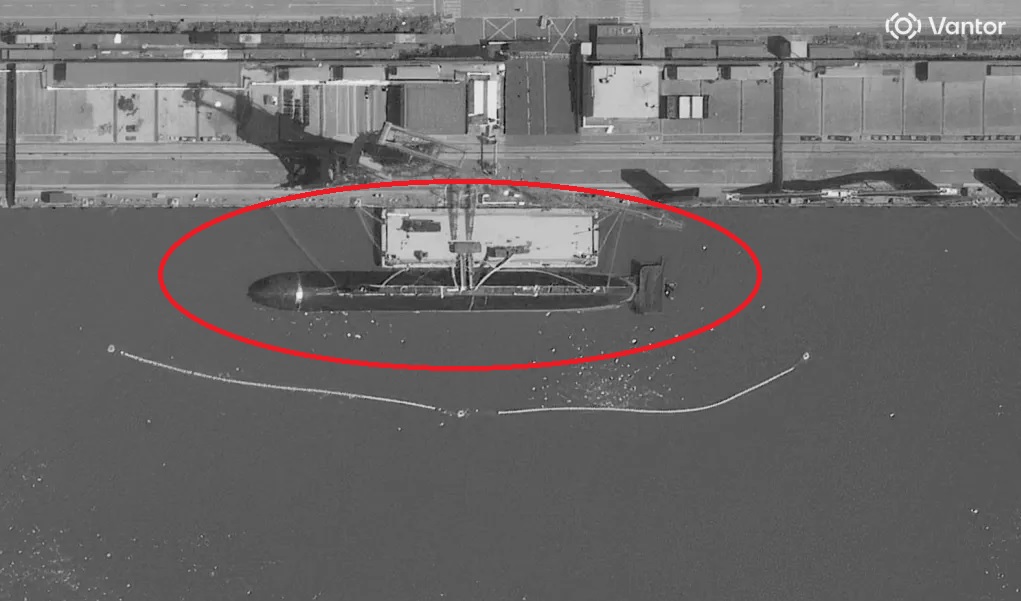
World
SHANGHAI, China — June 04, 2026 : Satellite imagery has revealed a previously undisclosed nuclear-powered submarine at Shanghai's Jiangnan Shipyard, unveiling what appears to be an entirely new class of Chinese submarine featuring a highly unconventional sail-less design. The discovery has attracted significant attention among defense analysts, who view the vessel as another indication of China's accelerating efforts to modernize and expand its underwater combat fleet. Images captured on May 31 and June 1, 2026, show the submarine moored at a fitting-out basin alongside a jetty barge at the shipyard. Chinese authorities have not publicly announced the vessel, and no official designation or class name has been disclosed. Historic First for Jiangnan Shipyard The appearance of the submarine at Jiangnan Shipyard marks a major development for China's naval shipbuilding industry. While the Shanghai-based facility is best known for producing large surface combatants, it has not previously been associated with the construction of nuclear-powered submarines. Until now, China's nuclear submarine production had been concentrated at Bohai Shipyard in Huludao. The successful launch of a nuclear-powered submarine from Shanghai indicates that China now possesses three operational facilities capable of building nuclear submarines, significantly expanding its industrial capacity for undersea warfare programs. The same shipyard launched a smaller experimental sail-less submarine technology demonstrator approximately eight years ago. Analysts believe the newly spotted vessel may represent the full-scale operational evolution of concepts first tested through that earlier project. A Radical Sail-Less Design The submarine's most distinctive feature is its apparent absence of a conventional sail, the tower-like structure found on virtually all modern submarines. Traditionally, the sail houses periscopes, communication masts, navigation systems, and sensor equipment, while also providing a platform for surface operations and, in some navies, enabling submarines to break through Arctic ice. By minimizing or eliminating this structure, Chinese naval engineers appear to have prioritized hydrodynamic efficiency, stealth, and underwater performance. Defense analysts suggest that removing the sail could reduce hydrodynamic drag by as much as one-third, allowing the submarine to travel faster underwater while generating less noise. A cleaner hull design also reduces the vessel's acoustic signature, making it more difficult for enemy sonar systems to detect and track. Analysts believe essential sensors and communication systems may be integrated directly into the hull through retractable or flush-mounted structures. While the design may limit operations beneath thick Arctic ice due to the absence of a reinforced sail, analysts note that China's submarine force currently maintains only a limited presence in Arctic waters, reducing the operational impact of such a limitation. Larger Than Previous Chinese Attack Submarines According to assessments by undersea warfare analyst H.I. Sutton, the submarine measures approximately 120 meters (394 feet) in length and between 10 and 11 meters in width. These dimensions make it significantly larger than previous Chinese nuclear-powered attack submarines, including the Type 093B, which generally measure around 110 meters in length. For comparison, the U.S. Navy's Virginia-class nuclear-powered attack submarines are approximately 115 meters long, making the newly discovered Chinese vessel one of the largest attack-oriented submarine designs publicly observed in the country to date. Comparison of Major Submarine Classes Class / Type Length Rudder Type Primary Builder New Sail-Less Submarine ~120 meters X-Shaped Jiangnan Shipyard (Shanghai) Type 095 (Type 09V) ~110–115 meters X-Shaped Bohai Shipyard (Huludao) Type 093B ~110 meters Cruciform Bohai Shipyard (Huludao) Virginia-Class (U.S.) 115 meters Cruciform General Dynamics / HII Advanced X-Shaped Rudder Configuration Another notable feature is the submarine's X-shaped rudder system, replacing the traditional cruciform tail arrangement used on many older submarine classes. The X-form configuration has increasingly appeared on advanced submarine designs worldwide due to its ability to provide greater maneuverability, improved control at depth, enhanced efficiency, and lower acoustic signatures. The design allows the submarine to operate more quietly while maintaining agility during high-speed underwater maneuvers. Expected to Incorporate Advanced Quieting Technologies Although the vessel's propulsion system remains unconfirmed, analysts believe it is most likely powered by a nuclear reactor due to its size and operational requirements. The submarine is expected to incorporate many of the same technologies associated with China's next-generation underwater fleet, including magnetic drive systems and pump-jet propulsion technologies, also known as Rim Driven Propellers. These systems are designed to reduce cavitation, a major source of submarine noise caused by bubbles forming around propeller blades. By minimizing cavitation, the submarine becomes significantly harder to detect using passive sonar systems. The first Type 095 submarine is also believed to incorporate similar technologies, with some analysts suggesting it could become one of the world's quietest nuclear-powered attack submarines. Second New Nuclear Submarine Class Revealed in 2026 The Jiangnan submarine represents the second entirely new class of Chinese nuclear-powered submarine to emerge in 2026. Earlier this year, satellite imagery captured at Bohai Shipyard revealed what is believed to be the first example of the Type 095 (Type 09V) nuclear-powered attack submarine undergoing fitting-out. The Type 095 is expected to replace and significantly outperform the older Type 093 class, which currently forms the backbone of China's nuclear-powered attack submarine force. The emergence of two separate nuclear submarine designs within a single year has led analysts to suggest that China may be pursuing a dual-platform strategy for future undersea operations. Potential Mission Roles Remain Unclear The exact mission of the new sail-less submarine remains unknown, but analysts believe it may serve a specialized role alongside the Type 095. While the Type 095 is expected to function as a heavily armed hunter-killer submarine, fleet escort, and carrier protection platform, the larger sail-less vessel could potentially serve as a dedicated long-range strike submarine. Its larger hull may provide sufficient internal space for Vertical Launch Systems (VLS) capable of carrying land-attack cruise missiles, long-range precision weapons, or potentially future hypersonic missile systems. Analysts also suggest the submarine could support intelligence gathering, surveillance missions, and forward operations beyond the First Island Chain, helping protect Chinese carrier strike groups operating deeper into the Pacific Ocean. China's Submarine Production Continues to Accelerate Beyond the submarine itself, analysts view its construction as evidence of China's rapidly expanding submarine production capabilities. China has launched an estimated 15 to 20 submarines over the past five years, including several entirely new classes. Recent assessments indicate that the People's Liberation Army Navy (PLAN) now operates the world's second-largest nuclear-powered submarine fleet, behind only the United States and ahead of Russia in total numbers. Meanwhile, the U.S. Navy continues to face challenges maintaining fleet size as older Los Angeles-class submarines retire faster than new Virginia-class submarines are delivered. Western defense officials and naval researchers have repeatedly noted that recent Chinese submarine programs have demonstrated substantial improvements in acoustic suppression, survivability, and stealth performance, making them increasingly difficult to detect and track. No Official Designation Yet China has not released any official information regarding the submarine's name, designation, capabilities, or intended operational role. However, the satellite imagery confirms that the vessel is already in the water and undergoing post-launch fitting-out activities. Its unprecedented sail-less configuration, larger dimensions, advanced control surfaces, and appearance at a new nuclear submarine production facility underscore the continuing evolution of China's undersea warfare programs. The emergence of the vessel, alongside the recently unveiled Type 095, highlights the growing pace of Chinese naval modernization and the increasing importance Beijing is placing on expanding its underwater combat capabilities.
Read More → Posted on 2026-06-04 15:58:58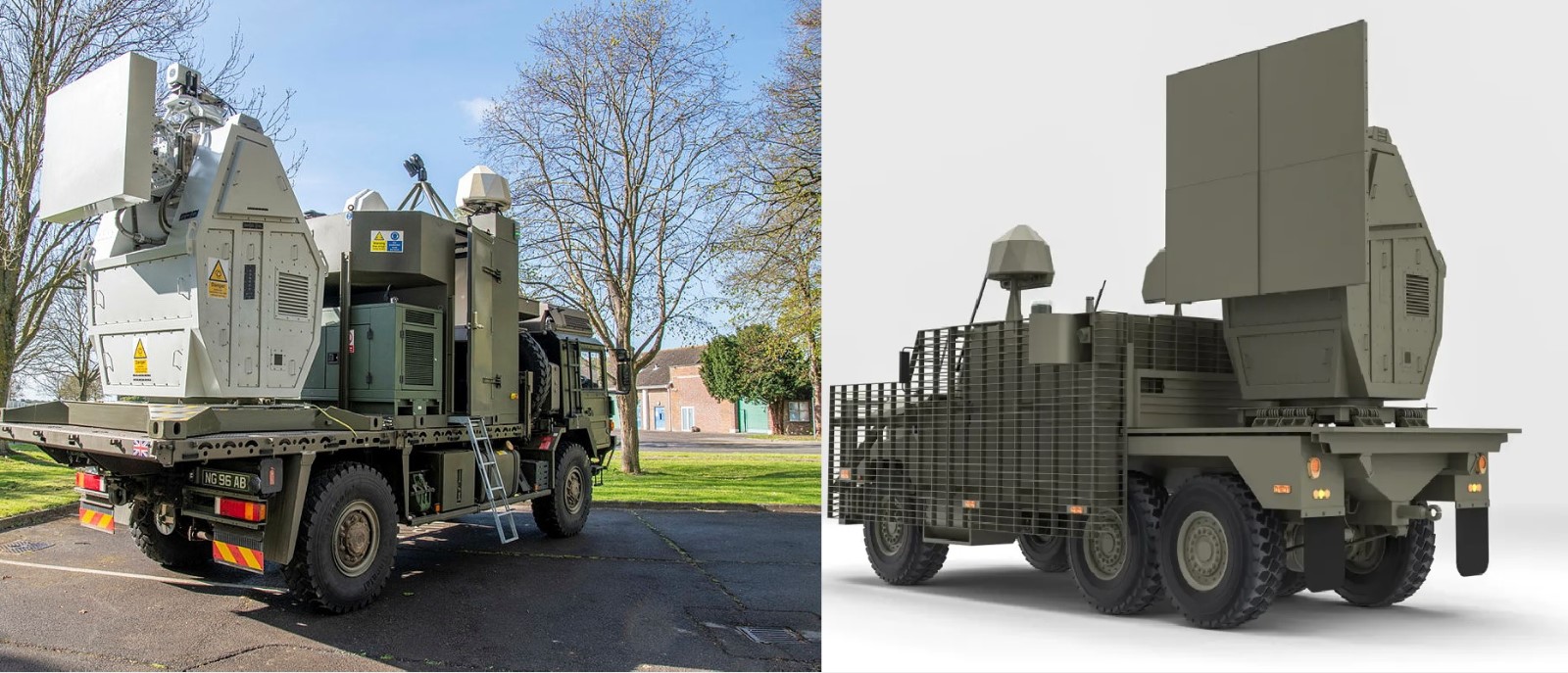
World
PERSHORE, Gloucestershire — June 04, 2026 : On June 02, 2026 : Thales UK has successfully completed advanced field trials of its RapidDestroyer Radio Frequency Directed Energy Weapon (RFDEW), demonstrating the system’s ability to neutralise 80 drones during a series of engagement scenarios conducted in April at a test facility in Pershore, Gloucestershire. The trials were conducted in partnership with Teledyne e2v and represent a significant development in the United Kingdom’s efforts to field advanced counter-drone and directed energy weapon capabilities. The testing focused on validating upgrades designed to improve the weapon’s effectiveness against increasingly sophisticated drone threats and swarm attacks. Upgraded 4-Panel Effector Enhances Performance A key objective of the latest trials was the evaluation of an upgraded 4-panel effector, a component responsible for directing high-intensity radio frequency energy toward targets. According to Thales UK and Teledyne e2v, the new configuration enables the system to focus electromagnetic energy more precisely, increasing the amount of power delivered to the target. This improvement enhances engagement effectiveness while also extending the weapon’s operational range compared to earlier versions. During the Pershore trials, the system engaged drones across multiple individual scenarios. Each engagement was recorded and later subjected to detailed forensic analysis. The assessment confirmed that every targeted drone was consistently defeated almost immediately after engagement. Hard-Kill Capability Against Drones Unlike traditional electronic warfare systems that disrupt communications or GPS signals, RapidDestroyer delivers a "hard kill" effect by physically damaging or overloading critical electronic components inside the drone. This approach permanently disables the target, preventing it from recovering, rebooting, or returning to operation. The forensic review conducted after the trials confirmed that none of the drones were able to re-engage following exposure to the weapon’s radio frequency energy. The capability provides an advantage over conventional jamming systems, particularly against autonomous drones or platforms that can continue operating without active communication links. AI-Assisted Command and Control System RapidDestroyer operates as part of a highly automated defence network and is fully integrated with Thales’ Command and Control (C2) and weapon-control software. The system incorporates artificial intelligence (AI) to improve threat prioritisation, optimise response times and assist in managing multiple fast-moving targets simultaneously. The AI supports operators by identifying threats and recommending engagement actions, while maintaining human oversight throughout the process. Despite the high degree of automation, a human operator remains responsible for authorising and monitoring engagements in accordance with military operational procedures. Developed Under Project EALING The technology behind RapidDestroyer was originally developed through Project EALING, a programme led by the UK Ministry of Defence through the Defence Science and Technology Laboratory (Dstl) and Defence Equipment & Support (DE&S), in collaboration with an industry consortium known as Team Hersa. The project was established to explore the military potential of Radio Frequency Directed Energy Weapons, which use high-power radio waves to disable electronic systems rather than relying on kinetic interceptors or traditional electronic warfare techniques. Thales UK leads the industrial team, while Teledyne e2v contributes expertise in microwave power technologies and high-frequency electronics. Low-Cost Alternative to Missile Defence One of RapidDestroyer’s most notable advantages is its low operating cost. Unlike missile-based air defence systems that require expensive interceptors, the RFDEW operates entirely on electrical power and does not require conventional ammunition. According to Thales, the energy cost of each engagement is estimated at less than 10 pence (approximately $0.13) per shot. This makes the system particularly attractive for countering low-cost commercial drones and large-scale swarm attacks, where the cost of using traditional missile interceptors can significantly exceed the value of the targets being engaged. The system also reduces logistical requirements by eliminating the need to transport, store and replenish ammunition stockpiles. Detection, Tracking and Engagement RapidDestroyer combines wide-area surveillance radar with optical sensors to detect, track and identify aerial threats. Once a target is identified, the system can direct focused radio frequency energy against individual drones or broaden its effect to engage multiple threats within the same area. The weapon can fire rapid successive engagements and is designed to address the challenges posed by coordinated drone swarm attacks. The high level of automation allows the complete system to be operated by a single operator, reducing manpower requirements while maintaining operational effectiveness. Building on Earlier Military Successes The latest Pershore trials build upon previous testing conducted under Project EALING. Earlier live-fire exercises at the Manorbier Range in West Wales saw the demonstrator system successfully neutralise more than 100 drones, including two simultaneous drone swarms. Those exercises involved personnel from the Royal Artillery’s 106 Regiment and 7 Air Defence Group and were among the largest counter-drone swarm trials conducted by the British Army. The recent Pershore testing focused on validating the upgraded 4-panel effector and confirming improvements in range, energy concentration and engagement effectiveness. Mobile System for Battlefield Protection RapidDestroyer has been designed as a mobile and deployable capability that can be integrated onto multiple military platforms. The system can be mounted on vehicles such as the RMMV HX-60 4×4 military truck, enabling protection for military convoys, forward operating bases, critical infrastructure and other high-value assets. Its mobility allows commanders to deploy the system rapidly in response to evolving threats while maintaining protection across a wide range of operational environments. Path Toward Operational Deployment The successful completion of the Pershore trials marks another step toward the deployment of operational Radio Frequency Directed Energy Weapon capabilities within the UK Armed Forces. By validating the upgraded 4-panel effector and demonstrating the consistent defeat of 80 drones, the trials confirmed improvements in both engagement range and target energy delivery. The results also reinforce the potential of directed energy systems to provide a cost-effective and sustainable layer within future air defence networks. As drone threats continue to evolve, RapidDestroyer is being positioned as a complementary capability alongside conventional missile and gun-based air defence systems, offering a low-cost, electrically powered solution for defeating individual drones and large-scale swarm attacks.
Read More → Posted on 2026-06-04 16:06:47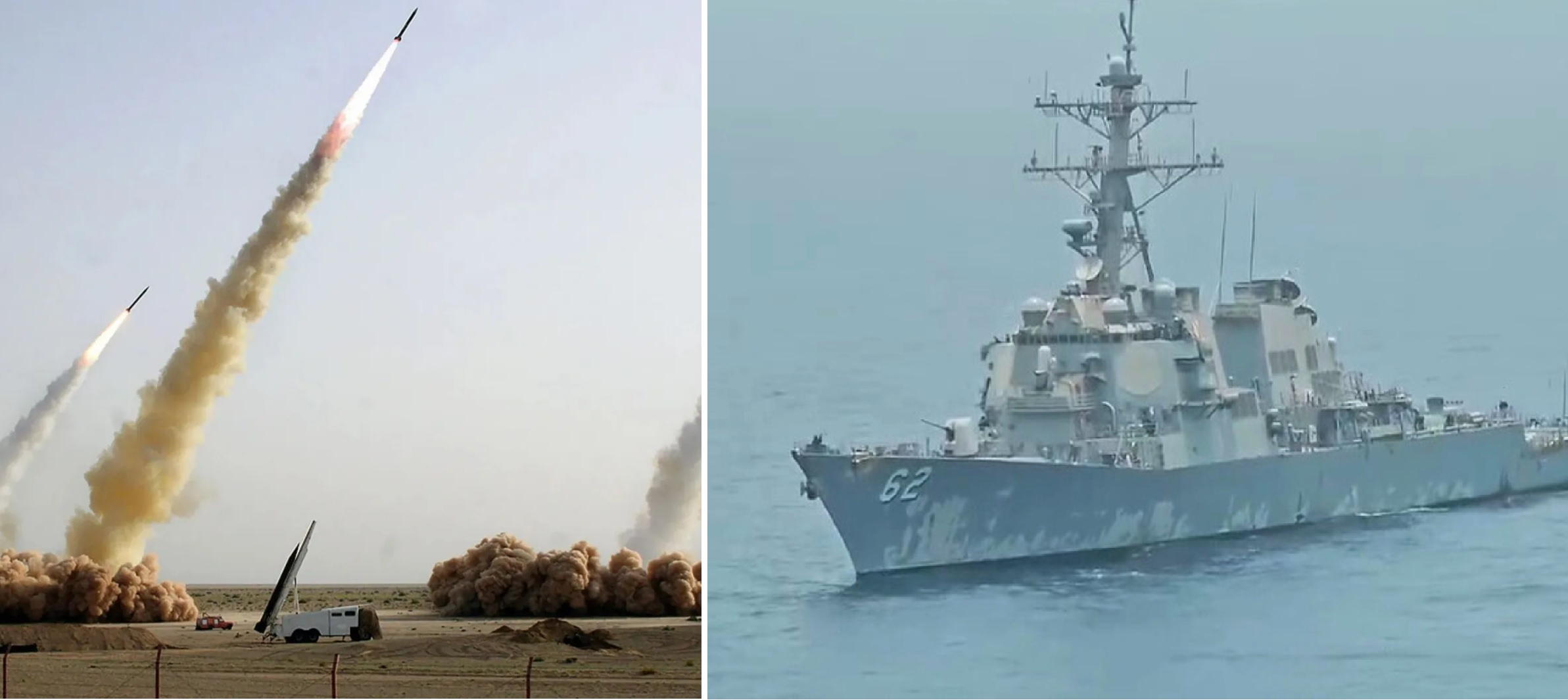
World
MUSCAT, — June 04, 2026 : Iran has claimed that its naval forces targeted the command and control center of a United States Navy destroyer operating in the Gulf of Oman, an assertion that has been firmly denied by the U.S. Central Command (CENTCOM) as military tensions continue to rise across the Gulf region. The claim was announced by the Iranian Army Navy and published through Iranian state media outlets, including the Islamic Revolutionary Guard Corps (IRGC)-affiliated Sepah News and IRIB. According to Iranian authorities, the action was carried out against a U.S. destroyer that was allegedly approaching Iranian territorial waters in the Gulf of Oman. Iran Says U.S. Destroyer Was Targeted In its statement, Iran said the operation was a response to what it described as aggressive behavior by the U.S. vessel, alleged violations of navigation regulations in the Strait of Hormuz, and the repeated harassment of Iranian commercial shipping operating in the region. Iranian officials claimed that the destroyer’s command and control systems were specifically targeted. However, the statement did not provide any technical details, operational evidence, or damage assessments to support the allegation. The Iranian Navy stated that it continues to closely monitor U.S. and allied military activities in the area and warned that any future hostile actions would receive an immediate response. CENTCOM Denies Iranian Claim The United States Central Command (CENTCOM) quickly dismissed the Iranian claim and stated that U.S. military operations in the region remain unaffected. In a statement posted on the social media platform X, CENTCOM said: “CLAIM: Iran is now claiming it has targeted a U.S. Navy destroyer in the Gulf of Oman. TRUTH: Iran is lying. U.S. military assets at sea continue to fly, sail, and operate safely and unimpeded.” The U.S. military did not report any damage to its naval assets, and no independent evidence has emerged to verify Iran’s claim. Strategic Importance of the Gulf of Oman The Gulf of Oman and the nearby Strait of Hormuz are among the world's most strategically important maritime corridors. A significant portion of global oil exports passes through the narrow waterway, making it a critical route for international trade and energy supplies. The U.S. Navy, operating under the U.S. Fifth Fleet based in Bahrain, regularly conducts missions in the region with the stated objective of ensuring freedom of navigation and maritime security. Iran also maintains a substantial naval presence through both its regular navy and the Islamic Revolutionary Guard Corps Navy (IRGCN), which frequently operates near commercial and military vessels transiting the area. Missile and Drone Attacks Increase Regional Tensions The dispute over the reported naval incident comes amid a broader escalation of military activity across the Gulf region. Earlier, the IRGC confirmed launching ballistic missiles and unmanned aerial vehicles (UAVs) against U.S. military facilities, specifically citing Ali Al Salem Air Base in Kuwait and the headquarters of the U.S. Navy’s Fifth Fleet in Bahrain. The attacks have intensified concerns over regional security and the possibility of further military confrontations. Bahrain Reports Successful Interceptions In Bahrain, government authorities stated that national air defense systems successfully intercepted multiple Iranian drones and three incoming missiles. Gulf states have also rejected Tehran’s justification that its military operations constitute legitimate retaliatory actions, maintaining that the attacks threaten regional stability and civilian infrastructure. No Independent Verification of Naval Incident At the time of reporting, Iran’s claim that it targeted the command and control center of a U.S. destroyer in the Gulf of Oman has not been independently verified. No publicly available evidence, damage assessment, or third-party confirmation has been released to support the allegation. The conflicting accounts highlight the continuing tensions between Iran and the United States in a region where military forces from multiple nations operate in close proximity. Regional Security Concerns Remain High The latest exchange of accusations adds to ongoing tensions in the Gulf, particularly around the Strait of Hormuz, a waterway that remains critical to global energy markets and international shipping. With military activity increasing across the region and competing narratives emerging from both Tehran and Washington, developments in the Gulf of Oman continue to be closely monitored for their potential impact on regional security, maritime trade, and global energy supplies.
Read More → Posted on 2026-06-04 16:19:27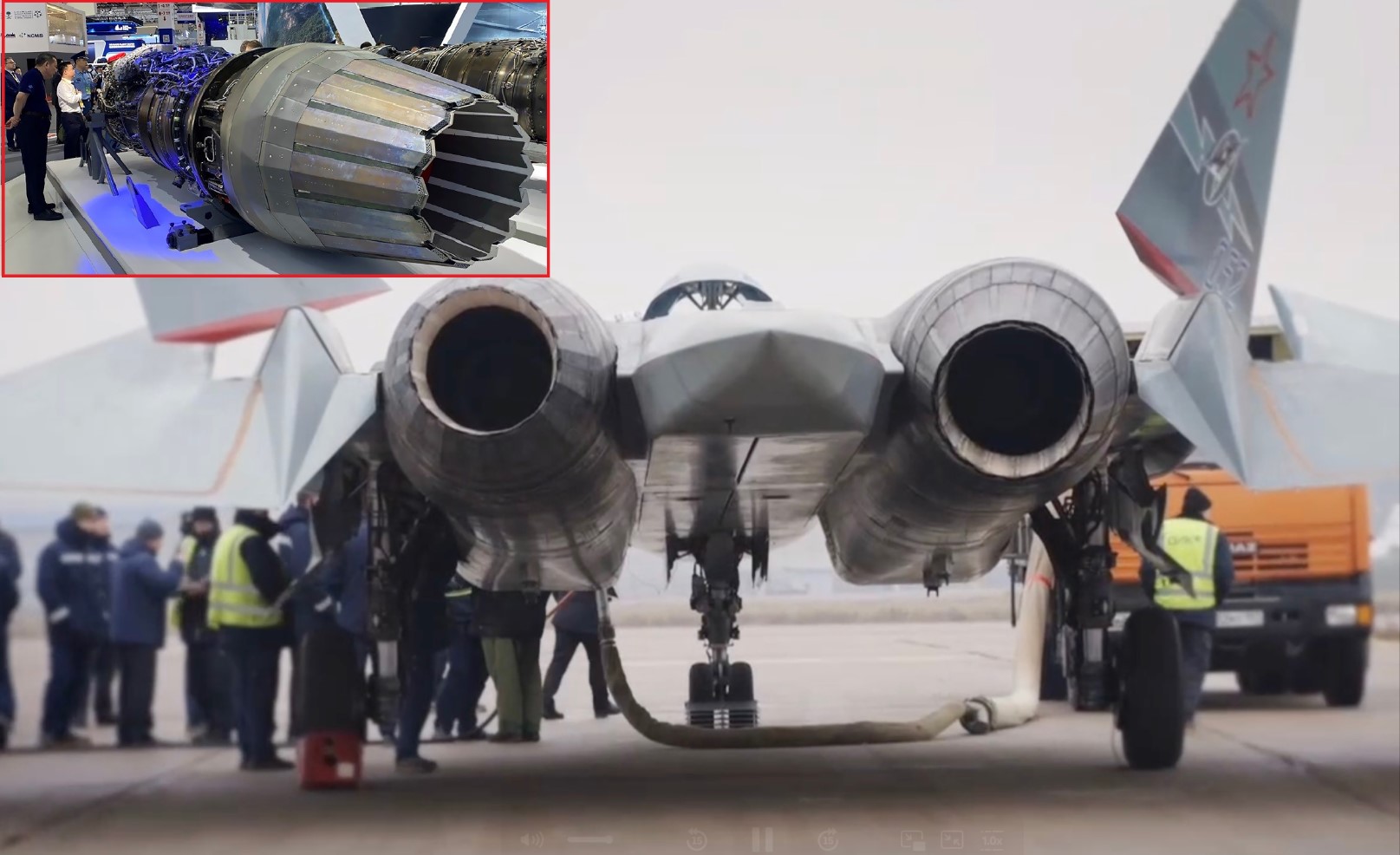
World
MOSCOW — June 4, 2026 : Russia’s state-owned United Aircraft Corporation (UAC) has confirmed that the next-generation “Product 177” engine being developed for the Su-57 fifth-generation fighter is expected to enter integration and delivery stages within the coming years, according to UAC Chief Executive Officer Vadim Badekha. Speaking about the program, Badekha stated that the Su-57 already satisfies the requirements of a fifth-generation combat aircraft in its current configuration. He emphasized that the introduction of the new engine is intended to provide additional operational capabilities rather than address any shortcomings in the fighter’s existing performance. According to Badekha, the AL-41F-1 engines currently powering the Su-57 already meet fifth-generation operational requirements. The new Product 177 engine is being developed as an upgrade designed to improve performance, fuel efficiency, durability, and overall capability. He also confirmed that flight testing is already underway, with initial test flights having been successfully completed. The UAC chief said integration of the new engine is expected to begin “in the coming years,” subject to the completion of ongoing testing and certification activities. Flight Testing Progresses Russia’s state defense corporation Rostec previously reported that flight testing of the Product 177 engine began in December 2025 as part of the Su-57 development program. According to the company, the engine operated within expected parameters and demonstrated stable performance during the initial phase of testing. During these trials, a Su-57 prototype reportedly completed its first flight equipped with the new engine, marking a significant milestone in the propulsion system’s development. Despite progress in testing, official details regarding the engine’s full specifications, designation, and final configuration remain limited. Industry observers continue to assess whether Product 177 represents a refined version of the AL-51F engine previously linked to the Su-57 program or a revised propulsion solution developed following changes in earlier engine development plans. Current Engine and Operational Limitations The Su-57 is currently powered by the AL-41F-1, an advanced derivative of the AL-31F engine family originally developed during the Soviet era. While the engine incorporates numerous upgrades and modern technologies, analysts note that it is generally less advanced in terms of fuel efficiency and thrust-to-weight performance compared with some of the newest fighter engines currently entering service worldwide. Existing engine limitations can affect several operational areas, including: Maximum operational range Fuel efficiency across flight profiles Maintenance intervals and lifecycle costs Electrical power generation for advanced onboard systems These factors are increasingly important as modern combat aircraft rely on sophisticated radars, electronic warfare suites, sensors, and future high-power technologies. Expected Improvements from Product 177 Although detailed technical specifications remain undisclosed, Russian defense industry statements and associated reporting indicate several key improvements are expected from the new engine program. Improved Fuel Efficiency Rostec has indicated that Product 177 is designed to reduce fuel consumption across multiple operating modes. Improved efficiency could increase the aircraft’s operational range while reducing logistical and support requirements. Extended Service Life The new engine is expected to offer a longer operational lifespan than earlier-generation Russian turbofan engines, helping reduce maintenance frequency and lowering long-term operating costs. Higher Thrust and Better Performance While official thrust figures have not been released, the program is expected to improve the engine’s thrust-to-weight ratio, enabling better acceleration, climb performance, maneuverability, and sustained supersonic flight characteristics. Advanced Materials and Thermal Efficiency Developers have highlighted the use of new materials and updated engineering approaches designed to improve heat resistance, durability, and overall reliability during high-performance operations. Greater Electrical Power Generation One of the most important anticipated improvements is increased onboard electrical power output. Higher power generation capacity would support advanced avionics, next-generation radar systems, electronic warfare equipment, and potential future technologies requiring greater energy availability. Part of Russia’s Broader Fighter Modernization Effort The Product 177 program forms part of Russia’s wider effort to modernize its combat aviation fleet and reduce dependence on legacy propulsion technologies. The AL-31F family, first introduced during the 1980s, has served as the foundation for multiple generations of upgraded engines, including the AL-41F-1 currently used on the Su-57. Industry analysts view Product 177 as an effort to improve efficiency, reduce maintenance burdens, and enhance compatibility with future airframe and avionics developments. The engine’s development also aligns with broader Russian fighter programs, including the S-75 “Checkmate” light tactical fighter project. Reports indicate that the aircraft could potentially be powered by either the AL-51F or a variant derived from the new engine family. Engine commonality across multiple platforms could help reduce production costs, simplify logistics, and provide greater flexibility for export customers through different engine configuration options. Strategic Implications If the Product 177 engine achieves its stated objectives, it could significantly improve the Su-57’s operational effectiveness by addressing key areas such as: Range and endurance Fuel efficiency Maintenance efficiency Electrical power availability Overall flight performance However, the program remains in the testing phase, and its final specifications, certification status, production readiness, and export configuration have yet to be officially confirmed. Further updates are expected as flight testing progresses and UAC moves closer to integrating the new engine into operational Su-57 fighter aircraft.
Read More → Posted on 2026-06-04 16:31:52
World
LONDON — June 04, 2026 : The Five Eyes intelligence alliance has issued a joint security bulletin warning that Chinese military intelligence services are using professional networking websites and online recruitment platforms to target individuals with access to sensitive government, military, and defence-related information. The advisory, titled “Safeguarding Our Secrets,” was released on June 3, 2026, and was jointly prepared by the domestic security agencies of the five member nations: the Federal Bureau of Investigation (FBI) of the United States, the United Kingdom’s MI5, the Canadian Security Intelligence Service (CSIS), the Australian Security Intelligence Organisation (ASIO), and the New Zealand Security Intelligence Service (NZSIS). According to the bulletin, the operation forms part of a broader intelligence collection effort targeting current and former government officials, military personnel, defence contractors, policy advisers, researchers, academics, journalists, and think tank employees who may possess access to sensitive national security information. Online Recruitment Strategy The Five Eyes advisory states that Chinese intelligence services and affiliated recruitment networks are increasingly using professional networking platforms and job portals, including LinkedIn, Indeed, and Upwork, to identify and approach potential targets. Investigators say intelligence operatives frequently create fake professional profiles, presenting themselves as recruitment consultants, human resources specialists, think tank representatives, private-sector hiring managers, or employees of consulting and research organizations. Many of these entities are portrayed as being based outside China to increase credibility. Using publicly available resumes, employment histories, and professional profiles, recruiters identify individuals with experience in foreign policy, defence, cybersecurity, advanced technologies, and government advisory roles. Selected targets are then approached with offers for consulting assignments, research projects, policy analysis work, or advisory positions that appear to be legitimate employment opportunities. How the Recruitment Process Works According to the bulletin, the recruitment process often begins with seemingly routine freelance or consultancy work. Targets may initially be asked to prepare trial reports covering subjects such as international trade, foreign relations, defence policy, regional security developments, or geopolitical affairs. These assignments are intended to evaluate a candidate’s expertise, professional network, and potential access to valuable information. As the relationship develops, recruits may be encouraged to provide non-public information or insights related to government policies, military capabilities, defence procurement programs, strategic assessments, infrastructure details, and contacts within government institutions. The advisory notes that these requests are often presented as research requirements for unspecified clients or organizations that allegedly maintain links to Chinese government entities. Use of Encrypted Communications and Payments The intelligence agencies reported that once a working relationship is established, communications are frequently moved away from public job platforms to encrypted messaging applications in order to reduce visibility and avoid detection. The bulletin states that compensation is commonly offered for reports and consulting assignments, with payments ranging from hundreds to several thousand dollars per task. Payments are reportedly routed through third-party financial services such as PayPal, Payoneer, and Western Union, while some transactions are conducted using cryptocurrency. Intelligence Collection Objectives According to the Five Eyes alliance, the primary objective of these recruitment efforts is to obtain military, political, economic, and technological intelligence that could support China's strategic interests. The advisory emphasizes that intelligence collection is not limited to classified material. Security officials warn that even seemingly insignificant or unclassified information can become valuable when combined with data gathered from multiple sources. The bulletin notes that aggregated information can provide foreign intelligence services with a detailed understanding of government operations, defence structures, military activities, infrastructure networks, and national security decision-making processes. Security Risks and Consequences The Five Eyes agencies warned that individuals who knowingly or unknowingly participate in such activities may face significant legal and professional consequences. According to the bulletin, previous cases involving similar recruitment efforts have resulted in criminal investigations, prosecution, employment termination, and the revocation of security clearances. The advisory stresses that even informal conversations with unknown online contacts can expose information that may be useful to foreign intelligence services. UK Security Minister Dan Jarvis urged government employees, military personnel, and individuals working in sensitive sectors to remain vigilant and recognize signs of suspicious online recruitment efforts before sensitive information is compromised. Professional Platforms Increasingly Used for Espionage The Five Eyes alliance highlighted that professional networking websites have become attractive tools for intelligence collection because they provide access to verified professional identities, employment histories, organizational affiliations, and direct communication channels. Officials noted that these platforms allow intelligence operatives to blend into legitimate professional environments, making recruitment attempts more difficult to identify than traditional espionage methods. The advisory also points out that similar intelligence-gathering efforts have previously been conducted through academic conferences, consultancy offers, research collaborations, and professional networking events, but digital platforms now enable large-scale outreach across multiple countries and industries. China Rejects the Allegations The Chinese government strongly rejected the claims outlined in the Five Eyes bulletin. A spokesperson for the Chinese Embassy in the United Kingdom described the allegations as “purely false” and characterized the report as “malicious slander.” The spokesperson also criticized the Five Eyes partnership, referring to it as the world's largest intelligence organization and accusing its member states of posing a threat to international stability. Joint Warning From Five Eyes Partners While individual Five Eyes member countries have previously issued separate warnings regarding cyber threats, foreign intelligence activities, and digital espionage campaigns, the June 2026 bulletin represents a coordinated public warning from all five intelligence partners. The alliance stated that the advisory reflects growing concerns about the use of commercial hiring platforms and professional networking ecosystems as channels for intelligence collection. Authorities have advised individuals working in government, defence, research, and policy-related fields to carefully verify unsolicited job offers, consulting requests, and professional contacts before engaging in discussions that could involve sensitive information. The bulletin concludes that foreign intelligence services continue to adapt their recruitment and information-gathering methods to modern digital environments, making vigilance, verification, and security awareness increasingly important for protecting national security interests.
Read More → Posted on 2026-06-04 17:31:29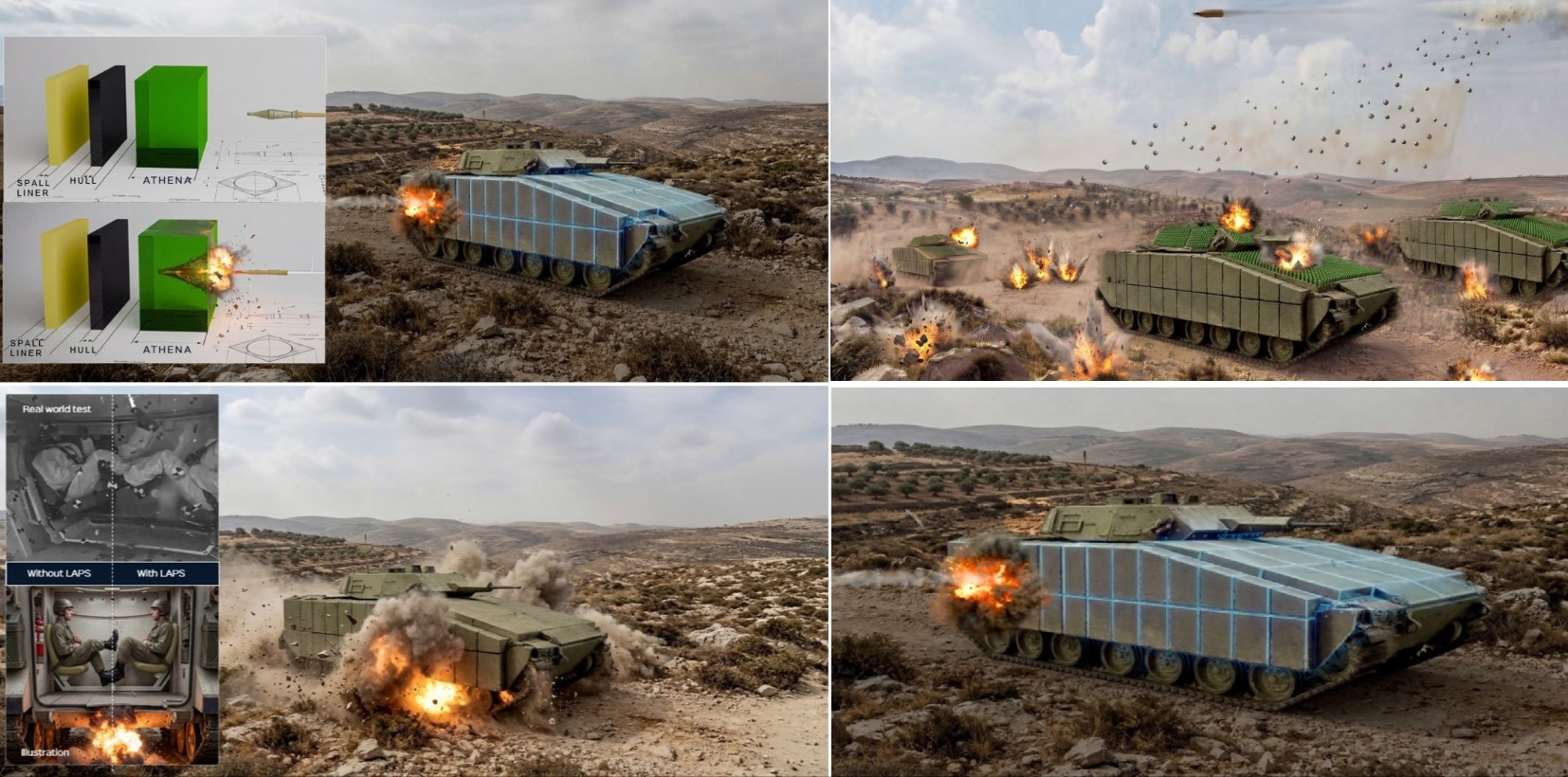
World
KIBBUTZ SASA, Israel — June 4, 2026 : Israeli survivability and armor specialist Plasan has announced the introduction of three new armored vehicle protection systems designed to address some of the most pressing threats facing military vehicles on modern battlefields. The systems—Leg Active Protection System (LAPS), Advanced Thickening Energetic Armour (ATHENA), and Top Attack Protection System (TAPS)—will make their public debut at the Eurosatory 2026 defense exhibition in Paris, scheduled to take place from June 15 to June 19, 2026. The announcement comes as armed forces worldwide place greater emphasis on armored vehicle survivability, driven by operational lessons from recent conflicts in Ukraine and Gaza, where mines, anti-tank weapons, drones, and top-attack munitions have posed significant challenges to armored formations. Founded in 1985, Plasan has more than four decades of experience in vehicle protection technologies and has supplied survivability solutions for widely used military platforms, including the Oshkosh JLTV and Navistar MaxxPro. According to the company, the three new systems were developed to address vulnerabilities that conventional armor solutions have struggled to mitigate effectively. LAPS Designed to Reduce Mine Blast Injuries The Leg Active Protection System (LAPS) is intended to reduce severe lower limb injuries caused by underbelly mine blasts and improvised explosive devices (IEDs). When a vehicle strikes a mine or encounters an underbody explosion, a powerful shockwave travels through the vehicle floor within milliseconds. Although modern armored vehicles employ blast-resistant hulls and reinforced flooring, residual energy can still cause serious injuries, including fractures, amputations, and soft-tissue damage to vehicle occupants. To address this threat, LAPS is integrated directly into the vehicle’s Energy Attenuating Seat structure and utilizes an active detection mechanism capable of identifying a blast event almost instantly. Once activated, the system rapidly lifts the occupant’s legs away from the floor before the primary blast wave reaches the seating area. Plasan stated that the technology achieves this protective response without requiring additional cabin space or significantly increasing vehicle weight. This allows manufacturers to maintain compact vehicle designs while improving crew survivability and reducing the physical effects of mine and IED attacks. ATHENA Introduces Non-Explosive Reactive Armor Technology The second system, ATHENA (Advanced Thickening Energetic Armour), has been developed to counter shaped-charge warheads commonly used in rocket-propelled grenades (RPGs), anti-tank guided missiles (ATGMs), and explosively formed penetrators (EFPs). Shaped-charge weapons defeat armor by creating a concentrated high-velocity metal jet capable of penetrating steel and composite protection systems. For decades, armed forces have relied on Explosive Reactive Armor (ERA) to disrupt these penetrators. However, ERA functions by detonating outward when struck, creating fragmentation and blast effects that can endanger nearby infantry and damage external vehicle equipment. Plasan said ATHENA provides a non-explosive reactive armor solution by combining advanced composite armor materials with a mechanically expanding interlayer. When a shaped-charge jet impacts the armor, the interlayer rapidly expands and disrupts the penetrator before it can effectively breach the vehicle's protection. Because ATHENA does not rely on an external explosive reaction, it eliminates the collateral risks associated with traditional reactive armor while maintaining protection against shaped-charge threats. The system is intended to improve vehicle survivability while enhancing safety for troops operating alongside armored platforms. TAPS Developed to Counter Top-Attack Threats The third system, Top Attack Protection System (TAPS), has been designed to protect armored vehicles from threats approaching from above, an area that has become increasingly vulnerable in modern warfare. Recent conflicts have demonstrated the growing effectiveness of drone-dropped munitions, loitering munitions, artillery submunitions, and top-attack anti-tank missiles against armored vehicles. While tanks and armored personnel carriers typically feature heavy frontal armor, their roof sections often remain comparatively less protected due to weight limitations. TAPS is a lightweight add-on protection system mounted above a vehicle’s roof structure. The system provides an additional layer of defense against kinetic threats, artillery-delivered submunitions, and munitions arriving from elevated attack angles. Plasan confirmed that TAPS has already undergone successful testing by multiple Western military forces and has received approval for field deployment. However, the company has not disclosed the identities of the participating nations or the specific vehicle programs involved. Reflecting Lessons from Modern Conflicts The introduction of LAPS, ATHENA, and TAPS reflects a broader shift in military procurement priorities as defense organizations adapt to evolving battlefield threats. Operations in Ukraine and the Middle East have highlighted the vulnerability of armored vehicles to a wide range of threats, including mines, IEDs, anti-tank guided weapons, FPV drones, loitering munitions, and precision-guided top-attack systems. As a result, military planners are increasingly seeking layered survivability solutions that combine passive armor, active protection technologies, blast mitigation systems, and modular protection packages. “These new solutions reflect the evolving requirements of modern battlefield survivability and the need to address increasingly complex threats targeting combat platforms,” said Gilad Ariav, Vice President of Marketing at Plasan. “Our focus is on developing advanced survivability technologies that enhance protection while supporting operational flexibility and platform efficiency,” he added. Expanding Global Industrial Presence Alongside the launch of its new protection systems, Plasan continues to expand its international industrial footprint through partnerships with defense manufacturers and Original Equipment Manufacturers (OEMs) worldwide. The company is increasing its manufacturing presence and industrial cooperation efforts across Europe and North America, with a focus on technology transfer, localized production, and collaboration with regional defense industry partners. The unveiling of LAPS, ATHENA, and TAPS at Eurosatory 2026 is expected to draw attention from military procurement agencies and defense manufacturers seeking advanced protection technologies for future armored vehicle fleets as battlefield threats continue to evolve.
Read More → Posted on 2026-06-04 17:49:27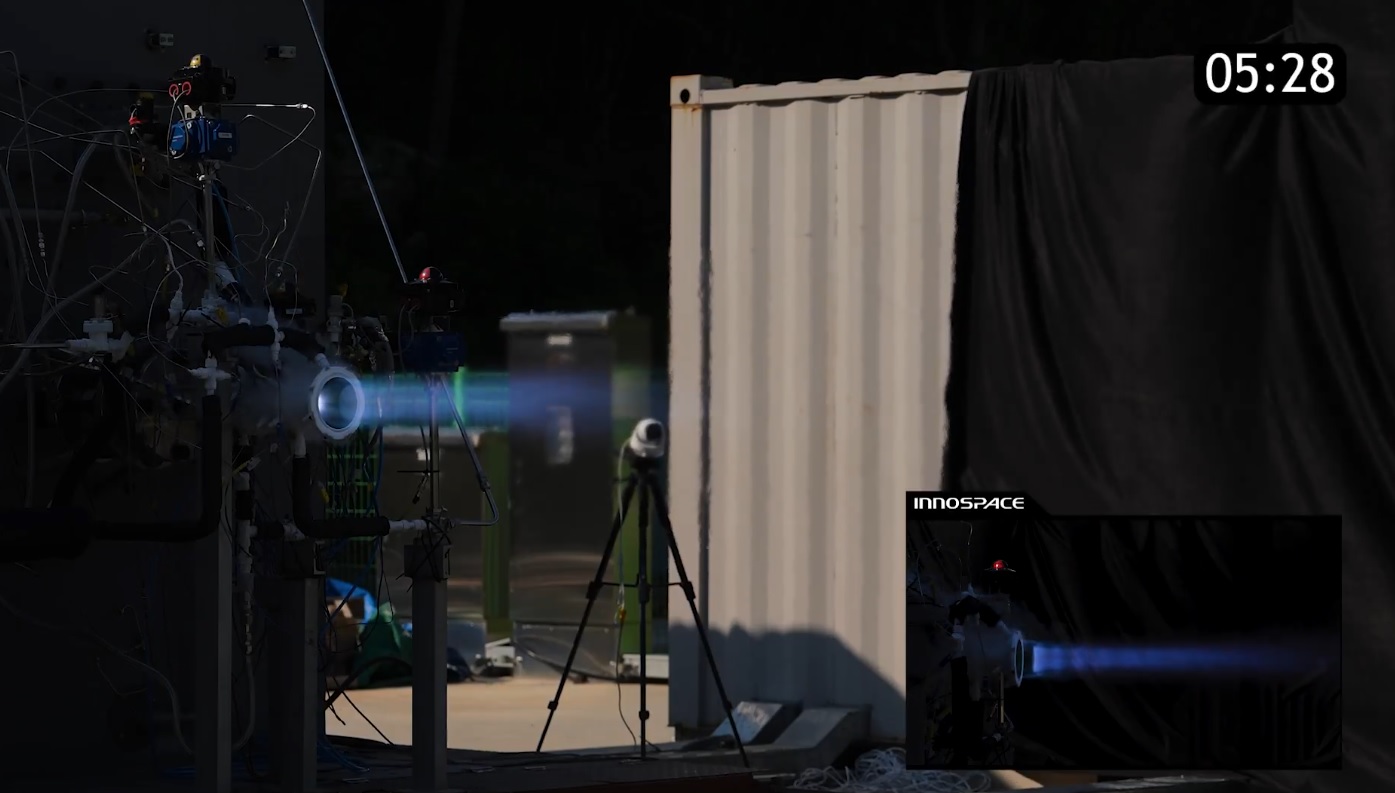
Space & Technology
SEOUL, South Korea — June 04, 2026 : South Korean commercial space launch company INNOSPACE has successfully completed a 420-second ground combustion test of its LiMEK-04 liquid methane rocket engine, setting a new national record for the longest continuous methane engine firing conducted in South Korea. The achievement marks a major milestone in the company's propulsion development efforts and validates a key dual-propellant regenerative cooling technology that will be used in the HANBIT-Micro launch vehicle, currently being developed for small satellite missions. LiMEK-04 Engine Designed for HANBIT-Micro Kick Stage The LiMEK-04 is a 0.4-ton-thrust (approximately 880 lbf) liquid methane engine specifically designed for the kick stage of the HANBIT-Micro rocket. A kick stage serves as the final propulsion system after the primary rocket stages complete their mission, enabling precise orbital insertion and accurate deployment of satellites into their designated orbits. The successful long-duration test demonstrated both the engine's operational stability and the effectiveness of several advanced propulsion technologies that are expected to enhance future launch vehicle performance. Dual-Propellant Cooling Technology Successfully Validated A key objective of the recent test was the validation of INNOSPACE's independently developed dual-propellant regenerative cooling system. Rocket engines operate under extremely high temperatures and require efficient cooling systems to protect the combustion chamber and nozzle. In regenerative cooling, propellants circulate through channels surrounding the engine before entering the combustion chamber, absorbing heat and preventing structural damage. While conventional methane engines typically use liquid methane alone as the coolant, INNOSPACE's system simultaneously utilizes both liquid methane (fuel) and liquid oxygen (oxidizer) as cooling agents. According to the company, this approach increases coolant flow rates by approximately 3.0 to 3.4 times compared with traditional single-propellant cooling methods. The technology offers several advantages: Reduced pressure requirements, allowing stable cooling performance under lower operating pressures. Lower structural mass, as reduced pressure requirements enable the use of lighter propellant tanks and feed systems. Improved payload capability, a critical factor for small launch vehicles where every kilogram of saved weight can be allocated to payload capacity. INNOSPACE stated that the technology could also support future applications involving reusable methane engines, orbital transfer vehicles, and space exploration propulsion systems. Commenting on the achievement, INNOSPACE CEO Kim Soo-jong said that structural lightweighting technologies play a significant role in improving payload performance and enhancing competitiveness within the small launch vehicle market. Methane Propulsion Gains Importance in Global Space Industry The successful test also highlights the growing importance of methane-fueled rocket engines across the global launch sector. Compared with traditional kerosene-based rocket fuels, methane offers several operational benefits. It burns more cleanly, produces fewer carbon deposits within engines, supports potential reusability, and provides higher performance while remaining easier to manage than liquid hydrogen. As a result, methane propulsion has become a key technology for many next-generation launch systems being developed worldwide. For emerging launch providers such as INNOSPACE, methane propulsion is viewed as an important pathway toward more efficient and commercially competitive launch services. LiMEK-04 Development Reaches New Milestone The latest record-setting test represents the culmination of a phased development program that has progressed over the past two years. Key milestones include: March 2024: Successful first ignition test under Technology Demonstration Model 1 (TDM#1). May 2024: Successful combustion test reaching 237 seconds under TDM#2. July 2025: First successful ignition using the newly integrated dual-propellant regenerative cooling system under Engineering Development Model 1 (EDM#1). May 2026: Successful 420-second long-duration combustion test under Engineering Development Model 3 (EDM#3), establishing a new South Korean record. The latest firing demonstrated sustained engine operation for approximately seven minutes, a duration considered important for propulsion systems intended for orbital insertion and upper-stage missions. Supporting the HANBIT-Micro Launch Vehicle INNOSPACE plans to integrate the LiMEK-04 engine into the kick stage of the HANBIT-Micro launch vehicle, which is being developed to serve the growing small satellite launch market. Reliable long-duration engine performance is essential for kick-stage operations, as these systems are responsible for final orbital adjustments, satellite deployment, and mission-specific maneuvers after separation from the main rocket stages. The company believes the successful validation of the methane engine will strengthen HANBIT-Micro's capabilities and improve its competitiveness in the expanding commercial small satellite launch sector. Preparations Continue for Next HANBIT-Nano Launch Alongside engine development activities, INNOSPACE is continuing preparations for its next launch mission following the early termination of its first commercial HANBIT-Nano launch in December 2025. The anomaly occurred approximately one minute after liftoff and was subsequently traced to a first-stage electric pump failure. Since then, the company has completed a comprehensive root-cause analysis, upgraded relevant hardware components, and implemented manufacturing process improvements aimed at increasing vehicle reliability. INNOSPACE is currently undergoing a launch license review with the Korea AeroSpace Administration (KASA). Subject to final approval, the company plans to conduct a follow-up HANBIT-Nano launch during the third quarter of 2026. The mission is scheduled to lift off from the Alcântara Space Center in Brazil and will carry InnoSat-0, INNOSPACE's first in-house test satellite. The flight will also utilize a 6U-class satellite deployment system developed by SpaceBey to validate key orbital separation and deployment technologies. Expanding South Korea's Commercial Space Capabilities The successful 420-second combustion test provides important technical validation for INNOSPACE's future launch vehicle roadmap while demonstrating progress in the development of advanced methane-fueled rocket propulsion systems. As the company advances both the HANBIT-Micro and HANBIT-Nano programs, the latest achievement further strengthens South Korea's growing capabilities in commercial launch services, small satellite transportation, and next-generation space propulsion technologies.
Read More → Posted on 2026-06-04 18:02:58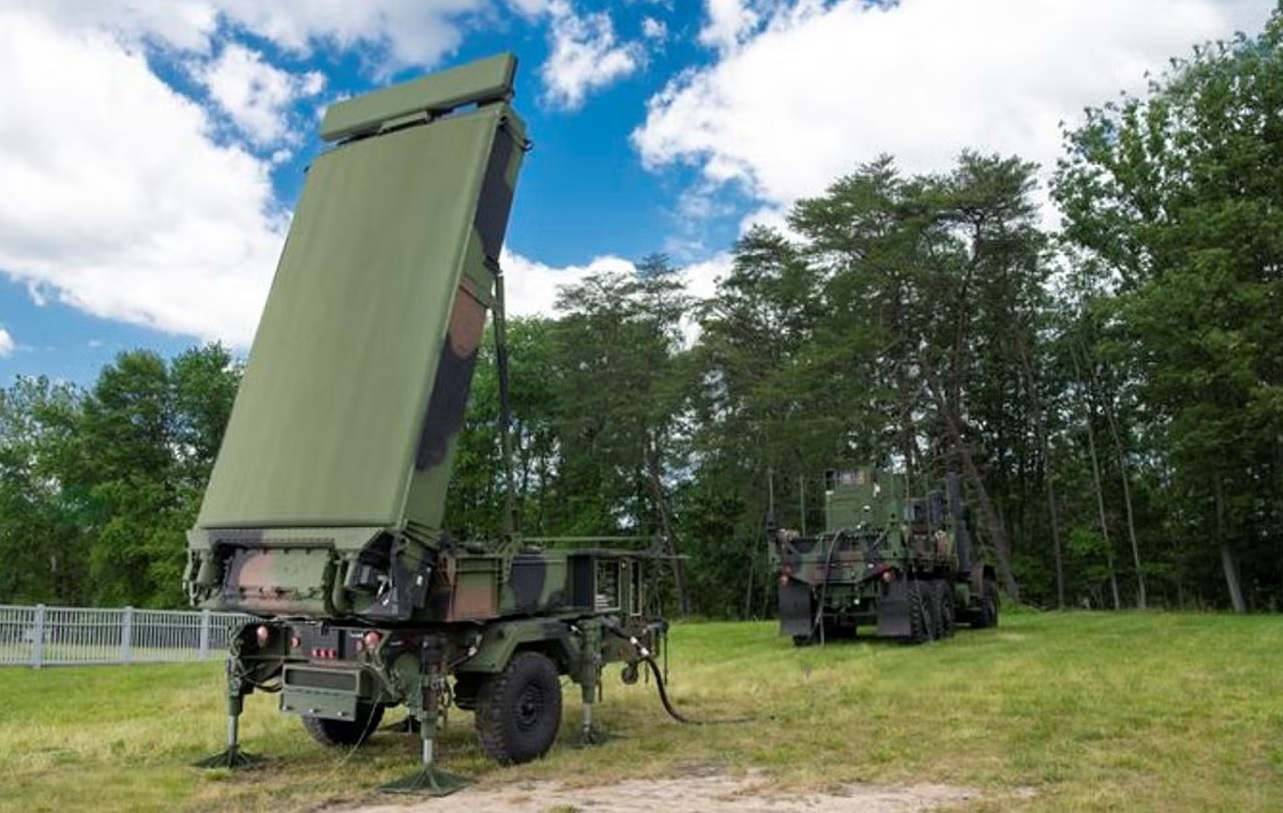
World
WASHINGTON — June 04, 2026 : Northrop Grumman is expanding production and international marketing efforts for its AN/TPS-80 Ground/Air Task-Oriented Radar (G/ATOR) as demand increases for mobile, multi-mission air defense sensors capable of countering drones, cruise missiles, aircraft, artillery projectiles, and other aerial threats. The company announced on June 4, 2026, that more than 40 G/ATOR systems have already been delivered and are operational with the U.S. Marine Corps and U.S. Air Force. Under existing contracts, Northrop Grumman is scheduled to deliver a total of 60 systems by 2029 and stated that its production lines are operating at full-rate production capacity, with the ability to support additional international orders. The G/ATOR program represents a major modernization effort for U.S. military ground-based radar capabilities, replacing multiple legacy radar systems with a single platform capable of performing several missions simultaneously while reducing logistical requirements for deployed forces. Multi-Mission Radar Replacing Legacy Systems A defining feature of the AN/TPS-80 G/ATOR is its ability to consolidate the functions of five separate radar systems into a single mobile platform operating in the S-band frequency range. The radar is capable of conducting air surveillance, air defense, target tracking, fire control support, counter-battery operations, and short-range threat detection at the same time. This allows military units to reduce the number of radar systems, operators, maintenance personnel, spare parts inventories, and communications infrastructure required in operational areas. For the U.S. Marine Corps, the system is replacing aging radar assets, including the AN/TPS-59 long-range surveillance radar and the AN/MPQ-62 Sentinel, providing a unified solution for multiple battlefield missions. By consolidating these capabilities into one platform, military forces can simplify deployments, reduce logistical burdens, and improve operational flexibility, particularly during expeditionary operations where mobility and rapid deployment are critical. Advanced AESA Radar Technology At the core of G/ATOR is an Active Electronically Scanned Array (AESA) radar architecture equipped with advanced Gallium Nitride (GaN) transmit and receive modules. Unlike conventional mechanically scanned radars that rely on rotating antennas, the AESA system electronically steers radar beams within milliseconds, enabling continuous 360-degree surveillance without interruption. This design allows the radar to conduct surveillance, target tracking, and fire control tasks simultaneously. Northrop Grumman states that the radar can track more than 500 targets simultaneously, including artillery rounds, drones, helicopters, cruise missiles, and fast-moving aircraft. The system can also perform immediate fire-control calculations for identified threats while maintaining broad-area surveillance. The radar offers a detection range exceeding 160 kilometers (100 miles) against aerial targets, providing commanders with early warning and engagement opportunities across a wide operational area. The GaN-based AESA architecture also enhances survivability in contested electromagnetic environments. Through rapid frequency changes and adaptive beam management, the system is designed to resist electronic jamming, suppression attempts, and other electronic warfare threats that can degrade older radar systems. Designed for Mobility and Rapid Deployment Mobility and survivability were key design priorities during the development of G/ATOR. The system is divided into three transportable components: the Radar Equipment Group (REG), Communications Equipment Group (CEG), and Power Equipment Group (PEG). This modular design allows the radar to be rapidly transported and deployed in expeditionary environments. The complete system can be airlifted by a single C-130 Hercules transport aircraft, three CH-53E Super Stallion helicopters, or MV-22B Osprey tilt-rotor aircraft. It can also be towed using standard Medium Tactical Vehicle Replacement (MTVR) trucks. According to Northrop Grumman, trained personnel can unpack, assemble, and begin operations in less than 45 minutes after arriving at a deployment site. The emphasis on mobility reflects lessons observed in recent conflicts, where stationary radar systems have become increasingly vulnerable to long-range precision weapons, cruise missiles, loitering munitions, and anti-radiation missiles. Modern military doctrine increasingly favors mobile air defense assets capable of relocating frequently to reduce the risk of detection and targeting. Expanding Role in Counter-Drone Operations The growing use of unmanned aerial systems (UAS) has increased the importance of radar systems capable of detecting small, low-flying targets. Northrop Grumman says G/ATOR incorporates advanced digital signal processing and filtering technologies that enable the radar to detect and track small drones operating in complex environments. The system is designed to distinguish legitimate aerial threats from terrain, buildings, vegetation, wildlife, and other sources of radar clutter that often generate false alarms for older radar systems. This capability allows operators to maintain awareness of both conventional air threats and emerging drone threats using a single sensor network. Recent conflicts have demonstrated the widespread use of small reconnaissance drones, first-person-view (FPV) attack drones, loitering munitions, and other unmanned systems, increasing demand for radar platforms capable of supporting both traditional air defense missions and counter-drone operations simultaneously. Integration with Air Defense Networks Both the U.S. Marine Corps and U.S. Air Force have integrated G/ATOR into broader air and missile defense architectures. The radar provides tracking and targeting data directly to interceptor networks, including the National Advanced Surface-to-Air Missile System (NASAMS), as well as other short-range and medium-range air defense systems. The system also supports integration with joint command-and-control networks, allowing military commanders to build a common operational picture by combining information from multiple sensors and weapons systems across the battlefield. This networked approach enables faster threat detection, improved target tracking, and more effective coordination between air defense units. International Expansion Efforts With more than 40 systems already fielded, 60 systems under contract through 2029, and production operating at full rate, Northrop Grumman is positioning G/ATOR as a mature and readily available solution for international customers. The company is actively pursuing export opportunities among countries seeking modern radar capabilities without the delays often associated with developmental programs. Potential customers include NATO members that have accelerated investments in air defense since 2022, as well as Indo-Pacific nations seeking improved surveillance and air defense capabilities amid evolving regional security challenges. Growing demand for integrated air and missile defense networks has increased interest in radar systems capable of detecting and tracking a wide range of threats from a single platform. The ability to counter drones, cruise missiles, aircraft, artillery projectiles, and other aerial threats while maintaining high mobility is expected to remain a key factor driving international interest in the AN/TPS-80 G/ATOR radar system.
Read More → Posted on 2026-06-04 18:15:34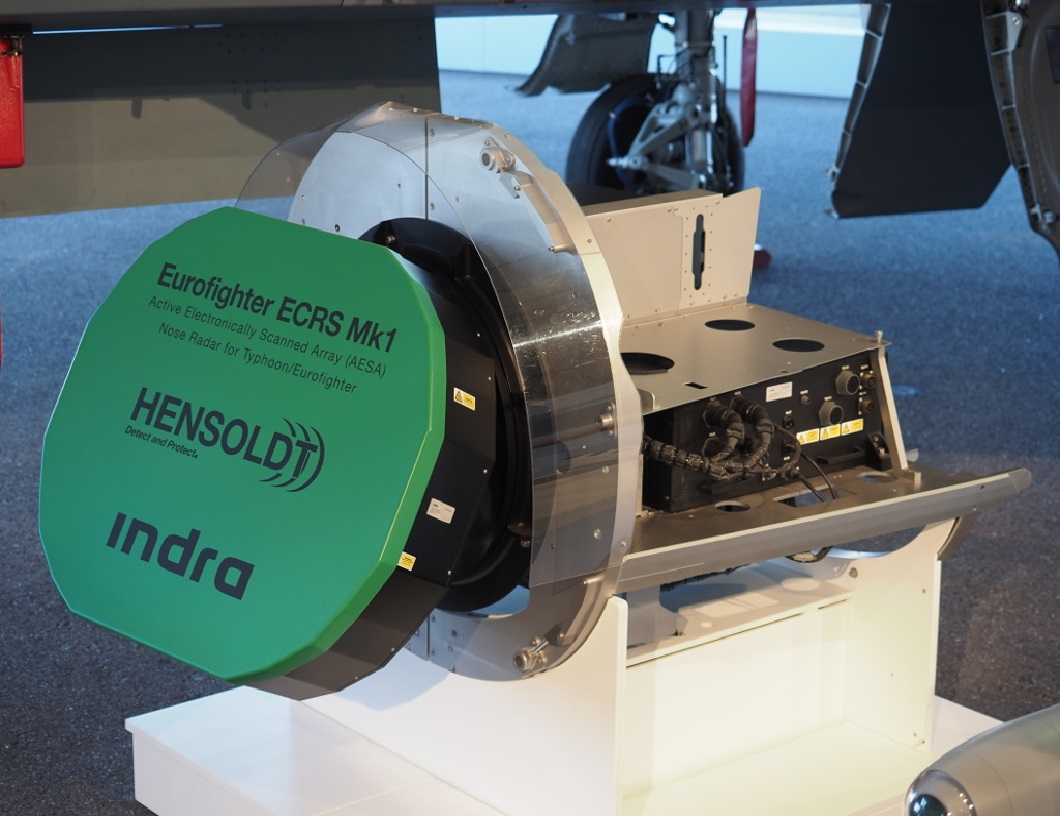
World
ULM, Germany / MADRID, Spain — June 05,2026 : Spanish defense technology company Indra and German sensor specialist HENSOLDT have commenced live operational testing of the Eurofighter Common Radar System Mark 1 (ECRS Mk1), a next-generation Active Electronically Scanned Array (AESA) radar developed for the German Luftwaffe and the Spanish Air and Space Force Eurofighter fleets. The milestone marks the programme’s transition from ground-based testing to operational evaluations using live targets, while comprehensive airborne flight trials are scheduled to continue throughout 2026. The programme remains on track for initial deliveries in 2027. Radar Enters Operational Testing Phase Developed jointly by HENSOLDT and Indra under a contract awarded in 2020, the ECRS Mk1 has now been fully integrated with its operational hardware and the most advanced software version currently available. During the current testing phase, engineers are evaluating the radar using live targets of opportunity and cooperative targets to replicate real-world operational scenarios. The objective is to further refine the radar’s software while validating system performance under realistic conditions. According to the industry partners, early testing results have demonstrated improvements in both the robustness of the hardware architecture and the performance of the software system. These results support the enhanced subsystem configuration selected by Germany and Spain in 2024. Advanced AESA Architecture The ECRS Mk1 incorporates a multi-channel AESA architecture, a high-performance processor, a new multi-channel receiver, and broadband transmit-receive modules (TRMs). These technologies are designed to improve: Target detection, tracking, and classification Operational agility and mission responsiveness Electronic protection measures Electronic Support Measures (ESM) Electronic Attack (EA) capabilities The radar is capable of supporting the full range of Eurofighter missions, enabling the aircraft to conduct multiple tasks simultaneously while maintaining high levels of situational awareness. Enhanced Air-to-Air, Air-to-Ground, and Electronic Warfare Capabilities The new radar has been designed to support both current and future operational requirements across the full mission spectrum. For air-to-air operations, the system provides enhanced target detection and tracking capabilities. In the air-to-ground role, it supports advanced functions including Synthetic Aperture Radar (SAR) imagery, Ground Moving Target Indication (GMTI), and Space-Time Adaptive Processing (STAP). The radar also delivers expanded electronic warfare capabilities, allowing Eurofighter aircraft to operate more effectively in complex and contested electromagnetic environments. Wider Field of View Than Conventional AESA Radars One of the distinguishing features of the ECRS Mk1 is its large antenna design, made possible by the Eurofighter's nose structure and mechanical repositioning capability. The radar offers a field of view of approximately ±90 degrees, providing significantly broader angular coverage than many conventional AESA radar systems. This wider coverage enhances pilot situational awareness and improves the aircraft's ability to monitor and engage threats across a larger area of the battlespace. Modernization Programmes Driving Integration The radar will be integrated across German and Spanish Eurofighter fleets, including Tranche 2 and Tranche 3 retrofit aircraft, as well as newly produced Tranche 4 and Tranche 5 fighters. The programme supports major modernization initiatives including: Germany’s Quadriga Programme Spain’s Halcón Programme Current plans call for the production of approximately 200 ECRS Mk1 radars for both nations. 2024 Upgrades Improve Processing Power In April 2024, Germany and Spain approved advanced upgrades to the radar’s processor and Antenna Power Supply & Control (APSC) systems under the Mk1 Step 1 configuration. The enhancements provide: Increased computational throughput Improved parallel processing capabilities Faster mode switching Greater real-time mission adaptability Support for future AI-assisted functions Enhanced sensor fusion capabilities Production of the first radars incorporating the upgraded hardware was completed in less than 13 months, demonstrating the programme’s accelerated development pace. Flight Testing and Deliveries The revised Mk1 Step 1 configuration is scheduled for flight evaluation aboard Germany’s Airbus A320 ATRA flying testbed. The radar will ultimately be installed on operational aircraft at Airbus Defence and Space's facilities in Manching, Germany. Initially, the Step 1 configuration will focus on delivering advanced air-to-air capabilities. Future software upgrades will expand functionality to include full multi-role operations, including air-to-ground missions and electronic warfare tasks, while also reducing pilot workload through greater automation and task-based operations. The programme remains on schedule for initial deliveries to German and Spanish Eurofighter fleets in 2027. Industry Partners Highlight Progress Commenting on the milestone, Falko Firl, Head of Eurofighter Radar at HENSOLDT, said the start of live operational testing reflects the continued commitment of the programme’s industrial partners and the strong support provided by German and Spanish customers. He noted that teams from Airbus Defence and Space, Indra, and HENSOLDT across Germany and Spain have worked closely to advance the programme toward planned deliveries in 2027. Mónica Pérez Fernández, Eurofighter Programme Director at Indra, described the start of testing as a major step in equipping the Eurofighter with an advanced AESA radar system capable of supporting the aircraft’s operational requirements in the years ahead. She added that the programme demonstrates the value of long-term cooperation between European defense companies in delivering advanced capabilities to allied armed forces. Strategic Importance for the Eurofighter Fleet The ECRS Mk1 forms a central part of broader Eurofighter modernization efforts aimed at ensuring the aircraft remains a highly capable combat platform for European air forces. By combining advanced sensor performance, electronic warfare capabilities, and multi-role mission flexibility, the radar is expected to significantly enhance the operational effectiveness of German and Spanish Eurofighter fleets. To support ongoing development and qualification activities, HENSOLDT received a contract extension worth approximately €350 million in early 2025. With live operational testing now underway and airborne evaluations continuing throughout 2026, the programme is progressing toward the planned introduction of the ECRS Mk1 AESA radar into operational service with German and Spanish Eurofighter aircraft beginning in 2027.
Read More → Posted on 2026-06-05 12:55:10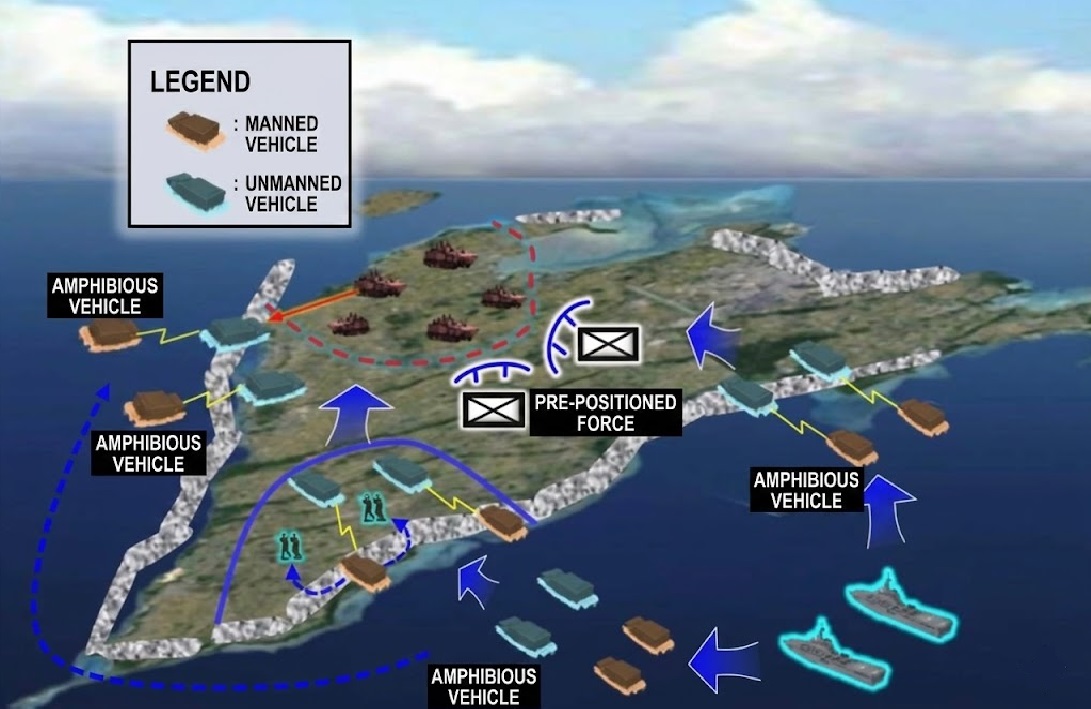
World
TOKYO — June 05, 2026 : Japan is advancing the development of a domestically produced Amphibious Assault Vehicle (AAV) designed to operate in both manned and unmanned modes, as part of a broader effort to strengthen the defense of its remote southwestern islands. Recent materials released by the Ministry of Defense and the Acquisition, Technology & Logistics Agency (ATLA) have revealed new details about the vehicle’s capabilities, highlighting its role in future amphibious operations and the growing emphasis on manned-unmanned teaming (MUM-T). The new platform is being developed to enhance the operational effectiveness of the Japan Ground Self-Defense Force (JGSDF) in challenging island environments while reducing risks to personnel during amphibious assaults. The project forms part of Japan’s long-term efforts to improve its ability to defend and, if necessary, recapture remote territories. Strengthening Defense of the Nansei Islands For more than a decade, Japan has steadily expanded its defense capabilities in response to the changing security environment in the region. Particular attention has been placed on the Nansei Islands, a chain stretching southwest from Kyushu to Okinawa and toward Taiwan. Japanese defense planners view these islands as strategically important due to their location along key maritime routes. In a potential regional contingency, including a scenario involving Taiwan, some of these islands could face threats from amphibious operations. As a result, Japan has invested heavily in developing specialized forces and equipment capable of operating across dispersed island chains. To support this mission, the JGSDF established the Amphibious Rapid Deployment Brigade (ARDB) in 2018 at Camp Ainoura in Nagasaki Prefecture. Often compared to marine infantry formations, the brigade became Japan’s first unit dedicated exclusively to amphibious warfare and island recapture operations. The ARDB currently consists of three Amphibious Rapid Deployment Regiments and a Combat Landing Battalion responsible for conducting amphibious landings and securing beachheads during operations. Limitations of the Existing AAV-7 Fleet The Combat Landing Battalion currently operates 52 U.S.-made AAV-7 amphibious assault vehicles. These vehicles are used to transport infantry forces from ships to shore and provide protection and fire support during landing operations. While the AAV-7 has served as the backbone of Japan’s amphibious capability, defense officials have identified several limitations when operating in the country’s remote island environment. One major challenge involves the geography of many islands in the Nansei chain. Numerous coastlines are surrounded by steep coral reefs that create significant obstacles for amphibious vehicles. The AAV-7 often struggles to cross these reefs, limiting potential landing sites to gently sloping sandy beaches and reducing tactical flexibility during operations. The vehicle’s armament has also been viewed as insufficient for modern combat scenarios. Equipped with a 12.7 mm machine gun and a 40 mm automatic grenade launcher, the AAV-7 has limited capability against armored vehicles or heavily defended coastal positions. These operational constraints prompted the Ministry of Defense to pursue a more capable domestic alternative. New Vehicle Designed for Difficult Coastal Terrain The new amphibious assault vehicle emerged from ATLA’s Future Amphibious Technology Research (FAT-R) program, which has focused on improving mobility, survivability, and amphibious performance for operations around Japan’s southwestern islands. Unlike the existing AAV-7, the new vehicle is designed specifically to overcome the challenges posed by coral reef coastlines. It utilizes a propulsion system that combines heavy-duty tracks with dual rear-mounted water jets, enabling the vehicle to generate both forward and upward thrust while approaching shore. According to the released specifications, the system will allow the vehicle to climb coral reefs with slopes of up to 50 degrees. This capability is expected to significantly increase the number of potential landing locations available to Japanese forces and reduce reliance on predictable beach approaches. The vehicle is also designed to provide greater firepower. It will be fitted with a Remote Weapon Station (RWS) capable of mounting a 30 mm automatic cannon alongside a 12.7 mm machine gun. The upgraded armament will enable the vehicle to engage lightly armored vehicles and fortified positions more effectively than the current AAV-7. Manned-Unmanned Teaming at the Core of the Program A defining feature of the new AAV is its integration of manned-unmanned teaming (MUM-T) technologies. The platform is being engineered to operate under direct crew control, remote control from another vehicle, or fully autonomous navigation. These capabilities are intended to support a range of operational scenarios while reducing risks to personnel during high-threat missions. Military planners consider the first wave of an amphibious assault to be one of the most dangerous phases of an operation, as forces must establish a foothold while facing concentrated enemy resistance. By deploying unmanned vehicles during the initial landing phase, the JGSDF aims to reduce potential casualties while maintaining operational momentum. To support remote and autonomous operations, the vehicle will incorporate a networked sensor suite featuring visible-light and infrared sensors. These systems will provide real-time battlefield and environmental data to operators and nearby units. The AAV will also be capable of autonomous movement using pre-programmed waypoints, allowing it to navigate independently across designated routes. Advanced Battlefield Networking In addition to its mobility and autonomous functions, the vehicle will feature an advanced command-and-control system derived from the JGSDF’s Type 10 main battle tank. The system will enable vehicles and units to share target location data, exchange tactical information, allocate targets, and transmit combat instructions across the battlefield in real time. This level of connectivity is intended to improve coordination between amphibious assault forces and support more efficient decision-making during operations. The networking capability is expected to play a central role in future amphibious missions involving both manned and unmanned platforms operating together. Prototype Production and Testing Schedule Further details of the program were revealed after Japanese military analyst Santaro Iwamoto obtained internal ATLA documents through a freedom-of-information request and later shared the information with Naval News. According to the documents, ATLA plans to manufacture four prototype vehicles for practical testing beginning in 2027. All four prototypes will incorporate the baseline remote-control and autonomous operating functions planned for the production vehicle. The fourth prototype will feature enhanced power-generation capacity designed to support future technological upgrades. The additional electrical power is intended to accommodate next-generation systems, including potential modular hybrid-propulsion technologies and other advanced capabilities that may be integrated in later versions of the vehicle. Deployment Planned From 2028 Following the completion of testing and evaluation in 2027, Japan’s Ministry of Defense plans to begin deploying the new amphibious assault vehicles in 2028. Current plans call for the procurement of approximately 97 domestically produced AAVs, which will equip the Amphibious Rapid Deployment Brigade and gradually supplement or replace the existing AAV-7 fleet. The program represents one of Japan’s most significant amphibious modernization efforts in recent years. By combining enhanced mobility, greater firepower, advanced networking, and manned-unmanned teaming capabilities, the new vehicle is expected to strengthen the JGSDF’s ability to conduct amphibious operations and defend remote islands across Japan’s southwestern region.
Read More → Posted on 2026-06-05 13:11:48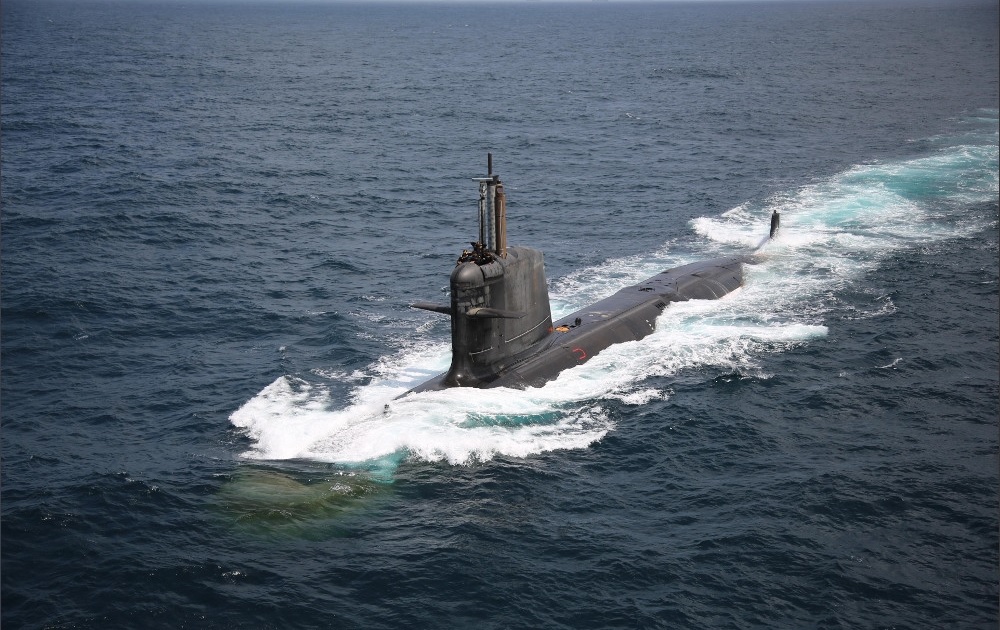
India
NEW DELHI — June 05, 2026 : The Government of India is moving ahead with plans to strengthen the Indian Navy’s underwater fleet by expanding Project 75(I) from the originally planned six submarines to a total of nine diesel-electric submarines. The move is aimed at addressing future fleet shortages, enhancing maritime security, and increasing indigenous defence production. The contract for the first six submarines under Project 75(I) is in the final stages and is expected to be signed later this year. MDL-TKMS Partnership for Project 75(I) Under the programme, Mazagon Dock Shipbuilders Limited (MDL) will build six advanced conventional submarines in partnership with Germany’s Thyssenkrupp Marine Systems (TKMS). The submarines will be equipped with hydrogen fuel cell-based Air Independent Propulsion (AIP) systems, enabling them to remain submerged and operate silently for up to 14 days without surfacing. The first submarine is expected to be delivered seven years after contract signing, with indigenous content beginning at 45 percent and increasing to 60 percent by the sixth submarine. Subsequent vessels are planned to be delivered annually. Following the signing of the main contract, the government intends to proceed with the acquisition of three additional submarines. A final decision has not yet been made on whether these will be follow-on TKMS submarines or upgraded Scorpene-class submarines built by the MDL-Naval Group partnership. Debate Over Additional Submarines The Indian Navy had earlier proposed acquiring three additional Scorpene-class submarines to address near-term force requirements. The proposal underwent lengthy negotiations, with the estimated cost reportedly reduced from over ₹50,000 crore to approximately ₹36,000 crore. France and Naval Group have argued that expanding the Scorpene fleet to nine boats would simplify logistics and maintenance. The proposed upgraded submarines would feature 60 percent indigenous content, increased endurance, larger fuel and sanitary reserves, and more than double the weapon-carrying capacity of the existing fleet. However, defence planners have raised concerns that the current six Scorpene submarines contain less than 20 percent indigenous content and continue to depend on France for critical spare parts. As a result, the TKMS-MDL partnership currently holds an advantage, as the technology transfer and industrial ecosystem created under Project 75(I) are expected to support India's future indigenous submarine programmes. Project 76 to Focus on Indigenous Design Following Project 75(I), India plans to launch Project 76, which will involve the construction of at least six next-generation conventional submarines designed entirely in India by the Indian Navy’s Warship Design Bureau and the Defence Research and Development Organisation (DRDO). The submarines, expected to displace around 3,000 tonnes, will incorporate indigenous weapon control systems, lithium-ion batteries, and an upgraded domestic AIP system. Indigenous content is projected to range between 70 and 90 percent, with imports limited to select specialised components. Driven by Regional Maritime Developments India’s submarine expansion plans come as regional naval competition continues to grow. The Indian Navy currently operates 19 conventional and nuclear submarines, but several ageing vessels are expected to begin retiring from the late 2030s. In comparison, China operates an estimated 65 submarines and continues to expand its fleet. Pakistan is also strengthening its underwater capabilities and is expected to induct eight Chinese-origin Hangor-class submarines in the coming years. To maintain operational capability in the Indian Ocean Region, the government plans to build nearly two dozen new submarines over the next two decades, including conventional attack submarines, nuclear-powered attack submarines (SSNs), and ballistic missile submarines (SSBNs). The expansion of Project 75(I) and the development of Project 76 are expected to play a central role in modernising the Indian Navy’s submarine force while advancing India's long-term goal of defence self-reliance.
Read More → Posted on 2026-06-05 13:27:14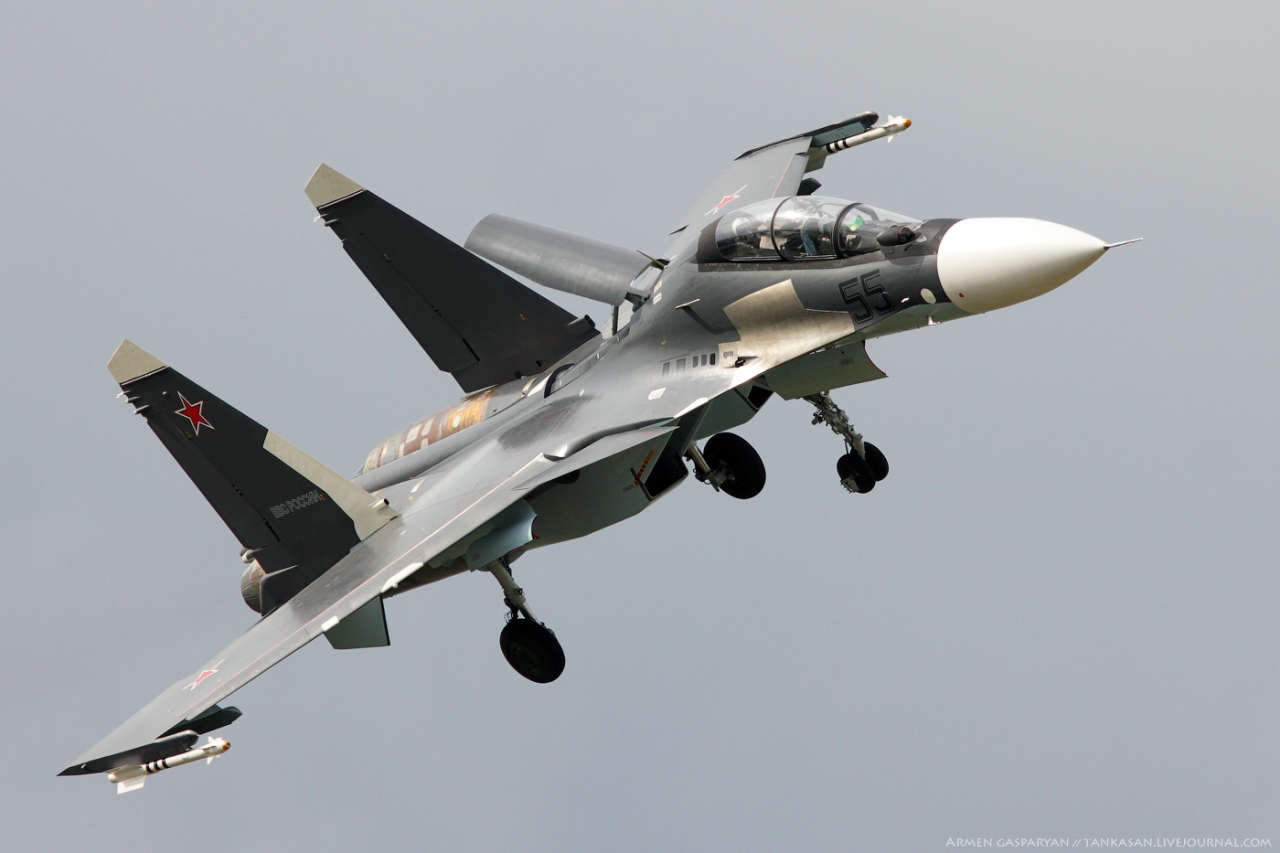
World
TEHRAN — June 05, 2026 : The Islamic Republic of Iran Air Force (IRIAF) has signed a contract with the Russian Ministry of Defense to acquire 12 Su-30SM2 multirole fighter aircraft, marking a significant step in Iran’s ongoing air force modernization program. Deliveries are scheduled to begin in mid-2027 and conclude by the end of the same year. The aircraft are described as second-hand but have accumulated very few flight hours, providing substantial remaining service life. The relatively quick delivery schedule reportedly played a key role in the agreement, allowing Iran to strengthen its air combat capabilities without waiting for new production aircraft. Preparations to establish the required maintenance, logistics, and operational infrastructure for the Su-30SM2 fleet are expected to begin in the near future to support the aircraft's integration into service. The Su-30SM2 is an upgraded variant of the Su-30SM and incorporates several technologies derived from the Su-35 program. The fighter is powered by AL-41F1S engines, which are also used on the Su-35, providing improved performance and commonality in maintenance and support. The aircraft can reach speeds of up to Mach 2, has a combat radius of approximately 1,500 kilometers, and is equipped with the Irbis-E radar, enabling improved detection and tracking of aerial and maritime targets. It can carry a wide range of air-to-air and air-to-ground weapons and perform missions including air superiority, strike operations, and reconnaissance. The Su-30SM2 is also equipped with advanced avionics, network-enabled warfare systems, and electronic warfare countermeasures, enhancing its effectiveness in modern combat environments. The acquisition forms part of Iran’s broader effort to modernize an air force that has long relied on aging platforms, including the F-4 Phantom II, F-5 Tiger, F-14 Tomcat, and MiG-29. The arrival of the Su-30SM2 will provide the IRIAF with a modern long-range multirole capability while supplementing its existing fighter fleet. Defense analysts suggest the aircraft could eventually operate alongside other Russian platforms that Iran has reportedly pursued, including the Su-35 and Yak-130. The fighter’s twin-seat configuration may also support pilot training for future advanced combat aircraft. The deal reflects expanding defense cooperation between Russia and Iran and represents a notable step in strengthening the IRIAF’s operational capabilities. Once deliveries are completed in 2027, the Su-30SM2 fleet is expected to enhance Iran’s air combat and long-range mission capabilities through the introduction of modern Russian fighter technology.
Read More → Posted on 2026-06-05 13:43:13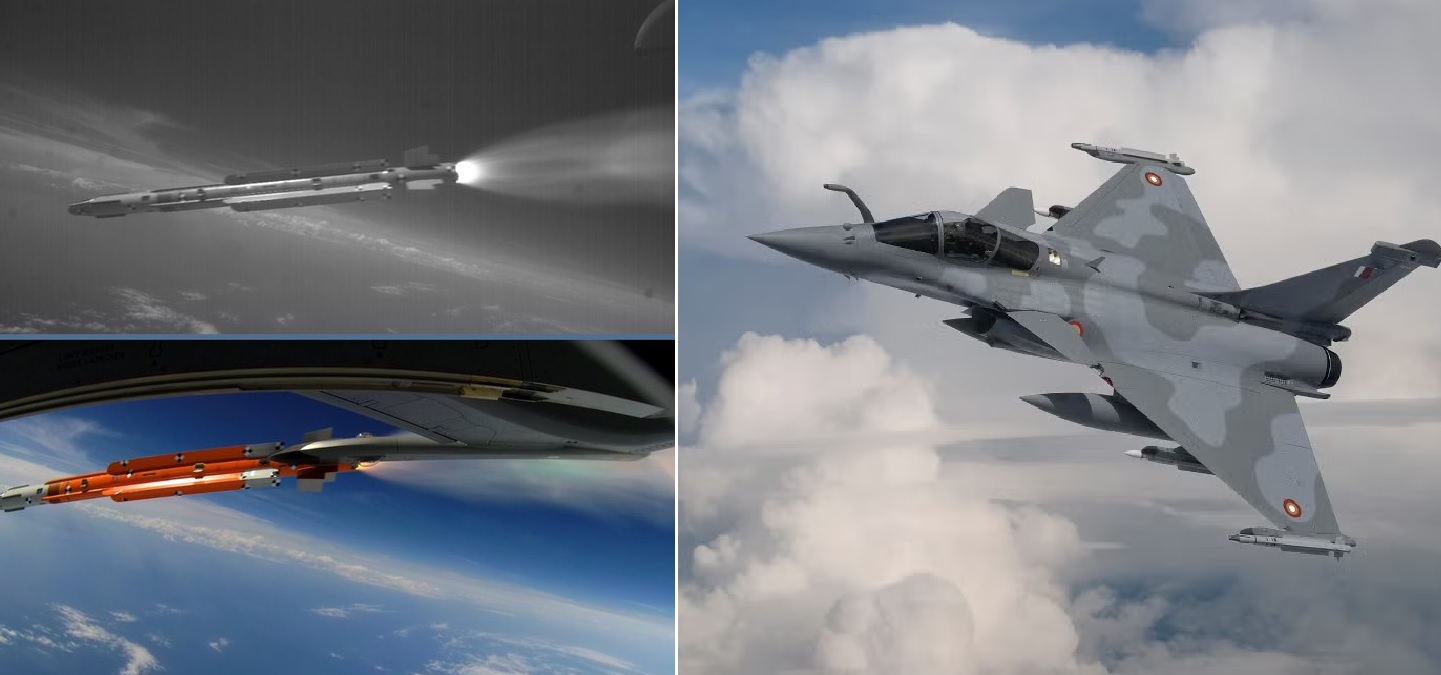
World
PARIS — June 05, 2026 : France has successfully completed the first supersonic launch of the MICA NG (New Generation) air-to-air missile from a Dassault Rafale fighter, marking a major step in the development of the country's next-generation air combat capabilities. The test was conducted on June 1, 2026, at the Directorate General of Armament (DGA) missile testing range in the Mediterranean. The trial involved cooperation between the DGA, MBDA, Dassault Aviation, and the French Air and Space Force. The launch was the second major development firing of the MICA NG from a Rafale aircraft. A previous guided firing conducted on June 19, 2025, validated the missile’s infrared guidance system against a target drone. The latest test focused on evaluating the performance of the missile’s imaging infrared seeker during flight at speeds above Mach 1. During supersonic flight, aerodynamic friction generates significant heat around the missile, particularly near the seeker window. These conditions can affect infrared sensors by reducing thermal contrast between a target and its background. The objective of the test was to determine whether the seeker could maintain effective target acquisition, tracking, discrimination, and guidance under such conditions. According to the DGA, the trial successfully validated the missile’s seeker performance, target tracking, guidance system, aircraft-weapon integration, and overall operation during a supersonic launch profile. The MICA NG is being developed to replace existing MICA missiles in French service and is designed to engage a wide range of threats, including stealth aircraft, drones, and low-signature cruise missiles. The missile is available in two versions that share the same airframe and dimensions: MICA IR NG – Equipped with a passive imaging infrared seeker for engagements without emitting radar signals. MICA EM NG – Equipped with an Active Electronically Scanned Array (AESA) radar seeker for active radar-guided targeting. Both variants feature a dual-pulse solid rocket motor, which improves range, energy management, and performance against maneuvering targets. The missile also incorporates network-enabled engagement capabilities and improved resistance to electronic warfare. The MICA NG is expected to reach speeds of more than Mach 4 and has a reported interception range of approximately 80 to 100 kilometers. The missile is a key element of France’s air defense modernization program. Under the 2019–2025 Military Programming Law, France ordered 567 operational MICA NG missiles, along with training rounds, through contracts awarded in 2018 and 2021. Deliveries are scheduled to begin in 2026, with the missiles gradually replacing existing MICA inventories. The weapon will be deployed across France’s Rafale, Mirage 2000-5, and upgraded Mirage 2000D fleets. Additional qualification tests are planned before the missile enters full operational service. The successful supersonic launch brings the MICA NG program closer to operational deployment with the French Armed Forces.
Read More → Posted on 2026-06-05 13:50:11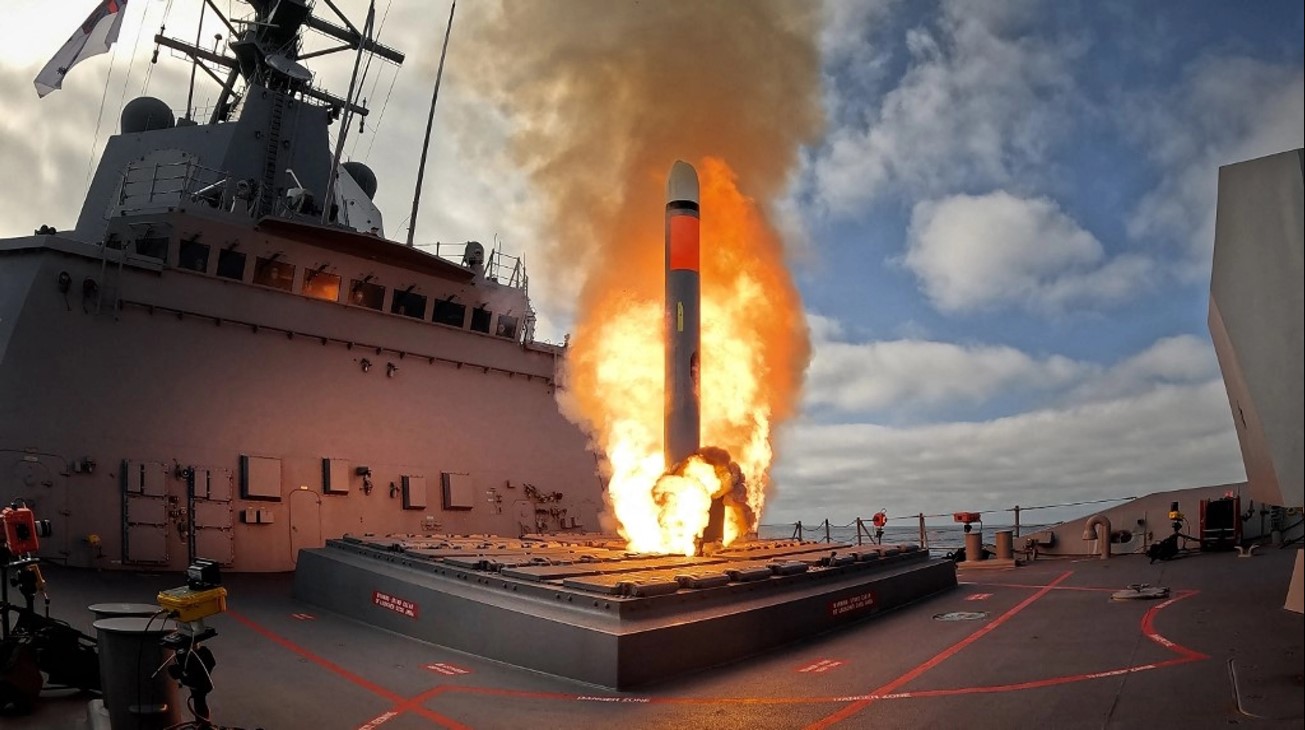
World
WASHINGTON, — June 5, 2026 : The Pentagon is expected to cancel plans to deploy Tomahawk cruise missiles to Germany, according to a report by Politico. The move would reverse a Biden administration agreement aimed at strengthening NATO's long-range strike capabilities in Europe. The reported decision is driven by concerns that deploying long-range missiles in Central Europe could be viewed by Russia as an escalation of tensions. In addition, the United States is facing growing pressure on its missile inventories following recent military operations. Missile Shortages Influence Decision According to the report, the United States expended thousands of Tomahawk and Patriot missiles during the initial weeks of the recent conflict with Iran, placing significant strain on U.S. stockpiles. U.S. Defense Secretary Pete Hegseth recently told Congress that replacing the expended munitions would take "months and years," with shortages of Patriot and Tomahawk systems expected to continue until 2031. German Chancellor Friedrich Merz has acknowledged that the United States currently lacks sufficient cruise missile inventories to fully meet its own defense requirements. Meanwhile, German Defense Minister Boris Pistorius confirmed that Berlin has yet to receive a clear response to its request to purchase the Typhon missile system, which is capable of launching Tomahawk missiles. Background of the Deployment Plan In July 2024, the United States and Germany announced a joint initiative to deploy advanced long-range conventional missile systems in Germany beginning in 2026. The plan included Tomahawk land-attack cruise missiles, SM-6 missiles, and the Long-Range Hypersonic Weapon (LRHW), also known as Dark Eagle. The systems were to be operated by U.S. forces using Typhon launchers on a rotational basis. The deployment was intended to strengthen NATO deterrence and address concerns over Russia's deployment of intermediate-range missile systems. Germany currently lacks comparable land-based long-range precision-strike capabilities, making the planned deployment a key element of its defense strategy. Impact on Germany and NATO If the deployment is canceled, Germany will lose access to the planned long-range strike capability that officials have described as important for both national and alliance defense. The Tomahawk Block V missile has a range of approximately 1,600–1,800 kilometers, advanced precision-strike capabilities, and the ability to be retargeted during flight. The reported cancellation also comes amid a broader reassessment of U.S. military commitments in Europe. The Pentagon has recently canceled plans to deploy 5,000 additional troops to Germany and has signaled possible reductions in naval, drone, and fighter aircraft deployments across the continent. NATO Supreme Allied Commander Europe Gen. Alexus Grynkewich has stated that European nations will need to assume greater responsibility for their conventional defense capabilities as the United States reallocates military resources elsewhere. Europe Seeks Alternatives The potential cancellation comes as Europe faces increasing security challenges. Russia has deployed Iskander missiles in Kaliningrad and Oreshnik missiles in Belarus, systems capable of reaching targets across much of Europe. In response, German defense planners are evaluating domestic and European alternatives to address the long-range strike capability gap. While advanced drone systems are being considered, defense experts note that they cannot fully replace the capabilities provided by Tomahawk-class cruise missiles. Efforts to expand defense production within Europe are also increasing. Recently, the U.S. State Department granted preliminary approval for Poland to domestically produce PAC-3 MSE missiles used in Patriot air defense systems, a move intended to strengthen NATO's eastern defenses while easing pressure on U.S. production lines. Awaiting Official Confirmation As of June 5, 2026, the Pentagon has not officially confirmed the cancellation of the deployment plan. Germany continues to seek clarification regarding its request for Typhon launchers and associated missile systems, while NATO allies closely monitor developments that could affect the alliance's future deterrence posture in Europe.
Read More → Posted on 2026-06-05 14:05:56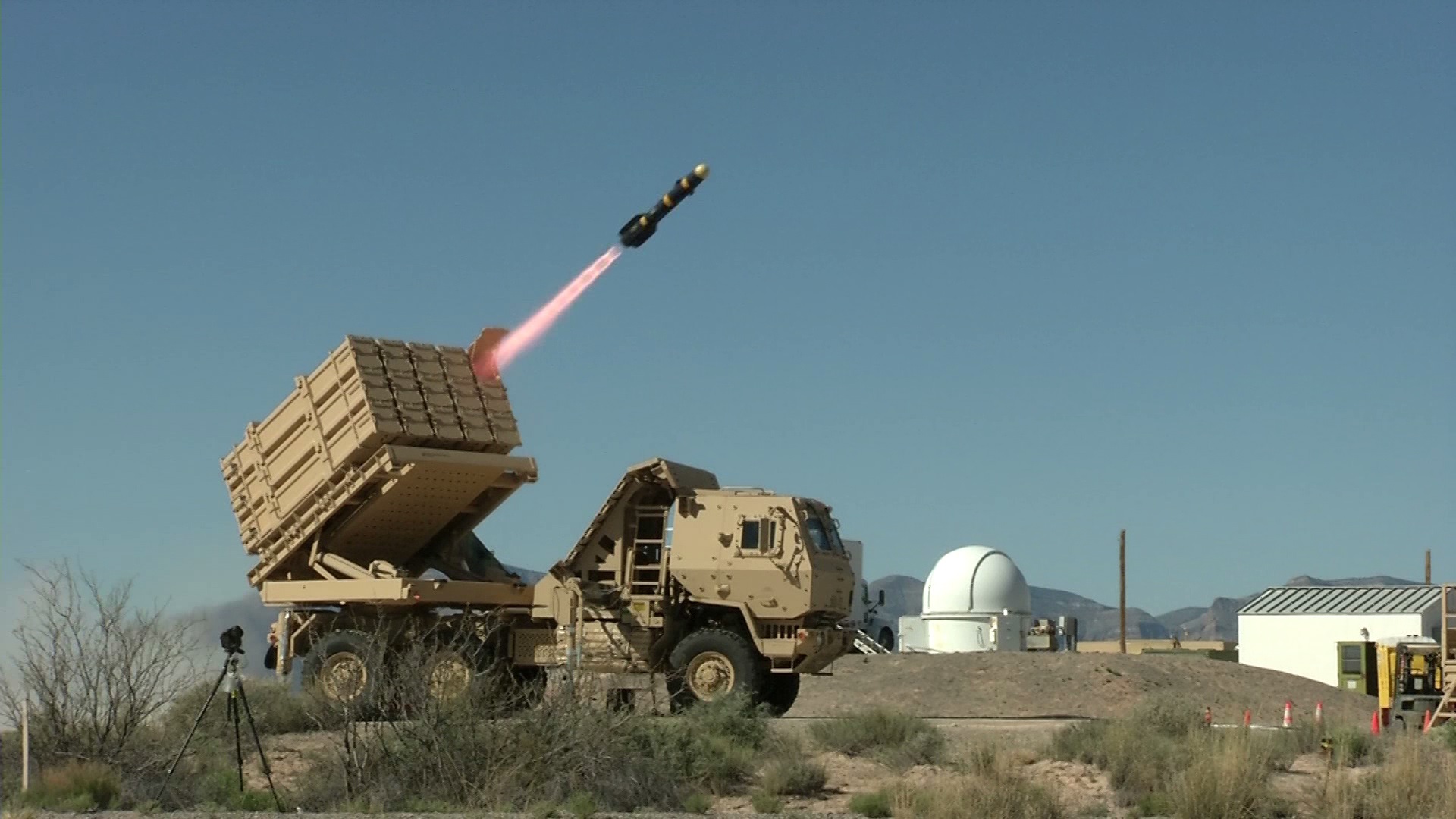
World
WASHINGTON, — June 5, 2026 : The United States Army has initiated an accelerated effort to develop and field a new generation of low-cost missile interceptors designed to counter growing numbers of drones, cruise missiles, and ballistic missile threats on modern battlefields. Through a Request for Information (RFI) designated MOSAIC-26-03, the Army is seeking industry solutions capable of demonstrating operational hardware by the fourth quarter of fiscal year 2026. The initiative is being led by the Army Capability Program Executive (CPE) for Defensive Fires at Redstone Arsenal, Alabama, in coordination with the Rapid Capabilities and Critical Technologies Office (RCCTO). The effort is aimed at addressing the increasing cost imbalance between expensive air defense interceptors and low-cost aerial threats. Addressing the Cost Challenge The Army's search for a new interceptor comes as military planners seek more sustainable solutions for defending against large-scale drone and missile attacks. According to the Army’s proposed Fiscal Year 2027 budget, a single Patriot PAC-3 Missile Segment Enhancement (MSE) interceptor costs approximately $5.3 million. Recent conflicts have demonstrated how adversaries can launch large numbers of inexpensive drones and missiles, forcing defenders to use costly interceptors against relatively cheap targets. To address this issue, the Army is seeking a supplemental interceptor that can be employed in larger quantities without creating an unfavorable cost-exchange ratio. Strict Cost Requirements Under MOSAIC-26-03, the Army has established specific cost targets for the new interceptor system. The complete ready-to-fire All-Up Round (AUR) interceptor must cost less than $1 million per unit. Major subsystems, including the solid rocket motor, seeker, and fire control system, must each remain below $250,000. A separate requirement seeks a systems integrator capable of combining the most effective components into a fully operational weapon. Operational Requirements The Army requires the interceptor to engage a broad range of threats, including Air Breathing Threats (ABTs), cruise missiles, Close-Range Ballistic Missiles (CRBMs), and Short-Range Ballistic Missiles (SRBMs). To enable rapid deployment, the interceptor must integrate with the existing M903 Patriot launcher and operate within the Integrated Battle Command System (IBCS), which connects radars, launchers, and command centers across the battlefield. The interceptor’s seeker must remain effective in contested environments, maintaining target acquisition and terminal guidance capabilities despite electronic warfare, GPS jamming, adverse weather conditions, and terrain clutter. The Army is also requiring compliance with the Modular Open Systems Approach (MOSA) to ensure interoperability, simplify upgrades, and avoid proprietary system lock-ins. Industry Day and Demonstration Schedule The Army has scheduled an Industry Day for June 23, 2026, at the Hyatt Regency Crystal City in Arlington, Virginia. Hardware demonstrations for complete interceptor systems and individual components are planned for the fourth quarter of fiscal year 2026 (July–September 2026). Complete interceptor solutions must achieve Technology Readiness Level (TRL) 6 or higher, while component-level offerings must reach at least TRL 4. Following Industry Day, the Army plans to conduct prize competitions for the first four problem statements. This approach allows the government to reward successful demonstrations with cash prizes rather than traditional contracts, encouraging participation from both established defense companies and non-traditional suppliers. Strengthening Future Air Defense The MOSAIC initiative is part of the Army’s broader effort to strengthen layered air and missile defense while improving affordability and production capacity. By combining low-cost components, open-system architecture, and a modular integration strategy, the Army aims to field interceptors capable of countering mass drone and missile attacks without relying solely on high-cost defensive weapons. Additional details regarding participants and demonstration results are expected following the June 23 Industry Day event.
Read More → Posted on 2026-06-05 15:38:49
World
TEHRAN — June 05, 2026 : The Islamic Republic of Iran Navy has released video footage showing the launch of a Qader anti-ship cruise missile and a newly unveiled Shahid Danaye loitering munition toward two U.S. Navy Arleigh Burke-class destroyers, USS Truxtun (DDG-103) and USS Mason (DDG-87), during a confrontation near the Strait of Hormuz. According to Iranian military statements, the two U.S. warships attempted to enter the Persian Gulf without authorization. Iranian officials said the missile and drone launches were conducted as warning actions, leading the destroyers to alter course and return toward the Sea of Oman. The footage provides one of the first operational views of the Shahid Danaye loitering munition, a newly introduced Iranian unmanned strike system. Defense analysts have noted that the drone shares several design characteristics with the IAI Harop loitering munition, including its overall airframe configuration and intended mission profile. Shahid Danaye Loitering Munition The released video highlights the Shahid Danaye alongside the Qader anti-ship missile during the reported encounter. The loitering munition is designed to remain airborne over a target area before conducting a precision strike against designated targets. While Iranian authorities have not disclosed detailed technical specifications, the system appears intended for both maritime and ground-attack missions, adding to Iran's growing inventory of unmanned strike platforms. Qader Anti-Ship Missile The Qader is an Iranian-developed medium-range anti-ship cruise missile and an upgraded version of the Noor missile system. It reportedly has a range of 120 to 300 kilometers and carries a 200-kilogram high-explosive warhead. Powered by a turbojet engine, the missile flies at low altitude over water to reduce radar detection and is designed to engage surface vessels from coastal launch positions. Conflicting Accounts of the Incident Iranian state media reported that the warning launches compelled USS Truxtun and USS Mason to withdraw from the area. Iranian authorities also claimed that the amphibious assault ship USS Tripoli was forced to leave the region during the confrontation. The U.S. military has disputed those claims. According to U.S. Central Command (CENTCOM), USS Truxtun and USS Mason successfully transited the Strait of Hormuz and entered the Persian Gulf as planned. U.S. officials stated that the destroyers encountered missiles, drones, and fast-attack boats operated by Iranian forces. CENTCOM said the warships employed layered defensive measures, including five-inch naval guns, Close-In Weapon Systems (CIWS), and support from AH-64 Apache helicopters armed with Hellfire missiles and .50-caliber machine guns. The Pentagon stated that all incoming threats were intercepted or deterred and that no U.S. vessels sustained damage or casualties during the operation. The incident occurred in the vicinity of the Strait of Hormuz, one of the world's most important maritime chokepoints and a critical route for global energy shipments.
Read More → Posted on 2026-06-05 15:54:56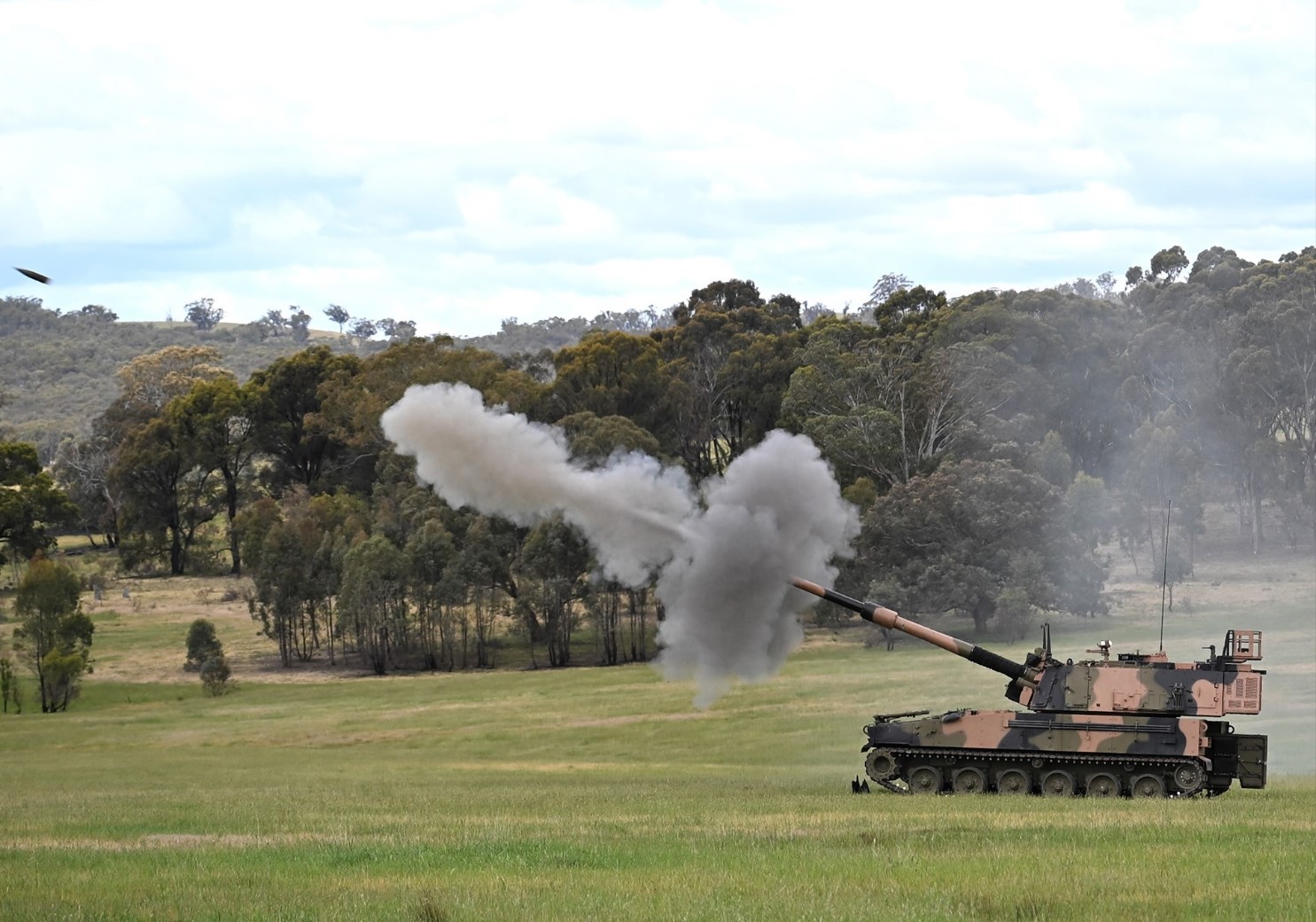
World
PUCKAPUNYAL, VICTORIA — June 05, 2026 : The Australian Army has completed its first live-fire training exercise using domestically produced AS9 Huntsman self-propelled howitzers, marking a major milestone in the introduction of the Army’s new artillery capability. Thirty soldiers from the 4th Regiment, Royal Australian Artillery conducted the inaugural live-fire activity after completing a six-week operator training course at the School of Artillery in Puckapunyal, Victoria. The training was the first time Australian Army crews operated and fired the Australian-built AS9 Huntsman as fully qualified crews. The milestone comes only months after the first AS9 systems rolled off the production line at Hanwha Defence Australia’s facility in Geelong, highlighting the rapid transition from domestic manufacturing to operational service. Director General Systems and Integration Brigadier James Davis said the achievement demonstrated effective cooperation between the Australian Army, the Capability Acquisition and Sustainment Group (CASG), and industry partners. “This live-fire shows how effectively we’re working with our industry and acquisition partners to bring new capability into service,” Brigadier Davis said. “To move from an Australian production line to trained crews conducting live-fire in a short timeframe is a significant achievement.” The AS9 Huntsman is a 155mm/52-caliber self-propelled howitzer based on South Korea’s K9 Thunder platform. The system is designed to provide protected and highly mobile fire support, allowing crews to rapidly move, fire, and relocate to reduce exposure to enemy counter-battery fire. Australia is acquiring 30 AS9 Huntsman howitzers and 15 AS10 Armoured Ammunition Resupply Vehicles under the LAND 8116 Phase 1 program. The AS10 can carry approximately 100 rounds of 155mm ammunition and automatically transfer them to the AS9 during operations. The howitzer can engage targets at standard ranges of around 30 kilometers, with ranges extending up to 60 kilometers using specialized ammunition. The six-week training course introduced soldiers to all major aspects of operating the new artillery system. Many participants were transitioning from the Army’s M777 towed howitzers, which require significantly more manual setup before firing. Soldiers qualified across multiple five-person crew positions, including commander, gunner, assistant gunner, driver, and loader. Training included live-fire operations, vehicle handling, night driving, and tactical maneuvering. Each participant completed at least 17 hours of tracked vehicle driving. Commanding Officer of the School of Artillery Lieutenant Colonel Chris D’Aquino described the training as an important step in introducing the new capability. “This capability enhances how we deliver firepower. It’s protected, mobile and far more responsive than what it replaces,” Lieutenant Colonel D’Aquino said. “For our gunners, this is about building confidence in a new system and learning how to employ it under realistic conditions.” For soldiers transitioning from towed artillery, the AS9 Huntsman represents a significant technological upgrade. Gunner Maxwell Cleal, who previously operated the M777, said the system simplifies the firing process. “The gunner puts all the information into the system, presses a button and it lays the gun,” Cleal said. Unlike the M777, the AS9 can begin engaging targets almost immediately after reaching a firing position. Bombardier Nick Burrough also highlighted the advanced technology integrated into the platform and the increased responsibilities for commanders during live-fire operations. “It’s top-class technology. No one’s at the level this vehicle’s at,” Burrough said. Following the course, the soldiers will return to their units to further develop operating procedures and expand expertise as additional AS9 Huntsman and AS10 vehicles enter service, supporting the Australian Army’s modernization and the expansion of Australia’s domestic defense manufacturing capability.
Read More → Posted on 2026-06-05 16:11:50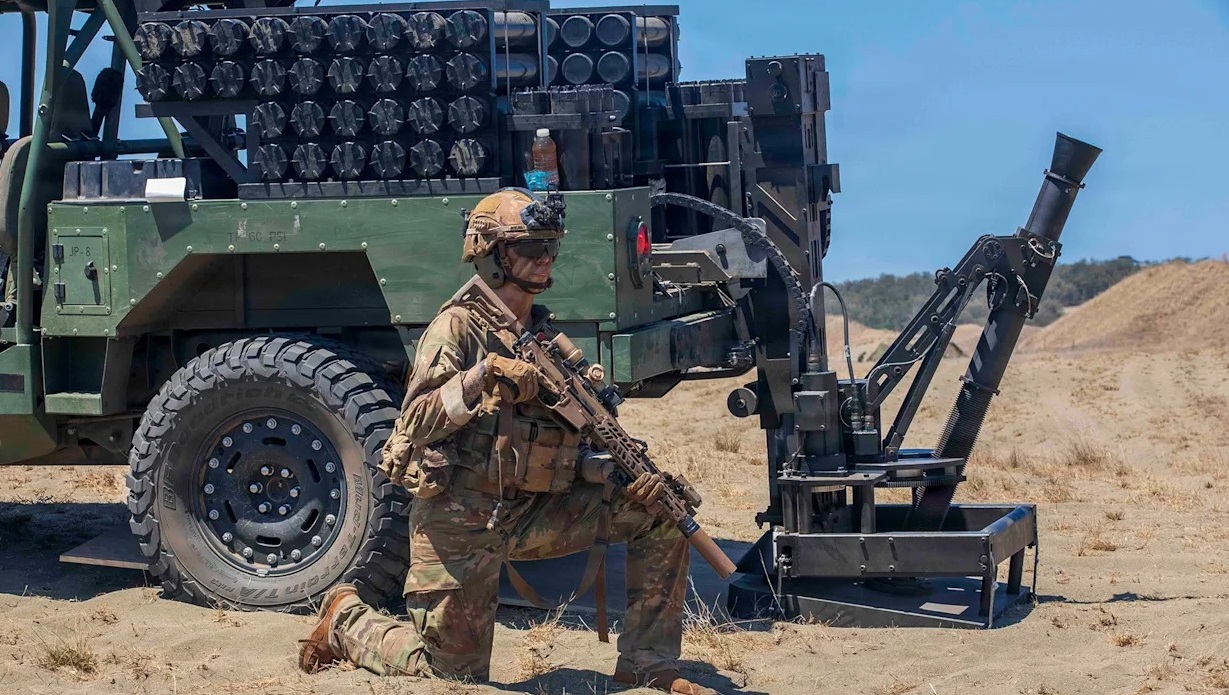
World
PICATINNY ARSENAL, N.J. — June 05, 2026 : The U.S. Army has fully released and standardized the new Mortars App for all mortar units, completing a modernization effort that replaces two legacy fire control systems with a single application running on commercial Android devices. Developed by engineers at the U.S. Army Combat Capabilities Development Command (DEVCOM) Armaments Center at Picatinny Arsenal, the app became the standard fire control software for the M32A2 mortar fire control system in March 2026. Replacing Legacy Fire Control Systems For more than two decades, Army mortar crews relied on two separate systems for fire control operations. The Mortar Fire Control Software (MFCS), introduced in 2003, was primarily used by heavy and mounted mortar units, while the Lightweight Handheld Mortar Ballistics Computer (LHMBC), fielded in 2004, supported light and dismounted crews through a dedicated handheld device. While both systems provided reliable ballistic calculations, maintaining separate software architectures created increasing challenges. Updates and bug fixes had to be applied to both systems independently, while the software remained tied to aging hardware platforms that were becoming more difficult to sustain. Development of a New Fire Control Framework The effort to modernize mortar fire control began in 2015 after the U.S. Marine Corps requested an Android-based version of the LHMBC. Attempts to adapt the legacy software proved inadequate, leading engineers at the Weapons and Software Engineering Center (WSEC) to develop the Common Fire Control Framework, a modular and device-agnostic architecture designed to support current and future fire control applications. Active development of the Mortars App began in 2020. Version 3.0 was completed ahead of schedule in 2023 and made available for download, while Version 4.0 completed formal testing in January 2024. The MFCS received its final update later that year before being phased out. By March 2026, the app had achieved full release and clearance for Army-wide standardization. Consolidating Capabilities on Android Devices The Mortars App combines the functions of both MFCS and LHMBC into a single software package operating on commercial Samsung Android phones and tablets. The transition reduces the amount of hardware soldiers must carry, lowers replacement costs, and simplifies logistics and training requirements across mortar units. The application performs the ballistic calculations required for mortar operations, including factors such as range, azimuth, charge, ammunition type, meteorological data, and ballistic characteristics. Mortars remain a key indirect fire support asset for infantry units. The M120 120 mm mortar, the heaviest mortar in the Army’s dismounted inventory, can deliver a 13.6-kilogram (30-pound) projectile to ranges of approximately 7.2 kilometers (4.5 miles), providing commanders with immediate fire support capability. Fielding and Soldier Feedback The 82nd Airborne Division, which had extensive experience with the legacy MFCS, adopted the new application with minimal training and provided feedback during implementation. According to Army officials, soldiers have responded positively to the software, citing its modern interface and familiar workflow. “We created the solution that had such an impact on the Directorate and Soldiers, and were able to provide something modern, user friendly and responsive,” said Julia Gustafson, software project lead for the Mortars App at the DEVCOM Armaments Center. Supporting Future Modernization Army officials said the Common Fire Control Framework eliminates many of the limitations associated with earlier systems. Because the architecture is not tied to a specific device or operating system, the software can be adapted to future platforms without requiring a complete redevelopment effort. The development team is already working on additional enhancements, with the modernized architecture expected to support faster updates and future fire control capabilities across the force.
Read More → Posted on 2026-06-05 16:21:59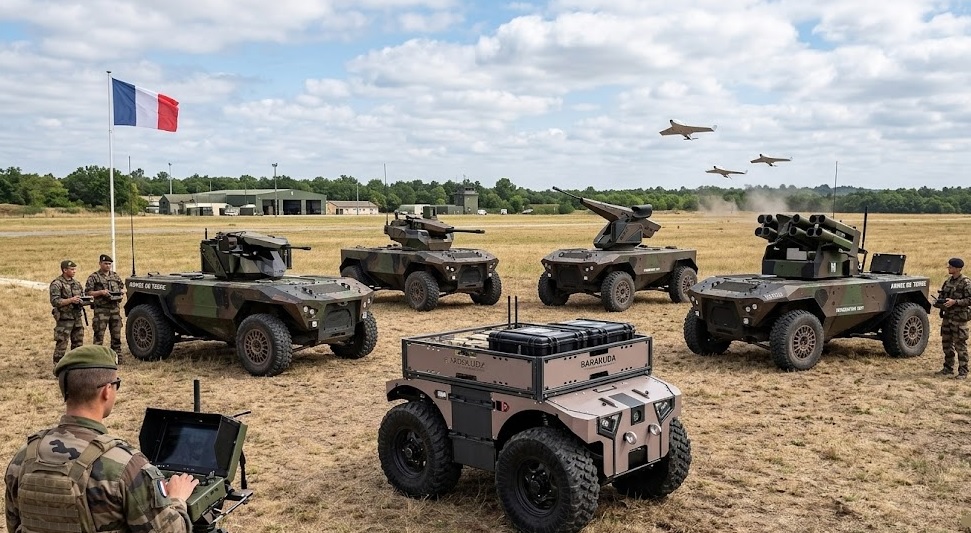
World
PARIS — June 05, 2026 : The French Army is advancing its use of unmanned systems through the integration of a new family of robotic platforms designed to support logistics, reconnaissance, fire support, and precision strike missions. The newly detailed configuration combines the BARAKUDA autonomous mule robot developed by Shark Robotics, four CENTURIO heavy tactical unmanned ground vehicles from KNDS France, and a specialized MATARIS box-kit capable of launching ten MT-10 loitering munitions. The combination reflects France’s continued investment in manned-unmanned teaming concepts, where robotic systems operate alongside military personnel to improve operational effectiveness while reducing risks to troops in contested environments. The integrated system provides capabilities ranging from battlefield logistics and casualty evacuation to armed reconnaissance and precision engagement. BARAKUDA Designed for Battlefield Logistics Support The BARAKUDA is an all-terrain unmanned ground vehicle developed jointly with the French Army to assist troops operating in demanding conditions. Designed primarily as a robotic mule, the platform reduces the physical burden on personnel by transporting equipment, supplies, and injured soldiers across difficult terrain. The vehicle measures approximately 185 cm by 120 cm and weighs around 590 kilograms. It is powered by four 2,200-watt electric motors using Shark Energy lithium-ion battery packs, providing up to 10 hours of operational endurance. The battery system can be recharged in approximately 3.5 hours. BARAKUDA can carry payloads of up to 500 kilograms and tow loads reaching 1,100 kilograms. The vehicle is capable of overcoming obstacles up to 30 centimeters high, traversing slopes of up to 40 degrees, and reaching speeds of 20 kilometers per hour. Its IP65 protection rating allows operation in challenging weather and environmental conditions. Operators control the system through a dual-frequency 2.4 GHz remote-control system offering a line-of-sight range of 500 meters. An optional mesh relay system extends this range to approximately 1,000 meters. The platform is intended for logistics transport, casualty evacuation, towing mission-critical equipment, and supporting infantry units operating away from vehicle access routes. Its modular design also allows adaptation for security and reconnaissance tasks. CENTURIO Provides Heavy Tactical Support Complementing the BARAKUDA is the CENTURIO family of heavy tactical unmanned ground vehicles developed by KNDS France. Based on the PHOBOS rolling platform previously tested by SERA Engineering and developed in partnership with Sogeclair, CENTURIO belongs to the 2- to 3-ton class of robotic combat vehicles. The platform is powered by a 60 kW diesel engine operating on JP8 fuel and can achieve speeds of up to 45 kilometers per hour. Measuring approximately 350 cm in length and 190 cm in width, the vehicle features four-wheel drive, four-wheel steering, and independent suspension, enabling it to operate effectively across varied terrain and alongside armored formations. CENTURIO supports secure teleoperation at speeds of up to 35 kilometers per hour while incorporating advanced robotic functions including autonomous route recovery, trajectory replay, vehicle-following capability, and autonomous navigation. A 360-degree camera suite equipped with night-vision capability provides operators with continuous situational awareness. The platform’s modular architecture allows it to be rapidly configured for different mission requirements. Depending on the variant, CENTURIO can carry reconnaissance sensors, explosive ordnance investigation equipment, CBRN detection systems, logistics modules, or weapon stations. One of the most heavily armed configurations, the CENTURIO-X30, integrates the ARX30 remotely operated turret armed with a 30 mm autocannon capable of firing up to 225 rounds per minute. The system is designed to engage light armored vehicles, fortified positions, and other battlefield threats at ranges of up to 1,500 meters. By combining autonomous navigation with leader-follower functionality, the vehicle can accompany manned units while maintaining heavy fire support and reconnaissance capabilities without exposing operators directly to hostile fire. MATARIS Box-Kit Expands Precision Strike Capability To provide organic strike capability, KNDS has integrated its MATARIS loitering munition family into a dedicated deployment system featuring a pneumatic launch box-kit capable of carrying and launching ten MT-10 munitions. The MT-10 is a short-range loitering munition employing a folding counter-rotating bi-rotor design. Each munition weighs approximately 3.8 kilograms, has a wingspan of 70 centimeters, and is powered by an electric propulsion system. The drone carries a 550-gram MW-FRAG explosive-incendiary warhead intended for engagements against infantry positions and light vehicles. It offers a maximum operational range of 10 kilometers and an endurance of approximately 30 minutes. Designed for low acoustic detectability, the MT-10 can operate in environments where satellite navigation signals are degraded or unavailable. The munition can be launched from tubes using pneumatic ejection or deployed through vertical takeoff and landing configurations. The dedicated box-kit allows rapid consecutive launches from either vehicle-mounted or stationary positions, enabling operators to deploy multiple loitering munitions in a short period of time. Onboard sensors and cameras support target identification and precision engagement in both urban and open-terrain environments. A notable feature of the system is its new-generation safety arming mechanism. If mission conditions change after launch, operators can abort an attack and return the drone to a loitering state until a new target is assigned, improving operational flexibility and reducing the risk of unintended damage. Integrated Robotic Force Structure The combination of BARAKUDA logistics vehicles, CENTURIO tactical UGVs, and MT-10 loitering munitions creates a layered robotic force structure capable of supporting multiple battlefield functions simultaneously. BARAKUDA reduces soldier workload and enhances mobility, CENTURIO provides reconnaissance and heavy fire support, while MATARIS-equipped MT-10 drones deliver precision strike capability. French defense planners view such integrated robotic formations as an important element of future operations, allowing military units to conduct logistics, surveillance, combat support, and precision engagement missions while limiting personnel exposure to battlefield threats. Further testing and operational integration are expected to refine tactics and procedures as the French Army continues expanding its use of unmanned systems across a range of mission profiles.
Read More → Posted on 2026-06-05 17:34:26
World
KYIV, Ukraine — June 05, 2026 : Ukrainian President Volodymyr Zelenskyy has renewed his call for direct negotiations with Russian President Vladimir Putin, describing a leader-to-leader meeting as the most effective way to end the war that has continued for more than three and a half years. His remarks came during Ukraine’s 34th Independence Day celebrations on Sunday, which were held amid ongoing drone attacks, frontline fighting, and a large prisoner exchange between the two countries. Speaking at a ceremony in Kyiv marking Ukraine’s independence from the Soviet Union in 1991, Zelenskyy emphasized that direct engagement between national leaders remains the most practical path toward a potential settlement. “The format of talks between leaders is the most effective way forward,” Zelenskyy said. He also highlighted Ukraine’s continued resistance throughout the conflict. “Today, both the US and Europe agree: Ukraine has not yet fully won, but it will certainly not lose. Ukraine has secured its independence. Ukraine is not a victim; it is a fighter,” he said. The appeal comes amid efforts by US President Donald Trump to encourage direct negotiations between Kyiv and Moscow. However, Russian officials have rejected the idea of an immediate summit. Russian Foreign Minister Sergei Lavrov criticized the proposal, accusing Western countries of creating obstacles to broader negotiations and criticizing Zelenskyy for pushing for a direct meeting. During the Independence Day ceremony, Zelenskyy presented the Order of Merit of Ukraine to US Special Envoy Keith Kellogg and reiterated his commitment to pursuing peace while maintaining pressure on Russia to engage in negotiations. Security Guarantees and Foreign Military Presence Zelenskyy also discussed Ukraine’s position on future security arrangements, stressing that international security guarantees would be necessary after the war. “The issue of on the ground presence, as they say, boots on the ground, is important to us,” Zelenskyy said. Canadian Prime Minister Mark Carney, who attended events in Kyiv, supported the need for strong security guarantees and indicated that Canada would not rule out participating in a future multinational security mission. “In Canada's judgment, it is not realistic that the only security guarantee could be the strength of the Ukrainian armed forces. That needs to be buttressed and reinforced,” Carney said. Drone Strikes and Military Operations The diplomatic developments occurred as military activity intensified on both sides. According to Russian authorities, Ukrainian drone attacks targeted several strategic facilities inside Russia. One strike caused a fire at the Kursk Nuclear Power Plant, though officials said the blaze was extinguished without casualties or radiation leaks. Additional Ukrainian drone strikes targeted fuel infrastructure, including the Novatek terminal in Ust-Luga on the Gulf of Finland. Commenting on the attacks, Zelenskyy stated: “This is how Ukraine strikes when its calls for peace are ignored.” In response, Russian forces launched missiles and drones against Ukrainian territory. Ukrainian officials reported that Russia launched 72 Shahed attack drones, with air defenses intercepting 48 of them. Frontline Fighting Continues Heavy combat continued in the Donetsk and Dnipropetrovsk regions. Russia’s Defense Ministry claimed the capture of two additional settlements, including the village of Filia in the Dnipropetrovsk region. Meanwhile, Ukraine’s Commander-in-Chief Gen. Oleksandr Syrskyi said Ukrainian forces had retaken the Donetsk villages of Mykhailivka, Zelenyi Hai, and Volodymyrivka. Prisoner Exchange Despite continued fighting and stalled peace efforts, Ukraine and Russia carried out a prisoner exchange on Sunday. Officials confirmed that 146 prisoners of war and civilians were returned by each side, making it one of the largest recent exchanges between the two countries. War Enters Its Fourth Year More than three and a half years after Russia’s full-scale invasion, the conflict continues to impose significant humanitarian and territorial costs. Tens of thousands of military personnel and civilians have been killed, while millions have been displaced. Russia currently controls approximately one-fifth of Ukraine’s internationally recognized territory, including Crimea. Although Zelenskyy has renewed his call for direct talks with Putin, major disagreements remain over territory, security guarantees, and ceasefire conditions, leaving prospects for a comprehensive peace agreement uncertain.
Read More → Posted on 2026-06-05 17:44:24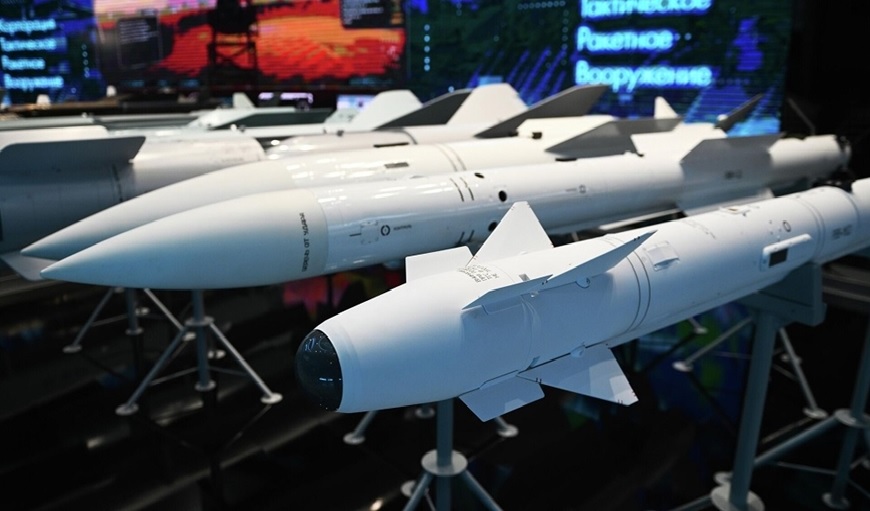
World
KYIV — June 05, 2026 : Leaked Russian military contracts obtained and analyzed by Ukrainian media outlet UNITED24 Media have revealed the scale of ongoing military-technical cooperation between Russia and Iran, including the supply of air-to-air and air-to-ground missiles intended for Iran’s future fleet of Su-35 fighter jets. The documents indicate that missile deliveries and related production activities are scheduled to continue through at least 2027 as part of a broader fighter aircraft procurement program. According to the leaked contracts, Iran is identified throughout the documentation under the internal codename “K10.” The files show that multiple Russian defense enterprises are involved in manufacturing and supplying weapons and components linked to Iran’s acquisition of advanced combat aircraft. Missile Deliveries Linked to Su-35 Program The contracts indicate that the missile orders are directly connected to a broader agreement covering the production of Su-35 multirole fighter aircraft and associated combat systems. The documents show that Russia is supplying a range of weapons designed to provide the aircraft with air superiority, precision strike, anti-radar, and maritime attack capabilities. The reported missile acquisitions include: Missile Type Classification Quantity Kh-38 (X-38) Laser-guided air-to-ground missile 120 R-73 (K-73) Short-range air-to-air missile 123 R-77 (K-77) Medium-range air-to-air missile 42 Kh-31 (X-31) Anti-radar / Anti-ship missile 42 The Kh-38 is a precision-guided medium-range air-to-surface weapon designed to engage ground targets. The missile is compatible with the Su-35 and can be employed against fixed and mobile targets. The R-73 is a short-range infrared-guided air-to-air missile widely used by Russian combat aircraft. Known for its high maneuverability and off-boresight targeting capability, it is designed for close-range aerial engagements. The leaked documents show that contracts signed in 2023 included the procurement of 123 Sh-295 “Variant” warheads used in the missile, with the order valued at approximately $675,000. The R-77 is a medium-range active radar-guided air-to-air missile intended for beyond-visual-range combat. Contract records indicate that between 2025 and 2027, Russia is expected to supply 42 component kits and assembly services related to the missile’s engine production. The Kh-31 is a supersonic missile available in anti-radar and anti-ship variants. The weapon is designed to suppress enemy air-defense systems and engage naval targets, expanding the operational flexibility of the Su-35 platform. Additional documentation outlines the delivery of 164 KV-1-72.001 propellant charges used in solid-fuel rocket engines and missile control systems. The contract specifies completion of these deliveries by September 30, 2025. Su-35 Fighter Jet Production Underway The leaked files identify the central framework of the aircraft program under contract number R/19K1011141768. Following an agreement finalized in November 2023, the documents confirm that 16 Su-35 fighter jets are currently being manufactured for Iran. The records further indicate that the aircraft order has been fully prepaid by Tehran. Payments connected to the program were reportedly made on several occasions during 2024, including March 7, July 22, and December 26. The Su-35 is considered one of Russia’s most capable fourth-generation-plus multirole fighters. Equipped with advanced radar systems, long-range weapons integration, and high maneuverability, the aircraft is intended to significantly modernize Iran’s aging fighter fleet. The platform can simultaneously carry combinations of R-73 and R-77 air-to-air missiles alongside Kh-38 and Kh-31 strike weapons. Separate documents reviewed by UNITED24 Media suggest that production and support activities associated with the broader Su-35 program may continue through 2026–2028. Some reports linked to the contracts indicate that Iran could eventually acquire a larger number of Su-35 aircraft under agreements valued in the billions of dollars. Russian Defense Industry Involvement Several major Russian defense enterprises are participating in the program. The Yuri Gagarin Komsomolsk-on-Amur Aviation Plant is responsible for manufacturing the Su-35 aircraft. The Zvezda Research and Production Enterprise has been tasked with supplying ejection seats and associated pyrotechnic systems. Missile warheads, propellant charges, and engine-related components are being produced by the Machine-Building Design Bureau Iskra and the Perm Powder Plant. The leaked records also indicate that units of the Russian Ministry of Defense are conducting quality-control inspections throughout the manufacturing process to verify compliance with military requirements. Expanding Military Cooperation The documents provide additional insight into the growing defense relationship between Moscow and Tehran. Before the Su-35 program, Russia supplied Iran with Yak-130 trainer aircraft, which are widely viewed as preparation platforms for pilots transitioning to more advanced fighters such as the Su-35. Military cooperation between the two countries has expanded significantly in recent years. Iran has supplied Russia with Shahed-series attack drones and other military equipment used during the war in Ukraine, while Russia has continued to provide advanced aviation technology and training support. Regional Security Implications The leaked contracts offer a detailed view of the scale and timeline of Russian military exports to Iran. Beyond complete missiles, the agreements cover critical supporting equipment, propulsion systems, warheads, pyrotechnic devices, and aircraft integration components required to make the fighter fleet fully operational. With missile deliveries and aircraft production expected to continue through 2027, the program is set to strengthen Iran’s air combat, strike, anti-radar, and maritime attack capabilities. Defense analysts note that the combination of Su-35 fighters and their associated missile inventory would represent one of the most significant modernization efforts undertaken by the Iranian Air Force in recent decades. The disclosures also underscore the increasing strategic cooperation between Russia and Iran as both countries continue to face international sanctions and evolving regional security challenges.
Read More → Posted on 2026-06-05 17:58:27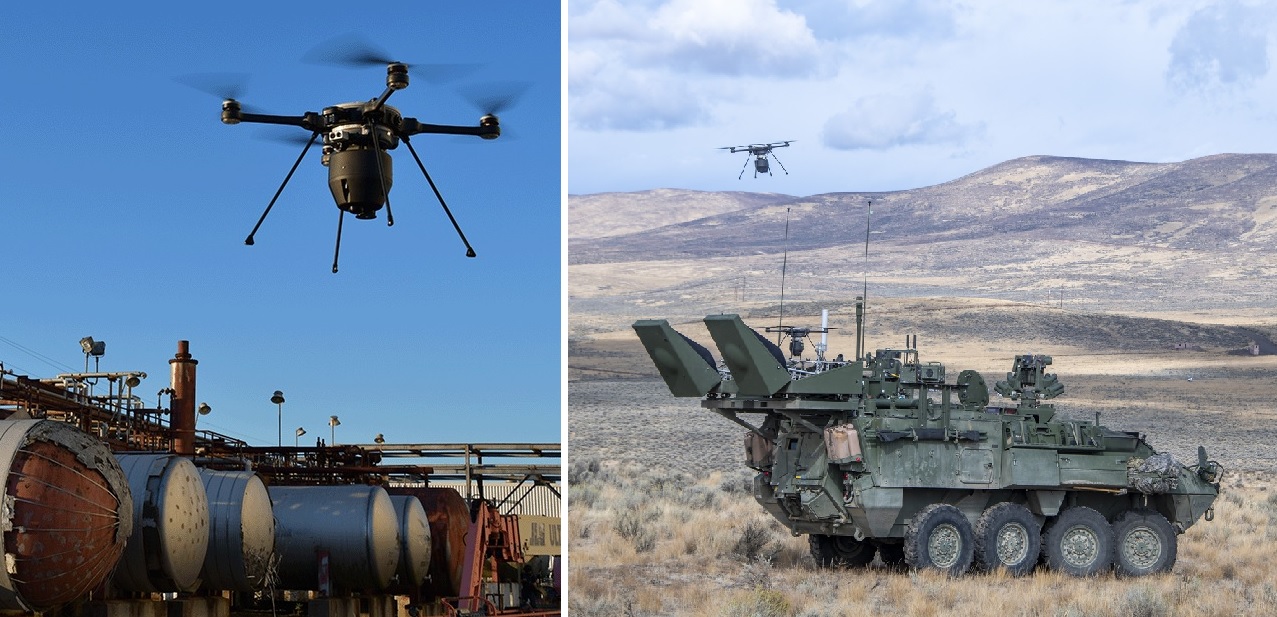
World
WASHINGTON — June 05, 2026 : The U.S. Army has awarded Teledyne FLIR Defense an $11.2 million contract to supply more than 45 advanced unmanned aerial system (UAS) kits designed to detect, identify, and map chemical, biological, radiological, and nuclear (CBRN) hazards while keeping soldiers outside contaminated areas. The contract, announced on June 4, 2026, is being managed through the Army’s Capability Program Executive Office for Chemical, Biological, Radiological and Nuclear Defense (CPE CBRND). Initial deliveries are scheduled to begin during the second quarter of 2026. The new systems were developed under the Army’s Chemical, Biological, Radiological, and Nuclear Sensor Integration on Robotic Platforms (CSIRP) program, which focuses on rapidly fielding advanced sensor technologies on robotic ground and aerial platforms. The initiative integrates artificial intelligence (AI), machine learning, autonomy, advanced sensing capabilities, and resilient communications to improve battlefield awareness and force protection. Production of the drone kits will take place at Teledyne FLIR Defense facilities in Elkridge, Maryland, and West Lafayette, Indiana. Engineering, software development, and integration support will be provided from the company’s facility in Stillwater, Oklahoma. Each kit is built around the Teledyne FLIR R80D SkyRaider, a multi-rotor drone already used by U.S. military forces for reconnaissance, surveillance, and targeting missions. Under the CSIRP configuration, the platform has been adapted for CBRN reconnaissance and survey operations through the integration of specialized modular sensor payloads. The kits include chemical and radiological detection systems as well as the Teledyne FLIR MUVE B330 biological sensor. The modular design allows operators to configure the drone with specific sensor packages based on mission requirements and the type of hazard suspected in a particular area. The R80D SkyRaider is capable of carrying payloads weighing up to 7.7 pounds and incorporates embedded AI processing to support autonomous and semi-autonomous operations. During missions, the drone can follow pre-programmed flight paths and conduct systematic searches of potentially contaminated areas without requiring continuous manual piloting. As the aircraft surveys an area, it collects and transmits real-time hazard data, including contamination levels, hazard boundaries, and concentration gradients, directly to operators through mapping, targeting, and communications systems. This enables commanders and response teams to assess threats from a safe distance and make informed decisions regarding troop movements, protective measures, and response actions. The system represents a significant shift from traditional CBRN reconnaissance methods, which often require personnel wearing full Mission-Oriented Protective Posture (MOPP) gear to physically enter hazardous environments and collect samples or readings. Such operations can be time-consuming, physically demanding, and potentially dangerous even when protective equipment is used. By using unmanned aerial systems for reconnaissance, military units can rapidly survey contaminated zones while reducing the risk of exposure to hazardous agents. The capability is designed to support operations involving chemical and biological weapons, radiological incidents, industrial accidents, and complex urban environments where multiple hazards may be present. The contract also expands Teledyne FLIR Defense’s role in the Army’s broader CBRN modernization efforts. The company is currently leading work on the Nuclear Biological Chemical Reconnaissance Vehicle (NBCRV) Sensor Suite Upgrade program, a separate $74.2 million initiative aimed at modernizing the sensor systems installed on the Army’s dedicated CBRN Stryker reconnaissance vehicles. Army officials view the new drone kits as a complementary capability to those vehicle-based systems. While upgraded NBCRV platforms provide extensive reconnaissance and survey capabilities for mechanized formations, the SkyRaider-based kits will give dismounted squads and platoons a rapidly deployable means of detecting and assessing CBRN threats at the tactical level. Dr. JihFen Lei, President of Teledyne Defense and Aerospace Group and Senior Vice President of Teledyne Technologies, said the company’s focus remains on protecting military personnel from weapons of mass destruction and hazardous environments. “Safeguarding soldiers from weapons of mass destruction is at the core of our mission. These SkyRaider-based sensor kits dramatically improve how units can detect and map CBRN hazards without exposing warfighters to dangerous environments.” The award reflects the Army’s continued investment in autonomous systems, unmanned technologies, and advanced CBRN defense capabilities designed to improve battlefield awareness, accelerate hazard assessment, and enhance force protection. As deliveries begin later this year, the new SkyRaider CBRN drone kits are expected to provide frontline units with faster and safer reconnaissance capabilities across a range of operational scenarios.
Read More → Posted on 2026-06-05 18:11:54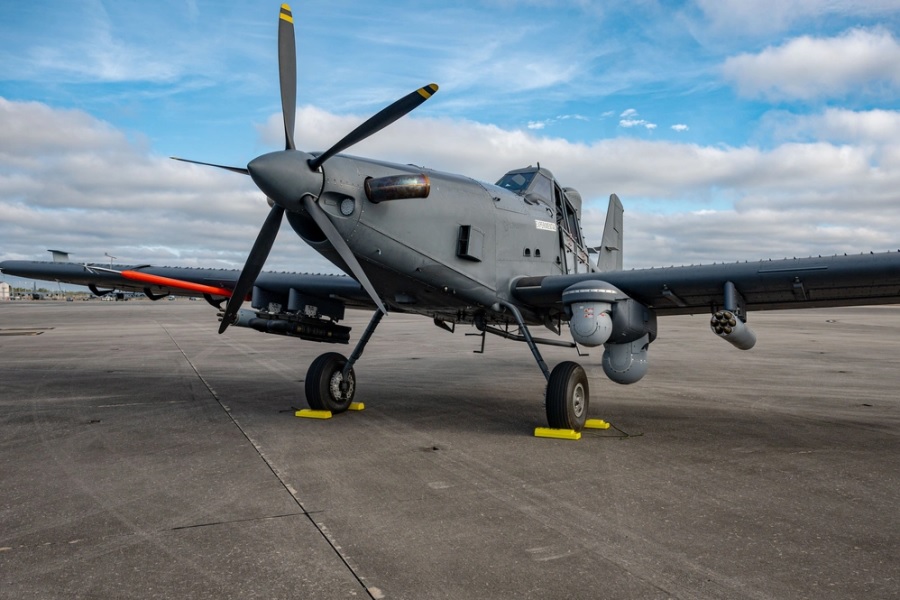
World
OKLAHOMA CITY — June 05, 2026 : The U.S. Air Force is seeking external storage pods for its new OA-1K Skyraider II aircraft to address a practical limitation that currently prevents crews from carrying mission equipment and personal gear during training deployments without additional ground transportation support. The requirement was outlined in a sources sought notice issued by the 137th Special Operations Wing of the Oklahoma Air National Guard on behalf of the 17th Special Operations Squadron, the Air Force's formal training unit and currently the only squadron operating the OA-1K. The OA-1K Skyraider II was developed under U.S. Special Operations Command's Armed Overwatch program and was formally designated by Air Force Special Operations Command (AFSOC) in February 2025. The aircraft replaces the U-28A Draco in the intelligence, surveillance, and reconnaissance (ISR) role while also providing precision strike capabilities. Based on the Air Tractor AT-802 agricultural aircraft and militarized by L3Harris Technologies, the two-seat turboprop is designed to operate from austere locations, including dirt runways and unimproved airstrips. The aircraft can carry up to 6,000 pounds of munitions and stores across eight underwing pylons and can remain on station for up to six hours while operating approximately 200 miles from its target area. The first missionized OA-1K was delivered to AFSOC at Hurlburt Field, Florida, in April 2025. Additional aircraft were later assigned to the 17th Special Operations Squadron at Will Rogers Air National Guard Base, Oklahoma, for pilot and aircrew training. Storage Pod Requirement According to the June 2026 notice, the Air Force is seeking a commercially available external carriage mobility pod that can be mounted directly to the aircraft's existing underwing pylons without requiring modifications to the aircraft or its support equipment. The pod must be compatible with BRU-71/A ejector release units using 14-inch lug spacing and must not interfere with flight controls or landing gear operations. The Air Force requires a pod measuring no more than 130 inches (330 cm) in length, 22.5 inches (57 cm) in width, and 28.8 inches (73 cm) in depth. It must provide at least 9 cubic feet (0.25 cubic meters) of usable storage volume and include a minimum internal length of 75 inches (190 cm) for mission equipment. The structure must be made from corrosion-resistant materials, including composites, aluminum, or hybrid designs. Required features include adjustable tie-down straps, center-of-gravity markings, external handling handles, and a keyed locking mechanism. The notice references proven commercial products such as the MXU-648 cargo pod and Kihomac ACE pod, indicating a preference for existing solutions rather than a new development program. Procurement Plans The selected contractor will be required to deliver three storage pods within 60 days of contract award and provide 12 months of maintenance and support. The contract also requires a complete technical data package, including structural and aerodynamic analyses, ground vibration test results, and weight and balance data to support airworthiness certification. Program Outlook The OA-1K Skyraider II is expected to reach initial operational capability (IOC) in 2026, with full fleet deliveries planned by 2029. Current budget plans have reduced the fleet from 75 aircraft to 53 aircraft, although AFSOC Commander Lt. Gen. Michael Conley has publicly supported acquiring the originally planned 75-aircraft fleet. The planned acquisition of external storage pods is intended to improve the aircraft's operational flexibility by allowing crews to transport essential equipment without additional logistics support, supporting the Armed Overwatch program's goal of enabling small teams to operate independently in remote environments with a minimal logistical footprint.
Read More → Posted on 2026-06-05 18:25:06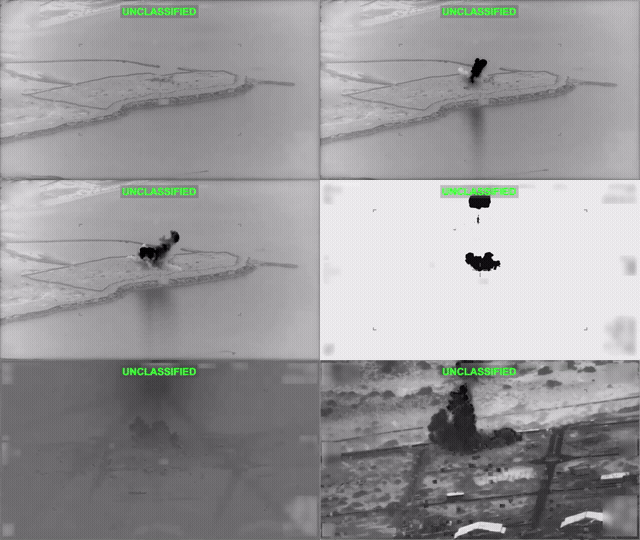
World
WASHINGTON / TEHRAN, — June 6, 2026 : The United States has released footage showing recent military strikes against Iranian facilities on Sirik and Qeshm Island, as tensions between Washington and Tehran continue to test a fragile ceasefire that has been in place since April. According to U.S. Central Command (CENTCOM), the operations were conducted on June 5 and 6 following a series of security incidents in and around the Strait of Hormuz. The newly released footage shows strikes targeting Iranian surveillance and communications infrastructure, which U.S. officials described as defensive actions intended to prevent further attacks on regional maritime traffic. In Sirik, located on Iran’s southern coast, a surveillance building was struck. U.S. officials stated that one person inside the facility was killed. On Qeshm Island, a telecommunications tower was targeted, with no casualties reported. CENTCOM said the strikes followed the interception of four Iranian one-way attack drones that were allegedly heading toward the Strait of Hormuz and posed an immediate threat to shipping in the area. The U.S. military also reported that an Iranian surface-to-air missile had previously shot down an American MQ-1 drone operating over what Washington described as international waters. The U.S. military stated that the strikes on Sirik, Qeshm Island, and nearby coastal surveillance sites around Goruk were intended to degrade Iran’s ability to conduct further attacks against maritime targets. Iran rejected the U.S. account of events. The Islamic Revolutionary Guard Corps (IRGC) said the MQ-1 drone had entered Iranian airspace and defended the actions taken against it. Iranian officials also claimed that regional military facilities connected to earlier U.S. operations had been targeted in retaliation. Following the U.S. strikes, Iran launched ballistic missiles toward U.S. military facilities in Kuwait and Bahrain. Iranian state media reported that the attacks were carried out in response to American operations against Iranian infrastructure. CENTCOM reported that seven ballistic missiles were fired toward Gulf targets. According to the U.S. military, six missiles were intercepted by air defense systems while the seventh failed to reach its intended target. No U.S. casualties were reported. The missile launches followed a separate incident earlier in the week involving Kuwait International Airport. Kuwaiti authorities said a drone strike killed one person and injured more than 60 others. The IRGC denied responsibility, claiming the damage resulted from a malfunctioning U.S. interceptor missile. CENTCOM rejected that explanation, describing the airport strike as a deliberate attack. Kuwait’s Foreign Ministry condemned the incident as a violation of the country's sovereignty. Military analysts have generally assessed the recent strikes on Sirik and Qeshm Island as having limited operational significance. The targeted facilities were not considered major strategic assets, and the attacks are widely viewed as symbolic actions intended to signal resolve while avoiding a broader escalation. Analysts noted that the exchanges appear to be testing the limits of restraint under the existing ceasefire framework. The latest developments come as diplomatic efforts to extend and formalize the ceasefire remain stalled. The wider conflict began on February 28, when the United States and Israel launched large-scale strikes against Iranian military infrastructure. Iran subsequently carried out attacks against Israel and U.S.-aligned targets in the region and effectively closed the Strait of Hormuz. The strategic waterway handles approximately 20 percent of global seaborne oil and liquefied natural gas shipments, making any disruption a major concern for international energy markets. Restrictions on traffic through the strait contributed to higher global oil prices and significant disruptions to commercial shipping. Following the April ceasefire, the United States established a naval blockade around Iranian ports. U.S. media reports indicate that President Donald Trump has sought revisions to the terms of a proposed permanent agreement and has stated that the blockade will remain in effect until a final deal is reached and formally certified. Iran has criticized the pace and direction of negotiations. On Monday, the Iranian Foreign Ministry said the United States was introducing new and sometimes contradictory demands during discussions aimed at securing a longer-term settlement. The geographic importance of the Strait of Hormuz continues to place islands such as Qeshm, Hormuz, Larak, and Hengam at the center of regional security concerns. The area also includes disputed territories such as Greater Tunb, Lesser Tunb, and Abu Musa, while overlapping maritime boundaries and Exclusive Economic Zones (EEZs) add to the region's strategic complexity. Despite ongoing tensions, limited diplomatic engagement continues in other areas. The United States has granted visas to Iran’s national football team for the 2026 FIFA World Cup. Iran is scheduled to play its opening match in Los Angeles on June 15, marking the first known instance of a World Cup host nation receiving the team of a country with which it is engaged in an active military conflict. While the recent military exchanges have remained limited in scale, they underscore the continuing tensions between the United States and Iran and the challenges facing efforts to transform the current ceasefire into a lasting agreement.
Read More → Posted on 2026-06-06 13:26:52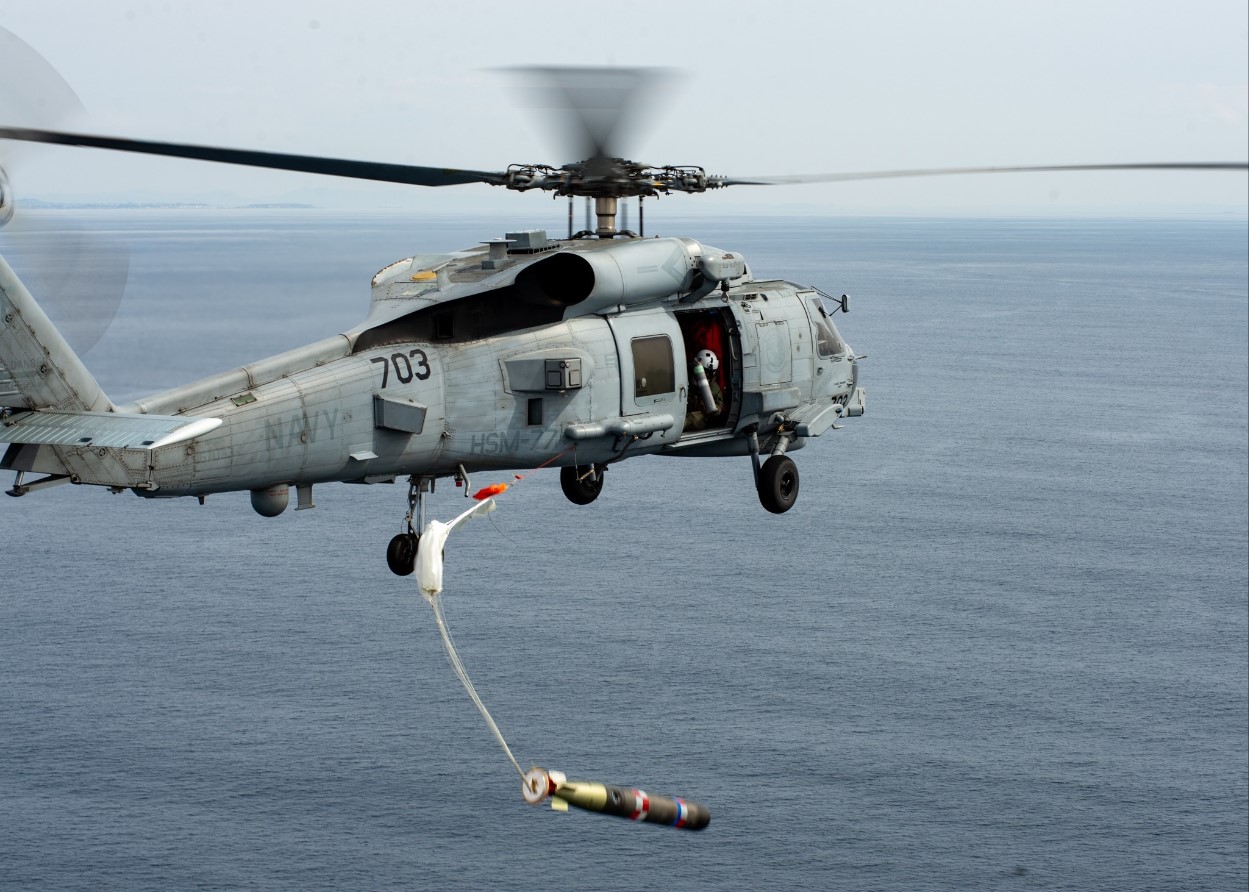
World
WASHINGTON, — June 06, 2026 : The U.S. Department of State has approved a potential $1.5 billion Foreign Military Sale (FMS) to New Zealand for five MH-60R Seahawk multi-mission maritime helicopters and related equipment as part of the country's ongoing defense modernization program. In a separate approval, the State Department also cleared the potential sale of 20 MK 54 lightweight torpedoes worth approximately $69 million, strengthening New Zealand's anti-submarine warfare capabilities. The proposed sale has been notified to the U.S. Congress for final review and approval. Replacing the SH-2G(I) Seasprite Fleet The MH-60R Seahawk helicopters will replace the Royal New Zealand Navy's SH-2G(I) Seasprite fleet. New Zealand selected the MH-60R as its preferred replacement in August 2025, allocating approximately NZ$2 billion ($1.2 billion) for the program. The package includes the helicopters, mission systems, spare parts, training, maintenance support, and logistics assistance required for operational service. Maritime Warfare Capabilities The MH-60R Seahawk is the primary shipborne helicopter operated by the U.S. Navy and is designed for anti-submarine warfare (ASW), anti-surface warfare (ASuW), maritime surveillance, search and rescue, and maritime security missions. The aircraft is equipped with advanced sensors, radar systems, electronic warfare equipment, and modern avionics for detecting and tracking surface and underwater threats. As part of the package, New Zealand will receive 20 MK 54 lightweight torpedoes, which can be deployed from the MH-60R during anti-submarine operations. The helicopter can also carry AGM-114 Hellfire missiles, machine guns, and the Advanced Precision Kill Weapon System (APKWS). It has a maximum speed of 333 km/h (180 knots), a range of approximately 963 km (520 nautical miles), and a crew of three. Strengthening Allied Interoperability The U.S. State Department said the sale will enhance New Zealand's ability to address current and future security challenges, strengthen homeland defense, and protect critical infrastructure. Because the MH-60R is already operated by the U.S. Navy and the Royal Australian Navy, the acquisition will improve interoperability during joint exercises and multinational operations across the Indo-Pacific region. The helicopters will operate from New Zealand's frigates and patrol vessels, expanding maritime surveillance and anti-submarine capabilities. Part of a Wider Defense Modernization Plan The acquisition is a key element of New Zealand's largest defense modernization program in decades. Under its 2025 Defence Capability Plan, the government committed an additional NZ$9 billion ($5 billion) in defense spending over four years and aims to increase military expenditure to nearly 2% of GDP within eight years. The government has already allocated NZ$1.58 billion ($916 million) in new defense funding to begin upgrading military equipment and infrastructure. The MH-60R purchase represents one of New Zealand's most significant defense procurements in recent years and will form the backbone of the country's future naval aviation capability.
Read More → Posted on 2026-06-06 13:46:32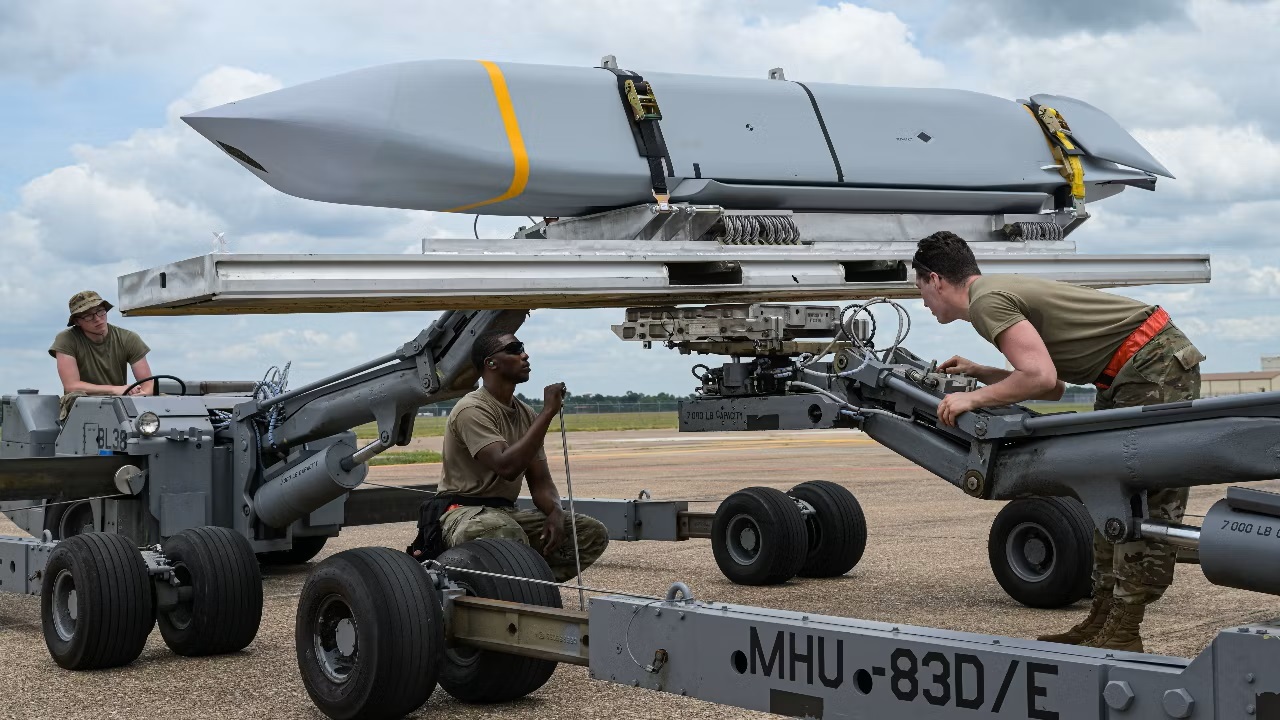
World
WASHINGTON, — June 06, 2026 : The United States Department of State has approved a potential Foreign Military Sale (FMS) to Denmark involving 200 AGM-158B Joint Air-to-Surface Standoff Missiles with Extended Range (JASSM-ER), along with associated equipment, software, technical support, and logistics services. The proposed package is valued at approximately $842 million. The approval was announced on June 5, 2026, and the deal will be managed through the U.S. Foreign Military Sales program. Lockheed Martin, the manufacturer of the JASSM-ER, has been designated as the prime contractor for the sale. The package includes missile containers, testing and support equipment, spare parts, classified and unclassified software, technical publications, engineering assistance, logistics support, and other related program elements required for operational integration and sustainment. Long-Range Strike Capability for Danish F-35 Fleet The acquisition will provide the Royal Danish Air Force with a long-range conventional precision-strike capability that it currently does not possess. The missiles are intended for integration with Denmark’s fleet of F-35A Lightning II fighter aircraft, significantly expanding their operational reach. The AGM-158B JASSM-ER is a low-observable cruise missile designed to conduct standoff attacks against heavily defended targets. With a range exceeding 925 kilometers, the missile enables aircraft to engage targets from substantial distances while reducing exposure to enemy air defense systems. Once operational, the missiles will allow Danish F-35s to strike a variety of high-value military targets, including command and control centers, integrated air defense sites, air bases, missile infrastructure, logistics hubs, and other fixed strategic assets. Prior to this acquisition, Denmark lacked an operational conventional weapon capable of engaging targets at ranges beyond approximately 900 kilometers. Part of Denmark’s Long-Range Strike Strategy The purchase follows a September 2025 decision by the Danish government to establish a dedicated long-range strike capability as part of a broader military modernization effort. The planned inventory of 200 missiles represents one of the largest long-range precision-strike procurements undertaken by Denmark and indicates a move toward maintaining a sustained strike capability during potential future conflicts. The missile acquisition complements a separate Danish defense initiative announced in 2025 that allocated approximately DKK 58 billion for the procurement of medium- and long-range air defense systems. Together, the two programs form a key component of Denmark’s evolving defense strategy, combining defensive and offensive capabilities to address modern security challenges. Lessons from the War in Ukraine Danish defense planning has been influenced by operational lessons observed during the war in Ukraine, where military forces have faced continuous attacks involving ballistic missiles, cruise missiles, and one-way attack drones. Military planners have increasingly concluded that air defense systems alone are insufficient to counter sustained missile and drone campaigns. While interceptor systems can destroy incoming threats, they require significant quantities of costly munitions and do not eliminate the launch infrastructure responsible for continued attacks. As a result, Denmark's developing strategy seeks to pair air defense systems with long-range strike weapons capable of targeting enemy radar networks, missile launch facilities, command centers, and logistics chains before attacks can be launched. Contribution to NATO Capabilities According to the U.S. State Department, the proposed sale will improve Denmark’s ability to respond to current and future threats while enhancing the capabilities of its F-35 fleet. The acquisition also supports NATO’s broader defense objectives by strengthening the alliance’s long-range precision-strike capacity and improving interoperability among member states operating the F-35 aircraft. The capability is particularly relevant to NATO’s deterrence posture in the Baltic region, where alliance members have continued to strengthen military readiness amid evolving security concerns in Northern and Eastern Europe. Several European F-35 operators have pursued similar long-range standoff weapons programs in recent years as NATO places greater emphasis on deep-strike capabilities and integrated defense planning. Congressional Review Process The proposed sale remains subject to review by the U.S. Congress under standard Foreign Military Sales procedures before a final contract can be concluded. If approved and implemented, the JASSM-ER acquisition will provide Denmark with a new long-range precision-strike capability, expanding the operational flexibility of the Royal Danish Air Force and supporting the country's broader defense modernization efforts.
Read More → Posted on 2026-06-06 13:59:34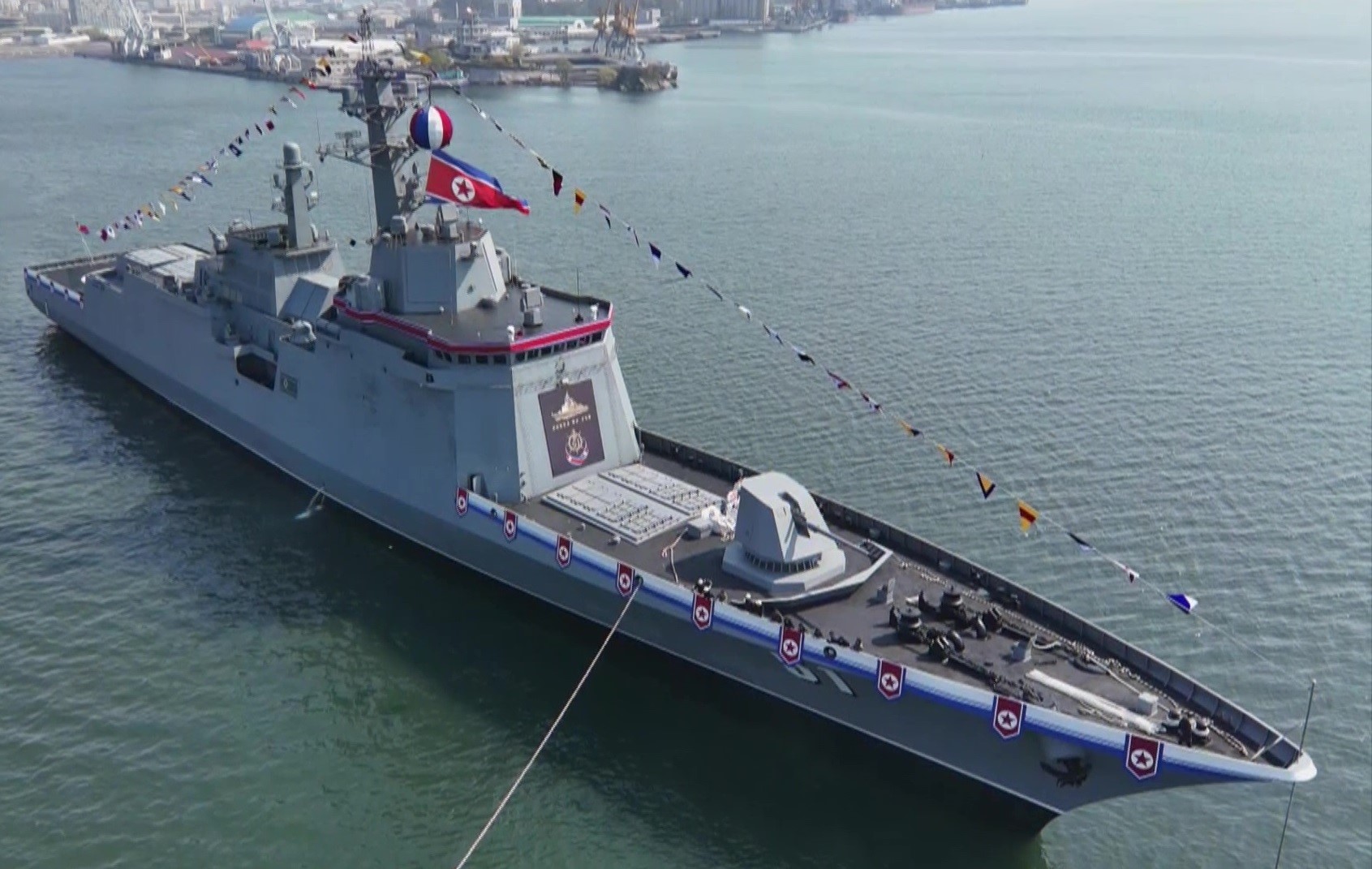
World
PYONGYANG — June 06, 2026 : North Korea has commenced sea trials of its second Choe Hyon-class guided-missile destroyer, the Kang Kon, marking another milestone in the country's ongoing naval modernization program. State media confirmed on June 6, 2026, that the 5,000-ton warship had begun its maiden sea trials following navigation and performance tests supervised by Kim Jong Un on June 4. Kim Jong Un, accompanied by his daughter Kim Ju Ae, boarded the destroyer during the trials to inspect its maneuverability, navigation systems, and combat capabilities. During the visit, he reiterated plans to strengthen the Korean People's Army Navy (KPAN) under a broader five-year national defense strategy and outlined ambitions to develop new underwater weapons systems and larger surface combatants, including future 10,000-ton destroyers. North Korea's First Indigenous Destroyer Program The Choe Hyon class represents North Korea’s first domestically designed and built destroyer class. The lead ship, Choe Hyon (Hull No. 51), was launched at the Nampo Shipyard in April 2025 and completed its pre-commissioning trials in March 2026. Those trials included maneuverability assessments, combat system evaluations, and live-fire missile launches from the vessel’s vertical launch system (VLS). North Korean officials stated that the tests validated the ship’s operational capabilities ahead of entry into service. The second vessel, Kang Kon (Hull No. 52), was constructed at the Chongjin Shipyard and is expected to enter service alongside the lead ship following completion of sea trials. Plan to Field 12 Destroyers by 2032 According to Kim Jong Un, North Korea aims to field a fleet of 12 destroyers by 2032. Meeting that target would require the construction of approximately two destroyers per year, an ambitious pace that would place North Korea’s destroyer production rate ahead of the current U.S. output of roughly 1.6 destroyers annually. If achieved, a 12-ship destroyer fleet would surpass the current destroyer inventories of several established naval powers, including India (11 destroyers), France (10), Russia (9), and the United Kingdom (6) in terms of numbers. Defense analysts, however, note that while the new North Korean warships are significantly more capable than many older Russian and European vessels, they remain less advanced than the latest destroyers operated by the United States, China, Japan, and South Korea. Heavily Armed Surface Combatants The Choe Hyon-class destroyers displace approximately 5,000 tons, measure around 144–145 meters in length, and feature a beam of about 16 meters. The vessels are equipped with a helicopter flight deck and are designed to perform anti-aircraft, anti-ship, anti-submarine, and land-attack missions. One of the class's most notable features is its extensive missile armament. The Kang Kon is equipped with approximately 74 vertical launch system (VLS) cells, including: 32 small cells 12 medium cells 20 large cells 10 very large cells These launchers are capable of deploying a variety of guided cruise missiles and ballistic missiles. For comparison: Arleigh Burke-class (United States) – 96 VLS cells Zumwalt-class (United States) – 80 VLS cells Type 052D (China) – 64 VLS cells Udaloy-class (Russia) – 64 VLS cells Additional onboard systems include phased-array radars, four countermeasure launchers, a 127 mm or 130 mm naval gun, Pantsir-ME close-in weapon systems (CIWS), two AK-630 CIWS mounts, and torpedo launchers. North Korean sources have also indicated that some of the missiles deployed by the class may have nuclear-capable variants. Analysts have further noted that the Kang Kon appears to feature a previously unseen rocket launcher system, which may be intended for anti-drone or anti-frogman defense operations. North Korean officials have reportedly questioned the utility of large naval guns on modern destroyers. As a result, future ships built after the Kang Kon may have their primary gun removed to make room for additional VLS cells, increasing missile capacity. From Launch Accident to Sea Trials The destroyer’s journey to sea trials followed a major setback during construction. Built at the Hambuk Shipyard in Chongjin, the vessel suffered a partial capsize during its launch ceremony on May 21, 2025, resulting in hull damage and raising concerns about the future of the project. Kim Jong Un, who witnessed the incident, described it as a result of serious negligence and irresponsibility. The accident led to the arrest of four shipyard officials, including senior engineering and construction personnel. Despite concerns that the vessel could be a total loss, North Korean engineers successfully refloated the ship. It was subsequently towed to the Rajin Shipyard on June 8, 2025, where it underwent extensive repair work in dry dock. Following repairs, the destroyer was officially relaunched on June 12, 2025, during a ceremony attended by Kim Jong Un and Kim Ju Ae. The vessel was named Kang Kon in honor of the first Chief of the General Staff of the Korean People's Army, who was killed during the Korean War. Commissioning Planned After Successful Trials Following the successful navigation tests, Kim Jong Un directed that both the Choe Hyon and Kang Kon be commissioned into active naval service as soon as possible. The two destroyers are expected to form the foundation of North Korea’s expanding surface fleet as the country continues efforts to strengthen its maritime capabilities, missile forces, and naval deterrence posture under its long-term military modernization strategy.
Read More → Posted on 2026-06-06 14:11:00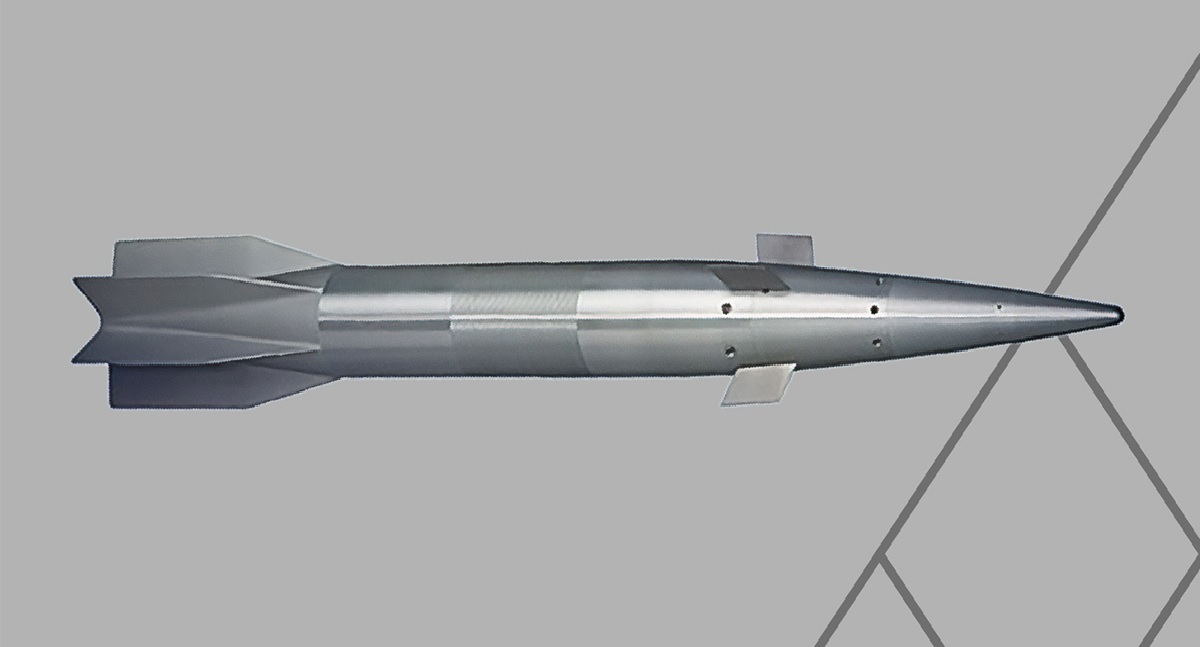
World
ST. PETERSBURG, Fla. — June 06, 2026 : General Dynamics Ordnance and Tactical Systems (GDOTS) has secured a U.S. Army contract to provide a next-generation extended-range artillery projectile based on the proven Vulcano 155 Guided Long Range (GLR) system. The contract, announced on June 5, 2026, supports the Army’s efforts to expand its long-range precision fire capabilities. The new target-seeking precision-guided munition is derived from the existing Vulcano 155 GLR, a mature artillery system developed through cooperation between General Dynamics, Diehl Defence of Germany, and Leonardo Electronics of Italy. The projectile is designed to engage both stationary and moving targets with high accuracy while minimizing collateral damage. Extended Range and Precision Strike Capability According to GDOTS, the Vulcano 155 projectile can strike targets at distances of up to 70 kilometers when fired from a 155/52 caliber howitzer and up to 55 kilometers from a 155/39 caliber artillery system. The extended range is achieved through a combination of advanced aerodynamic design, GPS guidance, and precision targeting technologies. The projectile uses GPS/Inertial Measurement Unit (IMU) guidance together with a Semi-Active Laser (SAL) terminal seeker, enabling highly accurate engagements. The system is capable of achieving a circular error probable (CEP) of less than 5 meters using GPS/IMU guidance and under 3 meters when employing SAL terminal homing. In addition to the SAL-guided version, the ammunition is also available with an advanced Far-Infra Red (FIR) seeker. This configuration allows the projectile to detect, track, and engage maritime targets, expanding its operational flexibility beyond land-based missions. Both the SAL and FIR variants are designed to maintain precision engagement capabilities in GPS-contested or jammed environments, ensuring effectiveness in modern electronic warfare conditions. Compatible With Existing 155mm Artillery Systems The Vulcano 155 incorporates a notched high-explosive warhead and is compatible with standard 155mm howitzers already in service. This allows military forces to improve long-range precision strike capabilities without requiring significant modifications to existing artillery platforms. The system’s combination of extended range, high accuracy, and multi-target engagement capability is intended to provide artillery units with greater operational reach and effectiveness on the battlefield. Production Transition to the United States To support the U.S. Army program, GDOTS will transfer established manufacturing processes from Germany and Italy to production facilities in the United States. The company stated that leveraging proven production lines and existing technology will reduce development risk and support rapid production scaling. The U.S. Army version of the projectile will require only minor airframe modifications while retaining the core capabilities of the existing Vulcano system. “Our approach leverages years of investment and development from our partners, Diehl Defence and Leonardo Electronics, who have successfully delivered the 155mm Vulcano Guided Long Range artillery suite to Germany, Italy, and other partner nations,” said Michael Bate, Senior Vice President and General Manager at GDOTS. Bate noted that transitioning established production capabilities to the United States will enable the company to quickly deliver a mature solution that meets Army requirements for range, precision, lethality, and schedule. European Partners Highlight Program Importance The Vulcano 155 GLR system has already been fielded by several allied nations, providing a proven foundation for the U.S. Army’s next-generation artillery projectile program. Commenting on the contract, Gunnar Pappert, Executive Vice President at Diehl Defence, said the company is pleased to work with GDOTS to further develop the Vulcano system and bring the capability to the U.S. Army. Luca Perazzo, Deputy Managing Director of Defense Systems at Leonardo, stated that the selection of the Vulcano 155 for the program demonstrates the capabilities of the system and highlights its continued technological development.
Read More → Posted on 2026-06-06 14:31:10
World
MOSCOW — June 06, 2026 : Russia’s military prosecutor’s office and Garrison JSC, a company subordinate to the Russian Defense Ministry, have filed a lawsuit against German defense manufacturer Rheinmetall, seeking €47.2 million in damages related to a military training center project that was halted following Russia’s annexation of Crimea in 2014. According to a report published by Russian news outlet RBC on June 3, the plaintiffs have asked the Moscow Arbitration Court to formally recognize the termination of the contract and award financial compensation. Court proceedings are being conducted behind closed doors. Dispute Linked to Mulino Training Center Project The legal dispute stems from a 2011 agreement between Rheinmetall and Oboronservis, a former Russian state-owned defense services company later reorganized under structures controlled by the Russian Defense Ministry. Under the contract, valued at approximately €100 million to €120 million, Rheinmetall was tasked with designing, building, and equipping a modern combat training center for the Russian Ground Forces in Mulino, located in Russia’s Nizhny Novgorod region. The facility was intended to become one of the country’s most advanced military training sites and was scheduled for completion by mid-2014. As part of the agreement, Rheinmetall was expected to provide system engineering, quality control services, and a comprehensive live training system incorporating German laser-based firing simulators. Russian military planners intended for the center to train up to 30,000 personnel annually in realistic battlefield scenarios, including infantry combat and tactical exercises. Project Halted After Crimea Annexation The project was interrupted in 2014 after Russia annexed Crimea, prompting Germany to suspend defense-related exports to Russia. Berlin subsequently revoked Rheinmetall’s export licenses and permissions associated with the Mulino project, citing the changed political and security situation following developments in Ukraine. As a result, Rheinmetall ended its participation in the program and the planned delivery of German-made training equipment was canceled. In response, the Russian Defense Ministry announced that domestic alternatives would be used to complete the facility. The Mulino training center, also known as the 333rd Combat Training Center, was later finished with Russian-developed simulation systems and entered service without German involvement. Previous Claims Unsuccessful This is not the first attempt by Russian authorities to recover funds linked to the canceled project. Russia’s Defense Ministry previously pursued legal action against Rheinmetall in Switzerland, but the claims were rejected by the court. Following the unsuccessful effort abroad, Russian authorities have turned to the domestic legal system. The current lawsuit seeks compensation based on what plaintiffs describe as unjust enrichment under Russian civil law and aims to formally establish the termination of the original contract as part of the financial claim. Enforcement Challenges Remain Despite the new legal action, Russian legal experts have acknowledged that collecting compensation from Rheinmetall would be highly unlikely. Even if the Moscow Arbitration Court rules in favor of the plaintiffs, any judgment would have limited legal effect outside Russia and would not automatically be enforceable in European jurisdictions. As a result, Rheinmetall’s assets in Europe would remain protected from seizure under such a ruling. Rheinmetall has not publicly commented on the latest proceedings in available reports. Part of Broader Legal Trend The case reflects a broader pattern of legal disputes involving Western companies whose operations or contracts in Russia were affected by sanctions and export restrictions imposed after 2014 and expanded following the outbreak of the Russia-Ukraine war. Russian courts have issued several large financial judgments against foreign corporations in recent years. Earlier in 2026, Russia’s Supreme Court upheld a ruling ordering Google to pay 91.5 quintillion rubles in a dispute related to blocked Russian media channels on YouTube, a figure widely viewed as symbolic and unenforceable outside Russia. More than a decade after the original agreement was signed, the Mulino training center remains one of the Russian Ground Forces’ key training facilities, underscoring the long-term significance of a project that became entangled in the geopolitical consequences of the Crimea crisis and subsequent international sanctions.
Read More → Posted on 2026-06-06 15:03:21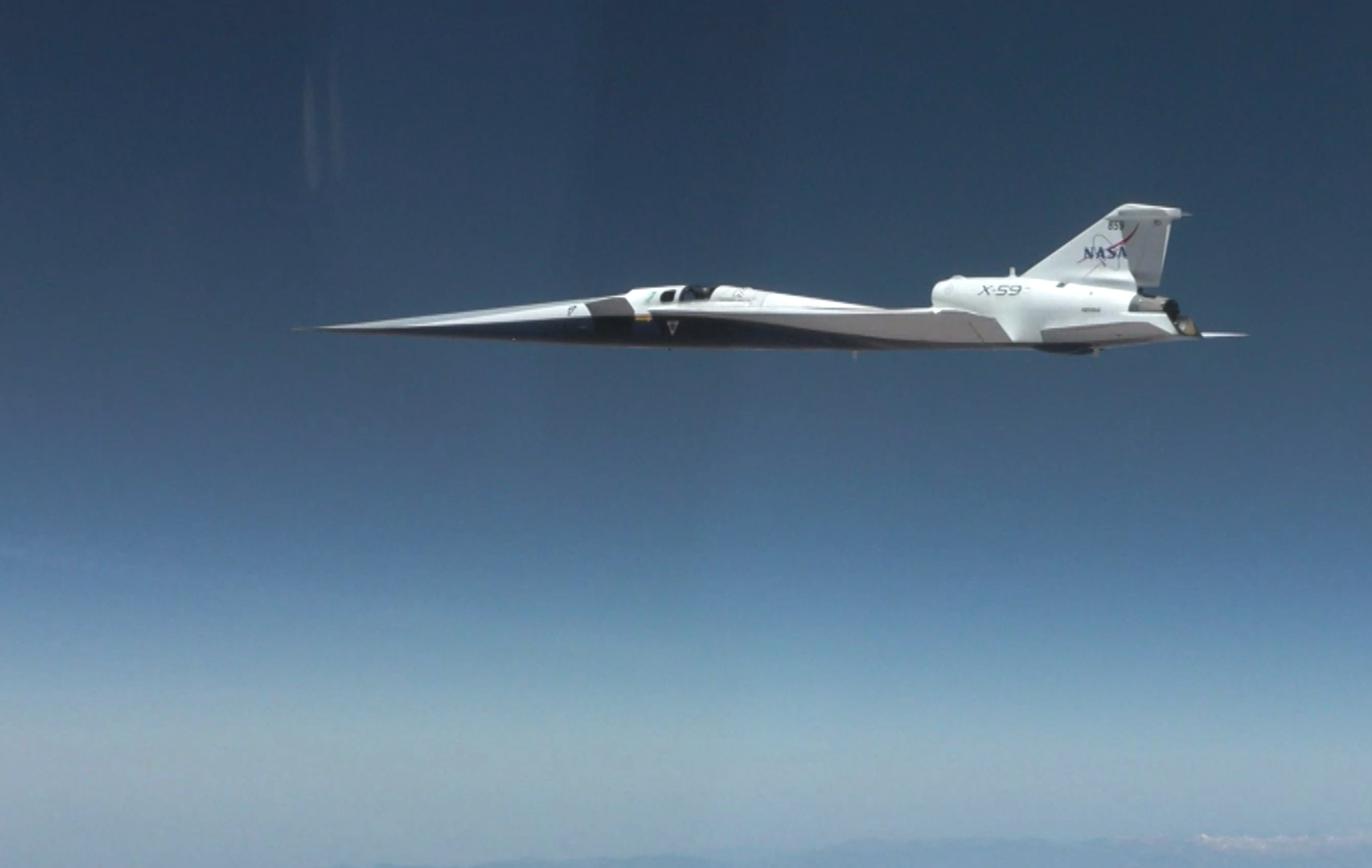
Space & Technology
EDWARDS AIR FORCE BASE, California — June 06, 2026 : NASA’s X-59 quiet supersonic research aircraft has successfully reached supersonic speeds for the first time, marking a major milestone in the agency’s Quesst mission and moving the program into the next phase of flight testing aimed at demonstrating quieter supersonic travel over land. The milestone flight took place on June 5 from Edwards Air Force Base in California, where NASA test pilot Jim “Clue” Less flew the experimental aircraft for 81 minutes. During the mission, the X-59 climbed to an altitude of approximately 43,400 feet and reached a top speed of Mach 1.1, or about 713 mph (1,147 km/h), successfully crossing the speed of sound for the first time. The achievement marks the completion of the aircraft’s initial subsonic flight-testing phase and the beginning of more demanding supersonic evaluations. NASA officials said the flight was focused on assessing the aircraft’s handling characteristics, stability, and system performance at supersonic speeds. For the test, the X-59 was accompanied by a NASA F-15 chase aircraft. The sonic booms generated by the F-15 were intentionally used to mask any acoustic signatures from the X-59, as the objective of this flight was not to measure noise levels but to verify aircraft performance during supersonic operations. Developed under NASA’s Quesst mission and built by Lockheed Martin Skunk Works, the X-59 is designed to address one of the biggest challenges associated with supersonic flight: the loud sonic boom produced when aircraft exceed the speed of sound. Traditional supersonic aircraft, including the retired Concorde, generated powerful shockwaves that created disruptive booms on the ground, leading regulators to prohibit commercial supersonic flights over land in many countries. The X-59 has been specifically engineered to reduce this effect. Instead of producing a loud sonic boom, the aircraft is designed to generate a significantly quieter “sonic thump” that NASA estimates will be about 75 perceived decibels, roughly comparable to the sound of a car door closing. Several design features contribute to this capability. The aircraft’s most distinctive feature is its nearly 38-foot-long, needle-shaped nose, which helps separate shockwaves generated during flight and prevents them from merging into a single powerful boom. The X-59 also uses a top-mounted General Electric F414-GE-100 engine producing approximately 22,000 pounds of thrust. Positioning the engine on top of the fuselage helps direct engine noise upward and away from the ground. In addition, the aircraft’s swept wings and carefully shaped underbody are designed to minimize the formation of additional shockwaves. Because the extended nose blocks the pilot’s forward view, the X-59 does not have a traditional forward-facing cockpit window. Instead, pilots rely on an advanced eXternal Vision System (XVS), which uses high-resolution cameras and displays to provide a real-time forward view. The X-59 measures approximately 99.7 feet (30.4 meters) in length and has a wingspan of 29.5 feet (9 meters). The aircraft first flew on October 28, 2025, and has since completed a series of subsonic flight tests, including wheels-up operations and envelope expansion flights reaching speeds close to Mach 0.95. With the first supersonic flight completed, NASA plans to continue expanding the aircraft’s flight envelope. Future tests will gradually increase operating speeds toward the X-59’s planned cruise condition of Mach 1.4, or approximately 925 mph, at an altitude of 55,000 feet. Additional testing is expected to evaluate performance at speeds approaching Mach 1.6 and altitudes up to 60,000 feet. Once flight performance and safety requirements are fully validated, the program will move into acoustic testing and community overflight operations. During this phase, NASA will fly the X-59 over selected communities across the United States and collect public feedback regarding the aircraft’s quieter sonic signature. The data gathered from those flights will be shared with the Federal Aviation Administration (FAA) and international aviation regulators. NASA hopes the results will support the development of new noise standards for supersonic aircraft and potentially lead to revisions of regulations that have restricted commercial supersonic flight over land since the 1970s. The Quesst mission is intended to provide the technical and acoustic data needed to support future generations of commercial supersonic aircraft, with the goal of enabling faster air travel while reducing the noise impacts that limited earlier supersonic passenger operations.
Read More → Posted on 2026-06-06 15:30:19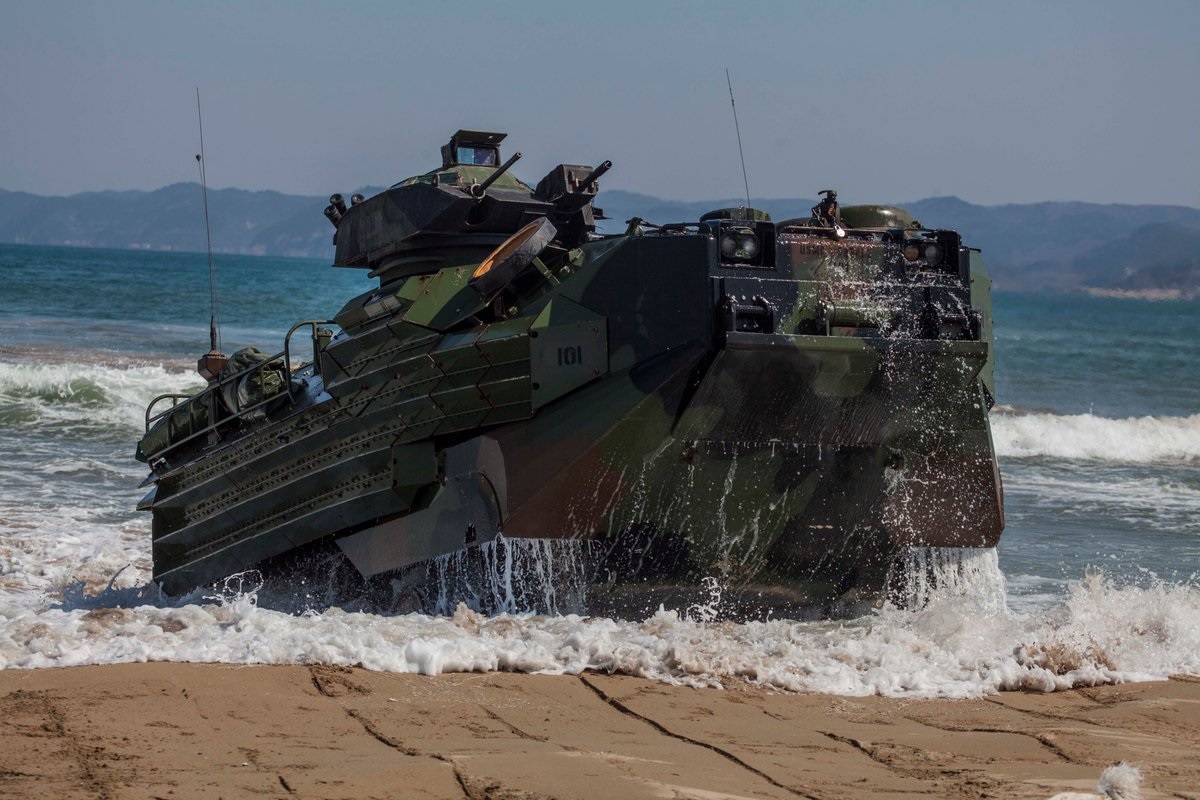
World
WASHINGTON, — June 06, 2026 : The United States has approved a $30.6 million Foreign Military Sale (FMS) to Italy involving the transfer of seven specialized Assault Amphibious Vehicles (AAVs) from former U.S. Marine Corps inventories. The U.S. Department of State cleared the proposed sale on June 5, 2026, as part of efforts to strengthen Italy’s amphibious command, control, and maintenance capabilities. The package includes three AAVC-7A1 command variant vehicles and four AAVR-7A1 recovery variant vehicles configured to the advanced Reliability, Availability, Maintainability/Standardization to Reliability (RAM/RS) modernization standard. The procurement does not include any AAVP-7A1 troop-carrying variants. In addition to the vehicles, the package includes radar-scattering camouflage netting kits, specialized support equipment, unclassified technical manuals, and associated logistics support. U.S. officials stated that the sale is intended to improve Italy’s ability to address current and future operational requirements while maintaining a sustainable expeditionary force. The State Department also noted that the transaction will not alter the military balance in the region. Focus on Command and Recovery Assets The acquisition is designed to address capability gaps in Italy’s amphibious support structure rather than expand troop transport capacity. Italy currently operates an amphibious fleet of approximately 35 AAVs distributed between the Italian Navy’s Brigata Marina San Marco and the Italian Army’s Lagunari Regiment “Serenissima.” Before the approval of the sale, Italy’s inventory consisted of 29 AAVP-7A1 assault vehicles, three AAVC-7A1 command vehicles, and two AAVR-7A1 recovery vehicles. Troop-carrying variants represented more than 82 percent of the fleet, while command and recovery vehicles accounted for a much smaller share. This fleet structure resulted in approximately one command vehicle for every 9.7 assault vehicles and one recovery vehicle for every 14.5 assault vehicles. Military planners identified the limited number of specialized support platforms as a potential operational constraint, as the loss or mechanical failure of a command or recovery vehicle could significantly affect amphibious operations. The addition of three command vehicles will increase Italy’s command fleet from three to six vehicles, representing a 100 percent increase. The acquisition of four recovery vehicles will expand recovery assets from two to six vehicles, a 200 percent increase. The changes are intended to improve operational redundancy, command coordination, and vehicle sustainment during amphibious missions. Troop Transport Capacity Remains Unchanged Italian defense planners determined that additional troop-carrying vehicles were not required because existing transport capacity already meets operational needs. Each AAVP-7A1 can carry a crew of three and up to 21 embarked Marines. With 29 troop carriers currently in service, Italy retains the ability to transport up to 609 personnel during a single amphibious lift operation, providing sufficient capacity for battalion-sized deployments. The vehicles are also capable of operating in sea conditions up to Sea State 5, offering substantial amphibious capability for expeditionary operations. By focusing on command and recovery variants rather than assault vehicles, the procurement strengthens the support architecture necessary to sustain and coordinate amphibious forces without increasing overall lift capacity. Vehicles Sourced from Retired U.S. Marine Corps Fleet The vehicles being transferred originate from U.S. Marine Corps inventories following the service’s retirement of the tracked AAV platform. The Marine Corps officially completed the transition away from the AAV fleet in 2025 after more than five decades of service, replacing it with the wheeled Amphibious Combat Vehicle (ACV). The retirement created an opportunity for allied nations to acquire surplus vehicles and integrate them into existing force structures. For Italy, the acquisition provides a cost-effective means of enhancing specialized amphibious capabilities while maintaining compatibility with its current AAV fleet. Support for NATO Amphibious Operations The proposed sale is expected to improve the effectiveness and sustainability of Italy’s amphibious forces by strengthening command-and-control functions and expanding vehicle recovery capacity during expeditionary operations. The procurement also supports broader efforts to enhance NATO interoperability, allied readiness, and amphibious capabilities in the Mediterranean region. Following State Department approval, the transaction will proceed through the standard U.S. congressional notification and review process before final implementation.
Read More → Posted on 2026-06-06 15:36:36
World
FORT IRWIN, California — June 06, 2026 : A drone detection device closely resembling Ukraine's battlefield-proven Obriy 1.3 system was reportedly observed during a U.S. Army training exercise at Fort Irwin's National Training Center (NTC) in California in late October and early November 2025. The device appeared under the designation "BlackSky Guardian-1", with its original branding obscured. While neither the U.S. Army nor Ukrainian manufacturer Kara Dag Technologies has confirmed its identity, observers familiar with the Obriy 1.3 noted that the device's physical design, antenna configuration, and overall layout closely matched the Ukrainian system. Battlefield-Proven Ukrainian Technology Developed by Kyiv-area company Kara Dag Technologies, the Obriy 1.3 is a personal drone detector widely used during the war in Ukraine. The system is designed to provide early warning of approaching FPV drones and other small unmanned aerial systems. According to the manufacturer, the detector typically identifies drone signals at ranges of up to 2.5 kilometers, with detection distances potentially reaching 5 kilometers under favorable conditions. It monitors the 1.2 GHz, 2.4 GHz, and 4.9–6.0 GHz frequency bands commonly used by FPV and commercial drones. The system includes direction-finding capabilities, WiFi filtering to reduce false alarms, FPV-only scanning modes, adjustable sensitivity settings, and a "Blackout" mode that disables visual indicators while maintaining detection functions. It can also integrate with electronic warfare systems and support automatic activation of jamming equipment. Observed During Fort Irwin Exercise The reported sighting occurred during NTC Rotation 26-02, the U.S. Army's first armored Transforming in Contact (TiC) 2.0 National Training Center rotation. The exercise involved soldiers from the 2nd Armored Brigade Combat Team, 1st Cavalry Division, and focused on testing new technologies and operational concepts in realistic combat scenarios. Counter-drone operations were a key element of the exercise, which also included the use of advanced drones, electronic warfare systems, and updated force structures designed to improve battlefield effectiveness against near-peer threats. The Army's Transforming in Contact initiative aims to rapidly introduce emerging capabilities, including drones, counter-drone systems, and electromagnetic warfare tools, into operational units before major training events and deployments. Growing Demand for Personal Drone Detection The reported presence of a device matching the Obriy 1.3 aligns with broader U.S. Army efforts to improve protection against small drones. The Army's C5ISR Center has been researching radio-frequency and acoustic detection systems for dismounted soldiers, reflecting lessons learned from modern conflicts where FPV drones have become a significant battlefield threat. Ukraine's experience has demonstrated the importance of early-warning systems, as low-cost FPV drones can be launched from several kilometers away and provide little reaction time for soldiers without dedicated detection equipment. Kara Dag Partnership With Anduril In March 2026, approximately five months after the Fort Irwin exercise, Kara Dag Technologies announced a strategic partnership with California-based defense technology company Anduril Industries. The partnership combines Kara Dag's battlefield-tested drone detection technology and extensive radio-frequency signature database with Anduril's defense software and procurement capabilities. The collaboration could provide a pathway for Ukrainian counter-drone technologies to enter U.S. military testing and procurement programs. Identity Remains Unconfirmed Whether BlackSky Guardian-1 is a rebranded version of the Obriy 1.3, a test designation, or a separate system has not been confirmed. No publicly available U.S. defense procurement records currently identify a system under that name. However, the observation indicates that a device physically consistent with a Ukrainian battlefield-proven drone detector was present during a major U.S. Army combat training exercise, highlighting continued interest in technologies developed and validated during the war in Ukraine.
Read More → Posted on 2026-06-06 16:03:29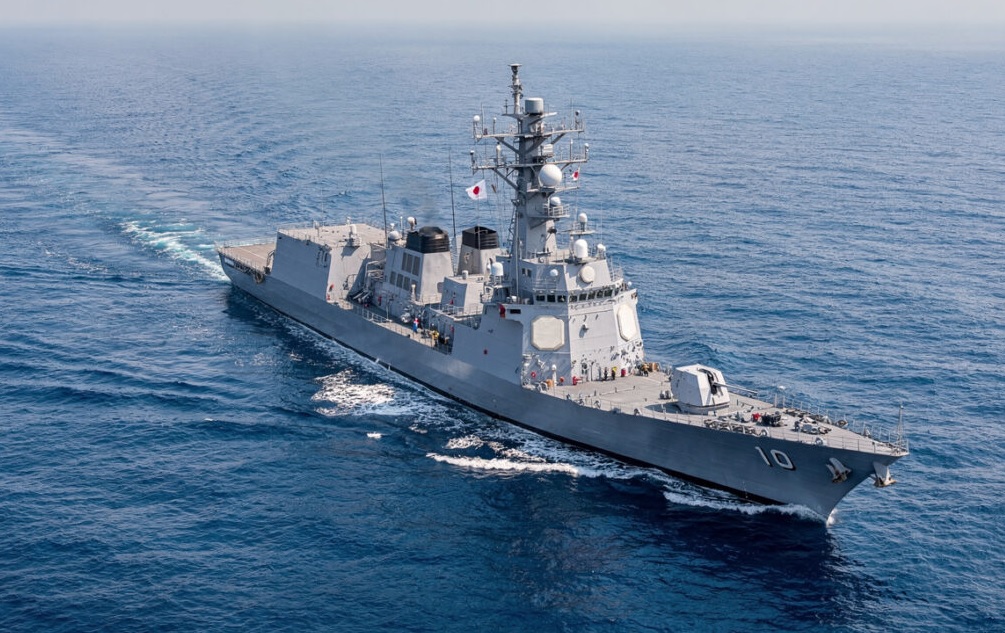
World
TOKYO, — June 06, 2026 Japan and Indonesia have agreed to begin working-level discussions on the potential transfer of retired or soon-to-be-retired Japan Maritime Self-Defense Force (JMSDF) Asagiri-class destroyers to the Indonesian Navy, marking a significant step in defense cooperation between the two countries. The agreement was reached during a meeting in Tokyo on June 5 between Japanese Defense Minister Shinjiro Koizumi and Indonesian Defense Minister Sjafrie Sjamsoeddin. During the talks, Indonesia expressed its intention to advance defense equipment and technology cooperation with Japan, including the possible acquisition of Asagiri-class destroyers. Both sides agreed to use a working-level framework established in May to discuss details related to training, maintenance, logistics support, and operational integration. Part of Japan’s Expanded Defense Export Policy The discussions come after Japan revised its defense export regulations, allowing the transfer of a wider range of military equipment, including naval vessels, to partner countries under specific security agreements. Following the meeting, Koizumi said the discussions would further strengthen defense ties between Japan and Indonesia. He also noted that Japan is expanding naval cooperation with regional partners through platforms such as the Mogami-class frigate for Australia, the Abukuma-class destroyer escort for the Philippines, and the Asagiri-class destroyer for Indonesia. Why Indonesia Is Interested in the Asagiri-Class As the world's largest archipelagic nation, Indonesia requires naval vessels capable of operating across vast maritime areas stretching from the Malacca Strait to the Natuna Islands. The Asagiri-class destroyer, which entered service in 1988, displaces approximately 3,500 tons and was designed for anti-submarine warfare, fleet escort missions, and extended maritime operations. The vessels are equipped with Harpoon anti-ship missiles, ASROC anti-submarine launchers, Sea Sparrow surface-to-air missiles, Phalanx CIWS, lightweight torpedoes, and facilities for operating an SH-60J helicopter. Japan has already begun retiring ships of the class as newer Mogami-class frigates enter service. Comparison With the Philippines’ Abukuma-Class Proposal The discussions with Indonesia follow separate talks between Japan and the Philippines regarding the potential transfer of Abukuma-class destroyer escorts. While both ship classes carry anti-ship and anti-submarine weapons, the Abukuma-class is a smaller 2,000-ton vessel designed primarily for coastal patrol and escort duties. It lacks a dedicated surface-to-air missile system and helicopter facilities, making it more economical to operate. The larger Asagiri-class offers greater endurance, stronger air-defense capability, and helicopter operations, making it better suited for Indonesia’s wider maritime requirements. Strengthening Maritime Cooperation Japanese officials have emphasized that any future transfer would include not only the vessels themselves but also long-term support in areas such as crew training, maintenance, logistics, and sustainment. The proposed transfer reflects growing Japan-Indonesia defense cooperation and Japan’s broader effort to strengthen maritime security partnerships across the Indo-Pacific. Although no final agreement has been reached, the start of formal working-level talks indicates that both governments are seriously exploring the possibility of transferring Asagiri-class destroyers to Indonesia in the coming years.
Read More → Posted on 2026-06-06 16:17:56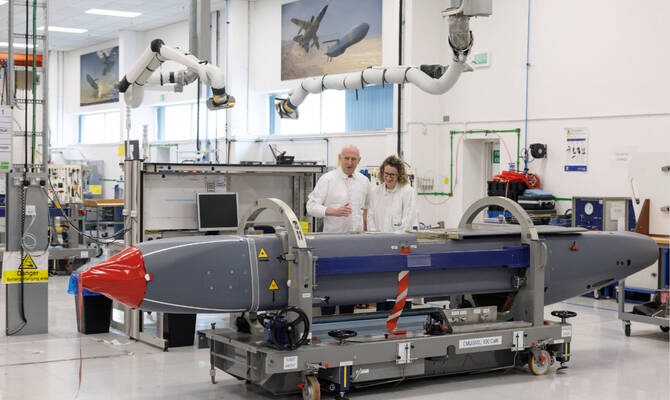
World
LONDON — June 06, 2026 : One year after the United Kingdom announced plans to procure up to 7,000 domestically built long-range weapons under its Strategic Defence Review (SDR), the government has yet to publish a detailed implementation plan outlining funding, procurement schedules, production timelines, and delivery targets. The initiative was unveiled in June 2025 as part of a broader effort to strengthen military readiness and expand the UK's domestic defence industrial base. However, the commitment was announced as a strategic objective rather than a fully funded programme with defined milestones. Parliament Seeks Progress Update The programme has come under renewed scrutiny after Conservative MP Ben Obese-Jecty asked the government for an update on progress. In a written response, Defence Minister Luke Pollard did not provide figures on weapons ordered, contracts awarded, or systems produced. Instead, he referred to the forthcoming Defence Investment Plan, which he said would "turn the Strategic Defence Review's vision and recommendations into an affordable delivery plan." The Defence Investment Plan is expected to replace the previous Equipment Plan and establish the framework for funding and implementing the SDR's recommendations. Until it is published, there is no official benchmark for measuring progress on the 7,000-weapon target. Weapon Composition Remains Unclear The government has not disclosed which systems will make up the planned inventory. Officials have indicated the programme will cover a broad range of long-range strike capabilities, including: Cruise missiles Extended-range artillery munitions and guided weapons A new long-range missile being jointly developed by the United Kingdom and Germany Part of Wider Munitions Investment The programme forms part of a broader effort to establish an "always-on" munitions production capability. The government has committed £6 billion to munitions spending during the current Parliament, including £1.5 billion for the munitions supply chain and the construction of new production facilities. Plans include building at least six new energetics and munitions factories in the UK to produce key components such as propellants, explosives, and pyrotechnics. According to government estimates, the 7,000 long-range weapons programme will support around 800 defence jobs, while the new factories are expected to create more than 1,000 skilled manufacturing positions. Lessons from Ukraine British defence officials have linked the investment programme to lessons learned from the war in Ukraine, which highlighted the importance of maintaining large stockpiles and a resilient domestic production base for missiles, artillery ammunition, and precision-guided weapons. The Strategic Defence Review concluded that future high-intensity conflicts may require significantly higher production capacity and faster replenishment rates than traditional peacetime models can provide. Awaiting the Defence Investment Plan Despite the scale of the commitment, key details covering procurement schedules, production targets, factory locations, contract awards, and funding allocations remain unpublished. Until the Defence Investment Plan is released, the UK's pledge to acquire up to 7,000 domestically produced long-range weapons remains a stated objective without a publicly available production roadmap or delivery schedule.
Read More → Posted on 2026-06-06 16:57:13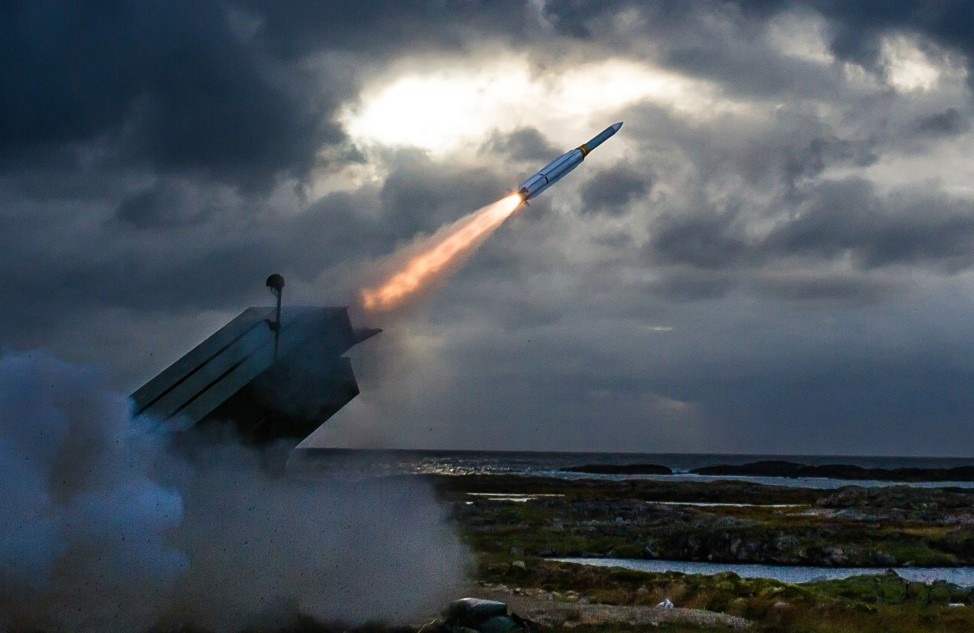
World
TAIPEI — June 06, 2026 : The Republic of China (Taiwan) Marine Corps is reportedly seeking to acquire the National Advanced Surface-to-Air Missile System (NASAMS) to strengthen the protection of naval facilities, coastal infrastructure, and potential amphibious landing areas against aerial threats, according to reports cited by Liberty Times. The proposed procurement would expand Taiwan’s ongoing efforts to enhance its layered air defense capabilities and improve protection against aircraft, helicopters, drones, cruise missiles, and other airborne threats. The Marine Corps is seeking the system as part of broader measures to secure critical coastal areas that could become key operational zones during a military contingency. Focus on Naval Infrastructure and Beachhead Defense According to the report, the Marine Corps intends to deploy NASAMS around important naval installations, naval bases, and potential beachhead locations. Defense analysts have long assessed that, in the event of a conflict, Taiwan could face extensive aerial reconnaissance missions followed by amphibious operations, sea-lift deployments, or large-scale helicopter-borne troop assaults aimed at securing coastal footholds. The deployment of NASAMS at these locations would provide area air defense coverage capable of engaging multiple aerial targets simultaneously, helping protect military infrastructure and operational forces positioned along Taiwan’s coastline. NASAMS Capabilities NASAMS is jointly developed by the United States-based Raytheon and Norway’s Kongsberg Defence & Aerospace. The system is designed as a networked short- to medium-range air defense platform and is currently operated by numerous countries worldwide. The system uses an open, network-centric architecture designed to maintain operational effectiveness in electronically contested environments. NASAMS is equipped with AN/MPQ-64F1 Sentinel radar systems and can employ several missile types, including the AIM-120 AMRAAM, AMRAAM-ER, and AIM-9X Sidewinder. Using extended-range AMRAAM missiles, NASAMS can engage targets at ranges of up to approximately 50 kilometers. Its distributed architecture allows launchers, radars, and command-and-control elements to operate from separate locations while remaining connected through an integrated network. The system has gained significant attention in recent years due to its operational use in defending critical infrastructure and military assets against aircraft, helicopters, cruise missiles, and unmanned aerial systems. Part of Taiwan’s “T-Dome” Air Defense Strategy The Marine Corps’ reported interest in NASAMS aligns with Taiwan’s broader effort to establish the “T-Dome” layered air defense network. The initiative seeks to integrate domestically developed systems with foreign-procured capabilities to create a resilient, mobile, and interconnected defense architecture capable of countering advanced aerial threats and uncrewed systems. Taiwan’s military leadership views the development of a layered air defense structure as a key component of protecting critical military and civilian infrastructure across the island. Existing NASAMS Procurement Underway Taiwan’s Air Force has already begun acquiring NASAMS as part of its air defense modernization program. Under previously announced procurement plans, Taiwan secured an initial package valued at approximately US$1.16 billion (NT$35.74 billion), including three NASAMS batteries, 123 AMRAAM-ER missiles, Sentinel radars, mobile launchers, and associated command-and-control equipment. A separate contract worth approximately NT$24.98 billion (US$761 million) has also been reported for three NASAMS systems. Deliveries of the initial units are scheduled to be completed before the first quarter of 2031. To support the program, Taiwan recently dispatched Air Force personnel to the United States to oversee contract implementation, system configuration, logistics coordination, and integration efforts aimed at maintaining the planned delivery timeline. Plans for Additional NASAMS Batteries The first three NASAMS systems are expected to be deployed in the Greater Taipei area to provide protection for the capital, government facilities, military infrastructure, and major population centers. Taiwan’s Ministry of National Defense is also reportedly planning a second procurement phase that could include an additional nine NASAMS units and hundreds of missiles. If approved, the expansion would increase Taiwan’s NASAMS inventory to as many as twelve batteries. The additional systems are expected to be positioned around strategic radar stations, air bases, urban centers, and other critical military facilities across northern, central, southern, and eastern Taiwan. Expanding Coastal Air Defense Coverage The Marine Corps’ request highlights Taiwan’s growing emphasis on protecting coastal areas, ports, naval installations, and potential landing zones. These locations are considered among the most strategically important objectives during a conflict and are increasingly viewed as requiring dedicated air defense coverage. Military analysts note that NASAMS would complement Taiwan’s existing air defense network, which includes Patriot missile systems, Sky Bow surface-to-air missiles, Avenger systems, Stinger missiles, and other domestically developed air defense assets. The system’s ability to share targeting information and integrate with wider command-and-control networks is regarded as one of its key operational advantages. While Taiwan’s Ministry of National Defense and the Marine Corps have not publicly disclosed detailed procurement figures for the reported requirement, the proposal reflects continued efforts to strengthen protection of naval facilities and coastal operational areas as part of Taiwan’s evolving air and missile defense architecture.
Read More → Posted on 2026-06-06 17:18:41
World
NORFOLK, Virginia — June 06, 2026 : The U.S. Navy's Wasp-class amphibious assault ship USS Iwo Jima (LHD 7) returned to Naval Station Norfolk on June 6, concluding a 296-day deployment in the Caribbean region. The ship served as the flagship of the Iwo Jima Amphibious Ready Group (ARG) and returned with approximately 4,500 Sailors and Marines assigned to the ARG and the embarked 22nd Marine Expeditionary Unit (MEU) – Special Operations Capable (SOC). USS Iwo Jima departed Norfolk in August 2025 alongside USS San Antonio (LPD 17) and USS Fort Lauderdale (LPD 28). Although originally scheduled to operate in the U.S. 5th and 6th Fleet areas, the group was redirected to the Caribbean following a request from U.S. Southern Command to support regional security operations. The deployment primarily supported Operation Southern Spear, focusing on maritime interdiction and counter-narcotics operations. During the nearly ten-month deployment, the group conducted several key missions across the region. In late October and early November 2025, the ARG shifted to humanitarian assistance and disaster relief operations following Hurricane Melissa in Jamaica. Working with Joint Task Force Bravo and local defense forces, personnel delivered more than 780,000 pounds of essential supplies to affected communities. The deployment also included embassy reinforcement missions, with Marines providing additional security support to U.S. embassies in Port-au-Prince, Haiti, and Caracas, Venezuela during periods of regional instability. Additionally, the ARG participated in Operation Absolute Resolve, conducting joint activities with special operations forces and carrying out casualty evacuation rehearsals and other readiness exercises. According to the Navy, the group completed approximately 6,200 sorties, accumulated 1,850 flight hours, and traveled a combined 130,573 nautical miles during the deployment. The deployment was also marked by the loss of Marine Lance Cpl. Chukwuemeka Oforah, who went overboard from USS Iwo Jima in February 2026. Following a multi-day search by U.S. Navy and Coast Guard assets, he was later presumed deceased. During routine operations, the ship conducted port visits to St. Croix, St. Thomas, and Ponce, Puerto Rico, where Sailors and Marines participated in community service activities, including beach cleanups and local outreach programs. Family members gathered at Naval Station Norfolk on Saturday to welcome the crew home, marking the end of one of the ship's most extensive recent deployments in support of U.S. Southern Command operations.
Read More → Posted on 2026-06-06 17:34:47
Space & Technology
MOSCOW — June 6, 2026 : Russia's effort to develop a domestic low Earth orbit (LEO) broadband satellite network has recorded its first confirmed satellite loss after one of the spacecraft launched under the Rassvet program reentered Earth's atmosphere and burned up less than three months after launch. The satellite, designated Object 4 and assigned NORAD tracking number 68363, reentered the atmosphere on or around June 6, according to orbital tracking data analyzed by space journalist Anatoly Zak, founder of RussianSpaceWeb.com. The spacecraft was part of a group of 16 Rassvet satellites launched on March 23, 2026, by Russian satellite communications company Bureau 1440, which is developing a domestic satellite internet network intended to provide capabilities similar to Starlink. Satellite Failed to Perform Orbit-Raising Maneuvers Tracking data showed that Object 4 never carried out a single orbit-raising maneuver after reaching space. The satellite remained at an altitude of approximately 300 to 310 kilometers, where atmospheric drag gradually reduces orbital altitude unless propulsion systems are used. Because the spacecraft showed no signs of maneuverability, its orbit steadily decayed until atmospheric reentry became unavoidable. Analysts believe the satellite may have suffered a propulsion system failure, a loss of spacecraft control, or another technical issue that prevented it from receiving or executing commands from ground controllers. Uneven Performance Across the Constellation The loss comes as tracking data continues to show mixed performance among the first batch of Rassvet satellites. For roughly two weeks after launch, none of the spacecraft appeared to conduct propulsion maneuvers, raising questions about the status of their onboard systems. By April 6, Object 16 began raising its orbit, followed by another satellite on April 7. Additional spacecraft later demonstrated maneuvering capability and started moving toward higher operational altitudes. As of early June 2026, six satellites were actively raising their orbits, gaining between 40 and 50 kilometers in altitude. Eight other satellites were maintaining their positions through station-keeping maneuvers, while Object 4 remained the only spacecraft that never showed any propulsion activity. Launch Conducted Without Immediate Official Announcement The satellites were launched aboard a Soyuz-2.1b rocket from Plesetsk Cosmodrome on March 23. The mission attracted attention because neither Roscosmos nor the Russian Ministry of Defense publicly announced the launch. Several hours later, Bureau 1440 released footage showing the deployment of the satellites, providing the first official confirmation that the mission had reached orbit. The absence of an official launch announcement was unusual, as routine launch notifications have traditionally been standard practice in the Russian space program. Russia Continues Expansion Plans The Rassvet project is intended to provide Russia with an independent satellite internet network for commercial, government, and strategic communications. Despite the loss of Object 4, reports within the Russian space community indicate that a second Rassvet launch could take place around June 18, 2026, although no official confirmation has been issued. If the launch proceeds, it would suggest that Bureau 1440 and Russian authorities view the failure as an isolated incident and remain committed to expanding the constellation. While the loss of Object 4 represents the first confirmed setback for the program, most of the satellites launched in March remain operational as Russia continues development of its domestic LEO broadband constellation.
Read More → Posted on 2026-06-06 17:52:17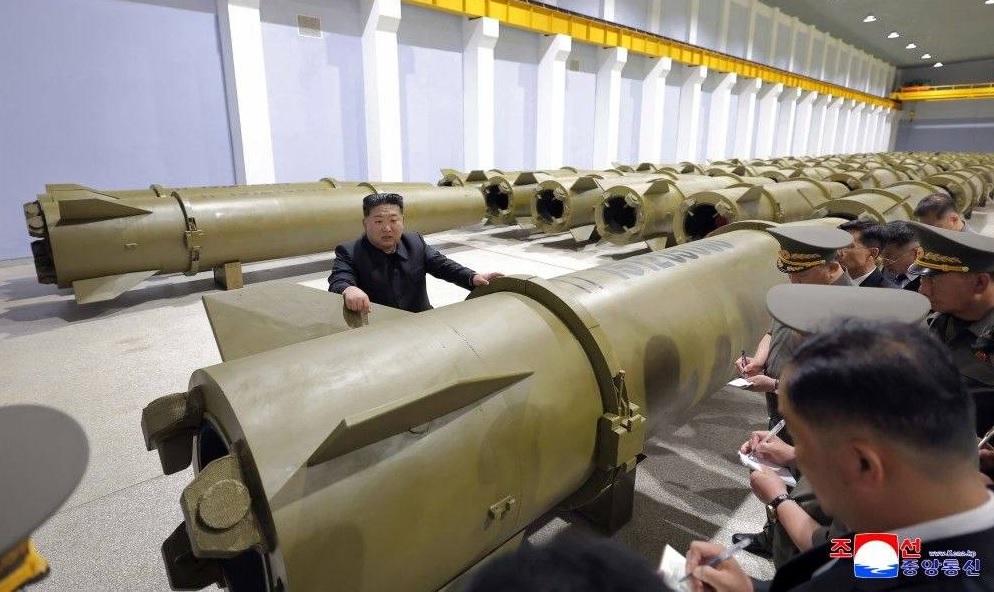
World
PYONGYANG, — June 07, 2026 : North Korean leader Kim Jong-un has ordered the country's defense industry to increase ballistic and cruise missile production capacity by 2.5 times over the next five years, according to reports from state media outlets KCNA and Rodong Sinmun. The directive was issued during Kim's inspection of a major missile production facility operated by North Korea's Missile Administration. During the visit, he reviewed first-half production results and assessed the manufacturing status of key missile systems. According to state media, Kim stated that missile output must grow annually under a structured five-year plan to meet the increasing requirements of the Korean People's Army. "It is necessary to increase the existing production capacity by 2.5 times over a five-year period with annual growth in order to supply a sufficient number of missiles, the demand for which will increase in accordance with changes in the operational structure and combat organization of our armed forces," Kim said. State media reported that the facility achieved its primary production targets for the first half of the year ahead of schedule. Kim also instructed officials to finalize the expansion plan for approval at an upcoming meeting of the Workers' Party of Korea's Ninth Central Committee. Missile Expansion and Stockpile Replenishment Defense analysts believe the production increase is partly aimed at replenishing domestic missile inventories. North Korea has reportedly continued supplying Hwasong-11 (KN-23) short-range ballistic missiles to Russia, creating additional demand for new missile production. Focus on New Missile Systems North Korea is also expanding production of its newer missile platforms, including the Hwasal-2 land-attack cruise missile, which state media describes as a key component of the country's strike capabilities. The country is additionally producing the Pulhwasal-3-31, a naval cruise missile variant based on the Hwasal-2 design. The missile is designed for launch from both surface ships and submarines, strengthening North Korea's maritime strike capability. Earlier Order for Bulsae-4 Missile Production The latest directive follows a similar order issued on January 3, 2026, when Kim visited a separate munitions facility and instructed officials to increase production capacity of the Bulsae-4 anti-tank guided missile by 2.5 times. During that visit, Kim also ordered a review of plans to modernize and expand ammunition production facilities to ensure the defense industry can meet equipment requirements set by the country's military leadership. The new five-year missile production plan highlights North Korea's continued focus on expanding missile inventories, increasing manufacturing capacity, and modernizing its defense industry to support future military requirements.
Read More → Posted on 2026-06-07 13:22:56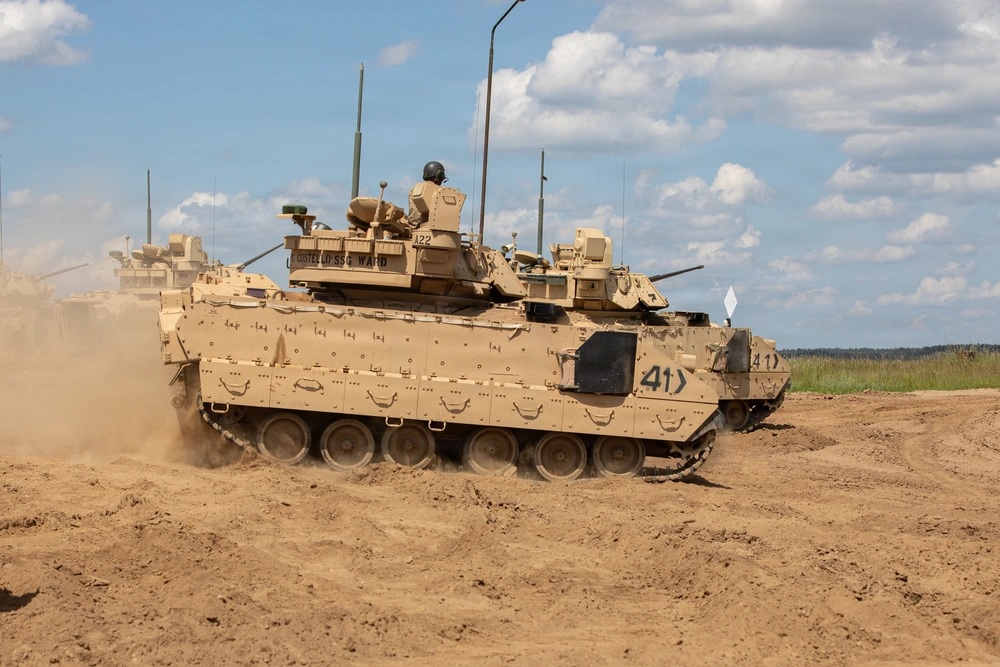
World
DRAWSKO POMORSKIE, Poland — June 07, 2026 : Soldiers assigned to the 6th Squadron, 1st Cavalry Regiment, 1st Armored Division completed M2A3 and M3A3 Bradley infantry fighting vehicle gunnery qualifications at the Drawsko Combined Training Center in Poland on June 1-2, 2026. The two-day live-fire exercise was conducted as part of the 1st Armored Division’s ongoing operations along NATO’s eastern flank, supporting allied readiness and collective defense efforts in the region. The training focused on maintaining combat readiness, improving technical proficiency, and strengthening teamwork among Bradley crews. During the qualification, soldiers conducted weapon zeroing, engaged multiple targets, and completed standard qualification tables using the Bradley infantry fighting vehicles. The exercise also provided crews with an opportunity to identify and address equipment issues, helping maintain vehicle and weapon system readiness. “This gunnery helps us build proficiency with our weapon systems and helps the team build cohesion,” said Cpl. Roddy F. Rodriguez, a Bradley gunner with the 6th Squadron, 1st Cavalry Regiment. “If anything were to happen, we can work together under stress without stepping on each other’s toes.” Rodriguez said the training also helps crews detect and correct potential equipment problems before they affect operations. “The benefit of being out here on this range is improving readiness and finding issues with the weapon system or the vehicle itself,” he said. “It helps us identify problems and fix them so there isn’t a future situation.” As the platoon sergeant’s gunner, Rodriguez is responsible for maintaining the Bradley’s weapon systems, assisting with vehicle maintenance, and supporting crew communications. Noncommissioned officers overseeing the exercise highlighted the importance of the training for leadership development and mentoring junior soldiers. Staff Sgt. Mickeal Smith, a cavalry scout and Bradley commander, said his experience allows him to help younger soldiers overcome challenges and improve their performance. “Everything you go through in your career can help someone else,” Smith said. “My experiences also allow me to mentor younger Soldiers and help them overcome challenges that I’ve already faced.” Smith added that ensuring crews understand their responsibilities and mission objectives is a key part of his role as a vehicle commander. “My job is to make sure my crew understands what they need to do and that they have clear guidance on the mission and the desired end state,” he said. “That way, we can accomplish the mission effectively.” The Drawsko Combined Training Center provides the maneuver space and realistic conditions required for armored units to conduct complex live-fire exercises. Training in Poland also allows U.S. soldiers to operate in unfamiliar environments while improving interoperability with NATO allies and partner forces. The 1st Armored Division’s continued training activities in the region support V Corps’ mission of maintaining readiness, strengthening deterrence, and contributing to NATO’s collective defense along the alliance’s eastern flank.
Read More → Posted on 2026-06-07 13:31:17
World
WASHINGTON, — June 07, 2026 : The United States is evaluating a proposal to use frozen Iranian assets to help finance the reconstruction of infrastructure in Gulf countries damaged during recent regional hostilities, according to officials familiar with the matter. The initiative has prompted strong objections from Tehran and is expected to face reluctance from Gulf states concerned about potential security implications. Treasury Department Conducts Damage Assessment US Treasury Secretary Scott Bessent has directed Treasury Department officials to conduct a comprehensive review of economic and security conditions among Gulf partners and gather detailed estimates of infrastructure damage linked to recent Iranian attacks. The assessment is examining whether existing legal and financial authorities could be used to release specific frozen Iranian assets to compensate affected countries for past damages and potentially support repairs resulting from any future attacks. The review follows a renewed period of military activity in the region, including Iranian ballistic missile and drone attacks that were intercepted over Kuwait and Bahrain. While regional air defense systems prevented larger losses, the incidents reportedly caused material damage to infrastructure and increased concerns about regional stability. Billions in Iranian Assets Remain Frozen The proposal centers on Iranian state assets that have remained inaccessible due to decades of US sanctions and international banking restrictions. Estimates indicate that between $100 billion and $120 billion in Iranian assets remain frozen worldwide. Of that total, the United States directly controls approximately $2 billion, while additional funds are held in foreign financial institutions. US authorities have also seized roughly $1 billion worth of Iranian cryptocurrency assets in recent actions. Many of these assets originate from Iranian oil and gas revenues deposited in overseas banks. Treasury officials are reportedly reviewing various categories of frozen property, financial holdings, and other seized assets to determine whether they could legally be used for compensation and reconstruction purposes. The issue remains a major point of disagreement in US-Iran relations. Iranian officials recently demanded the release of $24 billion in frozen funds as a precondition for any preliminary peace arrangement with Washington. The US review represents a potential shift from using frozen assets primarily as diplomatic leverage toward deploying them for compensation and recovery efforts. Iran Issues Warning Over Proposal Iranian officials have reacted strongly to reports that Washington is considering redirecting frozen Iranian assets for reconstruction projects in Arab states. An Iranian official stated that any infrastructure rebuilt by the United States in Arab countries using Iranian assets would be targeted again. The warning reflects broader statements by Iranian military advisers, who have indicated that diverting Iranian national assets could lead to an expansion of military operations beyond the Persian Gulf region. Tehran maintains that the frozen funds are sovereign assets and has consistently called for their release through diplomatic negotiations. Gulf States Expected to Reject Funding Despite Washington's efforts to reduce the financial burden on Gulf partners, regional observers believe affected countries are unlikely to accept reconstruction assistance derived from Iranian assets. Analysts note that accepting such funds could be interpreted by Tehran as participation in a US-led economic campaign against Iran. Gulf governments are currently focused on repairing damage, protecting critical infrastructure, securing shipping routes, and strengthening air defense capabilities while managing the broader consequences of regional instability. Officials and observers suggest that using Iranian assets for reconstruction could increase the risk of newly repaired facilities being viewed by Tehran as legitimate targets in future confrontations. Proposal Remains Under Review The Treasury Department has not announced a final decision regarding the use of frozen Iranian assets. Officials are continuing to collect damage assessments from affected countries and evaluate legal mechanisms that could support compensation and reconstruction programs. The review comes amid ongoing discussions surrounding regional de-escalation efforts and potential ceasefire arrangements between the United States and Iran. As Washington examines options for supporting Gulf allies, the question of how frozen Iranian assets should be handled remains a significant point of contention in broader diplomatic negotiations. Details regarding the scale, timeline, and specific assets that could be involved in any future reconstruction initiative remain under consideration as the Treasury Department completes its assessment.
Read More → Posted on 2026-06-07 13:42:10
World
ARLINGTON, VIRGINIA — June 07, 2026 : The U.S. Defense Advanced Research Projects Agency (DARPA) has launched the Lightweight Universal Codec (LUC) program, a new initiative aimed at developing a single encoder-decoder system capable of operating across different military radios, satellite links, and data networks. The program was announced through Special Notice DARPA-SN-26-86, published on June 5, 2026. Managed by DARPA’s Information Processing Techniques Office (IPTO) and led by Program Manager Allyson O’Brien, the initiative seeks to solve interoperability challenges caused by the use of multiple communication standards across military systems. Universal Decoder Based on GRAND Technology A key component of the program is Guessing Random Additive Noise Decoding (GRAND), a technology developed through research involving the Massachusetts Institute of Technology (MIT), Boston University, and Northeastern University. Unlike conventional decoders that are designed for specific error-correction standards, GRAND uses a code-agnostic approach. It analyzes and removes communication noise to recover transmitted data, allowing a single decoder to process multiple error-correction codes without prior knowledge of the coding method used. DARPA aims to translate this technology into a practical military codec capable of supporting both existing and future communication standards. Adaptive Encoder for Real-Time Optimization The LUC program also seeks to develop an adaptive encoder capable of selecting the most suitable error-correction code in real time based on: Channel conditions Available power Data throughput requirements Mission needs The encoder will work alongside the GRAND-based decoder, using feedback from the communication link to optimize performance and reliability. Focus on Low-Power Communications A major objective of the program is reducing power consumption for military communication systems. DARPA noted that previous GRAND-based technologies, including ORBGRAND, demonstrated energy efficiency below 0.8 picojoules per bit and power consumption as low as 4.9 milliwatts. The agency aims to build on these advances to support battery-powered radios, dismounted soldiers, and small unmanned systems. Lower power requirements could help extend battery life, reduce equipment size, and lower thermal signatures in operational environments. Open Participation and Commercial Applications The program will operate at the unclassified level, allowing participation from universities, commercial telecommunications companies, and non-traditional defense contractors. DARPA expects the open approach to encourage collaboration and leverage existing advances in 5G and satellite communications technologies. Participants will be able to select their own communication systems for testing and integration. Interested organizations have until June 19, 2026, to respond to the special notice. Potential Operational Impact If successful, the Lightweight Universal Codec could enable military radios and networks using different communication standards to exchange information directly without relying on additional gateways or relay systems. DARPA believes the technology could improve interoperability, reduce communication complexity, and enhance information sharing across soldiers, aircraft, ships, satellites, and command centers operating in contested environments.
Read More → Posted on 2026-06-07 13:59:48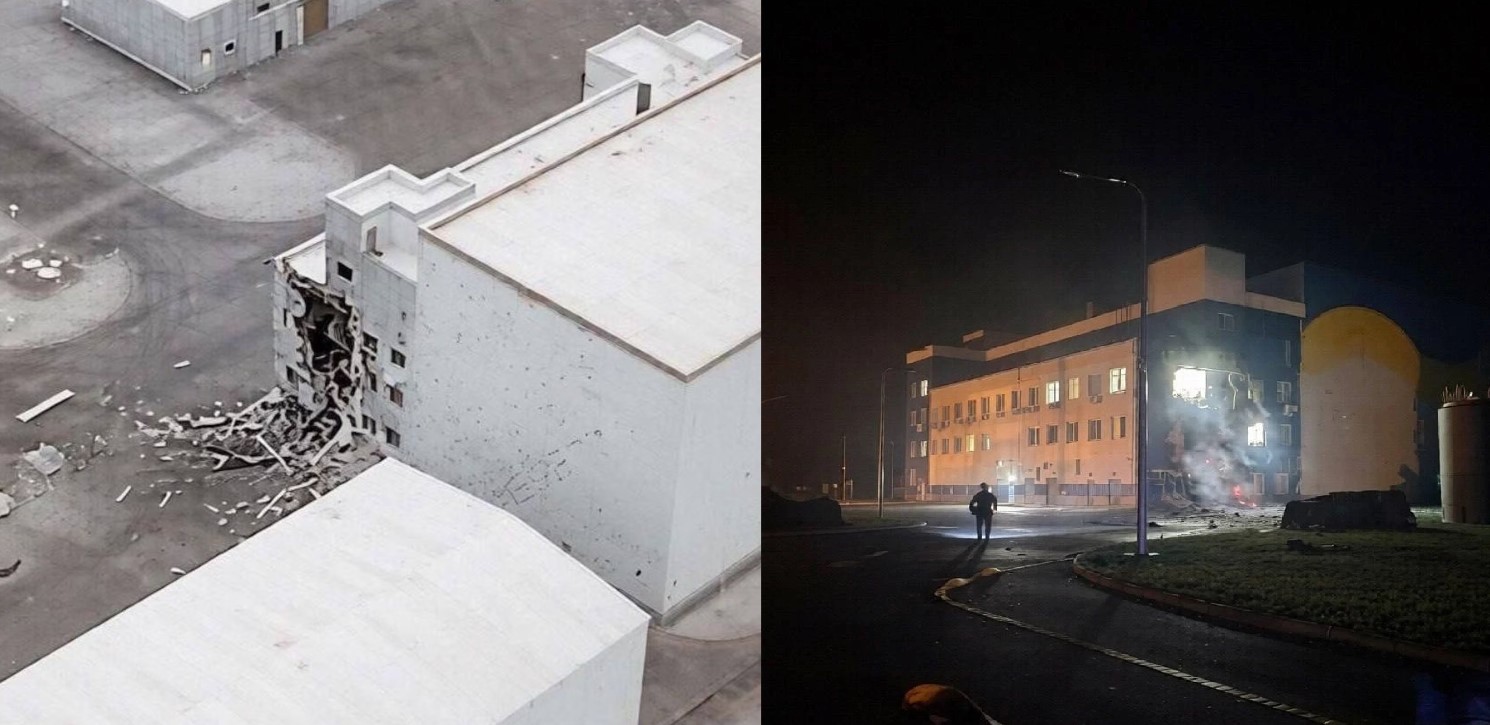 Russian Drone Strike Damages Chornobyl Nuclear Fuel Storage Facility; Radiation Levels Remain Normal
World
KYIV REGION, Ukraine — June 07, 2026 : A Russian Shahed-type attack drone struck the Centralized Spent Nuclear Fuel Storage Facility (CSFSF) in the Chornobyl Exclusion Zone early Sunday, damaging a building used for receiving and processing storage containers. Ukrainian officials confirmed that no spent nuclear fuel was affected and radiation levels remain within normal limits. According to Ukraine’s General Staff and state nuclear operator Energoatom, the strike occurred at approximately 2:10 a.m. local time near the village of Buriakivka. The drone partially destroyed a reception building where no spent nuclear fuel was stored at the time of the attack. The impact sparked a fire covering around 40 square meters. Emergency response teams and a mobile operations unit contained and extinguished the blaze within an hour. No injuries were reported among facility personnel. Investigators recovered debris identified as belonging to a Russian Geran-2 (Shahed-type) attack drone. Energoatom stated that the facility’s spent fuel storage systems were not damaged and that continuous monitoring showed no increase in radiation levels. Ukrainian President Volodymyr Zelenskyy condemned the attack, describing the targeting of nuclear-related infrastructure as an irresponsible act. Energoatom accused Russia of endangering nuclear safety and violating international norms governing the protection of civilian nuclear facilities. The International Atomic Energy Agency (IAEA) also expressed concern over the incident. IAEA Director General Rafael Grossi said attacks on nuclear sites violate fundamental nuclear safety principles. An IAEA team already stationed at Chornobyl is preparing an assessment of the damage. The CSFSF, located about 15 kilometers from the former Chornobyl Nuclear Power Plant, was commissioned in January 2024 and serves Ukraine’s Rivne, Khmelnytskyi, and South Ukraine nuclear power plants. The facility uses dry storage technology to safely store spent nuclear fuel and ended Ukraine’s previous dependence on Russia for spent fuel management. The latest strike follows a February 2025 drone attack on the New Safe Confinement structure covering Chornobyl’s destroyed Reactor No. 4. That incident caused significant damage to the containment system, and repair costs have been estimated at approximately €500 million. Ukrainian authorities said specialists continue to monitor radiation conditions at the site and confirmed that the facility remains operational despite the damage to the reception building.
Read More → Posted on 2026-06-07 14:08:34
World
HAVANA, Cuba — June 07, 2026 : Cuban authorities have reportedly begun distributing weapons to civilians and urging citizens to prepare for a potential foreign invasion as tensions surrounding the island continue to increase. According to the Venezuelan newspaper Versión Final, the measures come amid concerns in Havana over a growing U.S. military presence in the Caribbean and broader tensions between Cuba and the United States. The latest defense preparations follow recent remarks by the U.S. Secretary of State during a hearing on Capitol Hill. During the session, the Secretary did not provide a definitive answer regarding future U.S. strategic actions in the region and did not explicitly rule out the possibility of military measures in the Caribbean. Cuban officials reportedly responded by increasing national defense readiness and mobilization efforts. Reports indicate that the Cuban government has activated elements of its civil defense system, including the arming of civilian volunteers as part of preparations for potential conflict scenarios. The measures are consistent with Cuba’s long-standing defense doctrine, which relies on public participation, territorial militias, and reserve forces in national defense. CNN Havana Bureau Chief Patrick Oppmann reported that the preparations are already affecting daily operations in the capital. Government institutions and state organizations have been holding meetings to discuss contingency plans, emergency procedures, and logistical requirements in the event of a military conflict or national emergency. Oppmann also noted that wartime planning has reached practical administrative levels. Officials responsible for the government building housing CNN’s Havana bureau reportedly asked staff whether they would continue using their office space in the event of an invasion, reflecting the extent of current preparedness efforts. Cuban authorities have also circulated guidance materials outlining safety procedures and responsibilities for civilians during potential emergencies. While details regarding the scale of the reported weapons distribution and the types of weapons involved remain limited, the move represents a significant expansion of public defense preparedness. The developments mark a notable shift from official warnings to concrete mobilization measures involving the civilian population, as Cuban authorities strengthen readiness amid ongoing regional security concerns.
Read More → Posted on 2026-06-07 14:56:06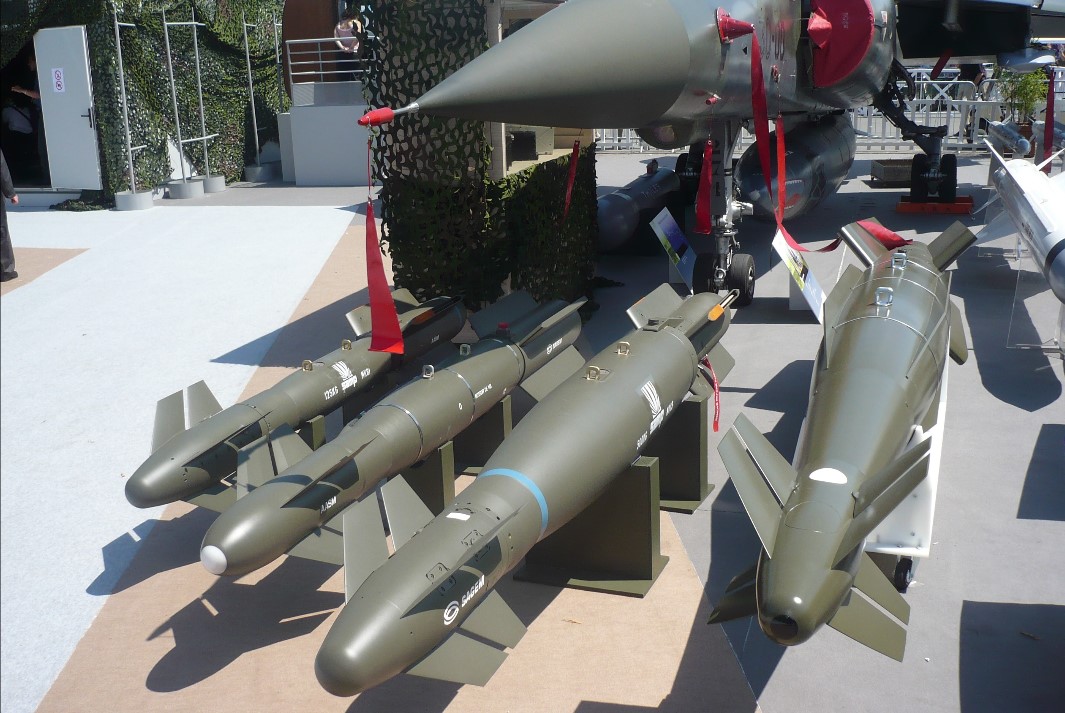
World
PARIS, France — June 07, 2026 : French aerospace and defense company Safran plans to manufacture 1,400 AASM Hammer precision-guided bombs in 2026, marking a significant increase in production as demand for precision-guided munitions continues to grow in France and international markets. The production target was confirmed by Olivier Andriès, Chief Executive Officer of Safran, during an interview with La Tribune. The expansion is part of the company's broader strategy to strengthen defense manufacturing capacity and support increasing orders from allied nations. €120 Million Investment in Montluçon Facility To support the production increase, Safran will invest €120 million in its manufacturing facility in Montluçon, located in central France. The project is expected to create more than 150 new jobs and expand the site's production capabilities. The investment is part of a wider €1.4 billion global industrial expansion program approved by Safran in 2025 to increase manufacturing capacity across its international operations. The Montluçon facility plays a key role in Safran's defense business, producing critical components for the AASM (Armement Air-Sol Modulaire) Hammer system. These include the weapon's guidance kits, rocket propulsion modules, and advanced navigation equipment. Expansion of Precision Gyroscope Production A major portion of the investment will be directed toward increasing production of Hemispherical Resonator Gyroscopes (HRGs), highly accurate inertial navigation sensors used in military aircraft, naval vessels, ground vehicles, and precision-guided weapons. These sensors allow platforms to navigate and maintain targeting accuracy without relying solely on satellite navigation systems such as GPS, making them particularly valuable in environments affected by electronic warfare and signal jamming. Safran plans to triple annual HRG production, increasing output from approximately 10,000 units per year today to 30,000 units annually by 2032. Rapid Increase in AASM Hammer Output The planned production of 1,400 AASM Hammer kits in 2026 reflects a sharp rise in manufacturing over the past several years. In 2022, Safran produced approximately 200 AASM kits annually. Production expanded significantly as demand increased. By the end of 2024, the company had delivered 830 kits, exceeding its original target of 600 units by nearly 40 percent. Production continued to grow in 2025, rising by around 30 percent to between 1,080 and 1,200 units. The expansion received additional support from the French Ministry of Defense, which announced a €128 million investment package in July 2025 to accelerate manufacturing capacity following the weapon's demonstrated operational effectiveness in Ukraine. Hammer XLR Extends Strike Range Safran has also introduced an upgraded version of the weapon known as the Hammer XLR. Unveiled in June 2025, the new variant replaces the standard solid-fuel rocket booster with a turbojet engine, significantly increasing operational range. While the standard AASM Hammer can strike targets at distances of up to 70 kilometers, the Hammer XLR can reach targets between 150 and 200 kilometers when released from high altitude. The weapon remains fully modular and is currently available for several bomb classes, including the 227-kilogram Hammer-250 and 908-kilogram Hammer-1000 variants. Precision-Guided Weapon System The AASM Hammer is a modular precision-guided munition designed to convert conventional free-fall bombs into stand-off precision weapons. The system combines GPS and inertial navigation guidance, anti-jamming capabilities, and optional terminal guidance systems to improve strike accuracy in contested environments. The weapon has been integrated on multiple combat aircraft, including the Dassault Rafale, Mirage 2000, and F-16 Fighting Falcon. Growing International Partnerships Beyond France, Safran is expanding the global footprint of the AASM Hammer program through international partnerships and localized production initiatives. According to Andriès, the company is prepared to establish local assembly and production lines in European countries that place substantial orders for the weapon system. Recent international activity includes a Norwegian order for several hundred AASM bombs intended to support Ukraine. Safran has also strengthened its presence in India through a 50/50 joint venture with Bharat Electronics Limited (BEL), signed in New Delhi in November 2025. The partnership aims to manufacture and adapt the AASM Hammer for the Indian Armed Forces while achieving a localization rate of up to 60 percent. Production Expansion Continues With production expected to reach 1,400 AASM Hammer guided bombs in 2026, along with expanded manufacturing of advanced navigation systems, Safran is continuing to increase its defense-industrial capacity to meet growing domestic and international demand for precision-guided munitions.
Read More → Posted on 2026-06-07 15:03:14
World
TAIPEI, Taiwan — June 07, 2026 : Taiwan has stated that it has not received any formal notification from the United States regarding reports that Washington has paused a proposed $14 billion arms package, despite comments from a senior U.S. official indicating that certain foreign military sales have been temporarily delayed. The issue emerged after Acting U.S. Navy Secretary Hung Cao told lawmakers during a hearing of the Senate Appropriations Defense Subcommittee that some foreign military sales were being paused to ensure the United States maintains sufficient munitions stockpiles for ongoing operations related to the conflict with Iran, known as "Operation Epic Fury." According to Cao, the temporary pause is intended to preserve weapons inventories needed by the U.S. military. He added that decisions regarding future foreign military sales, including the proposed package for Taiwan, would ultimately be made by Defense Secretary Pete Hegseth and Secretary of State Marco Rubio. Despite widespread media reports about the potential freeze, Taiwanese officials said they had not been informed of any change in the status of the proposed defense package. Karen Kuo, spokesperson for Taiwan's Presidential Office, said the government was aware of the reports but had received "no official communication from Washington" regarding adjustments to the planned arms sale. The proposed package, valued at approximately $14 billion, is expected to include a range of defense systems intended to strengthen Taiwan's military capabilities as the island continues to face growing security challenges in the region. Taiwanese Premier Cho Jung-tai reiterated that the government remains committed to pursuing planned defense acquisitions and will continue efforts to strengthen national defense and security. Taiwan's representative to the United States, Alexander Yui, emphasized the importance of maintaining Taiwan's defensive capabilities, arguing that a strong defense posture is essential for preserving stability and deterring potential conflict. "If we want to prevent a war from happening, I think it's best that Taiwan is strong, able to defend itself, and therefore we should be able to acquire the arms that we need," Yui said. The reports have attracted attention across the Indo-Pacific because the proposed arms package forms part of broader U.S.-Taiwan security cooperation. Taiwan has increased defense spending in recent years, approved special military budgets, and accelerated military modernization programs aimed at improving readiness and deterrence capabilities. The situation has also raised questions about how the United States balances defense commitments across multiple regions while managing military resources and munitions stockpiles. Washington currently faces security demands in the Middle East, Europe, and the Indo-Pacific, increasing pressure on defense production and inventory management. Adding a diplomatic dimension to the issue, reports of the potential pause surfaced shortly after a meeting between U.S. President Donald Trump and Chinese President Xi Jinping in Beijing. Following the talks, Trump suggested that the Taiwan arms package could serve as a possible "negotiating chip" in discussions with China, stating that he "may or may not" approve the deal in the near future. Even though Taiwan has not received formal confirmation of any freeze, the reports have generated discussion among regional security observers, particularly as China continues military activities around Taiwan and conducts regular operations across the Taiwan Strait. For now, Taiwanese authorities maintain that no official notification has been received and that discussions with the United States continue through established channels. The government has also reaffirmed its intention to proceed with planned defense acquisitions as part of its broader strategy to strengthen the island's security.
Read More → Posted on 2026-06-07 15:22:26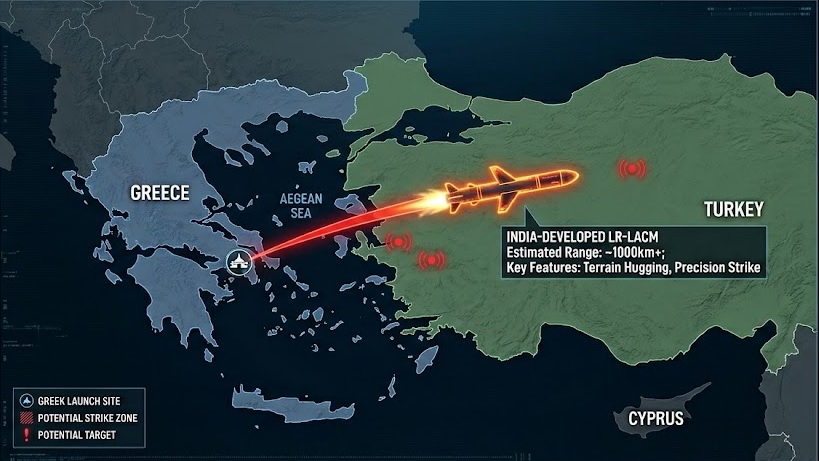
World
ISTANBUL/ATHENS, — June 07, 2026 : Turkish media outlets and defense commentators have expressed concern over reports suggesting that Greece is exploring the possible acquisition of India’s Long-Range Land Attack Cruise Missile (LR-LACM), a development that analysts in Ankara believe could affect the strategic balance in the Aegean and Eastern Mediterranean. While neither India nor Greece has officially confirmed any negotiations, reports published by Turkish media, including TR Haber, claim that discussions and defense contacts between Athens and New Delhi have intensified over the past year. According to these reports, Greece is examining options to strengthen its long-range strike capabilities as part of its ongoing military modernization efforts. The prospect of India becoming a supplier of advanced missile systems to Greece has generated significant attention in Turkish defense circles, where commentators view the reported interest as a potential challenge to Turkey’s growing military capabilities and expanding domestic defense industry. Concerns Over Strategic Reach A key focus of Turkish commentary has been the LR-LACM’s operational range of between 1,000 and 1,500 kilometers. Defense analysts cited by Turkish media argue that such a capability would enable Greece to hold a large portion of Turkey’s strategic infrastructure at risk, including air bases, radar sites, command centers, logistics facilities, and other military installations located well beyond the immediate Aegean region. According to these assessments, the deployment of a long-range precision-strike missile would significantly expand Greece’s ability to conduct deep-strike operations and project military power beyond its traditional area of operations. Turkish commentators have also linked the reported Greek interest to efforts aimed at balancing Turkey’s rapidly advancing missile programs and indigenous defense production capabilities, which have expanded considerably in recent years. Growing India-Greece Defense Partnership The reports come amid steadily strengthening defense and strategic relations between India and Greece. Military cooperation between the two countries has increased through high-level visits, defense dialogues, military exchanges, and maritime security discussions. Both nations have also emphasized cooperation in areas related to regional stability and the security of international sea lanes. Last month, Indian Air Force Chief Air Chief Marshal A.P. Singh visited Athens and held talks with his Greek counterpart, Lieutenant General Dimosthenis Grigoriadis. The visit was viewed as another step in expanding defense engagement between the two countries. India also presented the LR-LACM to international audiences during the DEFEA-25 defense exhibition in Athens. Turkish media reports noted that the missile attracted attention from Greek military officials attending the event, further fueling speculation regarding possible future defense cooperation. Turkish analysts have additionally pointed to Prime Minister Narendra Modi’s visits to Greece in 2023 and Cyprus in 2025 as evidence of India’s growing strategic interest in the Mediterranean region. Some commentators have suggested that closer India-Greece relations have also been influenced by Turkey’s longstanding political and defense ties with Pakistan, although no official connection has been made by either government. What is the LR-LACM? The Long-Range Land Attack Cruise Missile (LR-LACM) is an advanced indigenous cruise missile being developed by India’s Defence Research and Development Organisation (DRDO). Derived from technologies developed under India’s Nirbhay and Indigenous Technology Cruise Missile (ITCM) programs, the LR-LACM represents a major advancement in the country’s long-range precision-strike capabilities. According to publicly available information, the missile incorporates several advanced features designed to improve survivability, accuracy, and operational flexibility. Key Features Extended Range: The missile is designed to engage targets at distances ranging from 1,000 to 1,500 kilometers. Indigenous Propulsion: It is powered by the domestically developed Manik turbofan engine, reducing dependence on foreign propulsion systems. Terrain-Hugging Flight Profile: The missile can fly at very low altitudes, helping it avoid radar detection and penetrate enemy air-defense networks. Precision Navigation: Advanced guidance systems enable accurate engagement of strategic and high-value targets. Dual-Warhead Capability: The system is capable of carrying both conventional and unconventional payloads depending on operational requirements. The LR-LACM forms part of India’s broader effort to expand indigenous defense production and establish itself as a major exporter of advanced military technologies. No Official Confirmation Despite the growing speculation, neither the Greek Ministry of National Defence nor India’s Ministry of Defence has announced any negotiations or agreements related to the sale of the LR-LACM. At present, reports regarding a possible acquisition remain based on media assessments and defense-sector speculation rather than official government statements. Nevertheless, expanding defense cooperation between India and Greece continues to attract attention across the region. Joint naval activities, military exchanges, diplomatic engagement, and maritime security discussions have contributed to closer strategic ties between the two countries. For Turkey, the reaction in defense circles highlights the close scrutiny being given to Greece’s modernization efforts and to India’s increasing presence in the global defense market. While no missile deal has been confirmed, the discussion surrounding the LR-LACM reflects broader regional concerns about long-range strike capabilities and the evolving security environment in the Eastern Mediterranean.
Read More → Posted on 2026-06-07 15:37:28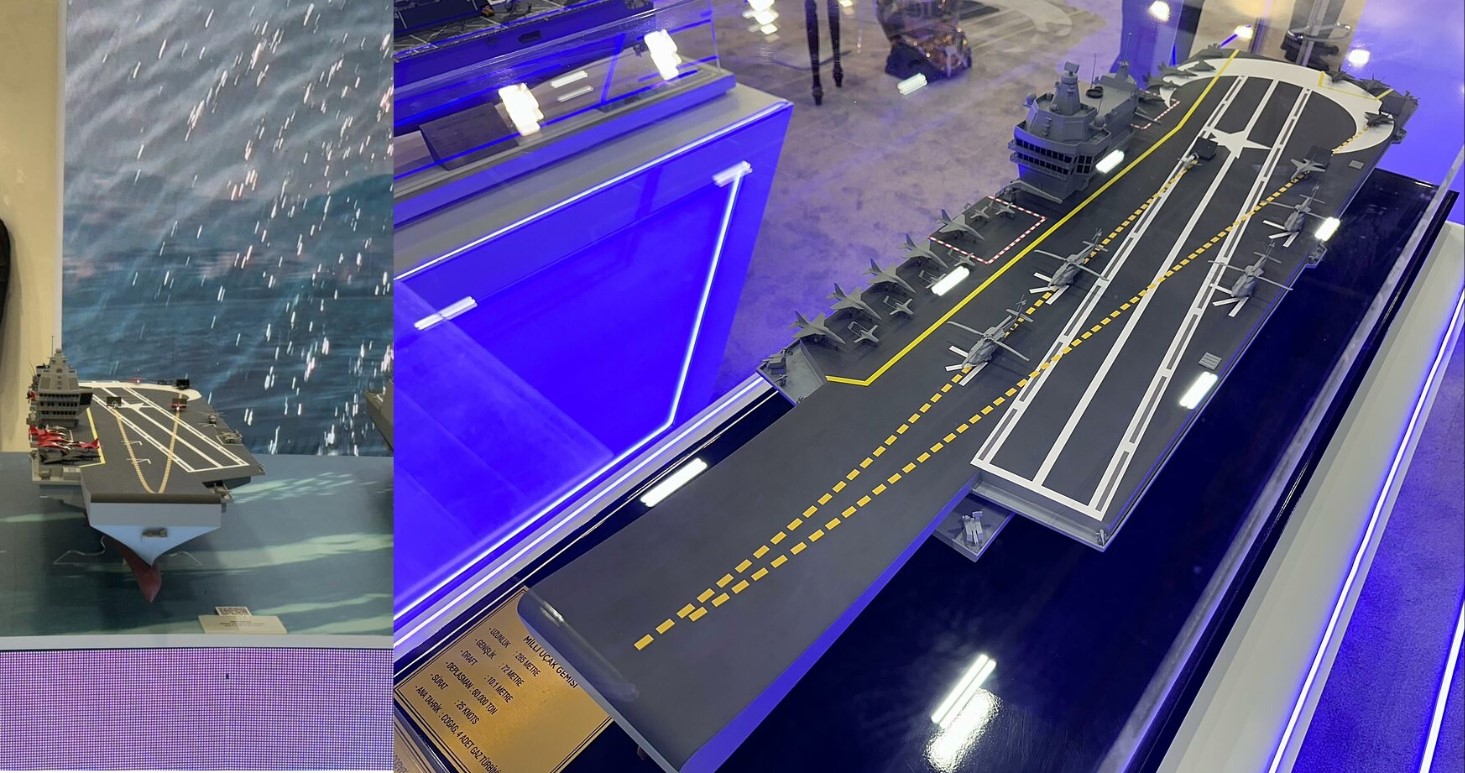
World
FARNBOROUGH, United Kingdom — June 07, 2026 : The Turkish Navy is targeting 2032 for the delivery of its first domestically built aircraft carrier, MUGEM (Milli Uçak Gemisi/National Aircraft Carrier), a next-generation platform designed to operate a predominantly unmanned air wing and support multi-domain naval operations. Details of the program were presented by Hakan Uçar, Commander of the Turkish Navy’s Naval Technical Command, during the Combined Naval Event 2026. The presentation provided updated information on the carrier’s development timeline, specifications, aviation capabilities, and planned operational role within the Turkish fleet. Development of MUGEM began in 2023 through cooperation between the Turkish defense industry and Navantia, the Spanish shipbuilding company that previously collaborated with Turkey on major naval programs. Construction of the carrier officially commenced on January 2, 2025, at the Istanbul Naval Shipyard. The latest schedule confirms that the vessel is expected to enter service in 2032, providing greater clarity on the program's timeline. Earlier comments from Erdinç Yetkin, commander of the Istanbul Naval Shipyard, had suggested a launch between 2027 and 2028 with delivery occurring sometime after 2030. Finalized Design and Performance Specifications The presentation confirmed the carrier’s final dimensions, maintaining the original design despite reports in 2025 suggesting the vessel could be enlarged to 300 meters in length. MUGEM will measure 285 meters in length, with a maximum beam of 72 meters, a draft of 10.1 meters, and a full-load displacement of 60,000 tons. The ship will be capable of speeds exceeding 26 knots, while maintaining a cruising speed of 14 knots. At cruising speed, it will have an operational range of approximately 10,000 nautical miles. The carrier will be powered by a Combined Gas Turbine and Gas Turbine (COGAG) propulsion system utilizing four LM2500 Gas Turbine engines. Accommodation capacity has been set at 2,500 personnel, significantly higher than earlier reports that referenced a crew of around 800 sailors. Turkish naval officials clarified that the updated figure includes not only the ship’s crew but also aviation personnel, command staff, maintenance teams, and other embarked forces. Drone-Centric Air Wing A key feature of MUGEM is its air wing, which will be centered on indigenous unmanned aircraft. The carrier is designed to operate 52 aircraft, slightly higher than previous estimates of 50. The planned air wing will consist of: Bayraktar TB3 unmanned aerial vehicles Kızılelma unmanned combat aircraft Anka-3 attack drones A navalized version of the Hürjet combat training aircraft The flight deck will feature a Short Take-Off But Arrested Recovery (STOBAR) configuration with a 12-degree ski-jump ramp, three takeoff runways, and one landing runway. The design has been optimized for operation of indigenous aircraft, while Turkish engineers are also continuing development of a domestic catapult launch system for potential future integration. As of June 2026, the Bayraktar TB3 remains the only aircraft in the planned air wing that is fully prepared for carrier operations. The Kızılelma and Anka-3 programs are still in the prototype and development phases, while carrier-capable variants continue to be refined. Development of the naval version of the Hürjet was formally announced in May 2026 and remains at an early stage. Multi-Domain Operations Capability Beyond conventional carrier aviation missions, MUGEM is being developed under a Multi-Domain Carrier concept that expands its operational role beyond manned and unmanned aircraft. The ship will be capable of supporting the launch, recovery, and control of both unmanned surface vehicles (USVs) and unmanned underwater vehicles (UUVs), allowing it to conduct surveillance, strike, reconnaissance, and maritime security missions across multiple operational environments. This approach reflects the Turkish Navy’s increasing emphasis on integrating autonomous systems into future naval operations and network-centric warfare concepts. Combat Systems and Self-Defense MUGEM will incorporate the domestically developed ADVENT Combat Management System, which serves as the central command and control architecture for Turkish naval platforms. For self-defense, the carrier will be equipped with: Two 16-cell MİDLAS vertical launch system modules Three close-in weapon systems (CIWS) Four remote-controlled weapon stations Two point-defense missile systems These systems are intended to provide layered protection against aircraft, missiles, drones, and other threats while operating independently or as part of a larger naval task force. Expanding Turkey’s Naval Aviation Capability The MUGEM program represents a major step in Turkey’s effort to establish an indigenous aircraft carrier capability and expand the role of domestically developed aviation systems at sea. Building on experience gained through the operation of TCG Anadolu, the new carrier is expected to significantly enhance the Turkish Navy’s ability to conduct long-range air operations, support joint military missions, and deploy unmanned systems across multiple domains. With construction underway and key aviation programs continuing development, MUGEM is expected to become the centerpiece of Turkey’s future naval aviation force when it enters service in 2032.
Read More → Posted on 2026-06-07 15:47:23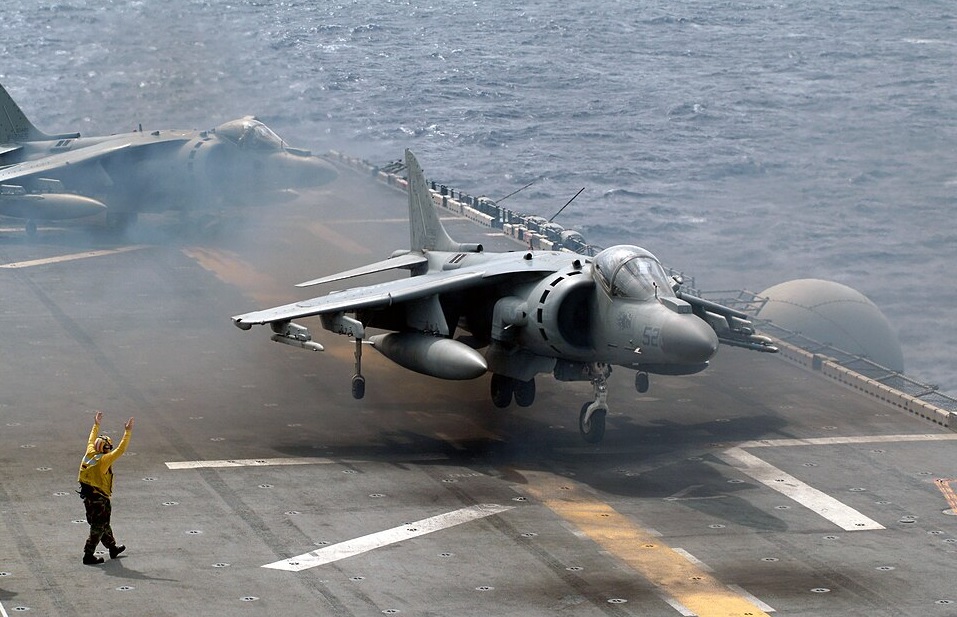
World
CHERRY POINT, North Carolina — June 07, 2026: The U.S. Marine Corps has officially retired the AV-8B Harrier II, bringing to a close more than five decades of Harrier operations during a formal sundown ceremony held on June 3, 2026, at Marine Corps Air Station (MCAS) Cherry Point. The event marked the end of one of the most distinctive aircraft programs in Marine Corps aviation history and completed the service’s transition to a fifth-generation tactical aircraft fleet centered on the F-35B Lightning II. Final Operational Flight by VMA-223 The ceremony coincided with the return of a Harrier detachment from Marine Attack Squadron 223 (VMA-223), known as the “Bulldogs,” following a forward deployment with the 22nd Marine Expeditionary Unit (MEU) aboard the amphibious assault ship USS Iwo Jima. During the deployment, the aircraft supported missions in the Caribbean and the U.S. Southern Command area of responsibility. As part of the retirement event, five AV-8B Harrier II aircraft conducted a final formation flyover before returning to Cherry Point. After landing, the aircraft shut down their engines for the last time in Marine Corps service, officially ending operational Harrier flights within the force. With the retirement of the aircraft, VMA-223 is entering a period of deactivation and transition. The squadron is scheduled to be redesignated as Marine Fighter Attack Squadron (VMFA)-223 and is expected to return to active service in fiscal year 2028 equipped with the Lockheed Martin F-35B Lightning II. More Than Five Decades of STOVL Operations The Marine Corps first introduced the AV-8A Harrier in 1971, establishing a unique Short Takeoff and Vertical Landing (STOVL) capability that allowed fixed-wing combat aircraft to operate from expeditionary airfields, austere locations, and amphibious assault ships without the need for conventional runways. The first-generation AV-8A remained in service until the 1980s before being replaced by the more capable AV-8B Harrier II, which entered operational service in 1985. The second-generation aircraft introduced significant improvements in payload capacity, range, survivability, and avionics. Over the following decades, the platform underwent continuous modernization, including the introduction of the Night Attack Harrier and the radar-equipped AV-8B Harrier II Plus, enhancing its effectiveness in both day and night operations. Combat Service Across Multiple Theaters Throughout its operational career, the AV-8B Harrier II participated in numerous military campaigns and contingency operations worldwide. The aircraft saw combat service during the Gulf War (Operation Desert Storm) and later supported operations in the Balkans, Afghanistan, Iraq, and Libya. It also conducted a variety of missions across the Middle East and Caribbean regions. The aircraft became a key element of Marine Corps expeditionary warfare due to its ability to operate close to frontline forces from temporary bases and amphibious ships, providing responsive air support in environments where traditional fighter aircraft could face operational limitations. Transition to the F-35B Fleet The retirement of the AV-8B Harrier II is part of the Marine Corps’ broader Tactical Aircraft Transition Plan, which consolidates tactical aviation capabilities around the F-35B Lightning II. Like the Harrier, the F-35B retains STOVL capabilities, allowing operations from amphibious assault ships and expeditionary locations. However, it also introduces stealth technology, advanced sensor fusion, networked targeting systems, and significantly enhanced situational awareness. Most Marine Corps Harrier squadrons had already converted to the F-35B in previous years, making VMA-223 the final operational unit to complete the transition. With the Harrier’s retirement, the Marine Corps now operates an all-fifth-generation tactical aircraft fleet. Retirement Events at Cherry Point Activities surrounding the Harrier’s retirement were conducted from June 1 to June 4, 2026, and included an open house, static aircraft displays, simulator tours, and commemorative events attended by active-duty personnel, veterans, former Harrier pilots, and family members. The June 3 ceremony served as both a farewell to the aircraft and a recognition of the generations of pilots, maintainers, and support personnel who operated the platform throughout its service life. Harrier Continues Service Overseas Following its withdrawal from U.S. Marine Corps service, the AV-8B Harrier II remains operational only with the naval aviation forces of Italy and Spain. Italy is currently replacing its Harrier fleet with the F-35B Lightning II as part of its carrier aviation modernization program. Spain has not yet announced a final replacement decision for its carrier-based Harrier force, although defense analysts widely expect Madrid to select the F-35B to maintain its fixed-wing naval aviation capability. End of an Era in Marine Aviation The retirement of the AV-8B Harrier II concludes a significant chapter in U.S. Marine Corps aviation history. For more than 50 years, Harrier aircraft provided expeditionary air support from locations where conventional fighter aircraft could not operate, establishing a unique operational capability that will now continue through the F-35B Lightning II as the Marine Corps advances its next generation of tactical aviation.
Read More → Posted on 2026-06-07 17:38:41
World
WASHINGTON, — June 07, 2026 : The Trump administration is examining the possibility of purchasing the Chagos Islands directly from Mauritius as part of an effort to secure permanent U.S. control over the strategically important Diego Garcia military base in the Indian Ocean, according to a report by The Telegraph. The proposal is being considered as an alternative to the sovereignty transfer agreement negotiated between the United Kingdom and Mauritius, under which Britain would transfer sovereignty of the Chagos Archipelago to Mauritius while retaining access to Diego Garcia through a 99-year lease arrangement. According to reports, the White House is evaluating whether direct ownership of the islands would provide greater long-term security and operational certainty for U.S. military activities in the region. The option remains under review and has not been adopted as official U.S. policy. Concerns Over Existing UK-Mauritius Agreement The initiative follows growing concerns within Washington regarding the UK-Mauritius agreement reached in 2025. Under that arrangement, Mauritius would assume sovereignty over the archipelago while the United Kingdom and the United States would continue operating the military facility on Diego Garcia under a long-term lease. President Donald Trump has publicly criticized the agreement, describing the decision to transfer sovereignty as an act of “great stupidity” and a sign of weakness. He has urged British Prime Minister Keir Starmer not to proceed with what he views as the relinquishment of a strategically valuable territory. Following U.S. objections, the United Kingdom reportedly paused ratification of the agreement while seeking broader support and consultation with Washington. Strategic Importance of Diego Garcia Diego Garcia, the largest island in the Chagos Archipelago, hosts a joint UK-U.S. military facility and is regarded as one of the most important American military installations outside the continental United States. Located in the central Indian Ocean, the base serves as a key logistical hub for long-range bomber operations, naval deployments, intelligence missions, and regional military support activities. The facility currently hosts approximately 2,500 U.S. military personnel and support staff. The base has played a significant role in military operations across West Asia, Africa, and the Indo-Pacific region. It has supported B-2 bomber deployments, operations against Houthi targets in Yemen, and humanitarian missions, including aid-related activities connected to Gaza. Recent reports also noted that Diego Garcia was used as a staging location for long-range bomber missions targeting Iranian-linked threats, reinforcing its importance to U.S. military planning. Security and Geopolitical Considerations A major factor behind the proposed purchase is concern among U.S. officials regarding Mauritius's expanding diplomatic and economic relationships with China and Iran. Washington fears that allowing a country perceived as maintaining close ties with Beijing to hold sovereignty over the archipelago could create future security challenges, including potential surveillance risks and restrictions affecting military operations. The concerns come amid increasing Chinese naval activity in the Indian Ocean and growing cooperation between China and Iran in regional security and maritime affairs. Supporters of direct ownership argue that purchasing the islands would eliminate uncertainty associated with lease agreements and prevent any future disputes over sovereignty from affecting access to the base. Direct Purchase Under Consideration An internal policy paper reportedly outlines the option of negotiating directly with Mauritius for the acquisition of the Chagos Islands. Such a move would effectively bypass the UK-Mauritius sovereignty arrangement and provide the United States with full ownership of the territory. No details regarding a possible purchase price, negotiation framework, or timeline have been publicly disclosed. Neither the U.S., UK, nor Mauritian governments have officially confirmed discussions on a direct sale. The proposal reflects a broader emphasis by the Trump administration on securing long-term control over critical strategic assets. Observers have noted parallels between the Chagos Islands discussion and Trump's renewed interest in acquiring Greenland, which he has also described as important for U.S. national security. Long-Running Sovereignty Dispute The dispute over the Chagos Archipelago has continued for decades. Mauritius has maintained that the islands were unlawfully separated from its territory by Britain in 1965 before the country gained independence. International legal bodies, including the United Nations and the International Court of Justice, have supported Mauritius's claim that the archipelago should be returned to Mauritian sovereignty. The UK-Mauritius agreement was intended to resolve these longstanding legal and diplomatic issues while preserving the operation of the Diego Garcia base. With the future of that agreement now uncertain, the Trump administration's review of a direct purchase option highlights the continued strategic value of Diego Garcia and the importance Washington places on maintaining uninterrupted military access in the Indian Ocean.
Read More → Posted on 2026-06-07 17:56:01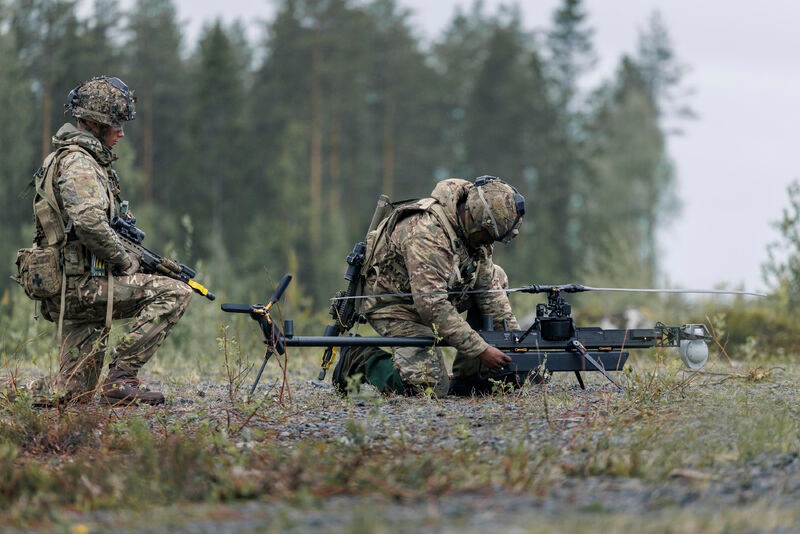
World
KAINUU, Finland — June 07, 2026 : British infantry forces have conducted training with autonomous drone systems near Finland's border with Russia as part of a major NATO exercise focused on improving battlefield reconnaissance, target acquisition, and precision strike capabilities in challenging northern environments. The activities were carried out during Exercise Northern Star 26, a multinational military exercise held from May 18 to May 30, 2026, in eastern Finland. The exercise brought together approximately 4,500 to 5,000 troops from seven NATO member states, including the United Kingdom, Finland, the United States, France, Italy, Poland, and Hungary. Conducted around 70 kilometers (43 miles) from the Russian border, the exercise focused on integrating autonomous and uncrewed systems into frontline infantry operations while improving interoperability among allied forces operating on NATO’s northeastern flank. The training centered on cooperation between the British Army’s 3rd Battalion, The Rifles (3 Rifles) and Finland’s Kainuu Brigade, building on previous joint training activities, including the winter exercise Northern Axe. The exercise reflected the growing emphasis on incorporating autonomous technologies and digital battlefield networks into modern ground combat operations. Near Surface Infantry Battalion Concept The British Army's 3 Rifles, part of the 11th Brigade, has recently been redesignated as a Near Surface Infantry Battalion, a structure that integrates drones, sensors, loitering munitions, and digital command systems directly into infantry operations. The concept places autonomous capabilities at platoon level, allowing infantry units to employ reconnaissance and strike systems as part of routine battlefield activities rather than relying on specialist attachments. The battalion's participation in Northern Star 26 served as an opportunity to test and refine these capabilities in Finland’s demanding operating environment. Ghost and Bolt Autonomous Systems Two autonomous systems developed by defense technology company Anduril formed a key part of the training. The systems were selected under the British Army’s Project NYX, which focuses on the development of autonomous collaborative platforms. The Ghost autonomous drone is a medium-range reconnaissance system designed to conduct surveillance, identify targets, relay communications, and provide real-time intelligence to command posts positioned behind frontline forces. The Bolt and Bolt-M loitering munitions are designed to engage identified targets. Weighing approximately 12 pounds, the system can carry payloads of up to 3 pounds, operate for around 40 minutes, and strike targets at distances of up to 20 kilometers (12.4 miles). The drones operate through Anduril’s Lattice AI network. During training scenarios, Ghost drones detected and tracked targets before transmitting information to command elements. Bolt loitering munitions were then used to engage those targets, enabling infantry units to conduct reconnaissance and strike missions without moving into direct fire range. ATAK Digital Battlefield Network The autonomous systems were connected through the Android Tactical Assault Kit (ATAK), a digital command-and-control platform originally developed by the U.S. Air Force Research Laboratory. The system combines GPS positioning, digital maps, drone video feeds, and threat information into a shared operational picture available to soldiers through chest-mounted devices. ATAK allows units to exchange real-time battlefield information, monitor drone feeds, track friendly forces, and receive threat alerts. The networked system improves situational awareness and coordination between infantry units and autonomous platforms operating in the field. Operations in Finland’s Forest Environment Exercise Northern Star took place in the Kainuu region of eastern Finland, an area characterized by dense boreal forests, extensive lake systems, restricted visibility, and terrain that limits vehicle movement. The Finnish Kainuu Brigade, responsible for defending the region, regularly trains in cold-weather and forest warfare conditions. Such terrain increases the importance of reconnaissance, communication, and long-range target detection capabilities. The exercise included coordinated air and ground operations involving participating NATO countries, providing opportunities to test joint procedures and improve operational cooperation in complex environments. NATO’s Northern Defense Posture Finland joined NATO in April 2023, ending decades of military non-alignment and adding approximately 1,340 kilometers (832 miles) of land border between NATO and Russia. The expansion significantly increased the strategic importance of northern Europe within NATO’s defense planning and placed allied forces closer to key Russian military infrastructure on the Kola Peninsula. In addition to military exercises, defense cooperation between the United Kingdom, Finland, and the Netherlands has continued to expand. In March 2026, the three countries proposed a joint defense financing initiative aimed at increasing procurement cooperation, expanding industrial capacity, and accelerating defense acquisition programs. Exercise Northern Star 26 represented one of the largest multinational military exercises conducted in this region since Finland joined NATO, focusing on forest warfare, autonomous systems integration, and allied interoperability in support of NATO’s northern defense requirements.
Read More → Posted on 2026-06-07 18:17:05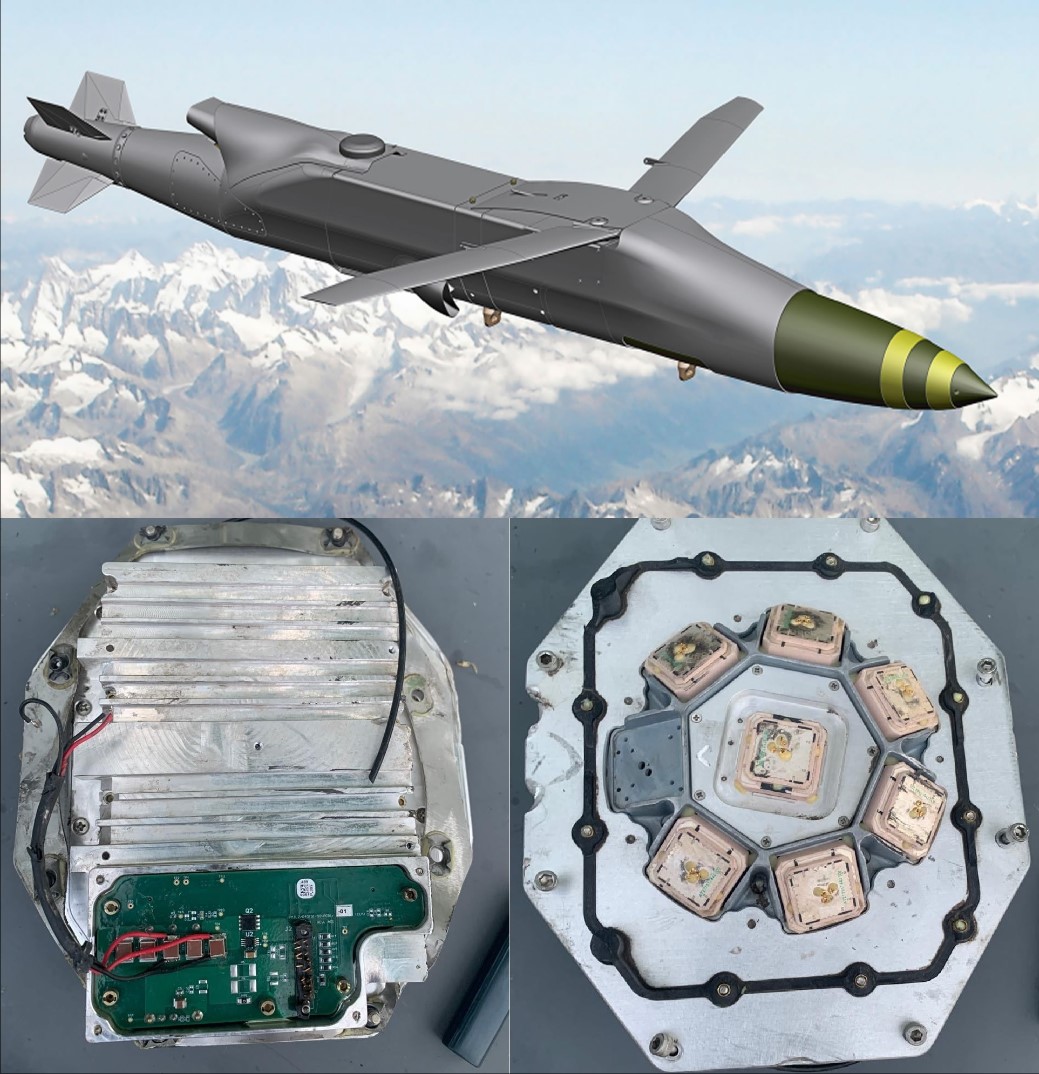
World
KYIV, Ukraine — June 07, 2026 : Missile debris recovered by Russian forces in Ukraine appears to indicate the first battlefield deployment of the U.S.-developed Extended Range Attack Munition (ERAM), a new low-cost air-launched cruise missile designed for mass production and long-range precision strikes. According to reports, recovered components include a distinctive GPS antenna that matches features associated with the AGM-188A "Rusty Dagger" missile. The discovery is being viewed as the earliest field indication that initial examples of the ERAM system may have entered operational service with the Ukrainian Armed Forces. Neither the United States nor Ukraine has officially confirmed the delivery or combat use of the missile, a position consistent with operational security practices surrounding newly introduced weapon systems. AGM-188A "Rusty Dagger" Developed Under ERAM Program The AGM-188A "Rusty Dagger" was developed by Zone 5 Technologies as part of the U.S. Air Force's Extended Range Attack Munition (ERAM) program. The initiative was launched in August 2024 to rapidly develop a highly manufacturable and affordable precision-guided cruise missile capable of being produced in large numbers. The program aims to provide a lower-cost alternative to traditional cruise missiles while maintaining the ability to conduct long-range precision strikes against military targets. The U.S. Air Force intends to produce tens of thousands of ERAM missiles at an estimated unit cost of approximately $250,000, significantly reducing procurement costs compared to existing standoff weapons. Testing and Integration with Fighter Aircraft Earlier in 2026, the U.S. Air Force conducted extensive testing of the AGM-188A at Eglin Air Force Base, Florida. During the evaluation program, an F-16D fighter successfully launched the missile, demonstrating its flight performance and live-warhead detonation capability. The successful integration of the weapon with the F-16 platform is particularly important for Ukraine, which has recently incorporated F-16 fighter aircraft into its air force. Reports also indicate that the missile is compatible with MiG-29 fighter aircraft, expanding the range of platforms capable of employing the weapon. Missile Specifications The AGM-188A is designed as a precision-guided standoff weapon capable of striking targets from significant distances beyond front-line air defense coverage. The missile is powered by a turbojet engine that enables sustained high-subsonic flight. It has an operational range exceeding 400 kilometers, although some reports suggest greater distances may be achievable depending on launch altitude and flight profile. The weapon carries a warhead weighing approximately 250 kilograms, placing it within the 500-pound-class category. Its guidance package combines GPS and inertial navigation systems and is designed to maintain accuracy in environments affected by electronic warfare, including GPS jamming attempts. Large-Scale Deliveries Planned for Ukraine The introduction of ERAM missiles is expected to expand Ukraine's long-range strike capacity by providing a relatively low-cost weapon that can be employed in large numbers. Ukraine is expected to receive more than 3,000 ERAM cruise missiles beginning this year. In late 2025, the U.S. State Department approved a potential package of up to 3,350 missiles valued at approximately $825 million. According to available information, the first major batch of around 840 missiles is scheduled for delivery in October 2026. The acquisition is being financed through a combination of U.S. Foreign Military Financing and support from European partner nations, including Denmark, the Netherlands, and Norway. Expanding Long-Range Strike Capability The ERAM program was originally established to support Ukraine's defense requirements while also meeting U.S. Air Force objectives for an affordable, mass-producible standoff strike weapon. By combining relatively low production costs with long-range precision capabilities, the missile is intended to provide a scalable option for sustained military operations. If the recovered debris is confirmed to belong to the AGM-188A, it would represent the first known operational use of the ERAM system. The missile would enable Ukrainian aircraft to conduct high-volume strikes against fixed military infrastructure and other high-value targets from distances beyond the reach of many front-line air defense systems while preserving more expensive precision-guided munitions for specialized missions. As production increases, additional deliveries are expected throughout 2026 and beyond, further strengthening Ukraine's long-range precision strike capabilities.
Read More → Posted on 2026-06-07 18:51:20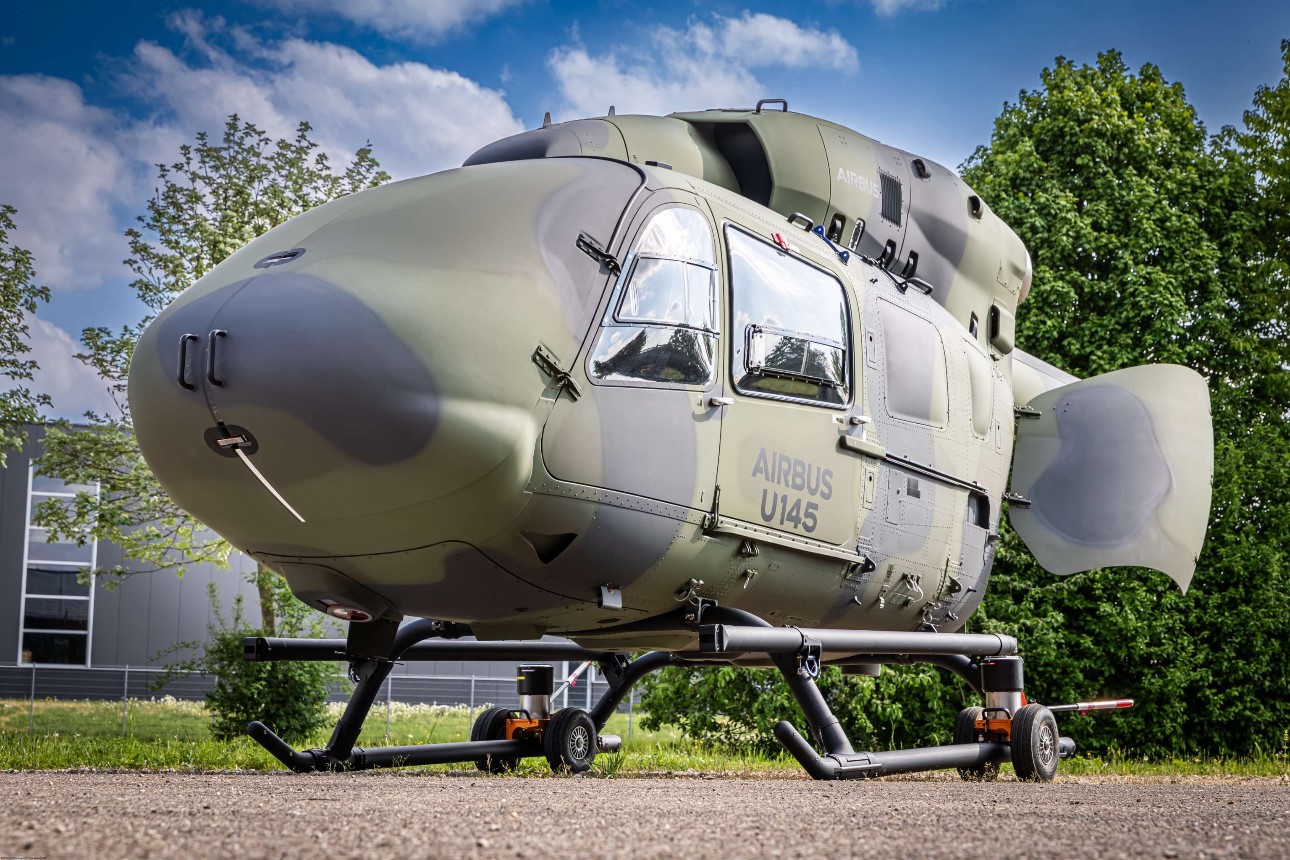
World
BERLIN, — June 08, 2026 : Airbus Helicopters has officially unveiled the U145, an autonomous and uncrewed version of its widely used H145 twin-engine helicopter, at the ILA Berlin Air Show, marking a significant expansion of the company’s activities in the uncrewed aerial systems (UAS) sector. Displayed as a full-scale mock-up at the exhibition, the U145 combines the proven performance of the H145 platform with advanced autonomy technologies, offering a new option for military and civilian operators seeking uncrewed logistics and multi-mission capabilities. First Flight Planned for 2026 Airbus said the U145 is designed to bridge the gap between traditional crewed helicopter operations and future autonomous missions. The company plans to conduct the aircraft’s maiden flight with a safety pilot on board by the end of 2026, while operational service entry is targeted for the early 2030s. According to Airbus Helicopters Chief Executive Officer Matthieu Louvot, the new platform combines the proven airframe, power and payload capacity of the H145 with the autonomy capabilities of a modern UAS. Louvot also stated that Airbus intends to collaborate with leading autonomous mission partners to further develop the European uncrewed aviation ecosystem and expand the aircraft’s future operational capabilities. Major Design Changes for Autonomous Operations To convert the crewed H145 into the U145, Airbus removed the traditional cockpit and integrated a specialized sensor suite alongside an artificial intelligence-based flight control system capable of supporting fully autonomous operations. The redesign also introduced several modifications aimed at improving cargo-handling efficiency. These include: An integrated nose cargo door for front-loading operations. A foldable loading table. A reinforced and dedicated cargo floor. The U145 has a maximum take-off weight of 3,800 kilograms and has been optimized primarily for high-volume logistics and resupply missions. Built on the Proven H145 Platform The U145 benefits from the operational experience of the H145 family, one of Airbus’ most successful helicopter programs. More than 1,800 H145-family helicopters are currently in service worldwide across civil, parapublic, emergency medical, law enforcement and military sectors. The global fleet has accumulated over 8.5 million flight hours. The H145 is powered by two Safran Arriel 2E engines equipped with Full Authority Digital Engine Control (FADEC) systems. Airbus states that the platform offers one of the lowest acoustic footprints and lowest CO₂ emission levels in its helicopter category. The U145 also represents the second Airbus helicopter adapted for uncrewed operations, following the VSR700, which was developed from the Cabri G2 light helicopter. Designed for Multiple Mission Types Although logistics and cargo transport are expected to be the aircraft’s primary roles, Airbus emphasized that the U145 has been designed as a modular platform capable of supporting a wide range of future missions. Potential applications include: Disaster management and emergency response Firefighting support operations Surveillance and reconnaissance missions Armed scouting operations Crewed-uncrewed teaming missions Autonomous cargo resupply operations The company said the aircraft’s flexible architecture will allow operators to adapt it for different operational requirements as autonomous technologies continue to evolve. Airbus and MBDA Exploring Drone Mothership Role Airbus is also studying the use of the U145 as a “drone mothership” capable of deploying air-launched effects (ALE) during military operations. To support this capability, Airbus is working with European missile manufacturer MBDA to develop systems that would enable the helicopter to launch and manage small uncrewed assets in support of networked battlefield operations. The concept reflects growing interest among military forces in integrating crewed and uncrewed systems to extend surveillance coverage, improve situational awareness and enhance operational flexibility. Parallel Development Underway in the United States At the same time, Airbus U.S. Space & Defense is advancing a separate autonomous helicopter program for the U.S. Marine Corps. Known as the MQ-72C Lakota Connector, the aircraft is based on the UH-72B Lakota, which is itself derived from the H145 family. The platform is being developed under the Marine Corps’ Aerial Logistics Connector program. Airbus has partnered with several technology companies for the project: Shield AI, which provides the Hivemind autonomy software. L3Harris Technologies, responsible for digital communications systems. Parry Labs, supplying edge-computing and autonomy software infrastructure. The development team recently completed its fourth autonomous flight-test campaign in Texas. During the trials, the aircraft successfully demonstrated autonomous landing-zone assessments, obstacle detection, route planning and dynamic rerouting to alternate landing sites without direct pilot input. Expanding Airbus’ Autonomous Aviation Portfolio The introduction of the U145 at the ILA Berlin Air Show highlights Airbus’ broader strategy of integrating autonomous technologies into proven helicopter platforms. By combining the reliability and global support network of the H145 family with advanced artificial intelligence and autonomous flight systems, Airbus aims to provide operators with a flexible platform capable of supporting logistics, emergency response, surveillance and future multi-domain military operations. As development and testing continue through the remainder of the decade, the U145 is expected to become a key element of Airbus’ expanding portfolio of autonomous aviation systems for both defense and civilian markets.
Read More → Posted on 2026-06-08 13:25:45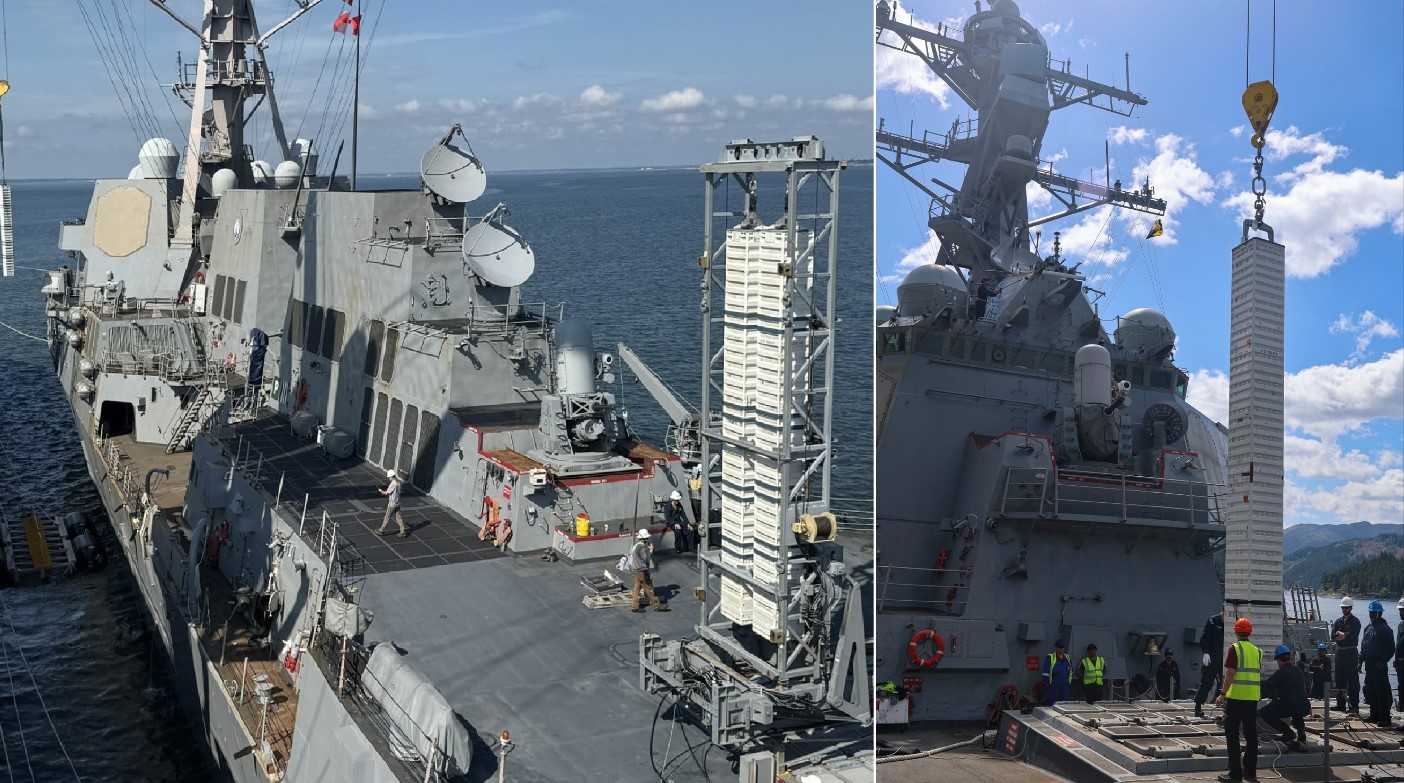
World
WASHINGTON — June 08, 2026 : The U.S. House Armed Services Committee has included a provision in the Fiscal Year 2027 National Defense Authorization Act (NDAA) requiring the U.S. Navy to provide a detailed briefing on its efforts to develop at-sea reloading capabilities for Vertical Launching System (VLS) cells aboard warships. The move reflects growing congressional interest in improving the Navy’s ability to sustain combat operations during prolonged deployments, particularly in the Indo-Pacific region where access to major naval facilities could be limited during a conflict. Congress Seeks Details on Navy Rearming Plans In its markup of the FY2027 NDAA, the House Armed Services Committee emphasized the importance of developing expeditionary rearming solutions that would allow surface combatants to replenish missile inventories without returning to port. According to the draft legislation, lawmakers noted that uncertainty regarding future at-sea rearming capabilities highlights the need to identify and advance practical near-term solutions that can be implemented using existing platforms and infrastructure. The committee has requested a comprehensive briefing covering: Operational requirements for at-sea missile reloading. Technical and logistical challenges. Near-term technology options and associated risks. Investments needed to accelerate deployment of the capability. The briefing is intended to help Congress evaluate the Navy’s progress and determine what additional resources may be required to advance the program. Operational Need for At-Sea Rearming The initiative addresses a long-standing challenge for U.S. Navy surface combatants. Guided-missile destroyers and cruisers equipped with the MK 41 Vertical Launching System typically carry between 96 and 112 missile cells. Once those missiles are expended, the ships must return to specialized port facilities for reloading. In a potential conflict in the Western Pacific, where U.S. naval bases and logistics hubs are widely dispersed, the time required to travel to and from port could significantly reduce fleet availability and combat effectiveness. An operational at-sea rearming capability would allow warships to replenish missile inventories closer to the operational area, enabling them to remain on station longer and continue missions with fewer interruptions. Renewed Focus on a Cold War-Era Concept Although the concept of reloading VLS cells at sea was originally explored during the final years of the Cold War, interest in the capability has increased in recent years as the Navy seeks to improve logistics and sustainment in contested environments. Former Secretary of the Navy Carlos Del Toro identified at-sea VLS reloading as one of the service’s key modernization priorities, leading to renewed testing and development efforts. At the same time, the Johns Hopkins Applied Physics Laboratory has worked with Naval Sea Systems Command to modernize and redesign earlier concepts developed during the 1990s, adapting them for current operational requirements. TRAM Demonstration Achieved Major Milestone in 2024 A significant step forward occurred in July 2024 when the Naval Surface Warfare Center, Port Hueneme Division, successfully conducted a land-based demonstration of the Transferrable Reload At-sea Method (TRAM). The system was later tested at sea on October 11, 2024, off the coast of San Diego. During the demonstration, the Ticonderoga-class cruiser USS Chosin (CG 65) was fitted with the TRAM system, while the dry cargo and ammunition ship USNS Washington Chambers (T-AKE 11) transferred a missile canister to the cruiser using cables stretched between the vessels. Sailors aboard USS Chosin then used the hydraulically powered TRAM mechanism to raise the canister into a vertical position and lower it into an empty MK 41 VLS cell. The successful demonstration marked one of the Navy’s most important achievements in advancing practical at-sea missile reloading. Large Scale Exercise 2025 Expanded Testing The Navy continued testing the concept during Large Scale Exercise 2025, its annual global exercise focused on evaluating command-and-control systems, logistics operations, and emerging capabilities. During the exercise, a crane-equipped support vessel successfully conducted the simultaneous reloading of both forward and aft VLS magazines on an Arleigh Burke-class destroyer while the ships were moored at sea. The event demonstrated the potential for expeditionary logistics teams to rapidly replenish missile inventories outside traditional port facilities and provided valuable operational data for future development. Future Testing Planned for Additional Weapon Systems Recent budget documents released in May 2026 indicate that the Navy intends to expand testing beyond VLS-equipped surface combatants. Future trials are expected to examine at-sea reloading methods for attack submarine torpedoes, anti-ship missiles, and other munitions using expeditionary support docks and related logistics infrastructure. These efforts are part of a broader initiative aimed at improving the Navy’s ability to sustain combat operations in contested maritime environments where access to fixed facilities may be restricted. Timeline of Key VLS Rearming Developments Year Milestone Description July 2024 Land-Based TRAM Demonstration Successful testing of the TRAM prototype at Naval Surface Warfare Center, Port Hueneme Division. October 2024 At-Sea TRAM Demonstration USS Chosin and USNS Washington Chambers successfully demonstrated the transfer and loading of a VLS missile canister at sea. 2025 Large Scale Exercise 2025 Simultaneous reloading of both VLS magazines on a destroyer from a crane-equipped vessel while moored. May 2026 Budgetary Commitments Navy outlined plans to test expeditionary support docks for reloading VLS cells, torpedoes, and other munitions. FY2027 NDAA House Markup House Armed Services Committee directed the Navy to provide a detailed briefing on progress, challenges, and investment requirements. Congressional Oversight Continues The House Armed Services Committee approved its FY2027 NDAA markup in early June 2026, advancing the legislation for further consideration. By requiring a detailed briefing on at-sea VLS rearming efforts, lawmakers aim to assess the Navy’s progress in developing a capability that could significantly enhance fleet endurance and operational flexibility during future maritime conflicts. The briefing will also help Congress evaluate funding requirements and determine the next steps needed to transition the capability from testing to operational use.
Read More → Posted on 2026-06-08 13:39:24
World
JERUSALEM/TEHRAN, — June 08, 2026 : The Israel Defense Forces (IDF) announced on Monday that dozens of Israeli fighter jets conducted a large-scale operation against air defense systems across western and central Iran, including targets in and around Tehran. According to the IDF, the strikes targeted air defense infrastructure that Iran had recently deployed to restore capabilities damaged during the earlier stages of the ongoing conflict. Israeli officials said the operation focused on early-warning radars, surface-to-air missile systems, and related military facilities. The IDF stated that the strikes improved the Israeli Air Force's operational freedom over parts of western and central Iran by degrading key air defense networks. Israeli officials also confirmed that a petrochemical facility in southwestern Iran, which Israel alleges is involved in ballistic missile production, was among the targets. The Israeli military released footage showing precision strikes on military sites linked to the Islamic Revolutionary Guard Corps (IRGC) in southern Tehran. The videos showed multiple explosions and secondary detonations, indicating the presence of military equipment and munitions. Iranian state media reported that air defense systems were activated in western Tehran and Kermanshah following a new wave of explosions in the area. Chinese-Made HQ-9 Systems Reportedly Hit Defense analysts and regional reports indicated that some of the targeted systems included the Chinese-made HQ-9 and HQ-9B long-range surface-to-air missile systems. The HQ-9B, with a reported range of up to 260 kilometers, is designed to intercept aircraft, cruise missiles, and other aerial threats. According to multiple reports, several HQ-9 batteries were destroyed or rendered inoperable during the strikes. Analysts said Israeli aircraft employed a combination of electronic warfare, suppression of enemy air defenses, and precision-guided munitions to neutralize the systems. The reported destruction of recently acquired HQ-9 systems has drawn attention to the performance of Chinese military equipment in high-intensity combat environments. Iran Increasingly Relies on Chinese Equipment Iran operates a mix of domestic, Russian, and Chinese air defense systems. With Russia focusing on the war in Ukraine and facing constraints on defense exports, Tehran has reportedly increased reliance on Chinese military technology to strengthen its air defense network. Reports indicate that HQ-9 variants were introduced to help reinforce Iranian defenses after previous conflicts degraded parts of the country's air defense infrastructure. Strikes Follow Iranian Missile Attacks The Israeli operation came after Iran launched at least 20 ballistic missiles toward Israel late Sunday and early Monday, according to the IDF. Israeli officials stated that the missiles were either intercepted or landed in unpopulated areas. At the same time, the Iran-backed Houthi movement in Yemen launched additional attacks targeting Israel. The latest exchange comes despite a temporary ceasefire reached in April 2026, highlighting continued tensions between the two sides. Regional Security Concerns The ongoing conflict has disrupted regional air traffic, with Iranian authorities suspending flights at several airports following the latest attacks. Military analysts say the recent strikes will likely be closely examined as a real-world test of modern air defense systems, particularly the reported performance of the Chinese-made HQ-9, against advanced aircraft, precision weapons, and electronic warfare capabilities. The IDF stated that the operation targeted military objectives linked to Iran's missile and drone programs and was aimed at countering security threats posed by those capabilities.
Read More → Posted on 2026-06-08 14:06:51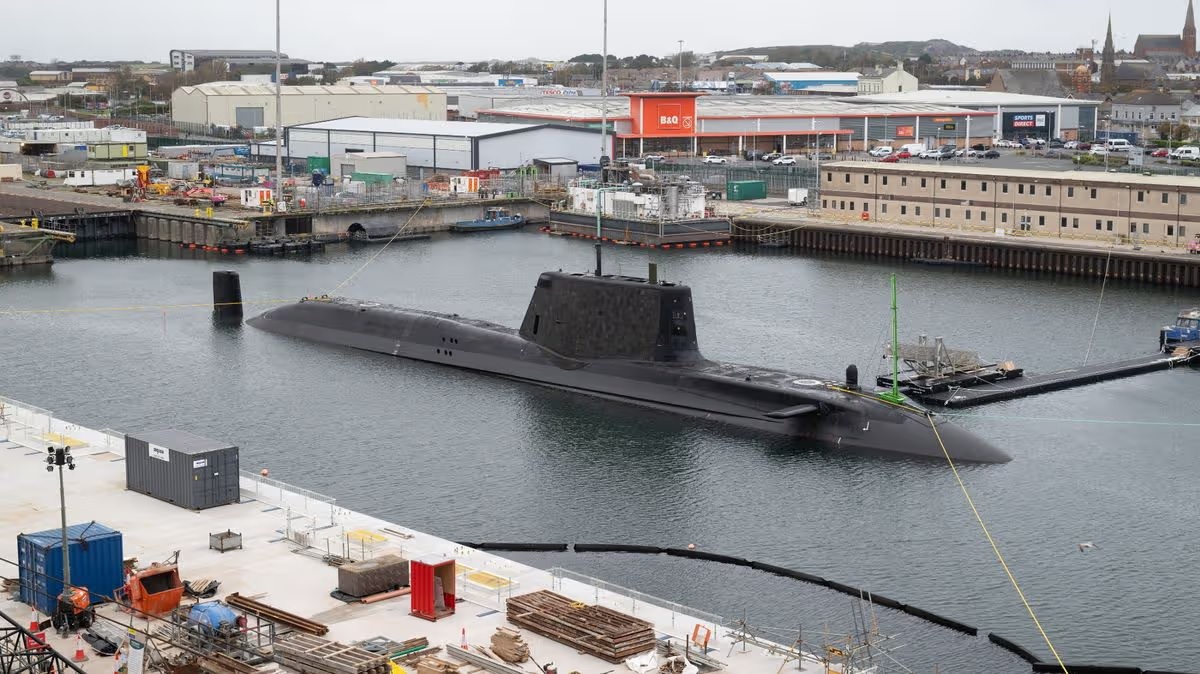
World
LONDON, — June 08, 2026 : The Royal Navy is currently facing a significant challenge in submarine readiness, with all five operational Astute-class nuclear-powered attack submarines undergoing maintenance, repairs, or dockyard work, leaving the United Kingdom without an active deployable attack submarine force for the time being. The situation has raised concerns among defence analysts and former naval commanders, who have highlighted the importance of attack submarines in safeguarding British security interests and monitoring increasing underwater activity in the North Atlantic and waters surrounding the UK. All Operational Astute-Class Submarines in Port The Royal Navy's active Astute-class fleet consists of HMS Astute, HMS Ambush, HMS Artful, HMS Audacious, and HMS Anson. According to reports, all five vessels are currently unavailable for operations while undergoing scheduled maintenance, repairs, or engineering work. As a result, the fleet's operational availability has temporarily fallen to zero percent, an unprecedented situation for Britain's attack submarine force. A sixth submarine, HMS Agamemnon, was commissioned into the fleet last autumn but remains in the sea-trials and testing phase and is not yet ready for operational deployment. Meanwhile, the seventh and final Astute-class submarine, HMS Achilles, remains under construction at BAE Systems' Barrow-in-Furness shipyard and is expected to enter service later in 2026. Critical Role in National Security The Astute class represents the Royal Navy's most advanced attack submarine capability. Powered by nuclear reactors, the submarines are designed to conduct anti-submarine warfare, intelligence gathering, surveillance missions, land-attack operations, and maritime security tasks. Each vessel measures approximately 97 metres in length, displaces around 7,400 tonnes submerged, and is equipped with advanced sonar systems, Spearfish heavyweight torpedoes, and Tomahawk land-attack cruise missiles. Beyond combat missions, the submarines play a vital role in protecting the UK's strategic nuclear deterrent. Astute-class boats routinely support and escort the Vanguard-class ballistic missile submarines, which carry the nation's Trident nuclear missiles and maintain Britain's continuous at-sea nuclear deterrent. Defence experts note that the absence of available attack submarines could leave these strategic assets more vulnerable and reduce the Royal Navy's ability to respond quickly to underwater threats. Concerns Over Increased Russian Naval Activity Former senior naval officers have warned that the current situation could affect Britain's ability to monitor and track Russian submarine operations in the North Atlantic. Reports indicate that Russian naval activity around British waters has increased by roughly one-third over the past year, placing greater importance on underwater surveillance and deterrence missions carried out by attack submarines. Several former commanders have argued that the lack of available hunter-killer submarines weakens Britain's ability to detect, shadow, and deter potential adversaries operating near UK waters and critical maritime routes. Risks to Undersea Infrastructure Military analysts have also highlighted the importance of attack submarines in protecting critical undersea infrastructure, including communications cables, internet networks, and energy systems. The United Kingdom relies heavily on a vast network of subsea internet cables and energy connections, much of which lies on the seabed and remains vulnerable to interference, sabotage, or surveillance activities by hostile actors and deep-sea vehicles. Attack submarines play an important role in monitoring these areas and contributing to broader maritime security efforts alongside surface warships and maritime patrol aircraft. Infrastructure and Maintenance Challenges The current maintenance backlog is not linked to a single technical issue but rather reflects broader industrial and infrastructure constraints that have developed over several years. The Royal Navy and its industrial partners continue to face a shortage of skilled nuclear engineering personnel, while limited dockyard capacity has slowed maintenance schedules across the submarine fleet. At His Majesty's Naval Base Clyde (HMNB Clyde) in Faslane, Scotland, a specialised submarine ship-lift system used to remove boats from the water for maintenance has reportedly been unavailable for more than a year. At the same time, key facilities at HMNB Devonport, Britain's primary submarine maintenance centre, are undergoing major infrastructure upgrades, reducing the number of submarines that can be processed simultaneously for repairs and servicing. Royal Navy Launches Recovery Plan Recognising the seriousness of the maintenance bottleneck, First Sea Lord General Sir Gwyn Jenkins has launched the Submarine Maintenance Recovery Plan, an initiative aimed at improving fleet readiness and accelerating maintenance activities. The programme seeks to streamline repair schedules, improve workforce availability, increase industrial efficiency, and return submarines to operational service as quickly as possible. The Ministry of Defence (MoD) has declined to discuss the operational status of individual submarines, citing longstanding security policies regarding submarine deployments. However, officials maintain that British waters remain protected through a combination of surface warships, maritime patrol aircraft, surveillance systems, and NATO cooperation. Broader Strategic Implications The Royal Navy currently operates nine nuclear-powered submarines, including four Vanguard-class ballistic missile submarines and five active Astute-class attack submarines. The situation comes as the United Kingdom continues its commitments under the AUKUS security partnership with Australia and the United States, which includes cooperation on future nuclear-powered submarine programmes. While the Astute-class fleet remains one of the most capable submarine forces in Europe, the current availability gap highlights the challenges of sustaining a relatively small but highly sophisticated submarine fleet amid increasing operational demands and growing strategic competition. Defence officials are now focused on restoring submarine availability and ensuring that maintenance reforms deliver long-term improvements to fleet readiness as HMS Agamemnon and HMS Achilles move closer to full operational service.
Read More → Posted on 2026-06-08 14:17:18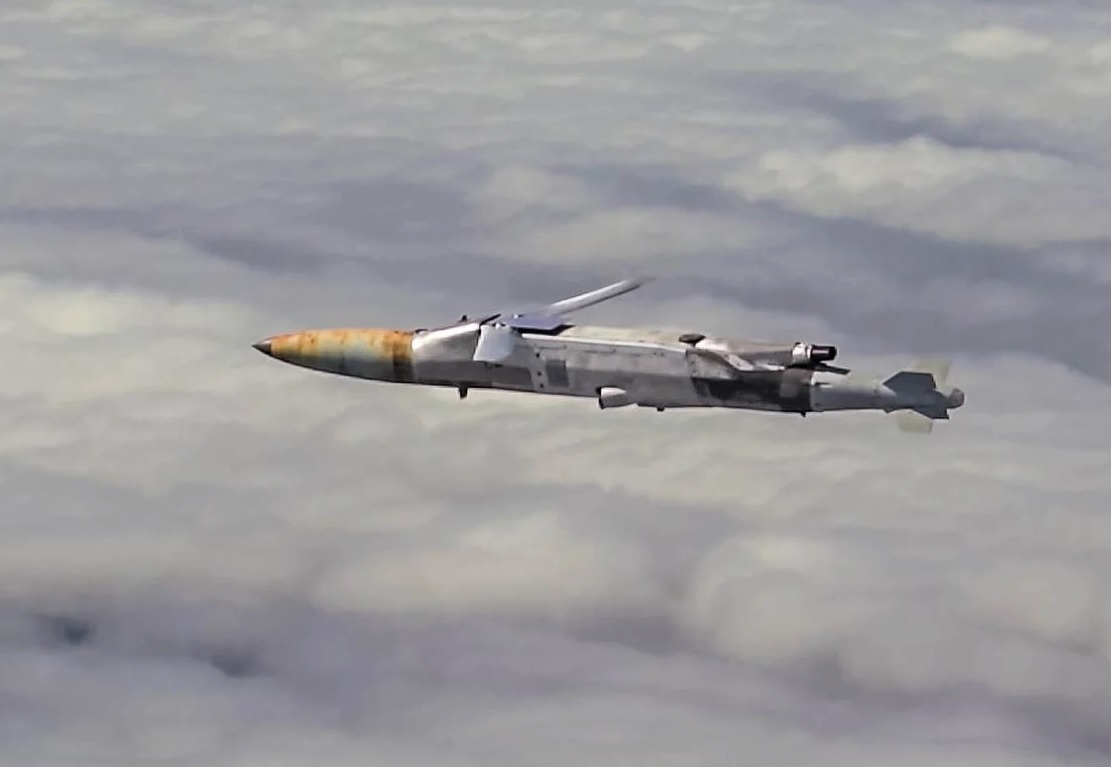
World
WASHINGTON, — June 08, 2026 : The United States Department of State has approved a potential Foreign Military Sale (FMS) to the Republic of Korea for Joint Direct Attack Munition (JDAM) guidance kits and related support equipment, with an estimated value of $106 million. The approval, announced on June 5, is intended to strengthen South Korea’s precision-strike capabilities and support its ongoing defense modernization efforts. The proposed sale follows a formal request from the South Korean government for JDAM components that convert conventional unguided bombs into precision-guided weapons. By integrating GPS-aided inertial navigation systems, JDAM kits enable aircraft to engage targets with greater accuracy in various weather and operational conditions. According to the approved package, South Korea will receive 708 KMU-557 JDAM tail kits and 58 KMU-572 JDAM guidance sets. The package also includes weapons support equipment, logistics and program support elements, engineering assistance, technical services, and contractor-provided sustainment support necessary for operational integration and long-term maintenance. The U.S. Defense Security Cooperation Agency (DSCA) stated that the proposed sale supports U.S. foreign policy and national security objectives by enhancing the defense capabilities of a key ally in the Indo-Pacific region. South Korea remains one of Washington’s closest security partners and plays a significant role in maintaining regional stability and supporting economic development across the region. U.S. officials noted that the acquisition will improve South Korea’s ability to respond to current and emerging security challenges by expanding its precision air-to-ground strike capability. The additional JDAM kits are expected to strengthen the Republic of Korea Air Force (ROKAF) capability to conduct accurate strikes against a range of targets while reducing the need for larger quantities of munitions during operations. The State Department further emphasized that the proposed transfer will improve interoperability between South Korean and U.S. military forces. Interoperability remains a central component of the long-standing alliance between the two countries, enabling coordinated operations, joint exercises, and integrated defense planning. Officials assessed that South Korea will be able to incorporate the equipment into its existing military infrastructure without difficulty. The country already operates JDAM-equipped aircraft, including advanced fighter platforms such as the F-15K and F-35A, making integration of the additional kits relatively straightforward. The principal contractor for the sale is Boeing, headquartered in Arlington, Virginia. Boeing developed the JDAM system, which has become one of the most widely used precision-guided munition technologies among U.S. allies and partner nations. The system can be fitted to several types of conventional bombs, including Mk-82, Mk-83, Mk-84, and BLU-series weapons, significantly improving their accuracy through satellite-guided navigation. U.S. authorities also stated that the proposed transaction will not adversely affect the readiness of U.S. armed forces. In addition, officials concluded that the introduction of the JDAM kits is not expected to alter the military balance in the region. The approval represents another step in ongoing defense cooperation between Washington and Seoul. In recent years, the two countries have expanded collaboration on advanced military technologies, missile defense systems, precision-guided weapons, and joint operational capabilities as part of broader efforts to strengthen deterrence and regional security. As with all Foreign Military Sales, the proposed deal remains subject to congressional notification and review before moving forward to a formal Letter of Offer and Acceptance (LOA). Once completed, implementation will include the delivery of equipment, technical assistance, logistics support, and training-related services to ensure effective integration into South Korea’s armed forces. The proposed JDAM package reflects continued U.S. support for South Korea’s defense modernization program and reinforces the strategic partnership between the two allies amid evolving security challenges in the Indo-Pacific region.
Read More → Posted on 2026-06-08 14:32:59
World
LONDON — Jujne 08, 2026 : The United Kingdom Ministry of Defence (MoD) is moving forward with Project CRENIC, a next-generation electronic countermeasure (ECM) programme designed to protect troops, military vehicles, and operational bases from radio-controlled improvised explosive devices (IEDs) and other signal-based threats. According to a written parliamentary response published on 5 June 2026, the programme is scheduled to begin prototype testing in the first quarter of 2027, marking a major milestone in its development. Prototype Testing Planned for 2027 The update was provided by Minister of State for Defence Luke Pollard in response to a parliamentary question from Conservative MP Ben Obese-Jecty. Pollard confirmed that Project CRENIC successfully completed its Critical Design Review (CDR) during the summer of 2025, demonstrating that the system's design had reached the maturity required to proceed into manufacturing, integration, and testing. The revised timeline follows earlier Ministry of Defence plans announced in 2022, which anticipated initial deliveries of soldier-carried and vehicle-mounted equipment in 2026. The availability of prototypes in Q1 2027 will provide the MoD and Parliament with a clear benchmark to evaluate system performance before decisions are taken on wider deployment. Following prototype delivery, the programme will enter a phase of operational trials, user evaluations, software refinement, and capability improvements before a final decision is made regarding broader fielding across the armed forces. £45 Million Contract Awarded to Team Protect Project CRENIC is being delivered through a five-year, £45 million systems integration contract awarded in October 2022 by Defence Equipment & Support (DE&S) and Strategic Command. The programme is managed by Team Protect, a consortium led by PA Consulting and supported by Leonardo UK, Leidos Innovations UK, and Marshall Land Systems. Unlike traditional defence procurement programmes that rely on a single prime contractor, Team Protect has established a network of approximately 110 UK businesses. According to PA Consulting, around 45 percent of participating companies are classified as small or micro enterprises, while more than half operate in innovation-focused sectors. The approach is intended to provide rapid access to specialist technologies in artificial intelligence, software development, signal processing, electronic warfare, and advanced antenna systems. However, managing such a broad supplier base also requires strict oversight of security accreditation, cybersecurity standards, configuration control, export regulations, and electromagnetic safety requirements. Software-Defined Electronic Warfare System At the centre of Project CRENIC is a fully software-defined electronic warfare architecture capable of detecting, analysing, and disrupting hostile radio-frequency communications. The system combines receivers, signal processors, electronic attack transmitters, power amplifiers, antennas, and mission software to identify threat signals and apply targeted jamming against them. Its primary mission is to reduce the effectiveness of roadside bombs triggered through radio-frequency links while also providing protection against selected drone-control signals. Unlike legacy electronic countermeasure systems that often require hardware modifications to address emerging threats, CRENIC's software-defined design allows new capabilities to be introduced through software updates and waveform modifications. This enables the system to adapt more rapidly when adversaries change communication protocols, command links, or detonator frequencies. Designed for Modern Communication Threats According to Leonardo UK, CRENIC is being developed to counter threats operating across increasingly complex communication networks, including 4G, 5G, and Internet of Things (IoT) technologies. The system must continuously monitor a crowded electromagnetic environment and identify potentially hostile emitters among large volumes of civilian and military communications activity. Advanced spectrum analysis and signal-characterisation capabilities are therefore central to the programme. A key requirement is preventing electronic fratricide, ensuring that hostile signals can be disrupted without causing unacceptable interference to friendly military radios, battlefield data links, navigation systems, or allied drone networks. Open Architecture and Future Upgrades Project CRENIC is among the first UK defence programmes to fully adopt the Standards for Integrated C5ISR/EW Systems (STICS) framework, previously known as the Land CEMA Architecture before November 2024. The framework incorporates open standards including MORA, OpenVPX, and the Generic Vehicle Architecture (GVA). These standards are intended to improve interoperability, simplify future upgrades, and reduce the system's size, weight, and power (SWaP) requirements. The open-architecture approach also enables new processors, sensors, and hardware components to be integrated throughout the system's operational life without requiring major redesigns. Capability Tailored for Troops, Vehicles, and Bases The Ministry of Defence plans to deploy Project CRENIC across a variety of operational environments. For dismounted troops, including infantry patrols, combat engineers, search teams, and medical personnel, the focus is on compact equipment with low weight and extended battery life. These systems are intended to create a localised electronic protection zone while allowing soldiers to continue using their own communications equipment. Vehicle-mounted variants will be installed on protected mobility vehicles, command platforms, and logistics trucks. These versions can accommodate larger antennas and more powerful transmitters, providing wider-area protection for convoys, temporary checkpoints, and route-clearance operations. For fixed and semi-permanent military installations, including airheads, forward operating bases, and ammunition storage sites, CRENIC will employ permanent antenna networks and dedicated monitoring systems. These configurations will allow commanders to continuously observe the electromagnetic environment and identify suspicious signal activity that may indicate preparations for an attack. Part of a Broader Counter-Drone Defence Strategy Project CRENIC also includes capabilities designed to counter certain categories of unmanned aerial systems (UAS). The system can disrupt drones that rely on radio-frequency command links, video transmissions, cellular networks, or satellite navigation signals. However, defence analysts note that the capability is not intended to independently defeat every drone threat. The system is unlikely to neutralise fibre-optic FPV drones, fully autonomous unmanned aircraft, or platforms capable of continuing their mission after losing contact with operators. As a result, military planners view CRENIC as one component of a layered defence architecture that also includes radar systems, acoustic sensors, camouflage measures, and kinetic interceptors. British Armed Forces Expected to Be Primary Users The British Army, Royal Marines, and Royal Air Force land forces are expected to become the primary users of the system once it enters service. With prototype testing scheduled for early 2027, the next phase of the programme will focus on validating operational performance, gathering user feedback, and refining software capabilities. The Ministry of Defence expects these activities to help ensure that the system remains effective against rapidly evolving electronic warfare, IED, and drone threats. Through Project CRENIC, the UK is seeking to develop a flexible and upgradeable force-protection capability that can adapt to emerging threats across the electromagnetic spectrum while supporting military operations in a wide range of operational environments.
Read More → Posted on 2026-06-08 15:38:29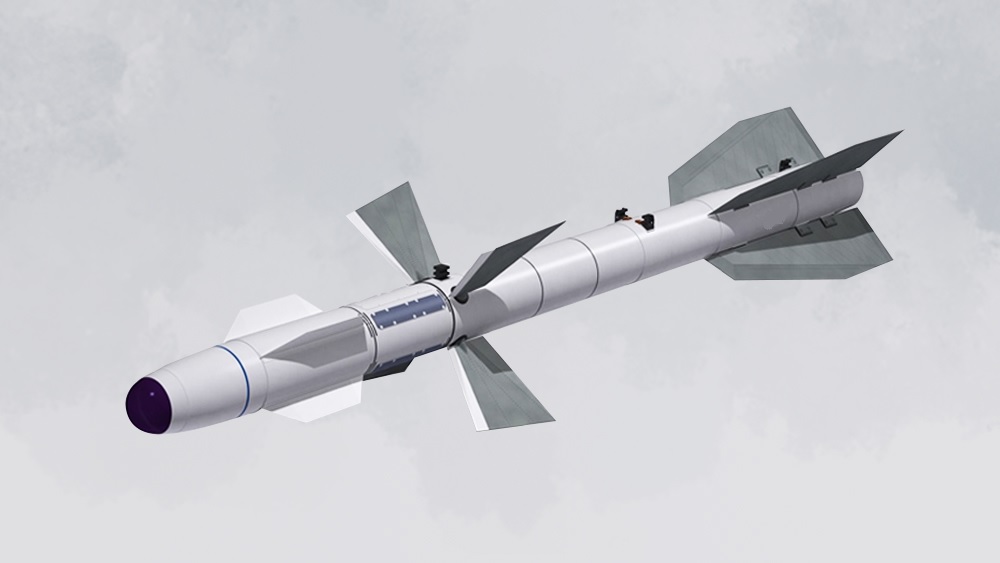
World
MISGAV, Israel — June 08, 2026 : Semi Conductor Devices (SCD) has expanded its infrared (IR) detector portfolio with new and upgraded solutions designed for loitering munitions, guided weapons, missile seekers, and autonomous systems. The company said the expanded product range is aimed at meeting growing demand for sensors capable of operating in high-dynamic environments while supporting rapid target acquisition and simplified integration into a variety of defense platforms. The detectors are intended to help defense integrators improve situational awareness, reduce sensor activation times, and lower development risks for both new and existing systems. SWIFT-EI Upgraded for Low-Visibility Operations SCD has upgraded its SWIFT-EI short-wave infrared (SWIR) module for operations in environments affected by smoke, dust, and low-light conditions. The company said SWIFT-EI is the first SWIR detector to incorporate an advanced read-out integrated circuit (ROIC) with an independent neuromorphic imaging stream for event detection. The detector supports frame rates of up to 1,600 frames per second and is designed to reduce processing requirements while enabling asynchronous laser pulse detection (ALPD), hostile fire indication (HFI), and platform stabilization. Pelican and Blackbird 640 for High-Speed Seeker Applications For missile seekers and guided munitions operating in demanding flight conditions, SCD is offering its Joule-Thomson (JT) cooled mid-wave infrared (MWIR) detectors from the Pelican and Blackbird 640 families. According to the company, these detectors are optimized for rapid target lock and long-range imaging while simplifying integration into both legacy and next-generation seeker systems. Sparrow HD Supports Long-Range Targeting SCD also highlighted its Sparrow and Sparrow HD MWIR detectors, which are designed for standoff targeting and long-range identification missions. The Sparrow HD is a 5-micron MWIR detector module developed to meet low size, weight, and power (SWaP) requirements. The system is intended for use in loitering munitions, remote weapon stations, airborne payloads, and perimeter defense networks. The company noted that thousands of Sparrow-family detectors are deployed worldwide each year, providing a scalable and field-proven solution for defense programs. Robin LWIR Designed for Agile Platforms The newly introduced Robin family of 12-micron uncooled long-wave infrared (LWIR) detectors is intended for next-generation loitering munitions and effectors operating without mechanical stabilization. Built on vanadium oxide (VOx) microbolometer technology, the Robin series features a thermal time constant of less than seven milliseconds. SCD said this enables stable, blur-free thermal imagery during rapid maneuvers while reducing reliance on gimbals and complex stabilization hardware. The expanded portfolio covers SWIR, MWIR, and LWIR spectral bands, supporting applications ranging from autonomous drones and missile seekers to long-range intelligence, surveillance, and reconnaissance (ISR) systems. According to SCD, the portfolio is designed to address key challenges including motion-induced blur, integration complexity, rapid target acquisition, and scalable production requirements for modern defense systems.
Read More → Posted on 2026-06-08 15:49:57
World
PARIS, — June 08, 2026 : European allies of the United States are preparing to seek President Donald Trump’s approval for a multinational demining mission in the Strait of Hormuz during the upcoming Group of Seven (G7) Summit in France. The proposed operation aims to restore commercial shipping through the strategic waterway, which has remained largely closed since the outbreak of the 2026 Iran conflict. UK and France Lead Mission Planning The initiative is being led by the United Kingdom and France, with military planners confirming that the operation is already operationally ready. According to officials involved in the planning process, naval assets could be deployed within days of a U.S.-Iran peace agreement or a sustainable ceasefire. More than 15 countries have contributed military planners to coordinate the mission. Germany, Italy, and the United Kingdom have prepared naval resources, including mine-sweepers, autonomous mine-hunting systems, and supporting maritime assets for possible deployment. The proposal forms part of a broader multinational framework that could eventually involve contributions from up to 40 nations. The operation would focus on mine clearance, protection of commercial vessels, and the safe reopening of one of the world's most important maritime trade routes. Importance of the Strait of Hormuz The Strait of Hormuz is one of the most critical energy corridors in the world, handling approximately one-fifth of global oil and liquefied natural gas (LNG) shipments under normal conditions. European leaders view the mission as a practical way to support international maritime security while enabling the rapid resumption of global energy exports. Officials have emphasized that the mission would operate in a strictly defensive capacity and in accordance with international law, with the primary objective of ensuring safe navigation for commercial shipping. Closure of the Waterway and Economic Impact The strait has remained largely blocked since February 28, 2026, following the outbreak of the Iran war. During the conflict, the Iranian Revolutionary Guard Corps (IRGC) laid sea mines and carried out attacks against merchant vessels operating in the region. The disruption caused significant instability in global energy markets, contributing to a surge in oil prices. Brent crude oil climbed to approximately $126 per barrel in March 2026, while shipping companies faced delays, rerouting costs, and increased insurance expenses. The prolonged closure has placed additional pressure on energy-importing countries and disrupted international trade flows, making the reopening of the waterway a priority for G7 nations and other major economies. Allied Support and U.S. Capability Gap The proposed European-led mission comes as the United States faces a shortage of dedicated mine-clearing assets in the region following the withdrawal of several older anti-mine vessels from service. As a result, allied naval capabilities are expected to play a crucial role in any future effort to restore safe passage through the strait. The United Kingdom has already strengthened its regional presence with assets including autonomous mine-hunting equipment, counter-drone systems, Eurofighter Typhoon fighter jets, and the Type 45 destroyer HMS Dragon. Other allied nations have offered mine-clearance vessels, maritime surveillance platforms, and logistical support. Planning for the operation has been coordinated through a series of international conferences, military consultations, and virtual meetings involving partner nations. Trump’s Decision Remains Uncertain Despite extensive preparations, it remains unclear whether President Trump will formally endorse the proposal. Trump has previously urged NATO allies and Asian partners to contribute naval forces to efforts aimed at reopening the Strait of Hormuz and has recently launched a separate U.S.-led mission to guide commercial vessels through the region. European leaders are expected to present the coordinated plan during the G7 Summit in Évian-les-Bains, France, from June 15–17, with the goal of securing political backing from Washington. G7 Discussions Could Shape Next Steps The planned demining mission is expected to be a major topic during the summit’s discussions on Middle East security, global energy stability, and freedom of navigation. Any deployment would only proceed following a sustainable ceasefire and appropriate diplomatic arrangements with relevant parties. The outcome of talks between G7 leaders and President Trump could determine the pace and scope of efforts to reopen the Strait of Hormuz, restore commercial shipping, and stabilize global energy markets after months of disruption.
Read More → Posted on 2026-06-08 15:59:44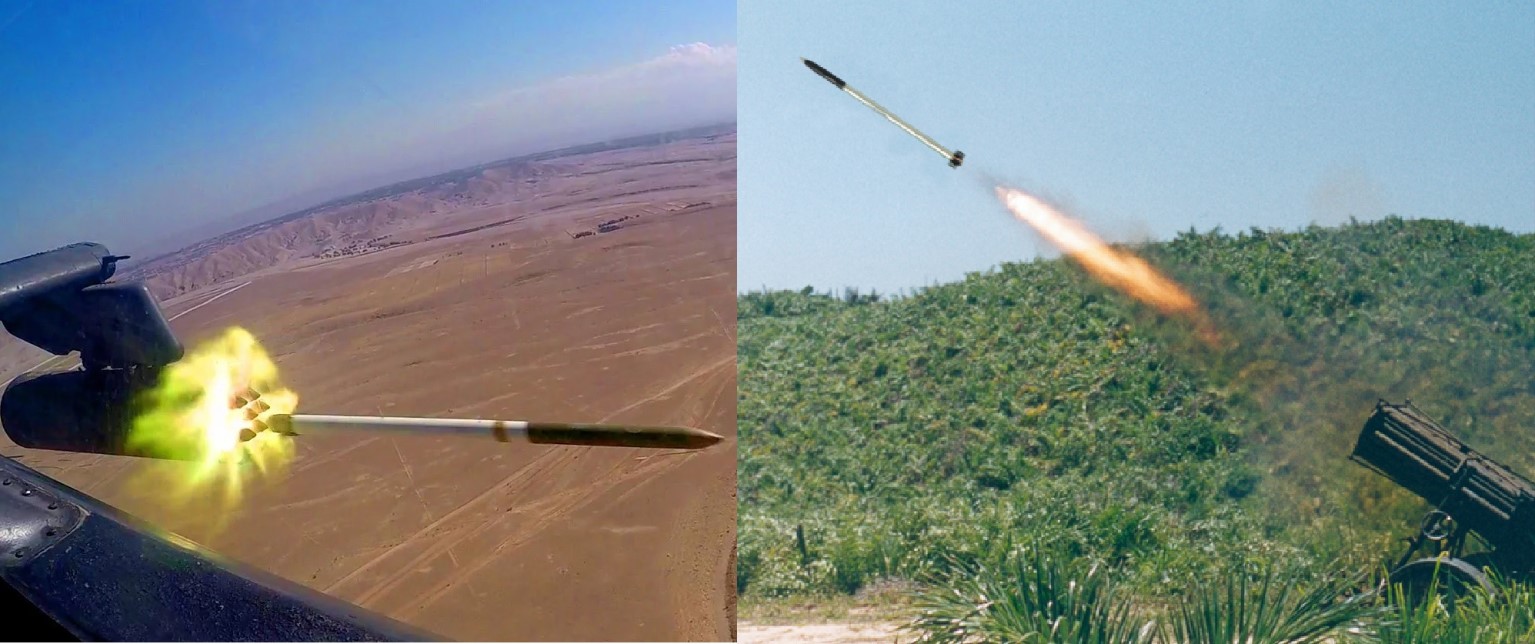
World
WASHINGTON, — June 08, 2026 : The U.S. Army has awarded Innovative Rocket Technologies Inc. (iRocket) a contract valued between $30 million and $150 million to produce guided rocket components that will convert standard Hydra-70 rockets into low-cost precision interceptors for countering unmanned aerial threats. The contract, announced by the Army’s Program Executive Office (PEO) Fires, is aimed at expanding the military’s ability to defend against the growing number of low-cost drones and loitering munitions appearing on modern battlefields. By adding laser-guidance technology to existing 70mm rockets, the Army hopes to create a scalable and more economical air defense option that can be fielded rapidly using existing military infrastructure. Addressing the Cost Challenge of Drone Warfare The award comes as U.S. forces continue to face increasing numbers of drone attacks during military operations. Current air defense missions often rely on advanced weapons such as the AGM-114 HELLFIRE missile, which costs between $150,000 and $200,000 per missile. In contrast, many hostile drones and loitering munitions can be produced for only a few thousand dollars. This cost imbalance has become a growing concern for military planners, as expensive interceptors are frequently used to defeat significantly cheaper aerial threats. Defense officials have also warned that sustained operations can place pressure on missile inventories, while traditional production lines may struggle to replenish advanced munitions at the pace required by modern conflicts. As a result, the Pentagon has increasingly sought lower-cost, high-volume interceptor solutions capable of engaging large numbers of unmanned systems. Hydra-70 Rockets to Gain Precision-Guided Capability To address this requirement, the Army is turning to the Hydra-70, a 2.75-inch (70mm) fin-stabilized rocket that has been in U.S. military service since the late 1940s. Over the decades, hundreds of thousands of Hydra-70 rockets have been manufactured and deployed across multiple platforms, including the AH-64 Apache, UH-60 Black Hawk, and various fixed-wing aircraft. Originally designed for area suppression missions, the rocket has become one of the most widely used aerial munitions in the U.S. arsenal. Under the new contract, iRocket will produce laser-guided components that enable the rocket to home in on a laser-designated target during the final stage of flight. This upgrade will provide the accuracy needed to engage small, fast-moving, and maneuverable drones while maintaining a significantly lower cost than traditional air-defense missiles. Successful iRX-100 Demonstration Validated the Concept The contract follows a successful flight demonstration of the company’s iRX-100 interceptor, a 70mm guided missile variant developed for counter-drone missions. During testing earlier this year, the interceptor achieved speeds of approximately Mach 2 and traveled about six kilometers while being launched from an existing Arnold Defense launcher. The demonstration confirmed that the new interceptor can be integrated into currently fielded launcher systems without requiring structural modifications, allowing military units to adopt the capability quickly while minimizing additional procurement and integration costs. The ability to use existing launchers and logistics networks is considered a major advantage, reducing both deployment timelines and operational expenses. Factory ONE Designed for High-Volume Production To meet future demand, iRocket plans to manufacture the guided rocket components through its automated production system known as “Factory ONE of the Future.” The facility combines advanced robotics, automation technologies, and digitally integrated manufacturing systems to increase production efficiency and support large-scale output. According to the company, key production goals include: One propellant unit produced every five minutes Annual production capacity of up to 97,000 guided rocket units Surge manufacturing capability to rapidly increase output during periods of heightened operational demand The production model is intended to provide the Department of Defense with a reliable source of affordable interceptors while improving supply-chain resilience. Company Leadership Highlights Need for Affordable Defenses Commenting on the award, Asad Malik, Chief Executive Officer and founder of iRocket, said the contract reflects changing battlefield requirements and the growing importance of cost-effective defensive systems. “This award reflects a vital shift in how modern conflicts are being fought and won,” Malik said. “Our forces are facing increasingly asymmetric threats, where low-cost drones are being deployed at scale, and the traditional response model is no longer sustainable. At iRocket, we are focused on changing that equation, delivering precision-guided rocket capabilities that are not only effective, but affordable and produced at the speed and volume today’s operational environment demands.” Part of a Broader U.S. Military Procurement Trend The iRocket contract is part of a broader effort across the U.S. Armed Forces to develop affordable layered air-defense systems capable of countering large-scale drone attacks. Multiple military branches are currently evaluating lower-cost interceptor solutions that can be integrated into widely deployed launch platforms while leveraging existing logistics and support networks. By combining the established Hydra-70 rocket infrastructure with high-throughput automated manufacturing, the Army aims to strengthen interceptor production capacity, improve stockpile sustainability, and ensure that U.S. forces can maintain sufficient defensive capabilities against the growing number of mass-produced aerial threats appearing in modern warfare.
Read More → Posted on 2026-06-08 16:16:17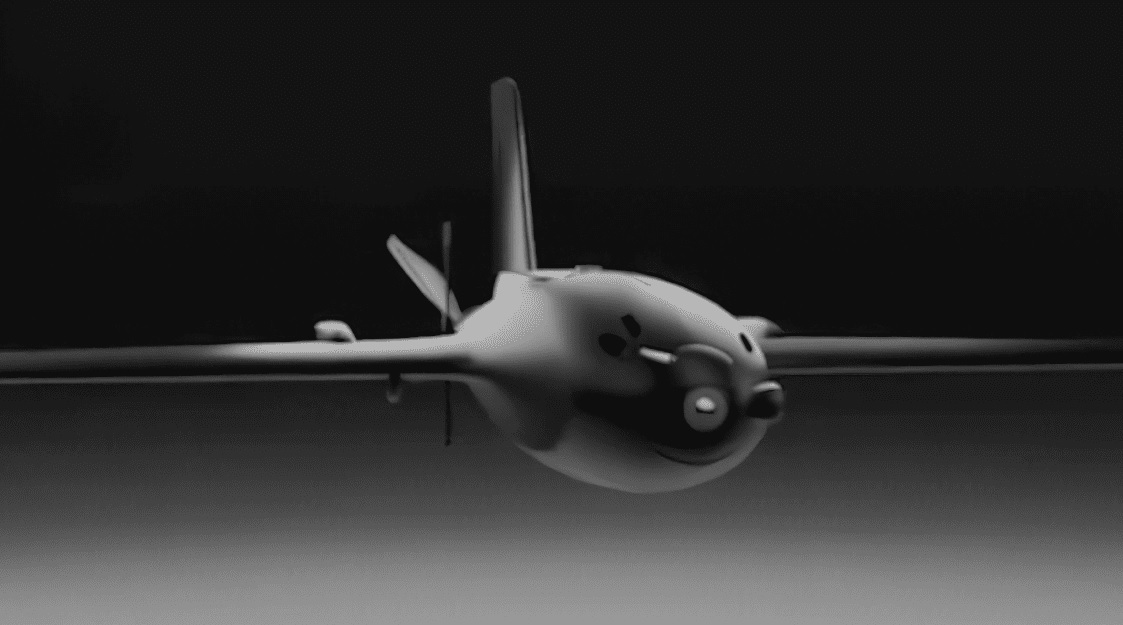
World
KYIV, Ukraine — June 08, 2026 : Ukrainian defense technology company MaXon Systems has successfully deployed an autonomous air defense system designed to intercept Russian Shahed drones, marking a significant advancement in Ukraine’s efforts to counter the growing number of unmanned aerial attacks. Developed with support from Ukraine’s Brave1 defense innovation cluster, the system has already completed successful combat testing and entered operational use. According to information released by Brave1 on May 22, the new system is directly integrated with Ukraine’s national radar network, enabling real-time detection and tracking of aerial threats. The technology automates approximately 95 percent of the interception process, reducing the workload on operators while maintaining human oversight during engagements. Autonomous Interception Process The MaXon platform utilizes high-speed interceptor drones that can be launched from either ground-based platforms or aerostats. During an engagement, an operator identifies an incoming target through a specialized interface and authorizes the interception. Once the command is issued, the system autonomously guides the interceptor drone toward the target area without requiring manual piloting. As the interceptor approaches the threat, its onboard artificial intelligence (AI) automatically detects, identifies, and locks onto the hostile Shahed drone. Despite the high level of automation, the platform incorporates a critical human-in-the-loop safeguard, allowing operators to cancel an attack at any point before impact, ensuring that final engagement decisions remain under human control. Ukrainian-Made Technology and Performance Founded in early 2025 by Oleksii Solntsev, MaXon Systems developed the interception platform using approximately 90 percent Ukrainian-made components. The interceptor drones have an operational range of up to 30 kilometers and can reach speeds of 300 km/h, enabling them to effectively pursue current Shahed variants, which typically cruise at speeds between 200 and 250 km/h. The company is also developing new propulsion technologies intended to enable the system to intercept future jet-powered Shahed variants and other faster aerial threats. Low-Cost Alternative to Traditional Air Defense A major advantage of the MaXon system is its cost efficiency. Each interceptor drone costs approximately $3,500, making it significantly less expensive than using traditional surface-to-air missiles against low-cost enemy drones. Ukrainian defense officials view specialized interceptor drones as a sustainable and scalable solution for countering large numbers of unmanned aerial vehicles while preserving expensive missile inventories for more complex threats. Developers estimate that between 20 and 25 interceptor units could provide comprehensive air defense coverage for Kyiv, helping defend the capital against large-scale drone attacks. Successful Combat Testing in Kharkiv Region The autonomous interception technology has already undergone successful combat trials in the Kharkiv region. Live operational testing was conducted by the 12th Separate Special Purpose Centre (12th SSPC), validating the system’s performance under battlefield conditions. According to Brave1, MaXon Systems progressed from an initial prototype to battlefield deployment in less than a year, highlighting the rapid pace of innovation within Ukraine’s defense technology sector. Investment and Production Expansion To support development and scale production, MaXon Systems secured investment from Freedom Fund and Defender Ventures during its initial funding rounds in 2025. The company later received additional financial backing from U.S.-based venture capital firm Green Flag Ventures in February 2026, enabling further research, development, and manufacturing expansion. Part of Ukraine’s Broader Air Defense Strategy The deployment of the MaXon platform forms part of Ukraine’s wider strategy to expand its “small” air defense network, which relies on specialized interceptor drones and other cost-effective technologies to counter increasing Russian drone attacks. Ukrainian Defense Minister Mykhailo Fedorov has stated that the number of Shahed drones launched by Russia is increasing by approximately 35 percent every month, creating additional pressure on Ukraine’s multi-layered air defense system. In response, Ukraine has accelerated the production and deployment of specialized interceptor drones and autonomous defense technologies. According to Fedorov, the percentage of Russian Shahed drones destroyed by specialized interceptor systems has doubled over the past four months. Supplies of interceptor drones have also increased by 2.6 times during the same period, reflecting efforts to expand national air defense capabilities. Ukraine has set a goal of achieving a stable 95 percent interception rate against aerial threats, with autonomous systems expected to play an increasingly important role in meeting that objective. Growing Role of Autonomous Air Defense Brave1 stated that the MaXon breakthrough is part of a broader effort to develop autonomous air defense solutions capable of responding more efficiently to mass drone attacks. By combining artificial intelligence, real-time radar integration, and low-cost interceptor drones, the MaXon system provides a scalable alternative to traditional missile-based air defense. The technology is intended to complement existing air defense assets while improving Ukraine’s ability to counter the growing number of Shahed-type drones being deployed against the country. As Ukraine continues adapting its defenses to evolving aerial threats, systems such as MaXon’s autonomous interceptor platform are expected to become an increasingly important component of the country’s multi-layered air defense network.
Read More → Posted on 2026-06-08 16:24:49Search
Top Trending in 24 Hours
-
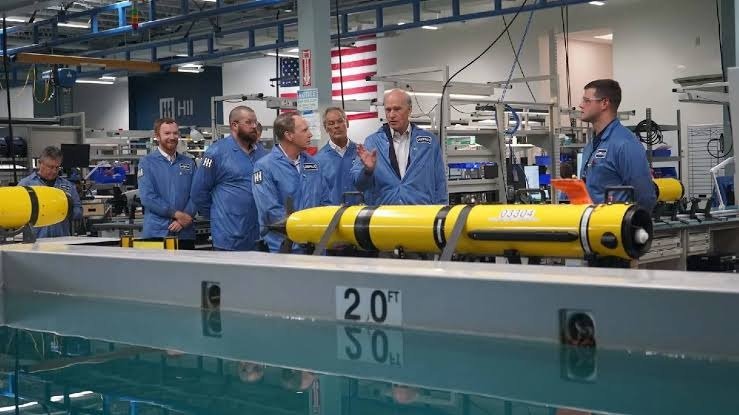 HII Expands Massachusetts Unmanned Systems Facility by 25 Percent to Support U.S. Navy Lionfish Production
-
 Russia Open to Turkish S-400 Transfer to Third Country, but Demands Guarantees Against Ukraine Delivery
-
 Saudi Naval Personnel Complete Bayraktar AKINCI Training in Türkiye
-
 U.S. Navy and Thales Clear TACAN Amplifier Backlog, Stabilizing Fleet Deliveries
-
 Trump and Xi Agree Iran Must Not Develop Nuclear Weapons, Oppose Tolls on International Waterways
-
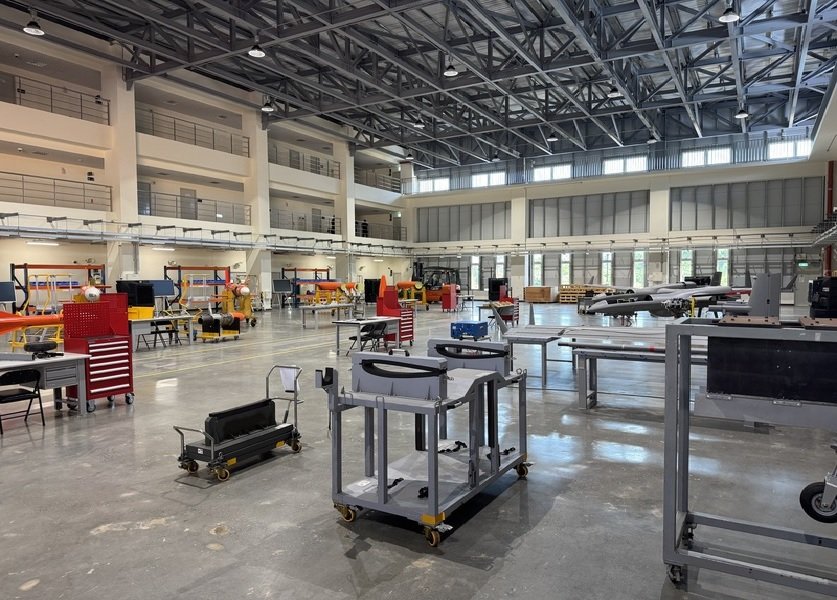 Taiwan Opens New NCSIST Drone Campus, Breaks Ground on $217 Million UAV Industrial Park
-
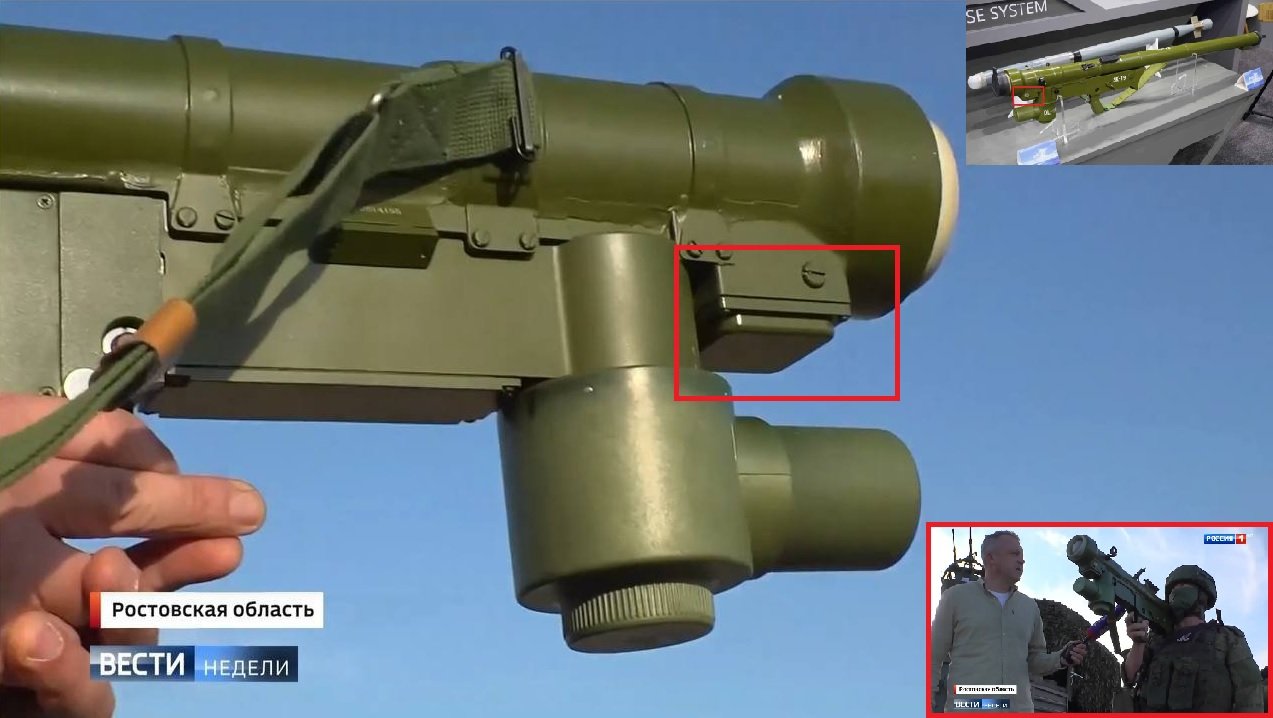 Russian Forces Seen Operating Unidentified MANPADS Similar to Chinese QW-Series MANPADS
-
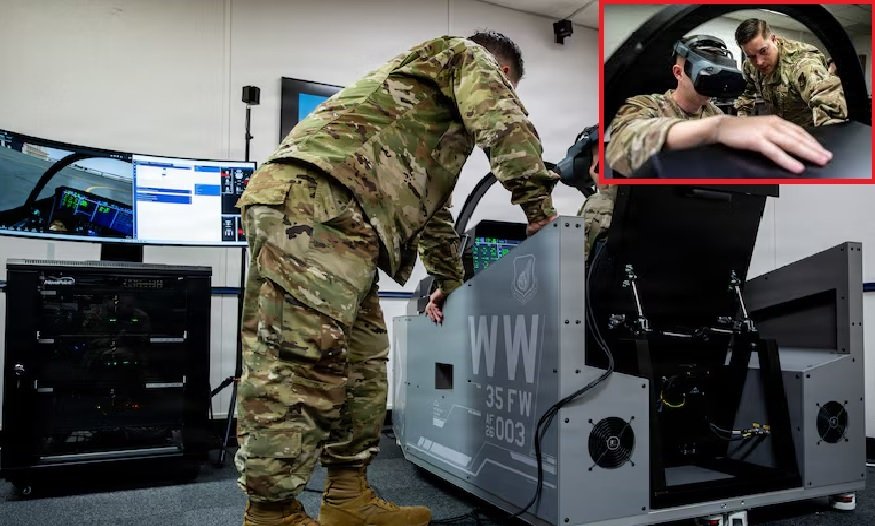 U.S. Air Force Adds Mixed-Reality F-35A Engine Run Simulator at Misawa Air Base
Top Trending in 4 Days
-
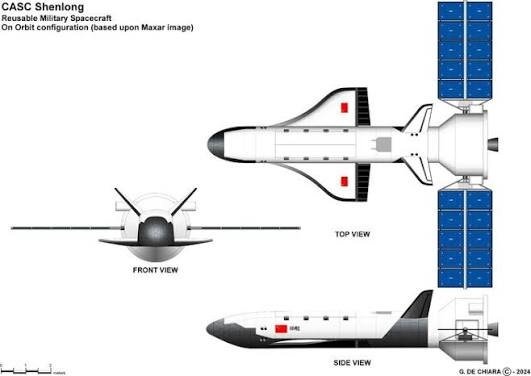 China’s Secretive Shenlong Spaceplane Repeatedly Releases and Recaptures Satellite
-
 From Lab to Battlefield: U.S. Military Confirms Use of Laser Weapons Against Drones in the Strait of Hormuz and Along Southern Border
-
 France to Send Troops, Radars and Defence Systems to Protect Saudi Arabia’s Yanbu Oil Terminal
-
 U.S. Approves Patriot Missile Production License for Ukraine Following Trump-Zelensky Meeting
-
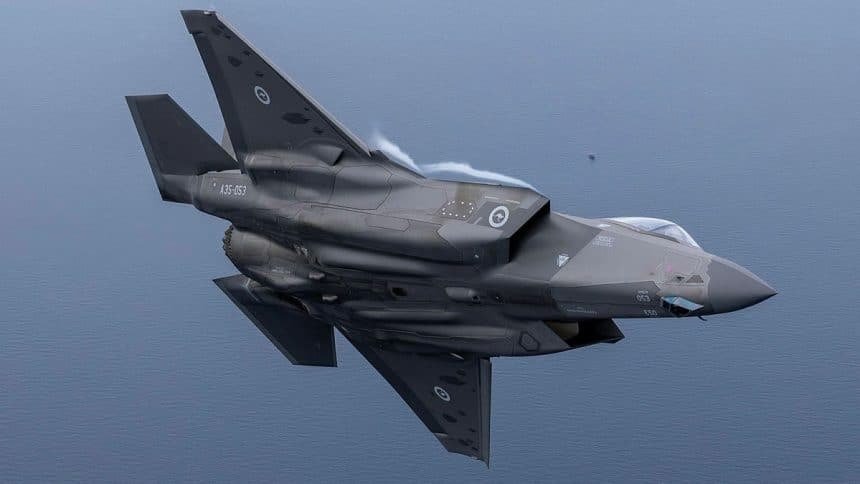 US and Australia Investigate F-35 Components Diverted to Hong Kong
-
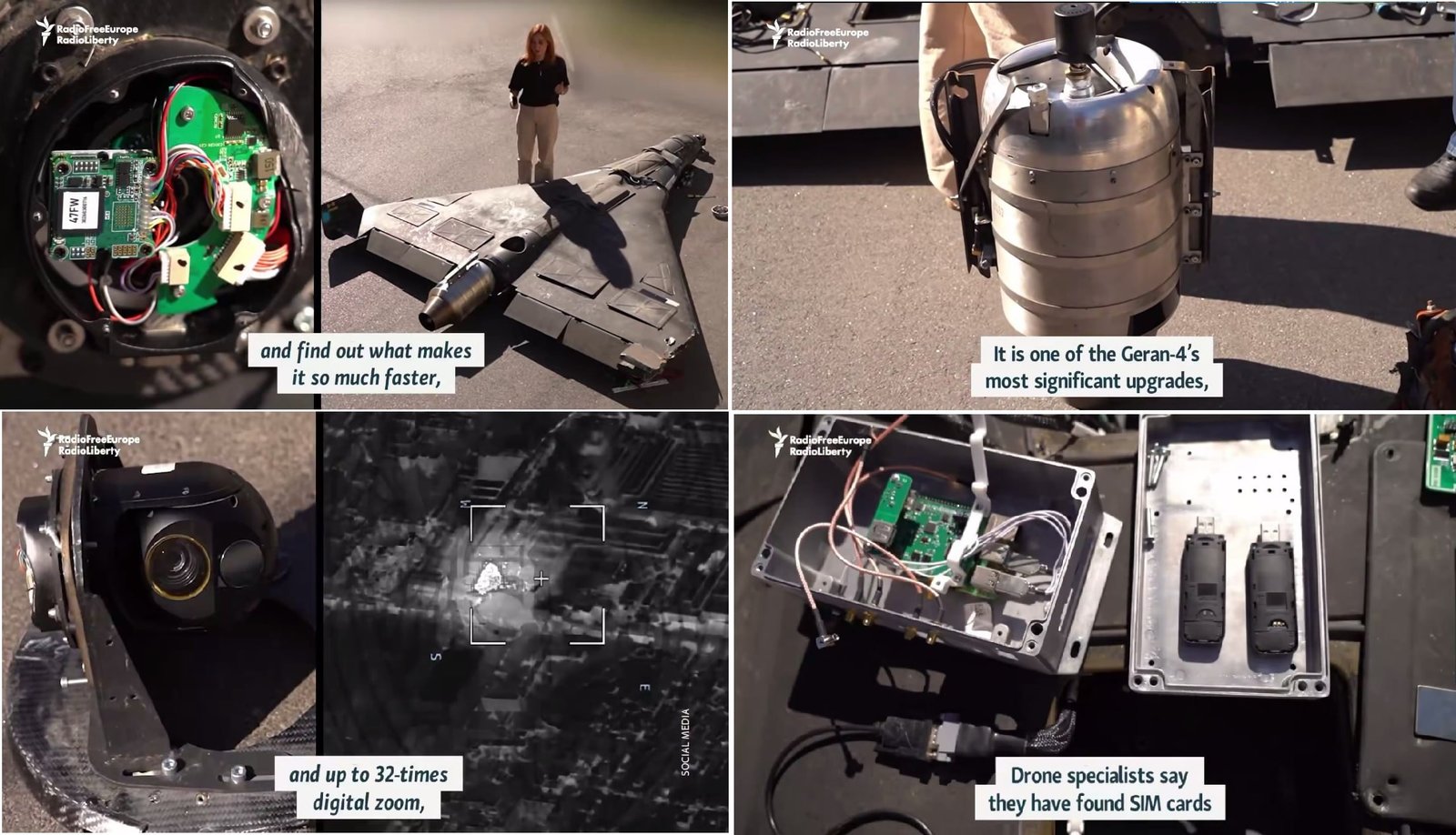 Ukrainian Experts Analyze Russian Geran-4 Wreckage, Detailing Chinese Engine, Multi-Mode Camera and Long-Range Control Systems
-
 Indian Firm Strider Robotics’ M3 Quadruped Robot Pulls Honda Amaze in Bengaluru Demonstration
-
 US Army Reserve Assessing Support Units for Southern Command Amid Cuba-Focused Planning