WASHINGTON, — June 08, 2026 : The U.S. Army has awarded Innovative Rocket Technologies Inc. (iRocket) a contract valued between $30 million and $150 million to produce guided rocket components that will convert standard Hydra-70 rockets into low-cost precision interceptors for countering unmanned aerial threats.
The contract, announced by the Army’s Program Executive Office (PEO) Fires, is aimed at expanding the military’s ability to defend against the growing number of low-cost drones and loitering munitions appearing on modern battlefields. By adding laser-guidance technology to existing 70mm rockets, the Army hopes to create a scalable and more economical air defense option that can be fielded rapidly using existing military infrastructure.
Addressing the Cost Challenge of Drone Warfare
The award comes as U.S. forces continue to face increasing numbers of drone attacks during military operations. Current air defense missions often rely on advanced weapons such as the AGM-114 HELLFIRE missile, which costs between $150,000 and $200,000 per missile.
In contrast, many hostile drones and loitering munitions can be produced for only a few thousand dollars. This cost imbalance has become a growing concern for military planners, as expensive interceptors are frequently used to defeat significantly cheaper aerial threats.
Defense officials have also warned that sustained operations can place pressure on missile inventories, while traditional production lines may struggle to replenish advanced munitions at the pace required by modern conflicts. As a result, the Pentagon has increasingly sought lower-cost, high-volume interceptor solutions capable of engaging large numbers of unmanned systems.
Hydra-70 Rockets to Gain Precision-Guided Capability
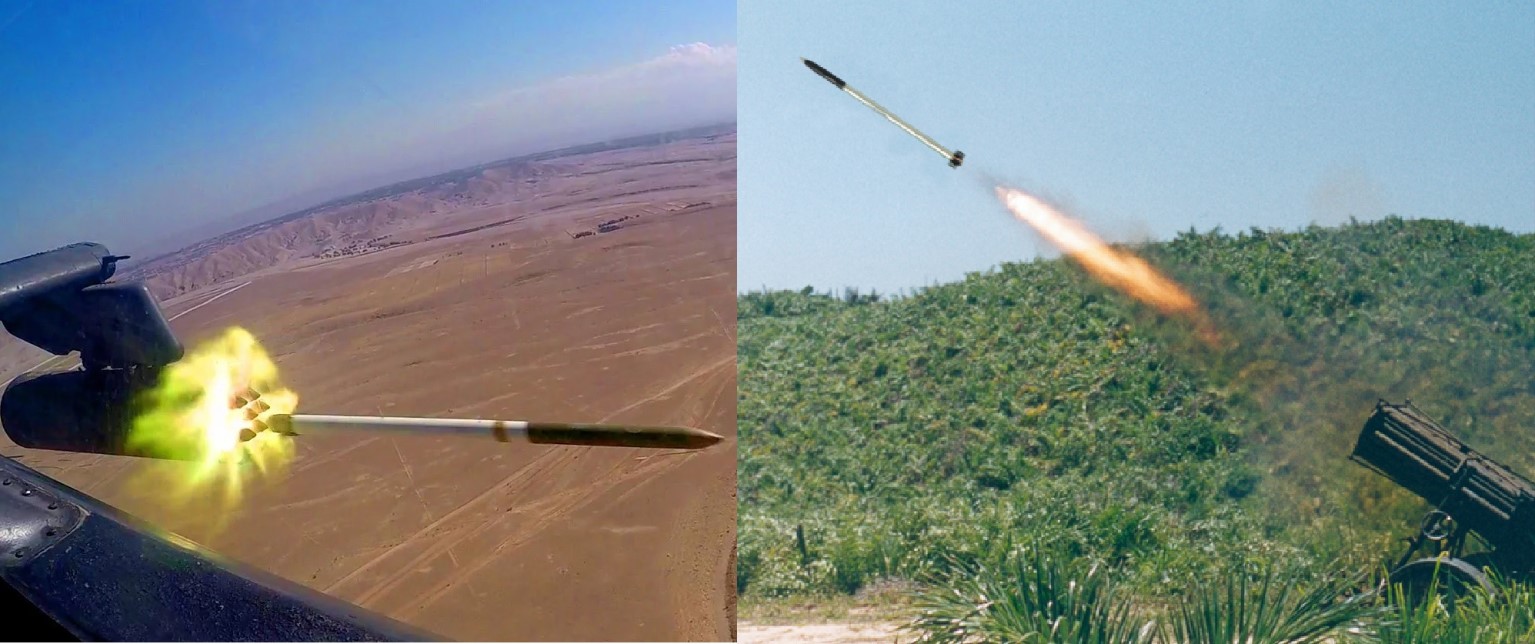
To address this requirement, the Army is turning to the Hydra-70, a 2.75-inch (70mm) fin-stabilized rocket that has been in U.S. military service since the late 1940s.
Over the decades, hundreds of thousands of Hydra-70 rockets have been manufactured and deployed across multiple platforms, including the AH-64 Apache, UH-60 Black Hawk, and various fixed-wing aircraft. Originally designed for area suppression missions, the rocket has become one of the most widely used aerial munitions in the U.S. arsenal.
Under the new contract, iRocket will produce laser-guided components that enable the rocket to home in on a laser-designated target during the final stage of flight. This upgrade will provide the accuracy needed to engage small, fast-moving, and maneuverable drones while maintaining a significantly lower cost than traditional air-defense missiles.
Successful iRX-100 Demonstration Validated the Concept
The contract follows a successful flight demonstration of the company’s iRX-100 interceptor, a 70mm guided missile variant developed for counter-drone missions.
During testing earlier this year, the interceptor achieved speeds of approximately Mach 2 and traveled about six kilometers while being launched from an existing Arnold Defense launcher.
The demonstration confirmed that the new interceptor can be integrated into currently fielded launcher systems without requiring structural modifications, allowing military units to adopt the capability quickly while minimizing additional procurement and integration costs.
The ability to use existing launchers and logistics networks is considered a major advantage, reducing both deployment timelines and operational expenses.
Factory ONE Designed for High-Volume Production
To meet future demand, iRocket plans to manufacture the guided rocket components through its automated production system known as “Factory ONE of the Future.”
The facility combines advanced robotics, automation technologies, and digitally integrated manufacturing systems to increase production efficiency and support large-scale output.
According to the company, key production goals include:
- One propellant unit produced every five minutes
- Annual production capacity of up to 97,000 guided rocket units
- Surge manufacturing capability to rapidly increase output during periods of heightened operational demand
The production model is intended to provide the Department of Defense with a reliable source of affordable interceptors while improving supply-chain resilience.
Company Leadership Highlights Need for Affordable Defenses
Commenting on the award, Asad Malik, Chief Executive Officer and founder of iRocket, said the contract reflects changing battlefield requirements and the growing importance of cost-effective defensive systems.
“This award reflects a vital shift in how modern conflicts are being fought and won,” Malik said. “Our forces are facing increasingly asymmetric threats, where low-cost drones are being deployed at scale, and the traditional response model is no longer sustainable. At iRocket, we are focused on changing that equation, delivering precision-guided rocket capabilities that are not only effective, but affordable and produced at the speed and volume today’s operational environment demands.”
Part of a Broader U.S. Military Procurement Trend
The iRocket contract is part of a broader effort across the U.S. Armed Forces to develop affordable layered air-defense systems capable of countering large-scale drone attacks.
Multiple military branches are currently evaluating lower-cost interceptor solutions that can be integrated into widely deployed launch platforms while leveraging existing logistics and support networks.
By combining the established Hydra-70 rocket infrastructure with high-throughput automated manufacturing, the Army aims to strengthen interceptor production capacity, improve stockpile sustainability, and ensure that U.S. forces can maintain sufficient defensive capabilities against the growing number of mass-produced aerial threats appearing in modern warfare.
——— End of Article ———