LONDON — May 17, 2026 : The United Kingdom Ministry of Defence (MoD) has deployed the Advanced Precision Kill Weapon System (APKWS) on Royal Air Force (RAF) Typhoon fighter jets operating in the Middle East, introducing a lower-cost precision capability designed to counter the increasing threat posed by hostile drones and one-way attack munitions in the region.
The laser-guided rocket system is now operational on Typhoon aircraft flown by 9 Squadron RAF from RAF Akrotiri in Cyprus. The deployment is intended to strengthen the UK’s regional air defence posture while reducing the cost of intercepting low-value aerial threats that have become increasingly common in Middle Eastern operations.
Low-Cost Counter-Drone Capability
The APKWS converts standard unguided 70 mm rockets into precision-guided weapons through the addition of a semi-active laser guidance kit. The system allows RAF aircraft to engage drones and short-range aerial threats at significantly lower cost than conventional air-to-air missiles.
RAF Typhoons have traditionally relied on weapons such as the MBDA Meteor beyond-visual-range missile and the AIM-132 ASRAAM short-range missile for aerial interceptions. While those missiles are designed for high-value aircraft and complex air combat scenarios, they are considerably more expensive than the APKWS.
According to defence officials, the APKWS provides a more sustainable and cost-effective option for counter-drone operations, particularly against inexpensive one-way attack drones and unmanned aerial vehicles increasingly used across the region.
The system also increases the number of available engagements per sortie. Traditional air-to-air missile configurations typically allow one missile per pylon, while APKWS launch pods can carry seven rockets each. Typhoon aircraft can operate with multiple rocket pods alongside standard Meteor and ASRAAM missile loadouts.
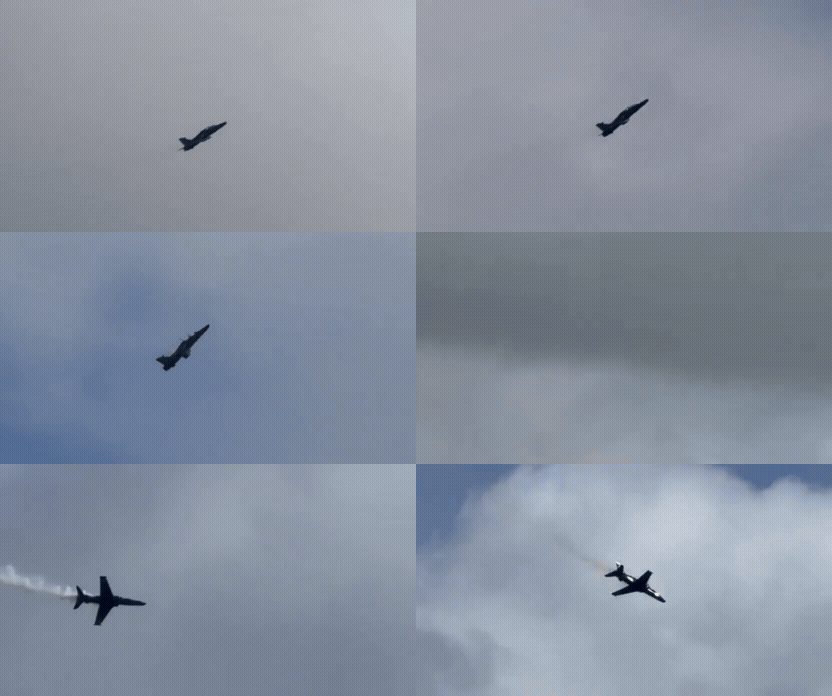
Recent images released by the Ministry of Defence showed RAF Typhoons carrying mixed combat configurations combining Meteor and ASRAAM missiles with APKWS rocket pods, allowing aircraft to engage both conventional airborne threats and smaller unmanned systems during the same mission.
Rapid Integration and Testing Program
The APKWS capability was integrated onto the Typhoon platform through a rapid procurement and testing effort involving the Ministry of Defence, BAE Systems and QinetiQ. The programme progressed from initial testing to operational deployment in less than two months.
Testing milestones included a successful strike against a ground-based target in March 2026. In April, pilots from the RAF’s 41 Test and Evaluation Squadron conducted successful air-to-air firing trials at the MOD Aberporth range in Wales.
QinetiQ supported the programme through aircraft integration work and by providing realistic aerial target systems during testing. The company used its Banshee Whirlwind high-speed uncrewed aerial targets to simulate modern drone threats and one-way attack platforms.
The accelerated deployment was carried out under updated UK defence procurement rules designed to speed up the delivery of military equipment. Under the revised framework, contractors meeting delivery schedules and budget targets may receive incentive payments ranging from two to ten percent of project costs, while companies missing targets may face reduced profit margins.
Ongoing RAF Operations in the Middle East
UK aircraft continue to maintain a sustained operational presence across the Middle East in support of British interests, regional security and allied operations.
The Ministry of Defence stated that RAF pilots and aircrew have accumulated more than 2,500 flying hours on defensive missions since the start of the current regional conflict, equivalent to more than three months of continuous flying operations.
The deployment of the APKWS is intended to improve operational efficiency during these missions by allowing RAF aircraft to engage a larger number of drone threats without relying exclusively on high-cost air defence missiles.
Statements From Government and Industry Officials
Luke Pollard, the UK Minister for Defence Readiness and Industry, described the programme as an example of rapid cooperation between government and industry.
“This has been a superb effort working with industry to test and deploy this system in a matter of months, which will help the RAF shoot down many more drones at a much lower cost,” Pollard said.
He added that the Typhoon fleet remains central to both UK and NATO air defence operations, including missions protecting NATO’s eastern flank from Russian drone activity and supporting partners in the Middle East.
Simon Barnes, Group Managing Director of BAE Systems’ Air Sector, said the integration highlighted the adaptability of the Typhoon platform against evolving threats.
“Our priority is to ensure the Royal Air Force and its allies have the advanced technologies they need today and into the future, to keep them ahead of evolving threats,” Barnes stated.
“This capability demonstrates Typhoon’s exceptional versatility and underlines its continued role as the backbone of combat air across Europe and the Middle East.”
Steve Wadey, Group Chief Executive Officer of QinetiQ, said the company provided engineering expertise, live testing support and aerial target systems to accelerate deployment of the capability.
“From engineering expertise to live trials, our teams are providing the fundamental support needed by our armed forces, to deliver the urgent capabilities that ensure the UK and its allies remain safe and warfighting ready,” Wadey said.
Air Commodore Donal McGurk, Air 11 Group Deputy Director Operations, stated that the new weapon system would strengthen the RAF’s existing regional air defence package.
“We welcome the speed of development and meticulous testing behind the deployment of these missile systems for use on our Typhoons,” McGurk said.
“They are a valuable addition to the air defence package we are already employing with agility across the Middle East.”
Broader UK Air Defence Upgrades
The APKWS deployment forms part of a wider UK effort to strengthen regional air defence capabilities and improve protection against drones and loitering munitions.
Several UK ground-based and helicopter-based air defence systems remain deployed at high readiness across the Gulf region, including the Sky Sabre system in Saudi Arabia, the Lightweight Multirole Missile (LMM) in Bahrain, and the Rapid Sentry and ORCUS systems operating in Kuwait.
The deployment also follows a recent multi-million-pound Ministry of Defence contract for Skyhammer interceptor missiles designed specifically to counter Shahed-type attack drones and similar unmanned threats.
In January 2026, the Ministry of Defence additionally committed more than £650 million to upgrade the RAF Typhoon fleet. The investment is intended to support the aircraft’s operational effectiveness until at least the 2040s while securing more than 1,500 jobs across the United Kingdom defence industry.
The UK government has also stated that it plans to deliver the largest sustained increase in defence spending since the end of the Cold War, targeting defence expenditure of 2.6 percent of GDP from 2027.
Shift Toward Sustainable Counter-Drone Operations
The operational deployment of APKWS-equipped Typhoons reflects a broader shift among Western air forces toward lower-cost counter-drone solutions as unmanned aerial threats continue to expand in modern conflicts.
Prior to the APKWS integration, RAF Typhoons conducting Middle East air defence missions primarily relied on ASRAAM and Meteor missiles to intercept hostile drones. Defence officials view the APKWS as a more sustainable option for prolonged operations against large numbers of inexpensive unmanned systems.
——— End of Article ———