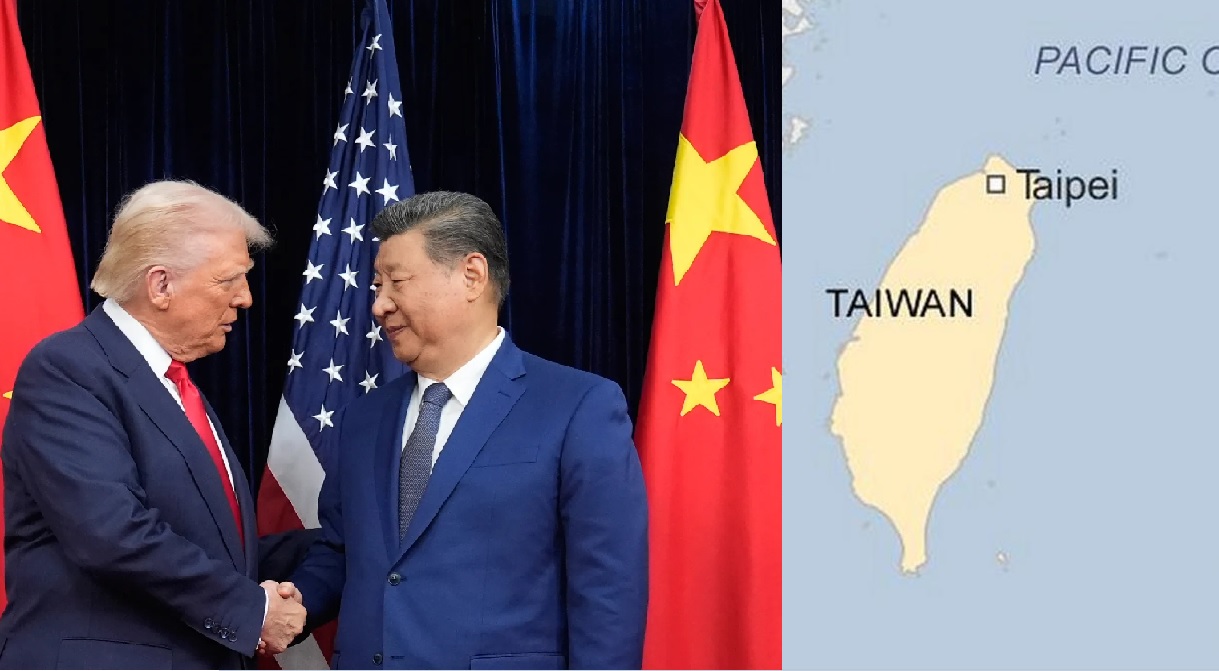
WASHINGTON — May 16, 2026 : U.S. President Donald Trump has reiterated that Washington does not support Taiwan independence while publicly questioning the practicality of direct U.S. military involvement in a potential conflict across the Taiwan Strait, following a two-day summit with Chinese President Xi Jinping in Beijing.
In an interview with Fox News recorded during his visit to China and aired after his departure on May 15, 2026, Trump emphasized the geographic and military imbalance between China and Taiwan, describing the situation as strategically difficult for the United States.
“The Chinese just don’t want to see this place — we’ll call it a place, because nobody knows how to define it — but they don’t want to see it go independent,” Trump said during the interview conducted aboard Air Force One after leaving Beijing.
He added that he was not seeking a confrontation over Taiwan’s political status and questioned whether the United States should become militarily involved in a war so far from American territory.
“I’m not looking to have somebody go independent. And, you know, are we supposed to travel 9,500 miles to fight a war? I’m not looking for that,” Trump stated.
The U.S. president further highlighted the military and geographic realities surrounding the Taiwan issue, noting China’s proximity and comparative size.
“When you look at the odds, China is a very, very powerful and big country. That’s a very small island. Think of it; it’s 59 miles away. We’re 9,500 miles away. That’s a little bit of a difficult problem,” he said.
Trump also urged both Beijing and Taipei to avoid escalation and maintain stability across the Taiwan Strait, stating that he wanted “both sides to cool down.”
The remarks came after extensive discussions on Taiwan during Trump’s summit with Xi in Beijing, which marked Trump’s first official visit to China in nearly a decade. According to Trump, Xi described Taiwan as the most important issue in China-U.S. relations and warned that mishandling the matter could lead to confrontation and damage broader bilateral ties.
Trump stated that Xi assured him China would not invade Taiwan during his presidency, although no formal agreement or joint statement was announced regarding military commitments or cross-strait security arrangements.
The U.S. president also reaffirmed that Washington’s overall policy toward Taiwan had not formally changed. No announcement was made regarding a shift away from the long-standing U.S. framework of “strategic ambiguity,” under which Washington does not explicitly confirm whether it would militarily defend Taiwan in the event of a Chinese attack.
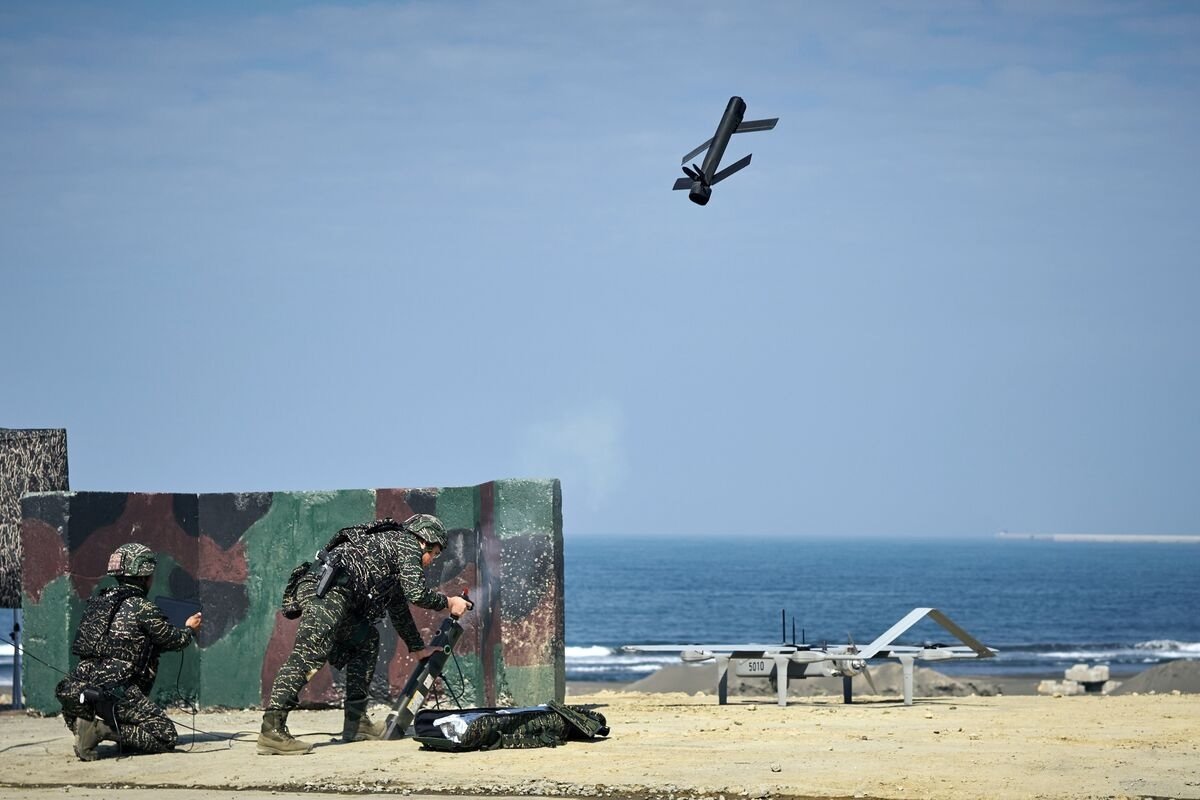
During the interview, Trump additionally addressed a pending U.S. arms sales package for Taiwan reportedly valued between $11 billion and $14 billion. He confirmed that he has not yet approved the package and characterized the proposed sale as leverage in broader negotiations with Beijing.
“It’s a very good negotiating chip for us, frankly. It’s a lot of weapons,” Trump said, adding that a decision would be made in the near future and that he planned to speak directly with Taiwan’s leadership.
The comments reflected Trump’s broader approach to balancing U.S.-China relations through trade, technology, and security negotiations while maintaining the existing “one China” policy framework recognized by Washington since 1979.
Trump also repeated longstanding criticism of Taiwan’s dominance in the global semiconductor sector, arguing that previous American administrations allowed critical manufacturing capacity to shift overseas.
“If you look at the history, Taiwan was developed because we had presidents that didn’t know what the hell they were doing. They stole our chip industry,” Trump said.
He reiterated that he wants advanced semiconductor manufacturing relocated to the United States as part of ongoing efforts to strengthen domestic supply chains and reduce dependence on foreign production.
Taiwan remains central to the global semiconductor industry, producing more than 90 percent of the world’s most advanced chips through companies including Taiwan Semiconductor Manufacturing Company (TSMC).
Taiwan responded to Trump’s remarks on May 16, 2026, with the Presidential Office and Ministry of Foreign Affairs reaffirming that the Republic of China, Taiwan’s official name, is “a sovereign, independent democratic country.”
Taiwanese Presidential Office spokesperson Karen Kuo stated that Beijing’s sovereignty claims over Taiwan “are without merit” and noted that senior U.S. officials, including Trump and Secretary of State Marco Rubio, had repeatedly stated that Washington’s policy toward Taiwan remains unchanged.
Taipei also reiterated its commitment to preserving the status quo across the Taiwan Strait and maintaining regional peace and stability amid continued tensions between China and Taiwan.
China, which considers Taiwan part of its sovereign territory, has consistently opposed any moves toward formal Taiwanese independence and has not ruled out the use of force to achieve unification. Chinese officials have repeatedly identified Taiwan as the most sensitive issue in relations between Beijing and Washington.
Chinese Foreign Minister Wang Yi stated following the summit that Beijing believes Trump understands China’s core concerns regarding Taiwan and emphasized that stable handling of the issue remains essential to preventing broader confrontation between the two powers.
Trump described the current U.S.-China relationship as a “G-2” dynamic during the interview and praised his personal relationship with Xi, presenting the Beijing summit as a major diplomatic engagement focused on trade, security, technology, and regional stability.
The developments come amid continued monitoring of cross-strait military activity and broader geopolitical competition between the United States and China in the Indo-Pacific region. Discussions between Washington and Taipei regarding arms sales, semiconductor cooperation, and regional security are expected to continue in the coming weeks as the Trump administration reviews the pending defense package and other bilateral matters.
——— End of Article ———