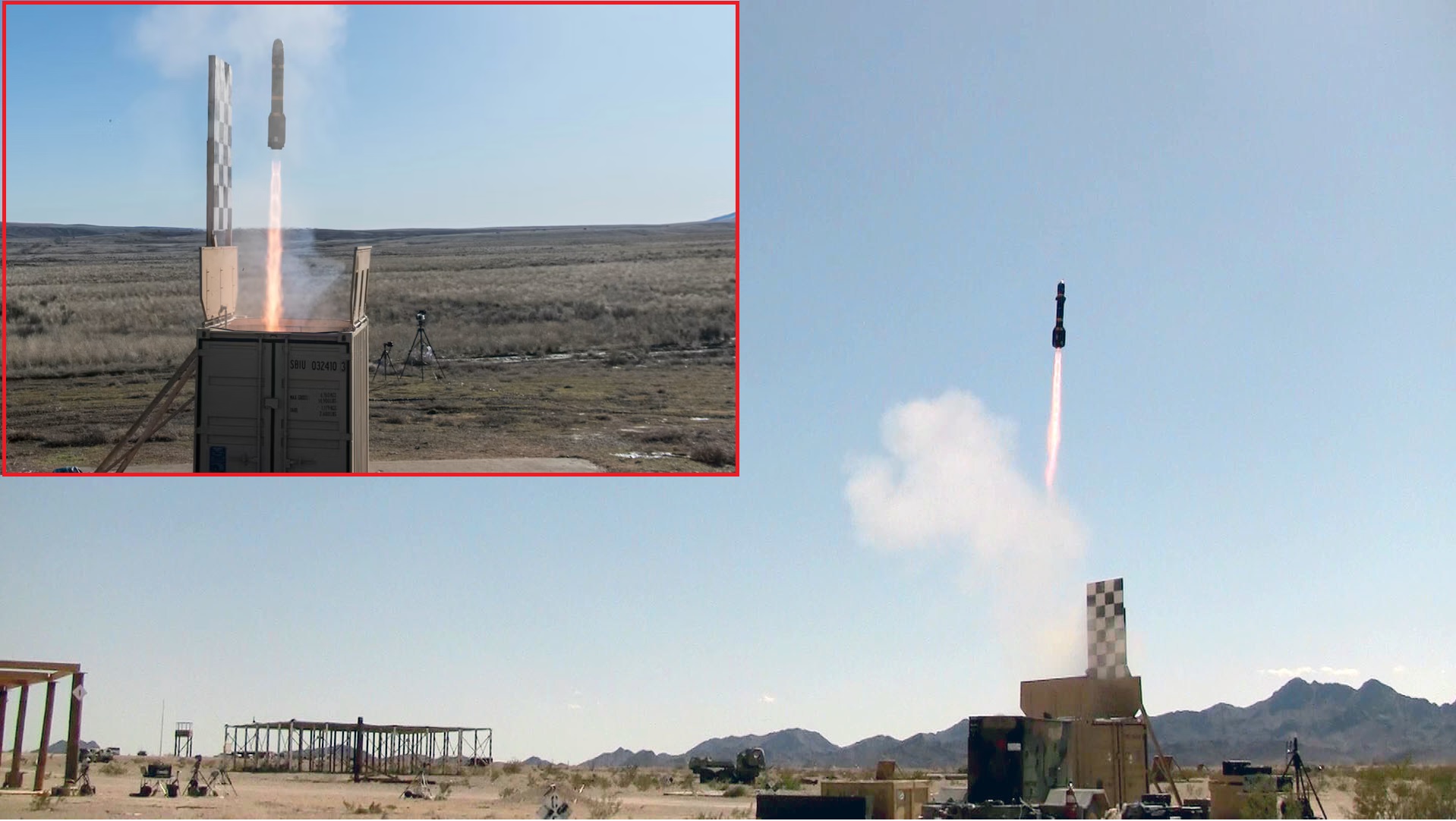
YUMA PROVING GROUNDS, Arizona — June 03, 2026 : Lockheed Martin has successfully intercepted a Group 3 one-way attack drone during the first live-fire demonstration of its GRIZZLY containerized launcher integrated with the Sanctum Counter-Unmanned Aerial System (C-UAS). The test, conducted at Yuma Proving Grounds in Arizona, also marked the first operational launch of a Joint Air-to-Ground Missile (JAGM) from the GRIZZLY system.
The demonstration brought together Fortem Technologies’ R-40 radar, the Sanctum battle management system, and the GRIZZLY launcher to execute a complete counter-drone engagement sequence. According to Lockheed Martin, the entire effort—from hardware-in-the-loop integration to the successful live-fire event—was completed in less than 45 days.
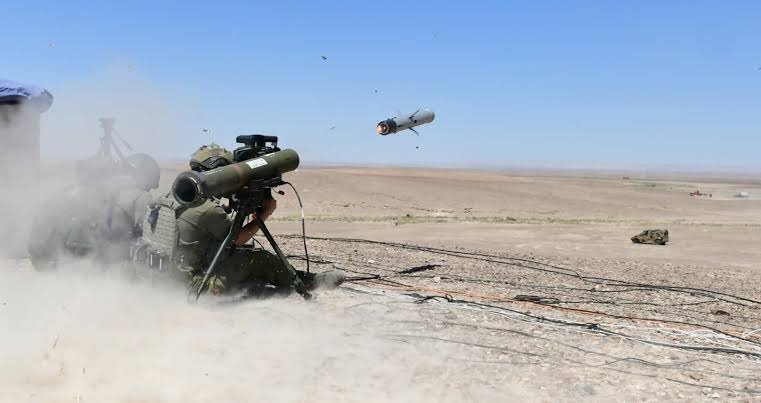
During the test, the R-40 radar detected and tracked the incoming unmanned aerial vehicle. The target data was then processed by Sanctum’s mission management software, which coordinated the engagement and directed the launcher to fire a JAGM missile. The missile successfully intercepted and destroyed the drone.
The JAGM is equipped with a dual-mode seeker that combines semi-active laser and millimeter-wave radar guidance, enabling accurate target engagement in a range of operational conditions.
Lockheed Martin developed the GRIZZLY launcher as a compact and mobile counter-drone solution. Built within a standard 10-foot shipping container using commercial off-the-shelf materials, the system can be rapidly transported and deployed with minimal infrastructure requirements. The launcher can be installed at fixed ground locations or mounted on maritime platforms, expanding its operational flexibility.
The launcher carries up to eight missiles and features a toolless reload mechanism designed to simplify maintenance and sustainment operations. Its wireless architecture allows radars, battle management software, and launchers to communicate without extensive cabling, supporting distributed deployments and flexible sensor placement.
The integrated system is designed to counter a broad range of unmanned aerial threats, including Group 1 through Group 4 drones. Lockheed Martin said the capability is intended to support the protection of forward operating bases, critical infrastructure, military facilities, and maritime assets.
The Sanctum C-UAS functions as the system’s central battle manager, integrating sensor data, mission management software, artificial intelligence-enabled processing tools, and engagement systems into a unified defensive network. The architecture can operate independently or connect with higher-level command-and-control networks through Sanctum’s mesh communications framework.
Commenting on the achievement, Randy Crites, Vice President and General Manager of Lockheed Martin Advanced Programs, said the rapid integration of GRIZZLY and Sanctum demonstrated the company’s ability to accelerate delivery of layered defense capabilities through cross-program collaboration and battlefield-driven innovation.
Paul Lemmo, Vice President and General Manager of Lockheed Martin Sensors, Effectors and Mission Systems, said the test validated a low-cost, modular point-defense solution capable of being deployed on land or at sea within days. He added that the system can operate as a standalone capability or as part of a larger integrated defense network.
The successful demonstration comes amid growing demand for counter-drone systems capable of addressing one-way attack UAVs and other emerging aerial threats. Lockheed Martin said the combination of Sanctum, GRIZZLY, and JAGM provides a scalable and rapidly deployable solution designed to meet evolving operational requirements across multiple domains.
——— End of Article ———