ORANGE COUNTY, VIRGINIA — June 03, 2026 : Lockheed Martin and L3Harris Technologies have completed a major propulsion milestone for the U.S. Army’s Precision Strike Missile (PrSM) Increment 4 program, successfully validating a key technology designed to extend the Army’s long-range precision strike capability beyond current operational limits.
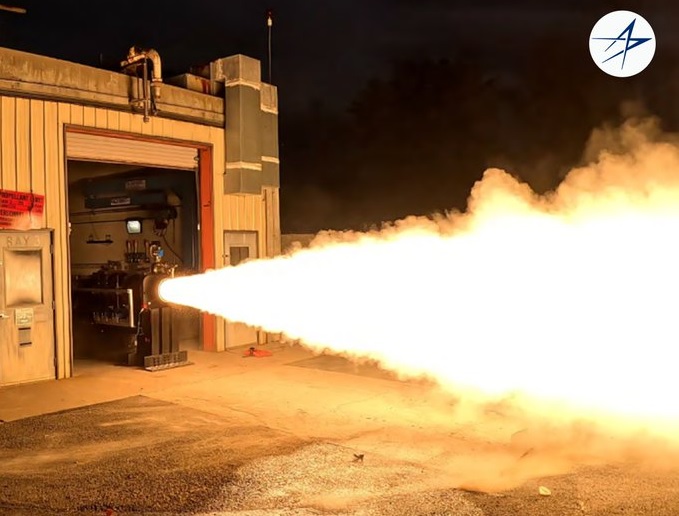
The achievement follows a successful Direct Connect Transition Test conducted at L3Harris’ specialized high-speed air-breathing propulsion facility in Orange County, Virginia, with representatives from the U.S. Army Aviation and Missile Center present during the demonstration. The test marks an important step in the development of the Army’s next-generation long-range strike missile and clears the primary technical hurdle before flight testing begins.
During the trial, the developmental missile successfully demonstrated a clean transition from its solid rocket motor to ramjet-powered sustained flight. This propulsion phase, often described as a “booster-to-ramjet handoff,” allows the missile to shift from initial launch acceleration to sustained cruise propulsion during flight.
According to program officials, the successful test validates a critical risk-reduction activity and confirms the operational viability of the missile’s combined-cycle propulsion system. With the ground-based milestone completed, the program is now moving beyond laboratory and propulsion validation activities toward airborne testing, scheduled to begin later this year.
The Precision Strike Missile Increment 4 is being developed to significantly expand the Army’s long-range strike reach while maintaining compatibility with launch systems already in service. Unlike conventional missile propulsion systems, the weapon incorporates ramjet technology—an air-breathing engine that uses forward motion to compress incoming air and generate thrust, enabling longer-range and more efficient sustained flight.
The missile combines a solid rocket booster with a ramjet propulsion system in a dual-mode configuration. The solid rocket motor provides the initial acceleration required after launch, while the ramjet engine sustains high-speed flight over extended distances.
The baseline Precision Strike Missile has already replaced the Army’s legacy Army Tactical Missile System (ATACMS), but Increment 4 introduces a substantial range increase. While the Army’s latest operational requirement seeks a strike range of approximately 800 kilometers, Lockheed Martin’s design objective targets ranges exceeding 1,000 kilometers, or more than 620 miles—roughly doubling the operational reach of current PrSM variants.
The extended range is intended to improve standoff strike capability in contested operational environments, allowing forces to engage targets from safer distances. The missile is designed to target relocatable land-based objectives as well as moving maritime threats, including ships.
In addition to increased range, the system combines high-control authority with high terminal velocity, characteristics intended to complicate interception by enemy air defense systems and improve strike effectiveness during terminal engagement.
Despite the significant increase in capability, the program has been designed to avoid major infrastructure changes for the Army. PrSM Increment 4 maintains the same form factor and transport container used by earlier missile variants, allowing it to remain fully compatible with the Army’s existing High Mobility Artillery Rocket System (HIMARS) and M270 Multiple Launch Rocket System (MLRS).
The missile can also be transported using existing logistics infrastructure, including standard C-130 cargo aircraft, reducing the need for additional transportation systems or supply chain modifications. By retaining compatibility with current launchers and transport systems, the Army can integrate the upgraded missile without requiring extensive retraining or new platform procurement.
“The Direct Connect Transition Test shows the missile’s core propulsion is not a future concept but a validated capability that can be loaded onto current HIMARS and M270 launchers quickly, dramatically shortening the time to warfighter delivery,” said Randy Crites, vice president of Lockheed Martin Advanced Programs.
To support future manufacturing demands, Lockheed Martin and L3Harris have jointly invested more than $300 million in additive manufacturing and automation technologies. The investment is intended to establish a scalable production pipeline capable of accelerating manufacturing while supporting operational fielding requirements.
“Advancing our next-generation propulsion system quickly through ground testing so we are ready now for flight testing confirms our ability to deliver on the Army’s mission requirements,” said Scott Alexander, president of Missile Propulsion at L3Harris. “L3Harris’ propulsion system strikes a balance between capability and affordability by meeting the Army’s requirements for speed, range, and lethality.”
With propulsion risk-reduction activities now completed, the program remains on schedule for operational fielding. Initial flight testing is expected to begin in the fall of 2026 and will focus on validating near-tactical range performance and confirming propulsion maturity under operational conditions. Additional testing is expected to continue through 2027 as the missile advances toward full operational capability.
PrSM Increment 4 forms part of the U.S. Army’s broader modernization effort to expand deep-strike precision fire capabilities against land and maritime targets while leveraging existing launch and logistics systems to accelerate deployment and reduce implementation costs.
——— End of Article ———