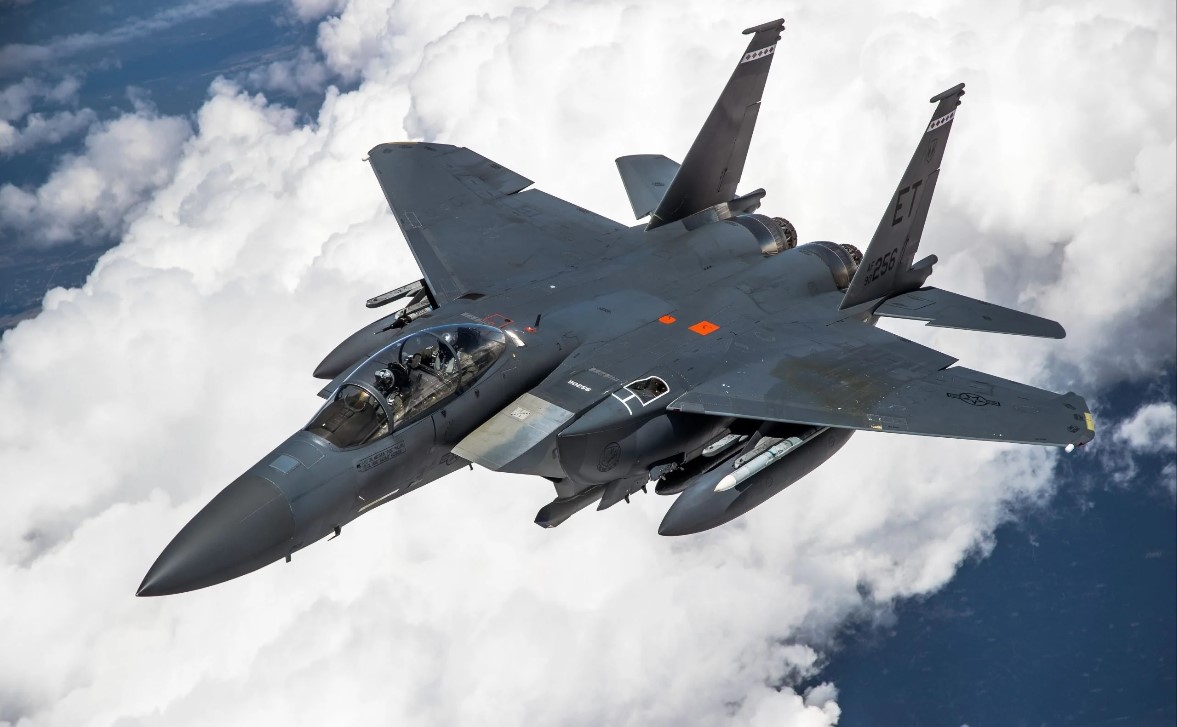
WASHINGTON, — May 24, 2026 : The U.S. Department of Defense’s fiscal 2027 budget proposal includes an emergency request to acquire 24 additional F-15EX Eagle II heavy fighter aircraft for the U.S. Air Force at a projected cost of $2.66 billion, reinforcing the service’s ongoing effort to modernize its combat fleet and replace aging fighter platforms.
According to fiscal 2027 procurement documents, the aircraft are planned for distribution across both active-duty operational units and the Air National Guard. The proposal also indicates that F-15EX production is expected to continue through fiscal year 2031 as part of a broader long-term fighter recapitalization strategy.
Fleet Modernization and Expanded Procurement
The F-15EX program was originally established to provide a rapid replacement for the Air Force’s aging F-15C/D fleet, which has faced years of structural fatigue, declining operational readiness, and increasing sustainment costs. Over time, however, the role of the aircraft has expanded in response to changing modernization priorities and budget planning.
Initial acquisition plans envisioned a procurement ceiling of 144 aircraft, but later budget revisions significantly expanded the objective. Current planning documents outline a target fleet of 267 aircraft, more than double the earlier plan of 129 fighters.
The expanded fleet is intended not only to retire the remaining F-15C/D interceptor force but also to gradually replace portions of the aging F-15E Strike Eagle inventory. Air Force officials view the aircraft as a practical near-term capability to preserve fighter capacity while next-generation modernization programs continue to develop.
Advanced Systems and Digital Combat Capabilities
Derived from the advanced F-15QA and F-15SA export variants, the F-15EX incorporates mission systems specifically tailored to U.S. Air Force operational requirements. The platform modernizes the long-serving F-15 design into a digitally enhanced combat aircraft designed for modern network-centric warfare.
The aircraft features advanced digital avionics, large-area cockpit displays, and an open mission systems architecture intended to support rapid software updates, future weapons integration, and evolving mission requirements.
For sensor performance and survivability, the F-15EX is equipped with the Raytheon AN/APG-82(V)1 active electronically scanned array radar and the Eagle Passive/Active Warning and Survivability System, improving threat detection, situational awareness, and electronic warfare protection in contested operational environments.
Payload Capacity and Mission Flexibility
One of the F-15EX’s major operational advantages is its large payload capacity. The aircraft can carry up to 14,000 kilograms of weapons and equipment, allowing it to transport significantly larger weapons loads than many stealth aircraft.
The fighter can carry more than 13 air-to-air missiles on external pylons and is capable of conducting multiple mission types, including homeland air defense, maritime strike operations, precision attacks against ground targets, and weapons transport to forward operating bases.
Its external weapons carriage capability also positions the F-15EX as a platform for future long-range strike systems, including hypersonic weapons and extended-range standoff munitions that exceed the internal carriage limits of fifth-generation stealth fighters.
Production Timeline and Operational Integration
The Department of Defense awarded Boeing an initial production contract valued at approximately $1.2 billion in July 2020 for the first lot of F-15EX aircraft. The first aircraft was delivered to the U.S. Air Force in March 2021, and operational examples have already entered service with Air National Guard units, including at Portland Air National Guard Base.
Production of the aircraft takes place at Boeing’s facility in St. Louis, Missouri. Powered by two Pratt & Whitney F100-PW-229 engines, the aircraft can reach speeds of up to Mach 2.5 and is designed with an operational service life of approximately 20,000 flight hours.
A major advantage of the Eagle II program is its compatibility with existing Air Force infrastructure. The F-15EX can be integrated into current maintenance systems, support equipment, operational bases, and pilot training pipelines with minimal infrastructure modification. This allows the Air Force to field the aircraft more rapidly and at lower transition costs while continuing wider modernization efforts, including procurement of the F-35A Lightning II.
——— End of Article ———