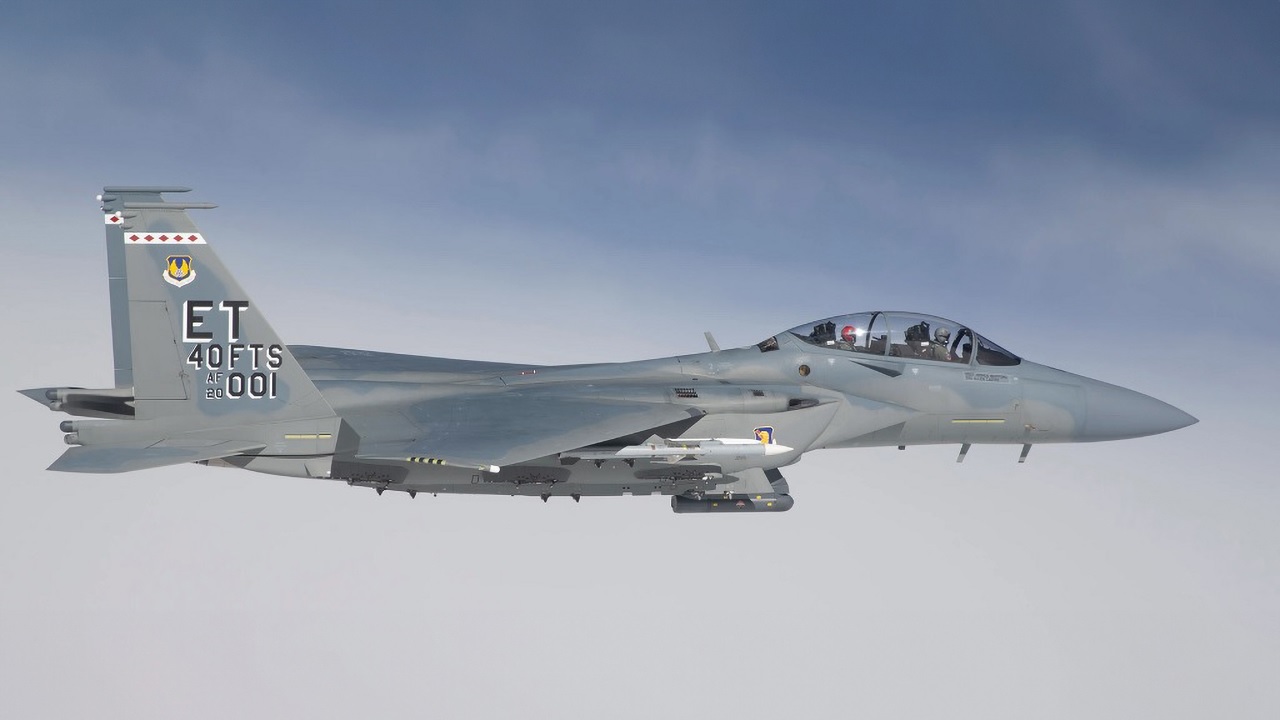
ROBINS AIR FORCE BASE, Georgia — May 27, 2026 : The U.S. Air Force has established a dedicated installation pathway to accelerate integration of the AN/ALQ-250 Eagle Passive Active Warning Survivability System (EPAWSS) across the F-15E Strike Eagle fleet, separating the advanced electronic warfare upgrade from routine maintenance schedules to speed delivery to operational squadrons.
Announced by the Air Force Life Cycle Management Center (AFLCMC) on May 26, 2026, the new EPAWSS “Speedline” at the Warner Robins Air Logistics Complex in Georgia will begin receiving F-15E aircraft for modification in June 2026. The independent installation line is designed to operate separately from the aircraft’s standard Programmed Depot Maintenance (PDM) process, enabling aircraft not yet scheduled for depot work to receive the survivability upgrade earlier.
Dedicated Installation Line to Speed Fielding
Historically, EPAWSS integration was conducted during scheduled PDM cycles at Warner Robins, a process that consolidated maintenance but restricted installation rates because upgrades could only occur when aircraft entered depot maintenance. A 2025 Government Accountability Office assessment noted that linking modifications to PDM timelines delayed broader fleet fielding of the system.
The newly established Speedline removes this limitation by creating a dedicated pathway exclusively for EPAWSS modifications. According to AFLCMC, the separation provides flexibility to install the system on aircraft that may not be scheduled for depot maintenance for another five to seven years.
“The newly established Speedline resolves this limitation and operates entirely independent of the standard PDM line,” AFLCMC said. “This vital separation provides the program with the necessary flexibility to complete installations of this critical defensive system on aircraft that may not be due for PDM for another five to seven years.”
Lt. Col. Matthew Heil, EPAWSS Materiel Leader for the F-15 Program Office, said the upgrade is essential to maintaining the Strike Eagle’s effectiveness in modern combat environments.
“The F-15E Strike Eagle remains a cornerstone of our tactical airpower and deep strike capabilities,” Heil said. “We are not merely extending the life of this platform; we are aggressively expanding its lethality and survivability to ensure it dominates the modern battlespace.”
Program Timeline and Fleet Implementation
EPAWSS completed Initial Operational Test and Evaluation (IOT&E) for both the F-15E Strike Eagle and F-15EX Eagle II in early 2024 before entering full-rate production in January 2025. Boeing, serving as prime integrator, received a $615.8 million contract to support procurement and installation activities through 2030, while BAE Systems manufactures the system and develops its software architecture.
The Air Force plans to retrofit 99 F-15E Strike Eagles with EPAWSS, while the system is installed as standard equipment on all new-production F-15EX aircraft. Before broader operational fielding, installations were limited to developmental and operational test aircraft assigned to Eglin Air Force Base, Florida, and Nellis Air Force Base, Nevada.
Operational integration began with aircraft assigned to the 48th Fighter Wing at RAF Lakenheath in the United Kingdom. Modification work on the first operational F-15E started in May 2023, and the first two EPAWSS-equipped aircraft were delivered to the wing in January 2025.
AN/ALQ-250 EPAWSS Capabilities
Manufactured by BAE Systems and integrated by Boeing, the AN/ALQ-250 EPAWSS is a fully digital self-protection system designed to detect, identify, locate, deny, degrade, disrupt, and defeat airborne and surface-to-air threats in contested electromagnetic environments.
According to the Director of Operational Test and Evaluation, EPAWSS functionally replaces three legacy Tactical Electronic Warfare System components:
- AN/ALR-56C Radar Warning Receiver
- AN/ALQ-135 Internal Countermeasures Set
- AN/ALE-45 Countermeasures Dispenser Set
The system integrates with the F-15’s AN/APG-82(V)1 Active Electronically Scanned Array radar and the Advanced Display Core Processor II mission computer, improving threat detection, situational awareness, and survivability in electronically contested environments.
EPAWSS is smaller and lighter than previous F-15 electronic warfare systems due to its digital architecture while providing broad instantaneous bandwidth and high-speed scanning to counter modern radio-frequency threats, including low-probability-of-intercept signals and agile emitters.
Expanded Countermeasure Capacity and Cognitive EW
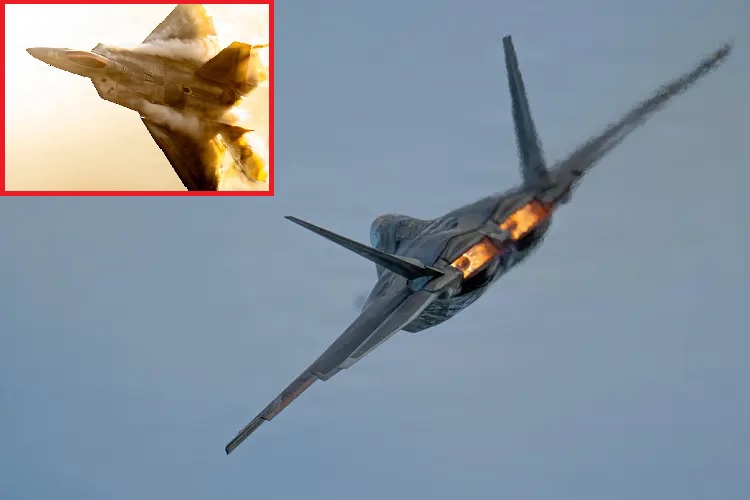
A visible external feature of EPAWSS-equipped aircraft is the addition of two tail fairings positioned outboard of each engine, housing electronic warfare components and additional expendable countermeasure dispensers.
The upgrade increases the F-15’s chaff and flare capacity by 50 percent through four added dispensers, bringing the aircraft total to 12 dispensers capable of carrying up to 360 cartridges. The expanded capacity enables greater use of defensive expendables in modern combat environments, including against shoulder-fired missile threats.
EPAWSS also supports cognitive electronic warfare processing, enabling the system to analyze previously unencountered electromagnetic threats and optimize countermeasure techniques in real time. The capability was demonstrated during the Northern Edge 2023 exercise, where the system processed in-mission data to generate new techniques and adapt waveforms against unfamiliar threats.
“EPAWSS is a leap in technology, improving the lethality and combat capabilities of the F-15E and F-15EX in contested, degraded environments against advanced threats,” said Maj. Bryant “Jager” Baum, EPAWSS Test Director for the Air Force Operational Test and Evaluation Center. “EPAWSS has set the baseline for EW within the fighter community.”
BAE Systems officials said the system was designed for rapid software updates and future capability insertion through agile development methods. While EPAWSS is not currently integrated with the AN/AAR-57A(V) Common Missile Warning System for infrared missile detection, its architecture allows future integration with additional sensors, and the F-15EX retains mounting provisions for potential expansion.
The establishment of the dedicated EPAWSS Speedline is expected to increase the pace of fleet modernization by enabling the Air Force to install the survivability suite outside standard depot maintenance schedules while sustaining long-term upgrades to the F-15E Strike Eagle fleet.
——— End of Article ———