VISAKHAPATNAM, — May 20, 2026 : India has reportedly conducted a successful underwater “pop-up” ejection test of its next-generation K-5 submarine-launched ballistic missile (SLBM) in the Bay of Bengal near Visakhapatnam, marking another important step in the development of the country’s long-range sea-based nuclear deterrent.
According to defence reports, the trial was carried out from a submerged underwater platform following a firing exercise notification issued for the region. The test has not yet been officially confirmed by the Defence Research and Development Organisation (DRDO) or the Ministry of Defence.
The K-5 missile is being developed by the DRDO’s Advanced Systems Laboratory (ASL) in Hyderabad as part of India’s strategic “K-series” submarine-launched ballistic missile programme, named after former President Dr. A.P.J. Abdul Kalam. The missile is expected to become India’s longest-range SLBM once operational.
Pop-Up Test and Launch Validation
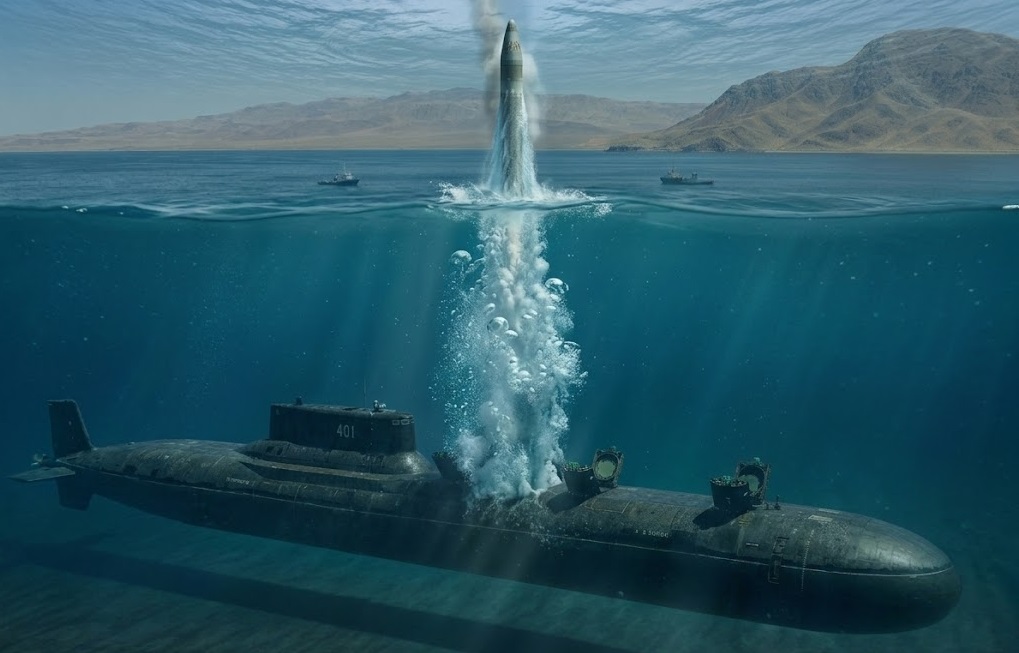
The recent trial involved a “pop-up” or cold-launch ejection procedure, which is considered a critical engineering validation before full powered flight testing begins. During the exercise, an unpowered missile was ejected from a submerged vertical launch tube using a high-pressure gas generator system.
After breaching the water surface, the missile’s launch dynamics, hydrodynamic stability, structural integrity, and ejection trajectory were monitored through onboard sensors and tracking systems. The missile’s rocket motors were intentionally not ignited during the test, and the missile subsequently fell back into the sea after the required launch data was recorded.
The test primarily focused on validating the performance of the missile canister, gas-ejection mechanism, structural nose cap, and underwater launch systems under high-pressure submerged conditions. Successful validation of these systems is considered essential before progressing to integrated powered flight trials.
Defence analysts note that cold-launch technology significantly reduces the thermal and acoustic signature generated during submarine launches, as the missile’s rocket motor ignites only after clearing the water surface. This helps maintain the stealth of the launch platform and reduces the risk of exposing the submarine’s position.
K-5 Missile Specifications
The K-5 is reported to be a three-stage, solid-fuel submarine-launched ballistic missile with an estimated strike range of approximately 5,000 to 6,000 kilometres. Some assessments suggest the missile could eventually achieve a longer operational range.
The missile is estimated to weigh around 20 tonnes and measure approximately 12 metres in length with a diameter between 2.4 and 2.45 metres. Reports indicate that it will be capable of carrying a payload of around two tonnes and achieving speeds exceeding Mach 7 during flight.
One of the major advancements associated with the K-5 programme is the planned integration of Multiple Independently Targetable Re-entry Vehicle (MIRV) capability. This would allow a single missile to carry multiple nuclear warheads capable of striking separate targets independently while deploying penetration aids and countermeasures against missile defence systems.
Strategic Importance
The K-5 is intended to significantly expand the operational reach of India’s sea-based nuclear deterrent. India’s currently operational K-4 SLBM has a reported range of around 3,500 kilometres, requiring submarines to operate closer to strategic regions for certain target coverage.
With the K-5’s extended range, Indian ballistic missile submarines would be able to remain within the comparatively secure waters of the Bay of Bengal while maintaining strategic reach. Defence experts consider this important for strengthening survivability and second-strike capability under India’s nuclear doctrine.
The MIRV capability also increases strike flexibility by allowing a smaller number of missiles to engage multiple targets. Analysts state that this would improve the effectiveness of India’s sea-based deterrent while reducing dependence on larger launch salvos.
Programme Development and Future Trials
The latest underwater ejection test follows the successful November 2025 static test of the K-5’s 10-ton-class stage-2 solid rocket motor at DRDO facilities in Hyderabad. With the completion of the pop-up phase, the programme is expected to move toward full flight-development trials from submerged platforms.
Future tests are expected to evaluate powered flight performance, guidance systems, navigation accuracy, stage separation, and maximum operational range before eventual induction into service.
The K-5 is planned for deployment aboard India’s expanding fleet of nuclear-powered ballistic missile submarines (SSBNs). Initial testing and integration are expected to involve the stretched S4-class submarines, while the missile is primarily intended for the future S5-class SSBNs currently under development.
The upcoming S5-class submarines are expected to displace between 13,500 and 17,000 tonnes and be powered by a 190 MW nuclear reactor. The K-5 missile is projected to enter operational service alongside the S5-class fleet during the early 2030s.
India’s SLBM programme began with the K-15 Sagarika missile and later advanced to the longer-range K-4 system. The K-5 represents the next stage in the evolution of India’s underwater strategic deterrent and the sea-based component of the country’s nuclear triad.
All information regarding the March 2026 pop-up test is based on publicly available defence analysis reports and open-source tracking accounts, as no official confirmation has yet been released by Indian authorities.
——— End of Article ———