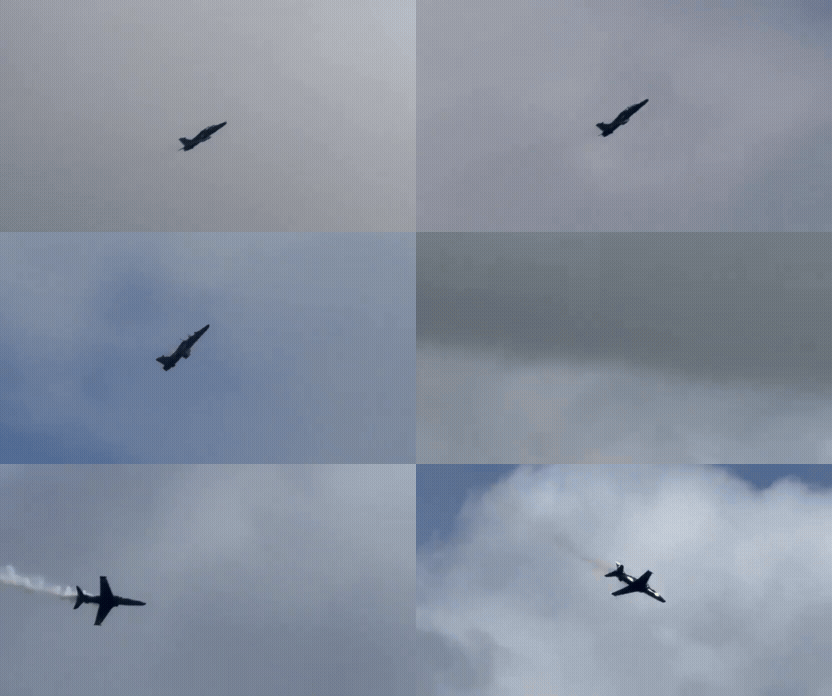
JERUSALEM/TEHRAN, — June 08, 2026 : The Israel Defense Forces (IDF) announced on Monday that dozens of Israeli fighter jets conducted a large-scale operation against air defense systems across western and central Iran, including targets in and around Tehran.
According to the IDF, the strikes targeted air defense infrastructure that Iran had recently deployed to restore capabilities damaged during the earlier stages of the ongoing conflict. Israeli officials said the operation focused on early-warning radars, surface-to-air missile systems, and related military facilities.
The IDF stated that the strikes improved the Israeli Air Force's operational freedom over parts of western and central Iran by degrading key air defense networks. Israeli officials also confirmed that a petrochemical facility in southwestern Iran, which Israel alleges is involved in ballistic missile production, was among the targets.
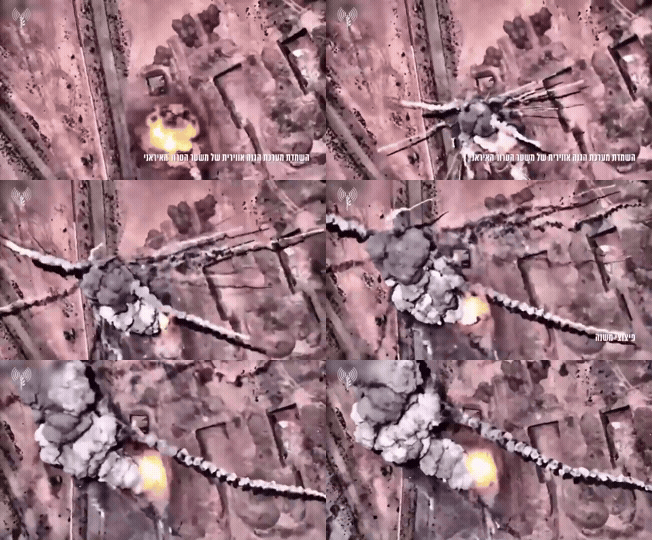
The Israeli military released footage showing precision strikes on military sites linked to the Islamic Revolutionary Guard Corps (IRGC) in southern Tehran. The videos showed multiple explosions and secondary detonations, indicating the presence of military equipment and munitions.
Iranian state media reported that air defense systems were activated in western Tehran and Kermanshah following a new wave of explosions in the area.
Chinese-Made HQ-9 Systems Reportedly Hit
Defense analysts and regional reports indicated that some of the targeted systems included the Chinese-made HQ-9 and HQ-9B long-range surface-to-air missile systems. The HQ-9B, with a reported range of up to 260 kilometers, is designed to intercept aircraft, cruise missiles, and other aerial threats.
According to multiple reports, several HQ-9 batteries were destroyed or rendered inoperable during the strikes. Analysts said Israeli aircraft employed a combination of electronic warfare, suppression of enemy air defenses, and precision-guided munitions to neutralize the systems.
The reported destruction of recently acquired HQ-9 systems has drawn attention to the performance of Chinese military equipment in high-intensity combat environments.
Iran Increasingly Relies on Chinese Equipment
Iran operates a mix of domestic, Russian, and Chinese air defense systems. With Russia focusing on the war in Ukraine and facing constraints on defense exports, Tehran has reportedly increased reliance on Chinese military technology to strengthen its air defense network.
Reports indicate that HQ-9 variants were introduced to help reinforce Iranian defenses after previous conflicts degraded parts of the country's air defense infrastructure.
Strikes Follow Iranian Missile Attacks
The Israeli operation came after Iran launched at least 20 ballistic missiles toward Israel late Sunday and early Monday, according to the IDF. Israeli officials stated that the missiles were either intercepted or landed in unpopulated areas.
At the same time, the Iran-backed Houthi movement in Yemen launched additional attacks targeting Israel.
The latest exchange comes despite a temporary ceasefire reached in April 2026, highlighting continued tensions between the two sides.
Regional Security Concerns
The ongoing conflict has disrupted regional air traffic, with Iranian authorities suspending flights at several airports following the latest attacks.
Military analysts say the recent strikes will likely be closely examined as a real-world test of modern air defense systems, particularly the reported performance of the Chinese-made HQ-9, against advanced aircraft, precision weapons, and electronic warfare capabilities.
The IDF stated that the operation targeted military objectives linked to Iran's missile and drone programs and was aimed at countering security threats posed by those capabilities.
——— End of Article ———