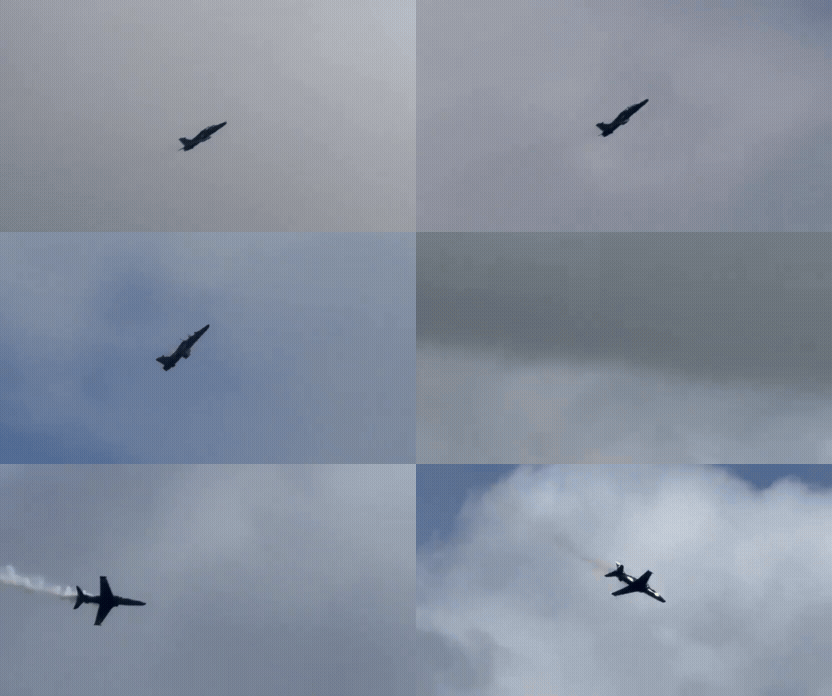
LATAKIA, Syria — May 16, 2026 : Russia has initiated a new phase in the reconstruction of Syria’s armed forces under the government of President Ahmad al-Sharaa, delivering two MiG-29 fighter interceptors to the Syrian Arab Air Force as part of a broader military rebuilding program coordinated with Syrian and Turkish authorities.
The aircraft were flown on May 16, 2026, by Syrian pilots from Russia’s Hmeimim Air Base near Latakia, marking the first confirmed transfer of combat aircraft to Damascus since the collapse of Bashar al-Assad’s government in December 2024. Russian forces stationed at the base are currently providing security protection for the aircraft amid concerns over potential Israeli airstrikes targeting newly restored Syrian military assets.
The delivery represents the first major step toward rebuilding Syria’s air combat capability following the formation of the transitional government led by Ahmad al-Sharaa, who formally assumed office in January 2025. Syrian military infrastructure and operational capabilities were significantly reduced during the political transition and subsequent restructuring of the armed forces, leaving only a limited number of operational aircraft from the pre-2024 inventory.
The MiG-29 fighters are expected to restore part of Syria’s interceptor capacity and support future pilot training and air defense operations. The aircraft, originally developed by the Soviet Union and later modernized by Russia, are capable of conducting both air-to-air and limited air-to-ground missions.
Turkey’s Role in the Rebuilding Program
The transfer was facilitated following requests from Turkey, which has emerged as one of the principal external supporters of Syria’s transitional authorities. Ankara has pursued expanded security cooperation with Damascus as part of efforts to stabilize northern Syria, strengthen border security, and support the gradual return of Syrian refugees.
Turkish and Syrian officials have held multiple discussions over the past year regarding the restructuring of Syria’s military institutions, including plans to integrate various armed factions into a centralized national command structure. The cooperation framework includes military training programs, equipment modernization efforts, and broader defense coordination initiatives aimed at rebuilding a unified Syrian military.
Turkey’s support for rebuilding Syria’s armed forces reflects its broader objective of establishing long-term stability along its southern border while strengthening the authority of the transitional government in Damascus.
Russia Maintains Strategic Military Presence
Despite serving as the principal military backer of the former Assad government during the Syrian civil war, Russia has adjusted its strategy following the political transition in Damascus. Moscow has retained operations at Hmeimim Air Base and the Tartus naval facility while reducing activity at several smaller military outposts previously maintained across Syria.
Under agreements reached between Moscow and the al-Sharaa administration, Russia has preserved operational access to both strategic facilities and expanded its role as a provider of military training, technical assistance, logistics support, and defense restructuring assistance.
The rebuilding initiative follows diplomatic engagements conducted over the past year between Syrian and Russian officials. In October 2025, President Ahmad al-Sharaa traveled to Moscow for his first official visit to Russia, where he met with Russian President Vladimir Putin to discuss bilateral relations, military cooperation, and the future status of Russian military installations in Syria.
During the meetings, al-Sharaa reaffirmed Syria’s commitment to honoring previously signed bilateral agreements governing Russian military access and cooperation. In return, Syrian officials requested Russian assistance in rebuilding the country’s military infrastructure and restoring operational defense capabilities, particularly within the air force and air defense sectors, which remain heavily dependent on Soviet-era systems and Russian technical expertise.
Hmeimim Base Becomes Center of Air Force Reconstruction
Hmeimim Air Base, located near Syria’s Mediterranean coast in Latakia province, has served as Russia’s primary air operations hub in Syria since 2015. Following the fall of the previous Syrian government in late 2024, the base remained operational and continued functioning as a logistics and military coordination center.
Discussions between Damascus and Moscow have also included plans to convert parts of Hmeimim into joint training and operational facilities for the Syrian armed forces while maintaining Russia’s independent military capabilities at the site.
Russian military advisers are reportedly involved in pilot instruction, aircraft maintenance support, and organizational restructuring programs linked to the restoration of the Syrian Air Force.
The flights conducted by Syrian pilots from Hmeimim on May 16 are considered the first visible operational outcome of these agreements and signal the beginning of a broader long-term military rebuilding effort.
Security Concerns and Israeli Monitoring
The deployment of the MiG-29 fighters under Russian protection highlights ongoing security concerns surrounding Syrian airspace and regional military tensions.
Since the weakening of the 1974 disengagement framework between Syria and Israel, Israeli military operations and limited incursions from the occupied Golan Heights into southwestern Syria have increased. Israeli authorities have closely monitored efforts by Damascus to restore heavy military capabilities, including combat aircraft, missile systems, and armored formations.
Syrian officials are relying on Russia’s military presence as a deterrent against potential strikes targeting newly restored military assets. Russian forces operating from Hmeimim maintain radar surveillance systems, early-warning networks, and electronic warfare capabilities that historically complicated Israeli operations within Syrian airspace.
By positioning the MiG-29 fighters under direct Russian security coverage, Damascus seeks to reduce the risk of preemptive attacks during the early stages of rebuilding the Syrian Air Force.
Broader Strategic Implications
The aircraft transfer demonstrates Russia’s continued effort to maintain influence in the Middle East through sustained military partnerships and long-term defense agreements while avoiding large-scale troop deployments.
Although the United States has engaged pragmatically with the al-Sharaa administration through diplomatic contacts and official meetings, Russia continues to remain one of the most influential military actors inside Syria due to its established infrastructure, operational presence, and defense relationships.
For Damascus, Russian military and technical support remains essential for restoring national defense institutions, rebuilding centralized military authority, and integrating former armed groups into a unified state structure following years of conflict and political transition.
Syrian and Russian officials have not released additional operational details regarding future aircraft deliveries or deployment schedules. However, officials familiar with the rebuilding program indicate that additional equipment transfers, pilot training activities, and modernization initiatives are expected in future phases of the Syrian armed forces reconstruction effort.
——— End of Article ———