STOCKHOLM — May 3, 2026 : Sweden has formally entered the military space domain following the successful deployment of its first operational reconnaissance and surveillance satellite, a development that establishes an independent national capability for space-based intelligence gathering and threat monitoring.
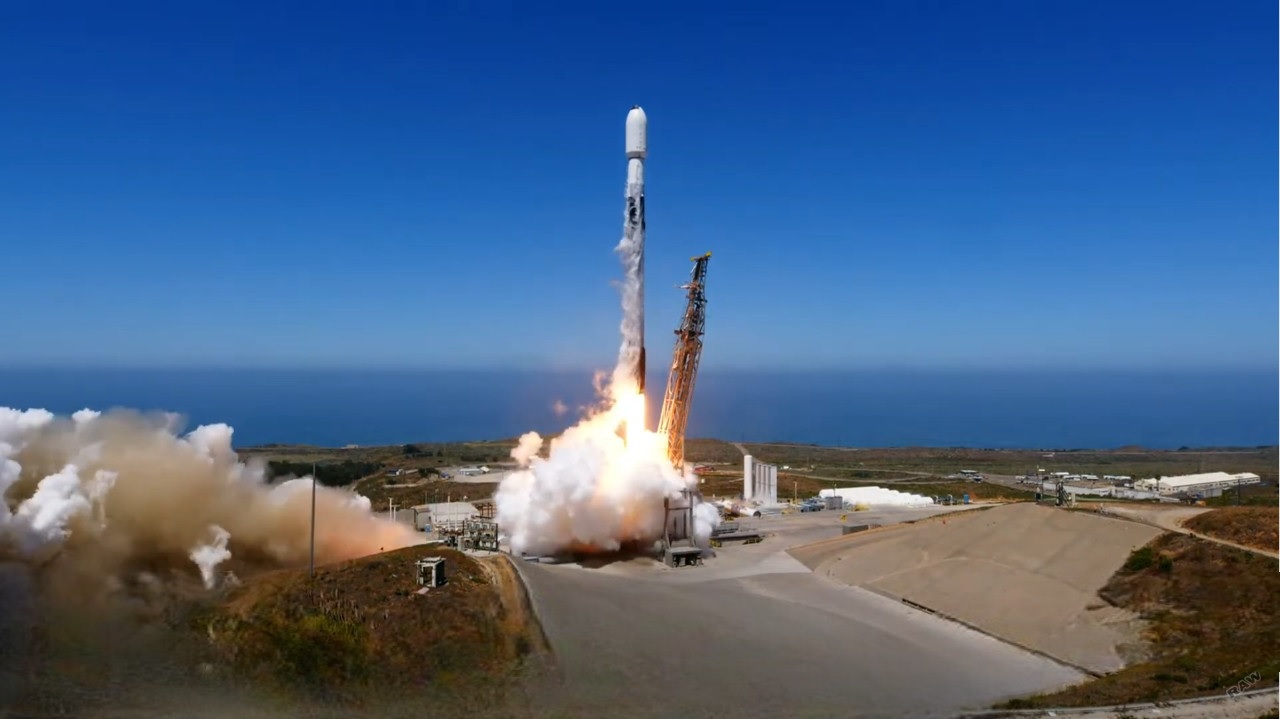
The satellite was launched at 09:00 Swedish time from Vandenberg Space Force Base aboard a Falcon 9 rocket operated by SpaceX. It was manufactured by Planet Labs under a commercial-military partnership and is designed to operate in Low Earth Orbit, delivering high-resolution optical imagery for defence applications.
Launch and System Characteristics
The newly deployed satellite represents Sweden’s first fully operational military reconnaissance platform. Operating in Low Earth Orbit, it provides high-resolution imaging capabilities intended for real-time monitoring and intelligence collection. The system is part of a broader procurement framework managed by Swedish Defence Materiel Administration, which includes both satellite acquisition and access to data services.
The satellite complements additional capabilities being developed through agreements with ICEYE, which will supply synthetic aperture radar (SAR) data. Together, these systems are expected to provide Sweden with a combination of optical and radar-based observation, enabling all-weather, day-and-night surveillance coverage.
Strategic Role and NATO Integration
The deployment is intended to strengthen Sweden’s situational awareness, particularly in monitoring long-range threats and regions that have historically been difficult to observe, including the Arctic. The capability also contributes to collective defence under NATO by enhancing shared intelligence and operational awareness.
Anders Sundeman, head of space for the Swedish Armed Forces, attended the launch and emphasized the operational significance of the system.
He stated that the satellite enables improved monitoring of areas previously inaccessible and provides a clearer operational picture. He added that the capability supports both national defence requirements and NATO’s broader intelligence framework by contributing to long-range threat detection and analysis.
Accelerated Programme Timeline
The satellite forms part of Sweden’s long-term military space programme, which aims to deploy approximately ten satellites in the coming years. Initial launches under this programme are taking place in 2026, four years ahead of the original 2030 target set by defence planners.
Officials attribute the accelerated timeline to coordinated efforts between the Swedish Defence Materiel Administration and the Swedish Defence Research Agency, the latter providing technical research and development support.
The programme builds on earlier efforts, including the 2024 launch of Sweden’s first military communications satellite, which served as a precursor and test platform for subsequent operational systems.
Institutional Framework and Space Operations
To manage its expanding space assets, the Swedish Air Force has initiated the establishment of a dedicated Space Operations Center. This facility will oversee satellite command and control, as well as generate an integrated space situational picture to support military planning and operations.
According to defence officials, the center will play a central role in assessing threats originating from space-based surveillance and reconnaissance activities, while ensuring coordinated responses through improved awareness of the space environment.
International Cooperation and Future Development
During his visit to the United States, Sundeman is scheduled to hold discussions with key American military space entities, including the United States Space Force and the United States Space Command. These engagements are expected to focus on strengthening interoperability and coordination in allied space operations.
The Swedish programme also includes long-term plans for domestic launch capability. Under a separate agreement involving SSC Space and FMV, orbital launch operations from Esrange Space Center are expected to become operational by 2028.
The Swedish government has allocated approximately SEK 1.3 billion (around USD 142 million) to support the development of these space-based defence capabilities. The programme is managed within the Swedish Air Force’s Space Division, which is responsible for coordinating military space activities, including satellite operations and space domain awareness.
Operational Impact
With the satellite now in orbit, Sweden has established an independent capability to monitor areas of strategic interest and support both national and alliance-level defence operations. The system is expected to enhance intelligence gathering, improve response times to emerging threats, and contribute to a broader understanding of activities in contested and remote regions.
The deployment marks the first operational step in Sweden’s expanded military space initiative, with additional satellites planned to further strengthen its reconnaissance and surveillance network in the coming years.
——— End of Article ———