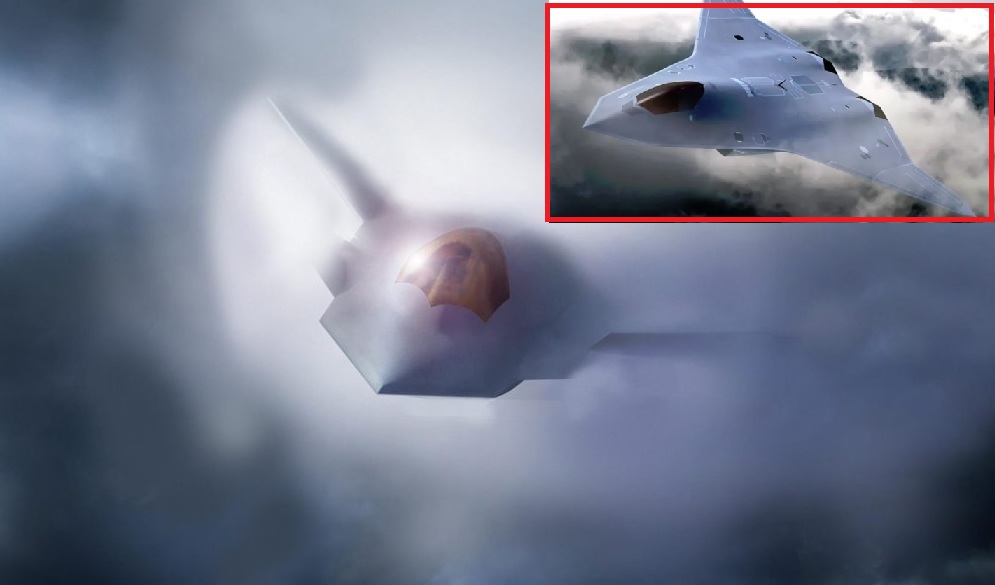
WASHINGTON, D.C. — June 01, 2026 : The U.S. Air Force has requested $5.03 billion in Fiscal Year 2027 funding for the Boeing F-47, the country’s first sixth-generation fighter aircraft, marking a major increase in investment as the Next Generation Air Dominance (NGAD) program moves deeper into development.
According to budget documents released this week, the funding request represents a 65% increase compared with approximately $3.05 billion allocated to the program in Fiscal Year 2026. The increase reflects the Air Force’s effort to accelerate development of a future replacement for the aging F-22 Raptor and expand long-term air superiority capabilities.
F-47 Program Enters Key Development Phase
The F-47 program officially entered the Engineering and Manufacturing Development (EMD) phase after Boeing secured the NGAD contract in March 2025 under an agreement valued at more than $20 billion. The contract award marked Boeing’s first clean-sheet fighter aircraft program in decades and established the company as the lead developer of the Air Force’s next-generation combat jet.
The EMD phase represents one of the most resource-intensive periods of development and includes system integration, prototype construction, digital engineering, testing, and preparation for operational capability.
Of the total $5.03 billion requested for FY2027, approximately $4.92 billion is allocated specifically for direct aircraft development. This includes funding for prototype production, advanced digital design systems, flight testing, and engineering activities required to mature the aircraft before operational deployment.
Budget projections indicate annual F-47 spending will remain above $3.2 billion through 2030, with program expenditures expected to peak at around $5.3 billion in FY2028. By the end of FY2027, cumulative spending on the F-47 is projected to reach nearly $8.5 billion, while the broader five-year NGAD development budget stands at approximately $19.6 billion, separate from Boeing’s EMD contract value.
Defense analysts note that the annual development cost of the F-47 program alone is comparable to the procurement cost of nearly 60 F-35A fighter aircraft.
Development Timeline Extends Into Next Decade
Although experimental NGAD-related X-plane demonstrators have reportedly been flying in classified testing since 2020, the operational version of the F-47 remains several years from entering service.
The Air Force expects the EMD phase to continue through late 2031, requiring further investment before the aircraft becomes ready for combat deployment. Current planning places the first flight of the finalized F-47 prototype in 2028 or 2029.
Air Force Chief of Staff Gen. David Allvin stated in late 2025 that the aircraft remained on track for a first flight target in 2028.
At the same time, development of the aircraft’s propulsion system has encountered delays. The Next Generation Adaptive Propulsion (NGAP) program, responsible for producing advanced variable-cycle engines for the F-47, has reportedly accumulated around three years of delays.
Engine contractors GE Aerospace and Pratt & Whitney are now expected to complete prototyping work in 2031, raising the possibility that early production aircraft may initially operate using interim propulsion systems before the final NGAP engines become available.
Long-Range Capability and Networked Combat Role
The F-47 is being designed for long-range operations, particularly in large operational areas such as the Indo-Pacific theater.
Program details indicate the aircraft is expected to feature a combat radius exceeding 1,000 nautical miles, significantly greater than the F-22 Raptor’s estimated combat radius of approximately 590 nautical miles and the F-35A’s roughly 670 nautical miles.
The aircraft is also expected to sustain speeds exceeding Mach 2 while incorporating advanced stealth characteristics, broadband signature reduction, improved thermal management, and survivability features intended to counter future integrated air-defense systems.
Reports further indicate the aircraft may be compatible with the B61 family of nuclear gravity bombs, expanding its mission flexibility.
A central feature of the F-47 concept is its integration into a broader “family of systems” operating environment. Rather than functioning independently, the fighter is designed to coordinate with satellites, other aircraft, and highly autonomous Collaborative Combat Aircraft (CCA), commonly described as drone wingmen.
The Air Force plans to procure at least two CCA systems for every F-47 fighter, enabling crewed-uncrewed teaming during future combat operations. These autonomous aircraft are expected to support missions ranging from surveillance and electronic warfare to strike operations and force protection.
Strategic Pressure From Global Competition
The accelerated investment in the F-47 program comes amid growing international competition in advanced military aviation.
U.S. defense officials and analysts have increasingly focused on developments in China’s next-generation fighter efforts, including the Chengdu J-36 and Shenyang J-50 programs, which reportedly entered the prototype flight stage in late 2024.
Some defense analysts estimate that the F-47 could enter operational service several years behind competing foreign sixth-generation fighter projects, increasing pressure on the Pentagon to maintain development schedules and industrial production capacity.
The Air Force internally refers to the F-47 system as “Phoenix,” reflecting its role in maintaining future air dominance against technologically advanced competitors.
Procurement Plans and Long-Term Costs
The Air Force has outlined plans to acquire at least 185 F-47 fighters over the long term, though some projections place the potential fleet size between 185 and 250 aircraft.
When the fighter enters production, the projected unit cost is expected to exceed $300 million per aircraft, roughly three times the procurement cost of an F-35 fighter.
Program spending is also expected to rise substantially over time. While development spending alone is projected in the tens of billions of dollars, total program costs, including procurement and long-term sustainment, are expected to reach into the hundreds of billions over the aircraft’s service life.
Congressional Review Ahead
The FY2027 budget request now moves to Congress for review, where lawmakers will determine final funding levels for the program.
The proposal highlights the Pentagon’s growing emphasis on sixth-generation combat aviation as it seeks to modernize the Air Force fleet and sustain operational advantages in future high-intensity conflicts.
——— End of Article ———