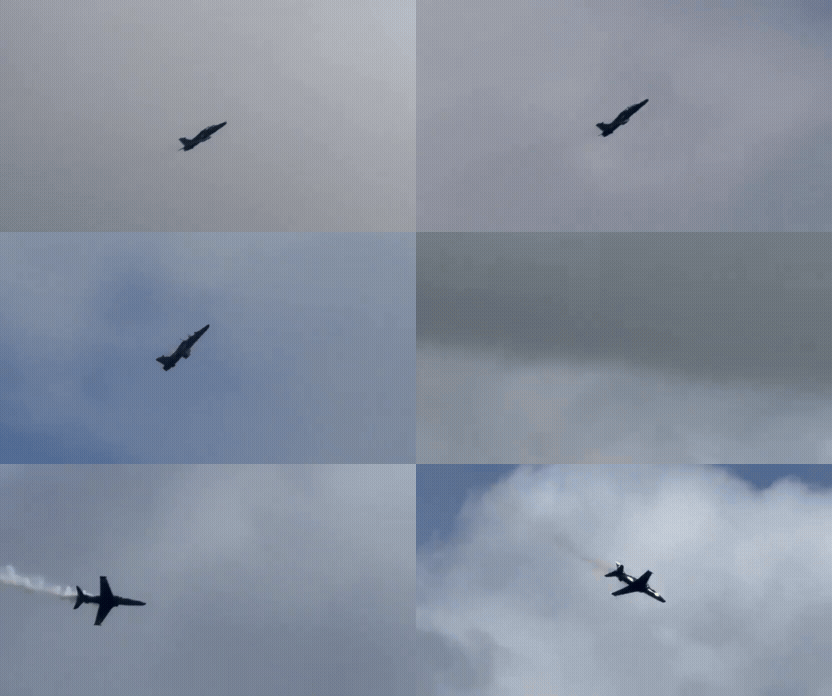
MOSCOW — May 8, 2026 : Russia has doubled production of combat aircraft since the start of the war in Ukraine, according to Rostec Chief Executive Sergei Chemezov, who presented the claim during a formal meeting with Russian President Vladimir Putin.
The statement, published through the Kremlin’s official channels, forms part of Moscow’s broader effort to demonstrate that Russia’s military-industrial sector has adapted to wartime conditions despite extensive Western sanctions imposed since 2022. Russian officials have repeatedly argued that defence production has expanded significantly and that the country’s aerospace industry is successfully replacing combat losses while sustaining ongoing operations.
Independent production figures and battlefield loss assessments from 2025, however, indicate that Russia’s aircraft manufacturing sector continues to face significant constraints, with confirmed deliveries falling short of official procurement goals and attrition rates exceeding replacement output.
Combat Aircraft Deliveries Fell Short of Official Targets
According to an analysis published by the Ukrainian defence outlet Militarnyi, Russia delivered at least 30 new tactical combat aircraft to the Russian Aerospace Forces during 2025. The majority of those aircraft consisted of upgraded variants of existing Soviet-era platforms rather than large-scale deliveries of next-generation systems.
The confirmed deliveries included approximately 14 to 15 Su-34M frontline bombers, 12 Su-35S multirole fighters delivered across six separate batches, two Su-30SM2 multirole aircraft, and roughly two Su-57 fifth-generation fighters.
The Su-34M remained the largest single category of deliveries during the year. The aircraft currently serves as Russia’s primary frontline strike bomber and has been widely employed in glide-bomb operations during the war in Ukraine. The Su-35S continued to support air-superiority and escort missions in contested airspace.
Militarnyi noted that the operational status and readiness level of the reported Su-57 deliveries remain unclear.
Independent assessments cited by NV indicated that Russia’s procurement targets for 2025 aimed for production of as many as 57 combat aircraft across the Su-34, Su-35, Su-30 and Su-57 programmes. Based on the verified delivery figures, actual output reached roughly half of the planned target.
Wartime Attrition Continued to Exceed Production
While Russia continued delivering new aircraft throughout 2025, combat and operational losses remained substantially higher than replacement rates.
According to assessments referenced by NV, the Russian Aerospace Forces lost 65 aircraft during the year in the war against Ukraine. The losses included aircraft destroyed in aerial operations as well as assets damaged or destroyed during Ukrainian strikes on Russian airbases.
Throughout 2025, Ukrainian long-range attacks targeted multiple forward operating airfields, including facilities where Russian aircraft were parked in exposed positions. Among the aircraft reportedly struck were MiG-29 fighters and Il-38N maritime patrol aircraft.
When measured against the approximately 30 newly delivered aircraft, the reported losses resulted in a net reduction of around 35 tactical aircraft during the year. The figures indicate that current production capacity remains insufficient to fully replace wartime attrition.
Su-57 Programme Continues to Face Delays
Russia has continued to present the Su-57 fifth-generation fighter programme as a central element of its long-term military modernisation strategy. However, production levels remain limited.
Only about two Su-57 aircraft were reportedly delivered during 2025. Although Russia’s United Aircraft Corporation later announced the transfer of another modernised batch of Su-57 fighters in February 2026, the company did not disclose the number of aircraft involved.
Open-source intelligence estimates currently place the total operational Su-57 fleet at around 30 aircraft.
Analysts continue to identify development and production difficulties within the programme, particularly involving the Izdeliye 177 next-generation engine. The engine only entered flight-testing stages in late 2025 after repeated delays, slowing broader plans for full-rate production of the fighter.
Sanctions Continue to Affect Aerospace Manufacturing
Western sanctions targeting Russia’s aerospace and defence industries have remained in place since 2022, focusing on restrictions involving precision manufacturing equipment, avionics, semiconductors, specialised alloys, and electronic components required for advanced aircraft production.
Russia has attempted to mitigate those restrictions through domestic component substitution programmes, parallel import networks, and the reallocation of industrial resources toward defence manufacturing. Despite those measures, analysts assess that supply chain disruptions and reduced access to advanced tooling and electronics continue to affect production efficiency and limit expansion capacity.
The wider pressures affecting Russia’s aviation sector were also reflected in Chemezov’s remarks regarding civilian aerospace production. During the same meeting with Putin, the Rostec chief stated that serial production of the domestically developed MS-21 passenger aircraft is now expected to begin in 2027, highlighting continued delays within Russia’s civil aviation industry alongside ongoing military production demands.
Although Russian officials maintain that aircraft production has significantly increased since the beginning of the war, independently verified delivery data and wartime loss figures indicate that current output levels have not yet reached a point where they can fully offset ongoing combat attrition within the Russian Aerospace Forces.
——— End of Article ———