WASHINGTON — May 30, 2026 : The U.S. Department of Defense has awarded L3Harris Technologies a $48.5 million contract to produce proximity fuzes for the Advanced Precision Kill Weapon System (APKWS), supporting efforts to improve counter-drone and cruise missile defense capabilities.
The contract was issued by the Naval Surface Warfare Center Indian Head Division and awarded to L3Harris Fuzing and Ordnance Systems in Cincinnati, Ohio. If all contract options are exercised, the agreement could reach approximately $98.4 million, with production continuing through September 2028.
Funding reflects adoption across multiple military branches, with approximately 68 percent coming from U.S. Air Force ammunition procurement accounts and around 28 percent from the Navy and Marine Corps. The contract follows prototype development completed under a separate Other Transaction Agreement and was awarded directly to accelerate fielding of the capability.
APKWS Adapted for Air-to-Air Drone Intercepts
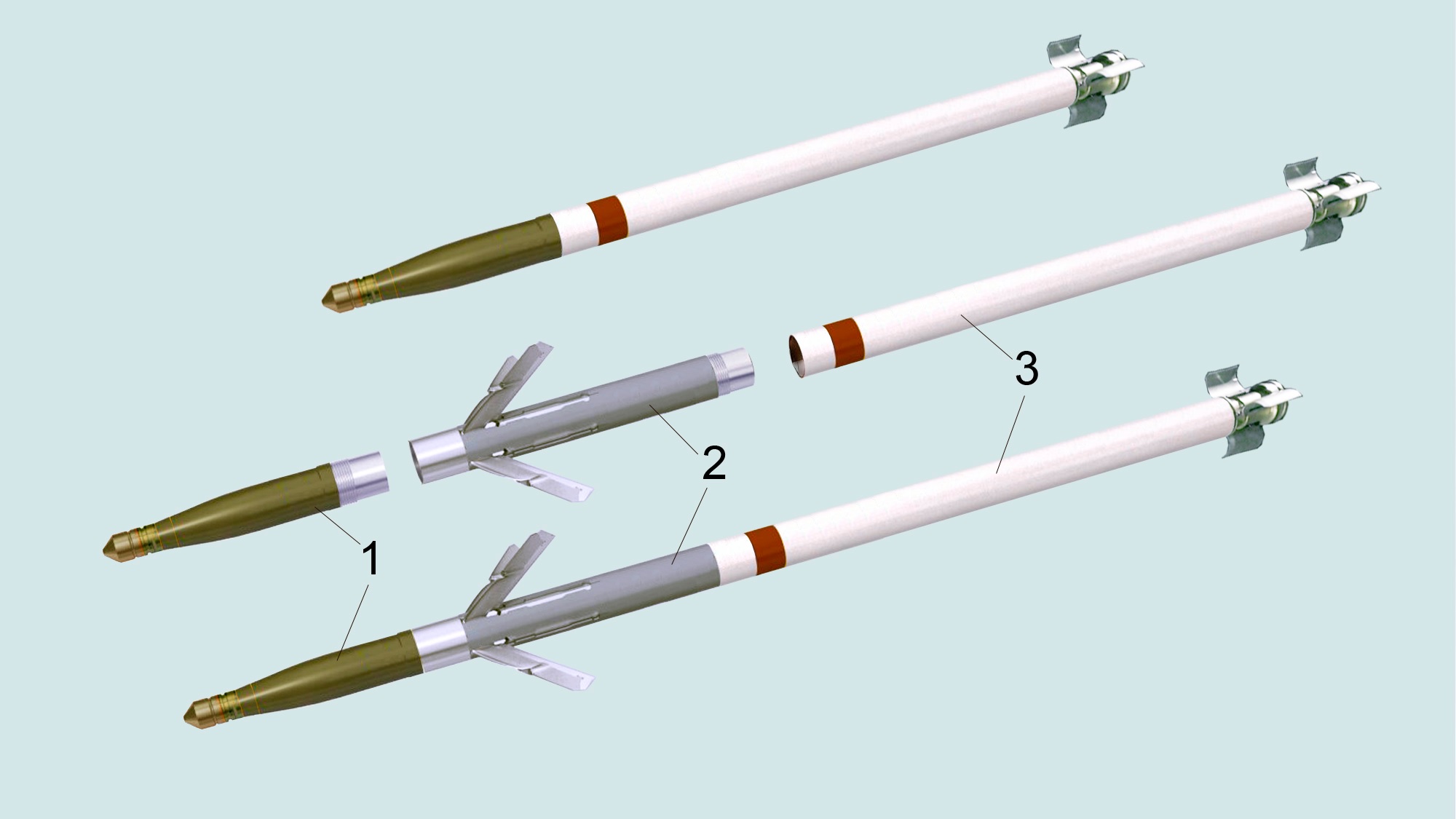
The APKWS is a 70-millimeter (2.75-inch) precision-guided rocket developed from the Hydra 70 rocket family. Originally designed as a low-cost precision strike weapon for ground targets, the system uses a laser-guidance kit produced by BAE Systems that converts unguided rockets into guided munitions.
The upgraded proximity fuze expands the rocket’s air-to-air role. Developed using radio-frequency sensor technology from Technology Service Corporation (TSC) and integrated with an L3Harris safe-and-arm device, the fuze detonates when the rocket passes near a target rather than requiring a direct hit.
This enables fragmentation to engage drones and cruise missiles more effectively, improving interception success against fast-moving or maneuvering aerial threats.
Testing and Combat Use
The Pentagon’s Joint Counter-Small Unmanned Aircraft Systems Office validated the fuze during testing at Yuma Proving Ground, Arizona. During evaluations, the system demonstrated a reported 100 percent effectiveness rate against Group 3 drones, which typically operate above 1,200 meters (3,940 feet) and at speeds exceeding 185 kilometers per hour (115 miles per hour).
The upgraded air-to-air APKWS variant, designated AGR-20F, achieved its first combat intercepts in 2024 when U.S. Air Force F-16 aircraft operating over the Red Sea used proximity-fuzed rockets to shoot down Houthi drones.
Lower-Cost Counter-Drone Capability
An APKWS round costs an estimated $20,000 to $30,000, compared with roughly $400,000 for an AIM-9X Sidewinder missile, providing a lower-cost option for counter-drone operations.
The system also increases aircraft magazine capacity. Because APKWS rockets use standard 70-millimeter launcher pods, an F-16 equipped with six seven-tube launchers can carry up to 42 guided rockets, offering significantly greater engagement capacity than conventional air-to-air missile loadouts.
Continued Development and Wider Integration
In February 2026, BAE Systems received a contract worth up to $145 million under the Fixed Wing, Air Launched, Counter-Unmanned Aircraft Systems Ordnance (FALCO) program to develop a dual-mode APKWS variant for counter-drone missions.
The upgraded configuration combines laser guidance with a Long Wave Infrared (LWIR) seeker, allowing the rocket to continue tracking targets after launch and reducing the need for continuous laser designation.
The Marine Corps is also integrating the air-to-air APKWS variant onto legacy F/A-18C/D Hornet aircraft under Aviation Plan 2026 to expand counter-drone capacity while preserving higher-cost missile inventories.
The proximity fuze technology has additionally been adapted for ground-based defense through L3Harris’ Vehicle-Agnostic Modular Palletized ISR Rocket Equipment (VAMPIRE) system, which combines sensors and APKWS launchers into a mobile counter-drone platform. VAMPIRE systems deployed to Ukraine in 2023 have been used against Russian drone attacks using the same proximity-fuzed rocket concept.
——— End of Article ———