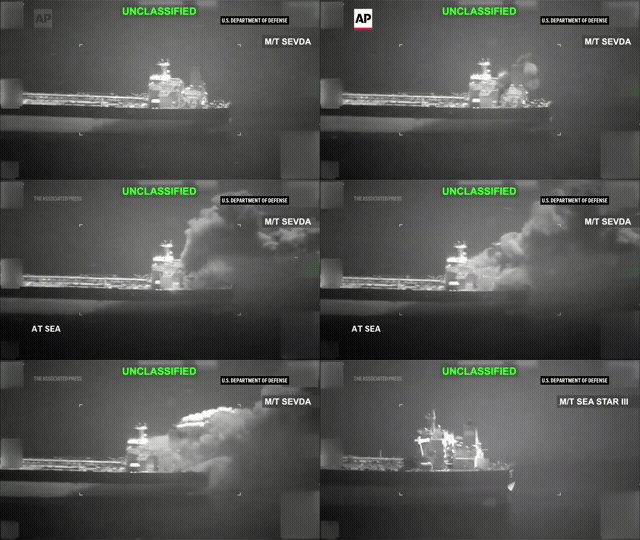
WASHINGTON — May 9, 2026 : The United States Central Command (CENTCOM) has released operational footage showing U.S. Navy aircraft disabling two Iranian-flagged oil tankers in the Gulf of Oman during ongoing enforcement of the U.S. naval blockade on Iranian ports.
According to CENTCOM, the latest operation took place on May 8, when the tankers M/T Sea Star III and M/T Sevda attempted to transit toward Iranian ports through the Strait of Hormuz region. U.S. officials stated that both vessels failed to comply with repeated warnings issued by American forces enforcing blockade measures.
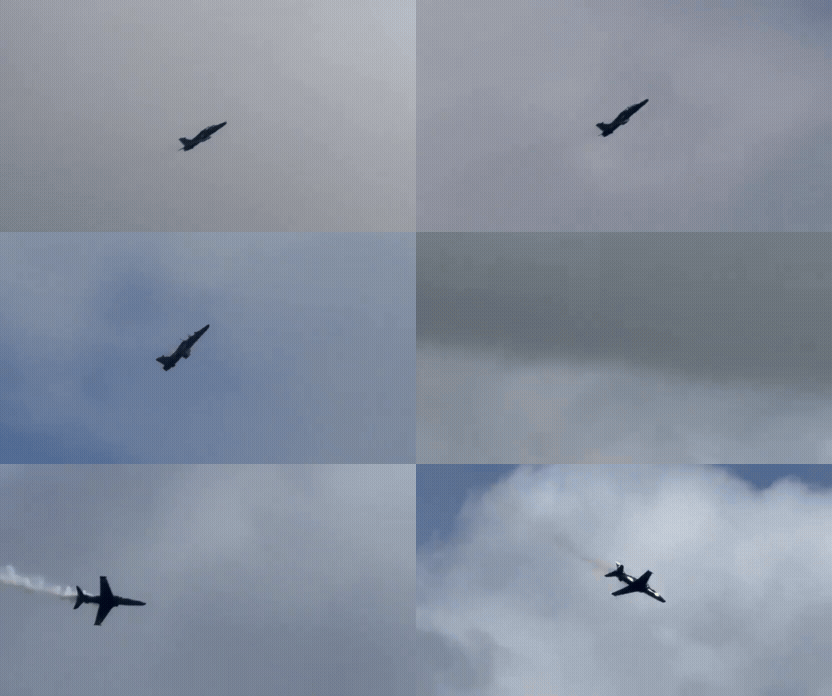
CENTCOM said U.S. Navy F/A-18 Super Hornets launched from the aircraft carrier USS George H.W. Bush carried out precision strikes targeting the smokestacks of both tankers, disabling the vessels before they could continue their transit. Officials confirmed that both ships were unladen at the time of the operation.
Earlier Interdiction of M/T Hasna
The latest strikes followed a similar enforcement action conducted earlier in the week. On May 6, U.S. forces disabled the Iranian-flagged tanker M/T Hasna in the Gulf of Oman after the vessel reportedly ignored repeated warnings while attempting to sail toward an Iranian port.
According to CENTCOM, an F/A-18 Super Hornet launched from the USS Abraham Lincoln fired several 20mm cannon rounds at the tanker’s rudder, disabling its steering system and stopping the vessel from continuing its transit. U.S. officials stated that M/T Hasna was also unladen.
CENTCOM confirmed that all three vessels — Hasna, Sea Star III, and Sevda — are no longer transiting toward Iran.
Ongoing U.S. Naval Blockade
The operations form part of the broader U.S. naval blockade launched on April 13, 2026, targeting vessels entering or departing Iranian ports and coastal areas.
According to U.S. military officials, the operation currently involves more than 15,000 personnel, approximately 20 warships, and around 200 aircraft operating across the region.
CENTCOM stated that more than 70 tankers carrying over 166 million barrels of Iranian oil have been prevented from movement since the blockade began. U.S. officials estimate the affected shipments have a combined value exceeding $13 billion.
Adm. Brad Cooper, commander of U.S. Central Command, said U.S. forces remain committed to full enforcement of the blockade and praised the precision and operational execution of the naval aviators involved in the missions.
Regional Maritime Tensions
The latest incidents come amid continuing tensions surrounding maritime security in the Strait of Hormuz and the Gulf of Oman.
U.S. officials have described the blockade as part of broader efforts to restrict maritime traffic linked to Iranian ports following months of attacks on commercial shipping in the region.
According to U.S. authorities, Iranian forces previously used explosive drone boats, ballistic missiles, and sea mines in attacks targeting international commercial vessels operating near the Strait of Hormuz.
Among the incidents cited by U.S. officials were a projectile strike on the oil tanker Skylight, which reportedly killed two Indian crew members and injured three others, and a drone boat attack on the MKD VYOM that caused a major engine room fire resulting in one fatality.
U.S. officials also referenced the sinking of a tugboat sent to assist the damaged vessel Safeen Prestige, leaving several crew members missing.
CENTCOM stated that the latest interdictions are part of continued enforcement measures aimed at preventing Iranian-linked maritime traffic from reaching Iranian ports during the blockade period.
——— End of Article ———