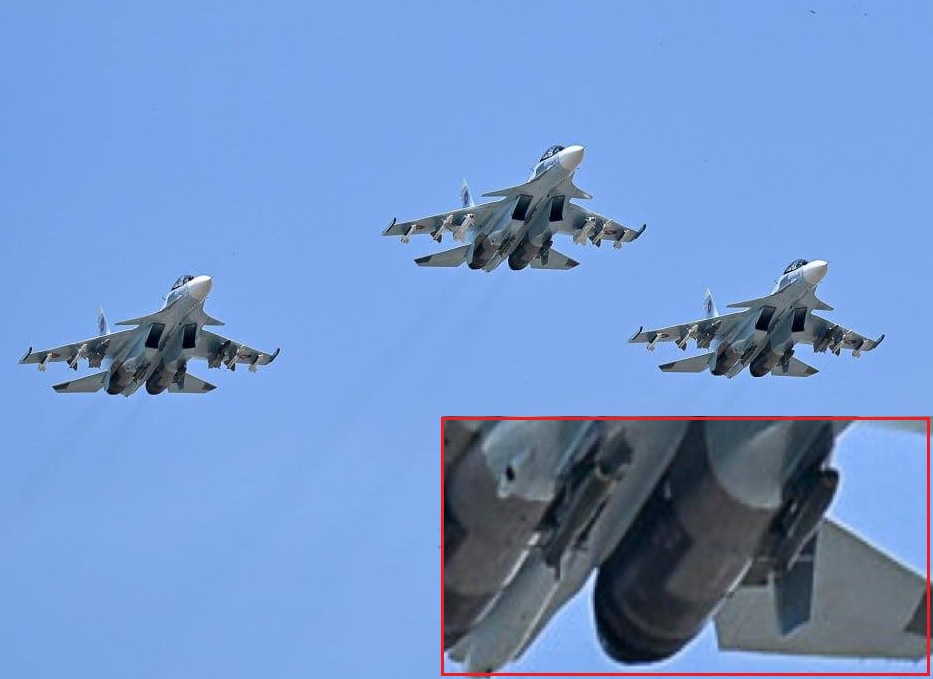
YEREVAN, — May 30, 2026 : Armenia’s Air Force publicly displayed Iranian-made Yasin precision-guided glide bombs mounted on its Sukhoi Su-30SM multirole fighters during Republic Day celebrations in Yerevan on May 28, providing the clearest public indication to date of previously undisclosed military procurement cooperation between Armenia and Iran.
All three operational Su-30SM fighters flew over Republic Square carrying two Yasin glide bombs each on external hardpoints, marking the first public appearance of Armenian Su-30SM aircraft equipped with precision-guided air-to-ground munitions. The display indicates that Armenia has successfully integrated Iranian-origin strike weapons onto Russian-built aircraft that were originally delivered without a complete weapons package.
Armenia’s Su-30SM Procurement and Weapons Gap
Armenia signed a contract with Russia in January 2019 to procure four Su-30SM multirole fighters for approximately $120 million, with deliveries completed by May 2020. However, the aircraft arrived without primary medium- or long-range guided munitions, significantly limiting their operational utility and restricting their role as strategic deterrence platforms.
The absence of compatible weapons became a subject of political scrutiny after the 2020 Nagorno-Karabakh war. Former Chief of the Armenian General Staff Movses Hakobyan stated in November 2020 that Armenia had acquired the aircraft without Su-30SM-compatible air-to-air missiles, citing Russian export restrictions. He argued that the procurement process had failed to secure the weapons necessary to make the aircraft combat-ready.
Prime Minister Nikol Pashinyan later acknowledged in March 2021 that Armenia had received the aircraft but had not acquired missiles before the war. As a result, the fighters were not employed in combat operations during the conflict and were subsequently used mainly for pilot training, ceremonial flights and limited operational duties.
The Republic Day flyover carrying Yasin munitions represents the first public demonstration of Armenia’s Su-30SM fleet equipped with serviceable precision-guided strike ordnance.
Yasin Glide Bomb: Technical Characteristics and Strike Role
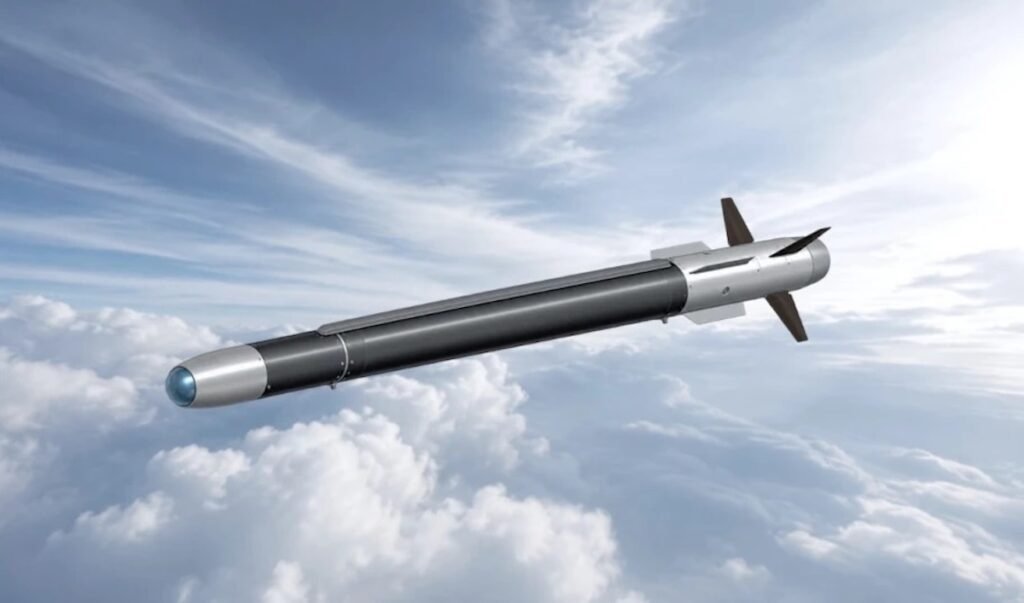
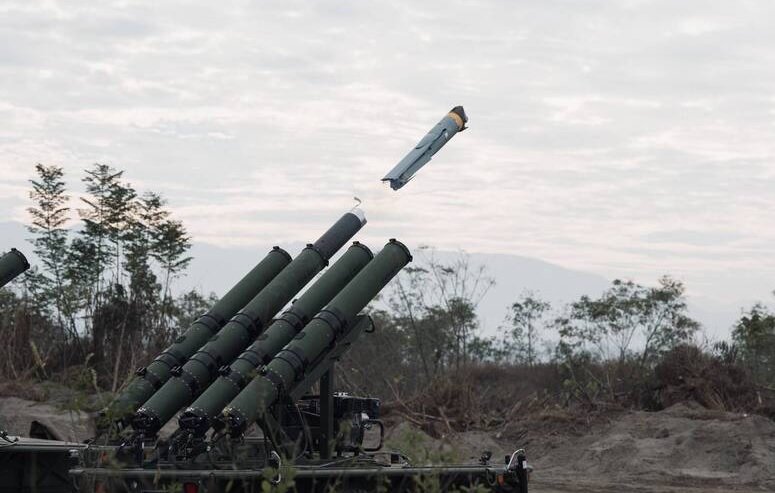
The Yasin glide bomb, officially unveiled by Iran in 2019, is a precision-guided standoff munition developed for air-to-ground strike operations. The weapon is generally configured with either a 225-kilogram (500-pound) or larger warhead and uses deployable folding wings to extend engagement range after release.
The munition combines an internal inertial navigation system (INS) with satellite-assisted guidance capable of using navigation systems such as GPS, GLONASS and BeiDou. According to technical assessments, this enables precision targeting with a reported circular error probable (CEP) below 10 meters.
Iranian state-linked sources have cited an engagement range of up to 120 kilometers under favorable launch conditions. However, independent analysts and assessments based on launch altitude and aircraft performance estimate a more realistic operational range of approximately 50–60 kilometers when released from high altitude at speed.
The glide bomb converts altitude-derived energy into extended flight distance after release, allowing aircraft to strike targets while remaining outside the immediate engagement envelope of many short-range air defense systems. This capability provides Armenia with a limited standoff strike option against forward military positions, logistics hubs and command infrastructure.
Integration Challenges Between Russian Aircraft and Iranian Weapons
Defense analysts assess that integrating Iranian-made Yasin glide bombs onto Russian-built Su-30SM aircraft likely required technical modifications because the two systems do not share common native electronic communication protocols.
One likely integration method involves an autonomous pre-briefed targeting mode, in which target coordinates are programmed into the bomb’s onboard guidance system before takeoff. Under this arrangement, pilots manually release the munition from a designated launch point while onboard systems independently guide the weapon to its programmed target.
A second possible approach involves the use of an umbilical translation interface, a hardware adapter installed between the aircraft and munition that converts the Su-30SM’s release signals into commands compatible with the Iranian weapon.
Both approaches carry operational limitations. Since targeting data is generally uploaded before flight, pilots may be unable to update coordinates in real time if a target changes position after takeoff, reducing flexibility against dynamic battlefield targets.
Armenia’s Expanding Defense Diversification Strategy
The public appearance of Iranian glide bombs on Armenian aircraft reflects a broader shift in Yerevan’s defense procurement policy following supply delays and restrictions affecting military cooperation with Russia.
Between 2011 and 2020, Russia accounted for approximately 94 percent of Armenia’s major arms imports. That dependence has declined since the 2020 Nagorno-Karabakh conflict as Armenia accelerated efforts to diversify military suppliers.
Defense spending increased substantially between 2020 and 2025, reaching approximately $1.7 billion, while total procurement programs are estimated at around $2.5 billion.
India has emerged as Armenia’s largest new defense supplier, with acquisitions including ATAGS towed artillery systems, MArG self-propelled artillery, Pinaka multiple-launch rocket systems, Akash surface-to-air missile systems, anti-drone technologies, Konkurs-M anti-tank missiles and ammunition. Armenia and India also signed agreements covering military training and institutional cooperation.
France has expanded military ties with Armenia through artillery transfers, defense cooperation agreements, training programs and planned deliveries of Mistral short-range air defense systems. Armenia has additionally signed defense cooperation arrangements with the Czech Republic, though specific procurement details remain undisclosed.
Iran has increasingly been viewed as a practical logistics and procurement partner due to Armenia’s geographic constraints. With borders closed by Azerbaijan and Turkey, Iran and Georgia remain Armenia’s primary overland transportation corridors for military deliveries.
Strategic Significance of the Republic Day Display
The Republic Day flyover represents the clearest public evidence to date that Armenia has secured a practical air-to-ground precision strike capability for its Su-30SM fleet through alternative procurement channels outside the original Russian supply framework.
The display also resolves longstanding questions surrounding how Armenia intended to arm aircraft that had remained operationally constrained since delivery.
Neither Armenia’s Ministry of Defense nor Iranian authorities have publicly confirmed the apparent transfer, procurement quantity or financial terms associated with the Yasin glide bombs.
Armenia currently operates three of the four Su-30SM aircraft originally acquired from Russia. The Republic Day appearance carrying Iranian-made Yasin glide bombs marks the first confirmed public indication that the fleet has moved beyond training and ceremonial use toward an operational standoff strike role.
——— End of Article ———