WHITE SANDS MISSILE RANGE, New Mexico — May 12, 2026 : Lockheed Martin has successfully completed the Seeker Characterization Flight Test (SCFT) of its QuadStar missile under the U.S. Army’s Next-Generation Short-Range Interceptor (NGSRI) program, a key milestone in the effort to replace the legacy FIM-92 Stinger air defense missile system.
The flight test was conducted at White Sands Missile Range and focused on validating the missile seeker’s ability to capture imagery, process signals onboard, and maintain target tracking throughout flight. According to the company, the QuadStar interceptor successfully demonstrated seeker performance at ranges exceeding the capabilities of the current Stinger system.
During the test, the missile was launched from a Command Launch Assembly (CLA) and flown along a tactical flight trajectory. The evaluation also confirmed CLA performance, critical system functionality, seeker integration, and interceptor guidance performance.
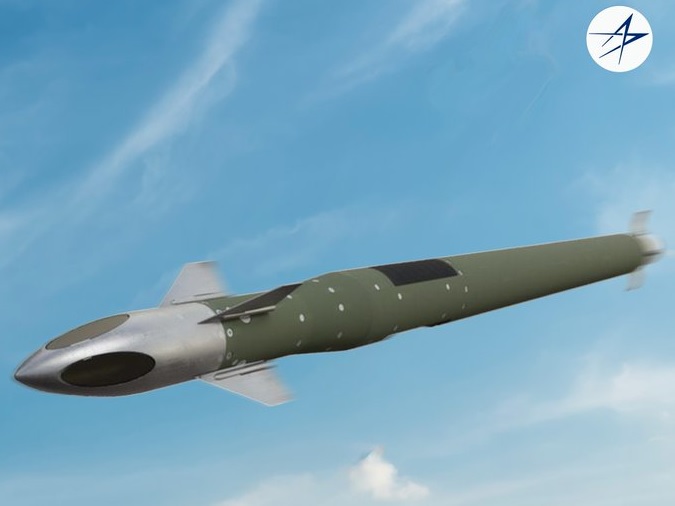
The QuadStar missile is being developed as a next-generation short-range air defense interceptor for both man-portable and vehicle-mounted operations. The system is compatible with existing Stinger launcher architecture, including the CLA, allowing integration into current air defense frameworks with minimal changes.
The interceptor design is based on Lockheed Martin’s Miniature Hit-to-Kill technology heritage and incorporates a low-drag, highly maneuverable airframe. The missile uses a tapered 70-millimeter rocket motor section integrated with an advanced imaging infrared seeker designed to engage unmanned aerial vehicles, rotary-wing aircraft, and fixed-wing threats.
According to program details, the QuadStar interceptor demonstrated an intercept range more than double that of the legacy Stinger system in tested scenarios. The missile also offers higher speed, shorter time of flight, and improved lethality compared with the Stinger’s approximately 3-kilogram high-explosive fragmentation warhead.
The Command Launch Assembly includes several new features, including an integrated Identification Friend or Foe antenna built directly into the launcher housing, removing the need for external antenna components. The launcher also incorporates advanced optics and AI-assisted fire-control software intended to improve target acquisition and reduce operator workload by eliminating manual lead and superelevation calculations. Unlike the Stinger system, the QuadStar missile does not require a Battery Cooling Unit.
The seeker system uses AI-driven signal processing and a modern open-systems architecture intended to support affordability, modular upgrades, and rapid software updates. The missile is also designed for integration into Maneuver Short-Range Air Defense platforms used by the U.S. Army.
The SCFT was completed approximately three months after the QuadStar program’s first flight test in January 2026, also conducted at White Sands Missile Range. Development of the interceptor has progressed from contract award in 2023 to the current milestone in roughly three years.
The NGSRI program remains a competitive U.S. Army effort involving both Lockheed Martin and RTX Corporation, formerly Raytheon, to develop a replacement for the Stinger missile system as part of future short-range air defense modernization plans.
Randy Crites, vice president of Lockheed Martin Advanced Programs, stated that the successful test demonstrated continued progress toward delivering a next-generation interceptor capable of supporting U.S. and allied forces. Chris Murphy, business development lead for Lockheed Martin NGSRI, said the completion of seeker characterization in under six months reflected the development speed and manufacturing focus of the program.
The U.S. Army plans to conduct operational demonstrations involving both competitors during fiscal year 2026, while a production decision for the NGSRI program is expected in fiscal year 2027. No additional timeline for future QuadStar flight tests has been released.
——— End of Article ———