PARIS — June 02, 2026 : European defence technology company Helsing has officially unveiled Area 9, a new advanced research division focused on artificial intelligence (AI) and autonomous systems, alongside the launch of RX-1, the company’s first robotics research platform designed and manufactured entirely in Europe.
The announcement, made on 1 June 2026, marks Helsing’s expansion beyond aviation and aerospace software into field robotics. The initiative reflects a broader European effort to strengthen domestic capabilities in next-generation defence technologies and reduce reliance on non-European systems.
Area 9 Established to Translate Research into Operational Systems
Area 9 will function as Helsing’s dedicated research division under the leadership of Chief Scientist Antoine Bordes. The unit has been established to identify high-impact scientific and engineering opportunities and transform advanced research in AI and autonomous systems into deployable technologies.
The division will operate as an internal incubator for experimental programmes, focusing on long-term projects while maintaining pathways toward practical defence applications. Helsing describes Area 9 as an effort to bridge the gap between research and operational military systems.
Speaking during the launch, Bordes stated that changing battlefield conditions increasingly require technologies capable of operating in hazardous environments without exposing personnel to unnecessary risk. According to him, Area 9 aims to invest in systems capable of functioning effectively in such settings.
One of Area 9’s earliest achievements has been the development of Centaur, an AI-based pilot software system designed for air combat operations.
Centaur AI and Development of the CA-1 Europa
Centaur uses scaled reinforcement learning, a machine-learning method in which the system learns through repeated simulated trial-and-error scenarios rather than relying solely on predefined programming. The AI processes radar, sensor, and tactical information to improve decision-making in combat environments.
According to Helsing, Centaur demonstrated advanced beyond-visual-range (BVR) manoeuvre capabilities in simulations and live testing. In 2025, the system was integrated into a Saab JAS 39 Gripen E fighter aircraft during tests above the Baltic Sea under Project Beyond, a collaboration between Helsing and Saab supported by the Swedish government.
During the trials, the AI reportedly controlled the aircraft for portions of the flight, executed manoeuvres against other aircraft, and provided firing recommendations to the pilot. Helsing stated that the tests demonstrated the ability of AI systems to support high-speed operational decision-making in complex air combat scenarios.
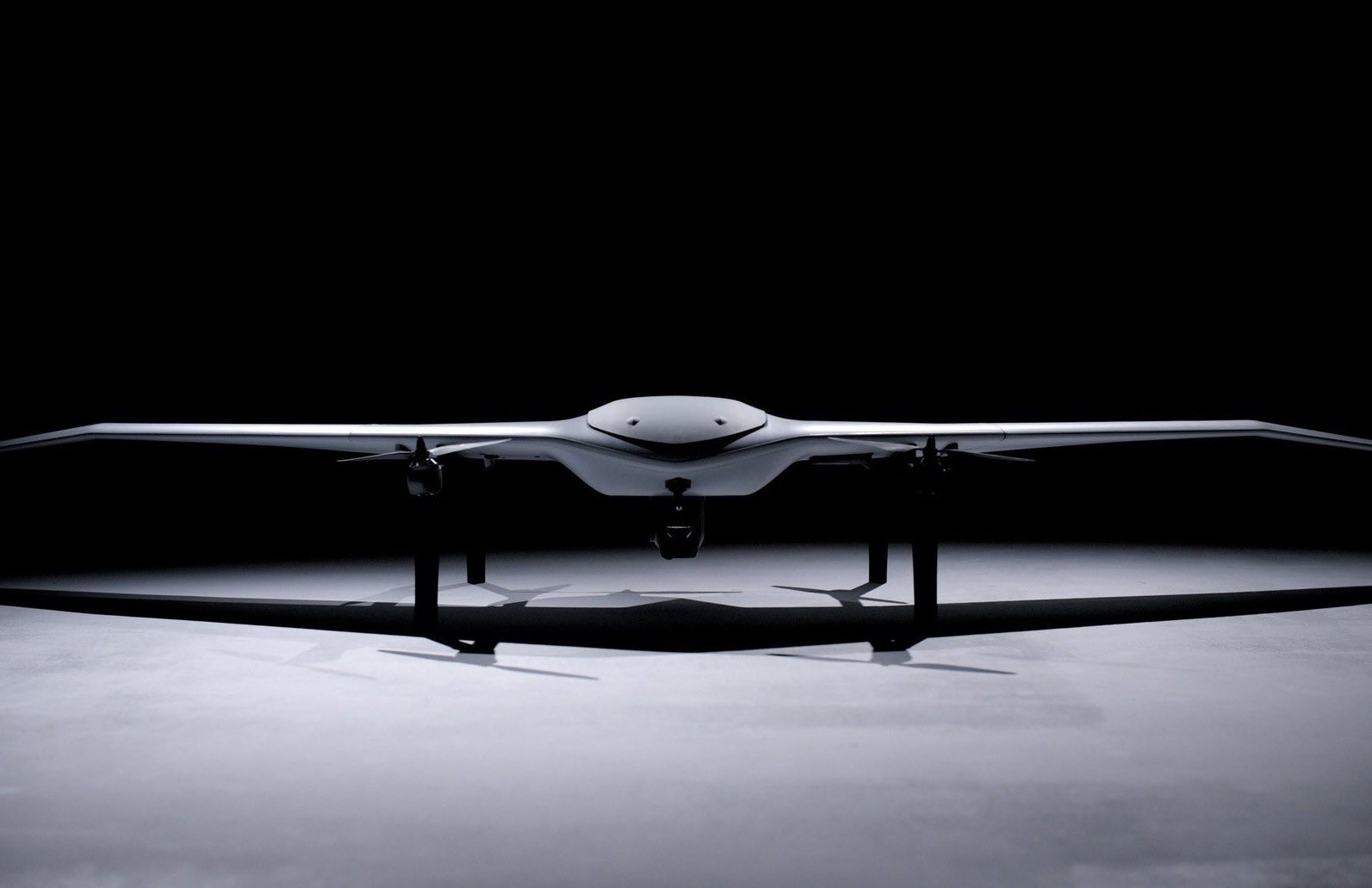
Centaur now serves as the technological foundation for the CA-1 Europa, an autonomous uncrewed combat aerial vehicle (UCAV) under development by Helsing alongside partners including Grob Aircraft, HENSOLDT, and other European aerospace firms.
The CA-1 Europa is being developed as a high-subsonic combat aircraft in the 3-to-5 tonne class, designed for multi-role operations, deep-strike missions, and swarm-based operations in contested environments. It will feature an internal weapons bay, electronic warfare systems, and the capability to operate independently or alongside crewed and uncrewed assets.
Production-ready variants are targeted for operational availability within the next several years.
RX-1 Introduced as Europe’s Robotics Research Platform
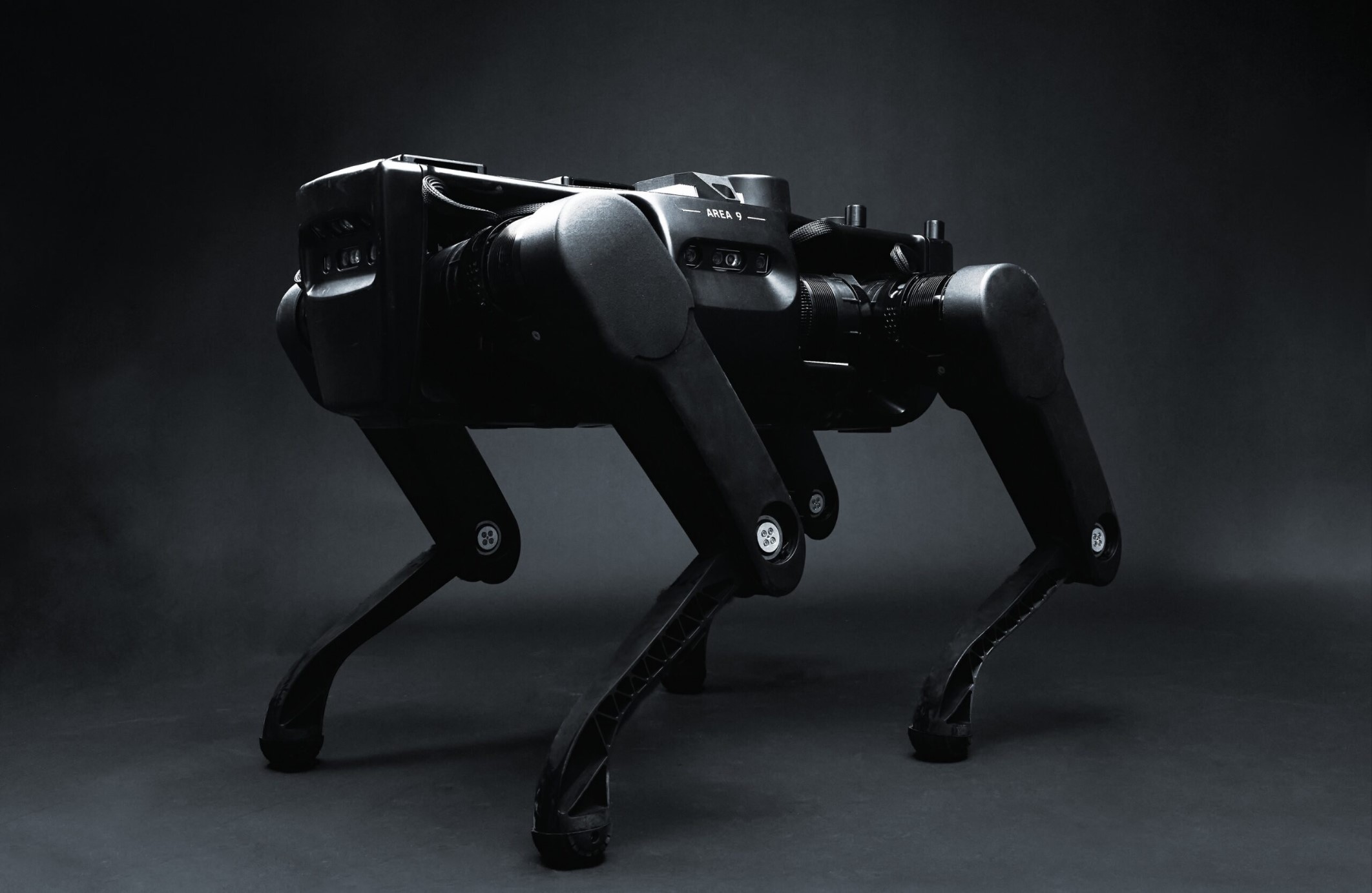
RX-1 is Area 9’s first major ground robotics programme, a quadrupedal robotics platform engineered for field research and outdoor autonomy. Designed as a European alternative to robotics platforms largely manufactured in the United States and China, the system is intended for real-world field operations.
Helsing stated that RX-1 has been developed for speed, strength, environmental durability, and operation in difficult outdoor settings, including uneven and debris-filled terrain. The platform is intended to support research into autonomous mobility in unpredictable environments.
The company designed and manufactured the platform entirely in Europe, including key components such as actuators, which are responsible for joint movement, balance, and mechanical force generation.
According to Bordes, Helsing’s robotics team designed RX-1 to withstand demanding outdoor environments while serving as a common research platform for institutions across Europe.
Hardware and Software for Autonomous Operations
Helsing describes RX-1 as a complete robotics research stack rather than a remotely operated machine. The system combines a physical robotic chassis with an integrated software environment, allowing researchers to test and refine advanced autonomy algorithms in real time.
The platform processes information from onboard sensors, including cameras and LiDAR systems, through onboard computing systems to understand terrain and environmental conditions. This enables the robot to adjust movement, recognize obstacles, maintain stability, and autonomously navigate unstructured outdoor environments.
The RX-1 platform has also been designed to support research in perception systems, locomotion, navigation, autonomous decision-making, and robotic mobility.
Key features include a fully integrated European hardware and software stack, environmental durability, and optimisation for robotics and AI experimentation in real-world conditions.
Academic Partnerships with ETH Zurich and INRIA Paris
To accelerate development in field robotics and autonomous systems, Helsing has announced partnerships with research institutions across Europe.
The first two collaborations involve the robotics group at ETH Zurich, led by Professor Marco Hutter, and the French national research institute INRIA Paris. Both organisations will receive RX-1 systems for advanced robotics research.
Professor Hutter stated that RX-1 provides an advanced European-developed hardware platform for field robotics research and said the collaboration with Area 9 would contribute to expanding capabilities in outdoor autonomy.
Researchers at ETH Zurich and INRIA Paris are expected to use the system to improve autonomous navigation, perception systems, locomotion, and machine intelligence in outdoor environments.
Strategic Importance and European Technological Independence
The launch of Area 9 and RX-1 aligns with a broader European emphasis on strategic autonomy in defence, robotics, and artificial intelligence.
European governments and defence firms have increasingly prioritised domestic capabilities to reduce dependence on external supply chains for advanced systems and sensitive technologies.
By developing software platforms such as Centaur and physical systems including RX-1 within Europe, Helsing aims to establish an integrated domestic technological ecosystem capable of supporting future defence requirements.
The company stated that this approach enables research, development, manufacturing, and iterative improvements to remain within Europe while providing institutions and industrial partners access to next-generation autonomous technologies.
The launch of Area 9 and RX-1 represents both a technological expansion for Helsing and a broader effort to strengthen Europe’s long-term capabilities in autonomous systems across air and land operational domains.
——— End of Article ———