EDSTONE ARSENAL, AL — June 04, 2026 : The U.S. Army has awarded defense contractor AeroVironment a $117.3 million firm-fixed-price contract for the procurement of 82 P550 long-range reconnaissance drones. Announced on June 3, 2026, the deal represents a significant step in the Army’s effort to push advanced intelligence, surveillance, and target acquisition (RSTA) capabilities directly down to the battalion level.
By placing persistent airborne reconnaissance under the direct control of battalion commanders, the Army is actively reducing its reliance on higher-echelon brigade aviation assets. The accelerated procurement—which mandates a completion date of July 23, 2026—highlights a broader military shift toward distributed, adaptable, and drone-centric operations shaped by recent lessons from modern battlefields.
Bridging the Capability Gap
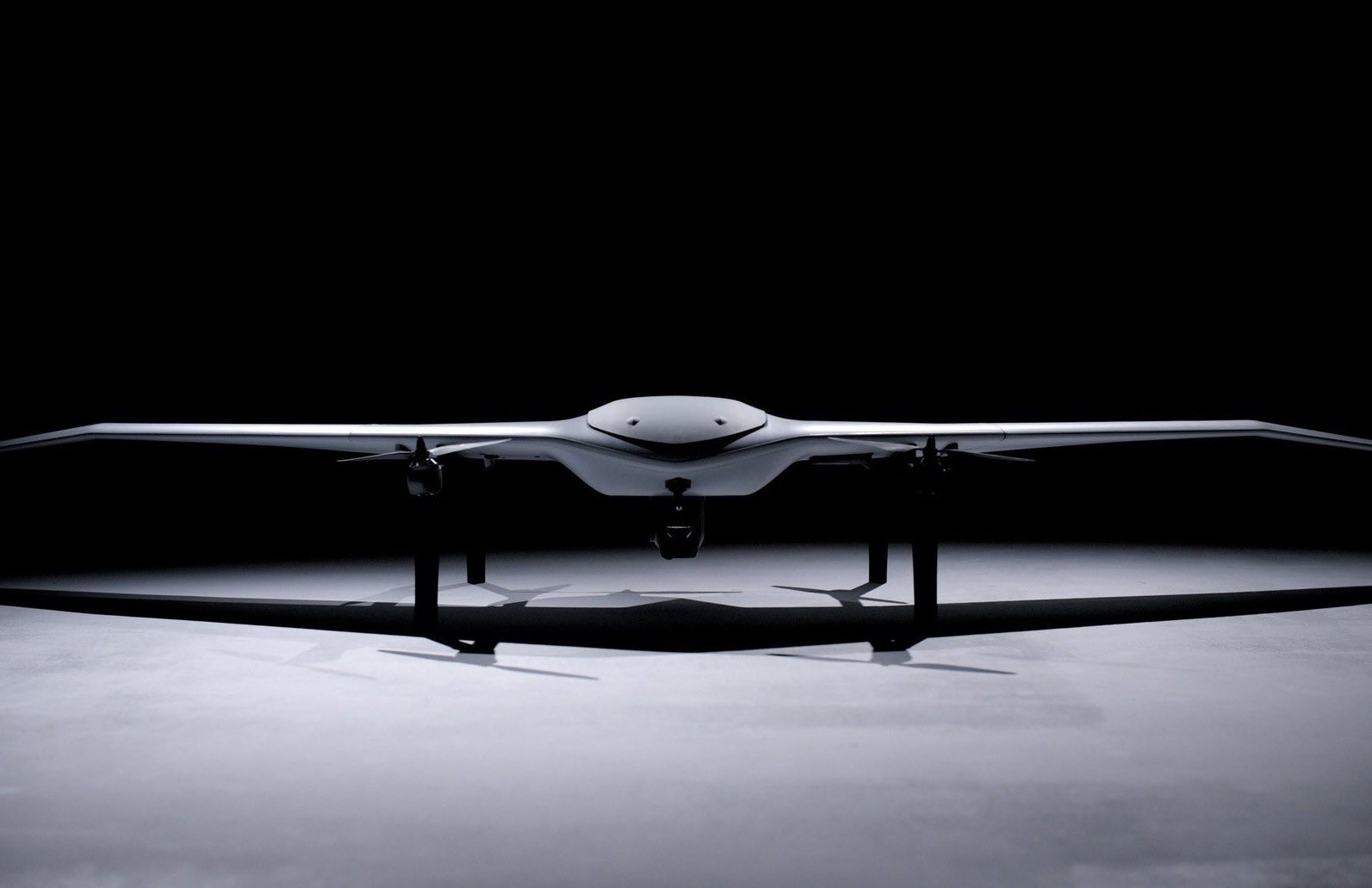
The P550 occupies the upper end of the Pentagon's Group 2 unmanned aircraft category. With a maximum take-off weight of 24.9 kg (55 lbs)—just below the 25 kg threshold for Group 3 drones—it fills a long-standing capability gap between short-range platoon quadcopters and scarcer, brigade-level fixed-wing assets.
AeroVironment unveiled the P550 in October 2024 as a purpose-built, all-electric vertical takeoff and landing (eVTOL) system. It combines multiple operational advantages into a single airframe:
-
Endurance & Payload: The drone can remain airborne for over five hours on battery power alone while carrying up to 6.8 kg (15 lbs) of multi-sensor payloads.
-
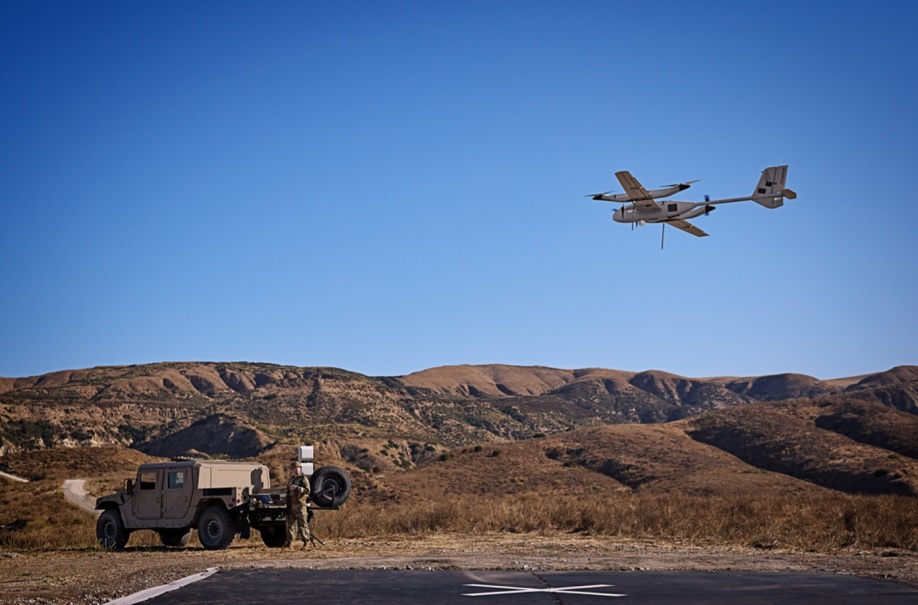
Rapid Deployment: The system requires no runways or catapults. It breaks down into a compact transport package (1.8m × 0.6m × 0.6m) that fits inside standard tactical vehicles like HMMWVs and JLTVs. Soldiers can unpack, assemble, and launch the drone tool-free in under ten minutes.
-
Operational Range: Standard communications reach up to 40 km, extending to 60 km with advanced digital datalink architectures. It cruises at speeds of 30 to 52 knots.
Modularity and Autonomous Edge Computing
A core feature driving the Army's interest is the P550’s Modular Open Systems Approach (MOSA). Instead of locking into proprietary tech or dedicating specific airframes to single missions, operators can hot-swap the drone's front payload module and batteries in less than five minutes without tools.
This allows the exact same aircraft to transition seamlessly between diverse mission profiles:
-
Baseline Intelligence, Surveillance, and Reconnaissance (ISR)
-
Communications relay
-
Electronic warfare (such as integrating CACI's Pit Viper module)
-
Strike missions (employing precision-guided munitions like the L3Harris/Corvid Shryke)
To reduce the cognitive load on operators, the P550 integrates AeroVironment's Avacore computing architecture and SPOTR-Edge software. This onboard artificial intelligence autonomously detects and classifies personnel, vehicles, and maritime targets in real time. Furthermore, a Visual Navigation System utilizing lidar, infrared, and electro-optical sensors allows the drone to operate effectively in environments where GPS signals are jammed or spoofed.
The Long-Range Reconnaissance (LRR) Strategy
This contract marks the first major production purchase of the P550, working out to a notional value of roughly $1.43 million per system. It follows initial deliveries for evaluation in August 2025 and earlier funding agreements that integrated the platform into the Army's wider unmanned systems architecture.
The acquisition is a direct output of the Long-Range Reconnaissance (LRR) program and the "Transformation in Contact" initiatives. Rather than selecting a single winner, the Army opted to simultaneously field the P550 alongside Edge Autonomy's Stalker Block 35X. This multi-vendor approach preserves industrial base competition and allows operational units to evaluate different designs under identical combat conditions.
Crucially, the Army designed the LRR program to be Military Occupational Specialty (MOS) agnostic. Instead of requiring highly specialized drone pilots, soldiers from diverse occupational backgrounds can operate the platforms via the Vigilant Spirit ground control architecture.
Speed of Relevance
The rapid timeline—less than two months from the June award to the July contract completion—reflects the urgency of the July 2025 "Unleashing U.S. Military Drone Dominance" initiative. By utilizing accelerated acquisition frameworks, the Army has condensed traditional procurement timelines from years to merely days.
As AeroVironment scales its production capacity to anticipate demand in the thousands of units annually, the P550 represents the first wave of a persistent, adaptable reconnaissance network designed to ensure tactical superiority in future contested environments.
——— End of Article ———