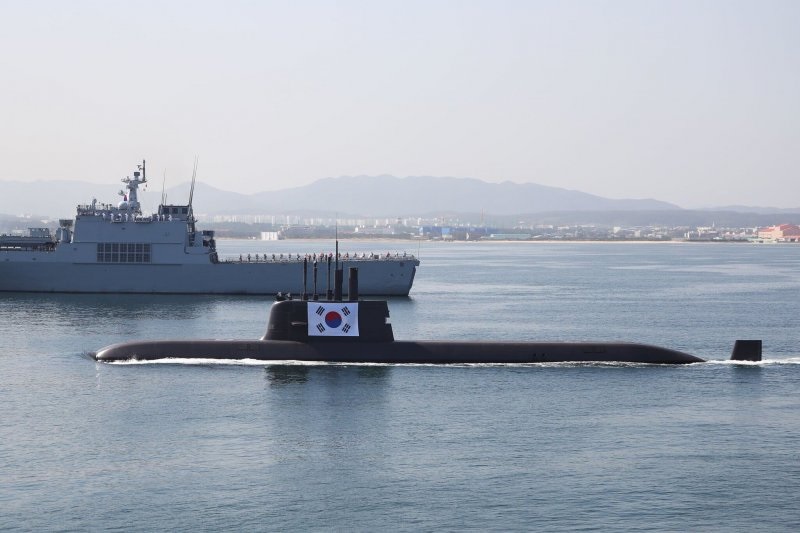
SEOUL, — May 22, 2026 : South Korea has officially initiated the formal military acquisition process for nuclear-powered submarines, marking a significant step in the country’s long-term effort to strengthen its underwater naval capabilities and expand strategic maritime operations.
According to a newly disclosed Republic of Korea Navy document, the Navy recently submitted a formal Statement of Operational Requirements to the Joint Chiefs of Staff (JCS), beginning the first official stage required for the introduction of a new strategic weapons system into military service.
The document, which was provided to Representative Kang Dae-sik of the main opposition People Power Party and member of the National Assembly’s National Defense Committee, outlines the operational necessity of the programme along with key military requirements. These include projected deployment timelines, desired operational capabilities, technical specifications, and the total number of submarines planned for acquisition.
Administrative Review and Development Process
The Joint Chiefs of Staff is currently reviewing the Navy’s proposal and is expected to hold a joint meeting later this month to finalize the operational requirements. Once the requirements receive formal approval, the programme will advance into preliminary research and feasibility assessments.
The next stages are expected to include consultations with budget authorities regarding overall programme costs, followed by development planning, industrial coordination, and eventual construction phases.
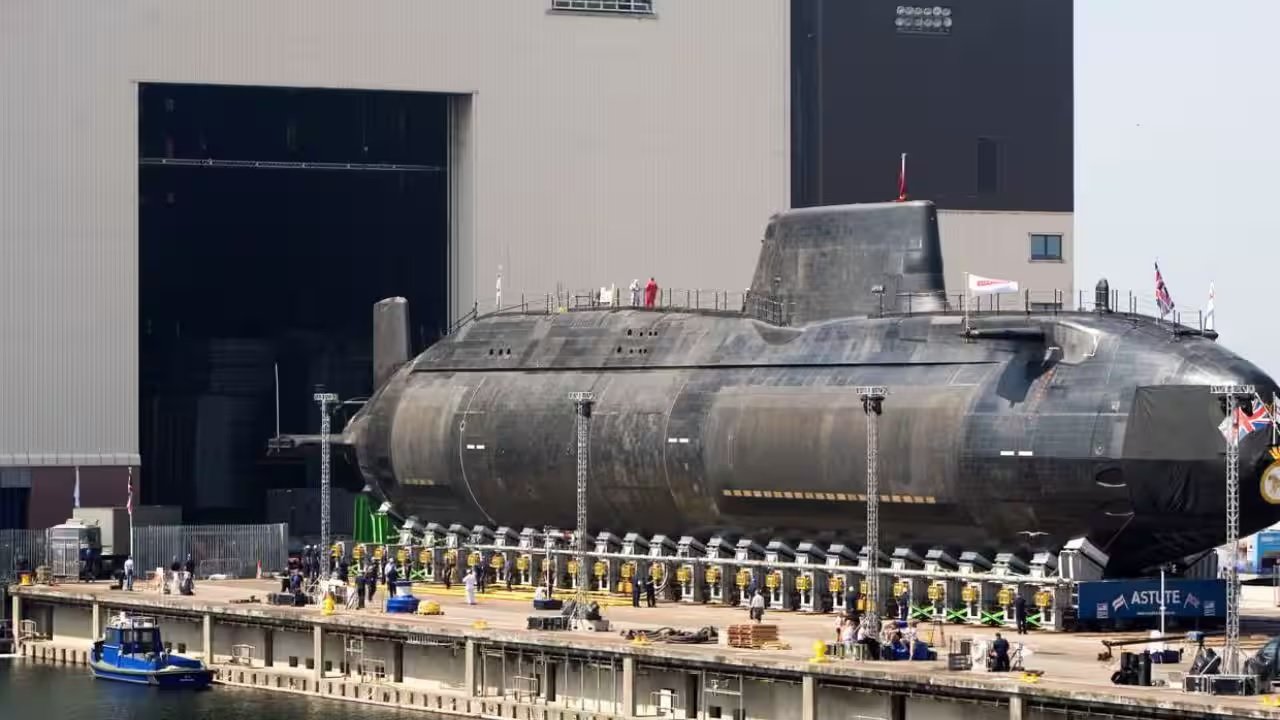
South Korean military officials are reportedly considering the construction of at least four 5,000-ton-class nuclear-powered attack submarines designed for deployment after the mid-2030s. The vessels would use compact nuclear reactors, allowing them to remain submerged for significantly longer periods compared to conventional diesel-electric submarines.
Military planners believe the extended endurance capability would improve long-range patrol operations, underwater surveillance, and maritime deterrence missions in surrounding regional waters.
U.S.-South Korea Agreements
The submarine initiative follows agreements reached during a summit between South Korean and U.S. leaders held in Gyeongju in October 2025. A joint fact sheet released after the summit confirmed that the United States approved South Korea’s plan to pursue nuclear-powered attack submarines and agreed to cooperate on advancing the programme’s technical and regulatory requirements.
Washington also committed to discussions regarding potential pathways for nuclear fuel sourcing and support for South Korea’s efforts to secure rights related to uranium enrichment and spent fuel reprocessing.
However, implementation of the summit agreements has progressed slowly in recent months, prompting the South Korean Navy to move forward with formal internal procedures to accelerate the project.
To support further negotiations, U.S. Under Secretary of State for Political Affairs Allison Hooker is expected to visit Seoul in the coming weeks to launch bilateral working groups dedicated to implementing the summit agreements and expanding security cooperation discussions.
Nuclear Fuel and Regulatory Challenges
Despite the programme’s advancement, securing nuclear fuel remains one of the most significant unresolved issues.
Representative Kang stated that the military has not yet provided a definitive explanation regarding how enriched uranium required for submarine reactors would be obtained. Under current nuclear cooperation arrangements, South Korea faces restrictions on independent uranium enrichment and the military use of nuclear materials.
To operate nuclear-powered submarines independently, Seoul would require a separate agreement with Washington explicitly permitting the transfer and use of nuclear materials for military propulsion purposes.
The issue is expected to become a central topic in upcoming bilateral negotiations between the two allies.
Upcoming Government Roadmap
The South Korean government is also preparing to announce a comprehensive roadmap for the programme, reportedly titled the Basic Plan for Nuclear-Powered Submarine Development.
The roadmap is expected to outline the programme’s overall development timeline, construction strategy, operational objectives, and compliance measures related to international nuclear non-proliferation obligations. Officials are also expected to emphasize that the submarines will carry conventional weapons and serve a defensive military role.
South Korea currently operates 21 conventionally powered submarines, including the domestically developed KSS-III class diesel-electric submarines with a displacement of approximately 3,000 tonnes. The proposed nuclear-powered fleet would represent a major advancement in propulsion capability and long-duration underwater operations for the Republic of Korea Navy.
The latest submission to the Joint Chiefs of Staff formally places the programme into South Korea’s military acquisition framework, where operational standards, procurement scale, technical requirements, and deployment schedules will continue to undergo review before the project advances toward full-scale development and construction.
——— End of Article ———