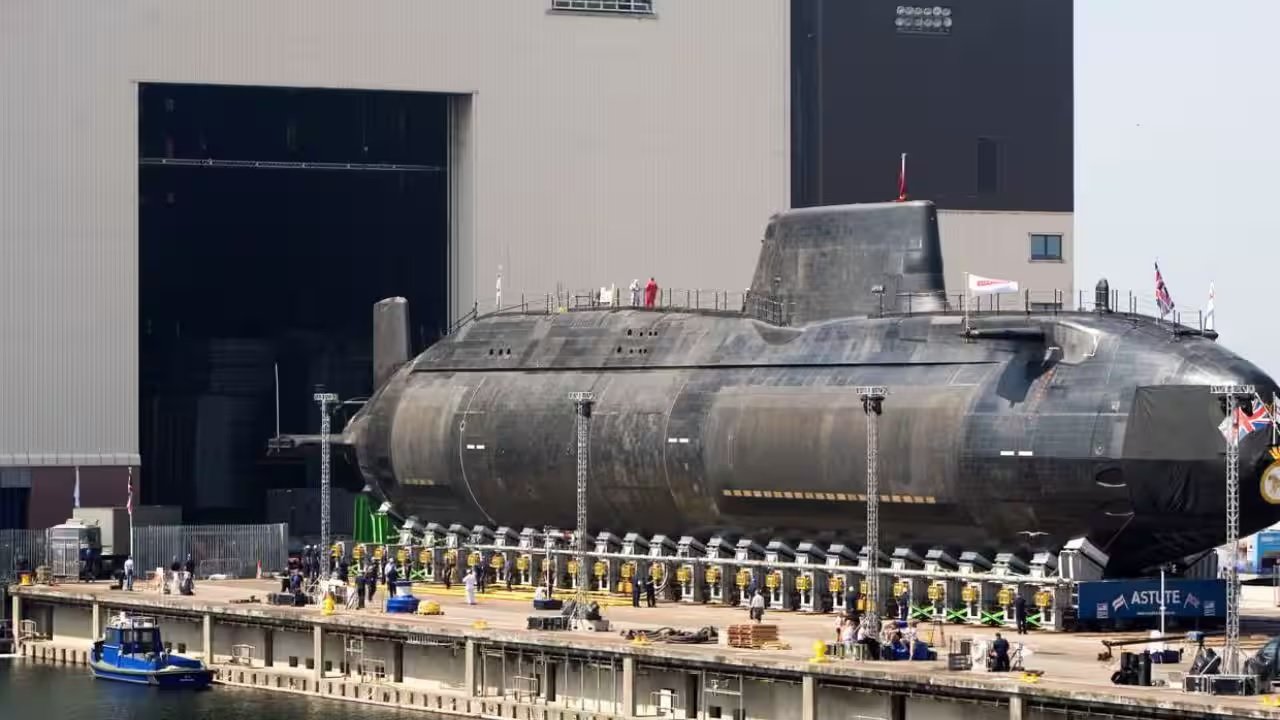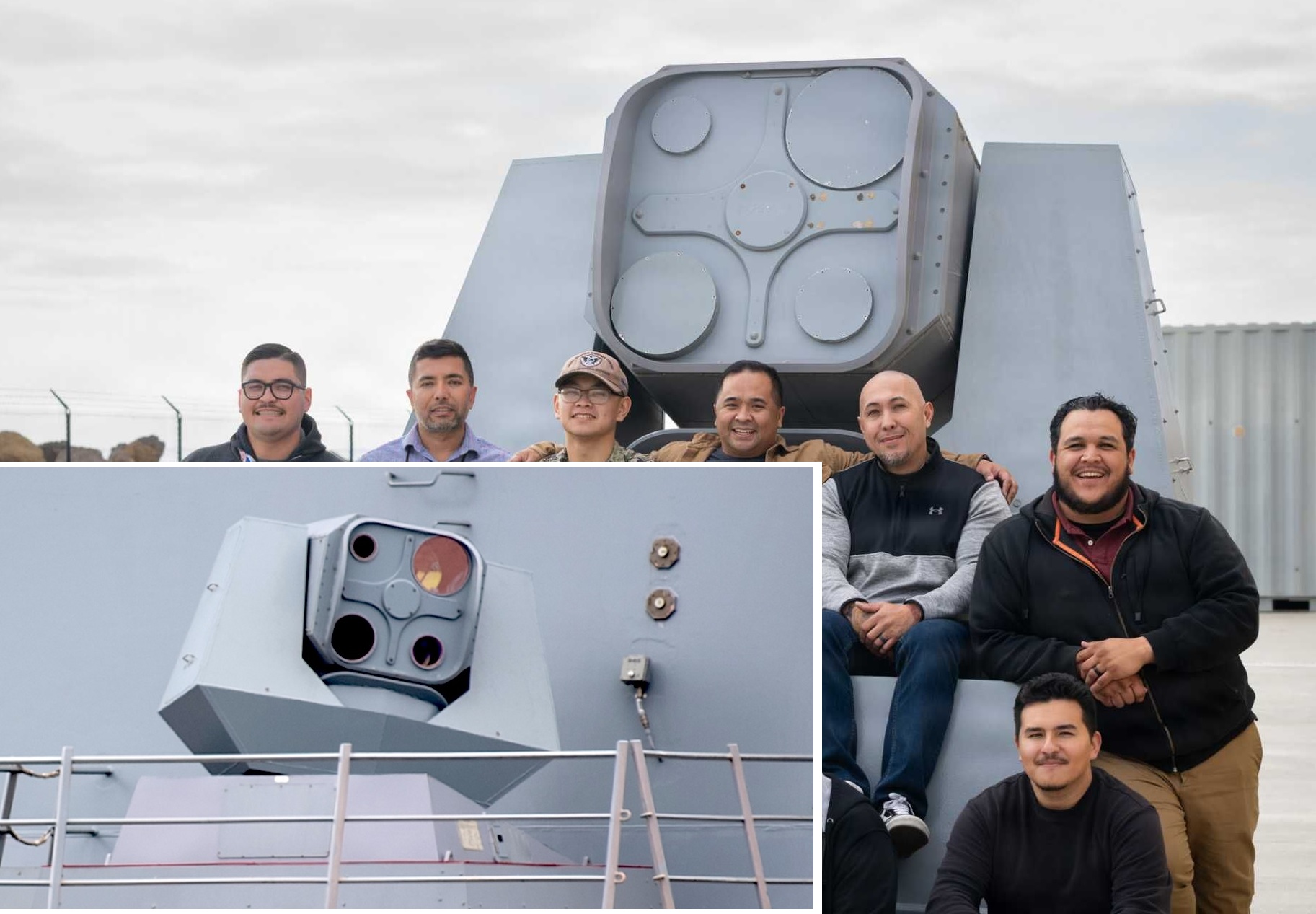
POINT MUGU, Calif. — May 20, 2026 : The U.S. Navy has completed the inaugural operational training cycle for the Optical Dazzling Interdictor, Navy (ODIN) laser weapon system at the Directed Energy Systems Integration Laboratory (DESIL) at Naval Base Ventura County Point Mugu, marking the Navy’s first formalized operator certification and sustainment framework for shipboard directed-energy weapons.
Announced on May 12, 2026, the milestone represents a transition of the ODIN program from rapid prototyping into sustained operational fleet integration. The training initiative is managed by the Naval Surface Warfare Center Port Hueneme Division (NSWC PHD), which has been designated as the Navy’s official ODIN training authority.
The newly established curriculum supports the Laser Weapon System Operator Navy Enlisted Classification (NEC), introduced on February 4, 2026, for sailors within the fire controlman rating responsible for advanced combat and fire-control systems aboard surface warships. The NEC supports ODIN systems currently deployed aboard seven Arleigh Burke-class guided-missile destroyers, while an additional unit remains assigned to Point Mugu for training and testing activities.
Directed-Energy Training Framework Established
The first operational training course concluded in late March 2026 at DESIL. To qualify for the NEC certification, sailors must complete two separate five-day training courses covering both operational and technical sustainment requirements.
The Laser Weapon System Console Operation course focuses on target acquisition, tracking, lock maintenance, sensor management, firing procedures, and alert handling. The second course covers preventive maintenance, corrective diagnostics, subsystem replacement, Maintenance Requirement Cards, optical alignment, thermal management, laser safety procedures, cooling systems, and shipboard power-distribution requirements.
According to the Navy, existing ordnance training pipelines were insufficient for the specialized technical demands associated with directed-energy weapons. The NEC was therefore developed jointly by NSWC PHD, the Navy Manpower Analysis Center (NAVMAC), the Office of the Chief of Naval Operations (OPNAV), and Program Executive Office Integrated Warfare Systems.
ODIN Designed for Counter-Drone and ISR Denial Missions
ODIN is a low-power infrared laser dazzler developed primarily for counter-unmanned aerial systems (C-UAS) and counter-intelligence, surveillance, and reconnaissance (C-ISR) missions.
Rather than physically destroying targets, the system functions as a “soft-kill” capability designed to disrupt or degrade enemy optical and infrared sensors. The laser directs concentrated optical energy onto electro-optical imaging systems carried by unmanned aircraft, saturating infrared cameras and imaging arrays.
The process causes image blooming, contrast degradation, and sensor disruption, interfering with navigation, surveillance, targeting, and reconnaissance functions. Depending on atmospheric conditions, target range, and dwell time, the laser may temporarily disable or permanently damage optical systems.
By blinding electro-optical payloads, ODIN can render hostile drones mission-ineffective without physically destroying the aircraft. The system also incorporates high-resolution optical sensors and telescopic surveillance systems capable of identifying and tracking aerial contacts beyond unaided visual range during force-protection operations.
Layered Ship Defense and Operational Limitations
The Navy developed ODIN in response to increasing concerns regarding low-cost reconnaissance drones supporting maritime ISR and anti-ship targeting operations. Directed-energy systems are also intended to address the growing cost imbalance between inexpensive drones and high-cost missile interceptors traditionally used for ship defense.
Unlike kinetic interceptors, ODIN relies primarily on shipboard electrical power and cooling systems, allowing engagements at the speed of light without requiring physical ammunition reloads. This provides what Navy officials describe as effectively unlimited magazine depth as long as sufficient electrical power and cooling capacity remain available.
However, Navy officials continue to emphasize that directed-energy systems remain affected by environmental and operational limitations. Humidity, salt spray, fog, smoke, atmospheric attenuation, beam scattering, and thermal blooming can reduce beam coherence and engagement range. Effectiveness may also decline against hardened optical systems equipped with reflective coatings, filters, or autonomous navigation redundancy.
As a result, ODIN is integrated within the Navy’s layered ship self-defense architecture alongside electronic warfare systems, Phalanx Close-In Weapon Systems (CIWS), and surface-to-air missile defenses rather than replacing kinetic interceptors entirely.
Rapid Development and Fleet Integration
Development of ODIN began in 2018 under the Naval Surface Warfare Center Dahlgren Division through Program Executive Office Integrated Warfare Systems following an urgent operational requirement issued by Pacific Fleet commanders.
The system progressed from concept approval to initial operational deployment in approximately 30 months, significantly accelerating traditional procurement timelines. The first operational installation occurred aboard USS Dewey (DDG-105) during a 2019–2020 maintenance availability period.
By 2026, operational ODIN systems had been installed aboard seven Arleigh Burke-class destroyers, including USS Dewey and USS Stockdale. Although the program currently remains outside the Navy’s formal acquisition baseline and does not yet possess stable program-of-record funding, the expansion of training, sustainment infrastructure, and fleet certification indicates movement toward long-term operational integration.
DESIL Expands Directed-Energy Operations
DESIL, established in May 2020, serves as the Navy’s primary facility for maritime directed-energy integration, operational testing, experimentation, and fleet evaluation.
The 18,500-square-foot, three-story facility provides direct access to the Point Mugu Sea Range, which encompasses approximately 36,000 square miles of controlled sea and airspace. The site includes a permanently installed ODIN unit, sustainment workshops, operator consoles, rooftop laser emission positions, and integrated targeting capability for maritime, airborne, and land-based targets.
Unlike conventional Surface Combat Systems Training Command facilities, DESIL combines operational hardware, engineers, maintainers, and live-range access within a single location. This enables sailors to train directly on operational systems rather than relying solely on simulator-based environments.
Navy officials noted that live operational training is essential because small unmanned aerial systems operating at extended ranges frequently appear only as single-pixel signatures on operator displays, requiring realistic tracking and engagement practice under operational conditions.
The ODIN unit currently installed at DESIL was transferred from USS Kidd (DDG-100) during a two-year maintenance availability in Everett, Washington. Additional destroyers entering extended maintenance periods are expected to rotate ODIN systems through Point Mugu to support future experimentation, sustainment development, operator training, and fleet integration efforts.
HELIOS Integration and Future Expansion
NSWC PHD plans to gradually transition the curriculum from civilian-led instruction to a “military training military” structure in which previously qualified sailors return as fleet instructors.
The inaugural training cycle also included personnel from the Board of Inspection and Survey to prepare for future readiness inspections involving directed-energy-equipped warships. Regional Maintenance Centers are expected to receive additional sustainment training in order to decentralize technical support and reduce reliance on deployable specialist teams.
The DESIL instructional framework is also being adapted for sailors assigned to the High Energy Laser with Integrated Optical-dazzler and Surveillance (HELIOS) system installed aboard USS Preble (DDG-88).
Unlike ODIN’s low-power soft-kill architecture, HELIOS operates at approximately 60 kilowatts and is integrated directly into the Aegis Combat System, providing ISR capability, sensor dazzling functions, and limited hard-kill engagement capability. ODIN remains a standalone bolt-on capability focused primarily on ISR denial and counter-UAS operations, though both systems share portions of the Laser Weapon System Console interface and several sustainment procedures.
In addition to HELIOS integration, DESIL continues supporting the Navy’s broader directed-energy modernization efforts, including the Solid State Laser Technology Maturation program and ongoing experimentation involving the former USS Portland Laser Weapon System Demonstrator hardware.
——— End of Article ———