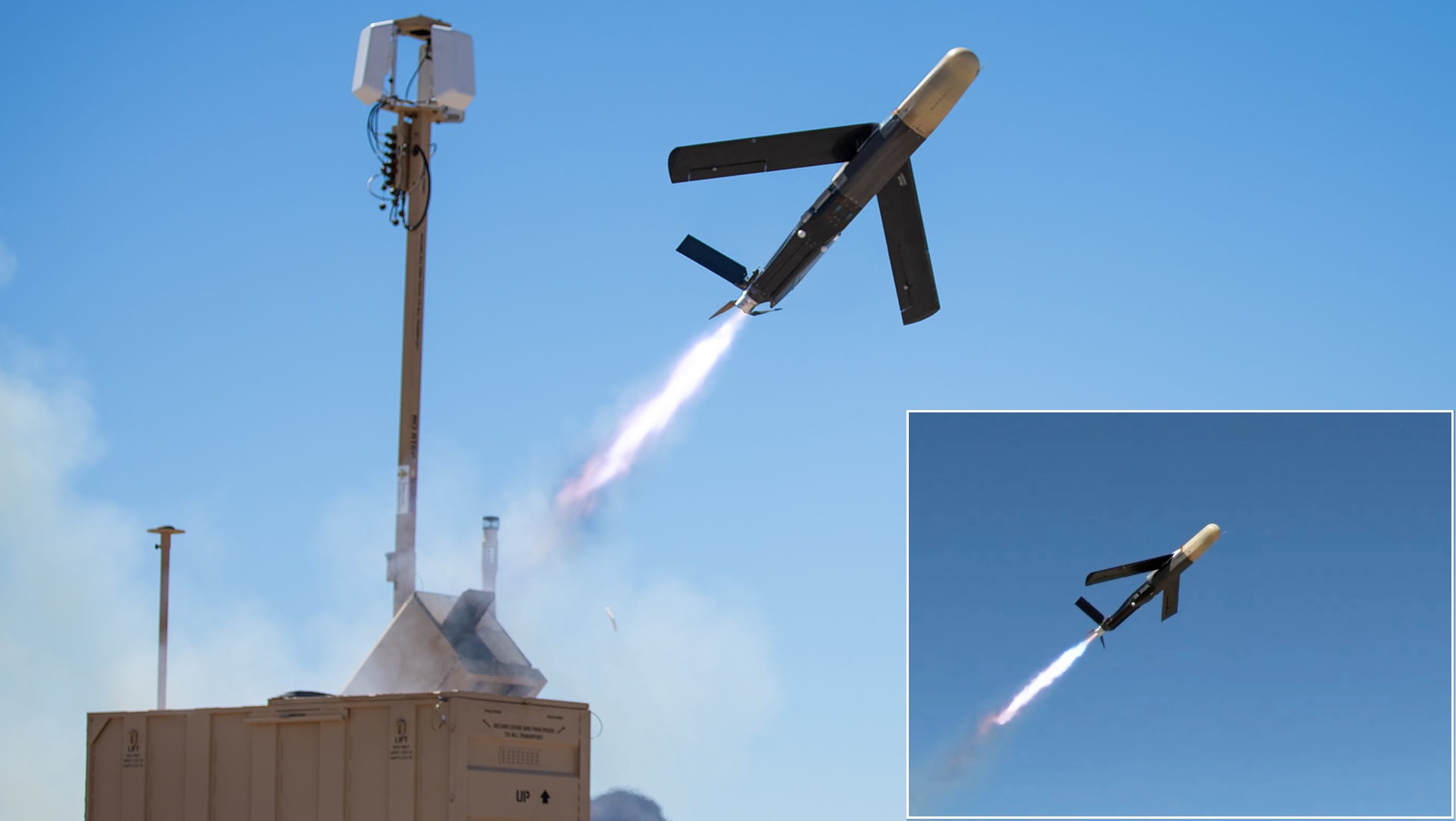
WASHINGTON — May 30, 2026 : Raytheon, an RTX business, has successfully demonstrated its reusable Coyote Block 3 Non-Kinetic (3NK) counter-drone system during a recent U.S. Army test, validating a new capability designed to counter increasingly complex drone swarm threats while reducing operational costs and limiting collateral damage.
According to Raytheon, the Coyote Block 3NK successfully completed its full operational cycle during the demonstration, including launch, airborne loitering, threat detection, swarm interception, and safe recovery after mission completion. The system reportedly defeated multiple drone swarms during the exercise, confirming its ability to remain operational after engagements rather than being expended like traditional interceptors.
Unlike conventional kinetic counter-drone interceptors that rely on explosive warheads or direct-impact destruction, the Block 3NK employs a non-kinetic payload intended to disable hostile unmanned aerial systems without physical collision. While Raytheon has not publicly disclosed the system’s exact mechanism, defense analysts suggest the interceptor may use electronic warfare effects, radio-frequency disruption, or directed-energy technologies to interfere with drone navigation, communications, or control systems.
The non-kinetic approach is intended to reduce risks to nearby personnel, military infrastructure, civilian areas, and friendly forces by avoiding explosive fragmentation and debris commonly associated with conventional interceptors. During demonstration footage released by the company, targeted drones were observed losing control and falling from the sky without visible explosions or direct impact.
A major feature of the Coyote Block 3NK is its recoverable and reusable design. After completing an engagement, the interceptor can be returned, refurbished, and redeployed for future operations, addressing a growing challenge faced by air-defense planners as relatively inexpensive drones increasingly force defenders to rely on costly missile interceptors. The reusable concept is intended to improve sustainability and provide a more cost-effective response to large-scale drone attacks.
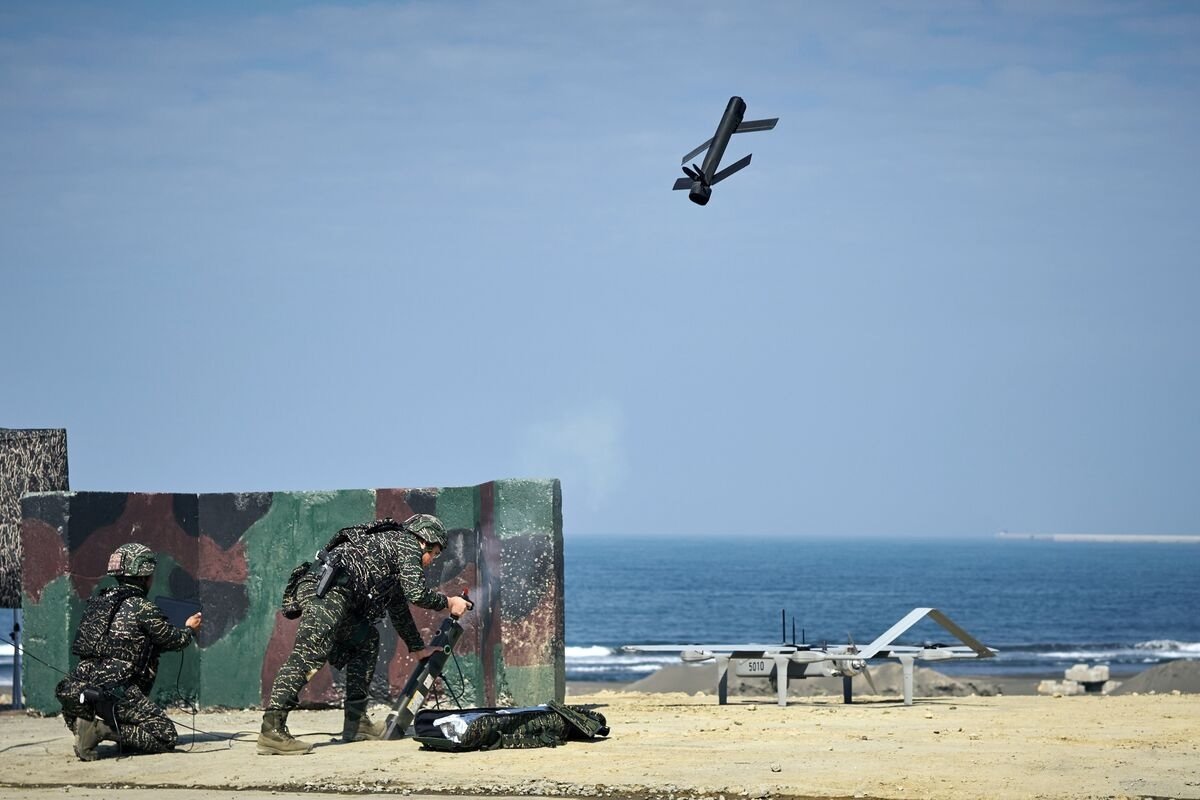
Originally developed as a small tube-launched unmanned aerial system capable of deployment from land, sea, and air platforms, the Coyote family has evolved into a modular counter-drone platform supporting surveillance, reconnaissance, electronic warfare, and air-defense operations across several U.S. military programmes.
Raytheon stated that both kinetic and non-kinetic variants of the Coyote system are designed to defeat small and larger unmanned aerial systems at extended ranges and higher altitudes than many comparable systems in their class. The company has also introduced upgrades aimed at improving launch speed, engagement range, flight performance, and operational flexibility against heavier payload threats.
The Coyote interceptor forms a key component of the U.S. Army’s Low, Slow, Small-Unmanned Aircraft Integrated Defeat System (LIDS), a layered counter-drone architecture designed to detect, track, identify, and neutralize aerial threats using radar, electronic warfare systems, command-and-control networks, and interceptors. The system integrates with Raytheon’s Ku-band Radio Frequency System (KuRFS) radar, which provides targeting data and guidance for engagements against incoming drones.
Raytheon’s role in the Army’s counter-drone efforts has expanded significantly in recent years. The company was awarded a major counter-UAS contract valued at up to $5 billion through 2033 under the Army’s LIDS programme, covering Coyote interceptors, launch systems, fixed and mobile configurations, and KuRFS radar systems.
Tom Laliberty, president of Land & Air Defense Systems at Raytheon, said the Coyote system is designed to provide warfighters with a cost-effective defence against both individual drones and swarm attacks while maintaining an affordable operational advantage against evolving unmanned threats.
The successful demonstration reflects continuing efforts by the U.S. military to field reusable, scalable, and sustainable counter-drone systems capable of defending forces against increasingly coordinated unmanned aerial threats.
——— End of Article ———