DUBAI, United Arab Emirates — May 6, 2026 : The United Arab Emirates has reportedly deployed China’s Guangjian-21A truck-mounted laser counter-drone system at Dubai International Airport as part of expanded security measures aimed at protecting critical infrastructure from potential unmanned aerial threats linked to rising regional tensions.
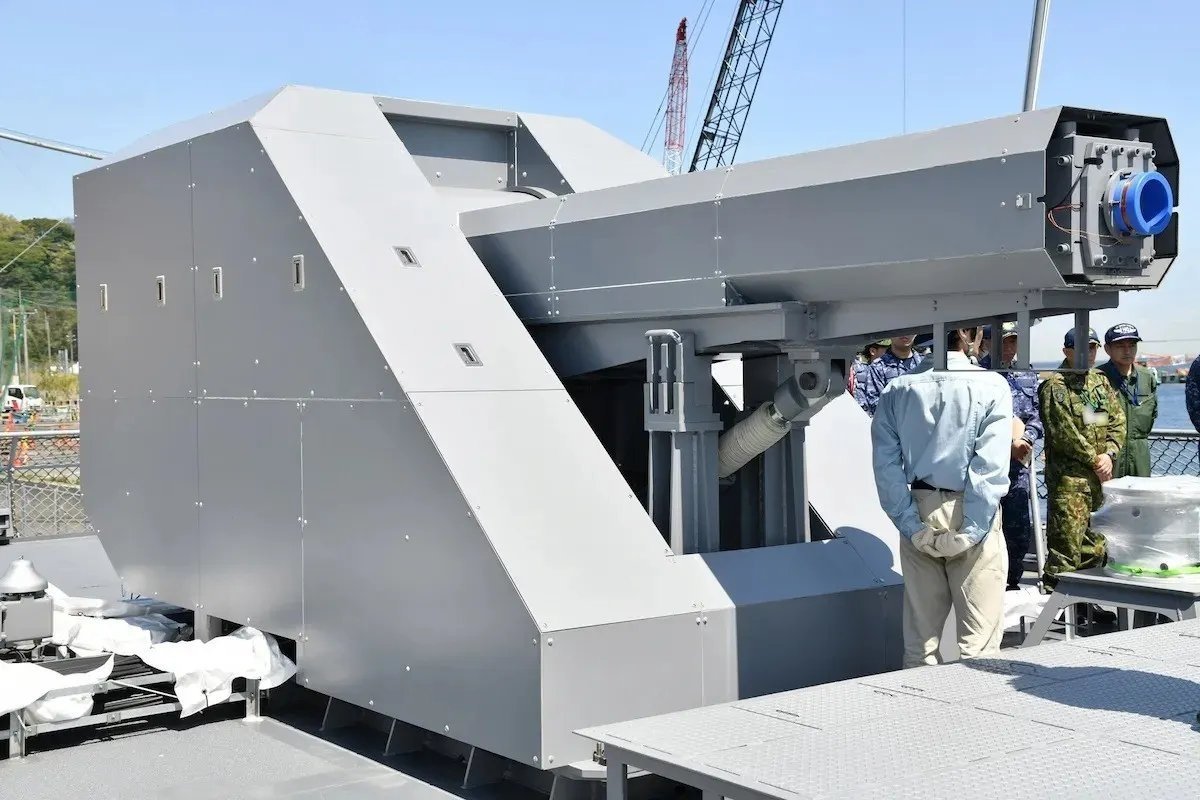
The reported deployment places one of China’s newest directed-energy air defence systems at one of the Middle East’s busiest aviation hubs. The Guangjian-21A, also known as the Light Arrow-21A, was publicly unveiled by Chinese state media in March 2026 as part of the Guangjian family of integrated low-altitude counter-unmanned aerial systems designed to defeat small and low-flying drones that frequently evade conventional radar coverage.
The deployment comes amid continued concern across the Gulf region regarding drone and missile threats associated with Iran and Iranian-aligned groups. Recent regional developments have included reported drone activity near Dubai as well as attacks targeting economic and infrastructure facilities linked to broader regional instability.
Guangjian Series Designed for Low-Altitude Drone Threats
The Guangjian series was developed to address the growing use of small unmanned aerial vehicles in modern conflicts. Chinese technical disclosures describe the architecture as an integrated counter-drone network combining hard-kill laser systems and soft-kill electronic warfare platforms.
The Guangjian-21A is a highly mobile truck-mounted laser weapon system designed for kinetic hard-kill engagements against low-altitude drones. The platform generates concentrated high-density laser beams capable of heating and structurally weakening drone airframes or disabling propulsion systems, onboard electronics and flight-control circuits within seconds.
Chinese sources state that the system can engage targets over several kilometres and is specifically optimized against small drones operating at low altitude and low speed. The system incorporates rapid detect-lock-engage functions intended to shorten engagement timelines against fast-emerging aerial threats.
A key operational feature of the Guangjian-21A is its “shoot-on-the-move” capability. The system can reportedly maintain firing operations while maneuvering, allowing the platform to reduce exposure time and reposition during defensive operations around sensitive infrastructure zones.
The Guangjian-21A is supported by phased-array radar systems and infrared detection sensors capable of identifying and tracking targets in low-altitude blind spots generally ranging between 50 and 80 meters above ground level, where traditional radar systems often experience reduced effectiveness.
Guangjian-11E Provides Soft-Kill Electronic Warfare Capability
Alongside the Guangjian-21A, China also introduced the Guangjian-11E, or Light Arrow-11E, as part of the same counter-drone architecture.
Unlike the laser-based hard-kill role of the 21A, the Guangjian-11E functions as a containerized soft-kill electronic warfare platform designed for stationary or semi-stationary deployment. The system combines pulsed laser effects, electronic interference and decoy techniques to disrupt drone operations without physically destroying the target.
Chinese technical descriptions indicate that the Guangjian-11E can blind electro-optical payloads, interfere with onboard sensors and sever communication and data transmission links between drones and their operators.
Both Guangjian systems are designed to operate as an integrated network through wired and wireless data-sharing links, enabling real-time target coordination across distributed air defence positions.
UAE Expands Layered Air Defence Around Critical Infrastructure
The reported deployment at Dubai International Airport forms part of broader UAE efforts to strengthen layered air defence coverage around strategic infrastructure, including airports, logistics facilities, energy sites and military installations.
Directed-energy systems such as the Guangjian-21A provide a comparatively low-cost-per-engagement option against drone swarms and loitering munitions when compared with traditional missile interceptors. Their ability to sustain repeated engagements without expending conventional munitions has increased global interest in laser-based counter-drone systems.
The UAE has steadily expanded its air defence capabilities over recent years through acquisitions of missile defence systems, electronic warfare platforms and counter-unmanned aerial technologies from multiple international suppliers.
China and the UAE maintain growing defence cooperation ties, including previous transfers of Chinese-origin air defence systems such as the FK-2000 short-range air defence platform.
China’s Expanding Defence Role in the Gulf
The reported presence of the Guangjian-21A in Dubai also highlights China’s expanding role as a supplier of advanced defence technologies to Gulf states.
Beijing has increased military and defence cooperation across the Middle East through exports of drones, surveillance systems, air defence equipment and electronic warfare technologies. Chinese defence manufacturers have increasingly promoted directed-energy systems as cost-effective solutions for countering low-cost drone threats.
At the same time, China continues to maintain strategic and economic relations with Iran. Western intelligence agencies and international monitoring organizations have repeatedly reported that Chinese entities supplied Iran with dual-use technologies and industrial components supporting Tehran’s domestic drone and missile production sectors.
These reportedly include microelectronics, navigation modules, engines, carbon fiber materials and other components later identified in Iranian-made unmanned aerial vehicles recovered in conflict zones across the Middle East and Eastern Europe.
Recent US intelligence reporting has also alleged that Chinese-linked entities prepared shipments of military-related equipment and air defence components to Iran, including technologies capable of supporting indigenous weapons production.
Dual-Track Regional Strategy
The simultaneous expansion of Chinese defence exports to Gulf states while Chinese-origin technologies continue to appear in Iranian drone supply chains reflects a broader dual-track regional strategy pursued by Beijing.
By supplying advanced counter-drone systems to countries facing Iranian aerial threats while maintaining commercial and industrial links that support Iran’s domestic military production ecosystem, China has positioned itself as a significant security actor on multiple sides of the Gulf security environment.
Chinese sources previously stated that Guangjian systems had been deployed domestically during major security operations in Beijing to provide low-altitude aerial protection during national events and high-profile public gatherings.
No official statements confirming the reported deployment at Dubai International Airport have been issued by the governments of the United Arab Emirates, China or Iran.
——— End of Article ———