NATIONAL HARBOR, Maryland — May 27, 2026 : L3Harris Technologies is advancing production and operational integration of its Iver4 900 autonomous underwater vehicle (AUV) for the U.S. Navy’s attack submarine fleet under a Defense Innovation Unit (DIU) program designed to enable torpedo tube launch and recovery of unmanned underwater systems. The effort aims to provide submarines with an organic unmanned capability for intelligence gathering, mine warfare, and seabed mapping missions while reducing risks to crews operating in contested environments.
The company received an Other Transaction Authority (OTA) contract from the DIU to deliver a Torpedo Tube Launch and Recovery (TTLR) system capable of deploying and autonomously recovering the Iver4 900 through standard submarine torpedo tubes. Announced on March 25, 2026, the contract supports the U.S. Navy’s broader effort to expand manned-unmanned teaming and launched effects for undersea warfare operations.
The Iver4 900 is intended to function as an underwater “loyal wingman” for attack submarines, supporting forward intelligence, surveillance, reconnaissance (ISR), mine countermeasure operations, seabed mapping, and other undersea missions without exposing the host vessel to higher-risk areas. Operating untethered and autonomously, the vehicle extends a submarine’s sensing and operational reach while remaining integrated into existing fleet infrastructure.
TTLR System Designed for Existing Submarine Infrastructure
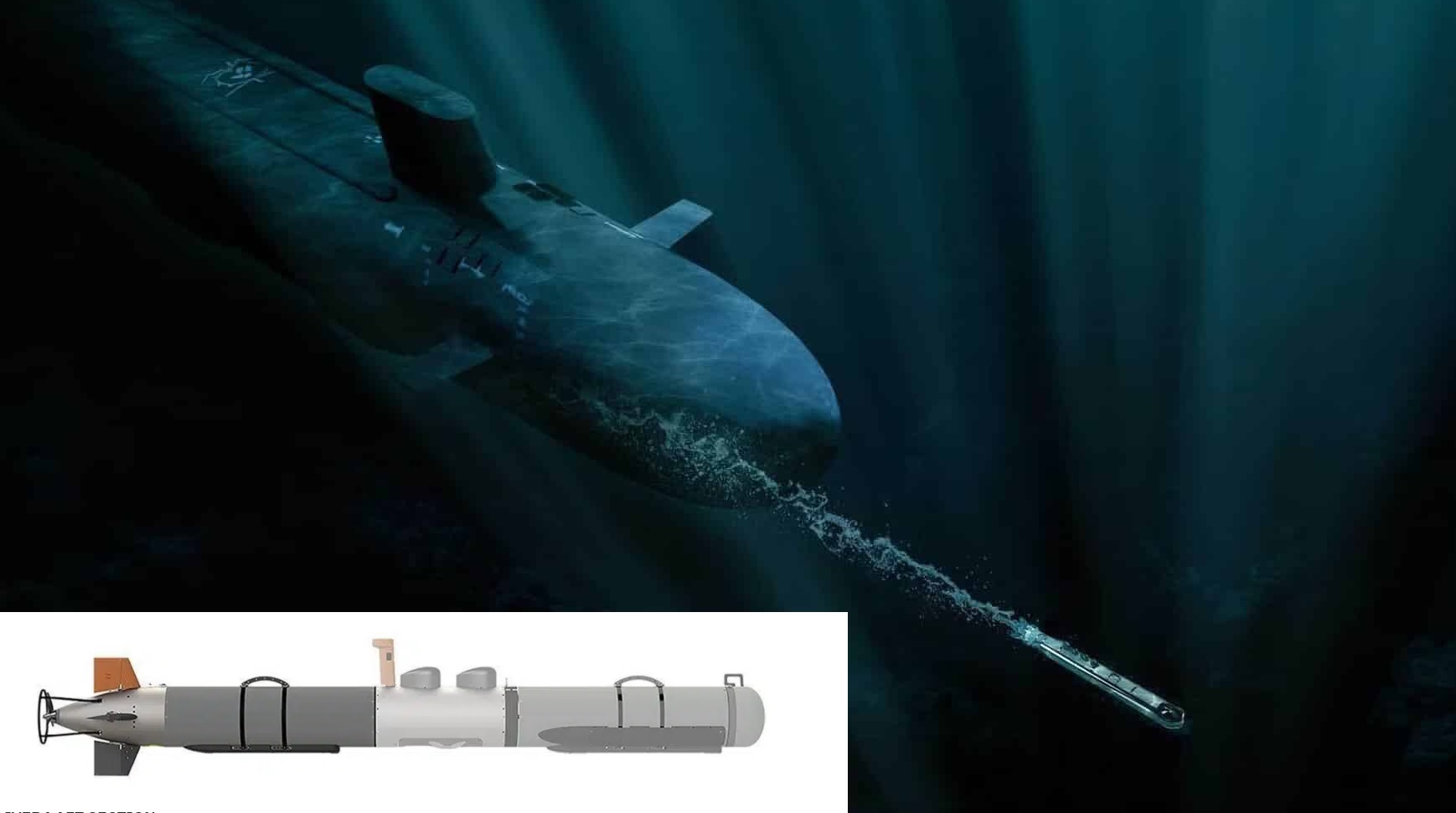
At the center of the DIU initiative is the TTLR system, which enables the launch and recovery of the Iver4 900 while submarines remain submerged and underway. The system uses a specialized enclosure known as the Shock and Fire Enclosure (SAFECAP), which fits inside a standard torpedo tube. The vehicle launches from the enclosure, conducts assigned missions independently, and autonomously navigates back into the SAFECAP upon completion.
Because the system uses existing torpedo tubes, submarines do not require structural modifications to their hulls or dedicated permanent storage space inside torpedo rooms. This approach allows the capability to be integrated across multiple submarine classes while preserving operational flexibility and stealth.
L3Harris President of Maritime, Space & Mission Systems Nino DiCosmo stated that the capability is already intended to meet operational requirements rather than remain in a developmental phase.
“The Torpedo Tube Launch and Recovery system is not a future capability, it’s answering combatant commander needs today,” DiCosmo said. “Our system is the first to successfully launch and recover AUVs from a submarine, providing commanders flexibility for persistent undersea operations and maintaining essential stealth.”
Operational Role and Fleet Integration
According to L3Harris, the Iver4 900 is designed to serve as an organic extension of submarine sensor systems and forms part of the Navy’s launched effects portfolio intended to improve targeting, intelligence collection, and mission endurance. The vehicle can perform forward ISR, seabed mapping, mine warfare tasks, and other classified operational missions typically associated with submarine deployments.
During the Sea Air Space 2026 Symposium in National Harbor, Maryland, JR Gear, Vice President and General Manager of Integrated Systems and Encryption at L3Harris, described the operational rationale behind integrating autonomous systems into submarine missions.
“When a diver is out there in the ocean, a lot of times they have a dive buddy for safety,” Gear said. “Unmanned systems are really good for the dull, dirty, and dangerous business. So you think of all those things together—what’s the dive buddy that a submarine has?”
The system is currently undergoing operational evaluation through at-sea exercises involving Virginia-class submarines, where the U.S. Navy and L3Harris are refining concept-of-operations procedures and testing how submarines can employ autonomous systems in contested or denied environments. These exercises are also being used to validate deployment, recovery, and mission workflows before broader operational implementation.
Modular Design Supports Multiple Mission Sets
The Iver4 900 incorporates a modular, open-architecture design intended to support a wide range of mission requirements. Payload sections in the nose, tail, and side compartments are removable and field-swappable, enabling crews to rapidly configure the vehicle for different operational tasks.
The system supports third-party sensors, autonomy software, sonar systems, ISR payloads, and mine countermeasure technologies. Available configurations include interferometric synthetic aperture sonar such as Northrop Grumman’s µSAS, multiple-aperture sonar systems, 3D underwater lidar for detailed seabed mapping and mine detection, and forward-looking echo sounders used for object avoidance and underwater navigation.
L3Harris said the platform’s open architecture allows continued payload development with external industry partners, enabling future capability upgrades without redesigning the vehicle itself.
Technical Specifications and Endurance
The Iver4 900 measures approximately 2.5 meters in length, features a 9-inch diameter titanium and carbon-fiber pressure housing, weighs less than 230 pounds, and is rated for operations at depths of up to 300 meters. The AUV can travel at speeds exceeding three knots during transit and more than five knots in sprint operations.
Mission endurance varies depending on payload configuration and battery type. The platform uses the first submarine- and aviation-approved lithium-ion battery technology certified for Navy AUV operations, supporting hot-swappable battery replacement.
In a lithium-ion configuration, the system can operate for over 40 hours and travel approximately 80 nautical miles under mission-minimal payload conditions. Standard nickel-metal hydride (NiMH) battery packs provide more than 20 hours of endurance and roughly 40 nautical miles of range.
Supporting Manned-Unmanned Undersea Operations
The DIU program is focused on reducing sailor workload by leveraging autonomous navigation and automated launch-and-recovery procedures. Rather than directly piloting the vehicle, operators are intended to focus on mission execution, data exploitation, and threat analysis.
“Let’s let the sailor do the mission and concentrate on the threat,” Gear said. “Let’s not have the sailor worry about how to fly, drive, or steer.”
The system has also undergone testing on multiple submarine platforms, including evaluations by the United Kingdom’s Royal Navy on Astute-class submarines under Project SCYLLA, supporting interoperability efforts associated with AUKUS Pillar 2 advanced defense technology cooperation.
L3Harris continues to expand the Iver family’s payload ecosystem through third-party partnerships while manufacturing the systems at its facility in Fall River, Massachusetts. The company and the DIU have not disclosed contract value details or a production delivery timeline.
——— End of Article ———