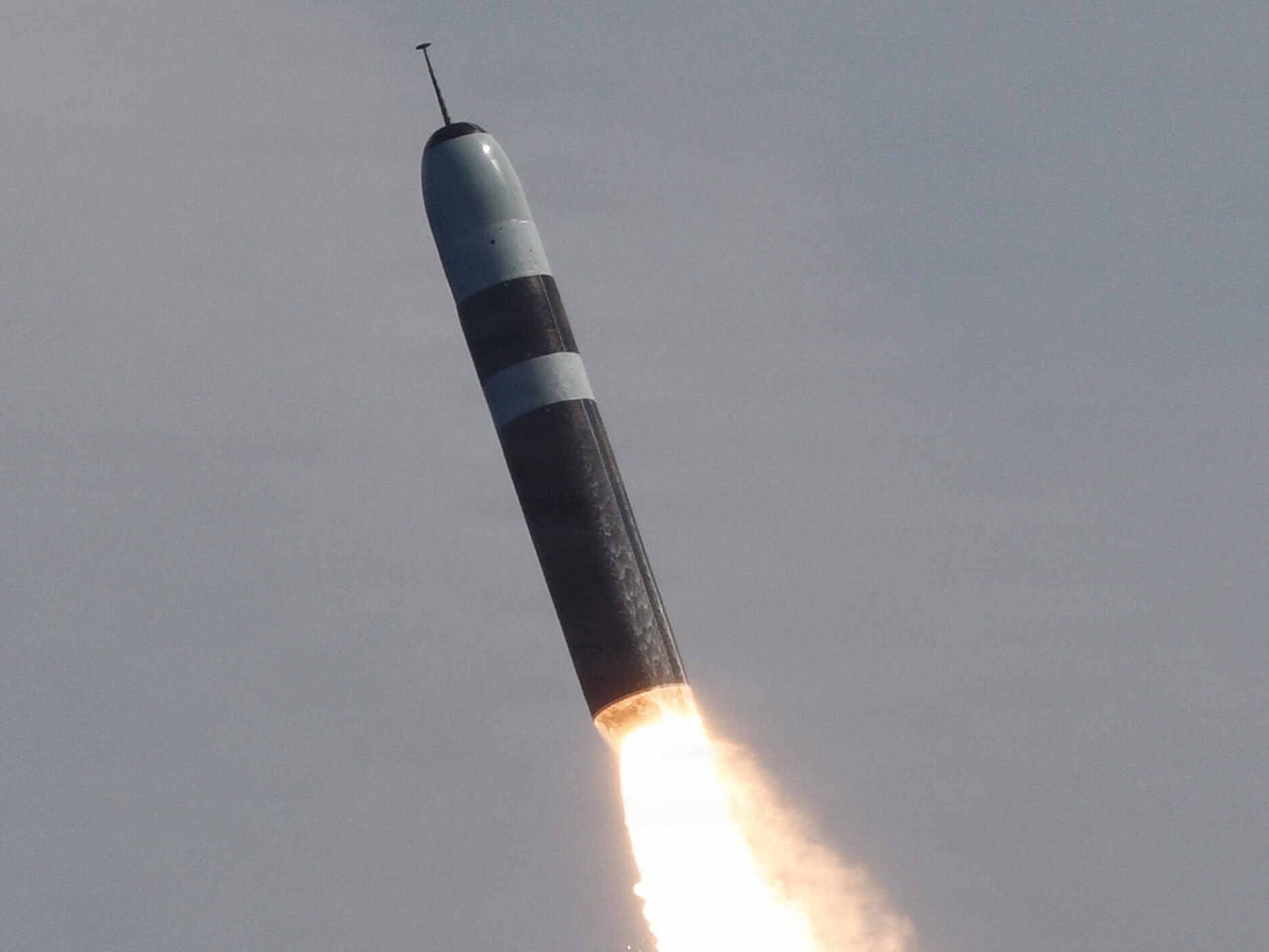
BRUSSELS/WASHINGTON — June 03, 2026 : The United States is holding confidential discussions with NATO allies over a possible eastward expansion of the alliance’s nuclear-sharing arrangement, a move that could bring part of NATO’s nuclear deterrence infrastructure closer to Russia’s borders for the first time since the Cold War.
According to a June 2, 2026 report by the Financial Times, U.S. officials have indicated openness to allowing additional NATO members on the alliance’s eastern flank to host dual-capable aircraft (DCA) and potentially support elements of the nuclear-sharing mission currently concentrated in Western Europe. If approved, the move would represent the first deployment of U.S. nuclear deterrence infrastructure into former Warsaw Pact countries and the most significant geographic adjustment to NATO’s nuclear posture since the Soviet Union’s collapse.
NATO Reviews Deterrence Strategy Amid Force Restructuring
The discussions come as Washington reassesses its military posture in Europe following Russia’s 2022 invasion of Ukraine and broader changes to U.S. force deployments on the continent.
The Pentagon is reviewing reductions in conventional troop presence, including the announced withdrawal of around 5,000 personnel from Germany under the administration of President Donald Trump. Against this backdrop, U.S. officials are examining nuclear-sharing arrangements as a way to maintain deterrence credibility and reassure allies of continued American security commitments.
Officials involved in planning indicate that the proposal would not increase the total number of U.S. nuclear weapons stationed in Europe. Instead, the focus is on redistributing existing capabilities, increasing operational flexibility, and strengthening NATO’s deterrence posture along its eastern flank.
Current NATO Nuclear-Sharing Structure
NATO’s nuclear-sharing framework has remained a central component of alliance deterrence since the Cold War. Under the arrangement, approximately 100 U.S.-owned B61-series gravity bombs are believed to be stored under American custody at six military bases across Europe: Kleine Brogel in Belgium, Büchel in Germany, Aviano and Ghedi in Italy, Volkel in the Netherlands, and Incirlik Air Base in Türkiye.
Although hosted by allied countries, the weapons remain under full U.S. ownership, maintenance, and release authority. Participating nations contribute aircraft and trained crews capable of carrying nuclear weapons if authorized during wartime.
Oversight of the mission is conducted through NATO’s Nuclear Planning Group, established in 1966 to coordinate alliance nuclear policy and consultation. Operational readiness is maintained through the annual Exercise Steadfast Noon, NATO’s principal nuclear preparedness exercise involving around 2,000 personnel and 60 to 70 aircraft operating without live nuclear weapons.
Poland Seen as the Most Likely Candidate
Among NATO’s eastern members, Poland is viewed as the strongest candidate for a future expansion of the mission due to its strategic position, military modernization, and expanding defense infrastructure.
Poland currently allocates more than 4 percent of GDP to defense, the highest proportion within NATO, while undertaking one of Europe’s largest military procurement programs. Warsaw has ordered 32 F-35A Lightning II fighters, 250 M1A2 Abrams tanks, 96 AH-64E Apache helicopters, Patriot air-defense batteries, and hundreds of HIMARS launchers from the United States.
The country also hosts the forward headquarters of the U.S. Army V Corps and functions as a key logistics hub for military support entering Ukraine.
Former Polish President Andrzej Duda previously called for the deployment of U.S. nuclear weapons on Polish territory, arguing that NATO’s deterrence posture should reflect the alliance’s eastward security shift after Russia’s invasion of Ukraine. Poland has also reportedly discussed aspects of France’s forward deterrence initiative, including the temporary deployment of nuclear-capable Rafale aircraft during periods of heightened tension.
Baltic States Express Interest
Estonia, Latvia, and Lithuania have also shown interest in closer participation in NATO’s nuclear-sharing framework as security concerns along the alliance’s eastern frontier increase.
However, analysts note that the Baltic states currently lack the scale of military infrastructure, logistics capacity, and U.S. military presence available in Poland, making Warsaw the more practical option should NATO move forward with an eastward expansion.
Infrastructure and Certification Requirements
Expanding the nuclear-sharing mission would require extensive investment and long-term preparation.
Potential host nations would need hardened aircraft shelters equipped with underground Weapons Storage and Security System (WS3) vaults, highly secured storage areas, specialized maintenance facilities, encrypted communications networks, and integration into U.S. nuclear command-and-control systems.
Security requirements for such facilities exceed those of conventional ammunition depots and involve permanent surveillance, multiple layers of protection, dedicated emergency response forces, and recurring certification inspections. Military officials indicate that establishing nuclear-certified infrastructure could require years of preparation and substantial financial investment.
F-35 Fleet Expansion Shapes Future Planning
NATO’s transition toward the F-35A Lightning II is expected to play a major role in future nuclear-sharing decisions.
For decades, the mission relied on legacy F-16 variants and Panavia Tornado aircraft. As those fleets age, NATO members are shifting toward the F-35A, which is certified to carry the upgraded B61-12 nuclear gravity bomb.
The aircraft’s internal weapons carriage allows it to retain low-observable characteristics during operations, while the B61-12’s guided tail-kit system improves accuracy and mission flexibility.
Poland, Belgium, the Netherlands, Italy, Germany, Norway, Denmark, and Finland are all introducing F-35 aircraft into service, creating a larger pool of NATO members capable of supporting future nuclear-sharing responsibilities. By the early 2030s, European NATO countries are projected to collectively operate more than 600 F-35 aircraft.
Strategic Implications
No formal agreement is believed to be imminent, and any change to NATO’s nuclear posture would require political consensus among alliance members as well as major infrastructure investments.
However, positioning nuclear-certified aircraft closer to NATO’s eastern flank could improve response flexibility, shorten operational flight distances, and further integrate eastern member states into NATO’s deterrence framework as the alliance continues adapting to Europe’s changing security environment.
——— End of Article ———