ST. PETERSBURG, Fla. — June 06, 2026 : General Dynamics Ordnance and Tactical Systems (GDOTS) has secured a U.S. Army contract to provide a next-generation extended-range artillery projectile based on the proven Vulcano 155 Guided Long Range (GLR) system. The contract, announced on June 5, 2026, supports the Army’s efforts to expand its long-range precision fire capabilities.
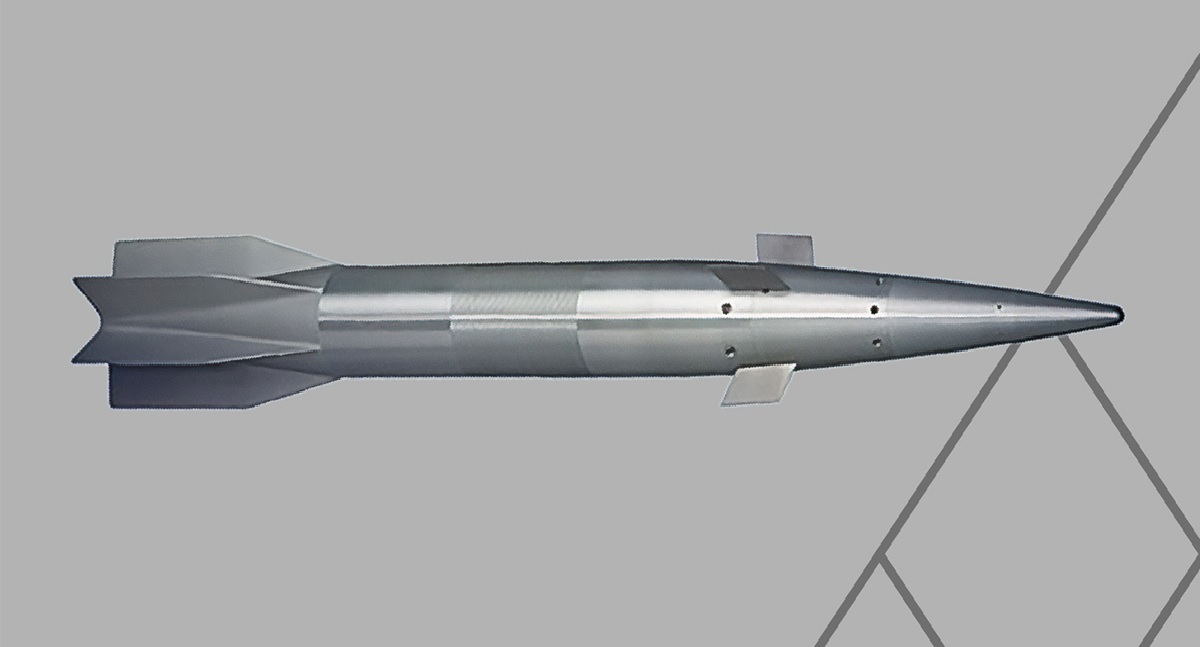
The new target-seeking precision-guided munition is derived from the existing Vulcano 155 GLR, a mature artillery system developed through cooperation between General Dynamics, Diehl Defence of Germany, and Leonardo Electronics of Italy. The projectile is designed to engage both stationary and moving targets with high accuracy while minimizing collateral damage.
Extended Range and Precision Strike Capability
According to GDOTS, the Vulcano 155 projectile can strike targets at distances of up to 70 kilometers when fired from a 155/52 caliber howitzer and up to 55 kilometers from a 155/39 caliber artillery system. The extended range is achieved through a combination of advanced aerodynamic design, GPS guidance, and precision targeting technologies.
The projectile uses GPS/Inertial Measurement Unit (IMU) guidance together with a Semi-Active Laser (SAL) terminal seeker, enabling highly accurate engagements. The system is capable of achieving a circular error probable (CEP) of less than 5 meters using GPS/IMU guidance and under 3 meters when employing SAL terminal homing.
In addition to the SAL-guided version, the ammunition is also available with an advanced Far-Infra Red (FIR) seeker. This configuration allows the projectile to detect, track, and engage maritime targets, expanding its operational flexibility beyond land-based missions.
Both the SAL and FIR variants are designed to maintain precision engagement capabilities in GPS-contested or jammed environments, ensuring effectiveness in modern electronic warfare conditions.
Compatible With Existing 155mm Artillery Systems
The Vulcano 155 incorporates a notched high-explosive warhead and is compatible with standard 155mm howitzers already in service. This allows military forces to improve long-range precision strike capabilities without requiring significant modifications to existing artillery platforms.
The system’s combination of extended range, high accuracy, and multi-target engagement capability is intended to provide artillery units with greater operational reach and effectiveness on the battlefield.
Production Transition to the United States
To support the U.S. Army program, GDOTS will transfer established manufacturing processes from Germany and Italy to production facilities in the United States. The company stated that leveraging proven production lines and existing technology will reduce development risk and support rapid production scaling.
The U.S. Army version of the projectile will require only minor airframe modifications while retaining the core capabilities of the existing Vulcano system.
“Our approach leverages years of investment and development from our partners, Diehl Defence and Leonardo Electronics, who have successfully delivered the 155mm Vulcano Guided Long Range artillery suite to Germany, Italy, and other partner nations,” said Michael Bate, Senior Vice President and General Manager at GDOTS.
Bate noted that transitioning established production capabilities to the United States will enable the company to quickly deliver a mature solution that meets Army requirements for range, precision, lethality, and schedule.
European Partners Highlight Program Importance
The Vulcano 155 GLR system has already been fielded by several allied nations, providing a proven foundation for the U.S. Army’s next-generation artillery projectile program.
Commenting on the contract, Gunnar Pappert, Executive Vice President at Diehl Defence, said the company is pleased to work with GDOTS to further develop the Vulcano system and bring the capability to the U.S. Army.
Luca Perazzo, Deputy Managing Director of Defense Systems at Leonardo, stated that the selection of the Vulcano 155 for the program demonstrates the capabilities of the system and highlights its continued technological development.
——— End of Article ———