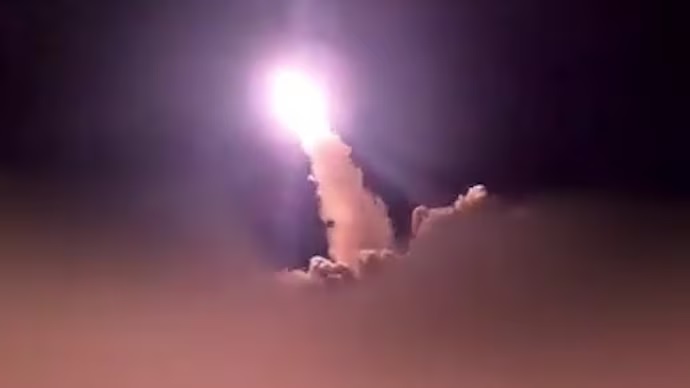
KUWAIT CITY/TEHRAN, — June 01, 2026 : Iran’s Islamic Revolutionary Guard Corps (IRGC) launched retaliatory missile and drone strikes against a Gulf airbase used by United States forces on Monday, prompting Kuwait to activate air defense systems and intercept incoming threats as tensions increased despite an ongoing ceasefire between Washington and Tehran.
The IRGC said the operation was carried out in response to a recent U.S. military strike targeting an Iranian communications and telecommunications tower on Sirik Island in Hormozgan Province. According to the IRGC, its Aerospace Force targeted the airbase from which the U.S. operation allegedly originated, stating that the “predicted targets were destroyed.”
Although the IRGC did not initially identify the location of the targeted installation, the U.S. Central Command (CENTCOM) later confirmed that American personnel stationed in Kuwait were the intended target. CENTCOM stated that U.S. forces intercepted two Iranian ballistic missiles at approximately 11 p.m. Eastern Time on Sunday, adding that no American personnel were harmed during the attack.
The command said the missiles were “immediately defeated” and noted that U.S. forces remain prepared to protect personnel and facilities in the region while continuing to support the ceasefire agreement currently in effect between the two countries. Regional reports indicated that the attack was directed toward Ali Al Salem Air Base in Kuwait, with debris from intercepted projectiles reportedly damaging MQ-9 Reaper drones stationed at the facility. However, U.S. officials maintained that there were no personnel casualties.
Kuwait’s air defense systems were activated after warning sirens sounded across Kuwait City during the incident. Kuwaiti authorities reported that missiles and drones approaching the country’s airspace were intercepted before reaching their intended targets.
In a statement issued Monday, Kuwait’s Foreign Ministry condemned the attack and reiterated the country’s right to take all necessary measures to safeguard its sovereignty, territorial integrity, and civilian safety. Kuwaiti officials emphasized that national security measures would continue amid rising regional tensions.
The exchange followed a series of U.S. military operations conducted over the weekend, which American officials described as “self-defense” strikes. According to CENTCOM, U.S. forces targeted Iranian radar systems and drone command-and-control facilities located in the city of Goruk and on Qeshm Island after what Washington described as aggressive Iranian actions in the Gulf region.
Among the developments preceding the escalation was the destruction of a U.S. MQ-1 Predator drone. The United States stated that the drone had been operating over international waters in the Persian Gulf when it was downed by Iranian air defense systems. Iran, however, disputed the claim and stated that the drone had entered Iranian territorial waters, leading to its interception.
Iranian officials have argued that countries hosting U.S. military facilities used in operations against Iranian territory cannot avoid responsibility for the consequences of such actions. The IRGC also warned that any repetition of similar strikes against Iranian assets could prompt further responses.
Despite the recent military exchanges, an April 8 ceasefire agreement between Iran and the United States officially remains in place. The truce, which largely halted a three-month period of hostilities, continues to be tested by repeated incidents and competing security claims by both sides.
Diplomatic efforts aimed at preventing further escalation remain ongoing. Delegations from both countries are reviewing a potential memorandum of understanding intended to establish a longer-term framework for ending hostilities. However, reports indicate that negotiations have recently slowed amid disagreements over proposed conditions and differing interpretations of security commitments.
U.S. officials have described recent military actions as measured responses intended to protect forces and maintain regional stability, while Iranian authorities maintain that retaliatory measures are necessary to respond to attacks on their territory. The latest exchange highlights continuing tensions in and around the Strait of Hormuz, a strategically important waterway for regional security and global energy shipments, even as diplomatic discussions continue.
——— End of Article ———