WASHINGTON — May 30, 2026 : The U.S. Army is seeking $461 million for its Maneuver Short-Range Air Defense (M-SHORAD) program in the fiscal year 2027 budget, a significant increase from the $296 million allocated in the previous fiscal year, as the service continues efforts to rebuild short-range air defense capabilities reduced during the post-Cold War period and years of counterinsurgency operations.
The funding request reflects a broader modernization effort to strengthen protection for ground forces against an expanding range of aerial threats, including unmanned aircraft systems (UAS), rotary-wing aircraft, cruise threats, and conventional fixed-wing platforms. Army planners have divided the investment into three parallel priorities: developing a next-generation interceptor missile, advancing directed energy air defense systems, and expanding short-range protection to light and airborne formations through modular platforms.
Rebuilding Short-Range Air Defense Capability
The Army’s renewed focus on short-range air defense follows force structure reductions made in the early 2000s, when air defense formations were downsized to support operations in Iraq and Afghanistan, where hostile air threats were largely absent. By the mid-2000s, the Army had reduced active short-range air defense capability to two active-component battalions alongside selected National Guard units.
Recent conflicts, particularly the war in Ukraine, have prompted a reassessment of those decisions. The widespread use of drones against armored vehicles, logistics convoys, and fixed positions has highlighted the need for mobile air defense systems capable of moving alongside maneuver forces and protecting frontline formations from persistent low-altitude threats.
SGT Stout Forms the Core of Current Capability
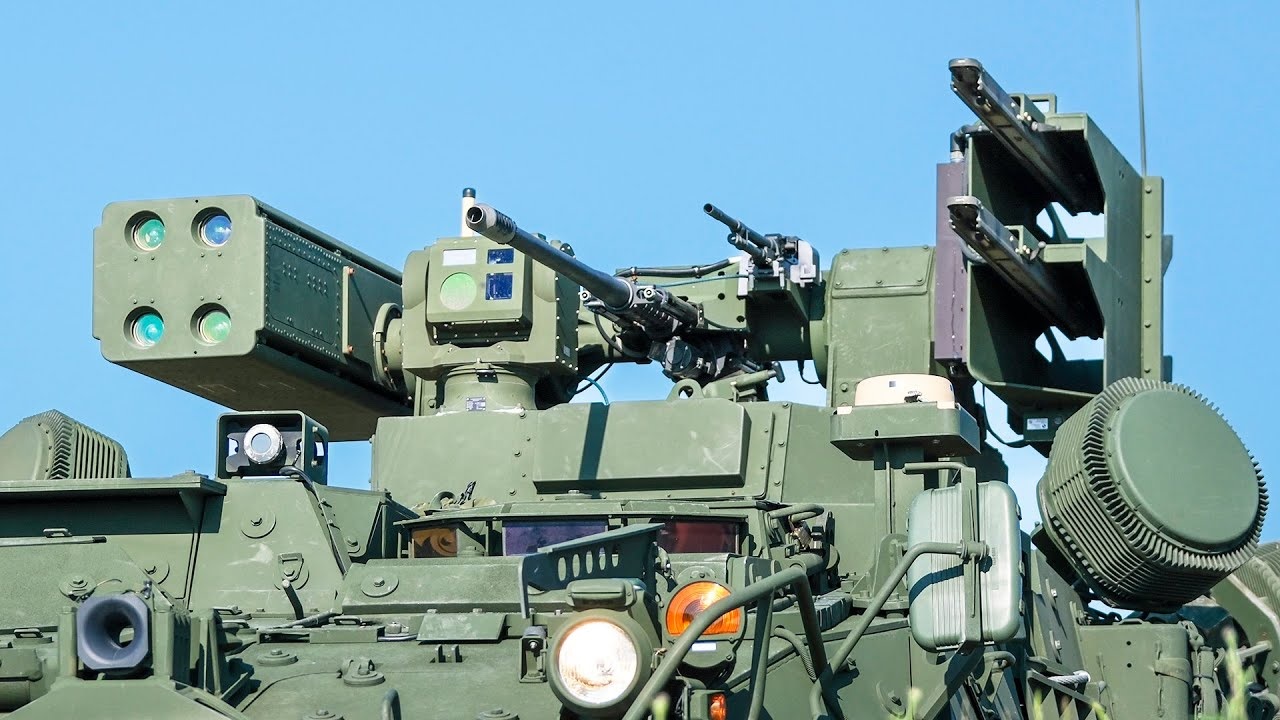
The Army’s current M-SHORAD capability is built around the SGT Stout, a modified Stryker A1 armored vehicle formally named in honor of Sgt. Mitchell Stout, a Medal of Honor recipient killed during the Vietnam War. Designed to accompany brigade combat teams, the platform combines mobility with layered air defense capability through a Mission Equipment Package developed by Leonardo DRS.
The system integrates multiple weapons designed to counter varying threat profiles. These include FIM-92 Stinger surface-to-air missiles for short-range engagements, AGM-114L Longbow Hellfire missiles adapted for aerial targets, an XM914 30mm automatic cannon for drones and close-range threats, an M240 7.62mm machine gun for secondary protection, and a Ku-band 360-degree radar system for target detection and tracking.
$215 Million for Next Generation Short Range Interceptor
The largest share of the FY2027 request, approximately $215 million, is allocated to the Next Generation Short Range Interceptor (NGSRI) program, which is intended to replace the legacy Stinger missile introduced during the 1980s.
Army officials view the replacement as necessary because the Stinger’s single-mode infrared seeker, limited engagement range, and smaller warhead present challenges against modern aerial threats, particularly maneuverable drones with reduced thermal signatures and swarm tactics.
Lockheed Martin and Raytheon are developing competing interceptor systems featuring multi-mode seekers, advanced signal processing, and increased engagement ranges. In May 2026, Lockheed Martin completed a seeker characterization flight test for its QuadStar missile at White Sands Missile Range, while Raytheon has reported multiple successful subsystem demonstrations.
Although the Army is targeting production by 2028, a June 2025 report from the Government Accountability Office (GAO) identified seven immature critical technologies within the program that could affect development timelines.
$95 Million for Directed Energy Air Defense
The FY2027 request also includes approximately $95 million for upgrades to the Directed Energy M-SHORAD (DE M-SHORAD) system, which replaces traditional kinetic interceptors with a 50-kilowatt high-energy laser.
Raytheon, which received a $123 million development contract in 2021, delivered initial prototypes to the Army in 2023. During live-fire testing at Yuma Proving Ground, Arizona, the laser-equipped platform successfully engaged Group 1 through Group 3 unmanned aircraft.
Army officials consider the system’s primary advantage to be lower engagement costs and increased magazine depth, as laser engagements do not require physical missile reloads and significantly reduce per-shot costs. FY2027 funding will focus on broadening the laser system’s target set to include helicopters, rockets, artillery, and mortar threats while improving performance based on operational feedback.
$108 Million for Air Defense of Light Forces
The remaining $108 million is allocated to M-SHORAD Increment 4, a program intended to provide air defense capability to light and airborne formations, including units such as the 101st Airborne Division.
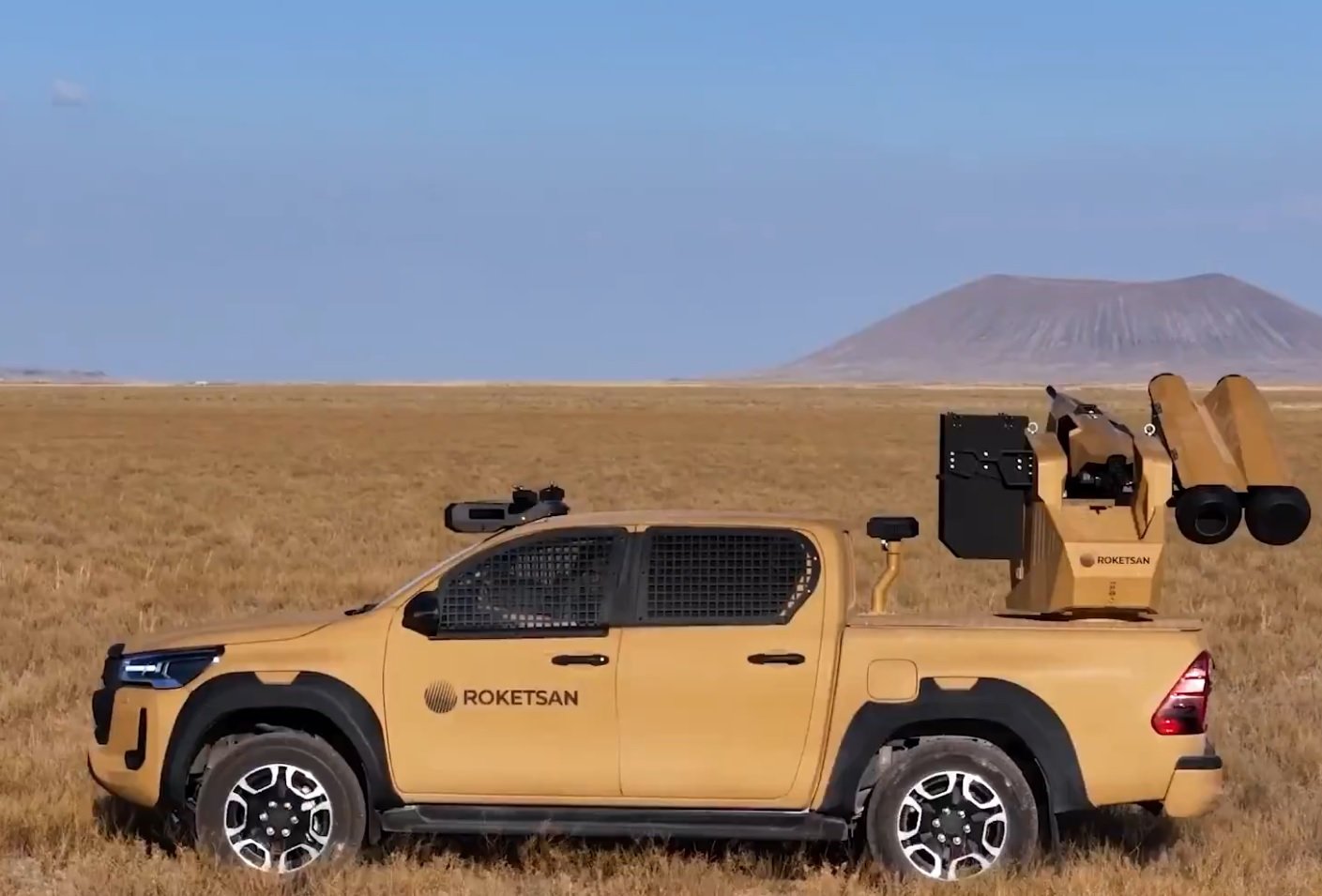
Army officials have stated that Stryker-mounted systems are not optimized for airborne insertions or expeditionary missions involving light infantry formations. To address the requirement, the Army is developing a modular palletized or “sled” system capable of integration with lighter platforms, including the Joint Light Tactical Vehicle (JLTV), Infantry Squad Vehicle (ISV), Humvee, and commercial pickup trucks.
According to Army requirements outlined in a November 2025 Request for Information (RFI), the system must be transportable aboard a C-130 aircraft and support dismounted maneuver operations. The Army is targeting an initial operational capability for fiscal year 2029.
Expanding Air Defense Across the Force
The FY2027 budget request reflects a broader Army effort to restore short-range air defense as an organic capability integrated across multiple force structures. By pursuing interceptor modernization, directed energy systems, and mobile air defense solutions for light formations simultaneously, the Army aims to ensure both armored brigades and expeditionary units maintain protection against increasingly diverse aerial threats.
——— End of Article ———