TAMPA, Florida, — May 23, 2026 : A viral image emerging from the recently concluded joint capability demonstrations at Special Operations Forces (SOF) Week 2026 has sparked discussion among defence analysts and military observers regarding soldier-level tactical equipment used by Indian Special Forces, particularly the apparent absence of visible tactical hearing protection during helicopter operations.
India made a significant appearance at the event, held in Tampa, Florida, from May 18 to 21, where a high-level Indian Armed Forces delegation participated in multinational engagements and showcased operational capabilities alongside partner nations during the “Battle in the Bay” capability demonstration. The exercise highlighted interoperability, tactical coordination, and special operations readiness among participating forces.
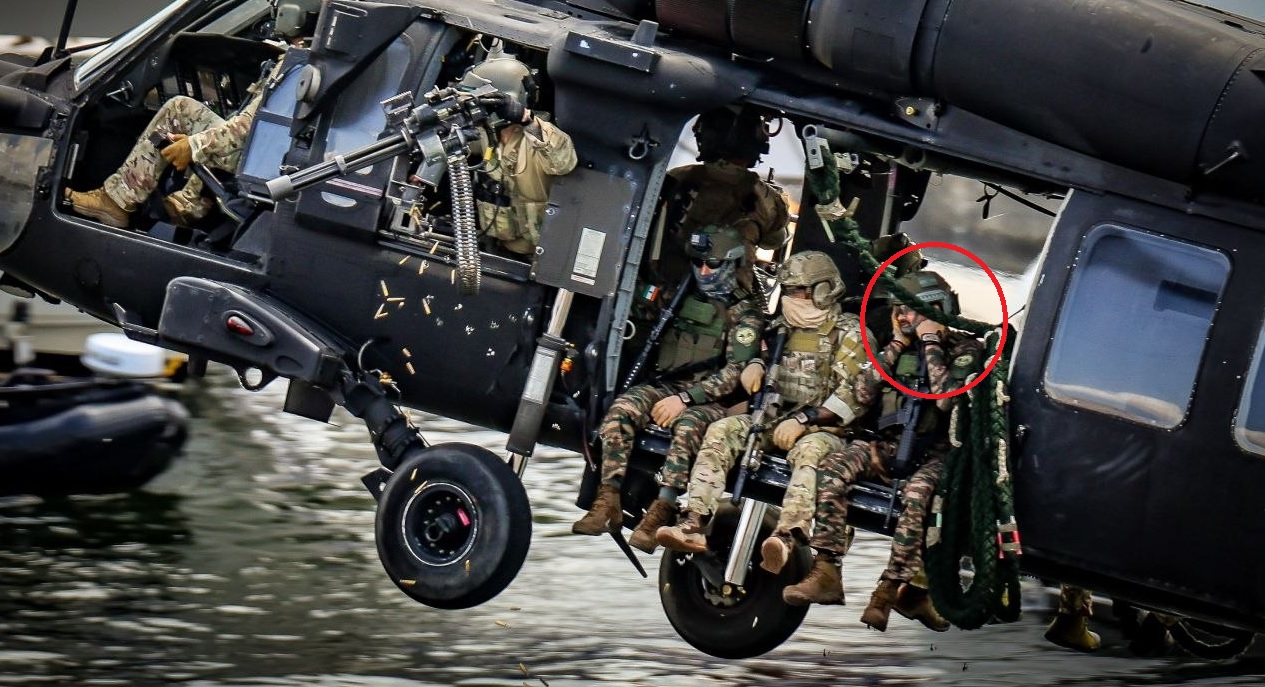
However, attention shifted to a widely circulated photograph showing a mixed team of Indian and US Special Forces personnel seated on the edge of a helicopter flying low over water during an operational demonstration. In the image, US personnel, including a visible door gunner, appear equipped with advanced tactical communication headsets widely recognized as 3M PELTOR ComTac systems, while one Indian Special Forces operative is clearly seen covering both ears with his hands to shield himself from helicopter rotor noise.
The image has triggered questions among defence analysts and social media users over why Indian Special Forces personnel visible during the helicopter demonstration were not wearing tactical hearing protection systems in an environment known for extreme noise exposure.
Several defence observers have questioned whether the absence of visible headsets reflected equipment availability, mission-specific loadout decisions, interoperability limitations, or differing operational practices. Many analysts have particularly questioned why an Indian Special Forces operative, participating in a multinational special operations event, was seen manually covering his ears from rotor noise while US Special Forces personnel in the same helicopter were visibly equipped with integrated hearing protection and communication systems.
The viral image has intensified discussion around whether Indian Special Forces units possess standardized access to advanced hearing-protection headsets, such as PELTOR ComTac systems, or equivalent tactical equipment.
Role of Tactical Hearing Protection in Helicopter Operations
In modern special operations environments, tactical communication headsets such as PELTOR ComTac and equivalent systems are generally regarded as standard mission equipment, particularly during helicopter-based operations.
Military helicopters generate sustained high-decibel noise levels capable of causing discomfort, temporary hearing disruption, and long-term auditory damage during prolonged exposure. Tactical hearing protection systems are designed to reduce harmful noise while allowing operators to remain operationally aware and connected during missions.
These systems generally perform two key operational functions:
Active Hearing Protection
Electronic suppression or compression of dangerous sound levels, including rotor noise, aircraft engines, explosions, and gunfire, while amplifying low-level environmental sounds required for situational awareness.
Integrated Tactical Communication
Connection to squad radios and helicopter intercom systems, enabling operators to receive instructions, coordinate movement, and maintain communication during high-risk operations, including air insertion, maritime assault missions, and fast-roping exercises.
The viral image has drawn wider attention because the Indian operative appears to be physically covering his ears rather than using visible electronic hearing protection, while US Special Forces personnel in the same aircraft are seen wearing integrated tactical communication headsets.
Procurement and Modernization Questions
The incident has also renewed questions regarding equipment standardization and modernization priorities for elite Indian units.
Currently, 3M PELTOR ComTac and SWAT-TAC tactical communication headsets are commercially available in India, and specialized Indian military formations are known to operate different secure communication systems during missions. The Indian defence establishment has also accelerated modernization efforts through programmes such as Innovations for Defence Excellence (iDEX), supporting tactical communication systems, secure battlefield networking, tactical LAN radios, and indigenous soldier modernization initiatives.
However, there is no publicly known record of a recent large-scale standardized procurement specifically involving advanced active hearing protection systems, such as PELTOR ComTac headsets, for widespread issue across Indian Special Forces battalions.
The viral photograph has therefore raised a broader operational question among defence observers: why Indian Special Forces personnel at SOF Week 2026 were not visibly wearing tactical hearing protection during helicopter operations while US counterparts in the same operational environment appeared equipped with integrated headset systems.
Military analysts continue to note that Indian Special Forces are globally recognized for combat effectiveness, operational capability, and performance in high-risk and demanding environments. At the same time, the incident has highlighted continued discussion surrounding modernization of individual soldier equipment, particularly systems linked to hearing protection, communication, mission safety, and interoperability during multinational special operations exercises.
——— End of Article ———