WIESBADEN, Germany — May 15, 2026 : The United States Army and NATO allies have demonstrated an integrated digital kill chain during Exercise Arcane Thunder 26, combining high-altitude sensing balloons, targeting drones and M142 High Mobility Artillery Rocket System (HIMARS) launchers to accelerate battlefield detection and precision strike coordination across contested operational environments.
The multidomain exercise, conducted from April 6 to April 29, 2026, across Germany, Poland and the United States, was reported by the U.S. Mission to NATO on May 15. The training event focused on improving the connection between aerial surveillance systems, digital command networks and long-range fires as NATO continues expanding multidomain warfare capabilities along the alliance’s eastern flank.
Integrated Sensor Network
At the center of Arcane Thunder 26 was a distributed battlefield sensing architecture built around micro high-altitude balloons and unmanned aerial systems. The elevated sensor platforms provided persistent intelligence, surveillance and electronic sensing coverage over large operational areas, enabling allied forces to identify hostile electromagnetic emissions, monitor troop movements and relay targeting information to command centers in near real time.
The balloon operations were conducted by soldiers assigned to the U.S. Army’s Multi-Domain Command – Europe and the 2nd Multi-Domain Task Force (2MDTF). To validate interoperability and operational coordination across NATO territory, balloon launches were carried out in Sweden while recovery operations took place in Latvia after flight durations lasting between 24 and 30 hours.
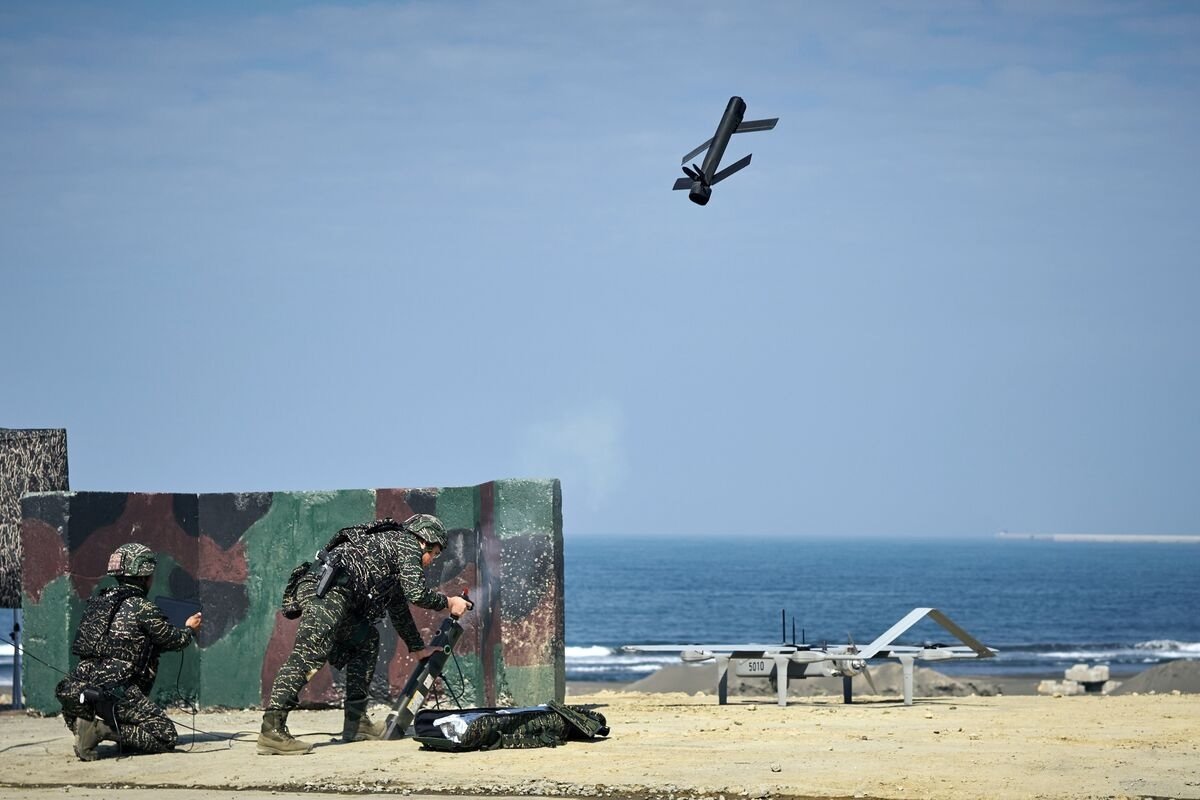
Targeting drones operated alongside the balloons to expand the detection network by providing close-range visual identification and target verification. The unmanned systems were directly linked into digital fire-control networks, enabling rapid transmission of targeting coordinates to strike units and significantly reducing the time between target acquisition and engagement.
Military officials involved in the exercise stated that the architecture was designed to function without relying exclusively on satellites or vulnerable manned reconnaissance aircraft. The network demonstrated the ability to maintain battlefield awareness and targeting capabilities in degraded electromagnetic conditions and contested airspace environments.
HIMARS Precision Strike Integration
Following transmission of targeting data from the sensor network, U.S. Army HIMARS crews conducted simulated deep-strike fire missions against designated targets.
The M142 HIMARS, manufactured by Lockheed Martin, is mounted on a wheeled Family of Medium Tactical Vehicles chassis and is designed for rapid deployment and repositioning after firing, allowing crews to reduce exposure to counter-battery threats through “shoot-and-scoot” operations.
The launcher carries either a six-round pod of Guided Multiple Launch Rocket System (GMLRS) munitions or longer-range missile systems including the Precision Strike Missile (PrSM), which extends engagement ranges beyond 400 kilometres. Officials said the exercise reaffirmed HIMARS as a central component of NATO’s evolving counter-battery and deep-strike doctrine.
The digital integration demonstrated during Arcane Thunder 26 enabled sensor platforms, targeting drones and artillery units to function as part of a single connected battlefield network capable of rapidly detecting, identifying and engaging high-value threats.
NATO Multidomain Operations
Arcane Thunder 26 formed part of the U.S. Army’s broader transition toward sensor-fused battlefield operations in which reconnaissance, cyber, electronic warfare, land and air assets operate as interconnected nodes sharing information across multiple combat domains.
The exercise validated the deployment of Multi-Domain Company Teams from Multi-Domain Command – Europe, which combine cyber, space, electronic warfare and conventional combat capabilities to create synchronized operational effects. Military planners stated that the system is intended to shorten decision-making timelines and enable allied forces to engage mobile targets before they can relocate or conceal themselves.
High-altitude balloons were also highlighted during the exercise as a lower-cost alternative to traditional airborne early-warning and surveillance systems. Unlike satellites operating in fixed orbital patterns or manned aircraft vulnerable to advanced air defenses, the balloons were able to provide extended intelligence coverage over operational areas for prolonged periods.
Eastern Flank Deterrence
The exercise directly supported NATO’s Eastern Flank Deterrence Initiative and reinforced alliance regional defense planning aimed at countering advanced anti-access and area denial (A2/AD) capabilities fielded by potential adversaries.
NATO commanders have increasingly emphasized distributed surveillance systems, autonomous reconnaissance platforms and digitally connected long-range fires as part of preparations for potential high-intensity conflicts in Europe. Arcane Thunder 26 demonstrated how allied forces are attempting to integrate low-cost sensing technologies with precision strike systems to improve battlefield responsiveness and operational coordination.
The exercise also highlighted the role of the U.S. defense industrial base in supporting NATO interoperability through secure communications systems, autonomous drones, battlefield networking technologies and precision-guided munitions. Officials stated that continued integration of these systems across allied forces remains essential for maintaining coordinated multidomain combat operations in future conflicts.
——— End of Article ———