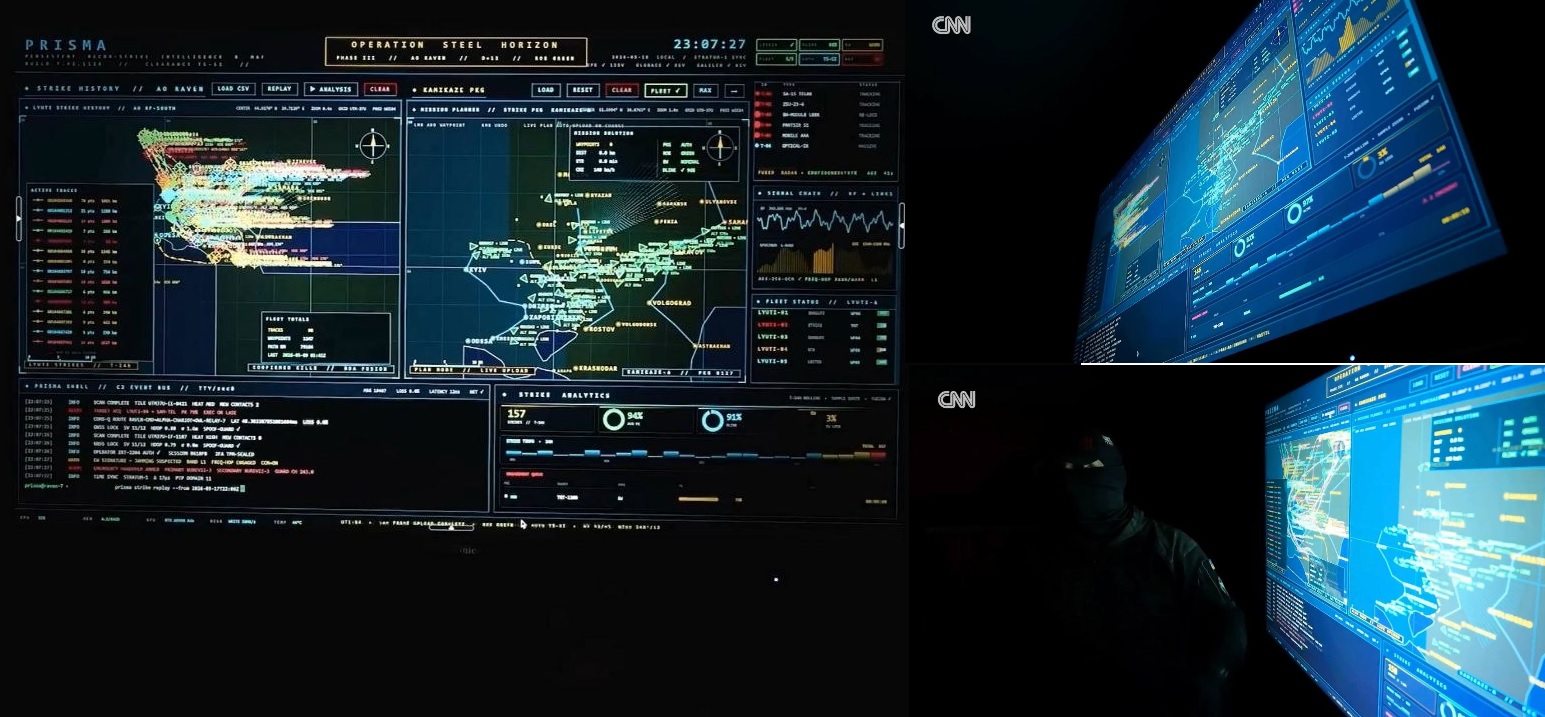
KYIV — June 01, 2026 : Recent footage broadcast by CNN has provided a rare look inside a forward command post operated by Ukraine’s Main Directorate of Intelligence (GUR), revealing the use of an AI-powered air attack monitoring and mission-analysis system known as PRISMA.
Developed in cooperation with US technology company Palantir Technologies, the software is being used to coordinate and monitor long-range drone operations targeting locations deep inside Russian territory.
The footage marks the first visual confirmation of PRISMA’s operational deployment after Ukrainian officials announced the platform in early May following meetings between Ukrainian Deputy Prime Minister and Digital Transformation Minister Mykhailo Fedorov and Palantir CEO Alex Karp, where both sides discussed expanding artificial intelligence support for Ukraine’s defense operations.
Inside Ukraine’s Decentralized Drone Command Network
CNN journalists were granted access to a GUR deep-strike unit preparing unmanned aerial vehicles (UAVs) for a nighttime launch. Video from the command post showed operators monitoring real-time maps, drone flight paths, target locations, battlefield intelligence, and air-defense data processed through AI-assisted systems.
The unit commander, identified by the call sign “Vector,” said the GUR operates through a decentralized command structure rather than centralized operational hubs.
“We don't have any common centers and we use dozens of places,” Vector said.
According to Vector, this structure allows operations to continue even if one command node is disrupted, as control can be transferred to other locations without interrupting active drone missions.
How the PRISMA System Supports Drone Strike Planning
According to CNN footage and related reports, PRISMA is designed to track and coordinate thousands of drones through a single interface by combining large volumes of battlefield data.
The platform integrates real-time battlefield intelligence, drone telemetry, satellite imagery, reconnaissance reports, radar emissions, target coordinates, and previous mission data into one operational system.
By analyzing thousands of variables, the software identifies vulnerabilities in Russian air-defense networks, evaluates interception points from previous drone waves, studies air-defense coverage, and calculates flight routes intended to reduce exposure to air defenses and electronic warfare systems.
Defense analysts describe such platforms as part of a broader shift toward AI-assisted battlefield management, allowing commanders to process operational data more quickly and support mission planning.
Use of Strike Drones and Decoy UAVs
Vector said Ukrainian operations frequently combine armed strike drones with unarmed decoy UAVs to improve mission effectiveness.
While some drones carry payloads to target anti-aircraft systems and strategic infrastructure, others are flown without weapons to map radar coverage, identify defensive patterns, and trigger enemy interception systems, helping reveal weaknesses and deplete missile inventories.
During the night covered in the CNN report, the GUR unit reportedly prepared approximately 200 drones for coordinated launch from multiple locations.
Integration Into Ukraine’s Broader Defense Strategy
The deployment of PRISMA aligns with a broader strategy outlined by Mykhailo Fedorov, structured around air, land, and economic domains.
Within the economic domain, Ukraine has prioritized long-range strikes targeting infrastructure linked to Russia’s military economy, including oil refineries, aviation facilities, logistics centers, and defense-related industrial sites.
Ukrainian officials say AI-assisted systems are intended to improve operational coordination and help commanders process battlefield information more efficiently.
Palantir’s Role in Ukraine’s Defense Technology
Since 2022, Palantir Technologies has provided Ukraine with intelligence-fusion, battlefield decision-support, satellite imagery processing, and data-analysis tools.
The PRISMA platform represents a specialized extension of this partnership, supporting battlefield intelligence analysis, route optimization, target assessment, mission planning, and coordination of large-scale drone operations.
——— End of Article ———