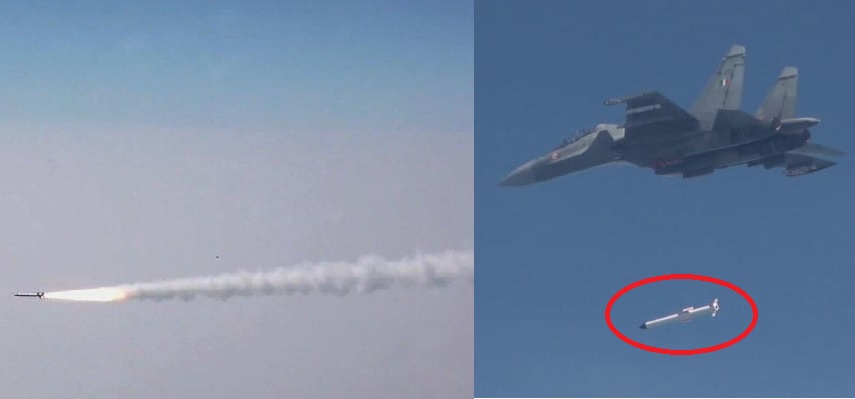
NEW DELHI — June 02, 2026 : The Defence Research and Development Organisation (DRDO) and the Indian Air Force (IAF) have successfully conducted a flight test of the indigenous RudraM-II air-to-surface missile, strengthening India’s efforts to expand domestically developed precision-strike capabilities.
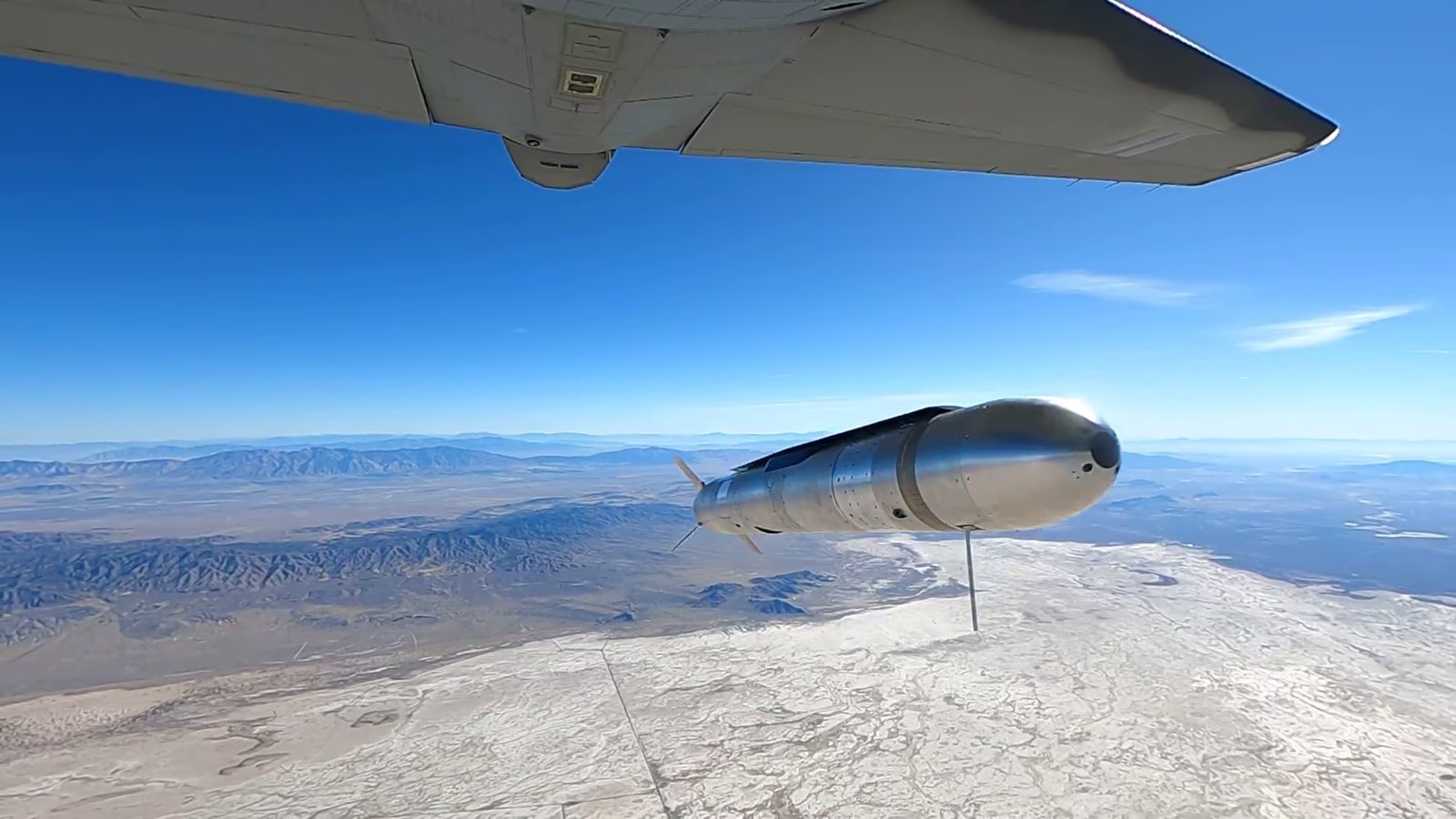
The missile was test-fired on May 29, 2024, from a Su-30MKI fighter aircraft under challenging release conditions off the coast of Odisha. According to official information, the missile achieved a direct hit on its intended target, while all mission objectives were completed successfully.
Flight Test Conducted Under Extreme Release Conditions
The flight trial was carried out at the Integrated Test Range (ITR) in Chandipur, Odisha, where the missile’s performance was continuously monitored through a network of electro-optical systems, radars, telemetry stations, and down-range tracking ships.
Officials stated that the collected flight data confirmed the missile’s operational performance under demanding release conditions from the Su-30MKI platform. The test validated the RudraM-II’s solid-propulsion system along with its control mechanisms, navigation systems, and guidance algorithms.
The successful trial also demonstrated the missile’s ability to maintain accuracy and operational reliability during long-range precision strike missions.
RudraM-II Designed for Suppression of Enemy Air Defences
RudraM-II is an indigenously developed next-generation anti-radiation missile designed to detect, track, and destroy enemy radar systems, communication nodes, and air-defence assets that emit radio-frequency signals.
The missile is intended to strengthen the IAF’s Suppression of Enemy Air Defenses (SEAD) capability by targeting hostile tracking and targeting systems from long stand-off distances. By neutralising radar and communication infrastructure, RudraM-II enables friendly aircraft to operate with reduced exposure in contested airspace.
The missile can also engage targets even if enemy radar systems are switched off after detection, improving operational effectiveness against modern air-defence tactics.
Technical Specifications and Operational Features
RudraM-II is powered by a solid-propellant motor and is capable of reaching speeds of up to Mach 5.5, enabling rapid engagement of high-priority targets.
The missile has an estimated strike range of approximately 300–350 kilometres and can reportedly detect hostile radio-frequency emissions from distances exceeding 100 kilometres.
Weighing around 800 kilograms, RudraM-II carries a 200-kilogram warhead designed to deliver penetration and fragmentation effects against reinforced radar shelters, communication systems, and soft-skinned antenna infrastructure.
To improve engagement flexibility, the missile incorporates advanced multi-mode guidance systems supporting both Lock-On-Before-Launch (LOBL) and Lock-On-After-Launch (LOAL) modes. These capabilities allow pilots to engage targets either before launch or after missile deployment depending on operational requirements.
The missile is additionally equipped with a passive homing head and an Imaging Infrared (IIR) seeker, enabling continued target engagement even if hostile radar emissions are discontinued to avoid detection.
Potential Replacement for Kh-31 Missile Fleet
RudraM-II is expected to gradually replace the Russian-origin Kh-31 anti-radiation missile currently integrated into the IAF’s Su-30MKI fleet.
While the missile has been primarily developed for deployment from the Su-30MKI fighter platform, future integration with aircraft such as the Mirage 2000 remains a possibility. The missile can reportedly be launched from altitudes ranging between 3 and 15 kilometres, increasing mission flexibility across different operational conditions.
Part of India’s Broader Indigenous Missile Programme
The RudraM-II programme forms part of India’s wider effort to expand indigenous air-launched precision weapon systems.
Earlier variants in the RudraM family, including RudraM-I, have undergone testing and entered service, while development efforts continue on RudraM-III, which is expected to provide extended strike range and enhanced operational capability.
The successful test of RudraM-II represents an important step toward operational readiness and future induction into service.
Officials Congratulate DRDO and IAF
Defence Minister Rajnath Singh congratulated the DRDO, the IAF, and industry partners involved in the programme following the successful test. DRDO Chairman Dr. Samir V. Kamat also acknowledged the achievement and highlighted its contribution to India’s efforts to strengthen indigenous defence technologies.
With successful validation of its propulsion, guidance, and targeting systems, RudraM-II is expected to contribute to the IAF’s long-range precision strike capability while supporting India’s objective of reducing dependence on imported defence systems.
——— End of Article ———