SINGAPORE — May 30, 2026 : Defence ministers from Australia, the United States and the United Kingdom met on the sidelines of the Shangri-La Dialogue security summit in Singapore on Saturday to finalise next steps in the AUKUS trilateral security partnership, confirming that AUKUS Pillar I remains on schedule while announcing new cooperation measures on submarine operations, industrial coordination and uncrewed maritime technologies.
Australian Deputy Prime Minister and Minister for Defence Richard Marles, U.S. Secretary of Defense Pete Hegseth and UK Defence Secretary John Healey reaffirmed their commitment to AUKUS, describing continued progress toward Australia’s acquisition of conventionally armed, nuclear-powered submarines and the strengthening of trilateral defence cooperation across the Indo-Pacific.
Streamlined Virginia-Class Submarine Acquisition
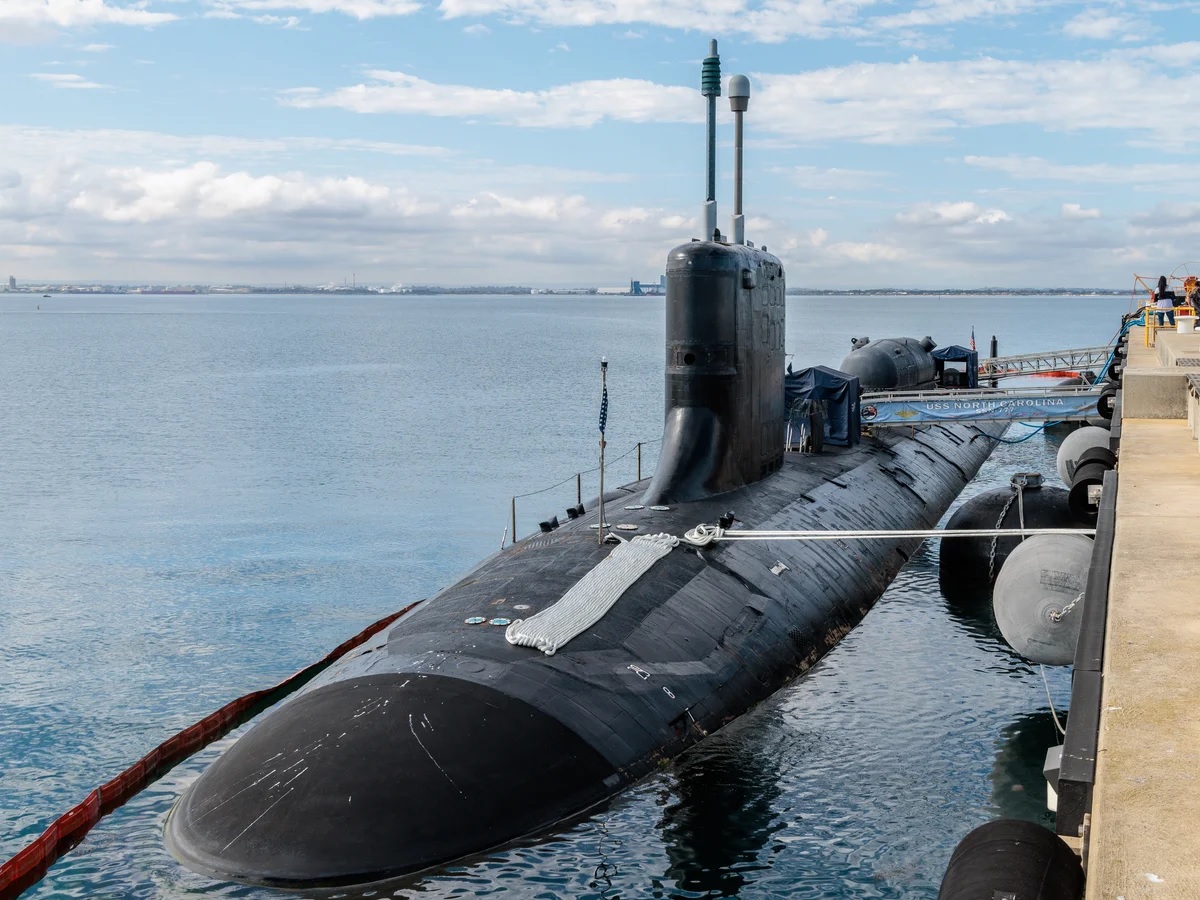
The ministers announced a revised approach to Australia’s acquisition of U.S.-built Virginia-class submarines under AUKUS Pillar I, confirming that Canberra will exclusively purchase three in-service submarines instead of a previously proposed mix of new and in-service variants.
According to officials, the decision is intended to simplify supply chain management, operational planning, training and maintenance requirements for the Royal Australian Navy while improving cost efficiency. The revised plan is also expected to reduce additional pressure on U.S. shipyards currently managing Virginia-class submarine production and sustainment requirements.
The ministers additionally noted continued progress on the development of SSN-AUKUS, a conventionally armed, nuclear-powered attack submarine programme designed to provide Australia and the United Kingdom with advanced warfighting capability. Officials said the programme remains supported by substantial national investments, including the United Kingdom’s £6 billion commitment announced in 2025.
Submarine Rotational Force-West at HMAS Stirling
The meeting also finalised arrangements for the establishment of Submarine Rotational Force–West (SRF-West) at HMAS Stirling in Western Australia, a key element of the AUKUS submarine pathway intended to expand regional submarine maintenance and sustainment capacity.
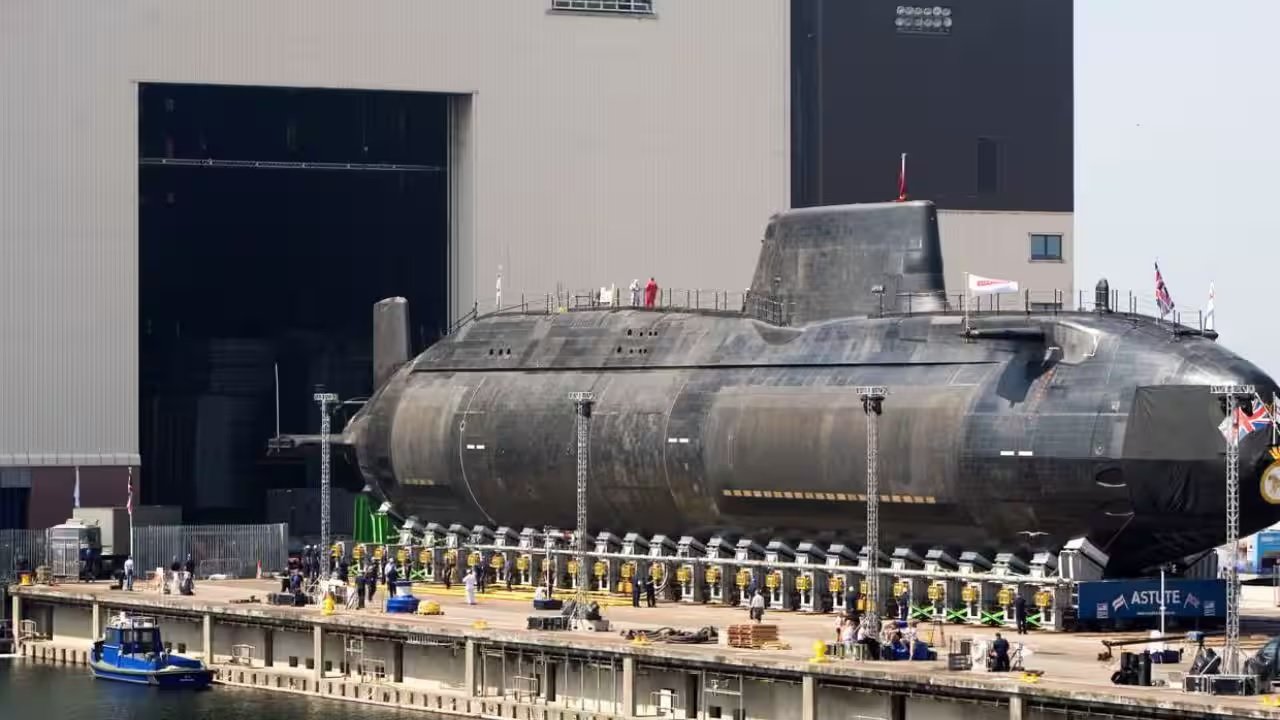
The United States has authorised the deployment of U.S. Navy support elements to HMAS Stirling and will begin rotating personnel later this year. The first deployment of a U.S. nuclear-powered submarine to the Australian base is scheduled for 2027, followed by a rotational presence of a UK Astute-class submarine.
British officials reaffirmed London’s commitment to rotational submarine deployments and highlighted the successful completion earlier this year of a Submarine Maintenance Period for HMS Anson, a UK Astute-class submarine serviced at HMAS Stirling.
Officials said SRF-West is intended to accelerate Australia’s readiness to regulate, operate, maintain and sustain a sovereign conventionally armed, nuclear-powered submarine capability by improving maintenance access, logistics support and operational readiness.
Australian Infrastructure Investments
To support the wider AUKUS submarine programme, Australia outlined major infrastructure and logistics spending linked to submarine operations and sustainment.
The investments include up to AUD 8 billion for SRF-West facilities and logistics support at HMAS Stirling, an initial AUD 3.9 billion payment toward the construction of a new Submarine Construction Yard in South Australia and AUD 12 billion for the Henderson Defence Precinct, which will provide contingency docking and depot-level maintenance capabilities.
Officials said these investments form part of the broader AUKUS submarine pathway and are intended to support long-term sustainment and sovereign industrial capability.
AUKUS Pillar II Signature Project on Uncrewed Undersea Vehicles
Alongside submarine cooperation, the ministers announced the first AUKUS Pillar II “Signature Project,” focused on jointly developing payloads and enabling systems for uncrewed undersea vehicles (UUVs), with the first capabilities expected to enter service in 2027.
The project will support the development of sensors, weapons systems and enabling technologies capable of operating across the UUV fleets of all three AUKUS partners. Officials said the systems are intended to improve surveillance, reconnaissance and strike operations while expanding capabilities for logistics support, anti-submarine warfare, anti-surface warfare, mine countermeasures, electronic warfare and contested littoral manoeuvres.
The UK Ministry of Defence said the project will also strengthen efforts to protect critical seabed infrastructure, including underwater pipelines and telecommunications cables, while supporting collective deterrence across the Indo-Pacific and Euro-Atlantic regions.
The technology is expected to contribute to the Royal Navy’s transition toward a “Hybrid Navy” model combining crewed and uncrewed systems, while also reinforcing the future SSN-AUKUS submarine fleet through shared payload integration between the United Kingdom, Australia and the United States.
Defence Industry Cooperation and Innovation
UK Defence Secretary John Healey announced the winners of the 2025 AUKUS Maritime Innovation Challenge, which focused on technologies supporting command, control and teaming of undersea systems.
The selected companies — Decision Analysis Services Ltd. in Basingstoke, SEA Ltd. in Frome, A-2i in Dorchester and MSI Transducers in Boston, United States — will share £3 million to further develop and test their technologies.
The UK Ministry of Defence said the funding supports defence innovation, industrial growth and skilled employment across companies of varying sizes.
The ministers also confirmed steps to expand the AUKUS licence-free trade environment by narrowing the list of excluded technologies subject to export controls. They reaffirmed support for the Advanced Capabilities Industry Forum, which is intended to strengthen cooperation across the trilateral defence industrial base.
Officials said the latest agreements build upon the Geelong Treaty signed in July 2025, which established a formal framework for expanded defence cooperation between Australia and the United Kingdom under the wider AUKUS partnership.
——— End of Article ———