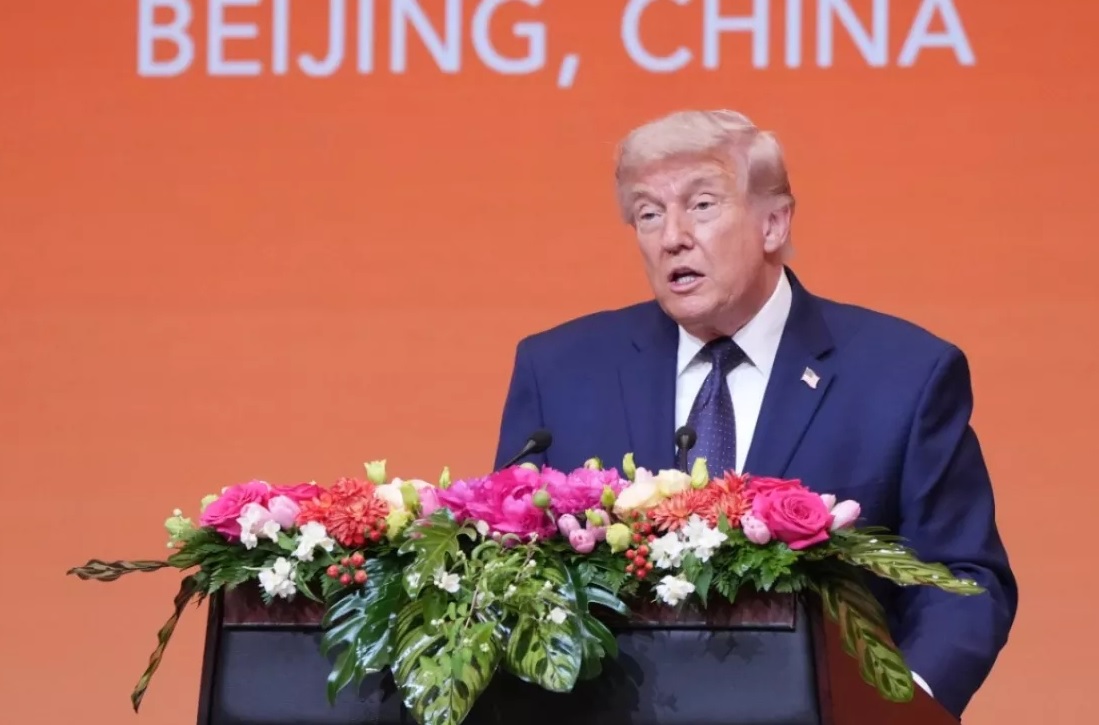
BEIJING — May 16, 2026 : U.S. President Donald Trump concluded his three-day state visit to China on May 15 without securing major agreements on several core issues that had dominated Washington’s agenda ahead of the summit, including Iran, Taiwan, advanced semiconductor exports, rare earth mineral restrictions and the release of Hong Kong publisher Jimmy Lai.
The visit, held from May 13 to May 15, marked the first trip by a sitting American president to China in nine years and was presented by both governments as an effort to stabilize relations after years of trade disputes, technology restrictions and rising geopolitical tensions. While the summit featured extensive ceremonial events and positive public messaging from both leaders, it produced limited concrete outcomes on the strategic and economic matters most closely watched by officials, businesses and analysts.
President Trump and Chinese President Xi Jinping held formal talks at Beijing’s Great Hall of the People and the Zhongnanhai leadership compound. The visit included a state banquet, a military honor guard ceremony, private meetings between the two leaders and cultural events designed to emphasize diplomatic goodwill and state protocol.
Throughout the summit, Trump repeatedly praised Xi and described U.S.-China relations as strong and productive. Chinese officials similarly characterized the meetings as constructive and important for long-term bilateral stability. However, despite the positive tone, the discussions ended without formal agreements on several key issues central to U.S. objectives.
No Breakthrough on Iran
One of the Trump administration’s primary goals during the visit was securing Chinese cooperation regarding the ongoing conflict involving Iran and broader Middle East stability.
Following the talks, Trump stated that both governments agreed Iran should not obtain a nuclear weapon and that the Strait of Hormuz must remain open to ensure uninterrupted global energy shipments. However, Beijing did not announce any new commitments regarding pressure on Tehran or direct involvement in resolving the conflict.
Chinese officials instead reiterated support for diplomatic negotiations and referenced a previously discussed peace proposal jointly developed with Pakistan. No joint action plan, military coordination or enforcement mechanism was announced during the summit.
Although Trump later said the two sides shared similar views on regional stability, the visit produced no formal agreement addressing the conflict itself or outlining a Chinese role in ending hostilities.
Taiwan Remains Central Point of Tension
Taiwan emerged as one of the most sensitive topics discussed during the summit.
According to the Chinese Foreign Ministry’s official statement, Xi told Trump that Taiwan remains “the most important issue” in China-U.S. relations and warned that mishandling the matter could place the broader relationship “in great jeopardy.” Xi reportedly stated that any miscalculation on Taiwan could lead to confrontation or conflict.
No changes to official U.S. policy on Taiwan were announced following the meetings. Trump later acknowledged that he discussed a delayed U.S. arms package for Taiwan but said no final decision had been made.
Chinese officials continued to insist that Washington adhere to the “One China” principle and avoid actions Beijing views as support for Taiwanese independence. The summit therefore ended without concessions from either side on one of the most contentious issues in bilateral relations.
Technology Talks Produce No Major Agreements
Technology and semiconductor exports were another major focus of the visit, particularly regarding Nvidia’s H200 artificial intelligence chips.
Nvidia Chief Executive Officer Jensen Huang joined the American business delegation alongside executives from Apple and Tesla, reflecting Washington’s emphasis on technology cooperation and commercial engagement.
Prior to the summit, the U.S. Commerce Department had approved potential H200 chip sales to several Chinese technology firms, including Alibaba, Tencent, ByteDance and JD.com. However, no purchase agreements or delivery schedules were announced during the visit.
Trump later stated that Chinese firms had “chosen not to” proceed with the purchases at this stage, preferring to continue development of domestic semiconductor alternatives. Chinese officials did not publicly comment on the status of the negotiations.
The summit also failed to produce agreements on broader technology restrictions, export controls or industrial supply-chain cooperation.
Rare Earth Export Restrictions Remain Unresolved
Discussions regarding rare earth minerals and industrial supply chains similarly ended without a breakthrough.
U.S. officials had hoped to secure progress on Chinese export controls affecting heavy rare earth materials used in defense systems, electric vehicles, batteries and advanced manufacturing sectors. Talks also covered licensing procedures connected to trucking applications and industrial magnet production.
Despite extensive discussions, Beijing announced no rollback or modification of existing restrictions. Existing export controls on several critical rare earth materials therefore remain in place, continuing to affect supply chains across multiple American industries.
The lack of progress highlighted the continuing importance of rare earth minerals as a strategic leverage point in U.S.-China economic relations.
Jimmy Lai Case Sees No Progress
Human rights concerns also remained unresolved during the summit.
Ahead of the visit, bipartisan lawmakers in Washington and international press freedom organizations urged the White House to seek the release of Jimmy Lai, the 78-year-old Hong Kong media owner and pro-democracy activist currently imprisoned under Hong Kong national security legislation.
Trump acknowledged discussing Lai’s case with Xi but reported no progress toward securing his release. During remarks to reporters, Trump described the matter as “a tough one” for the Chinese leadership.
The Chinese government made no mention of Lai in its official summary of the summit, and no policy changes related to Hong Kong were announced.
Boeing Aircraft Deal Remains Unconfirmed
Trade and commercial cooperation remained a central theme throughout the visit, with Trump highlighting what he described as a significant aviation agreement.
Speaking aboard Air Force One after leaving Beijing, Trump announced that China planned to purchase 200 Boeing aircraft, with the possibility of expanding future orders to as many as 750 planes if the arrangement proved successful.
If finalized, the deal would represent Boeing’s first major aircraft sale to China in nearly a decade. However, Chinese authorities did not formally confirm the agreement before Trump returned to Washington, and detailed terms were not publicly released.
Industry analysts had expected a significantly larger initial commitment, with some pre-summit projections ranging between 300 and 500 aircraft. Boeing also did not immediately provide detailed confirmation regarding the proposed order.
China Emphasizes “Strategic Stability”
In its official post-summit readout, China’s Ministry of Foreign Affairs described the visit as “historic and landmark” and stated that both governments had agreed on a “constructive China-U.S. relationship of strategic stability.”
According to Beijing, the new framework is intended to guide bilateral relations over the next three years and beyond while supporting “steady, sound and sustainable development” in ties between the two countries.
The Chinese statement emphasized maintaining stability through careful management of disagreements, particularly on Taiwan and broader geopolitical issues.
Analysts noted that Beijing’s emphasis on “strategic stability” reflected a broader effort to preserve stable relations with Washington without making substantive concessions on issues China considers core national interests.
Throughout the summit, Chinese officials relied heavily on protocol, symbolism and high-level hospitality, including formal ceremonies, state banquets and private cultural events, while avoiding major policy shifts on Taiwan, export controls or regional security matters.
Limited Outcomes Despite Positive Messaging
Trump described the summit as highly successful, telling reporters that the two sides had “settled a lot of different problems” and secured “fantastic trade deals.” He also highlighted his personal relationship with Xi and formally invited the Chinese president to visit the White House later this year.
However, the summit ultimately produced few measurable gains on the major objectives publicly emphasized by the U.S. administration before the trip.
The meetings took place amid continuing efforts by both governments to stabilize relations following years of tariff disputes, technology sanctions and military tensions in the Indo-Pacific region. While the visit succeeded in maintaining direct engagement and reducing immediate diplomatic friction, it delivered limited concrete progress on Iran, Taiwan, advanced technology access, rare earth exports or human rights concerns.
Both governments agreed to continue discussions on economic cooperation, trade purchases, agricultural imports, energy exports and strategic communication in the coming months. Additional meetings between senior officials are expected later this year as Washington and Beijing continue efforts to manage competition while preventing further deterioration in bilateral relations.
——— End of Article ———