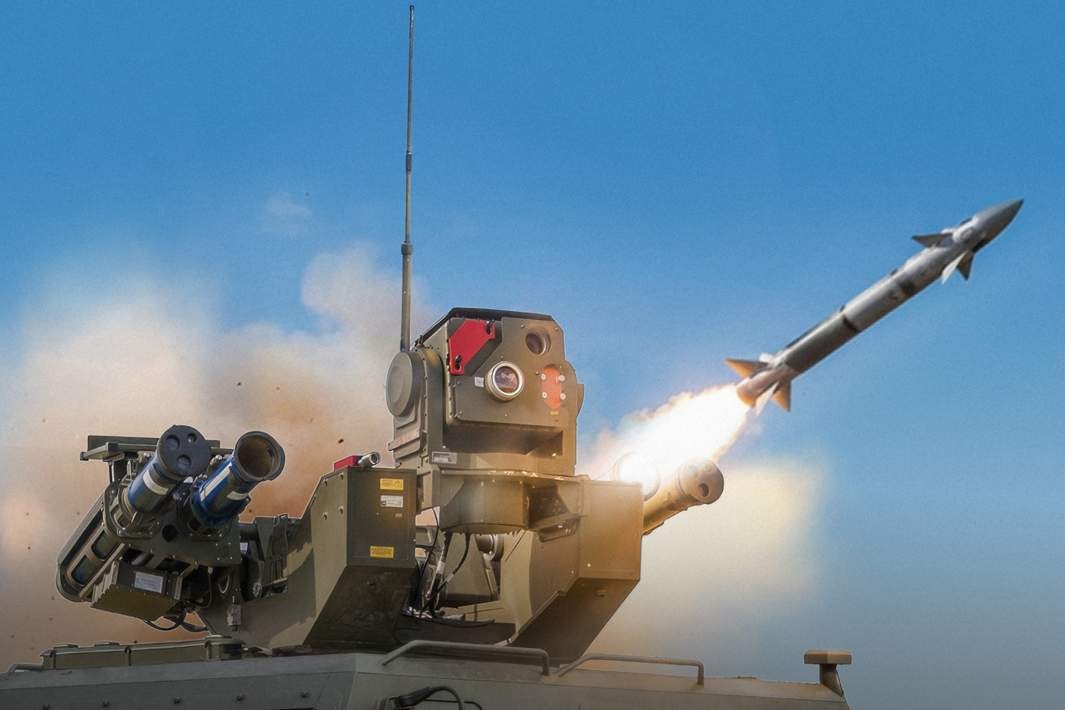
LONDON — June 02, 2026 : The United Kingdom has signed a £36 million ($48.5 million) procurement contract with Thales for hundreds of additional Lightweight Multirole Missiles (LMM), known as the Martlet in Royal Navy service, as part of efforts to strengthen counter-drone defence capabilities and replenish operational stockpiles.
The agreement, confirmed by the UK Ministry of Defence and Thales on June 1, 2026, supports Britain’s effort to improve short-range air defence against low-cost uncrewed aerial systems (UAS). Deliveries are scheduled to begin in the coming months and continue through 2026.
The procurement follows an earlier Martlet order placed in April 2026 and is intended to reinforce protection for British forces, naval platforms, airbases, and critical infrastructure, particularly in regions facing persistent drone threats, including the Middle East.
Recent operational use has reinforced the missile’s role in force protection. According to defence officials, the Martlet has intercepted more than 100 drones during deployments in the Middle East, supporting short-range defence missions against low-cost aerial threats and contributing to the UK’s layered air defence framework.
Martlet Missile Designed for Short-Range Interception
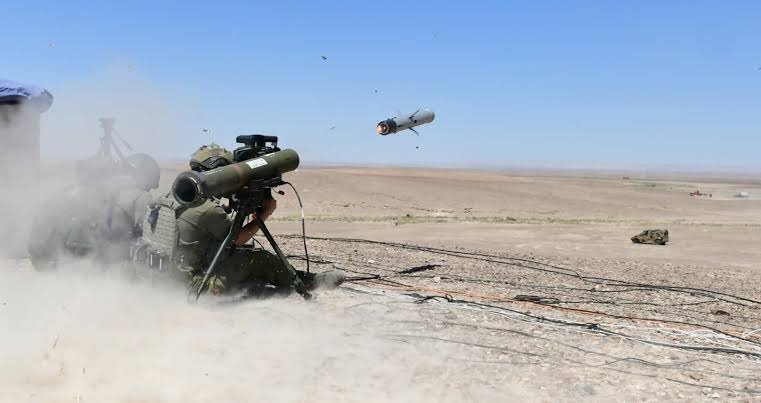
The Martlet is a compact precision-guided missile developed to engage small and highly manoeuvrable targets at short range. The system weighs approximately 13 kilograms, measures 1.3 metres in length with a 76 mm diameter, and can be deployed across air and ground platforms.
The missile is designed to engage uncrewed aircraft, helicopters, light surface vessels, light armoured vehicles, and other agile targets in maritime and land environments.
Powered by a two-stage solid propellant rocket motor, the Martlet reaches speeds exceeding Mach 1.5 (more than 1,150 miles per hour) and has an engagement range exceeding six kilometres, extending to approximately eight kilometres depending on operating conditions.
The missile carries a three-kilogram dual-effect warhead combining blast fragmentation effects with a shaped charge to improve effectiveness against lightly protected targets. Detonation occurs through laser proximity or direct impact depending on mission requirements.
Guidance System Designed to Resist Electronic Interference
The Martlet primarily employs a laser beam-riding guidance system, enabling operators to track a target while projecting a laser beam that the missile follows until interception.
This guidance approach reduces vulnerability to electronic jamming and signal interference, which are increasingly common in contested environments. The system also supports precision engagement while limiting unnecessary collateral effects.
In addition to surface-to-air missions, the missile can operate in air-to-air, air-to-surface, surface-to-surface, and maritime engagement roles, increasing operational flexibility.
Expanding “Magazine Depth” Against Low-Cost Drone Threats
The procurement forms part of British efforts to improve “magazine depth,” or the ability to sustain defensive operations without rapidly exhausting missile inventories.
Lessons from conflicts in Ukraine and the Middle East have shown that large numbers of low-cost reconnaissance drones and one-way attack systems, including Iranian-designed Shahed-series drones, can place pressure on air defence stockpiles when expensive interceptors are used against low-cost threats.
Military planners view the Martlet as filling a gap between short-range gun systems and larger, more costly interceptor missiles typically reserved for cruise missiles or combat aircraft. This provides commanders with a proportionate interception option without unnecessarily consuming premium munitions.
Wildcat Helicopters Provide Airborne Counter-Drone Layer
The Royal Navy deploys Martlet missiles aboard Leonardo AW159 Wildcat HMA2 helicopters, which can carry up to 20 missiles on external weapon pylons.
Following increased drone threats in early 2026, Wildcat helicopters from the 815 Naval Air Squadron were deployed to RAF Akrotiri in Cyprus, operating in two-aircraft formations to extend surveillance and interception coverage.
The helicopters function as mobile sensor-and-shooter platforms, allowing forces to investigate aerial tracks and intercept hostile drones before they approach naval vessels or defended facilities. British defence authorities declared full operational capability for the Wildcat-Martlet combination in October 2025.
Rapid Sentry Strengthens Ground-Based Air Defence
On land, the RAF Regiment operates the Rapid Sentry short-range air defence system, which uses Martlet missiles as part of a layered counter-UAS architecture.
Rapid Sentry has recently been deployed to locations including Kuwait to counter Iranian UAV threats and is intended to intercept drones that bypass surveillance or electronic warfare layers.
The system integrates radar-based tracking, sensor networks, and electronic warfare tools capable of providing soft-kill effects before missile engagement becomes necessary. Martlet serves as the hard-kill component and can integrate with systems such as ORCUS for improved situational awareness and sensor fusion.
Saab Giraffe 1X Radars Improve Detection
Supporting this layered defence network are Saab Giraffe 1X compact three-dimensional surveillance radars. The United Kingdom ordered 11 Giraffe 1X radars in 2023 to improve detection of small, low-flying drones operating near terrain features that complicate radar identification.
The radar systems provide higher-quality tracking data to command networks, enabling faster and more accurate engagement decisions while reducing unnecessary missile expenditure on false targets.
Domestic Production Supports UK Defence Industry
Beyond operational requirements, the £36 million contract reinforces Britain’s domestic missile production capability. Martlet missiles are designed and manufactured at Thales’ Belfast facility in Northern Ireland, supporting approximately 700 skilled jobs.
The procurement helps maintain sovereign manufacturing capacity amid increasing demand for air defence systems and pressure on global munition supply chains.
Maintaining domestic production lines is viewed as important for sustaining deployed operations, replenishing stockpiles, and supporting industrial resilience during periods of increased demand.
UK Expands Layered Counter-Drone Capability
The latest Martlet order reflects the UK’s continued adaptation to evolving aerial threats in which low-cost uncrewed systems are playing an increasing role.
By increasing missile inventories and integrating the Martlet across helicopter, vehicle-mounted, and ground-based systems, Britain is strengthening a layered defence network designed to protect deployed forces, naval formations, airbases, and critical infrastructure against persistent drone threats.
——— End of Article ———