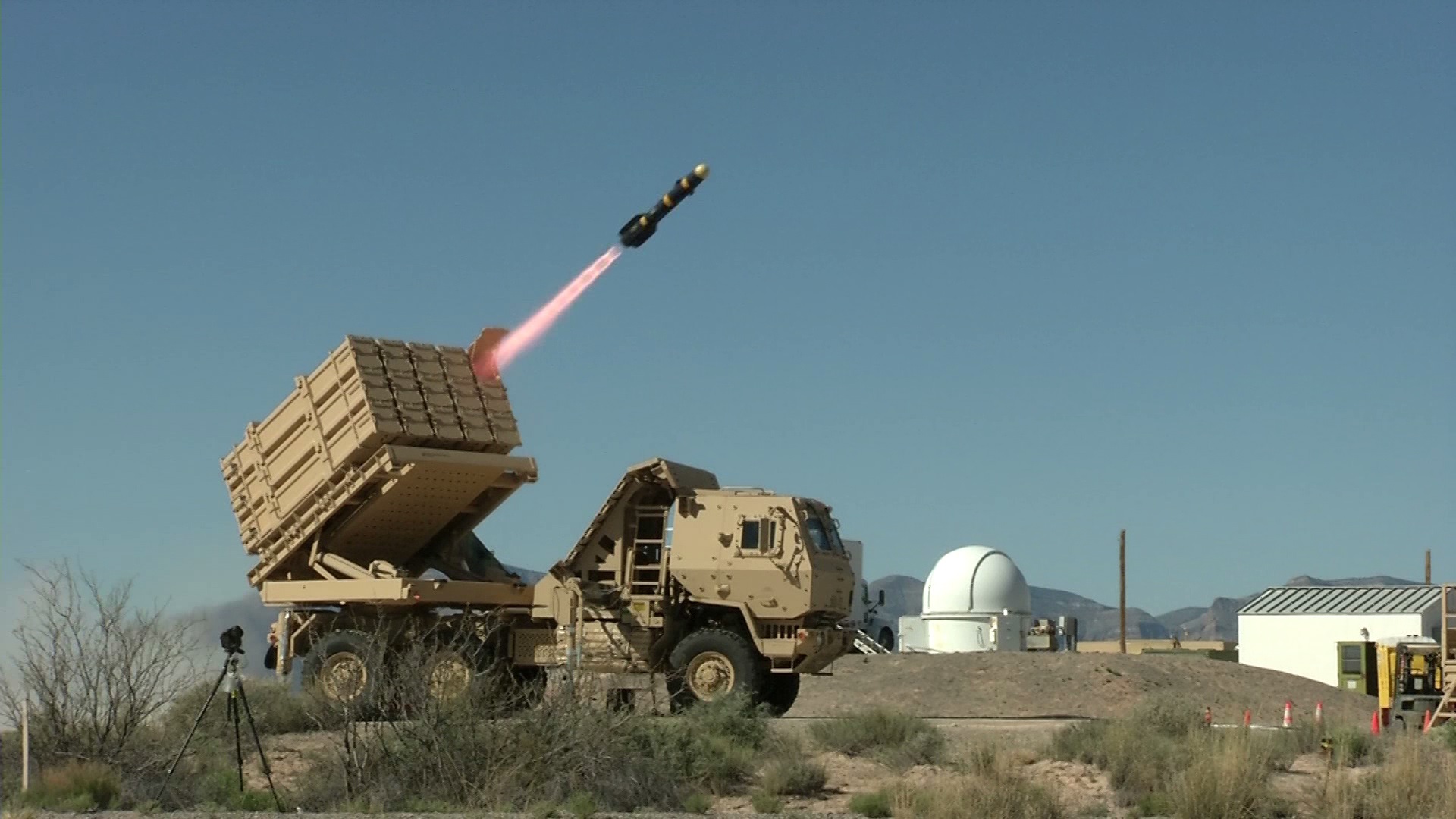
WASHINGTON, — June 5, 2026 : The United States Army has initiated an accelerated effort to develop and field a new generation of low-cost missile interceptors designed to counter growing numbers of drones, cruise missiles, and ballistic missile threats on modern battlefields. Through a Request for Information (RFI) designated MOSAIC-26-03, the Army is seeking industry solutions capable of demonstrating operational hardware by the fourth quarter of fiscal year 2026.
The initiative is being led by the Army Capability Program Executive (CPE) for Defensive Fires at Redstone Arsenal, Alabama, in coordination with the Rapid Capabilities and Critical Technologies Office (RCCTO). The effort is aimed at addressing the increasing cost imbalance between expensive air defense interceptors and low-cost aerial threats.
Addressing the Cost Challenge
The Army's search for a new interceptor comes as military planners seek more sustainable solutions for defending against large-scale drone and missile attacks. According to the Army’s proposed Fiscal Year 2027 budget, a single Patriot PAC-3 Missile Segment Enhancement (MSE) interceptor costs approximately $5.3 million.
Recent conflicts have demonstrated how adversaries can launch large numbers of inexpensive drones and missiles, forcing defenders to use costly interceptors against relatively cheap targets. To address this issue, the Army is seeking a supplemental interceptor that can be employed in larger quantities without creating an unfavorable cost-exchange ratio.
Strict Cost Requirements
Under MOSAIC-26-03, the Army has established specific cost targets for the new interceptor system.
The complete ready-to-fire All-Up Round (AUR) interceptor must cost less than $1 million per unit. Major subsystems, including the solid rocket motor, seeker, and fire control system, must each remain below $250,000.
A separate requirement seeks a systems integrator capable of combining the most effective components into a fully operational weapon.
Operational Requirements
The Army requires the interceptor to engage a broad range of threats, including Air Breathing Threats (ABTs), cruise missiles, Close-Range Ballistic Missiles (CRBMs), and Short-Range Ballistic Missiles (SRBMs).
To enable rapid deployment, the interceptor must integrate with the existing M903 Patriot launcher and operate within the Integrated Battle Command System (IBCS), which connects radars, launchers, and command centers across the battlefield.
The interceptor’s seeker must remain effective in contested environments, maintaining target acquisition and terminal guidance capabilities despite electronic warfare, GPS jamming, adverse weather conditions, and terrain clutter.
The Army is also requiring compliance with the Modular Open Systems Approach (MOSA) to ensure interoperability, simplify upgrades, and avoid proprietary system lock-ins.
Industry Day and Demonstration Schedule
The Army has scheduled an Industry Day for June 23, 2026, at the Hyatt Regency Crystal City in Arlington, Virginia.
Hardware demonstrations for complete interceptor systems and individual components are planned for the fourth quarter of fiscal year 2026 (July–September 2026).
Complete interceptor solutions must achieve Technology Readiness Level (TRL) 6 or higher, while component-level offerings must reach at least TRL 4.
Following Industry Day, the Army plans to conduct prize competitions for the first four problem statements. This approach allows the government to reward successful demonstrations with cash prizes rather than traditional contracts, encouraging participation from both established defense companies and non-traditional suppliers.
Strengthening Future Air Defense
The MOSAIC initiative is part of the Army’s broader effort to strengthen layered air and missile defense while improving affordability and production capacity. By combining low-cost components, open-system architecture, and a modular integration strategy, the Army aims to field interceptors capable of countering mass drone and missile attacks without relying solely on high-cost defensive weapons.
Additional details regarding participants and demonstration results are expected following the June 23 Industry Day event.
——— End of Article ———