ISTANBUL — May 8, 2026 : Turkish Aerospace Industries (TAI) presented its Anka-III unmanned combat aerial vehicle (UCAV) alongside the newly introduced Gölge unmanned aerial system during SAHA Expo 2026 in Istanbul, offering a detailed look at two closely connected unmanned platforms developed under the company’s expanding aerospace programme.
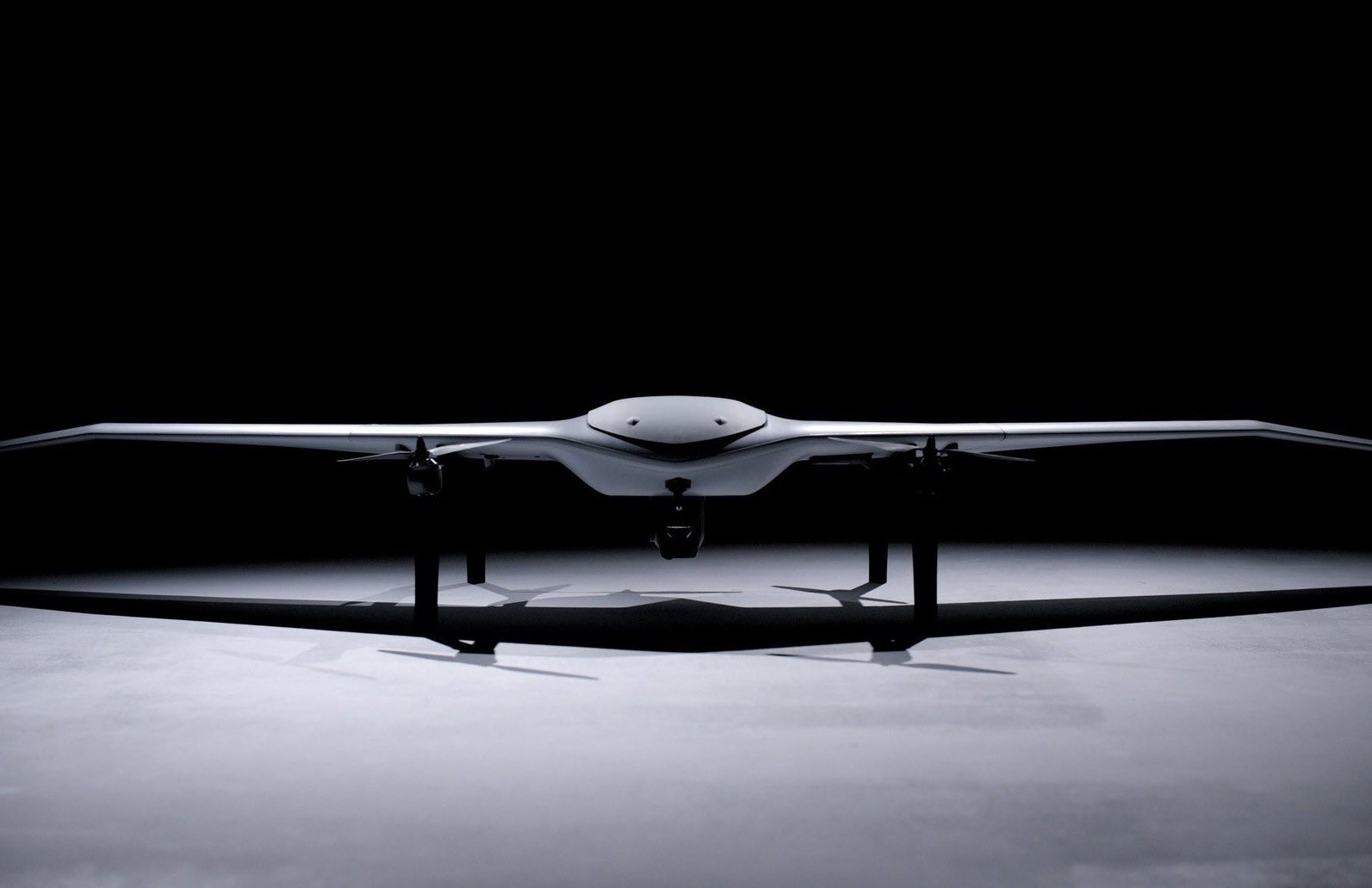
The exhibition marked the first major public presentation of the Gölge platform, which originated as an intermediate-scale technology demonstrator created to support the development of the larger Anka-III UCAV. Displayed side by side, the two aircraft showed a strong visual resemblance through their flying-wing layouts and stealth-oriented aerodynamic shaping, despite major differences in size, propulsion, and operational role.
Anka-III Development Programme Advances Toward Production
The Anka-III is a jet-powered stealth UCAV currently progressing through production development. TAI confirmed during the exhibition that the first production aircraft is scheduled for delivery in 2028.
Designed as a heavy-class unmanned combat platform, the Anka-III has a maximum take-off mass of 6,500 kilograms and can carry payloads weighing up to 1,200 kilograms. The aircraft measures 7.9 metres in length and has a wingspan of 12.5 metres.
According to specifications released by TAI, the aircraft is capable of flying at speeds up to Mach 0.7, operating at altitudes reaching 40,000 feet, and remaining airborne for up to 10 hours.
At the exhibition, TAI also highlighted the aircraft’s modular payload capability through the display of a full-scale Anka-III model carrying two externally mounted “Süper Şimşek” strike UAVs beneath its wings. The configuration demonstrated the company’s focus on multi-platform unmanned operations and expandable strike mission capability.
Gölge Developed from Anka-III Technology Demonstrator
TAI stated that the Gölge programme originated from a smaller technology demonstrator used during the Anka-III development process. The platform was initially developed to validate flight control systems, aerodynamic behaviour, and autonomous operational functions intended for the larger UCAV.
Following successful testing and validation activities, engineers adapted the demonstrator into a separate operational platform under the name Gölge.
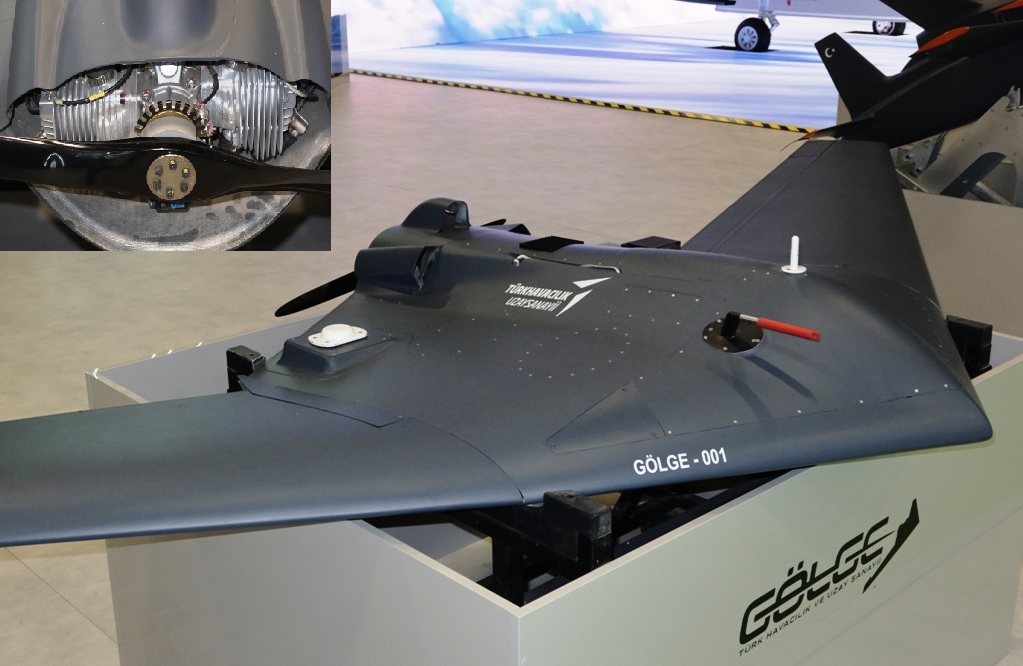
Although the two aircraft maintain similar design characteristics, TAI estimates commonality between the airframes at approximately 30 percent. The Gölge is considerably smaller, featuring a five-metre wingspan delta-wing configuration and a maximum take-off mass of approximately 100 kilograms.
Propulsion and Flight Characteristics
Unlike the jet-powered Anka-III, the Gölge uses a 14-horsepower two-cylinder engine driving a two-blade pusher propeller. The propulsion system is supported by three air intakes, including two positioned laterally on the fuselage and a third mounted on the upper section of the airframe to provide engine cooling.
The aircraft is launched using a catapult-assisted take-off system and recovered using a parachute landing mechanism.
TAI stated that the Gölge can reach speeds of approximately 165 kilometres per hour, equivalent to around 90 knots. The aircraft has an operational ceiling of 12,000 feet, a reported operational range of 1,300 kilometres, and an endurance of up to 10 hours.
Stealth Design Limited by Propeller Configuration
While the Gölge incorporates stealth-oriented shaping similar to the Anka-III, company representatives indicated that the aircraft does not achieve the same radar-discretion characteristics as the larger UCAV.
The exposed pusher propeller creates what engineers describe as a micro-Doppler radar effect, reducing the effectiveness of the low-observable airframe design. Due to these limitations, TAI is expected to use conventional construction materials for the Gölge rather than the more advanced radar-absorbent materials associated with the Anka-III programme.
Avionics and Payload Configuration
The Gölge incorporates several integrated avionics and communication systems distributed across the airframe.
A standard GNSS antenna is installed on the right wing, while the left wing houses a Controlled Reception Pattern Antenna (CRPA) designed to improve resistance against jamming and spoofing threats.
An RF antenna positioned on the forward upper fuselage supports the aircraft’s onboard data link system, enabling line-of-sight communication with ground control stations at distances of up to 100 kilometres.
The aircraft’s primary payload consists of electro-optical and infrared imaging systems mounted beneath the fuselage. To protect the sensor package during parachute recovery operations, the payload retracts fully into the airframe prior to landing.
The Gölge has a payload capacity of 15 kilograms and is expected to support intelligence, surveillance, and reconnaissance missions.
Production Readiness and Domestic Interest
Industry sources present at SAHA Expo stated that TAI has completed industry testing activities for the Gölge and is prepared to begin serial production of the platform.
The company has reportedly received interest from three undisclosed domestic users within Türkiye, although no procurement contracts, pricing information, or delivery schedules were announced during the exhibition.
The side-by-side presentation of the Anka-III and Gölge reflected TAI’s broader development strategy of using lower-cost demonstrator platforms to reduce risk and accelerate validation processes for larger unmanned combat aircraft programmes.
TAI did not release additional details regarding export opportunities or future production quantities for either platform during SAHA Expo 2026.
——— End of Article ———