CAMBRIDGE, Mass. — May 26, 2026 : Cambridge-based AI startup Tycho.AI has successfully demonstrated its Halley Group 1 vertical take-off and landing (VTOL) uncrewed aerial system (UAS) during a recent U.S. military evaluation in Indiana, where the platform intercepted a replica of an Iranian-designed Shahed-type one-way attack drone in mid-air and completed a separate strike against a ground target.
The demonstration took place during the Technology Readiness Experimentation event, T-REX 26-2, held at Camp Atterbury from May 4 to 15, 2026. Organized by the Office of the Under Secretary of War for Research and Engineering, the exercise evaluates emerging military technologies in operationally representative conditions. The latest event focused on low-cost short-range air defense systems and interceptor capabilities designed to counter modern aerial threats.
During the evaluation, the Halley VTOL completed 39 assessed test flights in both operator-controlled first-person view and fully autonomous configurations. One of the most significant demonstrations involved the successful interception of a replica of the Iranian-designed Shahed-136, a long-range loitering munition that has been widely employed in conflicts against military and infrastructure targets over distances of hundreds of kilometers. In addition to the aerial intercept, the platform also conducted a one-way attack mission against a ground target during the same event, demonstrating its ability to perform multiple operational roles.
Tycho.AI stated that the Halley system is intended to provide a lower-cost approach to countering one-way attack drones, addressing the cost imbalance that often emerges when militaries rely on expensive air defense assets to intercept relatively inexpensive loitering munitions.
Flight Performance and Platform Design
Classified as a Group 1 UAS, Halley weighs approximately 5.2 pounds (2.3 kilograms) and is built around a lightweight modular tailsitter VTOL configuration with folding wings. The platform uses a zero-tool assembly design that allows deployment from storage to operational flight in less than 30 seconds. Its modular architecture also supports rapid mission reconfiguration, including extended-range winglets for missions exceeding 80 kilometers and a high-speed setup capable of dash speeds above 200 miles per hour.
During T-REX 26-2, the system achieved a maximum speed of 165 miles per hour, operated at altitudes ranging from 9 feet to 10,000 feet, and completed missions with a maximum flight distance of 35 kilometers. The aircraft carries a payload capacity of roughly one kilogram and can operate either through operator control or fully autonomous mission execution using Tycho.AI’s Voyager autonomy stack.
Following the exercise, Halley achieved Technology Readiness Level 6 (TRL-6), indicating the system had been demonstrated in a relevant operational environment and marking an important step between laboratory validation and field-ready capability.
Autonomous Operations in Contested Environments
A central feature of the Halley platform is its ability to function without a persistent communications link. Using onboard artificial intelligence-enabled processing, the drone can continue navigation and mission execution even when operating in jammed or GPS-denied conditions.
Tycho.AI said its Voyager technology stack, developed by engineers from the Massachusetts Institute of Technology (MIT), supports autonomous navigation through visual-inertial odometry, sensor fusion, and onboard processing rather than relying entirely on satellite-based positioning systems. During testing, the platform also passed a cyber evaluation designed to assess resilience against electronic warfare and communications disruption in contested environments.
The company additionally demonstrated a video stream tokenization and compression method intended to maintain navigation-quality visual data over low-bandwidth links. According to Tycho.AI, the transmitted data remains encrypted to reduce vulnerability if communications are intercepted.
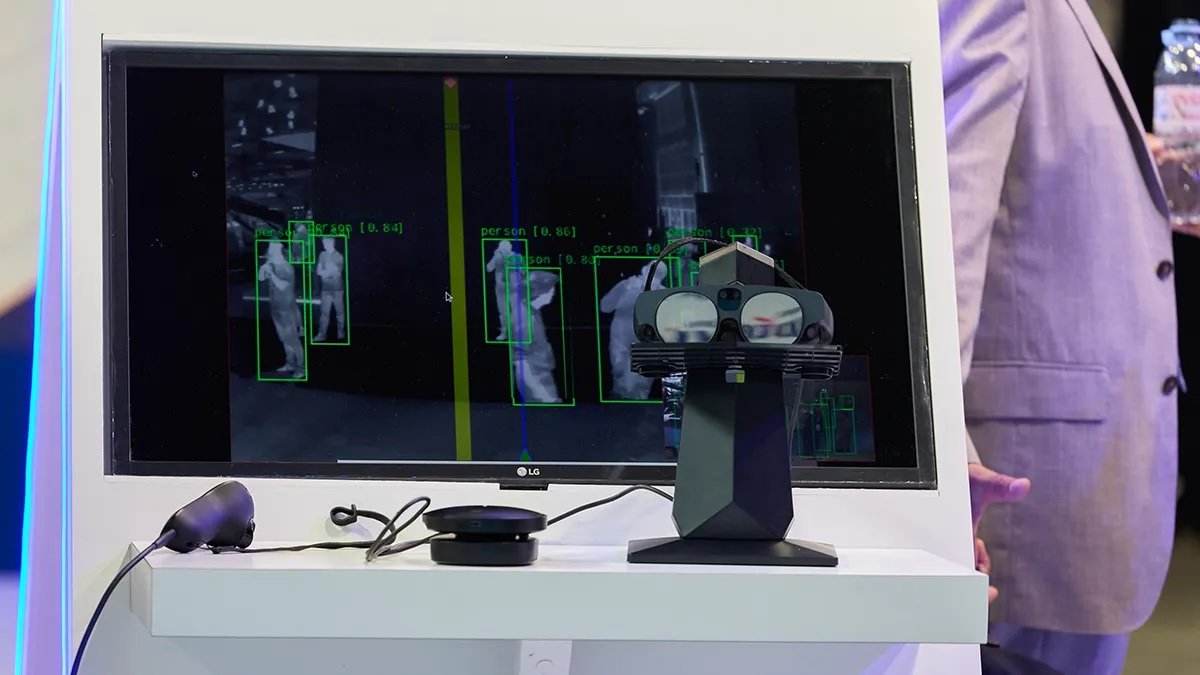
Halley also demonstrated Automatic Target Recognition (ATR), enabling the system to autonomously identify and classify objects using onboard visual data. The feature is intended to reduce operator workload and improve response times by distinguishing relevant aerial or ground targets more rapidly during time-sensitive missions.
Company Plans and Production Outlook
In comments following the exercise, Sertac Karaman, founder of Tycho.AI and a professor at MIT, said the T-REX demonstrations validated the company’s concept for a small, fast, and agile tactical UAS capable of supporting multiple mission requirements in operational settings.
Tycho.AI publicly introduced the Halley platform during the 2026 edition of SOF Week 2026 in Tampa, Florida. The company, which secured $10 million in Series A funding in October 2025, is now focused on further autonomous flight validation, integration of a kinetic payload, and scaling production capacity. According to the company, Halley is designed for multiple mission sets, including counter-UAS interception, one-way attack operations, intelligence, surveillance and reconnaissance, and tactical scouting in communications-contested environments.
——— End of Article ———