ISTANBUL — May 7, 2026 : Turkiye and Spain have begun preliminary government-to-government discussions regarding the potential sale of the KAAN fifth-generation stealth fighter aircraft, Turkish Aerospace Industries (TUSAŞ) CEO Mehmet Demiroğlu confirmed during the SAHA 2026 International Defense and Aerospace Exhibition in Istanbul.
Demiroğlu stated that the discussions were initiated after the Spanish Air and Space Force requested information regarding a “top-tier fifth-generation fighter” as Madrid evaluates long-term options to modernise its combat aviation fleet. The negotiations remain at an early stage, and neither government has announced a formal procurement decision.
Spain Seeking Interim Stealth Fighter Capability
Spain’s interest in the KAAN programme comes amid growing concerns over delays to the Future Combat Air System (FCAS), the multinational sixth-generation fighter programme jointly developed by Spain, France, and Germany. The FCAS platform is not expected to become operational until the 2040s, creating a capability gap for the Spanish Air and Space Force over the next decade.
To maintain operational readiness during this transition period, Spain has extended the service life of its EF-18M Hornet fighter fleet into the late 2030s while simultaneously reinforcing its Eurofighter Typhoon inventory through additional acquisitions and upgrade programmes.
Madrid has also moved away from the possibility of acquiring the U.S.-built F-35 Lightning II. Spanish defence planning has reportedly prioritised platforms that provide greater operational autonomy, particularly in areas related to software access, system integration, and domestic weapons compatibility. Restrictions associated with technology transfer and independent integration of national systems into the F-35 platform have been viewed as a limiting factor in Spain’s long-term procurement considerations.
Within this context, the KAAN is being evaluated as a potential interim fifth-generation combat aircraft capable of bridging the gap until FCAS enters operational service.
Technology Transfer and Industrial Participation
Industry sources familiar with the discussions indicated that technology transfer and industrial cooperation form a central component of the preliminary negotiations between Ankara and Madrid.
Spain is reportedly seeking a framework that would allow domestic defence companies to integrate indigenous mission systems, electronic warfare equipment, sensors, communications architecture, and national munitions into the aircraft while retaining long-term control over upgrades and operational modifications.
The structure of the ongoing talks reflects Spain’s broader defence procurement strategy, which increasingly emphasises industrial participation and sovereign control over critical military technologies.
Hurjet Agreement Strengthens Bilateral Aerospace Cooperation
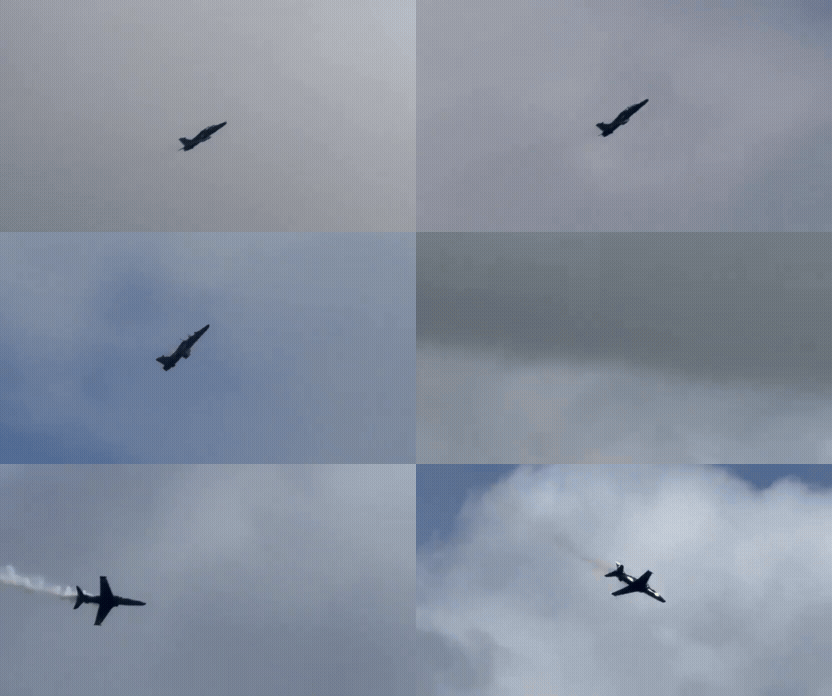
The current discussions build upon an expanding aerospace and defence relationship between Turkiye and Spain established through the Hurjet advanced trainer programme.
In late 2025, Spain finalised a €2.6 billion agreement with TUSAŞ for the procurement of 30 Hurjet advanced jet trainers and light combat aircraft under its integrated advanced pilot training system programme. Deliveries are scheduled to begin in 2028.
The Hurjet package includes ground-based simulation systems, logistics infrastructure, maintenance support, and long-term sustainment arrangements. The agreement also incorporates industrial cooperation involving Airbus España and Spanish defence companies.
Defence analysts view the Hurjet programme as an important precedent for the KAAN discussions, particularly in areas involving industrial participation, subsystem integration, maintenance cooperation, and long-term support structures.
Strategic Significance of a Potential KAAN Export
If the negotiations ultimately result in a formal agreement, the KAAN would become the first Turkish-developed fifth-generation fighter aircraft exported to a NATO and European Union member state.
Such a development would represent a major milestone for Turkiye’s domestic aerospace industry and would significantly expand the international profile of the country’s indigenous combat aviation sector.
The KAAN programme has already secured its first major export customer. In July 2025, Indonesia signed a contract for 48 KAAN fighter aircraft, with deliveries planned over a ten-year period. The agreement also included provisions for industrial cooperation and local participation.
KAAN Programme and Aircraft Capabilities
The KAAN fighter is being developed under Turkiye’s National Combat Aircraft programme as a long-term replacement for the Turkish Air Force’s F-16 fleet beginning in the 2030s.
The twin-engine stealth fighter completed its maiden flight on February 21, 2024, marking a major milestone in Turkiye’s indigenous fighter development efforts.
The aircraft is designed with low-observability features, internal weapons bays, advanced sensor fusion architecture, and high maneuverability characteristics intended for both air superiority and multirole combat operations.
Current KAAN prototypes are powered by General Electric F110 engines, while Turkiye continues parallel development efforts aimed at integrating an indigenous engine into future production variants.
The aircraft is also equipped with advanced avionics systems, including the domestically developed MURAD active electronically scanned array (AESA) radar and integrated mission systems intended to support network-centric warfare operations.
SAHA 2026 Procurement Milestone
During the SAHA 2026 exhibition, Turkiye’s Defence Industries Secretariat signed the official domestic procurement contract for the KAAN programme, marking another administrative and production milestone as the aircraft progresses through flight testing, systems integration, and future serial production planning.
Neither Turkiye nor Spain has disclosed details regarding the number of aircraft potentially under discussion, projected delivery timelines, financial terms, or specific industrial participation requirements.
Formal technical and political consultations between Ankara and Madrid are expected to continue as the KAAN programme advances through its ongoing development and testing phases.
——— End of Article ———