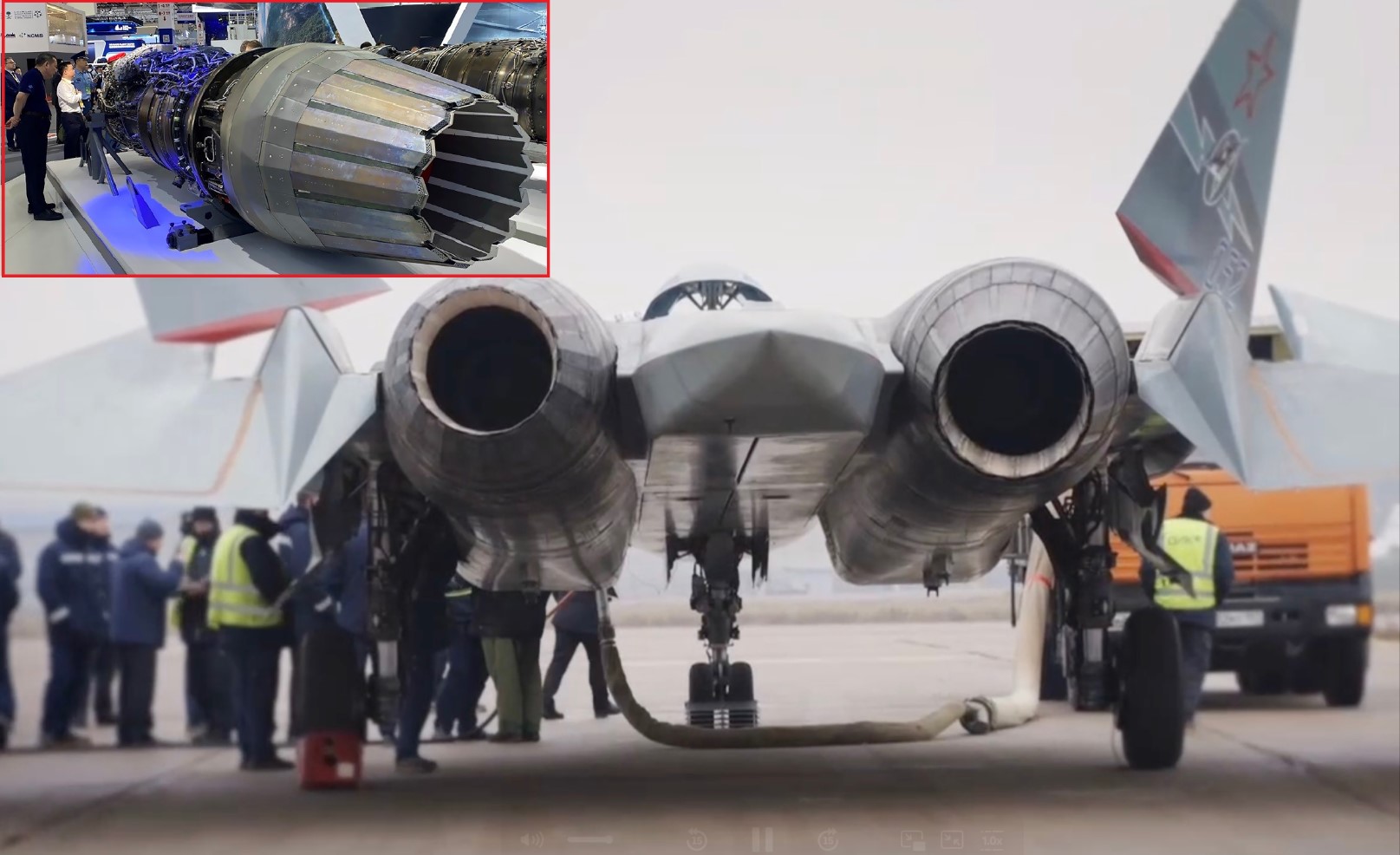
MOSCOW — June 4, 2026 : Russia’s state-owned United Aircraft Corporation (UAC) has confirmed that the next-generation “Product 177” engine being developed for the Su-57 fifth-generation fighter is expected to enter integration and delivery stages within the coming years, according to UAC Chief Executive Officer Vadim Badekha.
Speaking about the program, Badekha stated that the Su-57 already satisfies the requirements of a fifth-generation combat aircraft in its current configuration. He emphasized that the introduction of the new engine is intended to provide additional operational capabilities rather than address any shortcomings in the fighter’s existing performance.
According to Badekha, the AL-41F-1 engines currently powering the Su-57 already meet fifth-generation operational requirements. The new Product 177 engine is being developed as an upgrade designed to improve performance, fuel efficiency, durability, and overall capability. He also confirmed that flight testing is already underway, with initial test flights having been successfully completed.
The UAC chief said integration of the new engine is expected to begin “in the coming years,” subject to the completion of ongoing testing and certification activities.
Flight Testing Progresses
Russia’s state defense corporation Rostec previously reported that flight testing of the Product 177 engine began in December 2025 as part of the Su-57 development program. According to the company, the engine operated within expected parameters and demonstrated stable performance during the initial phase of testing.
During these trials, a Su-57 prototype reportedly completed its first flight equipped with the new engine, marking a significant milestone in the propulsion system’s development.
Despite progress in testing, official details regarding the engine’s full specifications, designation, and final configuration remain limited. Industry observers continue to assess whether Product 177 represents a refined version of the AL-51F engine previously linked to the Su-57 program or a revised propulsion solution developed following changes in earlier engine development plans.
Current Engine and Operational Limitations
The Su-57 is currently powered by the AL-41F-1, an advanced derivative of the AL-31F engine family originally developed during the Soviet era. While the engine incorporates numerous upgrades and modern technologies, analysts note that it is generally less advanced in terms of fuel efficiency and thrust-to-weight performance compared with some of the newest fighter engines currently entering service worldwide.
Existing engine limitations can affect several operational areas, including:
- Maximum operational range
- Fuel efficiency across flight profiles
- Maintenance intervals and lifecycle costs
- Electrical power generation for advanced onboard systems
These factors are increasingly important as modern combat aircraft rely on sophisticated radars, electronic warfare suites, sensors, and future high-power technologies.
Expected Improvements from Product 177
Although detailed technical specifications remain undisclosed, Russian defense industry statements and associated reporting indicate several key improvements are expected from the new engine program.
Improved Fuel Efficiency
Rostec has indicated that Product 177 is designed to reduce fuel consumption across multiple operating modes. Improved efficiency could increase the aircraft’s operational range while reducing logistical and support requirements.
Extended Service Life
The new engine is expected to offer a longer operational lifespan than earlier-generation Russian turbofan engines, helping reduce maintenance frequency and lowering long-term operating costs.
Higher Thrust and Better Performance
While official thrust figures have not been released, the program is expected to improve the engine’s thrust-to-weight ratio, enabling better acceleration, climb performance, maneuverability, and sustained supersonic flight characteristics.
Advanced Materials and Thermal Efficiency
Developers have highlighted the use of new materials and updated engineering approaches designed to improve heat resistance, durability, and overall reliability during high-performance operations.
Greater Electrical Power Generation
One of the most important anticipated improvements is increased onboard electrical power output. Higher power generation capacity would support advanced avionics, next-generation radar systems, electronic warfare equipment, and potential future technologies requiring greater energy availability.
Part of Russia’s Broader Fighter Modernization Effort
The Product 177 program forms part of Russia’s wider effort to modernize its combat aviation fleet and reduce dependence on legacy propulsion technologies.
The AL-31F family, first introduced during the 1980s, has served as the foundation for multiple generations of upgraded engines, including the AL-41F-1 currently used on the Su-57. Industry analysts view Product 177 as an effort to improve efficiency, reduce maintenance burdens, and enhance compatibility with future airframe and avionics developments.
The engine’s development also aligns with broader Russian fighter programs, including the S-75 “Checkmate” light tactical fighter project. Reports indicate that the aircraft could potentially be powered by either the AL-51F or a variant derived from the new engine family.
Engine commonality across multiple platforms could help reduce production costs, simplify logistics, and provide greater flexibility for export customers through different engine configuration options.
Strategic Implications
If the Product 177 engine achieves its stated objectives, it could significantly improve the Su-57’s operational effectiveness by addressing key areas such as:
- Range and endurance
- Fuel efficiency
- Maintenance efficiency
- Electrical power availability
- Overall flight performance
However, the program remains in the testing phase, and its final specifications, certification status, production readiness, and export configuration have yet to be officially confirmed.
Further updates are expected as flight testing progresses and UAC moves closer to integrating the new engine into operational Su-57 fighter aircraft.
——— End of Article ———