WASHINGTON — June 05, 2026 : The U.S. Army has awarded Teledyne FLIR Defense an $11.2 million contract to supply more than 45 advanced unmanned aerial system (UAS) kits designed to detect, identify, and map chemical, biological, radiological, and nuclear (CBRN) hazards while keeping soldiers outside contaminated areas.
The contract, announced on June 4, 2026, is being managed through the Army’s Capability Program Executive Office for Chemical, Biological, Radiological and Nuclear Defense (CPE CBRND). Initial deliveries are scheduled to begin during the second quarter of 2026.
The new systems were developed under the Army’s Chemical, Biological, Radiological, and Nuclear Sensor Integration on Robotic Platforms (CSIRP) program, which focuses on rapidly fielding advanced sensor technologies on robotic ground and aerial platforms. The initiative integrates artificial intelligence (AI), machine learning, autonomy, advanced sensing capabilities, and resilient communications to improve battlefield awareness and force protection.
Production of the drone kits will take place at Teledyne FLIR Defense facilities in Elkridge, Maryland, and West Lafayette, Indiana. Engineering, software development, and integration support will be provided from the company’s facility in Stillwater, Oklahoma.
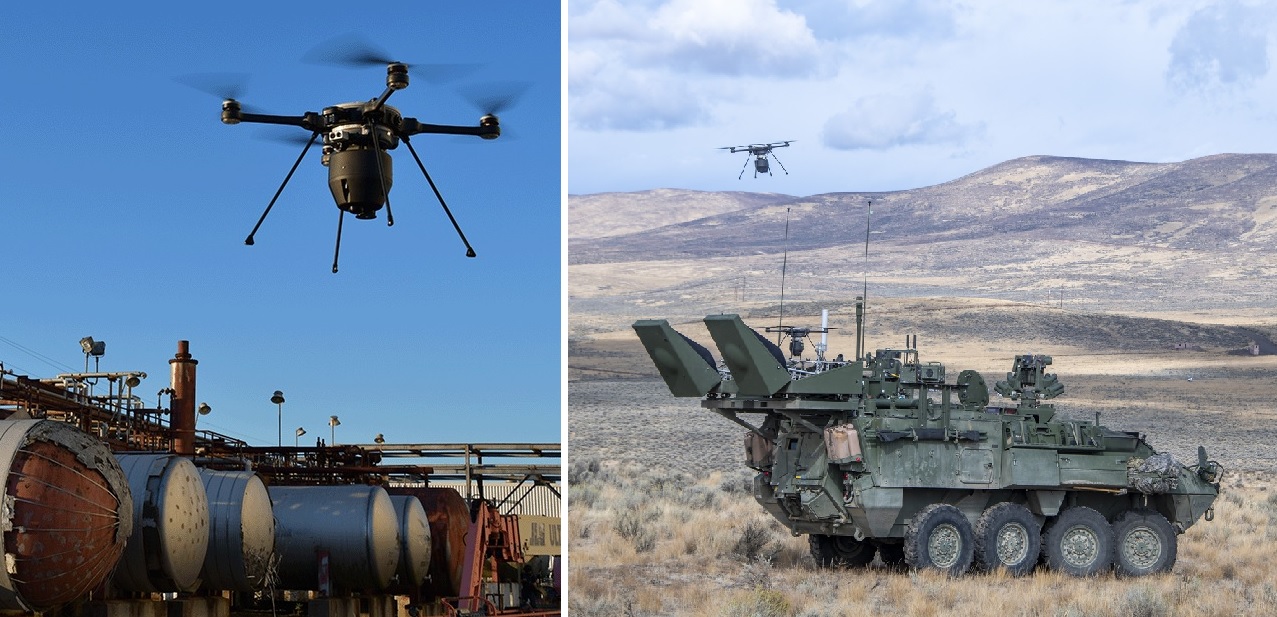
Each kit is built around the Teledyne FLIR R80D SkyRaider, a multi-rotor drone already used by U.S. military forces for reconnaissance, surveillance, and targeting missions. Under the CSIRP configuration, the platform has been adapted for CBRN reconnaissance and survey operations through the integration of specialized modular sensor payloads.
The kits include chemical and radiological detection systems as well as the Teledyne FLIR MUVE B330 biological sensor. The modular design allows operators to configure the drone with specific sensor packages based on mission requirements and the type of hazard suspected in a particular area.
The R80D SkyRaider is capable of carrying payloads weighing up to 7.7 pounds and incorporates embedded AI processing to support autonomous and semi-autonomous operations. During missions, the drone can follow pre-programmed flight paths and conduct systematic searches of potentially contaminated areas without requiring continuous manual piloting.
As the aircraft surveys an area, it collects and transmits real-time hazard data, including contamination levels, hazard boundaries, and concentration gradients, directly to operators through mapping, targeting, and communications systems. This enables commanders and response teams to assess threats from a safe distance and make informed decisions regarding troop movements, protective measures, and response actions.
The system represents a significant shift from traditional CBRN reconnaissance methods, which often require personnel wearing full Mission-Oriented Protective Posture (MOPP) gear to physically enter hazardous environments and collect samples or readings. Such operations can be time-consuming, physically demanding, and potentially dangerous even when protective equipment is used.
By using unmanned aerial systems for reconnaissance, military units can rapidly survey contaminated zones while reducing the risk of exposure to hazardous agents. The capability is designed to support operations involving chemical and biological weapons, radiological incidents, industrial accidents, and complex urban environments where multiple hazards may be present.
The contract also expands Teledyne FLIR Defense’s role in the Army’s broader CBRN modernization efforts. The company is currently leading work on the Nuclear Biological Chemical Reconnaissance Vehicle (NBCRV) Sensor Suite Upgrade program, a separate $74.2 million initiative aimed at modernizing the sensor systems installed on the Army’s dedicated CBRN Stryker reconnaissance vehicles.
Army officials view the new drone kits as a complementary capability to those vehicle-based systems. While upgraded NBCRV platforms provide extensive reconnaissance and survey capabilities for mechanized formations, the SkyRaider-based kits will give dismounted squads and platoons a rapidly deployable means of detecting and assessing CBRN threats at the tactical level.
Dr. JihFen Lei, President of Teledyne Defense and Aerospace Group and Senior Vice President of Teledyne Technologies, said the company’s focus remains on protecting military personnel from weapons of mass destruction and hazardous environments.
“Safeguarding soldiers from weapons of mass destruction is at the core of our mission. These SkyRaider-based sensor kits dramatically improve how units can detect and map CBRN hazards without exposing warfighters to dangerous environments.”
The award reflects the Army’s continued investment in autonomous systems, unmanned technologies, and advanced CBRN defense capabilities designed to improve battlefield awareness, accelerate hazard assessment, and enhance force protection. As deliveries begin later this year, the new SkyRaider CBRN drone kits are expected to provide frontline units with faster and safer reconnaissance capabilities across a range of operational scenarios.
——— End of Article ———