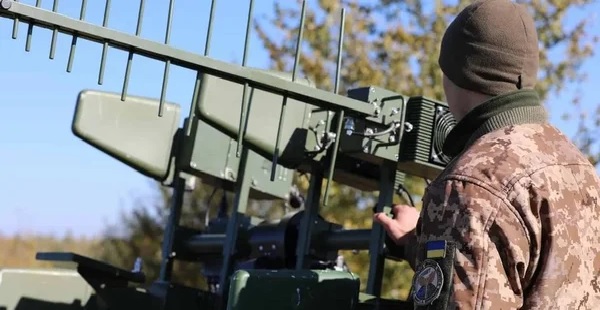
KYIV, UKRAINE — May 25, 2026 : Ukraine is increasingly deploying the Lima electronic warfare (EW) system to disrupt Russian drones, missiles, and guided aerial weapons as the country supplements limited interceptor missile supplies with lower-cost, non-kinetic air defence measures. According to reports, the domestically developed system interferes with satellite navigation signals, causing incoming threats to miss intended targets by disrupting or altering their guidance systems.
Developed by Cascade Systems, a Ukrainian defence startup registered in the United States, the Lima system was initially designed in 2022 to counter unmanned aerial vehicles (UAVs), particularly Shahed-136/Geran-2 loitering munitions and UMPK-equipped guided aerial bombs. The system entered deployment with Ukrainian military units in July 2024 and, by October 2025, was expanded for the protection of civilian infrastructure and urban areas amid increasing long-range attacks.
Strategic Electronic Warfare Platform
Unlike conventional air defence systems that physically destroy incoming threats, Lima is designed to redirect or disrupt aerial weapons by targeting the navigation systems that guide them. The platform generates powerful jamming fields to interfere with satellite navigation signals, including GPS and GLONASS, while simultaneously using spoofing techniques to transmit false positioning information.
According to technical explanations provided by Ukrainian military-linked sources, when missiles or drones lose access to satellite navigation, they often revert to inertial navigation systems (INS). However, without periodic satellite correction, accuracy degrades over distance, increasing targeting errors. Lima reportedly expands this deviation further by feeding manipulated coordinates to incoming weapons, redirecting them away from populated zones or critical infrastructure.
The system combines digital jamming, spoofing, and cyber information attacks against navigation receivers. Unlike mobile tactical jammers deployed near frontlines, Lima is designed for wide-area, stationary protection and can be integrated into networked configurations to secure entire cities, infrastructure facilities, and military sites through modular coverage.
Operational Use and Deployment Scale
The Lima system is being used against multiple categories of Russian aerial threats, including Shahed drones, cruise missiles, ballistic missiles, glide bombs, and guided aerial bombs. According to Cascade Systems, more than 400 Lima units have been delivered to Ukrainian forces since deployment began.
The company states that the system has disrupted over 20,500 Shahed drones and redirected dozens of cruise and ballistic missiles during the past 18 months. Operational statistics released for the first quarter of 2026 indicate that Lima neutralized 26 Russian Kh-47M2 Kinzhal aeroballistic missiles, increasing the total number diverted since deployment to 58.
During the same period, Ukrainian military-linked data reported that the system deflected 33 cruise missiles and more than 10,000 UAVs. Separate operational assessments also claimed that Lima disrupted 58 out of 59 launched Kinzhal missiles within protected operational zones.
Developers stated that newer modifications were adapted to improve effectiveness against guided aerial bombs, including KAB glide bombs, which present operational challenges due to shorter flight times and weaker dependence on satellite guidance. According to Cascade Systems, the system reportedly achieves a neutralization rate exceeding 98 percent against guided bombs operating within its effective engagement range.
Military Operators and System Development
The Lima system is operated by the Night Watch electronic warfare unit of Ukraine’s Territorial Defence Forces. One of its developers, serving under the military call sign “Alchemist,” stated that the system combines navigation suppression with coordinate substitution to intentionally increase missile deviation and redirect threats toward less populated areas.
Maksym Skoretskyy, head of the electronic warfare department of Ukraine’s land forces, stated that the latest iterations of Lima are capable of suppressing long-range weapons, including ballistic missiles dependent on GLONASS satellite navigation.
Cascade Systems describes Lima as an implementation of an “asymmetric sky protection” concept designed to integrate into layered air defence systems, including frameworks compatible with NATO standards. Ukrainian officials describe the system as a supplement to conventional missile defence rather than a replacement, particularly as interceptor inventories remain limited.
Cost and Strategic Significance
The Lima system is also being expanded due to cost considerations. Each unit reportedly costs up to approximately 3 million Ukrainian hryvnias, equivalent to around €58,000 depending on configuration. According to Cascade Systems, securing a major city may require between 30 and 100 Lima units, placing the estimated cost of metropolitan protection at approximately €5 million.
This amount is broadly comparable to the cost of a single Patriot PAC-3 interceptor missile, making Lima a comparatively low-cost electronic defence layer against high-volume drone and missile attacks. Military officials have noted, however, that redirected missiles and drones still pose risks when they fall to the ground, though such incidents generally result in lower casualties and infrastructure damage than direct impacts on populated areas.
No further information regarding future production rates, procurement schedules, or precise deployment locations has been publicly disclosed.
——— End of Article ———