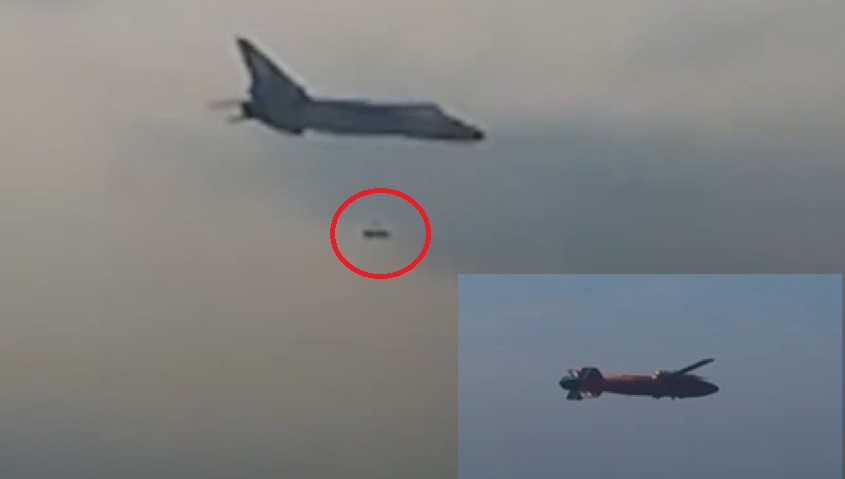
KYIV, — May 18, 2026 : Ukraine has officially approved its first domestically developed guided aerial bomb (KAB) for combat deployment after the weapon successfully completed all required testing phases, marking a significant step in the country’s expanding domestic precision-strike weapons program.
The Ukrainian Ministry of Defence confirmed that an experimental batch of the munition has already been procured for operational use by the Ukrainian Air Force. Ukrainian pilots are currently conducting combat scenario training and integrating the new weapon into frontline operational procedures ahead of its expected combat debut.
The guided aerial bomb was developed by DG Industry, a participant in Ukraine’s Brave1 defence technology initiative, with early-stage research and development supported through a Brave1 grant program. According to Ukrainian officials, the project was completed in 17 months.
Officials stated that the weapon is a fully indigenous design rather than a modified version of existing Western or Soviet-era guided bombs. The Ministry of Defence said the system was engineered specifically for the operational realities of the current battlefield and incorporates combat-related requirements identified during the war.
Indigenous Precision-Strike Capability
The new weapon is equipped with aerodynamic control surfaces and a navigation and guidance module designed to maintain operational effectiveness in electronic warfare environments. The system uses universal guidance and correction modules that allow the bomb to glide toward targets with improved accuracy after release from an aircraft.
The bomb carries a 250-kilogram warhead intended for strikes against fortified positions, command posts, logistics facilities, and other military infrastructure located behind frontline positions.
According to Ukrainian officials, the system currently has an operational strike range of up to 60 kilometers. Defence analysts noted that the maximum range could potentially increase to between 80 and 100 kilometers under optimal launch conditions, including release from altitudes of around 10 kilometers.
Recent testing involved deployment from a Sukhoi Su-24 frontline bomber during level flight. Footage released by Ukrainian authorities showed the munition separating from the aircraft before entering guided flight.
Standoff Strike Advantage
The primary operational advantage of the new bomb is its standoff capability. Unlike conventional unguided aerial bombs, the system allows aircraft to release the weapon dozens of kilometers away from intended targets, enabling pilots to operate outside the effective range of many frontline enemy air defence systems.
This capability is intended to improve aircraft survivability while expanding Ukraine’s ability to conduct precision strikes against rear-area military targets.
The Ministry of Defence stated that the bomb is expected to strengthen Ukraine’s ability to target enemy logistics nodes, defensive fortifications, ammunition storage areas, and command infrastructure with greater precision and reduced operational risk to aircraft crews.
Operational Integration Underway
Following the completion of testing, the Ministry of Defence procured the first experimental batch for operational evaluation and deployment preparation. Ukrainian Air Force personnel are now conducting training exercises and adapting combat tactics for the weapon’s integration into active service.
Officials indicated that the first operational combat use of the bomb is expected in the near future.
Ukraine’s Minister of Digital Transformation, Mykhailo Fedorov, who oversees the Brave1 defence technology initiative, described the project as part of a broader shift in Ukraine’s defence production strategy.
“Ukraine is shifting from importing individual solutions to building indigenous high-tech weapons that systematically enhance the capabilities of the Defence Forces and provide technological superiority on the battlefield,” Fedorov said.
He added that production scaling efforts are already underway as Ukraine seeks to expand domestic manufacturing of precision-guided weapons.
“We are scaling solutions that extend strike range, enhance precision, and change the rules of modern warfare,” he stated.
Expansion of Domestic Defence Production
The introduction of the guided aerial bomb forms part of Ukraine’s wider effort to expand domestic defence manufacturing capabilities during the war. In recent years, Ukraine has accelerated local production of drones, electronic warfare systems, missile technologies, and precision-guided munitions aimed at reducing dependence on foreign military supplies.
Brave1 officials stated that the new bomb was developed using operational feedback from frontline conditions and was designed in coordination with military personnel responsible for future deployment and tactical integration.
The Ministry of Defence described the system as an important domestic high-technology capability intended to support long-range precision strike operations against Russian military infrastructure and logistical networks.
Further procurement, production expansion, and operational integration are expected as the weapon enters active service with the Ukrainian Air Force.
——— End of Article ———