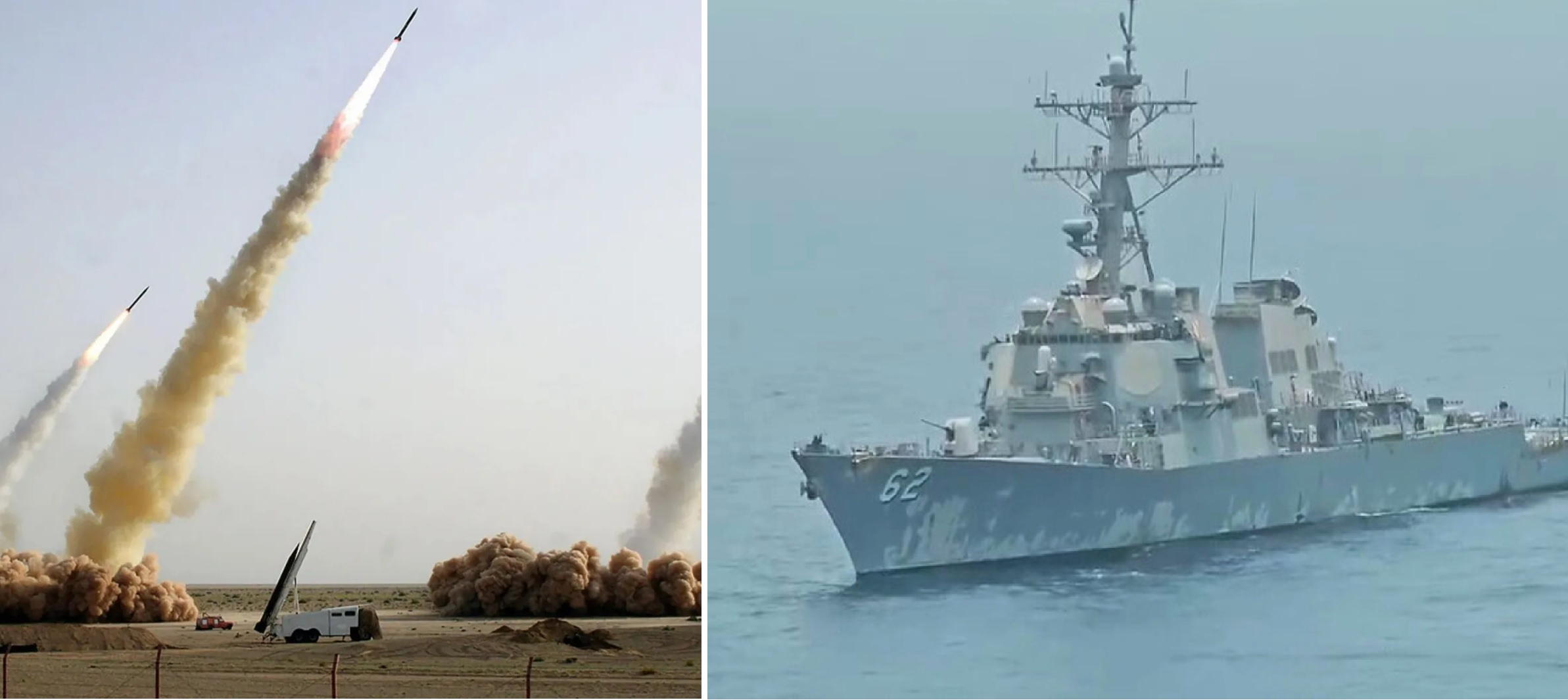
MUSCAT, — June 04, 2026 : Iran has claimed that its naval forces targeted the command and control center of a United States Navy destroyer operating in the Gulf of Oman, an assertion that has been firmly denied by the U.S. Central Command (CENTCOM) as military tensions continue to rise across the Gulf region.
The claim was announced by the Iranian Army Navy and published through Iranian state media outlets, including the Islamic Revolutionary Guard Corps (IRGC)-affiliated Sepah News and IRIB. According to Iranian authorities, the action was carried out against a U.S. destroyer that was allegedly approaching Iranian territorial waters in the Gulf of Oman.
Iran Says U.S. Destroyer Was Targeted
In its statement, Iran said the operation was a response to what it described as aggressive behavior by the U.S. vessel, alleged violations of navigation regulations in the Strait of Hormuz, and the repeated harassment of Iranian commercial shipping operating in the region.
Iranian officials claimed that the destroyer’s command and control systems were specifically targeted. However, the statement did not provide any technical details, operational evidence, or damage assessments to support the allegation.
The Iranian Navy stated that it continues to closely monitor U.S. and allied military activities in the area and warned that any future hostile actions would receive an immediate response.
CENTCOM Denies Iranian Claim
The United States Central Command (CENTCOM) quickly dismissed the Iranian claim and stated that U.S. military operations in the region remain unaffected.
In a statement posted on the social media platform X, CENTCOM said:
“CLAIM: Iran is now claiming it has targeted a U.S. Navy destroyer in the Gulf of Oman. TRUTH: Iran is lying. U.S. military assets at sea continue to fly, sail, and operate safely and unimpeded.”
The U.S. military did not report any damage to its naval assets, and no independent evidence has emerged to verify Iran’s claim.
Strategic Importance of the Gulf of Oman
The Gulf of Oman and the nearby Strait of Hormuz are among the world's most strategically important maritime corridors. A significant portion of global oil exports passes through the narrow waterway, making it a critical route for international trade and energy supplies.
The U.S. Navy, operating under the U.S. Fifth Fleet based in Bahrain, regularly conducts missions in the region with the stated objective of ensuring freedom of navigation and maritime security.
Iran also maintains a substantial naval presence through both its regular navy and the Islamic Revolutionary Guard Corps Navy (IRGCN), which frequently operates near commercial and military vessels transiting the area.
Missile and Drone Attacks Increase Regional Tensions
The dispute over the reported naval incident comes amid a broader escalation of military activity across the Gulf region.
Earlier, the IRGC confirmed launching ballistic missiles and unmanned aerial vehicles (UAVs) against U.S. military facilities, specifically citing Ali Al Salem Air Base in Kuwait and the headquarters of the U.S. Navy’s Fifth Fleet in Bahrain.
The attacks have intensified concerns over regional security and the possibility of further military confrontations.
Bahrain Reports Successful Interceptions
In Bahrain, government authorities stated that national air defense systems successfully intercepted multiple Iranian drones and three incoming missiles.
Gulf states have also rejected Tehran’s justification that its military operations constitute legitimate retaliatory actions, maintaining that the attacks threaten regional stability and civilian infrastructure.
No Independent Verification of Naval Incident
At the time of reporting, Iran’s claim that it targeted the command and control center of a U.S. destroyer in the Gulf of Oman has not been independently verified.
No publicly available evidence, damage assessment, or third-party confirmation has been released to support the allegation. The conflicting accounts highlight the continuing tensions between Iran and the United States in a region where military forces from multiple nations operate in close proximity.
Regional Security Concerns Remain High
The latest exchange of accusations adds to ongoing tensions in the Gulf, particularly around the Strait of Hormuz, a waterway that remains critical to global energy markets and international shipping.
With military activity increasing across the region and competing narratives emerging from both Tehran and Washington, developments in the Gulf of Oman continue to be closely monitored for their potential impact on regional security, maritime trade, and global energy supplies.
——— End of Article ———