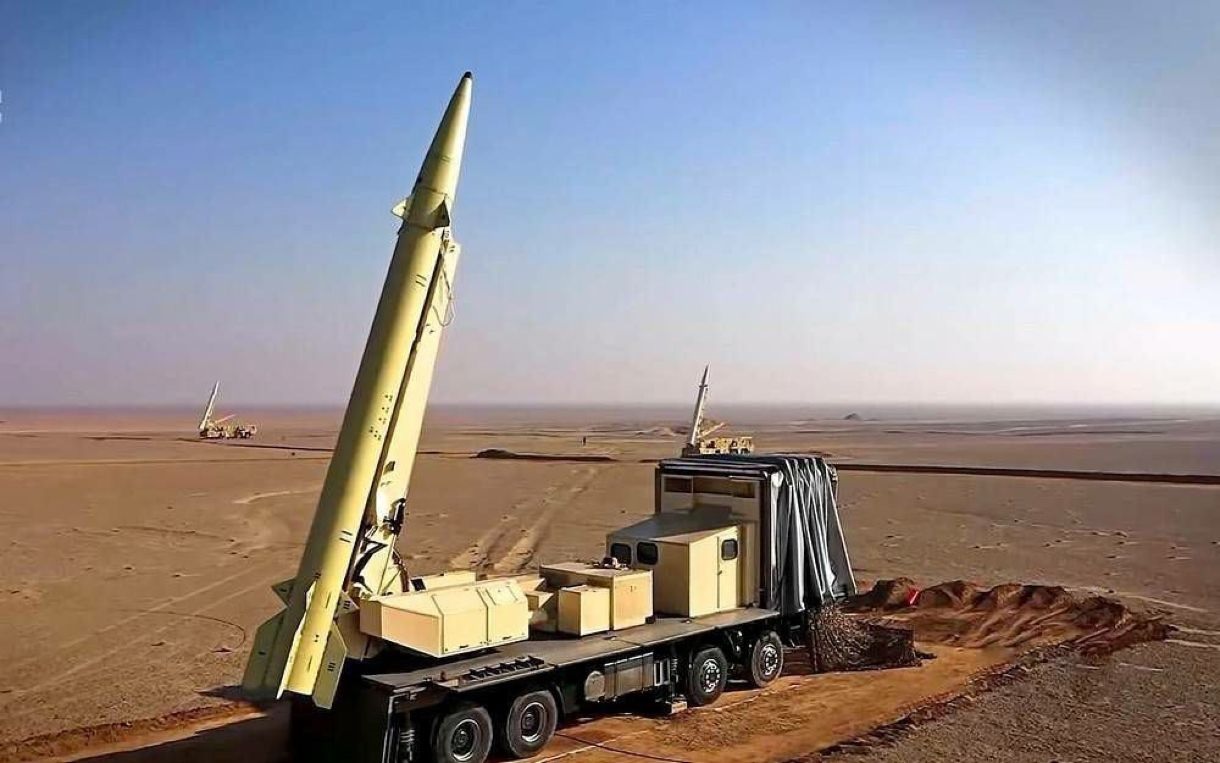
WASHINGTON, — May 9, 2026 : Newly analyzed commercial satellite imagery from ports in southern Russia and northern Iran indicates that large shipments of components intended for ballistic missile production have recently been transferred from Russia to Iran through the Caspian Sea corridor, according to defense assessments and maritime activity analysis.
The shipments are believed to support ongoing efforts by Iran to replenish and expand its ballistic missile inventory following recent regional conflicts and extensive missile operations conducted by the Islamic Revolutionary Guard Corps Aerospace Force (IRGC Aerospace Force).
Maritime Transfers Through Northern Iranian Ports
According to the assessments, cargo vessels departed from Russian ports, including Astrakhan, before docking at northern Iranian ports such as Bandar-e Anzali. The Caspian Sea route has increasingly become a central logistics corridor for military-related transfers between Moscow and Tehran.
Recent satellite imagery has shown increased cargo handling activity and vessel movement at both Russian and Iranian port facilities. Analysts assessing the shipping patterns believe the transferred materials include components linked to missile propulsion systems, guidance equipment, and structural assemblies required for ballistic missile production.
Iran Increasing Reliance on Foreign-Manufactured Components
The Iranian Ministry of Defense and Armed Forces Logistics (MODAFL) has gradually begun replacing domestically produced ballistic missile components with parts manufactured in Russia and China. Components that Iranian defense companies can no longer produce efficiently or in sufficient quantities are now increasingly being sourced externally.
Defense analysts say the shift reflects continuing strain on Iran’s domestic military production sector following years of sanctions, procurement restrictions, and the operational demands created by recent missile campaigns.
The imported components are believed to be intended primarily for the IRGC Aerospace Force, which has accelerated efforts to restore missile stockpiles after launching large numbers of missiles during regional escalations, including the June 2025 “12-Day War” and other operations targeting Israel and regional sites.
Expansion of Military Cooperation
The missile component transfers are part of broader military-technical cooperation between Iran, Russia, and China under Tehran’s expanding “Look East” strategy, which has increased Iran’s dependence on Russian and Chinese military support and technology.
According to defense assessments, Russia has also provided Iran with high-resolution satellite imagery from its orbital assets. Iranian military planners have reportedly used the imagery to monitor military facilities and improve targeting data across the Middle East.
China has expanded its cooperation with Iran through the integration of Iranian military systems into the BeiDou Navigation Satellite System, reducing Iran’s reliance on Western GPS infrastructure. Chinese assistance has additionally included radar systems, surveillance equipment, and materials associated with solid-propellant missile production.
Ongoing Missile Replenishment Efforts
Officials and analysts monitoring the transfers say the continued supply of foreign-produced components has enabled Iran to accelerate the restoration of portions of its ballistic missile inventory while continuing modernization efforts within the IRGC Aerospace Force.
The MODAFL continues to oversee the integration of imported missile-related components into Iran’s broader ballistic missile program as international scrutiny over military procurement and arms-control enforcement in the region remains ongoing.
——— End of Article ———