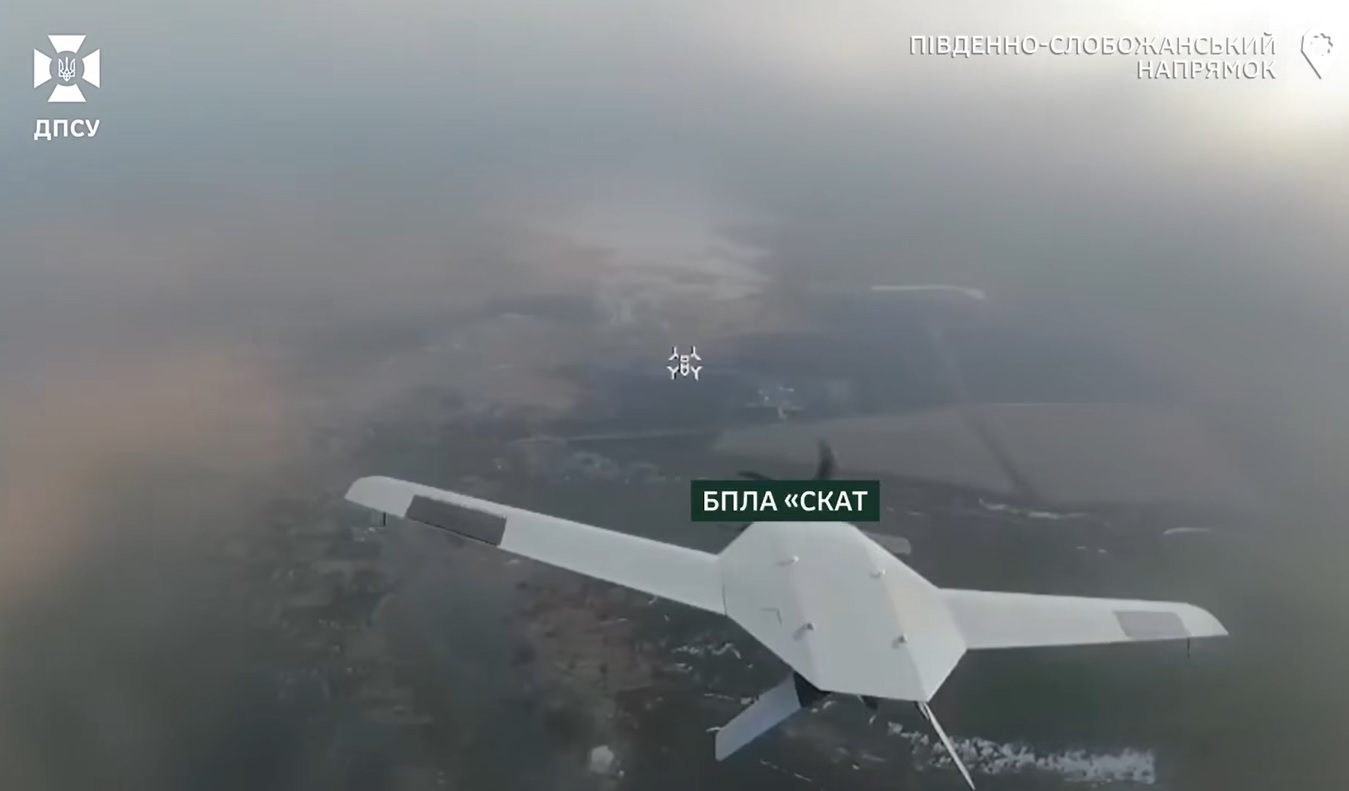
KYIV, — June 4, 2026 : Ukrainian border guards from the Strix unit have successfully destroyed a rare Russian Skat-450M deep-reconnaissance drone operating on the Southern Slobozhanshchyna axis, according to Ukraine’s State Border Guard Service. The interception, reported on June 4, marks a significant loss for Russia’s aerial surveillance and targeting network, as the drone is used to identify high-value targets and support long-range precision strikes.
High-Value Reconnaissance Asset Shot Down
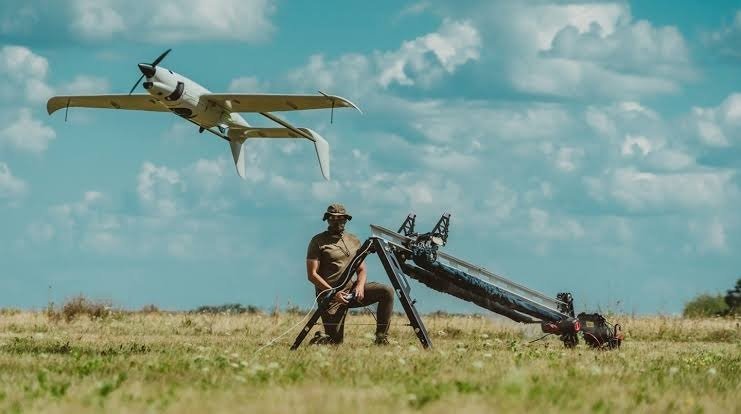
The Skat-450M is a specialized unmanned aerial vehicle (UAV) designed for deep reconnaissance missions behind the front line. Equipped with advanced optical cameras and thermal imaging systems, the drone is tasked with locating military positions, tracking troop movements, adjusting artillery fire, and providing targeting data for precision attacks.
One of its most important roles is supporting strikes by Russia’s Iskander operational-tactical missile systems. By transmitting real-time intelligence and target coordinates, the drone helps improve the accuracy of long-range missile and artillery operations.
With an estimated value of approximately $400,000 per unit, the Skat-450M is considerably more expensive and technologically advanced than the smaller commercial and FPV drones commonly seen on the battlefield.
Rare Interception by Ukrainian Forces
According to Ukrainian officials, this is the second Skat-450M destroyed by the Strix unit. Since the beginning of the full-scale conflict, Ukrainian forces have reportedly managed to shoot down fewer than 20 drones of this type, highlighting both their limited deployment and the difficulty of intercepting them.
The loss of such a platform extends beyond its financial value. The drone serves as a critical reconnaissance tool that enables Russian forces to conduct deep surveillance and coordinate precision strikes. Its destruction reduces Russia’s ability to gather real-time battlefield intelligence and support missile and artillery operations against targets located far behind the front line.
Limited Public Information on the Skat-450M
Despite its growing use in the conflict, publicly available information on the Skat-450M remains scarce, making it one of the least documented reconnaissance systems in Russia’s arsenal.
The drone is believed to be an advanced development of the Supercam UAV family and incorporates several features intended to improve survivability and operational effectiveness.
Known Characteristics of the Skat-450M
- Low Observability: The drone uses an unconventional flying-wing airframe designed to reduce its radar signature while maintaining aerodynamic efficiency.
- Durable Structure: Its design minimizes exposed external components, helping reduce the risk of damage during parachute-assisted recovery and landing.
- Extreme Weather Capability: The platform is reportedly capable of operating in temperatures ranging from minus 45°C to plus 45°C, allowing deployment in a wide range of environmental conditions.
- Advanced Sensors: Equipped with electro-optical and thermal imaging systems, enabling surveillance during both day and night operations.
Russian industry representatives have previously claimed that Skat-series drones have played a significant role in identifying military targets throughout the conflict, supporting strikes against armored vehicles, artillery systems, and other high-value assets.
Growing Role of Ukrainian Interceptor Drones
The successful interception reflects Ukraine’s increasing focus on counter-drone warfare. Ukrainian forces have been deploying specialized interceptor drones to engage and destroy expensive reconnaissance UAVs operating over the battlefield.
Among these systems is the Sting interceptor drone, developed by the Ukrainian engineering group Wild Hornets. Operated through VR goggles and capable of reaching speeds of more than 315 km/h, the Sting provides a relatively inexpensive method of neutralizing high-value aerial targets.
Costing around $2,500, the interceptor offers a highly cost-effective solution compared with the significantly more expensive reconnaissance drones it is designed to destroy.
Ukraine Expands Indigenous Counter-Drone Capabilities
Alongside current interceptor systems, Ukraine is continuing to develop new technologies aimed at countering advanced enemy UAVs.
Recent details released by Ukrainian developers highlighted the Litavr interceptor drone, produced by F-DRONES. The system is specifically designed to detect, pursue, and destroy hostile drones at distances exceeding 40 kilometers.
According to its developers, the Litavr can achieve speeds of approximately 350 km/h and features automatic target acquisition and tracking systems, as well as both daytime and thermal imaging cameras. The drone has reportedly demonstrated successful interception missions at significantly extended ranges.
Ongoing Battle Between Reconnaissance and Counter-Drone Systems
The destruction of the Skat-450M illustrates the continuing technological competition between increasingly sophisticated reconnaissance platforms and rapidly evolving counter-drone systems.
As Russia continues to rely on specialized surveillance drones to locate targets and support long-range missile strikes, Ukraine is expanding its network of interceptor UAVs designed to deny aerial reconnaissance and reduce the effectiveness of enemy precision-strike operations.
The latest interception by the Strix unit represents another example of Ukraine’s efforts to target high-value Russian reconnaissance assets and limit their ability to support operations on the battlefield.
——— End of Article ———