PLYMOUTH, United Kingdom — May 8, 2026 : German defence technology company Helsing has successfully conducted the first maritime launch of its HX-2 AI-enabled strike drone during a trial off the coast of Plymouth, expanding the system’s operational deployment capabilities into naval and littoral environments.
The demonstration involved the launch of the HX-2 loitering munition from a fast insertion craft operating in coastal waters near Plymouth. According to the company, the trial validated the drone’s ability to be deployed from small maritime platforms without requiring dedicated naval launch infrastructure.
The test represents the first known maritime launch of the HX-2 and builds on previous land-based operational trials conducted with armed forces in several European countries.
Maritime Deployment Capability
Helsing stated that the Plymouth trial was intended to evaluate the HX-2’s performance in littoral conditions and demonstrate compatibility with ship-based deployment concepts.
The maritime launch capability allows the HX-2 to be integrated with small naval craft and coastal units, providing beyond-line-of-sight strike capability without requiring large launch platforms.
Further technical details regarding the trial profile or operational outcomes were not disclosed.
HX-2 Specifications and Design
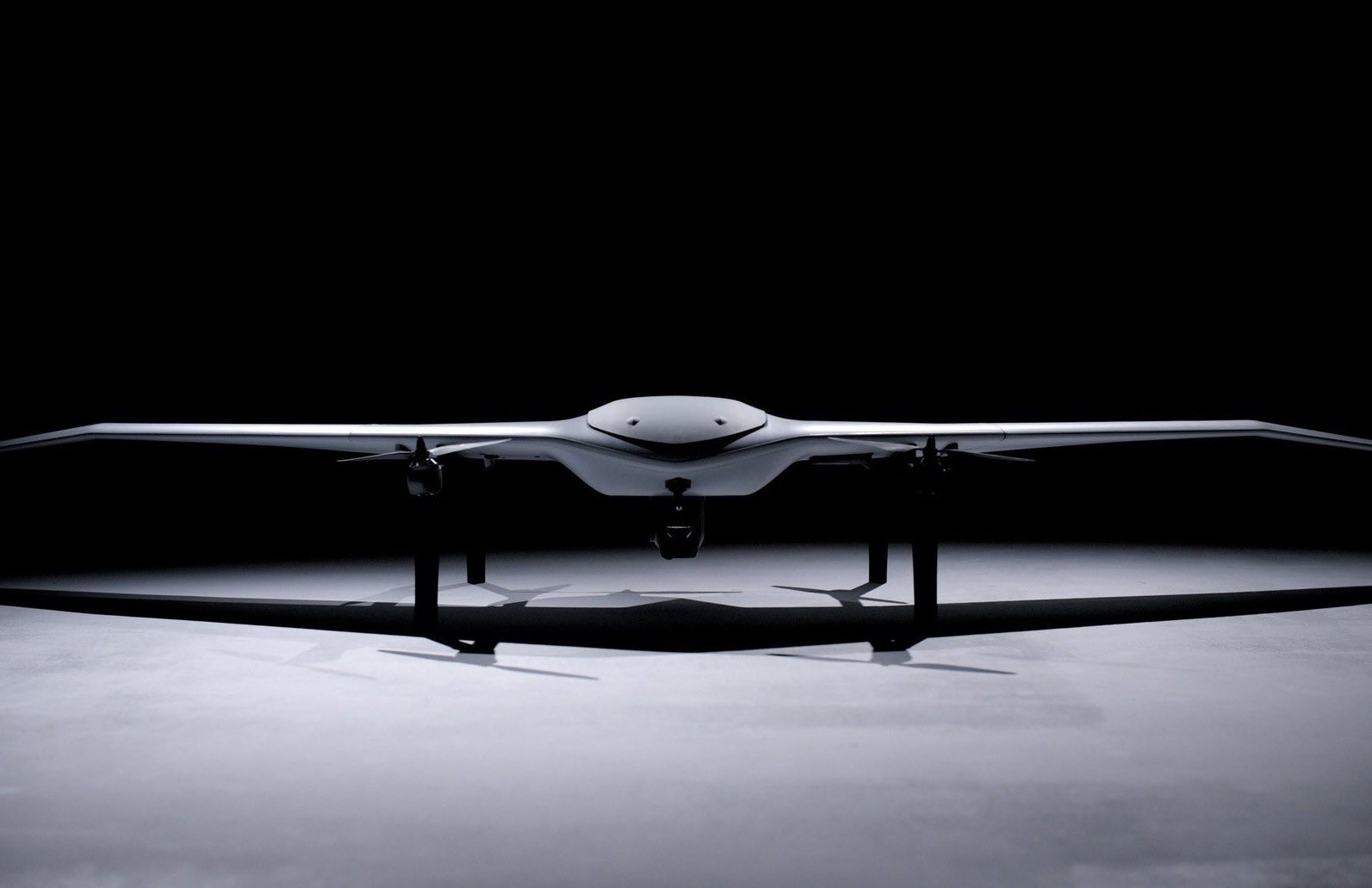
The HX-2, also referred to as the “Karma” intelligent loitering munition, is an electrically propelled unmanned strike system developed for mass production and swarm operations.
The drone features an X-wing configuration with four wings and four electric motors equipped with pulling propellers. Helsing classifies the platform as a weight class 1 mini-unmanned aerial system (UAS).
Key specifications include:
- Weight: 12 kilograms
- Range: up to 100 kilometres
- Maximum speed: 220 km/h
- Strike speed: up to 250 km/h
- Payload capacity: up to 4.5 kilograms
The system supports multiple payload options, including armour-penetrating shaped charges, anti-tank warheads, anti-structure munitions, and general-purpose explosive payloads.
AI Navigation and Electronic Warfare Resistance
A central feature of the HX-2 is its software-defined architecture and onboard artificial intelligence system designed for operations in GPS-denied and electronic warfare-contested environments.
According to Helsing, the drone uses onboard machine vision, stored terrain mapping data, and visual landmark recognition for autonomous navigation when satellite signals are unavailable or jammed.
As the drone approaches its operational area, onboard image-recognition algorithms identify and track designated targets. The HX-2 is designed to continue operating without a continuous data link during parts of the mission.
Despite its autonomous capabilities, Helsing stated that the system operates under a strict human-in-the-loop or human-on-the-loop doctrine, requiring a human operator to authorize final strike decisions.
Integration With Altra Platform
The HX-2 is integrated into Helsing’s Altra reconnaissance-strike software platform, which links drones, reconnaissance assets, artillery systems, and command networks.
The platform enables a single operator to coordinate multiple HX-2 drones in networked swarm operations involving intelligence, surveillance and reconnaissance (ISR) assets and battlefield management systems.
According to Helsing, the system is designed to engage targets including artillery systems, armoured vehicles, and command posts at beyond-line-of-sight ranges.
Production and Operational Background
The HX-2 has been designed as a software-defined weapon system capable of receiving over-the-air software updates to adapt to evolving battlefield conditions and electronic warfare threats.
Helsing said the drone is designed for high-volume production using modular manufacturing methods and extensive use of 3D printing. The company has established distributed production facilities known as “Resilience Factories” across Europe, including a UK facility in Plymouth.
The HX-2 was unveiled in December 2024 and has since been ordered in significant quantities, including deliveries to Ukraine. Helsing stated that operational experience from earlier deployments of its HF-1 loitering munition contributed to the development of the HX-2’s current AI-enabled architecture.
The company stated that work is continuing to expand the HX-2’s operational integration across multiple military domains, including naval and littoral forces.
——— End of Article ———