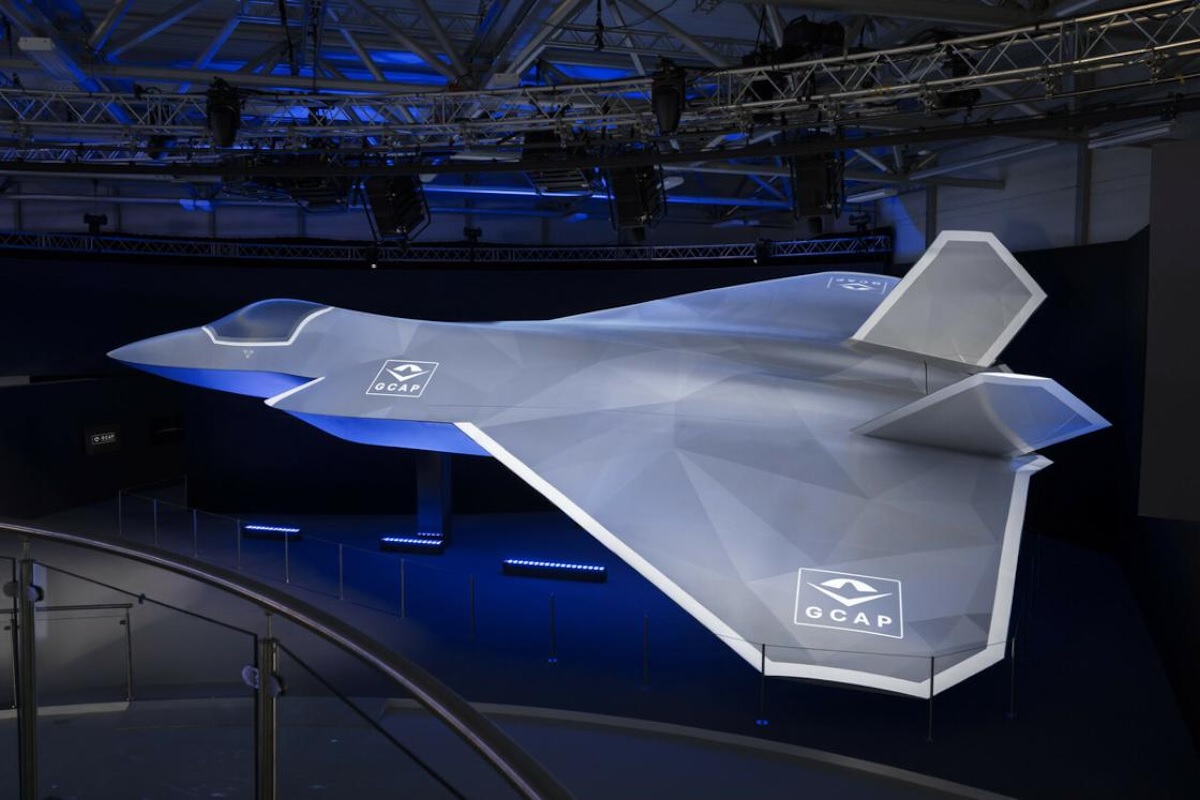
TOKYO, — May 22, 2026 : Japanese Defense Minister Shinjiro Koizumi held talks on Wednesday with Marco Zoff, chief executive officer of Edgewing, regarding the accelerated development of the Global Combat Air Programme (GCAP), the trilateral sixth-generation fighter initiative involving Japan, the United Kingdom, and Italy.
According to Nikkei, Koizumi described GCAP as “an extremely important project that will determine Japan’s future air capabilities,” underlining the strategic significance of the program for Japan’s long-term defense planning. The meeting took place at the Japanese parliament and focused on maintaining development momentum as the partner nations work toward the target of introducing the aircraft into service by 2035.
During the discussions, Zoff emphasized the importance of advancing the project at an accelerated pace. The talks reflected one of the central challenges surrounding GCAP since its formal announcement in December 2022 — balancing the political objective of delivering a sixth-generation combat aircraft by the mid-2030s with the complex engineering and industrial timelines required for advanced aerospace programs.
Edgewing Leading Unified International Design Effort
Edgewing was officially launched in June 2025 to serve as the single design authority for the multinational fighter program. The joint venture combines the expertise of BAE Systems, Leonardo, and Japan Aircraft Industrial Enhancement Co. (JAIEC).
JAIEC includes Mitsubishi Heavy Industries, which currently manufactures and sustains key aircraft in Japan’s fighter fleet, including the domestically developed Mitsubishi F-2 and licensed F-15J Eagle fighters.
The establishment of Edgewing marked a significant industrial and diplomatic consolidation between the three partner nations. Zoff, formerly Managing Director of Leonardo’s Aircraft Division, was appointed as the company’s first chief executive officer, while the headquarters was established in the United Kingdom to align closely with the GCAP International Government Organisation.
£686 Million Development Contract Awarded
In April 2026, the GCAP Agency, led by Chief Executive Masami Oka, awarded Edgewing its first international design and development contract valued at £686 million ($905 million).
The contract transitioned early engineering activities from separate national programs into a unified multinational framework and supports critical design and engineering work associated with the next-generation aircraft program.
The future fighter aircraft is intended to replace Japan’s Mitsubishi F-2 fleet as well as the Eurofighter Typhoon fleets operated by the United Kingdom and Italy. All three nations face similar modernization timelines, with their current combat aircraft expected to approach the end of operational service in the mid-2030s.
Sixth-Generation Capabilities Planned
GCAP is expected to deliver capabilities beyond current fifth-generation aircraft such as the F-35 Lightning II. The platform is planned to incorporate advanced stealth features, sensor fusion, artificial intelligence-supported systems, high-capacity networking, and potential directed-energy technologies.
The aircraft is also being designed for manned-unmanned teaming operations, enabling pilots to control collaborative uncrewed systems, often referred to as drone wingmen, during combat missions. Program officials have stated that the fighter will operate within a broader “system of systems” combat architecture integrating crewed and uncrewed assets into a unified operational network.
A demonstrator aircraft is expected to conduct its first flight in 2027, while production aircraft are scheduled to begin entering service from 2035 onward. Edgewing will oversee design and development activities, while manufacturing and final assembly responsibilities will be shared among BAE Systems, Leonardo, Mitsubishi Heavy Industries, and their respective industrial supply chains.
Japan Pursuing Long-Term Defense Industrial Sovereignty
For Japan, participation in GCAP represents a broader strategic effort to preserve sovereign fighter aircraft development and manufacturing capability rather than relying exclusively on foreign procurement for future airpower requirements.
Japanese defense planners consider the program increasingly important as the country operates within a challenging regional security environment shaped by the rapid modernization of China’s air force, including the deployment of fifth-generation fighters and ongoing sixth-generation aircraft development efforts.
Regional security concerns also include North Korea’s expanding ballistic and cruise missile capabilities, while observations from Russian air operations in Ukraine continue to provide operational lessons influencing future combat aircraft design and survivability requirements.
Lessons From the F-35 Program
To meet the ambitious 2035 operational target, GCAP partners are applying lessons learned from the multinational F-35 Lightning II program, which required nearly two decades to progress from concept development to initial operational capability, followed by additional years of software integration and refinement.
Program officials have stated that the use of advanced digital engineering tools and model-based development methods is intended to accelerate design iteration, systems integration, and testing throughout the development process.
The success of the timeline will depend largely on how effectively the three partner nations coordinate industrial production, software integration, and large-scale systems engineering under the unified multinational structure established through GCAP.
——— End of Article ———