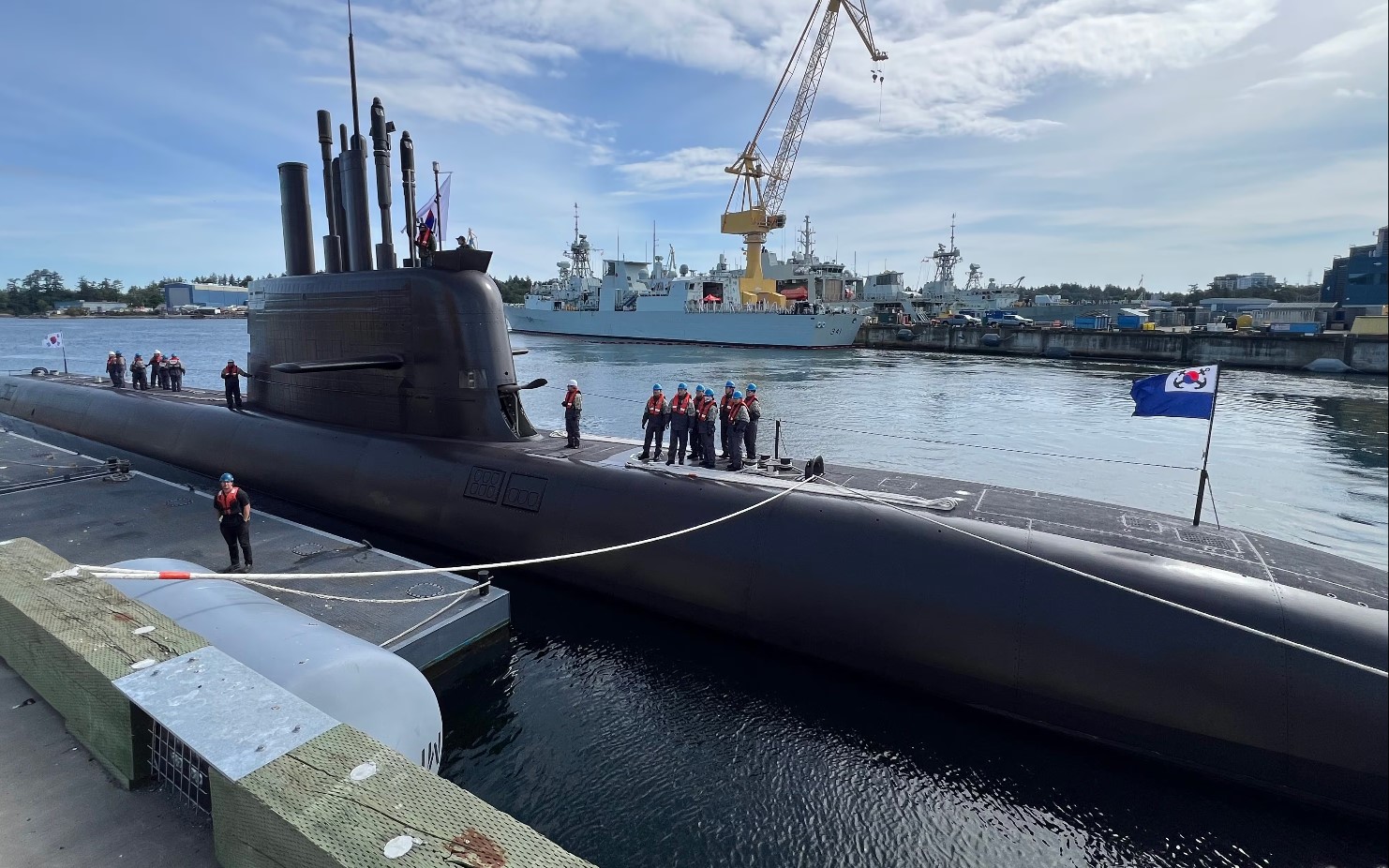
Victoria, British Columbia — May 25, 2026 : The Republic of Korea (ROK) Navy’s KSS-III submarine, ROKS Dosan Ahn Changho (SS-083), arrived at Canadian Forces Base Esquimalt on May 23, completing the first trans-Pacific deployment to North America ever undertaken by a South Korean submarine. The deployment marks the longest operational voyage in the history of the ROK Navy submarine force and represents a significant demonstration of South Korea’s domestically developed undersea capabilities.
The submarine departed from Jinhae Naval Base on March 25 and travelled approximately 14,000 kilometres across the Pacific Ocean before reaching Canada’s west coast. Throughout the deployment, the submarine was accompanied by the ROK Navy frigate ROKS Daejeon (FFG-823), a 3,100-ton Daegu-class vessel that supported the mission from departure to arrival.
Historic Deployment and Operational Significance
The deployment marks the first time a South Korean submarine has crossed the Pacific Ocean to reach North America. Although ROK Navy submarines have previously operated as far as Hawaii, this mission extended operational reach significantly farther, demonstrating long-range endurance and overseas deployment capability of the KSS-III submarine platform in a blue-water environment.
ROKS Dosan Ahn Changho is the lead vessel of South Korea’s KSS-III program, a 3,000-ton-class submarine developed for extended-range missions and enhanced operational flexibility. The submarine is powered by a diesel-electric propulsion system equipped with lithium-ion batteries and air-independent propulsion, enabling longer underwater endurance and reduced operational dependence on surface support.
The voyage also served as a live operational demonstration of South Korea’s indigenous submarine-building capability, reflecting efforts to strengthen long-distance naval operations and interoperability with allied and partner navies.
Arrival in Canada and Naval Engagements
Upon arrival at Esquimalt, the crews of ROKS Dosan Ahn Changho and ROKS Daejeon rendered naval honours at the pier to Canadian and South Korean officials. Officials present included Rear Admiral David Patchell, commander of Maritime Forces Pacific, and South Korea’s ambassador to Canada, Lim Woongsoon.
The port visit, scheduled from May 23 to June 2, is intended to support professional exchanges, naval cooperation activities and combined training with the Royal Canadian Navy. During the visit, crews of both navies are expected to conduct operational discussions, personnel interactions and maritime engagement activities designed to improve interoperability.
Canadian Submariners Embark During Final Transit
As part of the operational cooperation effort, two Royal Canadian Navy submariners embarked aboard ROKS Dosan Ahn Changho in Hawaii for the final leg of the journey to Victoria. The embarkation provided Canadian personnel with an opportunity to directly observe KSS-III submarine operations, onboard systems and crew procedures during active transit conditions.
One Royal Canadian Navy submariner who participated in the voyage described the platform as technologically familiar and indicated that adapting to the submarine’s systems would not involve a steep learning process, reflecting similarities with future submarine operational requirements.
Communications Interoperability Demonstrated at Sea
Before entering Canadian waters, ROKS Dosan Ahn Changho conducted a communications interoperability activity with Canadian naval authorities on May 18. According to the ROK Navy Submarine Force Command, the submarine successfully established communications with Maritime Forces Pacific through its onboard combined C4I command-and-control system.
The communication marked the first known instance of a South Korean-built submarine establishing connectivity with Canada’s Pacific naval command through a combined C4I framework. The activity demonstrated the ROK Navy’s ability to maintain command-and-control interoperability with partner nations outside its traditional alliance structure and highlighted expanding naval coordination with Canada.
Connection to Canada’s Future Submarine Program
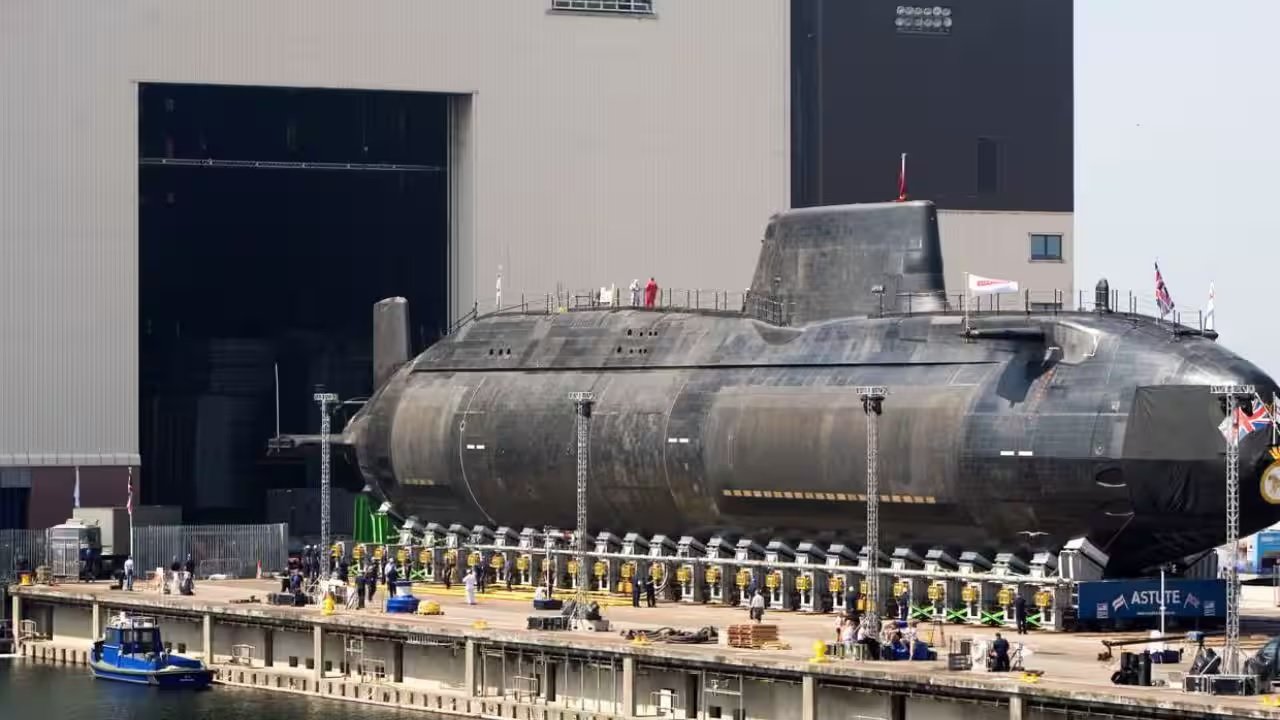
The submarine visit comes amid Canada’s ongoing Canadian Patrol Submarine Project (CPSP), a major defence procurement initiative intended to replace the Royal Canadian Navy’s aging Victoria-class submarines.
The project seeks to acquire up to 12 conventionally powered submarines and is estimated to be worth approximately 60 billion Canadian dollars. South Korea’s Team Korea consortium, comprising Hanwha Ocean and HD Hyundai Heavy Industries, has proposed the KSS-III submarine design for the requirement.
The South Korean proposal is competing against the Type 212CD design offered by ThyssenKrupp Marine Systems. Glenn Copeland, chief executive of Hanwha Canada, was also present at Esquimalt during the submarine’s arrival, reflecting industry interest in the ongoing procurement process.
Defence and Industrial Cooperation Discussions
Parallel to the submarine deployment, senior military and government-level meetings took place in Ottawa to discuss naval cooperation and defence-industrial coordination.
On May 22, Republic of Korea Navy Chief of Naval Operations Admiral Kim Kyung-ryul met Vice Admiral Angus Topshee to discuss practical measures aimed at strengthening bilateral military cooperation, expanding combined exercises and increasing personnel exchanges.
At the government level, South Korean Industry Minister Kim Jung-kwan met Canadian Foreign Minister Mélanie Joly and Energy and Natural Resources Minister Tim Hodgson to discuss the submarine procurement process and broader industrial cooperation between the two countries.
Industrial Partnerships and Domestic Support
To strengthen the industrial component of its CPSP campaign, Hanwha Ocean has expanded partnerships within Canada to support domestic shipbuilding and workforce development.
The company has signed agreements with Ontario Shipyards and Mohawk College to support technical training, industrial participation and long-term sustainment requirements. Additional memorandums of understanding have also been signed with Canadian universities and industrial partners to integrate local research institutions and suppliers into the broader submarine supply chain.
Next Phase of Deployment
Following completion of activities in Canada, ROKS Dosan Ahn Changho is scheduled to proceed to Hawaii to participate in the U.S.-led multinational maritime exercise RIMPAC 2026 before returning to South Korea.
The deployment concludes the first trans-Pacific voyage by a South Korean submarine and represents the longest operational mission conducted by the Republic of Korea Navy’s submarine force to date.
——— End of Article ———